Hometown

HOMETOWN

Boogie Oogie Oogie

Till you just can’t boogie no more

By Bill Fields

I went off to college in the fall of 1977, and Saturday Night Fever came out that December. If I was paying attention to the path outside my residence hall any given night during freshman year, I would see Randy walking toward Franklin Street in Chapel Hill.

He was a man on a mission, the closest thing our dorm had to Tony Manero, John Travolta’s character in the hit movie with disco as its core. Randy walked with purpose, dress-shoe soles on brick announcing his presence. Product in his blond hair, a couple of off-duty buttons on a fancy shirt with a substantial collar, he was a striding testimonial to various synthetic fabrics and soon to have a black-light handstamp to enter his favorite night spot.

Randy was headed to the Bacchae, which for a time was called Mayo’s Bacchae, the longer name including that of the establishment’s operator, a small-town North Carolinian with New York City tastes.

In the late 1970s, Tony Manero would have been right at home at the Bacchae. Its black-and-mirrored walls, lighted dance floor, colored strobes and faux fog were a backdrop for the pulsating, four-on-the-floor beat of the disco music: Bee Gees, Donna Summer, Yvonne Elliman, Heatwave, Chic, Wild Cherry.

I didn’t dress the part the way Randy did, although I’m sure I turned up at the Bacchae more than once wearing some residual polyester garment from my golf wardrobe. My clothing deficit notwithstanding, I met a couple of girlfriends there, one of whom I dated for about a year, until it became clear that her affection for Rod Stewart was greater than for me. 

It is jarring to think that the disco days are as far removed from today as the Charleston era was when we were grooving to “Never Can Say Goodbye,” “We Are Family,” “Le Freak” or “Boogie Oogie Oogie.”

Disco peaked in 1978 and ’79, declining soon thereafter, much to the dismay of my dormmate Randy, but not before making an appearance in the then-sleepy Sandhills. 

I was reminded of those times not long ago when I had a sandwich at 715 Broad in Southern Pines. In the mid-1970s that space was Castle of Dreams, which advertised being “The Best in Disco Entertainment.” Tuesday was Teenage Night, when those under 18 gathered to drink Cokes and summon the courage to ask a classmate to dance. The evenings would occasionally end with a beer on the sly out by a pond in Highland Trails, an activity that didn’t make my reply when Mom asked about my night out after I arrived home as the 11 o’clock news was coming on.

But the Castle was D-league disco compared to Crash Landing, which I discovered once I was of legal age. Crash Landing was located on U.S. Highway 1 North in Southern Pines, a large warehouse-style building situated on a slight rise, set back from the thoroughfare with a large parking lot in front sometimes not big enough to hold all the cars.

Many of us came to the Crash on college breaks and during the summer, catching up and doing our best on the dance floor. As was the case in Chapel Hill, there was a cadre of dancers at the Crash who knew what they were doing, who knew the kind of moves Travolta and company did in Saturday Night Fever. Most of us were just moving around, building up a thirst for a Budweiser or a Miller High Life. I had gotten put into a social-dance physical education class after most of the more common P.E. courses were filled up, but my foxtrot experience was of little help. On the very rare occasions I departed the Crash with someone’s phone number, it was harvested by conversation not my skill at the Latin hustle.

The best move I remember from the Crash Landing period involved a friend who was driving me home one winter night. Just as he was making a turn in Manly, it was suddenly like a fog machine was pointed at his sedan’s windshield. With the defroster obscuring his view, he made a left on the wrong side of the frontage road median. A highway patrolman was nearby and, blue light flashing, immediately pulled us over. They talked for five minutes standing in the cold, my buddy and the officer, then we were on our way. No ticket. No written warning. Just advice to be careful and go straight home. A lot has changed beyond the music.

Bookshelf

BOOKSHELF

January Books

FICTION

The Stolen Queen, by Fiona Davis

Annie Jenkins is fed up with living in the shadow of her mother, a former fashion model who never tires of trying to revisit her glory days. She is ready to forge her own life. So when an opportunity to work for iconic former Vogue fashion editor Diana Vreeland falls into her lap, Annie jumps at the chance. Diana wants her to help organize the famous Met Gala, known across New York City as the “Party of the Year,” hosted by the Metropolitan Museum of Art and renowned for its star-studded guest list. Charlotte Cross, leading a quiet life as the associate curator of the museum’s celebrated Egyptian art collection, wants little to do with the upcoming gala. Never much for socializing, she’s consumed with her research on Hathorkare — a rare female pharaoh dismissed by most other Egyptologists as a vicious usurper, one who was nearly erased from history. That is, until the night of the gala, when one of the Egyptian art collection’s most valuable artifacts goes missing . . . and there are signs Hathorkare’s legendary curse might be reawakening. As Annie and Charlotte team up to search for the missing antiquity, a desperate hunch leads the unlikely duo to a place Charlotte swore she’d never return to — Egypt — placing them both directly in danger.

Rosarita, by Anita Desai

Away from her home in India to study Spanish, Bonita sits on a bench in El Jardin de San Miguel, Mexico, basking in the park’s lush beauty, when she slowly becomes aware that she is being watched. An elderly woman approaches her, claiming that she knew Bonita’s mother — that they had been friends when Bonita’s mother had lived in Mexico as a talented young artist. Bonita tells the stranger that she must be mistaken; her mother was not a painter and had never traveled to Mexico. Though the stranger leaves, Bonita cannot shake the feeling that she is being followed. Days later, haunted by the encounter, Bonita seeks out the woman, whom she calls the Trickster, and follows her on a tour of what may or may not have been her mother’s past. As a series of mysterious events brilliantly unfolds, Bonita is unable to escape the Trickster’s presence, as she is forced to confront questions of truth and identity as well as specters of familial and national violence.

The Heart of Winter, by Jonathan Evison

Abe Winter and Ruth Warneke were never meant to be together — at least if you ask Ruth. Yet their catastrophic blind date in college evolved into a 70-year marriage and a life on a farm on Bainbridge Island with their hens and beloved Labrador, Megs. Through the years, the Winters have fallen in and out of lockstep, and out of their haunting losses and guarded secrets, a dependable partnership has been forged. But when Ruth’s loose tooth turns out to be something much more malicious, the beautiful, reliable life they’ve created together comes to a crisis. As Ruth struggles with her crumbling independence, Abe must learn how to take care of her while their three living children question his ability to look after his wife. And once again, the couple has to reconfigure how to be there for each other.

NONFICTION

Beyond Anxiety: Curiosity, Creativity, and Finding Your Life’s Purpose, by Dr. Martha Beck

We live in an epidemic of anxiety. Most of us assume that the key to overcoming it is to think our way out. And for a while it works. But there is always something that sends us back into the anxious spiral we’ve been trying to climb out of. In Beyond Anxiety, Beck explains why anxiety is skyrocketing around you, and likely within you. Using a combination of the latest neuroscience as well as a background in sociology and coaching, she explains how our brains tend to get stuck in an “anxiety spiral,” a feedback system that can increase anxiety indefinitely. To climb out, we must engage different parts of our nervous system — the parts involved in creativity. Beck provides instructions for engaging the “creativity spiral” in a process that not only shuts down anxiety but also leads to innovative problem solving, a sense of meaning and purpose, and joyful, intimate connection with others and the world.

CHILDREN’S BOOKS

To See an Owl,
by Matthew Cordell

To hear an owl takes patience. To see one, well, that’s magical. Caldecott-winning author/illustrator Cordell brings the magic of the woods to life in this stunning picture book just perfect for nature lovers. (Ages 3-7.)

Teapot Trouble: A Duck and Tiny Horse Adventure,
by Morag Hood

Sometimes the best read-alouds are the most ridiculous ones, and any time Duck and Tiny Horse are around, giggles are sure to follow! Join our heroes as they determine the very best way to extricate a crab from a teapot and have a grand adventure along the way. (Ages 3-7.)

On Our Way! What a Day!,
by JaNay Brown-Wood

A birthday! A gift? Hmmm . . . just what would make Gram happy??? A delightful journey ends with a group effort, a celebration of found things and a very happy Gram. This sweet story is a perfect read for families who delight in the joys of nature, music and time together. (Ages 3-7.)

Wings of Fire: Escaping Peril,
by Tui T. Sutherland

Not since Harry Potter has a series had such a wide following of dedicated readers as Wings of Fire. Fantasy, adventure, dragons, intrigue — this series has it all. Now the story evolves through graphic novels. Grab a copy of No. 8 for the Wings of Fire superfan in your life. (Ages 8-14.)

Omnivorous Reader

OMNIVOROUS READER

Endless Fascination

The troubled life of F. Scott Fitzgerald

By Stephen E. Smith

In his 1971 memoir Upstate, literary critic Edmond Wilson grouses about college kids knocking at the door of his “Old Stone House” in Talcottville, New York. “They want to know about Scott Fitzgerald and that’s all,” he writes. Wilson was Fitzgerald’s classmate at Princeton University, and he edited Fitzgerald’s The Crack-Up and the unfinished novel, The Last Tycoon.

If you’re a reader of literary biographies, you can understand Wilson’s peevishness. Bookstore and library shelves are lined with Scott and Zelda Fitzgerald bios. Matthew Bruccoli’s Some Sort of Epic Grandeur is the definitive work. Still, there are many other bios — at least 30 — that are worth considering: Scott Donaldson’s Fool For Love, Arthur Krystal’s Some Unfinished Chaos, Niklas Salmose and David Rennie’s F. Scott Fitzgerald: A Composite Biography, among others.

Robert Garnett’s recent Taking Things Hard: The Trials of F. Scott Fitzgerald contributes significantly to the material available on the Jazz Age author and will be of particular interest to Fitzgerald aficionados with a North Carolina connection.

Garnett, a professor emeritus of English at Gettysburg College, is best known for his biography, Charles Dickens in Love. His Fitzgerald study is less inclusive than his work on Dickens, covering the final 20 years of Fitzgerald’s life, but his research is meticulous and reveals aspects of Fitzgerald’s personality that other biographers have ignored or overlooked.

During his most prolific years — 1924-1935 — Fitzgerald’s primary source of income was his short fiction (he published 65 stories in The Saturday Evening Post alone), and he was paid between $1500-$5,000 per story when a Depression-era income for a high-wage earner was $1,000 a year. Garnett focuses on the better-known stories — “The Ice Palace,” “A Diamond as Big as the Ritz,” “The Intimate Strangers,” “Babylon Revisited,” “One Trip Abroad,” etc. — to explicate the romantic themes and ineffable mysteries that defined Fitzgerald’s checkered life.

The story “Last of the Belles,” written in 1927, exemplifies Fitzgerald’s return to the familiar theme of romantic infatuation and lost love. The story closely parallels Fitzgerald’s time in Montgomery, Alabama, where he served as a young lieutenant during World War I. He incorporates his courtship of his future wife, Zelda Sayre, into the narrative and transforms her into the character of Ailie Calhoun, “the top girl” in town. The narrator, identified only as Andy, is smitten by Ailie, but she becomes enamored of Earl Schoen, a former streetcar conductor disguised in an officer’s uniform.

“The Last of the Belles” plays off Fitzgerald’s strong sense of class, his longing to recapture youthful romance, and his grieving “for that vanished world and vanished mood, Montgomery in 1918 . . . a living poetry of youth, warmth, charming girls, and romance.” “The Last of the Belles” is Fitzgerald’s final attempt to recapture the South of his youth and its alluring women.

A close reading of the stories opens a window into Fitzgerald’s thematic preoccupations, allowing the readers to glimpse aspects of his thinking that are not readily apparent in his less spontaneous, more ambitious novels. But it also presents the reader with a challenge. Garnett provides a synopsis of the stories he cites, but to fully comprehend his explications, it is necessary to read the stories in their entirety, an undertaking that casual readers might find laborious.

Fitzgerald’s North Carolina sojourn is at the heart of Taking Things Hard. In the Fitzgerald papers at Princeton’s Firestone Library, a personal journal kept by Laura Guthrie, a palm reader at Asheville’s Grove Park Inn, draws an intimate, none-too-flattering portrait of Fitzgerald during his saddest period. “The 150-page single-spaced typescript follows him closely, day by day, often hour by hour,” Garnett writes. “Most Fitzgerald scholars are aware of it; few have read it through, fewer still have mined it.” Garnett believes Guthrie’s journal “is the most valuable single source for any period of his (Fitzgerald’s) life.”

In the early spring of 1935, Fitzgerald fled Baltimore for Asheville. He rented adjoining rooms at The Grove Park Inn, where he wrote a series of historical stories for Redbook. Garnett describes these stories as “wooden, simplistic, puerile, awash in cliché and banality, with ninth-century colloquial rendered in a hodgepodge of cowboy-movie, hillbilly, and detective novel.” These amateurish stories were the low point of Fitzgerald’s writing career.

Guthrie became Fitzgerald’s confidant, constant companion and caregiver. He and Guthrie were not physically intimate, but she was enamored. Of their first dinner together, she wrote, “He drank his ale and loved me with his eyes, and then with his lips for he said, ‘I love you Laura,’ and insisted, ‘I do love you, Laura, and I have only said that to three women in my life.’”

The story Guthrie tells is anything but inspirational. Fitzgerald was intoxicated most of the time — she recorded that he drank as many as 37 bottles of beer a day — and he insisted that she remain at his beck and call. “He is extremely dictatorial,” she wrote, “and expects to be obeyed at once — and well.” As the summer progressed, his drinking grew worse, and he eventually turned to gin “with the idea,” Guthrie noted, “that he had to finish the story and that he could not do it on beer, even if he took 30 or so cans a day, and so he would have to have strong help — first whiskey and then gin.”

In June, Fitzgerald headed to Baltimore and detrained briefly in Southern Pines to visit with James and Katharine Boyd. His conduct while visiting with the Boyds was such that he felt compelled to write a letter of apology when he arrived in Baltimore.

In late 1935, Fitzgerald took a room in Hendersonville, North Carolina, and wrote his self-deprecatingly “Crack-Up” articles. Published in Esquire in 1936, these revealing essays marked the end of his career as a popular novelist and short story writer. He would eventually move to Hollywood, spending the remainder of his days toiling for the dream factories and outlining a novel he would never complete. He died there in relative obscurity in 1940 at the age of 44.

A century after its publication, The Great Gatsby remains a mainstay of the American literary canon, and critics and scholars continue re-evaluating Fitzgerald’s life. No matter how many times they retell the story, it will never have a happy ending.

Tea Leaf Astrologer

TEA LEAF ASTROLOGER

Capricorn

(December 22 – January 19)

Write down these words and revisit them often: Just because you can, doesn’t mean you should. We all know you’re capable of scaling treacherous heights. But at what cost? Your life force is precious. When Venus enters your sign toward the end of the month, things look seriously dreamy in the romance department (rock-steady commitment paired with the warm-and-fuzzies). Here’s the catch: You’re going to have to wreck your own heart wall.

Tea Leaf “Fortunes” for the rest of you:

Aquarius (January 20 – February 18)

Dare you to read just for pleasure.

Pisces (February 19 – March 20)

Try googling power pose.

Aries (March 21 – April 19) 

Don’t forget: A seed can lay dormant for years.

Taurus (April 20 – May 20)

Refine your spice cabinet.

Gemini (May 21 – June 20)

The system needs a reboot.

Cancer (June 21 – July 22)

Delete the app.

Leo (July 23 – August 22)

The last sip is the sweetest.

Virgo (August 23 – September 22)

It’s time to dust off the old you-know-what.

Libra (September 23 – October 22)

Conditions are ripe for cuddling.

Scorpio (October 23 – November 21)

Release what wants to go.

Sagittarius (November 22 – December 21)

Consider swapping out that lamp.

PinePitch

PINEPITCH

PinePitch

Zee Zee at the Top

The 2025 Classical Concert Series sponsored by the Arts Council of Moore County hosts the electrifying pianist Zee Zee at the Sunrise Theater, 250 N.W. Broad St., Southern Pines, at 7:30 p.m. on Monday, Jan. 20. An imaginative and electrifying performer, at the age of 5, after beginning her musical training in Berlin, Germany, Zee Zee quickly became one of the most sought-after young artists of her generation. For additional information go to www.sunrisetheater.com or www.mooreart.org.

Happy Birthday to The King

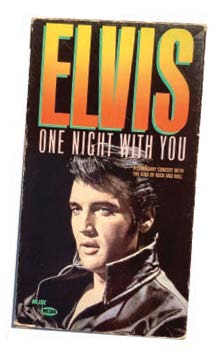
You can get your wiggle on celebrating Elvis’ 90th all day long — we’re talking all day long — on Wednesday, Jan. 8, at the Bradshaw Performing Arts Center, 3395 Airport Road, Pinehurst. From 9 a.m. to 12 p.m. there will be an examination of Elvis’ roots in gospel music. Then, at 3 p.m., watch an expanded version of his comeback 1968 TV special, “Elvis: One Night with You.” Finally, beginning at 7 p.m., Vivian R. Jacobson will discuss the connection between Elvis and Marc Chagall, and their shared passion for life and art. All programs are in the Owens Auditorium. For information and tickets go to www.ticketmesandhills.com.

Four Part Harmony

The North Carolina Harmony Brigade, an elite group of barbershop singers, comes together one weekend a year for the annual Harmony Extravaganza, from 7 – 9 p.m. on Saturday, Jan. 18, in BPAC’s Owens Auditorium, 3395 Airport Road, Pinehurst. Singers come from all over the United States, Canada and Europe to perform songs like “I Can’t Give You Anything But Love,” “Moonlight Becomes You,” “Make ’Em Laugh,” and more. For tickets and info go to www.ticketmesandhills.com.

Zip-a-Dee-Doo-Dah

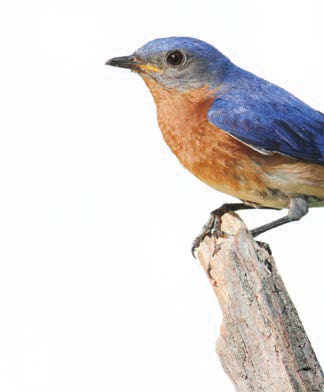
Who doesn’t love a bluebird? David Kilpatrick will answer all your questions about the beloved birds beginning at 10 a.m. on Friday, Jan. 24, at the Ball Visitors’ Center at the Sandhills Horticultural Gardens, 3245 Airport Road, Pinehurst. Then, on Tuesday, Feb. 4, Amanda Bratcher, horticultural agent with the N.C. Cooperative Extension in Lee County, will speak on the subject of decorative ornamental grasses. For additional information or to register for either program go to www.sandhills.edu/horticutural-gardens/upcoming-events.

At the Met

If you can’t get to Cairo this month do the next best thing and attend the Metropolitan Opera’s live streaming presentation of Giuseppe Verdi’s tragic opera in four acts, Aida, at 1 p.m. on Saturday, Jan. 25, at the Sunrise Theater, 250 N.W. Broad St., Southern Pines. For more information go to www.sunrisetheater.com.

One if by Land, Two if by Sea

Join the professional tribute band The British Invaders, dressed in proper black Nehru suits and playing vintage instruments, as they recreate the excitement that swept across America from the other side of the pond in the 1960s. The performance begins at 8 p.m. on Saturday, Jan. 25, at BPAC’s Owens Auditorium, 3395 Airport Road, Pinehurst. For more information got to www.ticketmesandhills.com.

Ruth Pauley Lecture Series

Dr. Katy O’Brien, a past chair of the Brain Injury Association of Georgia, a member of the Academy of Neurological Communication Disorders and Sciences, and a 1994 graduate of Pinecrest High School, will discuss “The Thinking and Talking Brain: Communication, Connection, and Mental Health after Brain Injury and Concussion” on Tuesday, Jan. 21, in BPAC’s Owens Auditorium, 3395 Airport Road, Pinehurst. For more information and tickets go to www.ticketmesandhills.com.

Do You Know That in D Major?

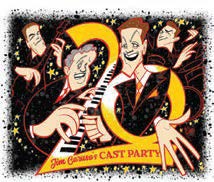
Showbiz superstars hit the stage and things get lively with a few special guests in Jim Caruso’s “Cast Party” with Billy Stritch on the piano at BPAC’s Owens Auditorium, 3395 Airport Road, Pinehurst, on Friday, Jan. 31, at 7 p.m. Every Monday night since 2003, Cast Party’s open mic night and variety show has brought Broadway glitz and wit to the legendary Birdland in New York City. Caruso and Stritch have taken the show on the road, celebrating talent in London, Los Angeles, Las Vegas, San Francisco, Chicago, Austin, St. Louis, Minneapolis, Dallas, Cleveland, Pittsburgh, the Hamptons, Provincetown, Miami, Orlando, Delray Beach and now Pinehurst. For more information go to www.ticketmesandhills.com.

A Good Man

The Sandhills Community College Department of Theater will perform the 1957 off-Broadway production of You’re a Good Man, Charlie Brown based on Charles Schulz’s comic strip Peanuts that first appeared 75 years ago in 1950. Opening night is Friday, Feb. 7, at 7 p.m. in BPAC’s Owens Auditorium, 3395 Airport Road, Pinehurst. There are additional performances on Feb. 8 at 2 p.m. and 7 p.m. and on Feb. 9 at 2 p.m. For information and tickets go to www.ticketmesandhillscom.

Simple Life

SIMPLE LIFE

The Island Baby

A tale of the most perfect storm

By Jim Dodson

January is a special month in our family. That’s because three members of our scattered tribe are January babies. It could have been four if I hadn’t missed my due date by two days and wound up being a February groundhog.

My late father’s birthday is the 18th and my mother’s the 24th. But our oldest child’s birthday on the 28th holds the true winter magic.
Back in September 1990, as we lay in bed looking up at the stars through the skylight on our first night in the house on Bailey Island, my first wife, Alison, said quietly, “Let me have your hand.”

She placed it on her belly, and, sure enough, for the first time ever, I felt something flutter, soft as a hummingbird.

“That’s him,” I whispered in awe.

“Or her,” she said.

Friends were concerned when we told them we planned to move to an island off the Maine coast for the winter while beginning construction of our house on the mainland.

In good weather, they pointed out, the hospital was a good 45-minute drive away — across two adjoining islands, over three narrow bridges and through three tiny villages. In bad winter weather, the trip had been known to take hours.

From Labor Day to June, only about 300 souls inhabited the durable rock island where we set up housekeeping in a fine cottage, which provided us with a 20-mile view of the coast. Within days of our arrival — news spreads fast on a small island — we’d met the folks who ran the community store, the postmistress, several lobstermen and a chatty gentleman named Bob, sort of the island’s de facto mayor and charge d’affaires of information and snowplowing.

“When the snow flies, the drifts can get pretty wicked out here,” he explained, and turned pale when we mentioned we were in the family way — due in early February. “I’m awfully glad you told me,” he said seriously. “We’ll keep an eye on you.”

A few days later, a lady at the store slipped me a scrap of paper with a phone number and said, “I heard about your situation. Call anytime if you need to — Herman’s got four-wheel drive.” Not long after that, one of the local lobsterman pulled me aside and said, “I’ve got a boat that’ll chew through anything. Just give a holler.”

Such nice folks, those island souls.

While we settled in to wait for the baby, they prepared for winter snow, fixing drafts, hooking up plows, topping up the woodpile and getting buckets of sand ready. I realized how much the mariners loved the drama of winter storms. Hard weather makes good timber, as they say in the north country.

There was a dusting of snow two days before Christmas, followed by wind, arctic cold and nothing more. While the islanders scanned the skies for telltale flakes, we scanned a baby book for boy names. Everyone — I mean everyone — was certain we were going to have a boy, including yours truly.

“How about Herman,” I suggested.

Alison laughed. “You mean after the four-wheel guy?”

“More as in Melville, the great white-whale guy.”

Given our location, I suggested other strong nautical names, including Noah, Davy Jones, Billy Budd and Horatio Hornblower — “Hank” for short.

Alison merely smiled and shook her head. Other family members chipped in several male family names.

As the winter deepened and the delivery day approached, only my wife and my dad believed the baby would be a girl.

In the meantime, the islanders grew visibly tense from the absence of snow. Snowplows sat idle; the boys around the stove grumbled over their morning coffee at the community store.

It turned out, in fact, to be the unsnowiest winter on the island in a century. Just our luck. Poor islanders. By early January you could feel their desperation to push snow and fling sand. A few days before the month’s end, Alison joked that our baby would arrive with a snowstorm.

Her mouth to God’s ear.

That Friday night, as we were dining at our favorite restaurant in town, it began to snow like mad. Mainers live for the winter’s first good snow. You could see the relief in their faces. “Better late than never,” our waitress cheerfully declared as she delivered dessert. “Hate to waste my new snow tires!”

Moments later, Alison’s water broke. We left our dessert behind and went straight to the hospital down the block.

The delivery doctor said we still had several hours to go. So, as mother and baby settled in, I drove out to the island to get some clothes and feed the dog. By the time I got there, a blizzard was in full force and even my four-wheel Blazer had difficulty navigating our unplowed lane.

It took another two hours to get off the island, over the bridges and back to the hospital. By the time I climbed the final hill into town, the snow had stopped and a brilliant sunrise bathed a silent white world in golden light. It was a sight I’ll never forget.

I got to my wife’s side 10 minutes before the baby arrived.

The next afternoon, we brought our newborn home, bundled up like an Eskimo baby. The snow was so deep, we had to park at the community store and slide down the hill on our rumps to our cottage doorstep.

Stamping around, folks on the island were downright giddy. Bob was deeply relieved. Snowplows roared and news of the birth quickly spread.

Everyone who peeked at our new arrival wanted to know what we named our sweet island lad.

“Margaret Sinclair,” I proudly told them.“Maggie for short — after both of her grandmothers.”

Southwords

SOUTHWORDS

Holiday Hotline

The Christmas letter that wasn’t

Dear Friends,

In the words of Michael Scott at Dunder Mifflin, over the lips and through the gums, look out stomach, here it comes! Well, it was quite a year. Hottest on record! Yay us! It got off to a great start when the War Department dropped her reckless endangerment charges. As I tried to explain to her at the time, it was only a suggestion. Live and learn.

As you may know, the Carolina Panthers did not win the Super Bowl. Aaaaagain. Turns out they’re worse than their record would indicate. Maybe they should take a page from the convention and visitors bureau in Kentucky that used an infrared laser to send an invitation into deep space attempting to attract extraterrestrials from planets in the TRAPPIST-1 solar system. They can’t do any worse than they do in the NFL draft or making trades. Am I right?

It was a leap year, of course, and that meant the War Department and I had the opportunity to enjoy an additional 24 hours in each other’s company. As it turned out, she was booked on Feb, 29, explaining that it’s not unusual for her to plan years ahead. That’s my girl!

Instead, I read that Finland is the happiest country in the whole wide world, a distinction it has held for seven straight years, which has got to be one of those records that can never be broken — like DiMaggio’s 56-game hitting streak or the Portuguese dog that lived to be 31 — and it wasn’t even in assisted living! So, you tell me, are the Finns sending out deep space laser messages, too? At least they don’t have a football team!

And it goes without saying that we all got fabulous news when McDonald’s announced its intention to sell Krispy Kreme doughnuts fresh daily. This revelation happened around the time cicada broods XIX and XII stuck their little heads out of the ground to rub wings together and party like it was 2024. The last time they did that fandango in the back yard was 221 years ago. Coincidence?

Of course, in June we had the U.S. Open right up the street. Bryson DeChambeau expressed no interest whatsoever in renting our doublewide for the week. Worse luck for him! On the plus side, Scottie Scheffler managed to get through the week without being hauled off in handcuffs. WWGD. What would Gomer do? Citizen’s arrest! Citizen’s arrest!

That’s about when we discovered that, in its latest update, the Oxford English Dictionary added (among other words and expressions) “Chekhov’s gun” to its lexicon. Chekhov, of course, was the Russian playwright who described the literary principle that says unnecessary elements should never be introduced into a story. If you have a gun in the play, someone needs to use it. Which brings me to Rory McIlroy. Ha-ha.

Right after the Open came the Olympics in France. Incroyable! Turns out Simone Biles is tiny. I’m talking Keebler cookie tiny. But that’s OK. As the great Dan Jenkins once said of a famous gymnast, “She can do everything my cat can do.”

I don’t know about you, but the Paris Olympics were a smash hit in our house, and I think it’s safe to say there are some things we can keep in mind for when we host the Open again in 2029. How about those opening ceremonies floating down the Seine? Think Drowning Creek. Am I wrong?

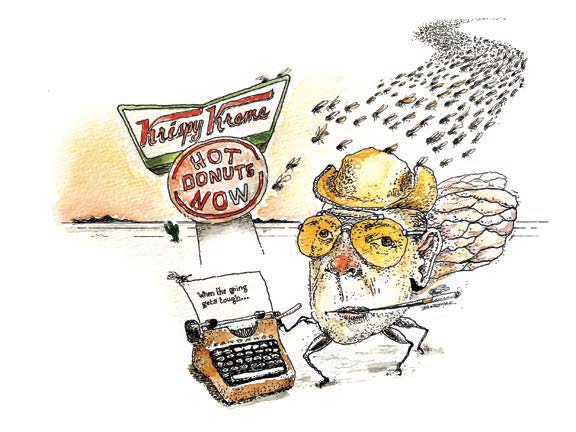
When it comes to mano a mano competition, however, the U.S. Open had nothing on Joey Chestnut, who had to forgo competing for Nathan’s Mustard Belt after he sold his soul to a rival food company. You know what Hunter S. Thompson said, “When the going gets weird, the weird turn pro.” In a counter programing one-on-one match Chestnut downed 83 dogs — not the Portuguese kind, ha-ha — to beat his sworn rival, someone named Kobayashi, who I don’t think has had steady work since The Usual Suspects. Who is Keyser Soze?

It was an election year, and I decided not to run again. Those background checks! Who needs them?

The whole family was here for Thanksgiving, and the War Department made her traditional beef aspic. Lily, the almost 4-year-old, looked at me with those big, wide eyes and said, “Craps.” That’s what she calls me. “Meat Jell-O?” From the mouths of babes!
On to 2025!

Toodles,

The Maury Arties 

Almanac

ALMANAC

Almanac December

By Ashley Walshe

December is a bite of ginger, a dusting of sugar, a thick swirl of molasses.

Beyond the kitchen window, the quiet earth glitters in gentle light. Birdsong warms the frosty air. Save for the twitch of slender ears, a cottontail rabbit sits frozen in a sunbeam.

Just as the seasons announce themselves with unmistakable clarity, so, too, does this day. You reach for a hand of ginger, a paring knife, a timeworn recipe. Today is the day for ginger cookies.

As you peel and mince, the redolent fragrance of fresh ginger awakens your senses. Imagine growing in the darkness as this root did. The way life might shape you. What gifts for healing you might hold.

Butter softens on the stovetop. You stir in the ginger, brown sugar, cinnamon and molasses. A pinch of sea salt. Vanilla extract. Another pinch of sea salt. 

Whisk in the egg. Add the flour and baking powder. The steady dance of wooden spoon stirs something deep within you, too.

This is how it goes. Homemade cookies send you time traveling. As you shape the dough, the timeworn hands of the ones who shaped you begin to clarify. 

Memories are sharp and warm and sweet — here and gone like frost across the leaf-littered lawn.

As for the cookies? Same, same.

Sink your teeth into the golden edges, the chewy centers, the sugar-laced magic. Delight in the depth of flavor. Let the ginger bite back.

Sprig and a Peck

Here’s a fun fact about a favorite Yuletide parasite. The word mistletoe is derived from the Old English misteltan, which roughly translates to “dung on a twig.” You can thank its high-flying seed mules for that. Although the white berries are toxic to humans, many bird species rely on mistletoe as a mineral-rich food source throughout the barren days of winter. If you find yourself standing beneath a festive sprig with the one you adore, consider tucking the etymology morsel away for later.

Moment of Gratitude

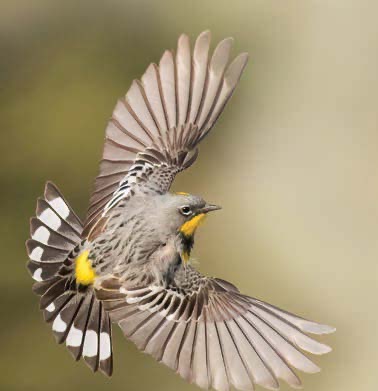
Cold air makes for dazzling night skies. Check out Aries (the ram), Triangulum (the triangle) and Perseus (the hero who beheaded Medusa). Not a night owl? Christmas Bird Counts happening across the Carolinas this month are a constellation in and of themselves. If rusty blackbirds and yellow-rumped warblers are more your speed, consider joining a local count to get in on the action. (Map available at carolinabirdclub.org.)

Stars and birds aside, don’t forget to count your blessings. The great wheel continues to turn. Winter solstice arrives on December 21. As we celebrate the longest night of the year — and the promise of brighter days to come — give thanks for the warmth and brilliance in your own life. You know what they say: The best things in life aren’t things.

December has the clarity, the simplicity, and the silence you need for the best fresh start of your life.

— Vivian Swift

Art of the State

ART OF THE STATE

Scaling It Down

Hoss Haley, a sculptor known for giant steel pieces, is creating more intimate, personal work

By Liza Roberts

Hoss Haley’s steel sculptures stand like elegant typography on the landscape: giant sans-serif letters, semicolons, exclamation points. Linear, spherical, bold and approachable, many top 6 feet and are meticulously crafted of Corten steel, a weathering steel with a distinct rusted patina. The Spruce Pine artist ships it in from Alabama 10,000 pounds at a time, hauls it into his studio with a bridge crane, then mashes it in presses he made himself out of parts collected from a scrap yard.

That’s the art Haley’s widely known for, large public pieces that form focal points in prominent places like downtown Charlotte, the Charlotte Douglas International Airport, Spruce Pine’s Penland School of Craft and North Carolina State University. He’s in the permanent collections of museums including the Mint Museum, the Asheville Art Museum and the North Carolina Museum of Art, where his striking Union 060719 stands on a rise at the entrance, proudly welcoming all comers.

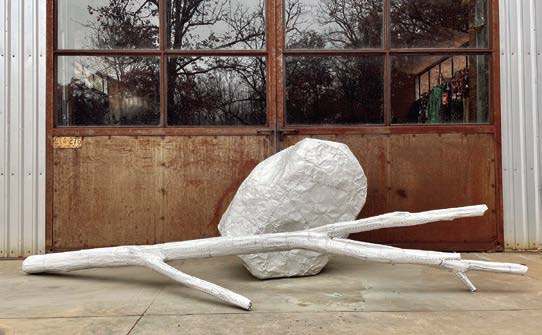
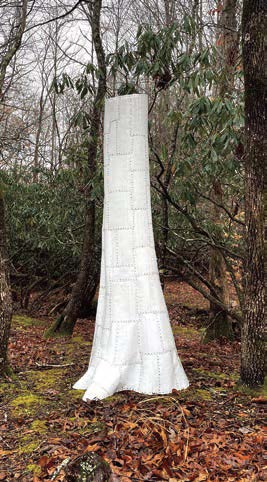
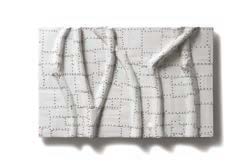
But Haley’s new work is quieter. More of an homage to nature than to power, he’s making white steel branches and trunks that lie tumbled or stand sawn, no longer alive but reaching, ghostly and elegant. They are a record of nature, he says, not an interpretation.

Making them is also a different process. Instead of pounding the repurposed roofing metal he uses for these works with massive machines, he rivets it together by hand, painstakingly, with thousands of individual rivets. He likens the process to quilting, to his grandmother’s own Depression-era quilts.

“I want to make sure I define the years I have left in the way that I want them,” says Haley, who is in his early 60s. That was true before Hurricane Helene hit his community so hard, before he and everyone around him found themselves without water or power for weeks on end. Before he found himself helping his neighbors, turning a welder into a generator to power his refrigerator, or clearing miles of local roads of fallen trees with his chainsaw.

After that, Haley looked at his tumbled white branches and saw something new. A premonition, perhaps, of what was to come.

Making the Tools

If his process has changed lately, what drives it hasn’t. Haley has always invented his own way of working and made his own tools to create his art. To fabricate his larger works, he had to figure out how to turn 5-foot-square sheets of weathering steel into a malleable artistic medium. He then had to take these rectilinear, 90-degree parallel planes and collide and combine them in unexpected and often sudden curves.

“It’s the tension that I find kind of juicy,” he says. That place — where man meets material, where straight and curved lines abut and diverge — has fascinated Haley since he was a boy. His family’s 3,000-acre wheat and cattle farm in Kansas offered wide-open vistas and a curving horizon, broken by a strict geometry of fencing and property lines. Also on the farm was a sizable metalworking shop, where Haley learned to weld and make things. Including machines; including art.

Today, after about 25 years in North Carolina, his work remains rooted in that past. “It’s an ongoing conversation between myself and the machines and the material and my worldview, and goes all the way back to the fact that I grew up on that farm in Western Kansas,” says Haley. “It’s all in there. It’s part of this big stew.”

The stew is constantly evolving. “I’m transitioning a little bit at my age,” he says. “I’m less interested in the public art scale.” One reason is the extensive time involved in making a massive work; another is the satisfaction he’s taking in creating on his own, without the four or five assistants needed to create his larger-scale pieces. As for a third, “I’m delving deeper into working alone, but also working towards work, instead of working towards deadlines,” he says. “I’ve always had a show or installation coming up. Now I’m trying to respond to what’s driving ideas in the studio, ideas that aren’t being forced by outside pressures. That’s a huge luxury, and one I’m enjoying. But it’s a little scary making work you don’t have a destination for.”

“Scary” doesn’t seem to daunt Haley. He’s doubling down on his fresh direction with the construction of a new studio on his property, a “clean space” for drawing and other less messy forms of art. Among the projects he’s planning there is the creation of a “drawing machine,” which he describes as “a way to take myself out of the equation, a way to bring a random component into the process, and then I’m in dialogue with that.” With a drawing utensil gripped by a mechanical arm, the machine he envisions would take its directions from nature. The weight of a bird on the various perches of a feeder, for instance, would move the pen or pencil up or down, left or right.

Separating himself from the physical act of making art, metaphorically and literally, is something Haley has explored for a long time. He believes the word “craft” is most useful as a verb, and he’s careful to keep it that way, “in service to the idea” rather than the point of it all. “So that if I decide to leave [the mark of] a weld, or take that [mark] away, that decision is based on where I’m trying to go with the work, not that I’m trying to show you some aspect of my ability to make crap,” he says.

It’s been a long time since Haley had to convince anyone of his ability to make art, “crap” or anything else. Some have compared Haley’s work with that of the celebrated, recently deceased Richard Serra, who also made massive, moving works of Corten steel. Haley credits Serra’s work with inspiring him to consider the power of mass and volume in his work. “Serra taught me that sculpture could go beyond the visual experience,” Haley says. “You could actually feel its presence.”

While that’s undoubtedly true in Haley’s large works, it is refined and distilled in his smaller ones. Perhaps that is due in part to the inspiration that’s fueling them. “I’ve found myself back in that place where I can forget to stop for lunch,” he says. “As an artist, there’s a reality: Oftentimes, art is just work. It might be inspired work, but a lot of days, you’ve got to get up, go to the studio, got to make it happen. So this has been fascinating to me, to be in that kind of a fresh place where all of the extraneous stuff has been taken away, and the process lends itself to a kind of meditative state.” 

Bookshelf

BOOKSHELF

December Books

FICTION

The Paris Novel, by Ruth Reichl

When her estranged mother dies, Stella is left with an unusual inheritance: a one-way plane ticket and a note reading Go to Paris. But Stella is hardly cut out for adventure — a childhood trauma has kept her confined to the strict routines of her comfort zone. When her boss encourages her to take time off, Stella resigns herself to honoring her mother’s last wishes. Alone in a foreign city, Stella lives frugally until she stumbles across a vintage store where she tries on a fabulous Dior dress. The shopkeeper insists that this dress was meant for her and, for the first time in her life, Stella does something impulsive. She buys the dress, and together they embark on an adventure. Her first stop: iconic brasserie Les Deux Magots, where Stella tastes her first oysters, and then meets an octogenarian art collector who decides to take her under his wing. Introduced to a veritable who’s who of the 1980s Paris literary, art and culinary worlds, Stella begins to understand what it might mean to live a larger life. 

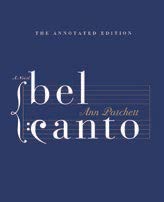
Bel Canto: The Annotated Edition, by Ann Patchett

First published in 2001, Bel Canto may be Patchett’s most beloved novel. Set in an unnamed South American country, at the home of the vice president, it is the story of a lavish birthday party honoring Mr. Hosokawa, a powerful Japanese businessman. Roxanne Coss, opera’s most revered soprano, has enthralled the international guests with a mesmerizing performance. The evening is perfect — until a band of gun-wielding terrorists takes the entire party hostage. What begins as a panicked, life-threatening scenario slowly evolves into something quite different, a moment of great beauty, as terrorists and hostages forge unexpected bonds, and people from different continents become compatriots. Now, more than two decades after this artistically daring novel’s debut, Patchett revisits her early work in this special annotated edition.

NONFICTION

Julia Child’s Kitchen, by Paula J. Johnson

Julia Child’s kitchen was a serious workspace and recipe-testing lab that exuded a sense of mid-century homey comfort. It has been on display at the National Museum of American History in Washington, D.C., for most of the past 20 years, and museum-goers have made it a top destination. Between lively narrative, compelling photography and detailed commentary on Julia’s favorite kitchen gadgets, Julia Child’s Kitchen illuminates the stories behind the room’s design, use, significance and legacy, showing how deeply Child continues to influence food today.

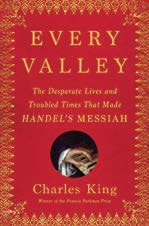
Every Valley: The Desperate Lives and Troubled Times that Made Handel’s Messiah, by Charles King

George Frideric Handel’s Messiah is arguably the greatest piece of participatory art ever created. Adored by millions, it is performed each year by renowned choirs and orchestras, but this work of triumphant joy was born in a worried age. Britain in the early Enlightenment was a place of astonishing creativity but also the seat of an empire mired in war, enslavement and conflicts over everything from the legitimacy of government to the meaning of truth. Every Valley presents a depressive dissenter stirred to action by an ancient prophecy; an actress plagued by an abusive husband and public scorn; an Atlantic sea captain and penniless philanthropist; and an African Muslim man held captive in the American Colonies and hatching a dangerous plan for getting back home. At center stage is Handel himself, composer to kings but, at midlife, in ill health and straining to keep an audience’s attention.

CHILDREN’S BOOKS

A Dragon for Hanukkah, by Sarah Mlynowski

Filled with holiday fun, exciting (and unusual!) gifts, family traditions and even a little bit of history, A Dragon for Hanukkah is the perfect book to celebrate the holiday or introduce new friends to old traditions. Grab your dreidel and join the celebration. (Ages 3-7.)

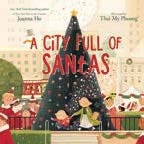
A City Full of Santas, by Joanna Ho

Is there a kid anywhere who hasn’t wanted to meet the “real” Santa? With that peppermint-chocolatey smell, sunny bright laugh, glittery-glowy presence, what could be more delightful? This sweet Santa story is for any child on your list who is determined to meet St. Nick himself. (Ages 3-7.)

Frostfire, by Elly MacKay

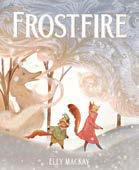
Those etchings you see on frozen windows? That’s frostfire — Snow Dragon breath. Snow Dragons, as you must know, live in snowbanks and dine on pine cones. And, if you’re quiet and truly believe, maybe you’ll see one. Any young dreamers or nature lovers will love this magical, snowy title. (Ages 4-7.)

Still Life, by Alex London

Of course, just when you finish creating your still life, a dragon is sure to stir things up. Art meets fantasy in this laugh-out-loud picture book with seek-and-find potential, a treat for that kid who loves jokes, riddles and a little silliness. (Ages 5-7.)

The Sherlock Society, by James Ponti

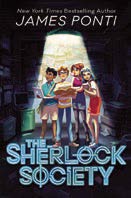
Action, adventure, cooperation, historical fiction and a grandpa with an awesome car named Roberta. For mystery lovers or anyone looking for a family read-together, The Sherlock Society has it all. (Ages 9-13.)