Hometown

HOMETOWN

Clear as Cursive

The handwriting on the scrawl

By Bill Fields

Hunting recently through a box of old stuff, most of which would have been thrown out long ago if I didn’t have a little pack rat in me, I found something I was glad hadn’t been tossed.

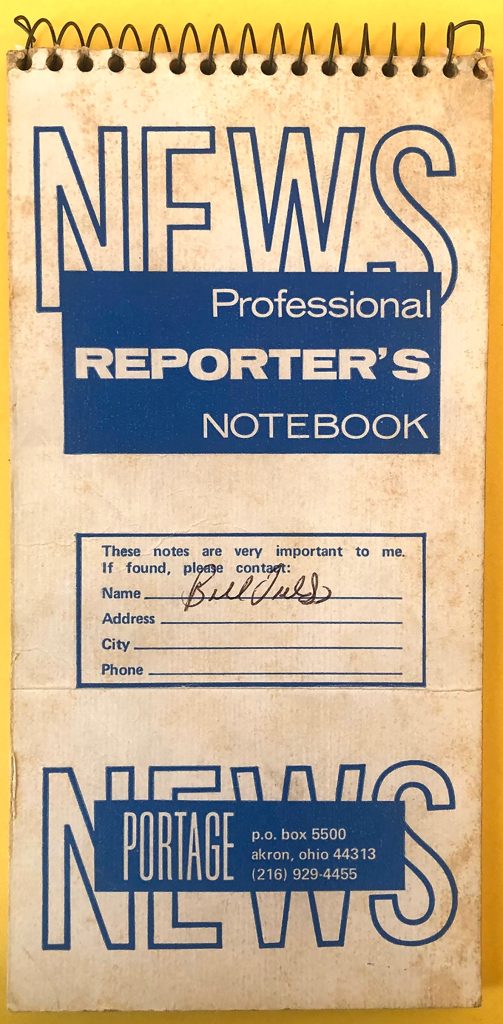
Over the years, I’ve filled many a reporter’s notebook. It’s a 4 x 8-inch lined pad with spiral rings at the top and cardboard covers, an essential tool for any journalist. Before the inconspicuously functional notebooks were widely available, while covering the turbulent civil rights movement in the American South for The New York Times in the 1950s and 1960s, Claude Sitton improvised them by cutting wider stenographer’s notebooks in half.

My discovery was of one of the first reporter’s notebooks I slipped into a back pocket, dating to 1979 when I was a student sportswriter for The Daily Tar Heel covering far less consequential events than Sitton — later the longtime editor of Raleigh’s News & Observer — was chronicling for the Times.

Beneath a creased and discolored front cover on its wide-ruled pages were my notes from assorted sporting events: North Carolina’s exhibition against the New York Yankees (green ink); a UNC-Duke baseball game (black ink); a spring football update from the Tar Heels’ second-year head football coach Dick Crum (blue ink).

“Going to keep it low and inside. Might even ask ’em to put the screen in front of the mound,” Carolina pitcher David Kirk told me the day before facing the two-time defending World Series champions. “If I get it up high, could be history. Chris Chambliss might hit one into Chase Cafeteria.”

“Sixth — P.J. Gay double off warning track.”

“OLB — Lawrence Taylor.”

Flipping through those old pages, I was pleasantly surprised that I could make out the vast majority of what I’d jotted down. Quotes from George Steinbrenner. “I’ve got professionals. Anybody who counts the Yankees out of the race because of spring is wrong.” Observations in the Yankees locker room before game time. “Pinella — cards, puffing cigarettes. Chambliss — 2 championship rings.” It wasn’t the neatest penmanship in the world, but it was readable.

I have notes from only a month ago that are harder to decipher.

That would no doubt be a disappointing admission for the person who taught me handwriting, Southern Pines third-grade teacher Peggy Blue, to hear. “Fine beginning in cursive writing,” Miss Blue noted on my report card in the fall of 1967. I earned straight As in “Writing” that year.

When it comes to notes taken on the job, there is a logical reason why I’ve become a sloppier notetaker. When I was in college, and for years afterward, tape recorders weren’t commonplace among journalists. Reporters took handwritten notes. In the case of a lengthy interview, if you weren’t on a tight deadline, you might type them up back in the office before writing a story. If you hadn’t written them so they were legible, you were out of luck.

Over the years, tiny digital recorders — and more recently, smartphones — have made it more convenient for journalists to record interviews. Convenient, verbatim audio leaves no doubt about what a subject said, but the technology has led to less thorough notetaking. Still, looking back on the period when I relied on pen and paper, I don’t recall being accused of misquoting anyone. Perhaps I inherited just enough of my mother’s steady, graceful penmanship, learned as a pupil of the Palmer Method in the 1930s, which endured into her 90s. 

I can’t imagine not having learned how to write longhand, with joined letters. In this century, though, there has been a trend away from mandatory instruction in elementary school. I was stunned to find out that a young relative, who is now about the same age as I was when I wrote those notes in 1979, wasn’t taught cursive and only knew how to print block letters. About 15 years ago, many states removed longhand as a requirement. “The handwriting may be on the wall for cursive,” an ABC reporter quipped in the lede to a 2011 story about the trend.

Since then, however, education officials have realized that even in a predominantly digital age there is practical and cognitive value in knowing cursive writing. Many schools have reinstituted it as part of the third-grade curriculum. And someday, a budding reporter might even write down the profound thoughts of a coach, as I did with Dick Crum 46 years ago: “We want to play fundamentally sound football.”

Out of the Blue

OUT OF THE BLUE

In a Word . . .

Finding new life in language

By Deborah Salomon

In 1914, George Bernard Shaw captivated London playgoers with Pygmalion, the story of a highfalutin’ professor of linguistics who transforms a grubby Cockney flower girl into a lady.

How?

By scrubbing her down and dressing her up, of course. Even more important, dressing up her diction and her vocabulary.

“Words, words, words!” Eliza complains, this time to music, in My Fair Lady, the musical adaptation that opened on Broadway in 1956, then on film in 1964, sweeping awards for eons.

Words (and accents, to a lesser degree) are a force, a knife that cuts both ways. The right word (le bon mot, a useful French expression) makes a favorable impression, while a pale one falls flat and an incorrect one can be an embarrassment.

Worst are overused words, like “eclectic,” a favorite of speakers trying hard.

Ideally, an unfamiliar word will be defined by its sentence, therefore appreciated, even celebrated.

Example: Every year, The Pilot enters state and national newspaper competitions. Reporters select their best work for consideration. Last year, I didn’t have much, so just for fun, I entered a food column about using my grandmother’s bent and stained aluminum pot lid, the only extant artifact from her kitchen. The narrative mentioned a friend who buried her burned, worn-out pots in the garden. No, I commented, I’m not that anthropomorphic.

The column was ordinary, bordering maudlin. The recognition it received, I’m sure, was for the quirky placement of that perfect word — a favorite, second only to onomatopoeia, whose definition mimics its sound. Think “meow.” Or “rustle.”

I get teased about using “big” words, mostly for variety. Nobody with a full closet wears the same old shirt every day, so why use the same old words?

One culprit is shrinkage. These days, communications must be concise. Get to the point. Speak clearly. Detailed emails — a pain. Is there an app? Just text, uh, txt me.

Enriching one’s vocabulary, however, has a bright side. You don’t need a university degree or online class, just some intelligent reading material where the writer uses words to paint a landscape, or a portrait, in nuanced shades. Find a thesaurus (a dictionary of words with their synonyms), online or on paper, and pick a word a week, something ordinary, like “quotient” for “amount.” “Unearth” for discover. Slip it into conversation. My favorite orphan word is “provenance,” which sounds not at all like its definition, but which I’ve used to investigate a beaded cashmere sweater found at Goodwill.

Don’t get too hoity-toity. Go literal rather than vague and obscure.

Or not. Better, maybe, go with whatever AI composes, since term papers, dissertations, business letters and short stories will soon flow from its omnipotence, sufficient but lacking moxie.

Great word, moxie.

In the end, words are like clothes; they reveal much about personality, mood, life, taste, experience. The right word livens a conversation like the maraschino cherry saves canned fruit cocktail from dessert oblivion. The study thereof is called etymology and can be achieved sans Henry Higgins, whose motive for upgrading Eliza became more, uh, ulterior than academic . . . if you get my drift.

As for Eliza’s “Words, words, words, I’m so sick of words!” rage, that’s what I call moxie. 

Bookshelf

BOOKSHELF

February Books

Fiction

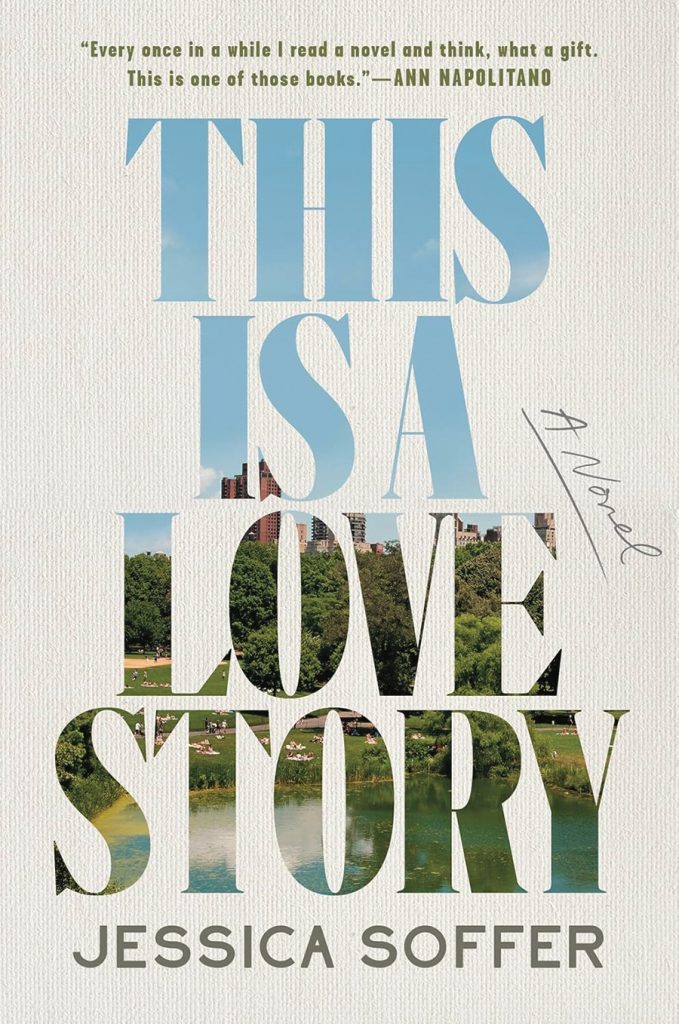
This Is a Love Story, by Jessica Soffer

For 50 years, Abe and Jane have been coming to Central Park, as starry-eyed young lovers, as frustrated and exhausted parents, as artists watching their careers take flight. They came alone when they needed to get away from each other, and together when they had something important to discuss. The park has been their witness for half a century of love. Until now. Jane is dying, and Abe is recounting their life together as a way of keeping them going: the parts they knew and the parts they didn’t always want to know. Told in various points of view, these voices weave in and out to paint a portrait as complicated and essential as love itself.

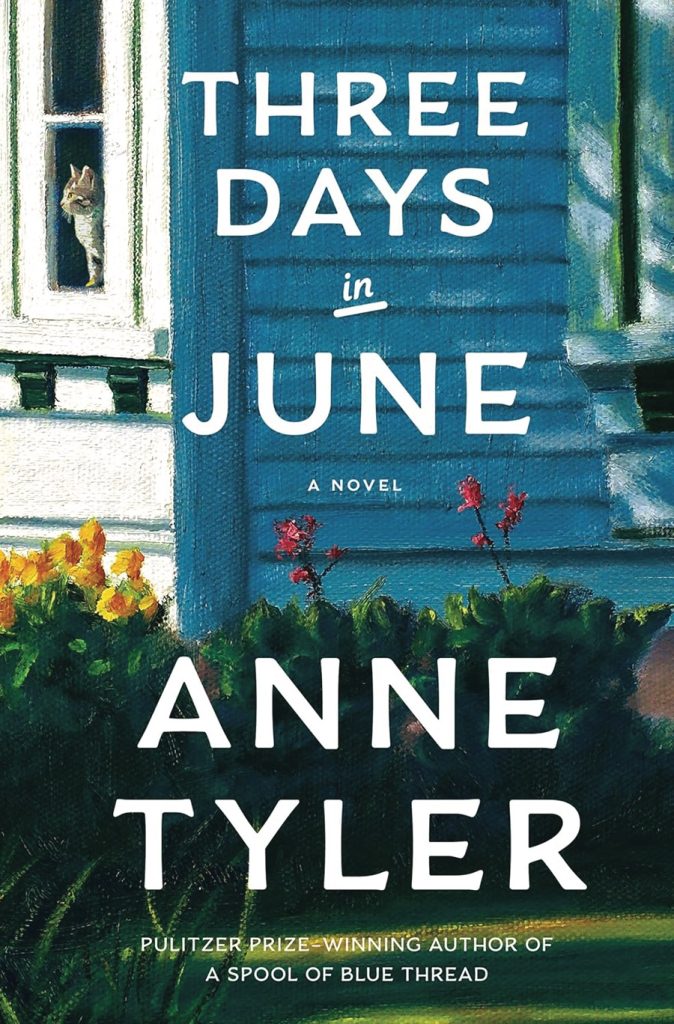
Three Days in June, by Anne Tyler

Gail Baines is having a bad day. To start, she loses her job — or quits, depending on whom you ask. Tomorrow her daughter, Debbie, is getting married, and she hasn’t even been invited to the spa day organized by the mother of the groom. Then, Gail’s ex-husband, Max, arrives unannounced on her doorstep, carrying a cat, without a place to stay, and without even a suit. The true crisis lands when Debbie shares with her parents a secret she has just learned about her husband-to-be. It will not only throw the wedding into question but also stir up Gail and Max’s past.

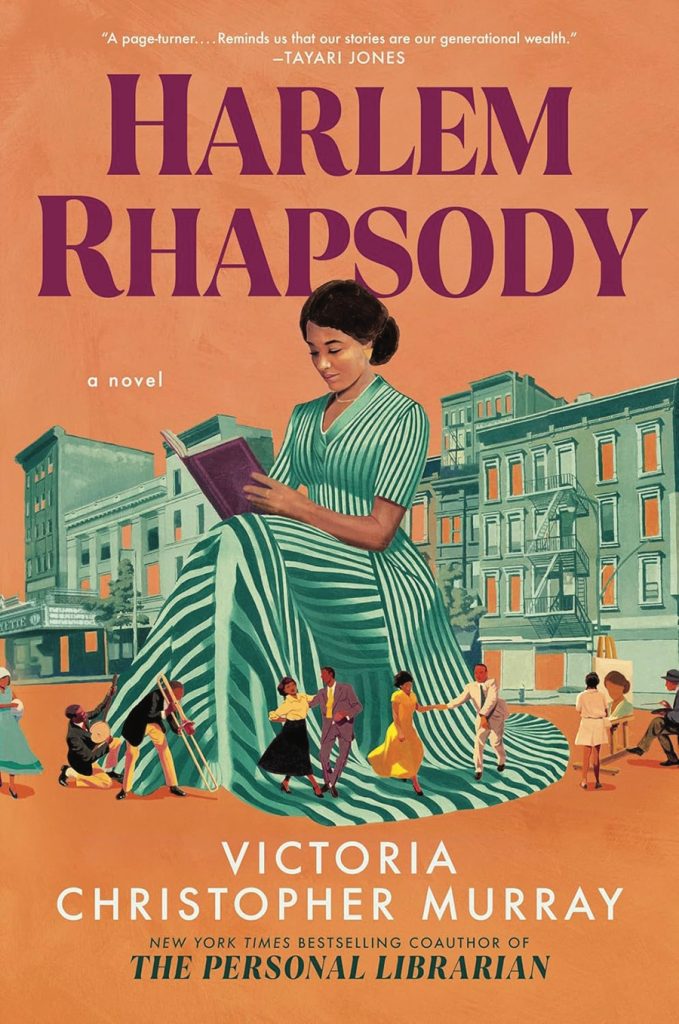
Harlem Rhapsody, by Victoria Christopher Murray

In 1919, a high school teacher from Washington, D.C., arrives in Harlem excited to realize her lifelong dream. Jessie Redmon Fauset has been named the literary editor of The Crisis. The first Black woman to hold this position at a pre-eminent Negro magazine, Jessie is poised to achieve literary greatness. But she holds a secret that jeopardizes it all. W.E.B. Du Bois, the founder of The Crisis, is not only Jessie’s boss, he’s her lover. And neither his wife nor their 14-year age difference can keep the two apart. Amid rumors of their tumultuous affair, Jessie is determined to prove herself. She attacks the challenge of discovering young writers with fervor, finding 16-year-old Countee Cullen, 17-year-old Langston Hughes, and Nella Larsen, who becomes one of her best friends. Under Jessie’s leadership, The Crisis thrives. When her first novel is released to great acclaim, it’s clear that Jessie is at the heart of a renaissance in Black music, theater and the arts. She has shaped a generation of literary legends, but as she strives to preserve her legacy, she’ll discover the high cost of her unparalleled success.

Nonfiction

Fearless and Free, by Josephine Baker

Published in the U.S. for the first time, Fearless and Free is the memoir of the fabulous, rule-breaking, one-of-a-kind Josephine Baker, the iconic dancer, singer, spy and Civil Rights activist. After stealing the spotlight as a teenage Broadway performer during the height of the Harlem Renaissance, Josephine then took Paris by storm, dazzling audiences across the Roaring ’20s. In her famous banana skirt, she enraptured royalty and countless fans — Ernest Hemingway and Pablo Picasso among them. She strolled the streets of Paris with her pet cheetah wearing a diamond collar. With her signature flapper bob and enthralling dance moves, she was one of the most recognizable women in the world. When World War II broke out, Josephine became a decorated spy for the French Résistance. Her celebrity worked as her cover, as she hid spies in her entourage and secret messages in her costumes. She later joined the civil rights movement in the U.S., boycotting segregated concert venues, and speaking at the March on Washington alongside Martin Luther King Jr. First published in France in 1949, her memoir will now finally be published in English. Through her own telling, we come to know a woman who danced to the top of the world and left her unforgettable mark on it.

Children's Books

Ten-Word Tiny Tales of Love,
by Joseph Coelho

Some go on and on expressing their love, but what if you had to condense your adoration into just 10 words? This stunningly illustrated coffee table-worthy picture book is filled with simple 10-word expressions of love to make your heart sing. Includes illustrations from Jon Klassen, Ken Wilson-Max, Sydney Smith and more! (Ages 7-10.)

Akeem Keeps Bees! by Kamal Bell

Knowing, growing, and flowing . . . a read-together title featuring the humans and bees from Sankofa Farms in Durham, North Carolina. The perfect choice for a nature lover, foodie or a young one who might BEE curious about where honey comes from. (Ages 4-7.)

Your Farm; Your Forest; Your Island, (three books)
by Jon Klassen

Who hasn’t dreamed of having an island, a forest, or a farm all your own? Klassen is that rare author who can create a board book that’s poignant for babies and adult readers alike. This tiny trio is a must for any bedtime bookshelf. (Ages 2-4.)

American Wings, by Sherri L. Smith and Elizabeth Wein

In the years between World Wars I and II, auto mechanics Cornelius Coffey and Johnny Robinson, nurse Janet Harmon Bragg, and teacher and social worker Willa Brown created a flying club, flight school and their own airfield south of Chicago. This incredible true story reads like an “I Survived” novel, telling the story of a few brave and daring individuals who followed their dreams, teaching both Black and white students to fly in an era of strict segregation. (Ages 12 and up.) 

Southwords

SOUTHWORDS

Snowblind

Go South, young man

By Jim Moriarty

When Golf World magazine, the publication birthed in Pinehurst in 1947 by Bob Harlow, had a vacancy in 1979, I was asked to leave my job as a sportswriter at the South Bend Tribune in northern Indiana to join the staff. In those days GW and its printing presses were housed in what is now one of Southern Pines’ municipal buildings along U.S. 1. Dick Taylor, the editor in chief, offered me the exalted position of the No. 3 person on a staff of, well, three. My official title was associate editor only because I don’t believe Dick thought it kind to use the term peon.

It was, however, a job that any self-respecting golf-obsessed journalist would have fallen all over themselves to get. And I took a cut in pay — which, by the way, was none too generous to begin with — to accept it. I did not, however, make this brilliant career move out of an unbridled love of golf. My wife, the War Department, our 3-year-old little girl, Jennifer, our cat, Tang, and I were driven out of South Bend by far more powerful forces — the Blizzard of ’78.

It began snowing on a Thursday. The Tribune was an afternoon paper, and I was doing the layout of the sports section that morning. I went in at 6 a.m., though to be honest this schedule often featured a phone call from the sports editor, Joe Doyle, who wanted to know where the hell I was. On that particular day, after discharging my office duties, I was set to travel with the Notre Dame hockey team to cover their Friday and Saturday night games against the University of North Dakota in Grand Forks. This would never happen. You try explaining to some people in North Dakota that you couldn’t make it because it snowed.

Anyway, at roughly 10 a.m. I left the office and attempted to go home. It had already snowed 20 inches or so. In fact, it wouldn’t stop snowing until Sunday, piling up something in the neighborhood of 35 inches altogether with drifts much, much higher. Trust me, that’s a rough neighborhood.

It was clear that getting home was going to be a challenge. Our modest house on Fox Street was more or less in the middle of the city, and while I managed to slalom, slip and swerve to within roughly four blocks of home, that was as close as I was going to get.

Up North, there are unwritten rules covering these things. One is that you don’t, under any circumstances, abandon your car in the middle of the road. One sunny day, the snowplow will come, and snowplows don’t give a damn about your car. So, when I’d gone about as far as I could go, I backed up, turned the wheel hard left, stomped on the accelerator and lurched into someone’s front yard. I came back to dig it out five days later.

That evening on the local news — please explain to me how we could get three feet of snow and not lose electricity in South Bend, but if a squirrel walks across a power line on Indiana Avenue seven blocks of Southern Pines goes dark for two days — the local sheriff gave a Knute Rockne-esque pep talk. It went something like this: “Now listen everyone, we’re going to get the emergency routes cleared as fast as we can, but the side streets are going to take some time. My advice to you is, if you really need to go somewhere, start digging.”

And we did. The whole neighborhood. We dug an elaborate network of paths to each other’s houses. The snow was two Jennifers high on both sides. The shoveling brigade dug out the alley behind our row of houses — no plow was ever going back there — so people could get their cars out of their garages. The War Department’s sister had left her copper-colored Hornet parked next to our garage in the backyard while she was off to college. We didn’t see it again until April.

True to the sheriff’s word, the emergency routes were cleared with reasonable dispatch. People attached little orange flags on sticks (the kind you see on some bicycles) to their cars so they could see one another at intersections.

Nothing came down our street for seven days, and then it was a front-end loader. So, when Dick Taylor called, North Carolina seemed like a very good idea indeed. I could figure out all that pesky golf stuff later.

Almanac

ALMANAC

Almanac January 2025

By Ashley Walshe

January is a flickering candle, a blanket of starlight, a question blurted in the dark.

Before the day breaks, the quiet morning lures you into its luscious chamber. Outside, whispers of ancient myths illuminate the inky sky. You light a candle, watch the flame perform its sacred dance.

Quivering in perceived stillness, the fire speaks in a language raw and primal. What but the ecstasy of darkness could make the light act as a howling
dervish? What but the silent tongue can taste the
succulence of nothing?

Deep in the forest, a barred owl dances like a candle, wings raised as he bobs and sways in naked branches.

Who cooks for you? he cries into the silken void. Who cooks for you-all?

The quiet cradles every note.

Who cooks for you? he blurts again, urgent and steady.

The candle shivers. The silence deepens. The mystery bellows back.

Soon, the brightest stars will fade into the tender blush of dawn. Flickers of a hidden world will vanish. The everything of silence will be gone.

Sop up the rapturous blackness of this pregnant morning. Be as the trembling candle — danced by an unseen song. Let the silence deepen, let the darkness sweeten, let the mystery make itself known.

Out With the Old

Nothing lasts forever. But the mail-order fruitcake comes pretty darn close.

Dig into the history of this notable loaf and you may find yourself down the nut-studded rabbit hole. Ancient Egyptians buried their pharaohs with it. In ancient Rome, the dense cake sustained soldiers in battle. And in the early 18th century, “plum cake” was outlawed throughout Continental Europe on account of its “sinfully rich” ingredients.

What was once a symbol of grand indulgence became a cheap-and-easy Christmas gift when department stores began stocking their shelves with the commercially made wonders we all know and, well, know. Some love it, some loathe it, and — on January 3 — some hurl this Yuletide offering into the great blue yonder.

National Fruitcake Toss Day started in Manitou Springs, Colorado, in the 1990s. Their annual event, called the Great Fruitcake Toss, features various competitions in which participants launch the brick-like loaves by hand, slingshot or cannon. Fruitcake remains are donated to local farms for animal feed or compost. A gift that keeps giving indeed.

Winter Bloomers

Bless what blooms in this barren season: Christmas roses, early crocus, daffodils, snowdrops, clematis and — what heavenly fragrance! — aromatic wintersweet.

Translucent yellow flowers adorn the bare branches of this deciduous shrub, perfuming the air with lemony sweetness. Native to China, this woody ornamental thrives in full sun and moist, well-drained soil. Nothing like a dainty olfactory delight to greet us at the dawn of this bright new year. What’s best? The deer can’t stand it.

First Impressions

FIRST IMPRESSIONS

First Impressions

A home with a sunny disposition

By Deborah Salomon    Photographs by John Gessner

Who says you can’t tell a book by its cover? Or, for that matter, a house by its façade?

This one — with bright yellow clapboards, bumpy fieldstone walkway and fanciful front porch — almost shouts “Welcome!” from the end of a long wooded driveway opening onto a busy road. Carry-On Cottage, its name posted on a tree, was built in 1937, and sounds as upbeat and admired as one of its previous owners, Miss Hall, a legendary fourth-grade teacher.

Further provenance is unnecessary. Given the enthusiasm and skills of owners Linda and Larry Wolf, how could living there not be a sunny experience?

Linda and Larry were high school sweethearts in Connecticut, married during college, lived in Boston, then on Linden Road in Pinehurst. Larry, fit and perpetually tanned, directed tennis programs at Pinehurst Resort and elsewhere. Linda attended the New York School of Interior Design. Renovation spins their wheels. They bought Carry-On Cottage in 2005. “A home base for our three kids,” Linda explains, as well as a project worthy of their skills.

The three kids now arrive with five grandkids to an expanded homestead that fairly oozes personality expressed in bright colors, family memorabilia, Design Market “finds” like metal end tables painted bright red, and the occasional surprise: Linda points to two interior split (“Dutch”) doors, left behind by an owner with tall dogs who objected to being shut away. A framed sign from The Tennis General Store recalls a previous business venture. A tiny table set for chess reminds Larry of his parents, and a stormy seascape by son Tyler represents Linda’s bout with chemotherapy.

Renovations, as expected, went way beyond cosmetic. All systems needed replacing. The one bathroom begged an upgrade but in 1930s black and white, with beadboard panels. Two additions happened at separate times. The first resulted in a small TV den adjoining the kitchen, the other a master suite/sitting room/spa bathroom. New window frames were made to match the old. Hooked rugs over original knotty pine floors add character, as do glass doorknobs. The armoire was rescued from the Pinehurst Hotel, painted black and distressed, while the carved settee came from grandparents.

A four-poster bed, antique quilts and family photos complete the retro charm.

Linda didn’t shy away from splashy floral upholstery in the living room, the colors echoing her and Tyler’s paintings, several depicting their favorite hydrangeas, others Cape Cod scenes mounted on deep-turquoise walls, a color furloughed from the modern décor palette.

For Larry, wood is a hot topic. Tennis, it seems, isn’t his only game. Observe the massive, rough-hewn corner cupboard in the small TV room. “I made it for the children’s toys,” Larry says, with modest pride. He also made their dining room table, a patio picnic table and a long bench. The edge of his low coffee table bears teeth marks left by the grandchildren. Other handiwork, Linda says, “was made to look old,” while some light fixtures surely arrived by FedEx.

For the last century renovators have come to lavish space and funds on kitchens. Jumbo appliances circling islands weren’t an issue in the thrifty ’30s. Linda and Larry’s kitchen, a carefully planned second renovation completed during the COVID shutdown, is a small pass-through done in black and off-white, with a two-seat breakfast bar. For this cooking couple, more important than the latest gadget is a cookbook written and illustrated by the Wolf children, a compilation of their Grandma Bonnie’s recipes. Sausage gravy, anyone?

Despite the attention lavished on the interior Larry calls the cottage an “outside house” where, weather permitting, Christmas brunch is served on the patio. His al fresco activities include replanting donated dead chrysanthemums which, few people realize, are perennials that will bloom again. Larry’s raised beds yield tomatoes and peppers, which he pickles.

The Wolfs, soon celebrating their 50th anniversary, have accomplished what many couples desire without achieving: “This will be our retirement home,” Linda says. A manageable size, convenient location, repository of cherished family artifacts, informal and sturdy on a big lot with a firepit and a shed.

To seal the deal, the exterior glows an appropriate sunshine yellow. Now who says you can’t judge a book by its cover?

Writer’s Retreat

WRITER'S RETREAT

By Bill Case

In 1938 John P. Marquand’s breakthrough novel, The Late George Apley, won him the Pulitzer Prize. From 1939 until his death in 1960 at age 66, six Marquand novels cracked the top 10 in annual sales. No author, including Ernest Hemingway and John Steinbeck, surpassed his output of bestsellers in that time frame. During Marquand’s heyday, he appeared on the covers of Time and Newsweek magazines, and Life magazine labeled him “the most successful novelist in the United States.”

Thus Pinehurst was abuzz in early 1956 when it was learned the famed author was staying in town for the winter. Convinced there was more October-like weather during colder months in Pinehurst than anyplace else, Marquand rented a house for the season — Nandina Cottage —and would purchase it three years later. He described its location as “the first house on the right after the double road becomes a single road, coming in from Southern Pines.”

The writer became enamored with the Sandhills during monthlong visits in 1954 and ’55 when he lodged with old friends Gardiner and Conney Fiske, Bostonian patricians who wintered in Southern Pines. The Fiskes’ home, called Paddock Jr., was in horse country. Conney rode in hunts (sidesaddle, no less) with the Moore County Hounds. Friends since 1912, John and Gardiner met as undergrads at Harvard University, where Marquand wrote for The Harvard Lampoon and Fiske served as the magazine’s business manager.

Though the Sandhills constituted a relaxing change of scenery for Marquand, he did not curtail his writing. His early morning hours in Pinehurst were invariably spent working on new pieces. “As of this week,” noted a reporter who interviewed the author for The Pilot in February 1956, “he has just finished a serial for the Saturday Evening Post — which required a trip to the Orient last year. He has ‘almost finished’ an introduction to novels of his that are being reprinted; he is doing a couple of pieces for Sports Illustrated magazine; and he’s getting ready to start a new novel: subject undisclosed.”

For roughly 10 days each month, family matters and business dealings necessitated Marquand’s departure from his “fairly quiet life” in Pinehurst for trips to Cambridge, Massachusetts and/or New York City. He owned a home in Cambridge, where his second wife, Adelaide, spent the bulk of her time, sans John. On visits to New York, Marquand conferred with representatives of his publisher, Little, Brown and Company. While in the city, he generally bunked in with longtime friends Carl Brandt and his wife, Carol.

Brandt, Marquand’s literary agent since the early 1920s, helped jumpstart his client’s career by arranging for regular placement of his early short stories in the Saturday Evening Post, Cosmopolitan and other magazines. Both Carl and Carol (also a literary agent) contributed to Marquand’s climb to the top rung of authors by encouraging him to write novels. Carol also assisted John’s writing by persuading him to orally dictate his musings to a secretary.

Marquand’s most successful novels, including his Pulitzer Prize winner, contained heavy doses of satire. Several targeted the perceived foibles of New England’s old guard upper crust — the pomposity, clannishness, snobbery, excessive focus on family history and devotion to exclusive social clubs. While Marquand’s characters also shared some redeeming qualities, Boston Brahmin types nevertheless resented his portrayals.

When asked whether he might someday be tempted to write unflatteringly about Pinehurst and its residents, Marquand responded that the prospect seemed unlikely, adding that he “could perhaps some time write a book about Pinehurst — but then I’d probably not be able to come back here again.”

On the surface, Marquand seemed to possess the same deep roots of the very bluebloods he satirized. He came from old-line stock, his ancestors arriving in the Colonies in 1732, settling in Newburyport, Massachusetts. There was family money, at least at first. The early generations of Marquands operated a thriving shipping business, so successful that John’s great-grandfather worried his wealth had become an embarrassment to his Puritan nature.

The writer’s grandfather, also named John P. Marquand, made his mark as a New York stockbroker and investment banker. When he passed away in the 1890s, each of his six children, including the author’s father, Philip Marquand, inherited approximately $100,000, a tidy fortune at the time.

With the proceeds of that bequest, Philip purchased a seat on the New York Stock Exchange, and life was luxurious for Philip, wife Margaret, and young John in their spacious Rye, New York, home. The Marquands employed a cook, maid, coachman and a nanny. But when the Panic of 1907 upended financial markets, Philip lost everything, including his seat on the exchange. The family’s upscale lifestyle came to a screeching halt. As John remarked later, “I was just a little boy living comfortably with my parents, and the rug was pulled out from under me.”

Philip, having been trained as an engineer, decided his best chance for a financial rebound was to seek employment on the West Coast, but he and Margaret concluded it was not financially feasible for their son, then 13, to accompany them. Thus it was arranged in 1907 for John to live with his two maiden aunts (Bessie and Mollie) and grand-aunt (Mary) in Newburyport at Curzon Farm, a family homestead built by the prior generation. It had survived tough economic times thanks to the frugality of the aunts, who, perhaps, lived a bit too parsimoniously, since the dilapidated Curzon Farm was in dire need of repairs throughout Marquand’s residence.

During that time yet another aunt, Margaret (aka Greta) Hale, frequently visited Curzon Farm along with her six children. Greta was the wife of Herbert Hale, the son of Unitarian theologian Edward Everett Hale, author of a classic 1863 short story, “The Man Without a Country.” Coincidentally, Edward Hale also had connections to Pinehurst. At the behest of village founder James Tufts, he conducted nondenominational church services, a religious forerunner to what would become The Village Chapel.

Marquand befriended his Hale cousins, but quickly became aware of the economic disparity between them and himself. Enrolled at prestigious private schools, the cousins enjoyed vibrant social lives. By contrast bookish and shy, John attended the local Newburyport High School and had few social outlets. His tight-fisted aunts exacerbated his discomfiture by informing him he would never be able to afford life’s niceties.

Marquand was a good enough student to earn a scholarship to Harvard University, beginning in the autumn of 1911. Though he aspired to be a member of one of the university’s famous social organizations, such as the Porcellian Club, founded in 1791, none asked him to join.

Marquand would later satirize the Harvard clubs for their pretentiousness, but by the same token, he grudgingly admired the traditions and sense of kinship the clubs promoted — an ambivalence reflected in his novels. Though later referring to himself as a “poor social outcast” at Harvard, Marquand’s time there could not have been all bad. Writing for the Lampoon carried weight on campus.

After graduating in 1915, Marquand landed a position as a reporter with the Boston Transcript newspaper, earning $15 a week. He fell in love with and devotedly courted the beautiful Christina Sedgwick, progeny of a legendary Boston family — the very sort Marquand would later skewer. The young man was awestruck upon learning that Christina’s uncle, Ellery Sedgwick, was editor of Atlantic Monthly. He could not imagine a lowly hack reporter like himself ever writing anything worthy of publication in Uncle Ellery’s highbrow magazine.

Perhaps to impress Christina, Marquand joined a local National Guard unit — Battery A of the Massachusetts Field Artillery. In June 1916, his unit was ordered to Mexico to pursue the bandit Pancho Villa. Marquand made more friends in three months in Battery A than in his four years at Harvard. During his time on the border, he developed a gift for oral storytelling. His histrionic and comic presentations induced sidesplitting laughter from fellow soldiers.

When America was drawn into World War I, Marquand joined the Army. In contrast to his Mexican experience, bloodshed and death surrounded him on the fields of France, though he managed to return from the war physically unscathed.

After discharge from the Army, Marquand headed to New York with hopes of earning an income that would persuade Christina to marry him. To save money he lived with his Hale cousins. Following a brief stint as a Sunday feature writer for the New York Herald, Marquand entered the field of advertising, pitching slogans for Yuban Coffee and Lifebuoy Soap. But he despised the ad world and began considering whether he could make a living as a writer.

After observing that many fictional pieces appearing in the post-war magazines were “about a man of low social standing who falls in love with a girl who’s socially above him,” Marquand submitted a short story with that theme to the Saturday Evening Post. To his surprise, they bought it. To build on this triumph, he retained Carl Brandt, who assisted in placing more stories, generally for $500 apiece. Eventually Marquand segued to the writing of mystery stories, featuring Mr. Moto, a Japanese secret agent specializing in solving international crimes.

Marquand asked Christina to marry him several times during their seven-year courtship, though she, concerned they could not live comfortably on his writing income, put him off. When Marquand (with Brandt’s aid) sold a serialized novel in 1922 to Ladies Home Journal for $2,000, she consented. The newlyweds settled on Beacon Hill, Boston’s high society section, and would parent two children.

The marriage encountered turmoil almost from the start. Christina was needy and John was impatient with her, particularly when she interrupted his work. So that he could write in peace, he rented a small room on Charles Street. To further avoid his wife, Marquand frequently bivouacked with the Fiskes at their Beacon Hill apartment.

Christina’s mother compounded the couple’s conflicts, disparaging her husband’s writing, labeling it cheap pulp fiction — hardly writing at all! “Why,” she wondered out loud, “can’t John write something nice for Uncle Ellery at Atlantic Monthly?” In fact, the Atlantic paid its contributing writers a pittance compared to the sums other publishers were doling out for Marquand’s potboilers.

John and Christina divorced in 1935. By then, Carl Brandt had married Carol. Marquand’s best friends were now two married couples — the Fiskes and the Brandts. In his biography The Late John Marquand, Stephen Birmingham writes that Marquand “enjoyed being the third point in a triangle that included a happily married couple . . . In these triangles he felt safe, comforted, loved — and assured of free lodgings, which he definitely appreciated.”

It was during the breakup of his marriage that Marquand began work on The Late George Apley, his satirical portrait of Boston’s upper class. To make sure he was headed in the right direction, he sought critical advice from Conney Fiske. Her insider’s knowledge of Old Boston and awareness of both the frivolities and positive attributes of her class helped temper Marquand’s occasionally derisive tone. Conney would continue to play a sounding board role for Marquand throughout his career.

Set in the 1930s, The Late George Apply is the story of a wealthy gentleman, John Apley, who asks the undistinguished Boston author Horace Willing to write a no-holds-barred biography of John’s recently deceased father, George Apley. The request presents a dilemma for the fictional Willing, having been a friend of the deceased and thus naturally reluctant to disclose any unflattering details of Apley’s life.

Willing tells the story in epistolary fashion, quoting correspondence from his friend’s personal papers. Against all mores of upper crust (and Protestant) Bostonians, Apley courts a lovely Irish Catholic girl, Mary Monahan. This sort of departure from the natural order of things is, however, doomed on Beacon Hill. Apley is unable to resist societal pressures and abandons the relationship. Willing, a bigger snob than his deceased friend, unsurprisingly approves of this decision, characterizing the dalliance as “a youthful lapse” on George’s part.

In a telling letter quoted by Willing, Apley admonishes his Harvard student son, John, that nothing, including the achievement of good grades, is more important than joining a  prestigious club — an obvious reference to Marquand’s own Harvard experience.

In the letters the Beacon Hill elite stick together, travel together and attend the same schools. They tend to avoid contact with outsiders — even wealthy ones — if they lack a Back Bay connection. Though pointing out the pomposity of all this, Marquand subtly expresses admiration for the positive qualities of George Apley: strong support of public and charitable activities, adherence to tradition, and unflinching loyalty.

While the book was no potboiler, it brought Marquand to the attention of more intellectually inclined readers than those of his Mr. Moto series. When he was announced the winner of the 1938 Pulitzer Prize — besting Steinbeck’s Of Mice and Men — his ex-mother-in-law must have been aghast.

In the same year he divorced Christina, Marquand met Adelaide Hooker on a visit to China. He was immediately attracted to her and, presumably, to her family legacy as well. Her direct ancestor, Thomas Hooker, founded Connecticut. Adelaide’s father headed an electrochemical manufacturing company, and her sister was the wife of John D. Rockefeller III. John and Adelaide would marry in 1937 and parent three children. However, Adelaide’s personal ambitions and insistence on involving herself in John’s business affairs aggravated him. She, in turn, suspected John of unfaithfulness, and not without cause. Over their 22-year marriage, mutual bitterness increasingly characterized the couple’s relationship. As he had with Christina, John sought escape, often in the companionship of the Fiskes and Brandts.

Though domestic tranquility proved largely illusive for Marquand, financial success was not. His follow-up novel, the New England-themed Wickford Point, placed fourth on the bestseller list for 1939. Though cast as fiction, the book appears to be a thinly veiled satirical reprise of Marquand’s childhood experiences at Curzon Farm. The members of the novel’s Brill family are recognizable stand-ins for John’s quirky, shabbily gentile aunts, and legacy-conscious Hale cousins. The book’s protagonist, Jim Calder, seems a dead ringer for John.

Marquand turned to the ominous backdrop of World War II to frame his mid-1940s novels. So Little Time, published in 1943, ranked third in the bestseller list that year. The story deals with Americans who could not bring themselves to confront the likelihood of war in the uncertain period leading up to Pearl Harbor. The author followed this success in ’46 with another sales hit, B.F.’s Daughter, in which the rebellious daughter of a conservative tycoon (B.F.) leaves her good-guy boyfriend to marry a left-leaning scholar. Enhancing the melodrama is the former boyfriend’s death in the war. Conflicts galore follow.

When World War II ended, many returning G.I.s chose business careers to achieve success and financial security. Marquand, observing a downside in climbing a company’s organizational ladder, authored Point of No Return in 1949. The plot centers around the question of whether the fictional Charles Gray will win a promotion to vice-president of the bank. While his wife, Nancy, desperately wants it to happen, Charles is ambivalent. Disillusioned by the rat race and feeling looked down upon by the town’s elite, he is certain that obtaining the vice-president position will not lead to happiness. Nevertheless, when he ultimately receives the promotion, Gray dutifully accepts it. Life goes on, albeit unsatisfactorily. Marquand’s rather dreary ending suggests that the Charles Grays of the world are powerless to resist society’s expectations, and it is futile for them to try.

Marquand novels were made into movies (and later television dramas) featuring major Hollywood stars like Barbara Stanwyck, Van Heflin, Susan Hayward, Kirk Douglas, Ronald Colman, Robert Young and Hedy Lamarr. Peter Lorre played a recurring role as Mr. Moto in eight films. Enhancing Marquand’s income from novels and films were commissions earned from his stream of short stories, which magazines continued to snap up. He also became a Book of the Month Club judge, a gig paying $20,000 annually. By 1950, his combined annual income from these assorted ventures topped $100,000, remarkable for the time.

His success led to other perks. With Gardiner Fiske greasing the skids, he joined Boston’s Somerset Club, the preferred club of Boston Brahmin families. He played golf at another aristocratic haunt, Myopia Hunt Club. Harvard welcomed its newly discovered favorite son with open arms. Literary critic Terry Teachout noted that Marquand “bought his way into society with money made by writing stories and novels satirizing the world that had initially spurned him.”

Marquand generally played golf as a single at Pinehurst’s five courses, accompanied only by caddie Robert “Hard Rock” Robinson. Hard Rock, a charter member of the club’s Caddie Hall of Fame, cheered Marquand’s intermittent good shots. But when the putts weren’t falling, Robinson would lighten the author’s mood by relating tales from his own colorful past. A tap dancer in his youth, Hard Rock appeared in early Fox Movietone films and claimed to have once danced with Gloria Swanson.

Soon after his arrival, Marquand joined The Tin Whistles, a membership society of Pinehurst Country Club’s male golfers formed in 1904. Given Marquand’s golf bashfulness, it is unlikely he made many appearances in society competitions, and there is no record of him having won anything, though he did become a regular attendee at Tin Whistle social occasions. His affability and whimsical humor must have made a favorable impression, since the author was elected to the organization’s board of governors and served on its Audit Committee.

Marquand also joined The Wolves, a men’s bridge club. Friend and fellow Wolves member George Shearwood recalled a game of bridge with John that “died a natural death somewhere around the second deal, if, indeed, it ever even got that far” once Marquand began spinning tales.

Guests at Pinehurst’s cocktail parties experienced Marquand’s stand-up act in its top form. “Give him an audience, however small, and he was off,” marveled Shearwood. “He was a terrific storyteller, the more so with his hand wrapped around a glass, whose contents may have contributed somewhat to his bent for the sardonic, satiric and sometimes almost satanic.”

Marquand made friends with a number of Pinehurst couples, including the Shearwoods, and hosted numerous gatherings at Nandina Cottage. Despite immersion in the village’s social whirl, he did not neglect his morning writing routine, dictating to secretary Marjorie Davis, who stayed in a small apartment over the garage. One novel Marquand partially wrote there, Sincerely, Willis Wayde, contained a Pinehurst reference when Wayde attends a convention at the Carolina Hotel.

He also penned a hilarious spoof of country clubs for Sports Illustrated titled “Life at Happy Knoll.” One character, Old Ned, serves as Happy Knoll Country Club’s bartender. He can’t mix drinks worth a damn, but management fears replacing him because he knows too much. Though a poor mixologist, Ned is an attentive listener and a master at getting overserved members to unburden themselves, hearing more confessions of adulterous affairs than a Catholic priest.

Then there is the club’s golf pro, Benny Muldoon. Having won the state open, he threatens to leave Happy Knoll for more profitable digs at rival Hard Hollow Country Club. Despite his golf chops, Benny is a terrible instructor who never improved a member’s game. He’d rather chase women than teach them. Yet management views it imperative to overpay Benny so Hard Hollow won’t snatch him away.

Enterprising young board member Bill Lawton suggests the club liven up its annual dinner by hiring a “professional drunken waiter” for the evening’s entertainment. A more senior member responds, “Why pay for an artificial drunken waiter when flocks of real ones would be present at no additional cost?” While members at Marquand’s two real golf clubs, Myopia Hunt and Pinehurst Country Club, may have speculated as to whether the author was satirizing them, it’s doubtful he was targeting Pinehurst. He revered the place. “At least it has one thing that other resorts lack,” he wrote, “a consistent and carefully maintained tradition. I know of no other winter resort where money in and of itself counts for so little.”

Though Marquand’s Pinehurst experiences during the late 1950s brought him a degree of tranquility, unsettling events disrupted his personal life. He constantly warred with Adelaide before finally divorcing. His two best friends, Gardiner Fiske and Carl Brandt, passed away. Bouts of loneliness seem to have gripped Marquand, given that he asked both newly widowed Carol and Conney to marry him. Both women declined, though Carol and John apparently did maintain an intimate relationship.

The loss of his close friends caused Marquand to brood. “Just think,” he reflected, “I’ve spent all my life working so I can meet and have fun on their own level with people like the people at Pinehurst, and now all the best ones are dead or dying, and all the rest are nothing but God-damned fools.”

Marquand mitigated his ennui with public appearances and peripatetic travel to far-flung places. The Pilot, keeping track of the whereabouts of locals, reported his excursions to Boca Grande, Florida; Italy; the Virgin Islands; Greece; and east Africa. His six-week visit to the latter destination was made in the company of travel agent George Shearwood, 

On July 15, 1960, a few months after his African journey, Marquand died suddenly in his sleep at his summer home in Newburyport, Massachusetts. He was 66. Shearwood summed up his friend’s time in Pinehurst: “John Marquand, in those winters of his life down here, full of prestige, and still strutting in stage center to the enjoyment of all of us and himself in particular . . .  a very relaxed, amusing good companion who fitted into the local scene with ease, and perhaps a sense of happy relief at being far removed from the crowded world in which he fought his way to the peak of his profession.”

While Marquand reached the top rank of authors during his lifetime, it is also true that neither he nor his writings achieved the lasting import of a Steinbeck or Hemingway. Perhaps it is because the subjects he generally tackled, though riveting in their time, became passe. He held no illusion that his fame, or that of his novels, would long endure. “When you are dead,” he mused, “you are very dead, intellectually and artistically.”

Forever Gatsby

FOREVER GATSBY

Forever Gatsby

F. Scott Fitzgerald's masterpiece turns 100

By Stephen E. Smith     Photographs by Tim Sayer
Photographed at Weymouth Center for the Arts & Humanities

At 1 p.m. on Thursday, January 27, 1966, I sat in the old Southern Railway depot in Greensboro waiting to catch the Peach Queen to D.C. for the semester break. It had been snowing all day, and the train was running late, but I’d brought along my English 112 anthology with the intention of reading The Great Gatsby, which was assigned to all second-semester freshmen: “In my younger and more vulnerable years my father gave me some advice that I’ve been turning over in my mind ever since . . . ” and so forth.

I tried to connect with the characters, but I didn’t know anyone like Nick Carraway or Tom and Daisy Buchanan. My family didn’t drive a snazzy automobile or live in a mansion with a swimming pool, but I read through chapter five before putting the novel aside. I spent the remainder of the evening playing penny-ante poker.

The conductor called “All aboard!” at about 11 p.m., and my fellow refugees and I climbed onto an olive-drab heavyweight pre-war passenger car that had been added to the train to accommodate the increase in ridership. The heat wasn’t working properly and the lighting was poor, but I picked up reading Gatsby in chapter six as we lurched out of Greensboro. By the time we arrived in Richmond, Fitzgerald was waxing poetic and I’d made the necessary connection:

“When we pulled out into the winter night and the real snow, our snow, began to stretch out beside us and twinkle against the windows, and the dim lights of small Wisconsin stations moved by, a sharp wild brace came suddenly into the air. We drew in deep breaths of it as we walked back from dinner through the cold vestibules, unutterably aware of our identity with this country for one strange hour, before we melted indistinguishably into it again.”

I finished my reading of Gatsby as the Peach Queen rocked through northern Virginia. It was still snowing, and it occurred to me, in my fatigued, mildly sentimental state, that Fitzgerald was correct: the future was already gone, “ . . . lost in the vast obscurity where the dark fields of the republic rolled on under the night.” It was obvious that he had a clear vision of what it meant to be an American: “ . . . tomorrow we will run faster, stretch out our arms further. . . .” I knew, too, that the novel wasn’t intended to be read as a realistic depiction of life. It was an allegory with meaning and intent beyond its narrative components. Mostly, I was struck by the novel’s resonance — the futility of Gatsby’s untimely demise — and during the semester break, my mind kept drifting back to passages that struck me as lyrically poignant. I’ve been an admirer of Gatsby ever since.

In more than 50 years of hanging out with writers of various stripes and persuasions, I’ve never known one who didn’t consider F. Scott Fitzgerald’s The Great Gatsby an essential and enduring moment in American literature. Gatsby was published 100 years ago, and considering the intervening Great Depression, World War II, the endless military, economic and political turbulence that has bombarded our consciousness — and the sad fact that we now live in an America where the laundry detergent we buy amounts to a political statement — it would seem inevitable that the novel would have lost some of its relevance. But that has not happened. For the thoughtful reader, Gatsby speaks as clearly and profoundly now as it did in 1925.

It’s reasonable to expect contemporary audiences to be mildly annoyed by the social ambiguities that intrigued readers a century ago. For example, there is no justice in Gatsby. In the early 20th century narratives — cinema, drama, black and white TV, print media — the bad guys rarely got off without suffering the consequences of their misdeeds. Tom and Daisy, the characters Gatsby most admires, betray him, mastermind his murder by proxy, and are none the worse off for having done so. “They were careless people, Tom and Daisy — they smashed up things and creatures and then retreated back into their money or the vast carelessness, or whatever it was that kept them together and let other people clean up the mess they had made.” There’s undoubtedly a touch of the real world in that outcome.

Moreover, Fitzgerald set his novel during Prohibition, a long-forgotten period when the possession of alcoholic beverages was against the law. Audiences reading the novel a century ago were very much aware of the scourge of alcohol addiction and the lawlessness of the cold-blooded criminals who controlled the distribution of intoxicating beverages. The passage of time has turned the mobsters of the ’20s into cartoons. In our world, criminals pop up on our phones and computer screens and stand on our street corners peddling overdoses. We’ve come to expect that they will get away with it.

Fitzgerald was no intellectual or social critic, but he was a masterful prose stylist, and the best passages in his stories and novels are all based on the musings of a perpetually love-sick frat boy who can’t let go of the past. Alcohol exacerbated this nostalgic inclination — and Fitzgerald was a hard drinker. The tales of his near-apocalyptic benders are legion and oft-repeated in biographies. Excessive drinking would eventually kill him, and it probably robbed his audience of more and better art. Still, the prominence of heavy drinking in the novel was a daring inclusion in 1925. Only Hemingway made a bigger deal out of alcohol consumption, and his settings were in foreign countries. To his credit, Fitzgerald constantly points out the ill effects of excessive alcohol consumption (Hemingway does not), but he never possessed the self-awareness to incorporate that knowledge into his disorderly lifestyle.

I suspect Gatsby strikes many contemporary readers as “quaint,” and its historical context no doubt casts a nostalgic shadow over those who find the Roaring ’20s — that frenzied period of economic prosperity and cultural change as depicted in Baz Luhrmann’s 2013 razzle-dazzle film treatment — captivating and kitschy. But what else does the novel offer? Orgies and automobile accidents, suicide and murder, unrequited love and impotence, giant symbolic eyeglasses, an ash heap, and a fatal fascination with the relationship of the past to the present — bits and pieces of plot and substance we might find in any postmodern American novel. None of these minor inducements explains Gatsby’s lasting appeal.

It comes down to the theme — what Fitzgerald tells us about ourselves. The simple, direct and obvious message is best couched as a question: Is it possible to realize spiritual happiness through material possession? We may pretend to know the answer, but few of us ever practice a viable response, so we keep reading — and pondering. And Gatsby lives on and on.

Having bragged about my writer friends’ appreciation for Gatsby, I admit that an equal level of enthusiasm was not always shared by the college students I taught during my 34 years in academia. Once a semester, I’d announce that we’d be reading The Great Gatsby, and I’d look at my students, their faces a gauzy web of bewilderment, and I knew that I’d be unable to adequately communicate my enthusiasm for Fitzgerald’s masterwork. For a teacher of literature, there is no more discouraging moment than when he or she realizes that a student isn’t going to comprehend the joy a great book can impart, and how it can change one’s life for the better.

I’d tell the students how I’d discovered Gatsby, replete with snowstorm and my rail trip north, and I’d read a few of my favorite passages. In most cases, I convinced them to read and enjoy the novel. Of course, there were always a few souls who’d resented the assignment since before they were born, but by and large, my students came to understand what Fitzgerald was telling them. I like to believe their lives were better for it.

For those who live in the Sandhills, a Fitzgerald connection is immediately accessible. In the late spring of ’35, the author of The Great Gatsby visited with novelist James Boyd and his wife, Katharine, in their home in Weymouth Heights, now the Weymouth Center for the Arts & Humanities. Boyd and Fitzgerald shared an editor at Scribner’s, the celebrated Maxwell Perkins, who also edited Hemingway, Thomas Wolfe and Sherwood Anderson, and at Perkins’ insistence, Boyd had been cajoling Fitzgerald to visit for more than a year. He hoped that Boyd, solid citizen that he was, would have a positive influence on the wayward Jazz Age author. That did not happen. Fitzgerald drank too much while visiting with the Boyds, and a week after his stay in Southern Pines, he wrote a lengthy letter of apology from Baltimore’s Hotel Stafford. “In better form I might have been a better guest,” he wrote with typical candor, “but you couldn’t have been better hosts even at the moment when anything that wasn’t absolutely — that wasn’t near perfect made me want to throw a brick at it. One sometimes needs tolerance at a moment when he has least himself.”

If Fitzgerald was the American author most representative of the Roaring ’20s, that final evening with the Boyds in the Great Room at the Weymouth Center marked the end of the Jazz Age. The mid-’30s were the darkest period of his life. He was heavily in debt to Perkins and his agent, Harold Ober. His wife, Zelda was confined to the Sheppard-Pratt psychiatric hospital in Baltimore, and his financial resources were drained by his high living and his daughter’s tuition at the exclusive Bryn Mawr School. Because of his wastrel reputation, his short stories, always his primary source of income, were becoming difficult to place in popular magazines.

Fitzgerald soon relocated to Hollywood to write for the movies. When he died there in 1940 at the age of 44, Boyd wrote to Perkins that he’d recently reread The Great Gatsby and considered it the finest work of fiction written between the wars. He was correct in that appraisal.

Fitzgerald’s last royalty statement from Scribner’s, dated 1 August 1940, was for $13.13, which included the sale of seven copies of Gatsby. The novel was reissued to GIs during World War II. Eventually, it became ensconced in our literary canon, fitting neatly into the “major themes” approach to teaching American literature. In recent years, The Great Gatsby has sold over half a million copies annually, with over 30 million copies in print worldwide. 

Poem January 2025

POEM JANUARY 2025

Still Life

Entering that gallery so many years ago,
I spotted a gem, the perfect fit
for the remaining blank space
on one wall in my living room.

It’s a small piece, really,
to dominate such a large room —
two slender pale yellow vases,
each graced with a modest bouquet
of brilliant orange hibiscus blooms,
set off within an ornate gold frame,
which glistens whether bathed
by the afternoon sun or more simply,
in the reflected light of a nearby lamp.

When I return to my apartment
after dinner, I sometimes amuse myself
by spinning a backstory for the painting:
a peace offering from a contrite beau
who’s wounded his sweetheart,
a birthday gift from a loving daughter
to honor her hard-working single mother.
But always it welcomes me home,
and reminds me I’m still here.

— Martha Golensky