November 2018

Lost Cause

Doing battle with the autumn winds,

the fragile leaves present their colors.

They shake their pointed fingers

in a wild dance, then regroup.

In the end, there is no reprieve;

strength overcomes determination.

The forlorn maple tree shivers,

gives up all pretense of modesty.


I’ve watched this drama unfold

for days now as though I were

at a sporting event — rooting for

the underdog, though I realize

it’s truly a lopsided contest.

In the autumn of my years,

I too am buffeted willy-nilly

by the winds of inexorable change.

— Martha Golensky

The Evolving Species

Mothers of Invention

Who really thought of that?

By Michael Smith

You’ve probably read somewhere that back in 1948, Swiss engineer Georges de Mestral invented Velcro, portmanteau of the French velours and crochet — velvet and hook. He did that after a walk in the Alps with his pup when he noticed how burs had attached to his socks and to his dog’s fur. Velcro is strong. It can be stronger, much stronger, depending on the length of the hooks and the fuzziness of whatever the hooks hook into. In fact, a person wearing a suit with hooks on the back, after aligned with a fuzzy wall, was actually lifted and stuck on the wall.

You may or may not have read that Abe Lincoln was issued U.S. Patent 6,469 for his invention designed to buoy boats over river shoals; or that Einstein (yes, that one) co-invented a refrigerator that had no working parts and needed no freon — ding! U.S. Patent 1,781,541; or that Thomas Paine, ever full of common sense, received U.S. Patent 1667 for his plans for a bridge with a single arch and lattice support structure mimicking a spider web; or that Harry Houdini invented a two-part deep-sea diving suit that gave a diver a safe way to get out of it if he needed to escape the thing — U.S. Patent 1,370,316.

Unexpected inventors? Yes, well, except for their gender. Guys always get recognition. Take ol’ Ben Franklin. You remember how electrifying that boy was. Or that Wizard of Menlo Park fellow. Women inventors? They don’t get no respect. Yet, there are more female inventors than Carter’s got liver pills. But first let’s give a nod to Mr. Tim Berners-Lee, inventor of the World Wide Web. Hard to imagine life without that. So, let’s check out three women inventors, randomly selected from many.

A great place to start is with Maria E. Beasley (1847 – 1904). Maria scored her first but not even close to her last patent in 1878 for, of all things, a barrel-making machine. Suddenly that little lady was knocking down 20 grand a year for that gadget, at a time when the average earnings for a working woman were a whopping three bucks a day. (Here’s the math on that — $3 x 365 = $1,095.) It topped her former dressmaking income, plus, it gave her the freedom to become a serial inventor, chalking up things like foot warmers, cooking pans, anti-derailment devices for trains and two improved life raft designs. Maria also invented a fireproof, compact and foldable, easily stored life raft. Her 1880 raft saved a lot of lives. In fact, they were on the Titanic when it sank and are credited with helping save 706 lives. In 1880, the U.S. Census listed her as an “unemployed housewife.”

Margaret E. Knight also got dissed because of her gender. Knight’s first invention was a safety device for a mechanical loom in a cotton mill where she worked. She invented the device after watching a co-worker stabbed by a part that flew off the loom. Margaret was 12 years old. Though she did not patent the device, it was used extensively by various cotton mills.

Of her 27 patents, she is best known for inventing a machine that folds and glues paper bags so they have a flat bottom. At that time, she worked at the Columbia Paper Bag company in Springfield, Massachusetts. To patent her idea, Margaret needed a metal model of her machine. So, in the machine shop where it was being built, one Charles Annan stole her design and patented it himself. She promptly did the, then, un-ladylike thing of suing for patent infringement. Annan explained to the court that “a woman could not possibly understand the mechanical complexities” of that invention. Margaret won her suit and, in 1870, founded the Eastern Paper Bag Company. Of course, her flat-bottomed paper bags are still in use today.

Over her life, she became the prolific inventor of over a hundred different machines — shoe-cutting machines, machines that counted, a rotary engine and on and on. She was inducted into the National Inventors Hall of Fame. Queen Victoria awarded Margaret the Decoration of the Royal Legion of Honor. When she died, her obituary described her as a “woman Edison.”

Hedwig Eva Maria Kiesler was one lady nobody dissed, well, nobody but U.S. Navy brass. Ubiquitously dubbed the world’s most beautiful woman, she starred in such films as Samson and Delilah, Algiers and Comrade X. You’ve already guessed. And you’re right, of course. It’s Hedy Lamarr.

Who knew that beautiful lady also had a first-rate brain? One person that knew was her “friend,” Howard Hughes. Hughes supported her “tinkering” hobbies by instructing his science engineers to do or make anything Hedy asked for. In return, she designed a new wing shape for Hughes’ planes, to make them more aerodynamic. Other things Lamarr tinkered with included an improved traffic stoplight and a dissolvable tablet like Alka-Seltzer. But she was posthumously inducted into the National Inventors Hall of Fame for a far more serious invention.

During World War II, Hedy learned that radio-controlled torpedoes could easily be jammed and sent off course. She set about solving that problem with her neighbor, pianist George Antheil. Together, they devised and patented the “Secret Communications System.” Their solution was a system for disguising radio transmissions from the torpedo guidance mechanism to the torpedo by making the signal jump between channels in a prearranged pattern.

Together, they developed a “frequency hopping” signal that would synchronize between transmitter and receiver but could not be traced or jammed. At the heart of their system were slotted paper rolls, like those used in pianolas, self-playing, mechanically operated pianos that used perforated paper to activate the keys. Their system hopped between 88 frequencies, the number of keys on a piano.

When Lamarr and Antheil patented their system in 1941, Hedy used her married name, then Hedy Kiesler Markey. Markey was the second of Hedy’s six husbands. They turned over their patented idea to the U.S. Navy, but the Navy dismissed their system as being too bulky to successfully install in torpedoes.

In 1957, Sylvania scientists resurrected the Lamarr/Antheil idea but substituted electronic circuitry for paper rolls to provide the synchronized signals. The Navy then used the revised system in the Cuba blockade of 1962.

Today, the Lamarr/Antheil patented idea is the core of many systems, including communications satellites and cellphones used by subscribers worldwide. In 1997, Lamarr and Antheil received the Electronic Frontier Foundation Award and the Bulbie Gnass Spirit of Achievement Bronze Award, reserved for those whose inventions have significantly contributed to society.

It is easy to remember inventors that came up with things like how to make a hydrogen bomb, not so easy to remember inventions of ordinary things that changed our lives for the better. It’s even less easy to remember female inventors, like, for example, Stephanie Kwolek, who invented Kevlar, Mary Anderson, the lady who invented windshield wipers, or Josephine Cochrane, who came up with the mechanical dishwasher that she later sold to KitchenAid.  PS

Michael Smith lives in Talamore, Southern Pines, with his wife, Judee. They moved here in 2017 and wish they had moved here years earlier.

November Books

FICTION

Nine Perfect Strangers, by Liane Moriarty

In the new novel by the author of The New York Times best-sellers Big Little Lies, The Husband’s Secret, and Truly Madly Guilty nine people gather at a remote health resort. Some are there to lose weight, some are there to get a reboot on life, some are there for reasons they can’t even admit to themselves. Amid all of the luxury and pampering, the mindfulness and meditation, they know these 10 days might involve some real work. But none of them could imagine just how challenging it was going to be.

Tony’s Wife, by Adriana Trigiani

Set in the lush Big Band era of the 1940s and World War II, this spellbinding saga from The New York Times best-selling author tells the story of two talented working class kids who meet shortly before World War II on the Jersey Shore and fall in love. Both are talented and ambitious, and both share the dream of becoming singers for the legendary orchestras of the time: Glenn Miller, Tommy Dorsey, Benny Goodman. The couple marry and travel from New Jersey to Las Vegas to Hollywood, and all the dance halls in between. They become a successful singing act, until time, temptation and the responsibilities of home and family derail their dreams.

Night of Miracles, by Elizabeth Berg

Lucille Howard is getting on in years, but she stays busy. Thanks to the inspiration of her dear, departed friend, Arthur Truluv, she has begun to teach baking classes, sharing the secrets of her delicious classic Southern yellow cake, perfect pinwheel cookies and other sweet essentials. Her classes have become so popular that she’s hired Iris, a new resident of Mason, Missouri, as an assistant. Iris doesn’t know how to bake, but she needs to keep her mind off a big decision she sorely regrets. When a new family moves in next door and tragedy strikes, Lucille begins to look after  Lincoln, their son. Lincoln’s parents aren’t the only ones in town facing hard choices and an uncertain future. In these difficult times, the residents of Mason come together and find the true power of community — just when they need it the most.

The Adults, by Caroline Hulse

Claire and Matt are no longer a couple but decide that what’s best for their daughter, Scarlett, is to have a “normal” family Christmas. They can’t agree on whose idea it was to go to the Happy Forest Holiday Park, or who said they should bring their new partners, but they all go. Claire brings her new boyfriend, Patrick (never Pat), a seemingly sensible, eligible from a distance, Iron-Man-in-Waiting. Matt brings the new love of his life, Alex, funny, smart and extremely patient. Scarlett, who is 7, brings her imaginary friend Posey. He’s a rabbit. Together the five (or six?) of them grit their teeth over forced fun activities, drinking a little too much after bedtime, divulging secrets about their pasts and, before you know it, their holiday is a powder keg that ends where this debut novel begins — with a tearful, frightened call to the police.

All the Lives We Never Lived, by Anuradha Roy

From the Man Booker Prize-nominated author of Sleeping on Jupiter, The Folded Earth and An Atlas of Impossible Longing, comes a poignant and sweeping novel set in India during both World War II and the present-day about a son’s quest to uncover the truth about his mother. Though freedom may be stirring in India, across the world the Nazis have risen to power in Germany. A German artist seeks out Myshkin’s mother, Gayatri, and his arrival ignites passions she has long suppressed. Myshkin pieces together her life, a journey that takes him through India and Dutch-held Bali. Discovering the roots of the world in which he was abandoned, he comes to understand his long-lost mother, and the connections between strife at home and a war-torn universe.

NONFICTION

Becoming, by Michelle Obama

In a work of deep reflection and mesmerizing storytelling, Michelle Obama invites readers into her world, chronicling the experiences that have shaped her — from her childhood on the South Side of Chicago to her years as an executive balancing the demands of motherhood and work to her time spent at the world’s most famous address. Michelle Robinson Obama served as first lady of the United States from 2009 to 2017. A graduate of Princeton University and Harvard Law School, Mrs. Obama started her career as an attorney at the Chicago law firm Sidley Austin LLP, where she met her future husband, Barack Obama. She later worked in the Chicago mayor’s office, at the University of Chicago, and at the University of Chicago Medical Center. Mrs. Obama also founded the Chicago chapter of Public Allies, an organization that prepares young people for careers in public service.

The Allies: Roosevelt, Churchill, Stalin and the Unlikely Alliance That Won World War II,
by Winston Groom

By the end of World War II, 59 nations were arrayed against the Axis powers, but three Allied leaders — Franklin Roosevelt, Winston Churchill and Joseph Stalin — emerged to control the war in Europe and the Pacific. Vastly different in upbringing and political beliefs, they were not always in agreement, or even on good terms. Often led by Churchill’s enduring spirit, in the end these three men changed the course of history. Using the remarkable letters among the three world leaders, enriching narrative details of their personal lives, and riveting tales of battles won and lost, best-selling historian Groom returns to share one of the biggest stories of the 20th century.

Bing Crosby: Swinging on a Star: The War Years, 1940-1946, by Gary Giddins

Bing Crosby dominated American popular culture in a way that few artists have. From the dizzy era of Prohibition through the dark days of World War II, he was the nation’s most beloved entertainer. Crosby redefined the very foundations of modern music, from the way it was recorded to the way it was orchestrated and performed. In this follow-up to the acclaimed first volume, National Book Critics Circle-winner Giddins focuses on Crosby’s most memorable period and the origin story of White Christmas. This groundbreaking work traces Crosby’s skyrocketing career as he fully inhabits a new era of American entertainment and culture. While he would go on to reshape both popular music and cinema, Crosby’s legacy would be forever intertwined with his impact on the home front, a unifying voice for a nation at war. Over a decade in the making and drawing on hundreds of interviews and unprecedented access to numerous archives, Giddins brings Bing Crosby, his work and his world to vivid life — firmly reclaiming Crosby’s central role in American cultural history.

CHILDREN’S BOOKS

The Broken Ornament, by Tony DiTerlizzi

Every family has a favorite holiday decorating story — the time the cat climbed the tree or Dad fell in the bushes hanging lights. The Broken Ornament stemmed from a DiTerlizzi family Christmas when his daughter broke a holiday ornament and learned the truth: When a beloved ornament is broken, a Christmas fairy is born. The Broken Ornament should be the first request on every Christmas list this year. Children and their families are invited to join New York Times best-selling and Caldecott Honor-winning author/illustrator Tony DiTerlizzi on Thursday, Dec. 6, at 4 p.m. for an ornament making workshop and Ugly Sweater Contest at The Country Bookshop. (Ages 3-10.)

Bear Can’t Sleep, by Karma Wilson

“Oh, Bear!” mouse squeaks. “You are up too late. It is winter in the woods, and bears hibernate.” Everyone’s favorite hibernating bear is back, but this time, Bear can’t fall asleep. Certain to find an audience with the “do I have to take a nap” crowd, Bear Can’t Sleep will be the sleeper hit of the season. (Ages 3-5.)

Lovely Beasts: The Surprising Truth, by Kate Gardner

They’re the bad guys — wolves, sharks, hyenas, bees. But are they really? This simple and stunning picture book is a lesson to all that first impressions and common notions are often far from the truth. The perfect book for the holiday season and one to read far into the New Year, Lovely Beasts shares lessons that can have far reaching universal truths. (Ages 4-7.)

Fire Truck Dreams, by Sharon Chriscoe

For fans of Goodnight, Goodnight, Construction Site will adore this exciting tale of a brave little firetruck. After a big day of putting out fires and saving kittens, it’s finally time to sleep. Fire Truck makes sure all is quiet and safe, rolls back into the station for a shower, swishes and swigs a bedtime refreshment, and settles in with a bedtime story. Autographed copies are available at The Country Bookshop. (Ages 2-5.)

Grenade, by Alan Gratz

The hugely anticipated follow-up to Gratz’s New York Times best-selling, critically acclaimed phenomenon Refugee. In another searing, high-octane story, Grenade shows how fear and war tear us apart, but how hope and redemption tie us together. (Ages 12 and up.)  PS

Compiled by Kimberly Daniels Taws and Angie Tally.

True South

Family Dinners

The more they change over time, the more we need them

By Susan S. Kelly

Sure, sure, it’s turkey time, but how about the other 364 dinners someone needs to dream up, whip up, order up, serve up, and clean up for the hungry hordes? It’s been said that every family has a 10-meal rotation that they unconsciously stick to. Chicken, pork chops, spaghetti. Tacos, brats, pasta. Then it’s leftover night, or pizza night, and the rotation begins again.

In direct opposition to this menu stasis theory is the fact that, like everything else on the planet, family dinners change and evolve. At first, they’re wild, untamed things, with high chairs and thrown food. In time, bibs are replaced with napkins, and manners. The toddler turns 6, and learns to set the table. Actual conversation takes place during a family dinner, unless you make the mistake of asking a 7-year-old about the movie he saw, because a 7-year-old’s synopsis tends to last through dessert.

Then comes school. School, school, school. Tired of hearing about school, my mother decided to select a topic for discussion during our family dinners. “Tonight we’re going to talk about art,” she said one memorable table time. Muteness ensued. Cornbread was consumed. The experiment was an abject failure. Family dinners cannot bear that burden. Like nature itself, they have to wander all over the place and sprout in different directions. Also like nature, there’s an exception to every absolute: My children had friends whose parents, over Sunday dinner, would pay their kids a dollar if they could summarize the sermon at church. Their dinner table topic stayed on point. My sister handled the nightly kitchen table convos by asking everyone what the worst and best parts of their day had been. Her husband’s answer never varied: worst — getting out of bed; best — getting into bed.

Every family dinner has its accoutrements other than food. On television shows, families had sodas at dinner; only milk was served at our table. I longed for a spinning lazy Susan in the center of the table, bearing ketchup and Texas Pete bottles on its swiftly appointed rounds. I’d have settled for an upright napkin holder, so you could fish another out when yours fell out of your lap, or got sticky or shredded — a yearning that probably explains why I tend toward cloth napkins now for family dinners. Still, I hid those cloth ones away one Christmas so we could use holiday-themed ones, and didn’t find them until the following September. And still, family dinners had proceeded right on, with the one-ply paper ones.

Happy is the day when evolution gets ’round to when children can cook, rather than complain, about the unfamiliar vegetable, or the texture of the meatloaf. Then, each family member can “take a night” on a vacation, or a Wednesday. They delightedly pick the menu, proceed to shop, prepare, serve and wash up, while you contentedly enjoy the sunset, or the news. As long as you’re also content to foot the bill for tenderloin filets, or dine cheerfully on boiled hot dogs. A new era of family dinners is ushered in when girlfriends and boyfriends arrive on the scene. No more dishing out from pots and pans on the stovetop; time to up the game and make an impression with actual serving dishes. Flowers in a vase. Not candlelight, though: too much of a statement. Where there once was a clamor over who gets to say the blessing grows the nervousness of who gets picked to say the blessing.

Every family experiences years when organizing a dinner together centers around sports, meetings, babysitting and jobs, a task on a par with planning the invasion of Normandy. I wrote a novel whose plot included a family member who’d died unexpectedly. Of the grief-stricken moments of daily minutiae that followed, the most sorrowful was the evening the mother opened a kitchen drawer and gazed at the placemats. She realized that the rotating stack of four — checkered, straw, quilted — would now resume as three. The pattern of family dinners had been forever altered, hammered home by a detail as devastatingly simple as a pattern of placemats. Still, families consist of only two, too. My husband and I light candles every night. After 60, low lights are beneficial. Even the food looks better.

Fifty in a field for a reunion, four for chicken tetrazzini, a pair on stools at the counter with a bowl of soup. Breakfast for dinner. The Sunday steak. Take-out. A USPS delivery from a specialty service with every ingredient, plus recipes, included. Or just the specialty of the house — one of those 10 meals. In the end, only three ingredients truly define a family dinner: Food. Conversation. People.  PS

Susan Kelly is a blithe spirit, author of several novels, and proud grandmother.

October Books

FICTION

Virgil Wander, by Leif Enger

Step into the pages of Virgil Wander and walk with the quirky, charming citizens of Greenstone, Minnesota, where normal life is anything but and Hard Luck Days is actually a celebrated event. Vintage theater owner and city clerk Virgil Wander drove through a guardrail and into Lake Superior and lived to tell the tale, although he wasn’t quite the same. Fable-like happenings prevail — a local sports hero disappears into the wild blue yonder; an elderly kite flyer enchants all; a movie star with seemingly sinister motives returns; a massive sturgeon lurks near the shore; and who is that mysterious, silent man Virgil occasionally spies standing on the water? Readers will be captivated by the warmth, wit and whimsy infused in each line.

Scribe, by Alyson Hagy

Folkloric, tragic and surreal, you might have to sit in stillness long after the final page of Scribe just to absorb Hagy’s evocative and achingly beautiful prose. Deep in Appalachia following a civil war and a pandemic, there remains a society under authoritarian rule. A woman living alone in a farmhouse has the ability to write letters for others who barter with the goods she needs to survive. She is haunted by her own misdeeds and a violent past that raises its head when a strange man requires her services in crafting and delivering a fateful letter. Her journey is a dream-like odyssey in a dystopian landscape that’s lyrical, desolate and wonderfully strange.

Man with a Seagull on his Head, by Harriet Paige

Ray Eccles’ mother has died and he is on his knees at the shore when a seagull falls from the sky and lands on his head — a scene witnessed by a woman walking on the beach. When he gets home, all he can do is paint this woman over and over again, creating the exact same picture every time. Discovered by “Outsider Art” collectors, he moves in with them and continues to paint, becoming a celebrated artist. Paige’s novel is a quirky, interesting, original story of a life lived one foot in front of the other, when nothing else matters but what is in front of you.

Little, by Edward Carey

After the death of her parents, a tiny odd-looking girl named Marie is apprenticed to an eccentric wax sculptor and whisked off to the seamy streets of Paris, where they meet a domineering widow and her quiet, pale son. Together, they convert an abandoned monkey house into an exhibition hall for wax heads, and the spectacle becomes a sensation. As word of her artistic talent spreads, Marie is called to Versailles, where she tutors a princess and saves Marie Antoinette in childbirth. But outside the palace walls, Paris is roiling: The revolutionary mob is demanding heads, and . . . at the wax museum, heads are what they do. Book clubs will enjoy discussing this wry, at times macabre, read.

A Well-Behaved Woman, by Therese Anne Fowler

In this thought-provoking fictional account, Alva Smith — her Southern family destitute after the Civil War — marries into a Gilded Age dynasty: the illustrious, wealthy but socially shunned Vanderbilt family. Ignored by New York’s old-money circles and determined to win respect, Alva designed and built mansions, hosted grand balls, and arranged for her daughter to marry a duke. She also defied convention for women of her time, asserting power within her marriage and becoming a leader in the women’s suffrage movement.

The Dream Daughter, by Diane Chamberlain

In 1970, Caroline Sears receives the news that her unborn baby girl has a heart defect. She’s devastated until she learns that something can be done. Something that will shatter every preconceived notion Caroline has. Something that will require a kind of strength and courage that she never knew existed. Something that will mean a mind-bending leap of faith. A rich, breathtaking novel about a mother’s quest to save her child, unite her family, and believe in the unbelievable. Chamberlain pushes the boundaries of faith and science to deliver a novel you will never forget.

The Traveling Cat Chronicles, by Hiro Arikawa

Nana is a stray cat named for the spot on his tail that looks like the number seven (nana) in Japanese. His adoptive owner is Saturo, who nurses him after he’s been hit by a car. Saturo and the cat travel to distant towns to visit Saturo’s friends as he tries to find Nana a new home. Narrated in turns by Nana and by his owner, this funny, uplifting, heart-rending story of a cat is nothing if not profoundly human.

NONFICTION

In the Hurricane’s Eye: The Genius of George Washington and the Victory at Yorktown, by Nathaniel Philbrick

The thrilling story of the Revolutionary War’s decisive battle from The New York Times best-selling author of In the Heart of the Sea and Valiant Ambition. In the Battle of the Chesapeake, a French admiral foiled British attempts to rescue its army led by Lord Cornwallis. This naval battle, masterminded by Washington but fought without a single American ship, was largely responsible for the independence of the United States. A riveting and wide-ranging narrative, full of dramatic and unexpected turns, In the Hurricane’s Eye reveals that the fate of the American Revolution depended, in the end, on Washington and the sea.

The Ravenmaster: My Life with the Ravens at the Tower of London, by Christopher Skaife

The Yeoman Warder and Ravenmaster, Skaife lives at the Tower of London with his wife and writes the first behind-the-scenes account of the legendary ravens at one of the world’s eeriest monuments. He lets us in on his life as he feeds his birds raw meat and biscuits soaked in blood, buys their food at Smithfield Market, shines a light on the birds’ pecking order, social structure and the tricks they play on us. Skaife shows us who the Tower’s true guardians are.

CHILDREN’S BOOKS

Dreamers, by Yuyi Morales

Stunning mixed-media illustrations beautifully tell the story of a woman who journeys with her son to the United States to meet his grandfather. Her life is changed forever when she takes her child into a public library for the first time. Beautiful, simple and brilliantly told, Dreamers is a must read for anyone who has a story to tell. (Ages 4-6.)

My Dog Laughs, by Rachel Isadora

From the ever-amazing Isadora comes this perfect “getting a new dog” book. Simple lovely illustrations share the adventures of many different children and their new dogs as they choose a name, select a leash, train, care for, play, and laugh together. (Ages 3-6.)

A Long Line of Cakes, by Deborah Wiles

With five brothers in tow and a family who seems to move every time she makes a new friend, Emma Alabama Lane Cake is justifiably reluctant to make new friends when her family opens the Cake Cafe right between the post office and Miss Mattie’s Mercantile. But Emma has never met Ruby Lavender, and Ruby has a different plan. Sweet, silly and absolutely the most wholesome thing since the Little House on the Prairie series, A Long Line of Cakes is just the perfect thing for young readers or for families to share together. (Ages 8-12.)

Thundercluck! by Paul Tillery IV

A magic mishap grants the power of thunder to a chicken, who must face an evil chef in this debut novel from Tillery and co-illustrator Meg Wittwer. Thundercluck, the chicken of Thor, first appeared in an award-winning animation. The short film screened in over 50 festivals, including the San Diego Comic Con Film Festival, and the Con Carolinas Film Festival, where it won the 2015 Best Animation Award. “I wanted to tell the kind of story I would’ve loved at that age,” Tillery says. “It’s a quirky story, because I was a quirky kid.” Author/illustrator Tillery, who lives in Raleigh, North Carolina, and Savannah, Georgia, where he teaches animation at the Savannah College of Art and Design, will share his adventures in animation, illustration, writing and quirky comedy at The Country Bookshop on Monday, Nov., 5 at 4 p.m. (Ages 7-12.)  PS

Compiled by Kimberly Daniels Taws and Angie Tally

Golftown Journal

True Chip Off the Old Block

Passing along the lessons of the short game

By Jim Moriarty

Like a juvenile Jeeves-in-training, 10-year-old Doug Ford Jr. carried a folding chair around Meadowbrook Country Club in the staggering July heat of the 36-hole final match of the 1955 PGA Championship. Six decades and change down the road, he might occasionally need one for himself. It would come in handy.

Doug Ford Jr. moved to Pinehurst from South Florida a few months after the passing of his father, Doug Ford Sr., in May 2018. Having had his fifth vertebrae replaced with a piece of space-age plastic a little over a year ago, Doug Jr.’s sessions sharing short game wisdom at the practice area of Seven Lakes Country Club — a lot of that wisdom having trickled down from dad — can make finding a place to sit for a spell something of a necessity. In 1955, his father may have needed it even more.

That year two future members of the World Golf Hall of Fame were in the 36-hole final of the PGA Championship, conducted at match play in those days. Dr. Cary Middlecoff, who had dispatched Tommy Bolt in the semis, was set to play Doug Ford Sr., who had been the tournament’s qualifying medalist. Ford Sr.’s father was the one who rechristened the family name from the original Fortunato. Doug Sr. matriculated in the pool halls of the Inwood section of Manhattan. “I grew up in sort of a rough neighborhood,” he once told Golf Digest. “I ran with a gang of about 10 other guys, and it was funny how we all turned out. Of the 10, six became FBI agents, and the other four went with the mob. I was the only one who didn’t end up carrying a gun as an adult.”

If the fidgety Middlecoff, who trained to be a dentist but spent less time over a patient than Steve Martin did in Little Shop of Horrors, was inarguably the slowest player on tour, Ford was just as indisputably one of the fastest. The chair was the idea of Doug Jr.’s mother, Marilyn. “She didn’t want my dad pacing and waiting to hit. That was the strategy,” he says. “When it was Middlecoff’s turn, sit down. And he did.”

Played at Meadowbrook Country Club west of Detroit, Ford squared the tight match on the 26th hole, then birdied the 29th, 30th and 32nd holes to go 3 up. “On what became the last hole,” says Ford Jr., “the pin was tucked left. Middlecoff in the morning round had missed in the bunker left. He hit it out stiff, 6 inches from the hole. In the afternoon Middlecoff is down now. Going for the pin he hits it in the same bunker and my dad says to me, ‘Dougie, there’s no way he can get it up and down twice in the same day from that bunker. I’m going to the middle of the green.’ He hits a 4-iron about 40 feet and he’s away. He putts it down to 2 or 3 inches. Middlecoff gets in the bunker, takes a swing, the ball doesn’t come out. PGA’s over with.”

Ford won his second major championship in the 1957 Masters, overtaking Sam Snead with a final round of 66 to Snead’s even par 72. At the 18th Ford plugged his approach into the face of the bunker short and left of the green. Appearing about as apprehensive as Ted Williams staring at a hanging curveball, he strolled into the bunker and holed the shot. The next year, as the defending champion, he would finish tied for second and slip the green jacket onto first-time Masters champion Arnold Palmer.

That was the year Palmer was allowed to play a provisional ball on the 12th hole, a ruling that rankled Ken Venturi (who had been playing alongside Palmer) the rest of his life. Though Venturi never let it go, Ford never took it up. At the time, Fred Hawkins, who was second with Ford, was encouraged to protest the Palmer ruling. He sought out Ford, but the response he got was that Clifford Roberts and Bobby Jones had made the decision, and that was that. Ford already had a green jacket and with it came an added responsibility to the tournament. Besides, Ford reasoned, he’d missed birdie putts on both the 17th and 18th holes that, had he holed them, would have made the entire episode nothing more than a rules footnote. 

Years later, after Venturi wrote about Palmer’s plugged lie and the provisional ball, Ford was asked yet again for his opinion. “My dad just said, basically, he’d known and played with and against Arnold Palmer many years and he was an honorable man and he left it at that,” says Doug Jr.

Doug Ford Sr. was underrated as a ball-striker mostly because his short game was so profoundly admired. “The swing was three-quarter but it was very wide,” says Doug Jr. “My dad was very strong. He had great lower body motion, similar to what Hogan did. His ball-striking was never recognized as much because he was so good around the greens. He would laugh today when they talk about short-siding. He would go right at the pin, no matter what. He was so good because he had pure roll on the ball. When he would be around the green before a round, chipping, the guys would be watching him hit shots.”

Following his one-day stint as his father’s chair Sherpa, Doug Jr. spent most of his golf life in South Florida. He played the PGA Tour briefly in the middle ’70s, prior to the all-exempt days. “I wasn’t good enough to stick out there. I was a rabbit,” he says of the Monday qualifiers days. “One year I went to the Canadian Open they had about 120 guys for four spots. That was the way it was.” He taught at Sherbrooke Golf and CC and Harder Hall Golf Resort, both in South Florida. Later, with his father and younger brother, Mike, he was part owner of Lacuna Golf Club from 1991 to 2004 in Lake Worth. After that he taught at Deer Creek Golf Club in Deerfield Beach before moving to Pinehurst. Doug’s brother owns Jack O’Lantern Resort and Golf Course in Woodstock, New Hampshire, and his son, Scott, is also a golf pro.

After back surgery and hip replacement, Ford pretty much confines his teaching to the short game. And if you don’t think the knowledge of the father can be passed to the son, here are two words to remember: Butch Harmon. If you have trouble convincing yourself that there isn’t much to learn from someone who has a cane in their hand from time to time, try Googling pictures of Harvey Penick. “What I learned from my dad, just watching and playing, was club selection,” says Doug Jr. “You don’t always grab the sand iron when you miss the green. He believed in not changing the swinging motion but changing the club to fit the shot. The more green you have to work with, the less loft you use. You want to get the ball on the green and get it rolling. As far as the execution of the shot, you’ve got a short shot so you shorten the grip on the club. You have to get in position so your body is still. Things like that. Obviously, everybody’s a little different.”

Almost any teacher will tell almost any golfer that the quickest route to better scores is through the art of the short game, Ford’s specialty. “I’m going to give it a shot,” he says. “See if I can develop a clientele.” PS

Jim Moriarty is PineStraw’s Senior Editor and a former writer for Golf Digest.

Southwords

The Crazy Family

It could just be you . . .

By Beth MacDonald

It’s a safe assumption that most neighborhoods have at least one crazy family. If you look around and don’t know which family that is, it might be yours. That’s absolutely the case with us.

When I look around my peaceful section of town, I see smiling children playing in their yards and well-behaved dogs on leashes, all properly pooper-scooped. People are well dressed, having civil conversations. Every Thursday night their trash is out and the recycling bins are neatly stacked for Friday pickup. I envy these people. They seem to pull off the illusion of having it sooo together.

We, too, have a lovely, well-appointed home. We are well traveled. We have diplomas, in a box someplace. I do try my best to maintain the appearance of social acceptability in public; it just never happens to come off that way. You can’t really start a conversation with your neighbor about your exciting trip to Cuba while your googly-eyed mixed-breed dog is trying to mate with a holly bush.

My husband says he doesn’t yell. He is a “motivational speaker to those who won’t listen.” You can hear him any given day giving several motivational speeches to our dogs while listening to bluegrass music. It is no coincidence that he is shouting orders to barking maniacs with banjo music playing.

Our dogs get way too excited with every leaf that blows by our glass front door. Any neighbor who walks by is met with barking and jumping. When one of our three dogs recently journeyed to the Great Beyond, a neighbor commented in exasperation, “Finally.” I wasn’t even offended. I just shrugged, knowing how hard it is for people to pass our home.

Our son, a successful young man who lives on his own, likes to put Band-Aids on his car to cover any scratches it incurs. It has now incurred approximately 150 scratches. When he comes to visit on weekends, his car looks like it’s a mobile first aid kit.

My fellow moms seem to live such color-coordinated lives. Oh, I’m sure they have their own struggles; we all do. They just seem to do it all while maintaining the look of supermodels. They each have three or more children in tow, clean and happy, while I drag yard waste to the curb in mismatched clothes, bleeding from weeding. I wonder how I ended up in dishwashing gloves, my husband’s camouflage Crocs (questioning why my husband even has camouflage Crocs), looking like I’m trying to bury a body, and somehow surrounded by way more plastic than I can explain.

My friend Janine says I’m the “garden variety crazy.” She told me when she comes over I’m at least dressed, and she’s never eaten out of the dog bowls — so there’s that to be proud of.

Any given Friday at eight in the morning the rumble of the trash trucks disrupts my peaceful ritual. Scrambling to put my coffee down, I furiously begin to look for clothes. Anyone’s clothes will do; they never match. I begin the mad dash from the house to the curb in what looks like a ridiculous live version of the old ’90s Nickelodeon network game show Double Dare where the prize is getting slimed with my own week-old garbage.

One particular Friday I was finished doing my morning cardio/trash dash and came back to find a very large and intimidating spider on the kitchen door window. This spider had a neatly woven, well-organized and fashionable zigzag web. It was clearly mocking me. I grabbed a can of Raid (to save my life, certainly not my dignity). Spraying poison on one spider really upset a wasp’s nest that was apparently hidden behind a flowerpot.

Wasps began to swarm me. I began to scream and do an ancient, interpretive dance of terror. None of my neighbors were the least bit disturbed, concerned, or even surprised by this. Not one.  PS

Beth MacDonald is a Southern Pines suburban misadventurer that likes to make words up. She loves to travel with her family and read everything she can.

America’s First Family of Art

America’s First Family of Art

Victoria Browning Wyeth gives an intimate look at a legacy of genius

By Ray Owen

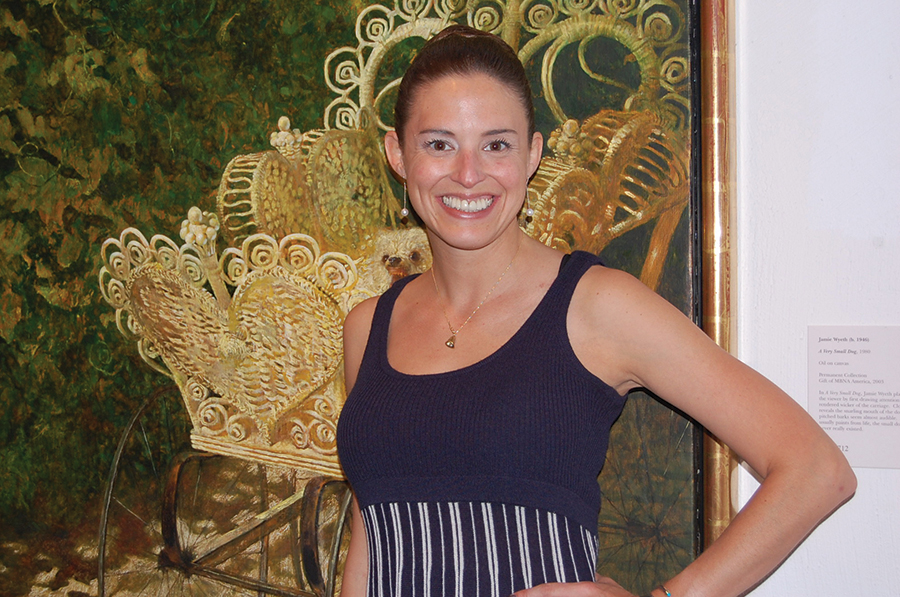
Art is in Victoria Wyeth’s blood. Her family has produced three generations of such highly regarded artists that they have become part of the national consciousness. She is the grandchild of iconic artist Andrew Wyeth, the great-granddaughter of illustrator N.C. Wyeth, and the niece of contemporary realist Jamie Wyeth. Her father, Nicholas, is a private art dealer, and her mother, Jane, is an art adviser who was trained as an art historian.

“The biggest myth is that my family paints from photos,” says Victoria, a gifted photographer whose images have been exhibited nationwide. She credits a high school teacher for pushing her into a medium that was previously unexplored by her relatives. “It’s tough to come from a famous family when everyone is so talented,” she says. “I can’t paint, I have no talent, and I can’t draw a circle.”

As the designated family historian, Victoria gives lectures on all things Wyeth when not working as a therapist in the Pennsylvania state hospital system. Her insider’s knowledge of the painters has been the subject of numerous articles, and she has given talks throughout the United States and abroad, offering the public a more intimate view of her family than can be gained simply from the perspective of an art historian. She has a story for everyone of her lineage — including ties to North Carolina and Southern Pines.

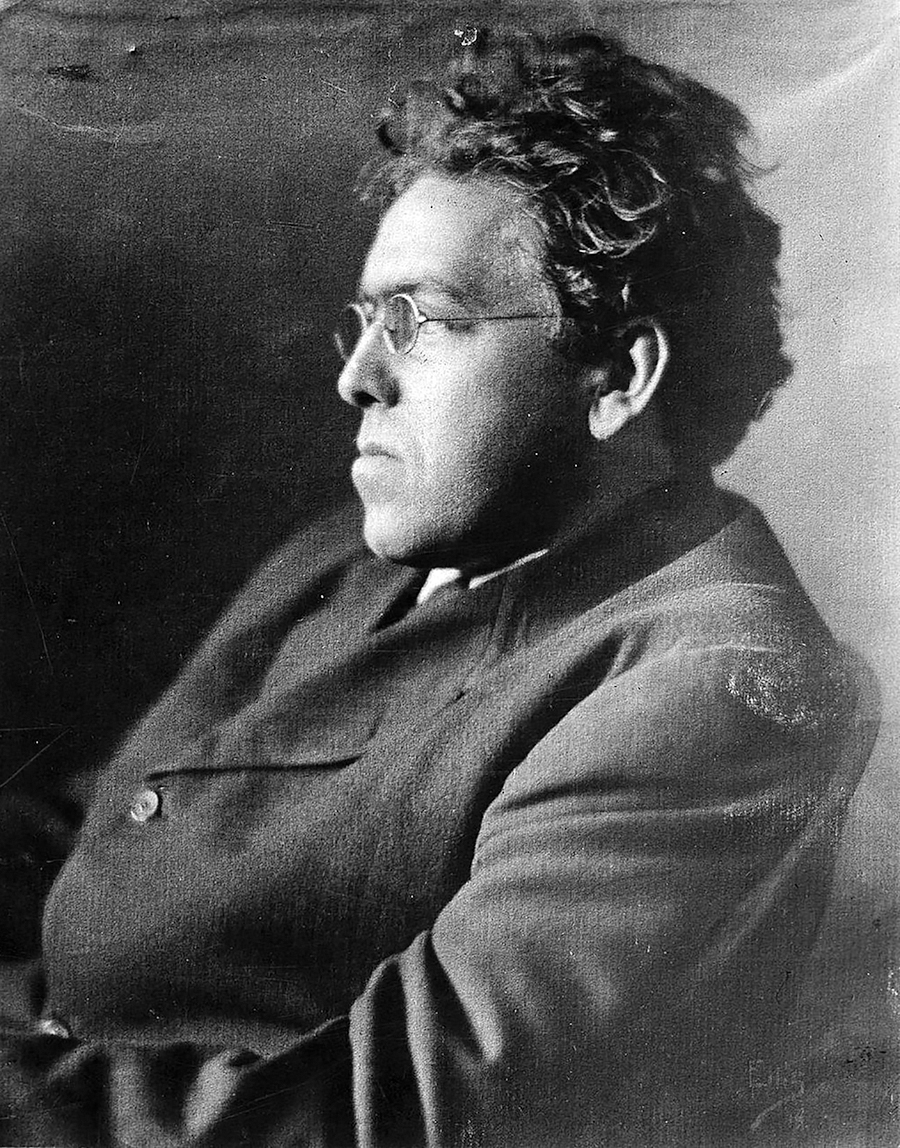
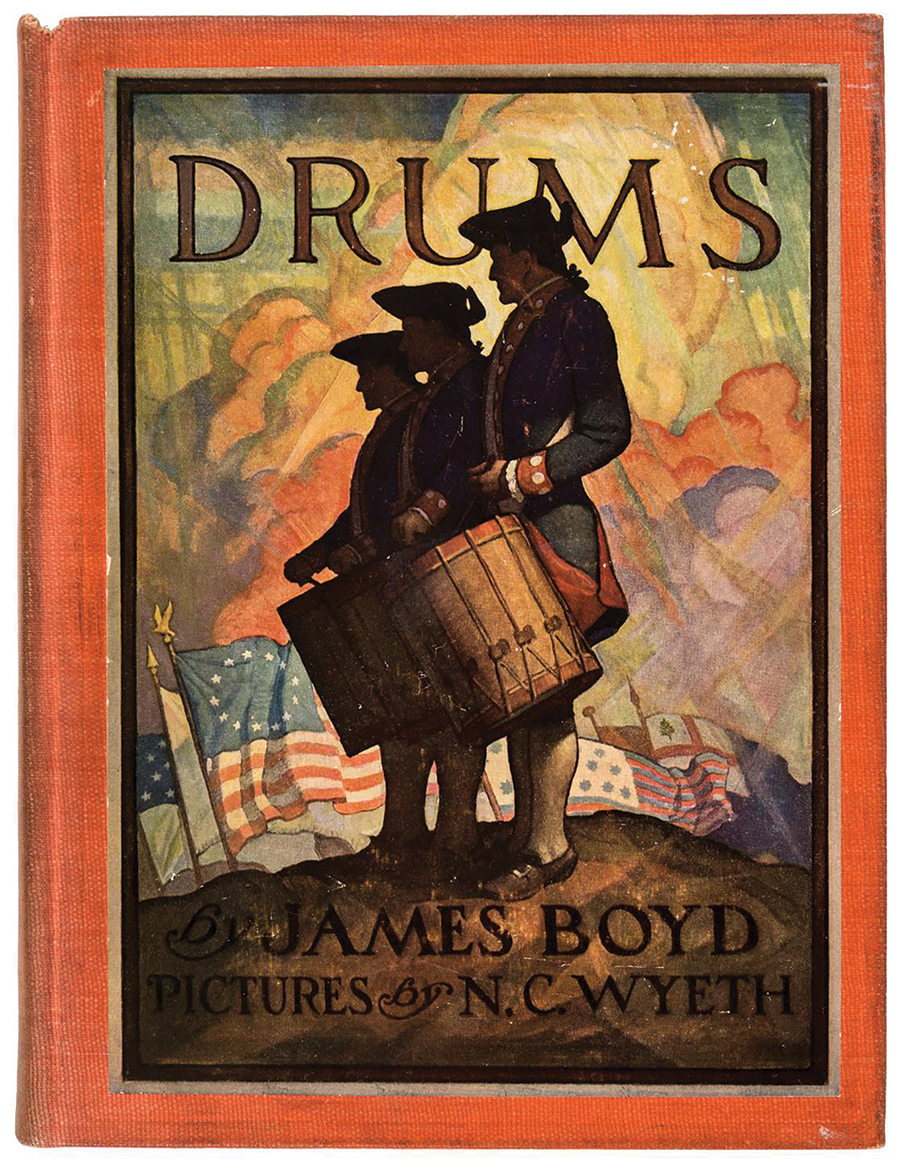
The patriarch of Victoria’s artistic legacy was her great grandfather, N.C. Wyeth (1882-1945). The town of Southern Pines owns three significant paintings by the artist that are on public display in the Utility Billing Office, located at 180 SW Broad Street, formerly the public library. The paintings, created as illustrations for James Boyd’s novel Drums, were gifted to the town by his wife, Katharine Boyd.
N.C. Wyeth was one of America’s greatest illustrators. During his lifetime, he created over 3,000 paintings and illustrated 112 books, 25 of them for Charles Scribner’s Sons publishing. A swashbuckler of a man whose works fired the imaginations of generations of readers, N.C. Wyeth was a household name during the first quarter of the 20th century for the art he provided for classic titles like Treasure Island, The Last of the Mohicans and The Yearling.

Standing larger than life, N.C. Wyeth was a realist painter whose dramatic canvases could be understood quickly. He only painted from experience, sympathetic to his subjects, showing them at one with their environment. It was this interest that brought him to Southern Pines in 1927, in preparation for his illustrations for Drums. Boyd was making a name for himself in literary circles, his Weymouth mansion a favorite retreat for such figures as William Faulkner, F. Scott Fitzgerald and Thomas Wolfe.

There was a wonderful exchange of letters between Wyeth and Boyd included in an early 1928 edition of Drums. Boyd provided a car and driver for Wyeth for a side trip to Edenton, North Carolina, so that he could get the look and feel of the Colonial town, the setting for the book:

N.C. Wyeth, Edenton, NC, December 1927

My dear Boyd,

This afternoon was spent wandering in and about these relics of 1770. My heart went out to them, because you, Boyd, have made them alive for me. The oak timbers, whose adze-marked surfaces are still crisp on their protected sides and smoothed to gentle undulations where the sun and rain for years have touched them, thrilled me like music.

Cordially, Wyeth

And the reply:

James Boyd, Southern Pines, NC, December 1927

Dear NCW,

Your letter just come from Edenton disturbs me. It is an injustice of nature that a man who can paint like you should also be able to write like that. Everything you say stirs me mightily. It is only the way you say it that makes me uneasy. A little tactfully assumed illiteracy would be more becoming when addressing a man in my business. Otherwise I might be obliged to ask myself why I am in this business at all.
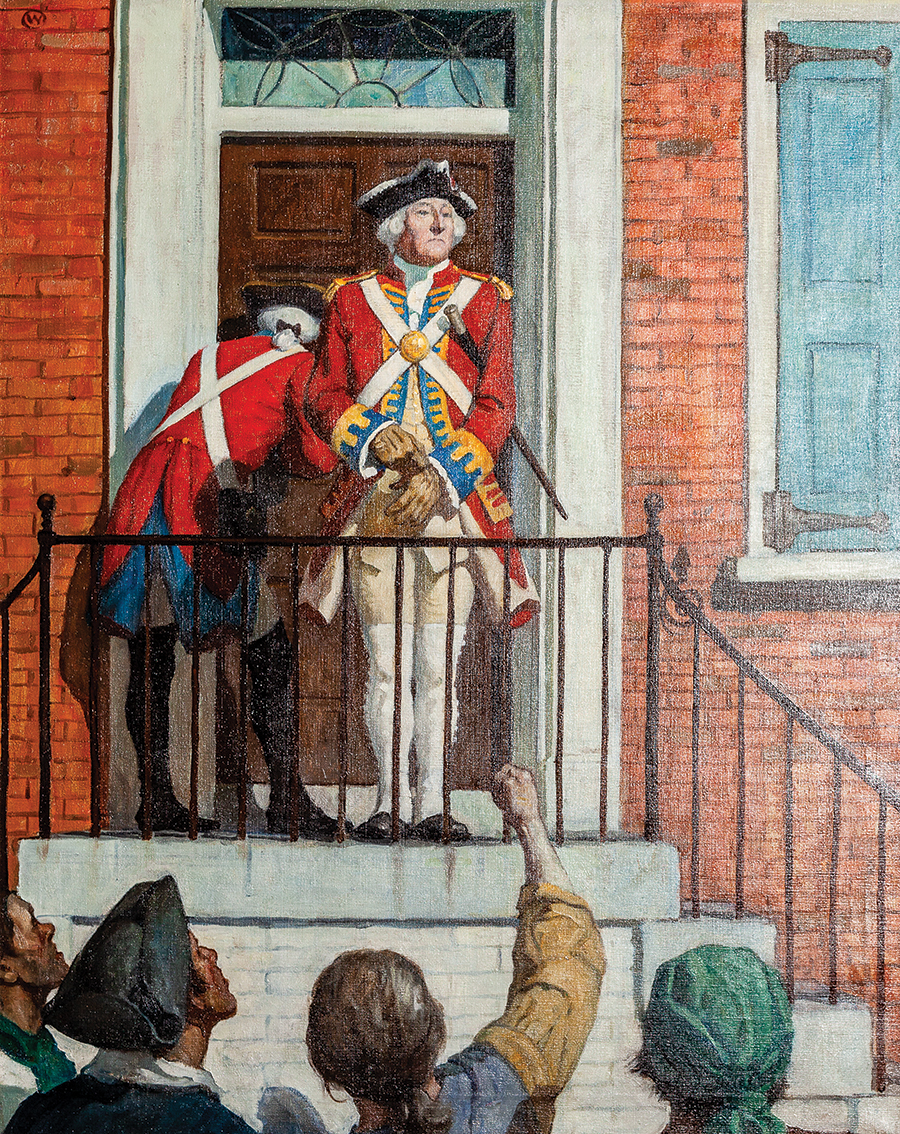
 

In its day, Drums was considered the finest novel of the American Revolution that had ever been written, with more than 50,000 copies sold in its first year. Since that time, generations of Southern Pines residents have cherished the Wyeth paintings as an important aspect of the cultural heritage of the town.

Victoria Wyeth’s personal connection to Southern Pines is through her acquaintance with artist Jeffrey Mims, founder and director of the Academy of Classical Design. As a painter and educator, Mims has been at the forefront of the revival of the classical tradition for the past 30 years.

For Victoria, her Uncle Jamie (b.1946) is the keeper of her family’s tradition, with his paintings more varied than his predecessors. “Jamie is the future of our family,” says Victoria. “And he’s so different. He’s managed to do his own thing in his own style, and he’s painted everything from pigs to presidents. The whole family has a wonderful sense of humor, and Jamie’s the one who paints with it.”

Jamie’s father, Andrew Wyeth, holds a very special place in Victoria’s heart. As his only grandchild, she was one of the few people he ever allowed to watch him paint. The first photograph she took of her grandfather was a kind of epiphany. “I always saw him as this adorable, smiling older man,” she says of that day. “For the first time in my life, Andrew Wyeth was standing before me. Not Grandpa, but the artist, and he had the most earnest look I had ever seen in my life.”

Andrew Wyeth (1917-2009) is recognized as one of the most important American artists of the 20th century. For more than seven decades he painted the regions of Chadds Ford, Pennsylvania, where he was born, and mid-coast Maine, where he spent most of his summer months.   

The youngest of N.C. Wyeth’s five children, at age 15 Andrew began several years of intensive artistic training under his father, who encouraged him to work as both an illustrator and painter. His career launched in 1937 with a sold-out exhibition of his watercolors in New York. On the occasion of the young artist’s debut, his father wrote him a congratulatory letter prophesying, “You are headed in the direction that should finally reach the pinnacle in American art.”

An austere poet laureate of rural life, Andrew once noted that meaning “is hiding behind the mask of truth” in his work. He freely manipulated his subjects, transforming them in order to evoke memories, ideas and emotions. Through a process of reduction and selection, he created mysterious undercurrents in his landscapes, interiors and portraits.

Victoria adored him, called him “Andy,” and spent all her childhood summers with him and Grandma Betsy in Cushing, Maine, where she vividly remembers long boat trips to family-owned islands for picnics. As a child, Victoria began to realize that “all the people in the paintings were the folks I’d been hanging out with,” and she fondly recalls that, “on Andrew’s birthday the president would always call.”

Andrew drew and painted Victoria many times. She was 6 years old for the first sitting and remembers very little about the experience, except how hard it was to keep still. “We had made a deal the third time that I’d only pose if I could take notes, and so I just sat there taking notes the entire time.” The artist often chuckled at her precociousness, but he gamely tried to answer every query.
The last question logged in her “Andy Journals” was about how to create the color black. He said that he didn’t start by squeezing inky paint from a tube. “You build in the excitement before adding black, you slowly build it up with blues and reds and greens.”

One of Andrew Wyeth’s most powerful works is in the permanent collection of the North Carolina Museum of Art in Raleigh. The painting, titled “Winter 1946,” depicts a boy running fast and recklessly down a hill, casting a long shadow on the grass behind him. The figure with furrowed brow, gazing down and forward, is dressed in a heavy winter coat, his mind elsewhere, lost in the golden earth, and the vast, breathtaking landscape.

Andrew created this painting after the horrific death of his father in 1945. The tragedy occurred at a railroad crossing on a hill in Chadds Ford, when an oncoming train hit the car carrying N.C. Wyeth and his young grandson, killing them both. The hill became a source of inspiration for Andrew’s paintings over the next 30 years, as he rendered the memory of the place into something strangely beautiful.

Victoria Wyeth’s most enduring memory of her grandfather is not paint and canvas, but “his hugs — he gave the best long hugs. He made me feel so special all the time.” During his lifetime Andrew said, “Your art goes as far as your love goes.”  PS

Ray Owen is a local historian, who works for the Arts Council of Moore County.

Out of the Blue

Boo, Humbug

Wearing green for Halloween

By Deborah Salomon

October, glorious October! If only not marred by Halloween. Or, rather, Halloween frenzy.

Late in life I’ve become analytical, training my untrained eye on likes and dislikes, preferences and fears, most cemented during childhood when, in this case, I was Halloween-deprived. Back then, kids didn’t dress up and go trick-or-treating in an apartment building occupied by cranky grown-ups. Nothing at school, either. The all-girls school I attended K-5 was for learning, not exchanging Valentines or dressing up as witches. (More about that later.) The only activity I remember was bobbing for apples at the risk of drowning in the wide galvanized metal tub.

Even after moving to a house in a family neighborhood Halloween wasn’t big, probably because my parents, I’m ashamed to admit, refused to buy candy, turned off the porch lights and ignored the few brave kids who didn’t get the message.

A costume for me, by then 12? No way. (More about that later, too.)

Of course back then Halloween wasn’t a mega-holiday that started five minutes after July 4th, saturating stores with made-in-China paraphernalia. What must those Chinese factory workers think, given they don’t celebrate this spin-off of a Christian event?  Sure, stores carried paper napkins, jack-o’-lanterns and spooky masks, but no toilet paper, socks and orange crème-themed Oreos.

Remember, also, that Halloween launches the pumpkin-flavored everything season, which lasts until Christmas. Read the small print; many labels read “pumpkin spice” and contain no pumpkin whatsoever.

Scariest of all, my father’s birthday was Nov. 1. He joked that his mother had a terrible fright on Halloween and he was the result.

Every action provokes a reaction. Once I was in charge our pumpkin had to be jumbo with a fat candle inside.  My kids went nuts for trick-or-treating, in a neighborhood bursting with children.  We divided duties: Daddy chaperoned them house to house (those known for “good” candy had line-ups) while I and a very excitable Airedale manned the front door. Besides loot, we handed out coins for UNICEF. Afterwards each princess and Superman emptied his/her bag into a box which fit under the beds. Easier to protect, I guess, although insider trading flourished for desirable candies — meaning the stickiest, messiest, most cavity-provoking.

For a while, I attempted a Halloween theme dinner. But how can “ghost” mashed potatoes, bat wings and a chocolate pudding graveyard with vanilla wafer tombstones compete with Charleston Chews? 

Inevitably, grown-ups inched into the act. Beginning in 1993 with Coors’ buxom witch Elvira, brewers outdid themselves with cute names and labels. Bars hosted costume bashes. Bank tellers and school teachers dressed up. Politics influenced adult costumes — remember the Nixon fright mask and, more recently, Hillary and Trump?

Halloween never fully recovered after sickos hid dangerous objects in treats. Parents began bussing little Halloweenies into happier hunting grounds. Door-to-door became trunk-or-treat and parties in a school gym even after, in 2005, legislation extended daylight saving time to include Halloween, for safety. I still carve a small pumpkin and buy a few bags of “good” candy, which means Hershey Miniatures and Reese’s bite-sized peanut butter cups. But where are the hordes of ghosts and goblins, with parents hovering on the sidewalk? Replaced by teenagers dolled up as zombies. Bah, humbug. Go away. Do your homework.

As for porch decorations, I have created only one — simple but edgy, for folks who remember the wicked witch’s demise in Wizard of Oz, with a nod to Macbeth. I drape a black cape and witch’s hat over a broom, with lace-up granny boots beside it, along with a sign that says “Stirring the brew. Back in a few minutes . . . ”

Conclusion: Halloween is — like riding a bike and speaking French — best learned in childhood. Otherwise, color me green and call me the Grinch who stole the Tootsie Pops.  PS

Deborah Salomon is a staff writer for PineStraw and The Pilot. She may be reached at debsalomon@nc.rr.com.