Focus on Food

Peter, Peter, Waffle Eater

Everything doesn’t need to be orange

Story and Photograph by Rose Shewey
My husband cheekily calls me “the adopted daughter of the South” for no other reason than my fascination with big, loud pickup trucks. I will admit that my favorite vehicle is our old, mud-splattered, lifted four-wheel drive truck with 35-inch tires and rumbling pipes you can hear miles down the road. (I may or may not have taken this truck, just for kicks, through the porte-cochère at the Carolina Hotel. I mean, Sunday afternoons tend to be a bit slow.)

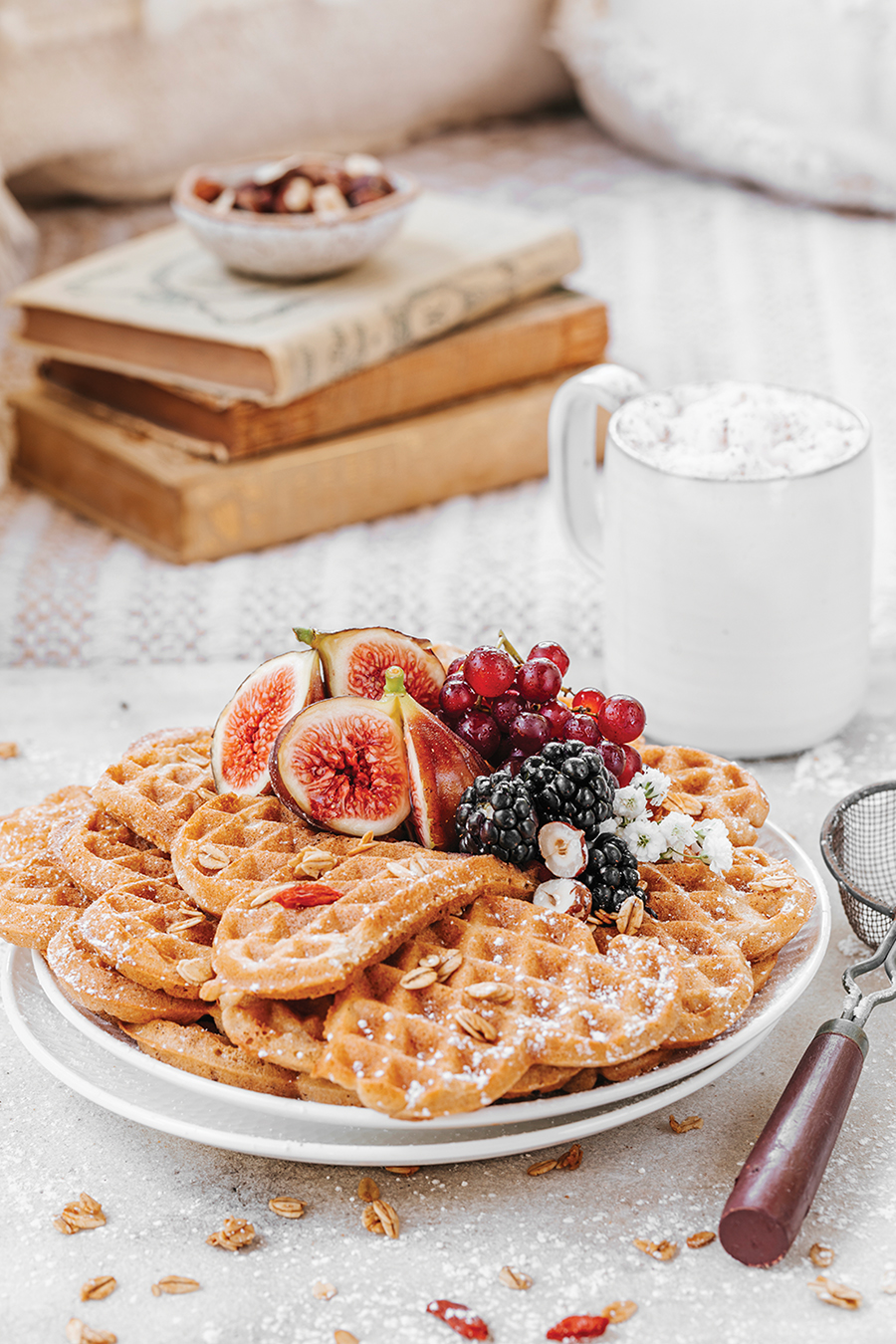
While I am a fan of robust vehicles, I typically prefer more delicate things in life. Take waffles, for instance. The ever-present Belgium waffle — the thick, fluffy, square (or round) waffle with deep, soggy pockets that hold ungodly amounts of maple syrup — is the waffle of choice for most. I, on the other hand, am a devotee of the thin and crisp Scandinavian waffle. The lacy, ornate, heart-shaped Nordic-style waffle with a light dusting of powdered sugar makes my heart sing.

The same way I adore delicate shapes, I have an appreciation for delicate flavors. So, despite it being October, the month of all things orange-tinted, pumpkins rank low on my harvest list. Yes, I love pumpkins as much as the next Boho-knit-cardigan-wearing, scented-candle-hoarding girl but excuse me while I mark this page safe from the annual pumpkin craze. Iconoclast? Not at all. Pumpkins are delightful in many ways, but when it comes to flavor, they aren’t much to write home about. What truly makes anything pumpkin-infused stand out is the supporting cast: a warm, comforting spice mix that is added to virtually all things pumpkin-related.

It’s hard to imagine October without stumbling over chubby gourds at every turn, but autumn has many beautiful heralds — juicy apples, chestnuts, mushrooms, pears or, for instance, hazelnuts. I learned quickly that Americans don’t share my enthusiasm for hazelnuts, a symbol of health and strength, and was recently told by a chef that it’s a Euro thing. Maybe, but I’m also here to tell you that you are missing out if you do not incorporate hazelnuts into your fall cuisine. Whether you enjoy them raw, roasted, covered in chocolate or ground up into flour, hazelnuts are exquisite and should not be missing from your autumn harvest spread.

Norwegian Hazelnut Cardamom Waffles   (Serves 2)

1/2 cup finely ground blanched hazelnuts

1/2 cup all-purpose flour

1/4 teaspoon salt

1 teaspoon baking powder

1/4 teaspoon ground cardamom (or 1 teaspoon cinnamon)

2 eggs

1/2 cup milk (or any non-dairy milk)

3 tablespoons maple syrup

3 tablespoons coconut oil, melted

Preheat your waffle iron. Combine all dry ingredients in a bowl and mix well. In a separate bowl, whisk eggs and add remaining ingredients. Add the dry ingredients to the egg mix and stir to combine. Pour batter into the preheated waffle iron and cook until golden brown and steam is no longer rising. Serve with toppings of your choice — berries, figs, chopped nuts, yogurt or simply dust with powdered sugar.   PS

German native Rose Shewey is a food stylist and food photographer. To see more of her work visit her website, suessholz.com.

Poem

Stairs at Weymouth

In that haunted writer’s retreat

in Southern Pines

a spiral staircase descended

from the ceiling.

No, it wasn’t a dream.

I opened my eyes 

and the corded spiral

appeared. I waited

for a ghost to show,

or a voice to whisper.

Dark hours I stared,

until early light spilled

into the room, erased 

the vision.

Today I wonder 

if I had it all wrong;

maybe those stairs

were waiting for me

to climb up.

— Maureen Sherbondy

(From Eulogy for an Imperfect Man)

Here’s to the Next Hundred Years

From suffragettes to leading ladies, more than just a book club

By Jenna Biter          

Photographs by Tim Sayer

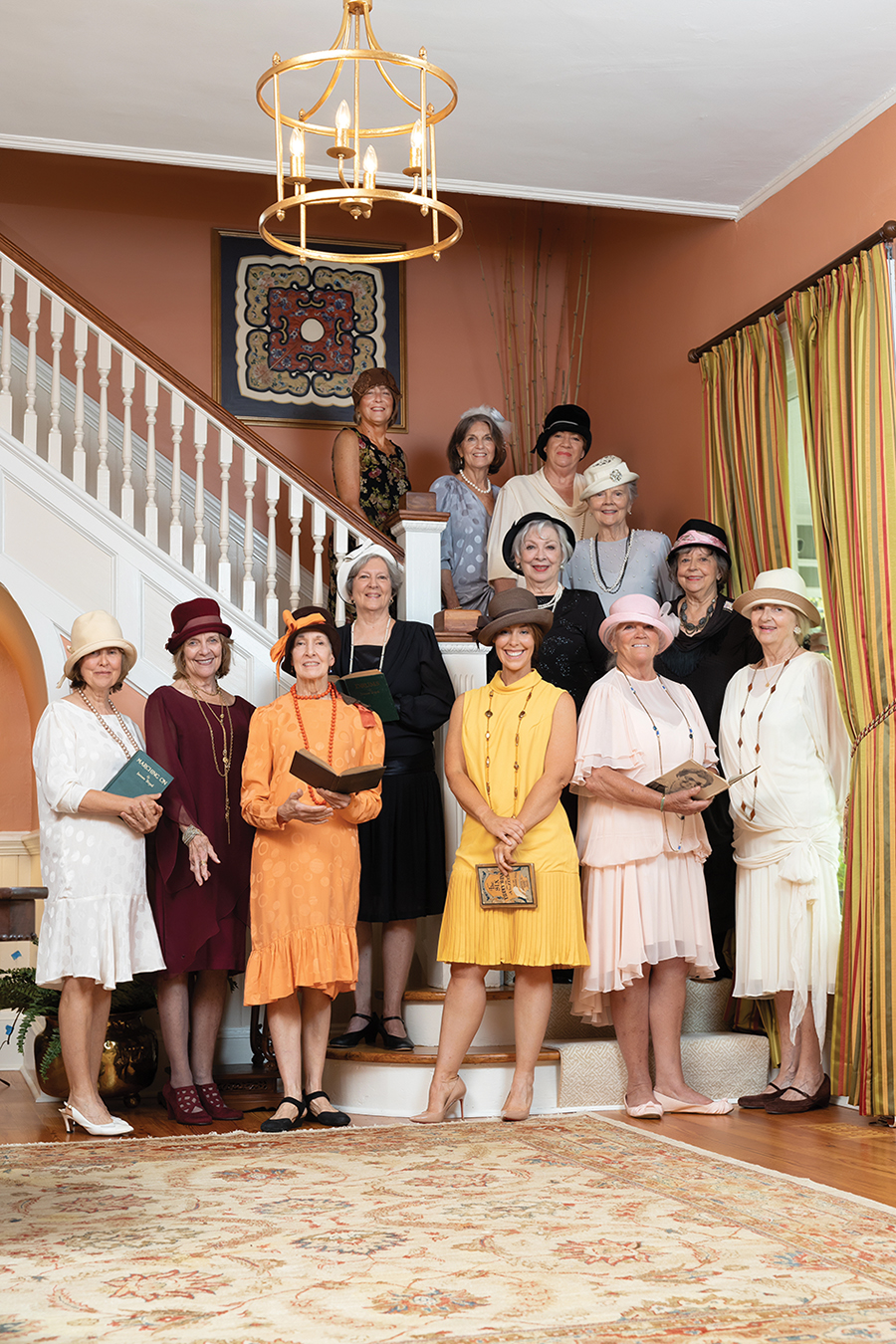
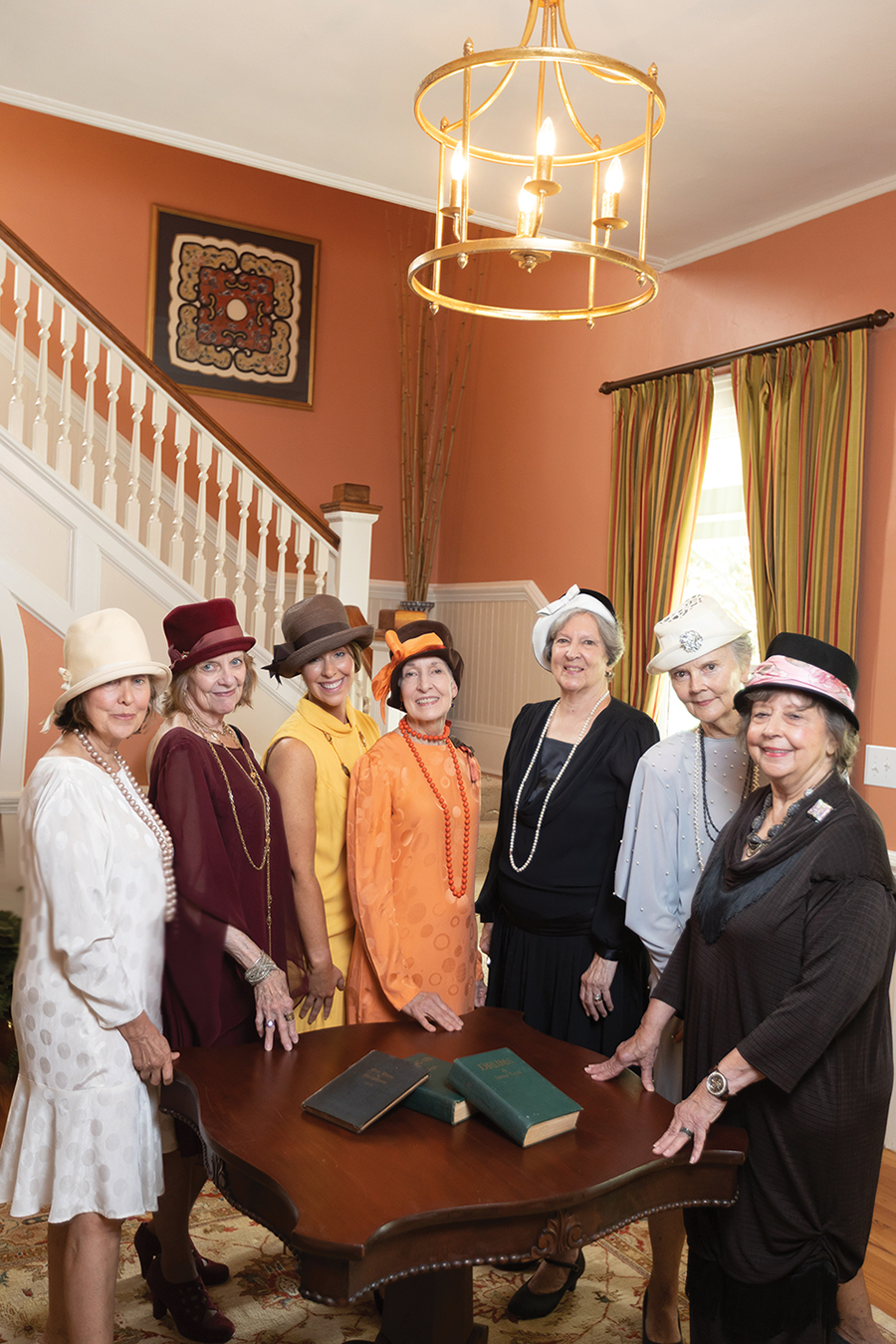
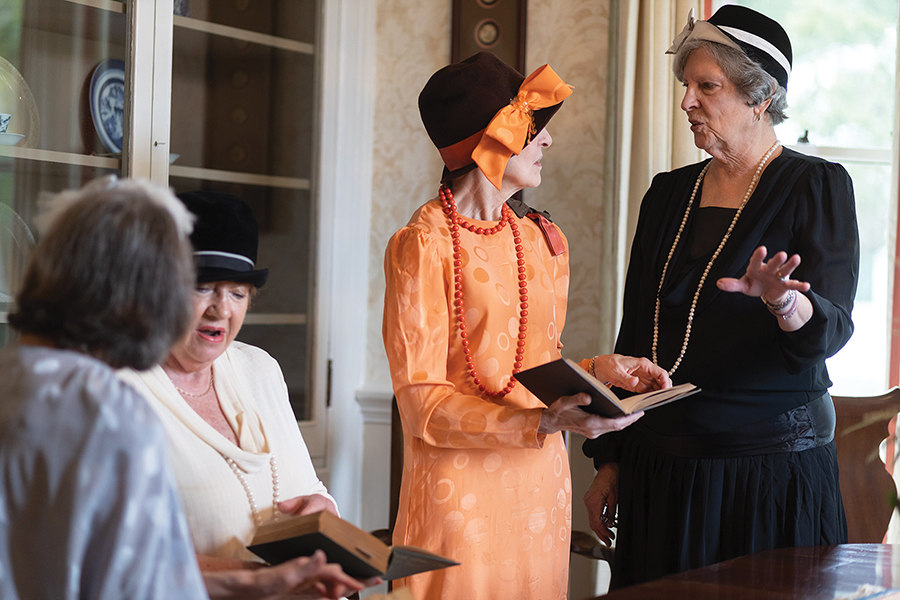
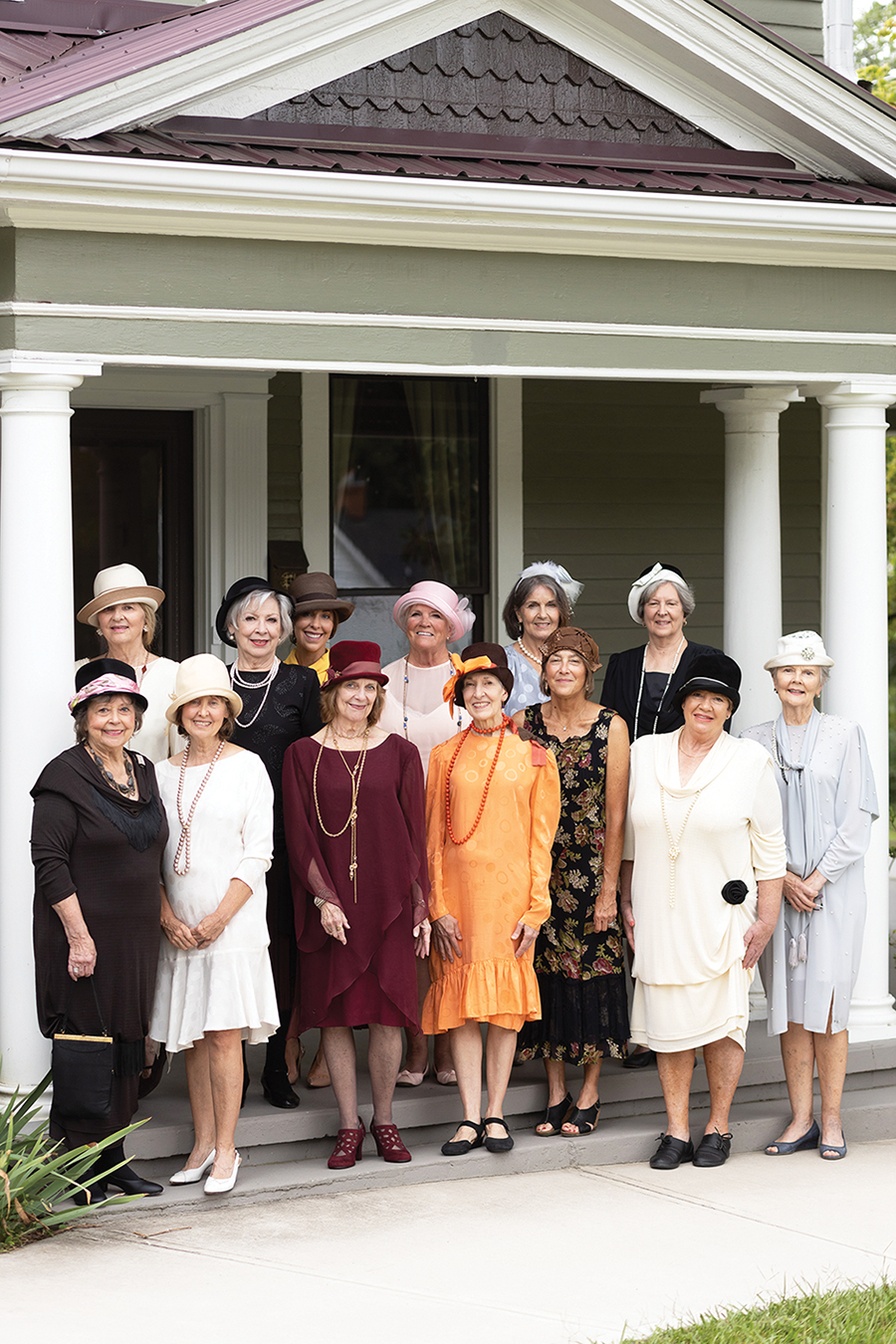
Aberdeen’s daughters filter into the restaurant’s back room, chittering amicably among themselves. If the town was a medieval state, these would be the ladies of the court. “Oh, how have you been?” passes between childhood friends, and swift introductions welcome new faces. With the arrival of each member, conversation swells, and the history of Aberdeen becomes flesh. The guests call out connections across a makeshift banquet table like they’re tossing a ball of yarn back and forth, from woman to woman, until the process knits fiber into fabric.

Betsy Mofield, decorated in red-rimmed glasses almost as sharp as her wit, was Aberdeen’s mayor for 14 years, and Laura Farrell’s husband, Robbie, is currently in office. Someone’s mother was everyone’s favorite English teacher, but she was also Aberdeen High School’s only English teacher. “Your grandfather was my dentist for over 40 years,” another adds in a side conversation. Even the women who say, “I don’t know why I have been invited to this book club,” always lingering on the “I” with their lilting Southern drawls, have lived in town for 40-plus years and married men who grew from Moore County soil.


The organization is the Walter Hines Page Book Club. Lynn Page Anderson, an impressive, soft-spoken woman, currently serves as the president. It’s “the oldest active book club in North Carolina and perhaps the oldest in the country,” she says. It derives its name from Walter Hines Page, a distinguished Sandhills citizen who is buried in Old Bethesda Cemetery off Old Bethesda Road. He served as U.S. Ambassador to Great Britain during World War I. In 1935, over a decade after the club’s founding, the members voted to rename their Thursday Afternoon Book Club after the late local giant.

Anderson lifts her fork and pings a water goblet to quiet the room, but the chatter persists. She makes a face, somehow politely. A louder voice intervenes, and the meeting begins. New member introductions roll into lunch, and dessert rolls into a review of the last meeting’s minutes, then the current meeting’s agenda. Eager hands and voices raise to second motions approving donations and the formation of committees.

“We’re very democratic,” Anderson says. “Something comes up, and we vote on everything.”

Democracy is the gilded baton they pass gingerly from predecessor to successor; no woman wants to drop it on the handoff. Anderson ponders the women who founded the club in 1921, a year after they got the vote. “I wonder how many of them were suffragettes, or how many of them understood that women can have a more important life than being relegated to cooking and cleaning? At the time, the population of Aberdeen was about 852 people, and here were these 22 women. That’s a big chunk of the population, and they decided they wanted to share experiences and culture with their friends.”

Membership has expanded to 24, but advancing culture and community remains their North Star. Monthly meetings feature speakers from local nonprofits like the Prancing Horse Center for Therapeutic Horsemanship, and Camp Dogwood for the Blind and Visually Impaired, or sometimes local artists and authors. After the program, they vote on whether to donate to the cause, and they always vote “yes.”


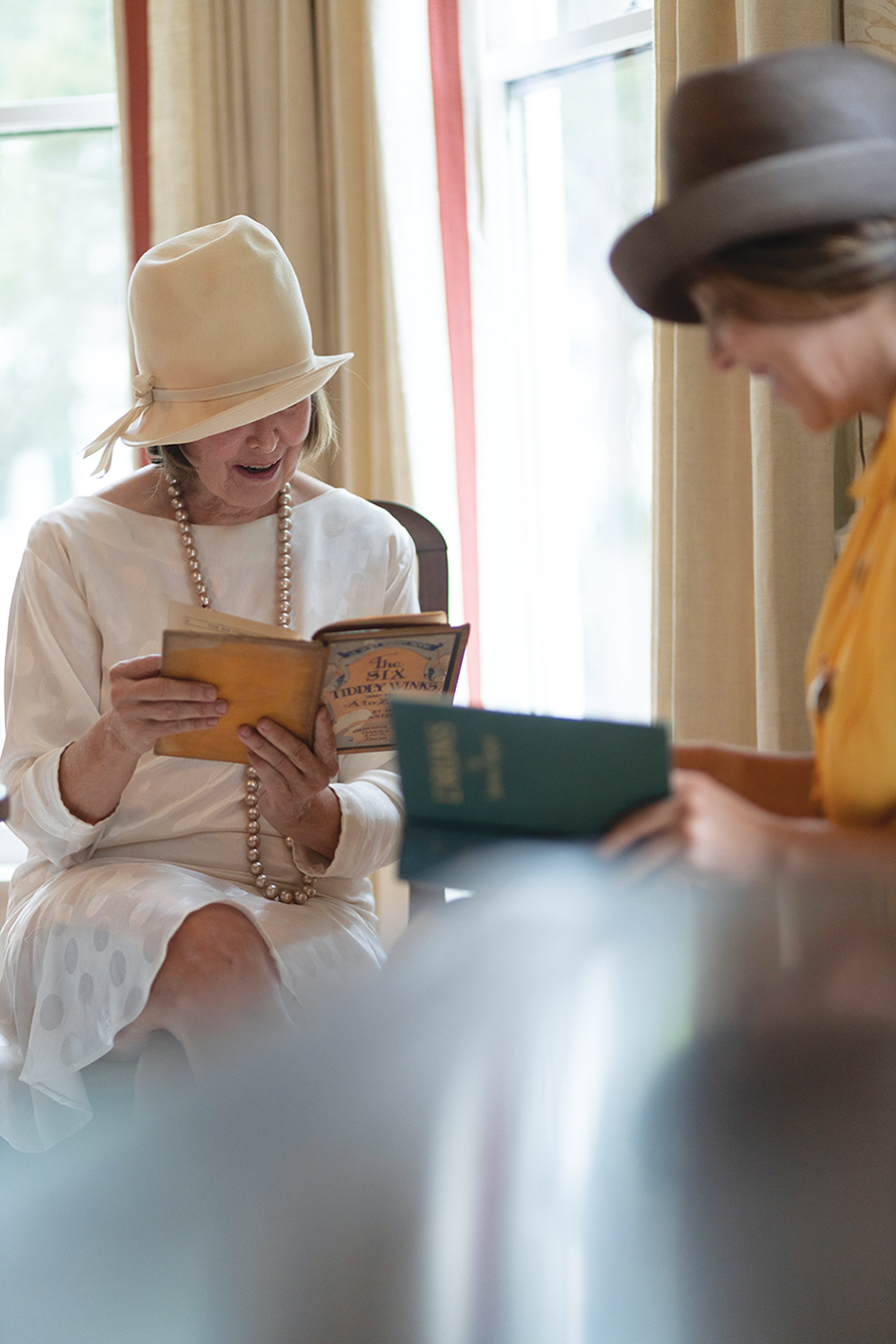
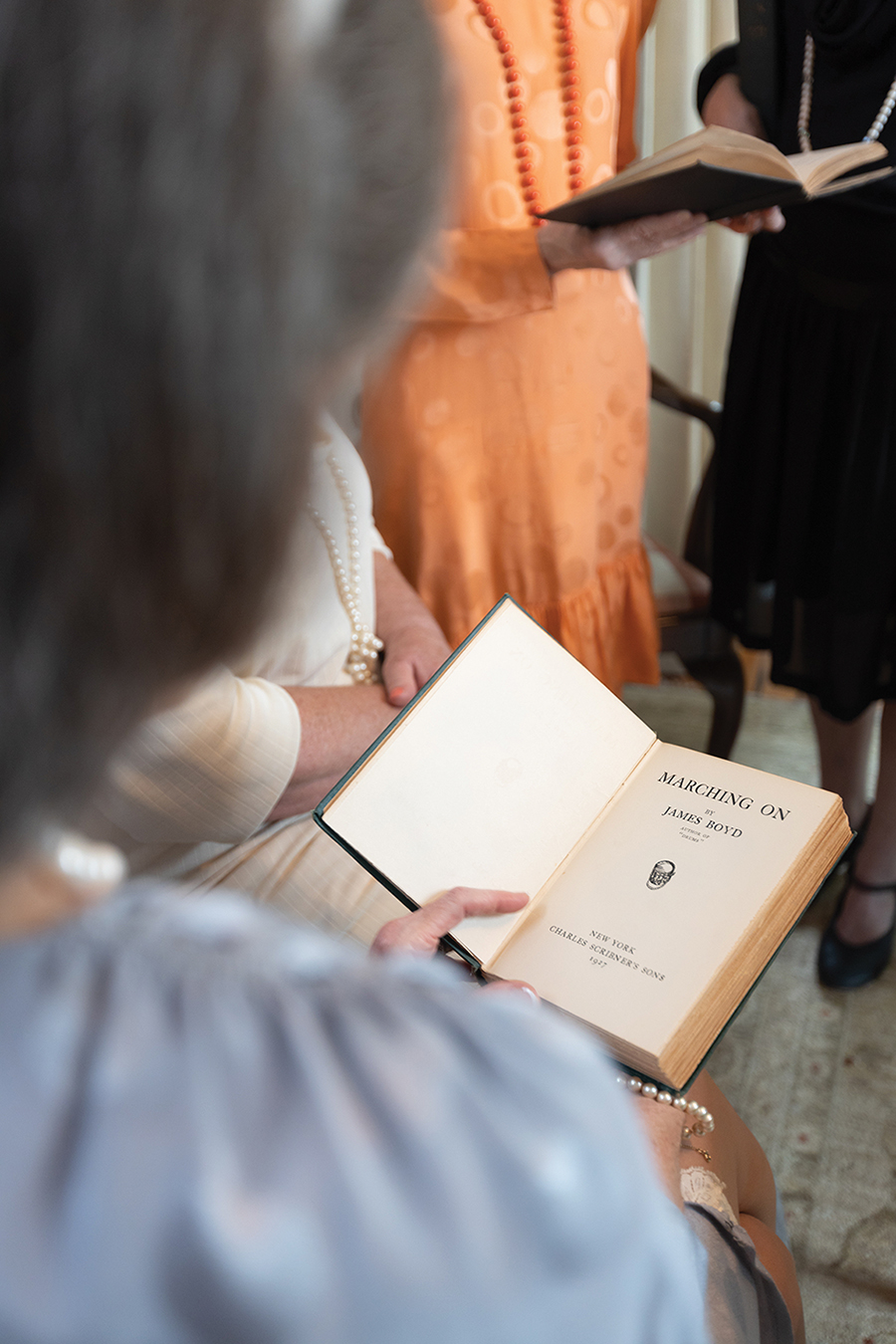
Hardbacks lying on the white tablecloths are the only clue this group convenes under the guise of a book club. Each member buys one copy of a current book, and they circulate from woman to woman per a list inserted into the copies like library borrowing cards. They read the books consecutively, not synchronously, and they don’t have to read the books at all. “You get a chance to read the books, and you can talk about them . . . if you want.” Anderson says. After two years, the books have rotated through all 24 members, and each woman gets hers back. They select new titles, and the process repeats.

Anderson drives the meeting forward — the annual “white elephant” and, at last, the centennial celebration. Instantaneously a committee forms to handle the catering and venue. Over a century after their first meeting on October 21, 1921, in an Aberdeen living room, the book club still meets on the second Thursday of the month, but third-party luncheons have replaced home gatherings.

The Walter Hines Page Book Club celebrated its 100th anniversary last October, but the pandemic relegated the celebration to modesty. They’re planning a bigger bash for this year: “How’s Saturday, October 22? One hundred one years and a day since the founding,” Anderson asks. Eager hands and voices raise to second the motion.  PS

Jenna Biter is a writer, entrepreneur and military wife in the Sandhills. She can be reached at jennabiter@protonmail.com.

Southwords

The Haunted Fireplace

“Do you like scary movies?”

By Emilee Phillips

I was never much into ghost stories as a little girl, but that didn’t make me immune to the heebie-jeebies when something didn’t feel quite right.

The house where I grew up was built in 1875. It’s a rambling white farmhouse in the middle of nowhere. Most of the time our home felt warm and cozy, especially when the whole family was together. It was during thunderstorms, or when I was alone, that I got scared.

The old house is the polar opposite of a modern, open floor plan. It has rooms of all different shapes and sizes, each with an atmosphere entirely its own. Every addition to the house brought with it idiosyncratic wall and floor configurations. Our house was imposing and roomy and, to a little kid like me, it felt like a mansion — not of the fancy or fairytale kind, but the big, mysterious kind.

Sometimes, it even seemed alive. 

The majority of the house was built with rough cut lumber. There are four fireplaces, two of them in working condition. The wooden mantels are all strictly utilitarian, devoid of ornate carvings or decoration. But the one in the green room is different. Very different.

I should mention that the house was often cold in the winter. We had a pair of furnaces, but their fuel efficiency may not have been up to 21st century standards. They often burned through all of the propane before the delivery truck could make it back for a refill. Or sometimes they were simply unable to ward off the chill of a high-ceilinged house. So, on the coldest nights, my family gathered in the green room around its oversized fireplace.

My brother and I used to wrestle on the worn brown carpet, rolling in front of the fire that always gave off more fumes than it seemed it should. I suppose I didn’t pay it any mind those first few years until one day I looked up at that ancient fireplace and watched the mantel ooze. My eyes got as big as saucers. It was as though I was watching a horror movie and I couldn’t look away.

The walls were bleeding.

Suddenly, every creak I heard in that old house came alive. I could imagine whispers coming from the flames. Every speck of blue dancing in the fire became a spirit showing itself to me just to see if I was paying attention.

When the fireplace was on I would tiptoe in and out of the room, keeping a wary eye on the hearth. If I was quiet, I thought, I would be safe.

It was creepy and sinister and a bit terrifying. And despite countless reassurances from my parents that a menacing otherworldly being had not inhabited that gaping hole in the wall, I wasn’t convinced.

Even now, when the fireplace in the green room is lit, amber fluid seeps from the mantel and oozes over the layers and layers of paint applied to disguise where all the previous drips have been scraped off. And, now that I’m older, I understand it’s not unheard of for old homes built of heart pine to drip resin for years, the heat triggering the flow.

Perhaps the old house isn’t haunted after all — except for the footsteps my father sometimes hears clomping up the steep wooden staircase at night. The steps, oddly enough, are carpeted.  PS

Emilee Phillips is PineStraw’s director of social media and digital content.