A Stitch in Time

Putting art in the palm of your hand

By Jim Moriarty     Photographs by Tim Sayer

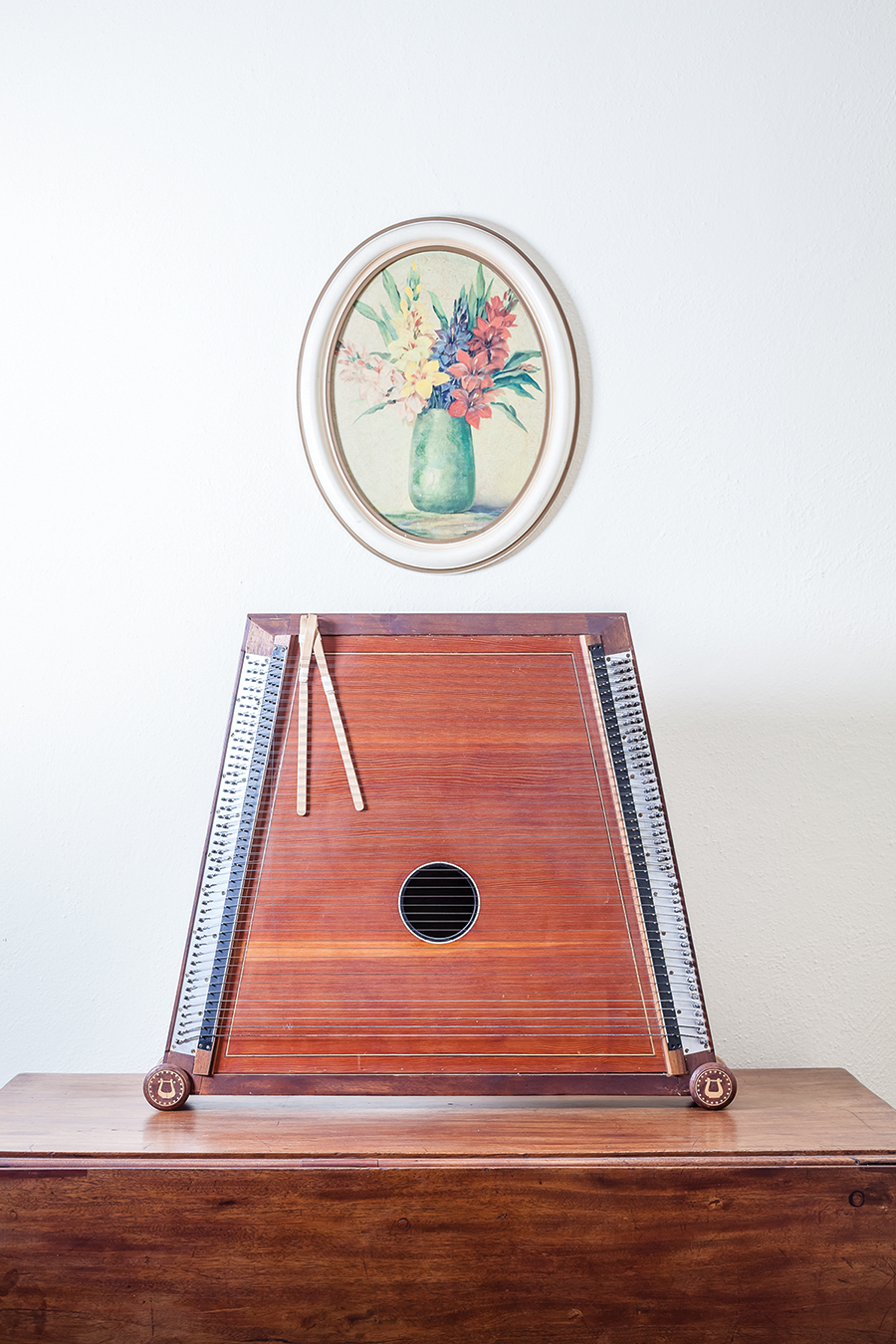
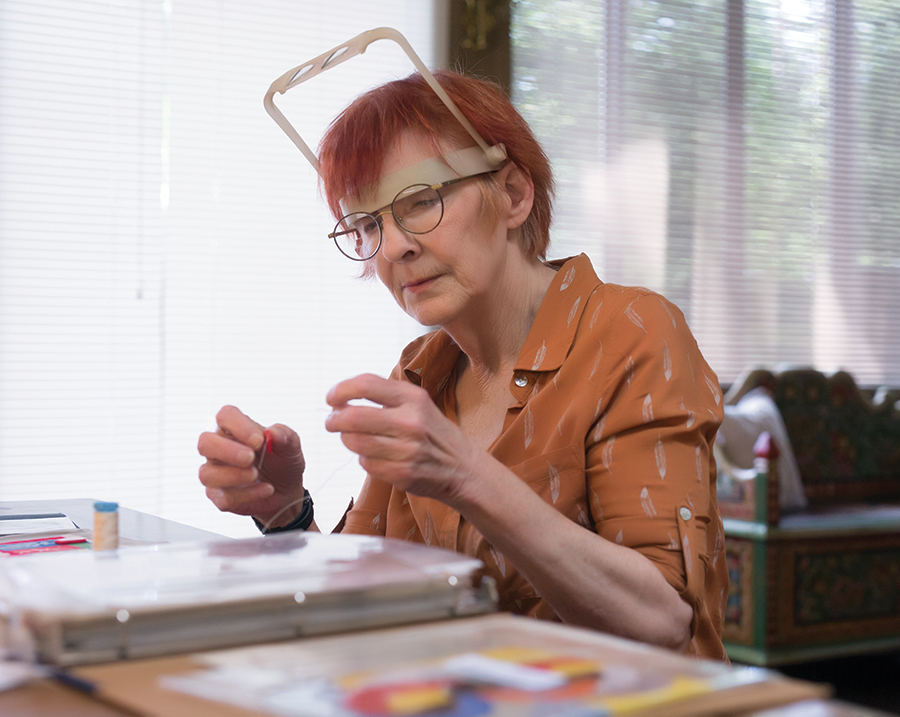
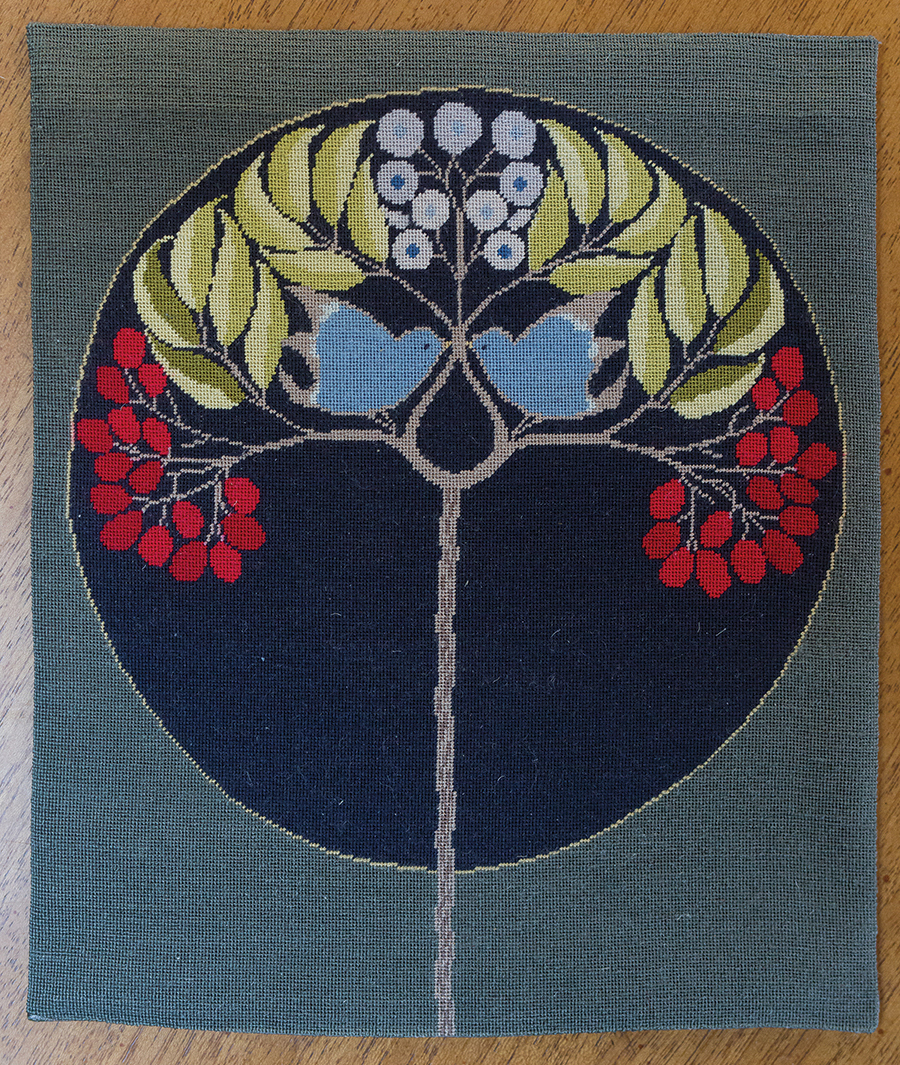
With a plastic headband circling a shock of combustible red hair and a flip-down 5x magnifier in front of her eyes, Rita Ragan sits at a desk covered with what seems like a table runner of Sticky Notes and stitches art in the miniature. While it’s not exactly getting small in the way Steve Martin joked about it back in the ’70s, the road to these pieces — not much larger than your hand — stretches back at least that far. Ragan, now in her 70s herself, hasn’t exactly marched to a different drummer, she was the drummer in the band.

She was christened Nancy Marguerite Ragan but flip-flopped all of that by becoming a Buddhist after meeting the Dalai Lama in Dharamsala, India, and becoming Rita after Ronald Reagan was elected president and the inevitable first lady name game grew tiresome. A decade or so ago she decided to go small while she was living in the biggest, broadest city America has to offer, New York. “I saw an ad for a miniature show and thought I’d go. I just fell in love with all the things that can be so tiny and wonderful, how you could take a whole world and, oh, look, it’s in the palm of your hand,” she says, extending one. “At first I was just collecting things. I always thought art was something you had to have this extraordinary special ability to do — to paint or sculpt or all those things. It just never occurred to me that I could do it — but here I am.”

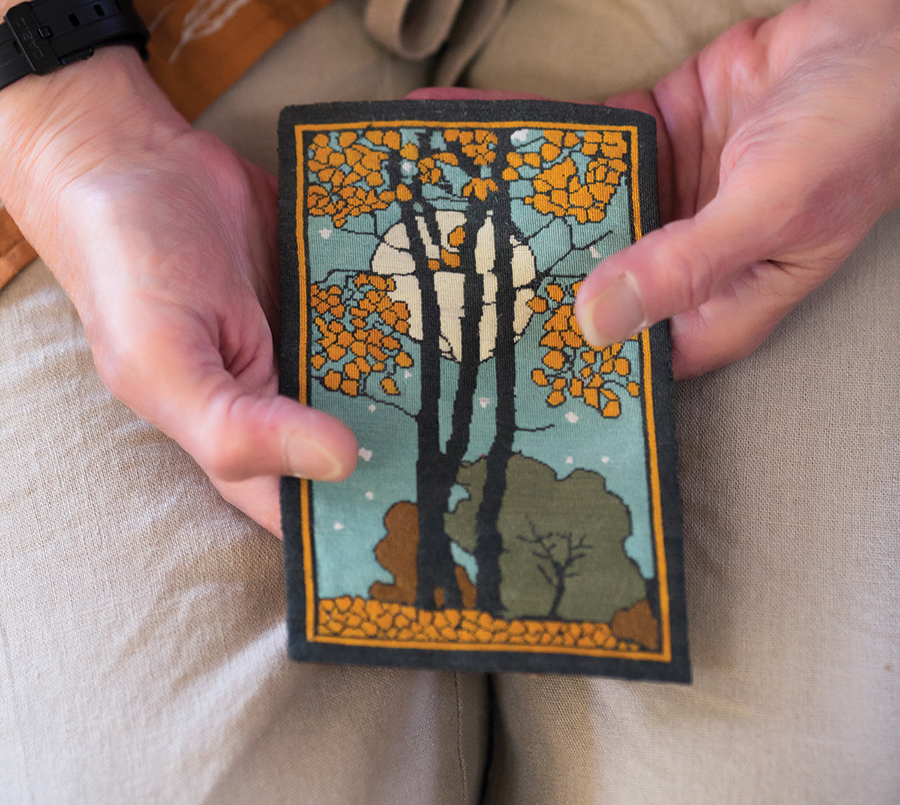
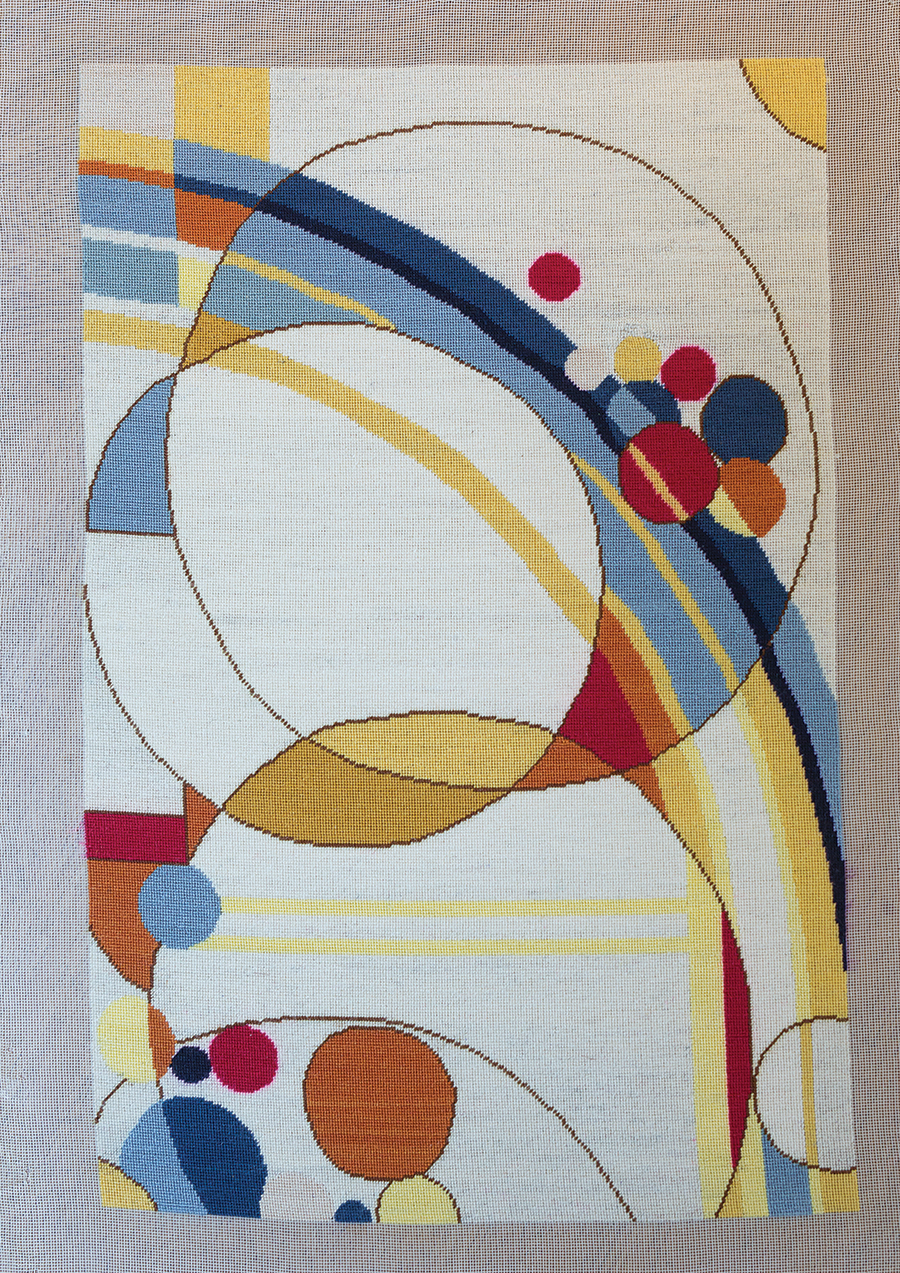
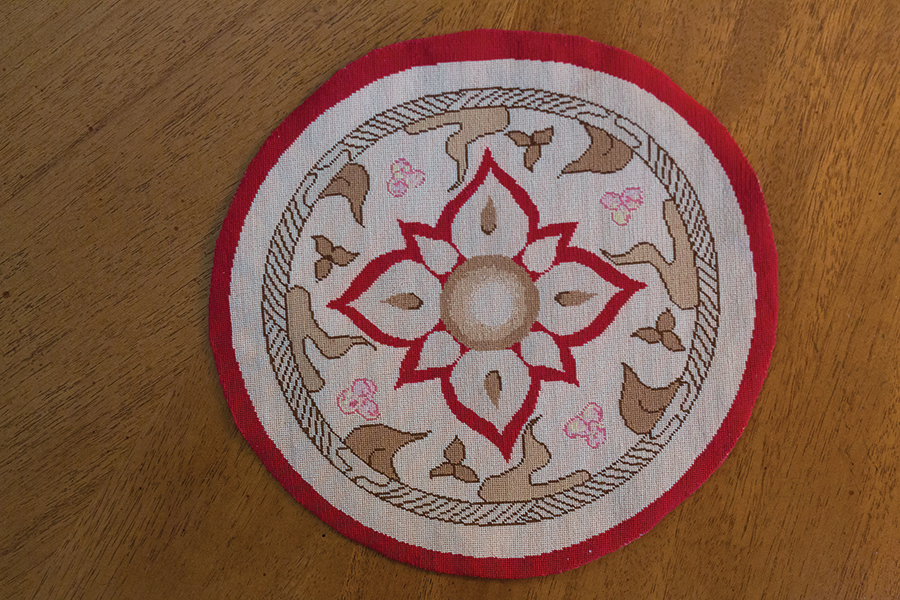
Though patterns are available, Ragan makes her own, reaching back to the ’20s and ’30s for inspiration. “It was such an exciting time. The whole world of art just went topsy-turvy,” she says. She has reproduced designs created by Frank Lloyd Wright, a painting by Henri Matisse and other images discovered as she roamed around the internet. After locating her subject, Ragan transfers it to a paper grid of her own creation with a 12 to 1 ratio to guide the otherwise freehand needlepoint. The thread she uses is 100 percent Chinese monofilament that comes in 700 different shades. There are 48 stitches to the inch, 2,304 in a square inch. “I can probably do one in six or eight weeks without going bananas. If I spend all day on it, I just get my mind fried,” she says. “But I recommend it as a hobby to anyone who likes to immerse themselves in something, let the worries of the world go away and make something beautiful.”

Ragan is the older daughter of Sam Ragan, who owned The Pilot from 1969 until his death in 1996, a man who casts as long a shadow over journalism and literature in North Carolina as the tallest pine at the Weymouth Center for the Arts and Humanities where his granddaughter, Robin Smith, is executive director and his younger daughter, Talmadge, serves on the board as chair of the N.C. Literary Hall of Fame.

“He was a lovely man,” Rita says of her father. “He always was wanting to go somewhere to see something and do something, meet interesting people.”

In this respect, at least, the pine cone didn’t fall far from the tree. “Sam thought of Mom as an adventurer, a lover of life who saw the world with the tenacious curiosity of a child,” says Robin. “He thought her brave to go after what she wanted and found her optimistic spirit contagious. I believe they were kindred spirits.”

And spirited ones. Rita, née Nancy, entered the University of Georgia at age 15, at the time the youngest student ever admitted. It only lasted a year or so until she decided to run off to New York — her first time to live there — to become an actress. It may not have been the shortest run ever on Broadway but it was in contention. The trail led back to Chapel Hill and marriage and children, Robin and Eric, and, eventually, single life again spent mostly in Vancouver, as ethnically diverse and cosmopolitan a city as any in North America.

“That’s probably the place I’ve lived the longest,” says Ragan, who, in addition to doing design work for local publications including the Vancouver Courier, became a drummer in a pair of punk rock bands, Nash Metropolitan and A Merry Cow. “We weren’t all that good, but I got to know all the other musicians in the punk scene.” 

Ragan became a manager, sound technician and pre-Uber driver for the hard-edged music that crisscrossed the border from Seattle to Vancouver and back. One of the bands was The Dishrags. Though these things become a bit hazy in the long pull of time, The Dishrags were, if not the very first all-female punk rock band, in contention for the title. The group is sufficiently famous that the three band members have supplied memorabilia for a 2018 punk rock exhibit at the Canadian Museum of History in Hull, Quebec. “For some reason The Dishrags just will not die,” says their drummer, Scout (Carmen Upex), who remains close to Ragan. “We made many trips with her to Seattle,” says Scout. “We were 16 when we moved to Vancouver. She was the one who was the DD. She was responsible. She didn’t drink and she had the car.”

Let’s see, there was the vanilla colored Citroën and the blue station wagon with the push-button transmission. How many punk rockers can you get in a Rambler? “They’re usually pretty skinny, so five or six,” says Ragan. Plus gear. She also managed another influential Vancouver punk rock/new wave band called The Pointed Sticks.

In the mid-’80s and still living in Canada, Ragan was dating a guy who knew a guy (Glenn Mullin), who had lived in Dharamsala from 1972-1984 and written extensively about the Dalai Lama. In a 2015 New York Times Magazine story by Pankaj Mishra, Dharamsala is described as a rhapsodic stew of, “crimson-robed monks, longhaired travelers on motorcycles, Tibetan women in brightly striped chubas, Sikh day-trippers, Kashmiri carpet sellers and English, German and Israeli backpackers.” According to Ragan, it hadn’t changed much. Mullin introduced her to the Dalai Lama and she helped his main assistant enter speeches and other communication into an early computer, stayed about a year and emerged a practicing Buddhist. “What a charming man. At the time he was fairly young. He has a translator and he asks questions: Where are you from? How did you get here? What do you do? He’s just fascinated,” she says.

“Mom was always very independent,” says son Eric. “She’d decide she wanted to do something, she’d just pick up stakes and do it.” In the early ’90s, that included a return trip to North Carolina, where she lived in a houseboat on the Cape Fear River listening to the fish jump and the alligators chomp until it was destroyed in a hurricane. The storm blew her back to Vancouver.

Then, in her early 60s, Ragan pulled up stakes again and headed back to New York. “I’d always wanted to live there. Who doesn’t? Art. Music. People. It’s possibly the greatest city in the world,” she says. She studied graphic design at NYU and lived in an apartment on the Upper West Side at 84th and Columbus. It was an easy walk to Central Park and the Natural History Museum. “My very favorite place to eat was the buffet brunch in the spectacular Peacock Alley at the Waldorf-Astoria hotel,” she says. “It was fairly expensive, but the food was excellent, and there was always a scattering of semi-celebrities having brunch along with us regular folk.” Then the rent controls came off and, as Ragan says, “Here I am.”

In his 1986 volume of poetry, A Walk into April, Sam Ragan has a poem entitled “Nancy.” It goes:

You talked about bluebirds

When you were three—

And the bright bluebird

Winging into the sunlight

Always seems a part of you.

There was that song, 

“Nancy With the Laughing Face,”

Which brightened dark days of long ago,

And other sights and sounds

Flood the memories

Of someone very special.

It has been a wonderful journey,

And it’s the journey that counts,

Not the getting there.

Here at home the dogwood is in bloom,

And across the miles I am proud

That others share my pride in you—

The very special you.

It seems the gift of producing art in the miniature may be genetic.  PS

Jim Moriarty is senior editor of PineStraw and can be reached at jjmpinestraw@gmail.com.

Reclamation Project

Sunken shapes of claw, paw, toe

betray those who trespass on the beach

when tide is out.

Shells, their chambered lives

destroyed by roiling waves,

spread detritus like chad.

Stones that shine with wet color,

bronze, gold, orange, onyx,

dull to grey as sea breezes

dry them out.

Evening tide awakens, reaches,

erases evidence of interlopers,

leaves the shore like a bedsheet,

taut, smooth, tucked in.

— Sarah Edwards

Almanac

By Ash Alder

In June as many as a dozen species may burst their buds on a single day. No man can heed all of these anniversaries; no man can ignore all of them.–Aldo Leopold


The mockingbird sings 100 songs. Ballads of honeysuckle and wild rose. Lady’s slipper. Skipper and milkweed. Plump strawberries. Cottontail and mophead hydrangeas.

June is here, he whistles, prelude to a queue of tunes about cukes and pole beans, creaky tire swings, hives full of honey. His morning song, syrupy as the last spring breeze, is interrupted by a string of sharp rasps. The tune tells how to scold a crow.

As fox kits scuffle in a pine-fringed wood, the sweep of a tail sends a troupe of dandelion seeds swirling into the dreamy green yonder. Summer is near, the mockingbird calls. We can feel the truth of it.

Cicada skin clings to the grooved bark of an ancient willow. On the solstice, a little girl finds it. The mockingbird watches her carry it home. Summer is here, the bird sings. The girl places the empty vessel on her
windowsill, hums a tune as sunlight washes over the golden amulet.

Evening unfolds. Fireflies dance beneath the sugar maple and a resident toad joins the cricket symphony. Mockingbird sleeps, yet the music swells
into the night.

Magic of Midsummer

The days grow longer. On Friday, June 9, a full Strawberry Moon illuminates the tidy spirals of golden hay dotting a nearby pasture. For Algonquin tribes, this moon announced ripe fruit to be gathered. Because the hives now hum heavy, the June moon is also called the Mead Moon. Honey, water and yeast. Patience. Sip slowly the magic of this golden season. 

Perhaps stemming from the ancient Druid belief that summer solstice symbolizes the “wedding of Heaven and Earth,” many consider June an auspicious month for marriage. This year, Solstice falls on Tuesday, June 20. Celebrate the longest day of the year with sacred fire and dance. Now until Dec. 21, the days are getting shorter. Sip slowly the magic of these golden hours.

When the sun sets on Friday, June 23 — a new moon — bonfires will crackle in the spirit of Saint John’s Eve. On this night, ancient Celts powdered their eyelids with fern spores in hopes of seeing the wee nature spirits who dance on the threshold between worlds. 

Lady’s Fingers

Some like it hot. Some like it cold. Whichever your preference, fresh okra is one of this month’s most delicious offerings. Also called lady’s fingers, okra is a member of the mallow family (think cotton, hollyhock and hibiscus). The edible seedpods of this flowering plant are rich in vitamins and minerals that promote healthy vision, skin and immune system. Because it’s an excellent source of fiber, okra also promotes healthy digestion.

Father’s Day falls on Sunday, June 18. Say “I love you” with a jar of pickled okra — local and, perhaps, with a kick.

Everlasting Love

When you send someone roses — the birth flower of June — the color of the petals tells all. Red reads romance. Pink for gratitude. White or yellow for friendship. Orange for passion.  PS

I know a bank where the wild thyme blows,

Where oxlips and the nodding violet grows,

Quite over-canopied with luscious woodbine,

With sweet musk-roses and with eglantine.

–William Shakespeare, “A Midsummer Night’s Dream”

The Jugtown Century

Turning fire and clay into works of art

By Ray Owen

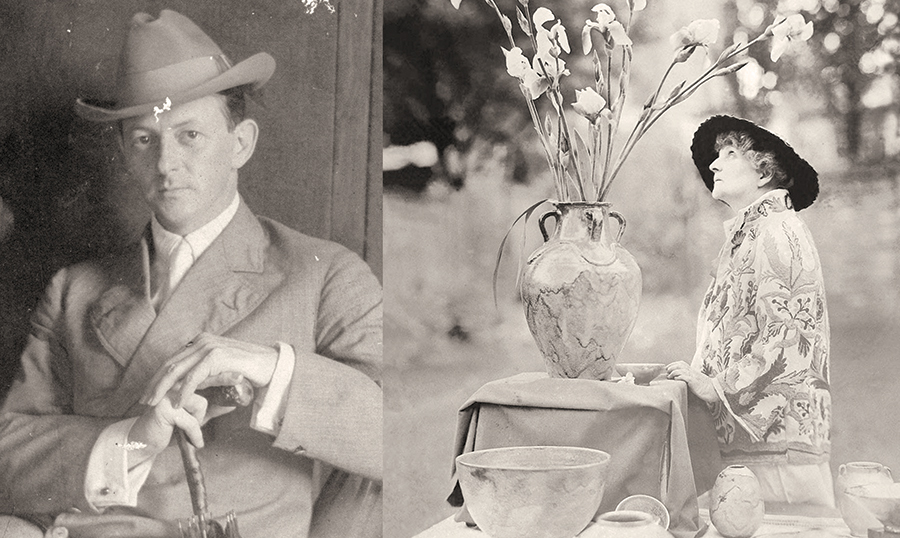
Nestled in the northwest corner of Moore County in the early 1900s, Jacques and Juliana Busbee’s Jugtown Pottery elevated folk pottery into a broader appreciation of art and cultural heritage.  A pair of Raleigh artists initially viewed as “foreigners,” the Busbees traveled the back roads of Moore and Randolph counties like old-time politicians, introducing themselves and their goals while learning about pottery from those who made it. They collected traditional wares and studied folkways, lived among the country folks and wove themselves into the culture with dignity and personal warmth. The Busbees cared deeply about the plight of the potters, their long history and struggles.

Utilizing local materials and old-time turning and firing techniques, their own pottery provided a kind of visual nourishment that proved as timeless as its classical inspiration, and became the foundation for traditional pottery of the 20th century in North Carolina. The great gift of the Busbees’ revival was their aesthetically pleasing ware, a fusion of traditional and Oriental ceramic forms created under the watchful eye of Jacques Busbee. They found not only a new direction for the North Carolina pottery trade, propelling their community into the future, but also a means of sustaining a way of life for the Owen/Owens family of potters. And the couple grew to be the leading advocates for the trade.

The Busbees accomplished this transformation by cultivating a wider audience for folk pottery and, in turn, the Seagrove area came to embrace the Busbees as their own. This symbiosis proved not only important for marketing pots but for defining the identity of the potters themselves, helping to foster the survival of a craft that in most other areas had passed into the ages.

The arrival of the Busbees marks the turning point for a region that was looking to reinvent itself at the end of the era of the salt-glazed jug. While the locals saw pottery as another cash crop, Jacques and Juliana thought of it as something to be celebrated for its beauty. Their outsider’s perspective offered a broader view for the symbols of handmade pots and rural society, and over time the district’s residents began to see themselves through this lens. The old pug mill with the mule, and the treadle wheel and groundhog kiln, came to have new meaning and a source of community pride.

This vision of a new pottery that could breathe life into handmade craft would have been nothing without the willing hands of the potters. The craftsmen were ripe for engagement and served as the co-creators of Jacques and Juliana’s artistic undertaking. It should be noted that gifted craftsmen open to innovation were viewed as exceptional, or “different,” not unlike the early perception of the Busbees, whose pieces were at first described as “play” or “toy” ware. This view of the innovative potters’ exceptionalism likely resulted from their involvement with the newcomers in southern Moore County who where influencing their style and taste.

In the early years of the 20th century, Southern Pines and Pinehurst provided a market for pottery from the northern end of the county. The potters streamed into the settlements on schooner wagons with loads of utilitarian ware, only to find worldly resort dwellers more interested in urns, jars and teapots. The townsfolk began showing the tradesmen drawings and examples of the pieces they were willing to buy, compliant craftsmen began turning out new shapes, and sightseers began visiting their shops.

A new way for the potters was also provided by arts enthusiast Neva Burgess, who at the start of the 1900s began promoting regional arts and crafts at Lift-the-Latch Tearoom in the southern Moore County town of Pinebluff. This early sales outlet for traditional pottery offered lectures and exhibitions, set in a self-consciously rustic log cabin reminiscent of Jugtown. For several years prior to the Busbees’ arrival, potters were invited to give public demonstrations and to exhibit at the Sandhills Fair in Pinehurst, paving the way for their venture.

Jugtown represents a convergence of people who joined together with a common creative goal to make something successful happen. Beyond nourishing the pottery tradition, the key to understanding the Busbees’ vision is its connection through the generations. Sustained by teaching and sharing, such a lineage is a fragile thing, lost forever if the chain is broken. With a heritage so rich, perhaps all those who have followed in the Busbees’ footsteps have felt that nurturing the tradition was tied to a sense of being part of something greater than themselves, and that those before them kept the tradition alive under much harder circumstances.

Since 1983, Jugtown has been owned and operated by potters Vernon and Pam Owens, and their family. Vernon began turning pots at Jugtown in 1960, and his grandfather, J.H. Owen, was the first potter to successfully partner with the Busbees. Through the years, the pottery complex has remained basically unchanged, and the Owenses have carefully restored and preserved the facility.  Most remarkably, in a time when almost all traditional pottery buildings have disappeared, Vernon still turns pots in the original turning room, completely unchanged from when it was built, with a dirt floor and bare log walls.

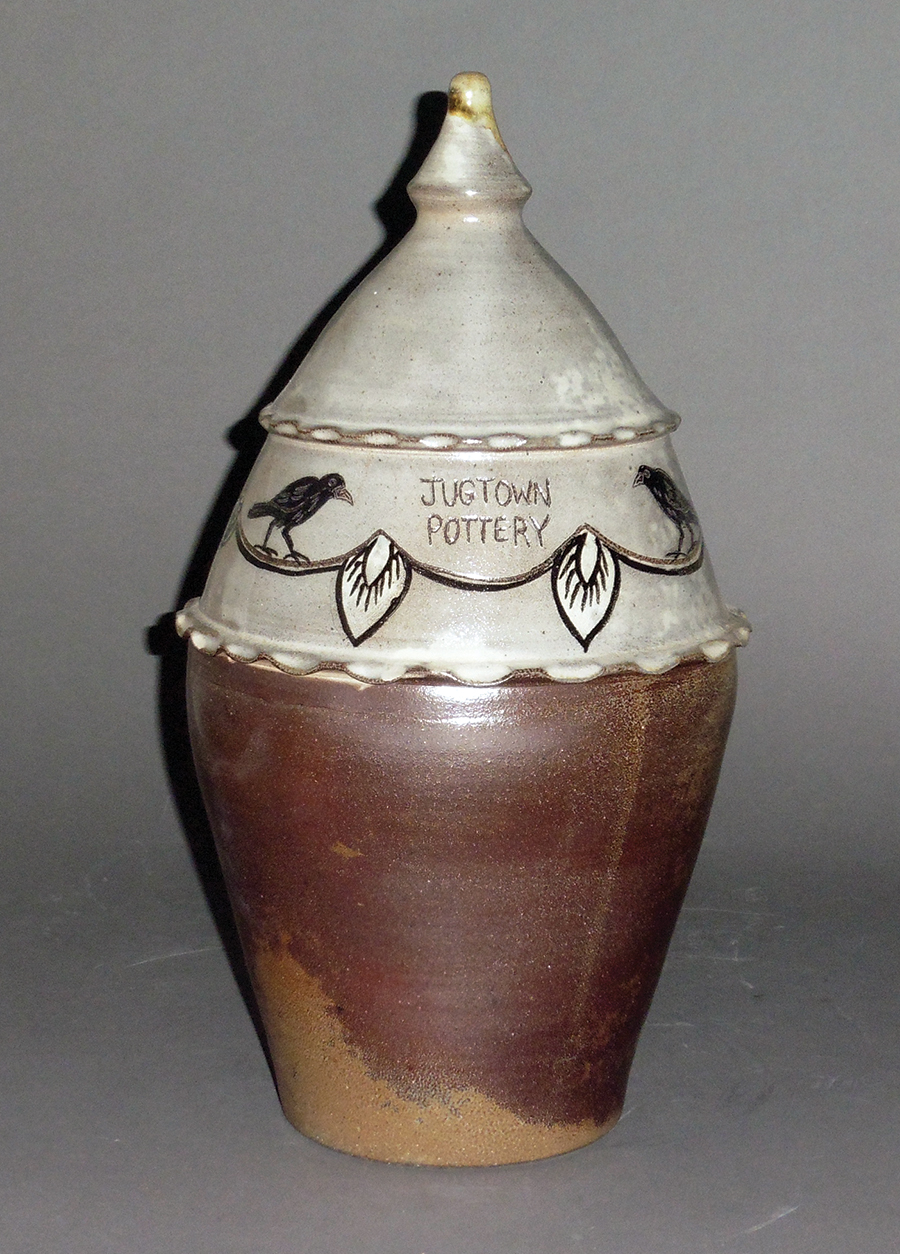
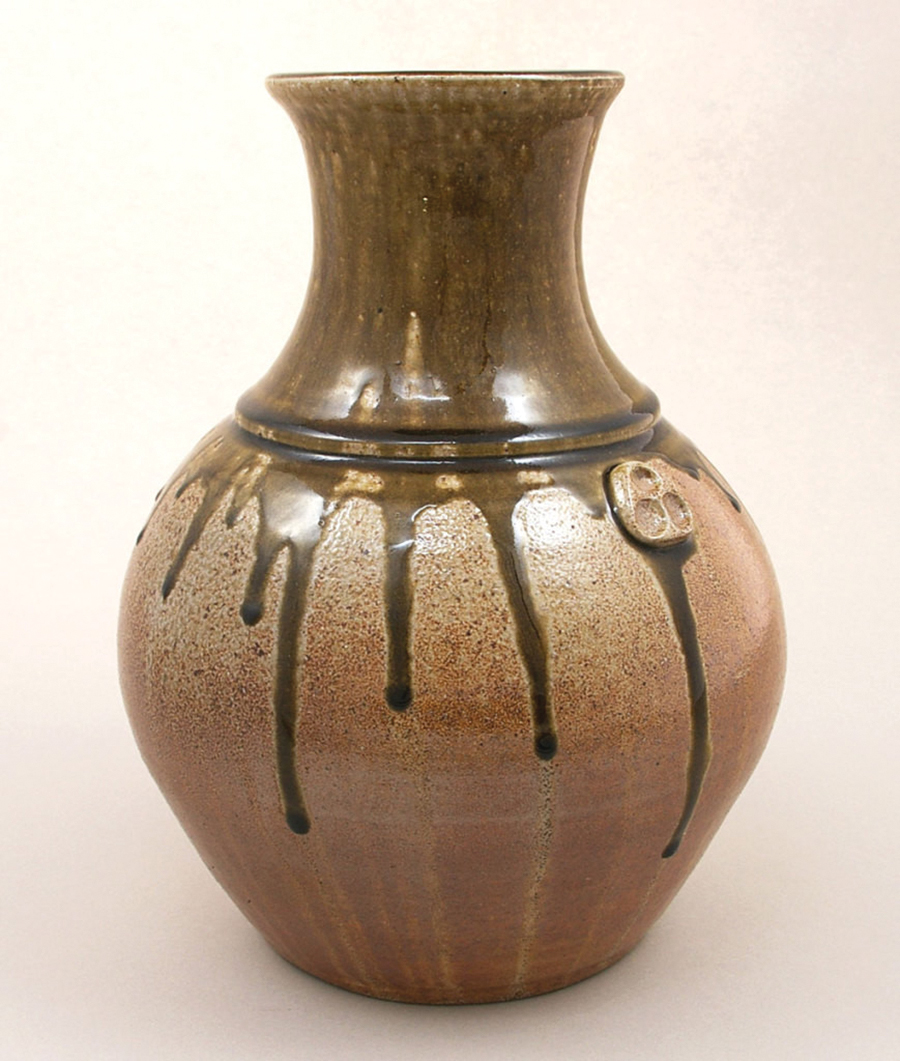
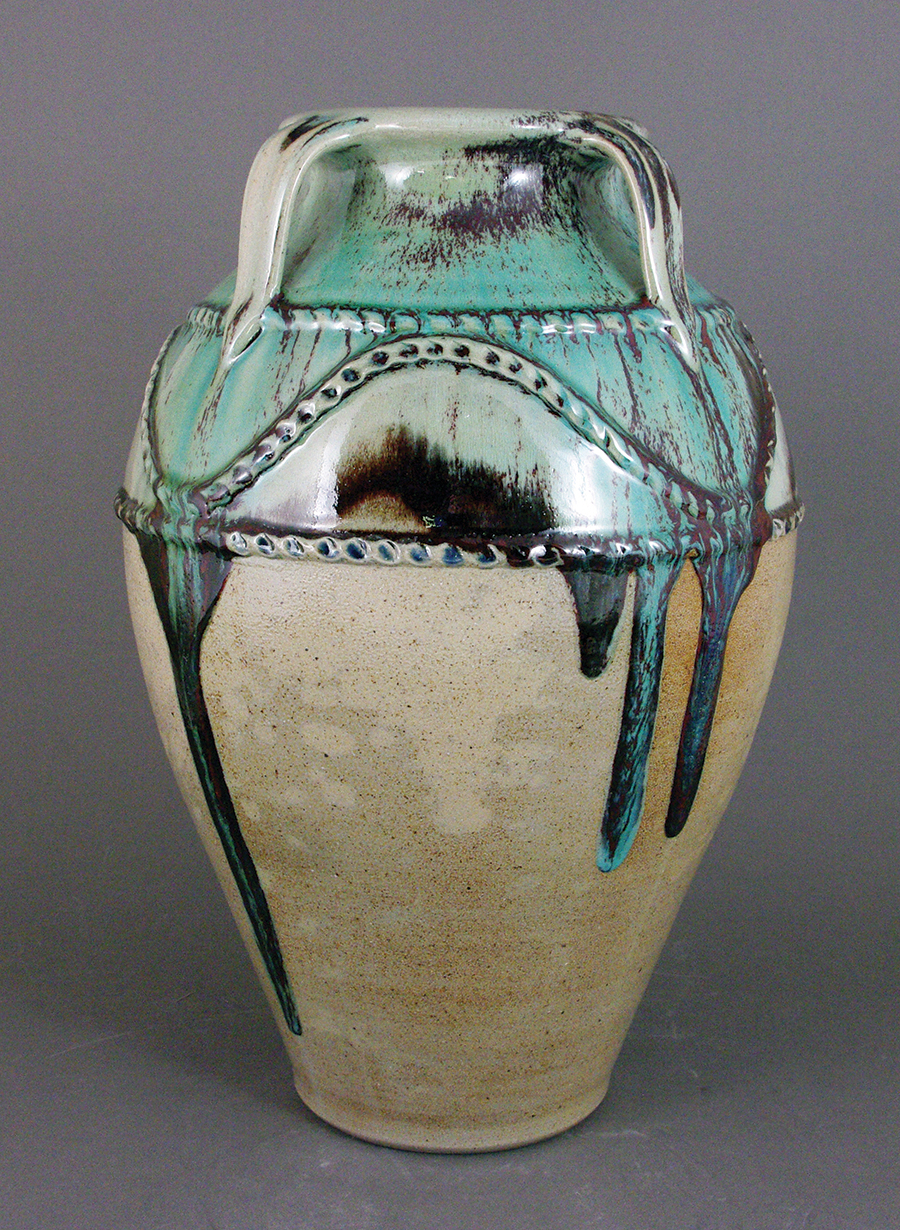
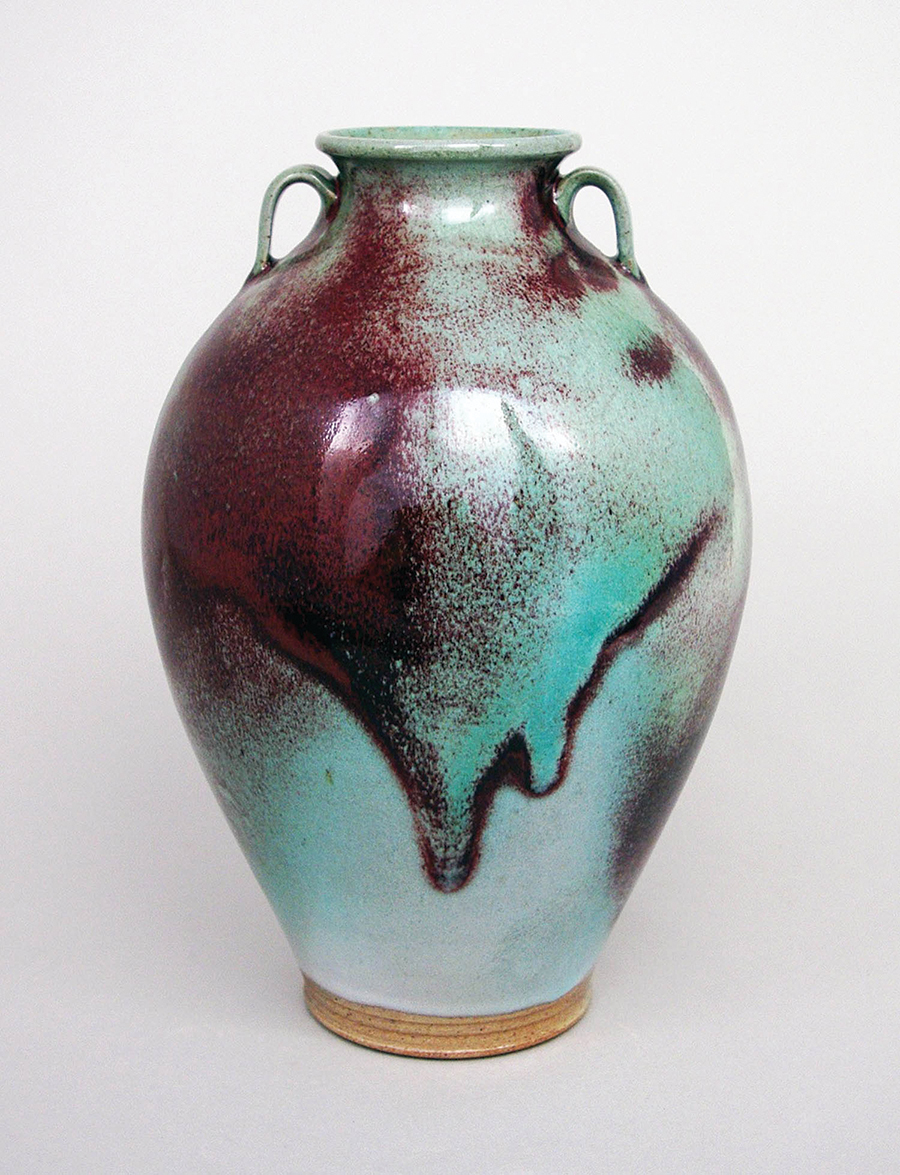
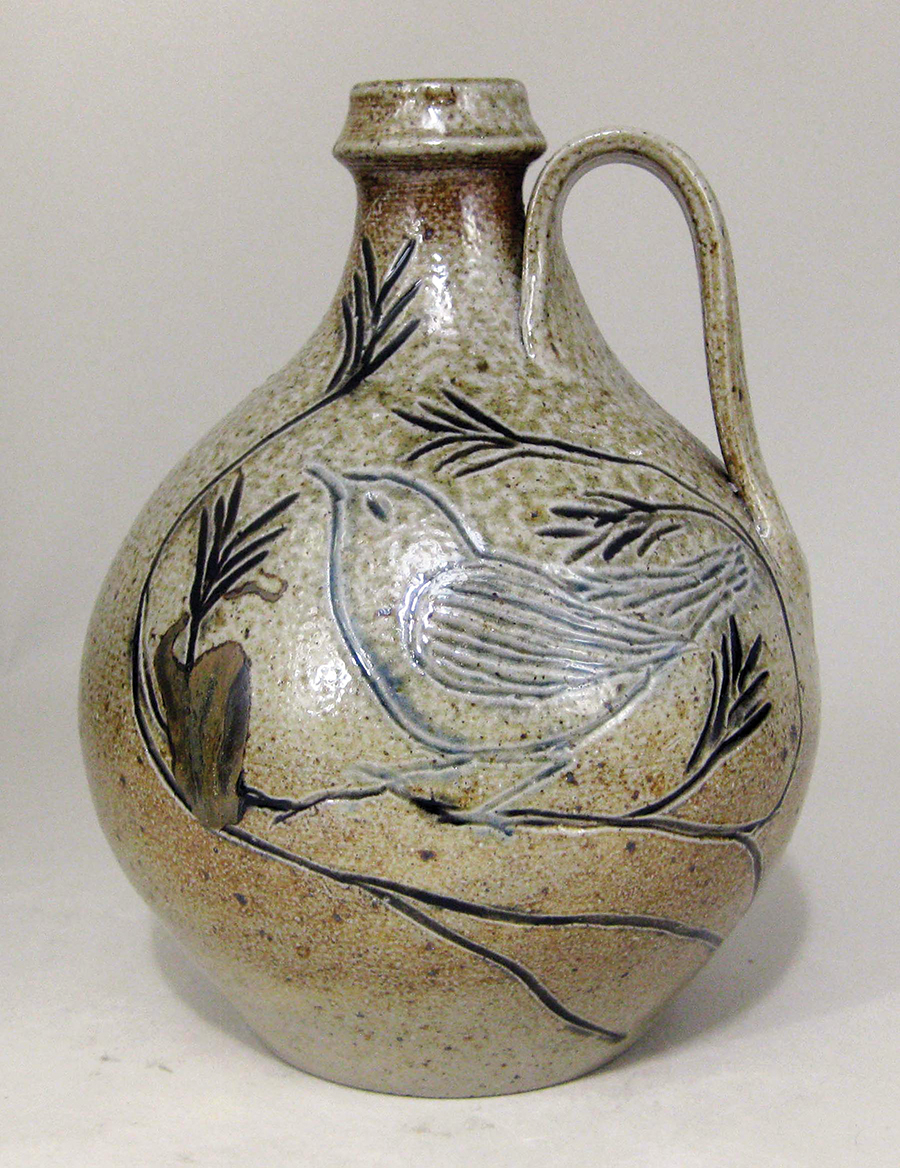
Like the Busbees before them, the Owenses produce a hybrid of traditional and classic forms, ever careful in their transformation from old to new traditions. Older pots from the region remain an inspiration, just as Jacques and Juliana had envisioned. Decorative motifs reflect the natural world and agrarian setting, with incised sine waves, farm animals, and birds being common themes. The vessels carry evidence of the fire and earth from which they were made  — some slick like clay, others rough and volcanic, and others with slight finger grooves from the hands of their creator.

In some regards, the cares and concerns of today are not so different from the early 20th century — machines continue to replace people, as social upheaval and change persist — but Jugtown holds the same allure as when it was founded. In a 1991 interview conducted with Vernon Owens, reflecting on life at Jugtown, he said, “The more automated and the more things are done by a computer, the more important it is that this place, and any other place like this, stay the same. What you’re doing, you’re going back to a time when time didn’t matter that much, and that’s one of the things that draws people to a place like this.”

With its picturesque setting, Jugtown is the best-preserved pottery in the eastern Piedmont and one of the most significant traditional potteries in America. The complex consists of 12 rustic log cabins that blend seamlessly into the surrounding farmscape. The property embodies the Busbees’ belief in the civilizing influence of rural society, a throwback to a place closed off from the outside world where they had everything to do for themselves. The effect is one of being deep-rooted and unchanged over time, reflective of the values of thrift, modesty, plain-style tastes and homespun ways.

When you pass through the gates you encounter a cultural landscape, with a visceral, almost instinctive alignment with the past. There are those who have said it is haunted, that sometimes in the quiet of the old Busbee house you can hear the muffled sound of music drifting through the air. Stories of this apparition pre-date the current owners, with reports of the phenomena spanning decades. Whether or not one believes such accounts, the telling and retelling of these stories gives them a certain degree of life and meaning.

Jugtown is, and always has been, a shared experience. The Busbees’ vision permeates the site, and its distinctive and cherished aspects are as real to its residents and their patrons as its physical characteristics. It is a feeling that surrounds them and is held within, connecting with the invisible fabric of life.  PS

(Adapted from The Busbee Vision, with permission from the N.C. Pottery Center.)

The Arts Council of Moore County will present the exhibit, Jugtown Pottery:  A Century of Art & Craft in Clay, at Campbell House Galleries from June 2-30, 2017. The show also features jewelry by Jennie Keatts of JLK Jewelry and photographs by Angela Walker. The exhibit is free and open to the public on weekdays 9 a.m. to 5 p.m. and on Saturday, June 17, 2 p.m. to 4p.m.

During the month of June, two free Jugtown events will be presented at the Southern Pines Civic Club at 105 S. Ashe St. in Southern Pines. On Sunday, June 11 at 7 p.m., the PBS film, Craft in America/Jugtown Pottery will be screened, followed by a panel discussion with Jugtown artists. And, Steve Compton, author of Jugtown Pottery 1917-2017: A Century of Art & Craft in Clay, will give a talk on Wednesday, June 14 at 7 p.m.

The Rifles of Bear Creek

How the Colonial Kennedy long rifle factory in Robbins became one of the largest in the South

By Bill Case     Photographs by John Gessner

More than 50 years ago, three men clambered down the steep bank of Bear Creek in Robbins hoping to discover artifacts from a frontier rifle factory that, along with its owner, David Kennedy, vanished around 1838. Arron Capel II, now the retired CEO of his family’s century-old braided rug manufacturing business in Troy, teamed with Pinehurst psychiatrist Don Schulte and candlemaker Carl McSwain to conduct what amounted to an archaeological dig. Each possessed an abiding interest in the legendary Kentucky long rifle, which became the gun of choice for America’s frontier settlers and fighting men after gunsmiths of German descent began producing them in southeastern Pennsylvania around 1719. Those artisans discovered that combining a rifled cylinder in the bore of a 4-foot-long barrel dramatically enhanced a gun’s accuracy at previously unimagined distances. British soldiers experienced the lethal power of the rifles when patriot sharpshooters, firing from 250 yards away, toppled redcoats like tenpins during the Revolutionary War. 

Because the entirety of the frontier was sometimes referred to as “Kentucky,” the rifle became associated with that area even though long rifles were never actually made there. Ambitious entrepreneurs spread production from Pennsylvania to Virginia, and finally outlying areas like the interior of North Carolina. One of those rifle makers was David Kennedy’s father, (John) Alexander Kennedy, a Philadelphia gunsmith of Scottish descent. The precise date Alexander moved his family by wagon train from Philadelphia to North Carolina is difficult to pin down. One account suggests he arrived in this area as early in 1768 — the year of David’s birth. Family lore says Alexander left Philadelphia to steer clear of the British Army, poised to seize the city in 1777. Concerned that the British would identify him as an arms supplier to the rebels, Alexander usually refrained from engraving his name on rifles he made. Only one bearing the signature “A Kennedy” is known to exist, but his rifles were employed by the Continental Army in the Revolutionary battles of Guilford Courthouse and Kings Mountain.

When he arrived in what is now Robbins, Alexander Kennedy befriended fellow riflesmith William Williamson, who helped Alexander start his own operation by loaning him assorted gunmaking tools. He then taught his trade to son David. Around 1795, David began his own business partnering with Williamson in the operation of a gunmaking facility on Bear Creek.

The partners erected a dam across the creek, diverting the water flow to millworks where the stream’s force powered a waterwheel that, in turn, operated the mill’s machinery. Iron flat bar was rolled into the form of rifle barrels by large grindstones produced by a neighboring millstone maker. The metal was hot-forged and molded into barrels by trip-hammers, likewise operated by waterpower. The barrels (referred to as the gun’s “soul” by Arron Capel) were then “cooked for days at a time and stacked like firewood.” Coal from a nearby mining works supplied the heat source. Brass fittings were cast at Bear Creek too. Once the guns were assembled, they were test fired over the millpond to a target and the rifle’s sights carefully adjusted.

As Capel points out in his book, Bear Creek Long Rifles, there existed a high demand for effective weaponry since, “(in) addition to the obvious need to put food on the table, every frontiersman had the responsibility to protect his family from hostile Indian attack.” Moreover, the Kennedys’ rifle mill and smithy were strategically situated to serve as an outpost for intrepid pioneers departing from Fayetteville (then Cross Creek) and traveling the adjacent trail on their journeys to Salisbury and destinations farther west. It was not long before David Kennedy bought out Williamson’s interest and, with his father aging, became the man fully in charge. Soon, he expanded his holding to include a sawmill, and lumberyard. Five of David’s 10 children, along with his brothers Alexander and John, busied themselves making rifles, pistols and swords. Woodworkers, carvers, engravers and silversmiths crafted the finishing touches that gave Kennedy rifles their unique look. Virtually every component, aside from flintlocks imported from England, was fabricated and assembled at Bear Creek. So many skilled artisans were employed at the bustling mill, the site became known as Mechanics Hill, and a post office by that name was opened. It was the first name given to a settlement that over the following century and a half would undergo name changes as frequently as a flimflam man, identified, in turn, as Elise, Hemp, and finally Robbins.

David Kennedy was resourceful in finding ways to trim costs. Blackwell Robinson’s The History of Moore County — 1747-1847 recounts the local legend of how Kennedy circumvented payment to a New York company of what he deemed to be outrageously high-priced gunlocks. After journeying on horseback to the factory and using his greatly admired violin music to ingratiate himself with the workmen and operators, David “soon discovered the secret involved and returned to Mechanics Hill, where he began to make his own.” And the craftsmanship didn’t come cheap. The most highly ornamented rifles, according to Robinson, “contained silver melted from 16 silver dollars and sold for proportionately higher prices.”

No definitive proof exists that Kennedy succeeded in landing a major contract to supply arms to the U.S. during the War of 1812, but Capel and his friend Bruce Turner unearthed correspondence at the Archives of the War Department in Washington sent by Kennedy in January 1812, to North Carolina Congressman Archibald McBryde. In a letter, Kennedy expressed his willingness and readiness to manufacture whatever numbers of rifles and muskets the government might require, writing, “Tho I am not ancious to under take the bisness, as I am content with my present imployment, which a fordes me a cumfortabel livin….., when I think on the blessings we injoy in our much beloeved country, it makes my hart glo with the love of the same and makes me willin to incounter almost any hardship in defence of our rights.”

Capel maintains there would never have been the “sudden and dramatic increase of employment at the rifle mill (150 workers, according to the estimate of Walter Williamson, William Williamson’s grandson)” absent the procurement of such a deal. In his dogged research, Capel also discovered ancient military records mentioning that a wagonload of Kentucky rifles “had been shipped from the north,” to General Andrew Jackson immediately prior to the Battle of New Orleans — the final engagement of the conflict — and surmises that the wagonload is as likely to have come from Mechanics Hill as any other location.

Whether Kennedy supplied armaments for the war effort or not, it is clear his factory was a booming moneymaker. Robinson’s history asserts that the factory “was the largest in this part of the south.” One contemporaneous account reported the profits of David Kennedy at about $15,000 annually and those of his brother “about 1,000 per annum.” If Google’s inflation calculator is to be believed, that $15,000 represents something in excess of $250,000 today.

Kennedy became an influential personage and benefactor in Mechanics Hill. According to the 1830 census he owned a large plantation consisting of 23 people, including 15 slaves. He and brother Alexander were trustees of the Mount Parnassus Academy in Carthage. David donated land and financed the building of the Mechanics Hill Baptist Church, located on Salisbury Street in Robbins, where the Woodmen of the World Hall now stands. He served as a deacon in the church. A Bible donated by Kennedy in 1823 contained the following tongue-in-cheek inscription: “David Kennedy — his book he may read good but God knows when.”

Kennedy’s religious inclinations may have been galvanized by a harrowing close call. Nearly crushed by a rolling log at the sawmill, David “declared that ‘if the Lord let him live he would use his logs for better purposes,’” according to Robinson’s Moore County history.

Business slowed at the Kennedy rifle factory after 1825, a period of a generally declining economy culminating in the depression known as the Panic of 1837. Making matters worse was the ongoing presence of competitive rifle mills near Salem and Jamestown, North Carolina. The real coup de grace for Kennedy occurred around 1835, when he faced a demand to make good a surety for payment of a large debt owed by brother Alexander, whose general store had failed. David and wife Joanna were ruined and their holdings liquidated. According to Capel’s book, “one 300 acre tract of Kennedy’s land sold for four dollars.” Ironically, gold was later discovered on it. The rifle mill was closed and auctioned off. The buyer converted the facility to a grain mill.

Creditors never ceased hounding David Kennedy even after he’d lost everything. He and his wife fled to Green Hill, Alabama, where they resided on son Hiram’s cotton plantation. He died there in 1837. His total estate reported in Alabama tallied $170.30.

David’s second son, John, stayed on in Mechanics Hill making rifles in his own business. John achieved lasting local fame in a three-way “shoot-off”  before a large crowd in Carthage against fellow Moore County gunsmiths Phil Cameron and John B. McFarland. Each of the competitors claimed to make Moore County’s most accurate rifles. When the smoke cleared, all three were found to have met the bull’s-eye. The men called it a draw and each went home “feeling proud of his marksmanship, and certain that no gunsmith in the state made a more accurate shooting rifle than he did.” John continued in the business until shortly before he died in 1855, the same year a spring storm washed the Kennedy rifle mill down history’s drain. An amble today along Bear Creek’s rugged trail provides scant evidence that the area was once a beehive of activity. Aside from easily overlooked foundation stones, there is no vestige of the old factory. Capel, McSwain and Schulte knew it would take real digging to find any remnants of manufacture, but they were prepared to do just that in their visit to Bear Creek half a century ago. Over time, local residents had unearthed various metallic objects thought to have been left behind, but few of those relics had been preserved.

Working together, the three men located a small vine-tangled mound. It proved to be the mill’s discard pile. For the excited long rifle enthusiasts, the shards of buried rifle barrels, drill bits, flint hammer castings and raw silver they unearthed constituted a treasure trove as valuable as gold. These artifacts provided the insights into the Bear Creek operation.

Aficionados of David Kennedy’s rifles have launched their own Facebook site — Kennedy Rifle/Mechanics Hill. Followers post comments that run the gamut from Second Amendment discussions to providing advance notice of the Kennedy gun show and food drive recently held in Robbins in April. Historian-collectors like Capel and Asheboro’s Bill Ivey, author of North Carolina Schools of Longrifles 1765-1865, cite the historic importance of the Bear Creek gun factory as one of nine documented facilities (referred to as “schools” ) that produced the vaunted Kentucky long rifles in North Carolina.

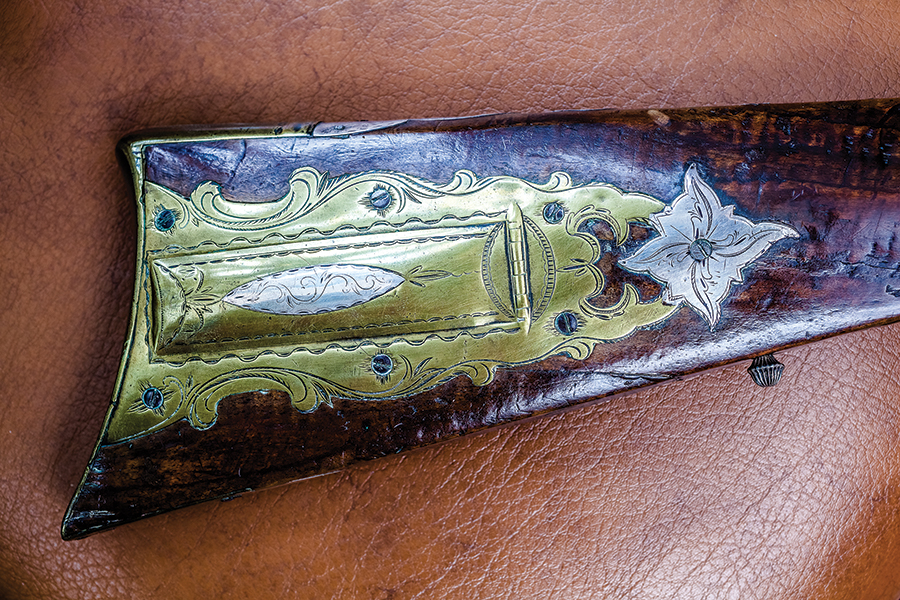
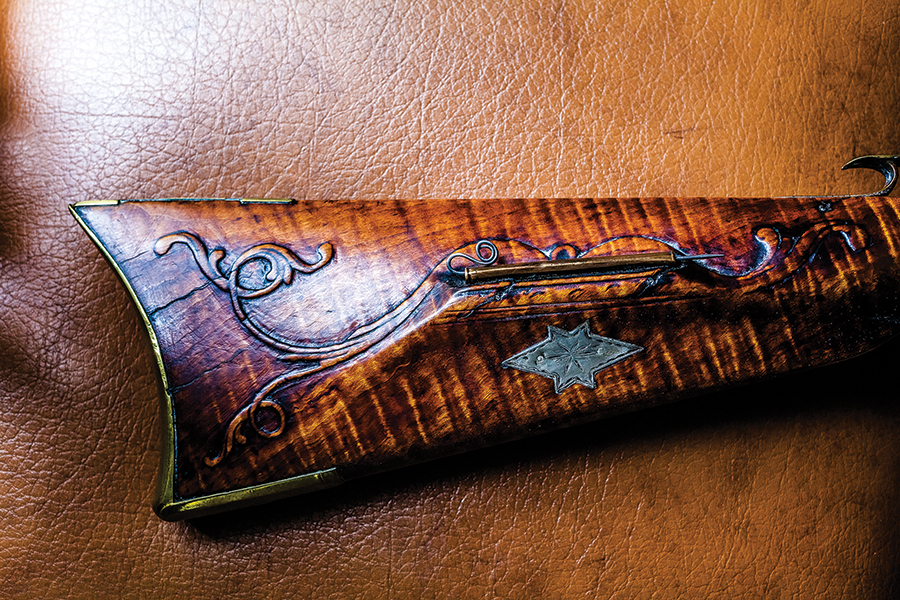
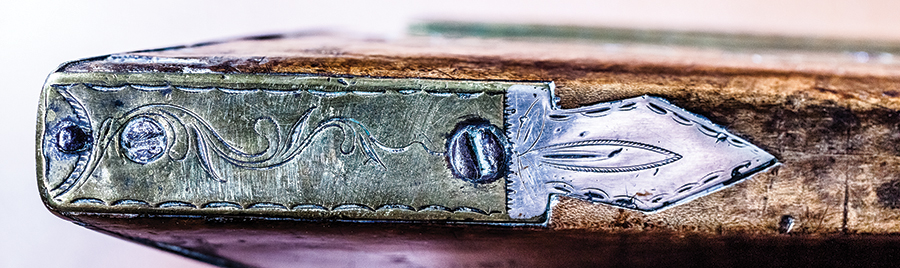
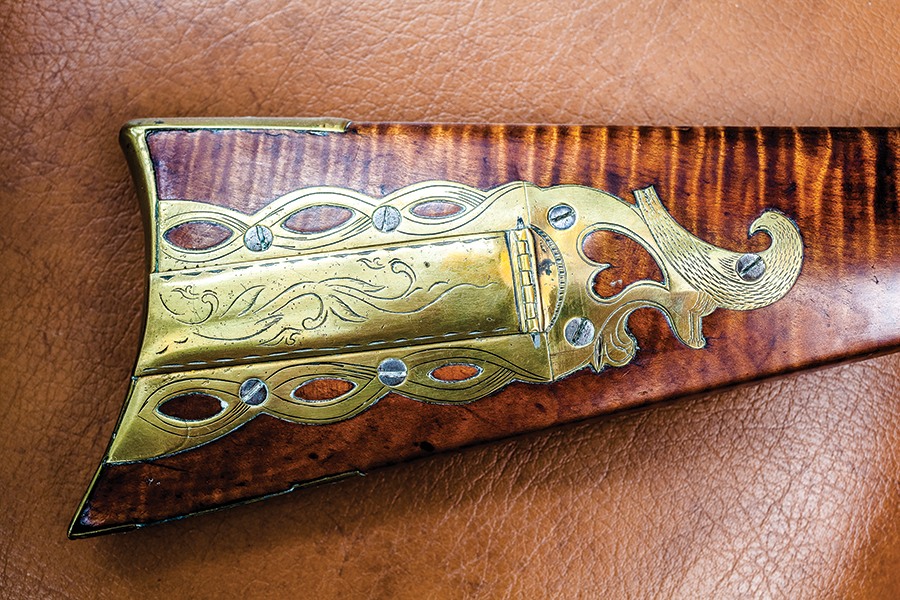
What really excites historians and collectors are the beautiful carvings and engravings on the long rifles. Like the Kennedys, many founders of the North Carolina long rifle schools hailed from either Pennsylvania or Virginia, and their craftsmanship reflects those roots. Ornamental engraving contained on the butts of many Kennedy rifles exhibit a six-pointed star nearly indistinguishable from those found on guns made in Lancaster County, Pennsylvania, where Alexander Kennedy began his career. Similarly, engravings emblazoned on the side “patchbox” (used to store cloth patches and grease) of Kennedy rifles typically reveal “flower petals” that mimic a recognized mark of Lancaster County rifles.

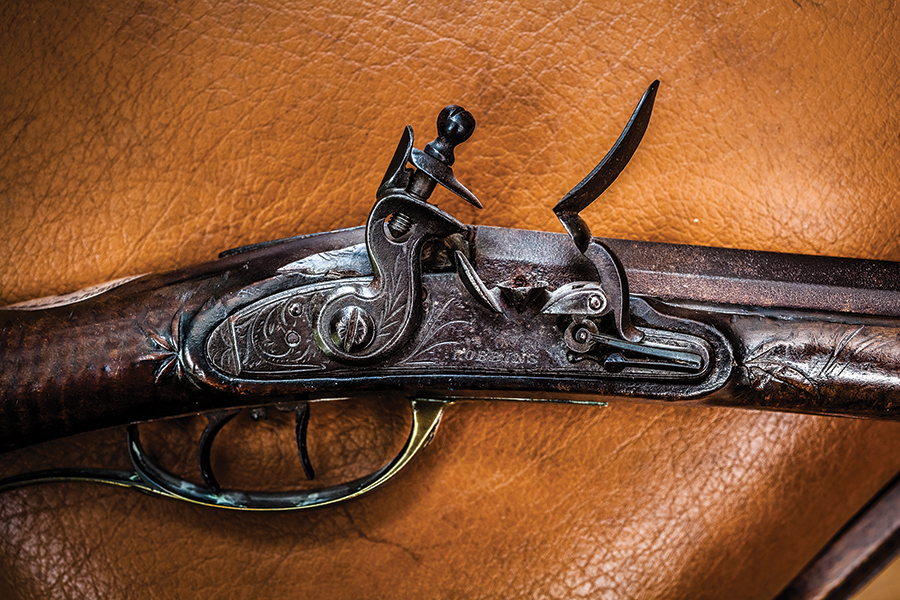
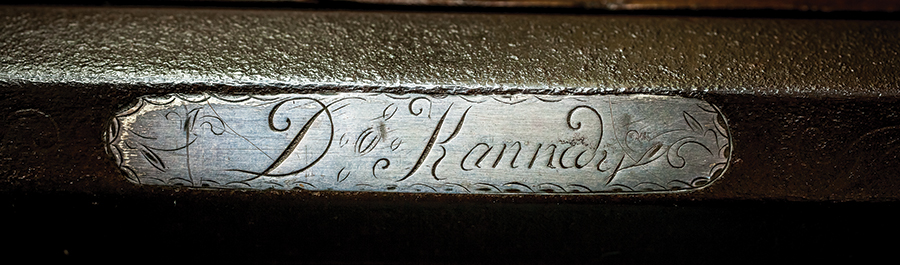
Long rifles displaying David Kennedy’s engraved initials or signature (he spelled it “Kannedy) are particularly prized. Another of the under 100 known Kennedy guns depicts a serpentine-like comet on the butt. Capel says the design was inspired by the “Great Comet of 1811,” which electrified the country for the better part of a year. In a remarkable coincidence, a Kennedy rifle owned by Capel displays the name of an English lock maker named “Robbins” on the flintlock. It was crafted more than a century before Karl Robbins’ beneficence in the community caused the town to be renamed in his honor. When asked about the market value of Kennedy rifles, savvy collectors Ivey and Capel tend to hold their cards close to their respective chests, but neither blinked at five figures as a fair starting point.

The Moore County Telephone Directory contains nearly as many entries for “Kennedy” as there are for “Jones” and more than a few are descendants of David Kennedy, including Southern Pines’ Assistant Town Manager Chris Kennedy. A gun lover and hunter, Chris had frequented Robbins many times and was generally familiar with David Kennedy’s story, but his 2015 visit to the town as a member of the Moore County Leadership Institute heightened his awareness of his ancestor’s critical role in the founding and development of the town. “It’s pretty humbling, especially in my role, to think that the Kennedys had a lot to do with development not just of Robbins, but of the whole county,” says Chris.

The rapid decline in recent decades of Robbins’ textile industry caused town leaders to grapple with how best to attract new business. One tactic has been to go “back to the future” by stressing the community’s rifle-making origins. Prominently positioned in the center of town is a historical landmark plaque recognizing the Kennedys’ “extensive gunsmithing operation” at Mechanics Hill. In 2013, the Town Council members adopted resolutions establishing the second Thursday in each April as “Mechanics Hill/Kennedy Rifle Day,” and affirming their personal sworn duty to uphold the Second Amendment.

Like the Phoenix of ancient lore, gunmaking in Robbins astonishingly rose from the ashes. Soft-spoken gun devotee and lifetime Robbins resident Joey Boswell is something of a latter day David Kennedy. After a wide-ranging career performing computer automation, engineering new product developments, and generally solving all sorts of industrial problems for various manufacturers, Boswell tired of travel to faraway destinations and being away from his family. Familiar with the design, operation and limitations of weaponry, both civilian and military, he and his wife, Martha, started their own business, War Sport Industries, LLC, in the “barn” alongside their home atop a hill in Robbins.

His first major solo project in 2008 involved finding a method to camouflage the infrared heat visible to the enemy at nighttime on the hot barrels of American soldiers’ guns after repeated firing. Boswell invented a heat-resistant device he labeled a “suppressor sock,” which did the trick. The sock became standard issue for certain Army weapons. They began producing their own armaments — the first manufactured in Robbins since the day the Kennedy factory was shuttered. After extensive research, Boswell designed what he called a low visibility operations application rifle (LVOA), which proved to be a major advancement in military weaponry.

Soon, customer demand for the LVOA increased to the point that the Boswells could no longer handle operations out of their barn and they moved War Sport to an old factory off Route 24. With operations running full tilt, two shifts, with 25 employees, War Sport had suddenly become a major Robbins employer. In 2016, the Boswells separated from War Sport and began another weapons-related enterprise in their barn. The new company is called Mechanics Hill Marketing, LLC, in homage to Boswell’s gunmaking predecessor. The Boswells and Mechanics Hill now work in partnership with Osprey Armaments in researching, developing and marketing its weapons and other related products.

“I have never had to move from Robbins to do anything I wanted to do, and I have worked overseas and everywhere,” says Boswell, who has served as a member of Robbins’ Town Council since ’09. As the catalyst to the rebirth of gunmaking in Robbins, Boswell feels a kinship with David Kennedy since — modern assembly line processes aside — the art of making guns has not changed much since Kennedy’s day. “Here we were bringing jobs to this town in the same business that started it.”  PS

Pinehurst resident Bill Case is PineStraw’s history man. He can be reached at Bill.Case@thompsonhine.com.

Boys to Men

Coming of age in Troop 48

By David Claude Bailey     Illustration by Romey Petite

“Don’t pat the pancakes!”

The voice comes to my 11-year-old ears as if through gauze, muffled but clearly insistent.

I’m hunkering in front of a campfire, dodging the smoke that seems to chase me no matter where I drag the massive cast-iron frying pan in which half-a-dozen pancakes sizzle and pop. 

I’m delirious from having spent the night doing what Boy Scouts do on camping trips, swilling soft drinks, telling stories, and feeding our faces and the fire until 2 or 3 in the morning. Once I hit the sack, I’m dealing with a caffeine buzz only achievable in the 1950s before they took the good stuff out of soft drinks, not to mention the two quarts of Double Cola pooling in my bladder. And am I the only one who hears a raccoon raiding the unwashed pots and pans? I get up as soon as I see the slightest glimmer of dawn because I never really did go to sleep and because I’m cold and hungry and someone’s making a fire.

“Bailey. Don’t pat the pancakes.”

It’s our scoutmaster, John Samuels. I could spend a few lines describing his long rangy gait and his penetrating blue eyes below his beetling, sandy eyebrows or his infectious smile that we all want to trigger. But it’s easier just to conjure up John Wayne, whom, to my impressionable eyes, he resembled in every possible way.

I shift yet again away from the smoke, huffing and puffing as I drag the black mass of smoking cast-iron behind me. “Patting them makes them fall so that they’re flat,” Mr. Samuels says, a twinkle in his eye to blunt the bite of his criticism. I stop the spatula a quarter inch from a flapjack, obedient to his command, as yet another finger of smoke finds its way into my stinging nostrils and bleary eyeballs.

Troop 48 was the best thing that ever happened to me, except maybe getting a bike for Christmas when I was 8. The bike freed me from the half-a-mile range of my mother’s booming voice to wander the back alleys of Reidsville with a gang of three, scrounging stuff like an old washing-machine motor that we lugged home and played with until smoke and flames summoned a neighbor.

But it was Boy Scouts that truly liberated me from my Pennsylvania Dutch mother, who was loving, to be sure, but who had a maddening way of insisting there was a right and wrong way to do everything — and there was never any doubt which hers was. She never resisted watching as I tied my shoes — and letting me know that I was still doing it the wrong way.

Nothing beat spending a weekend with boys my age, semi-supervised by a former Merchant Marine turned repo man who, on occasion, packed what looked to me like a huge, black pistol. (I later learned it was a .22-caliber Colt Woodsman.) Like most good teachers, Mr. Samuels liked to fix things. In his case, boys who needed just a bit of guidance and attention at a crucial point in their lives — and at an age, I might add, that didn’t make them particularly appealing to their fathers or anyone else.

I’ll speak for myself. My dad did his best considering that his role model was a father who had nine children and acres of corn and tobacco that had to be tended so that the aforementioned children and wife wouldn’t starve. Plus, during the ’50s, children in my neck of the woods mostly raised themselves without the benefit of Dr. Spock or any helicoptering. Dads, at the prompting of mothers who read magazine articles on that new phenomenon called parenting, occasionally tossed a baseball with their sons or played golf with them (mine never did) or took them fishing and hunting (on rare occasions when other men weren’t available). But most kids were turned loose, along with the dogs, in the morning, and were only noticed if they didn’t come home for supper at night.

Mr. Samuels, who had no children of his own (but a stunning wife who sometimes accompanied him on camping trips), took an interest in whether you knew how to handle a knife or an axe and would show you how to retain your fingers and toes doing so. He’d watch you try to put up a tent and coach you on how to do it in less than an hour. He taught us gun safety, knowing that the subject was, in fact, as serious as death — and your reading this might very well be a tribute to his tutelage.

At 11 and 12, boys are between boyhood and manhood, some still believing in Santa Claus while noticing that they’re growing hair where there didn’t used to be any. On the way to becoming men, boys need mentors. Mr. Samuels took an interest in each and every one of us, even a geeky, one-eyed clumsy mother’s son like myself. I realize now that he liked seeing us grow into men and wanted us to share the values he held dear, which is what Scouting is all about, despite recent revelations and its detractors.

But Troop 48 was not your run-of-the-mill Scout troop. We were a resourceful and mischievous lot who had a reputation throughout the council (and Reidsville) for being wild and crazy. Guilty as charged. Troop 48 viewed jamborees in the same way that some aboriginal tribes regard others occupying open range, a good excuse for a raiding party. Initiations, I’m ashamed to report, could sometimes be described as medieval in their ingenuity. And consider that my best friend taught First Aid to Fritz Klenner, the protagonist in Bitter Blood.

The Chinese invented gunpowder. Troop 48 re-invented the gun. Since South Carolina and Myrtle Beach were only several hours away, any boy who’d recently paid a visit to either one brought fireworks on camping trips. Mr. Samuels never blinked an eye as long as we didn’t disturb his sleep or lose a digit. Armed with hundreds of firecrackers, some clever troop member figured out how to take a firecracker and an acorn and turn a harmless tent pole into a weapon of minimal destruction. 

Doubtless thinking that any one of us could throw an acorn a lot harder than the improvised gun could shoot it, Mr. Samuels just shook his head and warned us not to put out anyone’s eye, especially mine. I found the protective glasses my mother insisted that I wear at all times — and actually put them on — and soon we were facing off in Dodge City–style showdowns with shooters, each with his own personal fuse lighter. In the end, someone came up with the idea of replacing the acorn with something a little higher caliber, explosively speaking. This, in turn, required a series of precision actions on the part of fuse lighters that remains highly classified, Troop 48-eyes (or eye)-only information to this day. When the required calculations were just right, the projectile would explode as it flew through the air. When the fuse-lighter’s timing was even slightly off, the tent pole ended up looking like a peeled banana, which Mr. Samuels noticed, thus putting an end to our gunplay.

And here I was in charge of pancakes after telling Mr. Samuels that my mom let me cook breakfast now and again, and his having eaten one of them and saying it was pretty good, if a little flat from my patting it . . . when I saw stars and smoke and flames all at the same time as John Samuels planted his size 12 boot against my backside, kicking me head-first into the fire as I patted, surely, my 20th pancake of the day. In good time, he hove me up like a puppy out of a well, holding and shaking me by the front of my untucked shirt and twisting his head slightly and smiling like a jackdaw. “Didn’t I tell you not to pat the pancakes,” he asked quite reasonably.

I allowed as how he did and how I wouldn’t do it again. He deposited me back in front of the fire after kicking it back into shape and putting the pan back in front of me again, buffing the dirt off the spatula on his pants.

I have never, ever patted a pancake again — or idolized anyone as much since. PS

David Claude Bailey, who went on to attain the rank of Eagle, is trustworthy, loyal, helpful, courteous, kind, obedient, cheerful, thrifty, brave and clean but rarely reverent.

Living la Vie en Rose

Designer brings Paree to Pinehurst

By Deborah Salomon    Photographs by John Gessner

Don’t judge a book by its cover, but do heed what a front door says about a house. Especially if the door is bubble gum pink.

Why?

“Because I like it,” Cathy Carlisle says.

Those four words explain what sets Rambler Cottage apart from retreats built in Pinehurst in the early 1900s for golfing snowbirds. One by one, these white clapboard “cottages” have become showplaces for family heirlooms, antique-barn finds, High Point upholstery, built-in bookcases, plantation shutters, heart of pine floors, Capel rugs, miles of moldings, magazine kitchens and spa bathrooms built around claw-foot tubs.

Instead, Cathy, an American Society of Interior Design member, has indulged her love for formality, à la française.

“I got that in Paris,” she says, pointing to a handsome 19th century breakfront — and lots else. The trips were for stocking her shop in Rocky Mount, where the Carlisles lived (in a home built like a European villa) before relocating to Pinehurst full time in 2000. Cathy’s romance with formality began during childhood, when dinner was served in the dining room, with silverware and linens. This era worshipped Givenchy, Dior, Catherine Deneuve, Chanel, Jack and Jackie in Paris.  “By the time I was 7 I knew I wanted French (things),” Cathy says. “My mother took us to museums and plays, places where we wore white gloves.” When working for a client, “I have to make them happy. This is to make me happy.”

Cathy interprets French décor not as rustic Provençal, but with carved chairs, pastel fabrics, lace demi-drapes, fanciful chandeliers and sconces, gilded mirrors and frames for her own paintings, described as abstract impressionist, adorning what appears to be an average-size cottage from the exterior, but extends in many directions.

In fact, legend has it that Donald Ross dubbed the house “Rambler” because it rambles on and on.

As does its story.

The three-quarter-acre plot where Rambler stands was purchased in 1910, likely from the Tufts family, by Warren Manning, a landscape architect employed by Frederick Law Olmsted. Manning was tasked with the first village plantings, according to documents at the Tufts Archives. But he never developed the land, instead selling it to F.W. Von Cannon, cashier of the new Bank of Pinehurst, who built the cottage in 1915. Publications describe it as having a gabled roof, front shed dormer and screened porch, later enclosed as part of the entranceway. The cottage was classified as year-round occupancy, which meant multiple fireplaces and a full kitchen.

The original floor plan has all but disappeared into renovations accomplished by half a dozen owners, resulting in a warren of small sitting rooms which Cathy furnished with settees, benches, mini bureaux, fanciful objets d’art and books cantilevered, not piled or stacked, on tables.

But given her penchant, why Pinehurst, not francophone New Orleans?

Sam Carlisle, an attorney/mediator/arbiter, was attending a seminar at the Carolina Hotel. “No matter where Cathy is she looks at houses,” Sam says. Fatefully, she picked up a sales brochure describing Rambler. “I have to see this house before we leave,” she told Sam. They rode by in the pouring rain, with no intention of moving anywhere for 20 years. Coincidentally, a few days later Sam’s law partner proposed the two couples buy a condo in Pinehurst, to share. “I told him, well, Cathy already found this cute house …”

Cathy and condo have little but their first letter in common. “I could never be happy in anything modern,” she says.

They returned on a Sunday, bought Rambler as a vacation property the following Thursday. The house had been updated in the ’70s and looked it — which provided Cathy the thrill of the chase.

Sam had doubts: “The only way you’ll make that house French is to rename it Rom-blay.”

How wrong he was.

Cathy began by creating a vestibule with a hot pink bench (matches the front door) opening into a foyer “to introduce my house.” The foyer’s formality sets the tone, which contrasts sharply to the picket-fence-and-shutters street view. Its flooring: classic black and white tiles, while a green marble-topped round table from a Paris flea market stands in the center as it would in a European townhouse or an antebellum Southern mansion. Spiral topiary rises from pots here and everywhere. Exit right, into the high-ceilinged salon, another surprise, since it appears to have double fireplaces a few yards apart, although one is in the dining room, separated from the salon only by columns and a half wall.

“Cathy was always going to have a fussy parlor,” Sam says. She chose to place ornate French furnishings, tiny footstools and curvy-legged tables on wall-to-wall sisal carpeting (“I like a mix”) instead of polished hardwood or Oriental rugs, which she “doesn’t like.”

She does like mirrors: An architectural installation covers a wall in the foyer and others, ornately gilded and framed, reflect living and dining rooms.

A second exit from the vestibule reveals another surprise. This room, probably the original master bedroom, is totally Sam’s. The floors, sanded and whitewashed pine. The upholstery, Scotch plaid; and on the walls — painted a striking brownish-black, with a hint of aubergine — hang 11 shotguns belonging to his ancestors as well a collection of antique maps, most of eastern North Carolina and all identifying Tarboro, where Sam and Cathy grew up and became high school sweethearts. “This one from 1775 is of North and South Carolina during the Revolutionary War. George Washington had a copy,” Sam explains proudly.

Europeans do not overemphasize kitchens. Cathy’s, mostly black and white with lemon walls, is both functional and a good backdrop for her collection of green Majolica pottery.

Surprises continue. Up a narrow flight of stairs typical in Pinehurst cottages, the fabrics, painted white floors and woven area rugs are pure Martha’s Vineyard B&B except for the original paneled floor-to-ceiling sleeping porch, which made summer nights almost bearable.

What Cathy does emphasize is her garden — actually a series of “secret gardens” grouped, with seating, for relaxing and conversing, all designed by Cathy in 1994, when she razed the area and began anew. Along one side, neatly trimmed shrubs form ellipses with focus plantings in the center.

Why the unusual forms?

“Because I like it,” Cathy repeats. “I find them pleasing to the eye.”

The final surprise, so very Cathy, so very French, is her garden studio, contrived from a single-car garage, of no use since its driveway lost access to the alley. Here, she employs blue and white for country French freshness. Here, flooded by sunshine from skylights and paned windows, Cathy paints, designs, reads and plans. Those plans include a shocker: The Carlisles will soon move to a more formal historic house in the village on which Cathy will, once again, imprint her style.

Why?

Certainly not because they need more space, or a better location. “Just because I love old houses,” she says.  PS

Almanac

By Ash Alder

I perhaps owe having become a painter to flowers. – Claude Monet

May is a month of magic. A single flower is proof. But the Earth spills fragrant blossoms with the fervor of a child in a spring wedding, hands dipping into that shaky wicker basket until the aisle resembles a sea of brush strokes — a Monet painting come to life.

May is a month of abundance. Plump strawberries. Rhubarb pie. Tomato vines winding up rustic garden trellises.

On May 1, an ancient fire festival called Beltane celebrates this fertile season with feasts and rituals. Midway between the spring equinox and summer solstice, Beltane was traditionally a celebration of light that marked the beginning of summer, a Gaelic May Day festival during which cattle were led between two sacred fires, the smoke from which was said to purify and shield the herd from disease before they were driven into open pasture. Villagers and couples danced round and leapt over the flames to cleanse their souls and invoke fertility and good fortune.

May is a month of flowers. In her book of essays and meditations inspired by a retreat to Florida’s Captiva Island in the early 1950s, Anne Morrow Lindbergh mused that “arranging a bowl of flowers in the morning can give a sense of quiet in a crowded day — like writing a poem or saying a prayer.”

Mother’s Day falls on Sunday, May 14, two days after the full Flower Moon. Gift her wildflowers. A sprig of dogwood. Irises from the garden. Gather them in the early light and feel the magic of May pulsing within them.

Spring in a Bottle

Remember picking your first dandelion? How it yellowed your clothes and fingers? How its tiny florets rendered it the most perfect specimen you’d ever seen? Before you knew it as weed or edible, dandelion was faithful companion. You wove it into wildflower crowns, you gathered them for Mother, and gasped when you found one gone to seed. Even as a child, you somehow knew that dandies spread like laughter. For that, you were grateful.

In the spirit of that playful inner child, harvest a basketful of dandelions on a warm May evening. Make wine. Pop off the blossoms. Soak them in citrus juices. Boil with ginger and clove. Bottle the sweetness of spring to enjoy all year.

Dandelion wine recipes are nearly as easy to find as the star ingredient. Just be sure to harvest from someplace free of pesticides. And when the blossoms stain your fingers, don’t be surprised by a sudden impulse to turn a cartwheel or somersault across the lawn.

Weeds are flowers too, once you get to know them.— A. A. Milne

The May Bush

The first maypoles were made of hawthorn, a mystical tree whose pale blossoms represent hope and supreme happiness. Also called thornapple, hawberry and May bush, the ancient Celts believed this magical tree could heal a broken heart. If you stumble upon a wild hawthorn, especially one growing among ash and oak, legend has it you have found a portal to the faerie realm.

The Celts sure love their nature spirits. According to Celtic tree astrology, those born from May 13 – June 9 draw wisdom from the sacred hawthorn. Creative and charismatic, hawthorn types are often found performing for a crowd. They’re most compatible with ash (Feb. 18 – March 17) and rowan signs (January 21 – Feb. 17).

And wouldn’t you know it? The hawthorn is one of two birth flowers of May, the other being lily of the valley — less fabled but far more fragrant.

The Happy House

A young family appreciates the old and enjoys the new

By Deborah Salomon    Photographs by John Gessner

In the 1940s, with the world deep in World War II, Walt Disney created Happy Valley as a Technicolor backdrop for animated films. Here, the sun forever shone, flowers bloomed, birds chirped, bunnies hopped and all was well — a remarkable resemblance to the grounds surrounding the home of Dr. Ed (dentist) and Ginger (interior designer) Monroe. Tucked out of sight on a forested Weymouth lane, the brick ranch rooted in the ’60s but now painted vanilla practically glows.

Rosie, a black Lab puppy, wiggles greetings but does not bark. The manicured grass is brilliant early-spring green, the swimming pool crystal azure and the azaleas — some from Pinehurst’s famous Clarendon Gardens — a dozen shades of pink.

Inside, 9-year-old Janie plays the piano and guitar while 5-year-old twins Charlie and Hunter construct Lego vehicles. Almost every evening the family gathers around the dining room table for dinner and conversation.

“It’s our time to regroup,” Ginger says.

This scene — quintessential feng shui — fulfills a note Ed wrote to their Realtor, when acquisition of the property seemed uncertain. He promised to “fill the house with love and laughter.”

The story of this acquisition matches the results.

“We sold our first house when Janie was 4 and I was 7 1/2 months pregnant with the twins,” Ginger begins. “We hadn’t expected to sell it in one day so we had no place to go.”

Not a pretty predicament.

“Then our Realtor called. ‘I think we found a house, but it’s not on the market yet.’” Ginger walked up and down the driveway, enchanted by the rhododendrons in bloom, hardly noticing the house. “I called Ed. His parents came and looked. I was so afraid we would lose it because somebody else was bidding.”

They made an offer which, with the help of Ed’s letter, was accepted.

Ed grew up with three brothers in a ranch house in West End, where his family has lived for 100 years. “We wanted this neighborhood; the house has a great layout for little ones.” Now, Ginger, in advanced pregnancy, faced moving into space which needed freshening and moderate renovations. “We moved in on June 4; the twins were born on July 30,” Ginger says. “By then, the work was 90 percent complete.”

She remembers feeding the babies while the range hood was being installed.

In truth, before Ginger-the-designer waved her wand, the brick ranch built in 1963 was — inside and out — quite ordinary except for an odd floorplan. Imagine, no living room. Instead, the U-shaped kitchen extended to a pine-paneled “family room” with vaulted ceiling, sliding glass doors and fireplace surrounded by built-in bookshelves. Guests could view whatever transpired in the kitchen — a preview of “great rooms” popular in the ’90s. No breakfast room, either, although the long counter has bar stools and a small multi-use table is pushed against one wall. Also missing, a master suite with spa bath/dressing room. Instead, a mother-in-law wing was added by the second owner, creating an L for Janie’s room, an office, laundry room, two children’s play areas and a guest bedroom exiting to the terrace.
Even a moat filled with alligators could not spoil this location.

Here stood the Highland Inn, which burned in the 1950s. “We still find old bricks and pottery in the ground,” Ginger says.

Weymouth, once an enclave of imposing residences built as winter homes for wealthy Northerners, is slowly recycling to younger families. On a nice day, moms in Spandex push jogging strollers along the narrow, winding streets. Historic “cottages” of the 1920s sport glamour kitchens and entertainment centers. Smaller gems like the Monroes’ are screened by pine groves.

Ginger (from Winston-Salem) and Ed (a Moore Countian) met in Charlotte, in 2004. She was familiar with the Pinehurst resort but knew little of Southern Pines. “For a small town it has such history and beauty,” which she compares to the charm of Winston’s historic residential districts. Ed wanted to establish a solo practice, easier in a familiar location. They purchased a house with tiny yard in Weymouth; after five years, given their growing family, relocating became a priority.

The Monroes are only the third owners of the house built by John Valentine, who occupied it until the 1980s. The pool is original — Ginger and Ed added a handsome wood fence — but the second owners built the L-wing. Ginger could either convert this space into a master suite or redo the kitchen. She chose the latter but opted to keep and paint the dark cabinets, replace wall-and-ceiling-mounted ones with simple shelves, enlarge a small window, push out the dividing counter, and install new countertops and appliances.

Flooring was already satiny hardwood.

The absence of a formal living room didn’t bother them at all. “The outside is our living room,” Ginger says. She brightened the dark floors, ceiling and built-ins with white-patterned rugs and white washable shabby-chic slipcovers on chairs, which stand up to three kids and a dog. A Seth Thomas clock, circa 1855, belonging to Ed’s great-grandfather, dominates the mantel, while his grandmother’s “secretary” desk anchors a corner.

Ginger loves fabrics — pillows are her trademark — using them for bursts of color everywhere, turquoise against burnt orange, bright navy awning stripes, deep money-green toile, faintly Asian reds and pink. Her showplace is the oversized dining room flooded with light from a bay window with window seat, a charming ’60s holdover. These vibrant colors, reflecting a year Ginger spent in Spain, play off her turquoise china displayed in an antique breakfront, also painted vanilla, from a consignment shop. They picked up the dining table at a yard sale.

One exception: an elegant crystal chandelier in the Paris Fern motif illuminating the front hallway.

Otherwise, Ginger admits, “We went furniture shopping at our parents’ houses.”

Somehow, this 3,000-square-foot house seems full without being cluttered. “I’m a minimalist,” Ginger continues. “Paint is the easiest and least expensive way to transform a room.”

Landscapes by local artists, family photographs and portraits line the walls, including one of the children dashing into the ocean by Ginger herself. Miraculously, she has embraced the passé architecture and décor of the ’60s, adapting it to the needs of a young family instead of moving walls. The children have ample play areas, including a room with a floor-to-ceiling world map and a raised playhouse overlooking the pool. The gracefully landscaped yard, nearly an acre, is fenced so Rosie can romp off energy. The wide veranda works well for summer entertaining. Ginger added shutters and window boxes for cottage charm. A detached double garage — what a bonus.

Ed is pleased with the result. “I kinda go along with what my bride likes,” especially since she included Woody, his cowboy mannequin floor lamp.

“The most important thing is how the house makes you feel, a warm, welcoming place,” Ginger concludes. Someday, she might replace the sliding glass with French doors, perhaps alter the footprint by extending the L, or build a proper master suite. But for now, “This is a loved house,” she says, where all is bright, all is practical, all is well and, as promised, all is happy.  PS

Fox Tails

A fresh pair of eyes sees a theme

Story and Illustrations by Romey Petite

After the pines, it was the first thing I noticed. They’re everywhere you go.

Foxes.

You find them on signs, mailboxes and in murals. I’ve seen them in shops, too, just like the auspicious calico bobtail figurines found in Japanese restaurants. Even one particularly amusing hood ornament featured a fox in a wolf-in-sheep’s clothing scenario. He was dressed as a hunter, complete with riding hat, sitting astride the back of a hound, giving chase, seemingly to himself. The hound was quite confused.

You can find the word “fox” fossilized in the names of the street signs and subdivisions from Fox Hollow, to Foxfire Road, and Fox Creek.

For a stranger, it’s a bit surreal.

In the short while I’ve been here, a little over seven months, I’ve had as many nature sightings as tourists see fleur-de-lis in my native New Orleans. I’m a city boy — give me time. The novelty will wear off.

In the late summer, I was taken with the evening sounds of a neighboring catbird, one that trilled each day in the hour or so between 4 and 5 o’clock.

One winter morning, on my stroll to work, I found the lawns and pines crowded with robins. I removed my headphones to take in the soundtrack on Massachusetts Avenue.

From the comfort of my girlfriend’s family’s dining room, I glimpsed a rabbit going about its business. Its ears were darting around in the direction of the glass window as if the little creature could hear us. I was sure of this: He knew we were there, but he could not see us.

I’ve stumbled on the telltale signs of a beaver’s handiwork at the reservoir — a downed tree and woodchips — while turtles bobbed like apples just beneath the surface and waterfowl glided along.

I’ve counted two crows mobbing a Cooper’s hawk. I remember thinking of something I’d read about crows — that they are very wise with a terrific memory capable of recalling anyone, human or otherwise, that do them a bad turn. That hawk would do well not to show himself again.

And yet, not a real fox to be found. Not yet.

In time, I’ve accepted foxes as a kind of Sandhills totem. But why? I kept looking for an explanation. Or a story.

There is an ancient Greek myth of a fox sent by the gods to punish Thebes, the city where Oedipus became king. She devoured chickens, sheep and children. No one was safe. People hid in their homes from the blur of a beast that left a whirlwind in her wake. So terrifying was this vixen and so elusive she could neither be caught nor felled. Not even, at first, by the mightiest of generals, Amphitryon.

Had this place harbored such history?

Not exactly.

If you visited New Orleans, you’d notice our recurring symbols. We flaunt them. From the trundling streetcars, to the uncanny carnival masks, to the cheap plastic beads hanging from the oak trees intermingled with Spanish moss, to the ubiquitous symbol of the Bourbon Dynasty — adopted by the Creole colonials for their own purposes.

Perhaps it’s in my blood, but as an expatriate from a city that celebrates its ties to France (and mainland Europe), there was nothing more unfamiliar to me than the spiritual fervor in the air during the annual Blessing of the Hounds. Particularly the men in red coats — sorry, hunting pink — on horseback.

I grew up with stories of Br’er Rabbit. They gave me an affinity for tricksters, the characters that foxes often embody in folktales. Naturally, I couldn’t help feeling for the poor fox in this predicament — chased, cornered. I was comforted beforehand by an assurance from a hobbyist foxhunter that these days the hounds mostly chase coyote. Ah. Coyote — a trickster of yet another mythos.

Strangers tend to notice the things locals no longer see. So, what became of the vixen-vexed town of Thebes and its tormentor, the fox?

At first, Amphitryon cursed his luck. He knew he’d been given an impossible task. He would grow old and die before he’d manage to catch that fox on his own. So the wise general decided he wouldn’t waste his time. There were more important battles to be fought and won.

A special hound was bred and summoned, a hound worthy of this task, one who would give chase for as long as it would take. Laelaps was his name, and he was let loose to bark, snarl, and spring at the heels of the fox.

This tireless thief was chased by the relentless pursuer until, once again, the gods intervened, offering mercy to mortals. Zeus placed both monsters in the sky forming Canis Major (the hound) and Canis Minor (the fox).

It is hard to leave New Orleans. It spoils you with good food, with good music, with a culture not found anywhere else in America. Sold to the United States by Napoleon who needed money to fight the British, it’s a European city on this side of the pond, with African and Caribbean cultures mixed into the gumbo crockpot.

Some nights, walking a fox-eared Corgi, I look up as the stars give chase to one another in the sky. Through the pines, and far from the city lights, I can see the constellations considerably better from here. PS

Romey Petite is a writer and illustrator, a recent New Orleans transplant and a contributor to our Bookshelf column. He can be contacted at romeypetite@gmail.com