Portrait of the Artist’s Home

A place where nothing matches but everything belongs

By Deborah Salomon     Photographs by John Gessner

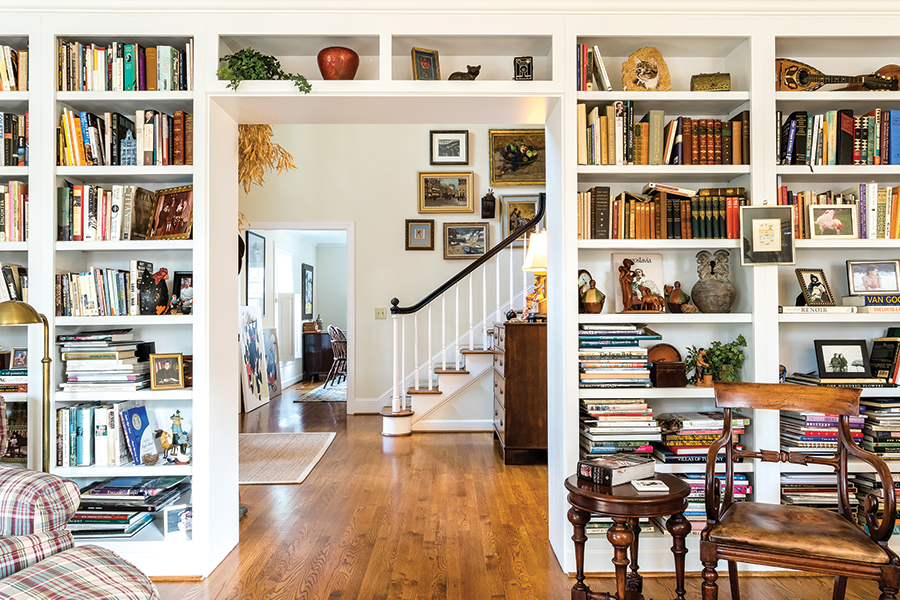
There’s something about Jessie Mackay’s house . . .

Outside, distressed bricks melt into the wooded 2-acre lot rather than jumping out onto the road that winds through Country Club of North Carolina.

Its contents — fewer heirlooms than souvenirs of a life well-traveled — begin their story in the soaring front hall, where hats hang on a coat tree:

“I wore the pith helmet when we rode horseback across Malawi into Zambia,” Jessie begins. Beneath the hats stand boots; Wellingtons speak of her life on a farm in the Cotswolds. On a campaign chest are arranged antique watch faces and a pipe picked up in France, a carved box from Hong Kong and cavalry spurs used by an ancestor. In the corner, a weathered Old Glory leans beside a Union Jack, affirming her dual citizenship. Although fascinating, these artifacts pale beside the paintings — everywhere: her own, those of friends, family members and fellow artists. Some, like a vibrant purple abstract by an Ecuadorian painter positioned on the upstairs gallery wall, attracted her purely for its color.

Jessie grew up in Westport, Connecticut, bordering Manhattan art and culture. She recalls attending a Van Gogh exhibit at the Guggenheim every day, “until (the staff) didn’t want to charge me admission.” Her British parents were casual painters. Jessie might have felt an inclination but, instead, followed a career in consultant management, which included measuring behaviors and results to enhance the workplace environment.

Well, Gauguin sailed with the merchant marines and Cézanne studied law.

Jessie dabbled a bit in high school. “After getting married I wanted something on the walls.” Her first inspiration came watching laborers in a British steel mill, admiring their physicality. The result, hanging in the living room, recalls grim early 20th century factory scenes immortalized by American artist Thomas Hart Benton.

Otherwise, Jessie identifies with Fauvism (think Matisse, its practitioner), defined, in part, as color existing as an independent element — intense blobs of it, rather than within finely drawn lines. “I felt painting was an outlet, a meditative thing,” she says. Not until early middle age did she make art her career. Her first show in Atlanta sold out. Her debut at Campbell House Galleries in Southern Pines moved 13 paintings, more than double the average.

Life, marriages, careers, activism took Jessie to various houses in many countries. In 2008 she was alone in Pinehurst, looking to downsize. Her first impression of the CCNC saltbox built in 1982: “Brick, ugly roof, sad, a mess inside.” Yet its bones and cross-hall two-story layout reminded her of New England while her design skills promised improvement. She and builder Buddy Tunstall made plans. First, the exterior. The painter had never done peeling brick, so they tried the obvious: spray with white paint, follow immediately with a pressure washing. Jessie recalls how the workmen laughed.

But it worked. So did the bright yellow door, the circular drive and informal landscaping. Back acreage, fenced for Jessie’s Jack Russell terriers, appears delightfully wild in the weak winter sun.

Inside, carpet was replaced by hardwood. Bathrooms needed remodeling — one in charming green toile wallpaper with graceful bureau-turned-washstand — but the three upstairs bedrooms remained intact.

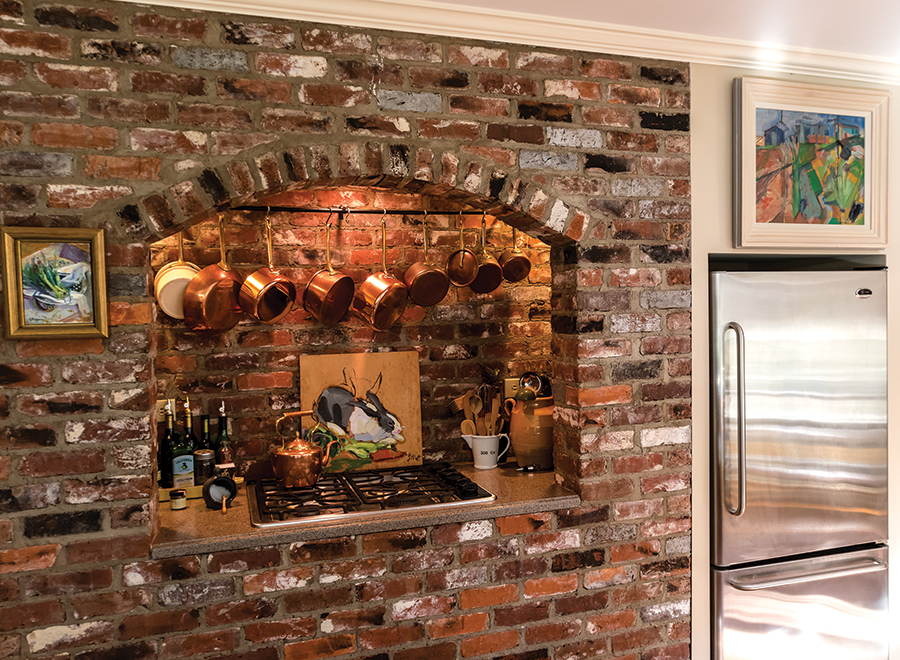
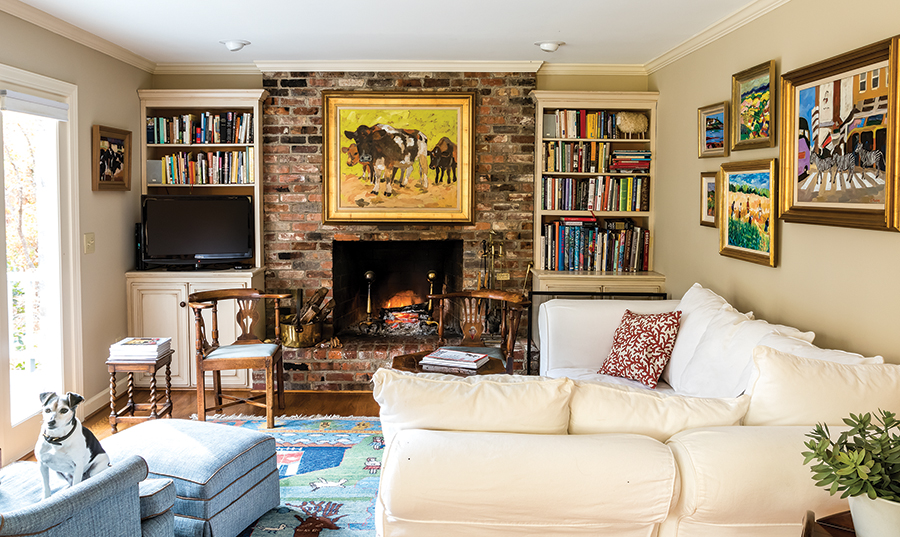
Not so the main floor. Jessie decided to tear out several small rooms spanning the rear, including a dated kitchen, install an extra support beam and repurpose the space as her studio (with bay window), a long galley kitchen and small den with wood-burning fireplace. This was accomplished without dividers. The kitchen is beyond startling, since a guest walking through might not realize its purpose. On one side, an oven, a single-width refrigerator and cooktop niche are embedded in a brick wall. A polished harvest table used as both work island and seating is positioned down the middle with cabinets, drawers, sink, another bay window crowded with plants on the opposite side.

In the spring, a dogwood tree blooms just outside the bay.

“It reminds me of Europe — a lot of stuff, a lot going on,” Jessie explains. The brick provides a textured background for paintings, including the portrait of a friend dominating the south-facing studio with two easels, paints, brushes, stool and a portable typewriter. Locating her workspace adjoining the kitchen made sense. “I didn’t want to allocate a bedroom for a studio.”

Her office and laundry room line the hallway leading to the garage with doors not visible from the front.

Jesse misses her dogs, cats, horses and other creatures from what she called The Farm of Content Animals, since none of the ducks, chickens, geese, lambs or cows entered the food chain. Bovine portraits hang over the den fireplace, flanked by English corner chairs with leather seats and open sides to accommodate the sabers worn by officers.

Jessie courts a lived-in look. “Everything (these days) seems so contrived — a blanket draped just so over the couch,” she says, and points to a woolly throw in disarray on her own. “The dogs made that pile,” before falling asleep on it.

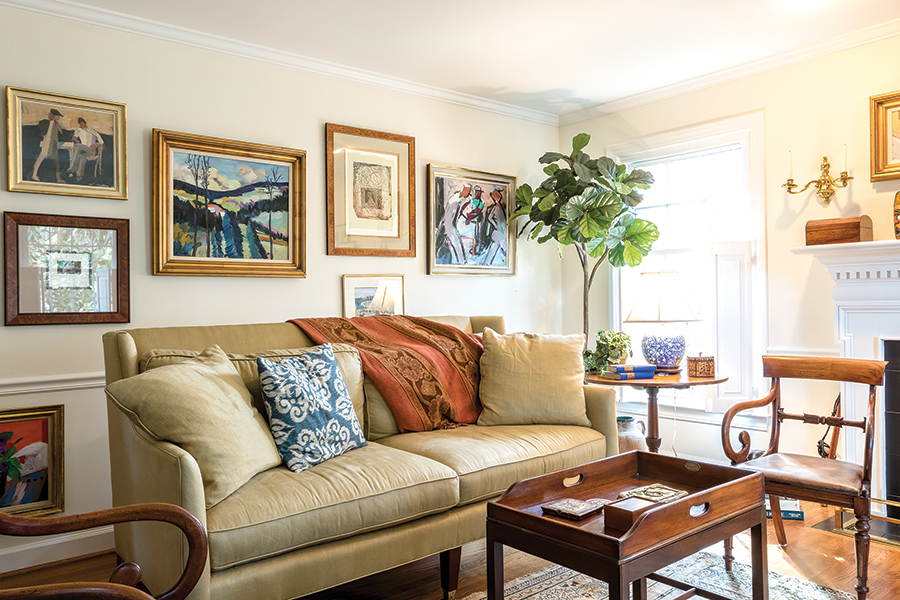
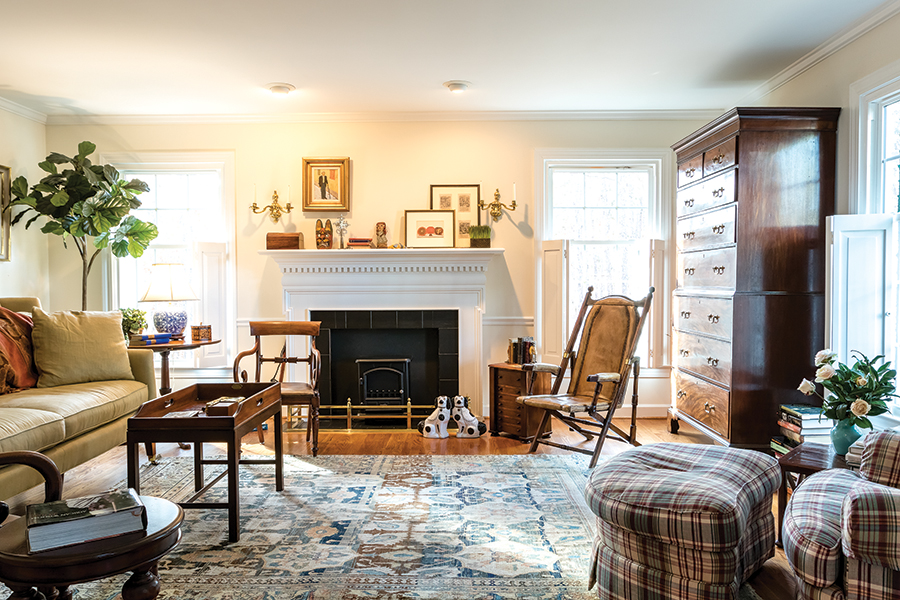
Jessie found the small living room both appealing and functional — especially after constructing bookcases across an entire wall. Half shutters on low-set windows continue the New England effect, although furnishings speak faraway tongues. The unusual high-backed sofa in Jessie’s favorite khaki is from a fine North Carolina manufacturer, but her leather-seated folding campaign chair (for easy transportation) experienced far-away battles. Facing it a plaid armchair with ottoman channels the ’60s. Each artifact on the mantel tells a story, each painting reveals a connection. Conversation never lags here.

“I wanted my dining room table to be wide enough,” Jessie says, to accommodate her stepsons and grandchildren. She chose one from Ireland, of yew wood, surrounded by Windsor chairs. Paintings lean against the wall, for decoration or perhaps awaiting a buyer.

Rugs throughout are, predictably, well-worn Orientals in subdued hues except for the den, where sheep gambol across a pastel background, to offset a shabby-chic white sofa.

Jessie admits to using the house as a supplemental gallery. “The problem for artists is that people don’t have wallspace any more,” she says. Her walls, painted gradations of white and framed by crown moldings, are covered but not saturated. Arrangements change as paintings sell. Emotional attachments don’t hinder business as with some artists: “There’s no sense of loss. Paintings are like children; when they’re 18, it’s time to go.”

Sometimes she follows them. Each year, Jessie returns to Tanzania, where she and friend Tally Bandy have established empowerment programs where women earn enough by raising pigs and goats to educate their children. To this endeavor they have added solar kits made in North Carolina, which enable the women to establish charging stations for lights and mobile phones. A few paintings reflect the African project.

So much life, in a moderate living space. “When I have a party we’re like puppies in a box,” the artist smiles. An elegant box, yet comfortable, inviting, with several areas to sit and chat, walls hung with oils and acrylics of varying shapes, moods, styles and expressions — even double entendre as with zebras crossing a busy thoroughfare.

Indeed, there’s something about Jessie Mackay’s house . . .

That something is Jessie Mackay.  PS

Poem

About Magic

A quantum taste of joy

hidden in a top hat

The wisdom of love

up your sleeve

Tell me your story as

you rise wingless

above the stage

Let me make you believe

in the vast unbelievable

Wave your wand and

marry our kindness

Clapping we shout “encore!”

— Ry Southard

From Eagle Springs to Antarctica

Todd Pusser’s magical photos are a portrait of our wild and endangered world

By Jim Moriarty • Photographs by Todd Pusser

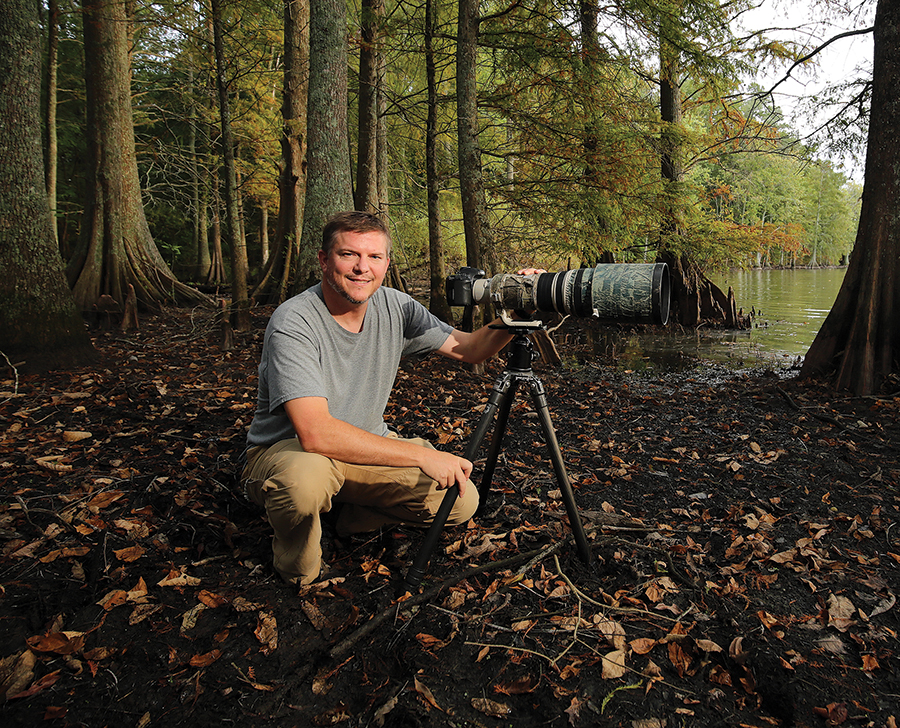
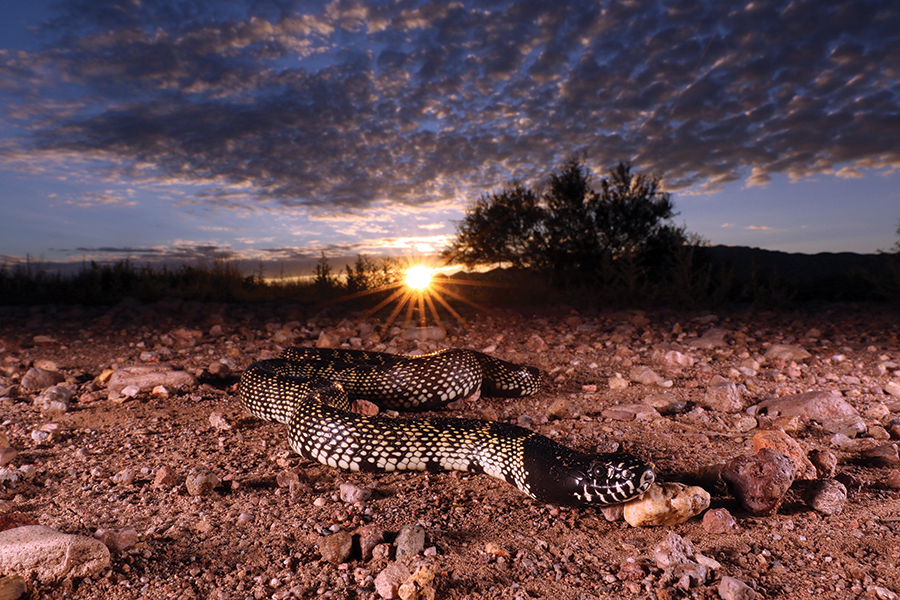
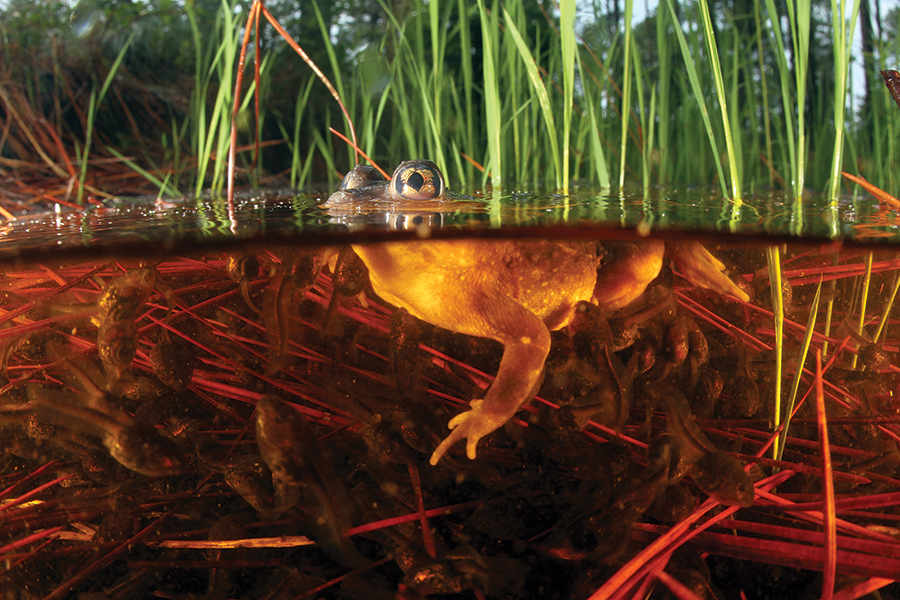
If you’re going to photograph something as low as a snake’s belly in a wagon rut, you have to get right down there with it so it’s no surprise to find Todd Pusser stretched out on his stomach somewhere in the Sonoran Desert, nose-to-nose with a snake at sun up. That may not be your idea of a good time but, to him, it’s hog — or maybe Gila monster — heaven. At its best, photography isn’t about pushing a button, it’s about pulling on heartstrings, even if the subject is a bit cold-blooded.

One of the 44-year-old Pusser’s exploring buddies is Gary Williamson, a 73-year-old retired Virginia state park ranger. “I love the way he would compose his shots,” says Williamson. “We’d see a snake stretched out and, if it was late in the day and there was a pretty sunset starting to form, he would lay right down with the sunset in the background and the snake in the foreground, whether it was a harmless snake or a venomous snake. Instead of just a close-up, he’ll have the habitat in the background. He has one of a scarlet kingsnake in burned pinewoods in South Carolina. It shows the burned ground and the tall longleaf pines and a beautiful scarlet kingsnake on a charred log. To me, those kind of photographs are far superior to just a close-up of an animal. Todd’s pictures really tell a story.”

That story begins with a paper and pencil and a bucket of glue. With their closest neighbor a mile away, the adopted son of Larry and Dayle Pusser, had a black lab named Midnight and hours to spend in the woods around their Flowers Road home in Eagle Springs. “I was always the kid flipping logs, looking for frogs or snakes. I made notes of everything I saw. I’d see a red-tailed hawk and I’d make a note of what time I saw the hawk. I was taking field notes at eight, nine years old,” he says. “I wanted to document it. I think that’s how I got into photography. I just wanted to be able to remember it.”

The glue was Larry’s Carpets in West End, the family business. “My dad was a carpet man. It was a family-run business. Mom handled the paperwork and dad did all the physical labor. He worked non-stop until he got the job done. It wasn’t 9-to-5. He’d be there at 6 a.m. and it might be midnight before he got finished. Everybody knew my father. Probably 80 percent of the homes in Pinehurst, he’s done. He had the contract for the Pinehurst Hotel, the Country Club. He did all the carpet there in the ’80s.”

And Todd could have qualified for membership in the hod carriers’ union. “Mostly I was the guy who brought the tools in. He didn’t trust me to lay carpet. Occasionally, he’d let me put pad or glue down. Or a patch. I was patching artificial grass and I laid my finger open and dad was, ‘Just stick it in the bucket of glue and keep working. And don’t get blood on the carpet.’” Todd laughs. “I think he wanted me to inherit the business, but the work was just too hard.”

Sharks seemed easier. Go figure.

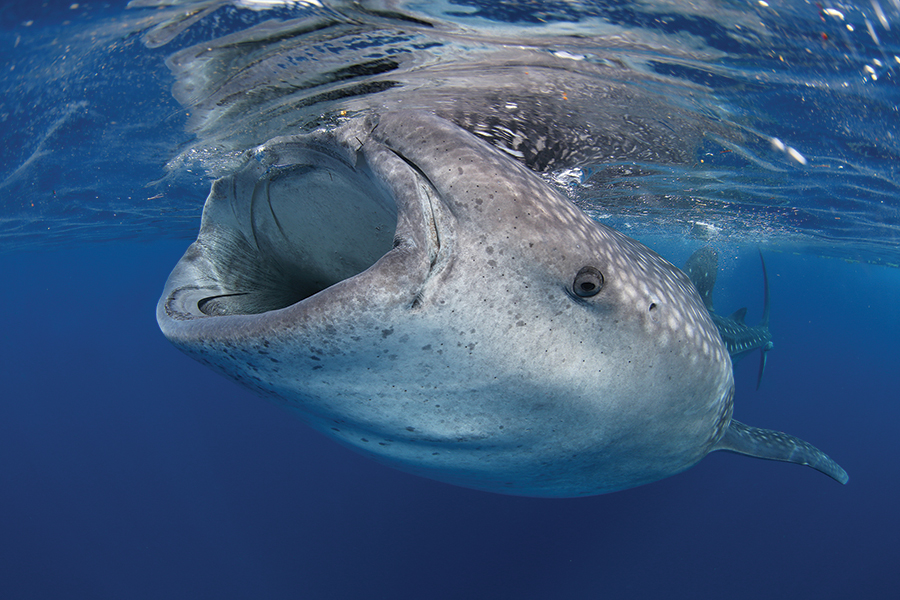
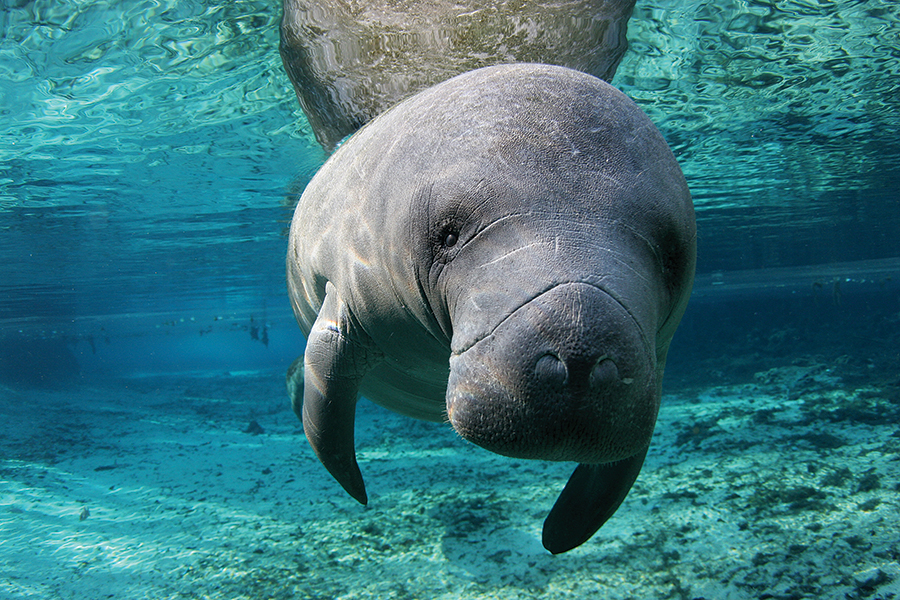
“The Undersea World of Jacques Cousteau is what really got me interested in the world’s oceans,” says Pusser. He went to the University of North Carolina-Chapel Hill, stuck his nose into pharmacy, got it bloodied by organic chemistry, and decided being a deck hand on the Calypso (or a facsimile thereof) was preferable to filling prescriptions anywhere on dry land. When he wasn’t putting on his great pumpkin display — an Eagle Springs Halloween tradition that attracted thousands and raised money for the Cameron Boys Home — he started taking summer classes in Morehead City, majored in biology, minored in marine science and specialized in pestering whale biologists at the Smithsonian Institution in the Pacific Northwest. “Three days after graduating I was on a research vessel (the Oregon II) in the Gulf of Mexico doing contract work for the government on a marine mammal survey looking for whales and dolphins,” he says. “I started seeing things like sperm whales. I saw killer whales in the Gulf of Mexico. No one really had any idea killer whales were there at the time. All kinds of dolphins. I was a contract worker for a lab in Mississippi and then I was doing contracts for labs in San Diego and Seattle and Miami. I was going all over the place doing these marine mammal surveys. That’s kind of how I got into the field.” All the time he was taking pictures.

“I was getting photos of animals that had never really been photographed in the wild before, a lot of weird dolphin species,” he says. Other groups began hiring him, including the International Whaling Commission out of the United Kingdom. It was doing surveys in the Antarctic. Pusser figured, hey, why not?

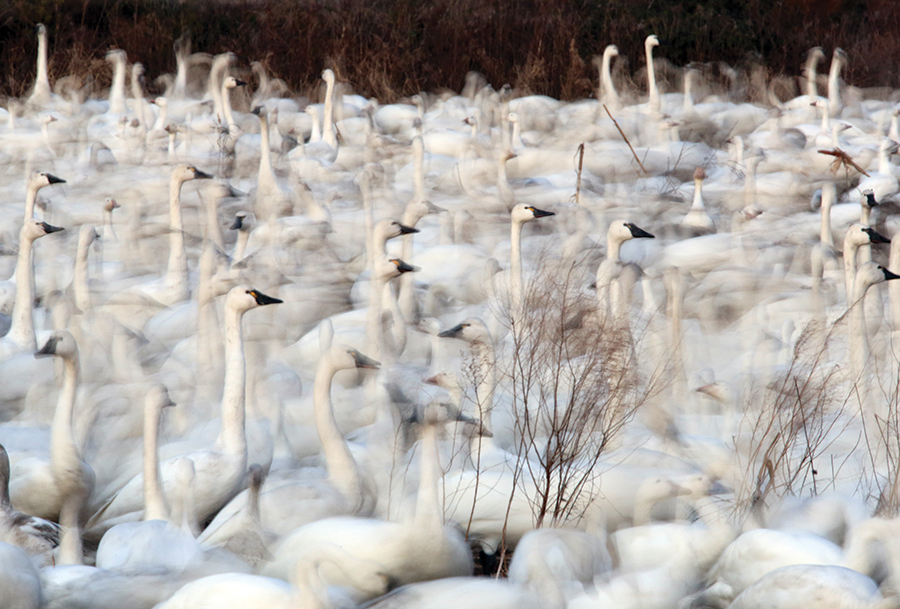
“I’ve made eight trips down there now,” he says. On the first trip for the IWC, he was surveying minke whales. That led to a position as a lecturer for a high-end tour company out of Seattle, defunct after the tourism business fell off a cliff post 9/11, called Society Expeditions. “I was lecturing on their ships taking small groups of people to remote areas of the world. We did this in the Arctic and the Antarctic, the Russian Arctic and the Bearing Sea. Obviously the photo opportunities were incredible,” he says, particularly the Antarctic. “There’s 150,000 penguins, King penguins, that stretch as far as the eye can see. Totally unafraid of people. They never had predators. It’s pretty amazing to be next to those birds.”

Pusser honed his photographic skills the hard way, “trial and error, mostly error,” he says. He mastered his craft in the pre-digital, home-run-or-pop-foul days of 35mm slide film. “I never took any kind of photography class,” he says. “I would study photographers I admired. At the time there was a guy who worked for National Geographic named Flip Nicklin. He was their whale photographer and I really liked his work. And there was another guy named Franz Lanting who was doing a lot of work in jungles and using flash with his photography, which was unheard of with nature photography at the time. It almost had kind of a studio feel to his photos. I really tried to emulate that with my work. I come from a biological background where you studied the behavior of animals and I think that helps with your photography because you’re able to anticipate action or know what an animal is going to do to really kind of capture the personality of the animals, not just a quick snapshot.”

Of course the switch from film to digital was inevitable and, in some cases, desirable. “I was not an easy convert,” says Pusser. “The main reason I started switching to digital was for underwater. Let’s say you’re in the Bahamas and you’re interacting with spotted dolphins — I used to do trips down there almost every year — you have 36 images on your roll of film. You’re there and you’re taking pictures and you hear that last frame and the film rewind in your camera. Get back to the boat. Get out of the water. Dry off. Open the back of your housing. Pop the camera. Pop the film canister out. Reload. You have 30 minutes invested in doing that. By then the behavior you’re trying to photograph is over. Now I stick a 64-gigabyte or 128-gig card in a camera and I’m under water all day. You miss fewer shots.”

So, about those sharks. “One of my favorite shark dives is actually off the coast of North Carolina,” says Pusser. “There are a lot of wrecks off the coast and there’s a species of shark that aggregates there called a sand tiger shark. These are big sharks, 8-10 feet long. They have really large teeth that stick out of their mouths. They’re not afraid of divers. If you sit real still they’ll come right up to you. They’re great subjects to photograph.” How close does he get? “As close as I can,” he says. “If they’re bumping my lens, I’m happy.”

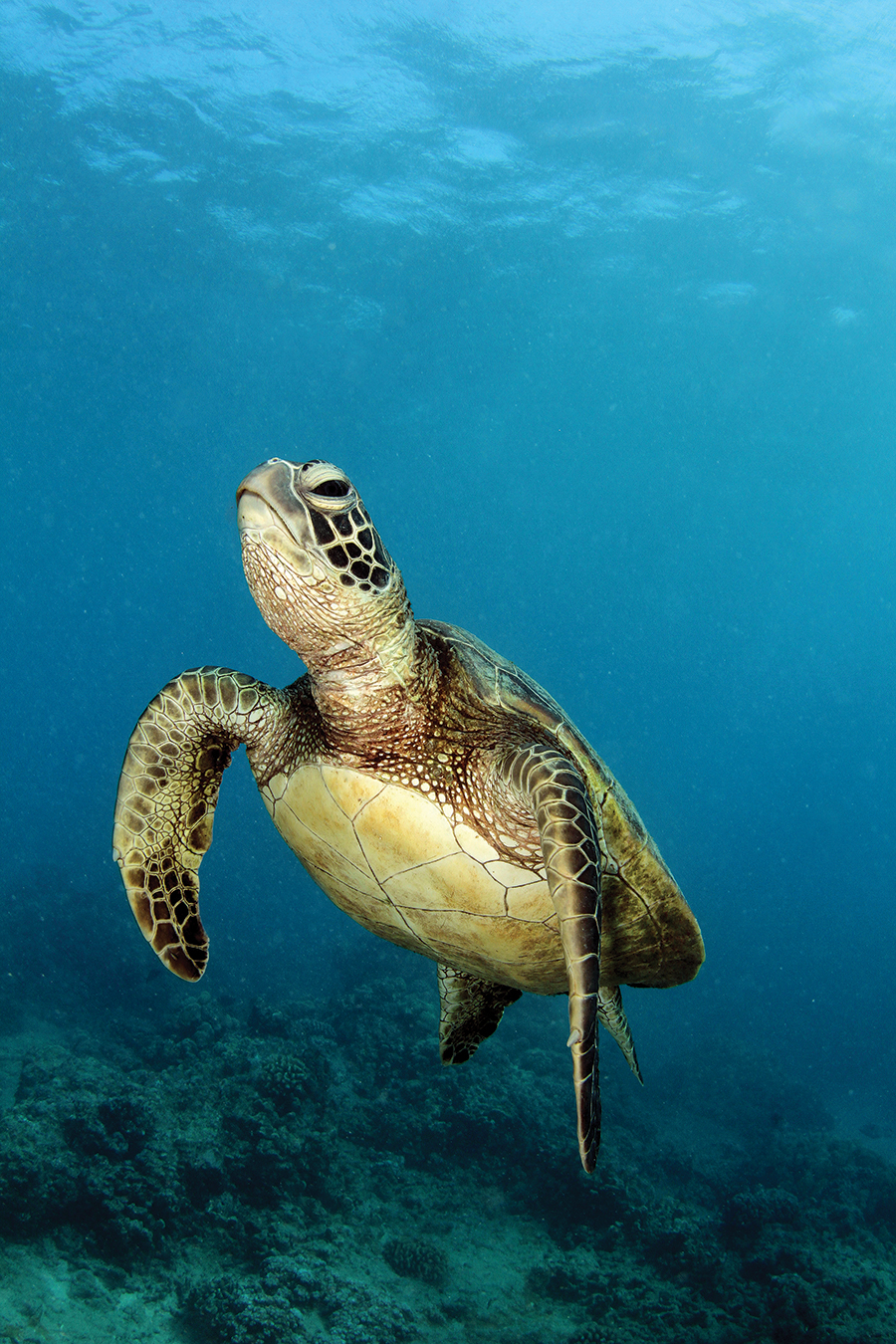
The subject doesn’t have to be a shark or a blue whale to pique Pusser’s interest. “I do tend to try to photograph the more obscure animals that get ignored by other wildlife photographers,” he says. In 2006 he was part of an international team doing a survey on China’s Yangtze River trying to locate an endangered dolphin. The species had been in the river for millions of years but its population had been reduced to a handful by the river’s constant cargo ship traffic and a billion people trying to eke out an existence on its banks — often employing fishing methods lethal to the dolphin. “It was a monotypic genus, meaning it was the only member of that genus. There was nothing else like it anywhere on the planet,” he says. “We spent nearly two months going back and forth on the Yangtze River looking for this dolphin. We declared it extinct in 2006. First dolphin to go extinct at human hand.”

Pusser returned last November from a similar five-week trip to Mexico surveying an endangered porpoise, the vaquita, that’s being killed as by-catch in the northern Sea of Cortez where the Colorado River flows into the Gulf of Baja. “It was kind of a Hail Mary effort by a group out of California to bring them into captivity and breed them,” he says. “There’s a fish, totoaba (a type of croaker), that gets to be like 250 pounds. The fishermen there catch this fish using gill nets and take the swim bladder. Then they send this bladder to China for medicinal purposes. The bladder sells for more than cocaine. So the vaquita, they’re mammals. They swim into a net, get tangled up and drown. The government says you can’t set a gill net but they can come out in an evening, set a net and buy a pick-up truck with a fish bladder. I first did a survey there in ’97, again in 2008 and again in 2015. In 2015 there were like 50 left.” Pusser puts the number closer to 30 now.

“The project managed to capture an adult female but unfortunately she died. The stress of captivity was just too much for her,” says Pusser. “This was a huge blow for the conservation community. I fear the vaquita will soon be added to the long and ever-growing list of species humans have wiped off the planet.”

His camera and his curiosity have taken Pusser to over 30 countries and into every one of the world’s oceans. “Initially, I was only photographing aquatic subjects sharks, whales, dolphins,” he says. “I’d come back here (North Carolina) between projects. I never explored the state, outside of the Sandhills, when I was a kid or a teenager. So, I started networking.

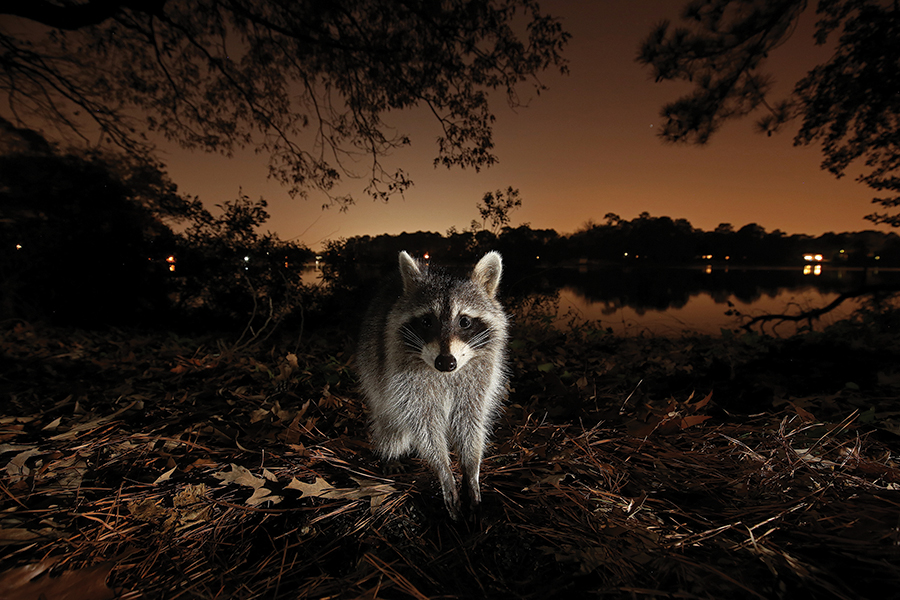
One of the people who entered his orbit was Jeff Beane, the collection manager for herpetology at the North Carolina Museum of Natural Sciences, who became one of Pusser’s closest friends. “He opened my eyes to a lot of things I ignored as a kid. So now I spend a lot of my time documenting biodiversity and conservation issues across the state,” says Pusser who lives in Virginia Beach, Virginia now but remains a regular contributor of both photographs and stories to Wildlife in North Carolina magazine. “We have incredible biodiversity for a temperate region. We have the highest mountains east of the Mississippi; we have a lot of rivers; we have natural lakes; we have the ocean which has the Gulf Stream and the Labrador Current; we’re on a major migration route.”

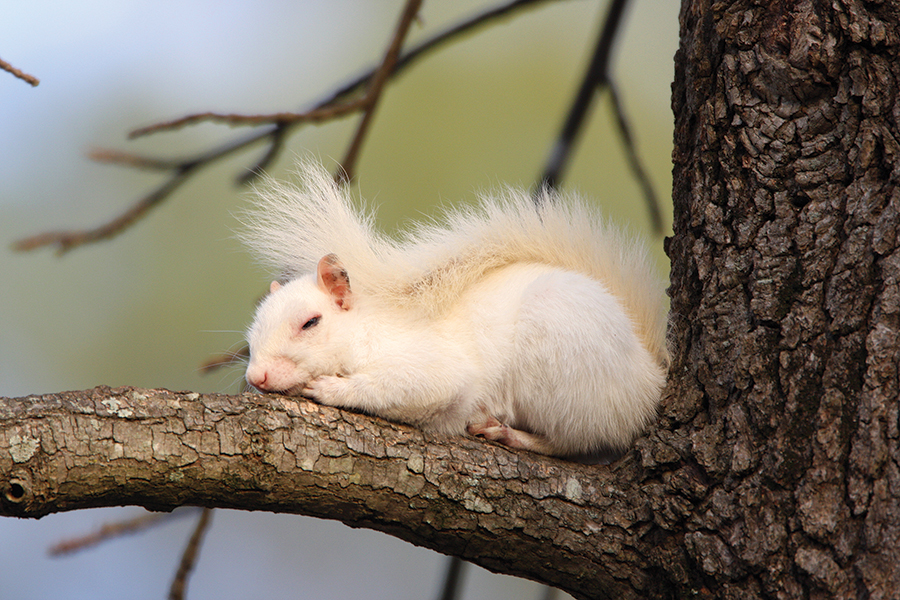
And, as it turns out, he’s just as enthralled with crawfish, chubs or squirrels as blue whales.

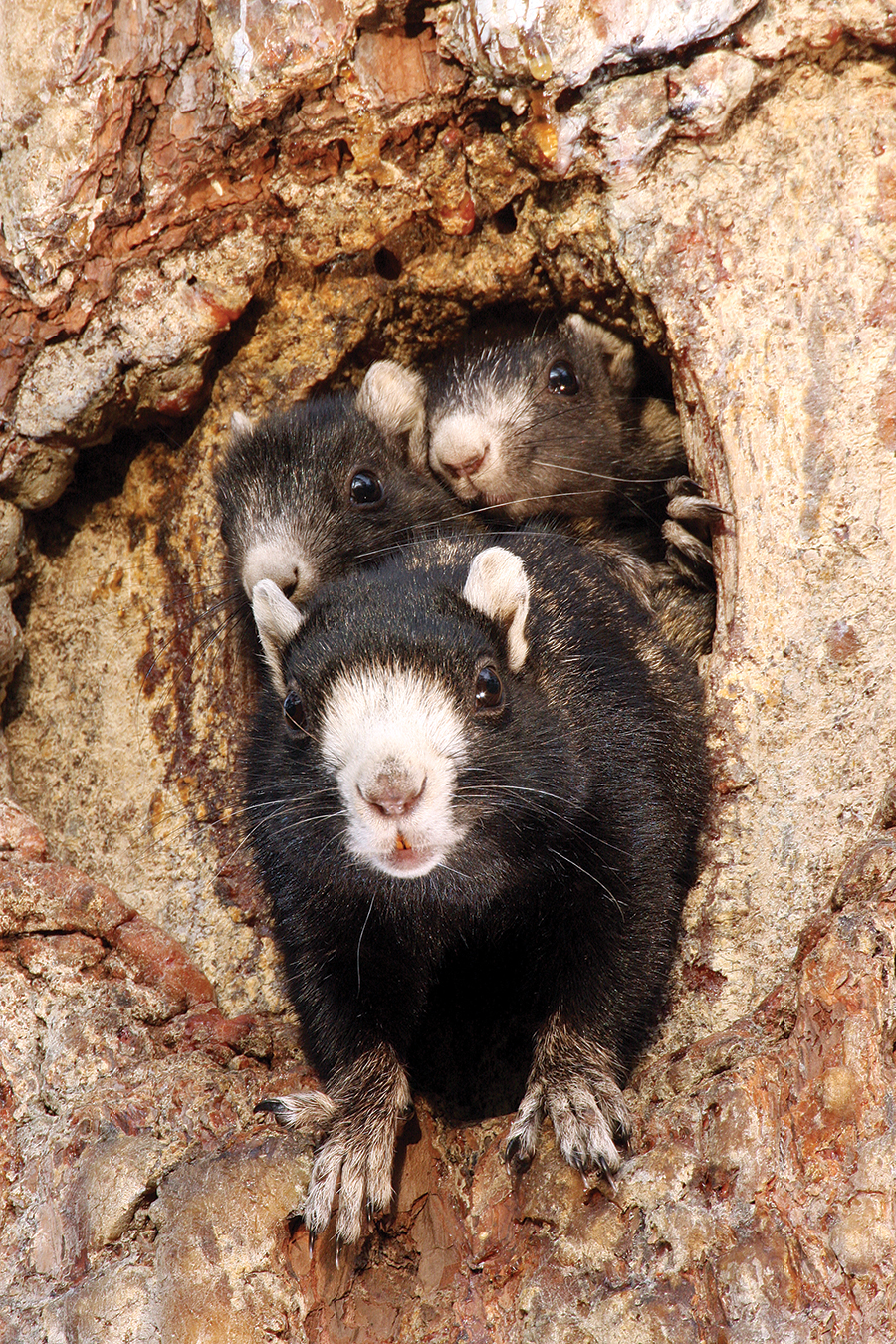
“Fox squirrels are probably Todd’s favorite mammal and for years he had never gotten satisfactory photos of one,” says Beane. It wasn’t for a lack of trying. Anytime Pusser saw a fox squirrel, he chased it. “Once he ran through the woods after one in a suit and tie and another time he ran after one in his underwear,” says Beane.

The latter happened when Pusser, in the field with Beane, was trying to photograph an undescribed salamander endemic to the Sandhills and slipped down a muddy creek embankment, sinking in up to his waist. After removing his wet jeans, he saw the squirrel. “I used to say he was always either too overdressed or too underdressed to get good fox squirrel photos,” Beane says — a condition that has since been remedied.

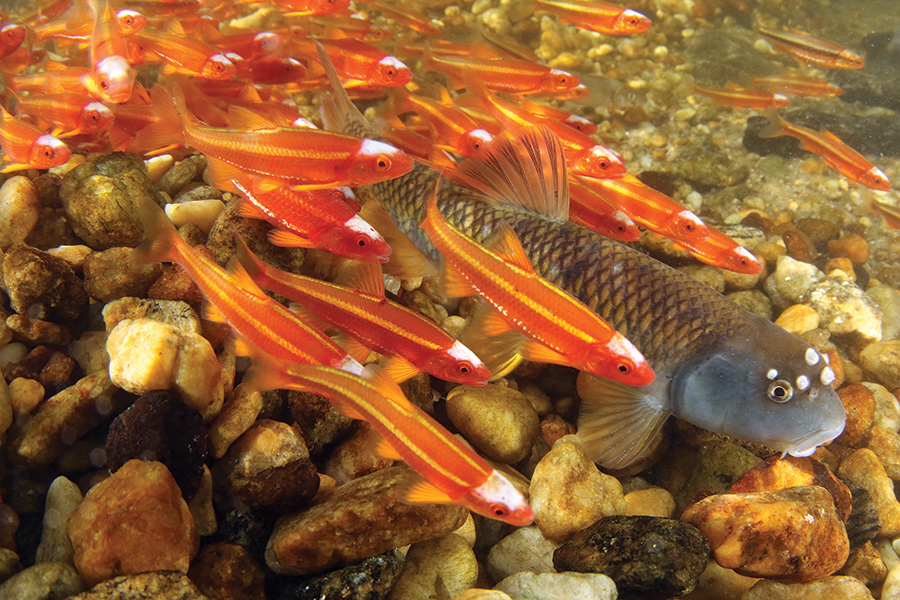
One of Pusser’s writing and photographic projects is scheduled to run as a three-part series in future issues of Wildlife in North Carolina. “There’s this really interesting fish behavior I found out about a few years go and I’ve been trying to document because it’s spectacular,” says Pusser. “In the spring we have two or three species, what are called chubs, that build these nests. If you’ve ever been fly fishing in the mountains, you walk through any creek or stream, you’ll see these mounds of rocks when the water is low. You’ll think maybe people are doing it but these fish, the males, build these nests. They’ll entice a female. They spawn over the nest. They aerate the eggs. They move the rocks around and they guard the nest. But what’s interesting is you have all these minnows and at the right time of year, they light up. Neon yellows, florescent colors. It’s like a corral reef. People don’t associate tropical reef color with a cold mountain stream.”

Another one of his passions, picked up from Williamson, is champion trees. “Each state has state champions and they might qualify for a national champion,” says Pusser. “The world’s largest longleaf pine, up until this past year, was on Highway 220 between Candor and Asheboro. It was over 12 feet in circumference and 150 feet high. It snapped during a strong thunderstorm. Now the largest longleaf is somewhere I think in Alabama or Mississippi.” The village of Pinehurst has a Darlington Oak that might be a state champion. “Come outside the Drum and Quill, turn left and you go to the next left,” says Pusser. “It was growing there probably before Pinehurst was created.”

Williamson and Pusser track down champion trees together. “One tree I showed him was a hollow yellow poplar and it’s a national champion,” says Williamson. “I got inside it and he handed me a couple of strobe lights to put on either side to give the interior a little bit of light.”

Shining a little bit of light is Pusser’s specialty. “You don’t have to save the world, just try to get people to appreciate what’s in their backyard,” he says.

It’s a message he enjoys spreading. “There’s a lot of joy in seeing something yourself,” says Beane, “but when you can show it to somebody else who appreciates it, that’s really special.”

And there’s photographic evidence, to boot. PS

For more information visit Todd Pusser’s website at: https://toddpusser.photoshelter.com/

Jim Moriarty is senior editor of PineStraw and can be reached at jjmpinestraw@gmail.com.

Queen of the Air

Amelia Earhart, George Putnam and their high-flying love affair

By Bill Case

They called it an autogiro. This unusual flying machine was something of a hybrid between an airplane and a helicopter. Like an airplane, it possessed wings and a propeller. But the wings were so stubby, they seemed a design afterthought. While resembling a helicopter with its horizontal rotary blades whirling atop, the aircraft was powered differently. It did not fly very fast — typically 80 miles per hour — and held only enough fuel to safely fly two hours at a stretch. But, flown by a proficient pilot, it could take off and land in an area no bigger than a suburban back yard. Before November 11, 1931, it is doubtful anyone in Moore County had observed, in flight, an aircraft requiring virtually no runway for its operation. That was one reason why on an Armistice Day mid-afternoon, well over 1000 people flocked to the dirt and grass airstrip known as Knollwood Field (now Moore County Airport) to hail the arrival of an autogiro.

Despite its novelty, such a sighting wouldn’t ordinarily have created such a stir that stores and schools in Pinehurst, Southern Pines, and Aberdeen would close. The pilot flying the aircraft was the one causing most of the hubbub — 34-year-old Amelia Earhart, one of the most famous women in America.

It had already been a long Armistice Day for the slender Kansas native. At daybreak, she had flown out of Charlotte, piloting her ungainly aircraft two hours east before setting down in a field five miles north of Fayetteville. Wearing the leather jacket, scarf, jodhpurs, and boots she typically donned in the air, Earhart was whisked by a welcoming committee into Fayetteville’s downtown by open car. There she was feted by thousands of adoring citizens who cheered the waving pilot as she slowly passed by.

At the conclusion of the parade, the soft-spoken but confident Earhart addressed an all-ears crowd at Fayetteville’s Market House, even putting in a good word for the Beech-Nut Packing Company’s chewing gum. George P. Putnam, a promotional genius who was newly wedded to Amelia, had arranged for Beech-Nut to sponsor her three 1931 hopscotching autogiro tours. The company’s emblem was prominently emblazoned on the fuselage. All the fuss in Fayetteville had put her behind schedule as the throng at Knollwood Field waited impatiently to catch sight of Earhart’s “flying windmill” on the horizon.

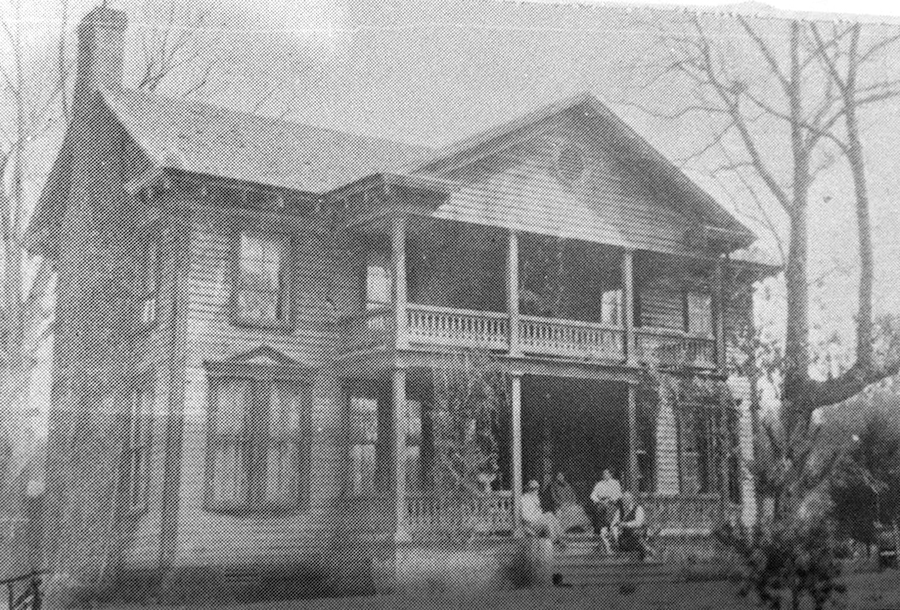
This was the famous aviator’s first visit to Moore County, though her husband was no stranger to the Sandhills. Dorothy Binney Putnam, George’s ex-wife, had spent considerable time here. In fact, until Earhart’s recent marriage to Putnam, she and Dorothy had enjoyed a close friendship, sharing among many things their mutual love of the outdoors. Elegant and statuesque, Dorothy’s affection for the wilderness had been kindled during family vacations near Carthage where in 1901, her father Edwin Binney, the founder and inventor of Crayola Crayons, had purchased a 1,300-acre plantation deep in the pine forest. The property featured a rambling antebellum plantation house with a second floor balcony that provided a magnificent view of the home’s surroundings. The spread was called “Binneywood.” It is uncertain why Connecticut-based Edwin selected Carthage for a vacation home though it probably had something to do with the proximity of the North Carolina mining operations that supplied raw materials for Crayola.

Dorothy Putnam had regaled Earhart with tales of the wonderful times she and her two sisters had enjoyed at Binneywood. Dorothy’s diary entry during the 1908 Christmas season at Binneywood describes an eventful and festive holiday atmosphere: “Up at dawn to go wild turkey hunting. Home at nine, then chopped trees, then quail hunting-good luck. Made fudge and sipped chocolate by fire.”

Despite the estate’s remoteness and their status as seasonal residents, Edwin Binney, known as Bub, and his wife became integral members of the Carthage community. They farmed, planted a peach orchard, reactivated the estate’s milling operation, and hosted country dances at Binneywood featuring rousing strains of banjoes and fiddles.
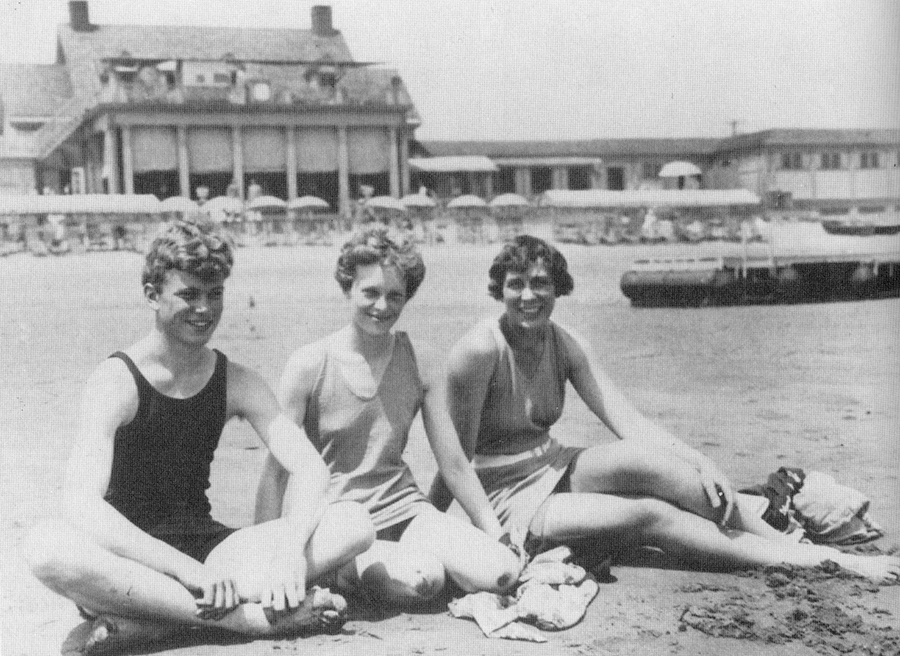
A particularly splendid event happened at the old plantation during the Christmastime of 1910 when Dorothy, a Wellesley grad, and George Putnam, whom she had met during a two-month western camping trip, announced their engagement. They married the following October. The newly wedded couple spent an extended honeymoon in Central America. Like Earhart, the two adventurers reveled in experiencing exotic and unfamiliar surroundings. The trip inspired Putnam to author his first book, The Southland of North America, with his new wife eagerly collaborating.

Then 24, Putnam had not yet joined the family’s renowned publishing concern, G.P. Putnam’s Sons, deciding instead to publish and edit the Bend Bulletin, a newspaper in faraway Bend, Oregon. It was an ideal place for the Putnams to begin their married life, indulging their penchant for the outdoors with horseback rides and camping trips into the recesses of the Cascade Mountains. Putnam proved to be an independent newspaperman and an advocate for progress by penning editorials urging that women be afforded the vote. He was even elected the town’s mayor. Dorothy also became a force in Bend’s civic life, raising funds for causes ranging from the Red Cross to fighting cancer. A tireless advocate for women’s suffrage, in 1912 she became the second female (after the governor’s wife) to vote in Oregon.

The Putnams’ first child, David Binney Putnam, was born in 1913. Soon thereafter, they moved to Salem, Oregon’s capital, where he took a post as secretary to the state’s governor while still retaining his position as the Bulletin’s publisher. During World War I, Putnam enlisted in the army which resulted in the couple’s moving to Washington, D.C. After his father died, Putnam decided to join the family business and they relocated to Rye, New York where Dorothy bore a second son, George, Jr. (“Junie”) in 1921.

Ensconced with G.P. Putnam’s Sons, George’s career skyrocketed as he became the company’s go-to spokesman. He was increasingly away on an unceasing quest to unearth new stories. Longing for adventures of her own, Dorothy seized the opportunity to travel with son David on a 10-week oceanographic expedition to the South Seas of the Pacific in 1925. She reveled in her role as a scientist on the voyage while 12-year-old David recorded a narrative of his experiences that Putnam published under the title David Goes Voyaging. The book was a surprising hit.

The elder Putnam embarked on his own expedition to Greenland in 1926. “I practiced what I published,” he wrote. David tagged along with his father. The expedition proved a success and provided the fodder for the young teenager’s second book, David Goes to Greenland. A second father-son expedition to Baffin Island followed in 1927 resulting in David’s third book. When he got back, Putnam immersed himself in bagging the rights to Lindbergh’s story for G.P. Putnam’s Sons.

Home in Rye, Dorothy stayed socially active, entertaining explorers such as Admiral Richard Byrd. Will Rogers said that one “couldn’t snare an invitation [to Dorothy’s parties] unless you had conquered some uncharted territory.” But she was restless and bristling at being the one generally left behind to tend the home fires. With all the time apart, the couple increasingly led separate lives and the ties of their union began to unravel.

Still vibrant at age 38, Dorothy yearned for passion in her life. She found it in 1927 in the person of George Weymouth (“GW” in Dorothy’s diary), a handsome and polished sophomore at Yale who had been tapped to tutor David at home. Though guilt-ridden by her infidelity, Dorothy nevertheless thought it unjust that men usually got a pass. “Why is it there are so many men who consider love outside the bonds of matrimony the privilege of the male only?” she asked in her diary. When Dorothy discovered evidence that her husband was also having an affair, she penned that his dalliance lightened “my sense of fidelity.” Dorothy’s affair with GW was in bloom at the time Amelia Earhart came into the Putnams’ lives.

Earhart’s unlikely emergence occurred in 1928 in the wake of Charles Lindbergh’s historic flight. An American heiress, Amy Phipps Guest, made it known she was personally bankrolling the first flight across the Atlantic with a woman onboard. Guest acquired a Fokker plane and rechristened it the “Friendship.” Then she set about finding the right female to make the journey.

When George Putnam got wind of Guest’s quest, he offered to take charge of the search. If Putnam could position himself as the one to choose the candidate, his publishing company would have the inside track on the woman’s story. Having already enjoyed remarkable success promoting non-fiction first-person adventures, including Byrd’s Skyward and obtaining the rights to Lingbergh’s story, the gambit was right up Putnam’s alley.

Earhart was a natural candidate. She had learned to fly in 1921 while living in Los Angeles. She was particularly attracted to the challenge of achieving aviation “firsts.” Two years after her first flying lesson, Amelia established a new high altitude mark. She’d also flown in air shows. In 1923 the young pilot became the first woman granted a certificate by the aeronautics branch of the Department of Commerce, the precursor of the Federal Aviation Administration. After moving to Boston in 1928, Earhart joined the local chapter of the National Aeronautic Association. When George Putnam summoned her to New York in May 1928 for the most important interview of her life, she was leaving behind a job that had nothing whatsoever to do with flying. She was employed as a social worker at Boston’s Denison House.

The attraction was nearly instantaneous. “Before I had talked to him for very long I was conscious of the brilliant mind and keen insight of the man,” wrote Earhart. Putnam knew Earhart would be perfect for the “Friendship” flight. Not merely a proficient pilot, she was a promoter’s dream. Slender, with short curly blond hair, she was attractive in a tomboyish yet feminine way. Another bonus was the young woman’s uncanny resemblance to Lindbergh —not just physically, but also because of her direct but soft-spoken manner. Soon the announcement came that Earhart had been chosen. Delayed two weeks by poor weather, the venture’s participants, chief pilot Bill Stultz, co-pilot Slim Gordon, Earhart, and Putnam were forced to hole up in Boston’s Copley Plaza Hotel to wait out the storm.
Putnam asked his wife to join the group. He figured Dorothy’s adventurous, free-spirited personality would make her a conversational match with Amelia. His assessment proved correct. The two chatted like schoolgirls concerning their shared interests in theatre, literature, fishing, and horseback riding. Finally the weather cleared and the “Friendship” was aloft. The flight turned out to be most challenging. An engine kept cutting out and the crew lost their radio connection. “Friendship” was blown off course, and even before land was sighted the engines began sputtering as they ran short of gasoline. Though Bill Stultz thought he was landing in Cornwall, it was actually Wales, but the plane and crew had arrived safely.

Though she had been little more than a passenger, the flight catapulted Earhart into stardom. It was the beginning of a life loaded with personal appearances, parades, and speeches. After celebratory tours, first in England and then America, she holed up in Rye at the Putnam home adjacent to the posh Apawamis Club’s golf course. Under George’s direction, she commenced writing the book that would be called 20 Hrs., 40 min.: Our Flight in the Friendship.

Aviation’s budding superstar found time for fun in Rye. She and Dorothy shopped, swam, and attended upscale social occasions. It was Dorothy, not George, to whom Amelia dedicated 20 Hrs., 40 min. In her book Whistled Like a Bird — The Untold Story of Dorothy Putnam, George Putnam, and Amelia Earhart,” Sally Putnam Chapman, Dorothy and George’s granddaughter, wrote, “had it not been for my grandparents, Amelia would not have moved in the circles she did.” Dorothy introduced Amelia “to a glittering array of celebrities, artists, adventurers, and socialites.” With her newfound celebrity and the success of her book came financial rewards. It became abundantly clear that Earhart would never return to her previous life at Denison House.

Her relationship with George Putnam was also deepening. Within a month of Earhart’s arrival in Rye, an entry in Dorothy’s diary notes, “George is absorbed in Amelia and admires and likes her. Maybe he’s in love with her.” Eventually, she became convinced that her husband and the flier were “a couple.” Putnam certainly was smitten. His later writings indicate he considered Amelia the epitome of chic. Reminiscing after her death, he wrote, “I think she really did not realize that often she was very lovely to look at.” He gushed about, “her beautifully tailored gabardine slacks,” and “the tapering loveliness of her hands [that] was almost unbelievable.” Apparently Vanity Fair agreed. The magazine shot a fashion spread of Earhart that hit the newsstands in 1932.

Dorothy terminated her ongoing affair with GW in August 1928, although the two remained friendly. Nevertheless, her diary entries do not suggest she yearned to be reconciled with a husband she no longer loved. She broached the subject of divorce and, though George made an attempt to patch things up, that effort seemed halfhearted since he remained in constant contact with Amelia.

By June of 1929, after discovering another affair with Frank Upton, a flier and war hero, Putnam informed his wife that he too wished the marriage to end. Despite the fact that Earhart’s relationship with Putnam had become an open secret, Amelia invited Dorothy to accompany her in July as the first female passengers to fly coast-to-coast in a Transcontinental Air Transport commercial airplane. Pleased to be included as part of an aviation first, Dorothy accepted. She and her husband’s lover remained cordial during their trip. A week later they were together in the Galapagos Islands on a deep-sea dive. That excursion marked the end of their social time together though both women thereafter invariably professed respect and admiration for one another.

After nearly getting cold feet, Dorothy obtained a Reno divorce from George on December 19, 1929. She remarked that day in her diary, “How scared and empty I feel!” She sought to remake her life with her two children and Upton, her new husband, in Fort Pierce, Florida where her father had invested in local real estate. She purged her sadness by building a Spanish-style home on an 80-acre tropical wilderness.

At the time, Earhart told a friend that she was fond of Dorothy and considered the divorce “a shame.” But her primary focus was on bolstering her status as America’s foremost female aviator. She cemented that position with her vagabond solo round-trip transcontinental flight in 1929. Putnam kept her busy at each stop, scheduling lectures, personal appearances, and newspaper interviews. Earhart also started an organization comprised solely of women in aviation which became known as the “Ninety Nines.”

After resigning from the family business and joining another publishing company, George Putnam turned his attention to relentlessly pursuing marriage with Earhart. Reluctant to forego her independence, she turned him down at least twice. In February 1931, Earhart finally accepted his proposal, but with conditions. She wrote to him, “On our life together, I want you to understand I shall not hold you to any medieval code of faithfulness to me nor shall I consider myself so bound to you . . . I must extract a cruel promise, and that is you will let me go in a year if we find no happiness together (and this for me too).” Putnam accepted her terms. Some believe that her mention of an open marriage (as well as a suspected subsequent affair with Gene Vidal, Gore’s father) signaled that the couple’s union was more of a business arrangement than a true romance. But David Putnam later observed, “In the privacy of their home, they [his father and stepmother] were lovingly demonstrative.”

Earhart’s forceful establishment of the marriage’s terms undercut the impression of some that Putnam was the puppet master in the relationship. George himself later acknowledged that often Amelia held the upper hand, writing that she was “endowed with a will of her own, [and] no phase of her life ever modified it, least of all marriage.”

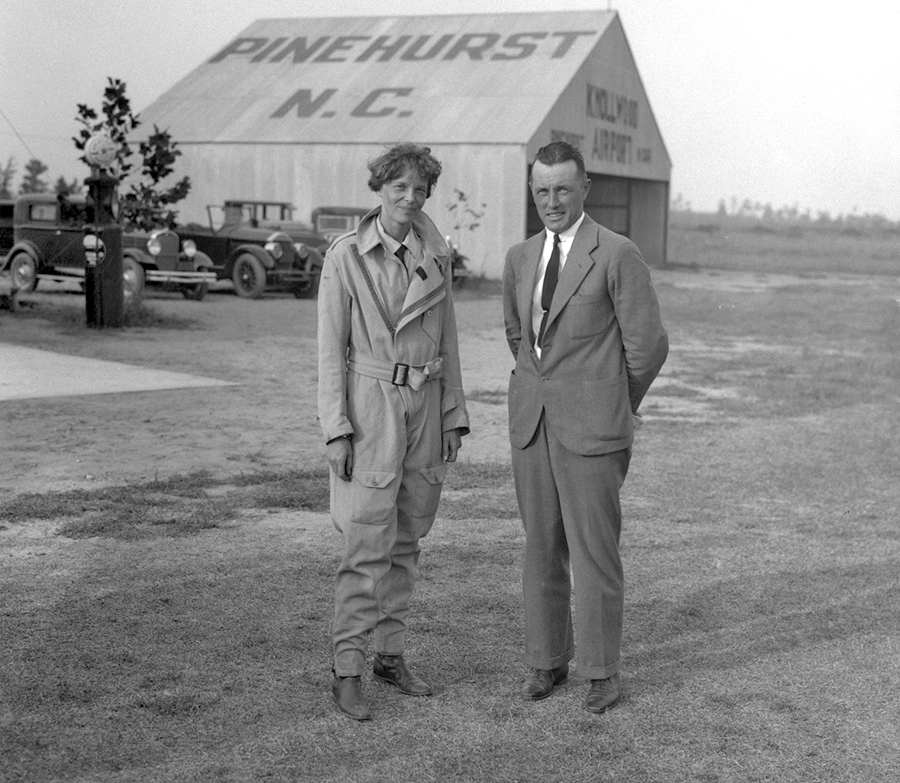
In any event, the newlyweds’ fledgling marriage was off to a good start as Amelia and her autogiro made their way into Moore County airspace. Tightly squeezed into the open cockpit of her Pitcairn PCA-2, Earhart peered through her goggles attempting to locate the airfield. As it was a pet peeve of the aviatrix that many of the new airports sprouting up like spring dandelions lacked identifying signage, Earhart was pleased to spot the word “PINEHURST” displayed in giant letters on the roof of Knollwood Field’s hanger.

The gathered onlookers, including the mayor and commissioners of Southern Pines, representatives of Pinehurst, and Mrs. W.C. Arkell, wife of the Beech-Nut Packing Company vice-president, watched as she flawlessly executed her landing. Perhaps the person most gratified by Earhart’s appearance was the manager of the airport, Lloyd Yost. A celebrated pilot himself, just nine days before, he had instituted shuttle flights from Knollwood Field to Raleigh, boasting that the new shuttle cut travel time from New York to Pinehurst down to six hours. In his wildest imagination, he could never have conjured up better publicity for showcasing the service than having the world famous Earhart drop in. Yost personally greeted his fellow pilot and made certain he was photographed alongside her.

Earhart apologized for keeping everyone waiting and cheerfully set about signing autographs. She did not linger long. Her stop at Knollwood was primarily for refueling with no time allotted for parades or lengthy speeches. Within a half hour she was airborne again. Amelia made good her return to Charlotte and would be back in the air the next morning destined for Spartanburg where thousands more would greet her.
Not one to rest on her laurels, in May of 1932, Earhart emulated Lindbergh’s triumph by becoming the first woman to make a solo flight across the Atlantic. The wind blew against her the entire way and, running low of fuel, she was forced to abandon her planned destination of Paris, landing instead in the field of a nonplussed Irish farmer. Though Amelia’s star had never waned since her “Friendship” flight, her solo trip across the ocean propelled “The Queen of the Air” into a still higher galaxy.

A busy 1933 summer beckoned, what with an upcoming meeting with Eleanor Roosevelt and a transcontinental air race, so George Putnam and his new wife, Amelia, decided to take some time for themselves. The Sandhills drew them back in March when they holidayed together in Pinehurst at the Carolina Hotel. The stay was presumably coupled with a visit to George’s mother who had taken the Schaumberg House on New York Avenue in Southern Pines for the season.

One consequence of the Earhart-Putnam marriage was that George’s two sons, David and George, Jr., developed a mutual affinity with Amelia. In Whistled Like a Bird, Chapman writes, “When the boys visited, she [Amelia] made sure to set aside time for horseback riding, sailing, picnicking, and swimming.” And the Putnam boys happily returned the affection their stepmother demonstrated toward them.

Other notable flights followed for Amelia, but they paled in comparison to the imposing 29,000-mile round-the-world flight she started planning in 1936. After one jettisoned attempt, she tried another in June 1937 with mechanic Fred Noonan aboard her Electra aircraft. George, David, and his new wife Nilla saw Amelia off from Miami. After completing 22,000 miles of the journey, Earhart and Noonan spent the final layover of their lives in New Guinea. During the next leg to the Howland Islands, radio contact was lost with the airplane, and Earhart and Noonan were never heard from again. A two-week U.S. Navy search over 360,000 square miles found no trace of them. Putnam refused to give up hope, desperately enlisting psychics for assistance, all to no avail. Amelia was declared legally dead in 1939.

A devastated Putnam wrote an homage to his wife entitled “The Sound of Wings.” He remarried in 1939 to his third wife Jean Marie Consigny, but it only lasted five years. He would marry one more time, to Margaret Havilland. Despite his advanced age, Putnam served in World War II in an intelligence unit. Thereafter, he and Margaret operated a resort in Indian Wells, California prior to Putnam’s passing away in 1950 at age 62. His sons, David and George, Jr., led productive lives. David flew B-29’s in World War II and enjoyed a flourishing real estate development career in Fort Pierce before dying at age 79. George, Jr. served in the Navy during the war, and survived the torpedoing of his ship. He owned construction and citrus businesses in Florida, and lived until 2013.

A decade after the engagement of George Putnam to his daughter, Dorothy, Edwin Binney and his family shifted their attentions from North Carolina to Florida, and the creator of Binneywood sold it in 1920. The plantation house burned to the ground thereafter. By Way Farms now operates an equestrian-related facility on the site.

Dorothy would successfully remake her life in Fort Pierce, involving herself in organizations related to women’s rights, aviation, gardening, and conservation. She relished the serenity of her tropical home and orange grove, which she named “Immokolee.” But her marital life was anything but serene. Upton suffered from a serious drinking problem resulting in a rapid end to that union. A third marriage also failed. She finally found contentment in her fourth marriage with Lew Palmer, the orange grove’s manager. She died at age 93 in 1982, but not before sharing with granddaughter, Sally Chapman, the diary of her turbulent but fascinating life. Sally now resides at the cherished Immokolee. She too has a Moore County connection as she is the wife of John Chapman, son of Pinehurst golf great Dick Chapman.

The exceedingly remote possibility that Earhart somehow survived a crash and lived on in the South Pacific is just one of the more recent theories that have kept the lost pilot frozen in time in our minds. Captured in smiling black and white photographs and newsreels, she remains the tousle-haired, rail-slim, modest but fiercely independent heroine who flew over the pine trees into Knollwood Field 86 years ago. PS

Pinehurst resident Bill Case is PineStraw’s history man. He can be reached at Bill.Case@thompsonhine.com.

Almanac

It is deep January. The sky is hard. The stalks are firmly rooted in ice.    Wallace Stevens, “No Possum, No Sop, No Taters”

Begin Again

Perhaps it’s true that the best narratives are cyclical, taking the reader on a figurative journey that ultimately leads them back where they started, yet, through some alchemical reaction, altogether transformed. Like the fool’s journey, or the legendary ouroboros eating its own tail.

Which brings us back to January.

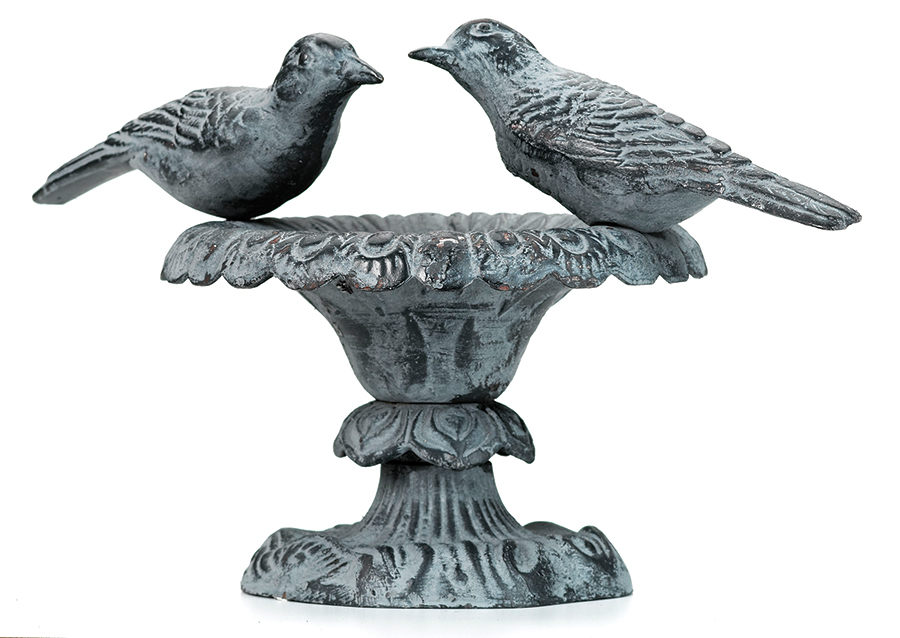
Outside, a pair of cardinals flits between the naked branches of a dogwood and the ornate rim of the pedestal birdbath. You think of the piebald gypsy cat who used to visit, how he would balance on the ledge to take a drink. Months have passed since you’ve seen him, but that drifter has charm. You’re sure he’s napping in some cozy sunroom, patiently waiting for the catkins and crocus, for the cheerily, cheer-up, cheer-up, cheerily return of the robin. The warmth of your own smile stretches across your face, and in this moment, all is well. 

On this first day of January, you imagine the New Year unfolding perfectly. Steam curls from your tea mug as an amalgam of flavors perfumes the air.

Cinnamon bark, licorice, ginger and marshmallow root . . .

Giving yourself permission to luxuriate, you reach for a favorite book of poems. “To read a poem in January is as lovely as to go for a walk in June,” said German author Jean Paul. You turn to a dog-eared page, can almost smell the honeysuckle and wild rose. You’ve read this poem many times, yet, like you, it is brand-new.

Blue Moon with Honey

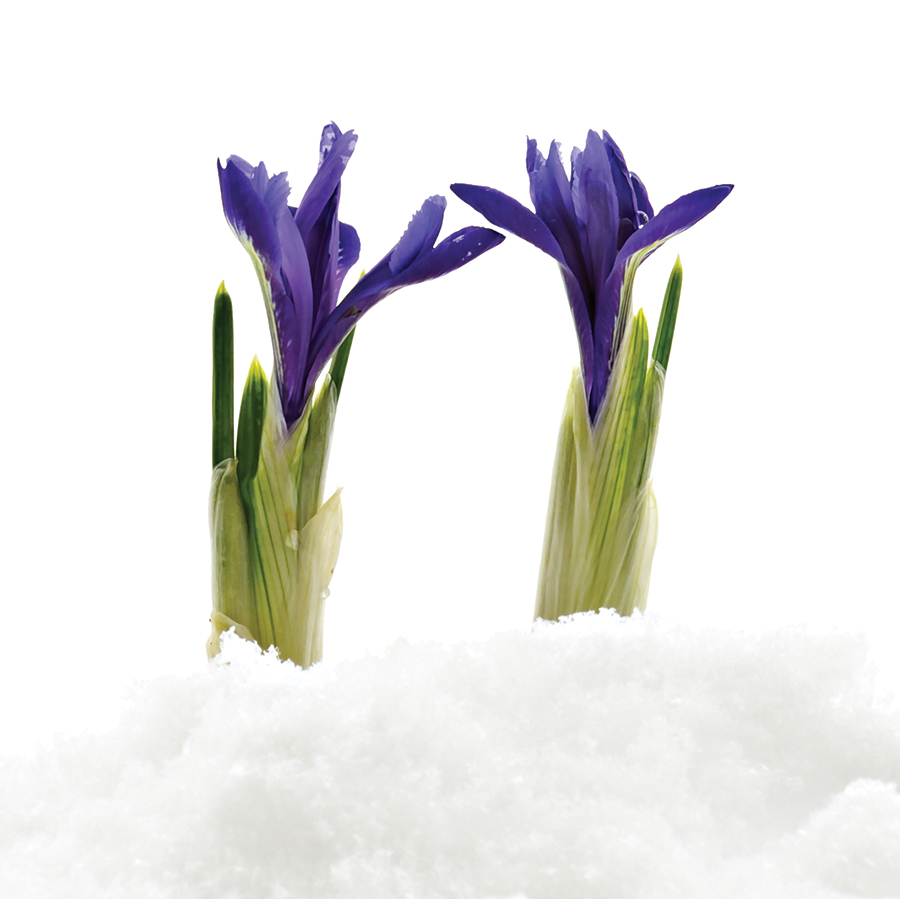
Henry David Thoreau could wax poetic on “That grand old poem called Winter.” Perhaps it’s not the easiest season to weather, but from darkness comes light. Behold phloxes and hellebores, snowdrops and winter-blooming iris, and on Wednesday, Jan. 3, until the wee hours of Thursday, Jan. 4: the Quadrantids meteor shower. 

Named for Quadrans Muralis, a defunct constellation once found between the constellations of Boötes and Draco, near the tail of Ursa Major, the Quadrantids is one of the strongest meteor showers of the year. Although a just-full moon may compromise viewing conditions, you won’t want to miss a chance to see this celestial event.

Twelfth Night (Jan. 5), the eve of Epiphany, marks the end of the Christmas season and commemorates the arrival of the Magi who honored the Infant Jesus with gifts of gold, frankincense and myrrh. Seeking a hangover cure following this night of merrymaking and reverie? Ginger tea. And don’t be shy with the honey dipper. The natural sugar will help your body burn off what’s left of the wassail.   

January’s blue moon falls on the last day of the month. Reflect upon the ways you let your own light shine on this rare and energetically powerful night. Like attracts like. What are you calling in for 2018?

To Your Health!

Traditionally served in a large wooden bowl adorned with holly and ivy, wassail is a hot alcoholic cider that spells celebration. Many recipes call for port, sherry and fresh-baked apples, but here’s a simple (un-spiked) version for you. Start now and wrap your hands around a mug of hot wassail within the hour. Serves four.

Ingredients

2 cups apple cider

1 cup orange juice

Juice of one lemon

2 cinnamon sticks

6 cloves

1/4 teaspoon ground ginger

1/4 teaspoon ground nutmeg

Instructions

Combine all ingredients in a large pan.

Bring to simmer over medium-low heat. 

Reduce heat. Continue simmering for 45 minutes. 

Ladle into mugs and enjoy.

There are two seasonal diversions that can ease the bite of any winter. One is the January thaw. The other is the seed catalogues.  — Hal Borland

December

December orphans the dove

permits growing pains flight

whispers this is why you fought —

in a wrap of bright cerements

weans solstice with a mutter and a kiss

bestows sparkle to ruined promises.

December lends diamonds

spins a symphony in crackling trees

waltzes us to the whistle of sleet —

seizes the ripple in my weary stream

warns a feral life knows no end

argues reasons to abridge the verdict.

December chaperons chill

points out the joy in an ashen sky

bends all light across the gaunt branch —

she liquors my lips with her tongue

allows secrets loosed on a smile

re-pours the bitter vintage till it is gone.

December is a confession

knocking down the tell-tale curtain

promising weakness will set you free —

directs congealed communions

palming our dead leaves as wafers

proffers intinction in a frosty spirit

and glazes gravestones so I can sleep.

— Sam Barbee

The Night Before Christmas, Y’all

Illustrations by Laurel Holden

‘Twas the night before Christmas, when all thro’ the towns,
Not a creature was stirring, not even the hounds;

The stockings were hung by the chimney with care,
In hopes that St. Nicholas soon would be there;
The children were nestled all snug in their beds,
While visions of barbecue danc’d in their heads,
And Mama in her ‘kerchief, and I in my cap,
Had just settled our brains for a long winter’s nap-
When out on the lawn there arose such a clatter,
I sprang from the bed to see what was the matter.
Away to the window I flew like a flash,
Tore open the shutters, and threw up the sash.
When, what to my wondering eyes should appear,
But a miniature sleigh, with briskets and beer,
With a little old driver, so lively and quick,
I knew in a moment it must be St. Nick.
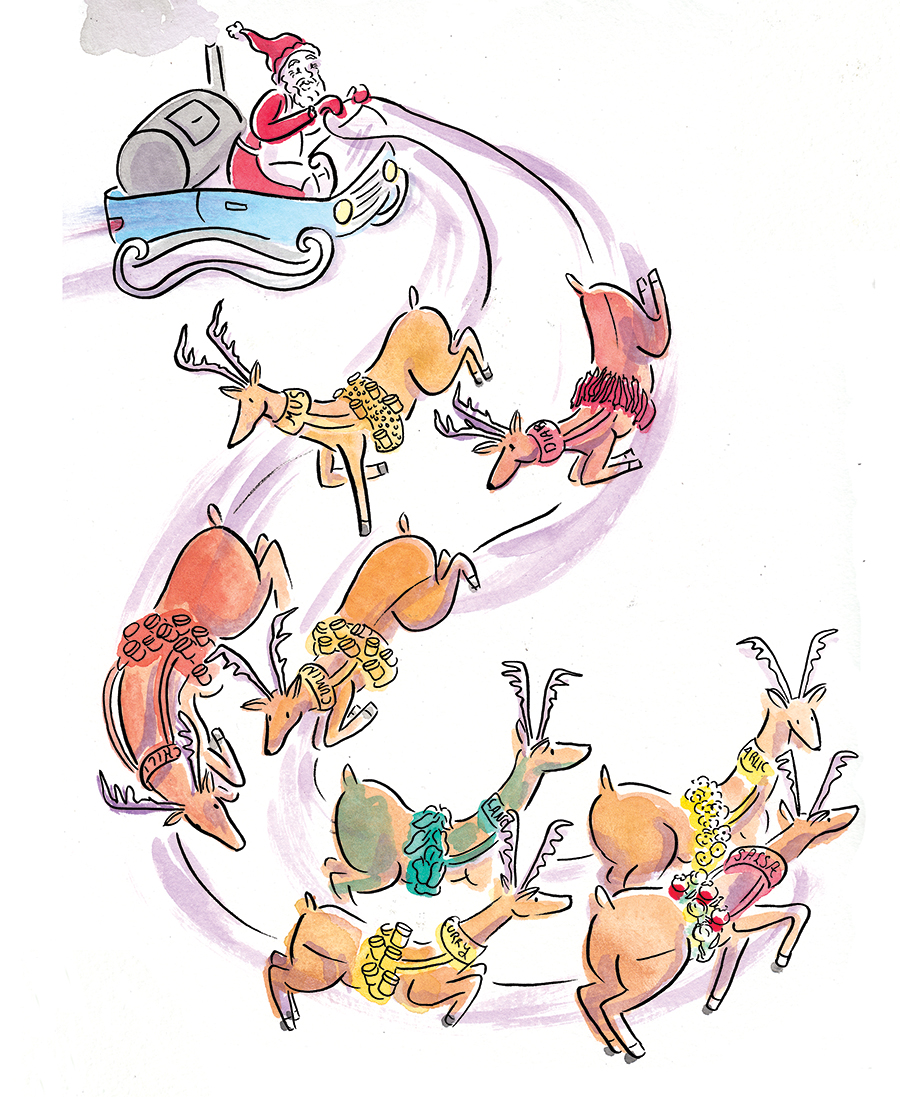
More rapid than beagles his sauces they came,
And he whistled, and shouted, and call’d them
by name:
Now! Salsa, now! Garlic, now! Curry, and Poblano,
“On! Chili, on! Cumin, on! Mustard and Diablo;
“To the top of the porch! to the top of the wall!
“Now dash away! dash away! dash away all!”
As pine needles before the hurricane fly,
Twist in the wind and mount to the sky;
So up to the house-top the sauces they flew,

With the sleigh full of ribs – and St. Nicholas too:
And then in a twinkling, I heard up above
The clatter and clang of a labor of love.
As I drew in my head, and was turning around,
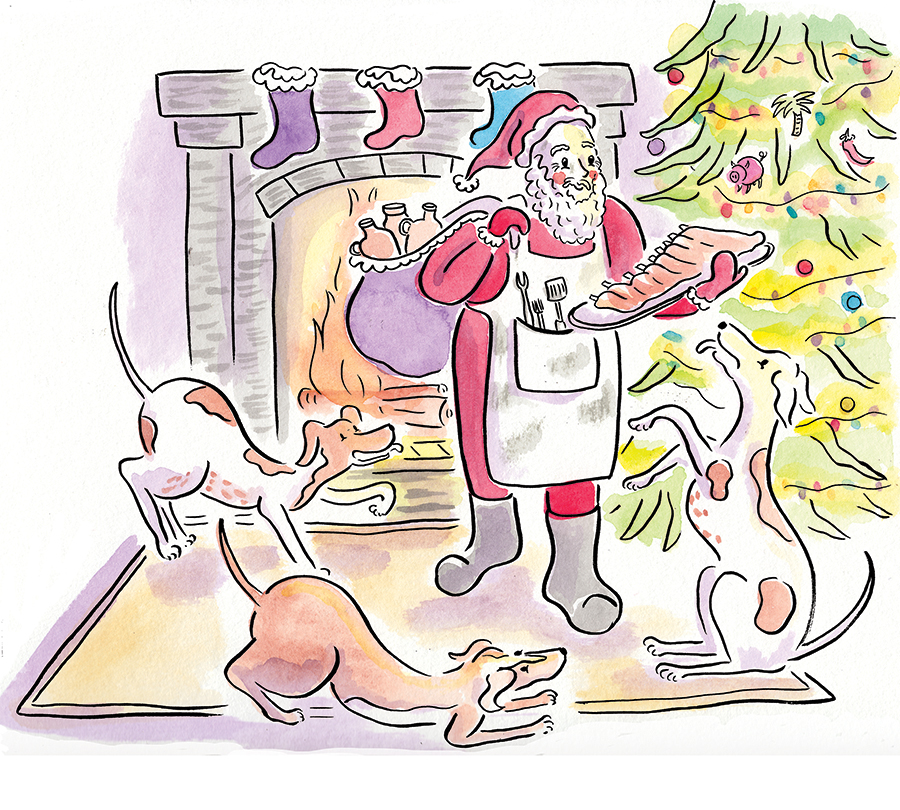
Down the chimney St. Nicholas came with a bound:
He was dress’d in an apron, from his head to his foot,
And the front was all tarnish’d with grease marks and soot;
A sack full of ribs was flung on his back,
And he look’d like a smoker just opening his stack:
His eyes – how they twinkled! his dimples how merry,
His cheeks were like RedHot, his nose like a cherry;
His droll little mouth was drawn up like a bow,
And the beard of his chin was as white as the snow;
The stump of a pick he held tight in his teeth,
And the aroma of smoke hung around like a wreath.
He had a broad face, and a little round belly
That shook when he laugh’d, like hot soup in a deli:
He was chubby and plump, a right jolly old elf,
And I laugh’d when I saw him in spite of myself;
A dash of wasabi and a twist of his head
Soon gave me to know I had nothing to dread.
He spoke not a word, but went straight to his work,
And laid out the ribs; then turn’d with a jerk,
And putting his finger aside of his nose
And giving a nod, up the chimney he rose.
He sprung to his sleigh as fast as a missile,
And away they all flew to the Pig and the Whistle:
But I heard him exclaim, ere he drove out of sight-
Happy Christmas to all, and to all a good night. 
PS

Priceless

Jump-starting a financial giant

By Jim Moriarty     Photograph by Tim Sayer

If the U.S. Postal Service has to use a forklift or your internet provider has to double its bandwidth to deliver your MasterCard bill after the holiday season you really have no one to blame but yourself. However, if you did feel the need to look around for a convenient scapegoat, look no further than Gary Southard. It wouldn’t be strictly accurate to say that Southard invented MasterCard, but it wouldn’t be entirely wrong either. It’s a bit like asking which Wright Brother invented manned flight. At the end of the day, the hang time is what really mattered — even if decades down the line you end up hoisting your credit limit on Southard’s petard.

Southard, who has lived in Pinehurst with his wife, Sue, for the past 20 years, was the first president of the operating company that administered Master Charge, an infant venture of four California banks that would eventually metamorphose into the MasterCard behemoth that employs something in the neighborhood of 12,000 people today. Southard strolled into the picture somewhere at intersection of serendipity, salesmanship and destiny. “In November of 1966 I was hired from State Street Bank in Boston to go and do the start up, bring this company operational,” says Southard. “So I was the first employee and had the great title of president.” Today, MasterCard ads saturate TV and its billboards are ubiquitous in airports around the world. When Southard saw one in Dubai, his reaction was positively grandfatherly. “I didn’t feel it was my child,” he said, “but I have a warm place in my heart.”

Born in Joplin, Missouri, in 1929 (yes, the man who helped get MasterCard off the ground was born the same year the stock market crash rang in the Great Depression) and grew up in Robinson, Illinois, home of the Heath candy bar. He attended the University of Illinois, was commissioned a second lieutenant in the Marine Corps and is a veteran of the Korean War. In March of 1953, he joined IBM where he quickly found himself seated on the same dais with Tom Watson Sr., the company’s benevolent dictator, and his successor, Tom Watson Jr., being fêted as their salesman of the year. After a brief stint with RCA where he and 18 other IBM refugees made a mostly unsuccessful attempt at starting their computer division, he joined State Street Bank in its mutual fund group.

The four California banks that ultimately moved him from one coast to the other — Wells Fargo, Crocker, UCB and Bank of California — didn’t want to be in the credit card business at all but felt they couldn’t avoid it since Bank of America introduced its card, BankAmericard, in 1959. Rather than issue cards separately, they wanted something with a common card face. With Southard’s help, they formed a company to accomplish just that. Its success kicked off a lot of begetting. The California Bank Card Association (the first venture of the four banks) begat Western States Bank Card Association, which begat Interbank Card Association (when the big Eastern banks joined in), which eventually morphed into MasterCard. The entire process took something in the neighborhood of a dozen years and left a footprint in the buying and selling of goods as big as Sasquatch’s.

“The actual first Master Charge card went in the mail on July 7th, 1967. They issued cards to all their checking account holders in good standing,” says Southard. “Theft from mailboxes became a problem. When we started out, we had four Keystone Cops from L.A. as our security.” One of the banks even issued a card to: Jesus Christ, Church of the Latter Days Saints, Alameda, CA. “To the best of our knowledge, it was never used,” says Southard. It wasn’t just security that was primitive. Merchants had to physically look in a printed ledger to see if a card was still good. “What MasterCard is today, they handle 68,000 transactions a second. They do all the authorizations,” says Southard. “Visa and MasterCard are technology companies. We started with punch cards. Young people never heard of punch cards. It was pushing a lot of paper.”

The now famous interlocking circles on the face were the design product of a Los Angeles ad agency, Foote, Cone and Belding. “Then they had the colors of burnt orange and ochre,” says Southard. “Our board of directors was five at California Bank Card Association at the time. The vote was 4 to 1. The one against was me. I would never have made it in the advertising world.”

If Southard was a Wilbur or an Orville, Karl Hinkey, a top executive at Marine Midland Bank from Buffalo, New York, was the Godfather. He wanted his cardholders to be able to use them when they traveled to California. Enter Interbank and all the big boys — Midland, Chemical Bank, First National City Bank (Citibank), Manufacturers Hanover. “Because Master Charge had been so well accepted throughout the west, they decided it would become the common card for Interbank Card Association,” says Southard, who left his home a block from the Presidio Wall in San Francisco to move to New York to run it. And the rest is history, or at least commerce. Mexico, Japan, Canada and Great Britain all began accepting the card. “The growth was amazing,” says Southard.

By 1973, Southard had moved on to form his own consulting business which he kept up until he retired. Why not? By then he knew most of the big bankers at most of the big banks in the U.S., if not the world. He had three children, Gary (Ry), Susan and Jonathan who rarely lived in the same place long enough to learn their teachers’ names. “Military families stayed put more than we did,” says Ry jokingly, who has moved to Moore County and is a fund-raiser for the Boys & Girls Club of the Sandhills in Southern Pines. “I lived in 18 homes before I graduated from high school. Nine states. Twelve school systems.”

If anything, this nomadic existence seems to have had a distinctly artistic influence on Southard’s three children. Ry went to the San Francisco Art Institute where he majored in photography and minored in sculpture and painting. “I’m an artist,” he says, “but I didn’t want to be a starving artist.”

Susan, who moved to Southern Pines last year, is the founder and director of the Phoenix-based Essential Theatre, now in its 28th season. She has a Master of Fine Arts from Antioch University and is the author of Nagasaki: Life After Nuclear War for which she received the Dayton Literary Peace Prize and the Lukas Book Prize, both in 2016.

And Jonathan, the youngest, has a degree in theater from Trinity University in San Antonio. “I was a child actor starting at 6 or 7 years old,” he says. “Never anything big. In Rogers and Hammerstein musicals or Damon Runyon comedies I was ‘the kid.’” Now, the kid’s resume includes being first assistant director on somewhere between 75 and 80 feature films, including Titanic. “I’m about to start my 10th film with a company called Emmett Furla Oasis, very prolific action filmmakers,” he says. It’s a movie starring Sylvester Stallone. “I just did one with him last spring, Escape Plan 2.”

That the children of someone who spent a lifetime in the financial world would find their way into the arts may not be all that odd. Following his divorce in the early ‘70s, Southard was working with First National Bank of Chicago as a consultant when he met Sue who has four children of her own. They would marry 10 years later. “She found a lovely apartment for me on the Gold Coast,” says Southard, so he moved from Manhattan to the shore of Lake Michigan. While he lived in Chicago, if he wasn’t busy walking the city’s famous baseball announcer, Harry Caray, home from a routine pit stop at Sage’s, a local watering hole, Southard became a patron of the arts for the Steppenwolf Theatre Company, using his business acumen to take it from a glorified community theater to regional and national success.

“I was asked to join the board and got involved with fund-raising,” says Southard. “We had these great actors, but we didn’t have enough money to pay them. A lot of them were working two, three jobs trying to stay alive. Gary Sinise. John Malkovich. John Mahoney, who played the grandfather on Frazier. Jeff Perry who’s now with Scandal. Terry Kinney who is directing a play on Broadway. Laurie Metcalfe who’s got a Tony. Sue and I used to take them out to dinner to feed them. We had an open house at the little theater, and we’d bring gallons of jug wine. You’d have guys like Roger Ebert there. We started raising money. AT&T had a big headquarters in Chicago. Eventually, they wound up giving $500,000 and that really put them on the map.” Since Gary and Sue moved to Pinehurst, a village they remembered from a trip to take tennis lessons, Gary has served as president of the board of the Ruth Pauley Lecture Series for four years and another six on the Arts Council of Moore County.

Apparently, he had lots of credit to go around. Like Jonathan says, “I didn’t understand, really, until my adulthood the impact of what he was doing.” If you need a reminder, all you have to do is check your statement.   PS

Jim Moriarty is senior editor of PineStraw and can be reached at jjmpinestraw@gmail.com.

Almanac

Winter Is Here

Deadhead the rose bush. Prune the wild muscadine. Move the front porch pumpkins to the compost pile. 

The days grow shorter, yet from darkness comes light. Behold phlox and hellebores, snowdrop and iris, camellia and winter-flowering crocus.

This month, while the soil is cool, plant spring bulbs and fruit trees, harvest edible weeds and winter greens, and when the work is done, create sacred space to enjoy the season. And beaucoup peppermint.

First cultivated in 1750 near London, England, as an experimental hybrid between water mint and spearmint, this perennial herb has long been used for its magical and medicinal qualities. According to The Oxford Companion to Sugar and Sweets, however, the candy cane came before its flavor. Sometime around 1670, a choirmaster in Cologne, Germany, asked a local confectioner to come up with a special candy stick to help pacify the young folks during the live Nativity on Christmas Eve. Shaped like a shepherd’s staff, this sugary creation surely kept them quiet (and buzzing) until the Magi arrived.

Want to grow your own? If you’re going for potency (read: high oil content), go with black peppermint, named for its dark purple-green leaves and stems. White peppermint has a milder flavor, but crush the leaves between your fingers and feel an instant calm throughout your entire being. Because this aromatic herb can quickly take over an entire garden, and because it craves rich soil and good drainage, container gardening is recommended. Full sun increases its medicinal qualities (and makes for stronger, spicier tea).

Stocking Stuffers

Pear tree seed

• Bird food

• Binoculars 

Peppermint Tea for Two

2 cups water

14 peppermint leaves

2 teaspoons honey

Bring water to boil

Place leaves in teacups; cover

mint with hot water

Steep for 5 minutes

Remove leaves (or not)

Add honey

Steep with fresh tarragon leaves and a quarter-inch slice of vanilla bean to enter a new realm. Add lemon wedge to continue the journey.

In seed time learn, in harvest teach, in winter enjoy. — William Blake

Celestial Shower

As we approach the winter solstice — the longest night of the year — we look to the stars to celebrate a new season, and the final hours of the year. The Geminid meteor shower peaks on the night of Wednesday, Dec.13, until the earliest hours of Thursday, Dec. 14. Sky-watchers may see as many as 60 to 120 shooting stars per hour predawn. Watching with friends or loved ones? Steep a pot of peppermint tea or keep the cocoa simmering on the stovetop for this enchanted celestial event. PS

Their Darkest Hours

For brilliant red poinsettias, keep them under wraps

By Ross Howell Jr.

For years as a grad student and later as an itinerant bachelor, I put off buying Christmas decorations because I didn’t want to move them from one apartment to the next. Holiday decorating for me meant buying poinsettias — usually in foil-wrapped containers — to get instant seasonal cheer with minimal effort.

Besides, poinsettias have a cool history.

Indigenous to Mexico, Euphorbia pulcherrima owes its popular name to Joel Poinsett. Born in 1779 to a wealthy family in Charleston, South Carolina, Poinsett was a world traveler. President John Quincy Adams appointed him as the first Minister to Mexico in 1825. While visiting south of Mexico City, Poinsett saw a plant known among locals as Flor de Nochebuena, or “Christmas Eve flower.” An amateur botanist, Poinsett sent samples back home. Propagated and sold, the plants by 1836 had become known in the States as “poinsettias.”

So what did I do with my once-lovely poinsettias after the holidays were over? I dumped the then-desiccated plants into the trash.

As time passed, my lazy approach to holiday decorating left me feeling guiltier and guiltier.

All those plants I’d tossed. What if I’d tried to winter them over, do whatever mysterious things needed to be done to have them erupt in scarlet again the following Christmas?

Then one evening a message popped up on my neighborhood listserv.

“Is anyone in the area trying to force poinsettias? We are trying to do it but have to travel during the ‘dark time’ and need someone to tend them for us.” The sender was Tom Krissak.

Surely Krissak could give me a shortcut to poinsettia success. I mean, he already knew there was something called “dark time.”

Turns out, Krissak — retired from the funeral business — had sent the message on behalf of his partner, Samuel Johnson, who’s the gardener in their household. Krissak gave me Johnson’s number.

“Oh, I really just took up plants after I retired a couple years ago,” Johnson confesses over the phone.

He tells me he grew up in northern Virginia but has lived all over the world. A mathematician, Johnson first came to Greensboro to teach at Guilford College.

After years at Guilford, he left Greensboro for a time and studied the law, became a practicing attorney and returned to Greensboro for a second time.

“I like trying to keep plants alive,” Johnson says, “but I have just the opposite of a green thumb. If you want to talk about poinsettias, you need to call Esther Maltby.”

Maltby is a neighbor who recently stepped down after seven years as director of the Dunleith Community Garden on Chestnut Street.

“Esther and I worked out a deal,” Johnson continues. “She’s caring for the poinsettias while we’re away. If they live, we’ll split the plants between us.”

So what’s Maltby’s take on the poinsettia project?

“It’s really Samuel who’s done all the research,” Maltby says. “I just agreed to babysit.”

Maltby tells me she grew up in Pakistan, the daughter of Protestant missionaries. Her father was an engineer; her mother a teacher. Poinsettias were prolific where they lived in Pakistan, growing into bushes 8 to 12 feet tall.

“I never gave a thought to cultivating little ones,” Maltby says with a laugh.

Her strategy for forcing the poinsettias to bloom is to keep them in light—but not direct sunlight — for eight hours a day. Then she plunges them into darkness — under cardboard boxes covered by blankets — for the remaining 16 hours of the day.

When Maltby sees red bracts sprouting, she’ll stop the “dark time.” She began the process in mid-October, a little concerned about having enough time to bring the plants to full Christmas glory.

“Samuel messages me every day, asking how the poinsettias are doing,” she says. “I tell him they look good; they’re putting out lots of green leaves.”

She pauses.

“I sure hope this works,” she says.

Me, too.

Regardless, I realize now keeping poinsettias holiday-to-holiday requires way more mindfulness than a lazy guy like me can muster.  PS

Ross Howell Jr. is getting ready for Elon University’s January term, when he’ll be teaching a general studies course entitled “A Brief History of Truth.”