Almanac

November

By Ashley Wahl

November is the rush of wind through leaves, the rush of leaves through wind, a cradle song before a long night’s sleep.

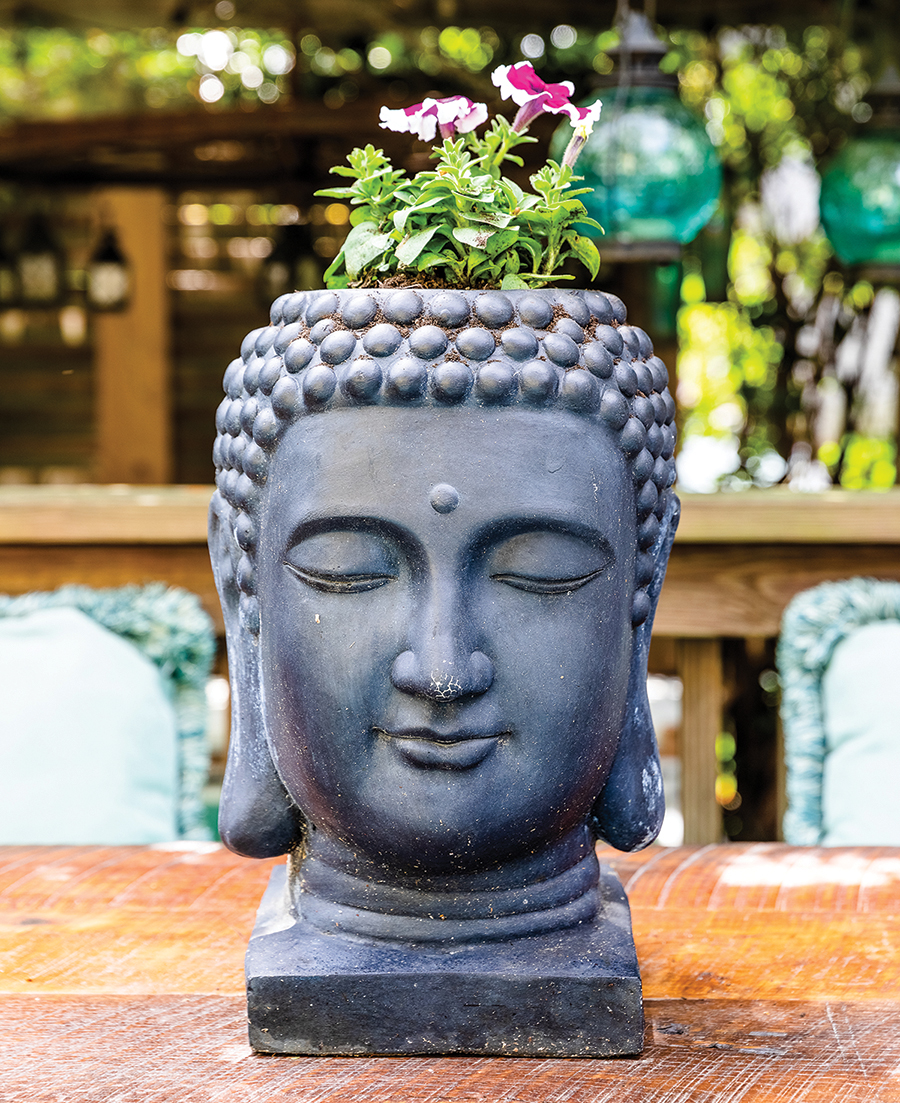
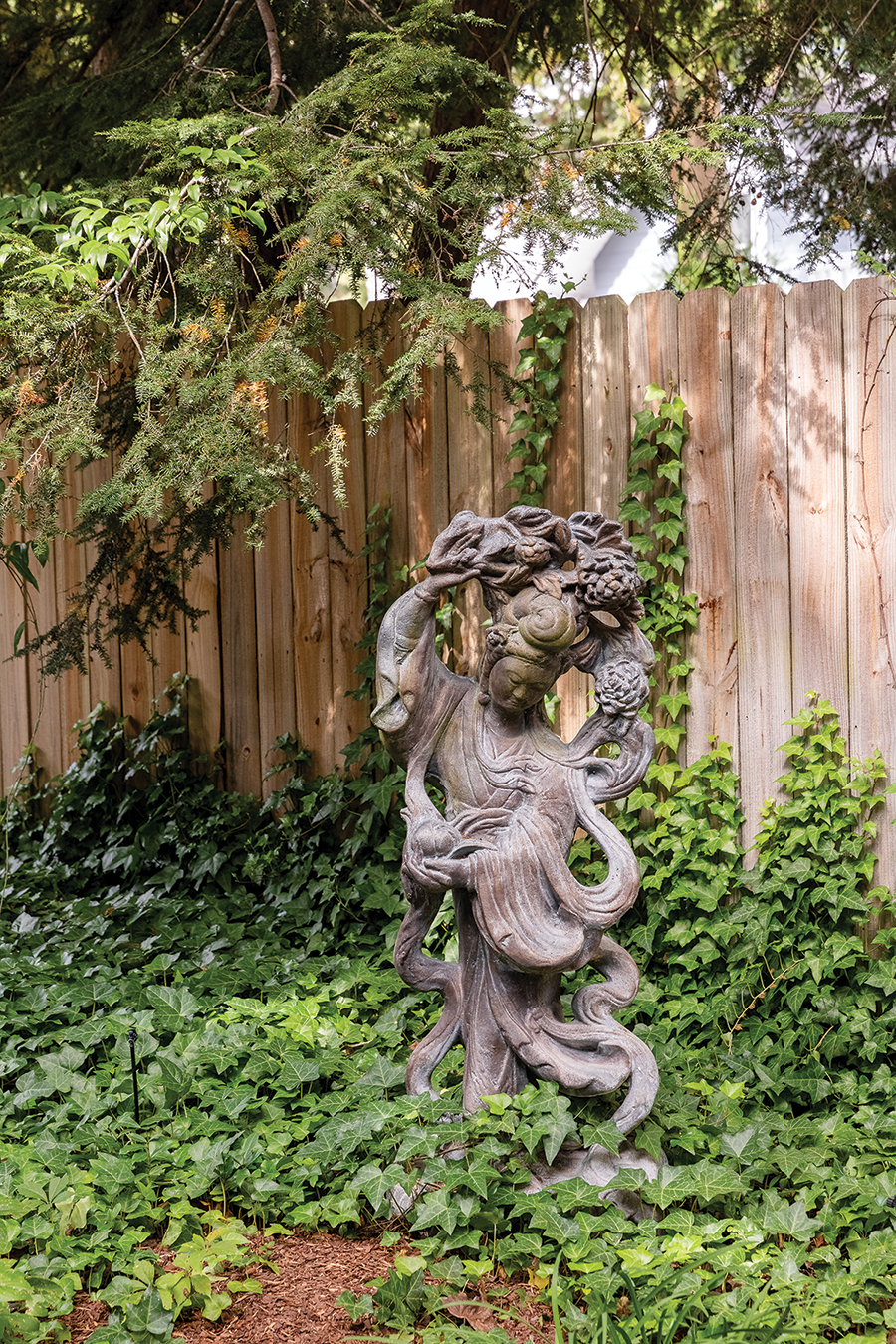
In the garden, the unblinking statue has seen it all before, will see it all again: birds, here and gone; the explosion of color; the great release; the withering; the nothingness; the sweet and glorious rebirth.

Today, light feels soft and precious. The air is cool. The garden statue, barnacled from yet another sleepless year on watch, holds a stone bird in cupped hands — the weight of the world; the burden and the gift of the silent witness. 

As tree limbs bend and sway on high, leaves and squirrels scatter across the earth in dramatic bursts.

Soon, when the wood frogs sleep, the roving cat will make its way from the rose bed to the back porch, press its paw against the glass panel door, give up its wanderings for a place by the hearth. The crickets play their final tune as the snake enters brumation.

In its quiet meditation, the statue sees and hears what most do not. It knows that summer’s light is still here, pulsing within all living things; that spring is autumn’s waking dream; that there is magic in the heart of winter’s stillness. 

A whirl of golden leaves descends. An aster blooms. And in the fading autumn light, a pregnant doe plucks freshly planted bulbs, nibbles dwindling grasses, steps boldly toward the night.

The statue neither smiles nor frowns. It simply watches, listens as the world goes quiet.

Pass the Gravy

Autumn’s color show does not stop at the swirling leaves. Inside, where golden milk simmers on the stovetop, the spectacle continues.

Behold a rainbow spread of roasted beets and carrots. Collard greens flaked with red pepper. Cranberry-pear chutney garnished with orange peel.

Come Thanksgiving, add warmth and color any way you can. We all know it: The mashed potatoes need the contrast.

Despite how you serve them — smooth and creamy; hand-mashed and skin-on; loaded with garlic and butter — there’s no denying that mashed potatoes remain a holiday favorite.

Unlike green bean casserole, which Campbell’s introduced in the 1950s through their Cream of Mushroom soup, mashed potatoes have been a Thanksgiving staple since the 1700s.

Sure, add a dollop of sour cream and a little cheddar. Or fresh rosemary from the kitchen garden. Just don’t go messing up a good thing. 

Hold the Dairy

How to make vegan mashed potatoes? Two words: vegan butter. And as for vegan gravy? Ditto. Sub pan drippings for nutritional yeast, soy sauce, Dijon mustard, onion powder and the like. There are dozens of recipes out there. No need for the vegan you love to go without.

I love to see the cottage smoke

Curl upwards through the trees,

The pigeons nestled round the cote

On November days like these . . .

— John Clare, “Autumn”

Poem

Quarantine Haircut

I’ve had hundreds of haircuts over the years

but never one as intimate as the one Julie

gave me yesterday, mid-quarantine, and my

hair standing up and out of control and when

she could take it no more she said sit down,

Bozo. I happily complied, always eager for

her touch. She stood over me cutting, clipping,

and buzzing and I could feel her legs on mine,

her forearm brushing my ears. But it wasn’t

the physical touch as much as the proximity,

breathing the same air like we used to do back

when the sight of each other would result in

clothes flying through the air, naked bodies

moving together in rhythm, but this was a haircut,

scissors, a misused beard trimmer, a memory of

what was once there. When she asked why I was

crying, I said Some hair must have irritated my eyes,

and she didn’t press, only wiped it away, said

you’re a fool and she was right once again.

  — Steve Cushman

Guess Who’s Coming to Dinner?

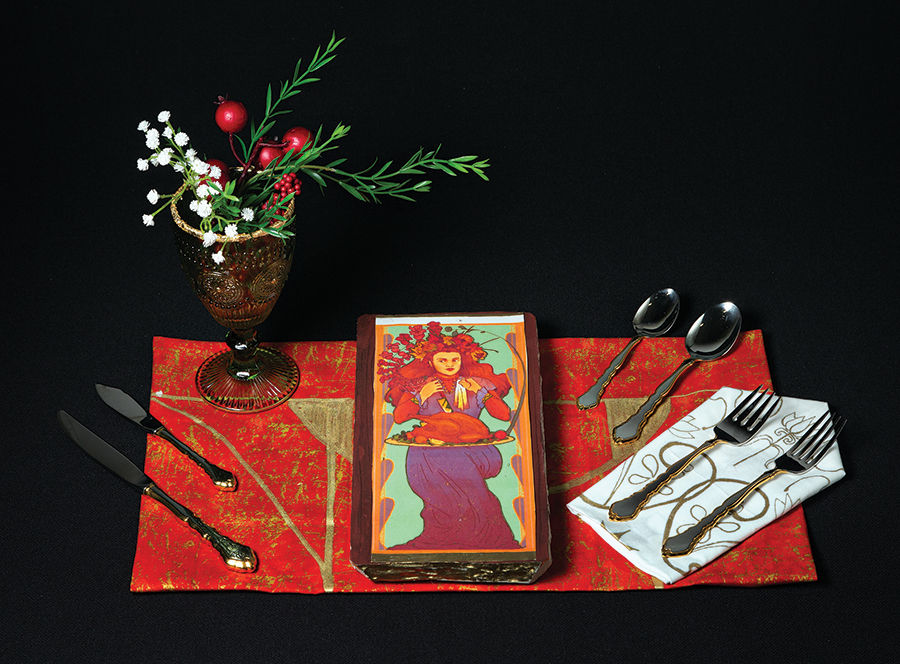
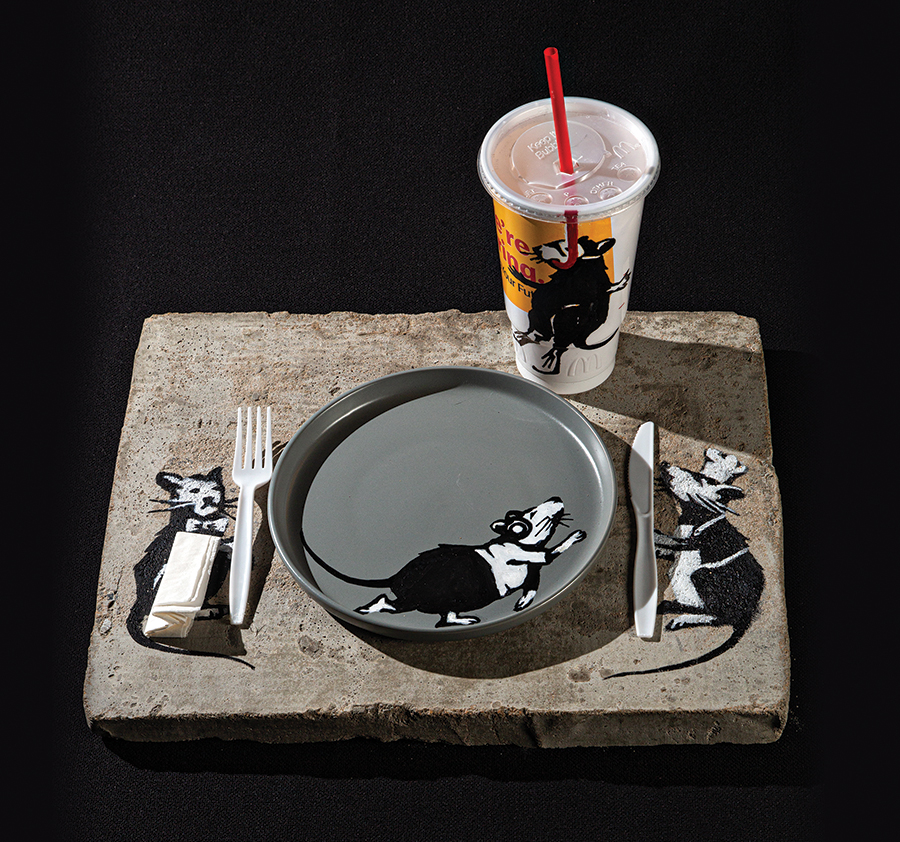
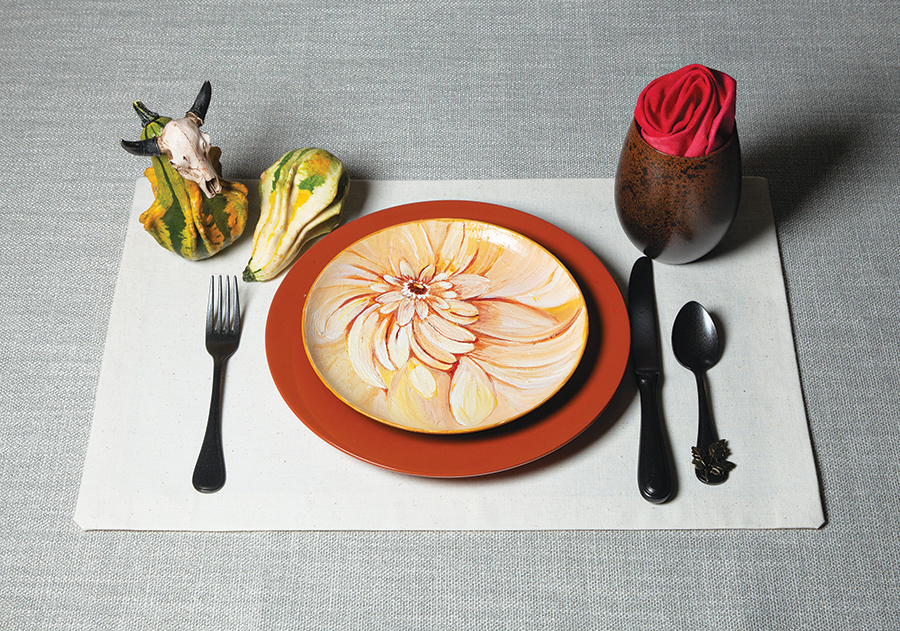
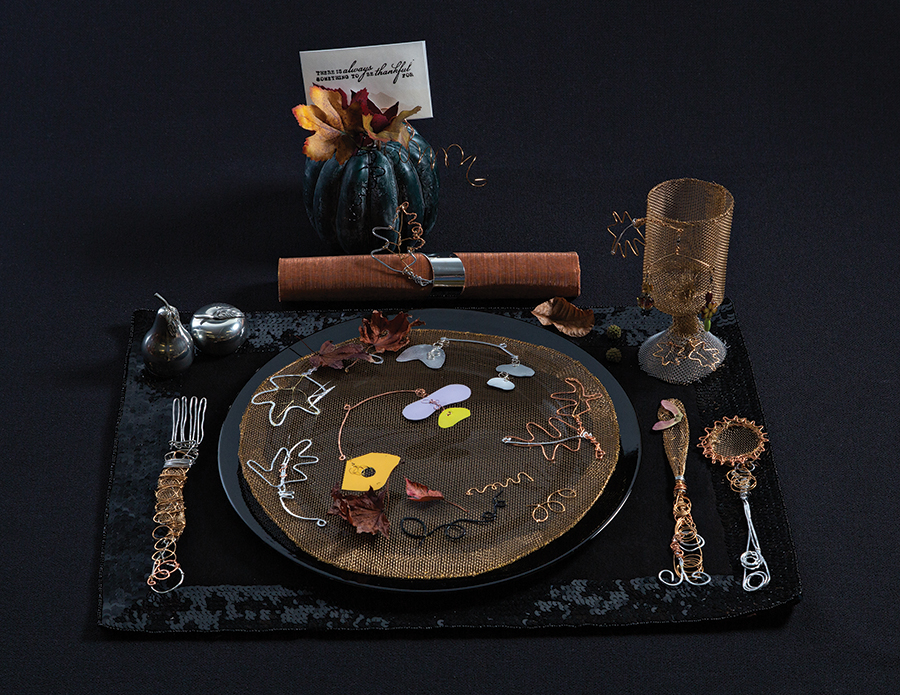
Sit down to a serving of great art as Sandhills artists Mary Davis, Laurie Deleot, Jill Hartsell, Aedan Peters, Kim Reidelbach and Ines Ritter discover their inner Georgia O’Keeffe, Alexander Calder, Claude Monet, Roy Lichtenstein, Alphonse Mucha and Banksy, respectively, in these playful place settings. This is truly a Thanksgiving with all the trimmings.

Produced by Denise Baker     Photographs by Tim Sayer

Claude Monet

by Jill Hartsell

Jill Hartsell is passionate about teaching art to young children, spending the last 19 years of her two-decades-long career as an educator in the Moore County schools. She loves all forms of art whether it’s painting, quilting, redoing furniture, making clothes or fashioning jewelry. “Being creative brings me peace, joy and freedom,” she says. Playing on Monet’s famous water lilies, the deckle-edged china has small embossed flowers, and the clay drinking vessel is fashioned into a lily pad.

Alphonse Mucha

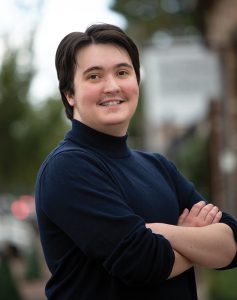
by Aedan Peters

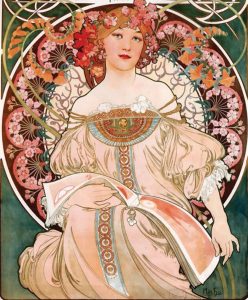
Aedan Peters was born in 2001 in Rottenburg, Germany, while his parents were stationed overseas. He moved to Carthage in 2010 and has lived in the area off and on ever since. From a young age, his mother and father fostered a deep appreciation of art within him. This piece brings back memories of the times his parents would help him and his sister recreate famous pieces like Van Gogh’s Starry Night and Chagall’s The Blue Violinist. Peters chose Alphonse Mucha because of the way the artist’s work lends itself to the maximalist ornateness. He plans on moving to Asheville next fall to continue his art education.

Banksy

by Ines Ritter

Ines Ritter is the owner of RUNT Graphic Design in Southern Pines. She creates digital designs ranging from logo art to package and trade fair displays, and has done book illustrations, sculpture, pastels and painting. Growing up near Frankfurt, Germany, she found graffiti and street art inspiring, especially the simple yet impactful style of Banksy, the anonymous graffiti artist. Banksy often paints on trash, hence the paper cup and plastic utensils. Notice how Ritter has poured her own cement block for a place mat, mimicking a wall.

Roy Lichtenstein

by Kim Reidelbach

Kim Reidelbach is a freelance artist living in Whispering Pines and working at The O’Neal School. She is a mixed-media artist often combining photography, painting and sculpture, using humor to communicate personal reflection in response to current events. She has freelanced as a muralist, once worked in a foundry, and has collaborated with other artists for shows in Washington state, Haiti and Florida. She captures Roy Lichtenstein’s style by contrasting the black and white with the place mat’s shape and bright yellow color. The optical illusions create a Ben-Day dot effect.

Georgia O’Keeffe

by Mary Davis

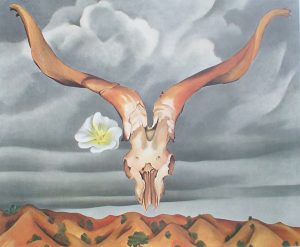
Mary Davis is a North Carolina-based artist who began her professional journey in Florida in 2005 as an interior muralist. She draws inspiration from nature and life experiences and is inspired by artists like O’Keeffe, who push boundaries, demand a presence and continue a forward motion in life. She features O’Keeffe’s flower image as the center of the place setting and filled her glass cup with a hand-dyed napkin to mimic a rose. The skull represents one of the New Mexico desert objects O’Keeffe frequently painted.

Alexander Calder

by Laurie Deleot

Laurie Deleot is a multi-media artist who is focused on non-objective and abstract art. Her work is colorful, full of whimsy and joyful. She saw her first Calder piece in Chicago 53 years ago, which began her fascination with his work. Calder, who was the youngest living artist ever to have a retrospective at New York’s Museum of Modern Art, called his mobiles “drawing in space.” Deleot chose different metallic wires, working in the essence of his style, to sew her “mobile” place setting, even knitting the outside edges with wire.

Story of a House

A Perfect Unmatch

Historic cottage exudes comfort, harmony

By Deborah Salomon   •   Photographs by John Gessner

Just because “big” and “beautiful” start with the same letter doesn’t signify a relationship. What could be prettier than a modest house filled — not crowded — with carefully chosen objects, where nothing matches but everything fits?

Should the house and contents also reflect its occupant, bravo.

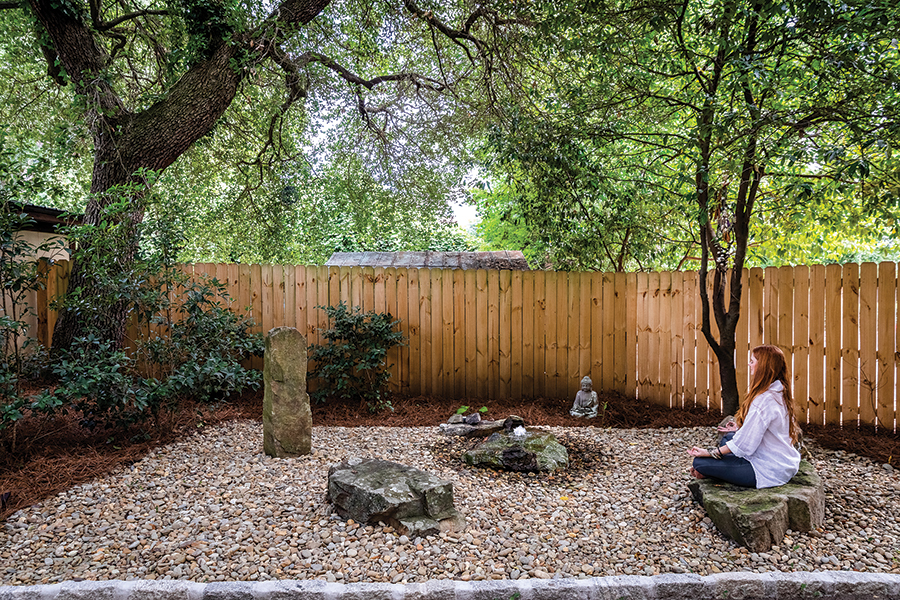
Virginia Gallagher teaches yoga. She lives yoga. Her artifacts and décor reflect its tenets and practices. Crystals cover many surfaces. She speaks of chakras, the body’s seven energy centers. Even the uninitiateds absorb the calm.

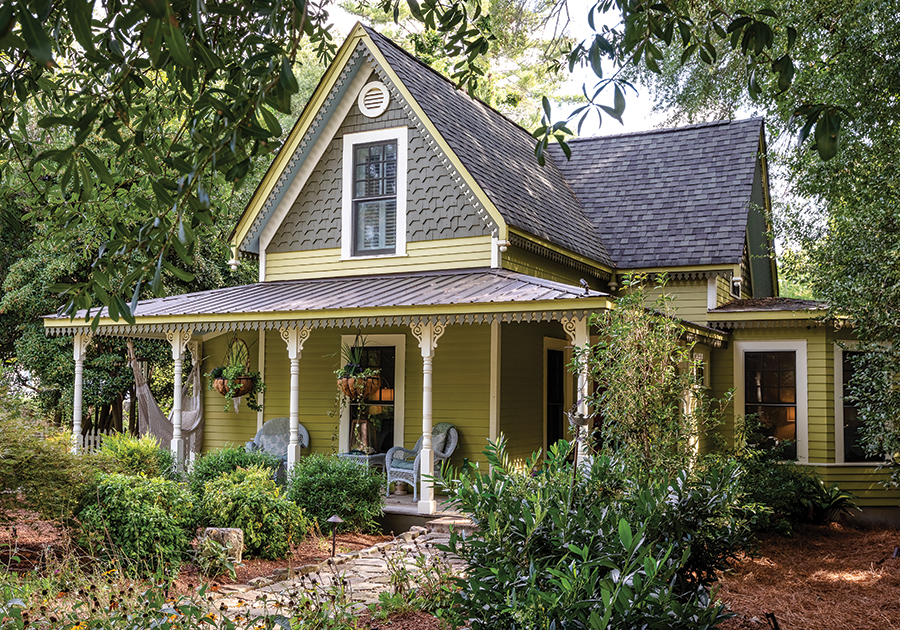
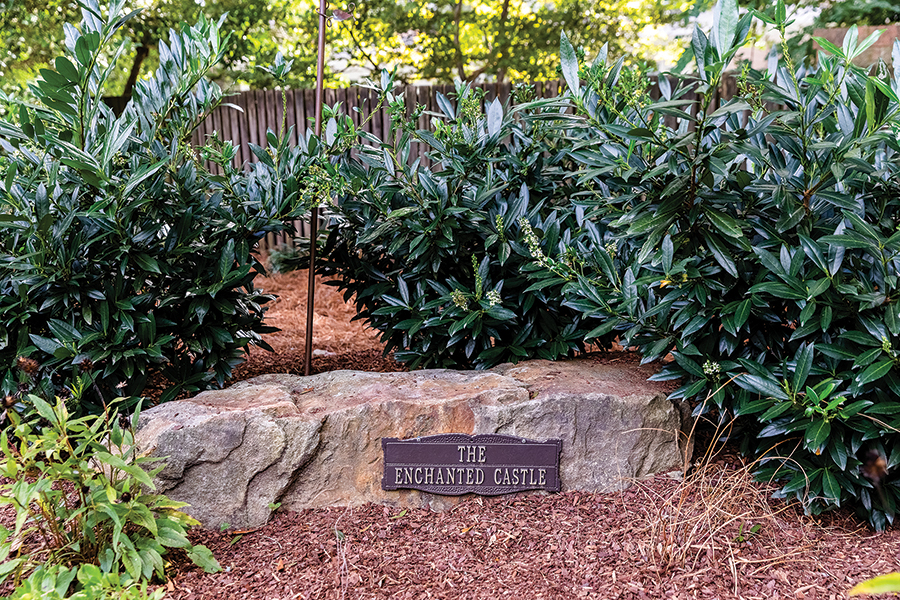
That calm begins on the front walkway, composed of stepping stones, rimmed with perennials, then weed-free grass, where a small sign announces the Enchanted Castle. The clapboards are painted a green south of avocado. Celery, maybe? The front porch ceiling is sky blue, considered a good omen. Hanging from it, a white woven rope hammock from Mexico, where Virginia led an instructors’ retreat. “I love the Mayan culture, the spirituality,” she says.

The foliage attracts birds, which Virginia identifies with a guide kept nearby. Ancient trees and vines shelter the meditation garden from summer’s heat. Gingerbread rims the roof lines of a dwelling built in 1924, according to a brick set into the vestibule floor . . . but by whom? Mother Goose? Lewis Carroll? J.R.R. Tolkien?

Virginia — an adult aficionado of Alice’s wonderland — doesn’t know. Most likely a shopkeeper who appreciated walking to Broad Street as much as Gallagher likes walking to Hot Asana, her teaching studio. However, beware of bricks bearing dates; documents provided by the Moore County Historical Association move construction back to 1895, commissioned by C.T. Patch of Peacham, Vermont, a partner at downtown business Patch & Robinson. Another 20 years would pass before snowbirds and townies of substance hired architects to design fancier cottages uphill from the train tracks.

Then, as now, people kept time by the trains, which bother Virginia not at all. “The sound is comforting,” she says.

Gallagher’s décor, too, answers to “comfortable.” A pair of upholstered chairs fill her sitting room, with bay window. Everything is child-friendly. Virginia has six. Kevin, a son killed in a tragic accident, is memorialized throughout the house. The others know her door is open — and often take advantage of a “boys’ suite” in the converted attic with slanted ceilings: two bedrooms, a bathroom, a sitting room with TV. Simple. Practical. Comfortable.

This cottage represents Gallagher’s second lifestyle — the first being traditional wife and mother — living in a house fronted by tall pillars in a fashionable neighborhood. Once single, she discovered yoga through a friend: “I was overweight and unhealthy. I went to yoga to get skinny and flexible. After the first class I thought ‘weird,’ and that I’d never do it again.”

That was 2007. Weight loss attributed to the lifestyle captured her mind and body. By 2009 she had become an instructor. In 2010 Virginia opened Hot Asana adjacent to the Sunrise Theater, a short walk away from home. It’s only natural that her house includes a small yoga room where she Zoomed classes during the virus shutdown.


A Southern Pines native and enthusiastic downtowner, Gallagher rented the Enchanted Castle for two years before deciding to buy in 2012. Other possibilities didn’t come with “a story.” Neither did this one so, relying on the presence of previous residents, she made one up.

“I get energy from them,” she says.

Equally gratifying: “This is the first house I ever purchased by myself, with money earned by my own hands and skills.”

Ownership allowed adaptations, not always in the expected places.

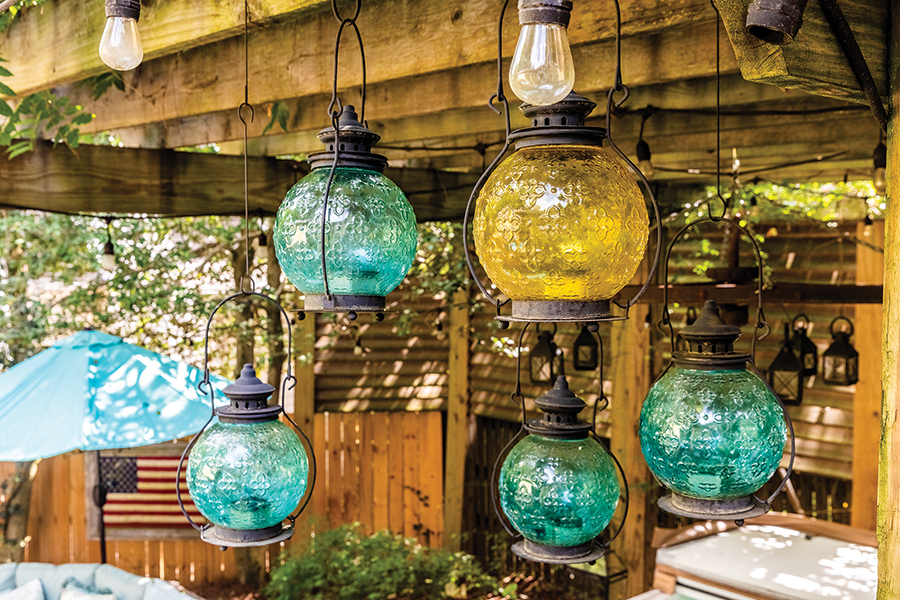
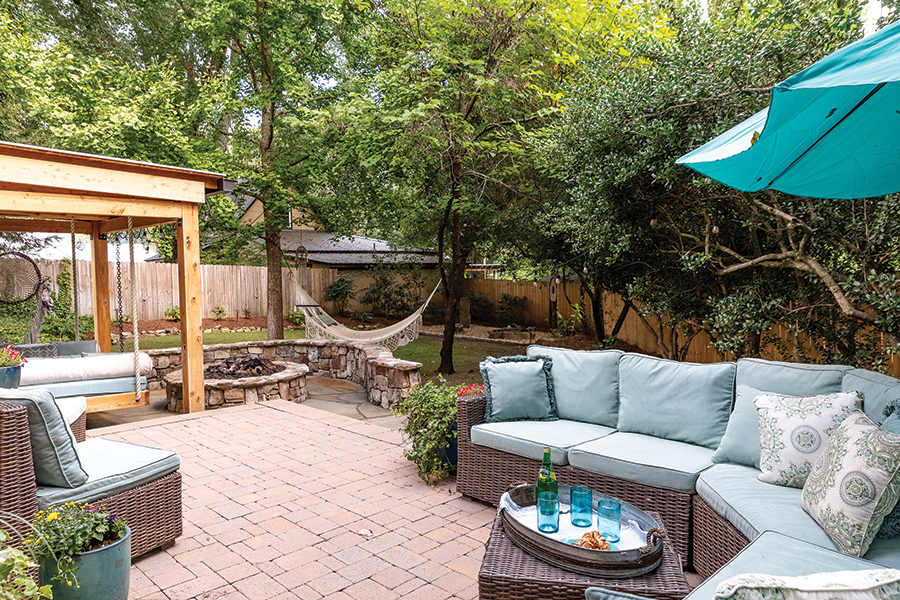
“I love a big bathtub,” which wasn’t possible given the long, narrow bathroom that had been added onto her front-facing bedroom. Instead, she installed a hot tub in the fenced backyard. Next, multi-level decks with a trellis-covered dining table, sectional sofas, a swinging bed, gardens with a bubbling fountain shaded by an ancient pin oak, and statue of Kwan Yin, Buddhist goddess of peace and harmony.

“It’s just heaven out here,” Virginia says of her al fresco year-round living space.


No single word, not even eclectic, describes the interior, with a floorplan that appears to have been rearranged and enlarged, helter-skelter, by previous owners. Opposite the small sitting room is a master bedroom, filled almost entirely by a king-sized bed with elaborate headboard, that looks out onto the front porch. “So I could see how late the kids came home,” Gallagher says. A crystal mini-chandelier hangs over the bed. Her dresser is painted metallic silver, the walls yet another shade of green.

Floors are original pine, stained dark, partially covered by colorful crewel rugs. Throughout, Virginia strives for a feminine presence, something missing in her previous homes.

Beyond the sitting room, walls appear to have been rearranged to create a dining room, large for a cottage of its era. The table, made of distressed wood slats, is surrounded by a variety of seating: bench, upholstered and other chairs. Over it hangs a light fixture built from the top third of an enormous glass water jug hanging by cords emerging from the narrow neck. A contemporary glass china cupboard displays pottery in Virginia’s favorite turquoise. What’s the good of having pretty things if you can’t see them, she explains.

An elongated kitchen attached by a previous owner appears to stretch into tree branches visible through windows on three sides. Even kitchen colors — brown and an earthy green — suggest bark, moss and leaves, rather than white-and-granite glamour. Instead of an island, a long worktable down the center holds glass jars filled with beans and grains and seasonings common to a healthy lifestyle cuisine.

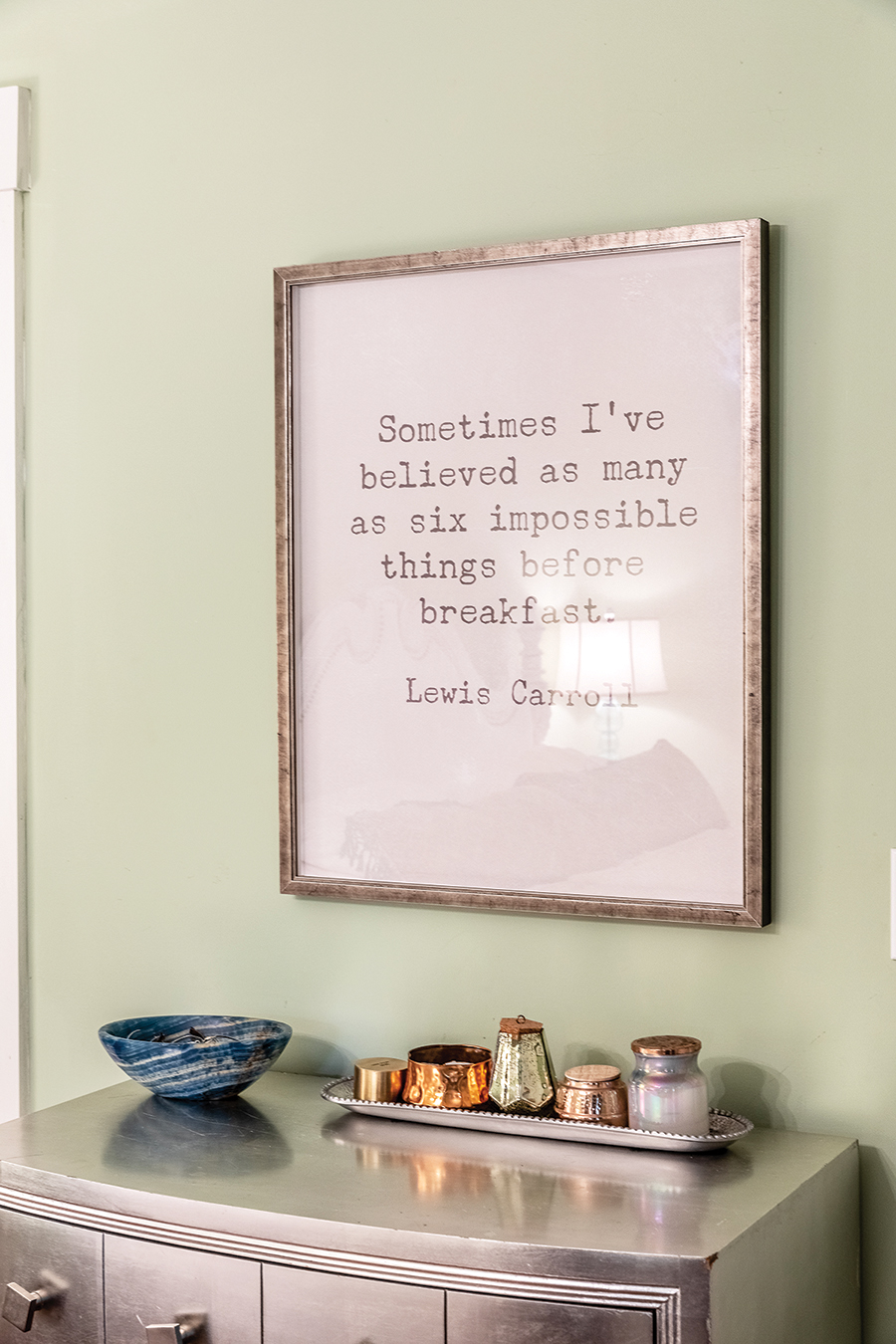
Art is what you make of it. Or what it makes of you. For Virginia, this means framed quotations from favorite books. An enlarged photograph taken in Alaska of horses frolicking through the snow, printed on canvas to resemble a painting, is vaguely mystical — a gift from a friend. A barn quilt pattern hangs outside, in Kevin’s memory. Family members have tattoos in the same design.

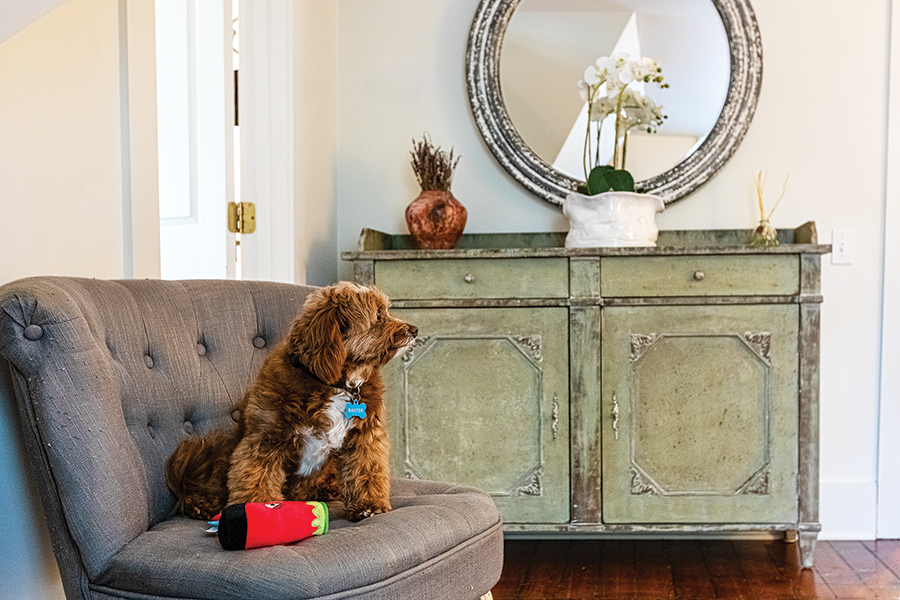
Completing the scene are a friendly Toto-dog named Baxter and Luna, a mostly blind marmalade cat.

The template for this serene environment is not completely rooted in yoga. Gallagher grew up in her grandparents’ house in Hamlet, where her grandfather owned the local Coca-Cola plant. “I identify with my grandmother, and their home,” she says. “It had lots of nooks and crannies. I was allowed to touch things. The way it felt was magical.

“I was loved in that home.”

These experiences, past and present, influence her attitudes as well as her living space. “What I learned about yoga is that it helps you feel more comfortable in your body. And home — more comfortable than refined — is a practice of yoga.”  PS

Eternally Fall

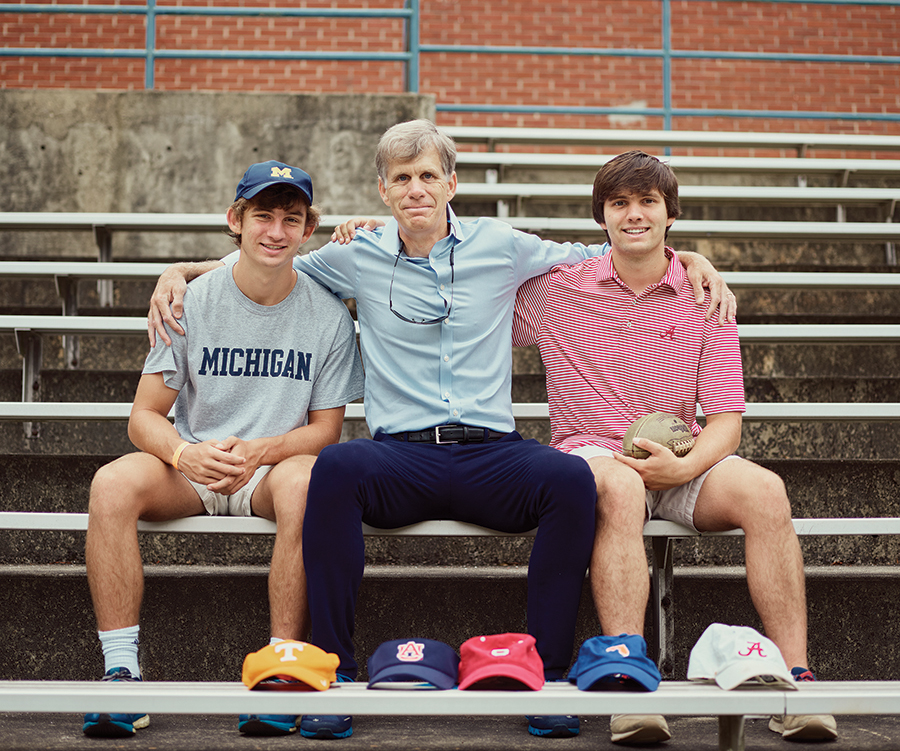
A football odyssey for a father and his sons

By Charles Marshall     Photographs by Joshua Stedman

Growing

up in North Carolina, my life unfolded along a well-worn path of I-85 between Atlanta and Washington, D.C. In the sporting world, this is ACC territory, with the possible exception of exit 106, the gateway to Athens. For the most part, the college towns of the SEC and the Big 10 remained remote outposts in lands beyond the exits I knew so well. Some had strange sounding names like Tuscaloosa, or stadiums menacingly referred to as The Swamp.

One Saturday in November 2009, the sights and sounds of Georgia battling Auburn on TV were juxtaposed with my elementary school-age kids — Foster was 7 and Drake was 5 — slamming doors, tearing apart train tracks and bouncing balls. I thought about the decade I had before the oldest would leave for college, and I began recalling the allure of the old-school car trips of my youth. AM radio, hotel pools, breakfast buffets, souvenir T-shirts to show off back at school, and the long unbroken spells of time where, if you’re lucky, kids begin to talk to you about things that really mattered.

Once I began mapping routes to the meccas of SEC and Big 10 football, I realized most were less than a full day’s drive away. If I could grab an unsweetened tea by 6 a.m., my boys and I could transport ourselves into the scenes I’d spent years watching from my den. So, we would go. Ten years, 10 stadiums, 10 games. The only rule was that we had to drive.

Year One: Alabama 23, Ole Miss 10

I met my friend Britton Stutts at a summer camp near Brevard, North Carolina, when we were both 14. He was from Birmingham, Alabama, and I was from Charlotte, North Carolina. We kept in touch over the years. We were even in each other’s weddings. He went to college at the University of Alabama. I went to UNC-Chapel Hill. Britton was the obvious person to jump-start our tour.

His parents decked out my boys in ’Bama gear, and we rode to Tuscaloosa together for the 9 p.m. kickoff. After a buffet meal at a fraternity that had the feel of being at someone else’s family reunion, we strolled through the campus and its manicured quads on a clear, cool October evening before settling into our seats in Bryant-Denny Stadium. Myself, Foster, Drake and 100,000 other people. Only two of our seats were together, so the three of us crammed into them. After the national anthem, during the fevered anticipation of kickoff, I knelt in front of my boys and shouted to them over the crowd that we were going to do this every year for the next 10 years. They stared at me and nodded.

Alabama’s Greg McElroy threw two touchdown passes. The games were on.

Year Two: Florida 33, Tennessee 23

Foster loved Tim Tebow, so Florida was an easy next choice. Without a host family like we had at Alabama, we would be making it up as we went along. Because the night before a game, hotels in college towns cost more than a hip replacement, we stayed in Jacksonville and drove into Gainesville in the morning — without GPS or a clue. We paid $30 to park in the front yard of an older woman’s single-story white house. She took our money seated in a lawn chair and, in an act of kindness, let us use the bathroom inside her home.

We went off hunting and pecking our way through Florida’s sprawling campus, embarking on what would become a long-suffering tradition of watching Drake agonize over what fan gear he would purchase. After sorting through racks and racks of gear at several stores, an orange T-shirt from a stadium vendor that simply said “Gators” made his day.

It was mid-September, hot and muggy for the late afternoon, nationally televised game. We watched the sun go down in the fourth quarter over the corner of the orange-colored stadium that said “WELCOME TO THE SWAMP,” and suddenly being there in person seemed surreal.

Year Three: Georgia 48, Vanderbilt 3

On a spin through Atlanta the night before the game, we stopped at The Varsity, a legendary hot dog joint, and the World of Coke, the museum of the global cola icon, and went to the Midtown Music Festival, where we saw the Avett Brothers and Foo Fighters with 50,000 other people.

Our seats for the September evening game “between the hedges” in Sanford Stadium in Athens were behind a colorful array of fraternity kids with an equally colorful vocabulary. A bigger impression was the cheering for Todd Gurley and Keith Marshall, two North Carolina high school standouts who played running back for Georgia. Foster wondered aloud why UNC didn’t land them but the reality began to sink in — in 2012, this was a bigger stage. Vanderbilt was supposed to make the game competitive, but they failed miserably.

We left at halftime only to find the car’s battery dead — the biggest disaster of our vagabond decade. It took a good two hours to solve the issue as my boys watched me alternate between problem-solving, frustration and fury. Once we were on the road we drove as far as Commerce, Georgia, where we rented a hotel room and watched the end of the Florida State-Clemson game on television while an oversized roach crawled across the ceiling.

Year Four: Ohio State 31, Wisconsin 24

On the way into Columbus we listened to a local sports talk radio station deconstructing in mouth-watering detail how to eat a particular corned beef and pastrami sandwich from a particular downtown deli. Sadly, it was closed by the time we rolled into town, and we had to settle for chicken wings and cornhole in a brewpub across the street from our hotel.

In the SEC, tailgaters often bring elaborate spreads of pre-cooked food and avoid firing up charcoal on 100-degree days in a crowded asphalt parking lot — a rookie move that once betrayed my ACC roots. The Big Ten, on the other hand, is where meat goes to get burned. As we walked through the Ohio State campus on a glorious Saturday morning, the tailgaters were already busy. One was serving ribs and brats hot off the grill by 9 a.m. The heavenly odor was everywhere, in parking lots, in grass lots, and floating in the spaces in between. The tailgating particularly piqued the interest of my son, Foster, leading to our own charcoal-cooking experiments at home testing an array of homemade sauces and rubs on friends and neighbors.

Urban Meyer was in his second season coaching Ohio State and had yet to lose a game. Among the 105,000 or so fans in “the Horseshoe” for the 8 p.m. kickoff was a guy seated right behind us who went on and on about how Meyer couldn’t hold a candle to Jim Tressell as a coach because Meyer “hadn’t scheduled anybody any good.” It was a reminder of the impossibility of coaching college football. You’re undefeated and you’re still a bum.

Year Five: Oklahoma 45, West Virginia 33

“But have you seen a game in Morgantown?”

I’d heard about the beer, the moonshine and the burning couches. So why not take your kids to see what the fuss is all about? If Morgantown seemed deserted before the 7:30 p.m. game, it was only because everyone was in the parking lot of Mountaineer Stadium. We found a tailgate of a friend of a friend of a friend — who wasn’t even there — and I was immediately offered beer and moonshine out of a Mason jar. We were surrounded by friendly strangers sipping from similar jars and spewing profanities about Pitt. “Dad,” one of my sons said to me quietly, “they aren’t even playing Pitt today.”

The game was as boisterous and fun as I’d imagined. Our seats were on the end of an aisle across from the Oklahoma band. The band would play Boomer Sooner right up to the snap of the ball, but the West Virginia fans angrily accused the band director of playing past the snap. There was a fight brewing and the police were summoned but, overall, the atmosphere was exhilarating — and the fans were warm and hospitable toward my boys throughout the game.

Oklahoma was ranked second in the country, and the expectations for an upset were off the rails. On the way into town, the local sports radio station was inviting callers to predict the outcome of the game by imagining what the headline in the newspaper would be the next day. The forecasts were creative, funny, irreverent, and wrong. West Virginia put up tons of points, but Oklahoma put up more.

On the way out of town, my boys announced that since we had made it through a West Virginia game “we could probably handle LSU.”

Year Six: Arkansas 24, Tennessee 20

My sons and I thought we were geniuses for picking this game. Both teams had new coaches and were supposedly “on the rise,” and this was to be the year for each. Their favorable schedules made it seem possible both could come into this early October game unbeaten, making an ESPN Game Day visit to Knoxville feasible. But here was Tennessee at 2-2 and Arkansas at 1-3. It rained and rained and rained but we marched ahead — to Calhoun’s On the River for amazing ribs, chicken, potatoes and dessert; past the Vol Navy; through campus and “accidentally” through the off-limits practice facilities. (They thought we were boosters on an exclusive tour.) We even stood outside to watch the Vol Walk in a downpour. So, it became an important game anyway.

The rain let up for the 7 p.m. kickoff and the teams fought until the last set of downs. The visitor wins.
Year Seven: Penn State 24, Ohio State 21

We invited my father as well as my brother and his two boys to join us. We toured the hallowed grounds of Gettysburg National Military Park the day before the game. Three generations of our family learned about the heroism of the 20th Maine on Little Round Top, walked in the footsteps of Pickett’s Charge, and solemnly listened as the tour guide detailed the mind-blowing carnage on both sides.

The drive from Gettysburg to State College is a seat-burner. After the farms come long stretches of forest, mountains and hairpin turns. Beaver Stadium is a mammoth structure even when judged against the other massive stadiums we had already visited. It reminds you of a giant erector set. We got swept up in the pre-game “whiteout” hysteria where the entire stadium dresses in white. We purchased some last-minute gear and thought it smart to settle into our seats an hour early for the late October game. Wrong. It was in the low 40s with 20-mile-per-hour winds and rain destined to turn to sleet. We were frigid.

The game, though, was electric. It proved to be a breakout for both quarterback Trace McSorely and running back Saquon Barkley. By halftime we had been in our seats almost three hours, the sleet was coming down hard, and the hot chocolate had run out. When I suggested we consider watching the second half from the hotel, my dad was willing to brave the elements but my son, Drake, dressed only in a sweatshirt, eagerly led the way out. Ninety minutes later we were in a temperature-controlled hotel room in Altoona watching Penn State pull off the upset of the year.

As the fans stormed the field, my son — the same one who had blazed our trail out — was in full denial, blaming the rest of us for leaving and promising he would have stormed the field, too.

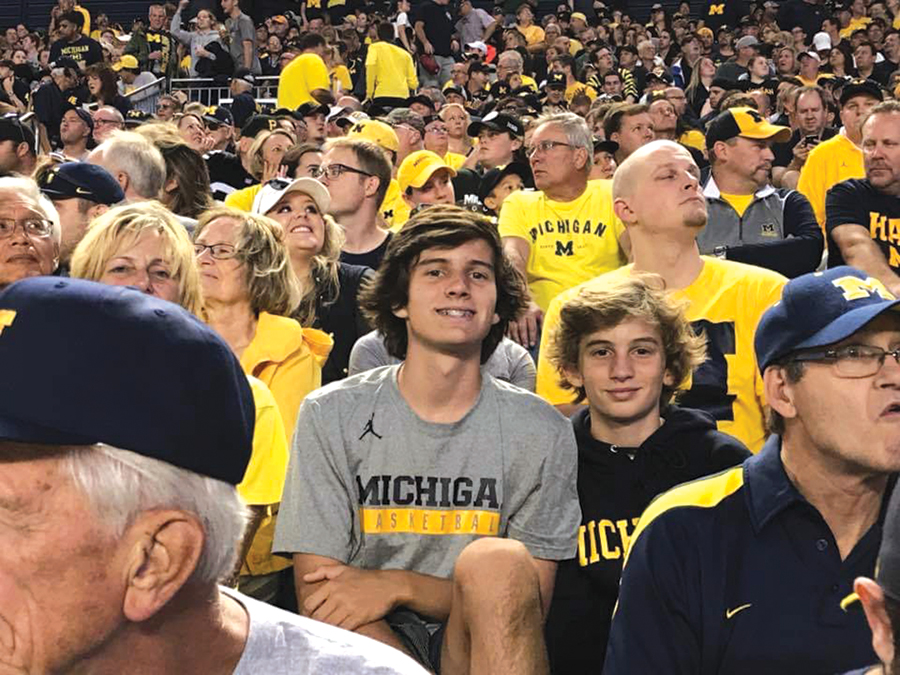
Year Eight: Michigan State 14, Michigan 10

It’s a long way to Ann Arbor, but during the last hour of our drive we learned the Pistons were playing a preseason game against Atlanta in Detroit. While my boys bought tickets online, I navigated the downtown parking. Within minutes we were inside the arena enjoying footlong hot dogs, nachos and some impromptu NBA basketball.

On campus the next day, we stumbled onto a midday fraternity party in full swing. Boozy undergrads were taking a sledgehammer to an old car that was painted in Spartan colors and logos. When a drunken Michigan State fan tried to intervene and stop the destruction, a fight broke out and spilled into the street. In the midst of this early afternoon chaos and tomfoolery, Drake observed, “I thought it was hard to get into Michigan.” I couldn’t think of an answer that would have made any sense in that moment.

The Big House was everything that has been said about it. That evening 100,000 fans sat in a single bowl with the intimate feel of a giant high school football game. The game quickly retreated into a defensive struggle that ended in an unseasonably warm October downpour during the fourth quarter.

The drive home to Raleigh was long and somewhere in southwest Virginia, we stopped at a Shoney’s breakfast bar. The waitress brought me a note from an anonymous customer — who had already left — thanking me for spending time with my boys and paying for our breakfasts. My boys were awed by the charity, humility and anonymity of the act. It spoke more to them than a thousand words from me.

Year Nine: LSU 22, Auburn 21

This was our penultimate year and Foster was a junior in high school, so we were touring colleges. My wife, Fraley, and our daughter, Sadler, wanted to come along for this one. We fled Hurricane Florence in North Carolina and arrived in Auburn for what my wife still refers to as the hottest day she’s ever endured. September. Alabama. 93 degrees. A 3:30 p.m. kickoff.

By this point, my sons were tailgate aficionados. Unimpressed by the companies that do everything for you, they gave high marks to the families slogging their own gear and setting up their own space. This was a game played before Joe Burrow was Joe Burrow, but I vividly remember him throwing the ball downfield several times on LSU’s first possession. My sons had fantastic lower bowl seats while my wife and daughter and I were five rows from the top of the second level. The young alumnus next to my wife celebrated each successful play with a swallow of bourbon and repeatedly offered her a swig — which she declined. Eventually he had to be escorted out by friends. A few minutes after that LSU escorted Auburn out with a walk-off field goal to win.

As night began to fall, we passed a woman packing her family’s tailgating gear into an SUV by herself. Her crew had undoubtedly spent all week planning the food, the drinks and the decorations, cooked all day and night on Friday and got up early to pack the car, only to spend the entire day setting up, hosting, cleaning, breaking down, and now loading up for the drive home. Maybe those companies aren’t so bad after all.
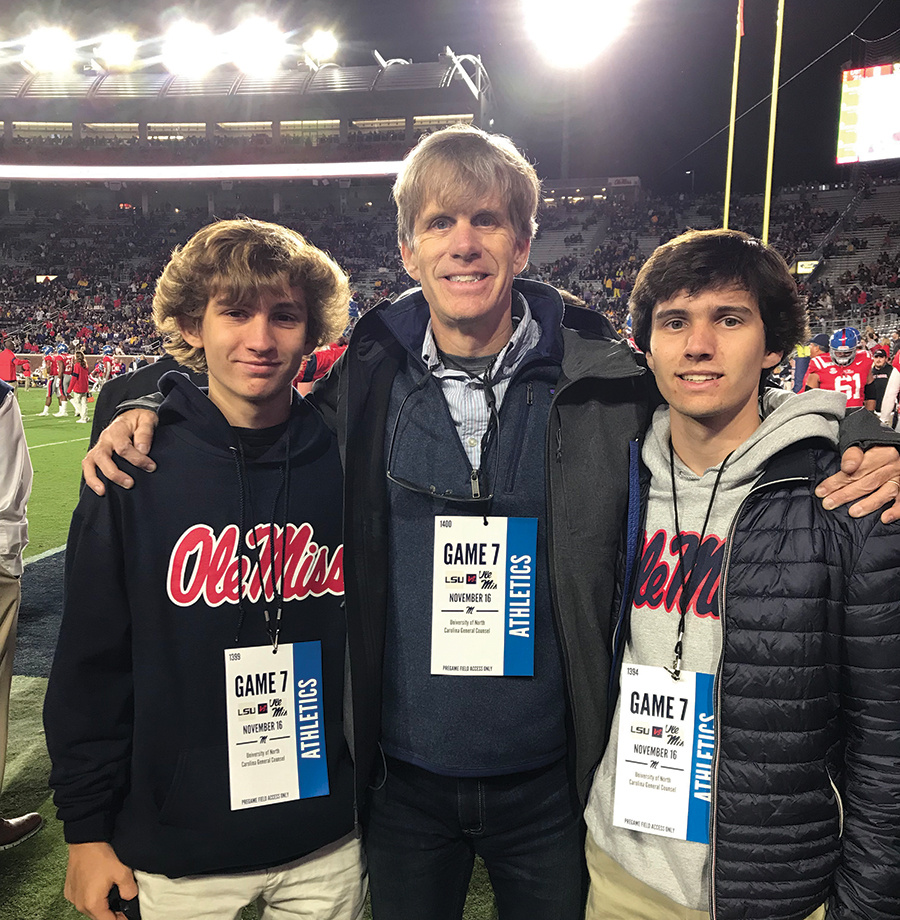
Year Ten: LSU 58, Ole Miss 37

Foster is a high school senior now, so this was his year to pick the game. He chose Oxford, Mississippi, and we invited two of his closest friends plus their dads and younger brothers. We had Friday lunch on the Square, caught a basketball game on campus Friday night, and walked through The Grove — the tailgate area in the center of campus — where SEC Game Day was setting up shop.

The next morning the dads fixed breakfast and sent the boys on foot to see Game Day live while we watched it on television. By lunch The Grove was wall-to-wall tents decked out with rugs, televisions, and button-down shirts with blazers. We knew some North Carolina friends hosting a large tailgate with their Memphis relatives and used that as a sort of headquarters.

Around 4 p.m., I made up an excuse to march my boys to the stadium three hours early. When we got there, we were greeted with pre-game access lanyards and made our way down to the field as guests. We walked around both sidelines taking in the sights and sounds of warm-ups as the atmosphere began to build. Recruits were ushered onto the field, and then the players began coming out in full game gear. 

As the sun began to set, I tried not to ruin the moment with a mistimed life lesson. When the game started, we were back up in our seats. At one point Drake went to the restroom, still wearing his field pass. A fan mistook him for a recruit, and he couldn’t have been happier to tell the rest of us. When I suggested that it would be hard to mistake an undersized high-school sophomore soccer player for an SEC football recruit, he clarified that the fan “thought I was a kicker.” This was a game when Joe Burrow had become Joe Burrow, and it was like watching an NFL team.

The next day we began a 13-hour drive with the best doughnuts I’ve ever eaten on one of the best mornings I’ve ever had.

Before

we left home for that final game, I asked my boys if they remembered my commitment to them in Bryant-Denny Stadium that we would go to a different game every year for 10 straight years. They both remembered thinking that I was serious but that I was unlikely to make good on my plan. It was a fair point — I have always been stronger on the idea side and weaker on the execution.

That winter, my wife and I returned to Tuscaloosa with Foster for a final college visit. It was sunny, in the mid-60s, and we saw Alabama’s basketball team beat a ranked LSU-team in the final minutes. After a lively dinner at Taco Mama’s and another evening stroll through the campus, Alabama was his final answer.

I wondered whether these annual adventures shaped his college search more than I imagined or intended. Did they make big schools seem less intimidating? Was there something about the first trip to Alabama that held a special foothold in his memory? My son confesses that he doesn’t really know, and in the end, it doesn’t really matter. What matters are the memories that we made together — late nights in the tiny hotel pools, the glories of a breakfast bar, listening to a high school football game on the radio, and the long, unbroken stretches of time where, when I was lucky, my boys began to talk about things that really mattered.  PS

Charles Marshall is a lawyer who lived in Southern Pines with his family during the pandemic so that his son and daughter could attend The O’Neal School. He still has the sand in his shoes.

Pop Culture Doppelgängers

Produced by Brady Gallagher     Photographs by William McDermott

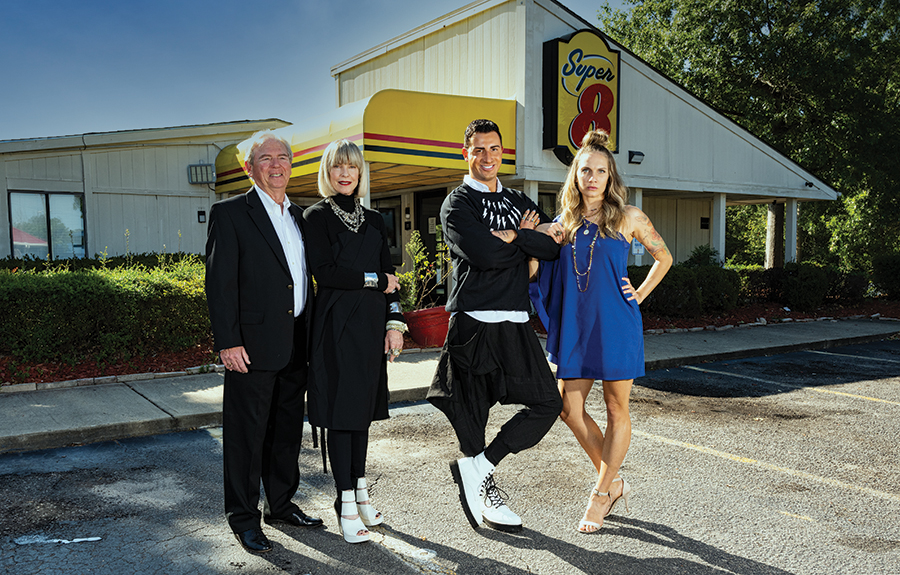
Schitt’s Creek

Mark Hawkins as Johnny Rose

Mark is a master craftsman who has been designing fine jewelry and restoring your most cherished pieces in his Southern Pines store since 1978.

Eve Avery as Moira Rose

Eve opened her eponymously named boutique of meticulously chosen women’s clothing and accessories in Southern Pines in 2001.

Julian Hagner as David Rose

Julian gracefully waltzed in from Germany to provide a European touch at the Karma Spa Lounge and Beauty Bar in Southern Pines.
Daena Rae as Alexis Rose

Daena teamed up with Abi Ray in 2019 to create Legacy Kids Magazine, a publication for, and by, military kids.

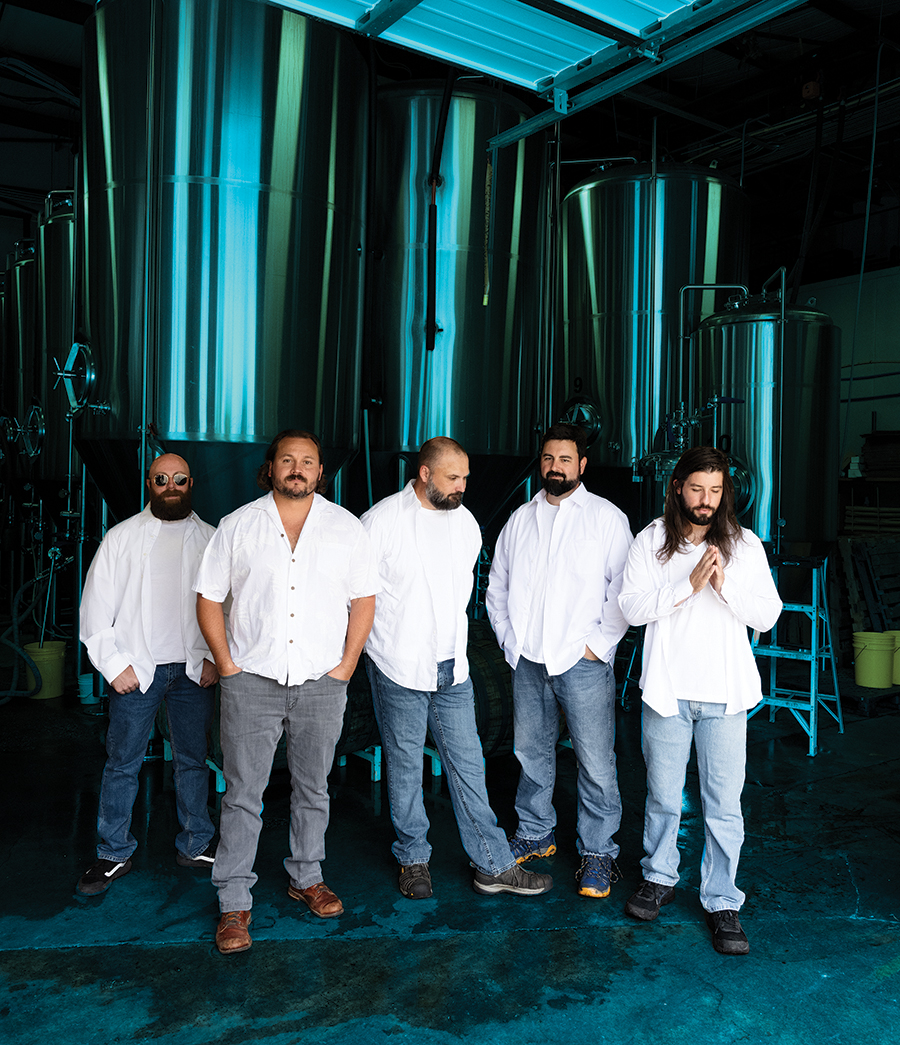
Backstreet Boys

From a new downtown location to some killer beer slushies, Southern Pines Brewing Company has got you covered. While the front-of-the-house staff fills the glasses, it’s the hard work of the boys in the back who keep the liquid flowing all across North Carolina. You can view these larger than life characters through the glass as they work. If you still feel like two worlds apart, you can catch the guys at Southern Pines Brewing on Pennsylvania enjoying a cold one. Stop and say hey to them. They’d want it that way.

Tupac

Chad Norris is the master mixologist for the Leadmine Whiskey Bar and Kitchen in Southern Pines.

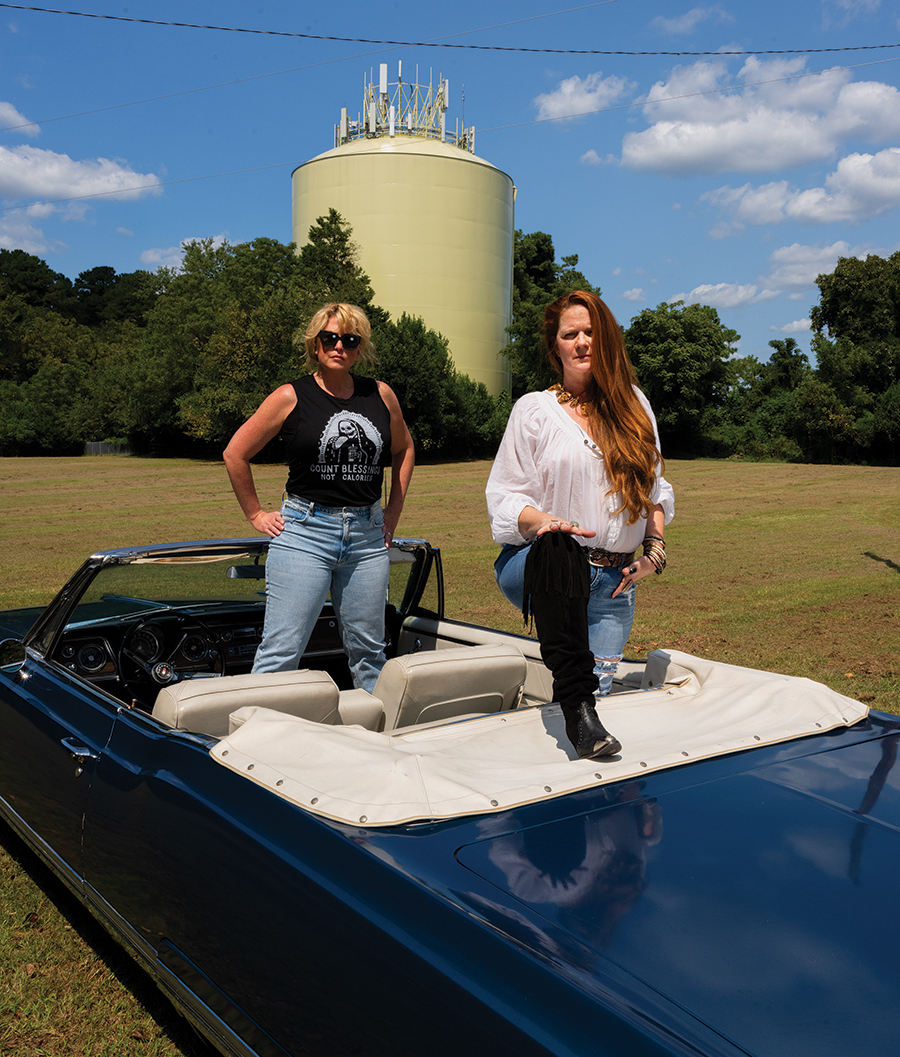
Thelma and Louise

Sundi McLaughlin as Thelma

Sundi will bring a smile to your face when you step inside Mockingbird on Broad, her eclectic shop filled with furniture, home accessories, jewelry and more in Southern Pines.

Virginia Gallagher as Louise

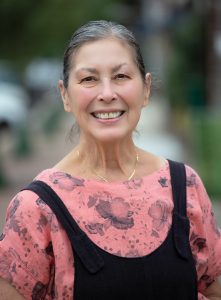
Whether it’s meditation, travel or hanging out with crystals, Virginia, founder of Hot Asana Yoga Studio in Southern Pines, can make magic happen for you.

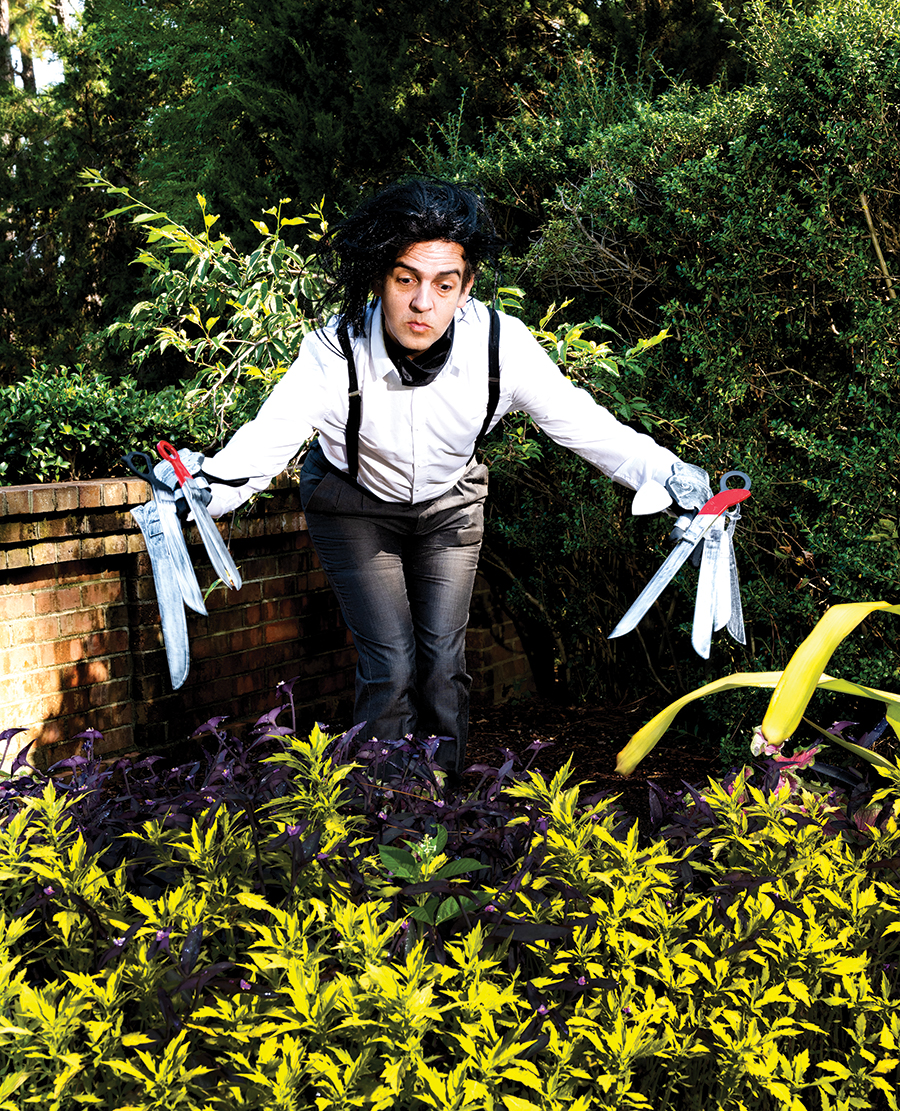
Edward Scissorhands

Baxter Clement  is owner of Casino Guitars in Southern Pines, a world-renowned destination for aficionados of stringed instruments.

“Sunrise”

Raising the roof and bringing down the house

By Bland Simpson     Photograph by Tim Sayer

Stephen Smith — teacher, journalist, poet, and the witty and imaginative inventor of the Bushnell Hamp tales — has over many years graciously kept me involved with Moore County, and for that I owe him quite a lot. Though the doors of the old Pine Crest Inn at Pinehurst or those of the Sunrise Theater across from the vintage Seaboard Coast Line Railroad depot in Southern Pines are each only an hour and fifteen minutes’ drive from our Clover Garden home, what a world of difference that short drive always made, as we drifted from the mixed Piedmont oak and loblolly pine and hickory woods to the rolling sandhills and longleaf pine, turkey oak, and blackjack.

An invitation came to me from Stephen and Audrey Moriarty, the fine, elegant Pinehurst archivist and author, to join in and do a short set for a “Raise the Roof” fundraiser at the movie house, the Sunrise, which the community was all about repairing and returning to its status as a small legitimate theatre and concert venue. The multifaceted evening, a musical revue, also included the first-tier Moore County musicians Craig Fuller (songwriter and lead singer of Pure Prairie League’s lovely ballad “Amie,” which he sang this night backed by Fayetteville’s Bill Joyner and Danny Young) and Jimmy Jones (coauthor of “Handyman” and lead singer of “Good Timin’”) — the place was packed, and Jimmy sat on a high stool downstage to lay out extended versions of his two major hits, introducing “Handyman” with a tale.

Seems Jimmy had once hit a rough patch in his career and, against his common sense and better judgment, he called upon a New York City loan shark he knew, and he was about to take out an extortionary loan that he knew would be bound to hurt him. But just before he signed in blood and took the cash, Jimmy got an urgent call from a close friend saying, “Jimmy, don’t do it — James Taylor is just about to release his version of ‘Handyman’! You won’t need that loan anymore!” The crowd, knowing both versions of the song, roared with laughter, and Jimmy then said, “I stood up, said ‘Thank you so very much,’ and backed out of that loan shark’s office just as fast as I could!”

And there and then in the Sunrise, Jimmy Jones, still laughing at his own tale, lit into “Handyman” with an unmitigated joy, while a racially integrated cadre of senior women in green and red sateen hot pants, a dancing group from a nearby Moore County fitness parlor, poured forth from the wings and, surrounding the R&B hero, kicked, shuffled, and ball-changed for him from start to finish, as we all sang with him: “I fix broken hearts — I’m your handyman!”

If joy could be bottled, jugged, or jarred, the contents would sound and feel and even taste something very like what all was present in this little old Southern Pines theatre that moment, that night. Like one of Faulkner’s characters, I felt both humble and proud to be a part of it, or even just to see and hear it, too.  PS

From North Carolina: Land of Water, Land of Sky by Bland Simpson, photography by Ann Cary Simpson, Scott Taylor, and Tom Earnhardt. Copyright 2021 by Bland Simpson. Used by permission of the publisher, www.uncpress.org.

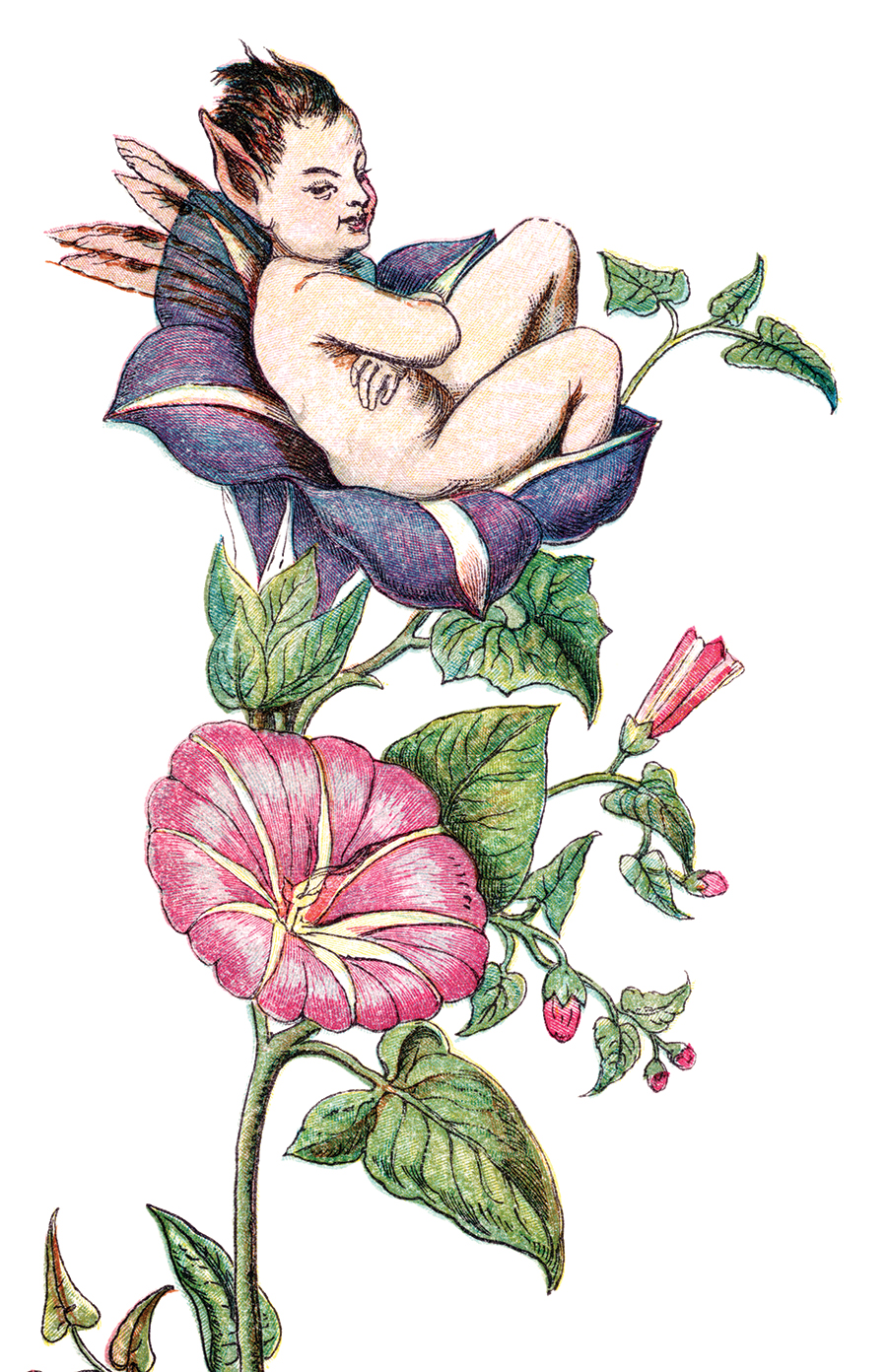
Fairy Lands of North Carolina

Those with “the Sight” claim there are wee folk among us. Do you believe?

By John Hood     Illustration by Harry Blair

That rock in the river was a big one. Big enough to sit on. That’s what the woman did, in fact, while her husband spent the afternoon fishing upstream. She waded out to the rock, found a comfortable seat, and took out a book to read. What happened next was like something out of a book — but not the one she was reading.

Hearing footsteps and voices, the woman glanced up and saw two boys cavorting along a trail, their distracted father trudging along behind. As the boys approached the water’s edge, something else entered her field of vision. “It started coming up the river,” she later recalled.

What was “it”? A “pale-skinned, water-logged-looking” creature, she said, “with black hair and sharp, serrated teeth showing in a smile.” Paying no attention to the woman perched on the rock, it “focused on the boys” and moved rapidly through the water toward them.

She wasn’t the only one who saw it. The boys did, too. They picked up sticks and pointed them at the mysterious swimmer. The woman never found out if their makeshift weapons would have done any good. Although apparently unable to see the creature that was now just a few feet away from his boys, the father nevertheless decided they were playing too close to the water and ushered them back to the trail.

That the boys were briefly in peril, though, the woman never doubted. “It watched them move up the trail away with a creepy look on its face,” she said, “and then moved on upriver out of sight.”

Maybe you think you know what was really in that river. A bullfrog. A bottom-feeder. A bumpy log converted into something sinister by an overactive imagination. But the woman in question is convinced she saw a fairy. Just a few years ago. Right here in North Carolina.

It’s not our state’s first fairy sighting. It won’t be the last. Oh, it’s easy to scoff at those who claim to see wee folk wading in rivers or slinking through forests or dancing on hilltops. How childish. How backward. How unscientific. Well, sure. But I bet you know someone who still carries a lucky charm or wears a lucky sweatshirt whenever the Wolfpack play the Tar Heels. I bet you know someone who watches Ancient Aliens or Ghost Hunters, hits up psychics for advice or thinks Bigfoot just might really be out there somewhere, camera-shy but furtively flattered.

By the way, what’s your sign?

Generations ago, all the smart people thought universal schooling would disabuse the masses of such fanciful superstitions. They thought the relentless march of science would muscle old faiths and folk traditions aside — confining them, converting them into historical curiosities. “Rationalization and intellectualization,” the sociologist Max Weber famously predicted a century ago, would bring “the disenchantment of the world.”

Then a great many of these same smart people went out and got their palms read. Or sat in seances. Just for the experience, you know.

The magical, the paranormal, the supernatural are not so easily banished. According to a recent Harris Poll, 42 percent of us believe in ghosts, 36 percent in UFOs, 29 percent in astrology and 26 percent in witches. Fairies — by which I mean the broad swath of legendary little people, not just tiny Tinker Bells with translucent wings — rarely get included in American polls. But surveys in other countries find significant minorities still believe in fairies. In some places, such as Iceland, believers form a majority.

Among the believers is the woman I mentioned earlier. I wish I could tell you more about her and the fairy encounter she claimed to witness from that big rock. Unfortunately, I can’t even tell you her name. Anonymity was the promise made by folklorist Simon Young in 2014 when he began soliciting first-person accounts of fairy sightings. Published four years later as The Fairy Census, Young’s research spans hundreds of stories from around the world — including several from our state.

I can tell you the woman says it wasn’t her first sighting. “I have seen them since childhood, different ones,” she told Young. “My granny from Ireland says I have ‘the Sight’ like her.” The woman describes fairies as “beings from another world” that can have good or bad intentions. “I was always taught to never talk to them or let them know I see them.”

I can also say that, if you believe her story and hope to see your own fairy one day, there are plenty of places in our state worth exploring. While researching my new historical-fantasy novel Mountain Folk, largely set in North Carolina during the American Revolution, I learned a great deal about the fairy lore of our ancestors. Some of it developed locally, tied to specific Carolina landmarks. Other beliefs were brought here from afar — from the British Isles, from Northern Europe and the Mediterranean world, from West Africa. It turns out that almost all cultures have stories of wee folk. Accounts vary, of course, but a surprising number of them converge in key details: creatures two to three feet tall, invisible to most if they wish to be, infused with magic, attuned with nature, prone to pranks but also willing to trade favors for something they covet.

Based on the woman’s description, for example, you might find her rocky seat in some Piedmont river or mountain stream. The original inhabitants of those parts of North Carolina often told tales of such creatures. Among the Cherokee, for example, they were called the yunwi amayine hi, or “water dwellers,” and had the power to boost fish catches and promote healing.

In one story, a water dweller disguises herself as human to attend a dance. Smitten by her charms, a Cherokee man follows her to a riverbank and professes his love. He must be persuasive, for she agrees to become his wife. Eyes sparkling, she dives in the river and beckons him to follow. “It is really only a road,” she says. He takes a deep breath and leaps. Finding a wondrous world hidden beneath the river, he lives there happily as her husband. Later, when he leaves to visit his parents, they turn out to be long since dead. Generations of Cherokee live and die during the few years he lives among the water-dwellers.

Alternatively, maybe what our eyewitness saw was not a diminutive humanoid from native folklore but something scalier. The place where the Haw and Deep rivers converge in Chatham County to form the Cape Fear is nicknamed Mermaid Point. Just before the Revolutionary War, a man named Ambrose Ramsey ran a tavern nearby. When the locals left Ramsey’s tavern late at night to stumble home, they’d pass a sandbar. On numerous occasions, they spotted small figures luxuriating there in the moonlight. Figures with the heads, arms and torsos of beautiful women and the lateral lines and shiny tails of a fish. If the patrons were quiet and kept to the shadows, they could watch the mermaids laugh, play, sing and comb their long hair. But if the men tried to speak to them, the fairies would disappear into the water.

Rivers are hardly North Carolina’s only sites for fairy lore. Another folk from Cherokee legend, the Nunnehi, are associated with such locations as Pilot Mountain (both the famous monadnock in Surry County and a lesser-known peak near Hendersonville) and the modern town of Franklin, where the Nunnehi were said to have helped defeat a Creek invasion and, much later, a raid by Union soldiers. On the other side of the state, in and around the Great Dismal Swamp, the mythology of Iroquois and Algonquin speakers mingled with European and African-American legends to produce a rich folklore of eerie lights, dark shapes and magical creatures.

Moreover, as the Fairy Census reminds us, our sightings aren’t limited to old tales preserved in old books. They still happen. A 30-something woman reported “staring at the foot of the bed at the light coming in through a large window when I saw a fairy suddenly appear on one side of the room and fly across the bed toward the window.” She described the creature as brown-haired and gaunt, about three-feet tall with sharp features “not very pleasant to look at.”

The woman wasn’t alone. But her husband, lying next to her, never saw the fairy. “I think it is strange that I had this experience in my house in suburban North Carolina, of all places,” she said.

Another North Carolinian described an encounter she had in her youth with a fairy “about two to three feet tall, dressed entirely in red, with a solid red face, tiny white horns on the top of his head, and with a red, pointed tail.” He was standing next to the stump of a tree that had been his home until it was felled during the construction of the girl’s house. She ran to get her parents. But they couldn’t see it.

The more you study both folklore and modern-day sightings, the more you come to appreciate the commonalities. I decided to include several in Mountain Folk, such as the extreme time difference between fairy realms and the human world, the link between fairies and nature and the idea that only those rare humans possessing “the Sight” can pierce fairy disguises.

Do such commonalities suggest fairy traditions aren’t pristine, that they develop over time through cross-cultural exchange? Or that people claiming to see fairies are just mashing up distant memories of bedtime stories with drowsy daydreams and optical illusions? Could be.

There are many explanations for fairy belief. For some, it’s reassuring to believe that good and bad events aren’t just random. That powerful forces are at work, magical forces to be tapped or propitiated. For others, fairy belief is about rediscovering a sense of wonder — about reenchanting the world, as Weber might say, instead of settling for a cold, clockwork version.

That’s how some of your fellow North Carolinians feel, anyway. Whether out exploring their state’s natural beauty or just puttering around the neighborhood, they keep their minds open along with their eyes. They suspend their disbelief. They dare to hope that something utterly fantastic will happen. That something utterly fantastic can happen.

After all, it’s happened before. Or so they’ve heard.  PS

John Hood is a Raleigh-based writer and the author of the historical-fantasy novel Mountain Folk (Defiance Press, 2021).

Poem

Advice on Nighttime Caregiving

Know the bulk of night

will be sleepless and embrace it

with the weariest part of yourself.


Nothing but bitter tea will do,

steeped too long as you pour

another glass of water


another mouth will drink,

as you console another crying

child who values sleep


on different terms,

as you — deep in the black

hour when familiar constellations


wend into a strange topography —

walk the dog who will thank you

without language: she who eats


white clover by night,

sniffling through dark

grass sweetened with dew.


Now sleep or wake — let go

of what you hold. The untouched

tea is as cool as morning.

— Benjamin Cutler

Benjamin Cutler is the recipient of the Susan Laughter Meyers Poets Fellowship and the author of The Geese Who Might be Gods.

Almanac

October Almanac

By Ashley Wahl

October is the language of crows: playful, dark and mysterious.

On a crisp, gray morning, swirls of golden leaves dance round like Sufi mystics and a plump squirrel quietly munches seeds beneath the swinging feeder. The air feels charged — electric — and from the silver abyss, a crow caws five times, the staccato rhythm stabbing the ether like a haunting, dissonant chord. 

Caw. Caw. Caw. Caw. Caw.

In the crooked branches of a distant tree, a council of crows rattles back and forth as if casting their clicks and grumbles into an invisible cauldron. Their crude chatter grows louder and increasingly harsh, escalating until it reaches a roiling cackle.

The coven has spoken.

One by one, the black birds take wing, flashing across the sky in glorious and raucous splendor.

Below, asters spell out messages on the leaf-littered lawn. Only the crows can read them. And when they chant the words aloud — their many raspy voices one — you are equal parts delighted and disturbed.

Ca-caw! Ca-caw!

A single crow descends upon the wrought iron fence, pivots round in three slow circles, then cocks its head in silence.

The squirrel has scurried off.

A flurry of leaves jumps as if spooked by wind.

The crow tilts back its head and lets out three chilling squawks.

Trick-or-treat?

There is a bird who by his coat,

And by the hoarseness of his note,

Might be supposed a crow.

— William Cowper

Let’s Grow Together

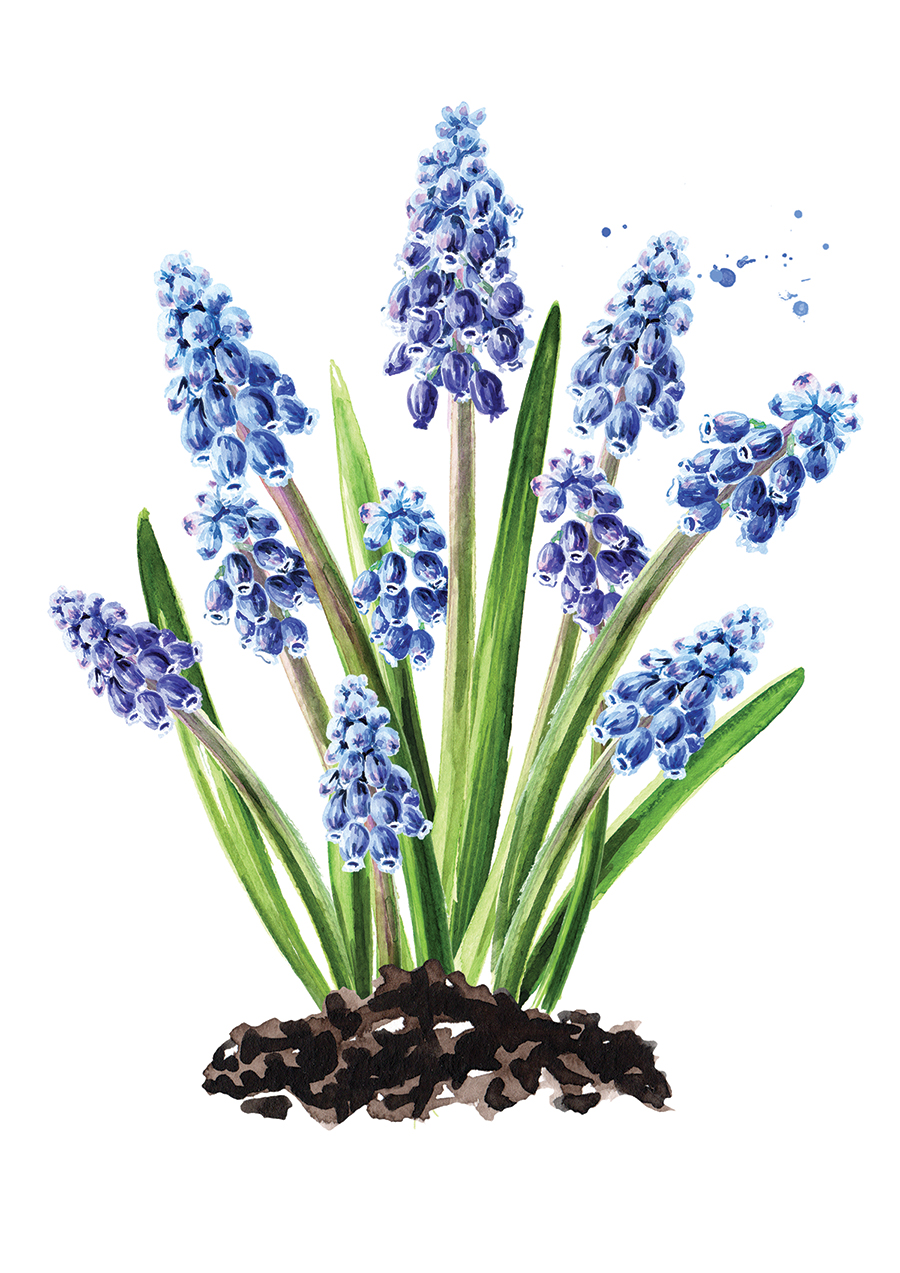
Everyone who’s tried to grow them knows: Tulips are deer candy. But if you haven’t tried planting them alongside grape hyacinths (Muscari armeniacum) — deer and rabbits don’t like them — there is hope for your spring garden yet.

The ideal companion for tulips (and daffodils, which said critters also avoid), grape hyacinths protect and complement this bright and showy bloomer. Think about it: waves of vibrant purple flush against rows of red, orange and yellow blossoms. The treasure is the rainbow itself. Come spring, the deer can admire it from afar. And you, the deer. But it’s time to plant the bulbs now.

Autumnal Brew

The full Hunter’s Moon rises on Wednesday, October 20. Autumn has settled in. As you begin to do the same, here’s an herbal tea redolent with spices that could rid you forevermore of your pumpkin-spiced neurosis.

Star Anise Tea

Ingredients:

1 cup water

1 bag green or black tea

2 pods star anise

1 stick cinnamon

Honey or agave to sweeten (optional)

To brew a cup, bring water to a boil. In a favorite mug, pour hot water over tea bag, star anise and cinnamon stick. Let steep for five minutes. Add sweetener or not. Enjoy the glory of autumn sip by sip.  PS