Strokes of Fame

Shots heard ‘round the Sandhills

By Lee Pace

Payne Stewart’s 20-foot putt to win the 1999 U.S. Open on the last stroke of the championship on Pinehurst No. 2 is certainly one of the most famous strokes in golf history, let alone the annals of this little Sandhills burgh. Films have been made, books have been written about Stewart’s masterful stroke under enormous pressure; the photo of him extending his fist in celebration just as the ball trickles into the hole with thousands of spectators packed around the green is an image for the ages.

But let’s face it: That was a putt, a whack that any 8-year-old could replicate through a lion’s mouth at Myrtle Beach. What about full shots or at least chips and pitches, strokes that require the ball to at least get airborne and some fusion of multiple moving body parts?

Golf has been played at Pinehurst since 1898 on as many as three dozen courses if you include all Moore County. Here, then, are 10 of the best shots ever made in the Sandhills.

Denny Shute’s 3-wood, 1936 — The PGA Championship was Pinehurst’s first taste of major championship golf when the match-play event came to No. 2 in November 1936. Favorites for the title like Walter Hagen, Gene Sarazen, Paul Runyan and Tommy Armour lost earlier matches, leaving Denny Shute, the 1933 British Open winner, to face Jimmy Thomson in the 36-hole championship match. Shute was 2-up over Thomson through 33 holes coming to the par-5 16th hole in the afternoon round. He nailed a 3-wood second shot on the 475-yard par 5 to five feet and was conceded the eagle putt, giving him a 3 and 2 victory.

Ben Hogan’s sand wedge, 1940 — The 28-year-old Texan was winless on the PGA Tour and seriously considering giving it up when he came to Pinehurst in March 1940 for the North and South Open, a tournament considered one of pro golf’s top events of the era. In the opening round, Hogan holed out a shot from a greenside bunker on the par-4 11th for a birdie, fueling him to a 6-under 66. He led by seven shots after 36 holes and wound up beating Sam Snead by three for his first professional victory. He went on to win consecutive tournaments in Greensboro and Asheville, and the match for a Hall of Fame career was lit. “I had finished second and third so many times I was beginning to think I was an also ran. I needed that win,” Hogan said.

Sam Snead’s 4-iron, 1941 — It was a heavyweight threesome if there ever was one — Snead, Hogan and Charlotte’s Clayton Heafner in the last group of the final round of the 1941 North and South Open on No. 2. Hogan faded early, leaving Snead and Heafner in the spotlight. “They were trailed by almost all of the final day gallery of 4,000, and these two big hitters traded birdie punches from start to finish of the last 18 holes,” said one newspaper account. Snead had a one-shot lead coming to the final hole and ripped his 4-iron approach to within inches, securing a three-shot win. “As he broke through the ring of galleryites to tap the ball in, he got a hand such as few golfers ever receive,” the newspaper continued. Snead would win three North and South titles.

Harvie Ward’s sand wedge, 1948 — Harvie Ward had no designs on winning the North and South Amateur when he traveled to Pinehurst from Chapel Hill in April 1948. In fact, the Tarboro native and University of North Carolina golfer didn’t even pack a change of clothes. But he advanced day by day in match play until he reached the final against Frank Stranahan. The big shot came with a 1-up lead through 34 holes. Ward hit into the front bunker on the par-3 17th, then into the back bunker. Then Ward hit a magnificent recovery from that bunker to inches away for a tap-in bogey. Rattled, Stranahan missed a 3-footer for par and the hole was halved. Ward collected his 1-up win with a par on 18.

Hobart Manley’s run of threes, 1951 — It wasn’t just one shot from the 24-year-old Savannah amateur that makes the archives of great golf in Pinehurst — it was 15 of them. Manley and Billy Joe Patton were locked in a tight battle for the North and South Amateur title, and Patton was 2-up through the 13th hole of the afternoon round of the 36-hole finale. Patton would play the last five holes 1-under par, but he lost to Manley, who ripped off five straight threes, which were four-under with birdie, par, eagle, par, birdie. “Just watching the drama unfold made my heart pound and left me limp,” Bill Campbell remembered. Manley won the title, 1-up.

Billy Joe Patton’s 4-wood, late 1950s — The career amateur known for his uncanny recovery ability and gregarious nature hit any number of outstanding shots on No. 2 in winning three North and South Amateurs, but it was a certain 4-wood shot from a troubled lie in the late 1950s that summarized his gift to golf. Patton was in a playoff against Dr. Bud Taylor in the North and South and they came to the second hole. Patton’s tee shot came to rest in a bunker to left of the fairway, near Palmetto Road. He addressed his shot with one foot in the sand, one above it and his ball hung up in tall grass. At that very moment a woman stopped in her car and called out to no one in particular, “Does anyone know where I can get a room for the night?” Nonplussed, Patton continued to address the ball and said, “Lady, if you can wait a few minutes you can probably get mine.” He made bogey, lost the match and vacated his room for a trip back home to Morganton.

Tom Watson’s 8-iron, 1973 — Executives at the Diamondhead Corp., Pinehurst’s new owners since late 1970, conceived the idea of the World Open — a 144-hole marathon on the PGA Tour for a $100,000 first prize. The first one was held on No. 2 in November 1973, and twice a new course record was set. Gibby Gilbert shot a nine-under 62 in the first round and Watson followed with another 62 in the second round. The key shot for Watson was his 8-iron approach for eagle on the 14th hole, and he followed that with four straight birdies. “I was in a daze after that,” Watson said of the eagle. “I felt I could make everything after that.” Alas, the 24-year-old Watson had not quite learned to win and faded with rounds of 76-76-77 as Miller Barber collected first prize.

Mark O’Meara’s 6-iron, 1980 — O’Meara burst onto the national golf scene with a runaway 8-and-7 win over John Cook in the 1979 U.S. Amateur at Canterbury in Cleveland and came to the Country Club of North Carolina the following year as the defending champion. But he almost missed match play as Houston golfer Fred Couples shot rounds of 69-70 to collect the medal and O’Meara was one of 12 players who tied for 57th place, necessitating a playoff to determine the last seven spots in match play. The playoff started at 10 and, on the par-4 11th hole, O’Meara hit his 3-iron into the hole from the fairway. He promptly turned and walked back to the clubhouse. O’Meara lost to Willie Wood in the first round.

Annika Sorenstam’s 3-wood, 1996 — The young Swedish golfer won her first major in the 1995 U.S. Women’s Open at the Broadmoor in Colorado and came to Pine Needles in Southern Pines as the defending champion. Her coach, Pia Nilsson, accompanied her and spoke of golfers in Sweden as looking “at things differently — we’re trying to find ways to shoot 54, make birdies on every hole.” Sorenstam made it look that easy with a final-round 66 that staked her to a six-shot win over Kris Tschetter. The key shot was a 220-yard 3-wood on the par-5 10th and the ensuing 25-foot eagle putt.  “I was in a zone today,” she said. “It was like I could close my eyes and hit. Whatever I did, my shots went straight, my putts went in. It was unbelievable.”

Payne Stewart’s 6-iron, 1999 — Everyone remembers Stewart’s U.S. Open winning putt on the last hole. But the shot that staked Stewart to a one-shot lead on the last hole was his 6-iron to four feet on the 17th hole. Caddie Mike Hicks said the roars when Stewart hit his ball and when Phil Mickelson knocked his to six feet were greater than anything he’d ever heard on a golf course — including the Ryder Cup. “It’s getting kinda wild out here,” NBC’s Roger Maltbie said. Mickelson missed his putt and Stewart made his. “It was a gimme,” Hicks said. “He hadn’t missed inside four feet all week.”  PS

Chapel Hill writer Lee Pace has chronicled many of these memorable shots in Pinehurst lore in three of his books—Pinehurst Stories (1991), The Spirit of Pinehurst (2004) and The Golden Age of Pinehurst (2012).

Christmas Q&A

Some local translation required

By Renee Phile

I asked my boys to help me write this. At first, I was met with “Ugh,” and “I don’t like to write — you do,” and “I already have enough homework.” After I coerced them with Christmas music and hot chocolate with marshmallows, they obliged, sort of.

Nestled in, armed with my questions, pens, and Christmas ambiance, here’s what they had to say:

David — age 14.

What does Christmas mean to you?

To me, Christmas is a time to see family and eat good food. It’s also fun to spend time and do activities with people. Christmas wouldn’t be Christmas without Grandma Jean spinning around the house making dinner.

What he really meant: I like to eat.

What do you like about Christmas?

I like the snow and the feeling where you just relax and have fun watching Christmas movies. The Christmas church service. All of it is a good time. I like seeing Grandma Jean getting ready for dinner. She makes good dinner.

What he really meant: I like to eat.

Speaking of movies, do you have a favorite Christmas movie?

Elf.

What he really meant: Elf is funny and it’s not in black and white and old like It’s a Wonderful Life.

What foods do you like to eat over Christmas?

Ham, corn, beans, turkey, potatoes, stuffing, and candy canes. Sometimes overcooked ham.

What he really meant: I’m omnivorous.

Do you have a favorite Christmas memory?

My favorite Christmas memory is being at Grandma Jean’s and having everyone there and eating and having fun.

What he really meant: I really, really like to eat.

What is another favorite memory?

Another one is being at Pop’s church at nighttime when it snowed and we ate dinner at the church. Also, one time Nanny overcooked the ham and it was hard to eat, but I still ate it.

What he meant: I will eat absolutely everything in sight.

What about a funny memory?

Hmmm . . . I can’t think of one. Wait, one time my dad gave me a present and accidentally wrote “dad” instead of Santa, so he crossed it out and it looked like this: Dad  Santa

What he really meant: It’s still worth giving Santa the benefit of the doubt.

What are your thoughts on Santa?

Well, I don’t like him because he’s fake.

What he really meant: I may still believe in Santa . . . a little.

Anything else you want to add?

I will be glad to be away from school for three weeks.

What he really meant: I’m stuck with my brother for three weeks. I’ll miss my friends and maybe even my math class.

Kevin — age 9.

What does Christmas mean to you?

Critmas means to me that Jesus was born.

What he really meant: Critmas means to me that Jesus was born.

What do you like about Christmas?

I like that you are able to have time off school (of course) and that you get to spend time with family and get presents and that reminds me this year could you get me Minecraft Legos?

What he really meant: I really really want some Minecraft Legos.

Do you have a favorite Christmas memory?

When I was in kinder garden we got to make an ornament and watch the polar ‘spres and have hot chokolet.

What he really meant: I like hot chokolet.

Do you have a funny Christmas memory?

There aren’t anything funny about Christmas that I know of.

What he really meant: There aren’t anything funny about Christmas that I know of.

Is there a food you enjoy over Christmas?

Yes, I like Critmas cake and Critmas cookies.

What he really meant: I like Critmas cake and Critmas cookies.

Do you have a favorite Christmas movie?

Yes it is the polar ‘spres.

What he really meant: Polar ‘spres is the best movie in the world.

What are your thoughts on Santa Claus?

The only thout about Santa Clause is that he is nice and caring.

What he really meant: I hope Santa Clause brings me Minecraft Legos.

Do you have anything else you want to add about how you feel about Christmas?

Yes the fackt that I like carol of the bells song.

What he really meant: The fackt is that I like carol of the bells song.

I tried to sneak in a few questions after they had finished their “assignments,” but they thought that would mean extra credit, which meant more hot chocolate and as Kevin suggested, Critmas cake.  PS

Renee Phile loves being a mom, even if it doesn’t show at certain moments.

The Old Home Place

Visiting memories of days gone by

By Tom Bryant

It was one of those rare, late fall days with the wind quartering out of the southeast. Too late to be called Indian summer, and yet the soft warm breeze had a semblance of days past when summer was holding on with a real purpose, not wanting to let fall have the upper hand. We Southerners take days like this as a blessing, knowing that right around the next bend a frosty wind will drop all the remaining tree leaves, with the exception of the live oaks, and winter will arrive in earnest.

I was sitting in the swing on the long rain porch of the old home place, and Mom was in her favorite rocker, wrapped in an afghan. We were talking about nothing much, just rambling about days gone by and plans for Christmas that was a short time away. Thanksgiving had recently been celebrated by our immediate family: my sister who lives with Mother; my other sister who had come up from Florida; my brother, who had built a small cottage right behind the big house; along with Linda, my bride; our son, Tommy; and me. It was a grand occasion, and Mom was recalling days past when everyone would descend on the farm to celebrate.

Mother’s 98th birthday was last April. She is the last surviving child of Austin and Hensalie Fore. There were eight children, and when the family got together with aunts, uncles, great aunts and great uncles, and numerous first cousins and twice-removed cousins, we had a passel of people.

Every now and then, Mother’s memory slips, but she can still recall holidays and long-gone relatives as if they were sitting on the porch with us.

“Tommy, you remember your daddy used to drive you down here a few days before Thanksgiving to hunt with your granddad. Your granddaddy loved that.”

“Those were great times, Mom. It seems as if it was just yesterday, but you know that was a long time ago.”

“It’s my old age, and my mind plays tricks, but I can still see you with that great big shotgun your dad gave you. The gun was bigger than you were. I used to worry, but he assured me that you could hold your own in the woods. And your uncle Tommy, I was just talking to him the other day, and he was asking if you were going to deer hunt with the club this year.”

“Mom, Uncle Tommy has been gone a long time now. You were just remembering funny.”

My uncle Tommy had passed away 10 years ago.

“See what I mean about my mind playing tricks?” She looked out across the fields in front of the old house. The crops had recently been harvested by the farming conglomerate that leased most of the farms in the area, and there was a tractor plowing under cornstalks. “Is that your granddad coming across the field?”

“No, Mom. He’s been gone a long time, too.”

She looked at me and smiled. “I think I’ll go in and lie down a bit. I’m feeling right tired.”

“OK, Mom. Let me help with your walker.” I pulled it out for her and helped her down the hall to her bedroom.

“Enjoy that weather on the porch, son. It’ll probably be frosty in the morning.” She sat on the side of her bed, and I pulled a blanket closer. “I love you, son. You be careful in those woods tomorrow.”

I went back out to the swing. The rest of the family was enjoying the side porch off the kitchen. I could hear them laughing. The tractor was still working, getting closer to the road in front of the house. Dogs barked somewhere across the back pasture. I sat in the old swing and remembered the special days Mother’s mind had been tricking her about.

I was 12 or maybe 13 and loved the time spent on the farm, squirrel hunting in the little swamp way back behind the west pasture.  It was my time. I had the best of both worlds. Pinebluff, where I lived, was an ideal place for a youngster who enjoyed the outdoors. I had a relatively new bicycle, a Christmas gift from the year before, a loyal companion in a black curly-coated retriever named Smut, and many friends of the same bent as I. On Granddad’s farm, I had him and uncles who let me roam in the woods with them, and they treated me with good humor, not like the kid I really was. Those were wonderful times.

An old ramshackle pickup truck rolled into the side yard amongst a blue cloud of burning oil. Ed Junior eased out of the driver’s side and looked up at me on the porch. “Hey, Tommy, I thought you’d be out there squirrel hunting.”

“I’m too full, Ed. Too much of Bonnie’s cooking.” My sister had cooked a ham and fixins for dinner and we had eaten our fill.

Ed Junior’s family has lived on the farm as long as I can remember. He and his folks were mostly tenant farmers, in other words they helped provide the labor for a crop; and my grandfather provided the seed, fertilizer, and land. Both parties shared equally in any profits that came along. They also suffered almost equally any crop disaster. My uncle Tommy bequeathed Ed and his family lifetime rights to 10 acres on his farm. Ed and I were the same age, almost to the day, and we grew up on the farm together. I ate many meals at Aunt Mary Greene’s table. She was Ed’s grandmother and ruled her house with an iron hand.

“I brought Miss Evelyn a mess o’ collards. Where you want me to put ‘em?”

“She’s resting right now, Ed. We’ll put them on the back porch.” I walked out to the pickup and helped Ed with two bushel baskets of greens. We toted them to the back porch steps and left them there.

“They gonna need washing,” Ed said. “I just picked them from the back garden.”

We walked back to the truck and sat on the tailgate.

“How’s the family?” I asked.

“They’s doing OK. The daughters are helping me at the store, and the boys are in the army.” Ed had started a little truck garden store on a side street in town where he sold the many vegetables he harvested from his extensive garden. My granddad always said that Ed could grow anything. All he had to do was stick it in the ground.

”How you been doing? Miss Evelyn talks about you a lot.”

“I’m just like you, Ed. A lot older and a little fatter.” I patted him on his rotund belly and we both laughed. We sat and talked and reminisced a little about coon and squirrel hunts we went on as youngsters.

“Yassa, a whole lot o’ water has flowed down Black Creek since them days, Tom. I best be going. It’s getting on up in the day and I got to close the store.” He shook my hand and then impulsively we hugged.

“You look after Mama,” I said as he hoisted himself in the truck. “And you and your family have a Merry Christmas.”

“You, too, Tom. I check in on Miss Evelyn about every week. She has good days and some not so good.” He fired up his old pickup and rattled off in a cloud of blue smoke.

I went back to the swing. The sun was heading to the tree line and there was a noticeable chill in the air. The tractor was nearing the last row in the field, getting ready to quit for the day.  PS

Tom Bryant, a Southern Pines resident, is a lifelong outdoorsman and PineStraw’s Sporting Life columnist.

Splainin’ Stuff

Home for the holidays, where it’s not necessary

By Haley Ray

“I bet it’s because you grew up in the South,” my Southern California born and bred college roommate asserted one evening. We had been discussing food, and I shared my loving, yet turbulent, relationship with dessert. Cadbury chocolate bars, pecan pie, bread pudding, crème brûlée, cheesecake, I do not discriminate when it comes to sugar. Sometimes the addiction runs rampant and I find myself racking up two to three sweet treats a day. When that happens, I have to go cold turkey and swear off all dessert for weeks, like breaking up with a boyfriend you know is bad news but has a charmingly consistent way of wriggling back into your heart.

My roommate, who “really doesn’t like eating dessert,” had reasoned that this appalling sugar habit must be unique to the Southeastern chunk of the United States, where sweet tea is king and comfort food, queen. Bless her heart. I informed her that I had actually spent my formative years in North Carolina eating meals comprised of grilled salmon and veggies. Sugar consumption had a strict parental control, and it was rare to find a box of cookies or a pint of ice cream in the kitchen. I had to get my fix at friends’ houses. I didn’t taste sweet tea until high school, since my parents — Michigan natives — thought it was a disgusting excuse for iced tea.

Still, despite the evidence proving otherwise, my roommate couldn’t be pried from her initial conviction. I didn’t know what else could help her understand that this was a nationwide epidemic, and not at all special to the South. The fact that the third roommate in our Los Angeles apartment was from Boston and also possessed a sizable sweet tooth did nothing to sway her. And Massachusetts doesn’t even have sweet tea.

So I let the issue slip from conversation, certain that no matter what I said she would still hold poor North Carolina accountable for corrupting my food preferences. Since moving west, misconceptions of my home state were a common theme in conversations. I grew accustomed to defending the South, usually to people who had grown up in the promised land of California. The Southern variety of Californians, specifically long-term residents of Los Angeles and Orange County, seemed to think I had been raised deprived of modern culture, eating fried chicken for breakfast, and driving unpaved roads. 

After getting over the insult, I was entertained by the confidence behind their assumptions. After knowing me for all of two weeks, one friend wondered why my parents didn’t simply uproot their lives and follow me to California if they missed their only child. “I think they would be much happier here,” she commented, as we idled in brutal Los Angeles traffic, watching a smoggy sunset. I’m sure the suggestion came from a good place, no more controversial than recommending vitamin C for a common cold or yoga for a tight hamstring. To her, crowded SoCal probably seemed like a wonderful spot to live out retirement years, though she had yet to visit any state in the South, much less Pinehurst, North Carolina.

I don’t blame Californians for this particular strain of regionalism. The left coast state has a long tradition of existing as the land of milk and honey, the golden paradise of America where anything is possible. This tradition has saturated California’s caricature in the media for decades, and will most likely continue for decades to come.

Californians are accustomed to transplants, lured by the state’s promises of success and wealth, all perpetuated by popular culture. Shows like The O.C., Beverly Hills, 90210, Entourage and Baywatch splash palm trees and beautiful coastal California homes on television screens. Iconic movies including La La Land, Vertigo and Clueless sculpt the nation’s collective view of the state. They, on the other hand, believe Gone With the Wind and The Dukes of Hazzard are the pinnacle of Southern culture. Portrayals of the Southern pace of life are unerringly unmodern, the accents thick, and the characters slow to understand essential contemporary values, like good education and dentistry. Most media depictions contain overarching stereotypes, but those of Dixie feel far more dated.

As a North Carolinian living in California, I started smiling when people balked at my lack of twang or how frequently I ate avocado, and accepted that they might never understand the virtues of my homeland. The open-minded, diverse communities of the American West have their advantages, but I’ll happily forfeit a coast of balmy palms to celebrate Christmas in the land of pines.  PS

PinePitch

The Lighting of the Trees

The Village of Pinehurst Christmas Tree Lighting celebration will take place on Friday, December 1, from 5 to 7:30 p.m. The festivities will include hay rides through the Village center, musical entertainment and photo ops with Santa. The Christmas tree lighting is at 6:30 p.m. Admission is free. Food and beverages will be available for purchase. Please bring canned goods and non-perishable items for the Food Bank of Central & Eastern North Carolina. The fun takes place at Tufts Memorial Park, 1 Village Green Road W., Pinehurst. Kirk Tours will provide free shuttle service from the Village Hall, 395 Magnolia Road. Info: (910) 295-1900.

If you miss Santa in Pinehurst on the 1st, be at the Depot in Historic Downtown Aberdeen Tree Lighting on Thursday, December 7, at 6 p.m. Santa is sure to make an appearance there, as well. For more information, call (910) 944-7275.

The Murphy Family Christmas Show

The Murphy Family will be back at the Sunrise Theater on Sunday, December 10, at 3 p.m. Expect to hear American popular standards, jazz, rock, and gospel-inspired Christmas arrangements as Paul Murphy and his family carry on a Pinehurst tradition that Paul and his father started decades ago. Cost: $18 general admission; $15 children 12 and under; and $22 VIP. Sunrise Theater, 250 NW Broad St., Southern Pines. For more information, call (910) 692-3611 or visit sunrisetheater.com.

Spiderella on the Shelf

Written and illustrated by Southern Pines residents, Romey Petite and Laurel Holden, Spiderella is the first book in a three-part series about Eleanor, the girl who could sew faster than any seamstress in the kingdom — thanks to the secrets she learned from her friends, the spiders. Trapped in an attic and forced by her boss, Minerva, to work without pay, Eleanor has three days to make all the costumes for a birthday ball being thrown for the moody young prince.  With some help from the spiders and little bit of magic, Eleanor just might finish the costumes and manage her escape. Perfect for ages 7–10, Spiderella teaches young girls and boys to believe in their ideas and their own talents. Teased and misunderstood, Eleanor’s gifts take her soaring toward marvelous adventures. Spiderella is available at The Country Bookshop, 140 NW Broad Street, Southern Pines.

Homes for the Holidays

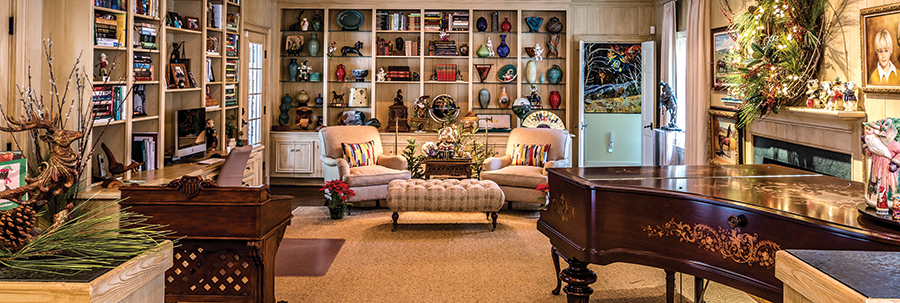
The Boyd House will be all dressed up for the Christmas Open House at Weymouth Center from Thursday, December 7, to Sunday, December 10. Take a walk through the 25 rooms and the stables decorated with live greenery artfully arranged by designers and community organizations. Enjoy complimentary refreshments and music in the Great Room. Hours are 10 a.m. to 3 p.m. Thursday through Saturday, and 1 to 4 p.m. Sunday. Tickets are available at the Weymouth Center Office, Campbell House, Country Bookshop, Lady Bedford’s Tea Parlour, Given Memorial Library and Eloise Trading Co. The Weymouth Center is located at 555 E. Connecticut Ave., Southern Pines. For information and ticket prices, call (910) 692-6261 or visit www.weymouthcenter.org.

The Christmas Open House at the Shaw House will be Friday through Sunday, December 8, 9 and 10, from 1–4 p.m. Take a tour of the historic house, decorated as it would have been in the 1800s; and slip back in time with music, warm apple cider and homemade cookies. Peruse the Gift Shoppe for unique items and collectible treasures. Free admission. The Shaw House is located at 110 W. Morganton Road, Southern Pines. For information, call (910) 692-2051 or www.moorehistory.com.

The Episcopal Day School Candlelight Tour of Homes invites you into five historic houses on Sunday, December 10, from 1–5:30 p.m. Each dwelling will be decked out in holiday finery, unique in spirit and character. Tickets are $20 in advance in the Episcopal Day School office (340 E. Massachusetts Ave., Southern Pines) or at The Given Library, The Estate of Things, Country Bookshop, Lady Bedford’s Tea Parlour, Thyme & Place, and Eloise. Tickets will be $25 on the day of the event. For more information, call (910) 692-3492.

There Once Was a Girl from Aberdeen…

Fire up the Google rhyming tool. Against the advice of the wisest legal minds in Moore County, PineStraw magazine is soliciting your finest, original, unpublished Valentine’s Day–themed limericks. The best of breed, after being subjected to the grueling, gimlet-eyed scrutiny of a Blue Ribbon committee (think Pabst), will appear either in the pages of the February edition or in the dumpster behind Chef Warren’s. We’ll rely on the good taste and discretion of the citizenry at large to keep both the libidinous and libelous content to an absolute minimum. Deadline for all submissions is January 1, though we feel certain we’ll be able to recognize the ones written late on the evening of December 31st. Email your best efforts to:  pinestrawpitch@gmail.com.

11th Annual Reindeer Fun Run

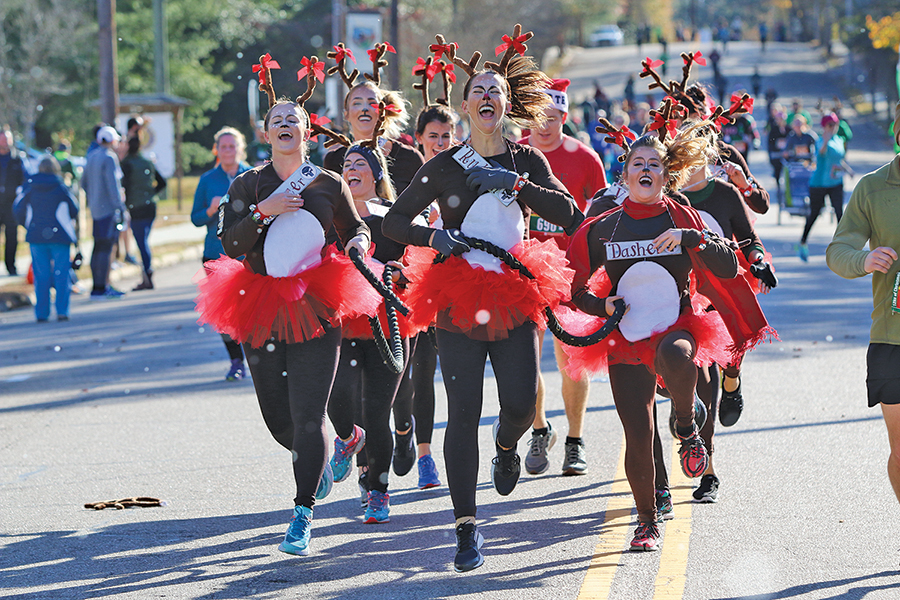
A community event for everyone from serious runners to recreational walkers, families and pets. The 5k Reindeer Fun Run/Walk on Saturday, December 2 begins at 9:30 a.m. and curves through Aberdeen’s historic downtown neighborhoods with rolling hills and wide turns. The 12ks of Christmas Run beginning at 9 a.m. incorporates the 5k route along with a scenic tour of Bethesda and the Malcolm Blue Farm. Both courses finish on a sloping downhill toward downtown and the historic Union Station. For kids, the 1/2 Mile Egg Nog Jog & Kids Zone at 10:30 a.m. is a holiday must and fan favorite. All proceeds go to the Boys & Girls Club of the Sandhills. For more information, www.reindeerfunrun.com.

A Medieval Frolic

The lords and ladies of the Congregational Church of Pinehurst invite you to their 4th Annual Madrigal Dinner on Friday, December 8, or Saturday, December 9, from 6:30 to 8:30 p.m. You will be entertained by choristers, jokesters, dancers and raconteurs. The Peasant’s Repast will include homemade stew, vegetable soup, hearty breads and apple crisp. Costumes are welcome, but not required. Tickets are $20 for adults and $10 for children under 12 and are available at Given Outpost and The Country Bookshop, or from Nancy at (910) 695-6727. Advance purchase required. The festivities take place at the church, located at 895 Linden Road, Pinehurst. For more information, contact Anne at (910) 639-9096 or  www.youarewelcomehere.org.

The Holiday Parades

Saturday, December 2, from 11 a.m.–12 p.m.: The Annual Southern Pines Holiday Parade features local marching bands, festive activities and an appearance from Santa Claus! The parade begins at Vermont Ave. and proceeds down the west side of Broad St. in the historic district of Downtown Southern Pines. For more information, call (910) 315-6508.

Saturday, December 9, from 11 a.m.–12 p.m.: The Aberdeen Christmas Parade will proceed through historic downtown Aberdeen. For more information, call (910) 944-7275.

Saturday, December 9, at 1 p.m.: Head over to Southern Pines for the delightful Christmas Carriage Parade. Members of the Moore County Driving Club decorate their horses and carriages for this annual ride through the historic district of downtown Southern Pines. For more information, call (910) 639-2359.

The Rooster’s Wife

Rounding out the season’s delights
are these stellar performances:
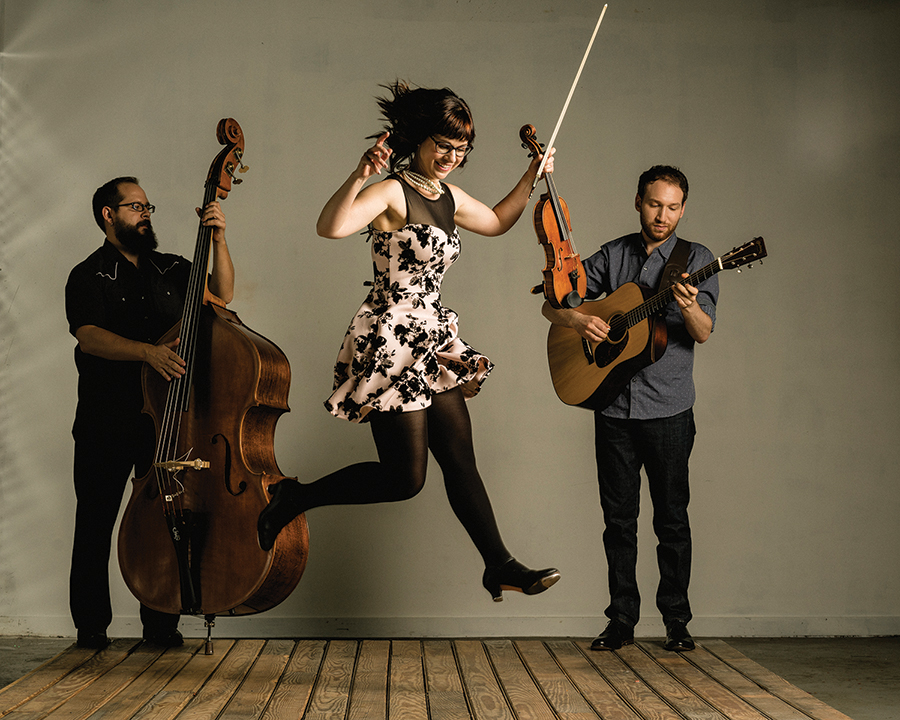
Sunday, Dec. 3: Celebrate the season with a very special evening of bluegrass performed by Joe Newberry, prize-winning guitarist, fiddler, banjo-player and singer; and the captivating April Verch, a champion fiddler and step dancer. $20.

Friday, Dec. 8: Keeping themselves in the best of company, Anthony da Costa and Kimber Ludiker are usually found on stage with Sarah Jarosz and Della Mae, respectively. Huge guitar and fiddle chops underpin great songs on this rare duo show. $10.

Sunday, Dec. 10: Jonathan Byrd and Corin Raymond tell stories with their guitar, mandolin and fascinating words. The poetry in their songs will open your mind and your heart to amazing possibilities. $20.

Doors open at 6 p.m. and music begins at 6:46 at the Poplar Knight Spot, 114 Knight St., Aberdeen. Prices given above are advance sale. For more information, call (910) 944-7502 or visit www.theroosterswife.org for tickets.

Did She Say That Out Loud?

Favorite utterances I have known and used

By Susan S. Kelly

Southerners are big on sayings that are peculiar, well-worn, and whose origins — never mind meanings — are vague. “Bless her heart” comes to mind. We also love our book-or-movie lines that translate well to reality: “Frankly, my dear, I don’t give a damn.”

For my money though, nothing beats the casual comments friends and family have unwittingly uttered in the presence of a writer — me — who keeps entire notebooks of minor observations such as new wallpaper smells like Band-Aids, and what people have in their Costco cart. Herewith, a few of my everlasting favorites.

Scene: Driving my 87-year-old mother on the Interstate.

Mother: “Do you ever use the left lane?”

Me: “When I need to pass a car, but otherwise, you’re supposed to stay in the right lane. The left lane is for speed, and for passing.”

Mother: “I drive in the left lane all the time.” Pause. “I consider it my privilege.”

Ensuing jaw drop.

Scene: Discussing acquaintance X with my friend Trish.

Trish: “Anyone with hair that long at her age is bound to be tough.”

Ensuing fall off the chair laughing before wryly agreeing.

Scene: Charlestonian pal Ginny visiting Greensboro, wandering through the rooms of my house: Ginny: “I forget how much stuff y’all have up here.”

Interpretation: It’s so tropical in Charleston that rugs and objets are superfluous and just make you feel even sweatier.

Ensuing anxious reassessment of household décor previously considered cozy and now viewed as cluttered.

Scene: Someone my friend Sarah and I slightly knew in college moves to town.

Me to Sarah: “You and I should probably have some kind of welcome get-together for her.

Sarah, with slow blink: “I have all the friends I need.”

Ensuing appreciation of Sarah’s chop-chop ‘tude freeing me from entertaining responsibility.

Scene: Dressing room of bathing suit marathon try-on with sister Janie.

Janie: Big sigh, followed by: “I just look better with a few clothes on.”

No interpretation needed.

Scene: Discussion with friend Marsha about recent debatable behavior of hers, mine, and others’.

Marsha: “Well, who cares? I’d rather be controversial than boring.”

Ensuing decision to be controversial rather than boring.

Scene: My great-aunt comes to pick up my grandmother for a luncheon in early April. My grandmother is dressed in a lavender crepe suit and, as frequently happens in April, it’s 48 degrees outside.

Great-aunt: “Jewel, aren’t you freezing?”

My grandmother Jewel: “Sure, but I look good, don’t I?”

Ensuing decision upon being told this story: Never to name anyone Jewel.

Scene: My mother-in-law telling her friends that her son is getting married to “just the nicest girl.”

Friends: murmurs of assent and congratulations.

Mother-in-law: “And the best part of it is, she’s already Episcopalian!”

Ensuing gratitude for whatever makes my mother-in-law happy that I didn’t have to work at.

Scene: Famous writer turns to me at a dinner party, and out of the blue asks, “Have you ever had a serious operation?”

Scene: Friend Anna’s withering riposte to being wronged by others: “I have a big mouth and a wide acquaintance and intend to use both to your detriment.”

Ensuing decision to: 1. Stay on Anna’s good side, and 2. Adopt this adage myself.

And, in the spirit of the season, a couple of Christmas-themed favorites.

My older son to his sister: “I’m outsourcing my Christmas thank-you notes this year. Interested?”

His sister: Withering look.

My sister to me: “I’m giving my children electric blankets for Christmas this year. Do you think it will give them cancer?”

Me: Withering eye-roll.

Morals:  1. You can’t make this stuff up, and 2. Sooner or later, a writer is going to bite the hand that feeds it, and use your unforgettable utterances.  PS

Susan Kelly is a blithe spirit, author of several novels, and proud new grandmother.

A Case of Twitter Jitters

Forever is a long time in the electronic world

By Deborah Salomon

During end-of-year holidays, whichever you chose to celebrate, people tend to ruminate on this and that, especially what’s wrong with the world and how to make it better. Well, ruminate no more because I’m going to tell you what’s wrong with the world: Twitter. Twitter represents TMC (too much communication), related to TMI (too much information). Not all is accomplished with words, a good thing since Twitter, once limited to 140 characters has doubled to 280. Text messages arrive littered with emojis, essential if one assumes that one emoji is worth, well, a cliché or two. But the problem lies not with Twitter and text alone. Information — whether printable or not — lives forever. Surveillance cameras are everywhere. Cellphone positioning reveals your location. Emails never die, even though they bow to texting. These days, when I want to send my grandson a newsy email I must text him to check it, since communication between young adults employs only essential words, often phonetically spelled minus capitalization and punctuation.

To wit: Secrets no longer exist. Hiding anything — impossible.

This creates a dependence foreign to love letter and diary writers. Your IT guy is more important than dentist, hair stylist, car mechanic, plumber or obstetrician. Because when a system’s down, life, even in the slow lane, comes to a halt.

Not that life before the information super highway (ISH) was much smoother:

First off, we wouldn’t be singing “O Little Town of Bethlehem.” Mary and Joseph lived in Nazareth but, by Caesarean decree, traveled to Joseph’s birthplace for the census. How accurate could it have been? Now, although some census information is gathered on foot everything else happens electronically. Nobody treks back to Ohio.

Then, had Julius utilized electronic eavesdropping he wouldn’t have been blindsided by Brutus. Then again, the world might lack the treasures in King Tut’s tomb had he not suffered (pre-genetic counseling) abnormalities resulting from his mother and father being siblings. The boy pharaoh died at 19, more likely from these abnormalities than a chariot accident, since his club foot would have made the rough ride impossible. Poor boy, the potentates intoned. Let’s bury him surrounded by gold.

With Twitter in place, no need for Paul Revere to take that midnight ride “through every Middlesex, village and farm” immortalized by Longfellow.

On the dark side, Twitter and other instant communications have enabled people to speak “off the cuff.” Incidentally, this expression originated in the 1800s, when men’s shirt cuffs were made of stiff paper — handier for taking notes than even an Apple iPad Air2. The problem is, folks attached to cellphones will devour the tweet immediately, then re-tweet the juicier ones. This spontaneity has proven more ruinous than Prince Charles’ late night phone sex with Camilla. Wars have been fought over less inflammatory remarks than what POTUS tweets daily. Maybe another one will.

Besides, “tweet” (remember Tweety Bird?) is a silly word to be bandied by serious newscasters or in U.S. Senate chambers. To speak of a president’s tweets sounds vaguely disrespectful, as though describing an undergarment. Perhaps this flippant title gives license to insult or demean or threaten.

You think?

Therefore, looking back over 2017, I can postulate that without Twitter, mankind wouldn’t be in such a dither. Humans won a few wars, conquered polio and smallpox, transplanted hearts, cracked genetic codes, broke the sound barrier, landed on the moon and Mars with nary a tweet. The Ten Commandments require more than 140 characters, as does the Pledge of Allegiance. And most political pooh-bahs have learned to count to 10, at least, before pressing “send.”

That said, I’m wishing you all a sweet, tweet-free holiday season and a more conscionable New Year — or else heaven help us all.  PS

Deborah Salomon is a staff writer for PineStraw and The Pilot. She may be reached at debsalomon@nc.rr.com.