
Birdwatch

BIRDWATCH

Brilliant and Blue

The surprisingly complex blue jay

By Susan Campbell

The blue jay is one of those species most of us instantly recognize: a common bird of woodland and backyard. But how well do we really know it?

This medium-sized, raucous bird can be found at feeders or flying around in treetops at any time of the year, but it hardly seems remarkable at first glance. It turns out that they are more complex and unique creatures than you might think.

Jays are closely related to crows, which are a highly evolved species. As a result, jays, too, exhibit a relatively advanced degree of intelligence. They have complex social systems. Blue jays remain together as a family for a relatively long period and also mate for life. These birds have dingy gray under parts and upper parts that are various shades of blue with gray and black markings as well as a blue crest.

Not only do they communicate with their voices, but also with body language. Changes in the jay’s crest are one of the most obvious ways they express themselves. Not surprisingly, it is raised when an individual is alarmed or is trying to be intimidating.

The unique black lines, or brindle pattern, on individuals is no doubt recognized by conspecifics. Interestingly, the pigment found in jay feathers is produced by melanin, which is actually brown. It is the structures on the barbs of the bird’s feathers that cause light to reflect in the blue wavelength.

In addition to their bright coloration, jays attract attention with their loud calls. They make a variety of squawks and screams, usually from a perch high in the canopy. Furthermore, they are known to mimic other birds’ calls, especially hawks. Whether this is an alarm tactic or whether they are trying to fool other species is not clear. The great early ornithologist John Audubon interpreted this as a tactic that allowed blue jays to rob nests of smaller birds such as warblers and vireos that were scattered by the hawk sounds. Modern studies of blue jay diets, however, have not found that eggs or nestlings are common foods. In fact, in feeding trials, this species is often outcompeted by other jay species, woodpeckers and blackbirds.

Another mystery is why, in some years, these birds migrate and some years they do not. Blue jays are particularly fond of acorns. So it may be that, in years when oaks are not very prolific, jays move southward in search of their favorite food. How many blue jays will remain in the Piedmont and Sandhills this winter will depend on the mast crop — especially the abundance of white oak acorns. These birds are very capable of gathering seeds in a specialized pouch in their throat and carrying them to nearby holes or crevices where individuals will stash them.

Blue jays have very definite nesting duties. Males collect most of the materials: live twigs, grasses and rootlets. The females create the large cup, incubate and brood the young birds. All the while the male feeds her and then forages for the tiny nestlings. Once the young have developed a good layer of down, the female will join the search for food for the rapidly growing family. It is not unusual for young jays to wander away from the nest before actual fledging occurs, though the parents are not likely to feed the begging youngster unless they return to the nest. It is during this period that people may “rescue” the wayward youngsters.

Finally, reports of “bald” blue jays are not uncommon. Do not be surprised if you see an odd-looking individual at a feeder or bird bath with virtually no feathers on its head, just dark skin. At first this was thought to be caused by feather mites that can be found on all birds to varying degrees. Now it seems there are simply individuals that lose all of their head feathers at once instead of in the normal, staggered fashion. This is more likely in adolescents who are undergoing their very first molt.

The next time you notice one of these noisy, crested blue birds, take a closer look. Blue jays are fascinating — and full of surprises.

Southwords

SOUTHWORDS

Sleeping It Off

When in doubt, hit snooze

By Emilee Phillips

“What did I miss?” I ask through a yawn and a stretch. This is a common refrain from me. I can sleep on any and every mode of transportation. From the outside it may look like sleeping just about anywhere, just about any time, is my superpower. In some ways, that isn’t untrue.

The reality is slightly more complicated. I’m prone to motion sickness. Not a little bit prone. More like projectile . . . you know what . . . prone. If I’m not in the driver’s seat or, at the very least, in the passenger’s seat — with a cautious driver — you can forget about it. Even being still and looking at something at the wrong angle can make my head spin. State fairs and Tilt-a-Whirls are sworn enemies. The very thought brings on waves of nausea. 

The trouble is that I love to travel. So what’s a girl to do? 

Dramamine has been a normal part of my life since long before I was able to spell it. Road trips, plane rides, boat rides, they’re brutal without it. Those tiny little pills worked wonders keeping me from losing my breakfast, lunch and dinner. The only downside is that they make me groggy.

I say downside because, to be honest, in my altered state I’m not the best traveling companion. My sister dubbed my car-induced sleeping “carcalepsy.”

The last big trip I went on was to Guatemala with my boyfriend, Nate. The country was beautiful to look at . . . absolute chaos to drive through.

So, naturally, we ditched the idea of renting a car and opted for “efficient and cost-effective” public transportation: a bus. That’s how we ended up on what I can only describe as a rollercoaster on wheels, careening through the jungles on a journey from Panajachel to Guatemala City. We were advised the trip could take anywhere from three to six hours depending on potholes, washouts, traffic and whether or not a rogue cow decided to stand in the middle of the road like a crossing guard.

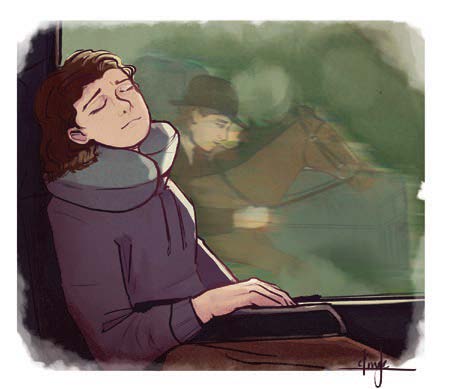
I knew the only way for me to get through this was to sleep. I took an extra bit of my medicine, found a neck angle that wouldn’t paralyze me, and willed myself into a bus-induced slumber.

The roads were winding, bumpy and full of holes big enough to swallow a Volkswagen whole. Slamming on the brakes was a frequent occurrence. Passing slower vehicles, I’ve been told, was like an Indiana Jones sequel, causing even Nate to hold his breath.

During a rest stop, I barely opened one eye when I saw Nate hop off for a snack. For a moment I considered following him but realized that food might give me energy, and energy meant awareness, and awareness meant I’d have to experience the ride. No thank you.

After six hours we pulled into Guatemala City, and I woke up dazed, victorious and the opposite of nauseous, whatever that is. As we de-bussed, Nate gave a little wave to a couple that had been sitting a few rows up from us. Apparently, the three of them had bonded over our mutual survival.

After we were out of earshot from our fellow travelers and walking toward our hotel, Nate started chuckling.

“What?” I asked, rubbing my eyelids and trying to remember what continent I was on.

He scratched his head and said, “So, uh, that couple I waved to? They’re from Germany. Super cool. Thought the ride was nuts.” I nodded. Of course they did. Who wouldn’t?

“Yeah, well,” Nate continued, barely containing his laughter, “they also asked me if I drugged you.”

I blinked. “WHAT?” I had apparently slept through my own kidnapping.

“At first I thought it was a joke but they seemed serious. They couldn’t believe you slept through all of that,” he said motioning behind us. “ I had to tell them I didn’t drug my girlfriend. She drugged herself . . . with Dramamine.” 

Poor Nate having to plead his innocence to complete strangers. Worst case of carcalepsy ever.

Doctors’ Orders

DOCTORS' ORDERS

Doctors’ Orders

Breathing life into a contemporary villa

By Deborah Salomon    Photographs by John Gessner

Embarking on a second career in retirement is nothing new: Lawyers become clergyman; bank tellers resurface as hairstylists; farmers write novels. But a retired Army physician renovating high-end residences? Well, why not?

Retired Lt. Col. Teresa Pearce, M.D., a public health specialist with a master’s degree in epidemiology, and her husband, Dr. Tony Freiler, M.D., a retired Lt. Col. Army radiologist practicing locally, found Pinehurst perfect for work and family. With two sons, 8 and 12, Teresa thought about renovating a house large enough for several generations to live communally. “I’m very big on family,” she says. She found a candidate in an estimated 7,200-square-foot manse built in 2001, with detached garage/apartment and pool on 5 acres overlooking a Country Club of North Carolina golf course. The multi-generational living plan didn’t materialize but, oh, what a venue for honing interior design skills and showcasing good taste.

Although the property does not conform to any off-the-shelf architectural mode — try contemporary Italianate villa — its wings spread over a section of CCNC where land parcels are of similar size. Teresa’s method was simple: Find something to make your own and get to work. Upgrades took about a year.

“This one . . . it was very well-built but the layout, the flow, didn’t work,” she says. But, given the imagination, the means and the neighborhood, it was a diamond in the rough.

The interior spreads out along hallways on either side of the foyer, where a large painting of a golden orb mounted on grasscloth hangs. Could it be the moon? Teresa’s father was part of the space program, in Florida. His NASA helmet contributes to the décor.

To the right, near the kitchen entrance, was a small formal dining room Teresa commandeered for her office, with a narrow glass-topped table — an unlikely but decorative desk — and a spectacular set of double doors she found in Maryland.

Beginning in the office, a trail of wallpaper and fabrics continues throughout the house — ferns, fruits, flowers, creatures and dense European mini-prints so vivid they jump off the background.

“Wallpaper, it’s my thing,” Teresa says, often in unusual color gradations. Navy, with a touch of teal, becomes Prussian blue; red has deep rather than bright overtones; and green imitates frogs, not limes.

The core of Teresa’s renovation is the living room, whose back wall, paneled to the ceiling, rises 20-plus feet over a formal gathering space with a library section and, at the far end, a dining table seating 12 to 14 “in a pinch.”

Here, Teresa is not shy about expressing her taste. Against one living room wall stands a lamp table lacquered red with gold curlicues, stripped down to pale wood at the top. “All that red and gold . . . just too much,” she decided.

The kitchen escaped significant reconfiguration, although wood cabinets became white and the island more user-friendly. Notable are the side-by-side Sub-Zero refrigerator and freezer. Beyond is a kid-friendly family room where the giant circle motif is repeated in wall mirrors. And beyond that is a screened porch and pool.

Teresa haunts auctions and estate sales. “I’m an accumulator,” she admits. At one time, she owned an antique business. Now, she and a partner, Jennifer Beranek, operate Elliott Rowell, an interior design firm in Aberdeen.

Living space continues in an above-ground lower level, encompassing a game room with pool table, a lounging area for watching movies, several guest bedrooms, 2 ½ bathrooms, a kitchenette and gym with weight-training equipment, an arts and crafts area, and Tony’s office. The walls are mostly done in Teresa’s signature navy blue, also the favored color (along with white) in the main floor master suite.

The totality allows for overstuffed sofas, large fireplaces and multi-era furnishings with a surprise around every corner: A campaign throne/chair stands in a hallway. Children’s furniture creates a village, with ceiling shelves for stuffed animals. A combination laundry/dog parlor has an elevated tub for bathing twin Springer spaniels. Teresa’s classic butler’s pantry is a rarity in contemporary construction, but oh, so convenient when serving those 14 guests. A canopy-free four-poster bed dominates the master suite, also home to a giant Boston fern and a bay window. Next up: a rose garden.

“I love renovation,” Teresa says. “I feel like the house has a new life, like it’s relevant again.”

Dissecting a Cocktail

DISSECTING A COCKTAIL

The Southside

Story and Photograph by Tony Cross

Like many classic cocktails, The Southside’s origins are a bit murky. Some say the drink was created on Chicago’s South Side and was a favorite of mobster Al Capone — the “bathtub gin” his mob smuggled in was harsh, so the addition of mint, sugar and lemon juice made the alcohol more palatable. Others claim it was created at the 21 Club in New York. Yet another says its invention was at the Southside Sportsmen’s Club on Long Island.
Cocktail historian David Wondrich found what he believed to be its earliest recipe in Life magazine in 1913. Dubbed the “Gordon’s South Side” (as in Gordon’s Gin), the drink was more like a frappe and included a picture that resembles a mojito.

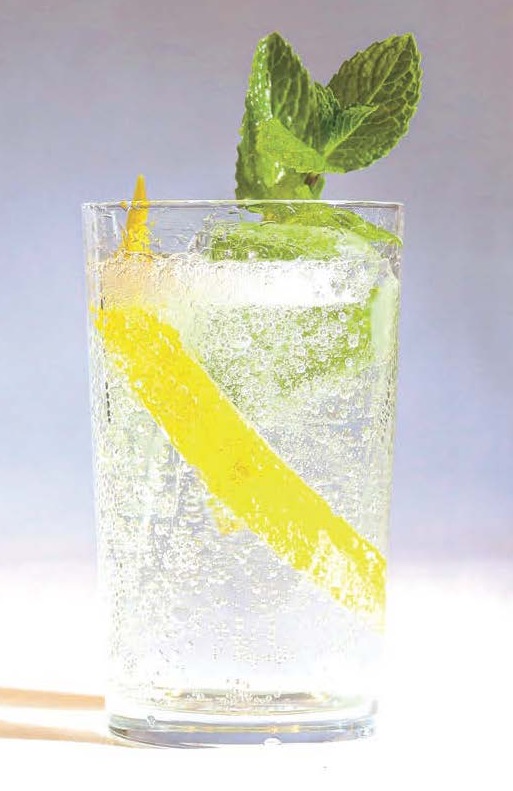
Now comes the other mystery of the cocktail — the ingredients. Yes, there is gin, mint, sugar and citrus, but many recipes include the addition of soda water. A splash or served in a highball? And what about the citrus? Some recipes have lemon while another has lemon and lime. When I was behind the bar, I used lemon juice and a splash of sparkling water in a coupe glass. As time has gone by, I prefer a little more sparkling water, served over ice. I’ve even gone as far as making Reverie’s version as a carbonated cocktail soda (pictured). The recipe below is how I’d whip these up when I was behind the stick.

Specifications

2 ounces Sutler’s Spirit Co. gin

3/4 ounce lemon juice

1/4 ounce rich simple syrup

5 mint leaves

1 ounce soda or sparkling water

Thinly sliced lemon wheel

Execution

In a cocktail shaker, combine all ingredients, sans soda water, and add ice. Shake hard for 10 seconds. Add soda water inside shaker and double strain into a chilled coupe glass. Garnish with lemon wheel.

Golftown Journal

GOLFTOWN JOURNAL

History and Hospitality

A perfect partner for Mid Pines and Pine Needles

By Lee Pace

The golf courses at Mid Pines and Pine Needles were the 1920s offspring of a group of moneyed businessmen and regular visitors to Pinehurst who believed that the four courses at the resort weren’t enough for America’s most noted golf destination, and that they were so popular that an alternative that operated at a more relaxed pace would be attractive.

“There is the desire of a number of old Pinehurst guests who want to have comfortable quarters where they can be away from the activities of the hotels,” said Leonard Tufts, son of resort founder James Walker Tufts and the resort chief from 1902 through the mid-1930s.

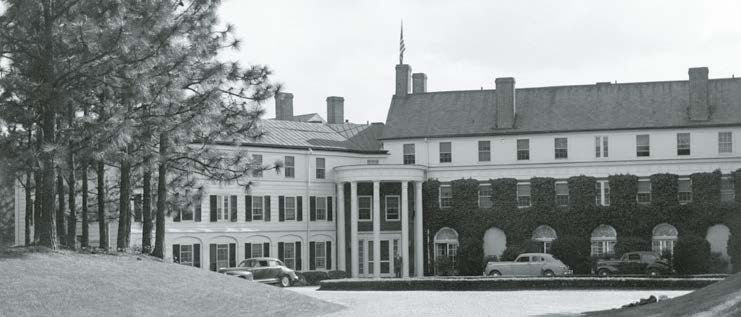
Mid Pines opened in 1921 with a Donald Ross-designed course and a three-story, Georgian-style hotel; it was strictly a private club. Pine Needles followed seven years later just across the road, with Ross laying out the course through residential framed corridors and with an English Tudor-style hotel open to the public.

Both resorts have ridden the crests and valleys of wars (the U.S. Air Force used Mid Pines as a base during World War II) and economic calamity (Pine Needles went bankrupt in the mid-1930s). But they have endured because of the quality of the golf laid out by Ross, the Scotsman who came to America in 1900 and found the Sandhills’ sandy soils a mirror to what he knew from home.

The resorts have been further joined at the hip not only from their Roaring ’20s conception but having a shared ownership structure since the late 1900s, when the family of longtime Pine Needles proprietors Warren and Peggy Bell bought Mid Pines.

Now with Mid Pines four years into its second century and Pine Needles on the cusp of its own centennial, the resorts are transitioning into an initiative that one member of the ownership group says “will reposition them for the next hundred years.”

Mid Pines and Pine Needles are entering a partnership with Marine & Lawn, a hotelier with extensive experience renovating and managing historic golf-centric hotels in the United Kingdom. Among the early priorities for the new venture is Marine & Lawn taking over a total reconstruction of the hotel at Mid Pines. Renovation work will begin immediately, and the hotel will be shut down for six to eight months.

“What’s exciting to me is Marine & Lawn specializes in restoring old properties,” says Kelly Miller, president and CEO of the company that owns Mid Pines and Pine Needles as well as Southern Pines Golf Club. “They know how to refurbish a 100-year-old hotel.”

Indeed, there are cases in point across Scotland and Ireland: 

At Rusacks St. Andrews, discerning travelers can sip a dram of Macallan Scotch beside a fireplace and gaze up at paintings of Old Tom Morris and the Swilcan Bridge in an iconic 1800s building to the right of the Old Course’s 18th hole.

At Dornoch Station in the Scottish Highlands, you’re just a short stroll from the homeplace of a young Donald Ross. You fall out of bed, devour a full Scottish breakfast and skip out to the ancient links swallowed up on spring days by a sea of golden gorse.

And at the Slieve Donard Hotel on the edge of the Irish Sea in Newcastle, you sleep in Victorian splendor and look out the windows at the majestic Mourne Mountains, then amble up the lane to Royal County Down.

Miller has talked with hotel consultants and potential partners in recent years about what to do with Mid Pines, a historically significant structure designed by the noted architect Aymar Embury II. The owners have refurbished some rooms in recent years to the standards of modern golf travelers, but other rooms hearken to the last century. How much money do you spend to revitalize the property? And what does the next iteration look like? 

“In talking with various potential partners over the last 10 years, almost all of them said, ‘We’re going to tear Mid Pines down and build it back up, and you’ll never know,’” Miller says. “That hotel was not going to be torn down on my watch. Marine & Lawn has the experience to do the job right. They have the vision and operational experience. And, most importantly, they have enhanced the culture at every one of their properties while maintaining the heritage of each one.”

This will be Marine & Lawn’s first hotel venture in the United States, although its parent company, AJ Capital Partners, has extensive presence in the hotel industry through its collection of Graduate Hotels in college towns across America. The total investment in the two properties is estimated at $47 million over the next 12 to 16 months.

“This is an exciting initiative for our resorts,” says Miller. “We’ve needed for some time to upgrade our lodging facilities, and Marine & Lawn is the ideal partner for us.”

“We love the state of North Carolina and the Sandhills,” adds Haresh Tharani, a partner in the Mid Pines ownership group since 2018. “And we believe very strongly in the area. This is a way to enhance our portfolio while at the same time looking at other opportunities to bolster our presence in the golf capital of the United States.”

Warren Bell and his wife Peggy Kirk Bell, a member of the World Golf Hall of Fame, began operating Pine Needles in 1953, bought it in 1959, and it has remained in the family ever since. The Bells took on partners in 1994 to purchase Mid Pines. Today the enterprise is owned and operated by Miller, Tharani, Pat McGowan and their families, who will retain total ownership of the golf courses.
Miller said the family has had numerous conversations with potential partners and hotel owners and operators over many years, and had three criteria for a potential new venture.

“One, make sure that we respect and honor what Mr. and Mrs. Bell started here in 1953 and continue the history and tradition of the properties,” Miller said.

“Two, we wanted to reposition these resorts for the next 100 years. We think we’ve done a pretty good job with the golf courses and bringing them up to much higher standards. Now, it’s time to do that on the hospitality side.

“And three, we wanted to keep the family involved. Both Mid Pines and Pine Needles have been strong family operations for many decades, and we want the younger generation to have an opportunity to stay involved if they’d like.”

AJ Capital, founded in 2008 by Ben Weprin, manages over $5.4 billion in real estate investments in markets throughout the U.S. and U.K. The “AJ” stands for “adventurous journeys” and was launched as a platform for Weprin to pursue his passions of history, architecture and elite travel destinations. He had purchased and renovated rundown hotels in cities like New York, Chicago and New Orleans when his golf trips to the U.K. prompted the idea to purchase and restore historical hotels adjacent to iconic golf courses, thus creating Marine & Lawn.

“For us, it’s always been about preserving the heart and soul of golf through thoughtful hospitality,” says Phillip Allen, president of Marine & Lawn Hotels & Resorts. “What started with Rusacks St. Andrews has grown to six iconic properties across Scotland and Northern Ireland, each selected for its deep connection to the game of golf and sense of place. We couldn’t be more excited to now bring that ethos stateside — and we couldn’t imagine a more fitting destination, or better partners to do it with.”

PinePitch August 2025

PINEPITCH

August 2025

What’s All the Buzz?

It’s time for the Great Southeast Pollinator Count on Friday, Aug. 22, and Saturday, Aug. 23, from 9 to 11 a.m., at the Ball Garden Visitor’s Center, 3245 Airport Road, Pinehurst. Be a citizen scientist, select a plant, observe pollinator activity for 15 minutes, then submit your findings. The project collects data, promotes conservation and encourages the creation of pollinator gardens. To sign up go to www.sandhills.edu/gardenevents.

Sounds Phishy to Us

Runaway Gin, the best Phish tribute band in all the land, never plays the same show or jams the same way twice. Just like Phish. Hear them on Saturday, Aug. 30, at the Sunrise Theater, 250 N.W. Broad St., Southern Pines. Tickets start at $25. The premium seating with the VIP drinks and dinner package tops the chart at $89. For information go to www.sunrisetheater.com.

Love Letters

The Judson Theatre Company’s summer festival concludes with 10 performances of Ken Ludwig’s homage to his parents’ courtship, Dear Jack, Dear Louise, from Aug. 1 – 10, in BPAC’s intimate McPherson Theater, 3395 Airport Road, Pinehurst. It’s the love story of two strangers — a military doctor in Oregon and an aspiring actress in New York City — who meet by letter during World War II. They dream of being together someday, but the war keeps them apart. For information and tickets go to www.ticketmesandhills.com.

Tonight’s the Night

The Jonathan Robinson Band, a staple of the local music scene, turns up the heat from 5 to 9 p.m. in the Aug. 1 edition of First Friday on the First Bank Stage at the greenspace next to the Sunrise Theater, 250 N.W. Broad St., Southern Pines. Once a sideman in Nashville, Robinson returned to his native North Carolina bringing his Southern rock, blues and country sound with him. There will be cool beverages for purchase. Leave all the collared animals at home. It’s too late for further information. Just park the car and wander over.

Two for One

Poets Pat Riviere-Seel and Malaika King Albrecht will be in conversation about Riviere-Seel’s new book, Because I Did Not Drown, a hybrid collection of personal essays and poems, on Wednesday, Aug. 20, at 5:30 p.m., in the Great Room at the Weymouth Center for the Arts & Humanities, 555 E. Connecticut Ave., Southern Pines. These past and present members of the Weymouth board of directors will read selections from the book while discussing the writing process and blending genres. A signing with books available from The Country Bookshop will follow. For more information go to
www.weymouthcenter.org.

Book It

The Country Bookshop’s August events include Retired Lt. Col. Ted Mataxis Jr. discussing his book Ride to the Sound of the Guns: The Life of a Cold War Warrior, Brig. Gen. (Ret.) Theodore C. Mataxis, at 6 p.m. on Thursday, Aug. 14. Then, on Aug. 25 at 5 p.m. Stephanie Griest will talk about her book Art Above Everything: One Woman’s Global Quest to Understand the Sacrifices and Glories of a Creative Life. Both events are free and will be at The Country Bookshop, 140 N.W. Broad St., Southern Pines. For additional information go to www.ticketmesandhills.com.

Mee Meh Mah Moh Moo

Warm up to the Met Opera’s summer encore performance of Lucia di Lammermoor, a tragic opera in three acts by Gaetano Donizetti, at 2 p.m. on Wednesday, Aug. 6, at the Sunrise Theater, 250 N.W. Broad Street, Southern Pines. Feuding families? What’s a girl to do? For more info go to www.sunrisetheater.com.

Groovy, Baby, Yeah!

The Irresistible Groove, a critically acclaimed party band from Raleigh, will help you dance the night away — well, at least until 9 p.m. — at Live After 5 on Friday, Aug. 8, at the Village Arboretum, 375 Magnolia Road, Pinehurst. Festivities begin at 5:15 p.m. with food trucks, beer, wine and softer offerings for sale. Picnic baskets are allowed, but outside alcohol is not. The music is free. Don’t pull a hammy trying to lindy hop. Need more info? Go to www.vopnc.org.

Creatures of the Night

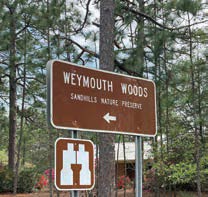
Bring a flashlight and discover the sights and sounds of nature after dark walking the trails of the Weymouth Woods Nature Preserve, 1024 Fort Bragg Road, Southern Pines, beginning at 8 p.m. on Friday, Aug. 8. All ages are welcome, but children must be accompanied by an adult. For more information call Southern Pines Parks and Recreation at (910) 692-7376.

Party Like It’s Fall

Southern Pines Parks and Recreation will hold its second annual “farewell to summer” party on Friday, Aug. 15, from 5:30 to 8 p.m. in the Downtown Park, 145 S.E. Broad St., Southern Pines. There will be food trucks, tattoos, bounce houses, yard games, water slides and music. Then, grab a blanket or a folding chair and stick around for the 8 p.m. outdoor showing of Paw Patrol: The Mighty Movie. For further information call (910) 692-7376.

Bookshelf

BOOKSHELF

August Books

FICTION

People Like Us, by Jason Mott

Two Black writers are trying to find peace and belonging in a world that is rife with gun violence. One is on a global book tour after a big prize win; the other is set to give a speech at a school that has suffered a shooting. As their two storylines merge, truths and antics abound in equal measure: Characters drink booze out of an award trophy; menaces lurk in the shadows; tiny French cars putter around the countryside; handguns seem to hover in the air; and dreams endure against all odds. Mott, the 2021 National Book Award winner, delivers an electric new novel that is wickedly funny and achingly sad all at once. It is an utter triumph bursting with larger-than-life characters who deliver a very real take on our world.

Sheepdogs, by Elliot Ackerman

Two misfits. One mission. Zero back-up. When a high-stakes heist goes wrong, an ex-CIA operative and a special operations pilot find themselves in the middle of a game of espionage and survival as they navigate a treacherous web of deception and shifting loyalties in a globe-spanning thriller. Skwerl, once an elite member of the CIA’s paramilitary unit, was cast out after a raid gone wrong in Afghanistan. Big Cheese Aziz, a former Afghan pilot of legendary skill, now works the graveyard shift at a gas station. Recruited into a shadowy network of “sheepdogs,” they embark on a mission to repossess a multi-million-dollar private jet stranded on a remote African airfield. As they wind through a labyrinth of lies and hidden agendas, they discover that nothing is as it seems. With the stakes skyrocketing and the women in their lives drawn into the fray, this unlikely spy duo will need to be as cunning as they are bold to survive in a game where the line between the hunters and the hunted is razor-thin.

NONFICTION

Are You Mad at Me?, by Meg Josephson

Josephson, a psychotherapist and clinical social worker, is here to show you that people-pleasing is not a personality trait. It’s a common survival mechanism known as “fawning” — an instinct often learned in childhood to become more appealing to a perceived threat in order to feel safe. Yet many people are stuck in this way of being for their whole lives. Are You Mad at Me? weaves Josephson’s own moving story with that of fascinating client stories and thought-provoking exercises to help you shed the behaviors that are keeping you stuck in the past so that you can live in your most authentic present.

This Happened to Me: A Reckoning, by Kate Price

Price grew up in northern Appalachia in a small mill town in central Pennsylvania with her sister and parents. At the insistence of her mother, and through her academic accomplishments, she escaped the unbroken cycles of poverty, violence, addiction, mental illness and abuse that had plagued her family for generations to start a new life in Cambridge, Massachusetts. Having left this dark world behind, it still kept a firm grip on her. Overcome with unexplainable grief and sadness, and having sustained a series of hazy flashbacks, Price sought out Dr. Bessel van der Kolk, a trauma specialist, to help heal her constant emotional pain. With van der Kolk as her guide, Price discovered what that darkness that lay within her was — her father had abused and trafficked her as a child. Price grappled with what had been revealed. Did this really happen to her? A dedicated researcher and academic, she knew she needed confirmation, proof that what she had remembered had happened. And so began a 10-year quest alongside a journalist, to prove what Price knew to be her truth. In this exquisitely rendered, transformative memoir, Price describes how she broke free of what had defined her childhood, and went on to create a purpose-driven life and family, on her own terms.

CHILDREN'S BOOKS

This Is Me: Getting to know yourself and others better,
by Helena Haraštová

This engaging book uses delightful stories to explore important feelings and traits, helping young readers better understand themselves and others. From Olivia’s courage to Tina’s thoughtfulness and Daniel’s carefulness, you’ll see how everyone’s different qualities make the world a richer place. The stories of 10 amazing kids spark important conversations about being yourself, understanding your emotions, and celebrating what makes everyone special. (Ages 6-9.)

The Slightly Spooky Tale of Fox and Mole, by Cecilia Heikkila

Fox and Mole live alone on a headland, in two houses, side by side. Mole is carefree and self-centered. Fox is responsible and self-sacrificing. As autumn draws in, the friends read a spooky story together (which Mole keeps interrupting) about a raccoon who transforms into a scuffling monster (a slightly spooky bit) while Mole eats Fox’s cookies (all of them). The Wind in the Willows meets the Brontës in this unique picture book, a cozy, wry, gothic tale for curling up with on long, dark evenings. (Ages 4-7.)

Wonderfully Wild,
by Justine de Lagausie

Nature is full of naughty animals — from chimpanzees who pick their noses to pigs who play in mud. Children and mischievous adults alike will laugh out loud while learning some basic animal facts and realizing that, compared to the species depicted, they’re very well behaved! This celebration of cheeky critters is perfect for fans of Butt or Face? (Ages 4-8.)

Sandhills Photo Club

SANDHILLS PHOTO CLUB

Reflections

Tier 3 Winners

Tier 3, 1st Place: Self Reflection by Shari Dutton
Tier 3, 2nd Place: Rise Up by Donna Ford
Tier 3, 3rd Place: Architect's Mirrored Mausoleum by Dale Jennings

Tier 2 Winners

Tier 2, 1st Place: A Dark Reflection by Joshua Simpson
Tier 2, 2nd Place: A Bridge of Gold by Jacques Wood
Tier 2, 3rd Place: Rippling Reflection by Pam Jensen

Tier 1 Winners

Tier 1, 1st Place: A Seniors Reflection by Hillary Koch
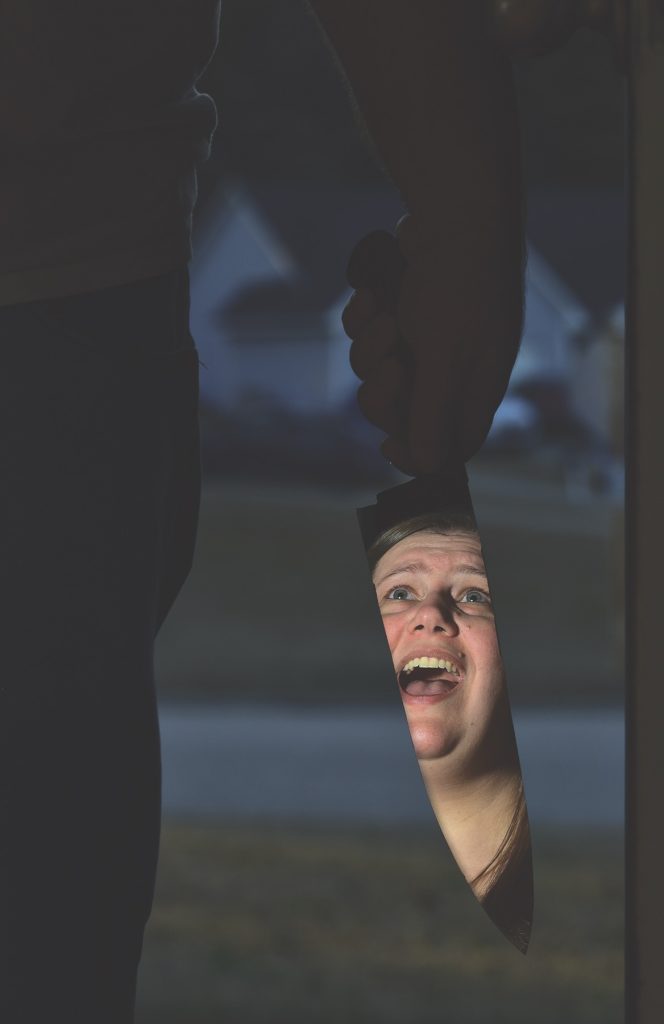
Tier 1, 2nd Place: Mirror Mirror on the Wall by Kim Butler
Tier 1, 3rd Place: Faith Hope and Love by Steve Bonsall

Almanac August 2025

ALMANAC

August 2025

By Ashley Walshe

August is a dog’s wildest dream.

Beneath the swaying hammocks where the summer-weary rest, the sleeping pup paddles his oversized paws, snout and whiskers gently twitching.

Mute the color palette. Attune to ultrasonic frequencies. Press your nose to the warm earth and breathe.

Can you smell the amalgam of humus and bee balm? Honeysuckle and musk? Grass clippings and sun-dried worms?

Each inhale carries a luscious stream of scents, a delectable river of possibilities. Each inhale is ecstasy.

At once, nose and paw lift as if pulled by invisible strings. A series of quick sniffs this way. A series of quick sniffs that way. A head tilt, an ear twitch, a rabbit!

Adventure calls.

Plow past the towering Joe Pye, the gleaming goldenrod, the coneflower, milkweed and asters. Faster, faster! Follow the trail, follow your instincts, follow that fluffy white tail!

Lunge left! Lunge right! Dive straight into a — cool, clear creek?

No signs of rabbits in this next dream. You plop down, let your belly press into the silty streambed, take a long, rhythmic drink. The queenking of treefrogs fills the air. A dragonfly lights on your withers.

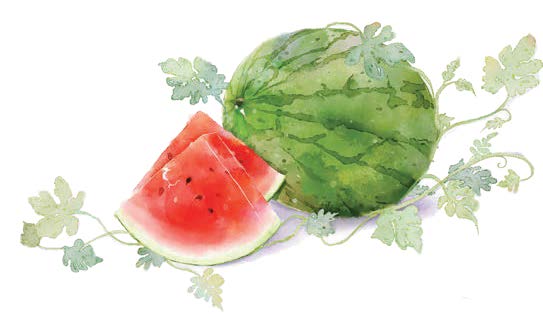
In the third dream, you’re back with your people, belly-up in the dappled shade, nose wiggling. There’s a picnic blanket, a watermelon, a platter of cucumber sandwiches. This is a dream, right? Sure feels like it. Wonder if they’ll notice if I just sneak one bite.

How to Eat Watermelon

Grill it. Drizzle with honey. Pickle the rinds. Make salsa, gazpacho or caprese.

There’s sorbet, smoothies, minty lemonade. Mocktails, mojitos and ice pops. Good old-fashioned juice.

Serve it sliced, scooped or cubed. Spice it up with lime, salt and chili. Or not. There’s no wrong way to eat or drink it.

Seed Spittin’, Etc.

Nothing says August like a bellyful of watermelon.

Believed to have originated in Africa’s Kalahari Desert as the white-pulped Kordofan melon, the modern beauty we know and love has come a long way, baby. As evidenced by its presence in tomb paintings, the striped fruit was sacred to the ancient Egyptians, cultivated as both a water and food source. Often buried alongside pharaohs, the fruit’s high water content was believed to aid souls on their arduous journey to the afterlife.

Today, popular varieties include crimson sweet, sugar baby, moon and stars, jubilee and Charleston gray.

Celebrate National Watermelon Day on Aug. 3 with a cold one.

The change always comes about mid-August, and it always catches me by surprise. I mean the day when I know that summer is fraying at the edges, that September isn’t far off and fall is just over the hill or up the valley.

— Hal Borland