Ruth Pauley Turns Thirty

The Ruth Pauley Lecture Series will celebrate thirty years of its remarkable existence this upcoming season. Having served on the board in various capacities for twenty-seven of its thirty years, I am proud to look back at its history and success.

Although I did not personally know Ruth Pauley, I did know and serve on the board with some of her friends, Virginia Leiss, Eunice Minton, Mary Dezarn, Katharine McLeod, Annette Galbreith and Jane McPhaul. All of them were enlightened community leaders who cared deeply about important issues confronting our society. It was very fitting they would choose to start a lecture series named for their good friend, and that it would be free and open to the public.

The sponsors are four local organizations: Sandhills Community College, American Association of University Women, League of Women Voters, and Moore County Schools. They are the glue that holds RPLS together. Each offers some financial support, but they contribute greatly by serving on the board and sponsoring the receptions after each lecture, where the audience gets to meet the speakers, converse with them and enjoy refreshments.

There are also ten representatives from the community on the board. We are lucky to have access to so many persons with a wide range of expertise, experience and personal connections.

The series is committed to presenting lectures by highly informed speakers in order to help deepen our understanding of important and relevant issues facing humanity. Some of my favorites have been Dr. John Hope Franklin, Susan Eisenhower, Jane Goodall, Arun Gandhi, Alan Simpson, Robert Edsel, Ernest Green and Morris Dees. For a list of all the speakers and topics, visit our website, www.ruthpauley.org, and click on the entire list of speakers. I think it is amazing.

In the beginning we often did not have the speakers of the series decided very far in advance. I remember the year we had Maya Angelou. We had no prospects until fall, when Jack McPhaul and Dr. G. McLeod Bryan invited me to lunch and inquired if I thought the board would like to have her speak. Wow!

In this age of technology and instant information, I still love to be in the presence of a live speaker and converse personally with him or her. RPLS offers these opportunities to our community because it really is a “community” project. Thanks to our organizations, individuals and businesses for our success. As the African proverb says, “It takes a whole village to raise a child.” I think our lecture series has succeeded because of such support, and I hope it continues at least another thirty years.

Please join us. The 2016-2017 season is our most ambitious yet, with six lectures scheduled in celebration of our thirtieth anniversary.

All lectures will be held at 7:30 p.m. in Owens Auditorium at Sandhills Community College. PS   — Peggy Olney

September 27, 2016. Len Elmore, “Courtside View: Saving College Sports”

October 11, 2016. Mark Shields, “The Challenge of Governing in a Polarized World”

November 3, 2016. Grace-Marie Turner and Richard Kirsch, “Experts Debate: Obamacare and the Future of Our Health Care”

February 9, 2017. Susan Southard, “Nagasaki and Beyond: The Ethics of Collateral Damage”

March 9, 2017. Abdullah Antepli, “New Frontiers in Civil Rights: A Muslim View”

April 20, 2017. Joe Romm, “Almost Everything You Know about Climate Change Is Outdated”  PS

Simply De-Vine

Watermelon makes cool, refreshing memories

By Jan Leitschuh

August boasts an abundance of produce, but it’s also a time of change. The blasting heat usually causes a decline in some produce while bringing others forward. Early August offers up outstanding freestone peaches, cantaloupe, sweet bell peppers, honeydew melons, heirloom tomatoes, the very last of summer’s blueberries, and watermelon in the markets and local gardens, before easing into okra, eggplant, cherry tomatoes, field peas, muscadines and more peaches late in the month.

This means it’s often your last chance to grab a really fine, peak-season summer watermelon. If you love watermelon but have been avoiding the hefty fruit because “it’s just too much,” and you lack refrigerator space, then this word salad is for you.

The South is known for its really fine melons, and Sandhills melons are the apex. The light sandy soil lets vine-producing nitrogen slip on through, while retaining more of the minerals that encourage sweet fruits. The result, say some of our local farmers, is that produce buyers from other states seek them out. Watermelon is the most-consumed melon in the United States.

Memories have been made around the massive red fruits. Before air-conditioning — that culture-changing innovation that swept folks off their porches and into the interior of their houses — an iced melon was a genuine refreshment, and a worthy excuse for social lollygagging. Perhaps this is a practice worthy of reinvention?

Watermelons are, in essence, a social fruit. They come in big, unwieldy packages and need refrigeration after cutting. To be fully eaten, they need to be shared.

My husband, a Charlotte native, recalls his Uncle Sam bringing over a chilled watermelon on sunny summer Sundays. Chances were, he grew it in his own large truck garden. Three generations of Millers would gather in the backyard as Sam split the melon into juicy, seedy slices. A saltshaker appeared on the old yard table.

The grownups would sit around under the shade tree, telling family stories, rocking on those old 1950s metal chairs with the tubular loops that glided back and forth. Grandma Miller would air herself with an old church bulletin, while the young’uns would run around spitting black seeds at each other. The occasional bee would buzz, sipping at the rinds the kids chucked into the neighboring field.

Later, these same children would grow up and gather with their peers, injecting alcoholic adulterants like rum or vodka into their melons.

In an era even earlier, say, Grandma Miller’s younger days, food was unpredictable enough that nothing was wasted. Even the watermelon rinds were preserved for future use, converted into food treats such as watermelon rind candy, pickled watermelon rind, watermelon rind chutney and more. My mom, a Wisconsin gal who loved the South, made them to be consumed with pork in the fall or put on a little crystal dish at Thanksgiving. I’ve only heard of one millennial who has ever tried this, and she learned from a grandmother of the South.

Change is constant, and things are different. Today, the old recipes live on, but their electronic info is stashed on the internet rather than inside a granny-woman’s head. We live less gregarious lives, tucked in our air-conditioned houses on hot days. Farmers grow smaller “icebox” sized melons, easier to consume. Grocery stores offer servings, useful pre-wrapped watermelon slices, or even pre-chunked into handy plastic containers.

Chefs do clever things with melon, carving them up, or making culinary creations that go well beyond simple slicing, salting and eating. A quick search of online recipes reveals, in the first score of offerings, instructions for making: watermelon ice pops (for the kids) and sorbets or sherbets (for all); watermelon gazpacho; watermelon cake; watermelon jellies; watermelon salsa; watermelon agua fresca; watermelon and strawberry lemonade; minted watermelon and cucumber salad — which seemed weird at first, but upon reflection actually makes sense, as the ingredients are juicy, cool and refreshing; and tomato, watermelon and feta skewers.

Something sweet and light has to be a nutritional lightweight, right? I was surprised to learn that watermelon has more lycopene than tomatoes. Lycopene is a powerful antioxidant, and it also gives watermelon its pink-red color. It’s a splendid source of vitamin C, which strengthens immunity, heals wounds, prevents cell damage and promotes healthy teeth and gums. It also provides vitamin B6, which helps brain function and to convert protein to energy.

Watermelons come in a wide array of sizes with flesh that can be red, pink, yellow or orange. The popular “seedless” varieties contain a few white seeds that are small, soft and edible. By weight, watermelons are 92 percent water — no wonder they’re so hydrating and refreshing!

Tap a ripe melon and you’ll hear a hollow thump. The rind should be smooth, round and unblemished, with a yellow spot on one side where the melon sat on the ground, ripening in the sun. Once cut, store melons in the fridge. Cover slices with plastic, or deconstruct into chunks and cover.

If you need to consume watermelon quickly to free up fridge space, consider using it as a base for healthy, hydrating smoothies, chilled fruit soups or summer drinks. You can freeze leftover drinks for a sort of sorbet treat, or a watermelon ice.

Icy Watermelon Cooler

8 cups (1/2-inch) watermelon cubes

1/3 cup water

1 (6-oz.) can frozen limeade concentrate

(Adult option: rum or vodka)

Preparation

Place watermelon cubes in a single layer in an extra-large zip-top plastic freezer bag and freeze eight hours. Remove and let stand at room temperature fifteen minutes.

Process half each of watermelon, water and limeade concentrate in a blender until smooth; pour mixture into a pitcher. Repeat procedure with remaining half of ingredients; stir into pitcher, and serve immediately.

Watermelon Rind Preserves

6 cups watermelon rind, diced

4 1/2 cups sugar

1 lemon, sliced thinly, then seeded

1 tsp. allspice (optional)

Preparation

Peel green skin off the watermelon, but leave a little of the red pulp on rind. Cut into one-inch slices, then slice into one-inch cubes. Place rind in a large pot and cover with the sugar until the fruit doesn’t show. Cover with plastic wrap; refrigerate overnight.

Place pot on stove and add lemon slices and allspice, if desired. Boil whole mixture until rind is clear, about two hours.

Pack into clean, hot jars. Wipe rims and screw on lids. Process ten minutes in boiling water deep enough to cover lids by at least one inch. Serve the preserves on buttered toast, if desired.

NOTE: After cutting watermelon, save the rind in the refrigerator until you are ready to prepare the preserves.  PS

Jan Leitschuh is a local gardener, avid eater of fresh produce and co-founder of the Sandhills Farm to Table Cooperative.

Old Sol and Johnny Sunflower Seed

One man’s love affair with summer’s essential flower

By Ross Howell Jr.

Last summer a neighbor got me thinking about sunflowers, and I put in my first seeds ever.

He was notorious for planting sunflowers near street signs, by sidewalks, or next to abandoned brick piles. He planted anywhere he discovered a patch of open ground, sometimes surreptitiously in the dead of night, earning the nickname the “Sunflower Bandit.”

My neighbor prefers to think of himself as “Johnny Sunflower Seed,” playing on the name of our American hero of childhood lore. And I’d say he’s earned the right. Scion of an old North Carolina family whose ancestors include a legend in the hunt for Pancho Villa during the Mexican Revolution, a state senator, and a respected judge, he has served in the U.S. Navy, navigated a sailboat across the Gulf of Mexico, earned a commercial pilot’s license, and was once homeless, while struggling with addiction. Now, he tends brick-edged flower beds he’s fashioned with owners’ permission in front of businesses and apartments along a nearby street.

He says his mother, a Louisiana girl, was the person who first got him interested in sunflowers.

“There were beds along a stone walkway at our house,” he recalls. “And one spring, I think I was about 14, my mother brought me these seed packets. She said if I planted them along the walkway, they’d grow into enormous flowers.” His face brightens as he recounts the event. “Well, I planted those seeds, and I’ll bet I checked them every half hour to see if they’d sprouted. I watered and watered. And here grew these giant plants, eight, nine feet tall, with big yellow flowers, and everybody commented on how beautiful they were.” He smiled.

“When you’re a kid, things like that make an impression on you. Sunflowers are spiritual, you know?” he says. “They reach toward the sun, like they’re reaching to God, and they turn their faces, following the sun, like they’re following God.”

I remembered, listening, that it was my mother who first got me interested in sunflowers, too. She favored the giant ones, saving their seeds for the winter feeder by her window — cardinals, chickadees, titmice and evening grosbeaks sampling the buffet as big snowflakes fell, dusting their feathers. Her sunflowers grew ten, even twelve feet tall, with seed heads so broad it seemed miraculous the plants could support them.

“Add soil as they grow,” my neighbor suggests. “Say you add six inches of topsoil? That root is going to spread another ten inches.”

He favors the tall, broad-shouldered yellow sunflowers. I go for the modest sizes myself, heights of five, six feet, because I like to cut flowers for my wife, Mary Leigh. This year I planted two varieties of yellow, and a red. The red sunflowers have faces of red, orange and ocher. They’re more finicky than the yellow, and want more care. The reds don’t stand the heat as well as the yellows, either, even if carefully watered. Still, I like working with them, and maybe I’ll get better at understanding their needs.

But give the big yellow sunflowers a little water and plenty of soil, and they can take pretty much anything old Mr. Sol can beam down. And their stalks support burdens that sometimes seem impossible.

In late summer they stand tall and regal, resilient and undaunted, among flowers frumpy and withered by circumstance. That’s what I like about them.

I bet that’s what my neighbor likes, too.  PS

Ross Howell Jr. is catching up on his reading, starting a new novel, and anxious to hear from readers about favorite fall or winterplants, shrubs and trees.

August Books

By Kimberly Daniels Taws

The Perfect Horse: The Daring U.S. Mission to Rescue the Princess Stallions Kidnapped by the Nazis, by Elizabeth Letts

The New York Times best-selling author of The Eighty-Dollar Champion returns with a brilliantly written story about Hitler’s effort to build an equine master race with the finest horses in Europe gathered in one place. As the end neared, these beautiful animals were within days of being slaughtered when a controversial covert mission was planned to rescue the horses and smuggle them to safety.

The Fall of Heaven: The Pahlavis and the Final Days of Imperial Iran, by Andrew Scott Cooper

This gripping account of the rise and fall of Iran’s Pahlavi dynasty was researched and written with full cooperation from Empress Farah, Iranian revolutionaries and United States officials from the Carter administration. Starting with Mohammad Reza Shah Pahlavi’s childhood, his courtship and marriage to the powerful Farah Diba, the plan to launch Iran as one of the five great Western powers, to life in the embassy during the Iranian Revolution, this book details the final days of one of the world’s most legendary ruling families and sets the stage for the current state of the Middle East.

How to Read Water: Clues and Patterns from Puddles to the Sea, by Tristan Gooley

From the author of The Lost Art of Reading Nature’s Signs comes a guide to reading the hidden world of water — bodies both great and small — with skills, tips and useful observations.

War Porn, by Roy Scranton

This masterpiece of a novel takes its title from the term used to describe the videos and images of graphic violence brought back from combat zones and viewed voyeuristically. Experiencing war through the lives of a woman in Utah, a man serving in occupied Baghdad and an Iraqi math professor, the novel merges home and hell, moving back and forth to reveal the humanity that connects us all.

The Nix, A Novel, by Nathan Hill

This family epic about a mother and son finding their way back to each other in both desperate and comic ways reflects the cultural tensions of the past five decades. The Nix is a humorous and heartbreaking work with dead-on descriptions and craftsmanship that draws comparisons to early John Irving.

A Great Reckoning, (A Chief Inspector Gamache Novel), by Louise Penny

The intricate old map found stuffed into the walls of the bistro in Three Pines seems like a curiosity at first, but when the map is given to Inspector Armand Gamache, he shatters the secrets of an old friend and an even older adversary. Louise Penny can craft a riveting and fun detective story like no one else and will be in Pinehurst on September 5 to talk about the book. Tickets are available at The Country Bookshop.

Cooking for Picasso: A Novel, by Camille Aubray

This book is true candy, a sweet treat that includes modern family drama, love, cooking and Picasso in the south of France. A young girl and her aunt head to a cooking class in the south of France and solve the mystery of a grandmother who was there years before.

To the Bright Edge of the World, by Eowyn Ivey

The author of The Snow Child, a finalist for the Pulitzer Prize, returns with a transporting tale of adventure, love and survival in the winter of 1885. Colonel Forrester, a decorated war hero, leads a small group of men on an expedition to explore the untamed Alaska Territory, leaving his newly pregnant wife on her own at the Vancouver Barracks. Forrester’s terrifying encounters and the deep information about the natural world from the native tribes that blurs human and animal, living and dead, are all recorded in a journal for his wife, who battles a winter that batters her courage.

The Book That Matters Most, by Ann Hood

At the end of a twenty-five year marriage, Ava is desperate for companionship and joins a book group where each member presents the book that matters most to them. Ava rediscovers a mysterious book from her childhood that helped her through the trauma of the sudden death of her mother and sister. Ava’s story alternates with her adult daughter, Maggie, who lives in Paris and is falling into a destructive relationship with an older man. Ava’s quest to find the book’s author unravels her past and offers her and Maggie a chance to remake their lives. 

CHILDREN’S BOOKS

By Angie Tally

Finding Wild, by Megan Wagner Lloyd. This charmingly illustrated book conveys a beautiful message about the many forms nature can take. Not only is it a great gift title, but Finding Wild can also serve as inspiration for home or classroom discussions: “Where do you find Wild?” Ages 3-6.

The Girl Who Drank the Moon, by Kelly Barnhill. A misunderstood witch, a poetry-spouting swamp monster, a tiny dragon with a simply enormous heart, a girl fed from moonlight, and a town filled with tragic sadness all come together in this brilliant new novel from the author of Witch’s Boy. Fans of Maile Meloy, Alice Hoffman and Shannon Hale will devour this sad, funny, charming, clever stand-alone fantasy adventure. Ages 10-14.

What Elephants Know, by Eric Dinerstein. In the king’s elephant stable on the Nepalese borderlands, it is said elephants choose their people, and Devi Kali has chosen Nandu, a foundling and now adopted son of the head of the stables. But when the stables’ very existence is threatened, it seems Nandu must be willing to give up what he holds most dear to ensure its survival, the elephants’ well-being and the livelihood of his people. Brilliantly written and a literary masterpiece for young readers. Ages 9-12.  PS

Almanac

By Ash Alder

Welcoming the Harvest

August is a poem you can taste. Swollen fruit beckons us to the garden, the orchard, the roadside stand, and for some of us, the trailing vines that wind along the woodland path. The air intoxicates us with notes of wild honey and dandelion. Damselflies dance between milkweed and goldenrod, fiery sunsets fade into star-studded twilight, and come nightfall, the crickets and katydids gift us with song. Nothing gold can stay, they lament.

And so we savor each delicious moment.

The Wheel of the Year, an annual cycle of eight seasonal festivals (or sabbats) observed by modern pagans, includes a grain harvest celebration called Lammas (loaf mass) on August 1. Also called August Eve, the first harvest festival of the year includes a feast of thanksgiving, the first sheaf of wheat ritually baked into a sacred loaf said to embody the spirit of the grain. Regardless of which seasonal festivals you choose to observe, now’s as good a time as any to consider the abundance of the season, especially when you’re slicing that thick Cherokee Purple for the perfect ’mater sandwich. And as you sow your autumn garden — beets, carrots, peas and greens — try whispering a little song of thanks into the soil and see what follows: a new delicious season of magic, no doubt. Another harvest. But for now, listen to the katydids.

“August rain: the best of the summer gone, and the new fall not yet born. The odd uneven time.” — Sylvia Plath, The Unabridged Journals of Sylvia Plath

Starry Eyed

The gladiolus, or ‘sword lily,’ is the birth flower of August. Bright and showy, they symbolize a heart “pierced with love.”

Astronomically speaking, there’s a lot to pierce the heart with love this month: the Perseid meteor shower, for instance, which happens August 11–13 and is visible worldwide. Predawn is the best time to see it, and since the quarter moon will have set by 1 a.m., the dark sky should be an ideal canvas for this (pardon) stellar show.

Native Americans called the full moon of August the “Sturgeon” or “Green Corn” moon. On August 18, see what you’re inspired to call it. And if you’re prone to set intentions, the full moon is prime time. It’s also a good night for onion braiding, an ancient way to store bulbs pulled from the garden in late July. Some believe that onion braids offer protection, but they’re simply lovely. You need no reason more.

Taste of Summer

National Peach Month is here. A fun fact: True wild peaches (small and sour) are only found in China, where the fruit is said to have mystical properties and grant longevity to those who eat them. Our peaches (plump and sugary) have magical qualities, too. Don’t believe it? Sink your teeth into a just-picked one and see if you don’t grin like a sweet-toothed squirrel.

Also, August 3 marks National Watermelon Day. Slice one for a picnic in the backyard, where the kids can make a sport of seed spitting. Since watermelons are more than 90 percent water, they’re a tasty way to help stay hydrated on hot summer days. Slip them into salads and salsas, or treat yourself to something even sweeter, like a mint and watermelon soda float. The following recipe (and a delicious homegrown watermelon) came from a friend:

Fresh Mint and Watermelon Float

2 1/2 cups fresh watermelon chunks

12–15 fresh mint leaves, coarsely chopped

12 oz club soda or carbonated water

Vanilla ice cream

In a blender, combine watermelon, mint and water. Blend and pulse quickly for 30–60 seconds (or until watermelon breaks down). The blending will “de-carbonate” the water, but it should still have some fizz. Pour mixture through a fine mesh strainer into a large bowl to remove seeds. Fill two glasses with vanilla ice cream and pour watermelon soda over top. Garnish with additional fresh mint. Serves two.  PS

Arneis the Alternative

The “Little Rascal” of summer wines

By Robyn James

Whenever we enter the dog days of summer, the search is on for refreshing whites to quench your thirst and complement your summer menus of salads, cold plates and seafood. New Zealand sauvignon blanc, Oregon pinot gris and Portugal’s vinho verde are always favored go-to summer whites. But what’s the new secret for a sommelier’s alternate summer white? Try the Italian grape arneis. You can’t really call arneis a “new” grape, since there are references hinting back to the 1400s and definite vineyard references to the grape in the 1800s.

If there were ever a wine region known solely for its red wines, the Piedmont region of Italy would be it. This is nebbiolo land, home to the majestic red wines of Barolo and Barbaresco, some of the hardest, most tannic wines on earth. Decades ago, wine geeks joked that these winemakers made wines for their grandchildren to enjoy.  Fans of these reds have usually assumed they were produced from 100 percent nebbiolo grapes and in most cases they were right. However, Italian law does allow winemakers to blend arneis into their Barolos and Barbarescos to soften the rock-hard tannins. Just as France permitted the Northern Rhone region to blend the white viognier grape into their tannic syrah as a miniscule softener, so goes Piedmont, Italy. Because of this potential blend, many locals refer to arneis as Barolo bianco or nebbiolo bianco even though there is no genetic thread to connect the grapes as relatives. Centuries ago, arneis was planted among the more valuable nebbiolo grapes in a field blend with the hope that the birds would swoop in to eat the cheaper, fruitier arneis and spare the pricey nebbiolo.

Roughly translated, arneis means “little rascal” or “difficult person.” It can be tricky to cultivate, prone to mildew if picked too late, and before the twentieth century winemakers had all but given up on it and extinction threatened.

Modern winemakers plant it in chalky, sandy soil to develop a light-medium body dry wine with more crisp acidity and structure. Common flavors are almonds, apricots, peaches, pears and hops. Winemakers in the United States, always up for a challenge, are planting arneis in Sonoma, Mendocino, Russian River and Oregon with great success. Even Australia and New Zealand are experimenting with plantings.

Two of my favorites come from the Damilano Winery of Barolo and the Cantine Tintero winery from the commune of Mango in Piedmont.

Damilano is one of the oldest wineries in Barolo, passed down to family members for many generations. They pride themselves on their arneis which is dry, delicate, with impressive acidity and full fruit flavors. It has pear flavors, citrus zest and finishes long. It sells for about $18.

Another family operated winery, Cantine Tintero produces Barbaresco, moscato, a rosato (rosé), a blended red, blended white and an arneis.

Possibly the best value I have ever discovered, this delicious white, under $12, has alluring floral aromas and flavors with great acidity and a pleasant spiciness. Branch out, try an arneis and cool off with something different for the summer.  PS

Robyn James is a certified sommelier and proprietor of The Wine Cellar and Tasting Room in Southern Pines. Contact her at robynajames@gmail.com.

When Honeybees Were Everywhere

Once, honeybees covered the clover-carpeted

ground, their steady hum linked so closely

with the clovers’ heavy heads and thread-like

stems it could have been, instead, the language

of these fragrant flowers — perhaps what they

whispered to one another in the early morning

light on a summer day as the barefoot children

burst from their houses and the dogs began

to bark and the milkman with his thick-soled

boots tromped through the yards, and mothers

dragged their laundry baskets across the grass

while bees scattered and the clover, briefly

trampled, rose again — their pale, dew-damp

faces poised to receive the bees’ next kiss.

– Terri Kirby Erickson

Beating the Heat

The endless battle with the Dog Days

By Bill Fields

We had a long list of defenses against the heat in the years before air conditioning — things to drink, eat or do — but moving into the last leg of an oppressive Sandhills summer they worked about as well as a fly swatter on a swarm of yellowjackets.

No matter how cold the Kool-Aid or TruAde, how juicy the watermelon or how still you could sit in the shade with a damp washcloth on the back of your neck, as the hot months continued there was a cumulative toll on the counter-measures.

Statistically, July has always been hotter than August by a little bit in Southern Pines, although the highest recorded temperature in North Carolina is 110 degrees, in Fayetteville, on August 21, 1983. By then, of course, central air wasn’t as foreign as Central America.

Growing up, given the swelter that usually had been endured since school let out, by the end of the Dog Days in early August it didn’t matter if the high was 88 instead of 91. It was still humid. Even the prettiest girls weren’t glowing, they were sweating. When he wasn’t working, Dad lived in his Bermuda shorts and white T-shirt, even if the latter didn’t have a pocket for his cigarettes.

There were the lakes (Aberdeen, Badin, White), but those were for special occasions and there could be complications. A kind but directionally challenged neighbor once allowed me to slip into the back seat with his kids for a trip to White Lake, but after several hours and what turned out to be very wrong turns in his Delta 88, we were amid the bars and pawn shops of Spring Lake nowhere close to the clear waters we were shooting for.

We eventually made it to White Lake that day for a brief swim, the whole adventure in sharp contrast to our usual water sport of running under a sprinkler in the yard, activity that was guaranteed to end with taking sand spurs out of your feet. Before my parents splurged and bought a small, aluminum-sided pool that looked like a large yellow can, my friends and I improvised. We dug a large pit and lined it with a spare plastic tarp, believing it would hold water and provide us with a private swimming hole. Fortunately, none of us later tried to become engineers.

I knew two window fans very well. One was old when I was young, its blades within a wooden housing with yardstick-like metal bars on the front, a few of which had gone missing in its lifetime. The other was more modern, a three-speeder whose high setting sounded like it could get a small plane aloft. Compared to the industrial-strength models you saw at the service station or feed store that were mounted on a tall stand and oscillated like the head of an attentive prison guard, ours were meager fans. But late at night, without a shirt or a top sheet, you’d talk yourself into believing they were doing some good.

Being in an air-conditioned space felt like a holiday. The best part of a night in a motel room on a rare summer road trip wasn’t the color television, the sani-wrapped glasses or even an honest-to-goodness pool, but an air conditioner you could crank up as much as you wanted. The food at Hoskins, our favorite place to eat on vacations to Ocean Drive, was matched by the restaurant’s chilled air that took the edge off a sunburn and made you feel, for an hour or so, that you were living large.

I remember when air conditioning came to our home in the form of a large window unit from Sears in the summer of 1974. Placed in a window on the east side of the house in the living room, it was powerful enough to cool the downstairs, although I was cautioned to keep it on low, lest the electric bill soar.

On the evening of August 8, 1974, when Richard Nixon, under so much heat, said he was resigning the presidency the next day, we watched on TV in the newly purchased cool. Summer, like a lot of things, was different.  PS

Southern Pines native Bill Fields, who writes about golf and other things, moved north thirty years ago but hasn’t lost his accent or his ability to stay cool.

Carla & Jason Ricks

CARLA & JASON RICKS

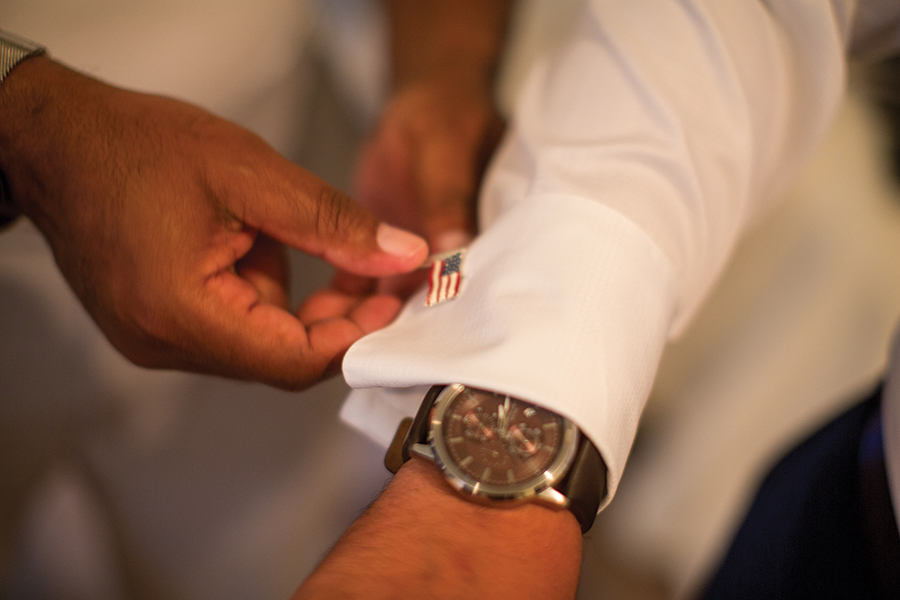
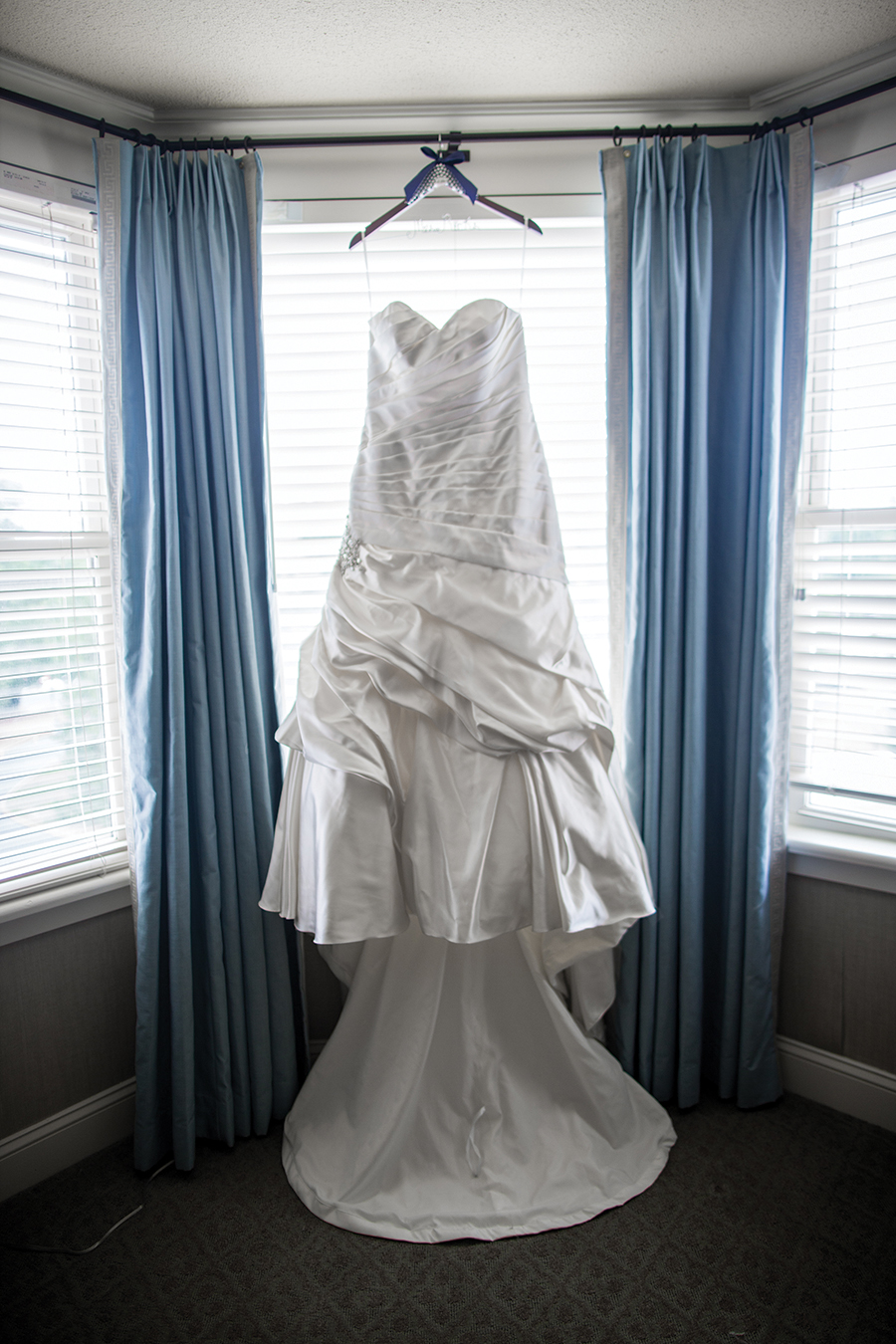
Carla and Jason Ricks grew up in Fayetteville, attended college in Greensboro, and currently live in Washington, D.C. For a couple so all over the place, the only place that made sense to have the wedding was in Pinehurst, where Carla’s family currently resides. With the majority of guests coming from out of town, Pinehurst was the perfect destination for friends and family to reunite, play golf, and enjoy the Fourth of July weekend. Multiple houses were rented for family and friends on the rental website Vacation Rentals By Owner, so attendees could be comfortable during the weekend and party away without having to worry about disturbing hotel guests.

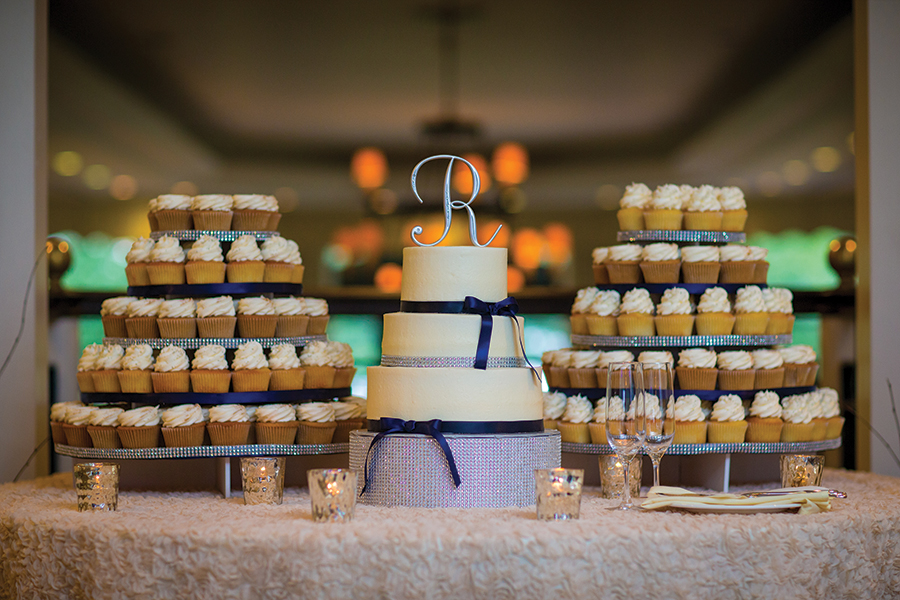
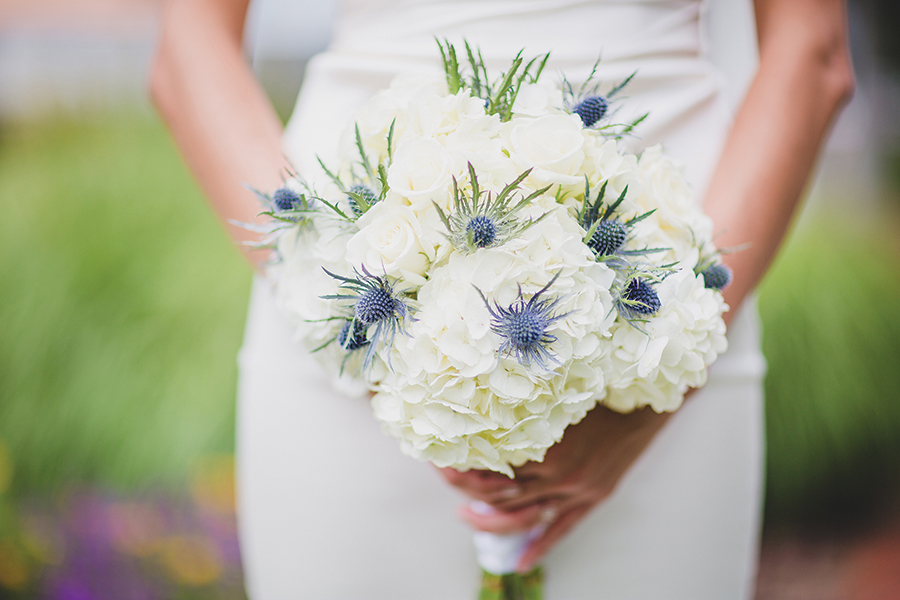
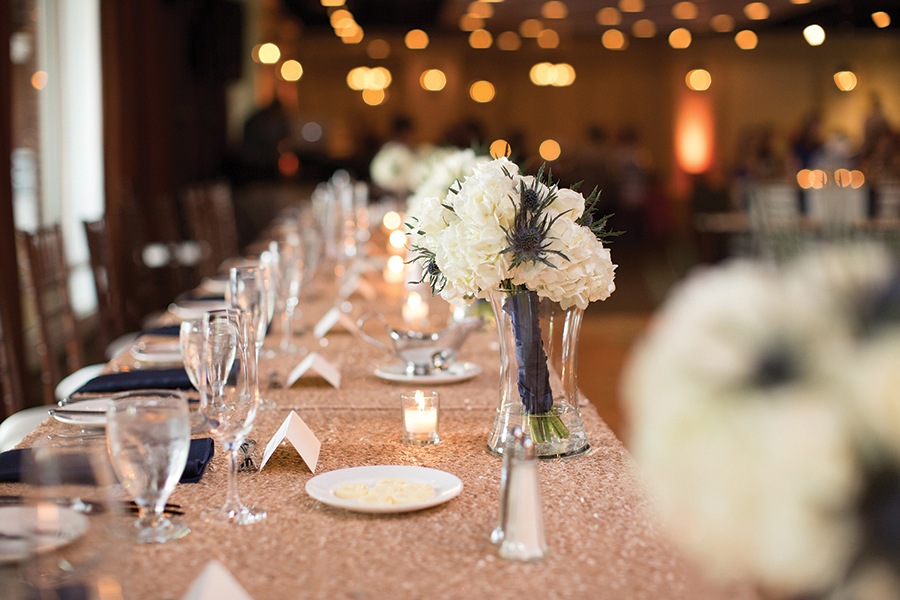
Photography: Best Perspectives Photography | Ceremony: Pinehurst Country Club | Reception: Pinehurst Country Club, The Outlook Ballroom | Dress: Bridal & Formal Center | Shoes: International Concepts | Flowers: Christy’s Flower Stall | Hair & Makeup: Angie Bullock & Jaime Henderson of Greensboro | Cake: C Cups Cupcakery | Entertainment: 5-Star Entertainment of Fayetteville, NC

Kristin & Justin Morris

KRISTIN & JUSTIN MORRIS

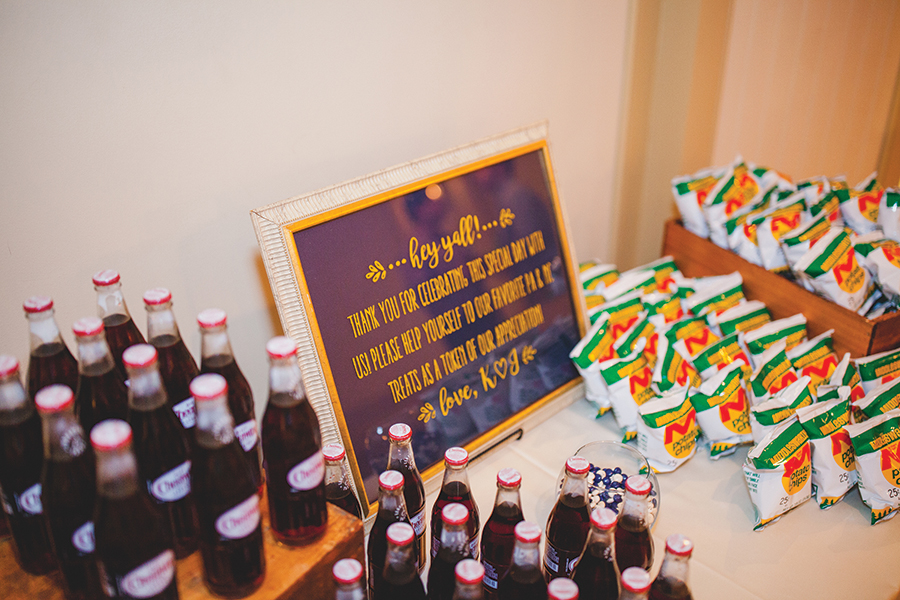
Pennsylvania native Kristin moved down to Moore County for a teaching position in 2014. At the urging of her co-worker, she attended a rugby game in Southern Pines, where she met Justin, a member of the Southern Pines Rugby Club. The two met while having drinks after the rugby match and hit it off instantly — after a year of dating they were married. The couple’s laid-back personalities contributed to their casual and classy wedding at the Carolina Hotel. The bride and groom each wore custom-designed Nike sneakers as they walked down the aisle.

Photography: Jennifer B Photography | Ceremony: Carolina Terrace of the Carolina Hotel | Reception: Carolina Hall of the Carolina Hotel | Dress: Vera Wang | Shoes: Custom Nikes | Flowers: Aldena Frye | Hair & Makeup: Retro Salon | Cake: Carolina Hotel | Entertainment: Stylus DJs