Queen of the Air

Amelia Earhart, George Putnam and their high-flying love affair

By Bill Case

They called it an autogiro. This unusual flying machine was something of a hybrid between an airplane and a helicopter. Like an airplane, it possessed wings and a propeller. But the wings were so stubby, they seemed a design afterthought. While resembling a helicopter with its horizontal rotary blades whirling atop, the aircraft was powered differently. It did not fly very fast — typically 80 miles per hour — and held only enough fuel to safely fly two hours at a stretch. But, flown by a proficient pilot, it could take off and land in an area no bigger than a suburban back yard. Before November 11, 1931, it is doubtful anyone in Moore County had observed, in flight, an aircraft requiring virtually no runway for its operation. That was one reason why on an Armistice Day mid-afternoon, well over 1000 people flocked to the dirt and grass airstrip known as Knollwood Field (now Moore County Airport) to hail the arrival of an autogiro.

Despite its novelty, such a sighting wouldn’t ordinarily have created such a stir that stores and schools in Pinehurst, Southern Pines, and Aberdeen would close. The pilot flying the aircraft was the one causing most of the hubbub — 34-year-old Amelia Earhart, one of the most famous women in America.

It had already been a long Armistice Day for the slender Kansas native. At daybreak, she had flown out of Charlotte, piloting her ungainly aircraft two hours east before setting down in a field five miles north of Fayetteville. Wearing the leather jacket, scarf, jodhpurs, and boots she typically donned in the air, Earhart was whisked by a welcoming committee into Fayetteville’s downtown by open car. There she was feted by thousands of adoring citizens who cheered the waving pilot as she slowly passed by.

At the conclusion of the parade, the soft-spoken but confident Earhart addressed an all-ears crowd at Fayetteville’s Market House, even putting in a good word for the Beech-Nut Packing Company’s chewing gum. George P. Putnam, a promotional genius who was newly wedded to Amelia, had arranged for Beech-Nut to sponsor her three 1931 hopscotching autogiro tours. The company’s emblem was prominently emblazoned on the fuselage. All the fuss in Fayetteville had put her behind schedule as the throng at Knollwood Field waited impatiently to catch sight of Earhart’s “flying windmill” on the horizon.

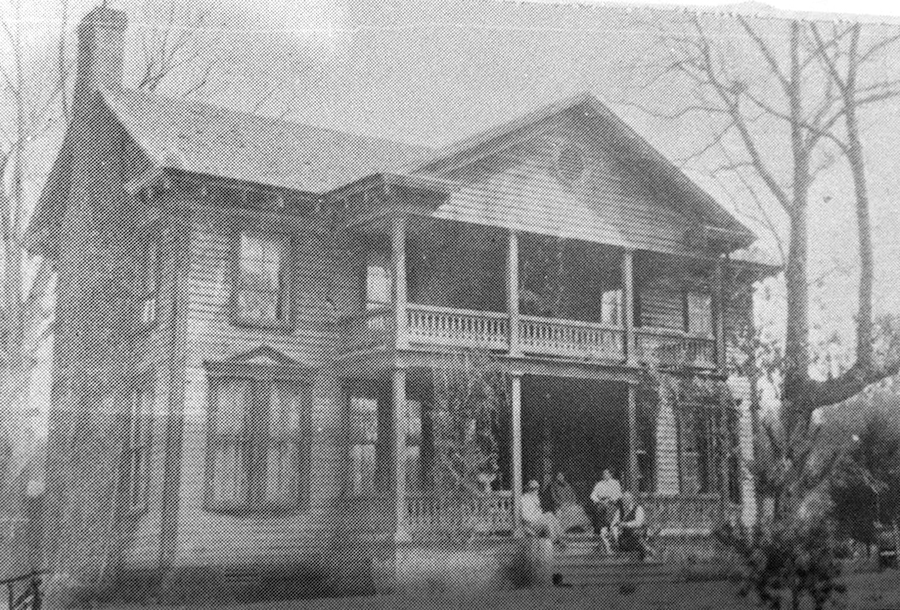
This was the famous aviator’s first visit to Moore County, though her husband was no stranger to the Sandhills. Dorothy Binney Putnam, George’s ex-wife, had spent considerable time here. In fact, until Earhart’s recent marriage to Putnam, she and Dorothy had enjoyed a close friendship, sharing among many things their mutual love of the outdoors. Elegant and statuesque, Dorothy’s affection for the wilderness had been kindled during family vacations near Carthage where in 1901, her father Edwin Binney, the founder and inventor of Crayola Crayons, had purchased a 1,300-acre plantation deep in the pine forest. The property featured a rambling antebellum plantation house with a second floor balcony that provided a magnificent view of the home’s surroundings. The spread was called “Binneywood.” It is uncertain why Connecticut-based Edwin selected Carthage for a vacation home though it probably had something to do with the proximity of the North Carolina mining operations that supplied raw materials for Crayola.

Dorothy Putnam had regaled Earhart with tales of the wonderful times she and her two sisters had enjoyed at Binneywood. Dorothy’s diary entry during the 1908 Christmas season at Binneywood describes an eventful and festive holiday atmosphere: “Up at dawn to go wild turkey hunting. Home at nine, then chopped trees, then quail hunting-good luck. Made fudge and sipped chocolate by fire.”

Despite the estate’s remoteness and their status as seasonal residents, Edwin Binney, known as Bub, and his wife became integral members of the Carthage community. They farmed, planted a peach orchard, reactivated the estate’s milling operation, and hosted country dances at Binneywood featuring rousing strains of banjoes and fiddles.
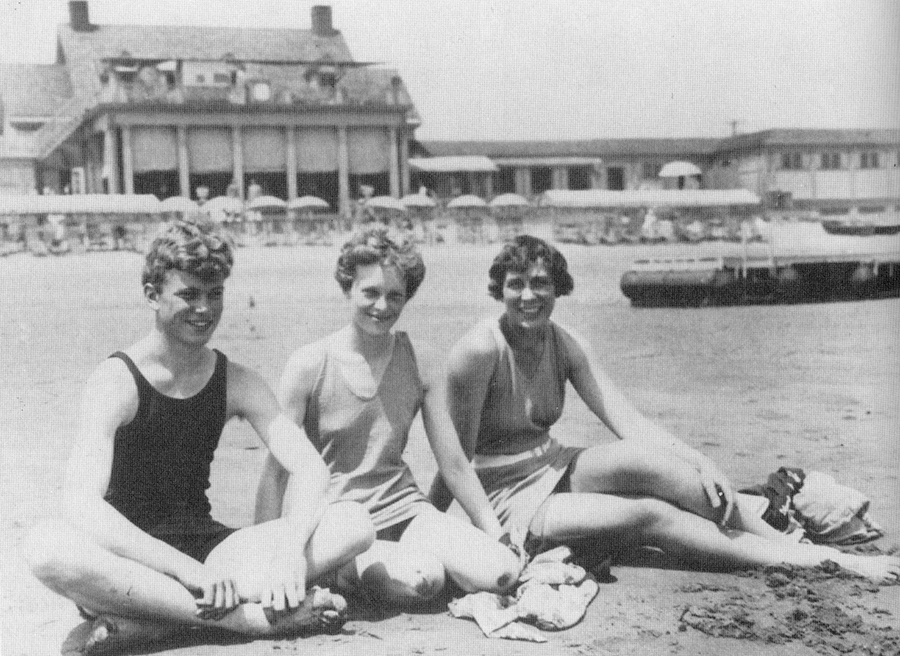
A particularly splendid event happened at the old plantation during the Christmastime of 1910 when Dorothy, a Wellesley grad, and George Putnam, whom she had met during a two-month western camping trip, announced their engagement. They married the following October. The newly wedded couple spent an extended honeymoon in Central America. Like Earhart, the two adventurers reveled in experiencing exotic and unfamiliar surroundings. The trip inspired Putnam to author his first book, The Southland of North America, with his new wife eagerly collaborating.

Then 24, Putnam had not yet joined the family’s renowned publishing concern, G.P. Putnam’s Sons, deciding instead to publish and edit the Bend Bulletin, a newspaper in faraway Bend, Oregon. It was an ideal place for the Putnams to begin their married life, indulging their penchant for the outdoors with horseback rides and camping trips into the recesses of the Cascade Mountains. Putnam proved to be an independent newspaperman and an advocate for progress by penning editorials urging that women be afforded the vote. He was even elected the town’s mayor. Dorothy also became a force in Bend’s civic life, raising funds for causes ranging from the Red Cross to fighting cancer. A tireless advocate for women’s suffrage, in 1912 she became the second female (after the governor’s wife) to vote in Oregon.

The Putnams’ first child, David Binney Putnam, was born in 1913. Soon thereafter, they moved to Salem, Oregon’s capital, where he took a post as secretary to the state’s governor while still retaining his position as the Bulletin’s publisher. During World War I, Putnam enlisted in the army which resulted in the couple’s moving to Washington, D.C. After his father died, Putnam decided to join the family business and they relocated to Rye, New York where Dorothy bore a second son, George, Jr. (“Junie”) in 1921.

Ensconced with G.P. Putnam’s Sons, George’s career skyrocketed as he became the company’s go-to spokesman. He was increasingly away on an unceasing quest to unearth new stories. Longing for adventures of her own, Dorothy seized the opportunity to travel with son David on a 10-week oceanographic expedition to the South Seas of the Pacific in 1925. She reveled in her role as a scientist on the voyage while 12-year-old David recorded a narrative of his experiences that Putnam published under the title David Goes Voyaging. The book was a surprising hit.

The elder Putnam embarked on his own expedition to Greenland in 1926. “I practiced what I published,” he wrote. David tagged along with his father. The expedition proved a success and provided the fodder for the young teenager’s second book, David Goes to Greenland. A second father-son expedition to Baffin Island followed in 1927 resulting in David’s third book. When he got back, Putnam immersed himself in bagging the rights to Lindbergh’s story for G.P. Putnam’s Sons.

Home in Rye, Dorothy stayed socially active, entertaining explorers such as Admiral Richard Byrd. Will Rogers said that one “couldn’t snare an invitation [to Dorothy’s parties] unless you had conquered some uncharted territory.” But she was restless and bristling at being the one generally left behind to tend the home fires. With all the time apart, the couple increasingly led separate lives and the ties of their union began to unravel.

Still vibrant at age 38, Dorothy yearned for passion in her life. She found it in 1927 in the person of George Weymouth (“GW” in Dorothy’s diary), a handsome and polished sophomore at Yale who had been tapped to tutor David at home. Though guilt-ridden by her infidelity, Dorothy nevertheless thought it unjust that men usually got a pass. “Why is it there are so many men who consider love outside the bonds of matrimony the privilege of the male only?” she asked in her diary. When Dorothy discovered evidence that her husband was also having an affair, she penned that his dalliance lightened “my sense of fidelity.” Dorothy’s affair with GW was in bloom at the time Amelia Earhart came into the Putnams’ lives.

Earhart’s unlikely emergence occurred in 1928 in the wake of Charles Lindbergh’s historic flight. An American heiress, Amy Phipps Guest, made it known she was personally bankrolling the first flight across the Atlantic with a woman onboard. Guest acquired a Fokker plane and rechristened it the “Friendship.” Then she set about finding the right female to make the journey.

When George Putnam got wind of Guest’s quest, he offered to take charge of the search. If Putnam could position himself as the one to choose the candidate, his publishing company would have the inside track on the woman’s story. Having already enjoyed remarkable success promoting non-fiction first-person adventures, including Byrd’s Skyward and obtaining the rights to Lingbergh’s story, the gambit was right up Putnam’s alley.

Earhart was a natural candidate. She had learned to fly in 1921 while living in Los Angeles. She was particularly attracted to the challenge of achieving aviation “firsts.” Two years after her first flying lesson, Amelia established a new high altitude mark. She’d also flown in air shows. In 1923 the young pilot became the first woman granted a certificate by the aeronautics branch of the Department of Commerce, the precursor of the Federal Aviation Administration. After moving to Boston in 1928, Earhart joined the local chapter of the National Aeronautic Association. When George Putnam summoned her to New York in May 1928 for the most important interview of her life, she was leaving behind a job that had nothing whatsoever to do with flying. She was employed as a social worker at Boston’s Denison House.

The attraction was nearly instantaneous. “Before I had talked to him for very long I was conscious of the brilliant mind and keen insight of the man,” wrote Earhart. Putnam knew Earhart would be perfect for the “Friendship” flight. Not merely a proficient pilot, she was a promoter’s dream. Slender, with short curly blond hair, she was attractive in a tomboyish yet feminine way. Another bonus was the young woman’s uncanny resemblance to Lindbergh —not just physically, but also because of her direct but soft-spoken manner. Soon the announcement came that Earhart had been chosen. Delayed two weeks by poor weather, the venture’s participants, chief pilot Bill Stultz, co-pilot Slim Gordon, Earhart, and Putnam were forced to hole up in Boston’s Copley Plaza Hotel to wait out the storm.
Putnam asked his wife to join the group. He figured Dorothy’s adventurous, free-spirited personality would make her a conversational match with Amelia. His assessment proved correct. The two chatted like schoolgirls concerning their shared interests in theatre, literature, fishing, and horseback riding. Finally the weather cleared and the “Friendship” was aloft. The flight turned out to be most challenging. An engine kept cutting out and the crew lost their radio connection. “Friendship” was blown off course, and even before land was sighted the engines began sputtering as they ran short of gasoline. Though Bill Stultz thought he was landing in Cornwall, it was actually Wales, but the plane and crew had arrived safely.

Though she had been little more than a passenger, the flight catapulted Earhart into stardom. It was the beginning of a life loaded with personal appearances, parades, and speeches. After celebratory tours, first in England and then America, she holed up in Rye at the Putnam home adjacent to the posh Apawamis Club’s golf course. Under George’s direction, she commenced writing the book that would be called 20 Hrs., 40 min.: Our Flight in the Friendship.

Aviation’s budding superstar found time for fun in Rye. She and Dorothy shopped, swam, and attended upscale social occasions. It was Dorothy, not George, to whom Amelia dedicated 20 Hrs., 40 min. In her book Whistled Like a Bird — The Untold Story of Dorothy Putnam, George Putnam, and Amelia Earhart,” Sally Putnam Chapman, Dorothy and George’s granddaughter, wrote, “had it not been for my grandparents, Amelia would not have moved in the circles she did.” Dorothy introduced Amelia “to a glittering array of celebrities, artists, adventurers, and socialites.” With her newfound celebrity and the success of her book came financial rewards. It became abundantly clear that Earhart would never return to her previous life at Denison House.

Her relationship with George Putnam was also deepening. Within a month of Earhart’s arrival in Rye, an entry in Dorothy’s diary notes, “George is absorbed in Amelia and admires and likes her. Maybe he’s in love with her.” Eventually, she became convinced that her husband and the flier were “a couple.” Putnam certainly was smitten. His later writings indicate he considered Amelia the epitome of chic. Reminiscing after her death, he wrote, “I think she really did not realize that often she was very lovely to look at.” He gushed about, “her beautifully tailored gabardine slacks,” and “the tapering loveliness of her hands [that] was almost unbelievable.” Apparently Vanity Fair agreed. The magazine shot a fashion spread of Earhart that hit the newsstands in 1932.

Dorothy terminated her ongoing affair with GW in August 1928, although the two remained friendly. Nevertheless, her diary entries do not suggest she yearned to be reconciled with a husband she no longer loved. She broached the subject of divorce and, though George made an attempt to patch things up, that effort seemed halfhearted since he remained in constant contact with Amelia.

By June of 1929, after discovering another affair with Frank Upton, a flier and war hero, Putnam informed his wife that he too wished the marriage to end. Despite the fact that Earhart’s relationship with Putnam had become an open secret, Amelia invited Dorothy to accompany her in July as the first female passengers to fly coast-to-coast in a Transcontinental Air Transport commercial airplane. Pleased to be included as part of an aviation first, Dorothy accepted. She and her husband’s lover remained cordial during their trip. A week later they were together in the Galapagos Islands on a deep-sea dive. That excursion marked the end of their social time together though both women thereafter invariably professed respect and admiration for one another.

After nearly getting cold feet, Dorothy obtained a Reno divorce from George on December 19, 1929. She remarked that day in her diary, “How scared and empty I feel!” She sought to remake her life with her two children and Upton, her new husband, in Fort Pierce, Florida where her father had invested in local real estate. She purged her sadness by building a Spanish-style home on an 80-acre tropical wilderness.

At the time, Earhart told a friend that she was fond of Dorothy and considered the divorce “a shame.” But her primary focus was on bolstering her status as America’s foremost female aviator. She cemented that position with her vagabond solo round-trip transcontinental flight in 1929. Putnam kept her busy at each stop, scheduling lectures, personal appearances, and newspaper interviews. Earhart also started an organization comprised solely of women in aviation which became known as the “Ninety Nines.”

After resigning from the family business and joining another publishing company, George Putnam turned his attention to relentlessly pursuing marriage with Earhart. Reluctant to forego her independence, she turned him down at least twice. In February 1931, Earhart finally accepted his proposal, but with conditions. She wrote to him, “On our life together, I want you to understand I shall not hold you to any medieval code of faithfulness to me nor shall I consider myself so bound to you . . . I must extract a cruel promise, and that is you will let me go in a year if we find no happiness together (and this for me too).” Putnam accepted her terms. Some believe that her mention of an open marriage (as well as a suspected subsequent affair with Gene Vidal, Gore’s father) signaled that the couple’s union was more of a business arrangement than a true romance. But David Putnam later observed, “In the privacy of their home, they [his father and stepmother] were lovingly demonstrative.”

Earhart’s forceful establishment of the marriage’s terms undercut the impression of some that Putnam was the puppet master in the relationship. George himself later acknowledged that often Amelia held the upper hand, writing that she was “endowed with a will of her own, [and] no phase of her life ever modified it, least of all marriage.”

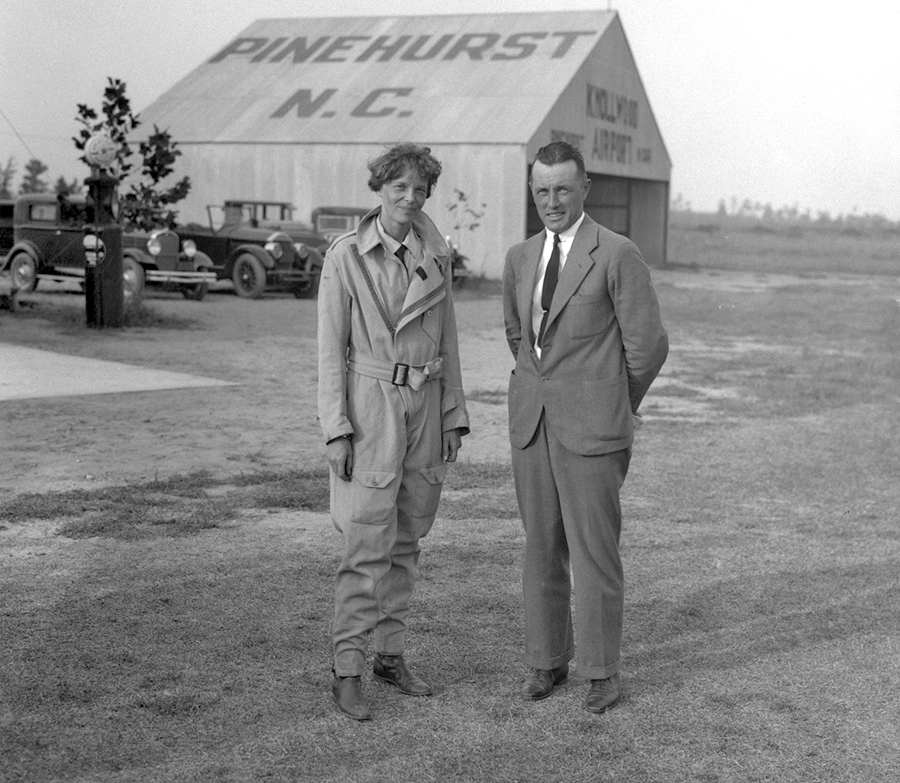
In any event, the newlyweds’ fledgling marriage was off to a good start as Amelia and her autogiro made their way into Moore County airspace. Tightly squeezed into the open cockpit of her Pitcairn PCA-2, Earhart peered through her goggles attempting to locate the airfield. As it was a pet peeve of the aviatrix that many of the new airports sprouting up like spring dandelions lacked identifying signage, Earhart was pleased to spot the word “PINEHURST” displayed in giant letters on the roof of Knollwood Field’s hanger.

The gathered onlookers, including the mayor and commissioners of Southern Pines, representatives of Pinehurst, and Mrs. W.C. Arkell, wife of the Beech-Nut Packing Company vice-president, watched as she flawlessly executed her landing. Perhaps the person most gratified by Earhart’s appearance was the manager of the airport, Lloyd Yost. A celebrated pilot himself, just nine days before, he had instituted shuttle flights from Knollwood Field to Raleigh, boasting that the new shuttle cut travel time from New York to Pinehurst down to six hours. In his wildest imagination, he could never have conjured up better publicity for showcasing the service than having the world famous Earhart drop in. Yost personally greeted his fellow pilot and made certain he was photographed alongside her.

Earhart apologized for keeping everyone waiting and cheerfully set about signing autographs. She did not linger long. Her stop at Knollwood was primarily for refueling with no time allotted for parades or lengthy speeches. Within a half hour she was airborne again. Amelia made good her return to Charlotte and would be back in the air the next morning destined for Spartanburg where thousands more would greet her.
Not one to rest on her laurels, in May of 1932, Earhart emulated Lindbergh’s triumph by becoming the first woman to make a solo flight across the Atlantic. The wind blew against her the entire way and, running low of fuel, she was forced to abandon her planned destination of Paris, landing instead in the field of a nonplussed Irish farmer. Though Amelia’s star had never waned since her “Friendship” flight, her solo trip across the ocean propelled “The Queen of the Air” into a still higher galaxy.

A busy 1933 summer beckoned, what with an upcoming meeting with Eleanor Roosevelt and a transcontinental air race, so George Putnam and his new wife, Amelia, decided to take some time for themselves. The Sandhills drew them back in March when they holidayed together in Pinehurst at the Carolina Hotel. The stay was presumably coupled with a visit to George’s mother who had taken the Schaumberg House on New York Avenue in Southern Pines for the season.

One consequence of the Earhart-Putnam marriage was that George’s two sons, David and George, Jr., developed a mutual affinity with Amelia. In Whistled Like a Bird, Chapman writes, “When the boys visited, she [Amelia] made sure to set aside time for horseback riding, sailing, picnicking, and swimming.” And the Putnam boys happily returned the affection their stepmother demonstrated toward them.

Other notable flights followed for Amelia, but they paled in comparison to the imposing 29,000-mile round-the-world flight she started planning in 1936. After one jettisoned attempt, she tried another in June 1937 with mechanic Fred Noonan aboard her Electra aircraft. George, David, and his new wife Nilla saw Amelia off from Miami. After completing 22,000 miles of the journey, Earhart and Noonan spent the final layover of their lives in New Guinea. During the next leg to the Howland Islands, radio contact was lost with the airplane, and Earhart and Noonan were never heard from again. A two-week U.S. Navy search over 360,000 square miles found no trace of them. Putnam refused to give up hope, desperately enlisting psychics for assistance, all to no avail. Amelia was declared legally dead in 1939.

A devastated Putnam wrote an homage to his wife entitled “The Sound of Wings.” He remarried in 1939 to his third wife Jean Marie Consigny, but it only lasted five years. He would marry one more time, to Margaret Havilland. Despite his advanced age, Putnam served in World War II in an intelligence unit. Thereafter, he and Margaret operated a resort in Indian Wells, California prior to Putnam’s passing away in 1950 at age 62. His sons, David and George, Jr., led productive lives. David flew B-29’s in World War II and enjoyed a flourishing real estate development career in Fort Pierce before dying at age 79. George, Jr. served in the Navy during the war, and survived the torpedoing of his ship. He owned construction and citrus businesses in Florida, and lived until 2013.

A decade after the engagement of George Putnam to his daughter, Dorothy, Edwin Binney and his family shifted their attentions from North Carolina to Florida, and the creator of Binneywood sold it in 1920. The plantation house burned to the ground thereafter. By Way Farms now operates an equestrian-related facility on the site.

Dorothy would successfully remake her life in Fort Pierce, involving herself in organizations related to women’s rights, aviation, gardening, and conservation. She relished the serenity of her tropical home and orange grove, which she named “Immokolee.” But her marital life was anything but serene. Upton suffered from a serious drinking problem resulting in a rapid end to that union. A third marriage also failed. She finally found contentment in her fourth marriage with Lew Palmer, the orange grove’s manager. She died at age 93 in 1982, but not before sharing with granddaughter, Sally Chapman, the diary of her turbulent but fascinating life. Sally now resides at the cherished Immokolee. She too has a Moore County connection as she is the wife of John Chapman, son of Pinehurst golf great Dick Chapman.

The exceedingly remote possibility that Earhart somehow survived a crash and lived on in the South Pacific is just one of the more recent theories that have kept the lost pilot frozen in time in our minds. Captured in smiling black and white photographs and newsreels, she remains the tousle-haired, rail-slim, modest but fiercely independent heroine who flew over the pine trees into Knollwood Field 86 years ago. PS

Pinehurst resident Bill Case is PineStraw’s history man. He can be reached at Bill.Case@thompsonhine.com.

Cuppa Your Own

Tea is a natural in the Sandhills

By Jan Leitschuh

Dark, wet days brighten considerably with a “cuppa,” warding off chilly winds and damp spirits. The Brits have long known the restorative power of tea.

I had a chance to hike the Great Glen Way in Scotland a few years back — we did it in a civilized fashion, stopping at bed-and-breakfasts for the night. Always, waiting for us, was a tea setup in the room, and always, we made a cup after a long day of walking. The tea never failed to work its magic reviving tired hikers.

While we associate tea with the United Kingdom, it actually originated in the Far East, as in “all the tea in China.” Few realize the tea plant also grows well in many parts of North Carolina. Old plantations in South Carolina are often found to have a few old plants. The gardens here at Weymouth sport a healthy specimen, too. 

Surprised?  Yet no one is surprised that camellias live in the Sandhills.

Tea does indeed come from a camellia plant, and that variety is Camellia sinensis, the tea camellia.

Seems like a kitchen gardener could have a little fun with tea.  A few years back I bought a plant on a visit to Charleston, South Carolina, and installed it in my yard. When I had the good fortune to meet enthusiast and prominent North Carolina tea grower Christine Parks last month, I pumped her for further instructions.

The owner of the garden club mecca Camellia Forest Tea Gardens, Parks grows her artisanal teas near Chapel Hill.  Delving in after first exposure, the more Parks learned, the more she was hooked. She was seized with the notion of teas, and growing the tea plants. Here, she thought, “was a passion that would keep me learning for the rest of my life, growing the plant, processing the leaves, the history and culture. More importantly, I just love working with the leaf, the aromas of the leaf — from the plants warming in the sunshine and the leaves drying.”

Popular in springtime for tours, Camellia Forest Tea Gardens has about half an acre in tea, “with hundreds of plants and many different varieties collected from all over the world, especially cold-hardy varieties that do well in our climate and throughout the Southeast and Mid-Atlantic states,” says Parks. 

A prominent North Carolina tea expert, Parks offers hands-on workshops. “(Husband) David’s family has been growing tea in their Chapel Hill garden for more than 35 years,” she says. “We started this current garden in 2006 to test new varieties and to provide a resource for gardeners who were interested in growing tea.”

No bright, showy blooms for the tea camellia. While its flowers are pale, small and not particularly showy, its green matter is highly valued. A bushy evergreen shrub, sometimes even a small tree, this plant’s leaves and leaf buds are harvested to produce tea. From this species of camellia comes white tea, green tea, oolong, black and pu-erh teas. The plant matter is processed differently to produce varying levels of oxidation, which gives us those different types of tea to drink. 

Camellias prefer Zones 7-9, and here in the Sandhills, we are 8a. Tea plants are best in semi-shade, though commercial growers use full sun and drip irrigation. A half-day of sun is probably ideal. They love sandy, slightly acid soil — sound like any place we know? — with lots of organic matter, similar to azaleas.  Mulch and regular water are essential to helping a new plant get started. 

Fifty inches of rainfall a year, or more, with a little help in dry times, is preferred. The shrubs make screens or background plants, and the plant is mildly resistant to damage by deer. They grow a strong taproot, and are unaffected by strong winds. The small flowers are a useful source of pollen to support bees over the winter.

Tea plants will grow into a tree if left undisturbed, but cultivated plants are pruned to waist height for ease of plucking. Fertilize lightly in spring with a balanced fertilizer, but if more growth is desired, don’t over-fertilize — more water will bring on new growth. Skip harvest the first few years to give the plant a chance to establish itself.

The young spring growth that the bush produces in “flushes” is prized for tea, and this is the season that draws the garden clubs and other visitors to Parks’ tiny tea farm. These “flushes” are harvested for processing. Plucking stimulates new growth in a few weeks. Fresh leaves contain about 4 percent caffeine, as well as other mildly stimulating compounds, including theobromine. The young, light green leaves are harvested for tea production — look for the short white hairs on the underside. 

Home gardeners picking for the first time might aim for the first two leaves and the unopened bud at the end of a twig. Older leaves are deeper green. Different leaf ages produce different tea qualities, since their chemical compositions are different. Usually, the tip (bud) and the first two to three leaves are harvested for processing. 

A palm-full of fresh shoots should yield a cup of tea, when dried. It takes many shoots to make a pound of tea. 

White tea may be the easiest to start with, since it is the least processed. Harvest one bud, or a leaf and a bud. Choose an area with good circulation, warm temperatures and about 65 percent humidity, explains Parks’ informative website, teaflowergardens.com. Let the leaves wither in the shade, until they look like they are starting to dry out, then complete the drying in an oven with very low temperatures — 170-200 degrees. This might take 15-20 minutes, so stay close. Store in an airtight container for up to a year.

Green tea is also worth trying. “The least oxidized tea, leaves are heated to inactivate enzymes that transform tea catechins into theaflavins and thearubigins. These components are part of what contribute to the unique flavors of green versus black and oolong,” according to teaflowergardens.com. Harvest two leaves and a bud in the morning, and spread out on a tray with good circulation. Heat the leaves for about 3-5 minutes using either steam (a vegetable steamer will do) or by stirring the fresh leaves in a dry pan until they are moist and hot. Depending on how much you have, roll the leaves in a clean cloth (or your hands for smaller amounts) to release the juices. Dry in an oven at a low temperature, as with white tea.

Parks still finds the process captivating: “I was hooked by the aromas of the leaf — fresh in the sunshine and as it went through processing to tea.”

Processing the tea leaf promotes the development of new chemical compounds which alter its taste as well as its properties.  It can be difficult to generalize by type of tea as to the health benefits of each, and there is some overlap. 

Over 4,000 years ago, tea was drunk strictly as medicine, to both stimulate and detoxify. Gradually, it became popular as a delicious, bitter beverage consumed for its own sake. The health benefits still exist, with today’s science validating its original use. Besides comfort, the leaves have been used in traditional Chinese medicine to treat asthma, acting as a bronchodilator. Due to its antioxidant powers, tea is being investigated for benefits in relation to cancer prevention, weight loss, strengthening the immune system, preventing cell mutations and in the treatment of cardiovascular diseases. 

The best time to visit the garden, says Parks, is when tea is growing from early May through October. With a nominal charge for tea tastings, along with more formal workshops by request, Camellia Forest Tea Gardens offers tours by appointment for groups and individuals. Two popular free open house events in late May and October highlight the tea garden.

“We love to learn, and share our experiences growing tea in North Carolina,” says Parks.  PS

Parks can be reached by email at teaflowergardens@gmail.com, through the website at www.teaflowergardens.com or on Facebook (Camellia Forest Tea Gardens). To order tea plants, contact the nursery directly at www.camforest.com.  

Jan Leitschuh is a local gardener, avid eater of fresh produce and co-founder of the Sandhills Farm to Table Cooperative.

Almanac

It is deep January. The sky is hard. The stalks are firmly rooted in ice.    Wallace Stevens, “No Possum, No Sop, No Taters”

Begin Again

Perhaps it’s true that the best narratives are cyclical, taking the reader on a figurative journey that ultimately leads them back where they started, yet, through some alchemical reaction, altogether transformed. Like the fool’s journey, or the legendary ouroboros eating its own tail.

Which brings us back to January.

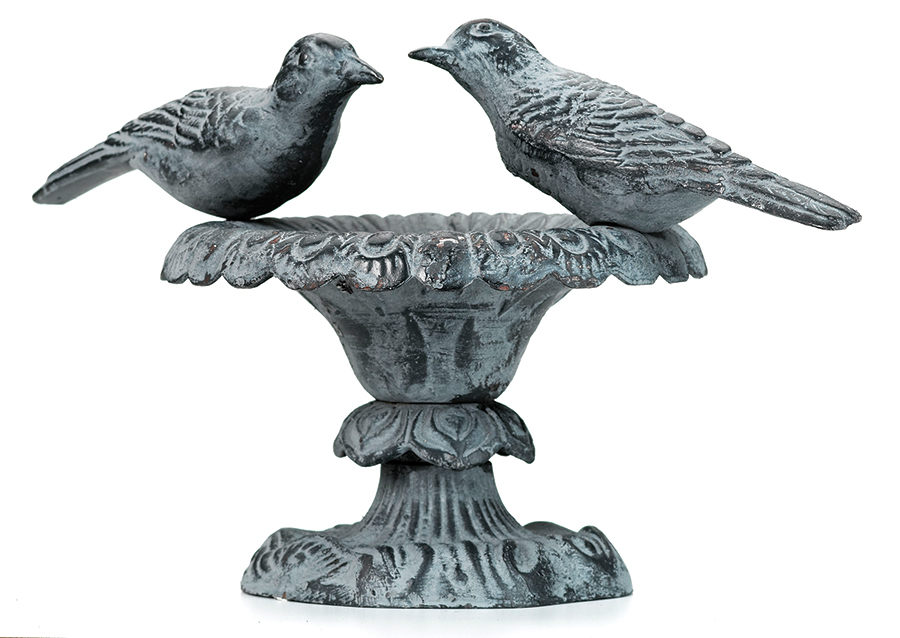
Outside, a pair of cardinals flits between the naked branches of a dogwood and the ornate rim of the pedestal birdbath. You think of the piebald gypsy cat who used to visit, how he would balance on the ledge to take a drink. Months have passed since you’ve seen him, but that drifter has charm. You’re sure he’s napping in some cozy sunroom, patiently waiting for the catkins and crocus, for the cheerily, cheer-up, cheer-up, cheerily return of the robin. The warmth of your own smile stretches across your face, and in this moment, all is well. 

On this first day of January, you imagine the New Year unfolding perfectly. Steam curls from your tea mug as an amalgam of flavors perfumes the air.

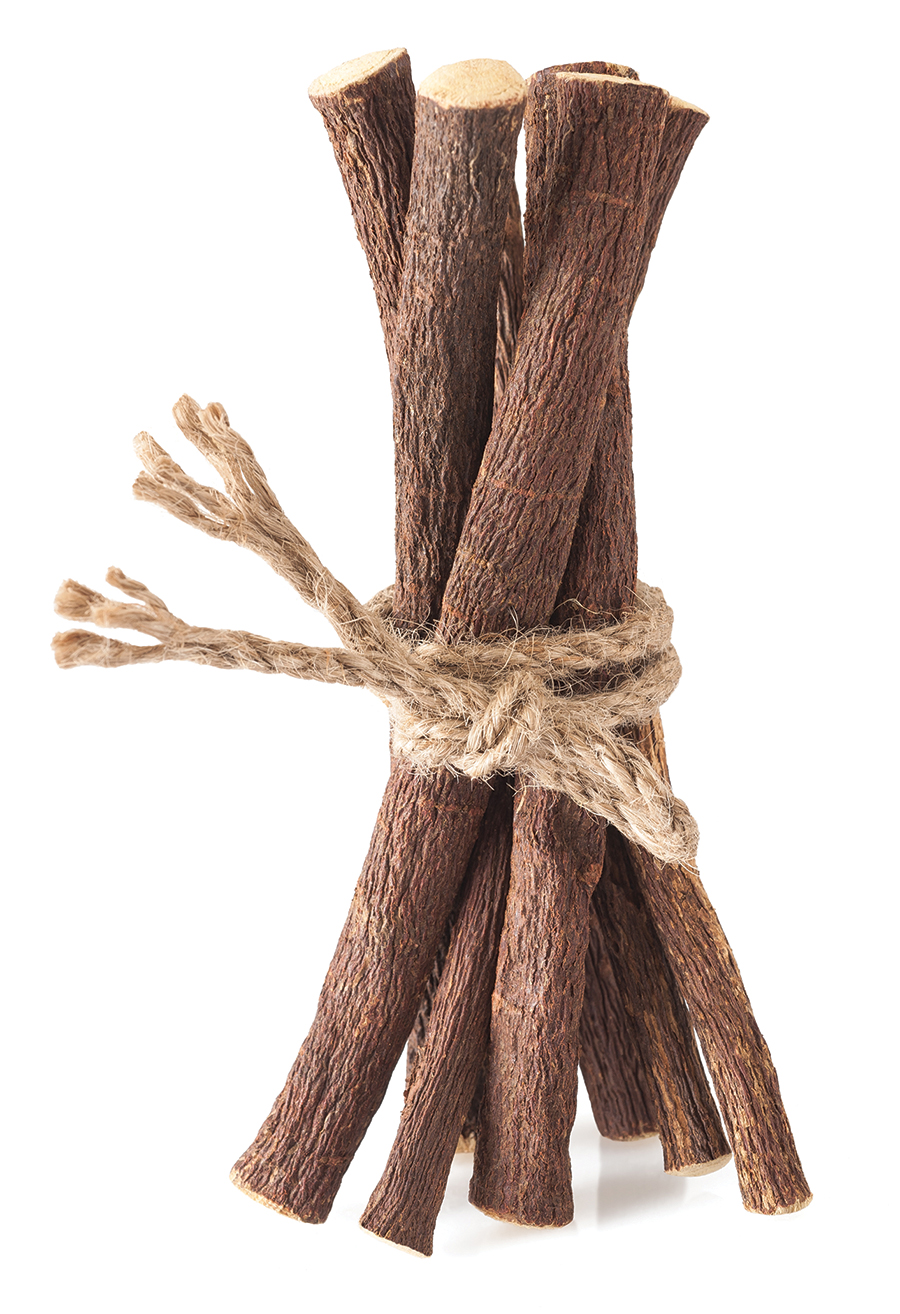
Cinnamon bark, licorice, ginger and marshmallow root . . .

Giving yourself permission to luxuriate, you reach for a favorite book of poems. “To read a poem in January is as lovely as to go for a walk in June,” said German author Jean Paul. You turn to a dog-eared page, can almost smell the honeysuckle and wild rose. You’ve read this poem many times, yet, like you, it is brand-new.

Blue Moon with Honey

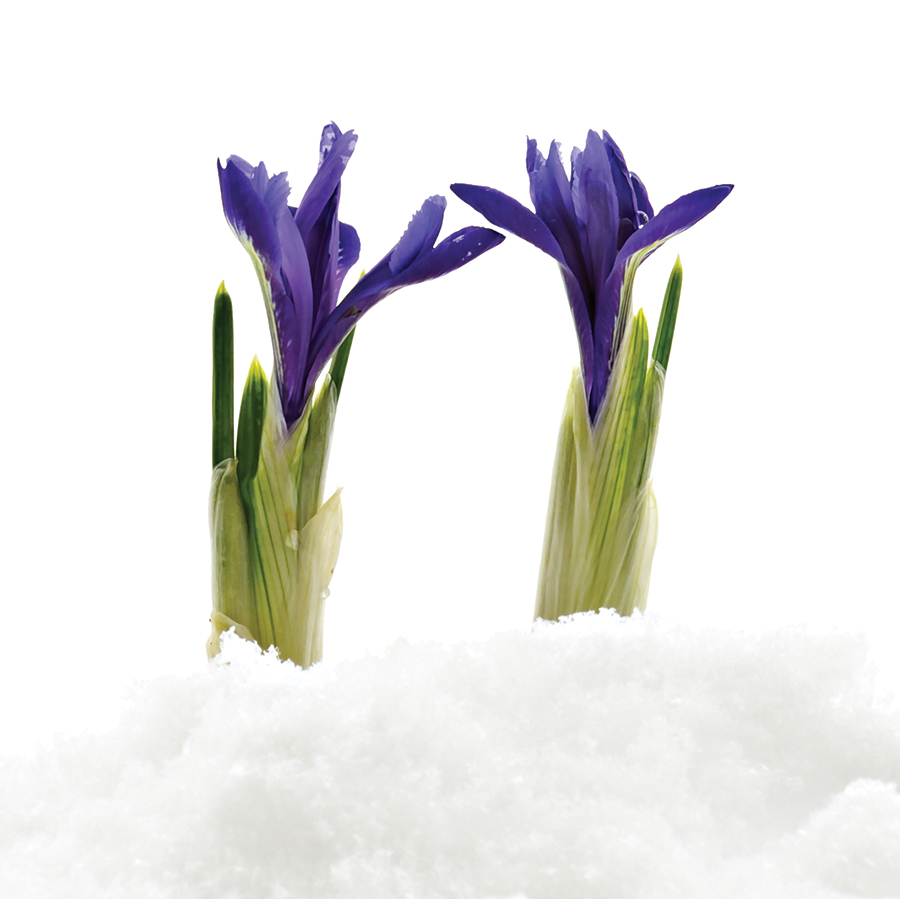
Henry David Thoreau could wax poetic on “That grand old poem called Winter.” Perhaps it’s not the easiest season to weather, but from darkness comes light. Behold phloxes and hellebores, snowdrops and winter-blooming iris, and on Wednesday, Jan. 3, until the wee hours of Thursday, Jan. 4: the Quadrantids meteor shower. 

Named for Quadrans Muralis, a defunct constellation once found between the constellations of Boötes and Draco, near the tail of Ursa Major, the Quadrantids is one of the strongest meteor showers of the year. Although a just-full moon may compromise viewing conditions, you won’t want to miss a chance to see this celestial event.

Twelfth Night (Jan. 5), the eve of Epiphany, marks the end of the Christmas season and commemorates the arrival of the Magi who honored the Infant Jesus with gifts of gold, frankincense and myrrh. Seeking a hangover cure following this night of merrymaking and reverie? Ginger tea. And don’t be shy with the honey dipper. The natural sugar will help your body burn off what’s left of the wassail.   

January’s blue moon falls on the last day of the month. Reflect upon the ways you let your own light shine on this rare and energetically powerful night. Like attracts like. What are you calling in for 2018?

To Your Health!

Traditionally served in a large wooden bowl adorned with holly and ivy, wassail is a hot alcoholic cider that spells celebration. Many recipes call for port, sherry and fresh-baked apples, but here’s a simple (un-spiked) version for you. Start now and wrap your hands around a mug of hot wassail within the hour. Serves four.

Ingredients

2 cups apple cider

1 cup orange juice

Juice of one lemon

2 cinnamon sticks

6 cloves

1/4 teaspoon ground ginger

1/4 teaspoon ground nutmeg

Instructions

Combine all ingredients in a large pan.

Bring to simmer over medium-low heat. 

Reduce heat. Continue simmering for 45 minutes. 

Ladle into mugs and enjoy.

There are two seasonal diversions that can ease the bite of any winter. One is the January thaw. The other is the seed catalogues.  — Hal Borland

New Year, New You

Time to ditch the toxins

By Karen Frye

The human body is remarkable. When you realize how much is going on inside — the synchronicity of the organ functions and systems — you’ll see everything works together like a well-oiled machine.

The body renews itself entirely every seven years. Some of the organs, such as the liver, renew themselves every four to five months. Our skin renews every seven days. New cells are formed to replace the old ones. Our bodies are capable of healing and renewing with no effort on our part, though our world today makes the work a lot more challenging.

Environmental toxins, herbicides, chemicals in water, caffeine, alcohol and prescription medications contribute to toxic overloads. Detoxing is not a recent fad. People have been doing various forms of detoxifying for hundreds of years. There are many methods. It is good to find a health care professional to guide you, and if you are on medications, discuss your plans with your health care provider first. There are changes you can make in your life that will give beneficial results with a little effort and willpower.

It is best to change your bad habits permanently into better ones, which may take time. You might just notice that you are feeling so much better through the detox process that you may keep some changes as part of your daily lifestyle.

Prepare yourself for your detox:

Set your mind to succeed. You won’t starve, and your body will appreciate the attention you are devoting to being healthier. Create a journal and record your thoughts and feelings so you can go back and read them later.

Clear your kitchen of the foods you want to avoid so you aren’t tempted. Remove all processed foods, sweets, soft drinks, etc.

Stock your pantry and refrigerator with seasonal fruits and vegetables, preferably organic. Have berries in the freezer to make smoothies.

Plan your schedule so you can get to bed at a reasonable time, and get enough sleep. Sleeping well helps your organs recharge, and assists the elimination of toxins.

Set aside a little time to exercise. Sweat is the body’s way of releasing toxins from the cells. I love Bikram yoga. Not only do you sweat, but the postures stimulate the glands and organs so they function optimally.

Drink lemon water with a pinch of Celtic or Himalayan salt upon rising. Use fresh squeezed lemon juice with warm or hot water. This is something that you might consider doing every day even after you finish your detox. And while we are talking about water, you must increase your water intake to at least 90 ounces. One of the most important functions of drinking a lot of water is how it helps the kidneys and liver do their job flushing toxins.

Replace your morning coffee with a cup of green tea. Matcha green tea contains the highest amount of antioxidants, and is more flavorful than typical green tea. Drink herbal teas throughout the day; dandelion and red clover are my recommendations.

Eliminate red meat, and if you must eat animal protein, choose free-range chicken, or wild salmon (in moderation). Try to eat mostly fruits and vegetables, especially dark, leafy green salads.

Fiber is important to keep things moving. Chia seeds are an excellent source. They are not only high in fiber, but loaded with omega-3 fatty acid and high in antioxidants. You can add chia seeds to almost anything.

There are “detox kits” that contain herbs to help your body in the process. Please keep in mind that you can do a lot on your own by cleaning up your diet.

You can design your detox for a week or longer. You might find that you really like the way you feel. Often you will sleep better, and have more energy and stamina throughout the day. Your skin will become radiant, and your eyes will be clearer. Digestion will be improved, and your immune system will be stronger.

Whatever you do this year, set yourself up for success. Think healthy thoughts, eat healthy foods, exercise, and most of all, be happy PS

Karen Frye is the owner and founder of Natures Own and teaches yoga at the Bikram Yoga Studio.

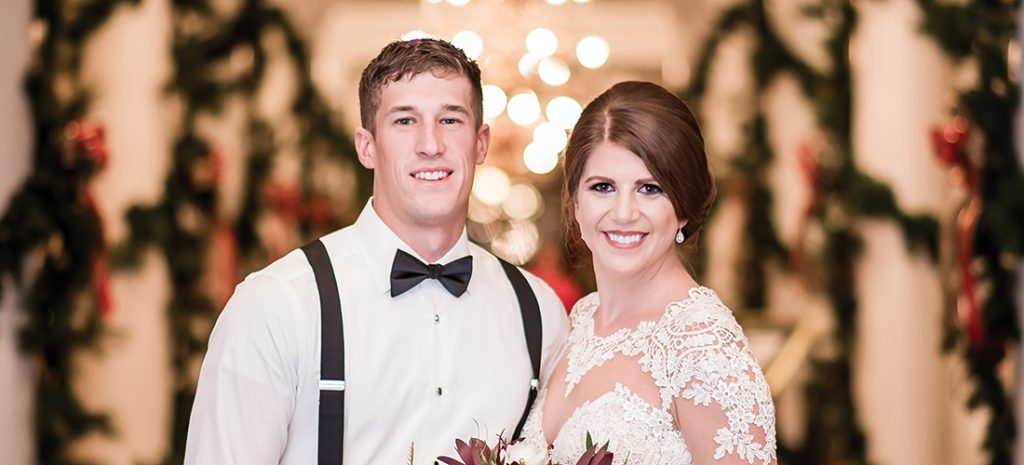
Kathryn & Hayden Schertzer

KATHRYN & HAYDEN SCHERTZER

Photographer: Heather Gunter Photography Wedding Coordinator: Bailey Grinde, Pinehurst Resort

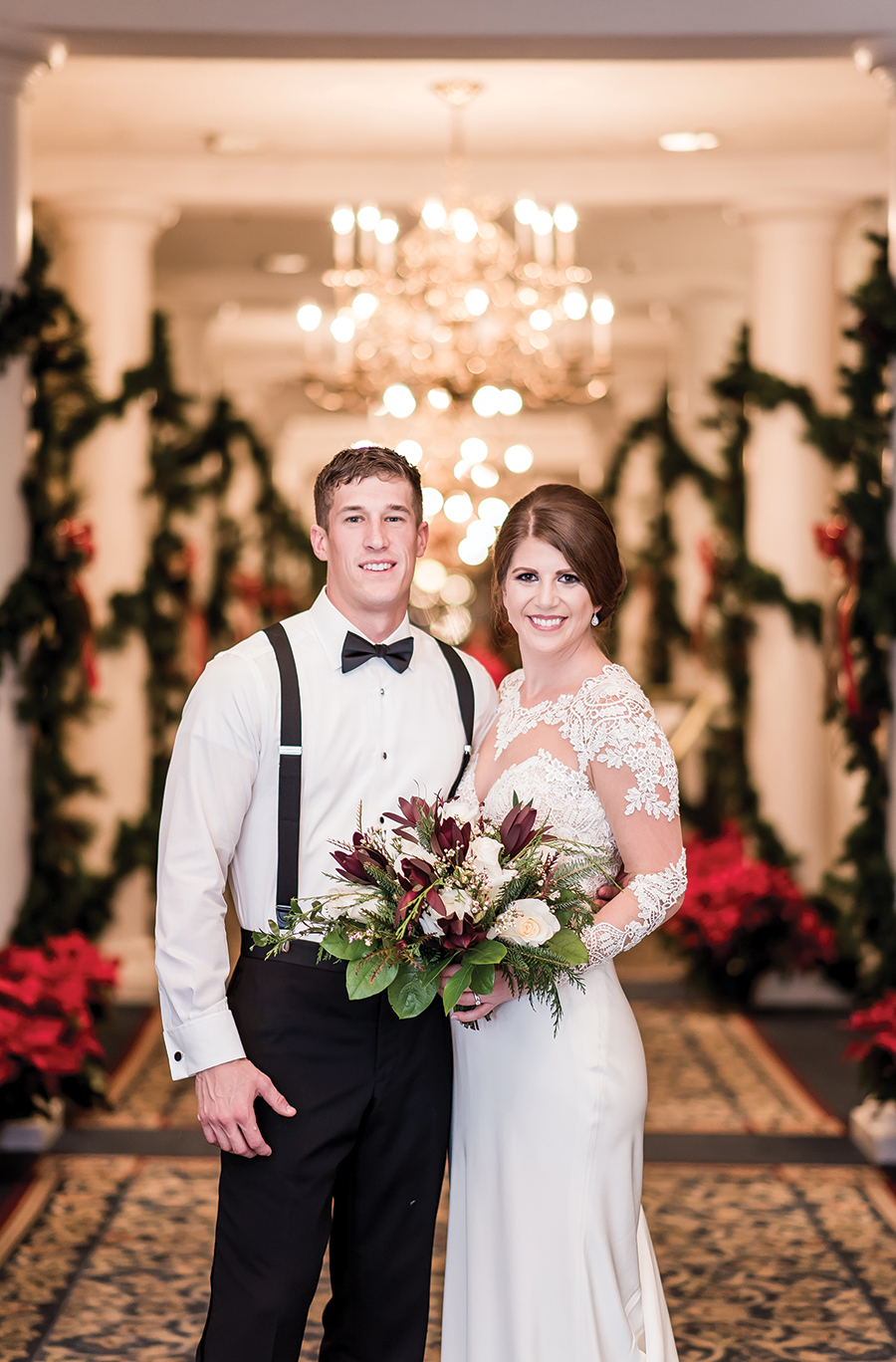
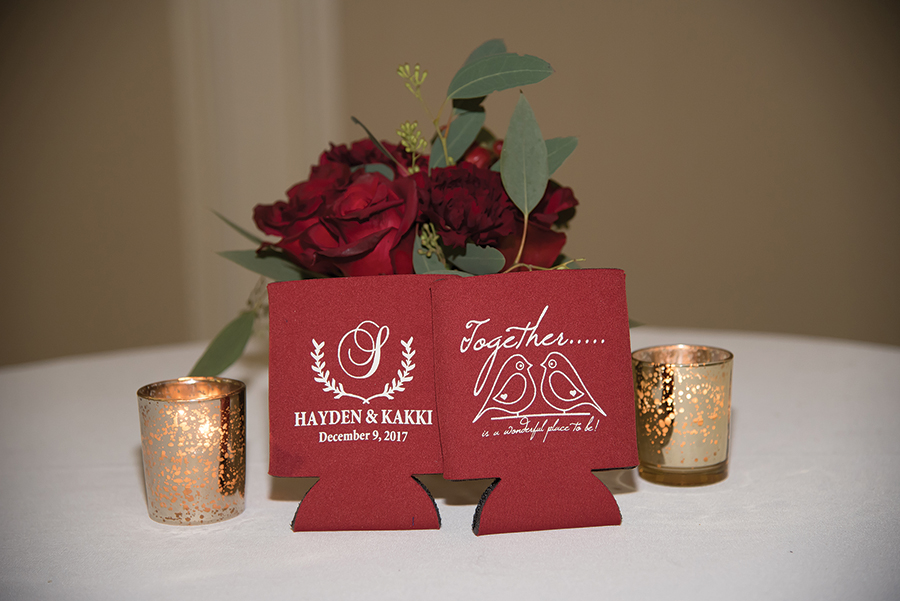
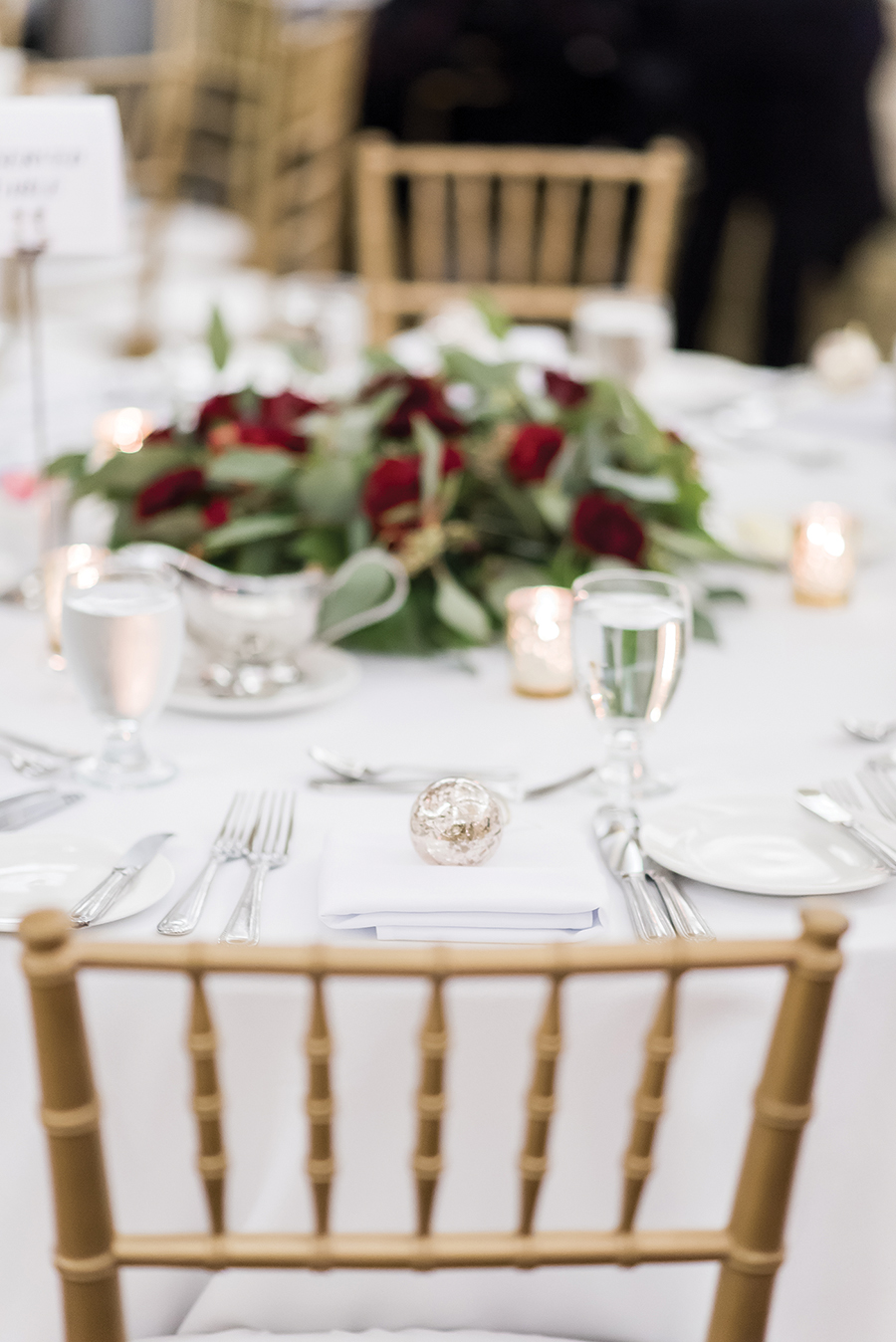
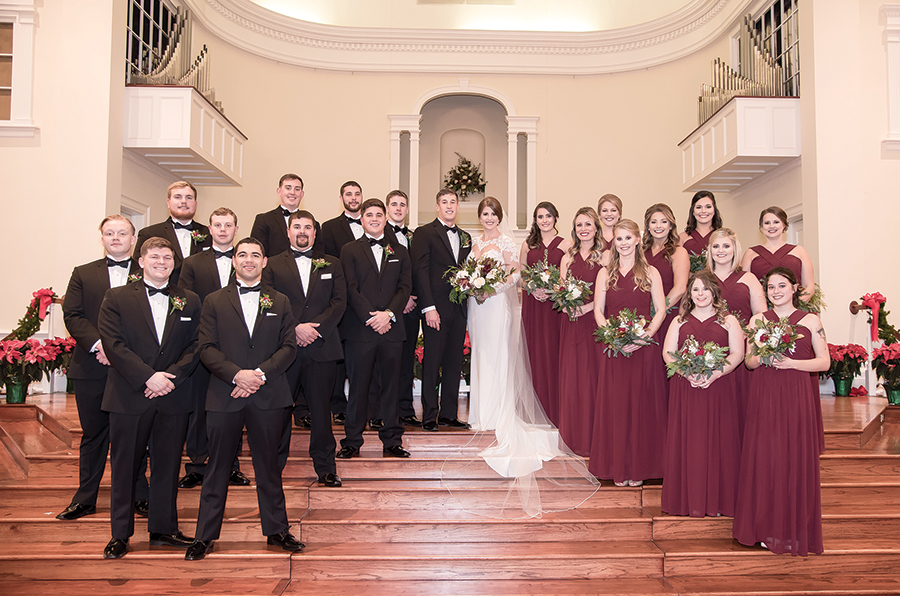
Think a Christmas-themed reception at the Carolina Hotel is enough fodder for a made-for-TV movie? Try saying your vows at a church where your family has been members for more than 200 years. Kathryn walked down the aisle of First Baptist Church in Rockingham to “Edelweiss,” a song her mother sang to her nightly as a child. Through tears, her father promised only to share her, not give her away. And a matron of honor gave a toast that ended with the 20-member bridal party donning oversized panda heads and flooding the dance floor for an epic performance. The reception was a celebratory end to a six-month-long engagement that started when Hayden popped the question in Wilmington, where the two met when Hayden was in the Marines.

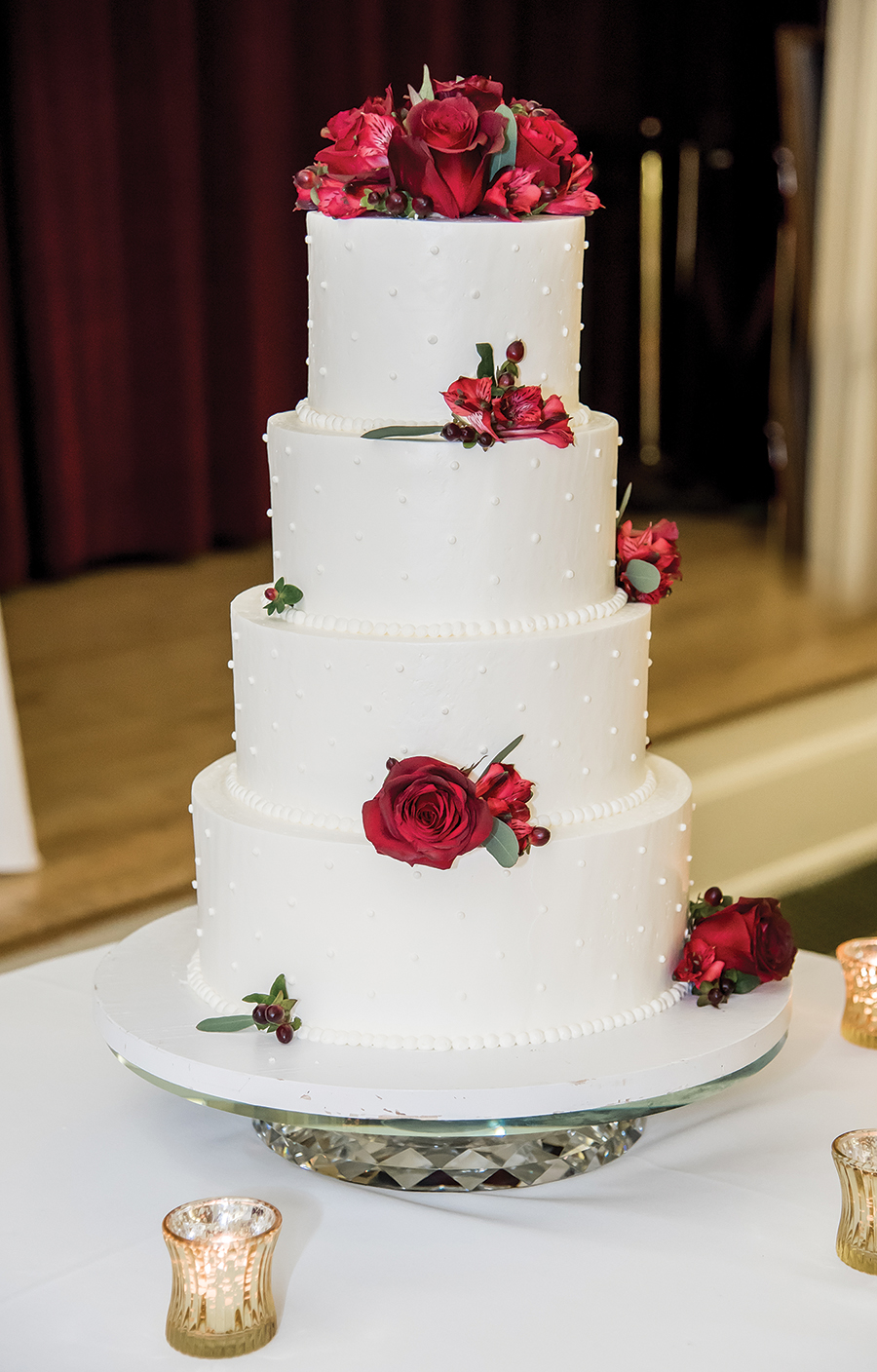
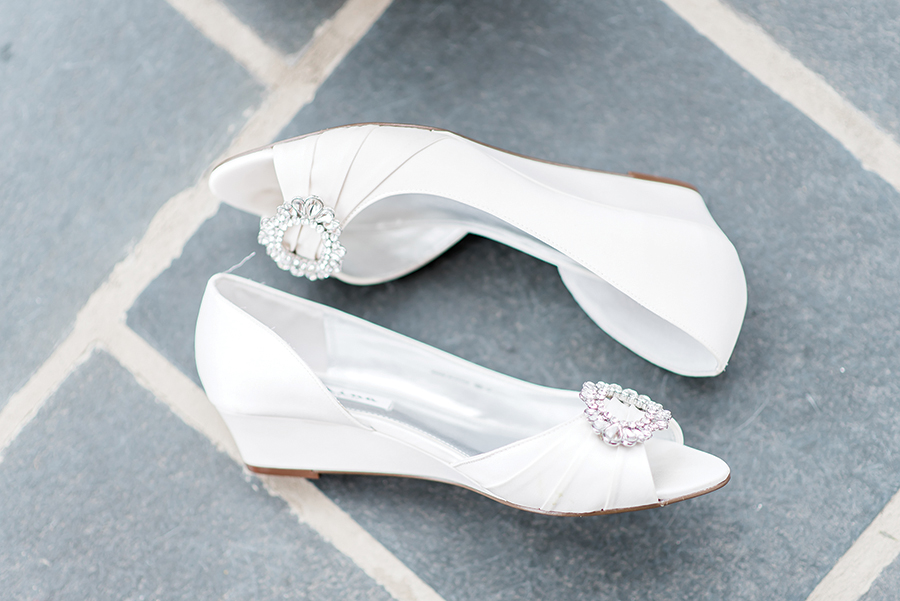
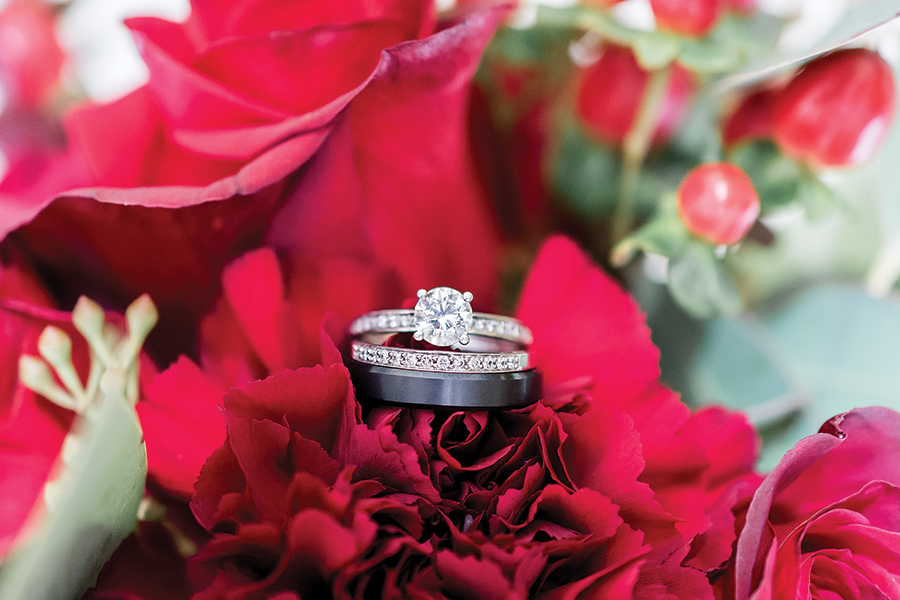
Ceremony: First Baptist Church of Rockingham | Reception: Cardinal Ballroom, Carolina Hotel | Videographer: Ron McLaughlin | Dress: Martina Liana | Shoes: Nina | Bridesmaids: Bill Levkoff | Groomsmen: Vera Wang | Flowers: Hillside Florist and Jack Hadden Floral & Event Design | Wedding Rings: Kay Jewelers | Hair: Creative Hair Salon | Makeup: Beauty by Becca | Catering & Cake: Pinehurst Resort | Entertainment: DJ from Five Star Entertainment

Going Against the Grain

By Karen Frye

The holiday season has begun. There will be family gatherings, parties, dinners and more, and the main event is always the food. Come December, we give ourselves permission to eat and drink as much as we want — as we should, because we know that come January we are going to go on that diet, exercise more, and take better care of ourselves. But wouldn’t it be amazing to make it through the holidays without gaining a single pound? Perhaps even losing a few extra? It doesn’t have to be difficult; in fact it’s just the opposite. You can learn how to feel confident and at ease as you maneuver your way around the table, laden with all the delicious food, and never once feel like you are missing out on anything.

Of course it may take a certain amount of willpower and determination. I like to think of this type of challenge as an adventure, one I went on seven years ago myself. I had heard Dr. Joseph Mercola speak at a natural food expo, and got his book The No Grain Diet. I read it but didn’t practice his message until the timing seemed right. I joined a gym, went religiously and did various fad diets, constantly trying to remove the 20 pounds I didn’t need — with minimal success. The words of Dr. Mercola came to me, “if you want to lose weight you must stop eating grain.”

It wasn’t that hard to do. For the record I started this in October, seven years ago. I made it through the holidays eating grain-free, never once feeling sorry that I wasn’t consuming all the sugary, heavy foods that normally I would eat. After the first 30 days I’d only lost a few pounds. The outstanding thing was the clarity of mind that I experienced. That inspired my dedication to continue, and by the fourth month eating this way I had lost the 20 pounds.

A no-grain diet is simple and easy to follow. It’s a lifestyle change more than a diet — that’s a four-letter word. I can live with it and keep the weight off. It’s not like the Atkins Diet, or low-carb diet. Paleo is similar, but a bit more restricted. Simply avoid anything made from a grain — no pasta, rice, bread, crackers, cookies, oatmeal, or cake (unless it’s made with almond flour). One question I am often asked is, “What do you eat?” My reply, “Everything else.”

You can have sweet potatoes, beans, chicken, fish, meat, eggs, healthy fats (avocados, for example) salads and quinoa (which is used like a grain, but is actually a seed). You never have to count calories, or be hungry. You just have to be prepared to have food with you when you are in situations that might leave you without the right choices.

Following this plan can help you feel better in many ways. Your self-esteem improves when you’re in control of your life (and your clothes aren’t so tight). Often, health issues clear up like allergies or digestive problems. Come January, you will have already made the changes in your life in a positive way. Once you’ve reached your desired weight you will never have to diet again. If you make this your way of eating, occasional cheats will be OK. Just don’t do it too often, and always get back on the no-grain path. PS

Karen Frye is the owner and founder of Natures Own and teaches yoga at the Bikram Yoga Studio.

My Pre-Geezer Christmas List

Wishing for the intangible

By Jim Dodson

Earlier this month, my lovely grown-up daughter living in faraway Chicago phoned to ask what I want for Christmas.

“Can’t think of a thing, Honey,” I replied, then said what I say every December when we do this routine. “I don’t need a thing, Mugs. Just seeing all of you kids come home is my Christmas present. Oh, wait, I know — a pair of new white socks and a pen that doesn’t run out of ink.”

“Dad, be serious.”

I was being serious. For better or worse, come winter I go through white socks like tissues, and there’s nothing worse than a pen that runs out of ink when you’ve had a sudden brilliant thought.

The trick of living, I’ve discovered over three score years plus four is to know what’s enough and to need (and better yet desire) less and less of this world’s material stuff, whittling down life until you’re traveling light enough to someday join the dust from whence you came.

On this same note, it was a shock to discover the other day that I own 23 very nice sports coats. Where on Earth did they all come from? And more to the point, do I really need 23 sports coats in my life, only two or three of which I might wear over the course of a year? Ditto neckties, golf clubs, various hats and caps, even books I used to think I would someday read but never got around to.

So I had a brilliant idea. For the first time in decades, I made out a Christmas list, putting “give away at least half your very nice sports coats for Christmas” at the top of it. 

Like my working hero Thomas Jefferson — who claimed to be an “old man but a new gardener” —  I tend to make lists of things I mean to do on any given day. As any pre-geezer knows, the older you get, the better it is to write stuff down before you forget it. Unfortunately, I’m always finding old lists of things I meant to do stuffed in the pockets of my sports coats and gardening pants, things I somehow forgot to do. This is just another good reason to get rid of half my very nice sports coats. That way, I’ll probably only forget to do half the tasks I put on my daily list of things to do.

In this spirit, I decided to revisit making a Christmas list since I was about 11. That year my buddies and I used to ride our bikes to the downtown Sears and Roebuck store to check out toys we wanted to see under the Christmas tree. I wanted a new Alamo set that year and a Redskins football jersey. Also to kiss Della Hockaday who rode my bus and lived just around the corner. She wouldn’t give me the time of day. But that’s an old story of youthful yearning and unrequited love.

Back to my current pre-geezer Christmas List:

Time. Don’t tell anyone, least of all my literary agent, but I have at least three novels half-written that I just can’t find the time to finish. I don’t know if the world needs to read my unfinished novels or not. I just know I need to someday finish writing them — though “someday” really has a scary way of creeping up on you. Time is the one thing that always seems to be in short supply, running out like the ink in your pen when you least expect it. I’d also like enough time to see my children settled down and happy with how their lives are working out. While I’m on the subject, wouldn’t  mind being in the Grandpa Club some day. But no rush, Kids. Hopefully I still have a little time yet. Those new grandpas seem to have all the fun, though.

Something spicy and blue. Thanks to several careers in writing, I’ve been fortunate enough to travel abroard a great deal, exploring faraway places I only dreamed or read about as a kid. Most of my wanderlust has been spent. But there still are a few places I’d like to go before I’m scattered among the wildflowers. One is the spice market and Blue Mosque of Istanbul. I can’t really tell you why — maybe because on an attempt to see the wonders of the ancient world with my 10-year-old son many years ago, we failed to reach Constantinople or explore the Holy Land. In a nice development, next summer that grown-up son — now a reporter for a famous newspaper in northern Maine — plans to marry a beautiful Palestinian Christian girl from Jaffa, Israel. The sacred sights of the Holy Land await. And just maybe, on the return leg, something spicy and blue in old Constantinople.

Another rescue dog. Please don’t share this with my wife, but I’d love another rescue dog or two. Rescue dogs make the world a better place. They’re all about love and joy at finally having a home to call their own. Mine found me. Her name is Mulligan. Best dog ever. I’ll cry like a baby when she’s gone. Then I’ll go get myself another rescue dog or two.

A politician to admire. Frankly, I’m tired of the ones we have. All they do is bicker, call names and point nasty fingers at each other. If my mother were running this country, she’d send them all to their bedrooms without dessert until they could learn to speak with a civil tongue in their mouths.  If you can’t tweet something nice, she would add, don’t tweet anything at all. We could sure use a guy like Thomas Jefferson or my mom for president.

Tickle the ivories. Sure wish I could play the piano. Actually, I can play the piano. It just doesn’t sound like it. Looking back, I should have taken more than two weeks of lessons. You can probably put the blame directly on Della Hockaday. She was all I could think about the year my mom (see above) suggested I take piano lessons. The teacher smelled like moth balls so I quit and took up playing guitar, planning to become the next George Harrison. Sadly, Della wasn’t impressed.   

More Saturday mornings. Look, I could really use an extra Saturday morning.  That’s when I get my errands and garden work done. While the world sleeps in, I get down and dirty. Thus I hereby propose a constitutional amendment introducing the four-day work week and renaming Friday “First Saturday.” Just imagine what we could all do if we had two Saturday mornings! An extra day for golf, gardening, sleeping in, reading a book, meeting a friend for lunch, writing a letter by hand, taking a walk with the dogs in the park, or just doing nothing but noticing what a beautiful world we’re briefly inhabiting.

What’s Up, Doc? And since we’re on the subject, would someone please bring back those classic Bugs Bunny cartoons that once made Saturday mornings so sublime – Elmer Fudd, Daffy Duck, Porky Pig,  Foghorn Leghorn, Tweety and Sylvester, Yosemite Sam, Pepé Le Pew, the whole Looney Tunes gang. Sure loved those guys. They made the world a better place — or at least a whole lot funnier. We should all lighten up, especially the cartoon characters we’ve elected to public office. Besides, I have it on good authority that Tom Jefferson was a huge Rocky and Bullwinkle fan.

A Revised Eleventh Commandment. Here’s a final thing I wish we could do: learn to listen to each other with a closed mouth and an open mind. During the years I wrote about life in Washington, D.C., Ronald Reagan publicly embraced an Eleventh Commandment: “Thou shalt not speak ill of another Republican.” I propose we update that to “Never speak ill of another American, even if they look or sound different from you.” We’re the most diverse nation on Earth, after all, made up of a polyglot of souls who mostly came from someplace else far, far away — yet a country constitutionally founded on the timeless principle of free exchange of ideas, civil discourse and respect for a neighbor’s opinions, even if we don’t agree. If we get to know that neighbor, we just might be reminded that far more unites than divides us.

So there it is, neighbors, eight modest items on my pre-geezer Christmas Wish List.  I can almost hear what you’re thinking — What a dreamer, pal. You must have sugar-plums dancing in your head.

I suppose that’s true. But the older I get, the more I dream about such things, not unlike the way, long ago and far away, I wished for a new Alamo set and a kiss from Della Hockaday. One of those things, I can safely report, Santa delivered.

In the mean time, can anyone use a very nice sports coat or two?  PS

Contact Editor Jim Dodson at jim@thepilot.com.

Mixing It Up

Sagittarius brings a merry, motley crew

By Astrid Stellanova

Happy Holidays, Star Children! December births make me think of Forrest Gump’s good ole chocolate-box. Born in December: Crooners Frank Sinatra, Britney Spears and Taylor Swift; politicians and criminals, like Winston Churchill and drug lord Pablo Escobar. Then, everybody else that is waaaay outside the box: Pope Francis and Walt Disney, Larry Byrd and Mary Queen of Scots. Stephen Spielberg and Richard Pryor. Beethoven. Nostradamus and Bruce Lee. Woody Allen and Samuel L. Jackson. Keith Richards and Jamie Foxx. Joseph Stalin and Benjamin Disraeli. . . Ad Astra — Astrid

Sagittarius (November 22–December 21)

There ain’t nothing old about you but your money! And Honey, you know you are feeling the rush of being flush since a minor crisis passed this year. You escaped just fine with your wallet, hair and teeth intact. Now, the cake is ready, friends are gathering and birthday wishes are all coming true. Have faith. Your life is the sum of a lot of struggle but nothing was wasted — not even your dryer lint. (We can talk about that hoarding thing another day.)

Capricorn (December 22–January 19)

You don’t need to keep looking in the rearview mirror. All good things lie ahead, Sugar. Memory lane is closed. And what you have lying straight before you is worth focusing on. Meanwhile, there is a great opportunity for investing in yourself and a new idea in the new year. Don’t let that escape you — take the off ramp!

Aquarius (January 20–February 18)

Well, look at you social caterpillar! You have broken into a tough circle of friends that only took about a thousand forevers. But you were patient and they finally saw that one of you was worth ten of a lot of people.  You’re well loved, Honey Bun.

Pisces (February 19–March 20)

You sayin’ your Jaguar can’t make it up the driveway at your mountain place? Or you’re allergic to all metals but platinum? Sugar, that is something called a humblebrag. Nobody else has told you, so I have to. It is true you have been prosperous. And that you have especially fine taste. Just say a little bit less about it.

Aries (March 21–April 19)

Somebody bamboozled you pretty good. Looked like you couldn’t tell a skunk from a Billy goat. Well, they reckoned wrong. You’ll get your chance to settle the score but don’t let it concern you. The view ain’t worth the climb, Honey Bunny. 

Taurus (April 20–May 20)

There is one somebody who gets under your skin and makes you lose your ever-loving mind. You know who and when. You have got to stop the blame game, hurling insults faster than Kim Jong-un. It might be a game to them but it is bad for your constitution, Sugar.

Gemini (May 21–June 20)

You’ve been showing too many teeth. Makes people nervous, and that completely undermines you. Stop trying so hard to be liked. You don’t have to work that angle. If you can stand in your truth, they will admire you, anyhow. You are likeable enough, Sally Field.

Cancer (June 21–July 22)

Let’s get some lumbar support for you, since you’re having a lot of trouble with your backbone. The thing is, you let a situation get out of control because you felt a lot of misplaced sympathy. But what they need from you is leadership. That might require you to be a lot firmer than your Beautyrest mattress.

Leo (July 23–August 22)

Yep, your little plan fell into place, which either puts you in the catbird seat or the litter box. You were cunning and scored a win. But is this a game you really want to win? Ask that question. Also, a friend from your past needs a pal. It would be good karma just to let them know you remember them.

Virgo (August 23–September 22)

Can’t never could, Sugar, but don’t kill yourself. It is also true that flop sweat ain’t becoming. During the holidays you may be asked to step up and take on a social role that you have never especially wanted. But it will be growth for you. And a toehold inside a door that has been closed for a very long time.

Libra (September 23–October 22)

You speak Southern? Then you know not to look over yonder for something right under foot. Focus is all you need to find your heart’s desire. And even though you feel like you have given all you have for a mighty big goal, you have something important and don’t even recognize it.

Scorpio (October 23–November 21)

Hunh? Darling, you brought a cup of Ramen noodles to a knife fight? I don’t know what got into you lately, but you have had this idea that life is a spectator sport. Well, what are you planning to do with the rest of this special life? This month is a good time to ask yourself if you are going to keep chasing after unicorns.  PS

For years, Astrid Stellanova owned and operated Curl Up and Dye Beauty Salon in the boondocks of North Carolina until arthritic fingers and her popular astrological readings provoked a new career path.

Have Yourselfie a Merry Little Christmas

In search of a family tradition

By Wiley Cash

Our oldest daughter was only 2 months old the first time we made her cry while showing her the importance of family traditions. It was a chilly late afternoon on the day after Thanksgiving in 2014, and my wife and I had already unloaded all the Christmas decorations from the attic while our daughter napped. Now we sat on the living room sofa in nervous silence, watching the daylight slip away and wondering if we should dare commit the cardinal sin of waking a sleeping baby. After all, we were going to get our first Christmas tree as a family, and we needed high-quality photos to prove that a tradition had been forged.

I cannot quite remember what my wife or I were wearing, but in my memory it seems that we were decked out in our winter, Christmas tree-searching finery. I picture myself in a red flannel shirt with one of those leather hats with the flaps folded down over my ears, and I imagine my wife was wearing a cream-colored sweater with a beret that matched, but these are just bits of speculation. I do, however, remember our daughter’s outfit, can still picture it where it was laid out on the coffee table: a white onesie with a Cubist-inspired Christmas tree on it and, of course, a tiny red Santa hat that we planned to perch perfectly atop her bald baby head.

At the first sound of her stirring, we flew upstairs. We slipped her out of her non-holiday clothes and into the Christmas tree onesie with ease, but we hit a serious speed bump once the Santa hat was installed on her head. She shook it loose, and when we put it back on she actually reached for it and removed it. My wife did her best to distract our daughter while I fumbled with the tripod so we could snap a few casual photos in front of our garlanded, lit fireplace before setting out in search of a tree. By the time the camera was ready, our daughter was in tears. The photos show our strained faces, her tear-stained cheeks and a tiny Santa hat that is alternately atop her head, in midair as it falls toward the floor, then absent altogether. 

With dusk coming on and our normally relaxed newborn newly fitful, we made a dash for the closest Christmas tree lot we could find, which, unfortunately, sat on a narrow strip of grass between the fire department and a busy road.

The sun had sunk below the tree line and an icy chill had settled over the late afternoon by the time we arrived at the lot. We immediately set about the task of having and photographing our tree-hunting experience instead of actually hunting for a tree. Our daughter showed no more interest in wearing her Santa hat than she had shown at home, and the cars and trucks that sped past us only a few feet away did not assist us in our attempts to keep the hat on her head. However, what the speeding automobiles did do well was force the cold air deep into our eyes so that tears streamed down all our faces.

After we had taken all the pictures the three of us could stand — none of which actually featured the three of us together — we realized that we had not yet spent a moment considering any trees on the lot. We made a hasty selection, tied a tree to the top of the car and headed home.

We got the tree inside and set it up in its stand, but we did not decorate it that evening. We did not decorate it the next day either. Perhaps we were not yet in the Christmas spirit. Perhaps we were busy decorating other parts of the house. But what is most likely is that we were silently pouting due to the fact that the experience of getting the tree had not been captured in a way that felt sufficient to memorialize it as a family tradition.

A few nights later, after an early dinner, I found my wife going through a box of ornaments. Many of them had been given to us while we were dating or during the first year of our marriage. We considered each ornament, talked about the people who had given it to us, recalled the first Christmas tree we decorated as a couple when we were living in the northern panhandle of West Virginia in 2009.

That year, my wife had come home late from work, and snow had begun to fall. It was early December, and there was already a thin layer of snow on the ground. Both of us being Southerners, we were excited by the idea of getting a Christmas tree in the falling snow. Although we had not yet unpacked ornaments or even considered decorating our tiny apartment, we set out on the dark, snow-covered roads that wound through our mountain village and headed for the small town of Wellsburg, on the banks of the Ohio River.

The only Christmas trees we could find were in the parking lot of a Rite-Aid, and there were only a few trees available. But we took our time, imagining each one crammed inside our living room in front of the window that looked out on the main street of the village. We talked about how high our ceiling was, what kind of tree topper we would buy, which ornaments would hang where. The snow kept falling, and I have vivid memories of seeing flakes caught in my wife’s dark hair. I can remember reaching out and touching the pine boughs on the various trees where the soft snow had settled.

We finally agreed on a short, fat tree, and as we paid for it and loaded it onto the roof of our car we discovered that the owner of the tree lot knew some friends of ours. We had only recently moved to West Virginia, and we were thrilled by the knowledge that we had just met someone who was friends with our friends. We felt like we belonged in this distant place that was so far from our lives back home in North Carolina. We were forging a life together.

Five years later we stood in a new house with a new baby and looked through old ornaments. I opened a few boxes of lights and began snaking them through the tree. We made a fire and hung our old ornaments one by one. We were so caught up in our decorating that we did not notice that our daughter had fallen asleep on the little pillow where she often rested, the light from the fire and the light from the tree causing her soft baby face to glow. I looked at my wife. She reached for her cellphone, and I reached for our daughter’s tiny Santa hat and, as carefully as I could, placed it on her head. We knelt behind her, gazed down upon her with all the love one could ever feel for such a sweet, innocent thing. And then we looked up at my wife’s cellphone and snapped a selfie.

That night, I knew that we were a family with a Christmas tradition. But I also knew something else: We always had been.  PS

Wiley Cash lives in Wilmington with his wife and their two daughters. His forthcoming novel The Last Ballad is available wherever books are sold.

A Bitter Little Christmas

Treat your cocktail enthusiast to the perfect stocking stuffer

By Tony Cross

I first met Craig Rudewicz two years ago at Fair Game Beverage Company’s spirit release party. Craig and I (along with two other bartenders from Raleigh) were asked to create cocktails with FG’s Apple Brandy and Sorghum Rum. Craig was in his third year running Crude Bitters, North Carolina’s first cocktail bitters company. We briefly chatted, and he sent me off with his staple bitters to see what I thought. Since then, we’ve both been busy boys, but finally reconnected at this year’s Pepperfest in Chapel Hill. A few weeks later, I was able to drive up to Raleigh, and check out his new facility, as well as his new cocktail supply shop and classroom, The Bittery.

Craig and his wife moved to Raleigh six years ago from Cambridge, Massachusetts. He spent the next few years slinging behind a few restaurant bars, while managing as well. “It was a wonderful way to associate cocktails with food and the relationships with the kitchen,” Craig says about how he gained inspiration for coming up with his first bitters recipes. You see, bitters is usually an enigma to those that aren’t into cocktails, or are just learning. It’s pretty simple, actually. Bitters is to a cocktail like salt and pepper are to food. Bitters can also bring cocktail ingredients together that, without it, wouldn’t be a perfect fit. Bitters is used in food too, but I’ll save that for when I start a food column. In addition to creating bitters at the restaurant bar he managed, Craig and his wife started making their own syrups and extracts at home. “To get away from using products with high fructose corn syrup, chemicals and preservatives,” he says. “We appreciate a good cocktail, and wanted our drinks to be just as great as our meals . . . so Crude grew from that. I wanted bitters to be appreciated as a craft product just as much as spirits and beer.”

Crude Bitters was launched in 2012 while Craig was still working his restaurant gig; he started selling his homemade bitters at local farmer’s markets. If you head over to their website, www.crudebitters.com, you’ll see that Craig takes every step to make sure his bitters are as authentic as possible. “Our bitters are crafted in small batches from 100 percent maceration in organic, non-GMO alcohol, with no glycerin, chemicals or dyes,” he says. “Glass pots or wood barrels are used exclusively in the storage and aging of our products.” His attention to detail on all fronts hasn’t gone unnoticed. He’s won many awards, including the Good Food Award (twice) and the Southern Living Food Award. His bitters also found its way into Mark Bitterman’s Field Guide to Bitters and Amari that came out in 2015. In it, Craig explains the origin of his company’s name. “The name is in reference to the rudimentary origins of bitters. Exotic (and undocumented) roots, herbs, and spices were aged in various liquids and beneficial (and unverified) claims attached to them. Hence, crude,” he says.

When Craig is coming up with a new elixir, he focuses more on what blend of flavors will work with a certain spirit or cocktail than narrowing in on a single flavor of bitters. “It can be difficult putting the right blend of flavor and aroma together,” he says, “but I always start with what spirit I would like the bitters to be used in.” This shows in his Rizzo bitters, with flavors of citrus, pepper, and rosemary — perfect for a gin and tonic, or even someone who is cutting calories with a vodka soda. Personally, I love adding his Sycophant Orange & Fig bitters to my Old-Fashioned. It pairs well with an aromatic bitter, giving the cocktail a slight candied orange and vanilla undertone.

Crude is the first North Carolina bitters company, but Craig foresees growth from other businesses with bitters and mixers on the horizon. “There is not much competition (at the moment). There are a couple of small companies around the state, and bars/restaurants always have great bar programs that produce their own house bitters,” he says. “I expect there to be a boom of cocktail bitters and mixers soon.”

You don’t have to drive up to Raleigh to grab a bottle — or multiple bottles — of Crude Bitters. Stop into Nature’s Own and ask about which bottles are currently being represented. You can also check out the new whiskey bar, The Leadmine, and ask Orlando to concoct a cocktail with the local bitters. It’s amazing what bitters can do for a cocktail, and the more you understand this, the better you’ll appreciate Craig’s passion. Don’t take my word for it, stop into his new space and take a cocktail class. In addition to being educated on bitters, and doing tastings, Craig will guide you on how to use his bitters in cocktails, and why different ones work better with different spirits. You can go online and subscribe to his mailing list, where you’ll be privy to Crude’s up and coming classes. PS

Tony Cross is a bartender who runs cocktail catering company Reverie Cocktails in Southern Pines.