Poem

Worksock

If I could round up stockings

I’d take all the holey ones from Mama’s box of sewings,

My father’s, first, the heel ragged as a monkey’s face.

I’d hang that sock again for him

And pray Santa would put an orange

Or some nuts down in the thin

And frayed toe, then arrange

One real coconut with peeling skinned

Off to let him know

The love he held for me I hold for him.

We were not poor — just didn’t have much money.

Christmas meant longing:

That chance to fill me with sunny

Trances when I would skip the fields

And pray for days that Jesus would not appear.

I was never ready to see Him

Alive instead of in a sermon nailed to a dogwood tree.

Before sunup on Christmas day

The plankhouse hummed with joy.

In my stocking: raisins, a few English walnuts, toy

From a Cracker Jack box I’d run

A store with: I’d “sell” my brother a Mary Jane

From his sock that Mama darned in a ray of sun.

— Shelby Stephenson

Shelby Stephenson was North Carolina Poet Laureate from 2015–2018. His most recent book is More.

Home by Design

The Speed Queen

Let’s hope she’s as simple as advertised

By Cynthia Adams

Cliff Ginn was in a lather about washing machines.

He owns a small textile-related business and, having weathered many storms given the tumult of the industry, has mastered self-control.

But today he is more agitated than, well, his dying washing machine’s agitator. I listen sympathetically while handing over the UPS package I’d accepted for him while he was out at appliance stores.

“I want a dumb washing machine,” he states flatly. “I want the Volkswagen Beetle of washing machines!”

A Dapper Dan, Ginn could care less about washing machine style or function.

“Why should it care if my cotton is from Egypt or from Mississippi? Or, if my cashmere sweater is virgin or not? I do not judge.”

A de-wrinkling feature perhaps? No thanks.

“If I want to de-wrinkle something, I will just throw it in the drier with a wet rag.”

On he went with the questions.

“Must the washer and drier match?” he asks plaintively.

No.

Well, maybe.

“I do like for my shoes and belt to match.”

Ginn complains about the steep learning curve for gadgets on his 2020 Volvo sedan. He definitely isn’t looking for a washing machine that requires him watching YouTube.

He was searching for the simplest machine to be found. One with an on and off button, he jokes. No fancy panels or electronic controls. Nothing that will die or confound him.

He even sat down and wrote an angsty rant about it:

“This is a year when I bought a new car with electronics that would make a 16-year-old-boy drool. And the prospect of having to buy a new iPhone . . . But back to the washing machine. It’s asking too much of me. Why so many choices and features.” (He was too distraught to insert question marks.)

Simplicity of design was what Ginn sought.

One such simplified machine still exists. It lacks the high-profile brand awareness of Maytag, Miele, LG or GE.

Its name is Speed Queen.

“Speed Queen!” he exclaims days later, over the phone. He was keeping me informed of his progress and had just discovered this brand at an old-school appliance store.

In a very short while, Ginn called to report back.

“I am on my way to do something every grown man dreads,” he says with the resignation of the already beaten. “And it’s not a colonoscopy.”

A long pause.

“It’s buying a washing machine.”

I knew appliance angst well.

An ill-fated encounter with a smart washing machine occurred more than 20 years ago in Genoa, Italy. I travelled with my friend, Dixie Hodge, to the home of Pat and Loren Schweninger. We were to stay there while they were away.

Arriving at the Genoa train station, my friend was suddenly distracted by a mob of gesticulating, chattering women who lifted her wallet. We were shaken, but gathered ourselves and trundled on with our cases.

The Schweningers’ rental, on a hillside overlooking the port city, was memorably reached via funicular.

I emptied all my clothing into their Italian-made, front-loading machine before dinner. I had no idea how to operate the machine, guessing at the foreign settings.

What seemed like hours later, my clothes — all my clothes — were still washing away.

Back home, my old top-loader would have been long finished.

After madly pressing buttons, it chugged to a stop — with all my soggy clothes inside clearly visible through the machine’s window.

The door could not be opened.

I knocked at the neighbor’s door, trying to explain that the machine was broken. Did they have any knowledge of washing machines? Or at least that’s what I attempted to ask, using a pastiche of English and terrible Italian.

Her reply was in English: “Call the Candy Man.”

What?

Turns out the machine was by Italy’s most popular brand — Candy. Candy was the first to bring front-loading machines to the Italian market.

Their website states (in a convoluted translation) that the brand has been “part of Italian industrial history since 1945, when it launched the Model 50, the first washing machine thought for the households.”

The “thought for the households” is a charming touch — versus, what? Thought for use outside the home?

With my travel funds depleted and my friend’s wallet gone, I counted my lire.

How much was a house call going to cost?

Quick answer: all the lire I had.

The next morning, the Genovese Candy Man spent about two minutes looking at the machine. He pushed two buttons, the spin cycle began, and he grinned.

Clean clothes. Cleaned out pockets. Now both my friend and I were cashless in Genoa.

It was several years before I could be persuaded to consider a water-conserving front-loader.

As for Ginn?

It isn’t about the cash. He is a true believer in good design in both his wardrobe and his home. He admires and collects art. Italian-made shoes. Buttery-soft leather coats. German and Italian sports cars.

He and his girlfriend admire the finer things in life, and he has even written her poetry in Italian.

But Ginn has technology fatigue. He does not want to study the manual to decipher sleek electronics. He wants knobs to turn and buttons, as we say in the South, “to mash.”

Ginn has discovered he is a top-down kind of appliance man, one who believes — and plans to invest — in the simplest possible washing machine.

One that is top-loading, with an old-fashioned clothes agitator that stops whenever you open the lid to toss in one more thing.

Design simplicity at its finest.

“I don’t ask to save the planet,” he wrote to me later, “only to have white boxers.”

It will cost Ginn, of course. Simplicity doesn’t come cheaply.

But the smart money is on the Speed Queen.  PS

Cynthia Adams is a contributing editor to PineStraw and O.Henry.

Christmas Stories, Somewhat but Mostly Not True

By Daniel Wallace   •   Illustration by Ippy Patterson
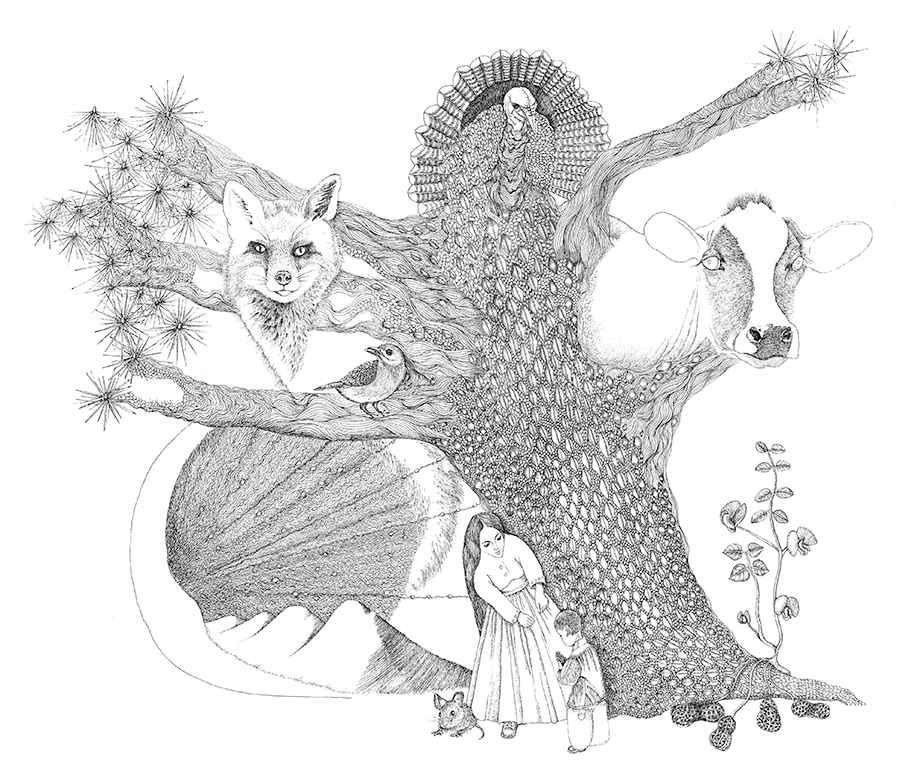
The oldest family Christmas story I know is about my great grandmother, Nona. This is the century before last. Nona was a widow. As far as anyone could tell, Nona had always been a widow — some said she was born one. The truth is that her husband, my great grandfather, perished much too young in the salt mines of northern Alabama, leaving her alone with a brand-new baby, my grandfather, Ewing.  As everyone who knows anything knows, Alabama was once home to the largest salt deposits in North America, something having to do with the shallow Cambrian seas that once covered the entirety of the state. But the mines were deep and dangerous and only the bravest of men ventured into them.

After the salt mine tragedy, Nona was penniless but proud, foraging for food in the forest to feed herself and her wee child. They moved into a straw hut abutting the tail end of the Appalachian mountain range. It was all they could afford.

All Nona had was an old milk cow, named Deuce, and Deuce was about a day away from becoming their last supper when Nona had an idea. Ever resourceful and with a will of pig iron, she became a milk lady. In the beginning she only had enough milk to service a few homes, delivering it in old tin cups. But after making her first few sales she upgraded, got a cart, some bottles, and before the sun was up she loaded the cart full of as many bottles as she could, pulled by the source of it all, Deuce. With her profits she purchased another cow, and another, and soon she became the most popular milk lady in town; but then again she was also the only one.

Even though she was making enough to feed herself and young Ewing, she was still too poor for a tree, and their hut — one tiny room, shoebox-small — was too teeny for even a shrub. But as she was reported to say right from the start, “We do what we can with what we might have.” She said it in the way that people who come from nothing say that sort of thing, all matter of fact, followed by a brief shrug of the shoulders.

So this is what happened on Christmas morning. Nona took Ewing off into the forest, pulled on a cart by the ever-loyal Deuce. And there they sat beneath the tallest, most majestic pine in the forest, an ancient giant of the Pinus clan, a tree so big it’s visible from space, they say. And there she would make a prayer, share some milk and give her son his present. As has been told to the subsequent generations of immeasurably spoiled and ungrateful children, Ewing was thrilled with his interesting pine cone or a rock in the shape of a shoe.

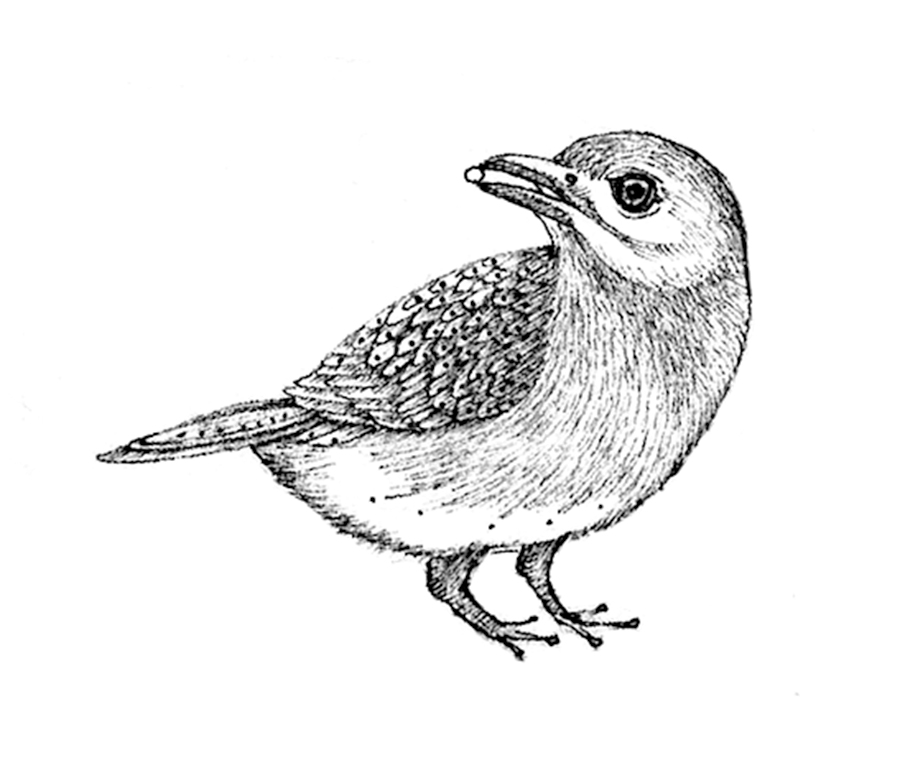
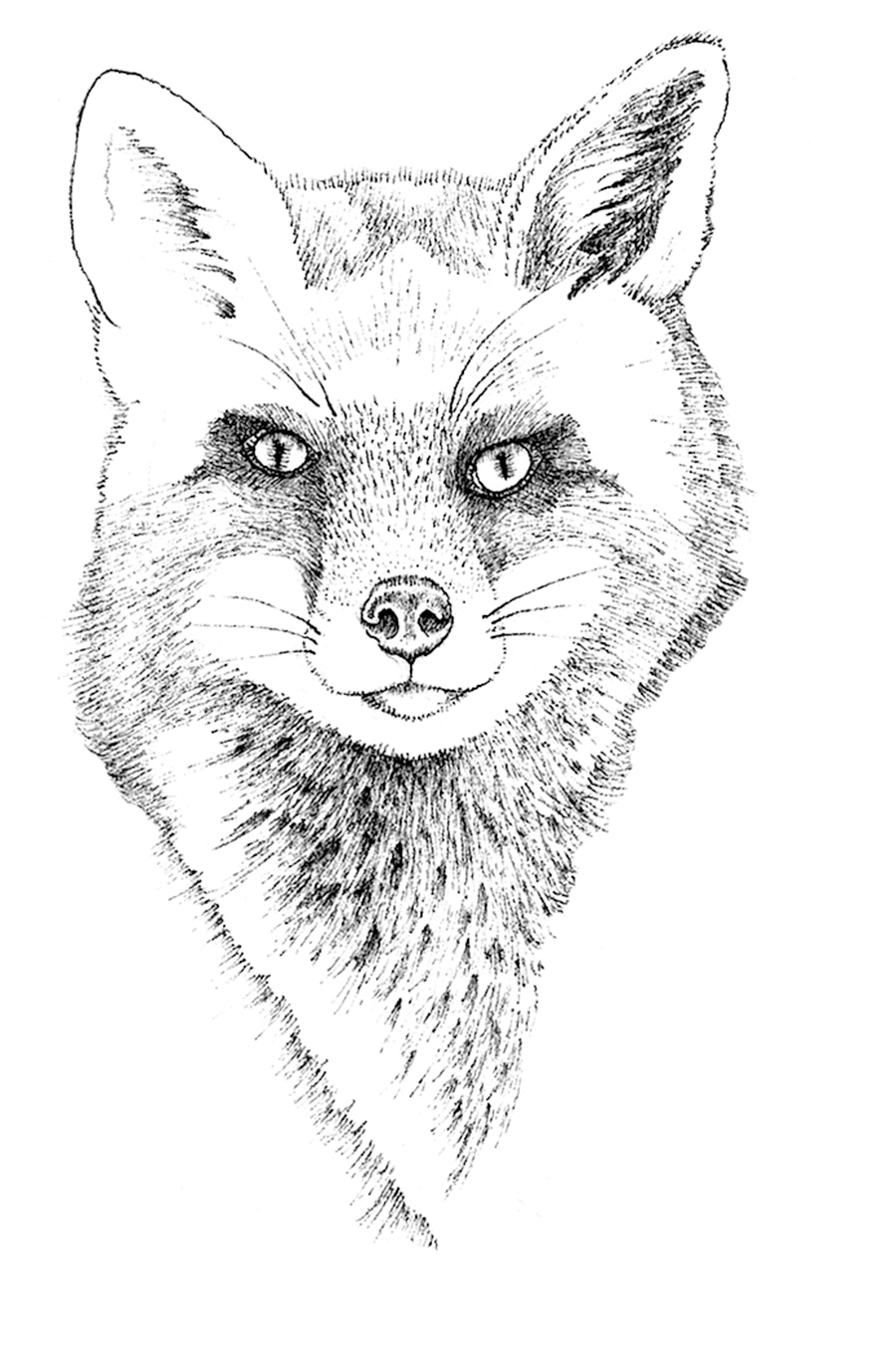
But here is what was remarkable about that Christmas, and every Christmas they shared.  They never spent it alone. One by one all the animals of the forest would creep up, join them there, slinking out of the forest-dark like shy friends. Deer, raccoons, wild hogs, bluebirds, hawks, turkeys, forest mice, coyotes, snakes, skunks, sometimes even a cougar or bobcat. Nona particularly loved a black bear she called Susie. They’d all keep their animal distance, but close enough for Ewing to see the warm steam of their collective breath. So the Christmas present really wasn’t a pine cone at all, nor a rock, it was the presentation and a celebration of the awesome myriad of life. She was actually giving Ewing the whole world.

I met Nona when I was three days old and she was 101. A week later she died in her sleep and Deuce followed soon thereafter. In honor of her passing no one in town drank milk for a month.
And now to her son, Ewing, my grandfather. Ewing was nicknamed “Dumbo” as a child, due to his larger-than-life ears. He was actually quite brilliant and used his ears to good effect: not only could he wear large hats; he could also hear everything. He could hear an owl sigh. He married my grandmother Lucille when he was but 18 years old, after he fell in love listening to her hum.

Like his mother, Ewing was an inventive and resourceful entrepreneur. Would it surprise you to know that Ewing was the man who invented the boiled peanut stand? This is almost a true fact and let no one tell you different: the very first ever. He built it out of pallets and tree branches, using rusty nails pulled from old barns, and set it up on the side of the busiest road out of Cullman, a meager dirt road that disappeared after a hard rain and had to be repaved with more dirt next time the sun came out. His peanut stand was the most modern thing around at the time and people went no matter if they liked peanuts or not.

Peanuts grew wild in Cullman. An underground forest of them in Ewing’s backyard became an underground goldmine. The first stand was a great success — boiled peanuts from a roadside stand! What a concept! — and that success led to a second, a few miles down the road. He hired his cousins and cousins of cousins, friends of his cousins and their sons and daughters and soon the stands were everywhere, from Alabama down through Mississippi, sweeping into Louisiana and Florida, up through Georgia and finally into the Carolinas. Very few people know that most boiled peanut stands back then were franchises, but that’s what they were in the beginning. A little part of every peanut sold found its way back to my grandfather’s pocket, and though he never became a rich man he was able to move his bride Lucille out of the thatched hut and into a proper house in town.

Christmas was a magical time in my grandparents’ home. My father got all kinds of presents: peanuts, tiny cars made of peanut shells, and best of all, peanuts painstakingly carved by Lucille, intricate portraits of Washington and Lincoln, or detailed landscapes of the French countryside, all from her imagining what it might be like. Find one today and it’s worth more than a Fabergé egg. Alas, most of them were eaten.

Lucille and Ewing saved and saved and eventually built an actual restaurant serving a great variety of foods. It was the only restaurant for 50 miles in any direction. Some people had never seen a restaurant before; many weren’t even familiar with the concept. Ewing and Lucille had to teach them to use a menu and then how to order their food from the lady in the pale blue frock. The good citizens of Cullman and beyond caught on quick.

People take restaurants for granted, but they shouldn’t. Restaurants are everywhere now, sure. But it wasn’t always like that. You may have my grandparents to thank for that. Maybe not.
With boiled peanut money my grandparents bought a house big enough for a tree and money at the end of the year to buy something for my dad, Eron, their only child. One Christmas morning my father got a pocket watch. On another he got a knife. The next, a bulky jacket, and then a pair of shoes — three sizes too big, for growing into. On his 16th Christmas they gave him a suitcase, on his 17th a compass. He saw where this was going. Year after year he had gotten one single thing until he got all the things he needed to make a life of his own and when he was 18 years old set off for the wider world.

On his first Christmas morning alone my father woke before the sun came up, fell into the Mississippi River and floated 200 miles down stream to the Gulf of Mexico on a raft hastily assembled from twigs and mud grass, and was finally rescued by one of the bravest and most intrepid sailors ever to roam the Gulf of Mexico in an old shrimp trawler: Joan Pedigo, the woman who would become my mother. They fell in love in about three-quarters of a second.

Family followed almost as quickly: me and three sisters, dogs and cats and a snake and a bird. Still: struggling. Lots of mouths to feed. It was my mother who had the idea for the salted peanut, which brought the two biggest industries in town — salt and peanuts — together for the first time. How no one had thought of it before her was a mystery. Thanks to the salted peanut for a period of years we were a family of not insignificant wealth. Later, a bigger company, the one that made complimentary peanuts — really nice people, for the most part — would put us out of business. But until then every Christmas we traveled to a different country in the world. We’d plan our trips out beginning on January 1, studying the language, the mode of dress, learning their customs and histories: Mongolia, Argentina, Gabon — you name it. One cold Christmas we spent with Eskimos in Greenland. Atelihai means hello, but that’s all the Inuit I remember. Because of my parents and Christmas our family has been almost everywhere there is to go. Name a place.

Yep. Been there.

Name another.

Been there too.

Christmas! Christmas seems made for tall tales: look at the big red one that persists to this day. These days our own Christmases aren’t quite as big as the ones that preceded it — no bears, I am sorry to say — but they are just as beautiful: North Carolina, where we have lived for the last 40 years or so, makes sure of that. Until this year for decades running my family has produced postcard-worthy Christmases: the tree, the lights, the boxes wrapped in shiny paper, all of us gathered together next to the hearth beneath what felt like a dome of warmth and love.

But Christmas is not the same this time around. The pandemic has put a chink in our plans. Our clan is distant and scattered, and we do so many things in the world: we’re lawyers, doctors, construction workers, stage designers, Navy men and women, judges, paralegals, writers, scientists, artists, animal trainers. Every one of us knows a little bit about something, and together — could you bring us all together — we’d know practically everything. My second cousin is training snow-white pigeons to fly back and forth between our many homes, carrying Christmas greetings; another is perfecting the hologram, so even if we’re not together we will look like we are.

But then I think back to Nona, and those misty mornings she spent beneath that towering pine, with mountain lions and turtles, et al; of my father, floating down the Mississippi clinging to a twig and a blade of grass. Which is just to say that yes, Christmas will be different this year, but it’s different almost every year, in one way or another. It’s what Nona said: We do what we can with what we might have: to hope and work for better times while making these times the best they can possibly be. That may be the story of our Christmas this year, but it may also be the story of all our lives.  PS

Daniel Wallace is author of six novels, including Big Fish (1998) and, most recently, Extraordinary Adventures (2017). His fourth novel, Mr. Sebastian and the Negro Magician, won the Sir Walter Raleigh Prize for best fiction published in North Carolina in 2009, and in 2019 he won the Harper Lee Award, an award given to a living, nationally recognized Alabama writer who has made a significant lifelong contribution to Alabama letters. He lives in Chapel Hill where he directs the Creative Writing Program at the University of North Carolina.

Bookshelf

December Books

FICTION

The Mystery of Mrs. Christie, by Marie Benedict

In December 1926, Agatha Christie goes missing. Her husband, a World War I veteran, and her daughter have no knowledge of her whereabouts, and England unleashes an unprecedented manhunt to find the up-and-coming mystery author.

Fresh Water for Flowers,
by Valérie Perrin

Violette Toussaint is the caretaker at a cemetery in a small town in Bourgogne. Casual mourners, regular visitors and sundry colleagues — gravediggers, groundskeepers and a priest — visit her to warm themselves in her lodge, where laughter, companionship and occasional tears mix with the coffee she offers them.

Miss Benson’s Beetle, by Rachel Joyce

From the bestselling author of The Unlikely Pilgrimage of Harold Fry comes an uplifting, irresistible novel about two women on a life-changing adventure, where they must risk everything, break all the rules, and discover their best selves.

Big Girl, Small Town, by Michelle Gallen

Majella is happiest out of the spotlight, away from her neighbors’ stares and the gossips of the small town in Northern Ireland where she grew up just after the Troubles. She lives a quiet life caring for her alcoholic mother, working in the local chip shop, watching the regular customers come and go. Then her grandmother dies and Majella’s predictable existence is upended.

NONFICTION

The Berlin Shadow: Living with the Ghosts of
the Kindertransport
, by Jonathan Lichtenstein

In 1939, Jonathan Lichtenstein’s father, Hans, escaped Nazi-occupied Berlin as a child refugee on the Kindertransport. Almost every member of his family died after Kristallnacht and, upon arriving in England to make his way in the world alone, Hans turned his back on his German Jewish culture. As Hans enters old age, he and Jonathan set out to retrace his journey back to Berlin.

Nerve: Adventures in the Science of Fear,
by Eva Holland

Since childhood, Holland has been gripped by two debilitating phobias: fear of losing her mother, and fear of heights. Finding the nerve to face down her fears, Holland not only shows us how to grapple with our own, but invites us to embrace them as a way to live happier and feel more alive.

I Cook in Color: Bright Flavors from My Kitchen and Around
the World
, by Asha Gomez

Best known for her easy mix of cooking traditions from the American South and her homeland of Kerala in Southern India, chef Asha Gomez continues to evolve her unique cooking style.

CHILDREN’S BOOKS

Meerkat Christmas, by Emily Gravett

Sunny the Meerkat wants Christmas to be PERFECT. So, he sets out to find snow, and Christmas trees, and the most amazing dinner. But something is still missing, and he may just have to go all the way back home to discover just what it is. Everyone’s Christmas will be just perfect with this fun holiday read-together. (Ages 3-6.)

Counting Creatures, by Julia Donaldson

The much-loved author of the Gruffalo and Animalphabet is back with this clever, beautiful title, just perfect for nature lovers and animal lovers alike. (Ages 4-7.)

Find Fergus, by Mike Boldt

Oh, Fergus. He just doesn’t GET hide and seek. After hiding among moose, polar bears and skinny trees, Fergus finally discovers the perfect hiding place. But when it’s time for the game to be over, Fergus is nowhere to be found. Oh, Fergus. (Ages 3-6.)

Cat Kid Comic Club, by Dav Pilkey

Fans of the wildly popular Dog Man books will be inspired to dream up their own stories and unleash their own creativity as they dive into this new graphic novel adventure. (Ages 9-12.)

Five More Sleeps ’Til Christmas, by Jimmy Fallon

Every kid knows it’s the nights before Christmas that are the hardest. The excitement, the toys dreamed of, the anticipation! This fun Christmas countdown book is the perfect way to help giddy tots get through those last five nights before the big day! (Ages 3-8.)

Exploring the Elements, by Isabel Thomas

Everything in the world is made of 118 elements, and this fun title is an artful and accessible guide to each and every one of them. Sections include the design of the periodic table, graphically stunning layouts featuring each element’s letter symbol, atomic number, attributes, characteristics, and uses. This little gem is the perfect gift for that kid who appreciates something interesting and unusual. (Ages 9-14.)  PS

Compiled by Kimberly Daniels Taws and Angie Tally.

Weekend Away

Urban Wonderland

The Madcap gents hightail it to bustling Greenville

By Jason Oliver Nixon

Recently, at High Point Market, John and I ran into a Greenville native and friend and, over drinks, we discussed the state of downtown HP.

“You think downtown High Point struggles,” our pal said. “Greenville was worse back in the day. Twenty years ago, you just wouldn’t go to most of downtown. And now it’s really breathtaking. The restaurants, the shopping, the river walk and access to nature . . .”

Intrigued, John and I did our homework. Once the self-proclaimed textile capital of the world, Greenville, S.C., languished for decades when fabric firms moved overseas. Happily, a visionary urban revitalization master plan kicked off in the 1990s and continues to transform this once-uncut gem into the poster child for what a small-scale city downtown can become. Families love it. Foodies love it. BMW has its international manufacturing HQ here. Find Michelin’s U.S. headquarters there, too. It’s super walkable, super dog friendly. Heaps of nature make hiking and biking ideal. Expect loads of art galleries and working artist studios. Furman University. Cultural venues that range from the Children’s Museum of the Upstate to the Shoeless Joe Jackson Museum, plus a world-class performing arts center. And a smattering of charming, newly spruced-up towns surrounding the city make for great day trips.

So on a crisp late fall afternoon, John and I piled into the Subaru and set sail for the three-hour drive to this mythical city in the northwest corner of South Carolina. We left the pups behind.

Home base for the weekend was The Westin Poinsett, a historic, 12-story property smack in the middle of Main Street’s hustle and bustle.

The Poinsett has had a seesaw history since its 1925 opening. After decades as a glittering hostelry it eventually morphed into a retirement home. And then, in the late 1970s/early 1980s, it was abandoned and regularly vandalized. Now, in a beige-on-beige sort of way, the Poinsett sparkles anew after its late 1990s restoration.

Speaking of hotel design, downtown Greenville lacks a good one-off boutique hotel: It’s all Hyatt Place and Aloft (perfect for folks with dogs), Hilton and Hampton Inn. Fortunately, a sleek AC Hotel by Marriott will soon open just down from the Poinsett, and construction of the high-style Grand Bohemian Greenville, perfectly situated at the base of Reedy River Falls, approaches completion.

Checked in, John and I hightailed it for sunset cocktails at the stylish UP on the Roof bar situated, incongruously, atop the Embassy Suites downtown. We wanted a birds-eye view to kick off the weekend festivities, and that’s just what we got. John and I sipped artisanal cocktails and took in the stunning vistas of downtown and the surrounding mountains.

After drinks, we walked a few blocks to Urban Wren, a newly opened eatery tucked into an urban neighborhood blossoming with brand-new lofts next to the still-busy Norfolk Southern tracks. Think an interesting, slightly vexing menu that travels from Italy to Asia and India with a few stops in between. Pair the far-flung menu with cement floors and an edgy Brooklyn vibe that caters to a young, stylish, and, apparently, moneyed crowd.

“Wow, $44 for salmon,” I blurted.

John harrumphed and commented on how packed the restaurant was. Jammed, in fact.

Even during a pandemic, the Greenville restaurant scene bristles with electricity. And residents are truly passionate — and vocal — about their dining-out likes and dislikes.

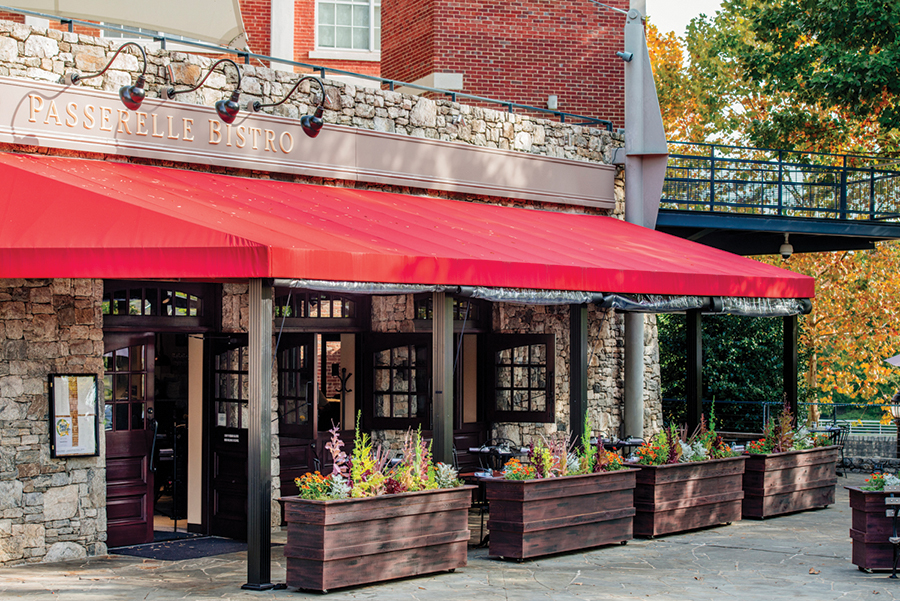
A Greenville friend checked in, “You have to go to ASADA and Fork and Plough. And you must have cocktails at EXILE and the Swordfish (Cocktail) Club. You will love Willy Taco Feed & Seed and Bar Margaret. And lunch at Afghan restaurant Aryana is a must. Have a glass of rosé and the pickled beet and pear salad at Passerelle Bistro overlooking the falls to take in the view but be sure to get off the beaten path — there are so many amazing options further afield.”

And so John and I mapped out a plan.

Saturday morning kicked off with superlative pastries and lavender-scented lattes at French-owned Le Petit Croissant cafe and from there we walked Main Street to the baseball stadium and back across the Reedy River.

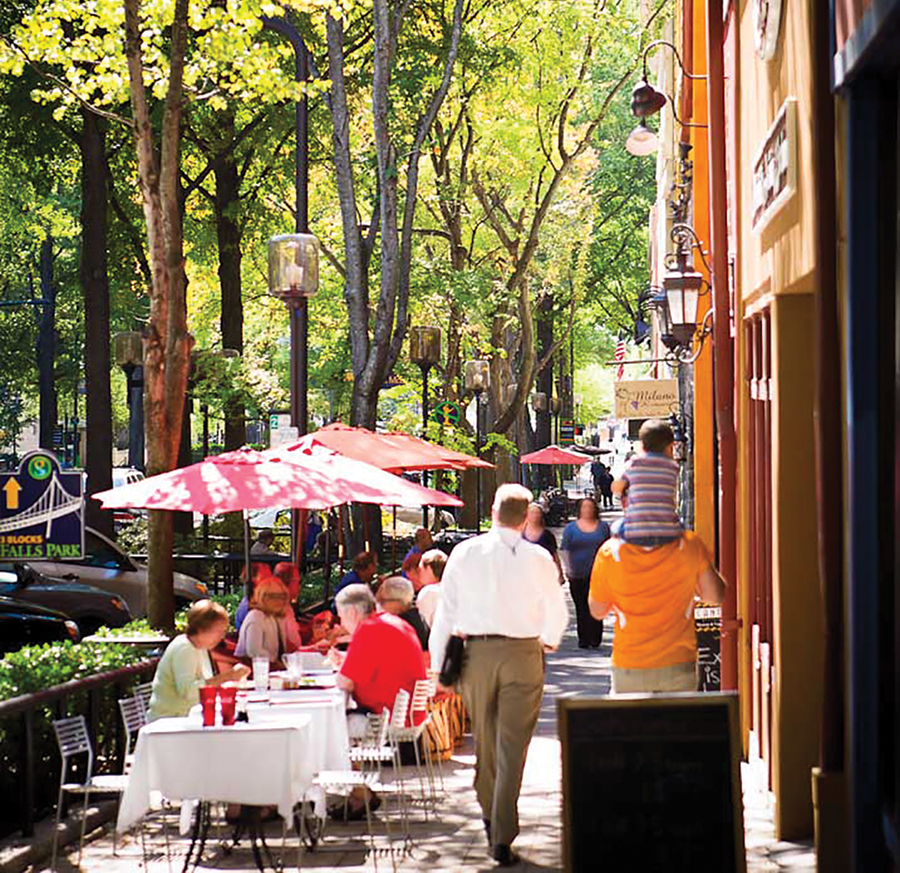
The transformation of Falls Park on the Reedy is the crown jewel of the city’s impressive revitalization. Once all but hidden by a 1960s-era highway bridge, the stunning, mist-kissed falls are now part of a vast river walk that is populated with walkers and bikers who enjoy the numerous cafes and shops and taking in the views from the architecturally stunning pedestrian-only Liberty Bridge.

We stopped at the wonderful M. Judson Booksellers next to the Poinsett, explored Mast General Store, and popped into superlative men’s store Rush Wilson Limited. The sidewalks were bustling.

“It’s so nice to see so many people out and about,” mentioned John. “It almost feels ‘normal.’”

After exploring downtown, we hopped into the car and visited the buzzy parking lot sale at The Rock House Antiques. We stopped at the Hampton Station dining and entertainment complex and considered lunch al fresco but realized we were perhaps too old for the man bun and tattoos/ax throwing/mac and cheese scene. Instead, we visited the charming Greer, a vest pocket-sized town that, like Greenville, has been lavished with much urban-planning love. We were smitten with the blocks-long burg, explored Plunder for antiques and lunched upon crepes at Barista Alley. We drove to the nearby Hotel Domestique, a Provençal-style inn that caters especially to cyclists, and ogled the stonework and postcard-perfect nature views at the 1820s-era Poinsett Bridge.

We stopped in the town of Travelers Rest, an epicurean’s delight at the foot of the Blue Ridge Mountains just outside Greenville. So many restaurants! Driving back into town, we stopped for dinner at the James Beard-nominated working farm-cum-eatery Oak Hill Café and lapped up a terrific local cheese plate and duck confit with spaetzle.

Sunday morning was languid and began with a Tuscan-inspired lunch on the balcony at Main Street’s Jianna, where a glass of montepulciano paired perfectly with spot-on people watching and a shared plate of pasta.

Phone buzzing, it was our Greenville friend texting a slew of other restaurant and must-visit ideas.

“You need to meet artist Joseph Bradley. Try the cheese at Blue Ridge Creamery. Brunch at Topsoil. And I think you’d like the lunch counter at the Pickwick Pharmacy.”

Ah, so much to see, so little time. And so many reasons for a return visit.

With that in mind, John and I turned off our phones and spent the afternoon on the river walk with a picnic blanket and a pile of books and magazines.

The distant roar of the falls only added to the bliss.  PS

The Madcap Cottage gents, John Loecke and Jason Oliver Nixon, embrace the new reality of COVID-friendly travel — heaps of road trips.

Grand Traditions

History, N.C. pride and personal touches in the mansion

Photographs by Keith Isaacs

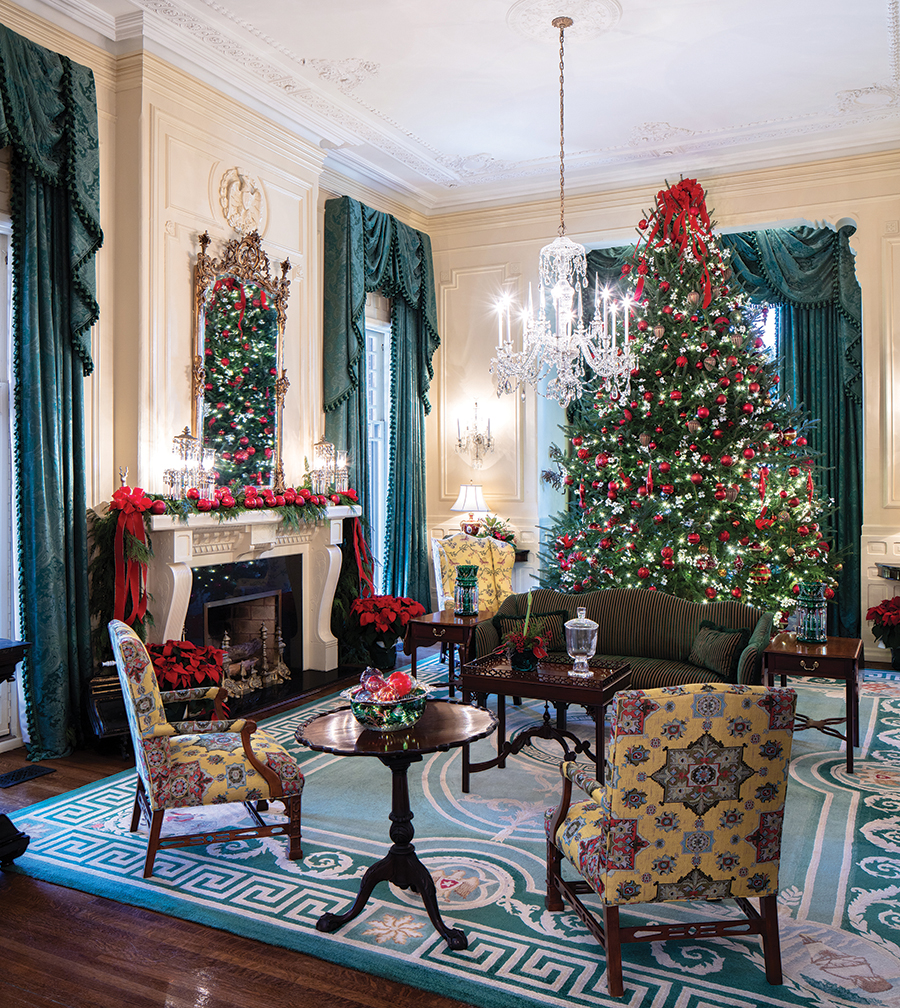
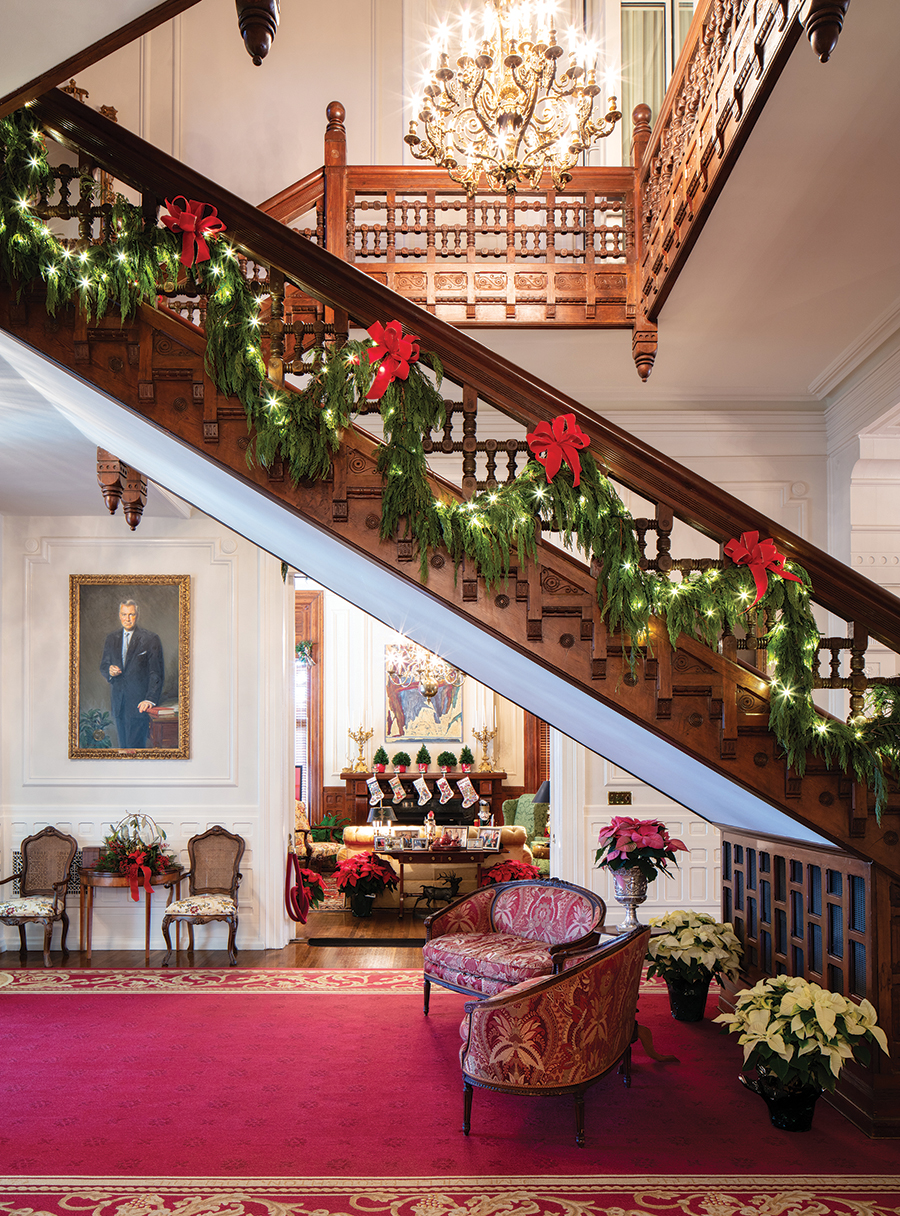
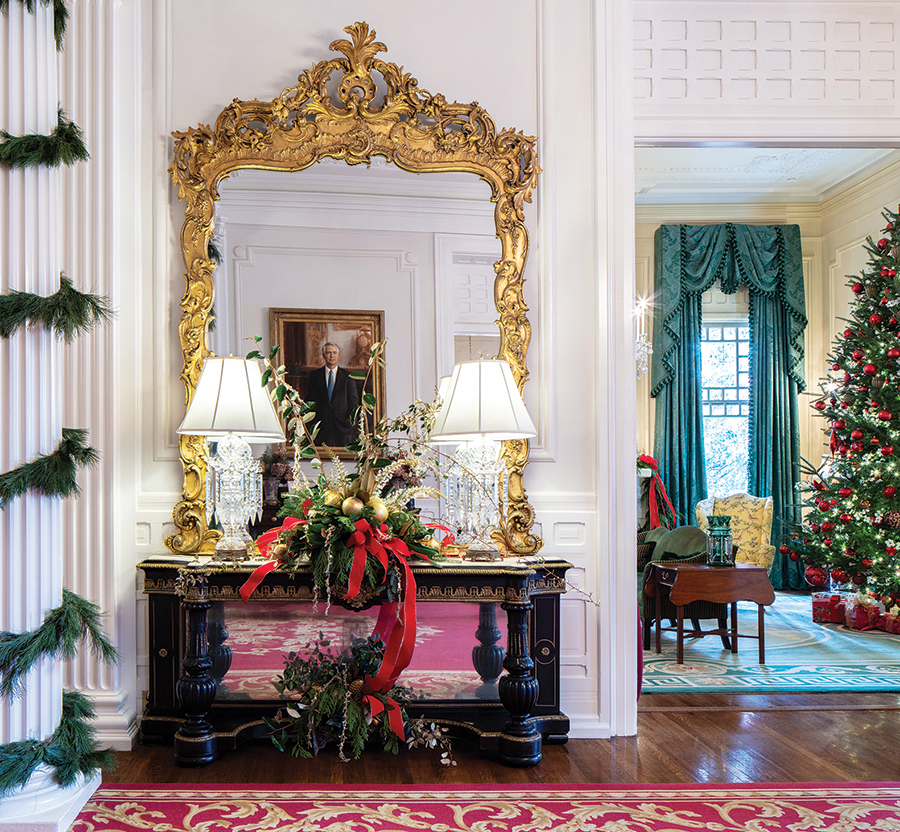
One of the many inconveniences endured because our world has bent to the reality of the coronavirus is that North Carolina’s Executive Mansion will be closed to the public during the holiday season. While the interior decorations will be scaled back, this year’s focus will be on the mansion grounds, with colored illuminations on all four sides, garlands and wreaths on the fence and gates. The two front parlors will each have a large tree in the window, decorated with white lights. And festive trees will be displayed in the center second floor window and the center third floor widow.

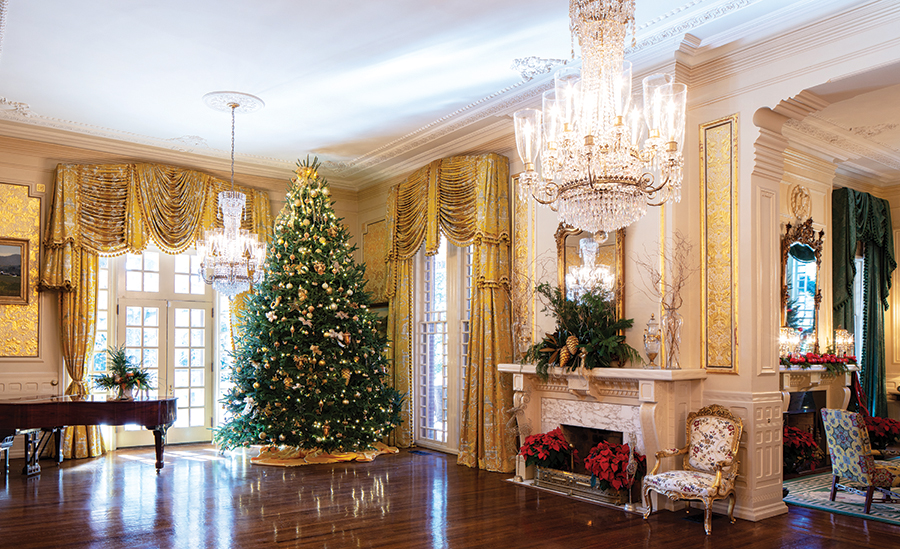
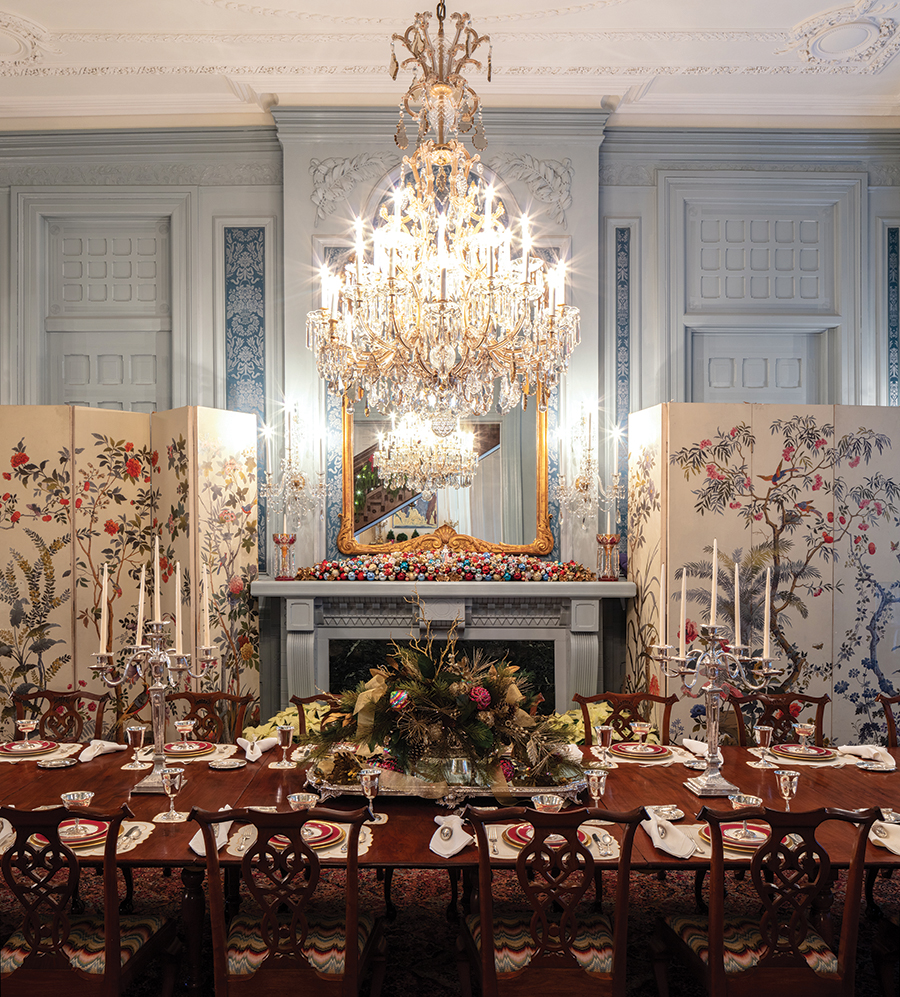
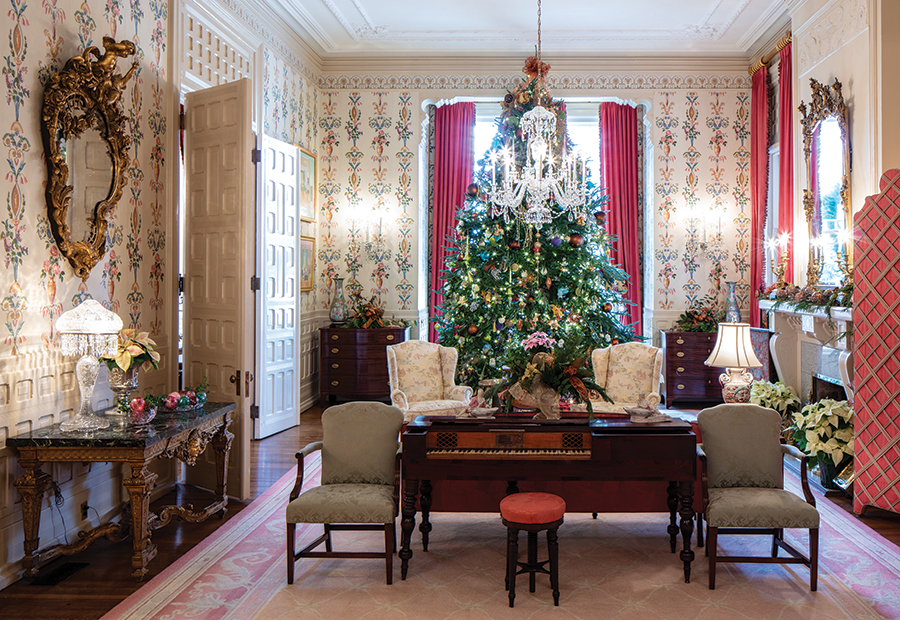
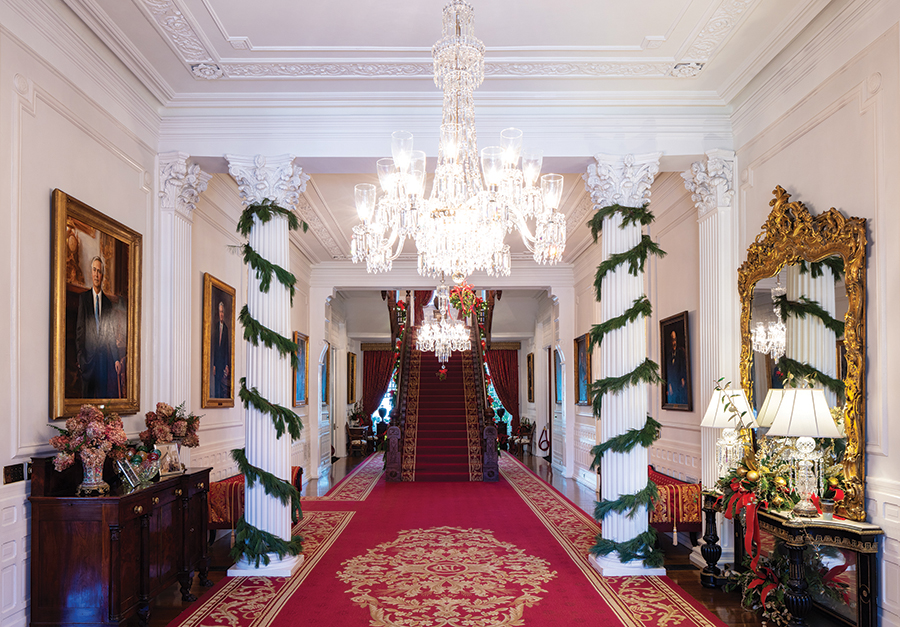
Just because we can’t tour the mansion in person in 2020, however, doesn’t mean we can’t imagine it in all its splendor. During a more typical year, the week after Thanksgiving, the mansion closes, and for five days staffers work tirelessly to transform the ornate Victorian home from its everyday splendor to a magnificent winter wonderland. These photographs show the governor’s home in more normal times.

Giant, live trees — from N.C. farms, of course — are the focal points. They’re displayed in four rooms on the first floor, usually the men’s lounge, ladies’ parlor, ballroom and sunroom, as well as in second- and third-floor windows above the home’s main entrance. Evergreen garlands wrap columns and banisters, locally-grown poinsettias fill every nook, and oversized arrangements mixing greenery, baubles, ribbons and more are atop every available surface. Outside, millions of lights twinkle, and blinking orbs shine from the limbs of enormous trees. Traditionally, the first spouse takes charge of the holiday decor, aided by a team of volunteers and input from the N.C. Arts Council. The planning ordinarily starts in July, and while some elements may repeat from one year to the next, “We never want it to look the same within the governorship,” David Robinson, the director of the Executive Mansion, who has managed the home for eight years, has said.

Each first family puts their own touch on the decor. For the Coopers, it has meant hanging stockings that first lady Kristin Cooper made for her family, as well as displaying a Christmas village scene she’s collected over time, complete with a tiny replica of nearby Krispy Kreme. “Mrs. Cooper always puts it together herself,” says Robinson.

While the dazzling trees would normally get the biggest oohs and aahs, it’s the details that will be missed this year: sprigs of mistletoe hung from chandeliers (sometimes cut from the mansion’s grounds), decorations made by local artists and nods to North Carolina’s state symbols woven into the decor. Robinson loves the atmosphere the holiday decorations create: “It’s my favorite time of year.” Even if this is a year like no other.  PS

The tree in the ballroom often celebrates a community cause; past years have included a military tree and an education tree.
Cardinals and dogwood on the tree in the men’s lounge.
The powder-blue dining room is set with state china for special occasions.
The tree in the ladies’ parlor is typically decorated in traditional Victorian style to match the home’s architecture.

PinePitch

Tour de Trees

OK, 2020. No Christmas parades. Check. No New Year’s parties. Check. But the town of Southern Pines will still have festive trees lining its streets for the holidays, courtesy of local merchants and civic organizations. Consider it an opportunity for a bit of socially distanced holiday cheer and, while you stroll around town, a little window shopping.

Bryant House Birthday Bash

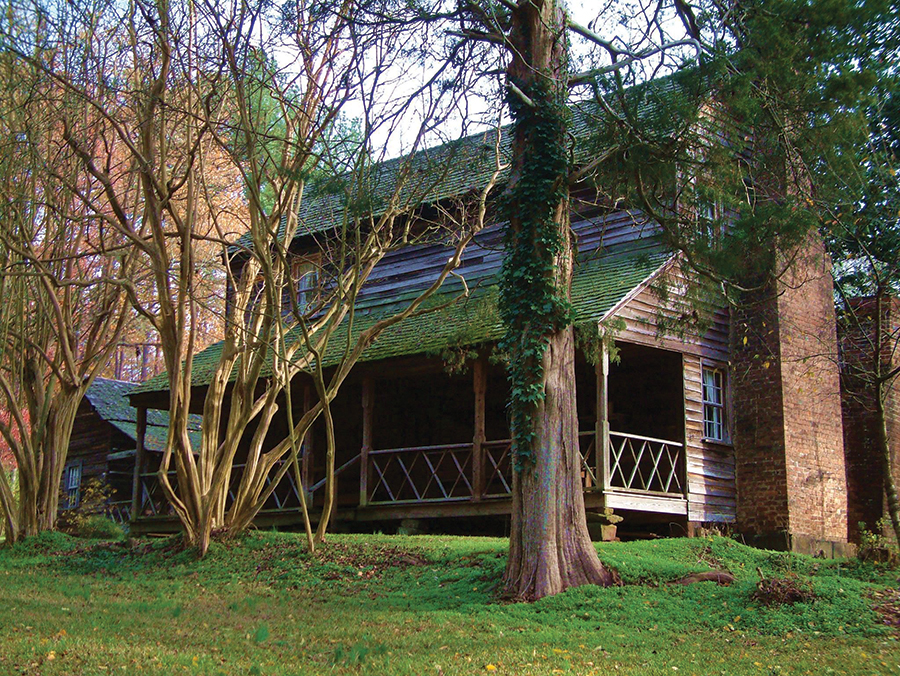
Rain or shine, bring the family to celebrate the 200th birthday of the Bryant House, combined with Heritage Day, on Saturday, Dec. 5, from 10 a.m. – 4 p.m., at 3361 Mt. Carmel Road, Carthage. There will be live music, Christmas cheer, war interpretations and craft demonstrations. For additional information call (910) 692-2051 or go to www.moorehistory.com.

Holiday Concert

The Sandhills Community College Holiday Concert will feature choral and piano arrangements to get everyone in the holiday spirit. The concert will be live streamed from the Bradshaw Performing Arts Center on Sunday, Dec. 6, beginning at 4 p.m. You can find it on YouTube at a web address too confusing to contemplate but easy to search.

Shaw House Tours

The historic Shaw House, the Garner House and the Sanders Cabin at 110 W. Morganton Road in Southern Pines will be open for tours and Christmas gift shopping Thursdays and Fridays beginning Dec. 3 from 1 – 4 p.m. Proceeds benefit the Moore County Historical Association and help preserve our heritage. For additional information call (910) 692-2051.

Open House

Enjoy a winter wonderland of holiday décor and gifts at Hollyfield Design, 130 E. Illinois Ave., Southern Pines, beginning Friday, Dec. 4, from 9 a.m. – 5 p.m. Christmas pet photos will be available on Dec. 6 from 1 – 3 p.m. Get digital files in exchange for donations of cat food for Animal Advocates of Moore County. Sunday hours will be 11 a.m. – 4 p.m. For more information call (910) 692-7243.

Nothing Runs Like a Reindeer

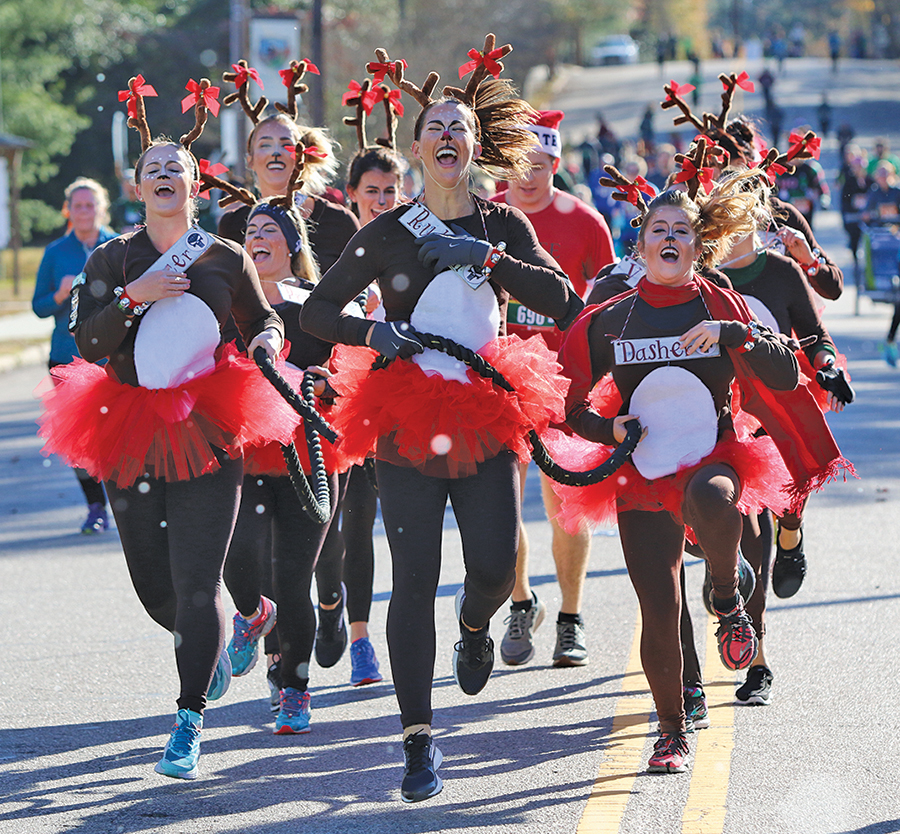
The annual 5K Reindeer Fun Run through the downtown neighborhoods of Aberdeen takes place on Saturday, Dec. 5, from 7:15 a.m. – 12 p.m. The run is for all skill levels, from walkers to trotters to people who are in distressingly good physical condition. For information call (910) 693-3045 or go to www.reindeerfunrun.com.

A Cuppa

The Sandhills Women’s Exchange, 15 Azalea Road in Pinehurst, is having “Tea Time at the Cabin” on Sunday, Dec. 13 from 10 a.m. – 2 p.m. There is limited seating of only 16 guests. There will be a second seating from 2 – 4 p.m. The cost is $50 per person. For information and reservations call (910) 295-4677.

All Dressed Up (And Nowhere to Go)

Peruse vintage fashions from 5:30 p.m. – 9 p.m. on Tuesday, Dec. 8, at the Poplar Knight Spot, 114 Knight St., Aberdeen. The Rooster’s Wife and Moon Vintage Goods will put on a socially distanced trunk show of fashions ranging from the ’70s to the ’00s. There will be eggnog and gift wrapping. Limited to 20 shoppers at a time. For information go to theroosterswife.org or call (910) 944-7502.

The Naturalist

Among Kings and Killers

Abundant life on an island at the end of the world

Story and Photographs by Todd Pusser

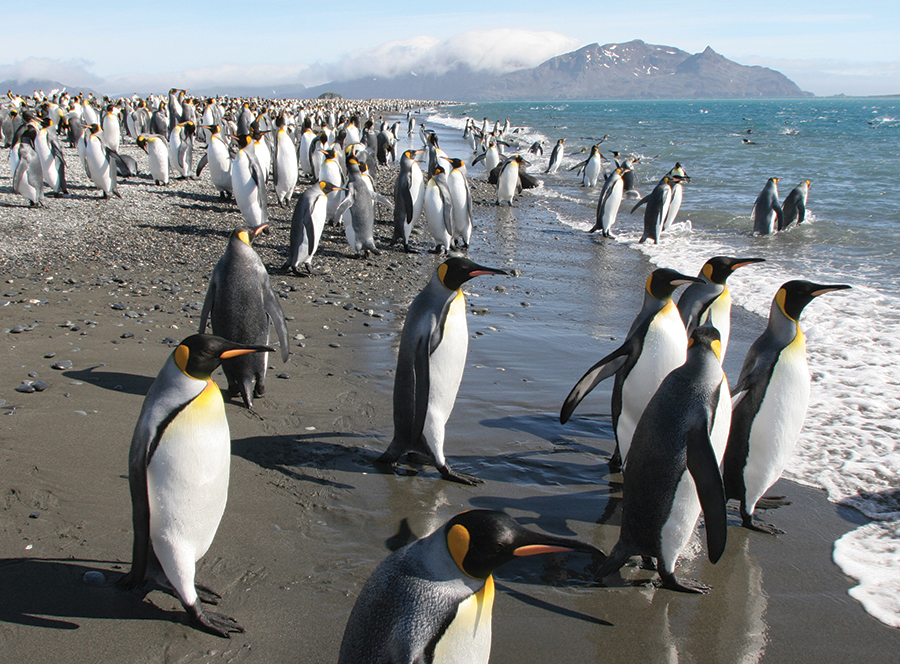
Words cannot describe it. Photographs will never do it justice. It has to be experienced, firsthand, to fully appreciate the sheer scale and magnitude. Standing before me, as far as the eye could see, were thousands upon thousands of penguins, all packed tightly together, each bird over 3-feet tall and weighing 25 pounds.

The immense rookery was full of frenetic energy, with birds constantly coming and going, tending to young, and greeting one another with rapid head nods and throaty, guttural calls. It was a complete sensory overload, a bit like standing in the middle of Times Square during a pre-COVID rush hour. I was on one of the most remote spots on the planet, about as far away from humanity as one can get, witnessing one of Earth’s greatest wildlife spectacles.

Lying just north of Antarctica and surrounded by the nutrient-rich waters of the southern Atlantic Ocean, South Georgia is a crescent-shaped island, 100 miles long, and full of rugged, 10,000-foot tall snowcapped mountains. A British territory, the island was first observed in 1675 by London-born Antoine de la Roché, whose ship had been blown off course while traveling from South America to England.

The 150,000 pairs of king penguins stretched from the shoreline all the way up the side of a mountain that was flanked by two broad, icy glaciers. The rookery on Salisbury Plain, near the northwest corner of South Georgia, is the largest on the island and one of the largest in the world.

King penguins are the world’s second largest species of penguin, surpassed only by their close cousins, the emperor penguins, who prefer to nest on the icy continent of Antarctica just to the south. Their regal-like plumage, befitting their common name, is composed of a layer of densely packed black and white feathers (to help shield against the cold) and a brilliant orange facemask.

Working as a naturalist for a tour company that specialized in travel to remote locations around the world, I had landed on the beach earlier that morning with 10 other passengers. As we carefully made our way along the sandy shoreline, dodging a caravan of penguins returning to the beach from an offshore foraging venture, we paused to watch a pair of massive southern elephant seal males (so named for their immense noses) bellow territorial warnings to one another.

Southern elephant seals, like king penguins, are creatures of superlatives. As the largest seal on the planet, males can grow to 16 feet in length and reach weights of 4 tons.

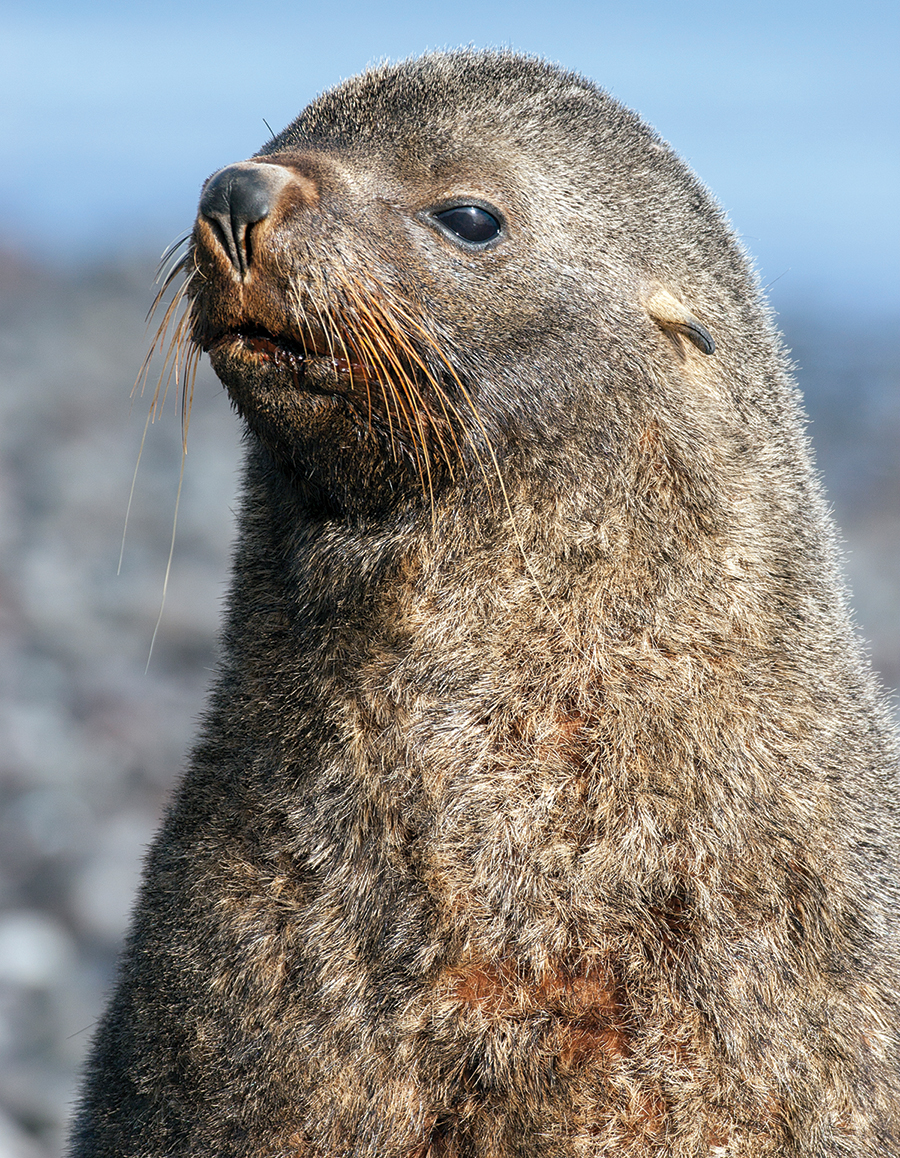
Scattered among the elephant seals and penguins are hundreds of Antarctic fur seals. Most were sleeping, stretched out on their bellies on the sandy beach, but some were sitting high up on tussocks of tall grass, surveying their surroundings. Looking a bit like domestic dogs, with dense fur coats, small heads and pointed snouts, Antarctic fur seals, as well as the larger elephant seals, are living testaments to the resiliency of Mother Nature.

When the famous sea captain James Cook landed on the island in January 1775, claiming it for the British crown and naming it after King George III, he found the land to be barren and inhospitable. However, he reported on the vast numbers of seals found along its rugged shores. Within five years, commercial ships from Britain and the United States descended upon the island in droves to hunt and harvest the abundant pinnipeds.

Elephant seals were killed for their oil and the fur seals harvested for their coats. In just a single year, one British vessel took 3,000 barrels of oil and over 50,000 fur seal skins. That kind of hunting pressure was not sustainable, and soon seal populations were nearing total collapse. Commercial sealing activities folded because there were simply not enough animals left alive to the make the business profitable. In 1972, international laws were established to protect marine mammals around the world, and since that time, populations of elephant seals and fur seals have made a remarkable recovery.

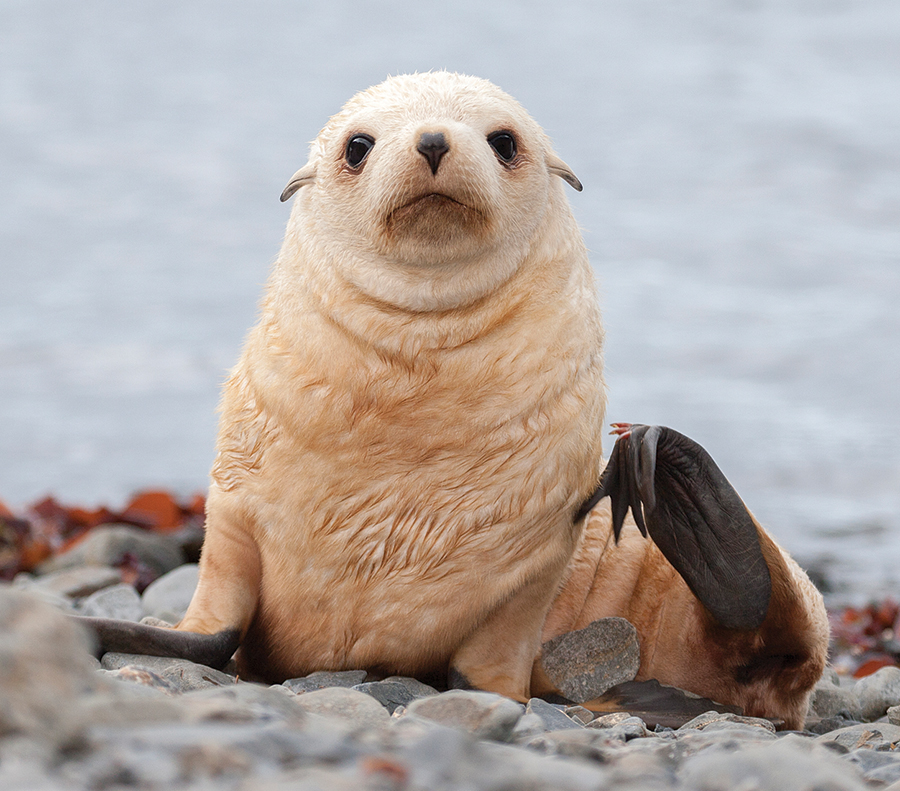
As we toured the immense penguin rookery, one young fur seal caught my eye. Unlike the other seals on the beach, which were dark brown, this one was a striking honey-blond color. This pale condition, likely a recessive genetic trait akin to albinism, is rare in fur seal populations and occurs in just 1 percent of the population. Our group stopped and aimed long telephoto lenses at the youngster, who seemed just as curious about us as we were about him.

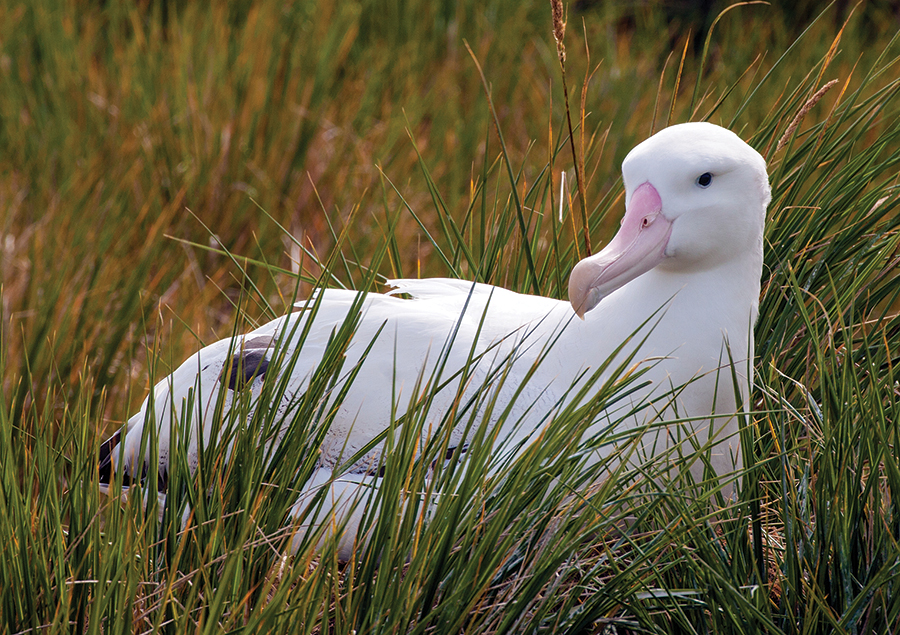
Glancing out to sea, just beyond the blond fur seal, I caught sight of another superlative creature flying high above the waves. With a wingspan approaching 12 feet, the wandering albatross is Earth’s longest-winged flying bird, inspiring generations of sailors with its immense size and ability to glide effortlessly through the air in the strongest of gales. Later in the day, we would stop on nearby Prion Island, a small islet in the bay, to observe wandering albatrosses on their nests.

Albatrosses, penguins and seals, oh my. South Georgia is truly one of the great wildlife meccas on the planet. Even the waters surrounding the island host a tremendous diversity of life. Just the day before, as our ship approached the island from the west, we stumbled upon one of the greatest concentration of marine creatures I have ever seen in 25 years of sailing the high seas.

Under a brilliant blue-sky day, with only a light breeze blowing across the surface of the ocean, we stumbled upon an immense gathering of whales. As far as the eye could see, the tall blows of fin whales, the second largest animal on the planet (capable of reaching lengths over 80 feet and 70 tons), rose above the surface of the water. Dozens of the immense creatures were in view at any one time. Scattered here and there among the fin whales were rotund southern right whales and the occasional humpback whale.

As our ship transited carefully through the area, a long line of seabirds, consisting of prions, petrels and albatrosses, followed. A small group of hourglass dolphins rushed over to play in the wake left behind by the moving vessel. Life was everywhere.

We had crossed the Antarctic Convergence, a zone where the cold currents from Antarctica meet the warmer waters of the Atlantic Ocean. The meeting of these currents can vary from year to year and our ship just happened to be in the right place at the right time.

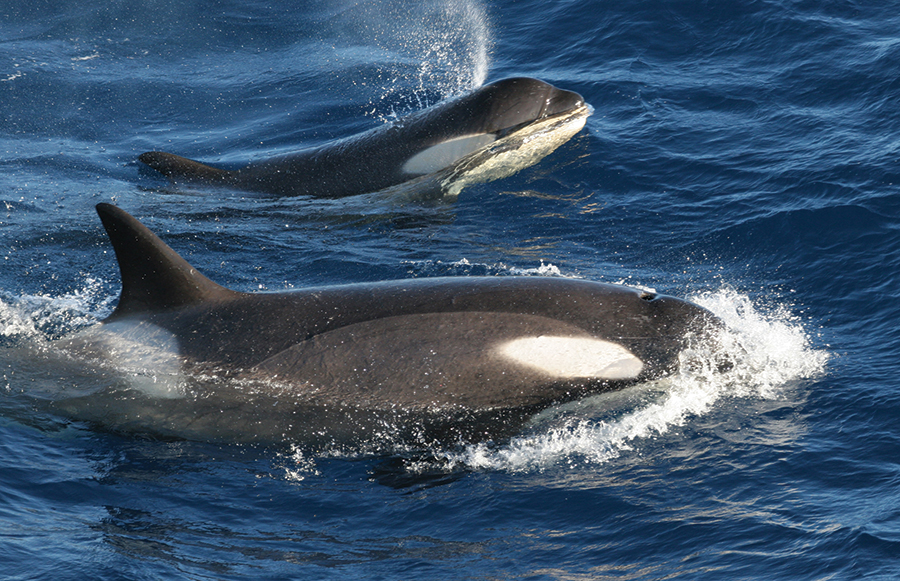
The sighting of the day happened just after noon, when a large group of killer whales approached the ship. Killer whales (a bit of a misnomer, as they are not actually a whale but rather the largest member of the dolphin family) have striking panda-like black and white markings, and when a mother and her calf surfaced close to the bow of the ship, numerous oohhs and aahhs erupted from passengers and crew alike. The group of 20 or so killers accompanied the ship for the better part of an hour and left a lasting impression on all those onboard.

I frequently look back at the images I took during my time around South Georgia. To witness such an abundance of wildlife, especially during this day and age, when so much of the natural world is feeling the negative effects of humanity, was an extraordinary privilege. It also offers a glimmer of hope for the future. If our society — all seven billion of us — can achieve the economic and political resolve to mitigate the decline of the natural world, humans and the other wild creatures that call this planet home, will flourish.  PS

Naturalist and photographer Todd Pusser, who grew up in Eagle Springs, N.C., works to document the extraordinary diversity of life both near and far. His images can be found at www.ToddPusser.com.

Elizabeth Gay + Harrison Cozart

ELIZABETH GAY + HARRISON COZART

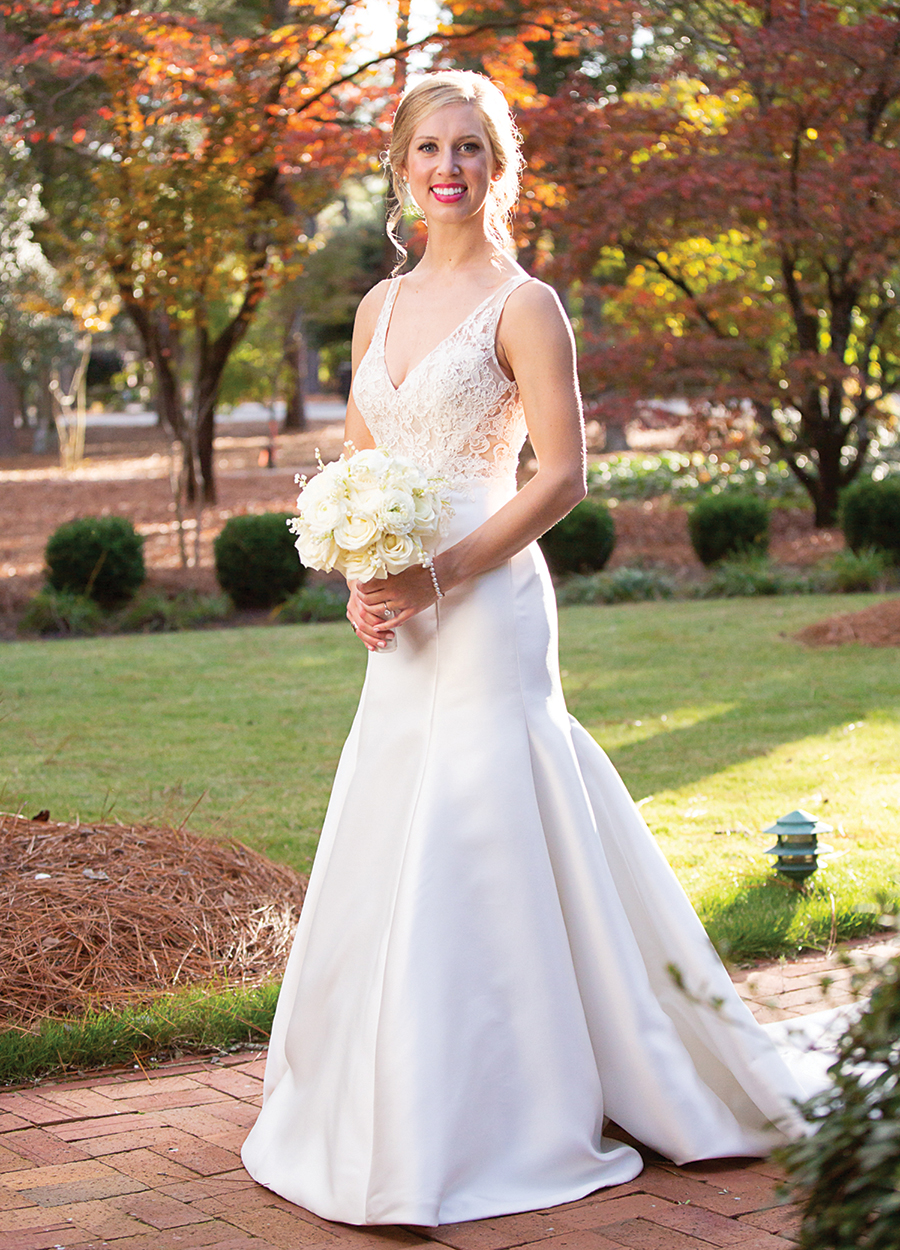
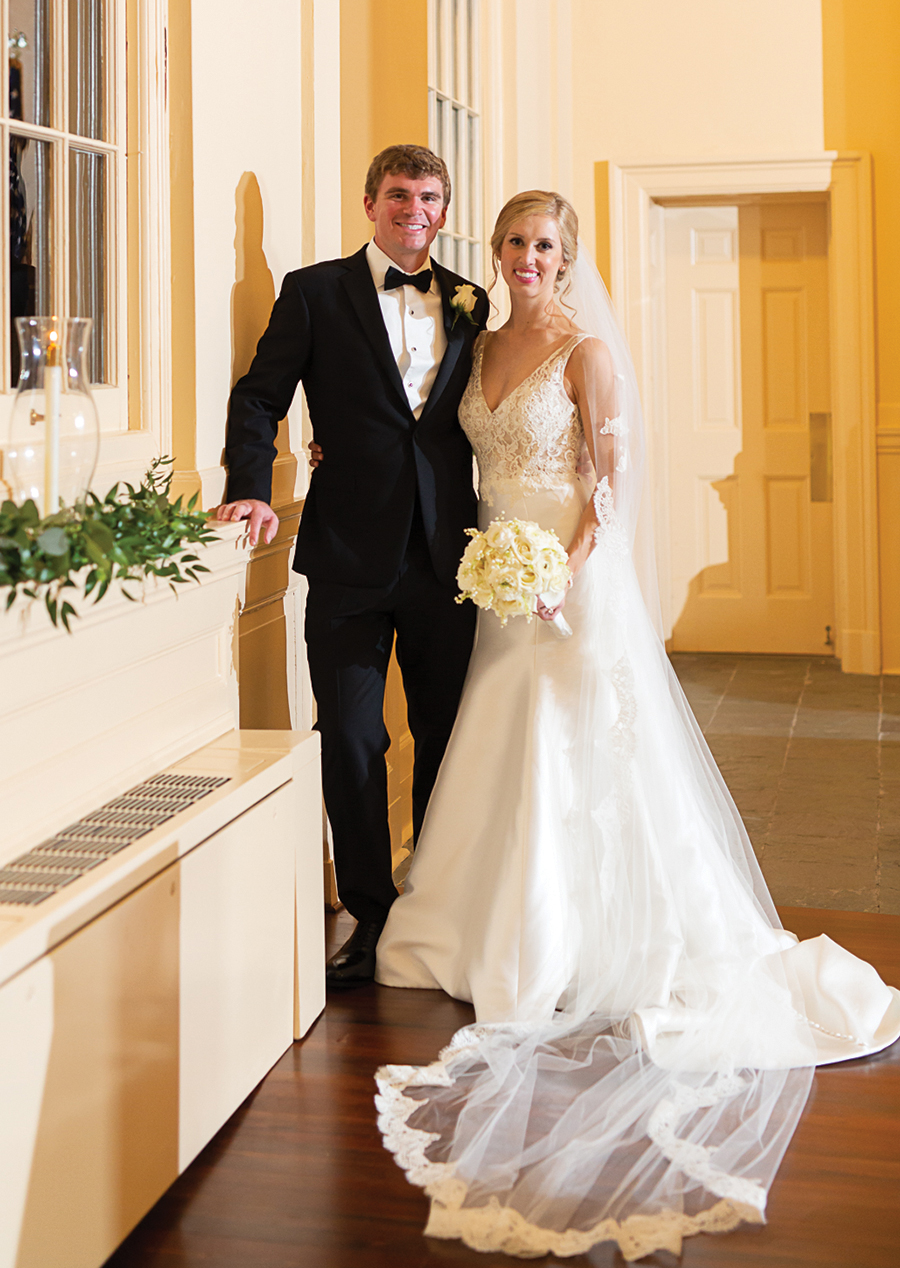
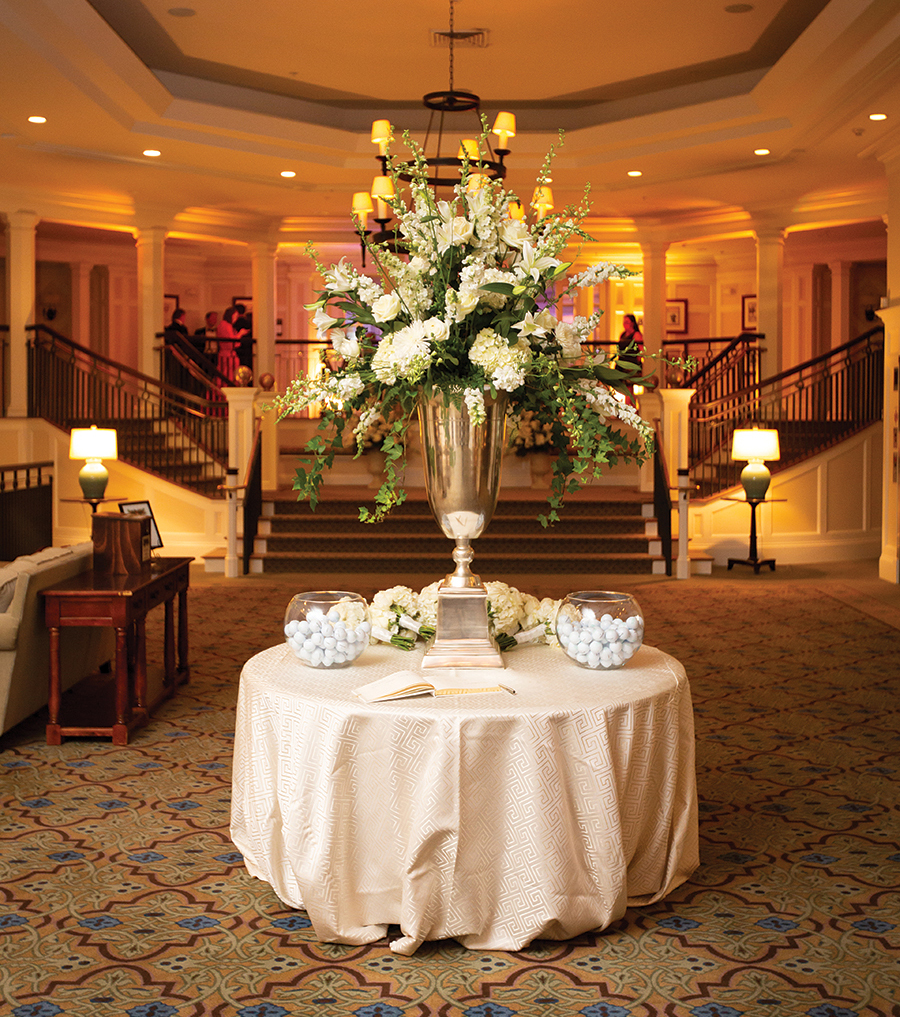
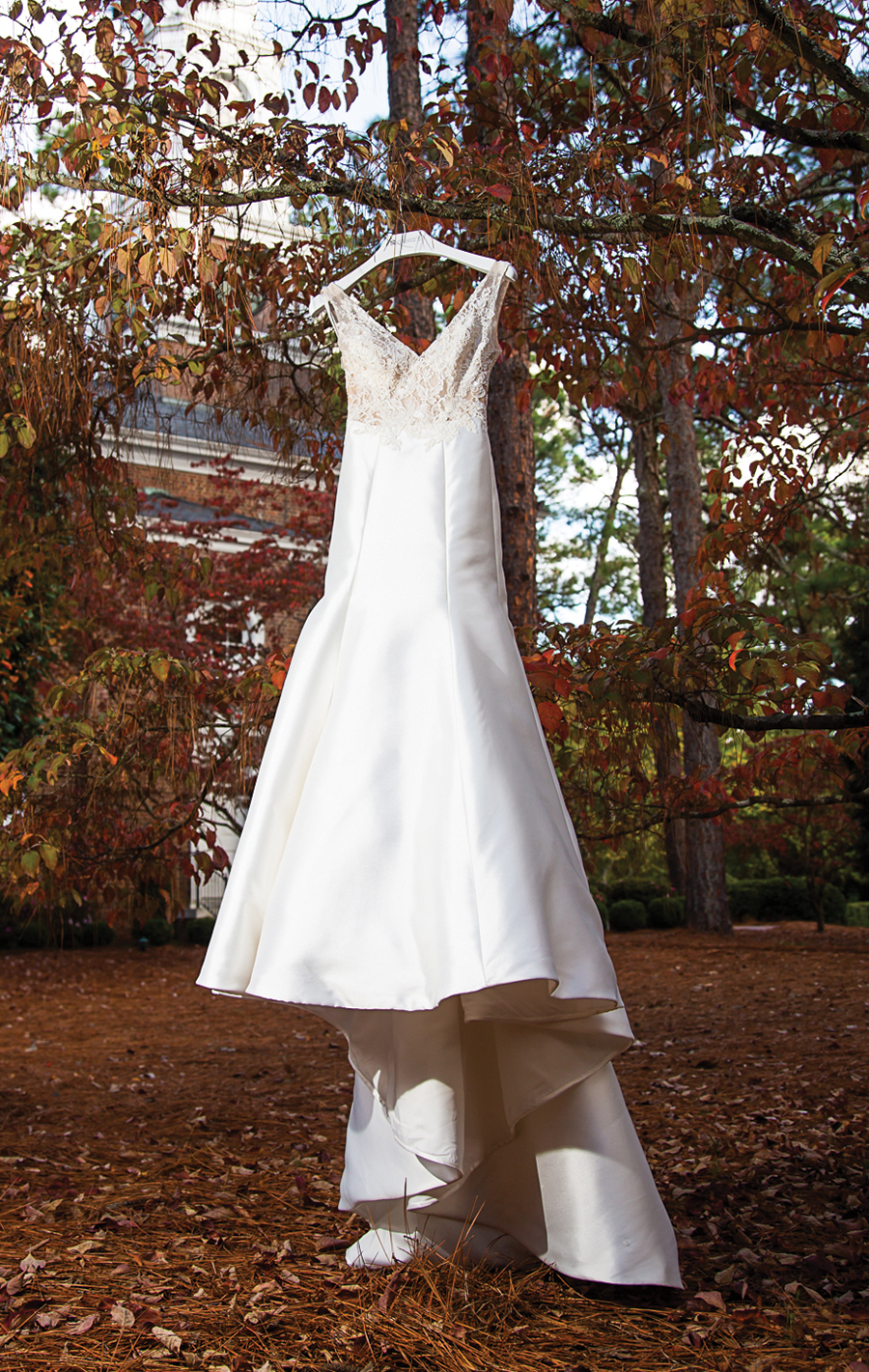
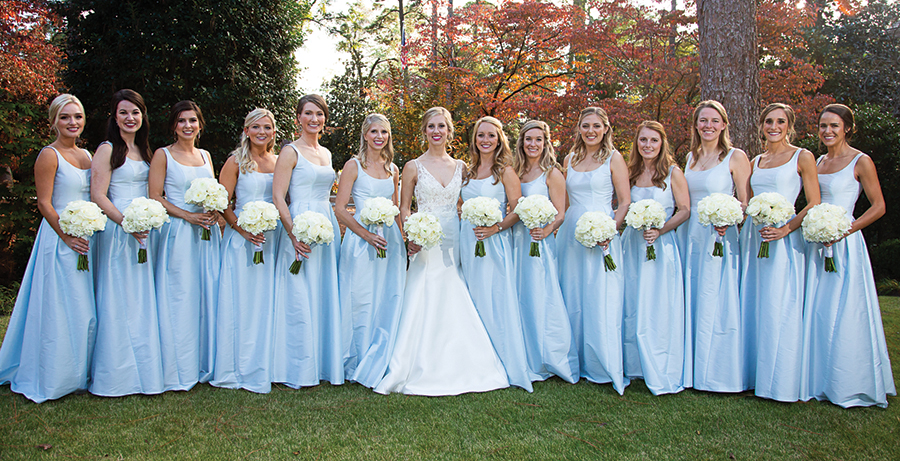
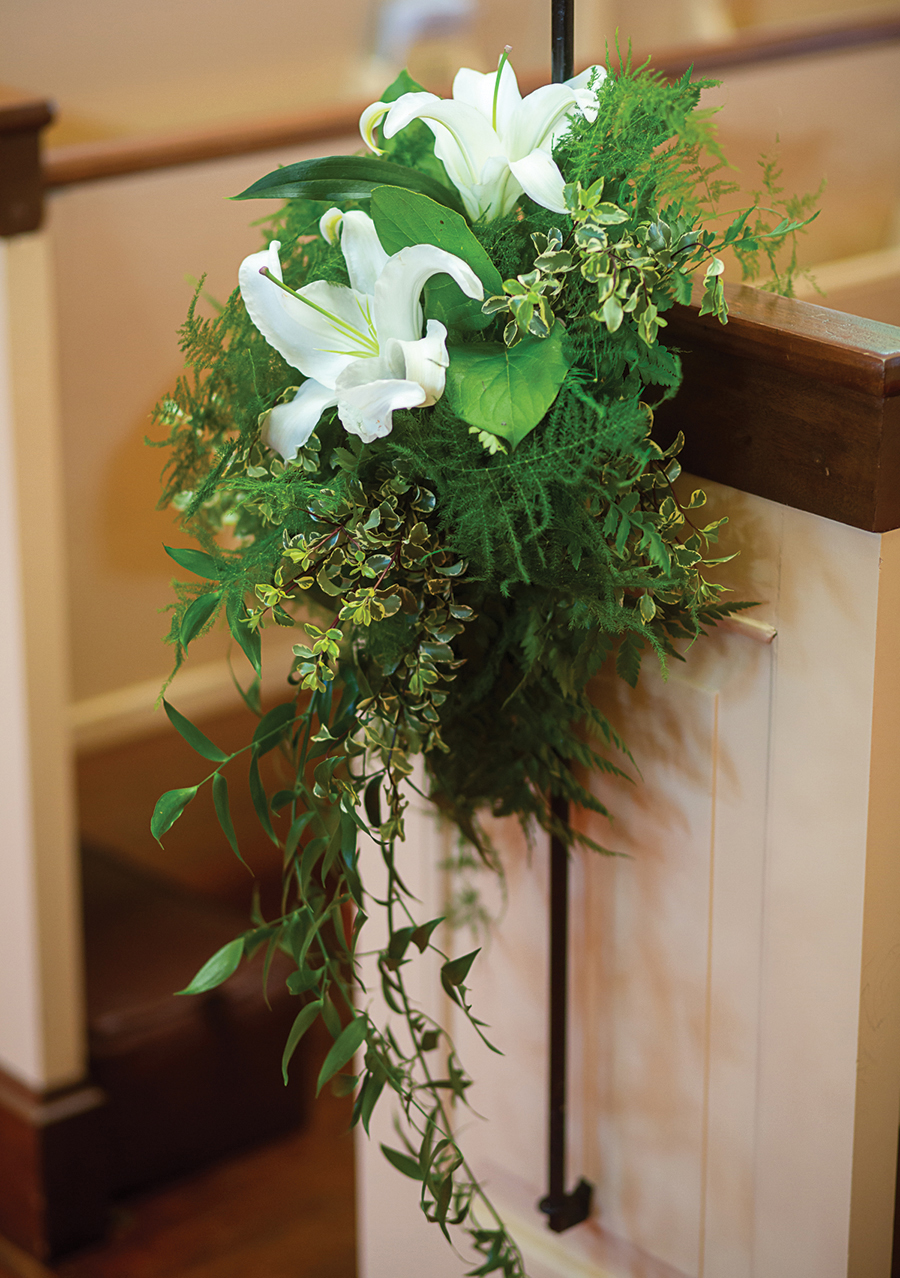
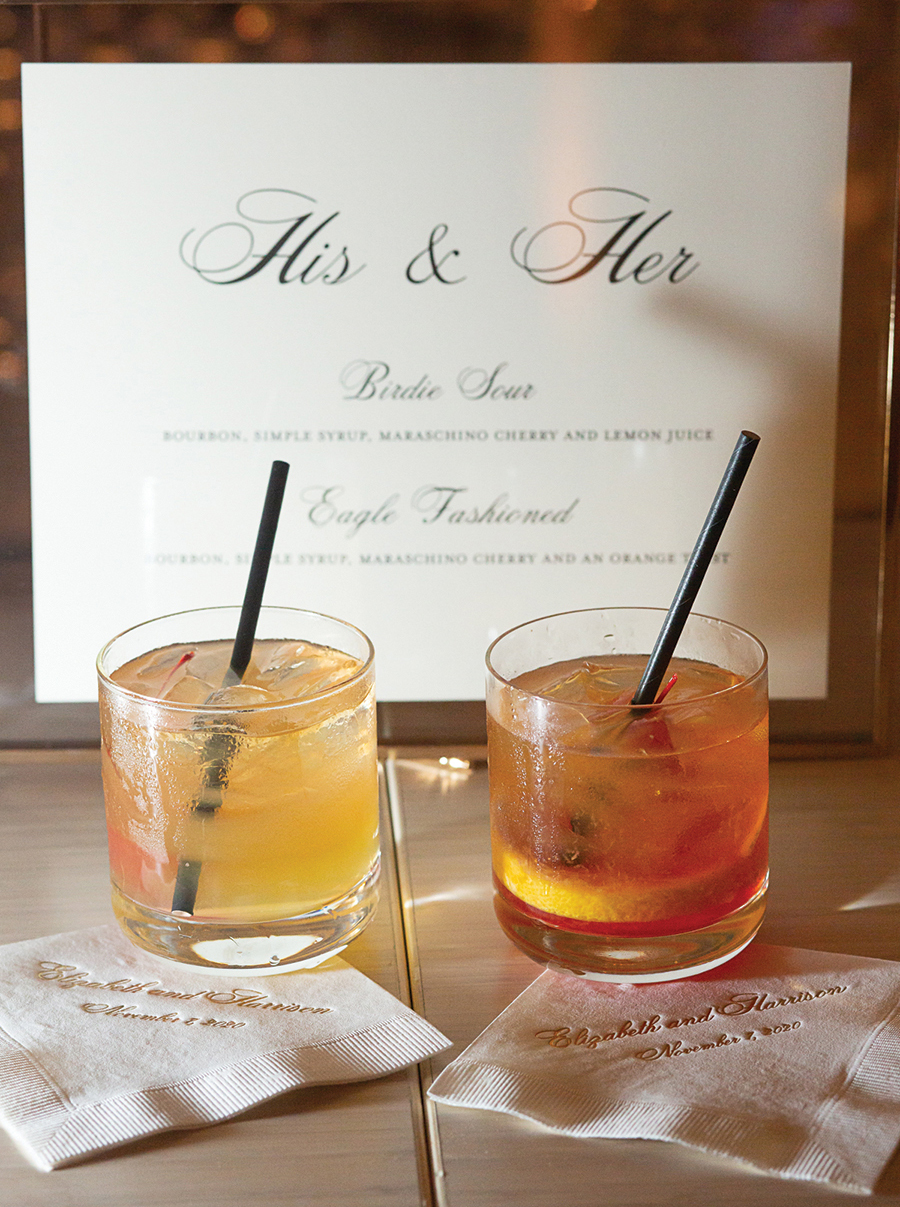
Photographer: Sayer Photography Videographer: Twenty-One Films Wedding Coordinator: Michele Soderquist, Pinehurst Resort Harrison channeled The Notebook vibes, proposing to Elizabeth in a canoe on the pond at her grandparent’s home in Sneads Ferry, North Carolina. Both Tar Heel natives — Elizabeth from Sanford and Harrison from Raleigh — the two grew up visiting the Sandhills for family, tennis and golf.

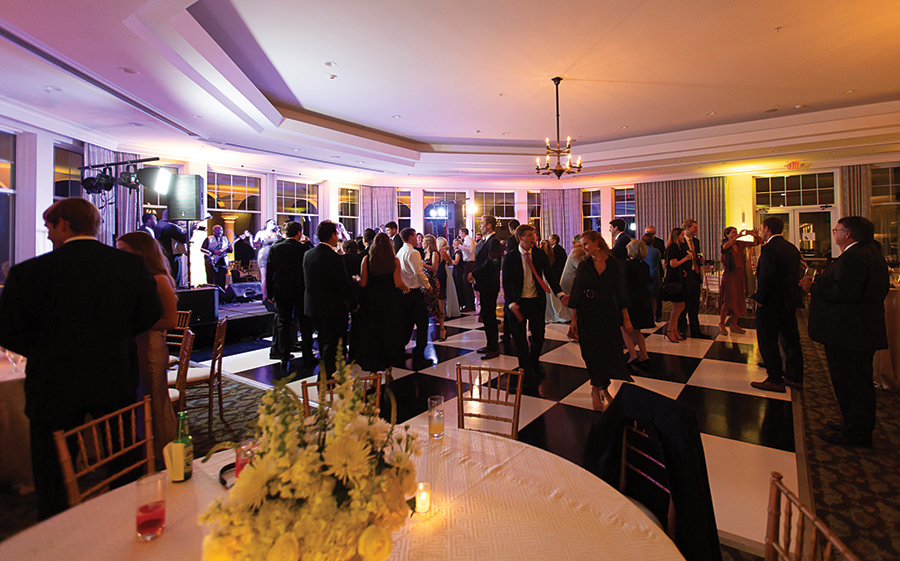
Familiar with the beautiful, historic area, it’s no surprise the couple chose the Village Chapel for their wedding and the Members Club of the Pinehurst Resort for their reception. Though the Cozarts’ original wedding date was in June 2020, they postponed the event to November. But the couple couldn’t have been happier with the change. The weather was still warm, but the church flickered in the fall evening, and the resort’s Christmas decorations were a welcome, magical touch.

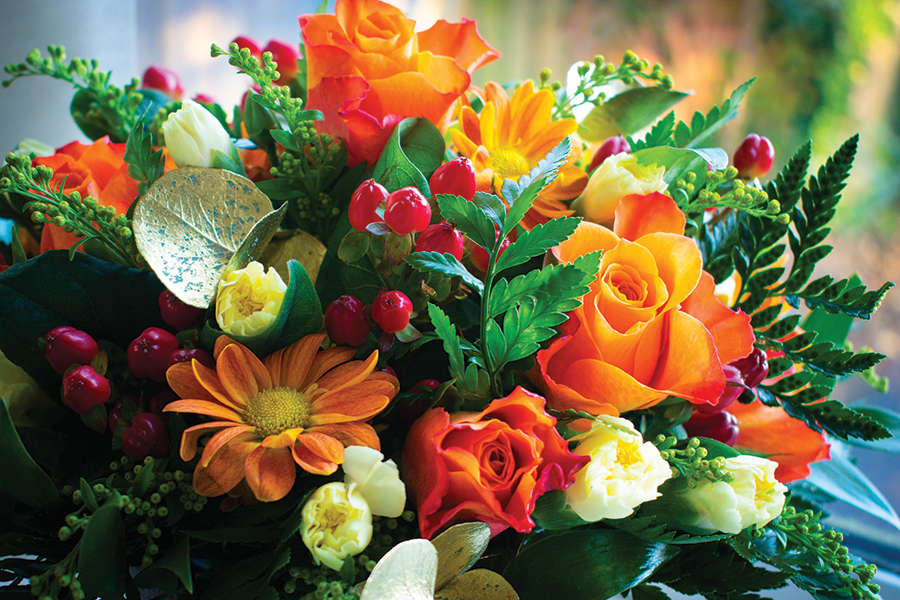
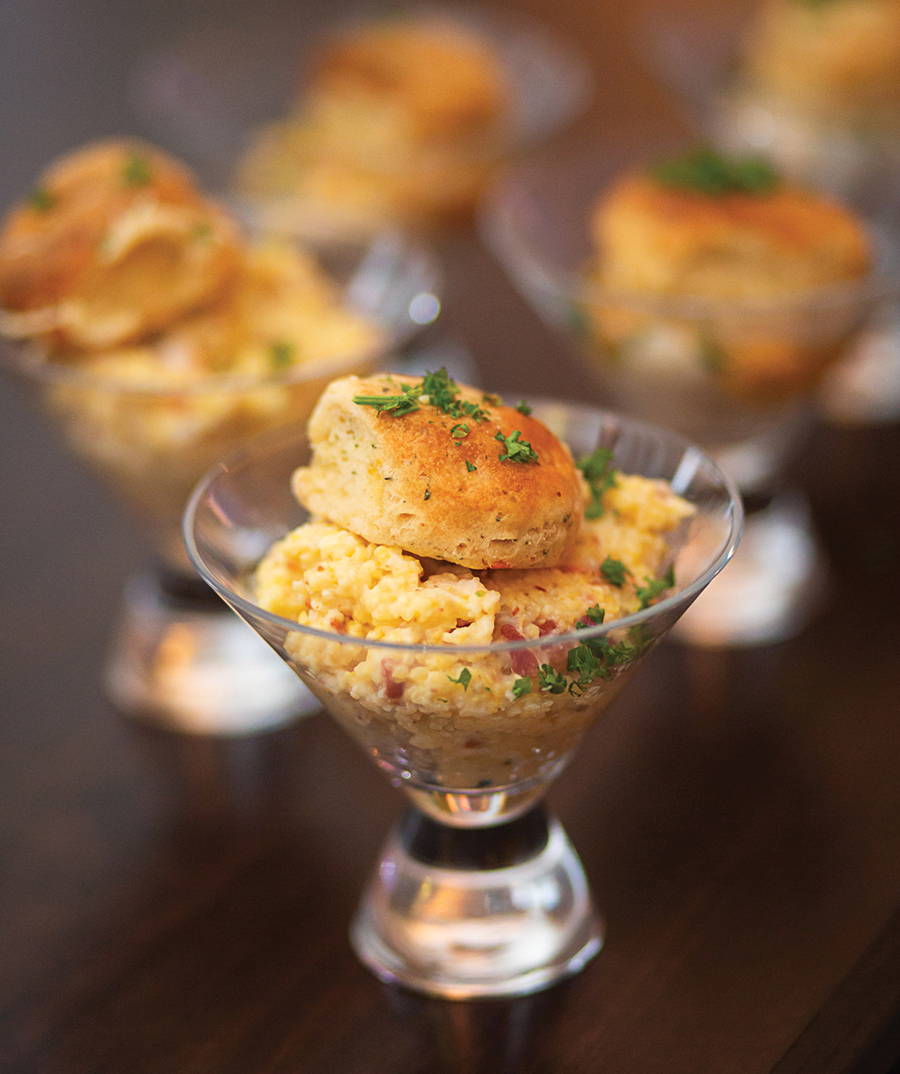
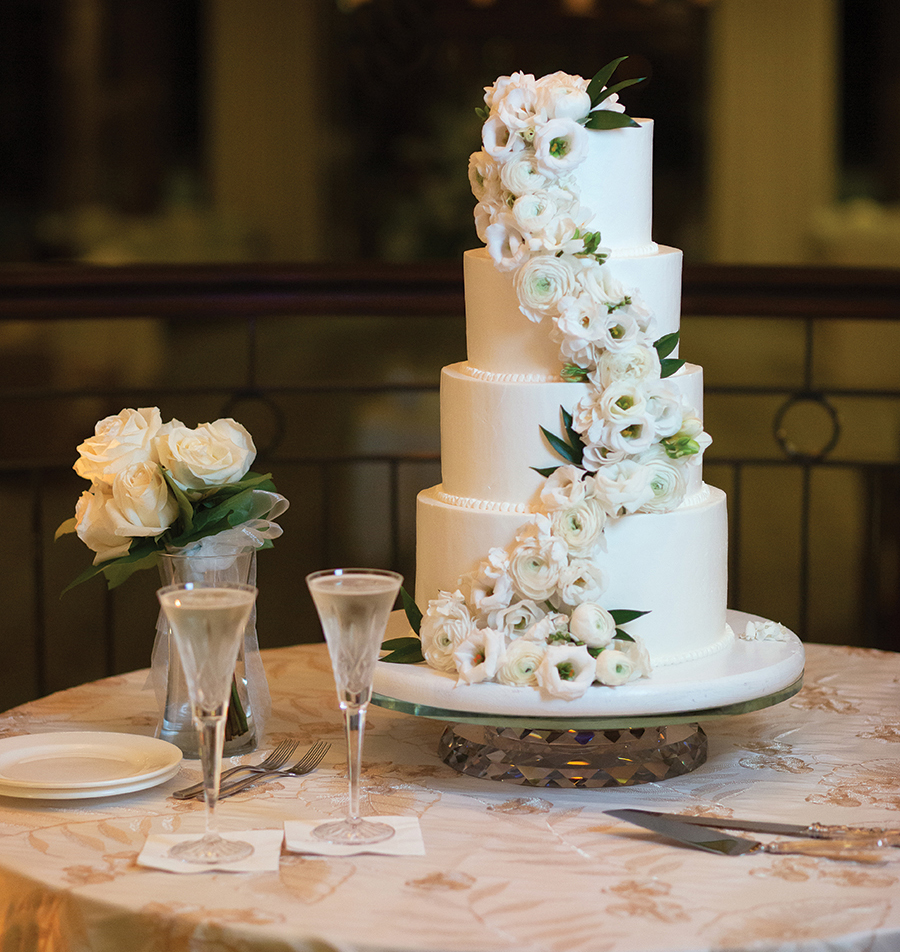
Ceremony: The Village Chapel | Reception: The Members Club of Pinehurst | Dress: Monique Lhuillier | Shoes: Loeffler Randall Hair: Wendy Strickland, Hair Extreme Makeup: Pamela Hung, OnLoKtion Makeup Artistry | Bridesmaids: Lula Kate, Bella Bridesmaids | Groomsmen: The Black Tux | Flowers: Floral Designs by Eddie, Sanford | Cake & Catering: Pinehurst Resort | Transportation: Pinehurst Resort Trolleys

Adrien Lammers + Michael Hoover

ADRIEN LAMMERS + MICHAEL HOOVER

Photographer: Brandie Ballard Photography

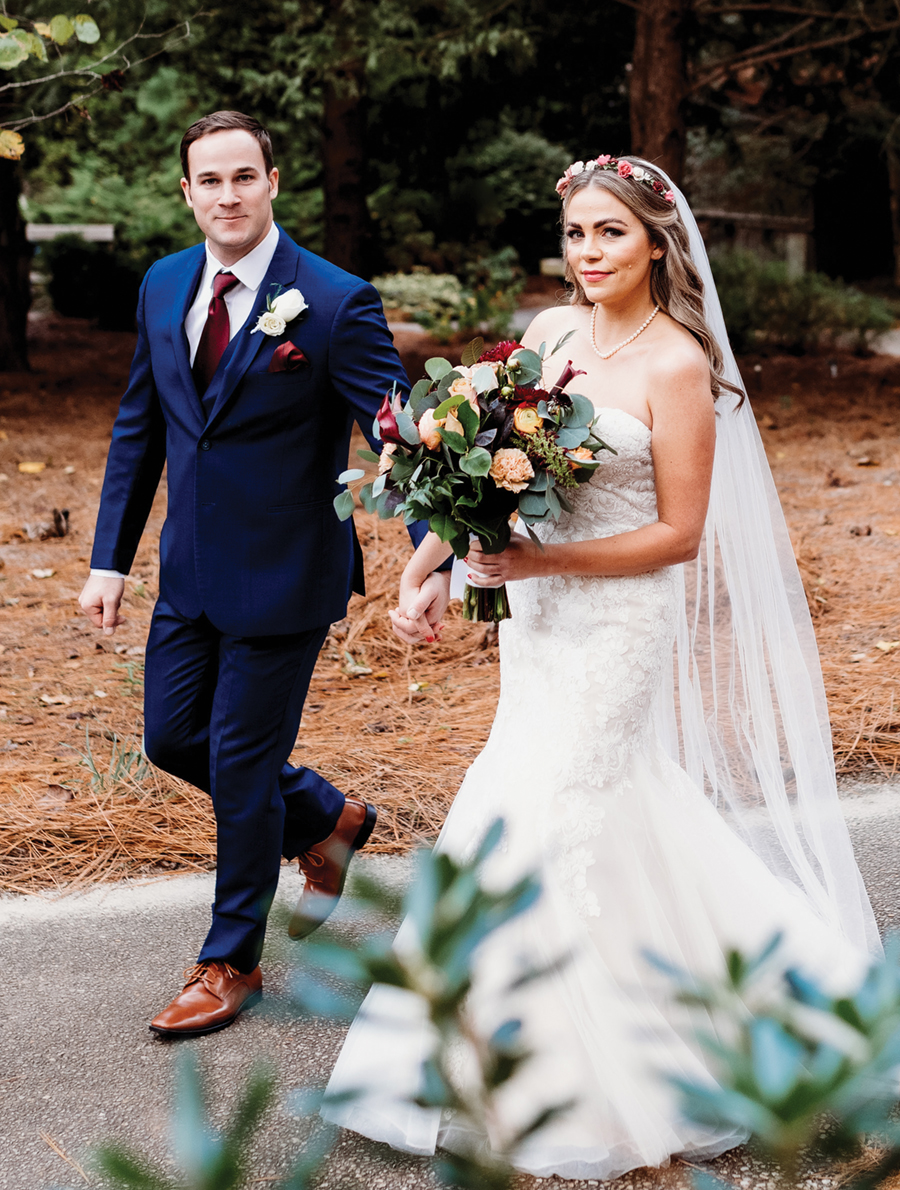
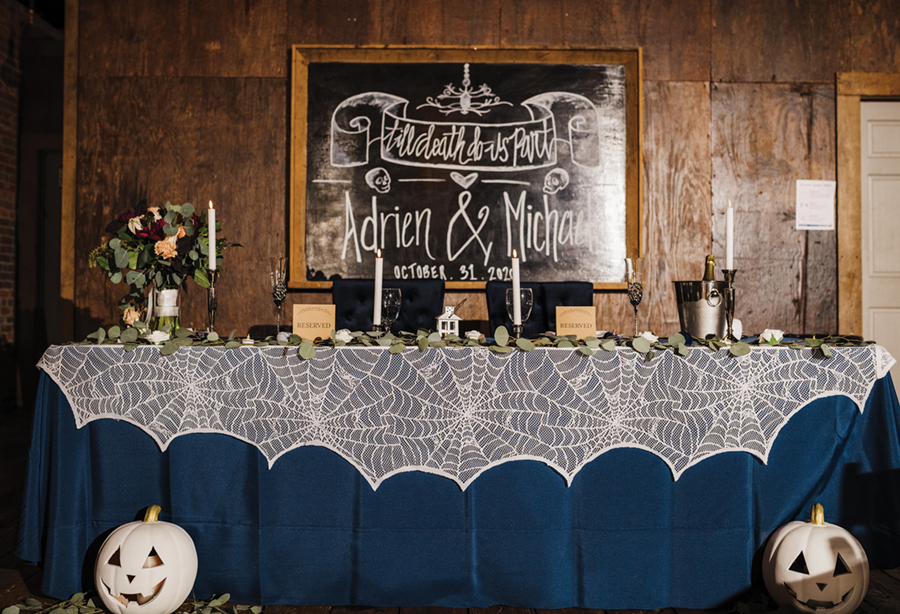
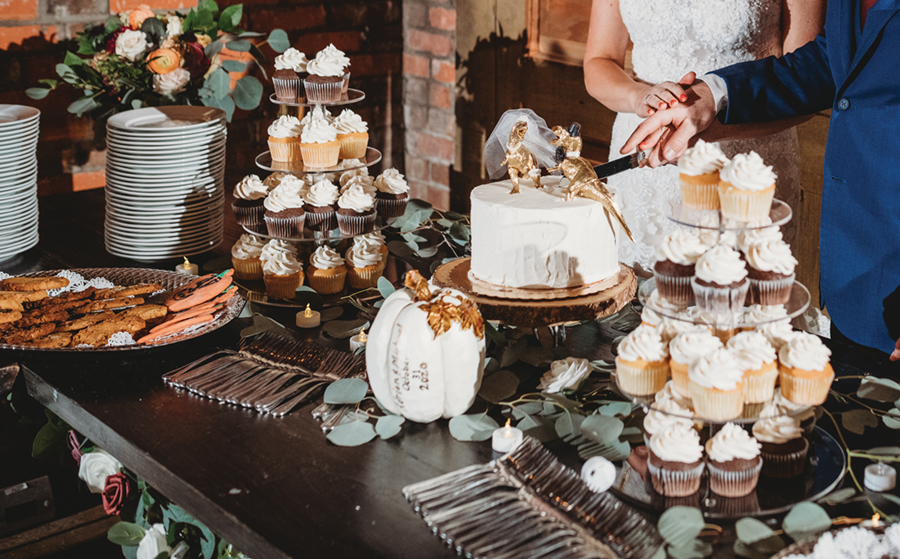
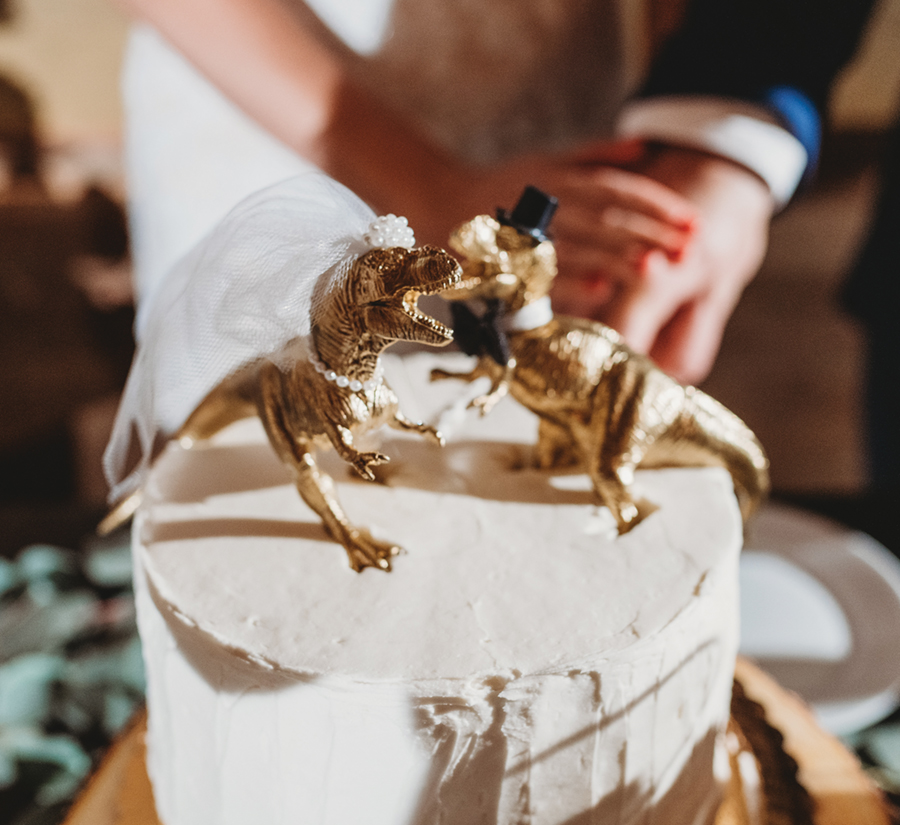
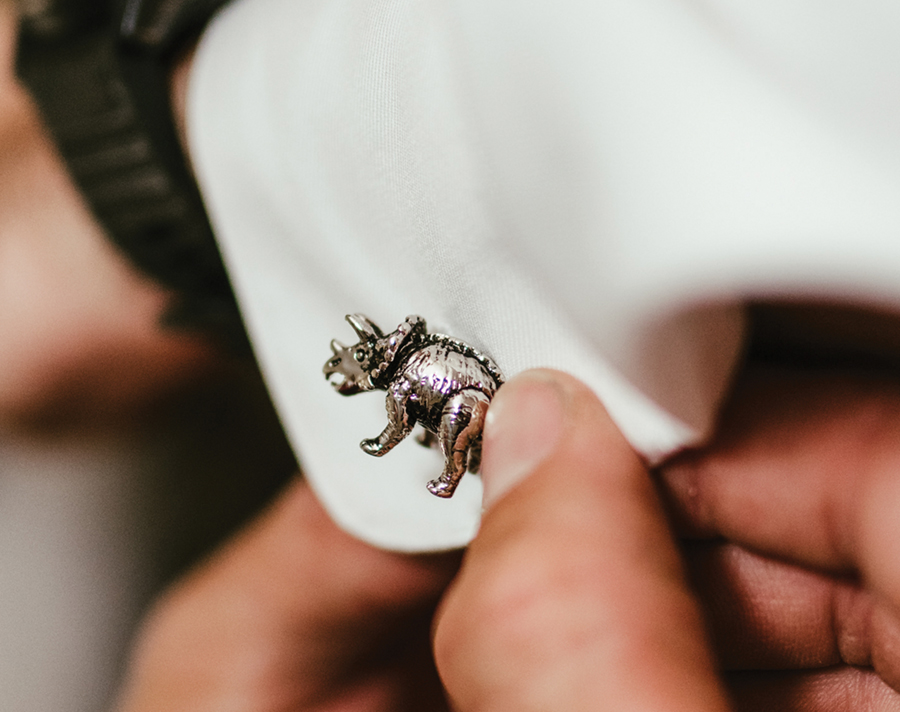
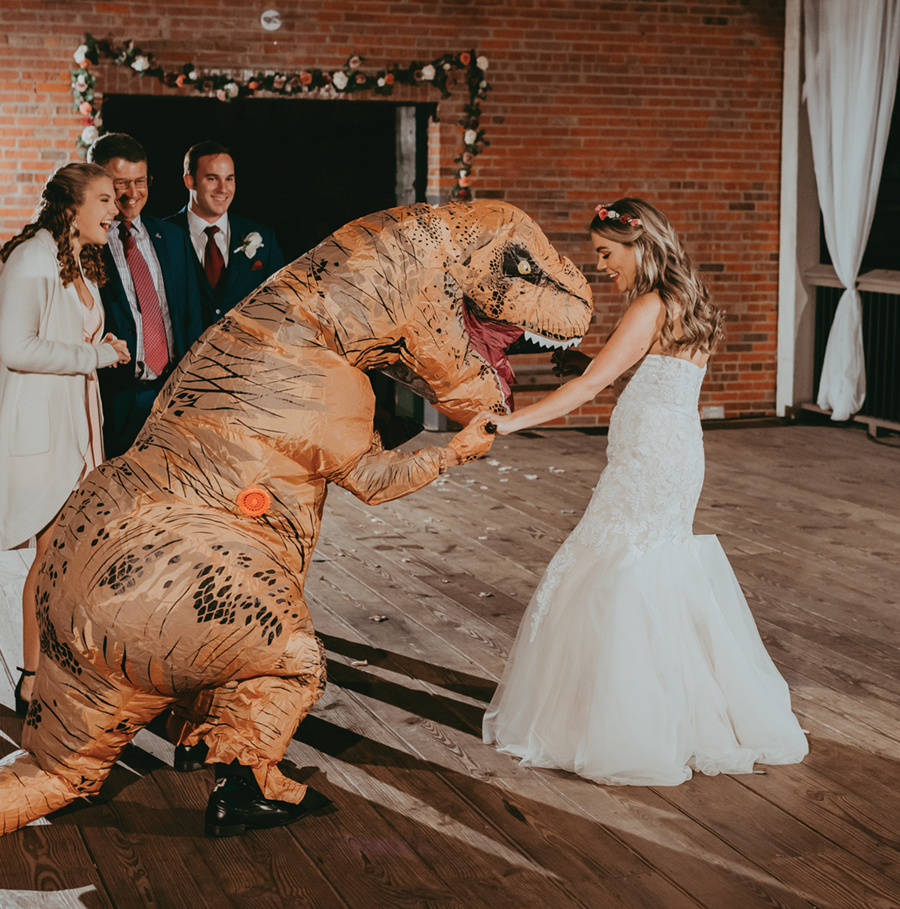
Like the engraved Asscher-cut diamond on her left hand, the day Adrien said “I do” to Michael was a custom-made perfect match. With a full moon in the sky, Adrien and Michael’s “Hoover Hallowedding” would be a night to remember for all — and that’s not only because it ended with a family friend strutting his stuff to “Monster Mash” while wearing a T-Rex costume.

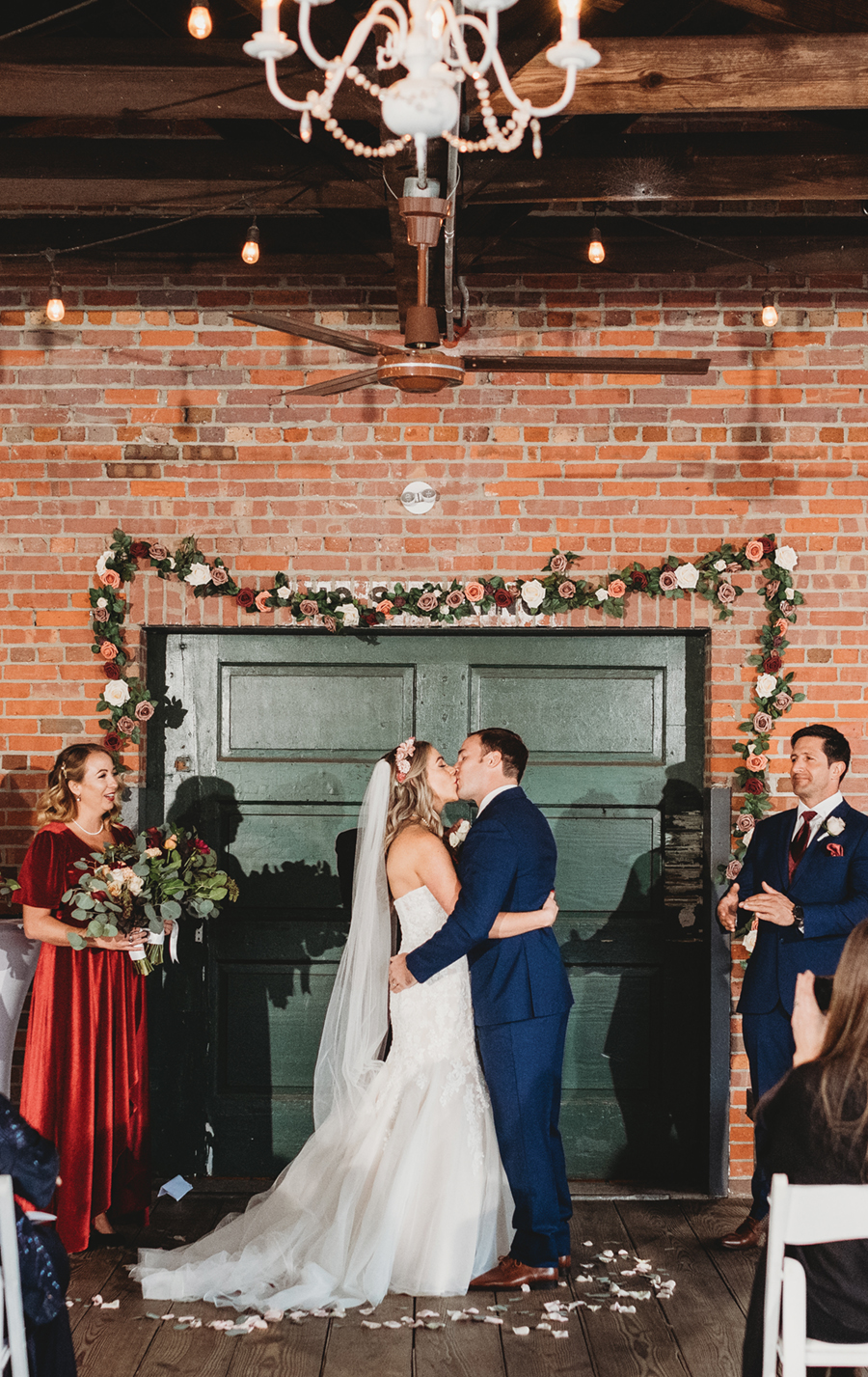
A ceremony complete with a fall color palette and white pumpkins paired with a Halloween-esque reception at 305 Trackside created a well-balanced blend of romantic and lively — an aesthetic fit for none other than the Hoovers.

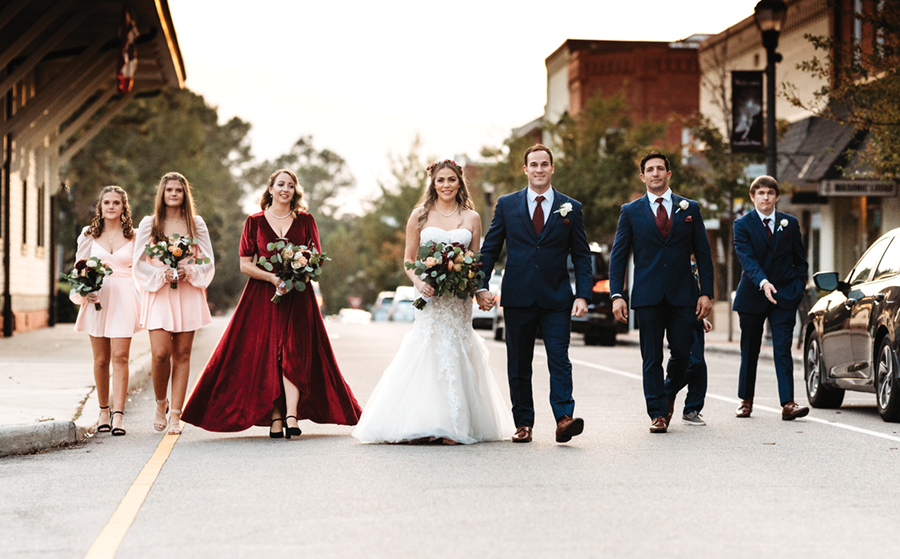
Ceremony & Reception: 305 Trackside | Dress: David’s Bridal | Hair: Debbie Hoover, Vogue Salon | Makeup: Nicole Murray, Brittany Page, Elise Santoyo at Venus Spa and Salon | Groomsmen: Men’s Wearhouse | Flowers: Jack Hadden Floral & Event Design | Cake: G. Charles Bakery | Catering: Spoon Lickers Catering | DJ & Rentals: Ward Productions | Transportation: Kirk Tours & Limousine