Golftown Journal

GOLFTOWN JOURNAL

The Golfing Curmudgeon

Things you won’t find in the rule book

By Lee Pace

The caddie meant well. He was an extrovert with a bag on his shoulder, a rangefinder in his bib and an innate desire to please. He was not even carrying my bag, but he was pulling for me every shot of the way.

Settle!

Get legs!

Fly, baby!

Spit it out!

It was restraint and composure of epic proportions that prevented me from getting in his face.

Do not talk to my shots.

I know I hit it fat. I know I skinned it over the green. I know it’s flying into the woods.

But your well-meaning exhortations accomplish one thing: They rub salt into my wounds. And golf inflicts enough pain as it is.

While we’re at it, here’s some other stuff that chafes my arse:

Get to the first tee on time. If you don’t know the secret already, you’re not going to find it with a dozen more practice balls.

Get out of the stupid cart and walk. Over three June days in plus 90-degree heat, I joined two separate groups of 50-plus golfers and we all walked. One pushed a trolley and one flirted with heat stroke, but the physical challenge was part of the attraction. There is no greater tired than having walked, carried and busted 80. (OK, I am not militant on this point, I’ll ride where etiquette or local rules mandate. I would simply prefer to walk.)

Your jokes are wonderful. Your name-dropping is fascinating. Just put a lid on it when it’s your turn to hit. And have your glove already affixed to your hand when you’re up.

Spot your ball on the green with a penny or at the least a small plastic marker that most clubs provide on the first tee or at check-in. A penny is small and doesn’t reflect sunlight and it’s been good enough for Jack Nicklaus, Davis Love III and Paul Azinger. (Nicklaus, incidentally, carries three pennies during a round; Love uses only 1965 or 1966 coins; and Azinger places his penny heads up with Lincoln looking at the hole.) Spare me your prized Kennedy half-dollar that bounces the sun like a prism or that souvenir poker chip that looks like a battleship.

Do not concede yourself that 6-footer for par when it doesn’t count for the team bet, then write it on the card and begin to think your handicap is halfway legitimate.

Do not use golf as a verb.

A single in a cart? You do not exist.

Just because the professionals playing for millions of dollars on the hardest courses under suffocating pressure have elaborate pre-shot routines and take six hours to play doesn’t give you license to play monkey-see, monkey-do. Pick a club, pick a line, give it a nice rehearsal and hit the damn ball.

Memo to TV announcers, tour pros and architects: It’s a good hole and a good course and a good shot. Must we say golf hole and golf course and golf shot? I mean, it’s not a tennis course, now is it?

Manage your temper. Unless you are working at golf to feed your family or betting more than you can afford to lose, this is a game. You play a game. Treat it as such. Count your blessings that you have the opportunity to be out in the fresh air with friends in the first place.

Learn to eye the 100-, 150- and 200-yard markers and estimate your distance. It’s not advanced trigonometry. You can figure out you’re 135 yards from the center of the green with pinpoint accuracy with some educated eyeballing.

If you don’t have an official handicap, don’t give me an “average” score on the first tee. Tell me your three best recent scores. After all, a handicap is not about averaging your scores; it’s about gauging your potential.

If you are going to give me the line on a putt, give me the speed as well. The former is worthless without the latter.

If I want color commentary, I’ll gladly listen to David Feherty. Beyond that, your scores speak for themselves; I don’t need an explanation on every shot. And if you insist on providing pithy little bromides throughout the round, invent some new material. “Nice putt, Alice,” is a wee bit shopworn.

Unless you are my partner, what club I hit on a par-3 is none of your business.

What not to wear: white golf shoes in the winter (you wouldn’t wear white shoes into a restaurant in December, would you?); white footies with black shoes (and vice versa); shortie-shorts; golf sandals; and XXX shirts if you’re a medium (that went out in the ’90s).

Quit hyperventilating after running a putt past the hole. If you’ll stay focused and follow its path, you’ll have a free read on the break coming back. And if you are gyrating and slamming a club after yanking one into the woods, don’t ask, “Did you get a spot on that one?” By the way, I don’t venture into poison ivy for my ball. I’m sure not going there for yours.

Sorry about that 5-iron landing in the bunker. But you don’t get to hit a practice shot. Ever. And live to tell about it.

OK. I’m done. And I feel much better. Until I have to figure out an excuse for the next captain’s choice invitation.

Dissecting A Cocktail

DISSECTING A COCKTAIL

The Art of Choke

Story and Photograph by Tony Cross

In 2009 bartenders Kirk Estopinal and Maksym Pazuniak released a very small cocktail book titled Rogue Cocktails. The book has a short list of drinks from a few different bartenders and almost all of the recipes are head-scratchers. Four years after its release, a friend lent me the book and I made sure to copy every recipe down in my personal cocktail pamphlet.

The drinks didn’t all make sense on paper but were intriguing nonetheless. Certain cocktails needed “5 swaths of lemon peel” or three different types of amaro with “15 drops of 50/50 bitters.” Long before the days of using Instagram to find strange and envelope-pushing drinks, Rogue Cocktails was the place to look.

One of my favorites is the “art of choke,” by bartender Kyle Davidson at the legendary Chicago bar, The Violet Hour. The combination of rum, Cynar and green Chartreuse caught my eye. That and the fact that I had never seen a recipe for a cocktail with juice that was stirred. “You can do that?” I thought. I recently listened to a podcast where Davidson explains how he created the cocktail while on a bartender swap with the New York City bar, Death & Co.

“The real estate in New York is different than Chicago, and the folks at D&C were doing serious volume. The service bar would get so overwhelmed that even the best bartenders would have to pass tickets over,” he said. “Stephen Cole, who is the best service bartender I’ve ever worked next to, can handle anything, but even he had to pass me a ‘dealer’s choice’ ticket of a rum and bitter. The first iteration was 2 (ounces) of white rum, 1 (ounce) of Cynar, with a green Chartreuse rinse and a mint leaf on top. And I thought, ‘Hey, there might be something here.’” Davidson quickly wrote the specs down in his own little pamphlet and continued serving drinks. He admits that he doesn’t remember how he arrived at the final specs but does remember being a little nervous about adding fresh juice to a stirred drink. As they say in Rogue, the final result proves, “There is no right way to make a cocktail, but there are many wrong ways.”

SPECIFICATIONS

1 ounce white rum

1 ounce Cynar

1/8 ounce lime juice

1/8 ounce demerara syrup (2:1)

Heavy 1/4 ounce green Chartreuse

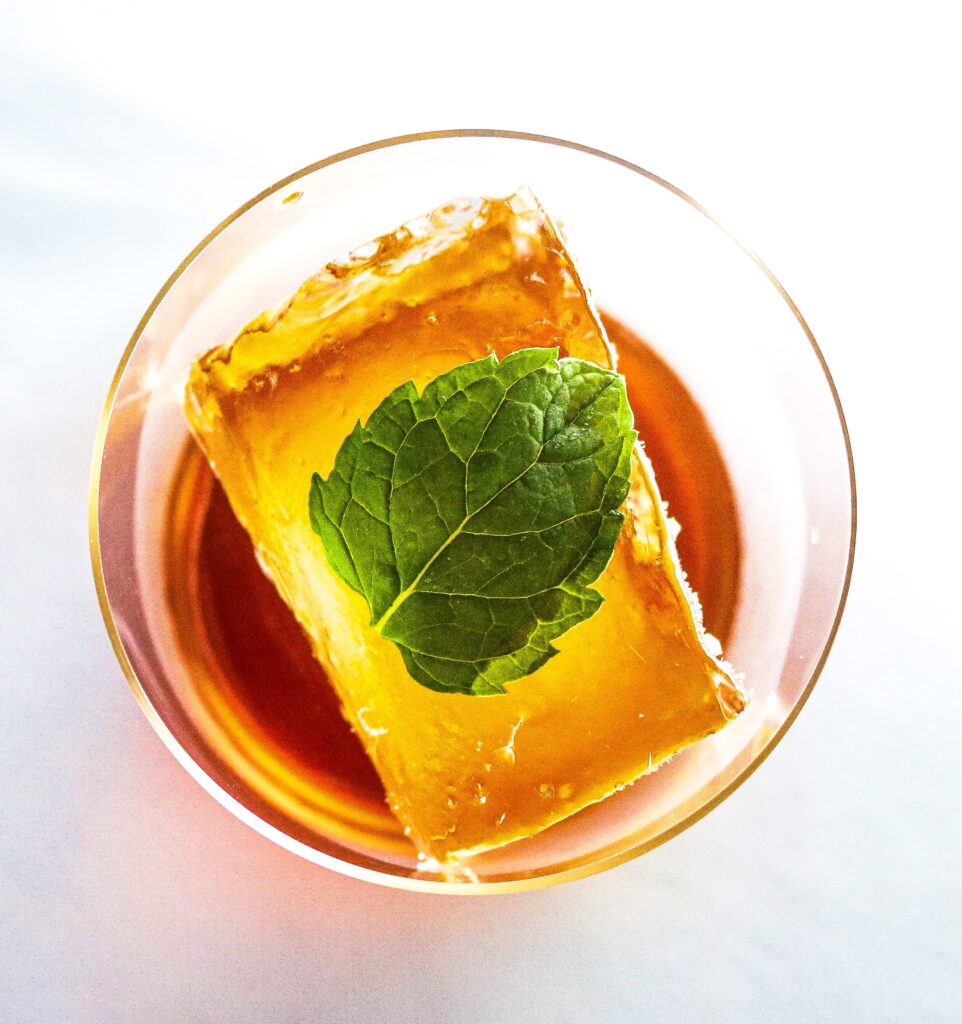
Fresh mint sprigs

EXECUTION

Add all ingredients to a mixing glass with 2 sprigs of mint. Muddle and steep for 30 seconds. Fill with ice and stir until chilled. Strain into a rocks glass over one large ice cube. Garnish with mint sprig.

Out of the Blue

OUT OF THE BLUE

Chill Pill

The lost art of relaxation

By Deborah Salomon

“Relax!”

How droll.

I was reading a piece about the lost art of relaxation that found italics and an exclamation mark necessary to emphasize their point. Seems to me relaxed folk don’t require italicized commands. Then I remembered the TV commercials for inducing sleep, the ultimate relaxation, with appropriate background sounds: rain falling, birds chirping, leaves rustling.

Ah . . . !”

So it’s come to this: A pleasant, restful state of mind has become just another download. Sitting and staring into space a no-no. Every nanosecond must be filled with thought, problem-solving, Beyoncé, something. Then, when the brain wears out, we are ordered to Relax!

A similar fate awaits the napper. Back in the day short power naps were in fashion. Some employee-friendly offices provided napping chairs. No time anymore for refreshing 20-minute snoozes. Gotta check the stock market, the weather, NFL scores. Did I miss Aunt Hattie’s birthday? Soon, restaurants posted “Turn off cell phones” signs, not necessary with vibrate and text. There they sit, next to the cutlery.

Technology has become the enemy of relaxation. An entire generation has progressed from pacifiers to GameBoys to iPhones to Siri and AI functions I can’t even name. Just pondering it creates tension.

The really scary part is how this relaxation wasteland has spread from Generation Whatever to their grandparents who, instead of a relaxing daydream, struggle over Sudoku and Wordle.

I notice this in waiting rooms which, devoid of magazines since COVID, have become mailrooms, newsrooms, download parlors. In my files covering 30-plus years, there remain three columns about air travel, especially the decline of people-watching in departure lounges. This pastime requires keen observation, imagination. Relationships play out over whether to spend $5 for a cup of coffee, or who packed the earbuds. Outfits go from gym-chic to military fatigues to beachy flip-flops. From business suits to pre-stressed jeans. On long layovers I entertained myself by concocting stories about couples and how they met, sometimes laughing out loud, all without clutching a slippery little electronic device.

Then, the crazy lady with no visible cellphone would don big sunglasses, yawn, stretch out and relax.

I suspect relaxation has a chemical element that creeps up slowly, silently, largely unnoticed. It is the transitional state between hectic brain activity and sleep, a twilight zone visible on no screen, whether set to airplane mode or not.

It is delicious, refreshing, blissfully unproductive.

Of course relaxation can be achieved by other methods — a walk in the woods on a chilly afternoon; watching a toddler build a skyscraper from alphabet blocks; staring into a fireplace as pine logs sputter and burn; petting a kitten; feeling the spray of a waterfall — all in person, not online.

Like the time I strolled by a house where an elderly gentleman sat alone on the porch, head leaned back, hands idle, smiling.

“Hi there,” I said and waved. “Whatcha doin’?”

“Nothin’.” He waved back.

Right answer.

Chelsey Bennett + Austin Ballard

Chelsey Bennett + Austin Ballard

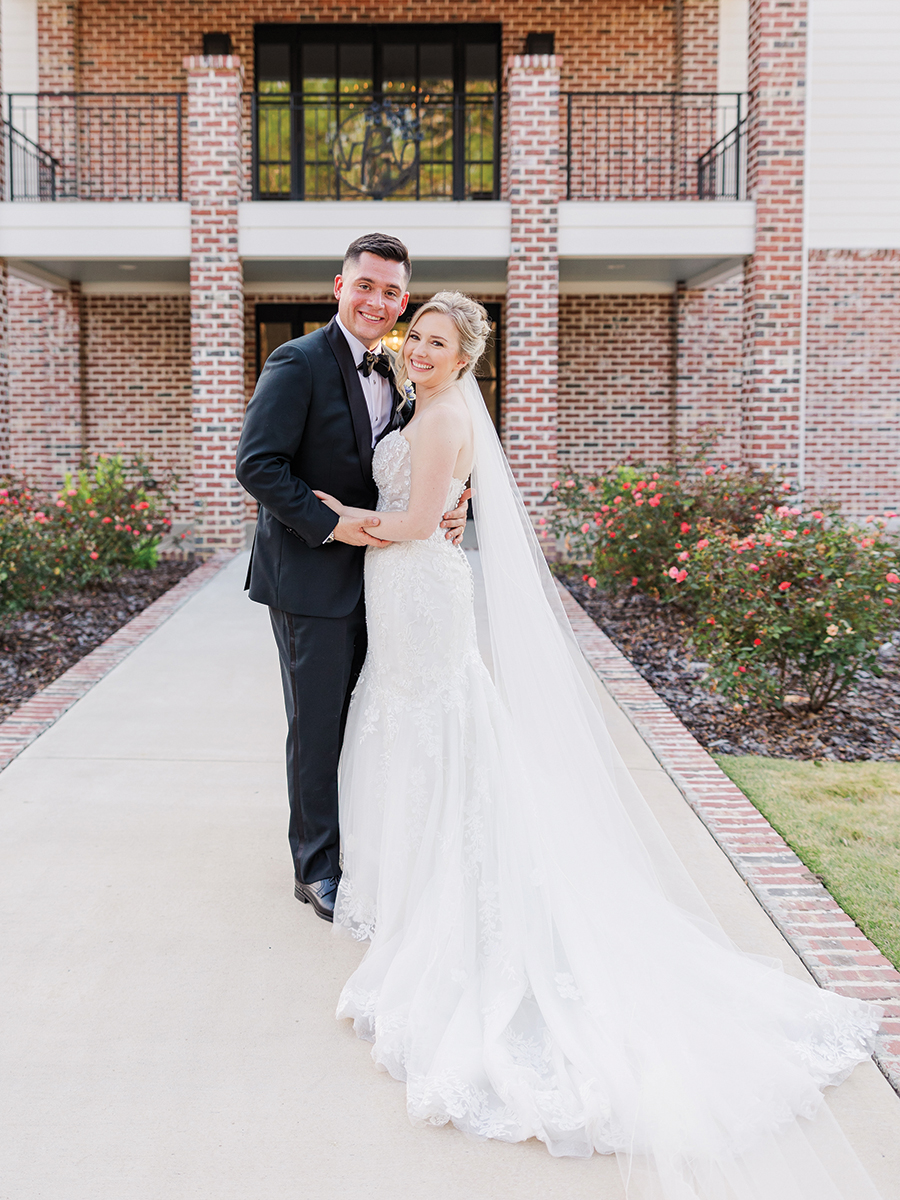
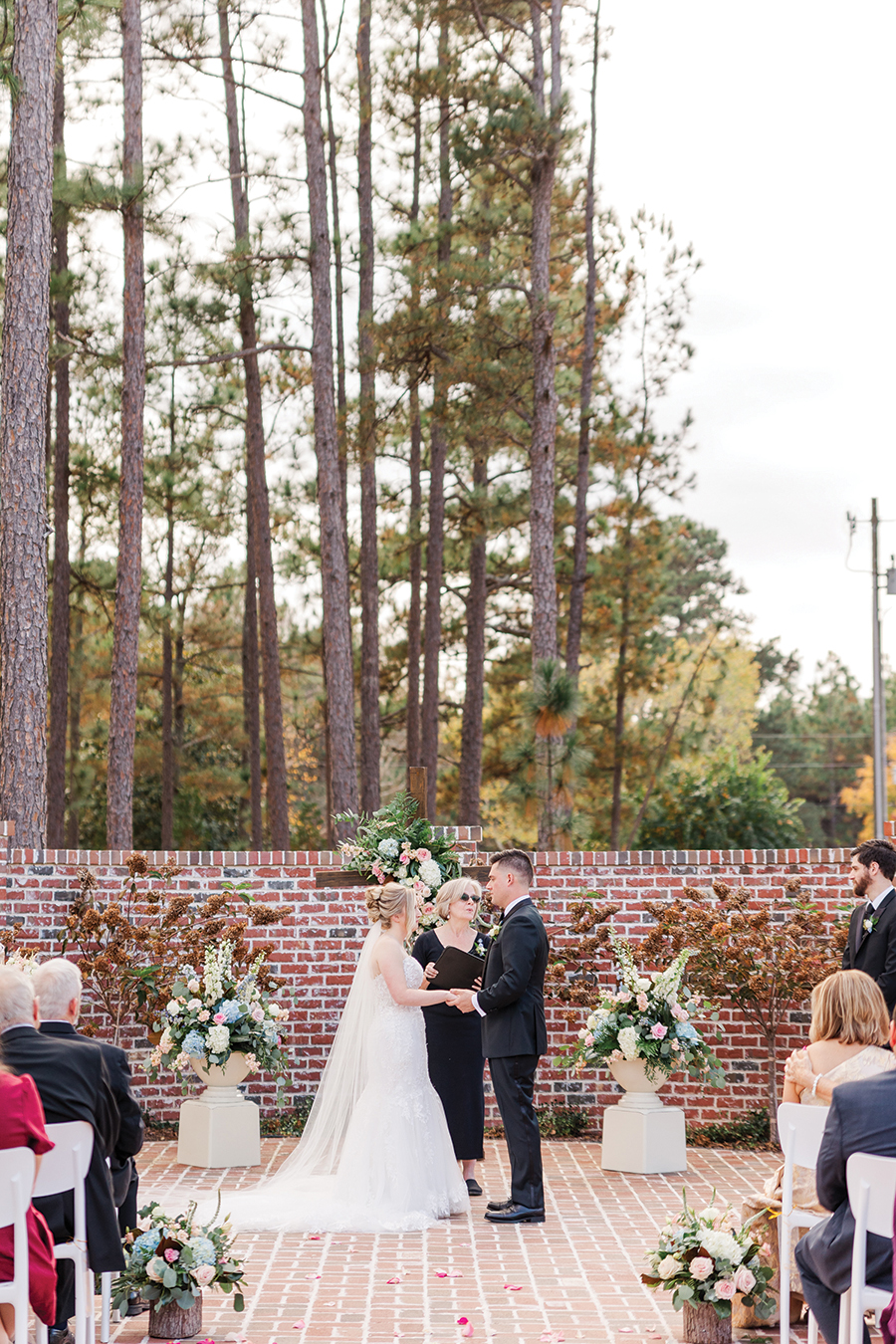
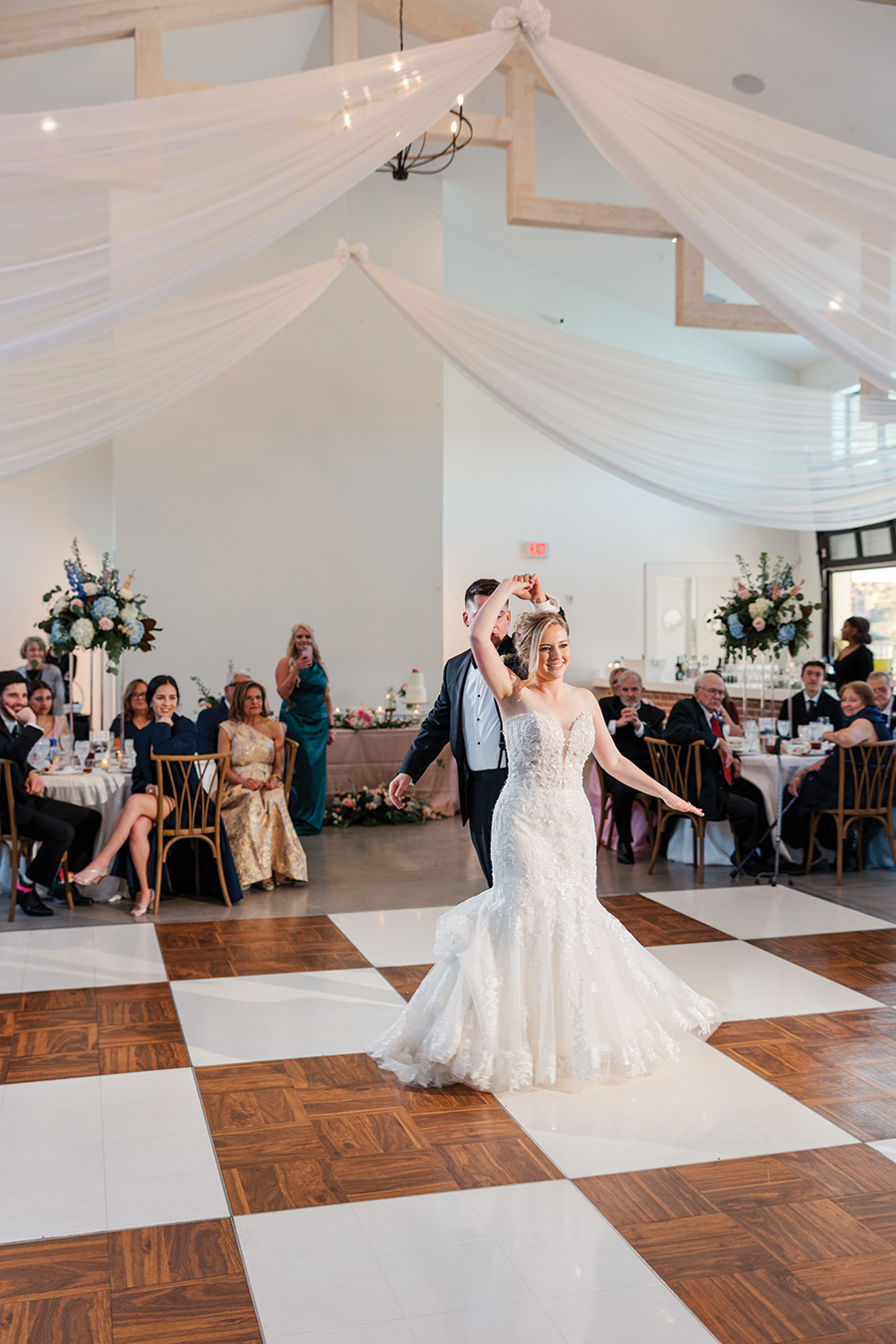
Chelsey Bennett and Austin Ballard met on a blind date set up by her cousin at a Fayetteville coffee shop in October 2020. The pair hit it off and got engaged a few years later at the Kindred Spirit Mailbox, something of a local landmark on Bird Island, North Carolina.

From there, the wedding planning got underway. Whenever the couple became overwhelmed with the process, they’d use a code word to signal they were done with wedding talk, a tip they said helped keep planning fun all the way to their special day, Nov. 2, 2024.

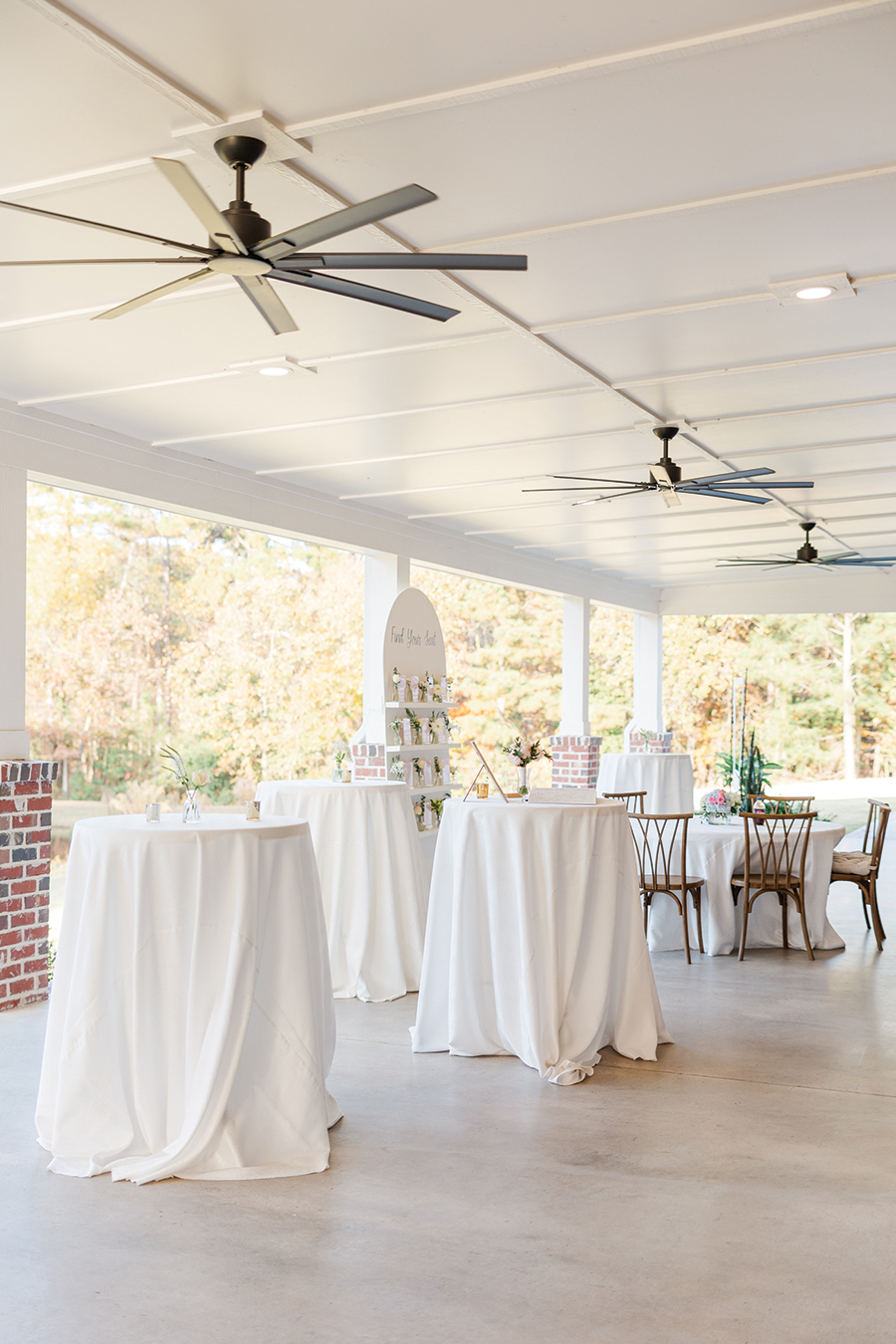
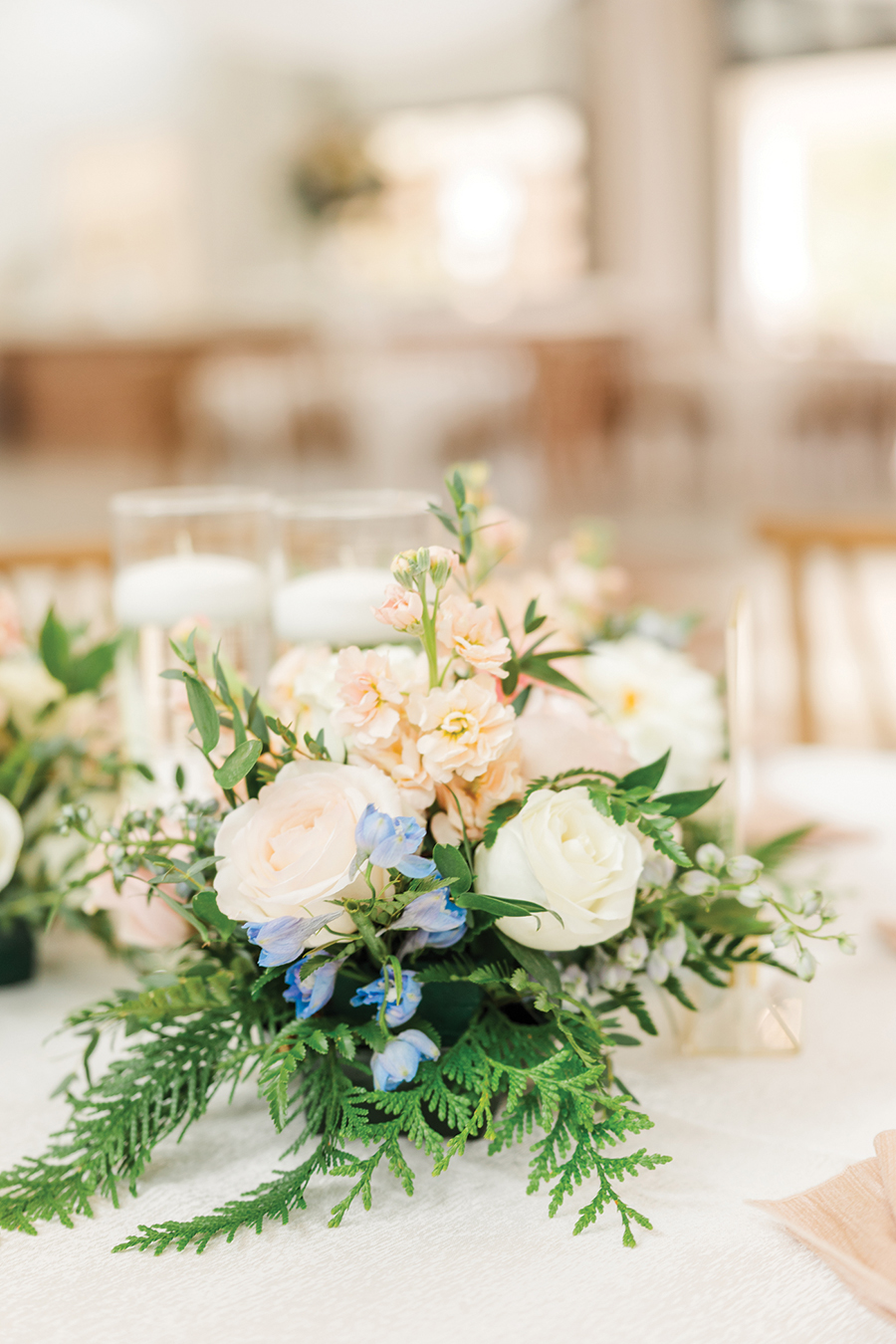
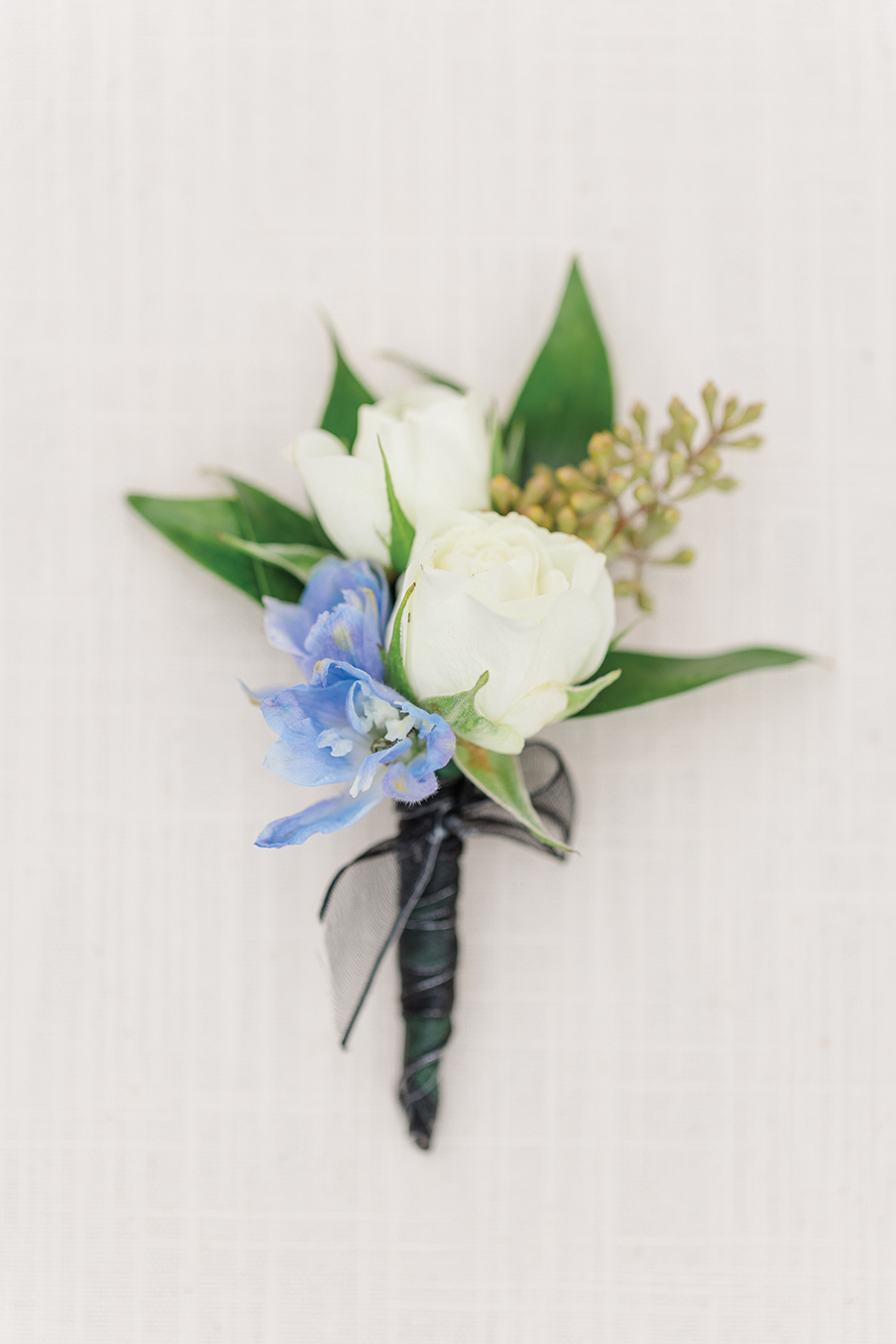
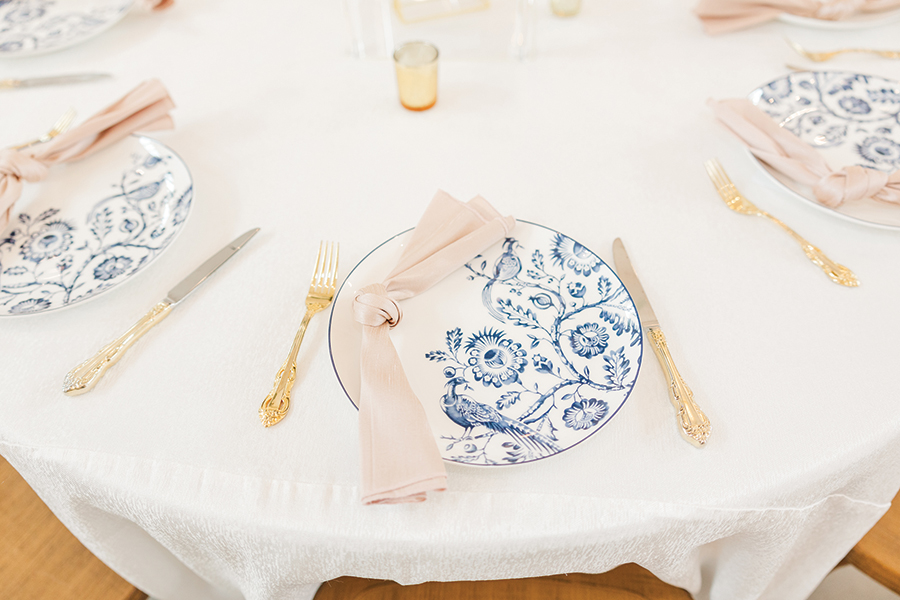
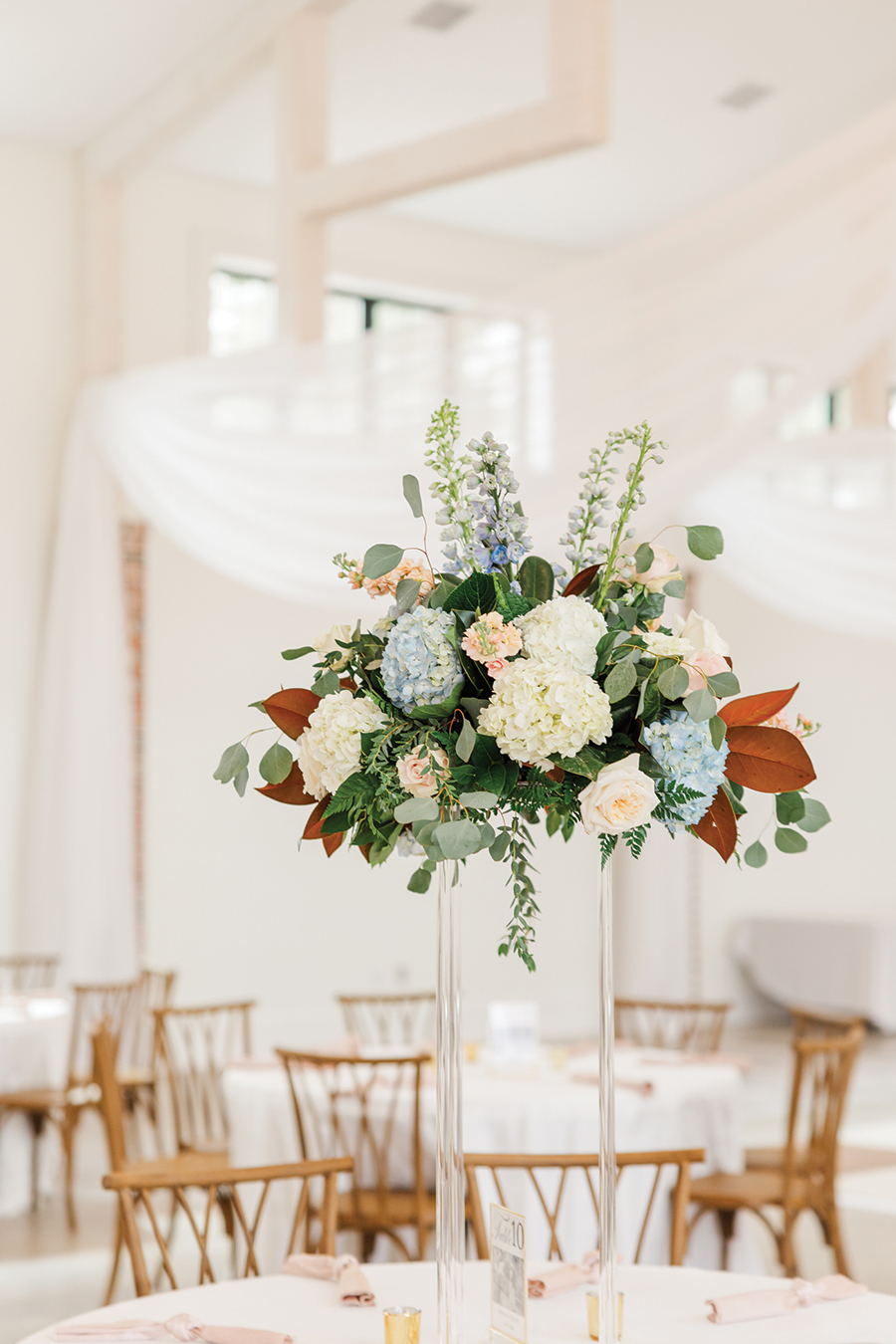
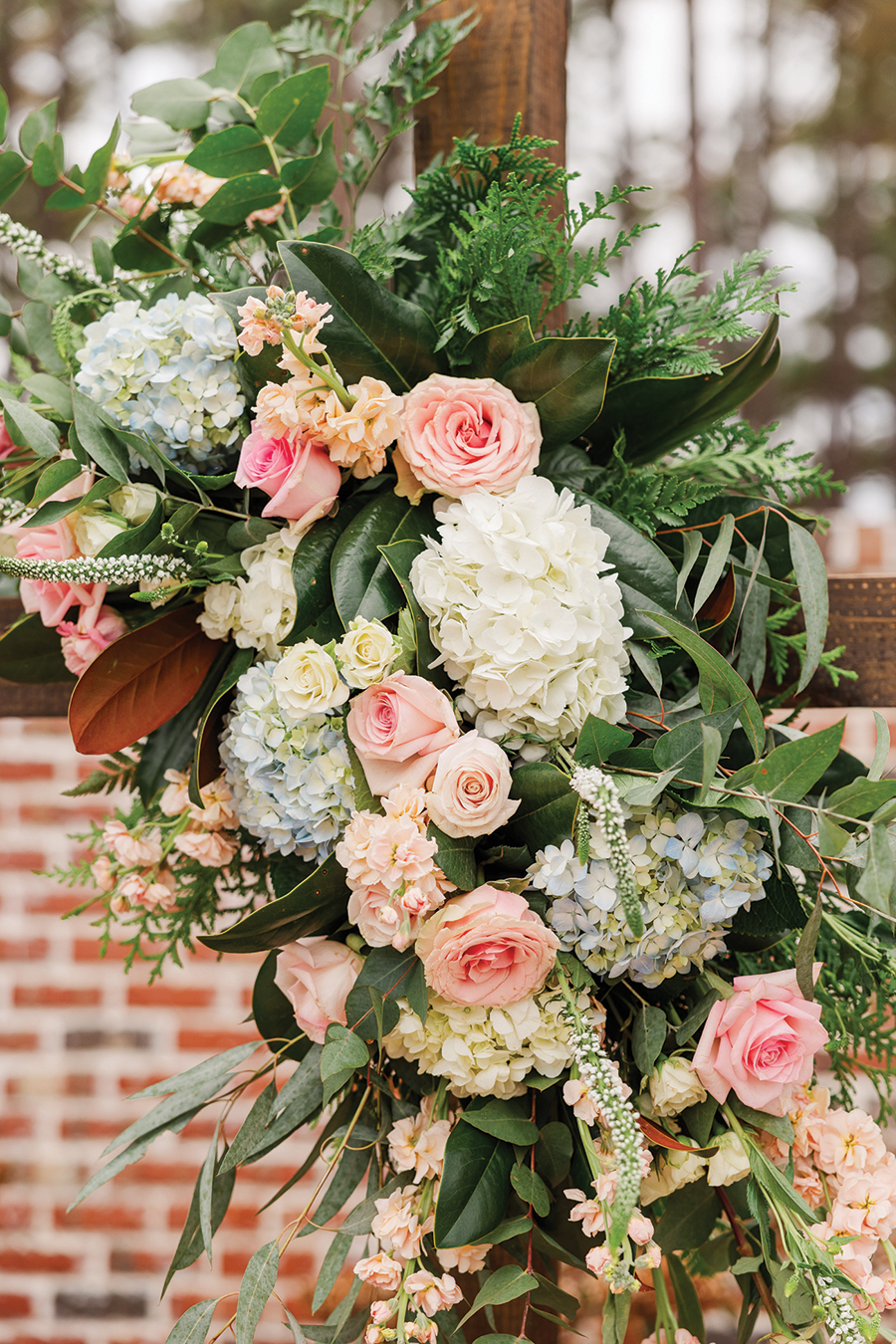
Chelsey and Austin hosted their entire wedding weekend at Village Pine Venue, in Carthage. Friday featured a rehearsal dinner catered by Elliotts on Linden, Saturday brought the couple’s “I dos” in the courtyard, followed by a garden-themed reception in the main hall, and Sunday saw guests off with a farewell brunch. After the last table had been cleared, the newlyweds donated their centerpieces to FirstHealth Hospice House.

“It was a good feeling to spread the beauty of our flowers to families who needed it most,” says Chelsey.

photographer: Jennifer B. Photography
wedding planner: White Tie Planner, Coralie Von
ceremony & reception: Village Pine Venue
dress: Bride of the Pines
shoes: Bella Belle
hair: The Polished Bride
makeup: Zenia Beauty
bridesmaid: Savvi Formalwear and Bridal
groom & groomsmen: The Gentleman’s Corner

flowers: Hollyfield Design Inc.
cake: The Bakehouse
catering: Capital City Chefs
rentals: Curated Events
transportation: A Ride Transportation