The Heat Is On

The U.S. Amateur returns to the Sandhills

By Jim Moriarty

When the United States Amateur Championship makes its fourth trip to the Sandhills of North Carolina this August, it brings with it the promise of great achievement and the baggage of great expectations. Whoever survives two rounds of stroke play qualifying followed by six matches will have reached the pinnacle of his amateur career and earned the scrutiny that just naturally accompanies winning a national championship. August will bring the heat, but the U.S. Amateur brings a little of its own.

It has been won by mortals and immortals. It’s been won by the greatest players who ever lived — Robert T. Jones Jr. (five times), Jack Nicklaus (twice) and Tiger Woods (three times in succession). It has been won by players who capture the odd major championship without scooping up double handfuls of them and still other players who have solid professional careers, winning tour events here and there along the way. It was won in back-to-back years by one of Pinehurst’s favorite sons, Harvie Ward. It’s been won by players who disappear almost entirely from the golf horizon and by others who become barons of the game, say, a president of the USGA (William C. Campbell) or the chairman of the Augusta National Golf Club (Fred Ridley).

Labron Harris Jr. won the title on Pinehurst’s No. 2 course in 1962 with Dwight Eisenhower in the gallery. Hal Sutton lifted the Havermeyer Trophy — named for the first president of the USGA, a Wall Street sugar tycoon — at the Country Club of North Carolina in 1980. And Danny Lee pushed aside Tiger Woods’ record to become the youngest winner of the championship when it returned to Pinehurst No. 2 in 2008. It was a record that would last for all of one year.

This year’s championship will be conducted on Pinehurst’s No. 2 and No. 4 courses, the latter recently revamped by Gil Hanse. The 312 entrants will play 36 holes, one round on each of the courses, to winnow the field to 64 for match play. The first five rounds of matches will be conducted on No. 2, and the 36-hole final will be played on No. 4 in the morning and No. 2 in the afternoon, a first for the 119-year-old championship.

Sutton’s victory in 1980 was, at the time, thought to be mere prelude. That summer he’d entered five tournaments, winning four — Pinehurst’s North and South, the Western Amateur, the Northeast Amateur and the U.S. Amateur. He was unbeaten in match play. The only title to elude him was the Southern Amateur, a stroke play event won by Bob Tway. Sutton’s father, Howard, owned an oil business in Shreveport, Louisiana, and there was talk of Hal becoming the next Bob Jones, someone who could afford to remain an amateur and who had enough game to compete with the professionals. He was, in fact, an amateur long enough to try, unsuccessfully, to defend his U.S. Amateur title — something that won’t happen this year, since the defending champion, Norway’s Viktor Hovland, has become a pro.
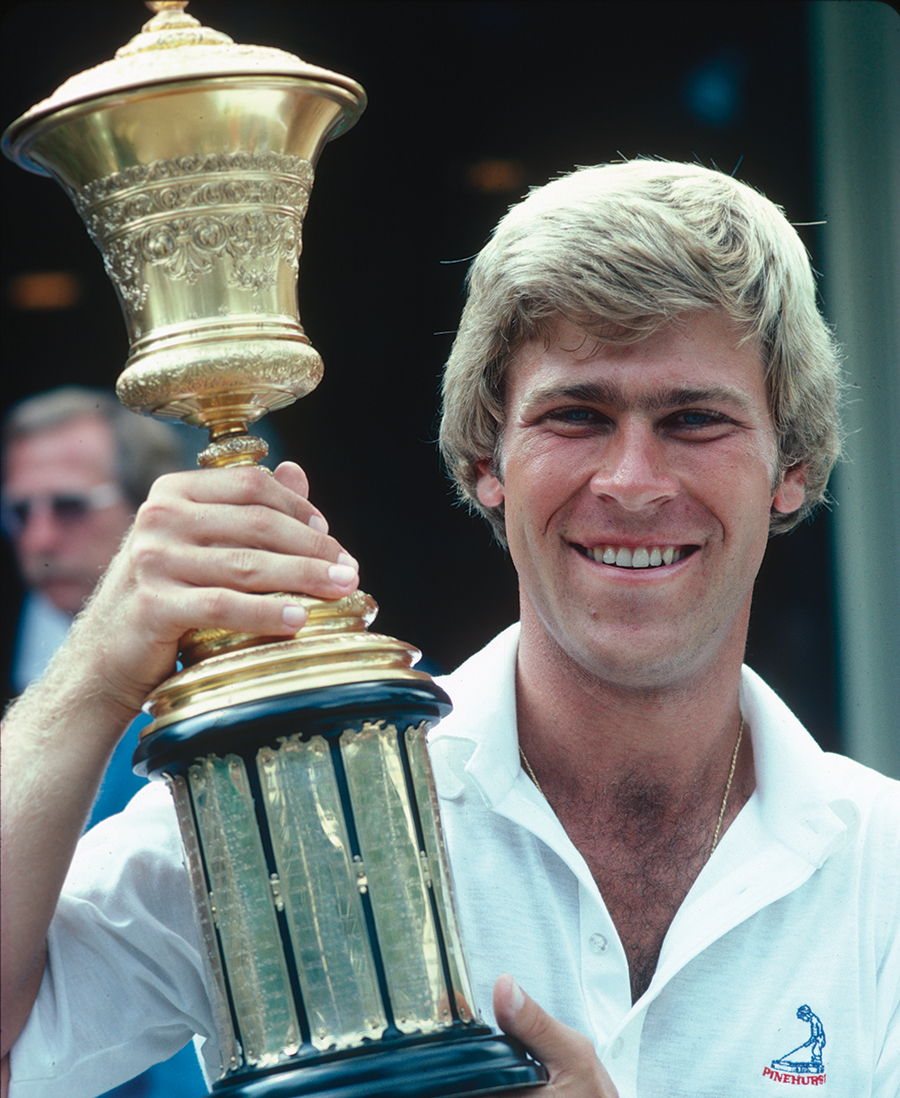
Photo shows Hal Sutton at the 1980 U.S. Amateur. (Copyright Unknown/Courtesy USGA Museum)

After winning the PGA Championship at Riviera Country Club three Augusts after he won the U.S. Amateur, instead of becoming the next Bob Jones, Sutton was in line to be “the next Nicklaus.” Neither happened. He did, however, win 14 times on the PGA Tour, including the ’83 PGA, where he led wire-to-wire, holding off a charging Nicklaus, the five-time PGA Champion, by a single shot. He also won the Tour Championship in 1998 and The Players Championship twice, once in ’83 and again in 2000, when he outdueled Woods, the man who truly was “the next Nicklaus,” also by a single stroke. A clip of Sutton’s approach to the 18th green at TPC Sawgrass can still be found on YouTube. “Be the right club today!” has become Sutton’s trademark.

Sutton won the U.S. Amateur on the 50th anniversary season of the Impregnable Quadrilateral when Jones won both the U.S. and British Amateurs and U.S. and British Opens in 1930. Unlike Jones, there was no ticker-tape parade for Sutton, just dinner at the old JFR Barn. Sutton would return to Pinehurst in October to play for the Eisenhower Trophy in the World Amateur Team Championship on the No. 2 course. He won that, too, taking the individual title by six shots. The U.S. team won by 27.

“I just loved No. 2,” Sutton says. “It favored a real good ball-striker, especially a good iron player. It kind of weeded out the weak. I think that’s what really makes great golf courses; they’re fair to people that hit the ball where they’re looking, and they’re much more difficult for people that can’t.”

Sutton is one of the players who felt the burden that can accompany a U.S. Amateur title. “At the time it was by far the largest thing I’d ever done,” he says. “It was a sense of great accomplishment, I remember that. I hoped it would be the beginning of big things.

“Everybody that wins the U.S. Amateur, it elevates the expectations for them. It causes people to watch to see what you are able to do. I think as you age you begin to realize that the only expectations that really matter are your own. I was the turtle instead of the rabbit most of the time.”

Big Easy Ranch, Sutton’s hunting, fishing and golf academy, is about 70 miles west of downtown Houston. He suffered a mild heart attack in 2014, the same year he had his second hip replacement. Now 61, Sutton was sufficiently inspired by Woods’ 2018 Tour Championship victory to give the Champions Tour one last go. He dropped 45 pounds but, even so, the body wouldn’t cooperate. He played a few events but was forced to withdraw from his last two by a left knee that needs replacing as much as the hips did.

In the final of the 1980 U.S. Amateur, Sutton beat Bob Lewis, 9 and 8. Lewis was 35 at the time, a professional who had regained his amateur status. Lewis was hobbled by blisters on the backs of his heels, giving him a painful, bowlegged gait. “He wasn’t as old as I am right now,” says Sutton, “but health issues do catch up with us. We’re certainly not what we once were.”

Labron Harris Jr., the son of the legendary Oklahoma State University golf coach Labron Harris Sr., won the first U.S. Amateur held on Pinehurst’s No. 2 course, coming back from a five-hole deficit to beat A. Downing Gray, an insurance salesman from Pensacola, Florida, 1 up. “I went there with the idea of not winning,” says Harris. “I’d check out of the hotel every day and I’d keep winning matches and I’d check back in. You don’t conceive of winning the U.S. Amateur. You shoot your 75 on the right day and you win if you play someone that shoots 77. That’s the beauty of match play and the fallacy of match play.”

One of Harris’ victims was Morganton’s Billy Joe Patton, the local favorite. “It was probably the least popular victory ever in North Carolina,” says Harris.

Gray held a 5-up lead through 21 holes of the final match. He set his afternoon’s cascading misfortunes in motion with a poor drive on the fourth, losing that hole, and then dropping the next four straight to two birdies and two pars, squaring the match after the eighth. On the 11th, Gray drove it against a formidable stand of love grass and Harris went 1-up.

Former President Eisenhower watched only four holes in the afternoon, taking his leave after the golfers hit their tee shots on the par-3 15th. The commander of D-Day was in a golf cart back in the 14th fairway when the two players were invited to meet him before he left. Harris went.

“A USGA man says, ‘Do you want to meet President Eisenhower?’ I said, ‘Sure.’ I’ve got a picture right here in my bedroom, a young man shaking hands with an ex-president.” Gray, his fortunes dwindling, wanted to concentrate on his golf. The next day the headlines read, “Gray Snubs Ike.” Ouch and ouch.

Harris played on the PGA Tour from 1964 to ’76 and won once, beating Bert Yancey in a playoff in the 1971 Robinson Open Golf Classic. “I played good for about half the years,” he says. After his playing career ended, he worked for the Tour for five years.

“I was the No. 2 man (to commissioner Deane Beman) but there were only 10 people in the office,” says Harris. “I did everything. I did the scheduling; the purse negotiations; ran the qualifying schools. I developed the senior tour. The money breakdown they play with now is my money breakdown. I came at the right time to be pretty effective. I was fortunate I worked with good people.”

After he left the Tour, he was the executive director of the Kemper Open for five years. Oh, and he won the Par 3 Contest at the Masters in 1964. There’s no golden trophy for that, but there is crystal.
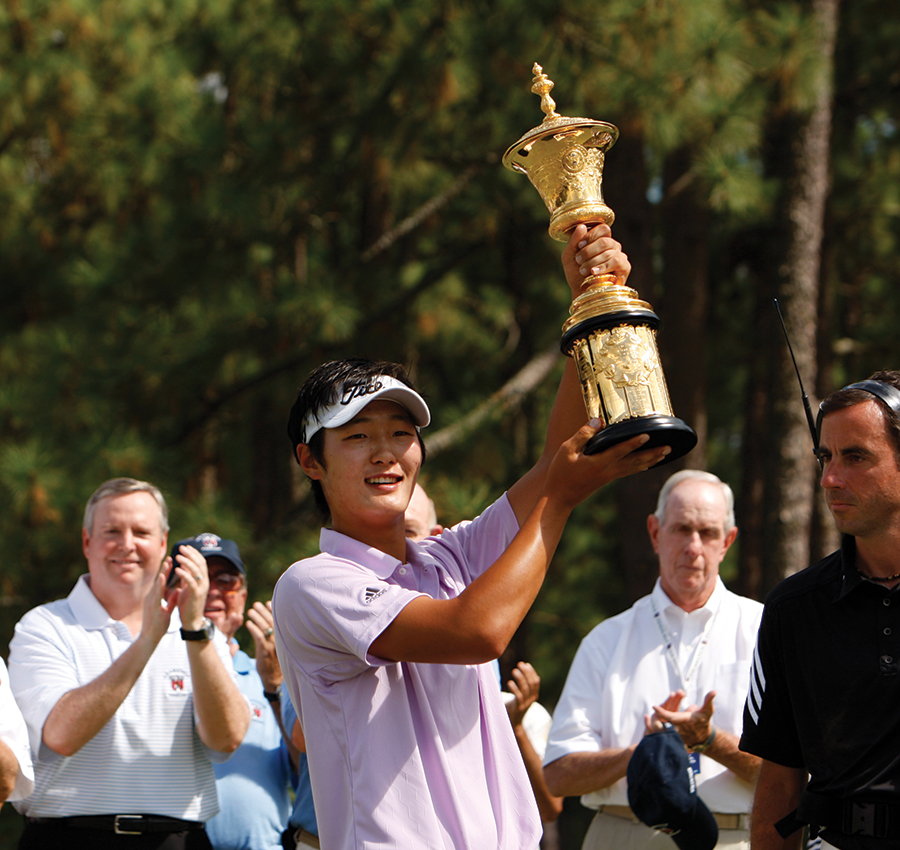
Danny Lee with the trophy after winning the 2008 U.S. Amateur at Pinehurst Resort and Country Club, course No. 2, in Pinehurst, N.C. on Sunday, August 24, 2008. (Copyright USGA/John Mummert)

When the Amateur last visited Pinehurst, it was won by an 18-year-old Korean-born New Zealander, Danny Lee, who beat Drew Kittleson, 5 and 4. Lee was six months younger than Woods was when he won the first of his three U.S. Amateurs in 1994. An Byeong-hun of South Korea blew that record out of the water the very next year, winning at age 17.

Lee’s professional career has been an up-and-down affair with an Official World Golf Ranking that’s gone as high as No. 34 (in 2016) and as low as 444 (in 2010). He won the Greenbrier Classic in 2015 and had seven other top-10s that year. He’s won once in Europe (when he was still an amateur) and once on the Web.com, now the Korn Ferry Tour. He shot an opening-round 64 at Bethpage Black in the PGA Championship in May to trail the eventual winner, Brooks Koepka, by a shot. On social media he’s best known for the practical jokes — traffic cones tied to cars; shaving cream in shoes; so forth and so on — he and Rickie Fowler seem to enjoy playing on one another.

In 2017, Lee suffered a torn ligament between L4 and L5 in his back. “I felt something and the only place I could go was lying on the ground,” he recalled during the PGA. “The next morning when I got up from my bed, I could not move my legs.” Since recovering, Lee has been working with California instructor George Gankas to get longer off the tee. “At first I wasn’t hitting it far enough to compete out here in a PGA Championship or U.S. Open.” Now he does.

That hasn’t altered the vagaries of Tour life much. “Some of the top 20 guys make it look easy, but it’s not always fairy tales and unicorns out here,” Lee said. “When you are fighting for your Tour card every year, it’s basically where you work. How would you feel when you lose your job tomorrow? And you put a lot of effort into it. You’ve tried your best and you did everything you could do and you don’t have a job tomorrow. That’s the same feeling we have. When the results are not there, it definitely gives you a little heartbreak and a little bit of terror, and some of the media is expecting me to do better than that.”

That’s a long way from 2008 when Lee, who had no intention of turning pro at the time, was reminded that the U.S. Amateur champion is traditionally paired with the defending champion at the Masters the following year. That just happened to be Woods. “Oh, my God,” he said. “That’s a special thing. Wow. I’m gong to beat him.”

Winning the U.S. Amateur is a great achievement, a long and arduous climb to the top of a grand hill — a vantage point where it’s possible to see just how heavy the mantle of potential can be.  PS

Jim Moriarty is senior editor of PineStraw and can be reached at jjmpinestraw@gmail.com.

The Omnivorous Reader

A Tree Grows in Carolina

Two debut novels renew old Brooklyn ties

By D.G. Martin

Some North Carolina literary old-timers remember a special link between North Carolina and Brooklyn.

In 1943 Harper & Brothers published the best-seller, A Tree Grows in Brooklyn, one of America’s most-loved novels. The North Carolina connection?

Although its author, Betty Smith, based the novel on her experiences growing up in Brooklyn, she wrote the book in Chapel Hill. As a struggling divorcée with two children, she had moved to North Carolina to work at the University of North Carolina as a part of Paul Green’s writing program. The money she earned kept her going until the success of her book gave stability to her economic life.

This year the literary connection between Brooklyn and North Carolina has been renewed by two debut novelists, each with connections in both places. It happened earlier this year when Smith’s publisher, now HarperCollins, released A Woman Is No Man, the debut novel of Etaf Rum.

Like Smith, Rum based her novel on her life growing up in Brooklyn. Like Smith, the divorced Rum moved to North Carolina. Like Smith, she had two children. Like Smith, she found work in higher education, in Rum’s case, community colleges near where she lives in Rocky Mount.

Rum’s Palestinian immigrant family and neighbors in Brooklyn in the 1990s and 2000s are not the same as Smith’s families, whose roots were in Western Europe. Still, both books deal with women’s struggles to make their way in families and communities dominated by men.

The central character in the first part of Rum’s book is Isra, a 17-year-old Palestinian girl whose family forces her into marriage with an older man, Adam. He owns a deli and lives with his parents and siblings in Brooklyn. Adam and Isra move into his family’s basement. Isra becomes a virtual servant to Adam’s mother, Fareeda. She pushes the couple to have children, males who can make money and build the family’s reputation and influence. When Isra produces only four children, all girls, she is dishonored by Fareeda and by Adam, who begins to beat her regularly.

Isra and Adam’s oldest daughter, Deya, becomes the central character of the second part of the book. Adam and Isra have died, and Fareeda raises their children.

When Deya is a high school senior, Fareeda begins to look for a man in the Palestinian community for her to marry. Deya wants to go to college, but she is afraid to bolt from her family and the community’s customs.

Though fiction, A Woman Is No Man is clearly autobiographical. As such, Rum explains, the book “meant challenging many long-held beliefs in my community and violating our code of silence.”

“Growing up,” she writes, “there were limits to what women could do in society. Whenever I expressed a desire to step outside the prescribed path of marriage and motherhood, I was reminded over and over again: A woman is no man.”

She writes that “what I hope people from both inside and outside my community see when they read this novel are the strength and resiliency of our women.” It will stir readers for other reasons, too. Its themes of conflict between a drive for individual fulfillment and the demands of community and family loyalty are universal.

The author’s well-turned and beautiful writing makes reading this debut novel a pleasure. Finally, her careful, fair-minded, sympathetic descriptions of complicated and interesting characters give the story a classic richness. Whether or not A Woman Is No Man attains the beloved status of A Tree Grows In Brooklyn, it will surely be a widely appreciated treasure.

Another debut novel connects Brooklyn and North Carolina. This time it is a North Carolina native who moves to Brooklyn from Elizabeth City. From there, De’Shawn Charles Winslow moved to Harlem, where he wrote In West Mills, a book about African-Americans living and struggling in eastern North Carolina from roughly 1940 to 1987. There are no major white characters, and no focus on Jim Crow racism. There is almost nothing about racial conflict or the civil rights struggle. Putting these themes aside, Winslow shows his characters grappling with universal challenges that people of all races confront as they deal with the human situation.

West Mills is a fictional small town in eastern North Carolina, somewhere between Elizabeth City, where the author grew up, and Ahoskie, where the main character of the novel was born and reared.

That main character, Azalea Centre, or Knot, as she is called by everyone, has moved to West Mills from Ahoskie, where her father is a dentist and a bulwark of the local church. Knot, however, wants to get away from her family and make her own way.

She finds a teaching job in West Mills. Knot loves 19th century English literature. That sounds good for a teacher, but she also loves cheap moonshine and bedding a variety of men. One of them, Pratt Shepherd, wants to marry her. But after a session of enthusiastic lovemaking, she tosses him out of her life.

Soon after Pratt leaves, Knot learns she is pregnant. She does not want to end the pregnancy, but wants nothing to do with the child after its birth. To the rescue comes a dear friend, Otis Lee Loving, and his wife, Penelope, or “Pep.” They find a local couple to adopt Knot’s daughter. Only a few people in the community know that Frances, daughter of Phillip and Lady Waters, is really Knot’s birth child.

Shortly after she recovers from her delivery, Knot becomes pregnant again. Otis Lee comes to the rescue once more. He finds a place for the new baby with local storeowners, Brock and Ayra Manning. They name the baby Eunice.

When they grow up, Frances and Eunice, not knowing about their common origin, come to despise each other and fight for the attention of the same man. On this situation, Winslow builds a series of confrontations and complications that challenge the comfortable order of the West Mills community.

Meanwhile, as time passes, the community seems immune to the racial conflicts developing in other parts of the state. In one of the book’s few mentions of racial conflict, Otis Lee hears stories in 1960 about “the young colored people in Greensboro who had organized a sit-in a couple of months earlier” and pronounced it a terrible thing. Winslow writes, “Greensboro hadn’t come to them yet. And Otis Lee hoped things would get better so that it wouldn’t have to.”

Otis Lee is not only Knot’s loyal friend and rescuer, he becomes a major character. In a flashback to prohibition days he travels to New York City to rescue an older sister who is trying to pass for white. That effort fails, but his relationship with that woman provides a poignant thread that carries the book to one of its surprising endings.

Gathering early praise, Charlotte Observer critic Dannye Powell wrote of In West Mills, “Within its confines lies all you need to know of human nature — its stubbornness and grit, its tenderness and devotion, its longing and its sorrow, and how the best-kept secrets will threaten to take apart the heart, chamber by chamber.”

She concludes, “You’ll be hearing more about Winslow and his stunning debut novel.”

You will be hearing more about Winslow and Etaf Rum. Betty Smith would be amazed and proud. PS

D.G. Martin hosts North Carolina Bookwatch Sunday at 11 a.m. and Tuesday at 5p.m. on UNC-TV. The program also airs on the North Carolina Channel Tuesday at 8 p.m. To view prior programs go to http://video.unctv.org/show/nc-bookwatch/episodes/

Mom Inc.

A Pinch of Gratitude

Goes a long way on a hot summer day

By Renee Whitmore

I am naturally a see-the-glass-empty type of person. Not half-empty. Death Valley dry. Especially in the summer, when it’s scorching hot and I walk outside for just a minute and by the time I dive back into the AC, I’m stewing in my own juices. Sweaty summers are not on my list of favorite things.

One of my dear friends once told me to make a list of all the things I was grateful for. Think of it as an intervention. I looked at her and thought, “What a silly-Thanksgiving-lunch-elementary-school-pop-psychology-Dr.Phil thing to say.”

“No, really,” she said. “Try it.”

So, I did. I thought I might be able to come up with five things. Max. The usual. Family. Friends. Blah. Blah. But by item 86 (popcorn) and 87 (raspberry white chocolate mochas), I had it going on. That list — it’s 117 things and counting — helped me stay more positive. So, now I practice gratitude. And by practice, I mean, it really takes practice.

It’s not just the good things that are easy to be grateful for. The magical mind shift (now there’s a left-brain term for you) happens when you can take the bad stuff, drop it in the mental lettuce spinner and pump the handle until you see something good inside.

Gratitude works. I’ve seen it in action.

It works when I am overwhelmed with grading papers and final exams and students in sheer panic. Gratitude: I have a job. And I like it.

It works when I forget to make dinner and Chinese food appears on the table. Gratitude: We have food. And a table. And a Chinese take-out place five minutes from the house.

It works when I have gained three pounds this week. Gratitude: Those doughnuts were delicious.

It works when my 15-year-old son, David, needs to be at five different places in the time span of three hours. Gratitude: At least I can still drive him. Next year he will be driving himself. OMG.

It works when my dog wakes me up at 5 a.m. every morning. Every morning. Gratitude: I have a dog that never barks at me in a disrespectful tone of voice; never says things like, “What’s for dinner? Ugh! I hate Chinese food.”

It works when my kids are semi-sick and beg to stay home from school. Gratitude: I give them a dose of Tylenol and a list of chores to complete by the time I get home. Usually that makes them feel much better the next day.

It works in Wal-Mart when that person with 27 items (three of which need price checks) cuts in front of me and my five-item cart in the checkout line. Gratitude: I have more time to catch up on how Oprah Winfrey lost weight — this time — from the magazines in the magic aisle. I call it that because stuff magically appears in my cart: gum, Reese’s Peanut Butter Cups, nose hair trimmers. The essentials.

It works when the heat index is 101. Gratitude: At least my AC works, even if it wheezes like it’s having an asthma attack. I do need to change the air filter soon.

It works when my credit card bill arrives and I not so subtly notice the interest payment for the month. Gratitude: Um. I’ll get back to you on this one. Still working on it.

I’m sure there’s some Freudian explanation behind all this, or some neuroscientist somewhere who can explain what happens when your dopamine throws a headlock on your endorphins, but all I know is that being grateful works.

If a natural pessimist like me can do it, anyone can.  PS

When Renee is not teaching English or being a professional taxi driver for her two boys, she is working on her first book.

PinePitch

Compiled by Haley Ledford

Fine Arts Festival

The Arts Council of Moore County will be featuring artists from all over the country on Friday, Aug. 2, from 6-8 p.m. at the Campbell House Galleries, 482 E. Connecticut Ave., Southern Pines. For more information, call (910) 692-2787 or go to www.mooreart.org.

119th United States Amateur Championship

One of the oldest and most prestigious amateur golf championships in the world begins with qualifying on Pinehurst’s No. 2 and No. 4 courses on Aug. 12. After 36 holes the field will be trimmed to 64 players for match play. All matches will be played on Pinehurst No. 2 until the 36-hole final on Aug. 18 that will be contested on both the No. 2 and No. 4 courses, the first time the championship match has ever been played on two golf courses. For more information, go to www.usga.org.

Bocce Bash

Watch or play — or both — in the 12th Annual Sandhills Children’s Center Backyard Bocce Bash at the National Athletic Village, 201 Air Tool Road, Southern Pines, on Saturday, Aug. 17, at 9:30 a.m. Each team will play three games in a round-robin format. Teams check in at 8:30 a.m. Donations begin at $25 per player in this Children’s Center benefit. For information and registration, go to www.sandhillschildrenscenter.org.

U.S. Kids Come to Town

Beginning in late July and lasting until Aug. 4, more than 1,500 junior golfers from over 50 nations come to Pinehurst and Southern Pines for a weeklong golf experience that includes a Parent/Child Tournament, Team Challenge, Parade of Nations, three rounds of championship play and a closing ceremony. Following the three-day championship, the World Van Horn Cup — a one-day best ball tournament featuring the top 12-year-olds from the United States squaring off against the top 12-year-olds from the rest of the world – is contested on Pinehurst No. 2. For more information, go to uskidsgolf.com.

Summer Classic Movies

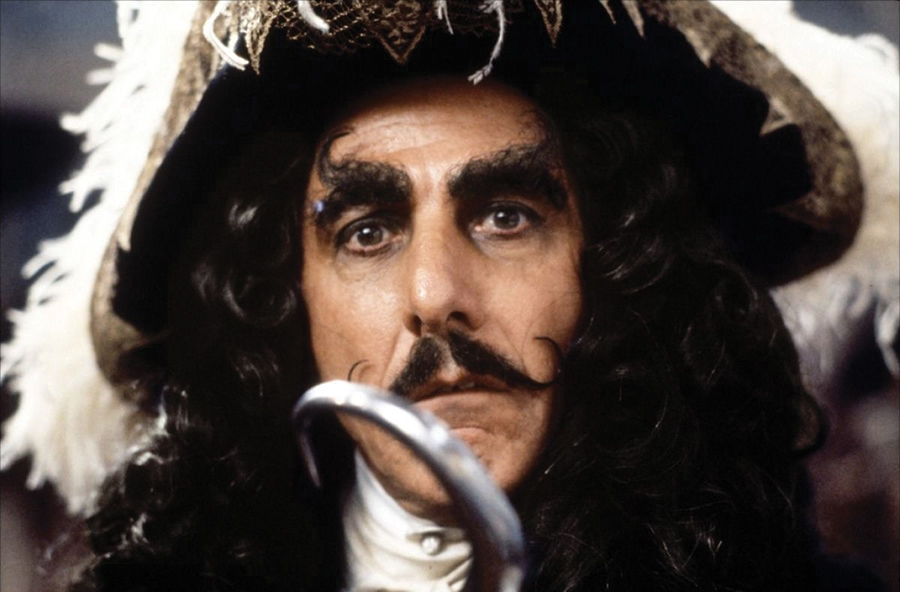
The Sunrise Theater closes out its Summer Classic Movie Series in August with three titles on consecutive Thursdays, beginning Aug. 1 with Hook, sponsored by The Ice Cream Parlor. On Aug. 8, Southern Whey is sponsoring Goodfellas, and the series concludes with This Is Spinal Tap, sponsored by Murphy Insurance Nationwide. Doors open at 6:30 p.m. and the movies begin at 7:30 p.m. Tickets are $6 at the Sunrise Theater, 244 N.W. Broad Street, Southern Pines. For more information, call (910) 692-3611 or go to www.sunrisetheater.com.

Evening with the Authors

Visit the Given Memorial Library and Tufts Archives, 150 Cherokee Road, Pinehurst, on Monday, Aug. 19, at 7 p.m. to kick off a new series highlighting Moore County authors. Local authors will be there to speak and answer questions about their books. The event is free and open to the public. For more information, go to www.giventufts.org.

Conversation Cafe

Stop by to listen, reflect and share ideas at the Southern Pines Public Library, 170 W. Connecticut Ave., on Sunday, Aug. 11, at 3 p.m., where the topic will be “When Are We Most Challenged to Find and Show Love.” The event is an open, hosted dialogue lasting about 90 minutes. For more information, call (910) 692-8235 or go to www.sppl.net.

First Friday

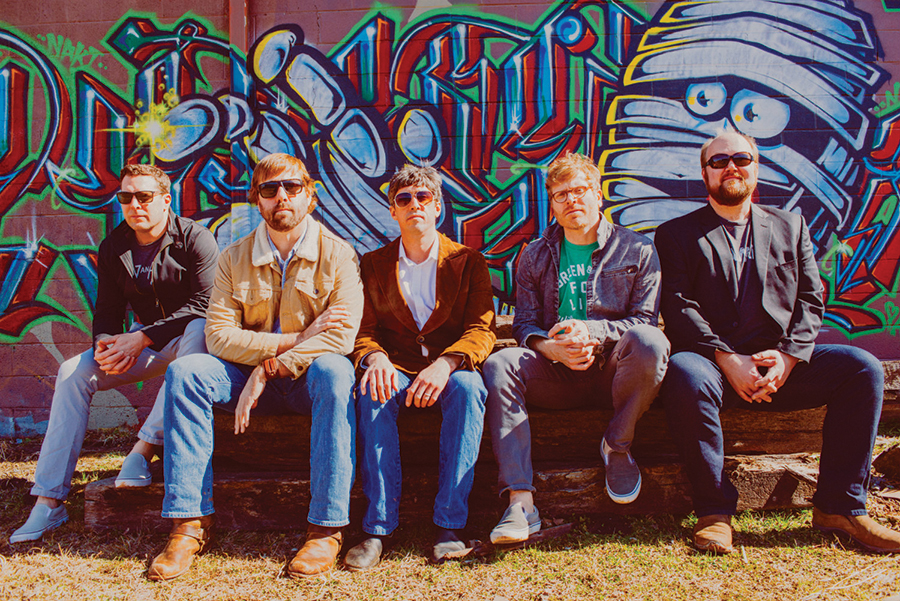
Come out to see the Love Canon at the First Bank Stage on the green space at the Sunrise Theater, 250 N.W. Broad Street, Southern Pines, on Aug. 2, from 5-8 p.m. Admission is free and there will be food and alcohol for sale, but no outside alcohol is permitted. This edition is sponsored by Realty World Properties of the Pines and ritualx CBD. For more information, call (910) 692-8501 or go to www.sunrisetheater.com.

Broadway on Broad

Kinky Boots, a Broadway hit filmed in high definition on the London stage, comes to the Sunrise Theater screen on Sunday, Aug. 18, at 6 p.m. Tickets are $15, and the event is sponsored by Sandhills PRIDE. There will be another showing at the Sunrise Theater, 244 N.W. Broad St., Southern Pines, on Monday, Aug. 22, at 10 a.m. For more information, call (910) 692-3611 or go to www.sunrisetheater.com.

Ruth Pauley Lecture Series

Celebrating its 33rd season, the Ruth Pauley Lecture Series at Sandhills Community College presents nationally known, thought-provoking speakers. The lectures, all beginning at 7:30 p.m., are free, open to the public and conclude with a Q&A session. For more information, go to www.ruthpauley.org. This year’s lineup includes:

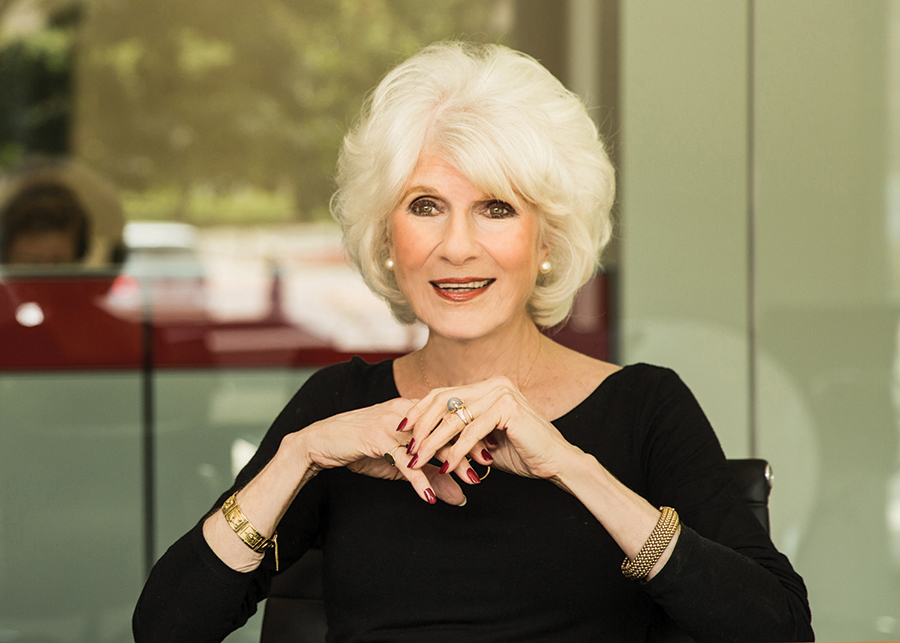
Thursday, Oct. 10 — “A Conversation with Diane Rehm.” The longtime radio talk show host and best-selling author has won awards and honors such as The National Humanities Medal and the Peabody Award. Her lecture at Pinecrest High School’s Lee Auditorium is hosted by the American Association of University Women.

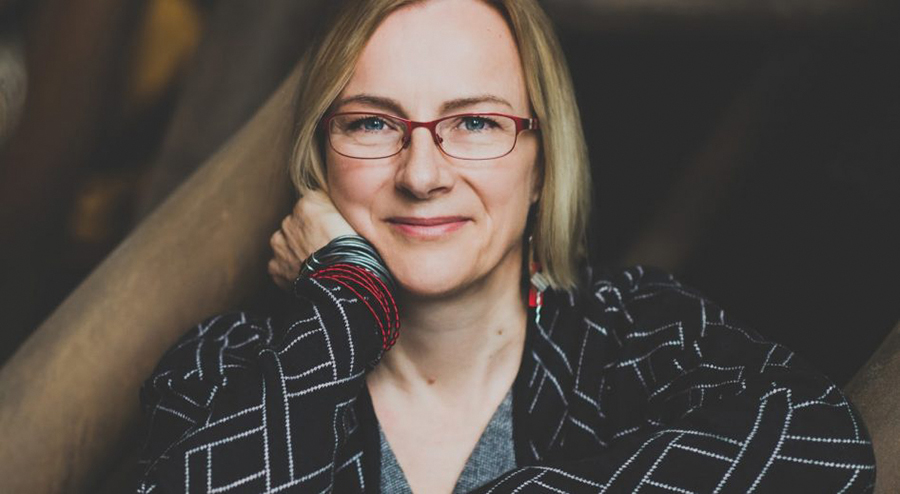
Wednesday, Oct. 30 — “A Crazy Little Thing Called OCD.” Barbara Claypole White presents the second lecture in the series, also at the Sunrise Theater, hosted by the League of Women Voters. White’s son was diagnosed with obsessive-compulsive disorder as a child, and she has since published five books on the subject, the last of which, The Promise Between Us, won the Nautilus award, given to books that foster positive change in the world.

Thursday, Dec. 5 — “Leaving the Madhouse: The Path to Climate Change.” The series returns to Owens Auditorium at SCC for a lecture by Michael Mann, a distinguished professor of atmospheric science at Penn State University and head of their Earth System Science Center. He has received numerous awards on climate science communication and is the author of over 200 peer-reviewed publications and four books on climate change.

Thursday, Feb. 6, 2020 — “Conserving the Southeast’s Amazing Natural Resources in an Era of Climate Change.” Hosted by SCC at Owens Auditorium, Mark Anderson, who was awarded the Nature Conservancy’s Conservation Achievement Award in 2017, will showcase his research with the Eastern Conservation Science team.

Good Natured

BYOB

Bring Your Own Bag

By Karen Frye

Forget the bottle, just bring your bag — your reusable shopping bag. It would be a great habit to adopt now if you haven’t already. Let’s do our part to take care of our environment so our families have a safe and less toxic world to live in.

New York was one of the first states to enforce a ban on the use of plastic shopping bags. Other states, maybe even North Carolina, could one day follow that lead. Lawmakers in New York approved the ban on these single-use shopping bags and gave local governments the option to charge extra for paper bags. New York City recently put that into effect, adding a nickel for each paper carry-out bag a customer uses at retail and grocery stores. The goal is not to make money but rather to encourage people to bring their reusable bags. New York City alone collects 30,000 tons of paper bags each year, and more counties are following suit.

Paper bags have their own set of issues. They cost stores quadruple what plastic bags cost, and it takes more energy to make a paper bag. The manufacturing involves the use of chemicals released into the atmosphere at the same rate as plastic bags.

Plastic bags are made from oil and natural gas. It takes 12 million barrels of petroleum to produce the plastic bags that our country uses yearly. The bags have a lifetime of 500 to 1,000 years, slowly breaking down into small toxic particles.

Plastics are collecting in our oceans at an alarming rate. They travel from city storm drains to creeks, rivers and streams and, finally, to the oceans with harmful consequences for our marine and coastal wildlife. It’s estimated that 1 million birds, 100,000 turtles and countless other forms of sea life die each year from ingesting plastic. The animals and birds confuse floating plastic bags (and other pieces of plastic) with plankton or jellyfish. Once ingested, it blocks their digestive tract and they starve to death.

The Environmental Protection Agency has been collecting statistics on plastic bag use for more than a decade. About 2 percent of plastic bags actually get recycled in the U.S. The rest live on for hundreds of years in landfills or the oceans, where they destroy wildlife and leach toxins. Plastic bags have been found as far north as the Arctic Circle and as far south as the Falkland Islands.

Sustainability starts with each one of us. Get reusable bags and keep them in your car. Make them a staple in your everyday shopping routine. One person using reusable bags over his or her lifetime can remove over 22,000 plastic bags from the environment. What’s a better incentive than that?  PS

Karen Frye is the owner and founder of Nature’s Own and teaches yoga at the Bikram Yoga Studio.

Almanac

By Ash Alder

“Every apple orchard is haunted,” a friend recently offered. “Have you ever noticed? All of them. Day or night.”

I considered the statement, the labyrinths of gnarled trees echoing with distant thuds of falling fruit,
autumn’s electric whisper . . . 

“I could see that,” I replied.

And yet, having never experienced an orchard in August, when the skin of the earliest apples turns from yellow to green, green to red, the flesh inside from green to white, I wouldn’t know for sure. Could only speculate that the ripening of such autumnal offerings in the sweltering heat of late summer is some kind of omen.

Yes, summer is here. Yet the tangles of wild blackberries will vanish in an instant.

There is movement in the periphery. Always. Perhaps there is something haunting about that.

It is remarkable how closely the history of the apple tree is connected with that of man. — Henry David Thoreau

Flower Mandala

In August, when roadside ditches brim with late summer wildflowers — sweet pea and yarrow and swamp milkweed — pull over. 

If you travel with water and a makeshift vase for occasions such as this, handpick a small arrangement for an instant boost in spirit.

And if you’re feeling inspired, dream bigger.

Last year, an hour before sunset, a gardener friend and I met at a favorite climbing tree by a nearby lake to design a flower mandala for the simple joy of creation. I brought a modest handful of black-eyed Susans, some amethyst, a single sunflower. She brought a garden: purple clover, coleus, woolflower, Queen Anne’s lace, fern, walnut, sycamore leaves, and at least a handful of miscellaneous beauties rich in color and texture.

Ancient tools for meditation, mandalas are believed to represent the cosmos, radial designs that guide the creator toward a sense of inner harmony and the essence of his or her own soul.

Ours led us to a space of absolute wonder, and as the final fireflies of summer began dancing among the boughs of our beloved tree, we noticed a small group of passersby that had quietly gathered to enjoy our nature installation — two spirals joined by an unbroken thread of leaves and petals.

We are all so intricately connected. When you follow the simple callings of your heart, no telling how you will color the world.

Bring on the Magic

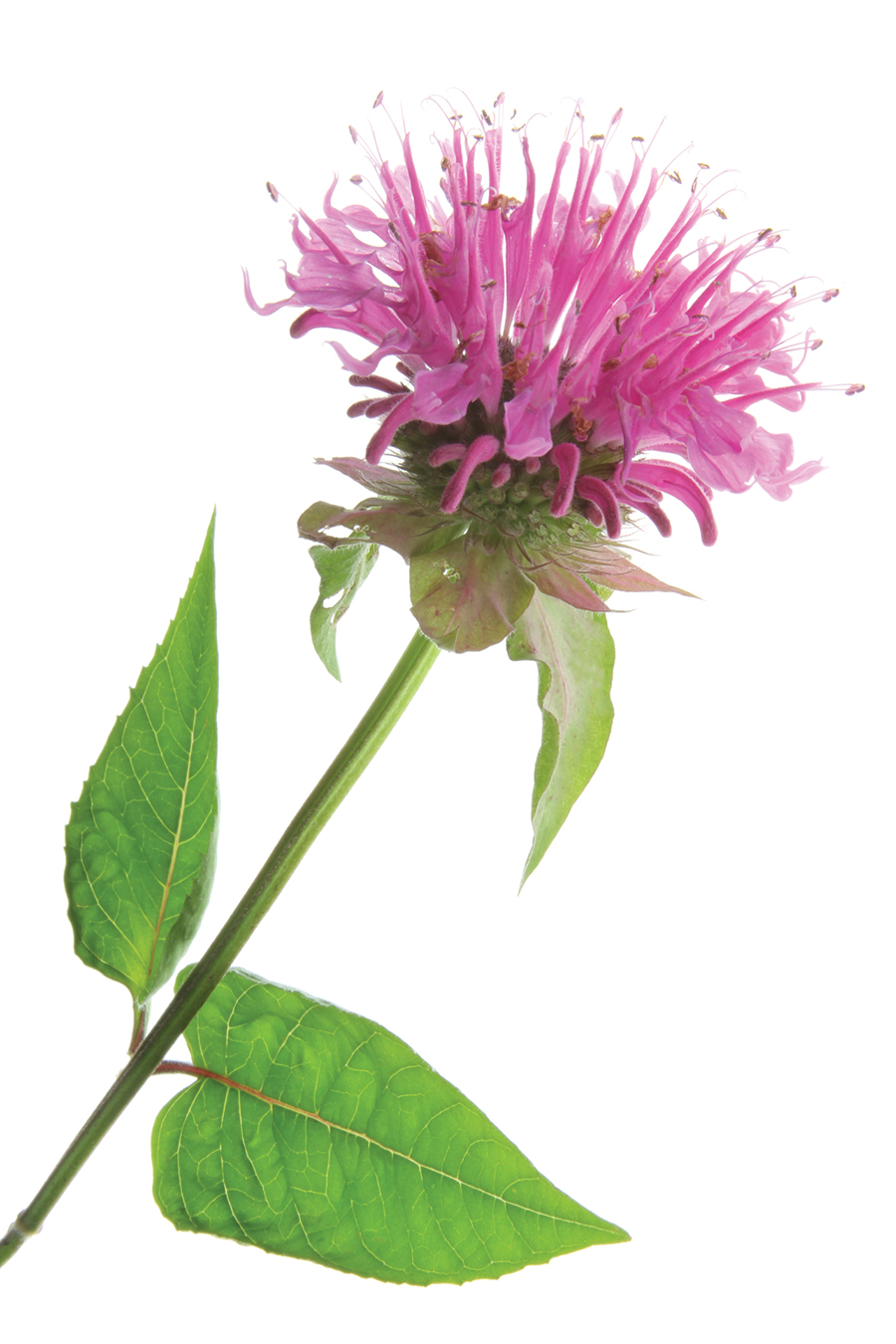
Among our late summer bloomers: bee balm, a showy yet rugged perennial that blossoms red, pink or lavender. Also called horsemint, Oswego tea and bergamot, its fragrant leaves add notes of citrus and spice to any garden. What’s best? Hummers, bees and butterflies find the flower simply irresistible.

A member of the mint family, bee balm grows best (and spreads!) in full sun. Add its colorful flowers to your summer salad, dry its leaves for tea, and above all, know that your balm is a sweet, tasty tonic for a band of local pollinators.

Spoonful of Sugar Water

A friend recently shared with me a Newsroom 24 article from 2018 that states that without bees, we wouldn’t be alive. “If bees were to disappear from the face of the Earth, says David Attenborough, voice of The Blue Planet and Planet Earth, humans would have just four years to live. He suggests leaving a teaspoon of sugar water in your garden to help energy-depleted bees make it back to the hive. “Simply mix two tablespoons of white, granulated sugar with one tablespoon of water, and place on a spoon for the bee to reach,” says Attenborough. In so many words: Save the bees, save humanity.

Deep summer is when laziness finds respectability. — Sam Keen

The Night Sky

This year, our beloved Perseid meteor shower occurs just two days before the full Sturgeon Moon, creating less than optimal viewing conditions for the annual display of up to 90 shooting stars per hour.

That said, just before dawn on Tuesday, Aug. 13, the moon will set, gifting us with an hour of darkness — a blessed chance to catch a glimpse of the magic.  PS

True South

Climbing the Ladder

Summer jobs are the bottom rung

By Susan S. Kelly

It’s August. How’s that summer job going for your prodigal son and daughter? You know, the fancy-pants NYC internship that you’re heavily subsidizing. Or are your offspring going to one day say accusingly, as mine have, “Why didn’t you make me get an internship?”

The short answer is that we were clueless, and, more accurately, didn’t know anyone higher up the career-boosting food chain. Your father and I just figured everyone had the same kind of summer jobs we did, i.e., menial. Because the true purpose of summer jobs is to show you what you don’t want to be when you grow up. My husband: delivering Cokes from a flatbed truck all over Fayetteville in 100-degree heat; me, hustling quahog jewelry and fake scrimshaw in a tourist joint on Nantucket, where I was hired solely on the basis of my built-in “pleases” and “ma’ams.”

Ergo, my children had glam jobs as caddies, counselors, ground trash collectors at apartment complexes (think candy wrappers and condoms; they came home with bloody knuckles from working the parking lot), and as stockroom employees packaging bolts of fabric in a warehouse for UPS pickup. Still, everyone should have to work in what’s known as the “service industry” at some time in their life: retail clerk, waitress, lifeguard, etc. If you know an adult who’s a jerk, I bet he/she never had to wait tables or take orders as a teenager.

And if you have a college grad on the professional prowl, whatever you do, guide him or her away from the three jobs that nobody, nobody in their sane mind, wants: minister, head of a private school, and the manager of a country club. Constituents — congregations, parents and members — of those occupations believe themselves entitled. In other words, they own you. And I have proof, with the following true-to-life examples.

Headmaster

My aunt and uncle’s son, William, went away to boarding school. Before Thanksgiving had even arrived, the headmaster called my aunt to say that William just wasn’t going to cut it. He couldn’t conform to the rules, couldn’t toe the various lines, and William was just going to have to come home. My aunt wasn’t fazed. “Oh no, he is not,” she informed the headmaster. “I sent a perfectly good child to you in September. Whatever’s happened since then is your fault, and you’re going to keep him.”

Country Club Manager

Frank was an incorrigible charmer who basically lived at the country club. In the dining room, on the golf course, in the card room, but mostly in the bar. Your classic handsome bad boy, who was also drunk, demanding, misbehaving and embarrassing. One morning when the club manager found Frank sleeping under a table in the bar, glasses and cigarettes strewn around him, he called Frank’s mother. “Mrs. Simpson,” he said politely, “your son has become a real problem. I’m going to have to ask you to do something about his behavior at the club.” There was a pause over the line. “And you, sir,” Mrs. Simpson replied, “serve very ordinary chicken salad.”

Minister

My great-uncle Bill in Walnut Cove had a dog he loved better than life, named John G. But John G kept getting into Lou Petrie’s garden. Lou told Bill that if John G got into his garden one more time, he was going to shoot him. Bill paid no attention. One Sunday in church, where my grandmother played the organ, word got ‘round the congregation that John G had gotten into the garden again and Lou Petrie had flat-out shot him. Church stopped then and there, and everyone went to the Petries’ where, sure enough, John G was lying dead between the tomato vines. The minister’s wife dropped to her knees beside the lifeless animal. “Do not worry,” she said. “I’ll bring John G back to life,” and praying loudly, began massaging his bloody body. My grandmother looked on, horrified, then headed straight for the house, and the telephone. She dialed the operator and put in a long-distance call to the bishop of the North Carolina Diocese of the Episcopal Church on a Sunday morning. “Bishop,” she said, “you have a minister’s wife down here trying to raise a dog from the dead. What are you going to do about it?”

My advice? Steer clear of a career that involves dues, tuition or tithing.  PS

Susan S. Kelly is a blithe spirit, author of several novels, and a proud grandmother.