Simple Life

SIMPLE LIFE

If Wishes Were Wheelbarrows . . .

Then babies would ride

By Jim Dodson

Twenty years ago, as part of our move home to North Carolina from Maine, I gave my beloved Chevy truck to a local kid who thought Christmas had come early. “Old Blue,” as I called her, was getting on in years and prone to stalling out from time to time. But, oh, how I loved that lady truck. She gave our tribe many fine memories, including a 6,000-mile camping-and-fly-fishing trip across the golden West with my 7-year-old daughter, Maggie, and our dog, Amos, that became the premise for a bestselling book and even a modest little film. 

Last Christmas, friends may recall, still pining for Old Blue, I jokingly wished that Santa would bring me a shiny new Chevy pickup truck. To help the old fella out, I even began scouting local Chevy dealers, hoping to find a deal on a nice new or used pickup truck that had my name on it. Unfortunately, the trucks I liked had eye-popping price tags, bad news for a recessionary Santa.

On one level, I’m glad my truck wish failed to come true. On another, everywhere I went in the city over the following year, I seemed to see fancy pickup trucks with old, white dudes like me behind the wheel, an unnaturally cruel sight for a fellow quietly suffering from years of truck lust.

So, I asked myself: What the heck does an old dude like me who lives and gardens in a quiet suburban neighborhood really need with a shiny new pickup truck?

The answer is nothing. Or pretty much nothing. 

On the other hand, if Santa had indeed brought me the shiny, new pickup I’d wished for, this year I could have impressed my neighbors by hauling home the largest Christmas tree ever in the back of my truck, a Currier and Ives scene for the age of consumer excess.

Instead, as usual, we purchased a lovely little fir tree at the roadside lot where we’ve found the “perfect” holiday tree for many years and drove it home on the roof of my elderly Outback. It looked sensational with its tiny lights glowing from our den’s picture window on a deep December night.

Still, old wishes die hard.

During an afternoon trip to the grocery store the other day, just when I thought my truck lust finally a thing of the past, a white-haired fellow about my age parked beside me and climbed out of a beautiful, cobalt-blue Sierra Denali 1500. It was a real beauty, and for a crazy, covetous moment, I wished I had one just like it.

“How do you like your rig?” I cordially asked.

He beamed. “It’s absolutely fantastic. Gave it to myself when I retired last year. One of the new self-driving models with four-wheel drive and a crew cab that’s perfect for hauling our four grandkids around town.” He added it had all the latest high-technology toys plus real leather seats and a super sound system.

“Feel free to take a seat in it, if you’d like,” he graciously offered.

I thanked him but declined the offer and wished him happy grandkid-hauling, then went on my way, realizing that I evidently hadn’t quite gotten my yen for a shiny new pickup truck completely out of my system.

Fortunately, my next stop was Lowe’s Home Improvement, which brought me back to Earth. As I loaded 10 bags of mulch and a hundred pounds of organic garden soil plus several bags of dried manure into my trusty old Outback “garden car,” I realized some things are simply never meant to be.

Besides, suddenly I spotted something by the store’s front doors that I truly wanted and needed more than a fancy new pickup truck.

A row of shiny new wheelbarrows.

The act of making wishes is as old as the invention of the wheel.

In ancient European folklore, wishing wells were places where any spoken wish — often accompanied by a coin tossed into the water — was thought to be magically granted. The ritual itself was a means of connecting with the divine and requesting blessings or favors. Wishing wells, in fact, exist in the lore of almost every world culture and still have a place in modern society, often found in spiritual and historic gardens, and even used in contemporary fundraising campaigns. And don’t forget, as Jiminy Cricket pointed out, when you wish upon a star, your dreams may come true.

In the modern context, however, the word “wish” simply means “a desire or hope for something to happen,” which makes me hear my late papa’s voice on the subject.

He was something of an armchair philosopher. One of his favorite expressions was “Whatever is worth wishing for, son, is worth working for.”

Probably because I was such a wishful kid, I heard this pithy bit of armchair wisdom dozens of times while growing up. 

As an early reader of adventure books, for example, I wished and dreamed to someday be another Rudyard Kipling or Edgar Rice Burroughs, maybe even Jules Verne. Later, my literary wish grew into being the next T. H. White or Ernest Hemingway.   

On another front, because I was a kid who was happiest in nature, in a garden or on a golf course, I wished to someday be either a forest ranger or someone who built beautiful gardens for a living, maybe even a golf course designer.

None of these wishes came true.

Or did they? Fueled by such youthful desires, I grew up to become a newspaper reporter like my father and found that I was even more drawn to stories about real people, history, nature, poets and things that make dreamers wish for a better world. Along the way, I’ve also built five landscape gardens and even designed a popular golf course.

In short, I’ve lived long enough to know the old man was right — that if we wish for anything, including a better world, we all must work to make it happen. 

So, whether by starlight or ancient wishing well, this Christmas I’m wishing for a couple very special things: More goodwill and kindness to each other in our troubled human family, and a safe and happy delivery for my daughter’s baby girl, due to arrive on Christmas Eve.

As a new grandpa, I can’t wait to tool my first grandchild around in my shiny new wheelbarrow.

Simple Life

SIMPLE LIFE

I See the Birds

How I learned to look up and live more fully

By Jim Dodson

November is the month I take stock of the year’s happenings, the ordinary ups and downs as well as the unexpected challenges and graces that come with being alive and kicking in 2025. This year,
however, I’m looking back a bit further.

Two years ago, seemingly out of the blue as my oldest golf buddy, Patrick, and I were setting off on a golf adventure across Southern England, celebrating our mutual 70th birthdays and 60 years of friendship, I was diagnosed with prostate cancer. Talk about a trip buzz killer. 

Naturally, I was surprised to discover that I was one of a quarter million American men who annually develop prostate cancer. But perhaps I shouldn’t have been.

My dad, you see, discovered his prostate cancer at age 70. He chose to have his prostate surgically removed and went on to live a productive and happy life for the next decade. My nickname for him was “Opti the Mystic,” owing to the extraordinary faith and unsinkable optimism that carried him to the very end.

A few  years later, as I was completing work on my friend
Arnold Palmer’s memoir, A Golfer’s Life, the King of Golf was also diagnosed with the disease. Likewise, Arnie had just turned 70. He went straight to the Mayo Clinic and had his prostate removed. He lived a full life, reaching 87 years.

Experts say that most prostate cancers occur in men without a family history, though they concede that there may well be a family gene factor involved. In retrospect, I like to think that I was simply destined to follow the leads of the two men I admired most — a unique medical case of “like father, like son, plus his favorite boyhood sports hero.”

Joking aside, I chose a different treatment path than my dad and Arnie because, as I learned, there have been tremendous medical advances in prostate cancer treatment since their dances with the disease, providing modern patients a much greater chance of living out their natural life expectancy.

Thus, under the direction of an outstanding urologist named Lester Borden and veteran Cone Health oncologist Gary Sherrill, I chose six weeks of targeted radiation therapy followed by 24 months of a relatively new “super drug” my oncologist called “the Cadillac of prostate treatment.” 

During the discussions of options, I quipped to Lester (a fellow golfer) that I hoped to publish at least three more books on golf before I exited the fairways of life and someday shoot my age, the quest of every aging golfer. I also assumed that the golf trip to England was now out of the question.

Lester smiled. “You’ll have three books and maybe more,” he said. “Meanwhile, the best thing you can do now is to go play golf with your buddy in England and have a great time. That’s the best medicine.” 

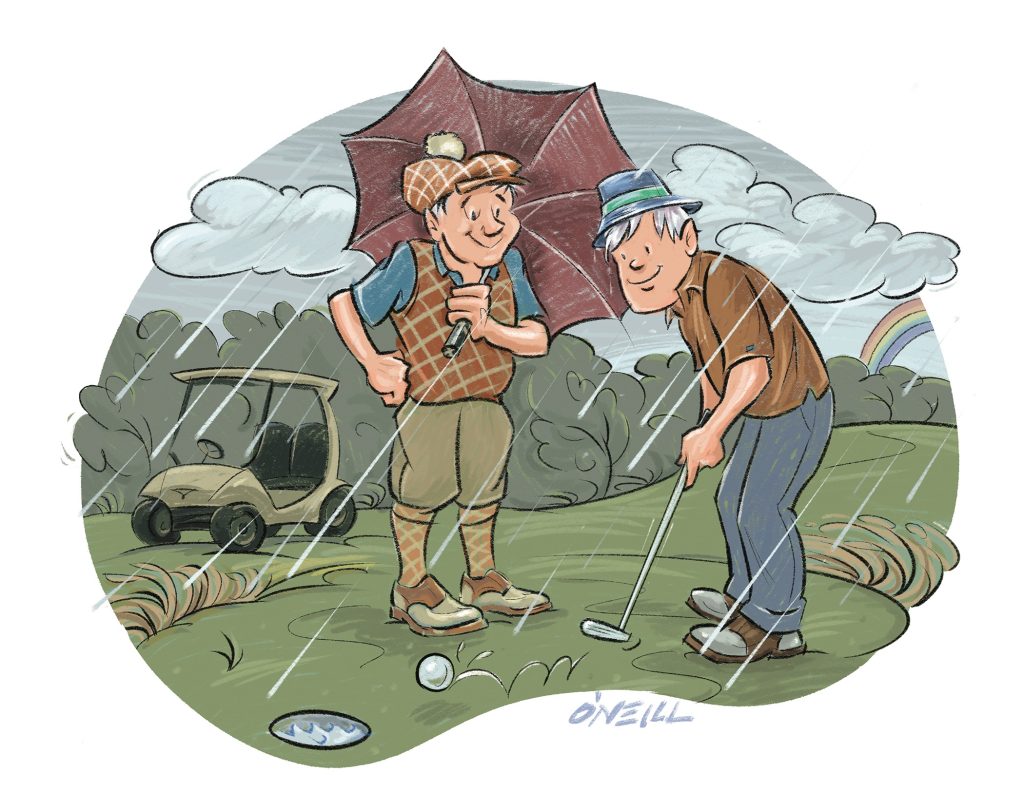
So, off we went. And though it turned out to be the statistically wettest week since the  Magna Carta, Patrick and I had a wonderful journey from Southern England’s east coast to west, seeing old friends and playing 18 nine-hole matches through howling winds and sideways rain over seven of Britain’s most revered golf courses. Somehow, amazingly, our roving golf match wound up being tied — in retrospect, perhaps the perfect ending and just what the doctor ordered. My prostate problem hardly entered my mind.

During our last stop at a historic club called Westward Ho, where we were both overseas members for many years, we had a delightful lunch (probably for the last time) with our dear friend, Sir Charles Churchill, 90, a legend in British golf circles, who reveled in our soggy tales of a golf match nobody won. The real winner, Charles reminded us, was our enduring friendship.

As anyone who makes the cancer journey understands, or quickly discovers, optimism and faith are essential tools in the fight against this merciless disease. 

Upon our return I resolved to spend the rest of my days with more optimism, good humor and a deeper gratitude for the life and work I’ve enjoyed — along with an awakened empathy for others who aren’t as fortunate.

The tools in my kit include a keen (if somewhat private) spiritual life that I exercise every morning when I chat with God under the stars. Plus, I often ask his (or her) advice throughout the day, especially when I’m watching birds at the feeders in early morning or late afternoon.

One of the surprising gifts from this period was a song I heard by chance — or maybe not? — called “I See the Birds,” by a gifted songwriter named Jon Guerra.

I was stuck in heavy city traffic, late for a lunch date and stewing over the insane way people drive these days, when this incredible song from God-knows-where mysteriously popped up on my music feed.

I see the birds up in the air

I know you feed them

I know you care

So won’t you teach me

How I mean more to you than them

In times of trouble

Be my help again   

By the end of the song, I was fighting back tears. It’s from a beautiful album simply titled “Jesus” that’s based on the Book of Matthew.

That song became the theme of my two-year journey back to health. I still listen to it at least once a day.

I also turned to the timeless wisdom of the old friends who line my library bookshelves.

“Don’t waste your life in doubts and fears,” advised Ralph Waldo Emerson, one of my favorite non-golfing heroes. “Spend yourself on the work before you, well assured that the right performance of this hour’s duties will be the best preparation for the hours or ages that follow it.”

With that guidance, the work before me during my cancer journey included the pleasure of publishing my most rewarding book and finishing a landscape garden that I’ve worked on for a decade. I also received a new left knee that might someday improve the quality of my golf game.

Best of all, we learned that my daughter, Maggie, is pregnant with a baby girl, due Christmas Eve, finally making me a granddad. Talk about a gift from the universe.

The final touch came last week when oncologist Gary Sherrill provided the good news. “You’re doing great,” he said. So, I’m doubling down on the things I’ve learned from my unexpected journey.

To judge less and love more. To thank my maker and see the birds up in the air.

Who knows? Maybe someday this budding grandpa may even shoot his age.

Simple Life

SIMPLE LIFE

The Comforts of October

Cooler days, evening fires and scary-good cookies

By Jim Dodson

My late mother liked to tell how, once upon a time, I loved to stand at the fence of the community-owned pasture behind our house in North Dallas feeding prairie grass to a donkey named Oscar.

I was barely walking and talking.

“You weren’t much of a talker, but seemed to have a lot to say to Oscar, far more than to anyone else,” she would add with a laugh. “We always wondered what you two were talking about.” 

Oscar’s kind, old face, in fact, is my first memory. Though I have no idea what “we” were talking about, I do have a pretty good hunch.

My mom also liked to tell me stories about growing up in the deep snows of Western Maryland, which sounded like something from a Hans Brinker tale, fueling my hope to someday see the real stuff. Quite possibly, I was asking Oscar if it ever snowed in Texas. 

I finally got my wish when we visited my mom’s wintery German clan for Christmas, days after a major snowstorm. It was love at first snowball fight with my crazy Kessell cousins. We spent that week sledding down Braddock Mountain and building an igloo in my Aunt Fanny’s backyard in LaVale. I hardly came indoors. I was in snowy heaven.

My mom took notice. “You’re such a kid of winter,” she told me. “Maybe someday you will live in snow country.”

Her lips to God’s ears.

Twenty years later, I moved to a forested hill on the coast of Maine where the snows were deep and winters long. My idea of the perfect winter day was a long walk with the dogs through the forest after a big snowstorm, followed by supper near the fire and silly bedtime tales I made up about our woodland neighbors as I tucked my young ones into bed. On many arctic nights, I lugged a 50-pound bag of sorghum to a spot at the edge of the woods where a family of white-tailed deer and other residents of the forest gathered to feed. Tramping back to the house through knee-deep snow, I often paused to look up at the dazzling winter stars that never failed to make me glad I was alive.

Perhaps this explains why I love winter as much as my wife does summer.

The good news is that we find our meteorological balance come October, a month that provides the last vestiges of summer’s warmth even as it announces the coming of winter with shorter days and sharply cooler afternoons. We share the pleasure of October’s many comforts.

As Wendy can confirm, her baking business ramps up dramatically in October as customers at the weekend farmers market clamor for her ginger scones, carrot cake and popular seasonal pies — pumpkin, pecan and especially roasted apple crumb — which typically sell out long before the market closes at noon. October marks the beginning of her busiest and happiest baking season.

Meanwhile, back home in the garden, I will be joyfully cutting down the last of the wilted hydrangeas, cleaning out overgrown perennial beds, spreading mulch on young plants and already planning next summer’s garden adventures — that is, when I’m not raking up piles of falling leaves, a timeless task I generally find rather pleasing until the noise of industrial-strength leaf blowers fire up around the neighborhood.

Their infernal racket can shatter the peace of an October morn and make this aging English major resort to bad poetry, with apologies to Robert Frost:

I shall be telling this with a sigh

two roads diverged in a yellow wood

and I one weary gardener stood

and took the path less traveled by

with rake in hand and shake of fist

oh, how these blowers leave me pissed! 

With the air conditioning shut off and the furnace yet to fire up, on the other hand, October brings with it the best time of the year to fling open bedroom windows and sleep like footsore pilgrims at journey’s end. At least our three dogs seem to think so. Our pricey, new, king-sized marital bed begins to feel like a crowded elevator on chilly October nights.

Among October’s other comforts are clearer skies, golden afternoon light and the first log fire of the season, celebrated by a wee dram with friends and thoughtful conversation that drifts well into the night until the host falls asleep in his favorite chair. That would be me.

Everything from my mood to my golf game, in fact, improves with the arrival of October. And even though my interest in all sports seems to dim a little bit more with each passing year (and the worrying growth of online betting), the World Series and college football can still revive my waning boyhood attention on a brisk October weekend.

Halloween, of course, is the grand finale of October’s comforts. What’s scary is how much money Americans shell out annually on costumes, candy and creepy, inflated yard decorations (something like $11.6 billion last year, according to LendingTree), which suggests to me that being happily frightened by the sight of lighted ghouls on the lawn and kids who come in search of candy dressed as the walking dead is simply a welcome break from the daily horrors of cable news.

Our Halloween routine is one I cherish. Wendy’s elaborately decorated Halloween cookies disappear as fast as she can make them (I’m partially to blame, but who can resist biting the head off a screeching black cat or a delicious, bloody eyeball?) and I take special pleasure in carving a pair of large jack-o’-lanterns, one smiling, the other scowling, which I light at dusk on Halloween. Years ago, I used to camp on the front steps dressed as a friendly vampire until I realized how scary I looked, with or without the makeup.

Now, the dogs and I simply enjoy handing out candy to the parade of pint-sized pirates and princesses and other creatively costumed kids who turn up on our doorstep.

The best thing about October’s final night is that it ushers in November, a month of remembrance that invariably makes me think of my late mother’s stories of snow and a gentle donkey named Oscar.

Last year, my lovely mother-in-law passed away on All Souls Day, the morning after Halloween. Miss Jan was a beloved art teacher of preschool kids, whose creativity and sparkling Irish laugh brought joy and inspiration to untold numbers of children.

And me.

What a gift she left to the world.

Simple Life

SIMPLE LIFE

Gone East

How a love affair that never happened changed my life

By Jim Dodson

September may be the ultimate month of change.

As summer’s lease runs out, the garden fades, and days become noticeably shorter and sometimes even cooler, hinting at autumn on the doorstep. After Labor Day, summer’s farewell gig, in 39 percent of American households — those with school-age kids — the days bring new schedules and an accelerated pace of life.

Just down the street, a dear neighbor’s firstborn is settling into her dorm at Penn State University. Her mom admits to having tender emotions over this rite of passage.

I know the feeling well. I remember driving both my children to their respective universities in Vermont and North Carolina, sharing stories with their mother on the way about their growing up and marveling how time could possibly have passed so quickly. Without question, dropping my kids off at college was a ritual of parting that stirred both pride and emotion.    

On a funnier note, September’s arrival reminds me of my own unexpected journey to East Carolina University half a century ago. On a blazing afternoon, my folks dropped me off at Aycock dorm, now Legacy Hall, with my bicycle, a new window fan and 50 bucks for the university food plan.

Not surprisingly, my mom hugged and kissed me, and wiped away a tiny tear; my dad merely smiled and wished me good luck. He also looked visibly relieved.

“You made the right decision, son,” he said. “I think you’ll really enjoy it here.” 

The previous winter, you see, I fell hard for a beautiful French exchange student at my high school named Francoise Roux. During the last few weeks before she headed home to France, we had a two-week courtship that included long walks and deep conversations about life, love and the future.

I was too nervous to kiss her. Instead, on the last night before she flew away, sitting together by a lake in a park, I played her a traditional French lullaby on my guitar, an ancient song her father sang to her when she was little. During the drive back to her host’s residence, we even discussed the crazy idea that, when I graduated in the spring, I might forego college in America for the time being in favor of finding a newspaper job in France so we could stay together.

As we said goodbye under the porch light, she leaned forward and gave me our first — and last — kiss. 

It was a sweet but improbable dream. Yet, having won Greensboro’s annual O. Henry Writing Award the previous spring (and consumed far too much Ernest Hemingway for my own good), I decided to skip applying to college and seek a job in Paris. Touting my “major” writing award and one full summer internship at my hometown newspaper, I brazenly applied for a job as a stringer for the International Herald Tribune’s Paris bureau. 

Amazingly, I never heard back from the famous newspaper.

Come middle May, still waiting for a reply, I was having lunch with my dad at his favorite deli when he casually wondered why “we” hadn’t yet heard from the four colleges I’d applied to for admission.

“Actually, Dad,” I said, “I didn’t apply to them. I have a better plan in mind.”

I sketched out my grand scheme to spend a year working in Paris, where I would cover important news stories and gain valuable life experience in the same “City of Lights” that he fell in love with during the last days of World War II. I mentioned that I was waiting for a job offer from the International Herald Tribune.

He listened politely and smiled. At least he didn’t laugh out loud. He was an adman with a poet’s heart. 

“This wouldn’t have anything to do with a certain pretty French girl named Francoise, would it?”

“Not really,” I said. “Well, a little bit.”

He nodded, evidently understanding. “Unfortunately, Bo, you will have to get a draft number this September. And if you get a low number and aren’t in a college somewhere, you might well be drafted. That will break your mother’s heart. How about this idea?”

He suggested that I simply get admitted to a college somewhere — anywhere — until we could see how things panned out with the draft. There were rumors that Nixon might soon end it. Until then, a college deferment would keep me from going to Vietnam.

Reluctantly, I took his advice and applied to several top universities. None had room for me, though UNC-Chapel Hill said I could apply for the spring term. Too late to be of use.

On a lark at the end of May, my buddy Virgil Hudson said he was going down to East Carolina University for an orientation weekend and invited me to tag along. I’d never been east of Raleigh.

On our way into Greenville that beautiful spring afternoon, we passed the Kappa Alpha fraternity house, where a lively keg party was happening on the lawn. I’d never seen more beautiful girls in my life. Young love, as sages warn, is both fickle and fleeting.

“Hey, Virge,” I said, “could you drop me off at the admissions office?”

The office was about to close, but the kind admissions director allowed me to phone my guidance counselor back home and have my transcripts faxed. I filled out the form and paid the $30 admission fee on the spot, leaving me 10 bucks for the weekend.

By some miracle I still can’t fathom, ECU took me in.

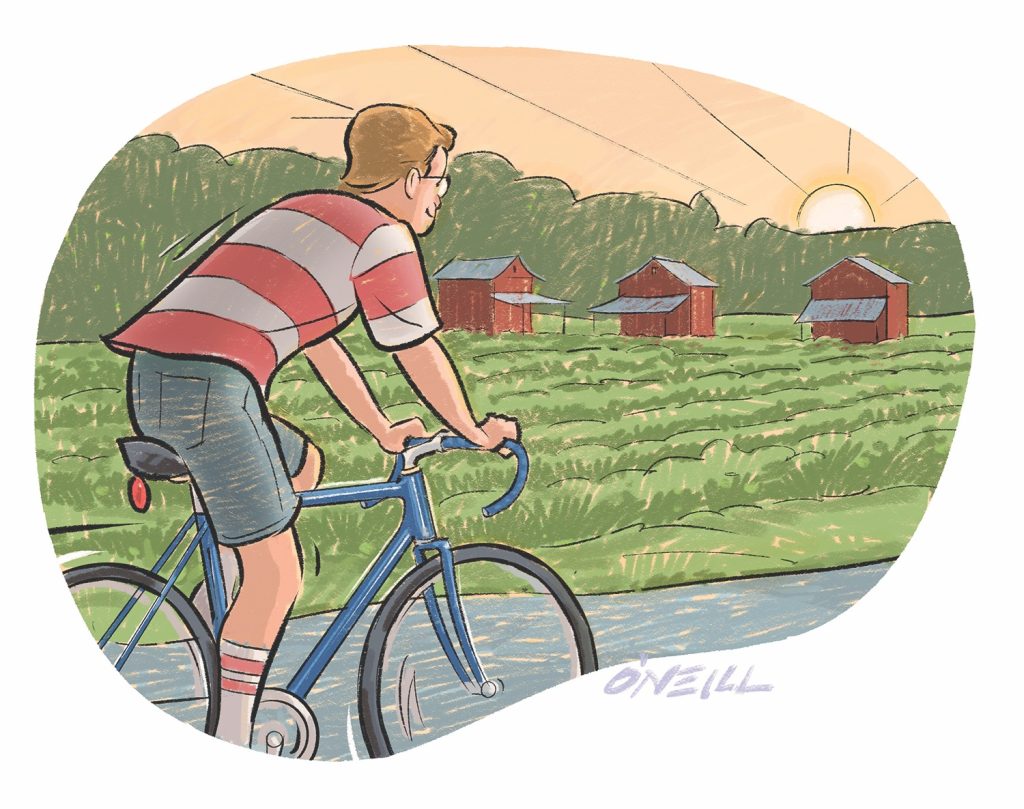
The first thing I did on the September morning before classes got underway was get on my bike and ride due east toward New Bern. As a son of the western hills, I simply wanted to see what this new, green countryside looked like.

The land was flat as a pancake and the old highway wound through beautiful farm fields and dense pine forests. A couple hours later, I stopped at a roadside produce stand to buy a peach and had a nice conversation with an older farming couple who’d been married since the Great Depression. 

I had no idea how far I’d pedaled. “Why, sonny, you only have 10 more miles to New Bern,” the old gent told me with a soft cackle. I got back to my dorm room after dusk — having fallen in a different sort of love.

There was something about this vast, green land with its rich, black soil and friendly people that quietly took hold of my heart.

My freshman year turned out to be a joy. My professors were terrific, and my new friend and future roommate was a lanky country kid from Watts Crossroads, wherever the hell that was. His name was Hugh Kluttz.

We are best friends to this day.

Having “gone east and fallen in love,” as my mother liked to tell her chums at church, I became features editor of the school newspaper — artfully named The Fountainhead — where I wrote a silly column that undoubtedly shaped my writing life.

In 2002, upon being named Outstanding Alumni for my books and journalism career, I confessed to an audience of old friends and university bigwigs that “going east and becoming an accidental Pirate turned out to be the smartest move of my young life — one I indirectly owe to a beautiful French exchange student I never saw again.”

Funny how life surprises us. A few years ago, out of the blue, I received a charming email from Francoise Roux, wondering if I was the same “romantic boy who once played me a lullaby on his guitar?”

We’ve exchanged many emails since then, sharing how our lives have gone along since that first and last kiss under the porch light. Francoise is a devoted grandmother and I’m about to become a first-time grandfather around Christmas. Soon enough, I’ll be playing that old French lullaby to a new baby girl, marveling alongside my daughter and her husband as they embark on their own, uncharted journey.

Simple Life

SIMPLE LIFE

The Light in August

Catch it before it fades

By Jim Dodson

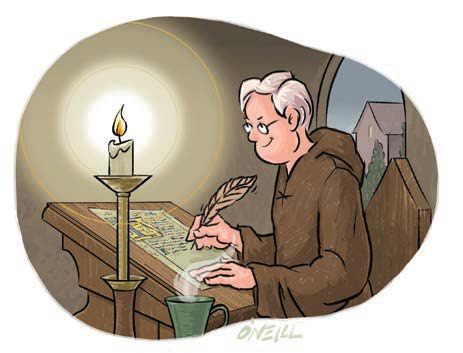
Most mornings before I begin writing (often in the dark before sunrise), I light a candle  that sits on my desk.

Somehow, this small daily act of creating a wee flame gives me a sense of setting the day in motion and being “away” from the madding world before it wakes. I sometimes feel like a monk scribbling in a cave.

It could also be a divine hangover from early years spent serving as an acolyte at church, where I relished lighting the tapers amid the mingling scents of candle wax, furniture polish and old hymnals, a smell that I associated with people of faith in a world that forever hovered above the abyss.

According to one credible source, the word “light” is used more than 500 times in the Bible, throughout both Old and New Testaments. On day one of creation, according to Genesis, God “let there be light” and followed up His artistry on day four by introducing darkness, giving  light even greater meaning. The Book of Isaiah talks about a savior being a “light unto the gentiles to bring salvation to the ends of the world.” Throughout the New Testament, Jesus is called the “Light of the world.”

But spiritual light is not exclusive to Christianity. In the Torah, light is the first thing God creates, meant to symbolize knowledge, enlightenment and God’s presence in the world. Surah 24 of the Quran, meanwhile, a lyrical stanza known as the “Verse of Light,” declares that God is the light of the heavens and the Earth, revealed like a glass lamp shining in the darkness, “illuminating the moon and stars.”

Religious symbolism aside, light is something most of us probably take for granted until we are stopped in our tracks, captivated by the stunning light show of a magnificent sunrise or sunset, a brief and ephemeral painting that vanishes before our eyes.

Sunlight makes sight possible, produces an endless supply of solar energy and can even kill a range of bacteria, including those that cause tetanus, anthrax and tuberculosis. A study from 2018 indicated rooms where sunlight enters throughout the day are significantly freer of germs than rooms kept in darkness.

The intense midday light of summer, on the other hand, is something I’ve never quite come to terms with. Many decades ago, during my first trip to Europe, I was fascinated (and quite pleased, to be honest) to discover that, in most Mediterranean countries, the blazing noonday sun brings life to a near standstill. Shops close and folks retreat to cooler quarters in order to rest, nap or pause for a midday meal of cheese and chilled fruit. I remember stepping into a zinc bar in Seville around noon and finding half the city’s cab drivers hunkered along the bar. The other half, I was informed, were catching z’s in their cabs in shaded alleyways. The city was at a complete, sun-mused halt.

The Spanish ritual of afternoon siesta seems entirely sensible to me (a confirmed post-lunch nap-taker) and is proof of Noel Coward’s timely admonition that “only mad dogs and Englishmen go out in the midday sun.” Spend a late summer week along the Costa del Sol and you can’t avoid running into partying Brits on holiday, most as red as boiled lobsters from too much sun. 

In his raw and gothic 1932 novel, Light in August, a study of lost souls and violent individuals in a Depression-era Southern town, William Faulkner employs the imagery of light to illuminate marginalized people struggling to find both meaning and acceptance in the rigid fundamentalism of the Jim Crow South.

For years, critics have debated the title of the book, with most assuming it is a direct reference to a house fire at the story’s center.

The author begged to differ, however, finally clearing up the mystery: “In August in Mississippi,” he wrote, “there’s a few days somewhere about the middle of the month when suddenly there’s a foretaste of fall, it’s cool, there’s a lambence, a soft, a luminous quality to the light, as though it came not from just today but from back in the old classic times. It might have fauns and satyrs and the gods and — from Greece, from Olympus in it somewhere. It lasts just for a day or two, then it’s gone . . . the title reminded me of that time, of a luminosity older than our Christian civilization.”

I read Light in August in college and, frankly, didn’t much care for it, probably because, when it comes to Southern “lit” (a word that means illumination of a different sort), I’m far more attuned to the works of Reynolds Price and Walker Percy than those of the Sage of Yoknapatawpha County. By contrast, a wonderful book of recent vintage, Anthony Doerr’s All the Light We Cannot See, tells the moving story of a blind, French girl and young, German soldier whose starstruck paths cross in the brutality of World War II’s final days, a poignant tale shot through with images of metaphorical light in a world consumed by darkness.

But I think I understand what Faulkner was getting at. Somewhere about middle-way through August, as the long, hot hours of summer begin to slowly wane, sunlight takes a gentler slant on the landscape and thins out a bit, presaging summer’s end.

I witnessed this phenomenon powerfully during the two decades we lived on a forested coastal hill in Maine, where summers are generally brief and cool affairs, but also prone to punishing mid-season droughts. Many was the July day that I stood watering my parched garden, shaking my cosmic gardener’s fist at the stingy gods of the heavens, having given up simple prayers for rain.

On the plus side, almost overnight come mid-August, the temperatures turned noticeably cooler, often preceding a rainstorm that broke the drought.   

When summer invariably turns off the spigot here in our neck of the Carolina woods, sometime around late June or early July, I still perform a mental tribal rain dance, hoping to conjure afternoon thunderstorms that boil up out of nowhere and dump enough rain to leave the ground briefly refreshed.

I’ve been fascinated by summer thunderstorms since I was a kid living in several small towns during my dad’s newspaper odyssey through the deep South. Under a dome of intense summer heat and sunlight, where “men’s collars wilted before nine in the morning” and “ladies bathed before noon,” to borrow Harper Lee’s famous description of mythical Maycomb, I learned to keep a sharp eye and ear out for darkening skies and the rumble of distant thunder.

I still gravitate to the porch whenever a thunderstorm looms, marveling at the power of nature to remind us of man’s puny place on this great, big, blue planet.

Such storms often leave glorious rainbows in their wake, supposedly a sign (as I long-ago learned in summer Bible School) of God’s promise to never again destroy the world with floods.

Science, meanwhile, explains that rainbows are produced when sunlight strikes raindrops at a precise angle, refracting a spectrum of primary colors.

Whichever reasoning you prefer, rainbows are pretty darn magical.

As the thinning light of August and the candle flame on my desk serve to remind me, the passing days of summer and its rainbows are ephemeral gifts that should awaken us to beauty and gratitude before they disappear.

Simple Life

SIMPLE LIFE

Bravo, Ben Franklin

And may there be more questions and answers on the road ahead

By Jim Dodson

My wife, Wendy, and I are a true marriage of opposites. She’s your classic girl of summer, born on a balmy mid-July day, a gal who loves nothing more than a day at the beach, a cool glass of wine and long summer twilights.

I’m a son of winter, born on Groundhog Day in a snowy Nor’easter, who digs cold nights, a roaring fire and a knuckle of good bourbon.

With age, however, I’ve come to appreciate our statistically hottest month in ways that remind me of my happy childhood.

Growing up in the deep South during an era before widespread air conditioning, I have fine memories of enjoying the slow and steamy days of midsummer.

Like most American homes in the late ’50s and early ’60s, the houses where we lived during my dad’s newspaper odyssey across the deep South were cooled only by window fans and evening breezes. The first time I encountered air conditioning was in a small town on the edge of South Carolina’s Lowcountry, where only my father’s newspaper office and the Piggly Wiggly supermarket were air-conditioned.

Trips to the grocery store or his office were nice, but I had my own ways to beat the heat. I’d pedal my first bike around the neighborhood or crawl beneath our large wooden porch, where I’d conduct the Punic wars with my toy Roman soldiers in the cool, dark dirt.

On hot summer afternoons, I’d sit in a wobbly wicker chair on the screened porch, reading my first chapter books beneath a slow-turning ceiling fan, keeping a hopeful eye out for a passing thunderstorm, probably the reason I dig ferocious afternoon thunderstorms to this day.

July also brings the Fourth of July, our national Independence Day, which I unexpectedly gained a new appreciation for during my long journey down the Great Wagon Road over the past six years. The Colonial backcountry highway brought my Scottish, German and English ancestors (and probably yours) to the Southern frontier in the mid-18th century.

My fondest memory of celebrating the Fourth was sitting on a grassy fairway at the Florence Country Club, watching my first fireworks display. My mother brought along cupcakes decorated with red, white and blue icing.

That same week, Mr. Simmons, a cranky old fellow on our street, told my best friend, Debbie, and me that “only Yankees celebrate the Fourth of July because they won the War Between the States.”

My dad, a serious history buff, told me this was complete hogwash and began taking my older brother and me to hike the Revolutionary War battlefields of South Carolina at Camden, Kings Mountain and Cowpens, drawing us into the story of America’s fight for independence from Great Britain. When we moved to Greensboro in 1960, one of our first stops was the  Guilford Courthouse National Military Park, where the pivotal battle of the Revolutionary War was fought.

My favorite Fourth of July celebration took place at Greensboro’s Bur-Mil Club in the mid-1960s. It was a lovely affair that featured races in the swimming pool and a par-3, 9-hole golf tournament for kids, followed by a huge company picnic in the dusk before a fireworks display.

That summer, I joined the club’s swim team and even briefly set a city record for 10-and-under in the backstroke, developing a daily routine that made beating midsummer heat a breeze. Every morning after swim practice, I played at least 27 holes under the blazing sun (bleaching my fair hair snow-white by summer’s end), grabbed a hot dog and Coke in the club snack bar for lunch, then headed back to the pool to cool off before my dad picked me up on his way home from work. Looking back, it was hard to beat that summertime routine.

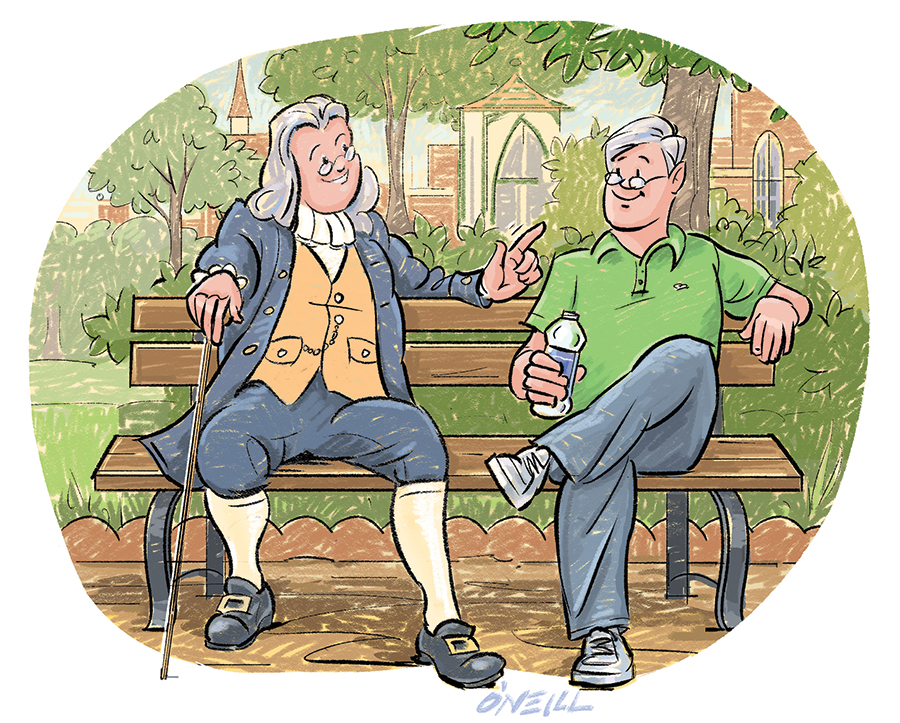
Fast forward several decades, I was thinking about these pleasant faraway summers on the first day of my journey down the Great Wagon Road, beginning in Philadelphia. The city was still draped in the tricolors of Independence Day amid a record-breaking heat wave. After a morning hike around the historic district, I walked into the shady courtyard of the historic Christ Church, hoping to find some relief, but found, instead, Benjamin Franklin sitting on a bench.

I couldn’t believe my good luck. Rick Bravo was a dead ringer for Philly’s most famous citizen and said to be the most beloved of Philly’s Ben Franklin actor-interpreters. 

He invited me to share the bench with him while he waited for his wife, Eleanor, to pick him up for a doctor’s appointment.

Over the next hour, Ben Franklin Bravo (as I nicknamed him) regaled me with several intimate insights about my favorite Founding Father, including how “America’s Original Man” shaped its democratic character and even had a hand in designing the nation’s first flag, sewn by Betsy Ross.

I thanked him for his stories and wondered if I might ask one final question.

He gave me a wry smile and a wink.

“God willing, not your last question nor my last answer,” he replied with perfect Franklin timing, casually mentioning that he was scheduled to undergo heart surgery within days.

I asked him what it was like channeling Benjamin Franklin.

Rick Bravo glanced off into the shadowed courtyard, where a mom and three small kids were cooling off with ice cream cones, chattering like magpies. My eyes followed his.

He grew visibly emotional.

“Let me tell you, it’s simply . . . wonderful. Next to my wife and children, being Ben Franklin is the most meaningful thing in my life.”

He told me how he met Eleanor many decades ago in the first of their many musical performances together, a major production of Oliver!

“Like America itself, we’ve weathered the ups-and-downs of life with lots of grace from the Almighty and a good sense of humor. As Ben Franklin himself observed, both are essential qualities for guiding a marriage or shaping a new country.”

Looking back, my hour with the man who was Ben Franklin proved the most memorable conversation of more than 100 interviews I conducted along the Great Wagon Road.

He even suggested that I drop by Betsy Ross’s shop over on Arch Street to buy a replica of the young nation’s first flag as a symbol of the birth of America.

Over the next five years, I carried this beautiful Ross flag, with its red-and-white stripes and circle of 13 stars, the only purchase I made during my entire 800-mile journey, down the road of my ancestors.   

To celebrate publication of my Wagon Road adventure this month, my Betsy Ross flag will proudly hang in front of my house for the first time, a gesture of gratitude to the dozens of inspiring fellow Americans I met on my long journey of awakening.

It will also hang in memory of my dear friend, Ben Franklin Bravo, my first interview on the Great Wagon Road, who died in January 2022.

I understand that Eleanor sang “Where is Love?” to him from their first musical together as he passed away.

Simple Life

SIMPLE LIFE

The Gift of Nature

And the power of the Earth to heal

By Jim Dodson

One morning this past February, I stepped out to assess how my garden had fared from one of the coldest, soggiest winters in memory.

It wasn’t a pretty sight. 

The Asian-themed shade garden I’d spent a decade creating in our backyard under towering oaks appeared to be devastated, buried beneath drifts of sodden leaves and dozens of downed tree limbs. The only visible signs of life were weeds and grass creeping over the garden beds like an insurgent army.

I’m no rookie in landscape gardening. I’ve built — and restored — three major gardens in my life, including an ambitious native garden in a forest on a coastal hilltop in Maine, where we lived for two decades.

Hard weather, as they say up in Maine, makes good timber — a theory, I’ve discovered, that’s applicable to human beings as well as gardens.

I remembered this eternal truth as I took stock of my battered garden, wondering if it would ever look as glorious as it did last summer.

After a morning of clearing debris and raking out beds that showed little to no signs of life, I ruefully joked to Wendy, my wife, that our “ruined” garden was the final insult from a winter we were both eager to forget.

It started on All Saints’ Day back in November, with the death of Wendy’s mom, a lovely Irish lady who spent her career teaching children how to love art. In the end, dementia robbed “Miss Jan” of her sparkling wit and even the ability to recognize those she loved. At least she spent her final days on our terrace, warming her face in the late autumn sunshine. The last thing she said to me was, “Look, isn’t the sun beautiful today?” She never spoke again.

For the first time ever, three of our four children, admittedly all grown-ups, failed to make it home for the holidays, which made for a too-quiet house at Thanksgiving and lots of empty stockings. Fortunately, our youngest, Liam, showed up two days before Christmas, briefly brightening the mood before I went under the knife for a full left-knee replacement that left me wondering, as the New Year dawned, what dump truck ran over me.

I skipped the narcotic painkillers in favor of Tylenol, however, because I was under the intense pressure of a tight deadline to correct and return within a fortnight my editor’s marks on the most important book of my life. As a proud Luddite, I was forced to use a complex digital editing system that left me feeling like a child trying to operate a jumbo jet. Fortunately, in the nick of time, my digitally savvy bride stepped in to get the job done. Printed manuscripts, I learned, evidently went out of fashion with handwriting. 

To make things more fun, as I wrestled with a hoisted leg and new technology, a work crew arrived to renovate our Donna Reed-era primary bathroom, knocking down walls and pulling up floors — making such a godawful racket, it seemed they were taking out half the house.

Most disturbing of all, amid this clamor and craziness, I lost my longtime gardening pal, Boo Radley, our beloved 14-year-old cat, who suffered a sudden series of seizures that grew more horrifying as the days went along. We finally put him peacefully to sleep on his favorite blanket.

Every family, of course, goes through periods of intense stress and challenge when the chaos of life seems to pile up like snow against the door. That’s just part of making the human journey. To place our winter of discontent in proper context, as my late Scottish father-in-law liked to say, ours were “pretty high-class problems in a world that is full of sorrow and woe.”

It took an unexpected birthday card from a dear old friend to lift my cloud of gloom and remind me of what’s really important in the grand scheme of things.

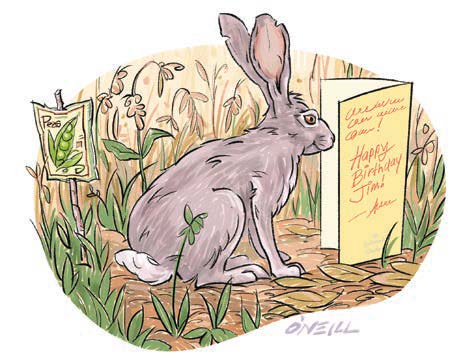
Ashley Walshe’s clever card amounted to a gentle poke from the universe, depicting an old, gray rabbit nibbling something in the garden. She knows I have a thing for woodland rabbits.

“Another year,” read the card. “Another gray hare — Happy Birthday!”

You may know Ashley from the soulful monthly Almanac she writes for the magazine, and from her many years adding earthy wisdom and wit to our editorial team. Among other things, she is a gifted poet and a true daughter of the Earth.

Not surprisingly, it was her accompanying hand-written message that reminded me of the lessons in gratitude and joy we’ve shared over the many years of friendship:

“In all seriousness,” she wrote, “thank you for showing me the joy of growing backwards . . . The secret, perhaps, to this wild, wonderful life on Earth.”

The idea of growing backwards is simply our way of describing a life in tune with nature, timeless values (some would call “old-fashioned”) that promote kindness and compassion to all living creatures and a deep reverence for the Earth.

In a year that has already seen apocalyptic wildfires out West, a record number of killer tornados in the heartland and a hurricane that will be remembered for generations, it isn’t much of a stretch to realize Mother Earth is sending us a serious message about our behavior.

Last November, Ashley and husband Alan nearly lost everything they own — including their lives — when their first home on a pretty hillside just outside Asheville was almost washed away by Hurricane Helene.

“At the height of the storm,” she remembers, “we were huddled in our house with our dog, Dirga, watching frightening torrents of water roar down the mountainside, washing away many of the houses around us. I remember asking Mother Mary to please keep us safe.”

Moments later, the couple heard a loud crash of trees that fell directly in the path of the rampaging waters, diverting the Biblical flood away from their home.

It was, she says, “a miracle. Nature saved our house.”

After escaping for a time to stay with friends outside the danger zone, the couple returned to find their home still intact but surrounded by a world of mud and debris.

“Helene brought me back to a higher level of consciousness, a desire to let go of things that don’t really matter in the course of daily life,” she says. “It also brought out an amazing amount of kindness and support among complete strangers who helped each other through the crisis. I think it changed many lives.”

The good news, she says, is that her bare yard is now a blank canvas awaiting the creation of a “wonderful new garden.”

Days after she told me this, she sent me a photograph of the lone plant that miraculously survived the Great Flood — a single, gorgeous tulip that popped up with the coming of spring. “Nature always gives us a gift,” she wrote.

That same afternoon, I noticed my own garden miraculously springing to life.

By now, it should really be something.

Simple Life

SIMPLE LIFE

Gone But Not Forgotten

The legendary newspaper woman who changed my life

By Jim Dodson

According to latest government projections, a record 3.7 million high school kids and 4.11 million college students will graduate this spring. In a world turned upside down by partisan politics and unpredictable economics, worries about the future are understandable. 

Once upon a time, I was there myself, waiting for the direction of my life to present itself.

In late spring 1976, America’s Bicentennial year, I was enrolled in a new M.F.A. writing program at UNCG and working part-time for my dad in advertising until I could figure out what to do with my life. America was slowly coming out of a powerful recession and job prospects were thin on the ground.   

Sadly — or maybe not — I turned out to be a lousy ad salesman. I could talk up a storm with my old man’s clients but never quite close the deal.

I also had an alternative plan of caddying for a year on the PGA tour, which proved to be a bust when I was assigned a tubby, wisecracking CBS TV star for the Wednesday Celebrity Pro-Am who’d never played the game. He told vulgar jokes to young women in the crowd and roguishly passed gas loudly to amuse the gallery. After a long and humiliating afternoon fetching my client’s lost golf balls from creeks, backyards and thorny bushes, he handed me a $2 tip and advised with a wink, “Don’t spend all that in one place, Sonny.”

I hurried straight to the Sedgefield Country Club bar with just that in mind.

At that early hour of the evening, the bar was empty save for an elderly gentleman sitting around the corner of the bar, nursing a cocktail.

As I drank my beer, to my shock and delight, I realized the gentleman at the end of the bar was none other than Henry Longhurst, the celebrated Sunday Times golf writer and CBS commentator — one of my literary heroes.

“Young man,” he spoke up with his charming grumble, “you look like I feel most mornings when confronting myself in the bathroom mirror.”

When I mentioned my horrible afternoon of caddying for a farting buffoon who killed my dream of caddying on the Tour, Henry “Longthirst” simply smiled. He asked what other options I had in mind. Confessing that my heart wasn’t into my graduate studies, I boldly commented that my real goal was to someday become a golf writer.

The great man nodded and slowly rose, placing a fiver on the counter. As he headed to the door, he placed his hand on my shoulder and said quietly, “Well, young man, if you do decide to write about this ancient game, you will find no shortage of rogues, bounders and peculiar characters, but also inspiring champions and some of the finest people on Earth. Good luck to you, then!”

I was thrilled by this encounter, taking it as a sign that the universe would deliver something good down the fairway of life.

A few days later, I received a phone call from Juanita Weekley, the managing editor of the city’s beloved afternoon newspaper, where I’d interned for two summers. She invited me to drop by for an interview.

“Be here at 5:30 sharp,” she said. “But don’t get your hopes up. You have lots of competition.”

I found her alone in her office the next afternoon. “Come in and close the door,” she said in her famous no-nonsense way.

Mrs. Weekley was a newspaper pioneer, the first woman to edit a major newspaper in the state, a tough, plain-spoken redhead who reminded me of Lou Grant, the crusty editor from The Mary Tyler Moore Show.

As I sat down, she pointed to a stack of folders on her desk. “These are applications from half a dozen outstanding candidates for this job. They are all female from top journalism schools. I’ve been instructed by personnel to hire a female. My question to you is, why should I even consider a skinny white kid from the west side of Greensboro?”

I understood her point. But I also had nothing to lose. I was still buzzing from meeting one of my sports journalism heroes.

Brazenly, I replied, “Because I’ll write circles around them all.”

Madam Weekley did not appear amused. Instead, she reached over her desk, picked up the wickedest-looking letter opener I’d ever seen and tapped it slowly on her desk.

“OK,” she said after a long pause. “I’m going to take a chance on you. But listen closely. If you’re not the best damn writer in this newspaper in a year, I’ll chase you out of the building with this thing.”

I spent the next year writing like mad to avoid being run off by her evil, sharp tongue and even sharper letter opener. At one point, however, Mrs. Weekley called me into her office and handed me the keys to a wheezing, 1970 day-glow orange AMC Pacer staff car and instructed me to drive a 75-mile circumference around the Gate City, searching for “good stories about country life” for the Sunday paper’s Tar Heel Living section.

“Think of it this way,” she said. “You’ll be our version of Charles Kuralt, writing about rural life and colorful characters you meet along the way. It’s right up your alley.”

She wasn’t wrong. 

Over the next six weeks, roaming the backroads of the western Piedmont and the Blue Ridge foothill country, I found an assortment of fascinating small-town stories and colorful folks to write about, including several homegrown artists, a brilliant Yale-educated physician running a clinic in an impoverished mountain town, an award-winning poet, a famous moonshiner, the biggest Bluegrass festival in history, and the winner of a Bear Creek talent show, whose mom invited me to marry her daughter after she graduated from high school. I politely declined.

Looking back, it was the best job any rookie reporter ever had — one that shaped my life.

My “country” tales won a major newspaper award and landed me a staff job at the Sunday Magazine of the Atlanta Journal-Constitution, where I was the youngest writer of the oldest Sunday magazine in the South.

Two decades later, I was back in my hometown on a national book tour for my bestselling memoir, Final Rounds. 

I stopped off to say hello to Juanita Weekley, the pioneering woman who took a chance on me way back when, and bring her a signed copy of my book.

She was in declining health. But her face lit up when she opened the door. We hugged and sat for an hour, and I thanked her for not running me off with her letter opener.

As she walked me to the door, she took my hand. “I knew you were going to be a superb writer,” she said, holding back tears. “I just didn’t want you to know that! I couldn’t be prouder of you, dear. Hiring you was one of the best things I ever did in my career.”

I kissed her cheek and thanked her. “It would never have happened,” I said, “without you.”

Juanita Weekley passed away in 2003.

Gone but never forgotten.

Simple Life

SIMPLE LIFE

A Spring Awakening

And a journey from darkness to light

By Jim Dodson

I celebrate April’s return every year because it’s the month that a divine awakening changed my life.

It was 1980. I was the senior writer of Atlanta Weekly, the Sunday magazine of the Journal-Constitution, the oldest newspaper magazine in the nation. It was probably the best writing gig in the South. Over the previous three years, I’d covered everything from presidential politics to murders in the “City Too Busy to Hate,” as Atlanta liked to promote itself in those days.

One minute I was interviewing a grand dragon of the Ku Klux Klan in Alabama, the next riding along with the Repo King of Atlanta as he repossessed cars in the city’s most dangerous federal housing project, a shotgun on the seat of his truck. I’d also written several pieces about young women from the South who were drawn to Atlanta’s bright lights only to wind up murdered or missing.

Looking back, though I didn’t realize it then, I was in search of an answer to a question that had no answer.

Three years before I snagged that job, Kristin, my girlfriend back home in North Carolina, was murdered in a botched holdup by three teenage boys at a Hickory steakhouse where she worked as the weekend hostess. I’d left Kristin on a beautiful October Sunday after making plans to get married and move with her to England, where she had a job as an understudy awaiting her in London’s West End.

The low point of my Atlanta odyssey came on a hot July night in 1979. I was working on a cover story about Bob Stivers, the city’s famous medical examiner, whose forensic sleuthing reportedly inspired the popular TV show Quincy. The week before that Saturday night, I’d watched half a dozen autopsies at the ME’s elbow, equally mesmerized and horrified. When Stivers invited me to ride along with the squad that picked up murder victims, I jumped at the chance. Saturday nights were particularly busy in the city that had recently been declared America’s “Murder Capital.”

My new fiancée, Hank Phillippi, was the nighttime weekend anchor at WSB-TV. We shared an old, brick house near the east-side entrance to Piedmont Park. Our weekend routine was to have a glass of wine and watch Saturday Night Live when Hank got home from the studio before midnight.  

On that fateful night, waiting for a call from Bob Stivers’ death crew, as I was standing in the darkness of our backyard, waiting for my dog, Magee, to do her business, I saw a car pull up beside our neighbor’s house. We were friendly with the Emory med students who lived there.

As I watched, a man emerged from the backseat of the car and calmly walked to our neighbor’s backdoor and knocked. A med student still in scrubs opened the door. There was a brief exchange of words, followed by two gunshots. The medical student collapsed on the ground. The assailant bolted for the running car, which sped away.

By the time I reached his side, a young woman from the house was screaming hysterically. I asked her to fetch me a couple towels and call 911.

Fortunately, at that moment, Hank arrived home. She took charge and phoned the police as I cradled the wounded man in my lap, attempting to keep him conscious. He died 15 minutes before cops arrived. “We get drug hits like this every weekend,” the cop said.

I chose not to follow the victim’s body down to the city morgue.

The next morning, though, as I was walking Magee, I heard a chapel bell in the distance softly chiming “Blessed Be the Tie That Binds,” one of my favorite hymns since childhood. Tears filled my eyes.

As Hank slept in, I fetched a cup of coffee, sat on our front steps taking stock of my life, and suddenly realized what was missing. I hadn’t been to church in five years.

I got dressed and went to services at the historic All Saints’ Episcopal Church downtown, famous for feeding the homeless and never locking its front doors. The rector, a wonderful man named Harry Pritchett, gave a powerful sermon about how God finds us in the darkness when we least expect it. It felt like he — or maybe God himself — was speaking directly to me.

Not only did I begin attending All Saints’ regularly, but also made a decision in favor of writing stories that enriched life rather than revealed its dark side. I even set my mind on attending seminary, until a wise old Bishop from Alabama named Bill Stough, the editor of the Bishop’s Fund for World Relief, convinced me to follow a “ministry closer to your heart,” as he put it. “You are a born writer,” he said. “You can serve the Lord better by writing about life than becoming a parish priest.”

Not long after that harrowing summer night, Hank and I called off our engagement, but have remained dear friends for more than 45 years.

As for me, that following April while working on a sample story about youth baseball tryouts, I ventured over to a rundown ball field in my midtown neighborhood, where a desperate league director convinced me to take on the coach-less Orioles. They were a wild bunch, many of whom lived in Federal housing. This was during the peak days of the “Missing and Murdered” crisis affecting Atlanta’s Black teens. I made a deal with my team’s families to drive them home after all games and practices.

I also made a deal with my rambunctious “Birds”: If they played hard and behaved like gentlemen, I would buy them all milkshakes after winning games.

They took the offer to heart. We won the Midtown League Championship in a romp that season, which convinced me to stick around Atlanta for one more year. We went undefeated for a second time. It only cost me 200–300 milkshakes.

I never wrote another crime story again.

Crazy as it sounds, almost a year to the day later, I woke on an April night to find Kristin standing beside my bed. She looked radiant. I thought I must be dreaming, but she was so lifelike, especially when she smiled and spoke. “Pook,” she said, using her pet name for me, “it’s time for you to leave here and go north. That’s where you’ll find what you are looking for. I’ll always love you.”

Days later, I resigned from the magazine, turned down what might have been a dream job in Washington, and headed for a trout stream in Vermont.

God, Kristin and my baseball team found me in the darkness when I least expected it.

It’s been a wonderful life ever since.

Simple Life

SIMPLE LIFE

The Art of Healing

With the dawn of spring, we begin again

By Jim Dodson

If you live long enough, the saying goes, you will discover that healing takes time.

This ancient wisdom is being driven home to me because 15 days before I sat down to write this column, I received a complete left knee replacement.

Friends who’ve been down this path were quick to assure me that the pain and discomfort that accompanies major joint surgery can only be mitigated by time, patience and committing to an aggressive program of physical therapy.

Owing to a lifetime of sports injuries and a fulsome style of landscape gardening my cheeky bride, Wendy, once called a “blood sport with bushes and trees,” I suppose I’ve always downplayed my naturally high tolerance for pain — until now.

“Did you happen to catch the number of the city bus that ran over my leg?” I groaned to my wife on post-op day three, often described as the peak moment of pain during joint recovery.

“Just relax and let your body heal,” was her response. “By March, you’ll be back in the garden and playing golf with a brand-new knee that feels great. It just takes some time to heal, babe.”

Of course, she was right. So, I shut my yap and let my body get on with its healing business without further interference from me.

It proved to be a wise move. Upon completing my second week of physical therapy, not only did I learn that I was a week and a half ahead of the normal recovery rate from knee replacement, but had also begun to regain the ability to walk without the assistance of a cane. The pain was also slowly vanishing — so much so that I did a walking tour of my garden to assess the winter damage. 

This adventure got me thinking about how waiting for the pain to stop and the healing to begin is a common experience that touches every aspect of our lives.

As children, we fall down or cut a finger and run to Mom or Dad, who applies the bandage and a kiss that makes the injury soon forgotten.

Every day on the news, however, we learn about children who live in war zones or are victims of child abuse. Their young lives will forever be damaged by the trauma they’ve suffered — a pain that will likely never quite vanish, leaving a wound that may never heal.

On a much larger scale, the recent devastation of homes and lives lost from Hurricane Helene and the raging wildfires of Los Angeles have produced pain and suffering on an apocalyptic scale, something that will take decades for communities to rebuild and heal. The outpouring of love and assistance from complete strangers to our mountain neighbors, however, speaks volumes about our shared human instinct for healing. A similar outpouring is already underway in the City of Angels.

On the scale of normal, everyday life, a lover’s broken heart may only require a few healing months of intense self-care, a good therapist and a new pair of shoes to begin the mending process.

The psychic pain of losing a job, sending a child off to college, ending a close friendship, or saying goodbye to a loved one or special place you may never see again can impose their own unique weight on the human heart. In time, only memory and gratitude for what was may soften the pain.

That, at least, is my hope.

One evening over this past Christmas, as we sat by the fire watching a holiday movie, our beloved cat, Boo Radley, suffered a sudden massive seizure. Boo was a large, gray tiger cat who entered our lives 14 years ago when Connor, Number Two son, brought him home as a tiny feral kitten found at the Southern Pines train depot on a winter night.

Connor named him “Nico” and kept him in his upstairs bedroom for several weeks before he moved on to Boston to accept a new job. At that point, we renamed the inherited young cat “Boo Radley” and watched him quickly take over the house. One minute he was grooming the ears of our big golden retriever, Ajax, the next sleeping in kitchen pots and pans. He was always up to some amusing mischief that made us all smile.

For some reason, Boo took a particular shine to me, showing up at my desk every morning to playfully tap my computer keys as I wrote. The first time I let him outside, he followed me entirely around the backyard watching me plant roses and mow the lawn.

One summer evening near dusk, I saw Boo bolt across the backyard being chased by a young gray fox. Before I could come to his rescue, I saw the young fox running back the other way — chased by Boo. Crazy as it sounds, their game of tag went on for weeks.

When we moved to the old neighborhood where I grew up in the Gate City, Boo really found his stride. He supervised as I re-landscaped the entire property and faithfully came to sit under the trees with me every afternoon when the day’s work was done. Likewise, for over a decade, he never failed to appear from his nighttime rounds to sit together under the early morning stars while I sipped coffee and had a friendly chat with the universe. He usually snuggled up in my lap as the Almighty and I sorted things out. On most afternoons, he napped in the golden-hour sun in his favorite part of the garden, which I eventually named “Boo’s Garden.”

Like the original Boo Radley, he particularly didn’t care for strangers, and proved to be fiercely territorial, ready to chase off any feline intruder foolish enough to get too close.

Wendy liked to say Boo was simply guarding his turf — and his best buddy.

I do believe this may be true.

On the fourth night after my knee replacement, however, during the deepest pain of my recovery, Boo suffered his sixth seizure in five weeks. The promising medication he’d been on for a month simply didn’t work, proving the art of healing is as much mystery as it is science.

Following a sleepless night, we made the painful decision to end Boo’s suffering. Hours later, a lovely vet from Lap of Love came and put my best pal to sleep on his favorite blanket. I don’t think I’d ever felt such emotional pain. Over a cat, no less.

Every moment of this life, as my late Grandmother Taylor liked to say, someone is waiting beneath a clock for a birth or a death or a chance to begin again.

The return of spring brings winter’s long wait to an end. It’s nature’s moment to heal and begin again.

With my brand-new knee, I can’t wait to get out into the garden.

But my best friend is gone, a pain that will probably take years to heal.