Omnivorous Reader

OMNIVOROUS READER

Finding Everyman

Breaking a 19th century code

By Anne Blythe

Anybody who delights in being an attic archaeologist and parting the curtains of cobwebs in dim, dank corners to excavate layers of dust and forgotten family history will find much to like in Cipher: Decoding My Ancestor’s Scandalous Secret Diaries.

Jeremy B. Jones, an associate English professor at Western Carolina University, was digging around in boxes at his grandmother’s house one day when he came across a newspaper clipping that proved to be a golden ticket taking him back in time to the 19th century and the fascinating life of an ordinary man.

That man was William Thomas Prestwood, Jones’ great-great-great-great-grandfather, who had traveled many of the same lands and roads Jones has. Learning the details of his kinsman six generations removed was anything but typical family lore handed down from one generation to the next. Prestwood, as the newspaper clipping from 1979 revealed, had been a prolific diarist, but not the kind of journal keeper who seemed intent on preserving his life story beyond his death 166 years ago.

The details of the daily life of this militia man, Appalachian farmer, teacher, philosopher and prolific philanderer might have been lost to the annals of time had a man not salvaged a stash of Prestwood’s hand-sewn journals from a Wadesboro house scheduled for demolition in 1975. Those notebooks weren’t filled with the elegant and elaborate penmanship of the 19th century. They were written in code, a series of shapes, numbers and symbols that added an element of intrigue that eventually landed them on the desk of a state archivist.

Unable to solve the mystery of what the journals’ author had written, the archivist copied a few pages and sent them off to a National Security Agency cryptanalyst who had retired in the Appalachian Mountains. The expert in encryption and decryption quickly cracked the code, eventually transcribing the journals’ pages, revealing the many brief but telling details of an Everyman’s life in the Carolinas.

Prestwood wrote about collecting turkey eggs, hunting for a horse on the loose, farming, visiting neighbors, drinking rum, eating watermelon, playing music, strife with his father, the births of his children, deaths in the family, dreams, and his many sexual conquests and unrequited longings worthy of Tom Jones. He gives a glimpse of a public hanging and even the eclipse of 1821 — not with the flourish of a wordsmith but in the short sentences or fragments of an ordinary person.

“In 1859, a forgettable man died,” Jones writes in the opening sentence of Cipher’s first chapter. “He left behind bedclothes, a spyglass, cooking pots and an umbrella. He left history books and algebra books and mineralogy books and Greek grammar books and astrology books.” He lists the daughters and sons who preceded Prestwood in death and the debt he left behind, a sum that his “landholdings and scattershot of personal property — sold for a total of $11.94” didn’t cover. Prestwood, Jones writes, “entered the ground penniless.”

The journals he left behind, the treasure trove that Jones learned about from the yellowed 1979 newspaper article in The Asheville Citizen-Times — have proven to be priceless, though. They give a glimpse, as the codebreaker wrote, “of the very essence of Everyman’s life from the cradle to the grave.”

Jones toggles between Prestwood’s life and his own, turning to archives, property records and other historical accounts to help flesh out his ancestor’s story. Occasionally, he fills in gaps with his own imagination and hypotheticals to further a narrative that includes slave ownership and womanizing.

Jones struggled with whether he should lay bare the details of a long-dead man’s thoughts and his comings and goings. After all, those specifics were cloaked in a code cracked more than a century after the last journal entry.

“He’d blanketed his shin-skinning and corn-planting and woman-laying in code for a reason, and what right did I have to come along two hundred years later and run my fingers along the edges of his life in a library in the middle of the state?” Jones asked himself while viewing the diaries in a special library collection in Raleigh. “Was I shrinking his life by bringing it out into the open, making him smaller than he ever was, less of a man?”

In Cipher, Jones not only has brought Prestwood to life again — scandalous warts and all — he has created a memoir of sorts, a depiction of his own everyday life exploring today’s connection to this country’s complicated past. Jones has given us yet another chapter in Everyman history, an interesting read for anyone who likes to look at what America once was and has become. 

Omnivorous Reader

OMNIVOROUS READER

From Poetry to Prose

Creating a finely crafted debut novel

By Stephen E. Smith

On an unseasonably cool August night in Charleston, South Carolina, I’m sitting in Kaminsky’s Dessert Café with Linda Annas Ferguson, whose first novel, What the Mirrors Knew, arrived that day in the form of 500 paperback and hardcover books. (The official release date was Sept. 21.) She’s glowing with that nervous anticipation felt by every author of a freshly published work — she’s proud, exuberant, anxious and pleasantly overwhelmed by her achievement. She’s seen the germ of an idea to completion, and the fruits of her labor are contained in a beautifully designed novel of almost 400 pages that pleads to be read by appreciative readers.

This isn’t Ferguson’s first book. She began her writing career as a poet and has successfully published and marketed five books of poetry. Her poem “On the Way Home” appeared in our September issue.

Still, I am keenly aware that writing poetry can, oddly enough, be an encumbrance. When a writer proficient in one genre tests his or her talent in a different form — a novelist writes poems, a playwright turns to poetry, etc. — we’re often skeptical, wondering how much professional skill will carry over. Who can recite one of the poems from Hemingway’s first book, Ten Poems? How many of us have read Faulkner’s The Marble Faun? So here’s the question: Will the accomplished poet become the clumsy apprentice to the novel?

Turns out that narrative poetry was Ferguson’s training ground, so she experienced a natural transition to prose. Upon reading her novel — having escaped the shadow of Kaminsky’s Tollhouse Bourbon Pecan Pie to delve into the haunting darkness of What the Mirrors Knew — it’s apparent that her poetic skills are readily transferable.

“My writing life began with telling stories through poetry,” Ferguson says. “Unlike many writers who were influenced at a young age, I only started writing seriously when I was around 30 years old. I scribbled my family stories in journals which eventually became poems.”

Ferguson’s novel is a lyrical blend of spirituality and philosophy, featuring sharply drawn characters who emerge as wholly believable. Her use of dialogue is sharp and sparse, and the narrative is enriched by an energized prose style that propels the reader ever forward. Stir in a touch of philosophy, spirituality, mystery and romance, and you’ve got a first-class novel that reads like the work of a seasoned professional. More importantly, the narrative embodies a strong sense of resonance, a lingering afterglow that will leave the reader pondering the moment.

“In some ways my novel is similar to a long poem, with one particular chapter in it serving as a volta, a turning point, as in a sonnet. I haven’t written a great deal of sonnets, but many poems, even free verse and especially narrative ones, have a turning point about two-thirds of the way through.”

Ferguson is also influenced by film, conceiving her chapters as scenes from a movie. “I visualize it all in my mind as if I am present in each scene,” she says. “I’ve always enjoyed the transition from scene to scene in films. At the end of one chapter I have a bee beating its wings against a glass window, and the next chapter begins with a friend rapping on the back door glass. Because of what film has instilled in me, transitions seem to come without much conscious plotting.”

Leaving Charleston’s blessedly cool weather behind, the question that occurs to me in the moment is what strategy Ferguson has contrived to promote her novel. She’s had experience running a small bookstore and obviously has “a business head,” but the marketplace for books is highly competitive. Chain and local bookstores have partnered with major publishers to feature readings by their new authors. The competition is keen for time and space to make appearances, often squeezing out small, independent presses. Moreover, online platforms featuring books can place another barrier between the writer and consumer. Unless you’re John Grisham, Stephen King or James Patterson, your books aren’t likely to fly off the shelves without some vigorous umph from a promotional entity.

But Ferguson has a plan. “Creating good content on social media is critical in this environment of cyberspace interaction,” she says. “My first step was to expand my presence to two Facebook accounts, two Instagram accounts (one personal and one professional), and one LinkedIn account. I have quite a few followers on Facebook, but I don’t just create posts. I build friendships as I congratulate other writers on their accomplishments, and they connect with what I am doing. I join groups where we can share our successes and issues and support each other.”

Initially, Ferguson vacillated about creating a video trailer for the book, but she’s glad she did. It includes a narrator, music, quotes from the novel and a beautiful video of Ireland. Besides posting it on social media, she can upload it to a personal YouTube platform.

“And one thing I would add, which readers will find prevalent in my writing, is that I take stock in how the universe seems to help those who have a dedication to their path, regardless of where they are on it. ‘Intention, attention, and commitment’ are good promises to make to yourself. Keep writing and publishing!”

Which is precisely what Linda Annas Ferguson has done. She’s liberated her imagination, pressed the power button on her computer and written a novel. She’s done something that anyone who’s determined to write a book can do — if they have the skill, nerve and determination to do it. The big job, the hard work of putting it in the hands of readers, lies ahead.

Omnivorous Reader

OMNIVOROUS READER

Getting Semi-Real

Jason Mott’s People Like Us

By Anne Blythe

Jason Mott gets one thing out of the way right off the bat in People Like Us — his latest novel is semi-fictional. Or at least that’s what the National Book Award-winning author of Hell of a Book wants you to believe.

“Whole fistfuls of this actually happened, sister!” he tells us in the forward. “So, to keep the lawyers cooling their heels instead of kicking down the front door with those high-priced Italian loafers of theirs, some names and places have been given the three-card monte treatment and this whole damned thing has been fitted with a fictional overcoat.”

People Like Us is the story of two Black authors — one on tour in the wintry climes of Minnesota after a school shooting, and the other being chauffeured around Europe, or “Euroland,” as he calls it, as the guest of a super-wealthy benefactor we know only as “Frenchie.”

They’re both exploring the idea of the American dream and whether such a notion is truly attainable within the confines of their lives. One is pondering that question from inside U.S. borders, the other from the outside.

Readers likely will notice many parallels between the real life of the acclaimed Columbus County resident and UNC Wilmington professor who’s a five-time author now. Mott started writing People Like Us as a memoir that delved into his relationship with America.

But along the way a couple of his Hell of a Book characters — Soot and The Kid — kept dropping into his story. So it evolved into this description-defying, pseudo-memoir/novel that will make you laugh out loud at its devilishly delicious humor, then sink into the grave realization that Mott is deftly addressing some serious social commentary.

Because both protagonists feel compelled to travel with concealed weapons, the gun culture in America and abroad is one such theme. So is the precarious state of the nation.

Mott is not preachy about these topics. He is subtle and inviting as he gets readers to think about American identity, and the complexities that Black Americans confront in a land where racial “othering” still exists.

One of the beauties of his writing is he can turn a phrase that will stop you dead in your tracks and force you to linger for a minute or two to admire his imagination, wit and way with words. Mott describes a scene about a seismic shift on a par with the protests that followed the murder of George Floyd this way: “It was like watching Sisyphus — a man who never skips leg day — finally get that super-size rock of his farther up the hill than he ever did before. And, just for a second, you can believe that, hell, maybe he’ll finally get it over the top.”

Mott’s prose will take you on a madcap adventure or somber journey with a cast of intriguing characters. We reconnect with Soot, the character in Hell of a Book who becomes invisible or one of “The Unseen” after witnessing his father shot by police while out on a jog. He’s an author now, in Minnesota, reckoning with the suicide death of his daughter, Mia, amid the aftermath of a school shooting.

Then there’s The Kid, who is older than he was in Hell of a Book, mysteriously seizure-prone now, living in France and going by the name Dylan — or at least the author living it up bourgeois-style in Europe believes the two are one and the same despite being told otherwise.

We get to know The Goon, the giant Black Scottish bodyguard and driver employed by the eccentric Frenchie to squire around the nameless author in a Citroën so decrepit and aged it seems like it’s “about to pull a hamstring.” 

Dylan is with them as they go from book event to book event in Italy and France. Along the way, the author, who sometimes pretends to be the better-known Colson Whitehead or Ta-Nehisi Coates, runs into Kelly, a funeral director and former girlfriend from the States. She hops in with the trio as the four of them seek a “Brown Man’s Paradise.”

Just as the gun used in an accidental shooting toward the end of the book hangs suspended in air “like a steel question mark,” so too does the notion of whether leaving America, as Mott poses, “just might be the new American dream.”

Dylan, who fled to “Euroland,” sheds light on that idea in deep conversation with the author, who is debating himself whether a comfortable home can really be had outside the homeland for people like him.

“There’s a hierarchy here, just like everywhere,” Dylan told him. “You’re either French-born White or Italian-born White or English-born White or Whatever-born Whatever . . . or you’re an Other. Well, where do the Others go? What do you do when your home doesn’t love you and all the other homes you tried to make a life in don’t love you either?”

That question lingers as Mott wraps People Like Us, fodder for one more semi-fictional book.

Omnivorous Reader

OMNIVOROUS READER

Horrors at Sea

The sordid tale of the Zorg

By Stephen E. Smith

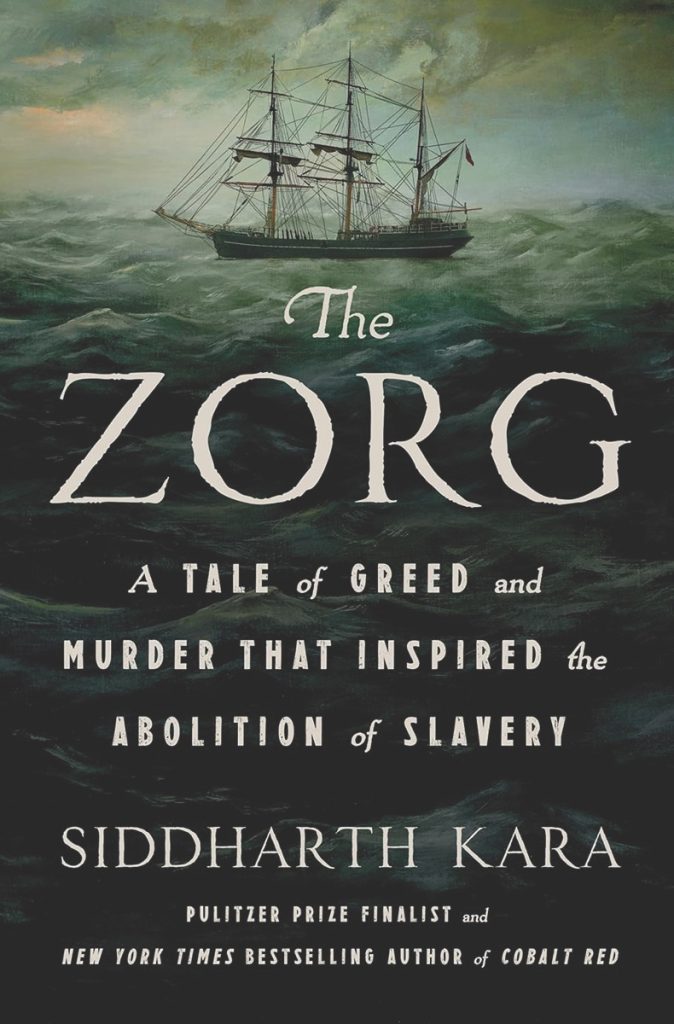
A few chapters into Siddharth Kara’s The Zorg: A Tale of Greed and Murder That Inspired the Abolition of Slavery, you might consider putting the book aside. After all, we live in a world fraught with grievance. Why burden ourselves with crimes committed 245 years ago?

The answer is obvious: Ancient injustices are the source of contemporary injustices. Cruelty begets cruelty. So you’ll likely continue reading The Zorg, despite the graphic inhumanity it depicts.

Kara is an author and activist who studies modern slavery. He has written several books on slavery and child labor, including the New York Times bestseller and Pulitzer Prize finalist, Cobalt Red, and he has much to tell us in his thoroughly researched and skillfully crafted narrative of the Zorg massacre, which serves as a disturbing yet obligatory lesson for contemporary audiences. 

In late 1780, the Zorg, a Dutch ship, set sail for Africa’s Gold Coast to take on a cargo of Africans to be sold in the New World. Such slaving enterprises were common. It’s estimated that more than 12 million captive human beings were transported on 35,000 voyages between the 16th and mid-19th centuries, so the Zorg was unusual only in the exceptional misfortunes that befell its crew and captive cargo.

After reaching its initial destination in Africa, the Zorg was captured by British privateers, and the ship was loaded with more than 440 enslaved humans, twice the number it was equipped to carry. The British captain, who had little experience commanding a slave ship, and his crew were ill-prepared to make the journey; nevertheless, they set sail for Jamaica. Poor seamanship, faulty navigation, rough seas, and a lack of food and water plagued the enterprise. The Zorg missed Jamaica and had to retrace its journey. The human cargo suffered greatly, sickness took its toll on the crew, and the ship’s water supply ran low. Eventually, the crew had to decide who would live and who would die.

The first to be tossed overboard were the women and children, followed by the weaker male captives. It was a heartless and brutal business, and 140 human beings were sacrificed for the “greater good.”

Such atrocities were not uncommon in the slave trade. Still, Kara’s graphic, novelistic description of these events is compelling without being gratuitous. The massacre of the innocent Black captives will be disturbing for anyone unfamiliar with the horrors of the Middle Passage, and those readers schooled in the inhumanity of the slave trade will find themselves moved to a new level of compassion. Kara’s skills as a writer and his deft storytelling bring history to life, and readers with any sense of empathy will react with genuine horror.

But the story of the Zorg doesn’t end there. When the captain, crew and surviving slaves found their way to Jamaica, the slave trading syndicate that had financed the voyage made a claim against the insurers of the enterprise, hoping to recoup the value of the human cargo that had been jettisoned. A trial followed, and a jury found that the murder of Africans was legal — they were simply a commodity — and the insurers must pay. Each lost slave was valued at $70, about the price of a horse.

Still, the controversy might have faded from memory — what was the loss of a few African captives? — but it was soon learned that the Zorg had arrived in Jamaica with a surplus of fresh water that had been taken aboard during a storm at sea. With the water supply replenished, the crew continued to dispose of the weaker captives so they might obtain more insurance money — in other words, the captain and crew committed insurance fraud. The verdict was appealed, and a protracted legal battle ensued between the insurers and the trading syndicate. The resulting public uproar catapulted the sensational story onto the front pages of England’s most prominent newspapers, transforming what might have been an insignificant controversy into a protracted struggle that would end the English slave trade with the Slave Trade Act of 1807, which in turn ignited the abolitionist movement in the United States. It would take the cataclysmic Civil War to decide the matter in America.

Slavery may be outlawed in every country, but it persists. According to the latest Global Estimates of Modern Slavery (2022) from Walk Free, the International Labour Organization and the International Organization for Migration, 49.6 million people live in modern slavery in forced labor and forced marriage, and roughly a quarter of all victims of modern slavery are children. The concept of slavery — the notion that a dominant culture or race remains superior to a once enslaved race — has not been purged from our hearts and minds.

For readers who aren’t interested in history but are fascinated by horrific tales, The Zorg fits the bill. The Russian writer Maxim Gorky, who knew something about imprisonment and slavery, understood our fascination with the terrible. “I know of genuine horrors, everyday terrors,” he wrote, “and I have the undeniable right to excite you unpleasantly by telling you about them in order that you may know how we live and under what circumstances. A low and unclean life it is, and that is the truth . . . one must not be sentimental, nor hide the grim truth with the motley words of beautiful lies. Let us face life as it is.”

At the very least, Kara’s skillfully crafted narrative will leave readers wondering how future generations will perceive the inequities and struggles of the tragic times we live in.

The Zorg will be available online and in bookstores Oct. 14.

Omnivorous Reader

OMNIVOROUS READER

The Untethering of Time

Finding the truths in historical fiction

By Anne Blythe

These days, as social media platforms and conflicting political rhetoric abound, it can be difficult to discern fact from fiction. It’s tempting to reflect on the past to try to understand what might be prologue.

Sometimes, though, the history that has been fed to us over time turns out to be pure fiction — or at least some version of it. Other times fiction is better able to get to the nitty-gritty truth. Historical fiction with its modern lens on days gone by can release the anchors of time and enhance a reader’s experience and understanding of the past in ways that non-fiction does not always accomplish.

Three North Carolina writers from this genre, to name a few, have taken a stab at blurring the lines between the invented and the real with new historical fiction that spans many decades, and in one case centuries.

Charlotte-based author Joy Callaway transports readers of her seventh book, The Star of Camp Greene: A Novel of WWI, far beyond the Queen City’s modern financial district and tree-lined neighborhoods back to 1918, when the U.S. Army had a training facility about a mile west of what is now Uptown.

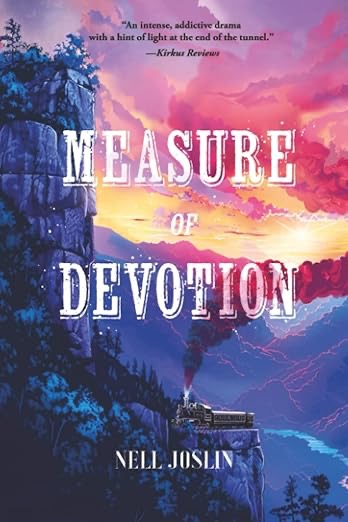
Nell Joslin, a Raleigh lawyer turned writer, takes readers of her debut novel, Measure of Devotion, back to the Civil War era as she chronicles a mother’s harrowing journey from South Carolina, where she was a Union supporter, to the battleground regions of southeastern Tennessee to tend to her critically wounded son, who enlisted with Confederate troops in defiance of his parents’ wishes.

And Reidsville-based Valerie Nieman, a former newspaper reporter and editor turned prolific author, takes readers on a journey to ancient Scotland in Upon the Corner of the Moon in her imagined version of Macbeth’s childhood before he became King of Alba in 1040.

Though the books are very different, each was born from digging through historical documents, archives and histories of the time, as well as a bit of on-the-ground research.

Callaway’s main character, Calla Connelly, is based on the real-life vaudeville star Elsie Janis, a so-called “doughgirl” who sang, spun stories and cartwheeled across the stage for American troops on the Western Front. The Star of Camp Greene opens with Calla toughing her way through a performance in the makeshift Liberty Theatre tent at the North Carolina training camp. The soldiers gathered were all smiles until a pall was cast over her act by the news of deaths in the Flanders battlefields near Brussels.

Despite the push of men moving to the back of the tent to absorb the unwelcome announcement, Calla thought it was important to continue the entertainment, providing a crucial diversion during somber times. But her head hurt. Sweat soaked through her costume as heat flushed through her body before an icy cold set in. The Spanish flu was circulating around the world, claiming more lives than the overseas conflict for which Camp Greene was training soldiers.

Calla was bent on impressing the men enough that word would spread to Gen. John J. Pershing. In her mind, he would make the final decision whether or not she could join the team of performers who traveled overseas to entertain the troops — and thus honor the memory of the fiancé she had lost to the war there. But she couldn’t stop the spinning as she tried desperately to belt out lines from George M. Cohan’s “Over There.”

Stricken with the deadly influenza, Calla ends up in the hospital. While recuperating, she overhears a piece of classified military intelligence resulting in her confinement at the Charlotte camp, where she’s assigned a chaperone until further notice. While prevented from traveling to the front, it opens her to the possibility of new love and gives Callaway an opportunity to explore themes of patriotism and injustice.

Measure of Devotion also tells the story of a war era through a strong, compelling female character. Through vivid and immersive writing, Joslin uses the 36-year-old Susannah Shelburne to bring life to the story of mothers nursing wounded sons near Civil War battlefields.

Susannah, who grew up in Madison County, North Carolina, and her husband, Jacob, live in South Carolina, where they are opposed to slavery in the very land that is fighting to preserve it. Jacob’s family had owned slaves, but the thought of another person being nothing more than property appalled him. After inheriting Hawk, Jacob granted him his freedom and paid him to work for him. They also employed Letty, a character whose homespun wisdom, optimism and love adds a welcome layer to a tender and complicated story.

The Shelburnes’ son, Francis, joined the 6th South Carolina Volunteers in the early years of the war, and on Oct. 29, 1863, his parents receive a telegram letting them know that their son had been severely wounded by shrapnel near his hip joint. Susannah leaves her ailing husband and travels by rail to Lookout Mountain, Tennessee, with hopes of sparing Francis’ leg from amputation while nursing the 21-year-old back to health. He’s in a fevered state when she arrives.

Joslin adroitly and compassionately explores heady themes that divided the country more than 150 years ago, and the hardships and ravages of a nation at war with itself.

Nieman’s Upon the Corner of the Moon is book one of two that explores some of those same issues in 11th-century medieval Scotland. Rather than relying on William Shakespeare’s depiction of Macbeth, Nieman alternates her deeply researched tale of the budding powers of the Macbethian royal court through three voices — Macbeth, Gruach, who becomes his queen, and Lapwing, a fictional poet.

Separately, Macbeth and Gruach are spirited away from their parents to be fostered into adulthood during an era of constant warfare and the unending struggle for power. Nieman ladles up a dense, deeply reported version of these two well-known characters before they meet. We see Macbeth as an adolescent warrior in the making, and Gruach being groomed in Christian and pagan ways to be given away in marriage. Ultimately, what unfolds is a tale of legacy, power and fate.

These three books of historical fiction bring factual bits of the past to the present, leaving much to ponder about their truth.

Omnivorous Reader

OMNIVOROUS READER

The Essential Twain

The life of America’s premier writer

By Stephen E. Smith

Most Americans and a generous portion of the literate world — probably consider themselves experts on Mark Twain, even if they have never read a word he wrote. After all, the white-suited former riverboat pilot was his own best PR man. The cottony hair, drooping mustache, bushy eyebrows and cutting one-liners were all a product of his unrelenting quest for fame and fortune, and his physical and intellectual attributes remain ingrained in our national character. His knack for producing quotable and acerbic squibs has left us with the impression that he was an urbane 19th-century Yogi Berra. Which is reason enough to read Ron Chernow’s latest biography, Mark Twain. In 1,000 pages of beautifully crafted prose, Chernow explores in excruciating detail the life and times of America’s premier writer and consummate self-promoter, setting the record straight, for the time being.

Nothing about Twain is simplistic or straightforward. He was endearing, irascible, temperamental, plainspoken, mean-spirited, sentimental, generous, loving, neglectful, conscientious, lazy, etc. And he lived a triumphant and calamitous existence as a typesetter, riverboat pilot, journalist, failed businessman, stand-up comedian, world-renowned author, inventor, book publisher, political wit, and staunch campaigner for racial equality and against jingoism and imperialism. To his immense credit, he was the bane of every benighted politician, from presidents to school board members. He was also guilt-ridden, holding himself responsible for the fatal scalding of his younger brother in a boiler explosion and the death of his 19-month-old son, Langdon, whom he had taken out in inclement weather. He buried his wife and two daughters, and during his later years, his behavior was often problematic.

Chernow manages to include every significant detail of Twain’s life, and he supports his occasional judgments with meticulous research, including 180 pages of endnotes and citations. He also energizes the most mundane elements of Twain’s existence with his talent for narrative pacing and a prose style that reads effortlessly. It makes little difference if the reader is a longtime Twain aficionado or a superficial fan who learned of Twain’s achievements from Cliff Notes; Chernow’s narrative is so enthralling that his copious text seems vaguely insufficient.

More than half the book details Twain’s Horatio Alger years, his ascent from Hannibal to Hartford. The halcyon days of his literary success and blissful family life make for pleasurable reading, but the latter years of Twain’s existence — his descent from Olympus — will likely be a challenge for the casual reader.

The last quarter of the biography, which covers the three periods of Twain’s life that are the least fascinating and most disquieting, is not an easy read. His obsession with his “angelfish,” girls ages 10 to 16, with whom he surrounded himself, requires a lengthy and convoluted explanation that is likely to strike contemporary readers as, well, a trifle creepy.

After the death of his wife, Olivia, Twain sought out the company of young girls. These visits were frequent, occurring almost daily. In his 40s, Twain wrote, “Young girls innocent & natural — I love ’em same as others love infants.” Twenty years later, he said, “Nothing else in the world is ever so beautiful as a beautiful schoolgirl.” Twain didn’t find these liaisons embarrassing or shameful: “I have the college-girl habit,” he confessed, and when he visited Vassar to speak at a benefit, he surrounded himself with 500 college girls and noted that almost all were “young and lovely, untouched by care, unfaded by age.”

A few biographers have claimed that Twain was a latent pedophile, but Chernow maintains that Twain “had an insatiable need for unconditional love and got it from the angelfish, not from his daughters.” His daughters regarded the angelfish camaraderie with a mild degree of jealousy, but Twain had, over the course of his later years, intentionally disengaged from his grown children. Susy was dead at 24 of bacterial meningitis, Jean suffered from epilepsy, and Clara avoided her overbearing father by pursuing a singing career.

There is never a hint of sexual involvement with any of the angelfish. Chernow notes: “If Twain thrashed himself with guilt about many things, he never had regrets about the angelfish. Far from being ashamed, he was positively proud of this development and posed with the girls for the press.”

Twain’s writing and lecturing made him rich, but he was an incompetent investor. He poured money into the Paige typesetting machine, a device so complex that it never functioned correctly. He also lost money investing in a publishing company. Having made a small fortune by issuing the memoirs of Ulysses S. Grant, he frittered away the money on foolish projects. Eventually, the publishing company failed, and Twain went bankrupt and had to embark on a world lecture tour to repay his creditors. Chernow manages to untangle Twain’s complicated finances while holding the reader’s undivided attention.

Later in his life, a disconcerting soap opera entanglement developed within Twain’s household. After his wife, Olivia, died, he and his surviving daughters relied on Isabel Lyon as a stenographer, confidant and household assistant, and an ambiguity arose regarding Lyon’s position in the household. Was she an employee or a family member? Had she assumed the position of Twain’s late wife? As Lyon gradually took over Twain’s affairs, her attachment to Jean and Clara grew strained. She eventually contrived to have Jean hospitalized, and her relationship with Clara collapsed. Twain fired Lyon for misappropriating household funds and became embroiled in a series of scandalous and exasperating lawsuits.   

In setting the record straight, Chernow tarnishes Twain’s carefully crafted image, revealing a human being who could be greedy and vindictive, but also a writer whose words are as fresh and clear today as when he first wrote them.

Omnivorous Reader

OMNIVOROUS READER

A Day at the Beach

When everything goes wrong

By Anne Blythe

If you’re one of those people who like to walk on the beach and dream up scenarios for what might be happening in some of those homes looking out over the ocean, Kristie Woodson Harvey has a whale of a tale for you.

In Beach House Rules, the Beaufort-based author takes readers inside a massive two-story oceanfront home enveloped by “the salt air and rhythmic shush of the waves” in fictional Juniper Shores, North Carolina. Harvey’s 11th book, which she describes as “an ode to female friendship,” also has mystery, a touching exploration into what makes a family and, of course, a love story or two — many of the elements for a breezy, easy beach read.

Inside Alice Bailey’s massive beach house is the “mommune,” an intriguing co-living situation that — because of a variety of individual crises — brings a cast of women and their children together. Charlotte Sitterly and her teenage daughter, Iris, are the newest “mommune” residents, having found themselves in need of shelter, hugs and support after being locked out of their five-bedroom, four-and-a-half bath shorefront home by the FBI.

Bill, husband of Charlotte and dad of Iris, is in the local jail, accused of a white collar crime that thrusts their family into the glaring spotlight of an anonymous gossipy Instagram account that revels in “sharing bad behavior and delicious drama in North Carolina’s most exclusive coastal ZIP code.”

Charlotte, Bill and Iris came to Juniper Shores during the height of the pandemic, refugees from a locked-down New York City. While snuggling on the wide-open beach during what was supposed to be a temporary visit, soaking up the orange glow of a Mayflower moon and watching their daughter make friends with a neighbor girl, Bill suggested they build a house there, miles and worlds away from their hectic and confined city life. Charlotte leaned into her husband and quickly said yes.

Fast forward to Charlotte’s meltdown in the lobby of Suncoast Bank, three days after coming home to a swarm of police cars and FBI agents combing through her dream house. With the family’s financial assets seized, Charlotte needed a job. Her work history was in finance, so she thought she would try the local bank, but convincing a bank or investment firm to take on the spouse of a man accused of stealing large sums of money from his clients was a tough sell.

Alice, known around town as the woman with three dead husbands in 12 years, offered Charlotte a supportive ear and refuge at her former bed-and-breakfast where women and their children facing hardships comprise the “mommune.” With only enough cash to afford two more weeks at a modest hotel, Charlotte agreed. Her mind raced as she walked into the Bailey house. What if Alice was a creepy killer who’d offed her husbands? Was she a lunatic or a saint? And always in the back of her mind, what if Bill had, indeed, committed the financial crimes he was accused of? Charlotte tamped down those questions as Alice took her through the unlocked door into a haven with a chef’s kitchen, an open-plan dining room, a living room that stretched across the entire house and an array of comfortable bedrooms.

Through the alternate narratives of Charlotte, Iris and Alice, Harvey weaves in the many side stories. We learn about Julie Dartmouth, Alice’s niece and a dogged reporter who was the first woman to take up residence, along with her children, in the Bailey house. Before Charlotte and Iris arrived she “seemed to absolutely revel in writing about Bill’s arrest.” But “beach house rules” changed that.

Grace, Julie’s best friend and an Instagram influencer who has gained a large following sharing her recipes on “Growing with Grace,” was the second mom to join the so-called “lost ladies club.” She moved in after her husband split to Tokyo, leaving her with a mortgage to pay and children to raise, one of whom is a star high school quarterback and heartthrob, an added bonus for Iris, a 14-year-old navigating the highs and lows of teenage years.

Elliott Palmer, Alice’s former boyfriend who wants to reignite their love story, has the potential to upend this makeshift family. He’s not deterred by Alice’s wake of dead husbands or other claims that she’s cursed. “You’re not going to kill me,” he tells her over a bottle of Champagne and a remote table for two overlooking the water.

Harvey weaves all these storylines together, thread by thread, mystery by mystery, to an end that reveals whether or not Alice — who, not coincidentally, had taken a financial hit from the white-collar crime Bill is accused of — had ulterior motives when she invited Charlotte and her daughter to stay with her.

While there are dark clouds that hang over the many mysteries within this mystery, the romance and light fun make it more about community and the friendships that can unexpectedly occur when it seems like everything is falling apart.

According to the Beach House Rules, setbacks can be blessings in disguise.

Omnivorous Reader

OMNIVOROUS READER

Duck and Cover

How to keep your personal information safe

By Stephen E. Smith

When my mother was a teenager, she was the only all-night operator in a town of about 2,000 souls. The hours were long, so she eavesdropped on private conversations. When she got home, she shared the latest gossip with my grandmother, and within a few hours, everyone in town knew everyone else’s business.

In theory, it still works that way, except, of course, that our personal data is managed by computers — our iPhones, laptops, tablets and the clandestine eavesdropping monsters that lurk in the mystical ether — which speed up and amplify the collection process while disseminating our confidential information globally. The result, however, is the same: There are no secrets, finally or ever.

This is why Lawrence Cappello’s On Privacy: Twenty Lessons to Live By is a timely little book (151 pages) that’s surely worth the few minutes it takes to read it. It won’t be the most exciting book you’ve read, but it might be one of the most important.

Cappello is a professor of U.S. legal and constitutional history at the University of Alabama. He’s the author of None of Your Damn Business: Privacy in the United States from the Gilded Age to the Digital Age, and he’s a certified information privacy professional. He’s on top of this data collection stuff, and his advice might help you sleep a little more soundly.

We’re hammered daily by claims that the equity in our homes is being stolen, our bank accounts plundered, our reputations besmirched, and our children driven to suicide. And then there are the endless scams that pop up on our screens (I consider everything a scam until it proves itself otherwise, and then I know for sure it is a scam). And now the government — who should be protecting us — has gotten into the info-distribution game via the unsupervised plundering of heretofore confidential databases.

On Privacy is written for those who are fearful about the disclosure of their personal data but who are reluctant to toss out their electronic devices. Cappello cuts through the noise and confusion and enumerates in short, sensible steps the necessary safeguards we need to adopt to be secure in the digital age. He offers practical insights into why privacy matters, how it shapes free societies, and how it rules our lives in an increasingly interconnected electronic world.

What Cappello doesn’t do is bombard his readers with terrifying stories about unfortunate fellow citizens who’ve suffered life-altering internet crimes. Horrifying examples only encourage despair. Instead, Cappello begins by addressing the requisite rationalization, “The Nothing-to-Hide Trap,” in which we maintain that if we are full-time do-gooders, we have nothing to fear from those who’d access our personal data. “Our personal information exists in snippets,” he writes. “When taken out of context, the private details of our lives . . . too often paint a picture of us that is skewed and not entirely true,” and thus we are often misrepresented. Since first impressions matter, we should focus on what computers collect and, more importantly, the distribution of our personal data.

Cappello breaks down the threats to our privacy into easy-to-read chapters that present the problems and suggest solutions. After a brief discussion of “Privacy Is Essential to Mental Health,” he appends suggestions on “How to Talk About Privacy’s Mental Health Benefits,” followed by “How to Protect Your Mental Health Through Privacy.” It’s all very straightforward.

He claims, for example, that we have the right to be forgiven our youthful transgressions. We make mistakes. “Unfortunately, the mistakes we make in life will remain instantly accessible,” he writes, “to any stranger inclined to take thirty seconds for a quick online search.”

Moreover, we are constantly under surveillance; our movements are tracked by our phones, computers and cameras on the street. If that’s not intrusive enough, outside sources can read your private electronic communications. He offers a solution: Secure your email with PGP encryption, a popular tool that scrambles your writing so that only the intended recipient can read it. The same is true for texts; encrypted text messaging apps are readily available and require only a quick download to your phone. These email and text apps also have an automatic delete option. And he recommends you buy a Faraday bag, a small pouch that blocks all signals; otherwise, you can be tracked by your phone even if you turn off your GPS.

Not only are we surveilled by private entities, but the government has, for many years, been poking into our business. Surveillance is the enemy of free expression: It discourages people from participating in political movements by instilling the fear they’ll be arrested for speaking out against the powerful, which inhibits the right of free assemblage as guaranteed by the First Amendment. Cappello reminds us that the “belief that the surveillance powers of the state must be constantly kept in check is a cornerstone of what it means to live in a free country.”

Most of Cappello’s recommendations are simple and easily implemented: “When in doubt, log out,” delete apps you aren’t using and any accounts associated with them, tape off the camera on your computer, clear your browser history, get rid of caches and cookies, turn off and lock your computer when not in use, and purchase your own Virtual Private Networks (VPNs), which makes it difficult to track your online activity. And those are just a few of the suggestions that might save you money and safeguard your reputation. 

Of course, the obvious way to protect your future information — there’s little you can do about the past — is to disappear or “go dark,” as folks are wont to say. This would necessitate the destruction of all your electronics — computers, streaming devices, tablets, phones, smartwatches, etc., and all storage systems — thumbnail drives, hard drives, data stored in the cloud (the global network of remote servers that functions as a single ecosystem), old floppy disks, credit cards, etc. Everything. All of it. Then disappear. Forever.

Omnivorous Reader

OMNIVOROUS READER

Mountain Thriller

Murder in the Grove Park Inn

By Anne Blythe

If you’re someone who likes to armchair travel through the pages of a good book, Terry Roberts, a native of the North Carolina mountains, has a thriller of a journey for you.

In The Devil Hath a Pleasing Shape, Roberts transports his readers to the luxurious Grove Park Inn, a stately and historic resort in Asheville that serves as the dark yet alluring backdrop for a murder mystery that exposes the tiers of a justice system that doesn’t always treat the wealthy and the poor equally.

The book starts with a bang when a nameless man standing near a tousled bed pulls out a pearl-handled derringer, shoots a naked college girl and leaves her on the thick, soft carpet to die in a pool of her own blood.

We quickly meet Stephen Baird Robbins in his home in Hot Springs, 30 miles downriver from Asheville. He’s a twice-married, once-divorced and once-widowed man who has stood trial twice for murder and been acquitted both times.

It’s October 1924, and Robbins, a retired investigator with a reputation for solving seemingly unsolvable crimes, is living a somewhat relaxed existence in a rental home with Luke, his 3-year-old son whose mother died in childbirth. Life had dealt them some wounds and bruises, but Robbins and his two neighbors were optimistic that together, they could raise Luke to adulthood.

When Robbins received a letter on fancy stationery from Benjamin Loftis, owner of the Grove Park Inn, trying to stir him out of his secluded piece of the world, he balled it up and threw it in the fireplace. Loftis persevered, first with a telegram telling Robbins his “presence is required due to a matter of some urgency,” and then with a personal follow-up in a chauffeur-driven trip to Hot Springs.

Loftis, a “newspaperman, chemist, pharmaceutical manufacturer, self-styled architect and — this is important —hotel man,” gave his pitch to Robbins. The hotel’s renown was in jeopardy after a college girl was found dead in one of the plush rooms.

“So in sum, you have a murder on your hands, and not just any murder, but the worst kind — a supposedly innocent young woman,” Robbins responds to Loftin. “The publicity is killing you. Two weeks have gone by and the sheriff hasn’t been able to nail anybody for it and you are getting desperate.” Robbins, a character who has appeared in two previous books by Roberts, let the hotel owner know from the start that he might not like the results.

“I want the murderer caught and punished, so that the inn’s reputation will remain unsullied,” Loftin responds.

Thus begins a tale that takes Robbins, who describes himself as “hill born and runaway” with “rarely two bills in my wallet to rub together,” to a resort where a man of his socioeconomic background is rarely a favored guest. Given wide access to the large granite stone inn described as “the finest pile of rocks ever built,” in October, “when fall began to wrap its cold hands around the mountains,” Robbins checks into the third floor hotel room next door to the murder scene.

The cast of characters includes an array of hotel workers and well-heeled guests such as judges, politicians and other townspeople who want to mingle and be seen among the wealthy travelers seeking retreat.

The hotel workers, its dining room servers, front desk managers and dutiful housekeepers are an interesting lot. The hotel itself, with all its corridors, luxurious amenities and nooks and crannies, becomes its own character.

Then there are the “girls” — the young women brought in to “keep the party lively” for events that might draw mostly men and a few bored wives. Robbins, a tenacious investigator with a knack for building rapport with the working people, has no qualms about standing up to the powerful. He is determined to find out who killed Rosalind Caldwell, or “Rosie,” as the locals called the young woman found dead in the hotel.

“Perhaps only Stephen Robbins could do what must be done here,” Roberts writes in his acknowledgements thanking the character for yet another appearance in one of his books. “After all, this is a book about prostitution and politics — a timely topic — and it required a hard hand and true voice to find justice.”

The Devil Hath a Pleasing Shape is about social status, privilege, racial injustices a wrongful arrest and a forthright observation that things are not always as they seem, even if that’s what the wider community wants you to believe. In fast-moving, descriptive prose, Roberts takes readers on a pursuit filled with danger and love that reveals the deaths of two other young women found lifeless in circumstances eerily similar to Rosie’s.

These were not the sort of women whose deaths would typically draw big headlines in Prohibition Era Asheville, Robbins notes. Their bodies were not discovered in a fancy hotel, nor did they come from the well-to-do neighborhoods of the town’s rich and famous.

Even if there are enough clues to figure out the likely killer long before the story ends, Roberts is adept at pulling his readers through to the conclusion to find out whether or not there will be justice for these victims. It’s an entertaining pursuit, a journey to another place and another time well worth taking.

Omnivorous Reader

OMNIVOROUS READER

Coin of the Realm

The history of Rome in loose change

By Stephen E. Smith

If you believe the ancient Romans had little to do with your life, look at your feet. They gave us the concept of left and right footwear. They also left us their checkered history, of which there’s too damn much. If you’ve tackled Gibbon’s unabridged The History of the Decline and Fall of the Roman Empire, you know that a manageable history of ancient Rome requires a framing device that places events and characters in perspective.

Historian/numismatist Gareth Harney has devised an agreeable gimmick. He has selected what he believes are the 12 most significant coins minted during the Empire’s 800-plus years, and he’s written A History of Ancient Rome in Twelve Coins, connecting the coinage to the emperors and events that influenced their minting.

Roman coins were struck from alloys of gold, silver, bronze, orichalcum or copper — materials that gave them resilience — and they are discovered still in Welsh fields and Polish barnyards. You can buy a pile of uncleaned Roman coins on eBay for $30.

First introduced in the third century BCE, Roman coins were used well into the Middle Ages, and during a denarius’ existence, it would likely have passed between millions of hands. Many of the coins are worn smooth, obscuring the profile of the emperor or god whose likeness was meant to ensure political stability and economic security.

In crisp, energetic prose, Harney opens each chapter as if he were writing historical fiction. “The vision was surely his alone,” he writes of Constantine’s moment of conversion. “Yet the confused shouts of his soldiers seemed to claim otherwise. As the marching column ground to a halt before the spectacle, men raised their arms to the clear sky, calling out to their emperor to witness the unfolding miracle. It took shape, by all accounts, in the rays of the midday sun. A glowing halo surrounding the solar disk, sparkling with additional rival suns where it was intersected by radiating horizontal and vertical beams — all shimmering like jewels with spectral color.”

Harney guides the reader through the history of Rome from Romulus, suckled by a wolf on an early Roman coin, to the last emperor, who was deposed by the German general Odoacer in 476 CE. In the early years of the Empire, coins illustrated mythical scenes and various gods and goddesses, but that changed, as did much of Roman life, when Julius Caesar issued coins bearing his likeness. “Even in an age of giants — Pompey, Cicero, Antony and Cleopatra — Caesar would tower above all,” Harney writes, “bestriding the world like a colossus.” The appearance of Caesar’s profile on the Roman denarius in 44 BCE is acknowledged as a transformative moment in Roman history. The new coin violated ancient law, tradition, and the sacred delineation between military and civic authority. Caesar went so far as to order the minting of a denarius with the likeness of the defeated Gallic leader Vercingetorix, an enemy of the Roman Republic.

The Julio-Claudian dynasty receives its due — Tiberius, Caligula, Claudius, Nero, Vespasian, et al. — and Harney explains the events leading to the coinage produced by each emperor. Bits and pieces of Roman excess and debauchery are reviewed in tolerable detail, and readers are occasionally treated to new depravities, of which there was no shortage in an empire populated with leaders who were murdered almost as quickly as they took power.

For many of these upstart emperors, assassination was often a merciful escape. In 260 AD, for example, the emperor Valerian was defeated by King Shapur I and was taken prisoner. He lived out his years in slavery, falling to his hands and knees to act as a step for Shapur to mount his horse. The emperor of Rome had become a human footstool for an enemy king who later had him skinned, stuffed and placed on display.

Harney’s discussion of the various currencies makes the constant shuffling of Roman emperors slightly less confusing, but the devaluation of Roman coinage is his most significant and timely lesson. The emperors, unable to pay for Rome’s defense, lessened the amount of silver or gold in each coin. “By 270, the ‘silver’ coins of Rome held less than 2 percent precious metal. Nothing more than crude scraps of copper rushed out of the mint, without a thought of quality control. A thin silver wash on the coins only served to insult the intelligence of the Roman people, and quickly wore off to reveal the depressing base metal below.” Any belief in a reliable gold or silver standard vanished from the monetary system. As coinage ceased to hold its value, Romans returned to barter as a method of exchange. When new coins were issued, they dulled more quickly, and they felt light in the hand, signaling debasement. Each degraded coin is part of the puzzle whose final piece reveals the complete collapse of the Roman state.

A History of Ancient Rome in Twelve Coins will appeal to a broad audience. Excluding the rare reader who has a comprehensive knowledge of Roman history and the numismatist specializing in Roman coinage, the majority of readers (those who saw an episode or two of I, Claudius or the movie Gladiator) will find Harney’s history well-written, informative and sophisticated — high-end Monarch Notes for Gibbon’s six-volume Decline and Fall. They may even feel inspired to start collecting Roman coins.

Harney doesn’t claim that his research offers profound insights into our contemporary political divisions or the teetering state of our democracy, but readers will likely infer whatever lesson appeals to their politics. One truth, however, is inescapable: Empires rot from the inside out.