Golftown Journal

GOLFTOWN JOURNAL

Eight Ball

Reinvigorating a tribute

By Lee Pace

In recent years the buzz about the Pinehurst Resort has swirled around the world-renowned No. 2 course and its designation as an “anchor site” for our national golf championship. The spotlight has shown as well on the No. 4 course, which was given a significant makeover by Gil Hanse in 2018, and the accompanying launch of the uber-popular Cradle short course. And then in early 2023, news broke that Tom Doak was building course No. 10 on land 3 miles south of the resort with a spring 2024 christening.

Lost in the shuffle has been the No. 8 course, which was built in 1995 and opened the following year as a centennial tribute to Pinehurst having been open for exactly one century.

“No. 8 is the crowning glory for us,” said Pat Corso, the resort president and CEO at the time. “We considered the various things we could do to celebrate our centennial. We thought of the Jubilee Course at St. Andrews and said, ‘Why not build a golf course?’ We needed another golf course.”

Resort owner Robert Dedman Sr. called Tom Fazio in April 1995 to ask if he’d design the course. Fazio happened to be at the Masters in Augusta, Georgia, when he phoned his office for messages.

“This was when they still had the bank of pay phones outside the clubhouse,” Fazio said. “It was before cellphones. I had a note to call Bob Dedman. I called him, and he asked if I’d be interested in designing No. 8. I was sitting there in one of the great places in golf, Augusta National, and got a call to do a course in another great place in golf, Pinehurst. It was like I had won the Masters. It was a great feeling.”

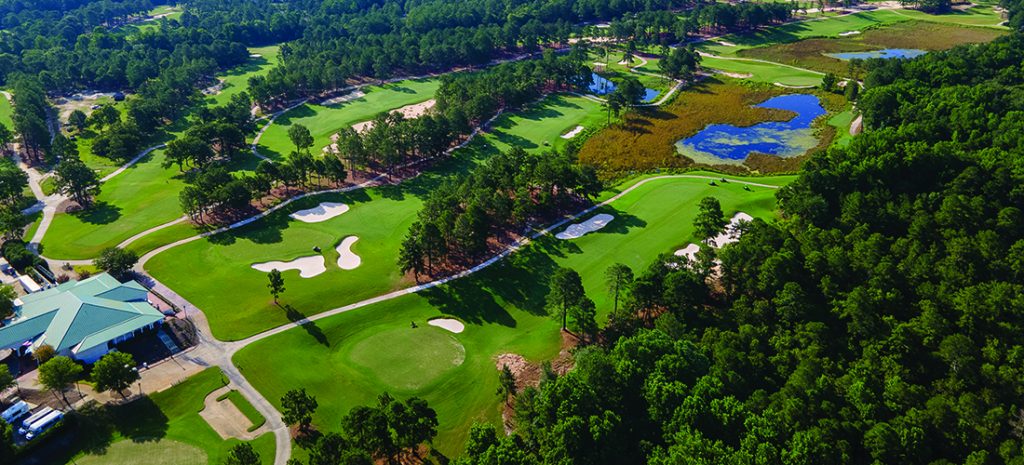
Fazio was given just over 400 acres of land punctuated by stark elevation changes, pine forests and wetlands located a mile-and-a-half north of the village of Pinehurst. The course was envisioned to cater to the resort golfer with a private club experience distanced from the masses of the five-course resort core. Six months after that first phone call, Fazio was standing on what would become the seventh fairway during one of his regular site visits from his home in Hendersonville, North Carolina.

“There’s a variety of changes in yardages, visuals, ups-and-downs,” Fazio said. “The par-3s are varied. You’ve got a flat par-5 in the second hole and then the sixth is uphill with a strong slope from right to left. There are strong par-4s, easier par-4s.

“The wonderful thing is, you come to every hole and say, ‘This is different.’”

The golf marketplace certainly agreed with Fazio. In Golf Digest’s 2011-12 listing of America’s 100 Greatest Public Courses, it was ranked No. 68. But the course lost some of its luster over time, prompting resort officials in 2019 to consult with Fazio and the associate designer who worked on the course originally, Blake Bickford, on ideas to tweak the experience. If nothing else, a course with a quarter of a century on it needed a thorough agronomic spring cleaning.

“Our first thought was to tie it into the 25-year anniversary,” said Bob Farren, Pinehurst’s director of golf course and grounds management. “But COVID shut that idea down. After No. 4 opened and was so well-received, we needed to give No. 8 a boost to keep it as the third big draw with No. 2 and No. 4. Tom and Blake took a look and said they were confident the design was still there.”

The course closed for the summer of 2022, and the work was handled in-house. More than a hundred trees were removed to allow sunlight and airflow, and now from the clubhouse veranda overlooking the back nine, the visuals open up to the 12th and 13th holes half a mile away. Thatch and organic matter were removed from the tees and fairways with a technique called “fraise mowing” to improve drainage and bounce. The bunkers were rebuilt and the greens planted with TifEagle bermuda grass, with some of the crowns in the center of greens softened after years of buildup from top-dressing.

“The fairways are firmer and drain so much better,” Farren said. “We were having too many cart-path-only days with the drainage system being 25 years old. The course now plays firm and fast, just as it was designed. The vistas have been opened up, and that’s a dramatic difference.”

The clubhouse was remodeled as well, most notably with an enlarged and enhanced dining and bar area. Walk in the front door and a new walnut bar sits straight ahead with a glass window behind, opening up the long-range views of the back nine. 

“We wanted to capture the view of the golf course upon entry,” said Calvin Buckley, Pinehurst’s director of projects and planning. “When you walk in, you have a sense of place. It’s a place people want to gather and be communal and look out over the golf course. It’s a nice center point.”

Another initiative on the horizon is the proposed ground-breaking in early 2024 of resort housing — cottages with four and/or eight bedrooms situated between the ninth and 10th fairways. They would have the distinction of being Pinehurst’s first and only resort-owned rooms directly on a golf course.

The challenge and intrigue of the original Fazio design are intact, only now embellished. There is still the dicey demand to hit approach shots with wedges off downhill lies on the first and seventh holes. It’s uphill into the green on three, downhill off the tee on four, a properly aimed shot with a draw apt to catch the speed slot and carom far down the fairway. There is the puzzle of the long par-5 sixth, with its double-dogleg and canted fairway. There is the riddle of how much marsh to clip off in aiming your tee shot on the par-4 13th. You still need a bazooka to pound your approach uphill on the par-4 18th.

Four and nine are parallel par-4s carved out of open fields that once were the shooting range of the Pinehurst Gun Club. Wire grass and native vegetation dot the hardpan sand between the parallel fairways, turning what Fazio felt was the worst aesthetic feature of the course at the beginning into one of its highlights. Later, 12 through 15 skirt an old pit and then connect with a freshwater marsh. Seventeen is a long-hitter’s and gambler’s delight — a 487-yard par 5, downhill, with a small lake front-right of the green. Two good shots might get you home; a good drive and bad approach might leave you in the drink.

“Every hole you come to, there are options,” Fazio said.

Because there is no real estate, the course is relatively compact, with little distance between greens and tees. It’s an excellent course to walk.

“It’s rare today to get the land and place the golf course first,” Fazio said. “That really makes this project special.”

“At No. 8, it’s just golf,” added Matt Barksdale, Pinehurst’s director of golf. “It’s just so peaceful, calm and tranquil.”

The Pinehurst storyline over the next year will justifiably revolve around the resort core and the 2024 U.S. Open on No. 2, and the opening of No. 10 in the springtime. But thanks to Tom Fazio’s design acumen in 1995 and a course and facility refreshening a quarter of a century later, No. 8 will quietly go about its business of being a terrific round of golf and a pleasant change of pace.  PS

Chapel Hill based writer Lee Pace has written extensively about Pinehurst since the late 1980s and has authored a half dozen books on Sandhills area golf. Write him at leepace7@gmail.com and follow him @leepacetweet. 

Golftown Journal

Golftown Journal

Three of a Kind

Keeping Pinehurst in good hands

By Lee Pace

Photographs by John Gessner


Think of it: Trump Pinehurst. JW Marriott Pinehurst Resort. Omni Pinehurst. Imagine checking your brokerage account for HLT and wondering if the Hilton chain stock got a nice bump during the weeks Pinehurst was hosting the U.S. Open. Oh, what could have been — and thankfully has not.

Consider this: Pinehurst (the resort and club) is 128 years old. It has had three owners. Three. In a golf industry expected to crest $41 billion by 2025 and with mergers and acquisitions flying like golf balls on Maniac Hill, Pinehurst has remained safely ensconced in private hands, never having to make its quarterly nut.

Certainly, it’s not all been peaches and cream, particularly those two years in the early 1980s when a consortium of banks was in charge after Diamondhead defaulted on its loans. Depressions and recessions generated some heartburn.

Trivia question: What do soda fountains, shipping containers and country club management have in common? Those were the arenas in which entrepreneurs that would eventually own Pinehurst generated their fortunes. James Tufts, Malcom McLean and Robert Dedman Sr. each grew from modest means to fabulous business success. 

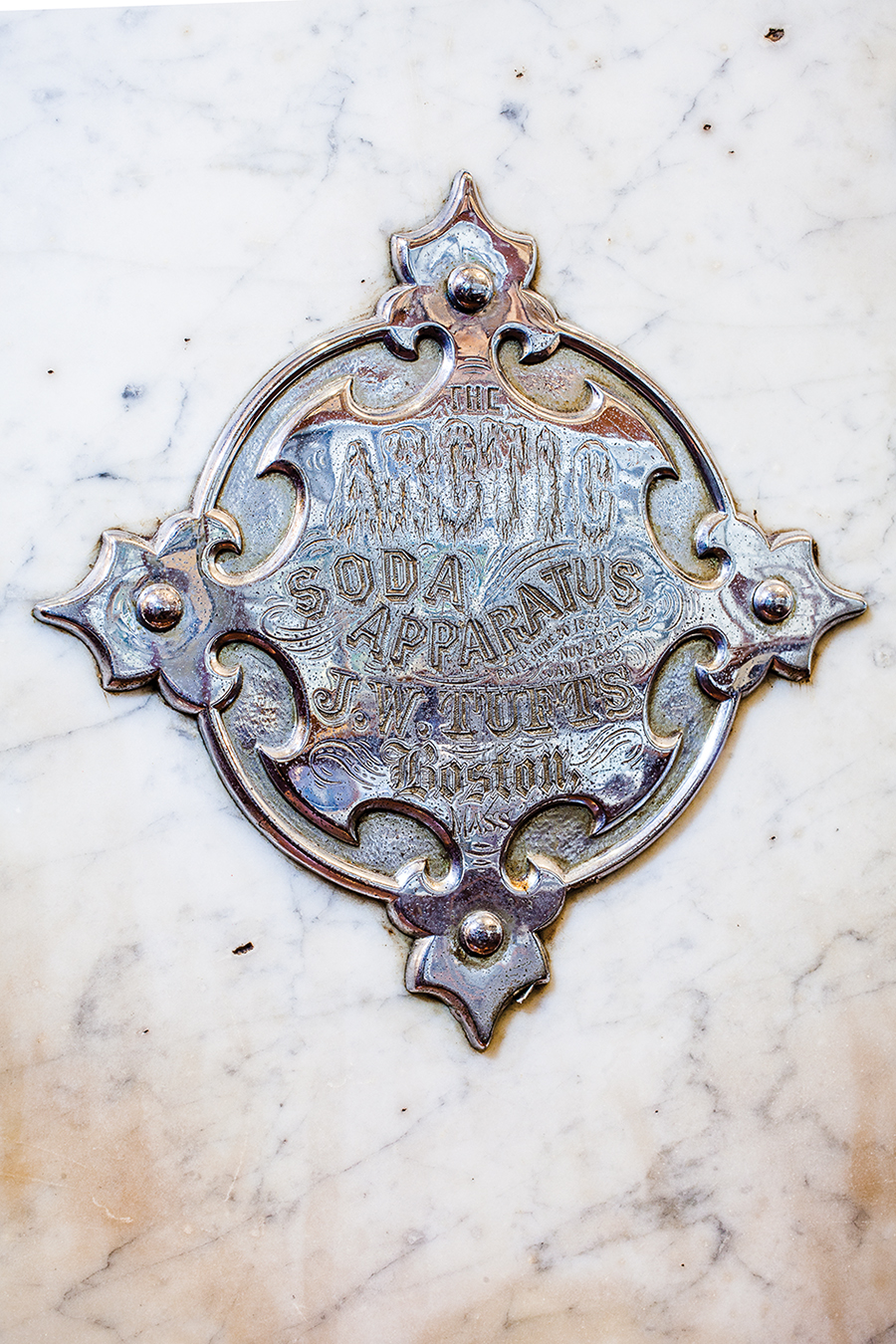
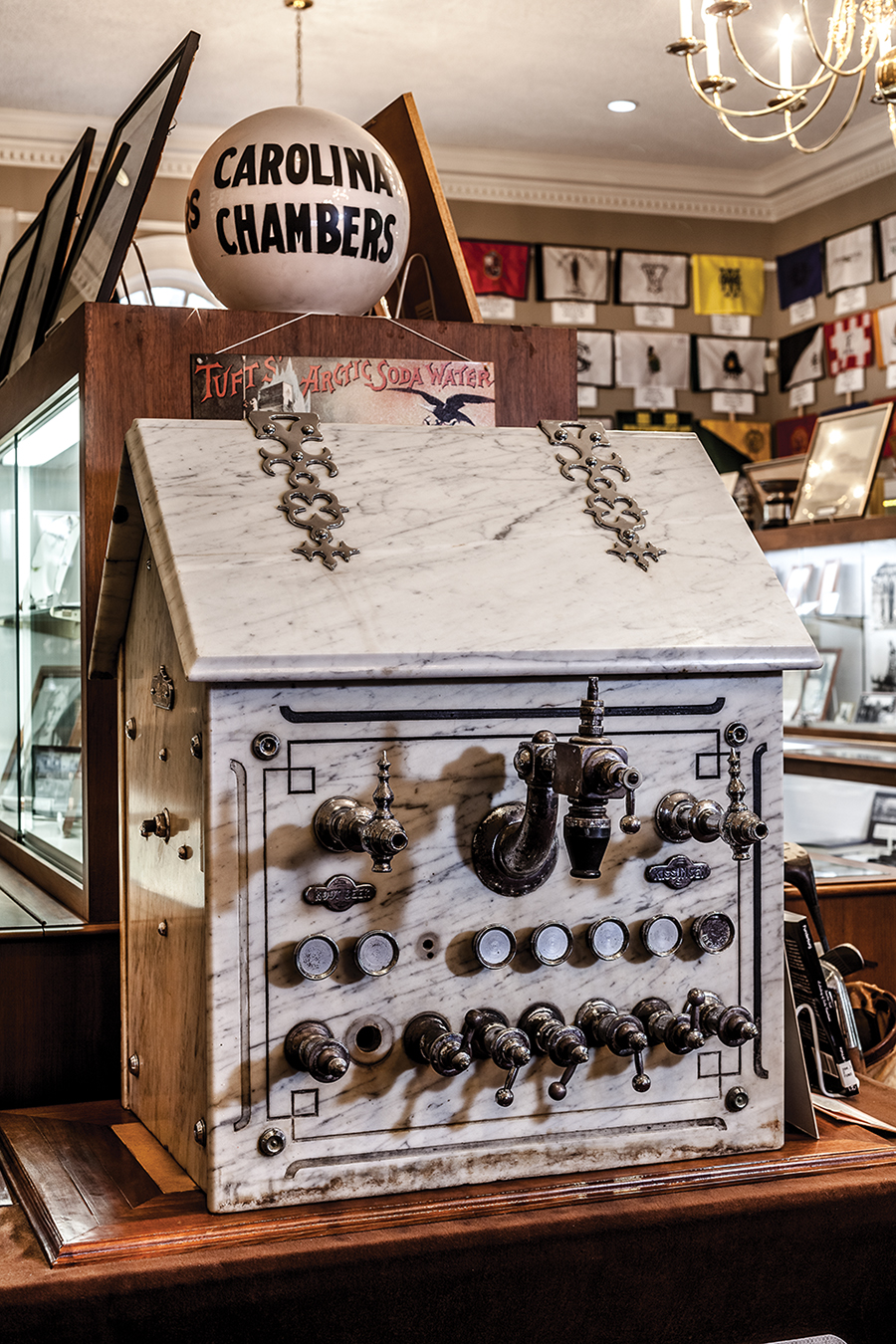
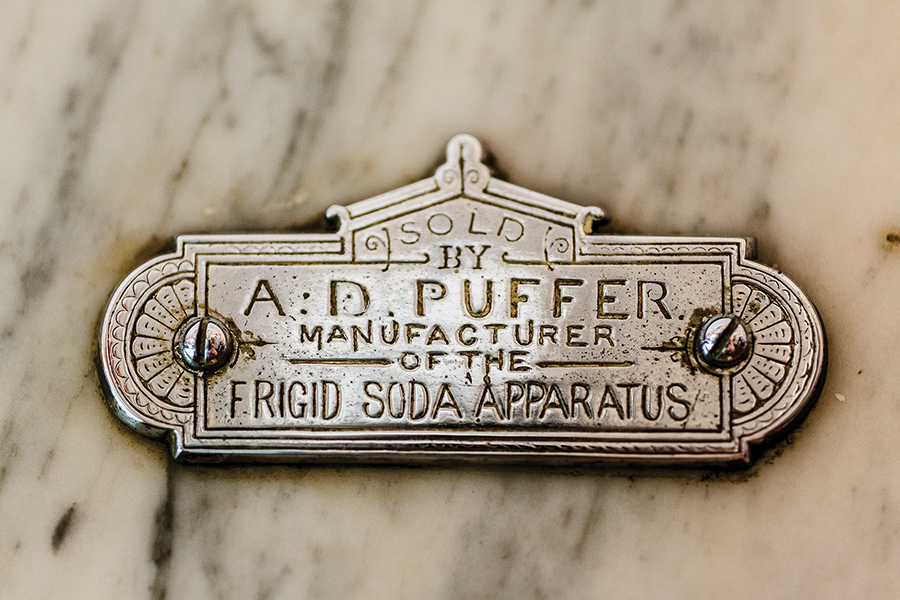
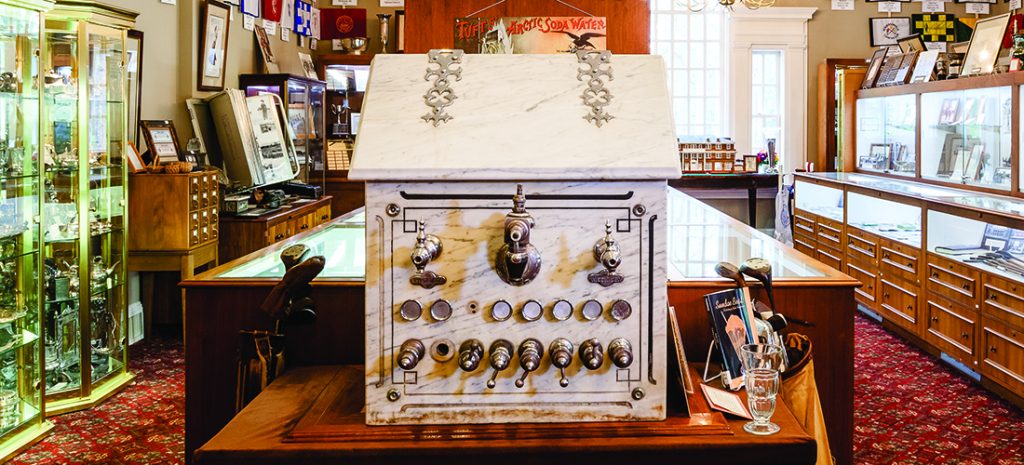
Tufts was born in 1835, grew up in the Boston suburb of Charlestown, and at age 15 was apprenticed in an apothecary shop. He established his own shop by age 21 and soon expanded to five stores. He recognized the soda fountain was a key part of what would become the modern drugstore, with customers not only buying medicine but also the drinks and ice cream concoctions from the Italian marble and silver-plated foundation apparatus.

When he was 27, Tufts developed and began manufacturing and selling the successful Arctic Soda machines through his new venture, the Arctic Soda Fountain Company. And since parts of his popular fountains were silver-plated, that led him to manufacture an extensive line of silver-plated pitchers, dishes and table accessories. Many of these items, including an Arctic Soda machine, are on display at the Tufts Archives in Pinehurst. 

He became the first president of the American Soda Fountain Company through a merger in 1891, and with his wealth and business success secure, he turned his focus to other pursuits and philanthropy. The concept that became Pinehurst was the result of him wanting to create a resort in the southern United States for those like him of frail health to escape the bitter New England winters. 

Golf was not part of the original vision that opened in late 1895, but it came to his attention in 1897 that guests were hitting small rubber balls with wooden sticks around the dairy fields and, in the process, aggravating the cows. Tufts built nine holes as a lark in 1898, enlisting the help of Dr. D. LeRoy Culver, a Southern Pines physician who was an avid golfer, had played in England and Scotland, and understood the gist of what a course should look like. “A nine-hole golf course has been laid out after the famous St. Andrews, near Edinburgh, Scotland,” The Pinehurst Outlook reported in February 1898.

And the dominoes started falling. 

Tufts died in 1902 of heart disease, and the evolution of Pinehurst remained in the hands of his son Leonard and three grandsons. In the late 1960s, the aging of that third generation, the specter of inheritance taxes and the need to spend millions of dollars to upfit what was an aging resort in a time of rapid growth of the golf industry led the Tuftses to sell the resort and club. They found a buyer in a man who grew up 30 miles away and had just collected $160 million for selling a company that had revolutionized the shipping industry. 

Malcom McLean grew up on a farm near Maxton, graduated from high school and went directly into business for himself, purchasing a used pickup truck for $120 with savings from his gas-pumping job. He and two of his six siblings — sister Clara and brother Jim — then opened McLean Trucking Company, expanding their fleet and hauling crops from farm to market, and empty tobacco barrels from market back to farm.

Another early job during these mid-1930s formative days of what would become the second largest trucking firm in the country was in Pinehurst. McLean had the account of Pinehurst Inc. to haul guests’ luggage from the train station in Southern Pines to the hotels in Pinehurst.

Frustrated in 1937 by having to wait days at a New Jersey dock to unload his cargo of cotton onto a ship bound for Istanbul, McLean groused “there must be a better way” than loading a ship with cargo piece by piece. The idea fomented for two decades until he acted on his instincts in 1956 — that of designing cargo containers that could be easily separated from the truck bed and then neatly stacked on a ship designed to haul hundreds of containers at a time. He bought a fleet of old tankers, converted them to cargo ships and was off on his next venture, one that would revolutionize the shipping industry.

The eventual sale of Sea-Land Service Inc. to R.J. Reynolds in 1969 made the McLeans multi-millionaires. One of McLean’s sidelines was the resort and residential development concern that he named the Diamondhead Corporation, and that had projects underway in Mississippi, Alabama and Georgia. He remembered Pinehurst fondly from his luggage hauling days and eventually bought the resort from the Tuftses on Dec. 31, 1970, for the price of $9.2 million.

Diamondhead expanded the golf offering, building course No. 6 in the mid-1970s, creating the new World Golf Hall of Fame, and getting Pinehurst No. 2 back on the PGA Tour from 1973-82. It also embarked on an aggressive home-building expansion, with one ill-conceived and hideous idea to build condominiums within the No. 2 course that was thankfully thwarted by a lawsuit. In time, the company lost the resort to bankruptcy proceedings, opening the door for Dedman to step in in 1984. 

Dedman was a self-made billionaire who worked his way from the farmland of Arkansas to law school and on to creating a business that owned and operated country, athletic and city clubs around the world. He was working as in-house counsel for Dallas oilman H.L. Hunt in the mid-1950s when he perceived an opportunity to spread the country club concept beyond the 1 percent of elite citizens. He saw hundreds of thousands of potential homebuyers and members amid the masses of people now working, earning a good living and raising families in the post-war ’50s.

Dedman soon learned of the inefficiencies inherent in the operation of clubs, most of which are governed by committees of members. They are experts in their chosen fields — doctoring or lawyering, for example — but limited in their expertise of club business. One of his favorite sayings was, “For God so loved the world that he didn’t send a committee to save it.” He brought systems and procedures to running his clubs. By bundling its buying power across dozens of clubs, his company found significant savings in purchases from fertilizer for golf courses to food for dining rooms.

Club Corporation of America eventually would own and operate more than 200 clubs total and have assets of more than $1.6 billion. Dedman died in 2002, and his son, Robert Jr., took over. The Dedman family sold its interests in what had become ClubCorp in 2006 but kept Pinehurst. 

“Where would this place be if not for Robert Dedman?” Jim Hyler mused during his 2010-11 tenure as president of the USGA. “He might have been the one man in golf at the time who could pull it off. He literally saved the place.”

“The Dedmans are the ‘anti-Wall Street,’” added Mike Davis, the USGA’s executive director from 2011-21. “They don’t think about the next quarter. They think long term. You cannot put a value on that. We simply don’t have another relationship like the one we have with Pinehurst. They genuinely care about the game of golf, preserving and protecting the game.”

Tufts to McLean to Dedman. Interesting to ponder over the next year as the new Golf House Pinehurst opens and Pinehurst No. 2 plays host to its fourth men’s national championship.  PS

Chapel Hill based writer Lee Pace has written extensively about Pinehurst since the late 1980s and has authored a half dozen books on Sandhills area golf. Write him at leepace7@gmail.com and follow him @leepacetweet. 
Golftown Journal

Golftown Journal

Ticking the Ross Boxes

When a passion becomes a book

By Lee Pace

It was an inauspicious beginning to a golf career, this young investment banker with a background in surfing and tennis being recruited by his boss to fill out a foursome on Pinehurst No. 2 one day in 1973. Brad Becken’s job at Goldman Sachs was managing the firm’s business in the Southeast, so he regularly attended the North Carolina Banking Association annual meeting at Pinehurst.

“Usually, I played tennis with the wives,” he says. “The second year, my boss needed a fourth for golf. I said, ‘I don’t play golf.’ He said, ‘Well, you are today.’

“I was in sneakers with rental clubs and picked up nearly every hole so as not to ruin it for the others. I thought that was it for my golf career. But the next year, he asked me to play again. I thought, ‘You’ve gotta be kidding.’ It was the same result.

“He mercifully never asked me again. My first taste of golf and Pinehurst was memorable, though not necessarily in a good way.”

Becken did, in fact, get serious about golf when he moved to Los Angeles with the firm in the mid-1980s and later joined Los Angeles Country Club. Over the next three decades, business travel and client relationships were perfect for fueling an evolving love for the game. He retired in 2005, and he and wife, Ann, decided to return to the East, settling in Chapel Hill.

He joined Chapel Hill Country Club and, in 2010, took a friend visiting from Los Angeles to play golf. Afterward club pro Rick Brannon suggested they play Hope Valley, a 1926 Donald Ross design just a few miles away in Durham. Brannon made a phone call to set up a game, and Becken was enthralled with the old-world charm of the neighborhood and the way the holes were laid on the hilly ground by Ross, working without heavy machinery and his design perspective spawned from his roots in Dornoch and St. Andrews, Scotland.

“I immediately figured out I’d joined the wrong club,” Becken says. “I liked the variety at Hope Valley and the fact that the design never felt forced. And like most Ross courses, you didn’t feel overwhelmed if you weren’t a great golfer. You don’t have to be a great golfer to enjoy a Donald Ross course. For a higher handicapper like I am, there is a way to play his courses. You can plot your way around and enjoy it.

“I told Rick how much I liked it and he said, ‘Well, there are a lot of Ross courses in North Carolina.’”

Becken soon joined Hope Valley and set off to quench this newfound thirst for Ross golf courses. He joined The Donald Ross Society in 2012, was elected to the board in 2016, and in 2023 was serving the last of a five-year run as president. He realized around 2015 that he had played some 225 Ross courses.

“Up until then, I had never really contemplated trying to play them all,” he says. “I was having fun and the more I saw, the more I liked it. So I kept at it. I was averaging 120 courses a year.”

By the end of 2017, Becken had played 359 Ross courses, give or take a few that have closed since the quest began, and thought he had played every Ross course that was still open. Then he came across Chris Buie’s book, The Life & Times of Donald Ross, and learned there were about half a dozen more courses he’d not played. He knocked them out so his total stands at 365 courses.

“As this was going along, people said, ‘You ought to write a book,’” Becken says. “I said, ‘I’m a banker, not a writer.’ As president of the Ross Society, we were always getting questions. We would sort of answer them, and I said, ‘We can do better than this.’ I started analyzing what I had learned. By then I had copies of every hole and green drawing I could find. I might have had 1,500, plus all the photos I had taken and collected. Finally, I started to think about a book but didn’t know where to get started.”

In 2020, he was invited by Golf Club Atlas editor and co-founder Ran Morrissett to answer a litany of questions for the site’s “feature interview.” Morrissett provided the questions and Becken sat down to write his answers.

“That was January 2020,” says Becken, 75. “That got me started. I just expanded from there. That finally got me going.”

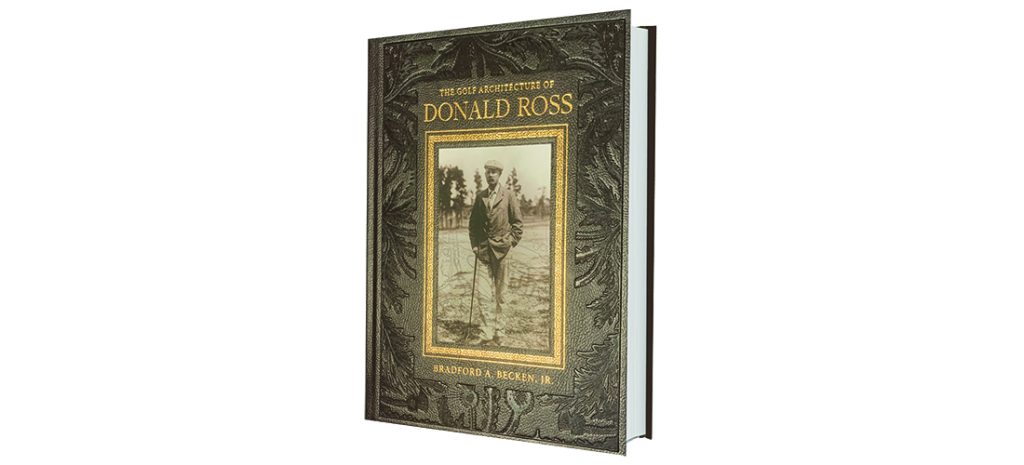
The result is a book published in the fall of 2022 by The Classics of Golf. The Golf Architecture of Donald Ross is as mammoth as Ross’s body of work from 1900 through his death in 1948 and Becken’s quest to play them all. It’s 9×12 inches, 352 pages, an inch-and-a-half thick, weighing three pounds. The tome includes gorgeous spread photos of Ross courses, hole diagrams, telegrams and correspondence. Becken draws heavily on his ever-present camera as he played the courses and his insatiable appetite for detail. He created a spreadsheet matrix covering more than 30 data points and observations for each hole and uses that research to analyze the parts that result in the whole of Ross’s design inventory.

“As the title suggests, this is a comprehensive look at Ross’ architecture from routings to bunker schemes to greens to breakdowns of his best one-, two- and three-shotters,” Morrissett says. “If you are an architecture geek, you will get lost in the book for days.”

Of local interest he notes there are no drawings for three of Ross’ Sandhills-area masterpieces — Pinehurst No. 2, Pine Needles and Mid Pines.

“Since he spent half of each year in Pinehurst, where he could supervise the work, there was no real need for drawings,” he says.

Further, Becken uses his inventory of Ross drawings and his experiences having putted across more than 6,500 Ross greens to draw an opinion on the nature of No. 2’s ubiquitous inverted-sauce putting greens. 

“Many Ross fans associate the turtleback greens on Pinehurst No. 2 as emblematic of his work, but that is not the case,” Becken asserts. “In fact, looking at the body of available drawings, such greens appear to be more of an exception, leading some to attribute the shape to years of top dressing and other maintenance practices rather than what was originally envisioned by Ross.”

An important tenet to the book is Becken paying tribute to The Donald Ross Society, which was formed in 1989 and since has grown to some 500 Ross aficionados. Proceeds from sales of the book are being divided equally between The Donald Ross Society Foundation and The Tufts Archives in Pinehurst. He estimates the Ross Society has given $150,000 to the Tufts Archives over the years, and the group recently gave $30,000 to Asheville Municipal Golf Course for a master plan to serve as the cornerstone to a $3.5 million renovation of the 1927 Ross course that had fallen on hard times.

“We believe Donald Ross was superior to any golf course architect practicing today, and his courses are works of art that should be treated as such,” Becken says.  PS

Chapel Hill-based writer Lee Pace has written histories of five clubs featuring Ross courses — Pinehurst, Pine Needles, Mid Pines, Forsyth Country Club and Biltmore Forest Country Club.  Reach him at leepace7@gmail.com and follow him on Twitter @LeePaceTweet. 

Golftown Journal

Golftown Journal

On the Clock

Going to the head of the line

By Lee Pace

A putt will drop at Los Angeles Country Club late on the afternoon of June 18 and another U.S. Open champion will be crowned. Some 2,500 miles to the east, knowing eyes will watch the proceedings and acknowledge the gesture: Next.

“That’s when it will really sink in,” says John Jeffreys, course superintendent of Pinehurst No. 2, site of the 2024 Open. “It’s exciting and energizing when you think that it’s actually here.”

Golf course architects Bill Coore and Ben Crenshaw, who orchestrated a significant restoration of No. 2 in 2010-11, have each had occasion to come through Pinehurst in the winter and spring of 2023 and walk the grounds. To reflect on the work they did over a dozen years ago and how it was received for the back-to-back U.S. Open and U.S. Women’s Open in 2014 and how it’s been maintained since brings a smile to their faces.

“It just looked to me like, ‘Go play,’” Coore says. “The presentation is just perfect. It hasn’t changed in nine years. If anything, it’s better.”

Adds Crenshaw: “It looked fabulous. There’s not much to do. The bunkers look great. The wire grass is terrific. The greens are beautiful. The outskirts are just striking. Every time I get around it, I get inspired.”

Jeffreys takes comfort knowing there’s not a massive to-do list during the year leading up to a major championship. There are no rough lines to draw in, no lush grass to promulgate, no tiger tees to bring out of storage.

“The main difference from ’14 is the greens,” he says. “This is the first time the U.S. Open has been played on ultra-dwarf Bermuda. Generally they’re a little firmer, a little faster than what we had before. We’ll concentrate leading up to the competition on improving the quality of the ball roll-out, working on the texture of the leaf.”

John Bodenhamer, chief championships officer for the USGA, remembers that the lead-up to the 2014 Open was warm and dry. The unknowable is what Mother Nature will deliver next spring.

“We were blessed with weather that allowed us to control the firmness and playability of course No. 2,” he says. “If the weather is different, we will adjust accordingly. The one aspect of No. 2 that we will be studying very closely once again are the sandy natural areas. We will want to make sure that they are prepared in a manner that presents an appropriate penalty for missing the fairway. Otherwise, we plan to just let Pinehurst be Pinehurst, as Donald Ross’ masterpiece will surely produce another memorable U.S. Open.”

A decade after the last Open, the golf world will find a village and club much the same as it ever was — like in 1962, when the USGA first came to Pinehurst for the U.S. Amateur and in 1999, when it staged its first U.S. Open on Donald Ross’ tour de force. There are still no golden arches in the village. There are still no right angles at street intersections. The carillon in the Village Chapel still rings on the hour.

“How many times today do you hear some hot young star in any sport hear the name of a Hall of Fame player in his sport and say, ‘Who was he?’” muses former USGA Executive Director David Fay. “When you get to Pinehurst, that changes. It’s impossible not to get caught up in the great history. It’s everywhere. It’s where you look, it’s in the air, it’s in the turf, it’s in the images on the walls, it’s in the church bells. You can almost feel the ghosts coming out.”

But there is so much that’s different, too, since the golf world saw Martin Kaymer cruise to victory the third week of June 2014 and Michelle Wie capture her first major championship seven days later.

For one, by the time the first tee shot is struck on June 13, 2024, the USGA itself will have opened a new Golf House Pinehurst on ground just a 5-iron from the resort clubhouse. Ground was broken in June 2022 on a building designed to harken to Pinehurst’s earliest structures, with wide verandas punctuated by columns, hipped-roofs, dormers, textured clapboard and shake siding.

There’s a new traffic circle between the Carolina Hotel and the golf hub to the south, and the big one at a major thoroughfare intersection just over a mile to the east toward Southern Pines has been widened and has some 50,000 vehicles moving through it daily. (And shouldn’t we call them “roundabouts” in tribute to their British heritage and Moore County’s considerable Scottish roots?)

Out the south door of the clubhouse is the innovative nine-hole Cradle Course that opened in 2017 and has since been a Disneyland of golfers of all ages sipping beverages and clipping wedge shots, and beyond that is the No. 4 course rebuilt by Gil Hanse to blend seamlessly with its No. 2 neighbor — wiregrass here, craggy bunkers there and nary a straight line on the horizon. The Carolina Hotel will have completed a multi-year renovation with all the guest rooms rebuilt and new public areas with a coffee house, porch seating and fire pit.

One building on Magnolia Road in the village sat vacant in 2014, its former existence as a steam plant long buried, and just down the street, the Manor Inn remained boarded up, this 1923 inn a victim of the 2007-09 global financial crisis. Visitors now can eat smoked pork with a terrific blackberry-infused barbecue sauce at the Pinehurst Brewing Company, which opened in 2018 in a building that in 1895 provided steam for the town. The Manor was refurbished and reopened in 2020 with finely appointed guest rooms and the North & South Bar proffering a menu of nearly a hundred whiskies from around the world.

My, the dominoes that have fallen since that 2009 decision by Pinehurst owner Bob Dedman Jr. and resort President and COO Don Padgett II to tear up the elegantly groomed No. 2 with all its grass, water and fertilizer and crack open a time machine that would take the course back to its mid-1900s heyday. 

“I thought, what a bold stroke to attempt to take Pinehurst No. 2 back to the way it looked for all its glory days — after sand greens, that is, we don’t want to go quite that far,” Fay says. “It would be much the same as how Oakmont showed its boldness by pulling out all those Christmas trees planted in the 1950s.”

Padgett began to wonder after the 2005 U.S Open at Pinehurst if the excessive use of long grass to fight immense ball flight distances had gone too far on a course known for having width and a visual palette that perfectly reflected its Sandhills heritage. Fortunately, Fay and fellow USGA officials Mike Davis and Jim Hyler agreed with the idea and were on board in February 2010 when Coore & Crenshaw began rebuilding the course. The look, playability and the course’s ability to stand up to modern talent and equipment were applauded by competitors, spectators and the national media.

Padgett uses the word radical to describe what’s happened in Pinehurst in the last decade-plus.

“Bob Dedman feels like it all started with No. 2, we were doing something radical to the place,” says Padgett, now retired and playing a lot of golf in Pinehurst. “There’s nothing more radical than what we did. It changed the way he thought about things. ‘Let’s go all-in’ was the mindset. Pinehurst is way more current than it’s been probably since the 1940s. In recent times, we’ve always had a hint of a museum. It’s not that way anymore. Pinehurst still draws on its history, but the actual experience is pretty current. There’s a lot of life in the place.”

There’s a new No. 10 course being built by Tom Doak on a site in Aberdeen; it will be open in time for the golfing deluge in June 2024. Coore was seen in April rattling around the woods himself, poking for ideas and a routing for Pinehurst No. 11.

Of course, there are lots of details to iron out over the next 12 months. Like, how will the practice range, situated on the south side of the clubhouse for the 2014 Open, fit onto The Cradle? How will the USGA tip its cap to the 25-year anniversary of Payne Stewart’s victory in 1999? How will it look and feel when the World Golf Hall of Fame, launched in Pinehurst in the early 1970s, comes full circle and reopens in the new USGA facility? And how many of the par 4s will Jon Rahm reach with his driver? 

Look toward Los Angeles on Father’s Day and try not to get run over by the falling dominoes.  PS

Lee Pace has written over four decades about all of the golf architects at Pinehurst, from Donald Ross to Gil Hanse. Contact him at leepace7@gmail.com and follow him on Instagram at @leepaceunc.

Golftown Journal

Golftown Journal

Ten Spot

Adding to the Pinehurst allure

By Lee Pace

Tom Doak was about 10 years old when he started taking family vacations and tagging along on his father’s business trips from their home in Stamford, Connecticut, to eminent golf destinations like Pebble Beach, Cypress Point, Harbour Town and Pinehurst. He had learned to play on a local municipal course named Sterling Farms, and it didn’t take much for the golf bug to bite. And there was a nascent sense that designing golf holes might be a cool way to spend a life.

“When I was a kid, all I wanted to do was to go outside and play,” says Doak, now 62. “When I discovered golf, I was amazed that such a large parcel of land would be devoted to a game. It’s a safe space where it’s OK to be excited about a good shot, to curse a bad one, to laugh at your friends, and to revel in the beauty of nature.”

One of his father’s business associates gave him a copy of the World Atlas of Golf, an early 1970s tome with text and images of courses from California to Scotland, Florida to Australia. “I pretty much memorized the book,” he says.

On a visit to Hilton Head, Doak picked up a small hole-by-hole guide to the Harbour Town Golf Links, which had just opened a few years earlier and was the toast of the PGA Tour and the golf world for the way Pete Dye routed the holes through the Spanish oaks and around the fingers of Calibogue Sound. The hole descriptions were crafted by Charles Price, the noted golf historian who was living in Hilton Head at the time, and was friends with Dye and island developer Charles Fraser.

“It had a diagram of every hole and a description of how to play it, just two or three sentences, very simple, something a 10-year-old could understand perfectly,” Doak says. “It hit me — this is why golf holes are built a certain way. I saw all these great golf courses at a very early age, and I thought, ‘They are all great, but they are totally different.’ I got a great understanding early on that there’s not a simple answer to why a golf course is great.”

He’s been chasing those answers ever since.

Doak pursued a degree in landscape architecture at Cornell University, graduating in 1982 and spending a year in the United Kingdom visiting more than 170 golf courses and caddying for two months at St. Andrews. He landed a job on Dye’s construction crew and helped build Long Cove Club on Hilton Head, then spent six years building courses for Dye while moonlighting as a writer, establishing a niche with Golf magazine as its golf course architecture chief. In the late 1980s, he began compiling short critiques of the hundreds of courses he’d played and seen and giving each a numerical rating of one through 10. The musings were first intended just for a network of friends but evolved into his 1996 book, The Confidential Guide to Golf Courses.

Pinehurst No. 2 was featured in that book as one of 31 courses designated as “The Gourmet’s Choice,” certainly with a 10 ranking, and Doak lauded the layout and the Donald Ross-designed green complexes. “Unquestionably his masterpiece, and a certifiable work of genius,” Doak wrote.

After the 2005 U.S. Open at Pinehurst, sometime around the 2008 U.S. Amateur held on No. 2, Doak was traveling through North Carolina with an intern on his now-established Renaissance Golf Design firm. They stopped in Pinehurst, and he walked the golf course again.

“I first saw No. 2 in the early 1970s,” Doak remembers. “I was 10 or 12 and was visiting with my parents. I’ve seen it at various times over 40 years. It’s always been one of my favorite golf courses. What made it cool was a bunch of little stuff, little ridges, touches of wire grass here and there. The strategy of the fairways stood out. There used to be places on the golf course where the fairway would widen out behind a bunker and you’d try to get way over in the left corner of the fairway to get at a pin on the right side of the green.

“On that last trip, it seemed like all of that had gone away. They were narrowing it up for major championships and getting the grass to grow nice and thick. All the texture and angles were gone. That’s what made the golf course — all the subtleties. I said that if I were to rate it again, I’d give it a seven or eight — but not a 10.”

He put his opinions out for the world to see on the message board of GolfClubAtlas.com. Among the comments he made was that No. 2 looked “like an aged relative with dementia. It was sad.”

Tom Pashley, at the time the marketing director for Pinehurst before ascending to the CEO position in 2014, saw the comment and printed out the entire thread of the message board conversation and passed it along to Don Padgett II, the president and CEO of the resort from 2004-14. Doak’s opinions were among a handful of observations that marinated in Padgett’s mind and led to the club hiring Bill Coore and Ben Crenshaw in the fall of 2009 to strip the course of its monochromatic green, and restore the textures and haphazard features and boundaries of the holes as they existed when Ross arrived at his final routing in 1935.

On this Sunday morning Doak smiles over breakfast at the Track Restaurant in Pinehurst, just minutes before driving 2 miles south to the site of the No. 10 course he’s building for Pinehurst on property that once housed the Dan Maples-designed Pit Golf Links. 

“I didn’t expect them to listen to me, and I know that’s not the best way to get the job to help them fix it,” he says. “But it was a great golf course and was not going in the right direction, and I just said something. Fortunately, Bill and Ben said pretty much the same thing, just much more subtly.”

In the decade since, the design operations of Doak and Coore & Crenshaw have each thrived as the golf marketplace has embraced their respective styles of hands-on attention and their preference to working on rugged, sandy landscapes, where ample drainage allows a limitless palette of design features. While working on the No. 2 restoration in 2010-11, Coore routed a course for Pinehurst that was going to be Pinehurst No. 9 — this before the resort bought the former Pinehurst National course in 2012 and made it No. 9. Now in the post-COVID glow of the golf industry explosion in general and the robust demand among members and the traveling public for Pinehurst’s existing nine courses, Pinehurst owner Robert Dedman Jr. and Pashley believed in 2022 it was time to pull the trigger on the new course.

Coore and Crenshaw was booked several years out but Doak had a hole in his schedule that would allow him to move construction personnel to Pinehurst in late 2022 and through the fall of 2023 to build a new course that could open in time for the 2024 U.S. Open set for Pinehurst. Now the little kid who was smitten with the look of Pinehurst No. 2 in the early 1970s before it got greened-over is leaving his mark in the Sandhills, positioning his course among some 40 others he’s designed, including the standouts at Pacific Dunes, Cape Kidnappers, Barnbougle Dunes, Ballyneal and Streamsong. 

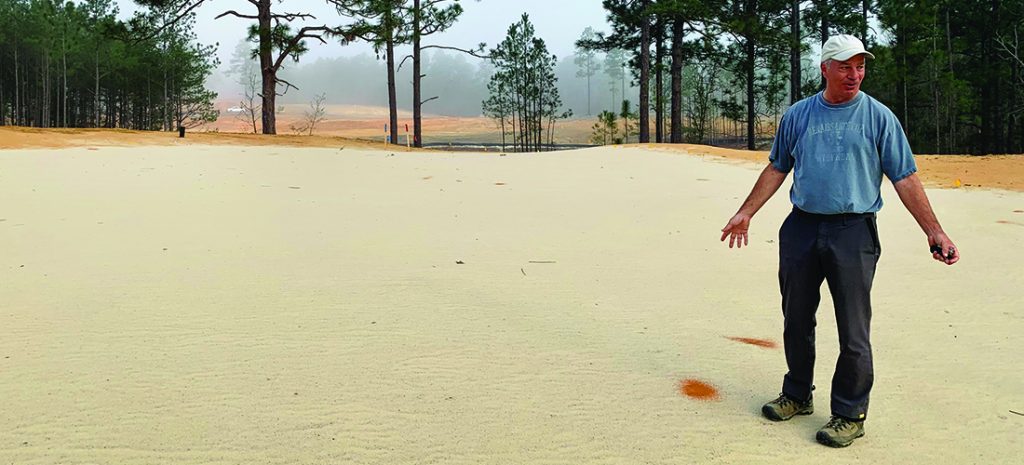
“We’ve got a really cool piece of land,” Doak says as he navigates his truck through the sand and rough-cut passages of the pine forests and the stone quarry that sat there before a golf course was first built in the 1980s. On this morning, crews are just days away from beginning to sod some of the early fairways.

“This ground has more variety and a different feeling to it than any of the other courses at the resort,” Doak says. “There is a lot going on on this land. The course will start gentle, then it gets more dramatic at the quarry and then reaches the high ground, where we’ve got great long-range views. It’s a big piece of land, and you feel like you have all the pieces of the puzzle. It gives you the opportunity to do something really different.”

Doak is undaunted putting his ideas into the dirt in such close proximity to one of the world’s top courses. He designed Sebonack Golf Club on Long Island in the shadows of two of his favorite courses, The National Golf Links and Shinnecock Hills Golf Club, and built The Renaissance Club next door to Muirfield on the Scottish coast. He ignores the pressure and embraces the inspiration.

On one of his visits to Pinehurst, he stayed in Dornoch Cottage, the former Donald Ross home sitting near the third and fifth greens of No. 2.

“I’d take our guys out early in the morning and look at those greens,” he says. “‘This is what a great green looks like,’ I’d say.”

On this Sunday morning, Doak admits to having experienced a challenging day on Friday with his shapers, trying to get a couple of greens to look just so.

“I said let’s go to No. 2 and see what great greens look like and get back in the game.  PS

Lee Pace has written over four decades about all of the golf architects at Pinehurst, from Donald Ross to Gil Hanse. Contact him at leepace7@gmail.com and follow him on Instagram at @leepaceunc.

Golftown Journal

Golftown Journal

A Masterful Gift

The memories of Augusta in April

By Lee Pace

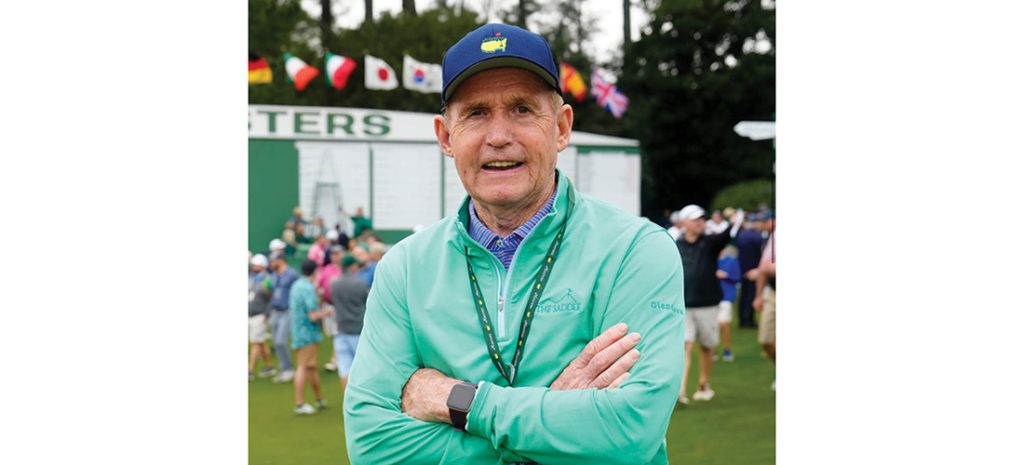
This month, for the 65th time, Lou Miller will enter the gates off Washington Road in Augusta, Georgia, buy a ham and cheese on rye sandwich for $3, and begin his annual treks up the hills and through the dogwoods of Augusta National Golf Club, sometimes clocking as many as 27,000 steps in a day. The grass will tweak his nostrils, the sun warm his face as he remembers jostling to watch Arnold Palmer back in the day, and seeing a limping Ben Hogan make birdie on his final hole in the 1967 Masters.

“There’s nothing like smelling Augusta National on Monday morning,” he says. “From there it’s a very special week. There’s nothing like it.”

The 79-year-old Miller attended his first Masters in 1958 at the age of 14 and has been to every one since (even wrangling access on the Saturday of the 2020 tournament held in November, when public attendance was suspended in wake of COVID-19). He grew up in Augusta, so to a golf-minded youngster the rite of spring known as the Masters was a big deal.

“I first played the golf course when I was still in high school,” Miller says. “The superintendent at Augusta National at the time was from our county, so he got us on. We played with no pins, but we still felt like we were playing in the Masters.”

What a first Masters experience that was, following a young Palmer around the course as he won the first of his four Masters, edging Doug Ford and Fred Hawkins by a shot.

“I like to say I was a ‘private’ in Arnie’s Army my first year,” Miller says. “By the time he won his second Masters in 1964, I was a ‘lieutenant colonel.’ I saw most every shot he hit those two weeks. Then you had Jack Nicklaus come along and challenge him. They fought it out for years, and Jack took the throne.”

Tickets weren’t difficult to come by in those days. He found various avenues into his early Masters and in 1965 started buying them himself — and he’s been on the list ever since.

“I had no money and couldn’t afford it, but I bought those Masters tickets anyway,” he says. “They were like $25 a ticket, and that was for the whole week. Shortly after, they announced they were oversubscribed and closed ticket sales. I was lucky.”

Miller in the early 1990s was moved by the awe and wonder on the faces of some guests he brought to their first Masters. He began a tradition of using his tickets on at least one tournament day to introduce first-timers to Augusta National. This month, he’ll escort two of his grandchildren onto the grounds. Over the years, he’s invited employees at clubs where he’s worked (today he’s president of Old Edwards Club in Cashiers, North Carolina), various friends and family members, and a few hard-luck stories of people whose lives would be brightened by a venture to the Masters.

“There’s nothing like taking somebody and seeing the awe and excitement and thrill of that person getting there the first time,” Miller says. “It’s seeing the excitement of the first thousand people on Monday morning. Every single time, it exceeds their expectations — whatever those were.

“I just love watching these first-timers smile. That thrill never grows old.”

By now some of you Pinehurst old-timers are going, “Lou Miller . . . where do I know that name?”

Miller was vice president and director of golf at Pinehurst from 1976-81. This was five years into the ill-fated Diamondhead era of Pinehurst’s history (the founding Tufts family sold the club and resort to Diamondhead on the last day of 1970), and one of Miller’s first jobs was figuring out why there were never enough tee times on Pinehurst No. 2 when the hotel was rarely at full capacity.

“The previous spring they were sending 150 people a day to other courses in the area,” Miller says. “The first people we fired were the starter on No. 2 and the guy working the starter tower over the clubhouse. We figured out they had direct phone lines and were selling tee times to golfers and pocketing the greens fees. We also had guests and members double-booking times. They would make one for first thing in the morning and another for later in the day. If they were too hung over, they’d show up for the second one.

“It was a mess.”

Miller was the first in an official capacity at Pinehurst to begin dreaming of a U.S. Open contested on No. 2 and actively courting USGA officials about the idea. He traveled to Baltusrol Golf Club for the 1980 U.S. Open to press flesh, and visited with USGA officers P.J. Boatwright and Frank Hannigan when the association conducted the World Amateur Team Championship on No. 2 and the U.S. Amateur at the Country Club of North Carolina later in the summer.

He even arranged a meal function with the USGA brass and Pinehurst’s new general manager.

“This guy was new to the job and said, ‘Oh, we don’t want outside events,’” Miller remembers. “‘We don’t need them.’ You talk about taking a nice warm shower and having cold water dumped on you. I wanted to throw him through the window.”

Miller left Pinehurst just as the banks were taking control of the distressed resort (later to be resurrected by the Dedman family and elevated gradually to its current status with three Opens already in the books, five more to come, and the USGA less than a year away from opening Golf House Pinehurst). Today he’s busy in Highlands overseeing a luxury inn and spa, a Tom Jackson-designed golf course, and a new 12-hole short course called The Saddle. He attended the Carolinas PGA annual meeting and trade show in Greensboro in February, then drove to Pinehurst the next day.

He played The Cradle short course, which was in part the impetus for building a similar venue at Old Edwards. “We wanted an amenity where three generations could play golf together, where you could be serious or play hit-and-giggle,” Miller says.

He sought out guys he’d hired nearly half a century ago, like Larry Goins at the resort clubhouse bag drop, and David Stancil downstairs working the carts and storage. He inspected the recently refurbished lobby and public area of the Carolina Hotel — quite the contrast from when Miller left in 1981 and the hotel was decorated with the greens and golds and shag carpet of the era.

“I love to hug the guys I know, smell the place, check everything out,” Miller says. “That hotel is gorgeous. They did an unbelievable job.”

Lou Miller’s a lucky man indeed. Seventy-nine and still going strong with memory banks full of Augusta and Pinehurst.   PS

Lee Pace’s first book on the history of golf in the Sandhills, Pinehurst Stories, was published in 1991. Follow him @LeePaceTweet and write him at leepace7@gmail.com.

Golftown Journal

Golftown Journal

The Show Must Go On

Golf’s merchants get back to business

By Lee Pace

It was the final day of the 2020 PGA Show in Orlando when news hit American shores that the streets of the Chinese city of Wuhan had fallen silent, with some 11 million people put under tight quarantine after a mysterious illness began circulating in a wet market a month earlier. Little did the clubmakers, the apparel vendors, gadget innovators and the 40,000 visitors to the golf industry’s premier trade show realize their world would come to a screeching halt in six weeks as COVID-19 gripped the globe.

The PGA Show was canceled in 2021, ending a streak of conclaves dating to 1954, when vendors sold wares out of car trunks at a winter PGA golf tournament in Dunedin, Florida. A scaled-down version was held in 2022, with some 15,000 attendees and half the usual number of exhibitors. 

Yet the health of golf remained robust during the pandemic. A foursome in the great out-of-doors was Exhibit A for social distancing. The game has gotten even stronger — witness Pinehurst Resort saying in January that nine golf courses aren’t enough.

And the 2023 PGA Show in Orlando in late January reflected that with a remarkable rebound of its own. The Orange County Convention Center was back to near-full capacity, and the golf industry flocked en masse and sans masks to another edition of old home week. 

After two days of trekking the aisles and wagging the chin, I came away with some ideas on swinging faster, practicing more effectively and walking more comfortably.

Swing Hard: Marty Jertson is a club designer for the PING manufacturing company based in Phoenix, a PGA of America member and an occasional qualifier for PGA Tour events and major championships. He missed the cut in the 2018 PGA Championship at Bellerive Country Club and was frustrated by seeing other pros bomb tee shots a half-wedge shot farther than him. 

“I packed my bag that Friday feeling debilitated,” Jertson says. “My life’s goal was to play the weekend in a major. I knew then I didn’t stand a chance if I didn’t get some distance — a lot of distance.”

Through his work designing more than 100 clubs and balls for PING, Jertson was friends with Sasho MacKenzie, an authority in golf instruction and the biomechanics of speed generation. MacKenzie had been compiling data over several years on overspeed training (swinging a headless golf club as hard as possible) and overload training (swinging a headless club that weighs more than your driver).

They combined Jertson’s clubmaking acumen with MacKenzie’s science and created the prototype for a product that would be launched in February 2021 as The Stack System. Jertson did the work over 2018-19, qualified for the PGA at Bethpage Black in 2019, and made the cut with his newfound length.

“A year later at the PGA, I had tons of speed,” he says. “I was hitting it 30 yards longer. That was the key to me making the cut and having a dream week. It was borne out of personal frustration. Sasho had all the research, the algorithms, the data, the exercise science behind it.”

The device they have created features a training club and five weights that enable 30 unique weight combinations. The accompanying iPhone app sets up your program according to your needs and guides you through setting the club and workouts with the proper weights. Three times a week, you go through a training regimen swinging the club and training your body and mind to generate speed.

“We took my own frustration and passed it on to the market,” Jertson says. “We’ve literally helped thousands of golfers.”

Lean Left: Have trouble keeping your weight on your left side (for a right-handed golfer) on chip and pitch shots? The Chipping Plate from Why Golf is a foolproof antidote. You simply stand on the bright orange plate and address your shot with your weight on your left side. If you move off the ball, the base of the plate will tilt to the right. Instant feedback.

Why Golf is headquartered in Escondido, California, and pledges with its golf training aids to “make the hardest sport less hard.” The company’s display booth featured one sign saying, “Suck less at golf.”

“To stop chunking the s**t out of your chips, keep at least 2/3 of your weight on your front foot throughout the swing,” reads the descriptive passage on the company order page. “When you do that on the Chipping Plate, it’ll stay flat. If you don’t, it will tilt back. If you still aren’t getting it, you’d best consider taking up a different sport.”

The company’s Pressure Plate works on the same concept with the full swing and helps you transfer your weight to your left side early in the downswing. Why Golf also introduced at the PGA Show the Arm Alarm, which uses wristbands and an attached cord to give real-time feedback on arm structure while helping golfers keep their elbows close to each other throughout the swing.

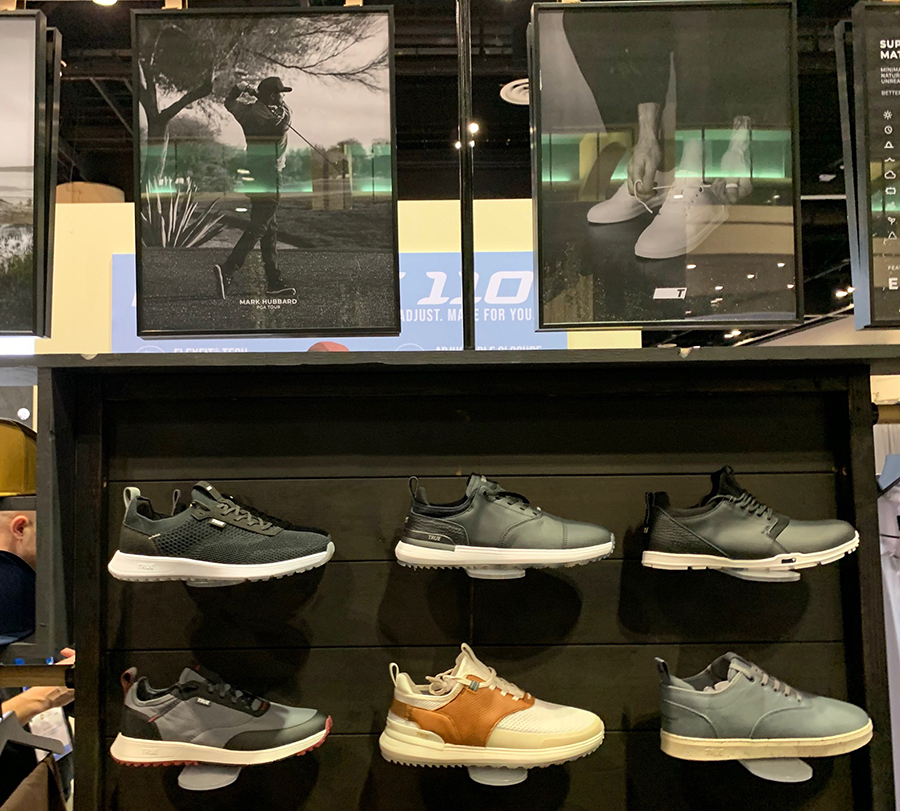
Tread Lightly: True Linkswear is the Cadillac golf shoe for the walking golfer.

The company set out in 2009 with Ryan Moore (the PGA Tour golfer) and brother Jason to make the consummate golf shoe for walkers, with Jason saying that traditional golf shoe manufacturers built “the equivalent of dress shoes — over-engineered, techy-looking foot cages.” They have built a business around selling shoes that look and feel more like an athletic shoe with outsoles designed and built so a golfer can better feel the terrain with his feet. The shoes arrive in a brown box with the words “Enjoy the Walk” printed on the top. 

“Ever had that sensation you can read the greens under your feet?” Jason asks. “These shoes allow the player to feel the course like never before.”

I met Moore at the PGA Show in 2018 while writing Good Walks and came away with a pair of the company’s headliner Knit I shoe, an ultra-lightweight shoe that the company touted as feeling like you were wearing a sock. Now the Knit III has been introduced. An enhanced midsole keeps your feet more secure during the swing, and the reinforced heel pad makes it impossible to get a blister.

“We took everything that worked in the early shoe and made it a little better,” says company executive Brandon Wallach. “There is slightly more athletic shaping. There is a new compound midsole that gives you more stability in your swing. And we’ve eliminated the chance of a slight rubbing on the heel. Thirty-six holes — no problem with this shoe.” 

The only downside of the Knit models are they are not waterproof. So if you’re playing on a Southern summer morning with the Bermuda rough heavy with dew, True’s waterproof models are a better fit. The Lux Hybrid was introduced in Orlando and is made with the same knit material so it breathes and lets air in, but it’s waterproof so it keeps the moisture out. It features a stylish leather saddle on either side of the uppers.

It’s just a slightly better mousetrap. The Orange County Convention Center was full of those at the PGA Show. It had to be to keep up with the appetite of a hearty golf market.  PS

Lee Pace has written Golftown Journal since 2008. Contact him at leepace7@gmail.com and follow him on Instagram at @leepaceunc and on Twitter @leepacetweet.

Golftown Journal

Golftown Journal

Pick Your Poison

Everyone needs a go-to

By Lee Pace

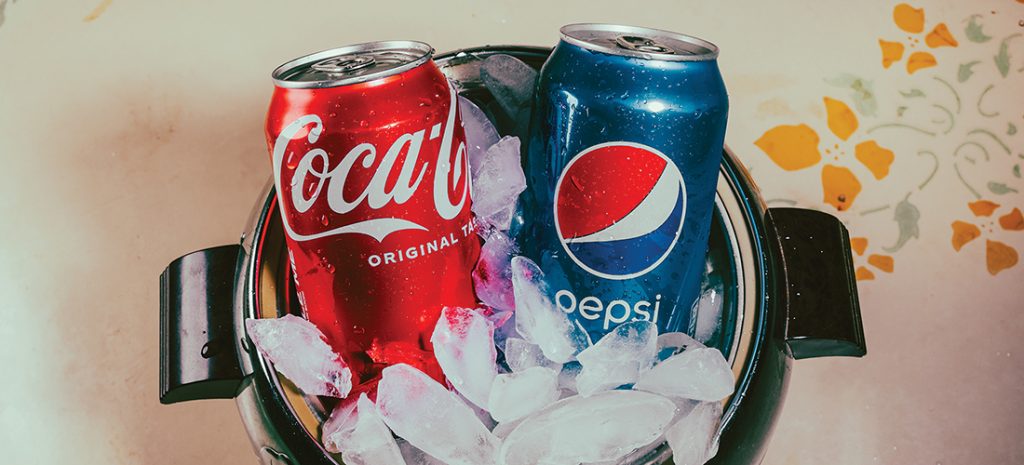
Pick one: Beach or mountains? Charcoal or gas? Dog or cat? Coke or Pepsi? Thin crust or thick? Sweet tea or unsweet? Forged or cast? Draw or fade? I lean toward the former in each pair but admit to some negotiating room when Linville beckons in the heat of August. But certainly cast in stone are charcoal, dogs and the idea that a golf ball hit with a slight right-to-left flight pattern for a right-handed golfer is by far the Rolls-Royce of golf shots.

“You only hit a straight ball by accident,” the great Ben Hogan once proffered. “The ball is going to move right or left every time you hit it, so you had better make it go one way or the other.”

History and the Hall of Fame can present arguments on both sides of the issue, but without question many of the finest players in the game have preferred the fade, among them Jack Nicklaus and Tiger Woods. Perhaps it was not as much liking the left-to-right shape as it was abhorring the extreme version of the opposite curve — the snap hook.

“I hate a hook,” Hogan said. “It nauseates me. I could vomit when I see one. It’s like a rattlesnake in your pocket.”

Davis Love Jr. taught his son Davis III an upright swing, “and you’ll never have to worry about a hook,” he said. Bruce Lietzke won 13 times on the pro tour wielding a power fade that earned him the nickname “Leaky.” Lietzke prided himself on saying, “I play one shot. That’s all I need.”

Lex Alexander played collegiately at Wake Forest University in the mid-1970s and made friends with Lietzke, a University of Houston golfer. Alexander was a young assistant pro to Claude Harmon at Winged Foot Golf Club in the late 1970s when Lietzke would come through when the PGA Tour was in the New York area.

“The 17th at Winged Foot is a long par-4, dogleg right,” Alexander says. “I would give him the line and he would then unleash one of his long towering fades to that exact target, and I will never forget how far his ball went. With a good drive, I’d have 200 yards into the green. Bruce started his tee shot toward the left rough, it curved right-center and left him an 8-iron.”

In Pinehurst, for many years one of the great ambassadors of the fade was Harvie Ward, the two-time U.S. Amateur champion from Tarboro who spent the last 15 years of his life living in the village of Pinehurst and playing a lot of golf at Forest Creek Golf Club.

“One of the nicknames we gave Harvie was ‘Carvie Ward,’” says Chuck Cordell, one of Ward’s best friends and a frequent golf companion. “He had a very weak left-hand grip, and his duck hooks were in the left side of the fairway. Most of the time he hit it straight down the middle with just a whisper of fade. He had a very compact swing, but pound-for-pound he could hit it as far as anyone, only straighter.”

Ward began working with Payne Stewart in 1985, and they had a productive four years, but in 1989 Stewart said he wanted to master both shapes in the manner of Seve Ballesteros, certainly one of the great shotmakers of all time.

Ward didn’t agree.

“I told him I thought it was good to know how to work the ball, but you still needed to have the one shot that you could depend on,” Ward said. “I told him you don’t want to go around the golf course hitting one left-to-right and the next one right-to-left. You go down that road and one day you’ll come to the last hole and not have anything to depend on, that it would jump up and get you.”

To my personal sense of feel and style, there’s nothing like a draw. There’s nothing as mouth-watering as a left-side hole location or a dogleg left hole. There’s nothing like the crisp slice of turf and the tiny speck flying high against the blue sky, turning ever so lovingly and gently from right to left. A 3-wood picked off the ground is perhaps the litmus test of a well-oiled and precise swing, and a 3-wood cleanly struck with a gentle draw is golf’s utopia. Real men hit a draw. Drawers of the ball eat steak, faders get quiche.

A draw is the offspring of a good grip, an athletic address, an on-plane path, the proper closing of the clubface at impact and extension down the line afterward. Gads, man, but you’re standing inside your swing, so how else can you hit the ball?

Hank Haney, who began his golf instruction career at Pinehurst in the late 1970s and later acquired clients as diverse as Woods and Charles Barkley, says a perfectly on-plane swing can do nothing but produce a draw for that every reason.

“You want to contact the inside part of the ball with the clubface closing as it comes through in order to start your little draw to the right of the target,” Haney says. “This is a fact. I’ve never heard a teacher dispute this point.”

John Gerring won the Atlantic Coast Conference golf title in 1957 for Wake Forest and went on to become a longtime club pro in Atlanta, Detroit, Asheville and Spartanburg, and a well-respected golf teacher. He carried the nickname “Dr. Hook,” borne of his proclivity to play and teach a right-to-left ball flight.

“The hook has two advantages,” says Gerring. “It’s longer and it’s more forgiving. It’s more forgiving because the angle of approach is shallower.”

Jack Burke Sr. used to teach that “you only own the inside half of the ball,” that you had to find a swing that let you come from inside to square to the target. Harvey Penick once told Don Wade of Golf Digest that he thought it was a myth that a draw would not stop as quickly as a fade if — and it’s a big if — the ball was struck cleanly and properly and not pulled.

Of course, many will argue these points, mainly because if you over-cook a draw, you’re left with a screaming hook that is bereft of backspin and any sense of direction. Have more careers been sidetracked over too much Old Crow or too many duck hooks? It’s probably a dead heat.

“You can talk to a fade, but a hook won’t listen,” Lee Trevino once famously observed.

Trevino was haunted as a young man on the hardscrabble Texas public courses by an out-of-control hook, and he marveled one day in 1963 when he was invited to Shady Oaks Country Club in Fort Worth while watching Hogan hit practice balls. Hogan had exorcised the demon hook in the mid-1940s by finding what he called “the secret.” The essence of that mystical panacea has been debated for decades, but two elements certainly were a grip adjustment and the cupping motion Hogan developed with his left wrist, an action that put the brake on his lightning quick hand action that earlier produced so many hooks.

Trevino, a driving range attendant at the time and still four years removed from his first foray onto the PGA Tour, didn’t dare approach Hogan that day at Shady Oaks. But what he saw stayed with him for life, and he took the image of Hogan’s soft fades back to the practice tee.

“The only way I could figure out was just to grab the club and hold on for dear life,” Trevino says, inferring that the extra grip pressure from the middle two fingers of his left hand helped keep the clubface open at impact.

So there you have it, proof positive that either way works. It’s all a matter of taste. Meanwhile, I’ll look forward to pulling my 5-wood on a 185-yard par-3 with the pin hugging the left.  PS

Lee Pace has written Golftown Journal since 2008. Contact him at leepace7@gmail.com and follow him on Instagram at @leepaceunc and on Twitter @leepacetweet.

Golftown Journal

Golftown Journal

Strange Magic

Doubling your Sandhills pleasure

By Lee Pace

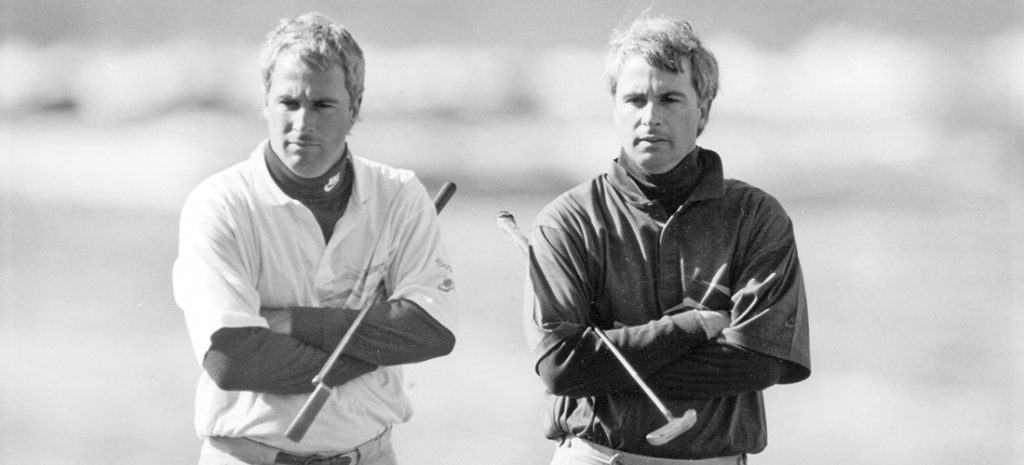
Photograph: Curtis (left) & Allan (right)

Whether it was Curtis in the 1970s winning the North & South Amateur or Allan today tootling around the village of Pinehurst, for nearly half a century the Sandhills have been close to the hearts of the Strange brothers.

“Pinehurst was just a place you fell in love with,” says Curtis Strange, the two-time U.S. Open champion. “Some of my proudest moments were some of the scores I shot on Pinehurst No. 2 back in college.”

“It’s just a great place to get away to,” adds identical twin Allan, a financial adviser living in Richmond, Virginia. “At first I knew Pinehurst just for the golf. But the more I got to know the village and the people, the stronger the draw became.”

Curtis and Allan were born in 1955 in Virginia Beach and were introduced to golf at 7 years of age by their father, Tom, a club professional and owner of White Sands Country Club. Tom also found time to play in six U.S. Opens, his best finish a tie for 48th in 1967 at Baltusrol.

“In our house, the U.S. Open always meant a great deal,” Curtis says. “Arnold Palmer told me a long time ago the Open is the hardest test in golf, and it should be, because it’s our national championship.”

Curtis joined coach Jesse Haddock’s juggernaut program at Wake Forest University, and Allan played at East Tennessee State. Curtis was a three-time All-American from 1973-75, won the 1974 NCAA individual title, and teamed with Jay Haas to lead the Deacons to team titles in 1974 and ’75.

With legendary caddie Fletcher Gaines at his side, Strange won the 1975 North & South Amateur by shaving defending champion George Burns, then followed with the 1976 crown by handily ousting Fred Ridley, now the chairman of Augusta National Golf Club.

“Fletcher and I had a lot of fun,” Strange says. “He was a great help. I really got to know No. 2 with Fletcher. Playing those greens requires a lot of local knowledge. Back then, I was just kind of booming it. I didn’t have much management or strategy on the golf course. I would hit it long and go chase it. Fletcher tried to condense that strength and manage me around. He did a great job. He read all my putts.

“I shot some really good scores and hit a lot of good shots there. When you go to a place like Pinehurst and do well, it means so much more than winning on a golf course no one’s ever heard of. My name will be on that plaque in the clubhouse for a long time.”

Strange exploded on the PGA Tour in the mid-to-late 1980s, winning back-to-back U.S. Opens in 1988-89 and eight events total from 1987-89, and his $1.1 million prize winnings in 1988 marked the first time a pro golfer had topped the $1 million mark for a single season. He played on five Ryder Cup teams and captained the 2002 United States team. In the twilight of his career, he has worked as a TV commentator and now spends considerable time fishing from his homes in Morehead City, North Carolina, and Naples, Florida, and pursuing various philanthropic endeavors. 

He’s made periodic trips to Pinehurst over the years, and in August 2022 he got a look at the construction site for the USGA’s new Golf House Pinehurst between the club and Carolina Hotel. On the second floor of that facility, the USGA is designating space for the World Golf Hall of Fame — Curtis was inducted in 2007 — which will move from St. Augustine, Florida.

“I’m so happy and thrilled with what the USGA is doing, building kind of a home away from home in Pinehurst,” Curtis says. “Add to that, the Hall of Fame is coming back to where it started. Everyone has their golf mecca. Ours is Pinehurst. The USGA . . . the Hall of Fame . . . Pinehurst No. 2 . . . it seems like a perfect fit.”

Allan, meanwhile, has taken a more circuitous route to find his own golf nirvana in the Sandhills.

He, too, played in the North & South in the 1970s, in the Pinehurst Intercollegiate with East Tennessee State, and then in the Hall of Fame Classic on the PGA Tour in the early 1980s. Then he entered private business in wealth management and eventually got his amateur status back. Throughout his working career in Richmond, he’d visit Pinehurst every half-dozen years or so.

“My wife and I had a place at Smith Mountain Lake, and after 10 or 12 years, that was kind of getting old,” he says. “We started looking at places within easy driving distance. I said, ‘Let’s go visit Pinehurst.’ She just loved the small town look and feel of the village. So did I. We came a second time. And third. The pull was pretty strong.”

Allan was also a friend of Ziggy Zalzneck, a longtime member at the Country Club of North Carolina and former club president. Over frequent visits to the Zalzneck residence at CCNC, he seriously considered joining the club. It came together about a decade ago with the Stranges buying the Liscombe Lodge on Linden Road, the winter home years ago for Gen. George Marshall, the U.S. Army’s chief of staff during World War II and later the secretary of defense and secretary of state.

“So it just kind of evolved — a home in the village and a membership at CCNC,” Allan says. “I have loved being here. The glue, of course, is the golf, but if I got old enough where I couldn’t play anymore, I’d still enjoy the village.”

Allan is a regular at CCNC and various restaurants around town, and often draws a double take, just as he did around airports in the 1980s and early ’90s when Curtis was at the height of his popularity. The twins have long shared similar body compositions, salt-and-pepper hair and facial features.

“More than a few times I’ve been asked, ‘That’s Curtis Strange, isn’t it?’” longtime CCNC Director of Golf Jeff Dotson says of Allan’s visits to the club.

“I’ve signed plenty of autographs when it’s a kid who might be disappointed if I told him I wasn’t actually the U.S. Open champion,” Allan says. “It was probably more than you could imagine. But I was fine with it. It meant Curtis was playing well and winning.”

The Strange brothers talk by phone almost daily and participated in the Patriot Foundation Pro-Am at CCNC in August 2022. They played golf with veterans and service personnel, drank a few beers and raised money for scholarships for children of parents who had lost their lives in service. Allan came away impressed with his brother’s demeanor and station in life.

“We spent two days together and I saw firsthand that Curtis was more relaxed than he’s ever been,” Allan says. “He’s enjoying life as much as he ever did, but in a totally different way. The enjoyment he had in the ’80s was pressure packed, it was climbing the mountain. Now it’s totally different, now he’s coming down the other side. I didn’t really know what this side would be like for him. He enjoys his family; he enjoys getting on the water every day that he can. He’s philanthropic in a private, quiet way. And he still pays very close attention to what is going on in golf.

“I wasn’t sure if he could enjoy this as much as he does. It makes me feel good.”

The Strange brothers will turn 68 in late January 2023. Look for them in body and spirit around the village — Curtis in name among the champions displayed in Heritage Hall at Pinehurst and perhaps even in person visiting his brother.

“I’ve seen Curtis more now because I’ve had a place in Pinehurst for eight or nine years, which is a nice unintended consequence,” Allan says. “It’s interesting how it all fell into place, starting with Curtis’ love of Pinehurst and success here. “I don’t think I’ll ever not have a second home in Pinehurst.”  PS

Lee Pace is a Chapel Hill-based golf writer and a long-time contributor to PineStraw magazine. His latest book is Good Walks—Rediscovering the Soul of Golf at 18 Top Carolinas Courses, published by UNC Press.

Golftown Journal

That Sinking Feeling

When your world goes sideways

By Lee Pace

It’s a golf shot, as Ebenezer Scrooge might say apropos of the holiday season, that reeks of an undigested bit of beef, a blot of mustard, a crumb of cheese, a fragment of underdone potato.

All is right with the world — the sun is warm, the sky is crystalline, the perfume of freshly mown grass permeates the air. The foursome’s in high gear — the bets are made, the jabs are flying, the competitive juices flowing. One-fifty to the green, nice lie, pull the 7-iron, imagine crisp contact and visualize a perfect ball flight, a waggle, a trigger, good extension, sweet tempo . . .

And then a nauseating clunk.

Instead of boring high into the wild blue yonder, the ball flies out of the right corner of your field of vision, into oblivion and certain death.

Silence from the guys.

Golf’s version of Armageddon: the shank.

It happens to the best of them.

Webb Simpson was on the eighth hole at Medinah on the final day of the 2012 Ryder Cup. He needed to hit what he termed would be a “smash 8,” got a little ahead of the ball and shanked it way right, in the direction of the fourth hole.

“I did the math and figured out that was about where Tiger was,” Simpson says. “I thought they’d have to move all those people and make a big scene. It would make no sense to Tiger, and he’d have this on me for the rest of my life. We were in the locker room afterward and Tiger came up to me and said he had a question.

“He said, ‘The wind was tricky today. Where was it blowing on eight?’ He was smiling. I knew he had me. We still talk about that.”

Ian Poulter has hit more shanks than he cares to remember, many of them on the biggest stages in golf. There was the el hosel while in contention at the 2015 Honda Classic, the duck slice at the 2017 Players Championship and the wide right in front of an unforgiving gallery at the 2018 Waste Management Phoenix Open. You can find them on YouTube if you care to venture into that cauldron of horrors.

“I’ve had a number of them at inopportune times,” says Poulter, who’s actually a good sport in talking about a shot that many golfers refuse to address by the s-word name. “I’ve hit a shank on almost every par-3 at Augusta. I tend to move my head slightly forward and my weight gets a little too close to the ball.”

Jack Nicklaus hit a shank on the 12th hole in the 1964 Masters that flew so far right, it didn’t even get wet in Rae’s Creek as it crossed the fairway.

“I’ll never forget the tension in my right arm,” Nicklaus says. “When I swung, my right arm just dominated. It never broke down.”

Johnny Miller hit a shank in the 1972 Crosby Clambake and it haunted him for years. When he won the U.S. Open at Oakmont the following year, he played the back nine while shooting a 63 with one swing thought, “Don’t shank it.”

Miller says the hardest shot in golf is the one after a shank.

“The clubface looks the size of a pea while the hosel looks as big as an elephant,” Miller says. “I contended in tournaments probably 50 times after that, and every time I was worried about shanking.”

Tommy Bolt was once playing in a pro-am with a man who was very nervous on the first tee. He managed to get his first drive in play, but he shanked his second shot. Bolt gave him a word of advice, but he shanked his next shot as well. Bolt gave him something else to try, but the result was yet another shank.

“Tommy, what should I do?” the man wailed.

“Pards, just aim to the left and allow for it,” Bolt said.

Charles Smith was warming up on the practice tee before his semifinal match in the 1960 North and South Amateur at Pinehurst. He hit a shank with his wedge. Then another. Then another.

“Your hands start to sweat and you get that awful feeling in your stomach,” Smith says.

Smith refused to pull the wedge out of the bag the rest of the day. From a hundred yards in, he either hit a choke-down 9-iron or a hooded sand wedge all day. He won the match and went on to collect the title the next day.

“I wasn’t going to risk hitting a shank,” Smith says. “God, what an awful feeling.”

Former PGA champion Jerry Barber designed and manufactured a line of irons that were supposedly shank-proof. Instead of having a round hosel connecting the clubface and shaft, the front of the hosel was flattened. So even if you connected hosel-to-ball, the ball presumably would go forward instead of sideways. The company is now out of business, but the 800 number used two decades ago still gets calls from the afflicted.

Purvis Ferree, the longtime head professional at Old Town Club in Winston-Salem, was hounded by the shanks in older age as his swing flattened with the inevitable rounding of the body and lessening of flexibility. He eventually played with two of Barber’s “Golden Touch” wedges, a no-shank 7-iron for chipping, and a bag full of fairway woods.

“Father was such a wonderful teacher, but the shank almost reduced him to a spectator,” says son Jim, himself a club professional and tour pro on the PGA Tour and Champions Tour. “There were times he could not hit a solid golf shot. One day at Roaring Gap, he gave his irons away to a caddie when he got to shanking.”

In one celebrated story they still tell around Old Town, Purvis went out for a regular match with Malcolm McLean, the trucking magnate and owner of Pinehurst Resort for a decade in the 1970s. The bet was that if McLean could win any one hole, he won the match. On the first hole, Ferree shanked several shots around the green and wound up in the very divot he made with his first shank. He picked up and conceded the hole and the match to McLean.

Jim Ferree was a club professional in Pittsburgh in the 1980s when one of his members, a doctor, saved his golf game by acquiring a set of the Barber irons. When the member read in Golf World that Barber’s company was going out of business, Ferree helped him acquire a backup set in case something happened to the original clubs. Several months later, Ferree was at the doctor’s home for a cocktail party and wondered if the man still had the irons. The doctor led Ferree into a walk-in vault in his bedroom, where the irons were tucked away along with his wife’s jewels and furs.

Just goes to show you the lengths a man will go to protect his cure to the abominable shank. If you’ve never hit one, count your blessings. If you have, please don’t let this harmless little narrative pollute your mind the next time you address a 100-yard approach.  PS

Lee Pace has written about golf in the Sandhills for three decades. His newest book, Good Walks — Rediscovering the Soul of Golf at 18 Top Carolinas Courses, is available at area bookstores and through UNC Press.