Golftown Journal

GOLFTOWN JOURNAL

Two for Pinehurst No. 2

Visionaries join Carolinas Golf Hall of Fame

Don Padgett II
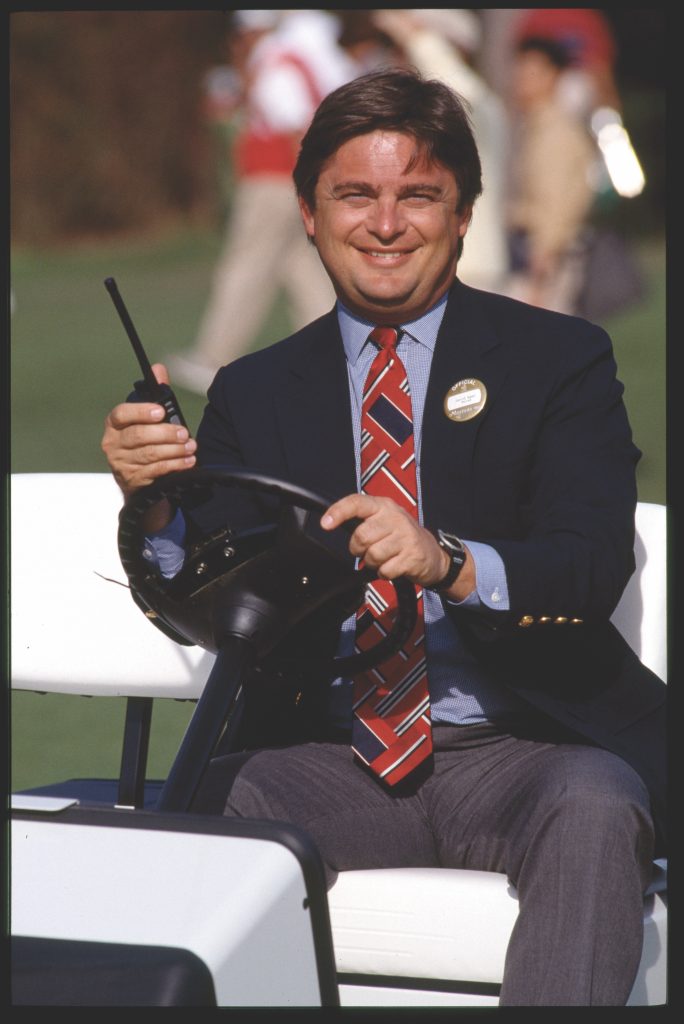
David Eger

By Lee Pace

On the fourth Saturday in March, a banquet will be held in a room at the Pinehurst Resort to inaugurate two new members of the Carolinas Golf Hall of Fame: David Eger and Don Padgett II. The venue is appropriate to the honorees because it’s just a quick stroll down the weathered steps of the clubhouse to the first tee of the No. 2 course, where Eger won the Donald Ross Junior as a 17-year-old and the North & South Amateur as a 38-year-old, and where Padgett competed in the PGA Tour’s one-and-done 144-hole World Open in 1973.

It’s also a golf course on which both left an indelible administrative imprint — Eger in helping reintroduce No. 2 to the world of competitive golf in the 1990s, and Padgett for his vision to suggest and then oversee the Coore & Crenshaw renovation in 2010-11.

“David was a key voice in the USGA’s decision to take the 1999 U.S. Open to Pinehurst,” says David Fay, the USGA executive director from 1989-2010. “He is someone whose opinions on golf courses were taken most seriously by me and others at the USGA.”

“Don created the vision for restoring No. 2 to is original state, an incredibly gutsy undertaking for a course that had hosted two very successful U.S. Opens,” says Mac Everett, the chairman of the Presidents Council that led corporate sales efforts for the 2014 U.S. Open and U.S. Women’s Open at Pinehurst. “But his vision was only a start. There remained the planning, execution and completion of the project. This is where Don excelled.”

The Carolinas Golf Hall of Fame is an august body comprised of crack golfers from the South Carolina coast (Beth Daniel) to the North Carolina mountains (Billy Joe Patton) to the Sandhills (Peggy Kirk Bell). There are professionals (Raymond Floyd to Betsy Rawls), amateurs (Harvie Ward to Estelle Lawson Page), architects (from Donald Ross to Tom Fazio), club professionals (Dugan Aycock to Gary Schaal) and administrators (Richard Tufts to Hale Van Hoy). In general, two to three new honorees are recognized every other year.

It’s not at all by design but rather providential timing that two with such deep connections to Pinehurst should be recognized one year after Pinehurst staged its fourth U.S. Open, and its first with the sparkling new USGA Golf House Pinehurst and World Golf Hall of Fame buildings sitting in the backdrop.

When Pinehurst and its owner Bob Dedman Sr. were digging their way out of the Diamondhead bankruptcy messiness in the 1980s, Eger remembers the resort presenting itself to the PGA Tour, hat in hand. He was five years into his career with the tour, running tournaments and serving as a rules official, and two of his mentors had deep Pinehurst roots — P.J. Boatwright, who ran USGA competitions, and Clyde Mangum, who lived in Pinehurst in the mid-1900s while running the CGA as executive director.

One day in 1987, Eger got a call from Ron Coffman, the longtime managing editor of Golf World magazine (published in Southern Pines at the time) who was also friends with Don Padgett Sr., who had just been appointed director of golf at Pinehurst.

“Ron invited me to come up and play No. 2 with him and Padge,” Eger says. “I had always thought of Pinehurst as a wonderful, wonderful place, but obviously it fell on hard times for a while. We were playing the course and Padge assured me if the Tour was interested, they would bend over backward to do anything within reason to have another event. Lo and behold, we were looking down the road for a new spot for our Tour Championship. Pinehurst in late October, after it had cooled off and the bent was healthy and firmed up, would be a perfect spot.”

Eger was impressed with everything he saw and heard and reported back to PGA Tour Commissioner Deane Beman. That’s how the 1991 Tour Championship came to be, with Craig Stadler beating Russ Cochran in a playoff for the title. Eger looked at the leaderboard during the final round and noted that only Stadler and Cochran were in red numbers.

“Two players under par,” he mused. “That looks like a U.S. Open.”

A portend of things to come, no doubt.

Fay was in Pinehurst that week, closely inspecting the logistics, the course, the accommodations, the traffic, the galleries and the overall ambience. He came away with a thumbs-up. He believed a U.S. Open at Pinehurst could be “Tracy-and-Hepburnesque, a match made in heaven.” That week led to the announcement less than two years later that the USGA would stage the 1999 U.S. Open at Pinehurst.

“The players loved Pinehurst, but not all of them loved the golf course,” Eger says of that first Tour Championship. “So many didn’t understand this was a golf course where you did not necessarily shoot right at the pin to get the ball close. You had to play these undulations and angles. The sooner they understood that the better. If they refused to buy into that philosophy, they were not going to score well. It was a difficult thing for players accustomed to taking dead aim at a pin to have to aim 30 feet away.” 

Padgett II watched all of this from a distance as he was running the golf operation and later the entire resort at Firestone Country Club through the early 2000s. His father retired at Pinehurst in 2002, and two years later longtime CEO Pat Corso left to establish a club management firm. Padgett II became Pinehurst’s new CEO. He kept a low profile during the 2005 Open, all the prep work having been done before his arrival, but he watched and listened closely.

Padgett, a man who had played three years on the PGA Tour, shot a 66 in the third round of a U.S. Open and kept close ties with current players, had quite the sharp eye. He    was struck by how much the buzz about the golf course seemed to have quieted between Pinehurst’s first and second U.S. Opens.

“The difference between ’99 and ’05 was amazing,” Padgett says. “So much of what you read and heard in ’99 was how great the golf course was. But in ’05, you didn’t hear that.”

Over the next three years, Padgett came to believe that narrowing the fairways of No. 2 and allowing the rough to grow had stripped the course of the essence of the Sandhills and obscured the similarities in the landscape that architect Donald Ross had drawn to his homeland in Scotland. The final nail was playing No. 2 with Lanny Wadkins in June 2008 and Wadkins ripping the course as being a shell of what it was during its so-called “golden era” of the mid-1900s.

That gave Padgett the confidence to suggest to owner Bob Dedman Jr. they flip the palette from the lush green look everyone coveted in golf to a haphazard display of hardpan sand and wire grass, gnarly edged bunkers and fairways watered only with a single-row irrigation system. The work by Coore & Crenshaw began in February 2010 and was complete 13 months later.

Eger, who left golf administration in the late 1990s to play the PGA Champions Tour — collecting four tournament wins there — was among the first golfers to play No. 2 in March 2011 after the course had been closed all winter

“The distinction between grass and the sand is wonderful,” he said. “It’s the way golf courses from the golden age looked. Pinehurst had that distinctive look of the scrub rough areas and wire grass. Putting it back took a lot of courage, but ultimately it was the right thing to do.”

The modern age of Pinehurst No. 2 is 40 years in the making. The Carolinas Golf Hall of Fame is properly saluting two of its major protagonists.

Golftown Journal

GOLFTOWN JOURNAL

The Babe

And the overlooked Slam Bang

By Lee Pace

Golf history is full of memorable win streaks — Bobby Jones and the original “Grand Slam” in 1930, Byron Nelson and his 11 straight PGA Tour wins in 1945, and of course the “Tiger Slam” accomplished over the 2000-01 major championship seasons by Tiger Woods.

Not as well known, however, is the “Slam Bang” that Babe Didrikson Zaharias compiled in 1946-47 by winning 17 consecutive golf competitions, from Texas to Pinehurst, from Miami to the nation’s capital. In fact, perhaps no source other than The Pinehurst Outlook referred to Zaharias’ unprecedented run of domination in such cutesy fashion. Run an internet search on the phrase in that context and you’ll come up dry.

But there it is in one of the Outlook’s weekly editions in early April 1947 as it chronicles the Babe “winning everything in sight on the winter and spring tour” and being “under unusual strain as she wanted to complete the most remarkable sequence of victories ever accomplished in women’s golf.”

After winning two gold medals and one silver in track and field in the 1932 Olympics, taking up golf in 1935 and playing in 1938 in a men’s pro golf tournament, the Los Angeles Open, Zaharias had regained her amateur status in golf in 1942 and was at the top of the game’s talent pyramid as World War II came to an end. She channeled her immense athletic skills into golf by hitting a thousand balls a day. Her strength and power off the tee gave her a huge edge on the field — she amazed sportswriter Grantland Rice by hitting two shots to the edge of the 523-yard seventh green at Brentwood Country Club in Los Angeles. And her confident (some would say cocky) personality augmented her aggressive, go-for-broke style on the course.

Peggy Kirk Bell, the matriarch of Pine Needles Lodge & Golf Club in Southern Pines from 1953 through her death in 2016, first met Zaharias in the mid-1940s on the women’s amateur circuit and one day got an invitation to be Zaharias’ partner in the Women’s International Four-Ball in Hollywood, Florida.

“Babe said, ‘I need a partner, and you might as well win a tournament,’” Peggy said. “That’s how confident she was. I was really nervous the day of the first round. She could sense that I was on edge, and she told me to relax. ‘I can beat any two of them without you,’ she said. ‘I’ll let you know if I need you.’ Of course, we won the tournament.”

The Babe’s winning streak started in the summer of 1946 in the Trans-Mississippi in Denver and continued with the Broadmoor Invitation and All-American Championship, and then Zaharias’ one and only victory in the U.S. Women’s Amateur, that coming at Southern Hills Country Club in Tulsa. She won the Texas Women’s Open in the fall of 1946 and took the rest of the year off, relaxing at home in Denver with her husband, George.

“I was ready to take a long layoff from golf competition and just enjoy my home for a while,” Zaharias said. “But George had other ideas. He said, ‘Honey, you’ve got something going here. You’ve won five straight tournaments. You want to build that streak up into a record they’ll never forget. There are some women’s tournaments in Florida at the start of the winter. I think you should go down there.’”

So Babe opened 1947 with wins in Tampa, Miami, Orlando and Palm Beach, then teamed with Peggy Kirk (who would marry hometown sweetheart Warren Bell in 1953) in the International Four-Ball. The tour moved northward to Ormond Beach, St. Augustine and then The Titleholders in Augusta, Georgia, victories all. She had won 13 straight when the Women’s North and South opened on Pinehurst No. 2 the second week of April.

The Outlook noted that Babe was “getting even odds” versus the entire field, and the implication was that a bet could be placed at the Pinehurst clubhouse. It reported that in an early match Zaharias “hit a screaming brassie that left the gallery gasping” and counted the spectators for the championship match featuring Zaharias against Louise Suggs at approximately 2,500 — “the largest gallery ever.”

Suggs was a 23-year-old golfer from Atlanta who had won two North and South Amateurs in 1942 and ’46 and would later become a heated rival with Zaharias on the LPGA Tour that was founded in 1950. The Outlook noted that Suggs seemed to garner the sympathy of the gallery and that it was only human nature as the fans “wanted to see the little one beat the strong one.” Suggs conceded an early putt to Zaharias and soon after Zaharias refused the same courtesy toward Suggs, who then missed the short putt.

“After this incident, the match became a real fight,” the newspaper noted.

Babe was 1-up going to the 18th hole, but her approach shot flew to the right and landed against a tree. She tried a bank shot against the tree that didn’t work out and lost the hole, extending the match.

“That almost killed me,” Babe said. “George was just going crazy. He later said, ‘I thought for sure you were going to lose one and break the string.’”

Suggs flew the green with her approach on the second extra hole, made bogey, and Zaharias left Pinehurst with victory No. 14 secure. From there she won the women’s division of an event called the National Celebrities Tournament in Washington, D.C., traveled to Scotland to win the Women’s British Amateur, and returned home to win the Broadmoor Invitation again. Her streak of 17 ended when she lost in October in the Texas Women’s Open. Soon after, Babe accepted $300,000 from a Hollywood film maker for a series of golf instructional films and turned pro.

The name Babe Didrikson Zaharias occupies a mere one line on the champions board in the Pinehurst clubhouse, but when you probe beneath the surface, it was an important win and a neat part of golf history.

Golftown Journal

GOLFTOWN JOURNAL

Buck and a Quarter

Celebrating the Queen of the South

By Lee Pace

The first day of 2025 represents the launch of year number 125 in the existence of the Carolina Hotel, the grand and glorious structure commissioned by Pinehurst founder James W. Tufts to serve as the centerpiece for his fledgling wintertime resort.

The hotel was built with four stories in a T-shape, “thus all the rooms are open to sunlight and air,” noted The Pinehurst Outlook. It had 250 individual rooms and 49 suites, each with telephones, fireplaces, electric lights, steam heat and velvet carpets. The east wing featured a music room where the Pinehurst orchestra played nightly.

“It is painted in colonial colors, yellow with white trimmings,” said the Outlook in early January 1901. “It commands a view of the whole village and the surrounding country in all directions. The grounds appropriated exclusively to the hotel are extensive and laid out in walks, bordered with trees, shrubbery and flowers. Roses, pansies, pinks and English violets are still in bloom.”

And most notably, it was located just a short stroll or trolley ride from “the most extensive and diversified golf ground in this country.”

The Carolina has been building on that legacy ever since.

The most famous names in golf have spent the night at The Carolina. Golf administrators and rules officials from the USGA and the R&A have checked in. Writers from Golf Digest and commentators from NBC Sports have been guests.

“Staying at The Carolina is like going back in time, to a much simpler time,” says Scott Straight, a frequent guest from French Lick, Indiana. “The history of this place is amazing. It’s like going to Yankee Stadium.”

“Looking at all the old photos on the walls, it’s amazing what it looked like 80 years ago and thinking, wow, all the greats of golf have come through here,” adds Charlotte’s David Williams, also a long-time regular at The Carolina.

The hotel, christened the “Queen of the South” upon its opening, has been a bucket list destination around the world of golf. It’s never looked and functioned better than it does today after an extensive renovation and upfitting that ran from November 2021 through the spring of 2024, when changes were completed in time for the U.S. Open Golf Championship.

The guest rooms have been renovated and are brighter, featuring new fixtures, finishes and custom-built furniture. The bathrooms have been expanded and upgraded with improved lighting and soundproofing. There are espresso machines on desks beneath wide-screen televisions. The previous guest rooms included large closets built originally to store the bulky trunks that travelers took by train and steamship on two- and three-week excursions. Now golfers pop in for a weekend, carry compact synthetic clothing and need only a wardrobe to hang their bags.

The lobby features new furnishings, comfortable seating areas and brighter, modern lighting fixtures that create a warm and welcoming atmosphere. The public spaces are accented by the return of notable touches from the past, such as the arched windows framing the exterior. The new design also includes updated check-in and concierge desks. There is a new coffee shop and just on the outside of the structure is an expansive patio and fire pit.

Construction workers addressing changes to the hallway ceiling as you walk from the central lobby toward the east wing discovered that some 40 feet of original arched ceiling and dormer windows had been covered up years ago. In the spring of 2024, they knocked out the drywall ceiling and removed decades’ worth of the accumulation of asbestos, sprinklers and wiring. Calvin Burkley, Pinehurst’s director of projects and planning, contacted the resort’s consultant, Glave & Holmes Architecture, for ideas on how to restore the old look.

Now as guests meander down the hall, looking at photos of Ben Hogan from the ’40s and Jack Nicklaus from the ’70s, they’ll bathe in natural light beneath a grand curved ceiling and dormer windows.

“It’s just lighter and brighter and brings a whole new look and feel to the hallway,” Burkley says. “Guests who’ve been coming here for 20 or 30 years walk through here and are just astounded. They love it. It’s such a majestic look.”

Burkley joined the Pinehurst staff in 2018 and is in charge of all construction that is “not green” i.e., those projects away from the golf courses and landscaping.

“We want to make sure this is the best place for people to come for a long time,” he says. “We want to make sure we protect the history of it; that it’s timeless, historic, relevant and forward thinking.”

The Ryder Cup Lounge was a mainstay of the lobby for years and paid tribute to Pinehurst having been the venue for the 1951 competition between the American side and the Great Britain and Ireland team. But since hosting the 1999 U.S. Open, with three more to follow over a quarter-century, Pinehurst has developed a close kinship with the USGA, rendering its interest and chance of hosting another PGA of America owned-and-operated Ryder Cup null and void.

The Carolina Vista Lounge resides where the Ryder Cup Lounge once sat and is built around an expansive, rectangular bar. Specialty cocktails salute the game of golf. “The November Nine” is fashioned after the nine points the Americans won in winning that 1951 Ryder Cup by fusing bourbon and Carolina pecans. “The Amateur” is made of mezcal, lime and pomegranate juices and chipotle syrup to salute the North & South Championship — an event open to amateur men, women and seniors that began in 1900 as a means to draw golfers to Pinehurst and publicity to the resort.

All the improvements aside, the rambling hotel has preserved one of its charms. The floors in places still squeak. And not every golf ball struck with a putter on a late-night putting session before lights-out rolls perfectly straight. May those things never change.

Golftown Journal

GOLFTOWN JOURNAL

Halfway Home

A nosh after nine

By Lee Pace

In the 1800s, David “Old Da” Anderson, at various times a caddie and greenskeeper on the links at St. Andrews Golf Club in Scotland, wheeled a wooden cart to the fourth green and sold ginger beer as golfers played the outward nine and then returned on the neighboring 15th hole. It was golf’s first refreshment stand. 

Today golfers in the Auld Grey Toon get their sustenance from a small building behind the ninth green of the Old Course. The most popular item is a pork and haggis sausage roll — a secret mix of sausage meat and haggis, baked in puff pastry topped with poppy seeds. There’s no ginger beer, but the best-seller is the club’s very own Tom Morris 1821 Lager, which is brewed and canned nearby. 

Elsewhere in Great Britain, golfers at Royal Dornoch warm themselves from the bracing North Sea with a stop at the halfway house by the ninth green for hot chocolate laced with Bailey’s Irish Creme. Nairn Golf Club is known for its stone cottage dating to 1877 — The Bothy was originally a storehouse for freshly caught salmon, and today golfers warm their hands by the fire and grab a bowl of fish chowder for the back nine.

Back on the near side of the pond, Pine Valley Golf Club in New Jersey is known for its turtle soup, Winged Foot Golf Club outside New York City for its peanut butter cookies, and Fishers Island Club on Long Island for its peanut butter, jelly and bacon sandwiches. Moving westward, Butler National outside Chicago is quite proud of its fish tacos (grouper, mahi or cod), and Castle Pines outside Denver for those thick and rich milkshakes made with Häagen-Dazs ice cream that collectively expanded the entire PGA Tour waistline during the days of The International from 1986-2006. The Olympic Club in San Francisco has one of America’s most iconic halfway house offerings — the Burger Dog features 4 ounces of beef shaped like a wiener and served on a freshly baked sourdough bun. 

Closer to home in the Carolinas, Caledonia Golf & Fish Club in Pawleys Island serves a cup of spicy clam chowder made with a Manhattan-style, tomato-based broth from a cauldron by the ninth green. Beef sliders and chocolate chip cookies are the specialties at Wade Hampton Golf Club in Cashiers. Golfers at Old Chatham Golf Club just south of Durham barely break stride reaching into the refrigerator at the turn for one of longtime cook Chenille Pennix’s chicken wraps (BBQ, Caesar and ranch among the best-sellers), and the favorite at Old Town Club in Winston-Salem is chicken salad in a foam cup with a spoon. 

Anyone who has visited a Discovery Land golf community is mesmerized and gluttonized by the opulent “comfort stations” manned by a chef and positioned on each nine. Mountaintop in Cashiers is one such Discovery property, and its signature treat is beef jerky, which starts with locally sourced beef and is pulled, seasoned and dried on-site. Other standards include a frozen margarita machine, help-yourself beer fridge, cured duck, warmed nuts, Kobe beef sliders and a sundae bar.

Forest Creek Golf Club has one of the top halfway house menus in the Sandhills. Golfers enjoy homemade cookies at the turn on its North and South courses, and during the winter a pot of chili is kept simmering. And when golfers get to the 12th hole on each course, they’ll find a barrel of iced-down apples for refreshment.

“No matter whether you’re winning or losing, a crisp, cold apple really hits the spot,” says Waddy Stokes, the club’s head professional from its opening in 1996 through 2011.

There’s also a vintage Cretors Popcorn machine in the men’s locker room — it just so happens one of the company’s founding family members belongs to the club.

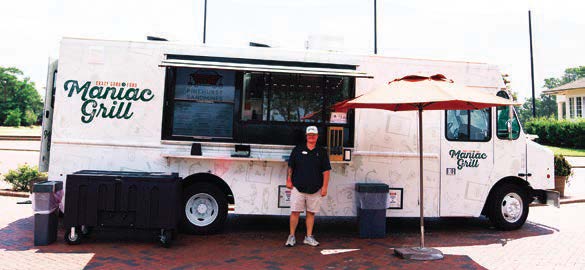
The dining scene in the Sandhills has been recently enhanced by a food truck stationed at Pinehurst No. 10, the Tom Doak-designed course that opened in May 2024. Maniac Grill fashions its name from the “Maniac Hill” moniker bestowed on the Pinehurst practice range in the early 1900s. The name on the side of the truck is accented with the slogan “Crazy good food.” For now the Maniac Grill will make its home at No. 10 with appearances around the resort and town on other occasions.

The headliner? A brisket sandwich with freshly smoked beef topped with gruyere cheese and caramelized onions, served on a crispy baguette loaf. And for dessert, peach ice cream ensconced in fresh sugar cookies. Because No. 10 is essentially a walking-only course, Pinehurst chef Thierry Debailleul designed the menu for items to be carried and eaten in one hand.

“The challenge was to create hand-carried, put-in-your-pocket items,” he says. The grill also serves a turkey sandwich with a peach barbecue sauce, hearkening, Debailleul says, to the days in the early 1900s when the land where the golf course sits was a peach orchard.

“I wanted to have a food truck forever,” says Pinehurst owner Bob Dedman Jr. “Now we have one, and it’s phenomenal.”

Golftown Journal

GOLFTOWN JOURNAL

The Golfing Curmudgeon

Things you won’t find in the rule book

By Lee Pace

The caddie meant well. He was an extrovert with a bag on his shoulder, a rangefinder in his bib and an innate desire to please. He was not even carrying my bag, but he was pulling for me every shot of the way.

Settle!

Get legs!

Fly, baby!

Spit it out!

It was restraint and composure of epic proportions that prevented me from getting in his face.

Do not talk to my shots.

I know I hit it fat. I know I skinned it over the green. I know it’s flying into the woods.

But your well-meaning exhortations accomplish one thing: They rub salt into my wounds. And golf inflicts enough pain as it is.

While we’re at it, here’s some other stuff that chafes my arse:

Get to the first tee on time. If you don’t know the secret already, you’re not going to find it with a dozen more practice balls.

Get out of the stupid cart and walk. Over three June days in plus 90-degree heat, I joined two separate groups of 50-plus golfers and we all walked. One pushed a trolley and one flirted with heat stroke, but the physical challenge was part of the attraction. There is no greater tired than having walked, carried and busted 80. (OK, I am not militant on this point, I’ll ride where etiquette or local rules mandate. I would simply prefer to walk.)

Your jokes are wonderful. Your name-dropping is fascinating. Just put a lid on it when it’s your turn to hit. And have your glove already affixed to your hand when you’re up.

Spot your ball on the green with a penny or at the least a small plastic marker that most clubs provide on the first tee or at check-in. A penny is small and doesn’t reflect sunlight and it’s been good enough for Jack Nicklaus, Davis Love III and Paul Azinger. (Nicklaus, incidentally, carries three pennies during a round; Love uses only 1965 or 1966 coins; and Azinger places his penny heads up with Lincoln looking at the hole.) Spare me your prized Kennedy half-dollar that bounces the sun like a prism or that souvenir poker chip that looks like a battleship.

Do not concede yourself that 6-footer for par when it doesn’t count for the team bet, then write it on the card and begin to think your handicap is halfway legitimate.

Do not use golf as a verb.

A single in a cart? You do not exist.

Just because the professionals playing for millions of dollars on the hardest courses under suffocating pressure have elaborate pre-shot routines and take six hours to play doesn’t give you license to play monkey-see, monkey-do. Pick a club, pick a line, give it a nice rehearsal and hit the damn ball.

Memo to TV announcers, tour pros and architects: It’s a good hole and a good course and a good shot. Must we say golf hole and golf course and golf shot? I mean, it’s not a tennis course, now is it?

Manage your temper. Unless you are working at golf to feed your family or betting more than you can afford to lose, this is a game. You play a game. Treat it as such. Count your blessings that you have the opportunity to be out in the fresh air with friends in the first place.

Learn to eye the 100-, 150- and 200-yard markers and estimate your distance. It’s not advanced trigonometry. You can figure out you’re 135 yards from the center of the green with pinpoint accuracy with some educated eyeballing.

If you don’t have an official handicap, don’t give me an “average” score on the first tee. Tell me your three best recent scores. After all, a handicap is not about averaging your scores; it’s about gauging your potential.

If you are going to give me the line on a putt, give me the speed as well. The former is worthless without the latter.

If I want color commentary, I’ll gladly listen to David Feherty. Beyond that, your scores speak for themselves; I don’t need an explanation on every shot. And if you insist on providing pithy little bromides throughout the round, invent some new material. “Nice putt, Alice,” is a wee bit shopworn.

Unless you are my partner, what club I hit on a par-3 is none of your business.

What not to wear: white golf shoes in the winter (you wouldn’t wear white shoes into a restaurant in December, would you?); white footies with black shoes (and vice versa); shortie-shorts; golf sandals; and XXX shirts if you’re a medium (that went out in the ’90s).

Quit hyperventilating after running a putt past the hole. If you’ll stay focused and follow its path, you’ll have a free read on the break coming back. And if you are gyrating and slamming a club after yanking one into the woods, don’t ask, “Did you get a spot on that one?” By the way, I don’t venture into poison ivy for my ball. I’m sure not going there for yours.

Sorry about that 5-iron landing in the bunker. But you don’t get to hit a practice shot. Ever. And live to tell about it.

OK. I’m done. And I feel much better. Until I have to figure out an excuse for the next captain’s choice invitation.

Golftown Journal

GOLFTOWN JOURNAL

We Shall Gather

There’s no need to rush

By Lee Pace

At the address of the golf swing, we talk about ball position, spine angle, grip pressure, takeaway and turn. At impact we talk about compression and clearing the hips and head position. Yet one element of the swing — under-appreciated and under-attended on the pages of golf magazines, YouTube instruction videos and Instagram golf pros — is the transition.

The top of the swing is the promised land of hitting good golf shots.

Getting too quick is kryptonite.

Taking your time is pure gold.

After all, if you’re going one direction and then want to reverse 180 degrees, you have to stop. What’s your hurry?

Renowned instructor Bob Toski tells his students to use the “Coca-Cola Swing,” employing a “pause that refreshes” at the top of the backswing.

“There should be no flash of speed at the top of your swing,” Toski says. “The club should be quiet and not bouncing. This gives you a chance to move the lower body down into the swing. You want to feel that you push the club back and pull it through. Think push, pause, pull.’”

Sean Foley, instructor over the years to noted golfers such as Tiger Woods and Justin Rose, counsels his pupils to be patient with the downswing. He uses the word “collect” in talking of the process of moving from backswing to downswing, particularly as it applies to the Englishman Rose.

“Too often, Justin gets a little tense at the top, and his transition back down to the ball is rushed,” Foley says. “Your arms should just fall from the top, rather than jerking the club down.”

Fred Couples, owner of the most liquid swing in golf and 1992 Masters champion, likes the word gather.

“Couples talks about ‘buying time’ at the top of the backswing,” says golf instructor Jim Nelford, a contemporary of Couples’ on the PGA Tour of the 1980s and ’90s. “Never be in a hurry. Take your time on your backswing. Couples will gather at the top and just let the club drop.”

Pat McGowan, a PGA Tour regular from 1980 through the early 1990s, was struggling when the tour arrived in New Orleans for the USF&G Classic in late March 1989. He was miserable throughout a practice round on the difficult Jack Nicklaus-designed English Turn Golf Club, all the penal water and sand accentuated by brisk winds. His friend and playing companion Phil Blackmar convinced McGowan to make rehearsal swings when the tournament started by swinging back to perfect position and exaggerating a pause to five seconds.

“You’ll look like an idiot, but so what?” Blackmar said, plunging the gallows humor knife as only good golf buddies can do. “You’ll look bad shooting 78. You might as well try it.”

McGowan did as suggested, shot a 68 to open the tournament, followed with a 70 and a pair of 71s for a ninth-place finish, his best of the year. You might get that story today from McGowan if you get rushed at the top on the practice tee at Pine Needles Lodge and Golf Club, where McGowan is the lead instructor.

“Some people act like the ball’s moving, that you’ve got to hit it before it runs away,” McGowan says. “The ball’s not going anywhere. Finish your backswing first. That exaggerated pause at the top during the practice swing carries over to the full swing and slows you down.”

Andrew Rice teaches that very move from his outpost at the Westin Savannah Harbor Golf Resort. He calls it the “Power Pause Drill.” At first, he’ll have a pupil swing to the top and pause for a count of three, then hit the ball. After that exaggerated feel, he’ll ask them to pause for just one second. The idea is that the feeling will become engrained.

“One thing I see is that golfers don’t complete their backswing,” Rice says. “Another is that they go jumping out of the gate with rotation, trying to get some energy running down the shaft into the clubhead. It’s a short, incomplete backswing.

“With this drill, they make a full, complete backswing and store that energy. It’s like touching home plate.”

John Marino, the longtime head pro at Old Chatham Golf Club in Durham, spent a lot of time talking golf over the years with Dick Coop, the professor at the University of North Carolina who had a sideline consulting with professional and elite amateur golfers on the mental side of the game. Coop played golf himself and was a member at Old Chatham.

“Dick liked to say, ‘If your shaft was a perch, let the bird land on it before you start your downswing,’” Marino says. “A smooth transition will help create good balance and good sequencing. Everyone wants to be ‘that guy’ at his club with perfect tempo. That idea helps you get there.”

Cameron Young is the poster boy on today’s PGA Tour for the benefits of coming to a complete stop at the top of the swing and then exploding into a massive spark of speed through the ball (he was No. 7 on the driving distance meter in 2023 with 316 yards a pop). Young learned to play golf from his father, David, who was the head pro at Sleepy Hollow Country Club, just north of New York City. As a junior golfer, Cameron struggled to match his swing plane going back and then coming through.

“Cam’s worked hard on not having a lot of rerouting during the transition, so the clubhead comes down not too far from the direction where it went up,” his father says. “He wants to get the lower body working toward the target while he pins his arms, club and upper body back, which makes it look like he’s standing still. There’s no conscious effort to pause.”

And you can find a talented and social media-conscious golfer on Instagram and YouTube today named Ben Kruper, who bills himself as “The Pause King.” Kruper developed his distinctive pause in 2023 working on his game while playing mini-tour events and developing a digital venue presence.

“I had a super quick transition and wanted to do something kind of drastic,” he says. “It’s helped my game a ton. That quick transition would get me way behind, I’d get stuck, and I’d have to flip at the ball. Under pressure, it got so out of hand.”

In one YouTube video, Kruper wields his syrupy tempo to one pure strike after another as golf instructor Grant Horvat watches.

“My God, you can’t hit it any better,” Horvat enthuses. “Perfect dollar-bill divots, one after another. You know, you’re pretty good at golf.”

With that, it’s off to the practice tee with a bottle of Coke to set beside that bucket of balls.

Golftown Journal

GOLFTOWN JOURNAL

A Century In Linville

History in the high country

By Lee Pace

Back in the day when the summertime temperatures in the Sandhills inched into the 90s with humidity to match, and before Willis Carrier’s apparatus for cooling air had become mainstream through the handy and affordable window unit, back when you could fire a niblick or a rifle down the fairways of Pinehurst No. 2 in July with no worry of striking golfer or squirrel, the place to be was Linville.

It was 200 cooling miles northwest from the sandy loam, longleaf pines, white clapboard sidings and green trim of Pinehurst to the rocky outcroppings, rhododendron thickets and grayish buildings made of chestnut bark in Linville.

“Spend the week in Linville and make it a real vacation,” Pinehurst proprietor Richard Tufts advised in a 1942 letter to golfers promoting the Carolinas Amateur Championship, set for Linville Golf Club. “You need the rest, and there is no better place than Linville to take it.”

Pinehurst, Linville and Wilmington were three of the earliest bastions of golf in the state of North Carolina, and the names MacRae, Tufts and Ross are threads that tie them all together. In the late 1800s the MacRae family of Wilmington was instrumental in importing golf from its Scottish homeland, and after Donald MacRae Sr. developed extensive mining interests in the mountains, he believed a recreational menu that included golf would work well at the base of majestic Grandfather Mountain. MacRae and a partner named Sam Kelsey were officers in the Linville Land, Manufacturing and Mining Company, a corporation formed in 1888. Soon the company spent $22,000 to build the Eseeola Inn, which debuted amid the fanfare of bagpipe music and oxen races during a lavish grand opening on July 4, 1892.

“The Eden of the United States, a Fairy Land without a peer,” crooned an early advertisement for Linville and the Eseeola.

Linville originally had a 14-hole course that was redesigned and expanded to 18 — beginning in 1924 and reopening in 1926 — by Donald Ross, another Scotsman ensconced at Pinehurst since 1901 as its head golf professional, and who also made a tidy sum on the side in golf course design. The club and lodge were managed at one time by the Tufts family, who sent some of their staff to Linville to work when Pinehurst closed for the summer.

Wilmington native Isaac Grainger, a leading official in the Rules of Golf and USGA president in 1954-55, remembered his first trip from the coast to Linville in the early 1900s.

“By train from Wilmington to Goldsboro to Hickory to Lenoir and Edgemont, 24 hours, and then a six- or seven-hour drive by horse and buggy over the mountains at night,” he said. “That began a long series of exciting sojourns in the delightful spot which is synonymous with the name MacRae.”

Hugh MacRae II, great-grandson of the Linville founder, remembers seeing Ross as a child of 7 or 8. “He was a fine-looking man with a tweed cap and tweed suit and knickers and long stockings,” MacRae says. “He had a mustache. He was very pleasant and kindly. His Scottish brogue was very thick and difficult for a child to understand. He was very impressive.”

Though Linville is more than 4,000 miles from the western shores of Scotland, there’s more than a passing connection to the homeland of golf. Scots with names like Kirkcaldy served as early professionals. Today you can get a good breakfast or lunch just up the street at the Tartan Restaurant, and the Scottish Highland Games are an annual summertime staple. Sleep in on a Sunday morning at the Eseeola Lodge and you might be roused by the bagpipe music heralding services at the tiny Presbyterian chapel across the street.

“Little has changed at Linville from the early days,” MacRae says. “The first hole and 18th hole look nearly as they did in those days. You can drive back into Linville today and almost turn the clock back to the ’20s and ’30s.”

Today Linville Golf Club and Eseeola Lodge retain much of their Old World charm. There are neat rows of cottages lining the fairways to the first, second and 18th holes, each with the ubiquitous “Linville look” of chestnut bark siding. Grandmother Creek crosses the course a dozen times, and the fifth hole kisses against Lake Kawana, the 7-acre lake built for fishing and recreation.

There are few bunkers on the course (two holes have no sand traps at all), and the greens are small and quite the challenge. The blend of poa annua, bent, clover, blue and other indigenous strains is shaved to lightning-quick speeds in the summer, and the dips and hollows around the putting surfaces make chipping and pitching a mental and physical test of planning the angles and then executing the idea.

“Playing at Linville was always a thrill,” famed amateur Billy Joe Patton once said. “It’s a great course, one of my all-time favorites. Like all Ross designs, it’s a fine test; a wonderful, classic course that everyone can enjoy and appreciate.”

The club held a centennial celebration on June 9, marking the day a century earlier when Hugh MacRae felled the first tree as construction began on the course. Members hit balata balls with hickory shafted clubs from the plaque that rests on the right side of the first fairway.

“The slopes, the streams, with wide skies over all,” the founding MacRae said. “And here, content in pleasant sport, we meet our friends and ‘foes,’ and find them hard to beat.”

The golf course is getting a centennial tweaking at the hands of golf architect Andrew Green, who has become one of the go-to guys in the industry for classic course restorations. Green worked for 15 years in course construction, went off on his own in 2017 and was lauded for unearthing Ross’ architectural features at Oak Hill East in Rochester leading up to the 2023 PGA Championship. In a subsequent project at Scioto Golf Club in Columbus, Ohio, he met director of golf Bill Stines, who moved in 2020 to take the same job at Linville Golf Club.

A year after moving to Linville, Stineswas discussing the issue of the severely canted 10th green with Linville general manager Tom Dale and club officers, and how to solve the problem of too many putts rolling off the front of the green, 40 yards down the fairway.

“I said I would get the best expert in the business, someone who knew design, construction, agronomy and history to take a look,” Stine says. “That would be Andrew Green.”

The club retained Green in the fall of 2021 to start making plans. Working from Ross’ original course plan in 1924, Green identified the features, dimensions and undulations that had been lost over time and could be restored, ever mindful of equipment and maintenance evolution. The work needed to be done in the off-season so as not to close any part of the course during the height of the summer, so Green worked on seven holes from September 2023 to March 2024. The club is going to double-up on the construction crew this fall and knock out 10 more holes this winter. A more extensive restoration of the 17th hole to adjust fairway and green elevations is planned for the 2025-26 offseason.

That will leave the club with a course offering the ideal combination of Ross’ original design tenets paired with modern agronomy and playability in time to celebrate the 100th anniversary of the conclusion of the great architect’s original work.

“Other places, no matter what age they are, are trying to create history,” Dale says. “That happens on its own. You can’t manufacture it. You just end up with it if you’ve been around long enough.”

Golftown Journal

Golftown Journal

Bryson’s Bunker

Another shot for the ages

By Lee Pace

Photograph by Matthew Harris Golf Collection

The thread from 1999 to 2024 is quite eerie indeed.

Payne Stewart and Bryson DeChambeau, each of them a former golfer from Southern Methodist University in Dallas.

Each of them with a youthful connection to Pinehurst and its esteemed No. 2 course, Stewart from having visited for a month in 1979 to play a local mini-tour rota, and DeChambeau coming annually with the Mustang golf team to play a fall match against a local school like Wake Forest or North Carolina at the behest of Bob Dedman Jr., the owner of the resort, and a graduate and benefactor of SMU.

Each of them maturing into gracious champions after hiccups as younger players with instances of churlish or snippy behavior with fellow competitors or tournament officials.

And each of them playing in the final group of the U.S. Open and arriving at the 18th tee with history in the balance. 

Stewart in 1999 needs a par to hold off playing partner Phil Mickelson, but his tee shot on the uphill, par-4 finishing hole misses the fairway to the right. He’s in 5 inches of suffocating rough, the grass wet on a cool, misty day. He punches out, has 78 yards to the hole, hits a three-quarter sand wedge to 20 feet short of the back-right hole location.

Stewart makes the putt, and his right-hand fist pump, right-leg extension celebratory pose will be immortalized on film and later in bronze for the ages.

“Perfect — a perfect way to win,” Stewart said. “I think everyone in the field will attest to how great No. 2 is, to what a special place Pinehurst is. To win here means a lot to me.”

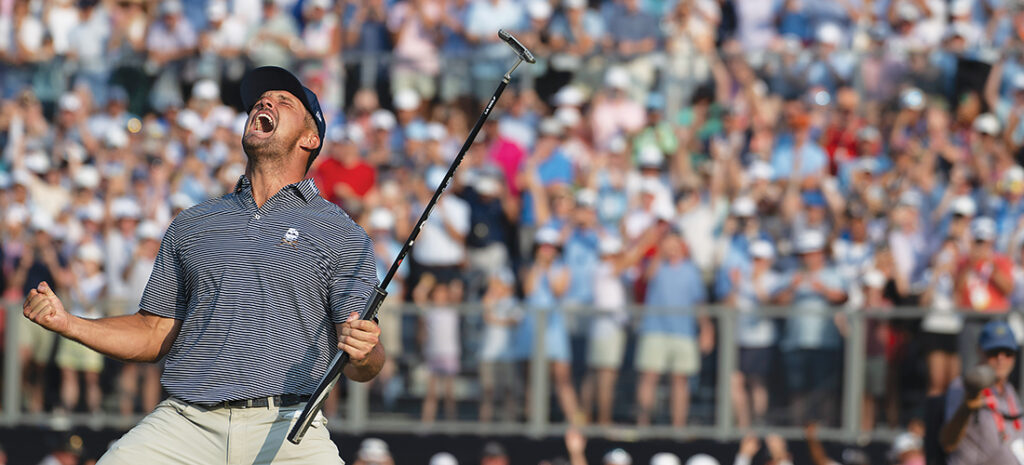
DeChambeau in 2024 needs a par to hold off Rory McIlroy, who’s playing one group ahead. He yanks his tee shot left of the fairway, the ball traveling more than 300 yards uphill and coming to rest under a magnolia tree, up against a root and sitting on the native hardpan sand that was exposed during the 2010-11 Coore & Crenshaw course restoration. He has 147 yards to the hole, punches out, and the ball comes to rest in a bunker sitting front right of the green.

He has 54 yards to the traditional final day, back right pin. He uses his immense physical strength to explode out of the sand to 4 feet, then makes the putt. As the ball rolls into the cup, DeChambeau extends both arms, arches his back, looks to the heavens and sets off on several seconds of unabashed joy.

“That bunker shot was the shot of my life,” DeChambeau said. “I’ll forever be thankful that I’ve got longer wedges, so I can hit it farther, get up there next to the hole.”

So now Payne’s Putt has alongside it Bryson’s Bunker in the pantheon of all-time greatest shots — not only in 129 years of Pinehurst history, but also in major championship golf.

Jack Nicklaus’s 1-iron hitting the flag at Pebble Beach in 1972, Tom Watson’s chip-in at Pebble a decade later, Seve Ballesteros’s winning putt at St. Andrews in 1984, Bob Tway’s bunker dunk at Inverness to win the 1986 PGA Championship, Tiger Woods’ chip-in at Augusta in 2005 . . . all iconic monster shots in golf.

“Bryson’s shot has to be as good as any of them,” says 2021 Open champion Jon Rahm.

“There’s no question Bryson’s shot was one of the best shots in U.S. Open history,” says Curtis Strange, a two-time Open champion and former North & South Amateur winner at Pinehurst. “His shot was one of the toughest, if not the toughest, shots in golf. Magnify that with last hole, U.S. Open pressure on a world stage? It was an amazing shot.”

The week after the Open, Pinehurst officials, at the request of DeChambeau caddie Greg Bodine, sent via FedEx an urn of sand from that bunker to DeChambeau’s residence. The golf staffers and caddies have half-jokingly wondered if the windows in the clubhouse behind the 18th green are now in danger with retail golfers attempting that shot and hitting the dreaded skulled shot flying who knows where. The club’s social media staff even mused after the Open that the preponderance of balls landing on the roof might escalate.

All around the golf course, the village and the Sandhills, knowledgeable golf students looked on in awe.

“The long sand shot, that’s the hardest shot in golf,” says former PGA Tour player Pat McGowan, who watched his son Michael play the first two rounds. “Oh my gosh, what a shot. He could stand there and hit 100 shots and not get it any closer. He could have skulled that over the clubhouse and made a double. But Bryson is so strong he just muscled it out.”

“The stat of a PGA Tour player getting up and down from a bunker from that distance is 1.7 percent,” says Pinehurst teaching pro Kelly Mitchum. “To do it on the final hole of a U.S. Open is pretty remarkable.”

Gus Ulrich, the longtime teaching pro at Pinewild Country Club and golf coach at Sandhills Community College, was struck with the authority and resolve DeChambeau exhibited during the minute before the shot.

“What impressed me was Bryson did not overanalyze it,” Ulrich says. “He didn’t rush it by any means, but he didn’t grind over it and agonize like, ‘Oh, I gotta make this to win the U.S. Open.’ He made up his mind pretty quickly, walked in and hit the shot. I think that’s what you have to do in that situation. The more you agonize over it, the harder the shot becomes.”

DeChambeau reflected on that very mindset afterward. Asked what he would remember most about the final two hours of a drama-laden back nine, he said: “Probably my caddie telling me I can do it out of the bunker. G-Bo just said, ‘Bryson, just get it up-and-down. That’s all you have to do. You’ve done this plenty of times before. I’ve seen some crazy shots from you from 50 yards out of a bunker.’ I said, ‘You’re right. I need the 55-degree. Let’s do it.’”

Course superintendent John Jeffreys was standing behind the green in DeChambeau’s line and considered there were about a half-dozen layers of ground undulation between the golfer and the hole — a “false front” leading up to the putting surface; a narrow plateau in the front portion of the green; a downslope and swale in the middle of the green; and finally, an upslope leading to the back crest where the pin was set.

“There’s a lot more to that green than you would think approaching it on the angle he had,” Jeffreys says. “There were a lot of areas to contend with that can help you or hurt you. What made the shot so great was he landed it on the downslope behind that first little plateau. That propelled the ball forward and it ran up to 4 feet.”

And the rest, as they say . . .

No doubt they’re making room as we speak in the history-laden hallway of the resort clubhouse to celebrate Bryson’s Bunker.

“It’s like we caught lightning in a bottle,” Dedman says. “It was otherworldly. To me, it’s almost as if it was preordained. I think maybe Payne and my father were up in heaven and put their thumb on the scale to Bryson’s advantage.”  PS

Lee Pace has written about the Pinehurst experience for more than three decades from his home in Chapel Hill. Write him at leepace7@gmail.com and follow him on X @LeePaceTweet.

Golftown Journal

Golftown Journal

Photograph by Ted Fitzgerald

Miller Time

Finding the spirit of golf in Pinehurst

By Lee Pace

Courtesy Tufts Archives

They are grouped together side by side in the new World Golf Hall of Fame in Pinehurst, these luminaries of the golf world of the 1970s: Lanny Wadkins, Hale Irwin, Tom Watson and Johnny Miller.

The museum that just opened as part of the USGA’s Golf House Pinehurst facility is organized around a locker for each of 160-plus inductees. Each display includes a photo and an assortment of memorabilia, and this quartet of golfers is represented by images from that 1970s era of long hair and shirts with wide collars and bright color palettes.

Each of the four won major championships, accumulated Ryder Cup points and fired ridiculously low rounds. And all carved a niche of some sort in Pinehurst.

Wadkins played at Pinehurst as a junior golfer from Richmond and later as a member of the golf team at Wake Forest University; he was runner-up in the 1969 North & South Amateur.

Irwin and Watson share the course record on Pinehurst No. 2, along with Gibby Gilbert, with 62s shot in the mid-1970s during the PGA Tour’s foray at Pinehurst, with Irwin winning the Colgate Hall of Fame Classic in 1977 and Watson winning back-to-back in ’78 and ’79.

And Miller has a 63 on No. 2 and collected first place in the 1974 Hall of Fame Classic. He shot his eight-under-par score in the second round and could have gone one lower if not for a missed 6-footer for birdie on the 18th.

“It was like one of those old Johnny Miller blitzes,” he remembers. “I dominated the course and scored a fairly easy 63, if there is such a thing.”

Fifty years ago. What goes around, does seem to come around.

That year the blond bombshell from Northern California scorched the PGA Tour with wins in three straight tournaments to open the season, took first in five others and banked over $350,000, a magnificent sum in those days. He drove the ball long and straight, smothered flagsticks with his irons, and seemed to have magnets drawing his putts to the cup. It was one year following his U.S. Open win at Oakmont, when he shot a championship record 63.

The World Open was first played in November 1973, with an outlandish 144-hole format over two weeks. It was shortened to 72 holes in 1974, and the tournament coincided with the September opening of the $2.5 million World Golf Hall of Fame. President Gerald Ford attended induction ceremonies, and among the 13 original inductees were eight still living: Ben Hogan, Jack Nicklaus, Sam Snead, Byron Nelson, Arnold Palmer, Gary Player, Gene Sarazen and Patty Berg. Honored in memory were Bobby Jones, Walter Hagen, Francis Ouimet, Harry Vardon and Babe Zaharias.

Miller and Nicklaus were tied at 209 after three rounds, with Charles Coody and Bruce Devlin two back, and Bob Murphy and Frank Beard trailing by three. The 27-year-old Miller reveled in the challenge of going head-to-head against the 34-year-old Nicklaus.

“I wouldn’t be surprised if both of us shot in the 60s head-to-head,” Miller said. “I’ve held him at bay recently and I’ve had a lot of success against Jack, but I don’t talk much about it. I know he’s a better player than I am, but I’m not afraid of him.”

Miller and Nicklaus each shot one-over 72s, allowing Murphy and Beard to force a four-way playoff with 69s and 281 totals, three-under for 72 holes (only eight players beat par for the tournament).

The playoff started on 15, where TV cameras were set up. Beard scored a routine par on the par-3, leaving a birdie putt dead short that could have ended it there. Miller and Nicklaus got up-and-down from the fringe, and Murphy was eliminated after his tee ball found a greenside bunker.

Miller won the tournament with a two-putt birdie on 16 after Beard three-putted and Nicklaus missed a 12-footer for birdie. Miller hit a 3-wood to eight feet — “The best shot under pressure I’ve ever hit,” he says.

“To beat Jack Nicklaus in a playoff sort of capped off the year for me,” Miller says. “I enjoyed playing No. 2. It was perfect for my game. It gave you enough room off the tee, you had extremely difficult approach shots, and if you hit it real bad off the tee, you had broom grass, sand and trees. To me that course is the perfect course for my game. It’s the kind of course I like to design. It’s the perfect test of golf because it’s got difficult putting, it accepts the approach shot fairly, and it penalizes the poor shot. It gives you enough room off the tee, versus most U.S. Open courses, which give you only 25 or 30 yards.”

A different Johnny Miller came to Pinehurst in 1979. He had been the talk of the tour in the early 1970s for his good play but now had become the talk of the tour for his bad play. He slid to 48th on the money list in 1977 and 111th in 1978, with only $17,400 in winnings. Miller hadn’t won a tournament since early 1976.

“What’s wrong with Johnny Miller?” the world wanted to know.

Miller responded that there wasn’t anything wrong that a bunch of birdies and a little confidence couldn’t solve.

“Before Pinehurst I played in the Lancôme in Paris and won against a good field, and that signaled that maybe I was ready to play well again on the U.S. tour. I came home a week or two later and continued my good play,” he says.

Miller opened with a 69 and then equaled his 1974 heroics with another 63. “It was amazing. It was like it was ’73 or ’74 all over again,” he said. Miller wound up losing in a playoff to Watson.

But Johnny Miller was back. Pinehurst will always be special to him for those weeks in 1974 and 1979.

“I almost can’t tell you how good the golf course is,” he says. “It might not be the hardest golf course in the world, but for pleasure, for going out and having a pleasurable time with a smile on your face, it can’t be beat. It’s hard to get mad when you play Pinehurst.

“It reeks of golf, it has a definite golf spirit, very similar to a Pine Valley or Augusta National or Cypress Point. It’s very blessed with that golfing spirit.”  PS

The Johnny Miller story and many others were included in Lee Pace’s 1991 book, Pinehurst Stories — A Celebration of Great Golf and Good Times. Write him at leepace7@gmail.com and follow him @LeePaceTweet.

Golftown Journal

Golftown Journal

Jump in a Lake

The rebirth of a great design

By Lee Pace

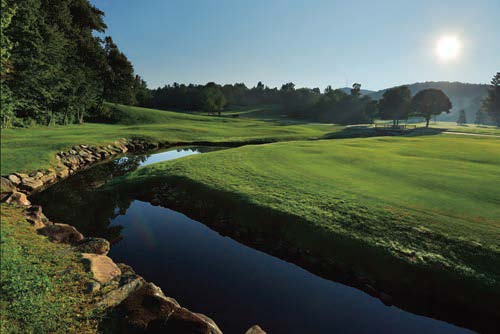
Cara Spencer remembers the 1990s when her parents and sisters spent most every weekend during the summer at their house at Woodlake Country Club in Vass. They swam. They learned to fish and water ski. They rode inner tubes and drove their boat around the 1,200-acre Lake Surf. They played golf and sipped strawberry daiquiris by the pool.

“Those were the glory days. Woodlake was the place to be,” Spencer remembers. “Our family has a strong sentimental connection to Woodlake.”

Woodlake certainly distinguished itself from its Sandhills competitors with a lake with 13 miles of shoreline; 36 holes of golf designed by Ellis Maples and Arnold Palmer; recreational amenities from swimming to golf, fishing to Jet Skis. One Fourth of July, The Embers blared out “I Love Beach Music” and other summertime shagging favorites.

“It’s laid back. We’ll have more fun in two weeks than some places have in two years,” longtime club professional and Woodlake resident Stuart Taylor liked to say.

That idyllic life at Woodlake for some 2,000 residents was rocked beginning in 2016 when torrential rainfall from Hurricane Matthew set in motion a domino effect that included a breach of the dam, the lake being drained by the State of North Carolina for flood control purposes, the golf courses closing, and the German ownership group losing the facility to bankruptcy.

Five years later, the community and club got a new lease on life when Atlantic National Capital bought Woodlake at auction for $3.5 million, and began negotiations with the county and state lawmakers to repair the dam. The new owners are headed by Fayetteville businessman Keith Allison and his three daughters, Cara Spencer being one of them. As Allison was growing his Systel Business Equipment company into a significant independent dealer of official equipment in the Southeast in the 1980s and ’90s, the family enjoyed their weekend retreat at their home in Woodlake.

“My daughters learned to ski at Woodlake,” Allison says. “My family and I have a longstanding association and sentimental attachment to Woodlake.”

The first move in the fall of 2021 was to hire golf architect Kris Spence to take a look at the overgrown Maples golf course that opened in 1971 and provide a resurrection plan (the 1996 Palmer course will remain closed). Spence remembers Spencer giving him a tour of the overgrown fairways.

“Nature had totally reclaimed it except for a few areas where it looked like homeowners had been cutting some grass,” Spence says. “Cara asked what I thought it would take to get it back open. Hell, I couldn’t even see it. The fairways were 6 feet tall, and there were trees in the bunkers.”

Spence knew from the outset that if the course was designed by Ellis Maples, there were likely some good bones underneath the jungle. Maples grew up in golf design and maintenance, his father Frank serving as the longtime Pinehurst superintendent under Donald Ross, and Ellis started working in golf construction and maintenance at the age of 14. In 1948, he supervised the construction of Ross’ final design project, Raleigh Country Club, and worked for five years as the course superintendent. Maples then went into private practice in 1953 as a golf course architect.

His most notable works include the Dogwood Course with Willard Byrd at the Country Club of North Carolina (1963); and Grandfather Golf and Country Club in Linville (1968). Spence was intimately familiar with the Dogwood Course, having handled a renovation of that course in 2015-16.

Spence hired subcontractors in the fall of 2021 to start clearing the Woodlake corridors and spent considerable time himself on a bushhog machine around the green complexes.

“The more I looked at the golf course, the more I realized this was some really good work by Ellis Maples,” Spence says. “We got the greens cleaned up, and I started to study them. I got excited. After a month, I went back to Cara and said, ‘I don’t think you know what you have here. You have one of the best golf courses in North Carolina.’ That’s saying a lot, especially for this region.”

The first four holes wrap around the lake and then venture into typical Sandhills ground with sandy soil and gently undulating slopes, and the course does not return to the clubhouse after nine, always a good sign that the architect was allowed to find the best 18 holes without the restraint of bringing the ninth hole back to the start.

Spence built a few new tees to add some length and adjusted some fairway bunker placements to catch the longer drives of today, versus the 1971 club and ball standards. Many of the bunker complexes are dotted with the wiregrass so indigenous to the Sandhills, along with acres of hardpan sand. The greens were sprigged with Tif-Eagle Bermuda.

The course reopened in September 2023, and will mark a complete renaissance when the dam and lake work are completed in early 2025 and the lake is restored. The golf shop has been renovated, a new restaurant has opened, and the course is open to outside play.

“Hole after hole you could pick as a signature hole,” says Woodlake General Manager Jeff Crabbe, a veteran of the area golf community and former staff professional at Pinehurst Resort. “There’s not a bad hole on the golf course. Once the lake comes back, it’s going to be pretty special. The vision of the ownership is to make this one of the most sought-after communities in the area and the state. We started from zero in a new membership program and are at 115. We’re proud of that growth.”

Spence compares the view across the lake to something you might see in the South Carolina low country and has been heartened with the opinions from a handful of visitors with high golf I.Q.s who have toured the course since it reopened.

“It’s been fun to watch people’s reaction to it,” he says. “They are like, ‘Wow, I hadn’t expected that.’ This is one terrific golf course. I don’t fall in love with golf courses per se, but I really admire this and appreciate what Ellis did 50 years ago. It is amazing that a golf course of this quality had escaped attention and recognition for so long. It was very satisfying to play a role, to put it back in its rightful place.”

Cara and husband Tommy Spencer live in Fayetteville and keep the family Woodlake tradition alive with a home of their own. One Friday evening in March, they jumped into a golf cart with their three children for the short drive to the Woodlake clubhouse and the first members dinner of the season.

“It was a nostalgic moment for me, thinking back to being a kid and my experiences here, and now having that for my own kids,” she says. “That’s why preserving Woodlake is so important to us.”  PS

Lee Pace has written four books about the evolution of Pinehurst, its golf courses and village. His most recent is The Golden Age of Pinehurst. Write him at leepace7@gmail.com and follow him @LeePaceTweet.