Dissecting a Cocktail

DISSECTING A COCKTAIL
Tom & Jerry

Story and Photograph by Tony Cross

Long before flavored lattes at Starbucks, there was another creamy and sweet beverage that went hand-in-hand with cold weather.

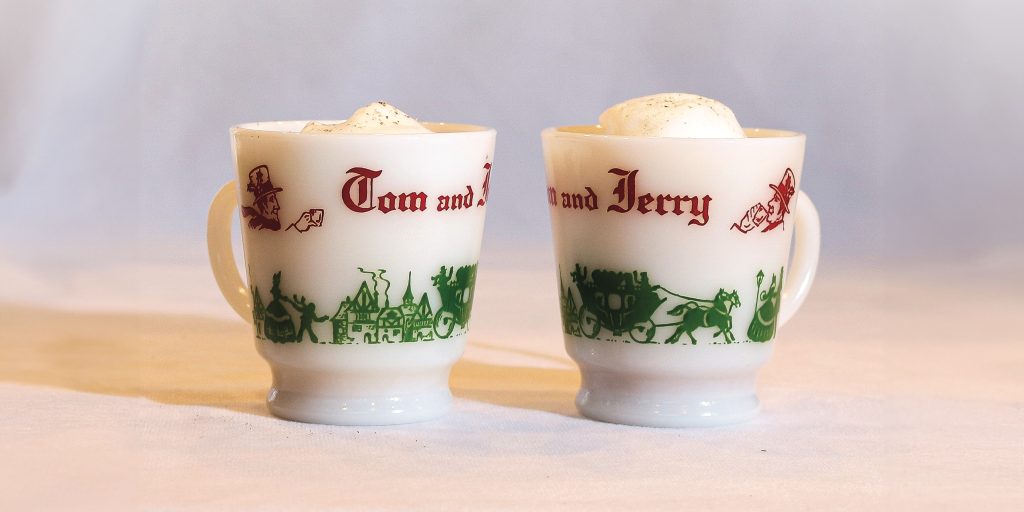
The Tom & Jerry, named after the punch bowl and mugs, not the cartoon, is a warm, frothy variation of eggnog made with eggs, sugar, hot milk (traditionally hot water), brandy and rum. Though recipes have existed since the early 1800s, it was famed American bartender Jerry Thomas who was responsible for its revival in the Northeast. Author Amanda Schuster says, “From the 1930s to the late 1960s or so, it was adopted as a traditional winter treat all over the U.S., served as soon as temperatures dropped.” The tradition carries on today in colder cities, particularly the Midwest. Thomas’ recipe calls for hot water, but as bartender Jim Meehan points out, you should opt for whole milk instead: “There’s no way around this drink’s richness.” Below is Meehan’s recipe that he adopted from Audrey Saunders, bartender and owner of New York City’s famed Pegu Club.

Specifications

6 ounces whole milk, served hot

2 ounces Tom & Jerry mix*

1 ounce Remy Martin VSOP cognac

1 ounce aged rum (Plantation 5 Year, perhaps?)

Garnish: grated nutmeg

Execution

Preheat a coffee mug or teacup by filling it with boiling water, letting it sit until heated, then discard the water. Add cognac and rum, then add Tom & Jerry mix. Stir until evenly combined and top with hot milk. Grate nutmeg over the top.

*Tom & Jerry Mix

(Makes 48 ounces)

6 large organic eggs, yolks and whites separated

1 pound sugar

1 ounce Jamaican rum (Appleton works great here)

1/2 teaspoon ground allspice

1/2 teaspoon ground cinnamon

1/4 teaspoon ground cloves

1/4 teaspoon ground nutmeg

2 dashes Angostura bitters

1 tablespoon vanilla extract

In a medium bowl, whip the egg whites until stiff peaks form. In a separate bowl, whip egg yolks until they are completely broken up and smooth, then stir in the sugar, rum, spices, bitters and vanilla. Mix contents together in a large bowl and blend until it resembles a cake batter. Refrigerate to cool, store up to 2 days.

Dissecting a Cocktail

DISSECTING A COCKTAIL

Kettle to the Coil

Story and Photograph by Tony Cross

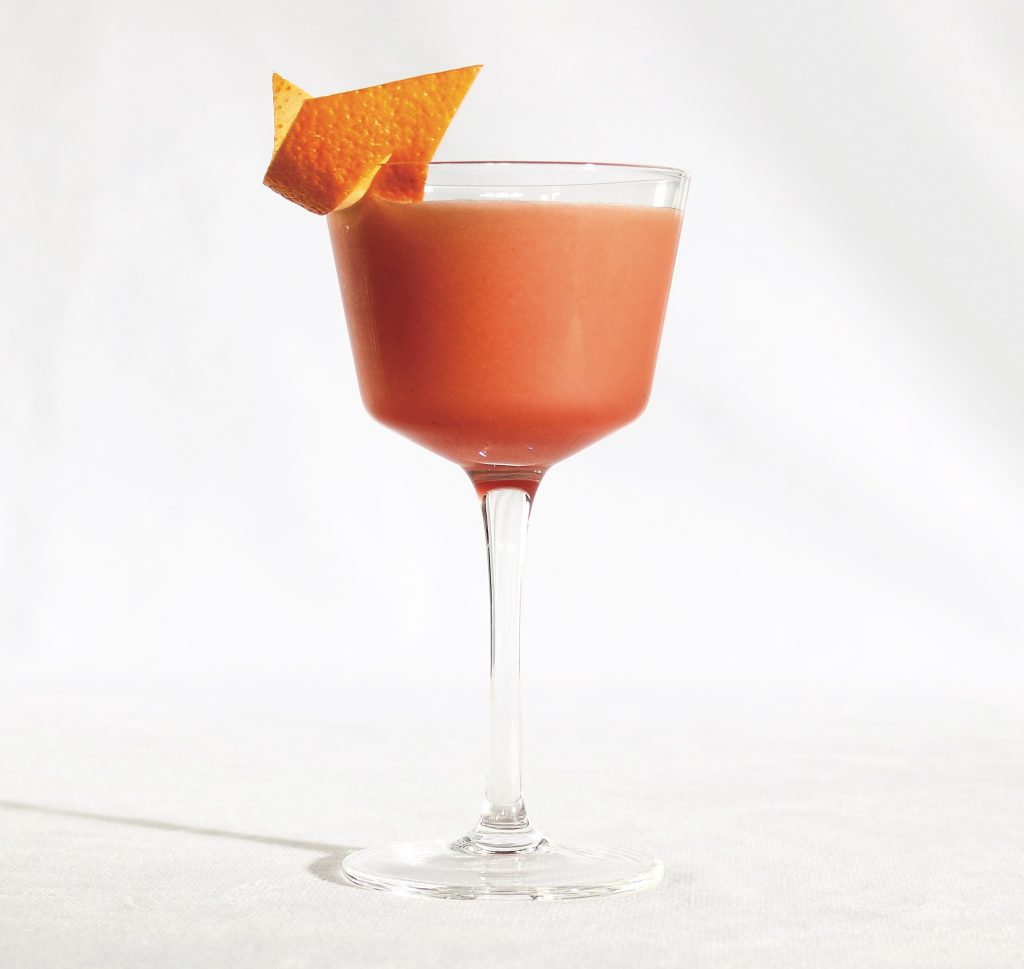
Years ago, I was commissioned to create a cocktail for a local event celebrating the famed author Tom Wolfe, who was a frequent Sandhills visitor. The book being highlighted was The Right Stuff, and the committee that hired me thought Tang, the orange drink mix, would be a great ingredient to include as an homage to the earliest astronauts. After a little persuasion, I was able to change their minds. The resulting cocktail that I called Kettle to the Coil did indeed include orange, but not in a powdery form. Instead, I infused the fruit and its oils in a blended Scotch whisky. I also incorporated a syrup with a wine base — pinot noir. Everyone loved the drink, and it ended up on my bar’s menu that year.

A great cocktail to serve during the cooler months, the whisky is rounded out with the orange oils, and the spices added to the pinot noir syrup scream fall weather. You can try this syrup in other cocktails that include whisk(e)y and sugar. It’s also great on its own with sparkling water. Some people get excited for pumpkin lattes this time of the year. I get excited for whisky and red wine.

Specifications

1 1/2 ounces orange oil-infused blended whisky*

1/2 ounce Drambuie

3/4 ounce fresh lemon juice

1/2 ounce pinot noir syrup**

Execution

Combine all ingredients with ice in a shaking vessel. Shake hard until the tin becomes frosted. Double strain into a chilled Nick & Nora glass. Express the oils of an orange coin over the cocktail. Lay orange coin on top.

*Orange Oil-Infused Blended Whisky

Using two 16 ounce Mason jars, add the following: flesh and peel of one medium orange; 1/2 bottle blended Scotch whisky (I use The Famous Grouse). Tighten jar and let sit for three days (shake or swirl the jar for 15 seconds once each day). When ready, pour infusion through a mesh strainer and then again though a coffee filter. Rebottle in the same whisky bottle.

**Pinot Noir Syrup

1 bottle (750 milliliters) pinot noir (preferably a lighter pinot like Willamette Valley)

3 cups granulated sugar

3 cinnamon sticks

1/2 apple (sliced)

1 tablespoon star anise pods

1 tablespoon whole cloves

1/2 tablespoon cardamom pods (crushed)

1/2 teaspoon fresh ground nutmeg

Zest of 6 oranges

Combine all ingredients in a medium saucepan over medium/high heat and bring to a simmer. Let simmer to the consistency of a rich syrup, 15-20 minutes.

Dissecting a Cocktail

DISSECTING A COCKTAIL

The Cosmopolitan

Story and Photograph by Tony Cross

In the fall of 1988, bartender Toby Cecchini was working at The Odeon in New York City, chatting with his co-worker Melissa about her previous night out with friends. They were visiting from San Francisco and introduced her to a cocktail that was making its way across the gay bar scene.

“It’s called The Cosmopolitan,” she said. “Wanna see it?”

“Why not?” replied Cecchini.

She proceeded to make him a cocktail with vodka, Rose’s lime juice, Rose’s grenadine, and a twist of lemon. Oh, that’s cute, Cecchini recalls thinking.

“It was in one of those V-shaped martini stems (very of the times), and I thought that it was funny, because you don’t put cocktails in a martini glass, you only put a martini in a martini glass,” Cecchini said on the podcast Cocktail College. “I thought that was clever — and it was very cute — but it was disgusting. It was Rose’s, fake, cloying, lime cordial and Rose’s grenadine, which is even worse; just simple syrup artificially colored red . . . And I thought, I can make that better.”

So, he did. “Because we made our margaritas with Cointreau and fresh lime juice, I thought, oh, there’s the base, and Absolut had just come out with Absolut Citron — it was the first flavored vodka that we had ever seen, and it was absolutely mind-blowing.” For the red coloring, Cecchini decided to use cranberry juice, since he was used to making Cape Codders all day long. He made it for the servers at The Odeon, and it quickly became the staff drink.

Word of mouth had regulars at the bar asking for “Toby’s drink.” Soon random guests and celebrities began asking for his Cosmopolitan. “Madonna would come in for lunch several times a week and ask for the ‘pink drink,’” he says. And the rest is history: The Cosmopolitan became an instant hit in the bartending community and even had a resurgence a decade later when it was glorified in the Sex in the City series.

Here are Cecchini’s exact specs. Feel free to change the vodka if you’d like, or even the garnish (perhaps a twist of orange?), but do not change the orange liqueur or cranberry juice — Cointreau and Ocean Spray all the way. 

Specifications

1 1/2 ounces Absolut Citron

3/4 ounce Cointreau

3/4 ounce fresh lime juice

3/4 ounce Ocean Spray Cranberry Juice Cocktail

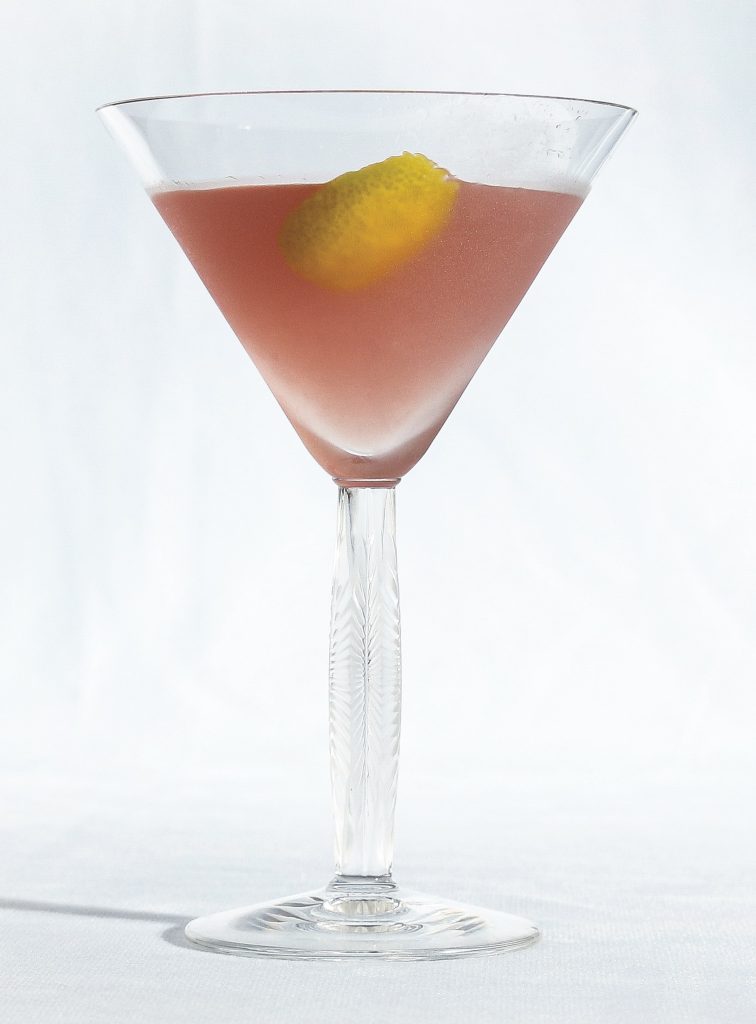
Garnish: lemon twist

Execution

Combine all liquid ingredients into a cocktail shaker and fill with ice. Shake hard until your mixing vessel starts to frost on the outside. Double strain into a chilled cocktail coupe. Garnish with lemon twist.

Dissecting A Cocktail

DISSECTING A COCKTAIL

Mia Khalifa

Story and Photograph by Tony Cross

There are many alternatives to cocktails and alcoholic beverages these days. I’ve tried plenty, but the ones containing kava have captured my heart.

Kava is a plant native to the South Pacific, traditionally used for its calming and euphoric effects. The active compounds, kavalactones, are found in the root of the plant, which is typically ground, soaked and strained. It’s not much to look at — when ready for consumption, kava has a brownish, muddy appearance. On its own, the flavor is earthy and root-like, a bit of an acquired taste.

I was introduced to drinking kava on a date at Wana Navu Kava Bar in Fayetteville. I was familiar with the plant as a supplement but had never consumed it as a drink. Looking at the cocktail menu, I was floored by the variety of intricate blends of ingredients and the bold names for the drinks. Wana Navu owners Chloe Benhaim and Casey Fox helped me navigate the menu, offering a quick history of the root and explaining the effects of various ingredients.

Some drinks are combined with vitamins, kratom, or Delta-9, making for a highly personalized experience. I settled on a drink from their “Kavafornication” category, which features cocktails built on a kava base and infused with functional ingredients like B6, B12, L-theanine and ashwagandha. My go-to? The Mia Khalifa — a blend of those very ingredients, plus hibiscus flowers and lemongrass. The kava flavor is still present, but beautifully balanced. Did I mention these drinks contain zero sugar, carbs or calories? I ordered another. And then another.

Last year, Chloe and Casey opened a second location, this time in Sanford — what they proudly call their “Feel Good Bar” — which has quickly become my local stomping ground. 

Specifications

Hibiscus

Lemongrass

Vitamins: D, B6, B12, milk thistle, iron, ashwagandha, L-theanine

Execution

Get in your car and take a trip to Wana Navu Kava Bar at their Fayetteville or Sanford locations and place your order.

Dissecting a Cocktail

DISSECTING A COCKTAIL

The Southside

Story and Photograph by Tony Cross

Like many classic cocktails, The Southside’s origins are a bit murky. Some say the drink was created on Chicago’s South Side and was a favorite of mobster Al Capone — the “bathtub gin” his mob smuggled in was harsh, so the addition of mint, sugar and lemon juice made the alcohol more palatable. Others claim it was created at the 21 Club in New York. Yet another says its invention was at the Southside Sportsmen’s Club on Long Island.
Cocktail historian David Wondrich found what he believed to be its earliest recipe in Life magazine in 1913. Dubbed the “Gordon’s South Side” (as in Gordon’s Gin), the drink was more like a frappe and included a picture that resembles a mojito.

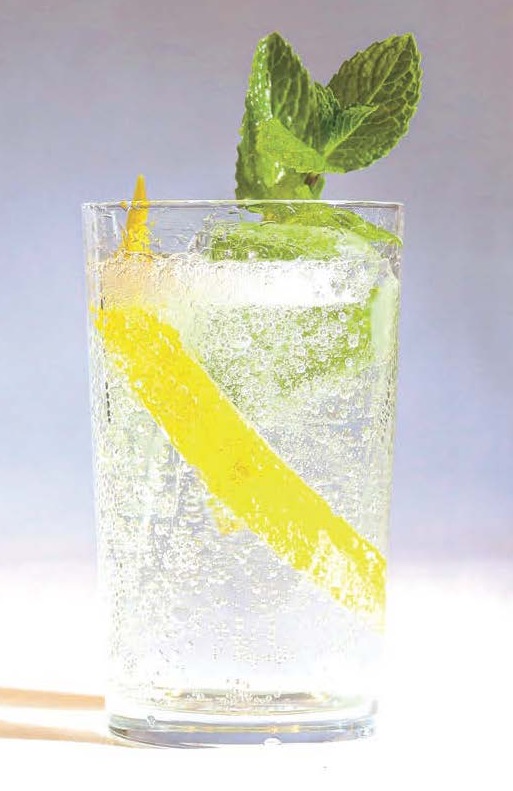
Now comes the other mystery of the cocktail — the ingredients. Yes, there is gin, mint, sugar and citrus, but many recipes include the addition of soda water. A splash or served in a highball? And what about the citrus? Some recipes have lemon while another has lemon and lime. When I was behind the bar, I used lemon juice and a splash of sparkling water in a coupe glass. As time has gone by, I prefer a little more sparkling water, served over ice. I’ve even gone as far as making Reverie’s version as a carbonated cocktail soda (pictured). The recipe below is how I’d whip these up when I was behind the stick.

Specifications

2 ounces Sutler’s Spirit Co. gin

3/4 ounce lemon juice

1/4 ounce rich simple syrup

5 mint leaves

1 ounce soda or sparkling water

Thinly sliced lemon wheel

Execution

In a cocktail shaker, combine all ingredients, sans soda water, and add ice. Shake hard for 10 seconds. Add soda water inside shaker and double strain into a chilled coupe glass. Garnish with lemon wheel.

Dissecting a Cocktail

DISSECTING A COCKTAIL

Ranch Water

Story and Photograph by Tony Cross

One of the simplest cocktails to make was also one of the most popular during the pandemic. Ranch water is the drink, and it hails from West Texas, though the precise regional claim to fame is debated.

There are Texas natives who say they grew up drinking the tequila, lime juice and mineral water highball, but the late Kevin Williamson, chef and founder of Ranch 616 in Austin, takes credit for its creation. Their website describes how Williamson used to “sneak” the mix into his water bottle while hunting with his father. The importance of using Topo Chico mineral water is key to this cocktail, which helped make the brand so popular there were nationwide shortages in 2021-22.

Regardless of the drink’s origin, everyone can agree that this is one of the most refreshing cocktails to beat the summer heat. There are two ways I enjoy Ranch waters: in a glass with ice or built in a Topo Chico bottle.

Specifications

2 ounces blanco tequila

1/2 ounce fresh lime juice

Topo Chico sparkling water

Execution

In a glass: Add tequila and lime juice in a rocks or highball glass with ice. Top with Topo Chico.

In a Topo Chico bottle: Drink 3 ounces from the bottle and add tequila and lime juice. Put your thumb over the top and slowly turn bottle upside down to integrate ingredients. Don’t shake. Turn the bottle right side up and slowly remove thumb from the top. We’re not spraying Champagne in a locker room here.

Dissecting a Cocktail

DISSECTING A COCKTAIL

I Quit Girls

Story and Photograph by Tony Cross

When I look back a decade ago to the beginning of 2015, there were two notable events that happened in my life: a major break-up, and a newfound love of rum. As it turned out, the former was also the motivation for a drink I created using the latter, aptly titled, “I Quit Girls.” I wanted to make a tiki-style drink all my own, something I hadn’t heard of or tasted.

Thinking back, that probably wasn’t too hard — the myriad social media bar-fluencers had yet to kidnap my algorithms. There’s only one ingredient that stands out from the rest in my concoction: 1/4 ounce of smoky Laphroaig 10-year Scotch. It was my eureka moment. A little smoke mixed with lots of sweet, delicious tiki flavors turned out to be a killer scene. At the time, I was just learning about classic rum drinks, so I was excited to add Donn’s Mix #1 into the, well, mix. Named for the man who created it, Donn Beach, this syrup is used for many tiki drinks, including the classic zombie.

As for the name of my drink, I happened to be listening — on repeat — to a Japandroids song of the same title the week I created it. Go figure.

Specifications

1 ounce Goslings Black Seal Rum

1/2 ounce Smith & Cross
Jamaican Rum

1/4 ounce Laphroaig 10-year Scotch Whisky

3/4 ounce Donn’s Mix #1 *

1/2 ounce fresh pineapple juice

1/2 ounce fresh lime juice

1/2 ounce simple syrup

5 drops Bittermens Elemakule
Tiki bitters

Execution

Combine all ingredients into a cocktail shaker and add a very small amount of crushed or pebbled ice. Shake hard, allowing the ice to almost completely dissolve in the vessel. Pour everything into a tiki mug or large old-fashioned glass. Fill the remainder of glass with ice. Garnish with a small bunch of mint.

*Donn’s Mix #1: Take 3 cinnamon sticks and blend with one cup of simple syrup (equal parts sugar and water). Let sit until syrup cools. Strain syrup. Mix one part of cinnamon syrup with 2 parts fresh grapefruit juice (not store-bought). Place in a sealed container and refrigerate. Keeps for two weeks.

Dissecting a Cocktail

DISSECTING A COCKTAIL

White Wine Sangria

Story and Photograph by Tony Cross

Spring is peaking, and patio drinking is a must. Myriad cocktails fit the criteria and, for me, they’ve got to be light and refreshing. There should be a handful of options in your arsenal: mojitos, gin and tonics, spritzes and so on. So, choose your own adventure.

A cocktail I recently rediscovered is the white wine sangria. This is a simple, classic recipe from Canon owner and bartender Jamie Boudreau. I’ve never been keen on traditional sangrias — I like my red wine without any fuss — but a white wine sangria makes perfect sense. I love French 75s and other Champagne cocktails, so adding clear spirits to a dry or crisp white wine (dry white wine on its own in the spring is lovely, too) only seems right. Boudreau’s recipe calls for a citrus-forward gin in Martin Miller, but you may sub in Tanqueray 10, Sutler’s Spirit Co. or your personal favorite. He uses elderflower liqueur from St. Germain, which adds a touch of sweetness and all the lovely floral notes of St. Germain.

The recipe below is for a small pitcher or carafe for sharing. Make sure to add the St. Germain after the sparkling wine and gin; the liqueur is rich and heavy, so it will slowly sink to the bottom. Take advantage of your local farmers markets for seasonal fruit — whatever is available works, whether its blackberries, strawberries or raspberries. Any brightly colored fruit will make the aesthetic of this cocktail pop.

Specifications

12 ounces dry sparkling white wine

2 ounces St. Germain Elderflower Liqueur

1 ounce Martin Miller Gin

Lemon and lime wheels

Seasonal fruit


Execution

In a small pitcher, add ice, sparkling wine, St. Germain, gin and and fruit. Lightly stir and top off with more sparkling wine. Serve in wine or Collins glass with ice and more fruit.

Dissecting a Cocktail

DISSECTING A COCKTAIL

Blood and Sand

Story and Photograph by Tony Cross

I hereby present to you a cocktail that I’ve never really enjoyed: the “Blood and Sand.” Well-known to bartenders, it’s a relatively unknown classic cocktail to drinkers. Even though the creator of this cocktail is a mystery, it originally appeared in Henry Craddock’s The Savoy Cocktail Book in 1930. The Blood and Sand takes its name from the 1922 silent film Blood and Sand, starring Rudolph Valentino. The movie follows a matador, Juan Gallardo, whose rise from poverty to become one of Spain’s greatest bullfighters ends in tragedy, romantic betrayal and death.

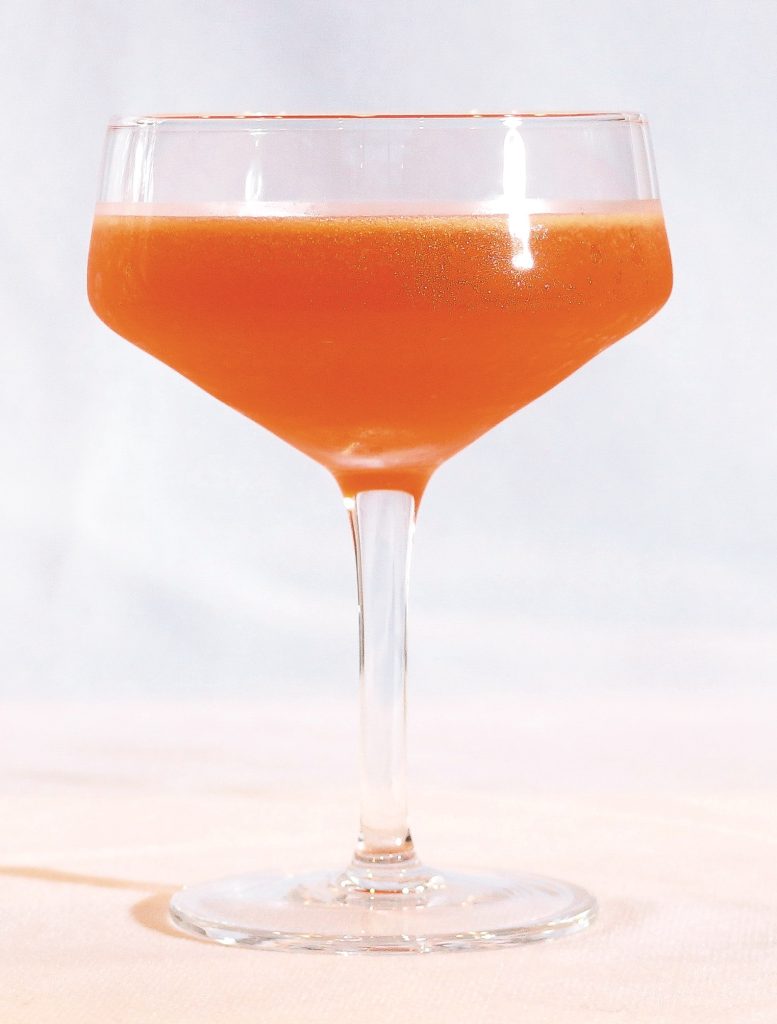
On paper, the ingredients for the cocktail don’t seem to make sense: equal parts Scotch whisky, cherry Heering, sweet vermouth and orange juice. Admittedly, it does taste better than the specs would lead you to believe. The problem, as I saw it, is that it has never tasted great. Enter acid-adjusted juices. Adding citric and malic acids to juices like grapefruit, orange and pineapple allows you to have one juice in the mix instead of two. More juices means more dilution, means more of a balancing act with your sweetener and alcohol.

When I learned of acid-adjusting from bartender Dave Arnold, one of the first drinks I thought of was the Blood and Sand. Orange juice on its own is missing that citric punch, something that this drink is lacking. Ingredients are meant to be toyed with, and by playing around with these specs, we can take a drink that is just OK to a drink that’s really good. You’ll also notice that I do away with “equal parts” as I up the amount of whisky.

Specifications

1 1/4 ounce Scotch whisky (do not use one that is over-peaty)

3/4 ounce acid-adjusted orange juice*

1/2 ounce cherry Heering

1/2 ounce sweet vermouth

Execution

Combine all ingredients into a cocktail shaker, add ice, and shake hard for 10-15 seconds. Strain into a chilled cocktail coupe. Garnish with orange peel and brandied cherry.

*Acid-adjusted orange juice: per 100 ml of fresh orange juice, mix in 5.2 grams of citric acid.

Dissecting a Cocktail

DISSECTING A COCKTAIL

Scotch + Apple

Story and Photograph by Tony Cross

Every now and then, I’ll come across a cocktail from an influencer on Instagram that intrigues me. A few months ago ex-bartender Chris Leavitt posted a reel for a drink he’d tasted at the annual New Orleans cocktail festival, Tales of the Cocktail. “My memory served me that it was just two ingredients: blended Scotch and fresh apple juice,” wrote Leavitt. “However, the results online provided the addition of lime juice (I assume for a boost of acid) and some Drambuie (a honey/Scotch liqueur). I don’t regularly have Drambuie, so I opted for honey syrup to achieve the sweetness it provided.”

The only time I’ve worked with fresh apple juice is when I carbonated Reverie Cocktail’s version of an appletini. It turned out so well that I knew right away I wanted to try this with whiskey. I’m happy to report that the Scotch + apple is crushable: The fresh apple juice and malt/smoke from the Scotch are a great pairing. What’s fun about this cocktail is that you can play around with the specs and still have a great drink. I swapped out the Scotch and replaced it with a split base of rye and applejack (switching the lime juice with lemon, too) and loved it as much as the original.

Note that this drink will not work if you’re using store-bought juices. The apple and lime juices need to be freshly squeezed. When juicing your own apples — or if you stop by a store that can do it for you — make sure to add a little bit of ascorbic acid (you can break apart a vitamin C capsule and use the powder inside) to the juice immediately after it’s pressed to keep it from browning. 

Specifications

1 1/2 ounce blended Scotch (Monkey Shoulder is great)

1/2 ounce honey syrup*

1/2 ounce lime juice

Top with fresh-pressed apple juice (Leavitt used Granny Smith apples in his reel)

*Honey syrup: Combine 3 parts local honey with 1 part hot water. Stir until evenly mixed. Let cool and store in glass bottle. Refrigerate. Lasts for at least one month.

Execution

Combine lime, honey syrup and Scotch into a highball glass with ice. Stir to incorporate. Top with freshly pressed apple juice. Garnish with an apple slice.