Birdwatch

Poem February 2023

The Eagles Have Landed

America’s bird is on the rebound

By Susan Campbell

Anyone who has had the good fortune to spot a bald eagle, whether soaring overhead or perched along a waterway, cannot help but be awed by their handsome appearance. This large raptor is not only our national symbol but the only eagle found solely in North America.

Benjamin Franklin supposedly lobbied for the wild turkey, the only endemic bird species to the United States, to be our national bird. But Congress decided on the bald eagle in 1782, as a result of its perceived fierce demeanor. In actuality, bald eagles are mainly carrion eaters but will attack wounded mammals, birds and aquatic animals as well. They are very opportunistic and will also snatch prey from crows if they get the chance.

During the first half of the 20th century, eagles were erroneously persecuted by raptor hunters, often by ranchers who were attempting to protect their investments. They were also affected by metal toxicity as a result of feeding on game containing lead shot. Additionally, during the period of broad-scale DDT application, as most people know, the toxin accumulated in carnivores at the top of the food chain. And, as was the case in several bird species, it caused eggshell thinning such that eagle eggs broke long before they could hatch.

Bald eagles were declared an endangered species in 1967. Following the ban on DDT and the passage of the Endangered Species Act in 1973, their numbers began to rebound. On June 28, 2007, the species was declared recovered. Here in North Carolina they are being closely monitored by state biologists. Although the number of nests and young has been increasing, they are still considered threatened here.

In the Sandhills, there are year-round sightings of individuals, most commonly on larger lakes such as Lake Surf (Woodlake) or Lake Pinehurst. At least one pair has been nesting in Moore County for a few years now: in (wait for it) Eagle Springs. Farther north, they can be frequently spotted around Falls or Jordan Lake in the Triangle or Lake Townsend in Greensboro.

In mid-winter, birdwatchers and endangered species biologists are on the lookout for eagle nests. Bald eagle pairs return to their breeding territories and lay eggs ahead of most other raptors (the exception being great horned owls, which begin breeding activities a bit earlier). Their sizable platforms of dead branches and large sticks may or may not be easy to spot. Eagle nests, if they are reused from year to year, will be gradually enlarged but not massive affairs. Newer nests can be well concealed in the top of a live evergreen or large snag.

Eagle young, who typically fledge in April, take three to four years to mature. They will not successfully attract a mate until they have a fully white head and tail. Should you see an adult in the weeks ahead, keep an eye out for a second bird. A pair of adults may mean there is a nest somewhere nearby. If you suspect that you have found a nest, definitely give me a holler!  PS

Susan Campbell would love to receive your wildlife sightings and photographs at susan@ncaves.com.

PinePitch

PinePitch

Painted Ponies Running Wild — Again

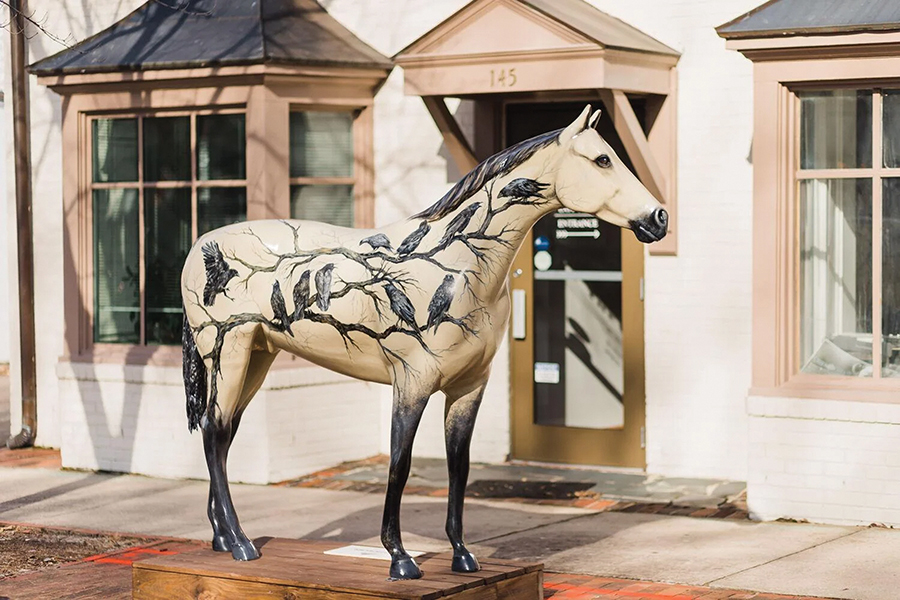
They may not be Misty’s foal, Stormy, but you’re sure to fall in love with more than one of Broad Street’s very own wild horses. These 14 painted beauties will be decorating the town of Southern Pines until early April to capture the imagination of the horse-crazy among us. The event culminates in a live online auction of the ponies on Saturday, April 15, with proceeds benefiting the Carolina Horse Park Foundation. Last year’s herd brought in over $125,000. Info: www.carolinahorsepark.com.

 
Mike Howell

Think Tank Thoughts

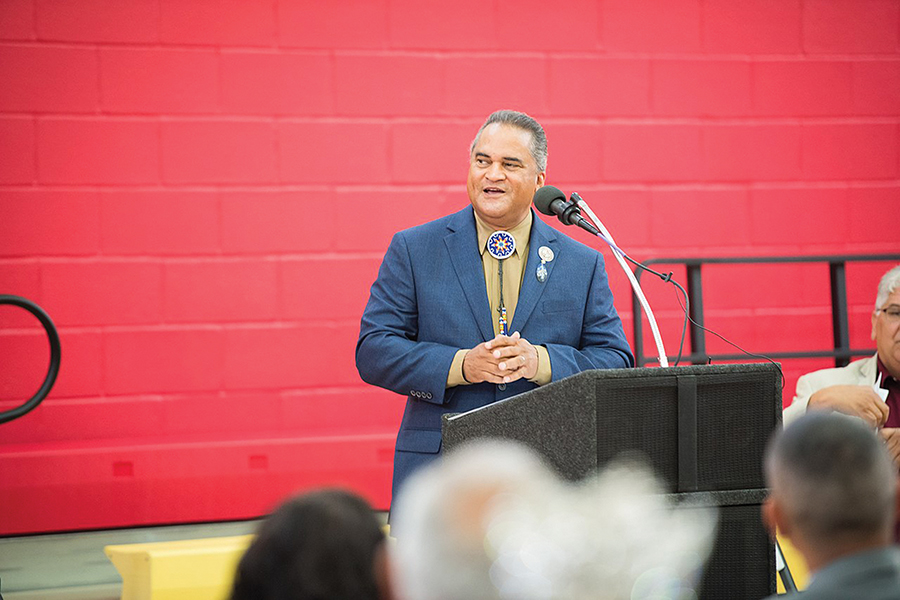
The James E. Holshouser Jr. Speaker Series will host Mike Howell, director of the Heritage Oversight Project, for “An Afternoon with the Heritage Foundation,” from 2:30 p.m. to 5:30 p.m. on Sunday, Feb. 5, at BPAC’s Owens Auditorium, 3395 Airport Road, Pinehurst. The event features updates from a leading conservative public policy think tank, including a presentation on the border situation between the U.S. and Mexico. For information and tickets, go to www.ticketmesandhills.com.


Southern Gothic in the Sandhills

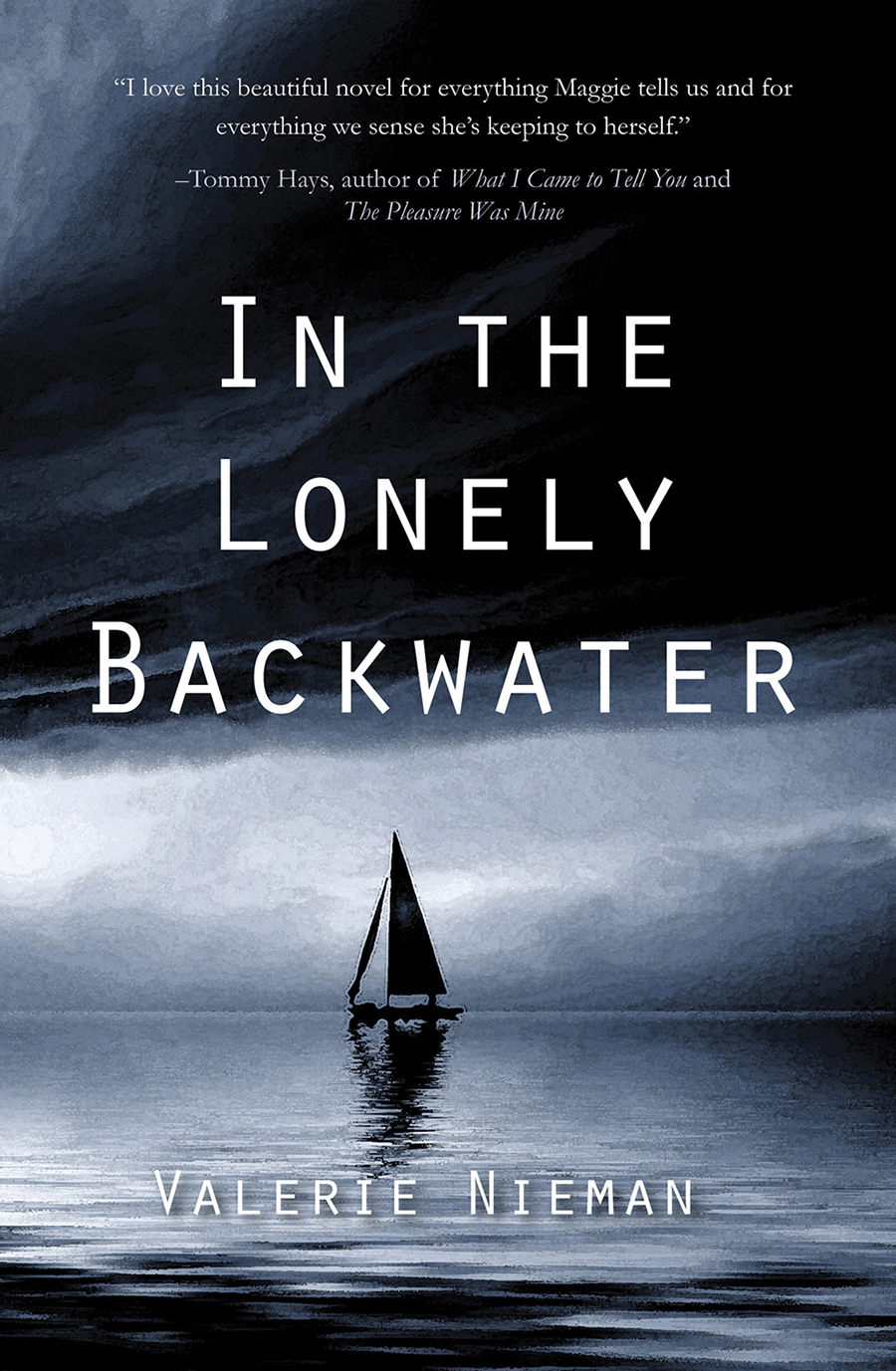
On Wednesday, Feb. 22, Weymouth Center for the Arts & Humanities writer-in-residence Valerie Nieman will read from her latest novel, In the Lonely Backwater, a gripping and graceful mystery in the Southern gothic tradition released in May 2022. When Maggie becomes a prime suspect in the prom-night murder of her cousin, we learn she has secrets not even a detective can unravel. Admission is free at the Weymouth Center for the Arts & Humanities, 555 E. Connecticut Ave., Southern Pines. Reading begins at 5:30 p.m. For information, go to www.weymouthcenter.org.


No Strings Attached

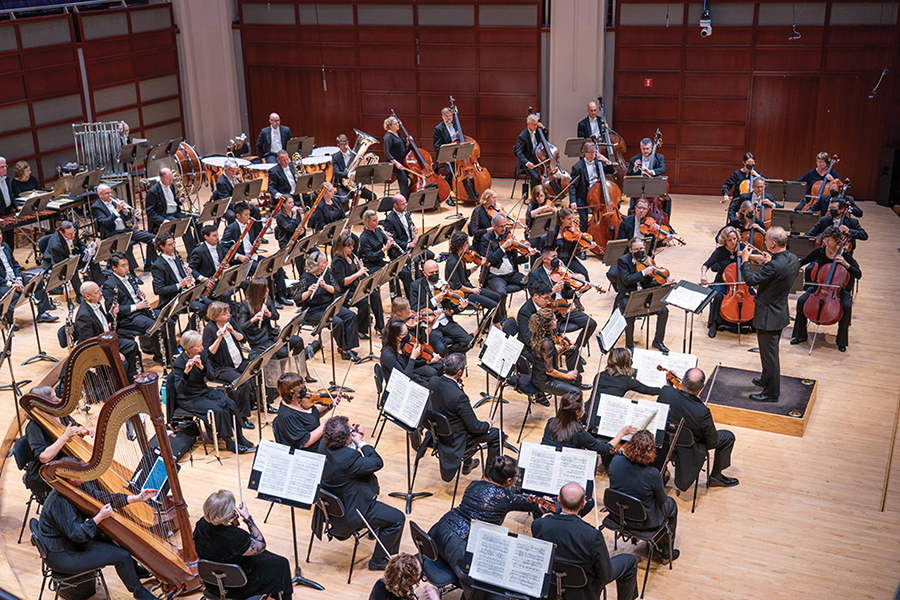
Get in the Valentine’s spirit with music that’s good for the heart and soul. On Thursday, Feb. 2, at 7:30 p.m., the North Carolina Symphony will perform Felix Mendelssohn’s String Symphony No. 7 at Robert E. Lee Auditorium, 250 Voit Gilmore Road, Southern Pines. It’s one of 12 string symphonies Mendelssohn wrote between the ages of 12 and 14. Busy boy. For more information, go to www.ncsymphony.com.


The Four Freshmen

You don’t need a trip down Route 66 to find The Four Freshmen: Just grab a seat at BPAC’s Owens Auditorium, 3395 Airport Road, Pinehurst, at 7 p.m. on Friday, March 3, when the group that has recorded over 75 albums, 70 top-selling singles and received six Grammy nominations performs live on stage. The integrity of the sound created by the “original guys” (the group was formed in 1948) has been meticulously maintained, with a modern twist of elegance to the time-honored sound that The Beach Boys’ Brian Wilson once called his favorite band to watch live. For more information and tickets, go to www.ticketmesandhills.com.


An Affair to Remember

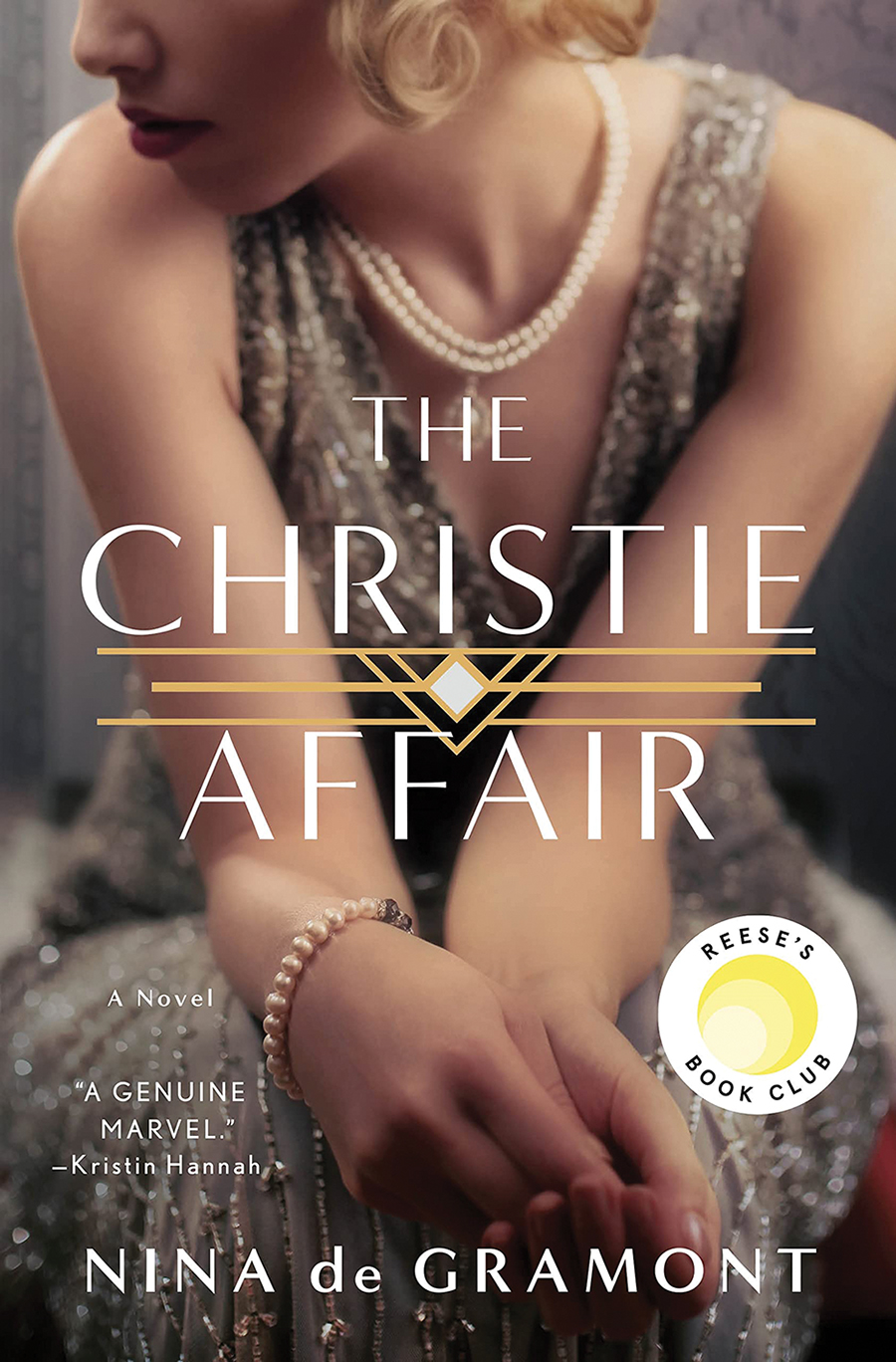
Just in time for the paperback release, University of North Carolina Wilmington creative writing professor and author Nina de Gramont will talk about her book The Christie Affair on Wednesday, Feb. 15, from 5 p.m. to 6 p.m., at The Country Bookshop, 140 N.W. Broad St., Southern Pines. For information and tickets, go to www.ticketmesandhills.com.


Heart and Soul

Vocalist Clint Holmes headlines the Heart of Carolina Jazz Orchestra under the direction of Dr. Gregg Gelb at 7:30 p.m. on Saturday, Feb. 11, at BPAC’s Owens Auditorium, 3395 Airport Road, Pinehurst. Holmes’ 40-year career has taken him from the top of the charts to an Emmy award for his own TV show and from a Grammy nomination to headlining in Las Vegas. For information and tickets, go to www.ticketmesandhills.com.


Learning about the Lumbee Tribe

The first of three parts in the spring lecture series “Lumbee Life, Lore & Legacy” features Harvey Godwin Jr. discussing “The Background and Local History of the Lumbee Tribe” at 2 p.m. on Sunday, Feb. 19, at the Weymouth Center for the Arts & Humanities, 555 E. Connecticut Ave., Southern Pines. Cost is $15 for members and $20 for non-members. For information, go to www.weymouthcenter.org.

Tea Leaf Astrologer

Tea Leaf Astrologer

Aquarius

(January 20 – February 18)

You’ve heard the tale of the two wolves, right? The good wolf and the bad wolf at battle within each of us? The one you feed is the one who wins. This wisdom is particularly applicable for you this month, Water Bearer. Although your wolves may have different names — visionary and fool, perhaps — the message is the same. Which animal will you feed?

Tea leaf “fortunes” for the rest of you:

Pisces (February 19 – March 20)

It’s time to shake some dust.

Aries (March 21 – April 19) 

Rainbows and sunshine, baby.

Taurus (April 20 – May 20) 

Say it with flowers.

Gemini (May 21 – June 20)

Probiotics with the assist. 

Cancer (June 21 – July 22)

You can’t rush your own spring.

Leo (July 23 – August 22)

The cake is not done.

Virgo (August 23 – September 22) 

Just use what you’ve got. 

Libra (September 23 – October 22)

Trust your inner compass. 

Scorpio (October 23 – November 21)

Don’t forget to claim your prize.

Sagittarius (November 22 – December 21)

Sometimes the shortcut isn’t a shortcut. 

Capricorn (December 22 – January 19)

Shake it and start over.  PS

Zora Stellanova has been divining with tea leaves since Game of Thrones’ Starbucks cup mishap of 2019. While she’s not exactly a medium, she’s far from average. She lives in the N.C. foothills with her Sphynx cat, Lyla. 

In the Spirit

In the Spirit

Manhattan Variations

Subtle twists, refined tastes

By Tony Cross

While I was at work last week, I saw a bottle of vermouth that I enjoy and immediately realized that it had been a minute or so since I’ve made and enjoyed a Manhattan. I vowed to make myself one that night.

It was getting a little late by the time I was heading home, and I remembered I was out of Grand Marnier. A quick detour to the local ABC store aaannnddd . . . they’re closed. “Damn it!” I pouted, furious that I had literally missed the window by five minutes. I’ve done that maybe twice in my life. When I got home I went to my cabinet to get a bottle of rye and a bottle of Angostura bitters. As I was reaching for the bitters, my hand was drawn to a small bottle of Angostura cocoa bitters. “This could be good,” I thought. I grabbed the bitters, retrieved my vermouth from the fridge, and away I went whipping up the cocktail. It was so good I’ve been making one every night since.

Those of you who know how to make a Manhattan might wonder why the hell I would need an orange liqueur — it’s not even an ingredient in the drink. And you would be right. Until you try it. I’ll explain. But first, let’s KFC this thing and look at the original recipe.


Manhattan

2 ounces whiskey (bourbon or rye)

1 ounce sweet vermouth

2 dashes Angostura bitters

Bourbon or rye will do, just make sure that the proof is 90 or above. It truly does make a better Manhattan. As far as vermouth goes, my go-to is always Carpano Antica, but other vermouths such as Cocchi, Cinzano, Dolin, etc., will do. As always, make sure your vermouth has been refrigerated after opening. Vermouth that has been sitting in your liquor cabinet is trash — throw it out. The bitters, in my opinion, must be Angostura. There are other aromatic bitters available if you’d like to switch it up, and there is nothing wrong with that, though I still think Angostura reigns supreme. When you are using bitters, make sure that the dashes are not drops. Don’t be scared to give that bottle a shake.

Now, the orange liqueur. When I first got into mixing drinks, I followed Dushan Zaric from Employee’s Only in New York City. His cocktail book was my Bible. In it, he has a recipe for a Manhattan that goes something like this:

Manhattan (Employee’s Only version)

1 1/2 ounces rye whiskey

1 3/4 ounces sweet vermouth

1/2 ounce Grand Marnier

3 dashes Angostura bitters

Right off the bat you’ll notice that there is more vermouth in this version of a Manhattan. Back in the 1800s in legendary bartender Jerry Thomas’ day, this was a vermouth cocktail and it did have orange curaçao. The folks at EO like to honor the cocktail and make it the way it was done 150 years ago. Truth be told, I would do a 2:1 ratio of rye and vermouth but keep the Grand Marnier at 1/2 ounce. It is delicious and a must-try for any whiskey fan.

The next variation was created by bartender Todd Smith when he worked at Bourbon & Branch in San Francisco in 2005. By swapping out the sweet vermouth with amaro (an Italian liqueur), the drink leans more toward the bitter end.

Black Manhattan

2 ounces rye whiskey

1 ounce Amaro Averna

1 dash Angostura bitters

1 dash orange bitters

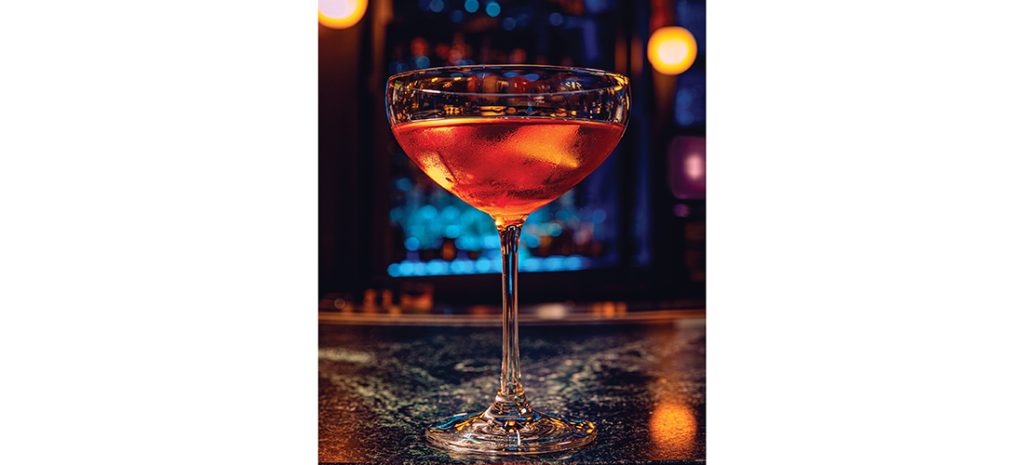
Last but not least, my latest nightly treat. There’s nothing to it, just the addition of cocoa bitters. I did, however, play around with the specs a little. For instance, I always use a rye when making Manhattans, but it just so happened I had a bottle of Old Scout straight bourbon whiskey that had been gifted to me, so on my second night of making Chocolate Manhattans, I gave it a shot. The Old Scout is a whopping 121 proof (yikes!), but the sweet vermouth takes the edge off and the cocoa bitters makes the cocktail come together. If you don’t have a high proof bourbon, a 90 proof (or higher) rye whiskey will most definitely do. As for garnishes, I usually use a lemon peel — expressing its oils over the cocktail — but, as luck would have it, I purchased and opened a bottle of Luxardo Maraschino cherries and hot damn, does it make that last sip taste like dessert! Cherries, chocolate . . . am I still talking about a grown-up cocktail? You betcha.

As with all of these Manhattan cocktails, the setup and execution are the same: Make sure your drinking coupe is cold. Add all liquid ingredients into a chilled stirring vessel. Use good ice (if possible) and stir until the cocktail is cold and enough water is diluted, then strain your cocktail into the cold coupe.

Chocolate Manhattan

2 ounces Old Scout 6-year straight bourbon whiskey 

1 ounce Carpano Antica vermouth

2 dashes Angostura Cocoa bitters

1 dash Angostura bitters  PS

Tony Cross is a bartender (well, ex-bartender) who runs cocktail catering company Reverie Cocktails in Southern Pines.

Simple Life

Simple Life

Where Does the Light Go?

Reflections on a beloved friend’s passing — and growing older

By Jim Dodson

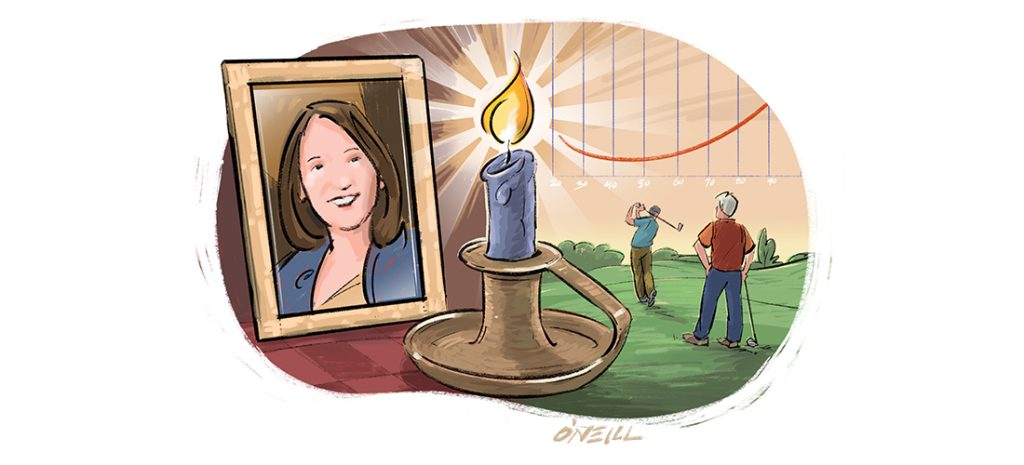
In an early time, according to the late Irish bard and spiritual thinker John O’Donohue, Medieval mystics loved to pose the beguiling question: Where does the light go when the candle is blown out?

I couldn’t help but think of this conundrum one recent Saturday morning as I sat in a pew of the First Presbyterian Church in downtown Atlanta, having taken a redeye flight from Los Angeles in order to attend a dear friend’s funeral service.

Celetta Randolph Jones — Randy  as she was affectionately known by hundreds, if not thousands of people — was one of my oldest and closest friends. She walked into my life in 1977 at the Atlanta Journal-Constitution two days after I arrived at the oldest Sunday magazine in the nation. Editor Andy Sparks believed we needed to meet because we were both single, students of American history and Randy knew the city like the back of her most elegant hand.

I’d just turned 24, a wide-eyed bumpkin from North Carolina. Randy was almost 30, the sophisticated media officer of The Georgia Trust for Historic Preservation. I think perhaps Editor Sparks believed sparks might fly between us, which they did. Just not the kind he envisioned.

We discovered instead a friendship for the ages. During my nearly seven years in Atlanta, Randy became my frequent dinner companion during which no subject was out of bounds — God, politics, my literary ambitions and her string of colorful boyfriends who could never keep up with her.

By the time my career carried me off to New England, Randy had started her own public relations firm and was quickly becoming a megastar representing the likes of Coca-Cola, British Airways and dozens of other A-list regional and international clients. Despite the distance, our friendship only deepened and grew. When my daughter, Maggie, was born in 1989, Randy, who never married, was delighted to become my daughter’s godmother. She came to New England and North Carolina many times for holidays and family occasions, and I never failed to stay with her whenever I passed through Atlanta. She truly was one of the great lights — and gifts — of my life.

It was lovely to learn from the words of remembrance from her adoring brothers, Harry and Powell Jones, that “Aunt Randy” actually had a dozen or more godchildren she faithfully lavished attention and wisdom upon over the decades, even after a freakish illness destroyed her immune system and forced her to sell her thriving company. She moved to a high rise apartment in Atlanta’s Four Seasons Hotel where she became a tireless fundraiser for Emory University Hospital, The Woodruff Arts Center, her church and many other charities. According to brother Harry, everyone in the building, from the hotel doorman to her neighbor, Charles Barkley, considered Randy their best friend. Her generosity to friends and strangers alike knew no bounds.

I saw Randy a month or so before she passed away. She was frail but mentally vibrant and connected to people as ever, wanting to hear about my latest book project and her goddaughter’s life in L.A. We sat together for almost two hours. When I got up to go and bent to kiss her cheek, she remarked, with her wonderful, sultry, deep Georgia accent, “We have traveled pretty far together, haven’t we?”

“And we’re not done,” I replied. “You helped light the way.”

She patted my hand. “Don’t worry. That light will never go out.”

I think she knew we would never see each other again in this world. But had no doubt whatsoever about the next.

So where does the light go when the flame is blown out?  I’ll leave that debate to the Medieval mystics and take my friend Randy at her word that the light will never go out.

The passing of one you love, however, inevitably calls up thoughts of your own brief mortality.

This month, with not a lot of fanfare, I reach my Biblically proscribed threescore years and ten, a phrase popularized by Psalm 90, which was read at Randy’s service. Seventy was considered a ripe old life in ancient times.

Fortunately, I have two best buddies — Patrick and Joe — who are also reaching 70 around the same time I am: Joe in January, Patrick in March. At our regular luncheons of the Stuffed Potato Philosophy & Adventure Club, we often talk about how pleased we are to be “older” dudes who are still working at jobs we love and appreciating life more than ever. True, body parts don’t work as fluidly as they once did, but it’s amazing what we never worry about anymore, including death, taxes, career ups and downs, and the inevitability of growing older. This spring, Patrick and I plan to celebrate 58 years of playing golf together in America and Britain by setting off for a final roving match across Ireland, Scotland and England for perpetual bragging rights. Our legs may grow weary, but, I assure you, not our spirits.

A recent study shows that we are not alone, revealing that the vast majority of older Americans are as happy — and busy — as they have ever been in American society. As anti-ageism activist Ashton Applewhite recently pointed out in her outstanding TED Talk, older people tend to become more optimistic as they age, worry far less than younger folks, and really only have two things to be concerned about — that someday the people you love will die, and that parts of your body will eventually quit working. Fear of death doesn’t even make the list. Remaining open to new adventures and connected to people turns out to be a path for a long and meaningful life. Applewhite calls it the U-Curve of Happiness.

Was it simply the hand of sweet synchronicity that I happened to hear her inspiring TED Talk on the radio during the long drive home to North Carolina following Randy’s memorial service, or maybe something only a mystic could explain?

I’ll probably never know. But in the meantime, I’ll happily follow the flame wherever it leads next. PS

Jim Dodson can be reached at jwdauthor@gmail.com.

Southwords

Southwords

Eau d’Adventure

A little spritz goes a long way

By: Emilee Phillips

They say smells are the strongest links to memory. A whiff of something can transport you instantly through the years. Perfumes are like people, each complex and unique. One may sing a melancholy song but you can’t help but love her voice. Another might wrap you up in a big hug and hold you there no matter how long it’s been. A third can pull you into a hallway you haven’t dared walk down in years.

A new year is a chance to try on new versions of yourself as simply as changing your scent. You can have a signature perfume, or you can have the world at your door with the touch of an atomizer. I could smell like a girl who spends her days arranging flowers, drinking afternoon tea and wearing a pearl necklace. Or I could have a sultry scent and create mystery in the air as if, just walking past, it is possible to imagine being inside a luxurious yacht.

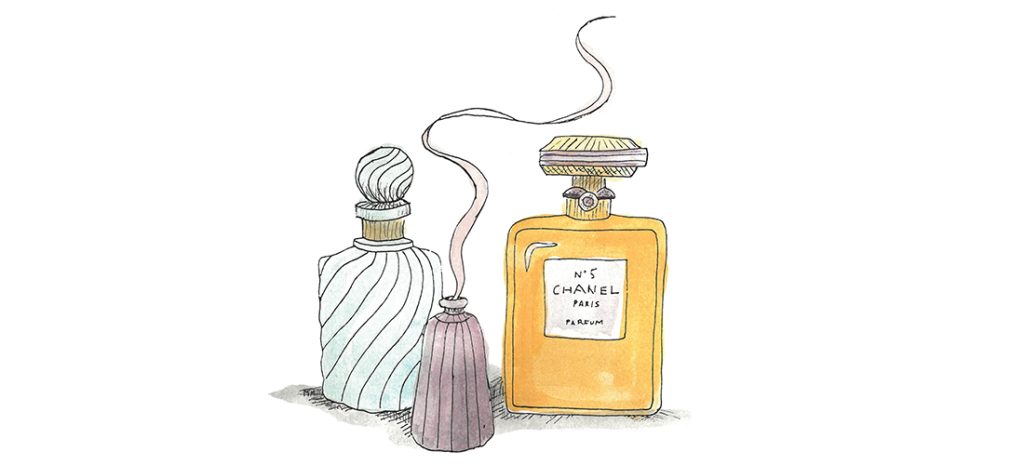
And I adore fragrance bottles. While many may be ornate, uniquely shaped vessels with ridiculous names on their labels, they’re my prized little possessions.

I have a round glass bottle of Chanel I got my senior year of high school. I use it sparingly, mostly on special occasions. Every pink spritz takes me back to seeing the world as an adult for the first time. Back to prom, my cap and gown, and first dates.

I have a bottle that’s yellow and cylindrical and reminds me of a trip I took to Ohio one winter, my white boots in the snow and my cousin, Maddy. We walked all around Cleveland, shivering with coffees in hand, finding unique storefronts and taking dramatic photos we dubbed “album covers.” A whiff brings us back together again.

People associate red roses with Valentine’s Day, as do I, though I prefer the look of peonies or carnations. Still, I opt for rose-scented spray on the 14th. Once, on my way out for dinner, I sprayed so much of it my coat held onto the scent deep into spring. My date rolled the car windows down, terrified, I suppose, that no automobile air freshener could ever put it right.

I secretly love walking through department stores with beauty bars and fragrance counters. The haze that hangs between the door and the shoe department is a fog bank I welcome. Even though most perfumes are overpriced and overly pungent, I enjoy over-sampling them all, sniffing test papers until my nose can no longer distinguish patchouli from pine.

I even keep a small gold metal bottle my mother bought in Paris back in the ’80s. It’s never been opened. She wanted to save it for a special occasion. Maybe one day I’ll test it out and cross my fingers that it doesn’t smell terrible. Maybe we’ll even wear it out together to create an aromatic memory all our own.  PS

Emilee Phillips is PineStraw’s director of social media and digital content.

Almanac

Almanac

February knows you’re weary.

She can tell by the longing in your eyes, the ache in your chest and shoulders, how you carry the cold like a burden.

On these frost-cloaked mornings, you dream of soft earth and tender blossoms, spring peepers and swallowtails, songbirds and sunny afternoons.

February knows. She cannot give you what she does not have. And yet, she offers hope.

At dawn, the frigid air nips your face and lungs, stuns you with its jarring presence. It’s hard, at first, to see beyond the dense clouds of your own breath. This is where you start: Breathe into the mystery. Let the formless take form. Watch your own warmth shape the world around you.

As the pink sky slowly brightens, two silhouettes appear in the glittering distance.

A pair of rabbits.

Something about their gentle presence softens the very landscape, softens your edges and your gaze. Weeks from now, their quiet stirrings will have conjured the first of many quivering litters. Something deep within you stirs.

February offers contrast.

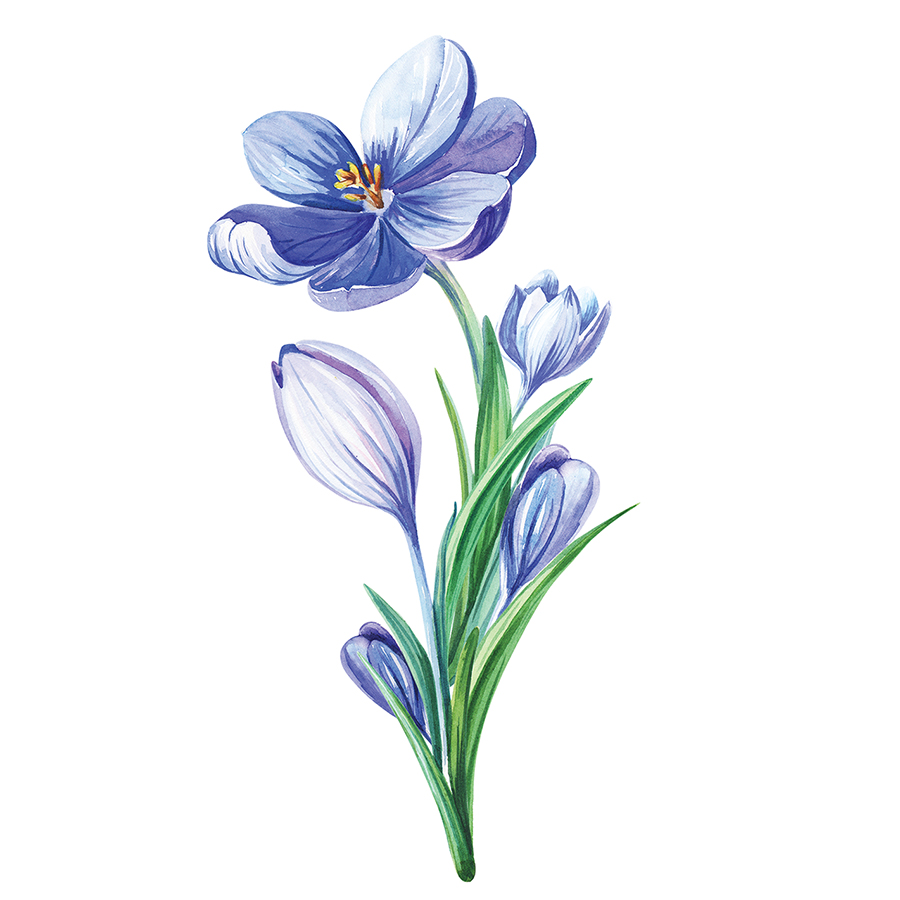
Suddenly, you notice early crocus, jewel-like petals drenched with more color than you’ve seen in months. For now, this luscious purple is enough.

But there’s more.

When the first golden daffodil emerges from the frozen earth, a sunbeam lights upon your face. You close your eyes, basking in this subtle warmth, this fleeting glimpse of what’s to come.

The cold becomes quiet. As you walk the icy bridge between the harsh clutch of winter and the tender kiss of spring, you carry yourself differently. Hope is gleaming in your eyes, glittering on the horizon, tucked inside your chest like a sacred gift.


Bridge Between Seasons

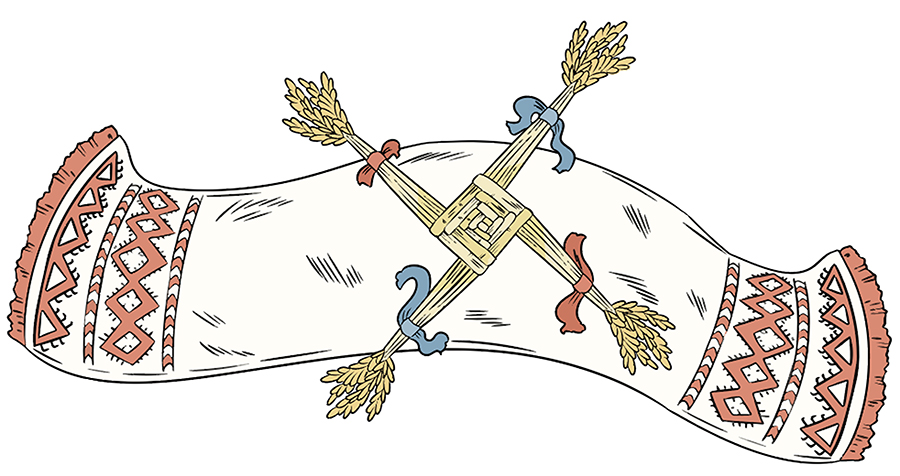
The ancient Celts looked to the Wheel of the Year to celebrate and honor nature’s cycles, drawing wisdom from the turning of each season. Imbolc (observed on Feb. 1) marks the midpoint between the winter solstice (Yule) and the spring equinox (Ostara). In other words: Imbolc is a bridge between death and rebirth. Also known as Candlemas or Brigid’s (pronounced Breed’s) Day, this festival honors the return of the sun and celebrates the Celtic fertility goddess Brigid.

The days are growing longer. The sun, stronger. The earth opens to a quickening rhythm.

Soon, the seeds from last year’s harvest will be sown. As spring awakens within and around us, the great wheel turns and turns.


While it is February one can taste the full joys of anticipation. Spring stands at the gate with her finger on the latch.   — Patience Strong


Crocus Pocus

Perhaps you know that saffron, the complex and costly spice, comes from the red stigmas of the autumn-blooming saffron crocus (C. sativus), not the snow crocuses you see now, bursting through the frozen earth. And yet, these winter-blooming beauties offer something of even greater value: the ineffable promise of spring.

Plant your own corms this fall. They’ll need full sun, moist but well-drained soil and a quiet winter to unlock their incomparable magic.  PS

Simple Life

Simple Life

One Journey Ends, Another Begins

Lessons from the road long ago taken, but not forgotten

By Jim Dodson

In ancient Roman religion, the god Janus was a two-faced chap revered as the deity of doorways and transitions, endings and new beginnings — hence the origin of this month’s name, signaling a moment when we wisely take time to reflect on where we’ve come from and what may lie ahead.

This year, this notion has fresh relevance to me.

Sometime this spring, assuming the good Lord is willing and the creek don’t rise, as my Southern granny liked to say, I hope to finish writing a book that means the world to me.

It’s about the legendary Great Wagon Road, described by historians as the most traveled road of colonial America, the country’s first immigrant “highway” that passed through the Appalachian backcountry from Philadelphia to Georgia, bringing tens of thousands of Scots-Irish, German and other European settlers to the American South, including my ancestors and quite possibly yours.

Joe Wilson, the great historian of American roots music, once estimated that “a quarter of Americans today have an ancestor who traveled the Great Wagon Road. You can still see traces of it, a track across high ridges, a trough through piney woods, guarded by wild turkey and chipmunks, a road that was in use for a century — the most important road in American history.”

Six years ago, an idea nurtured since I was knee-high to a historic roadside marker was born anew. With some encouraging research in hand, I paid a visit to a former Navy engineer named Tom Magnuson who heads up the Trading Path Association, based in Hillsborough, where my own Scottish ancestors arrived in the mid-1700s. Magnuson’s marvelous organization researches and documents America’s historic lost roads in order to preserve and expand public appreciation of them. I figured if anyone could tell me if it was feasible or pure folly to try to find the original roadway and follow it from Philly to Georgia 250 years after the fact, that fellow was Tom Magnuson.

My timing couldn’t have been better. He pointed out that recent scholarship by an army of historians, state archivists, archeologists and ordinary history nerds like me had actually determined the original path of the Great Wagon Road and even posted an exquisitely detailed description of its route through some of the most hallowed places in America.

“The Great Wagon Road,” Tom said, when I mentioned my objective, “is the grandaddy of America’s frontier highways — our creation myth, if you like — one that explains the origins of our national story better than any other. The people and ideas that came down that road shaped the character of this nation, both good and bad. That defines who we are today.”

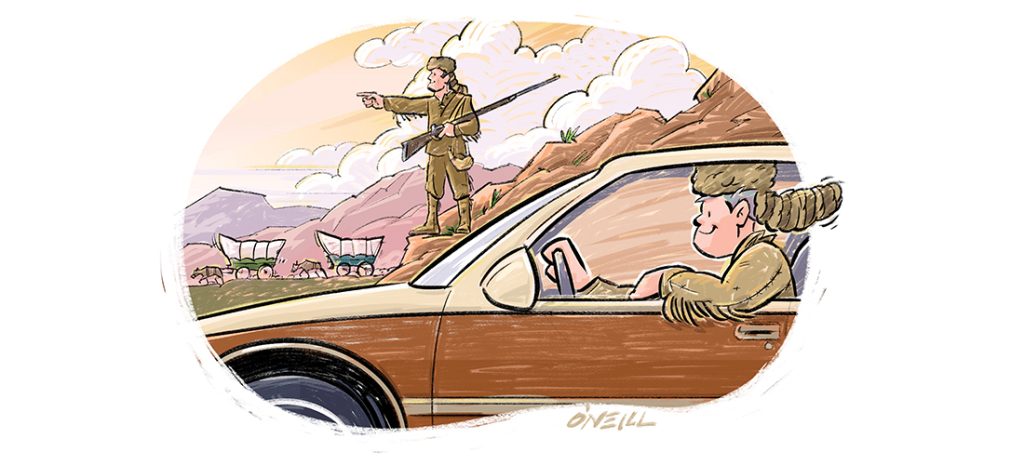
This was all the encouragement I needed. Not long afterwards, I plotted my route and even purchased my very own “Great Wagon” for the journey — a 1996 Buick Roadmaster Grand Estate station wagon, said to be the last “true” American station wagon before Detroit switched to making SUVs.

I envisioned a pleasant three-week cruise along the winding 845-mile road in which I would encounter all sorts of interesting characters, local experts and fellow Wagon Road flamekeepers who shared my passion for this once lost frontier highway and its unique role in shaping America.

God laughs, as the ancient proverb goes, when grown men make plans.

In fact, the journey took five years and 2,100 miles to complete, in part due to the incredible amount of history, marvelous people and stories I found along the way, but also because a worldwide pandemic struck in the middle stages of my research, knocking me off the road for almost two years.

Certain moments stand out, including meeting descendants of Founding Fathers and Daniel Boone; sitting with a fabled Lincoln historian during the annual reading of the Gettysburg Address; walking Antietam with the National Park Service’s first female battlefield guide; and playing guitar with an Appalachian bluegrass legend.

All told,  I visited with — and interviewed — more than 100 extraordinary and ordinary folks from every walk of life who had their own love affair with the old road.

I cherish their diverse voices on my iPhone recorder because they belong to a wonderfully democratic mix of experts and colorful characters, activists and local historians, thoughtful museum curators, gifted poets and preachers, artists and war re-enactors, history nuts of every political persuasion and kind strangers whose names I simply forgot to write down.

In the end, listening to their stories about an old road that has gripped my imagination since I was a kid standing in front of a huge covered wagon in a museum brought me even closer to the country I love.

It taught me how amazingly far we’ve come — and have yet to go.

Somehow, I think the god Janus would approve.  PS

Jim Dodson can be reached at jwdauthor@gmail.com.

Bookshelf

Bookshelf

January Books

FICTION

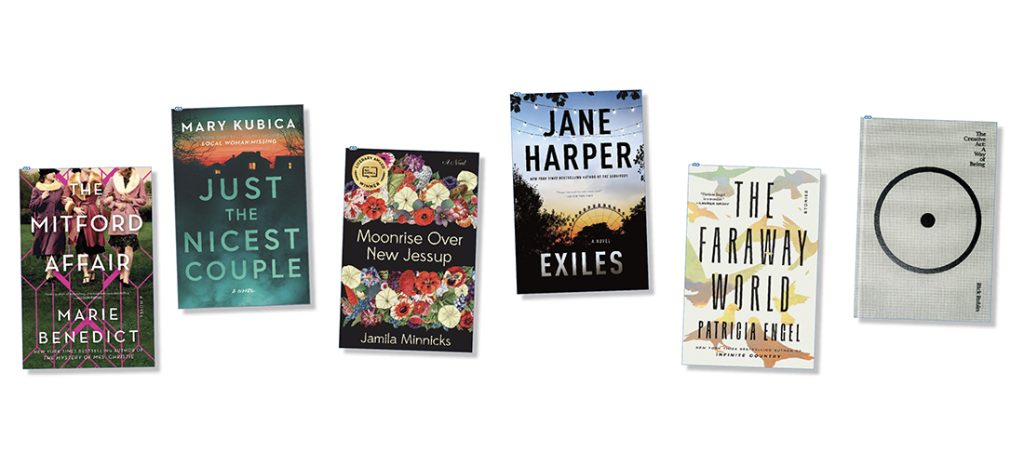
Moonrise Over New Jessup, by Jamila Minnicks

It’s 1957, and after leaving the only home she has ever known, Alice Young steps off the bus into the all-Black town of New Jessup, Alabama, where residents have largely rejected integration as the means for Black social advancement. Instead, they seek to maintain, and fortify, the community they cherish on their “side of the woods.” Alice falls in love with Raymond Campbell, whose clandestine organizing activities challenge New Jessup’s longstanding status quo and could lead to the young couple’s expulsion — or worse — from the home they both hold dear. But as Raymond continues to push alternatives for enhancing New Jessup’s political power, Alice must find a way to balance her undying support for his underground work with her desire to protect New Jessup from the rising pressure of upheaval from inside, and outside, their side of town. Minnicks’ debut novel is both a celebration of Black joy and an examination of the opposing viewpoints that attended desegregation in America.

Just the Nicest Couple, by Mary Kubica

Jake Hayes is missing. This much is certain. At first his wife, Nina, thinks he is blowing off steam at a friend’s house after their heated fight the night before. But then a day goes by. Two days. Five. And Jake is still nowhere to be found. Lily Scott, Nina’s friend and co-worker, thinks she may have been the last to see Jake before he went missing. After Lily confesses everything to her husband, Christian, the two decide that nobody can find out what happened leading up to Jake’s disappearance, especially not Nina. But Nina is out there looking for her husband, and she won’t stop until the truth is discovered in this high-octane, edge-of-your-seat thriller.

The Mitford Affair, by Marie Benedict

Between the World Wars, the six Mitford sisters — each more beautiful, brilliant and eccentric than the next — dominate the English scene. Though they’ve weathered scandals before, the family falls into disarray when Diana divorces her wealthy husband to marry a fascist leader, and Unity follows her sister’s lead all the way to Munich, inciting rumors that she has become Hitler’s mistress. As the Nazis rise to power, Nancy Mitford grows suspicious of her sisters’ constant visits to Germany and the high-ranking fascist company they keep. When she overhears alarming conversations and uncovers disquieting documents, Nancy must make excruciating choices as Great Britain goes to war with Germany.

The Faraway World, by Patricia Engel

Two Colombian expats meet as strangers on the rainy streets of New York City, both burdened with traumatic pasts. In Cuba, a woman discovers her deceased brother’s bones have been stolen, and the love of her life returns from Ecuador for a one-night visit. A cash-strapped couple hustle in Miami, to life-altering ends. The Faraway World is a collection of arresting stories from the New York Times bestselling author of Infinite Country. The Washington Post calls Engel “a gifted storyteller whose writing shines even in the darkest corners.” Intimate and panoramic, these stories bring to life the vibrancy of community, and the epic deeds and quiet moments of love.

Exiles, by Jane Harper

At a busy festival site on a warm spring night, a baby lies alone in her pram, her mother vanishing into the crowd. A year on, Kim Gillespie’s absence casts a long shadow as her friends and loved ones gather deep in the heart of South Australian wine country to welcome a new addition to the family. Joining the celebrations is federal investigator Aaron Falk. But as he soaks up life in the lush valley, he begins to suspect this tight-knit group may be more fractured than it seems. Between Falk’s closest friend, a missing mother, and a woman he’s drawn to, dark questions linger as long-ago truths begin to emerge.


NONFICTION

The Creative Act: A Way of Being, by Rick Rubin

Many famed music producers are known for a particular sound. Rubin is known for something else: creating a space where artists of all different genres and traditions can hone in on who they really are and what they really offer. He has made a practice of helping people transcend their self-imposed expectations in order to reconnect with a state of innocence from which the surprising becomes inevitable. Over the years, as he has thought deeply about where creativity comes from and where it doesn’t, he has learned that being an artist isn’t about your specific output, it’s about your relationship to the world. Creativity has a place in everyone’s life, and everyone can make that place larger. The Creative Act is a beautiful and generous course of study that illuminates the path of the artist as a road we all can follow.


CHILDREN’S BOOKS

Ice! Poems about Polar Life, by Douglas Florian

Brrrrfect poetry for the winter months. Ice! will warm the hearts of young readers with funny frozen antics of penguins, caribou, narwhals and other cold climate critters. (Ages 3-7.)

The Year of the Cat, by Richard Ho

Rat, pig, dog, sheep, monkey, rooster, horse, snake, dragon, tiger, rabbit and ox — all are stars of the zodiac. But whatever happened to Cat? Find out the rest of the story in this fun tale that’s the perfect way to honor the Chinese New Year. (Ages 5-7.)

Groundhog Gets it Wrong, by Jessica Townes

Predicting the weather is a big job, so when Groundhog takes over as the spring seer, and things don’t go exactly as planned, he has to get creative to make meteorological magic happen. Not your normal Groundhog Day title, this humorous take on the celebration also includes a few historical facts to make the day even more fun. (Ages 3-6.)

Moon Rising: A Graphic Novel, by Tui Sutherland

The Wings of Fire series is the hottest property on the market for voracious readers in grades 3-6 and with a scheduled print run of 500,000 this sixth graphic novel adaptation is sure to be the book in every backpack when it lands on Dec 27. (Ages 8-12.)  PS

Compiled by Kimberly Daniels Taws and Angie Tally.

Creators of N.C.

Creators of N.C.

The Buddy System

Old friends lend a Haand

By Wiley Cash

Photographs By Mallory Cash
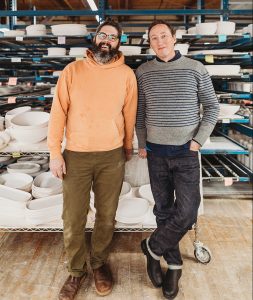
   

If my best friends from high school and I were able to live our youthful artistic dreams we’d still be playing in a garage band called The Subterraneans. Luckily, ceramicists Mark Warren and Chris Pence, who met in high school in the late 90s in northern Florida, had a business plan. In 2012 they founded a ceramics and glassware company called Haand, which is named after the archaic Norwegian word for “hand,” and where everything is made by, you guessed it, hand. Since founding their company, Mark and Chris have partnered with restaurants around the world, including Beard Award winners and local culinary royalty like Ashley Christensen and Vivian Howard, with whom they’ve launched a special collection.

There’s an old saying that goes, “If you show me your friends I can show you your future.” If only we all had friends like Mark and Chris during high school. The best businesses, like the best friendships, grow organically from shared interest and vision, and while Mark’s and Chris’ professional paths briefly diverged after college — Mark pursued the arts while Chris worked as an accountant — they came back together over a decade later in rural North Carolina as roommates and business partners in a crumbling old mansion. (How crumbling? Let’s just say that the same bucket that caught water from the kitchen drain was used to flush the toilet.) In this auspicious setting, Haand was born.

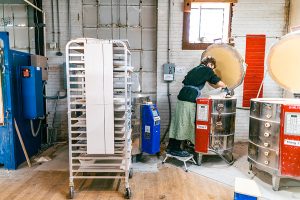
On a warm fall morning in late November, I parked in the grassy lot outside the Haand showroom and production studio in Burlington. The 13,000-square-foot brick building was once a hosiery mill, and it still retains its industrial feel, despite the gorgeous colors and earthy appearance of the countless handmade ceramic pieces that greet you as soon as you step inside.


   

I found Mark, Haand’s creative director and co-founder, as he passed through the showroom on his way out the door. He stopped and greeted me warmly with a broad smile that was nearly hidden by a thick beard. Mark very much looks the part of a potter, and he very much looks the part of someone who might enjoy living in a house where a single bucket serves as both a kitchen and a bathroom appliance. I hadn’t let anyone at Haand know I was coming, and I felt bad about dropping in during the middle of the day, but Mark didn’t seem to mind. He casually showed me around the production studio where a couple of dozen people were at work at various stations, each one marking an integral step in the process of achieving the distinct look and feel that Haand is known for.

As we walk through the space, Mark explains the process, beginning after he completes each design, whether it be for a vase, a coffee cup or a serving dish. A mold is built from each design, and into the mold is poured liquid porcelain slip. Once the piece dries inside the mold, it is removed, cleaned, smoothed with a sponge, and hand-inspected before being stamped with Haand’s logo and the phrase “Made in NC, USA.” The piece is then bisque fired and heated to 1,800 degrees, and this is where each piece gets interesting and distinct.

“Our clay body itself is what’s called vitreous,” Mark says, “so it melts at a really high temperature, and then it will become kind of liquid during a period of the firing. The clay kind of remembers things that have happened to it. So if you bump it with your thumb or kind of move it, it might look strange going in, and then it comes out and it has melted and softened and completely shifted its form. You can’t really fight that unless you’re doing what they do in industrial kilns, which is not what we do here. There’s a deeper truthfulness that can come out of not trying to fight the process and just letting it be what it is. It’s a beautiful thing.”

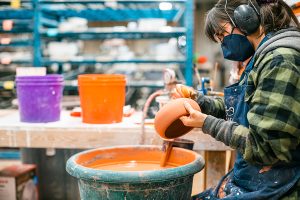
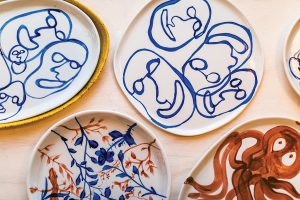
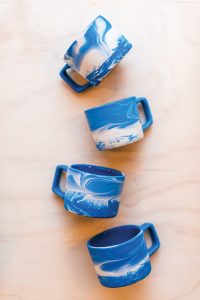
There is no doubt that each piece made by the folks at Haand is beautiful not only in its design, but also in its color. After the pieces are fired they are glazed with a liquid coating of minerals that bonds to the clay, and brings a glassy and distinct color finish and texture to each piece, whether it be fern green or matte grey or one of the stunning Cloudware finishes that looks just like its namesake.

After the glazing, each piece goes into the gas kiln, where it’s fired at 2,300 degrees so that the clay and the glaze thoroughly bond. Afterward, each piece is polished and inspected before either being shipped out or stocked in the showroom.

All told, countless hands touch the pieces during the process, and every step reflects the hand of the maker who’s worked on it, which ensures that each piece, even if it’s part of a set, bears its own distinctions. Roughly 90 percent of Haand’s employees were novices before walking in the door, but each of them receives extensive training in the production process in order to maintain Mark’s vision for every individual piece.

“It’s exciting,” Mark says, still seeming struck by the beauty of the process of designing, forming and firing even after all these years. “It’s right on the edge of chaos.”

But to the layperson’s eye, nothing about the scene at the production studio seems chaotic. People of all ethnicities, ages and backgrounds work quietly, whether they’re sponging or firing, many of them with earbuds popped in so they can listen to music, audiobooks or podcasts. Their work is accompanied by glances, smiles, nods of the head. The whole scene feels peaceful, thoughtful and grounded.

But it didn’t always feel that way to Chris, company president and co-founder, who I found after he stepped out of the office and gave me a tour around the showroom, where I immediately picked out two 10-ounce tapered mugs to take home. Chris had worked with clay since high school before forging a career as a corporate tax accountant in Jacksonville, Florida, where he often worked 80-hour weeks. It was on a trip to visit Mark in the dilapidated farmhouse that Chris truly considered reconnecting with his early passion for pottery. Mark pitched the idea of the two of them starting a business together; it ended up being an easy decision for Chris.

But those early days, rooming at the farmhouse with Mark while working in an outdoor studio took their toll on Chris, who quickly realized the differences between plowing through a 16-hour day behind a desk and the physicality of clearing brush to create more outdoor space, moving boxes of finished pieces, making phone calls and filling purchase orders.

“Moving into that house in the woods was a totally transformative experience for me,” Chris says. “I imagine that people were having thoughts like, ‘Has Chris lost it a little bit? Is he going a little crazy? He left a job he worked so hard for.’ I really looked up to Mark and relied on him to kind of show me what this new life was like.

“But I definitely remember being in the studio by myself one day and the lights were off, and it was dark. I had a real big moment of existential dread, and I thought, have I made a terrible mistake?”

For Chris, after both the success of the company and his continued friendship with Mark, those moments of uncertainty are fewer and farther between. “I’m so passionate about what we’re making,” he says.

While Mark and Chris’ primitive way of living has changed since their days on the farm, the way they make their pottery has not.

“We haven’t changed the production method at all,” Chris says. “We’ve certainly refined it and gotten better at doing things, but if you were to have been there with us at the farmhouse and walked through how we made a pot, and then you were to walk through the way we do it now, you would see there are no fundamental changes. We can make things more efficiently, but it’s still a handmade mold, we pour the clay in, we pour the clay out, we finish it, we fire it, we glaze it, fire it again, and it’s done. The process is the same.”

   

Their friendship is the same too.

“Mark has just always been an incredibly fun person to be friends with,” Chris says. “I think it’s a blessing for both of us to have been such good friends before the business because having a business is hard, and it can really, really be difficult on every level, whether it’s financially, physically, emotionally or spiritually. Mark has always had my back, always been there for me, and always supported me.”

It’s clear that Mark has felt the same about Chris for years. “When you meet someone like Chris, you just kind of know them in totality. Chris is one of those people that if you know him it would be inconceivable not to want to be friends with him afterward.”

“And Mark was hilarious in high school,” Chris says, laughing. “I remember him showing up to a prom party at my house. He was a sophomore, so he wasn’t even invited to the prom.”

“Please tell me he showed up in a tuxedo,” I said.

“I think it was one of those T-shirts that has a tuxedo printed on it,” Chris says.

“It was,” Mark adds, the sudden recollection causing them both to break into laughter. “And I brought a beer bong that I’d bought on a German Club trip to Daytona Beach. It had never been used before, and I was like, ‘Let’s see how this works.’”

“That’ll be the next thing that Haand manufactures,” I say. “Ceramic beer bongs.”

“There’s a lot of demand for that,” Chris adds, and we all laugh again.

When you visit Haand or order any of their pieces online to be delivered to you, you will immediately recognize the care and attention that Mark and Chris have put into their craft. And when you spend any amount of time around Haand’s co-founders, you will say the same for their friendship.

Come for the kiln-fired pottery. Stay for the warmth.  PS

Wiley Cash is the Alumni Author-in-Residence at the University of North Carolina at Asheville. His new novel, When Ghosts Come Home, is available wherever books are sold.