The Omnivorous Reader

Beyond Jaws

The tragedy of the Indianapolis revisited

By Stephen E. Smith

Just when you thought it was safe to go back in the bookstore, there’s a new best-seller about the worst shark attack ever — a book that details the feeding frenzy, past and present, that surrounds the sinking of the heavy cruiser USS Indianapolis on 30 July 1945.

Lynn Vincent and Sara Vladic’s meticulously researched and artfully constructed Indianapolis: The True Story of the Worst Sea Disaster in U.S. Naval History and the Fifty-Year Fight to Exonerate an Innocent Man is the latest in a plethora of books, history specials, movies, documentaries, TV news features, etc. that has, since the cruiser disappeared into the Philippine Sea 73 years ago, contributed to the lore surrounding the demise of the ship and crew that transported the first atomic bomb to the island of Tinian.

If you’re a reader with a basic knowledge of American history, you’re no doubt familiar with the tragic story of the Indianapolis. If you aren’t, anyone who’s seen the movie Jaws will be more than happy to tell you all about it, just as Quint, the shark hunter (played by Robert Shaw), told them: After delivering the components for the bomb, the Indianapolis was cruising at night when the Japanese submarine I-58 fired two torpedoes into the ship, sinking her in 12 minutes. About 300 crew died in the torpedo attack; another 900 went into the water. No lifeboats were launched, no actionable distress signal was transmitted, and the men had only flimsy life preservers and makeshift rafts to keep themselves afloat. Many of the crew died of saltwater consumption, others simply despaired and committed suicide. When the survivors were located almost five days later, only 316 remained to tell the story. Figures vary as to the exact number of the men taken by sharks, but experts theorize that the majority of those attacked had already died of exposure. Still, the horror engendered by a shark attack — the possibility of being eaten alive by a silent, subsurface predator — has resonated through popular culture.

To their credit, the authors aren’t obsessively concerned with sharks, focusing instead on a post-rescue conspiracy surrounding the Indianapolis disaster. In the months immediately following the sinking, the story was eclipsed by news of the surrender that occurred after the dropping of the atomic bombs, but a bureaucratic feeding frenzy began as soon as the survivors were rescued. According to Vincent and Vladic, Navy brass, intent on covering up their incompetence, subjected the ship’s captain, Charles B. McVay III, to a court-martial in which he was convicted of “hazarding his ship by failing to zigzag,” although zigzagging was not required or even recommended in the area in which the Indianapolis was cruising. In an unprecedented move, prosecutors brought in the commander of the I-58, a former enemy combatant, to testify against McVay. The Japanese captain stated emphatically that zigzagging would have made no difference in his attack on the Indianapolis, but McVay was found guilty anyway. He was blamed for the disaster, a reprimand was placed upon his service record, and a deluge of hate mail followed him for the remainder of his life. No other American captain has ever been punished for losing his ship to a torpedo attack. Whether out of guilt for his lost crew or the emotional distress brought on by a failing marriage, the former captain of the Indianapolis committed suicide in 1968.

Vincent and Vladic’s account doesn’t end with McVay’s death. They examine in detail his eventual exoneration. In 1996, a 12-year-old Florida boy, Hunter Scott, took an interest in the story of the Indianapolis and initiated a letterwriting campaign. He was supported by survivors who wanted to honor their late captain and by Sen. Bob Smith, who offered a congressional resolution that finalized McVay’s long-delayed vindication. But the reprieve didn’t come easy, and the military machinations and congressional intrigues surrounding the McVay hearings are at the heart of the book.

As the congressional inquiry neared its conclusion, Paul Murphy, one of the men McVay had led into harm’s way, wrote to the committee reviewing McVay’s court-martial, objecting to a previous report upholding the Navy’s original court-martial findings: “They contain falsehoods, statements taken out of context, and plain mean-spirited innuendos about our skipper and others who have attempted to defend him . . . The Navy report contained personal attacks on Captain McVay’s character. They were unwarranted, and in most instances, unrelated to the charges against him. On behalf of the men who served on the Indianapolis under Captain McVay, I would like to state our deep resentment and ask: Why is the Navy still out to falsely persecute and defame him?”

Most of the available histories of the Indianapolis sinking — Fatal Voyage, Left for Dead, Out of the Depths, Lost at Sea (there’s also a bad movie starring Nicolas Cage) — focus on the suffering of the crewmen abandoned by a Navy too busy or too disorganized to notice that a heavy cruiser had gone missing. The Vincent/Vladic book is, by and large, an update on the Indianapolis story and concludes with the August 2017 discovery of the ship’s remains, now a designated war grave, in the North Philippine Sea, bringing to a close the ship’s eight-decade saga.

“For the families of the lost at sea,” write Vincent and Vladic, “the news stirred high emotions, bringing back memories many had sealed away for decades. After nearly three-quarters of a century, children, nieces, nephews, and grandchildren were finding the peace that their parents and grandparents had sought for so many years.”

This cathartic effect notwithstanding, one thing is certain: With only 19 Indianapolis survivors still living, the finger-pointing and recriminations will soon enough cease to matter. PS

Stephen E. Smith is a retired professor and the author of seven books of poetry and prose. He’s the recipient of the Poetry Northwest Young Poet’s Prize, the Zoe Kincaid Brockman Prize for poetry and four North Carolina Press awards.


PinePitch

Veterans Parade

Line Broad Street on both sides of the tracks for the sixth annual parade honoring America’s veterans and active military on Saturday, Nov. 10, in Southern Pines. The parade begins at 10 a.m. and is supported by the Veterans of the Sandhills. For more information go to www.sandhillsveteransfestival.com.

Gone to the Dogs

Take a leisurely 1-mile walk through Weymouth Woods with your four-legged best friend at 3 p.m. on Sunday, Nov. 11. It’s free and open to the public at Weymouth Woods-Sandhills Nature Preserve, 1024 Fort Bragg Road, Southern Pines. For information call (910) 692-2167 or go to www.ncparks.gov.

Celebrating Seagrove Potters

The Seagrove Area Potters Association kicks off its 11th annual Celebration in Fall with a gala, live auction and potters market on Friday, Nov. 16, from 6-9 p.m. at Luck’s Cannery, 798, N.C. Hwy. 705, Seagrove. The three-day event continues on both Saturday and Sunday with $5 admission. For more information visit www.discoverseagrove.com.

Let’s Get Small

The Tour De Trike Glow Race to raise money for the United Way of Moore County takes place on Thursday, Nov. 8. Registration is at 4:15 p.m. and the cost is $100. Races begin at 5:30 p.m. on the New Hampshire Avenue International Speedway — between Broad Street and Bennett Street — in Southern Pines. Costumes and glow paint suggested to reduce aerodynamic drag. For more information and tickets, visit wwwticketmesandhills.com.

Get Cooking

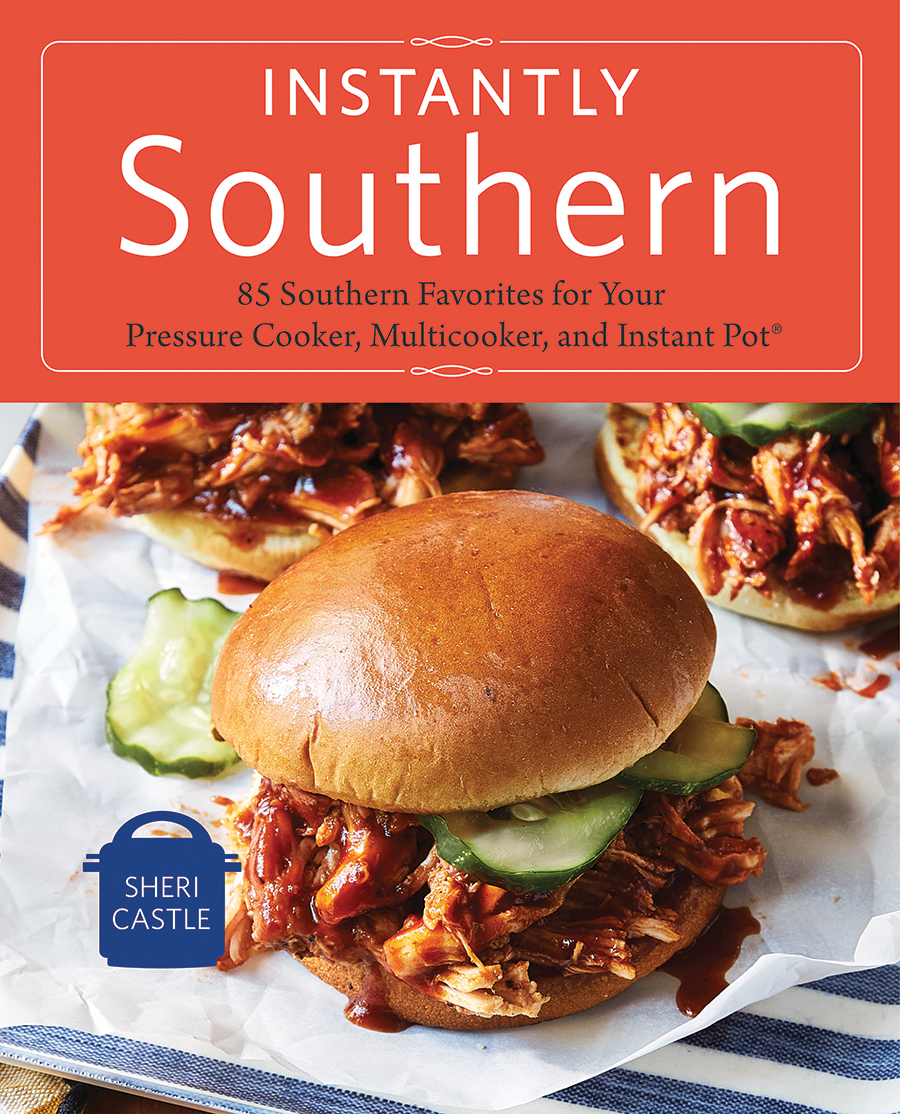
At 6 p.m. on Tuesday, Nov. 27, The Country Bookshop is partnering with The Sway and Burney True Value Hardware to present a cooking demonstration by Sheri Castle, the Chapel Hill-based author of Instantly Southern: 85 Southern Favorites for Your Pressure Cooker, Multicooker, and Instant Pot. Tickets are available at ticketmesandhills.com or The Country Bookshop, 140 N.W. Broad St., Southern Pines. For more information visit www.thecountrybookshop.biz.

Marnie Magic

The Metropolitan Opera production of Marnie, composer Nico Muhly’s reimagining of the Winston Graham novel about a mysterious young woman who assumes multiple identities, will be shown live at the Sunrise Theater, 244 N.W. Broad St., in Southern Pines at 1 p.m. on Nov. 10. For information call (910) 692-3611 or visit www.sunrisetheater.com.

Holiday Pops

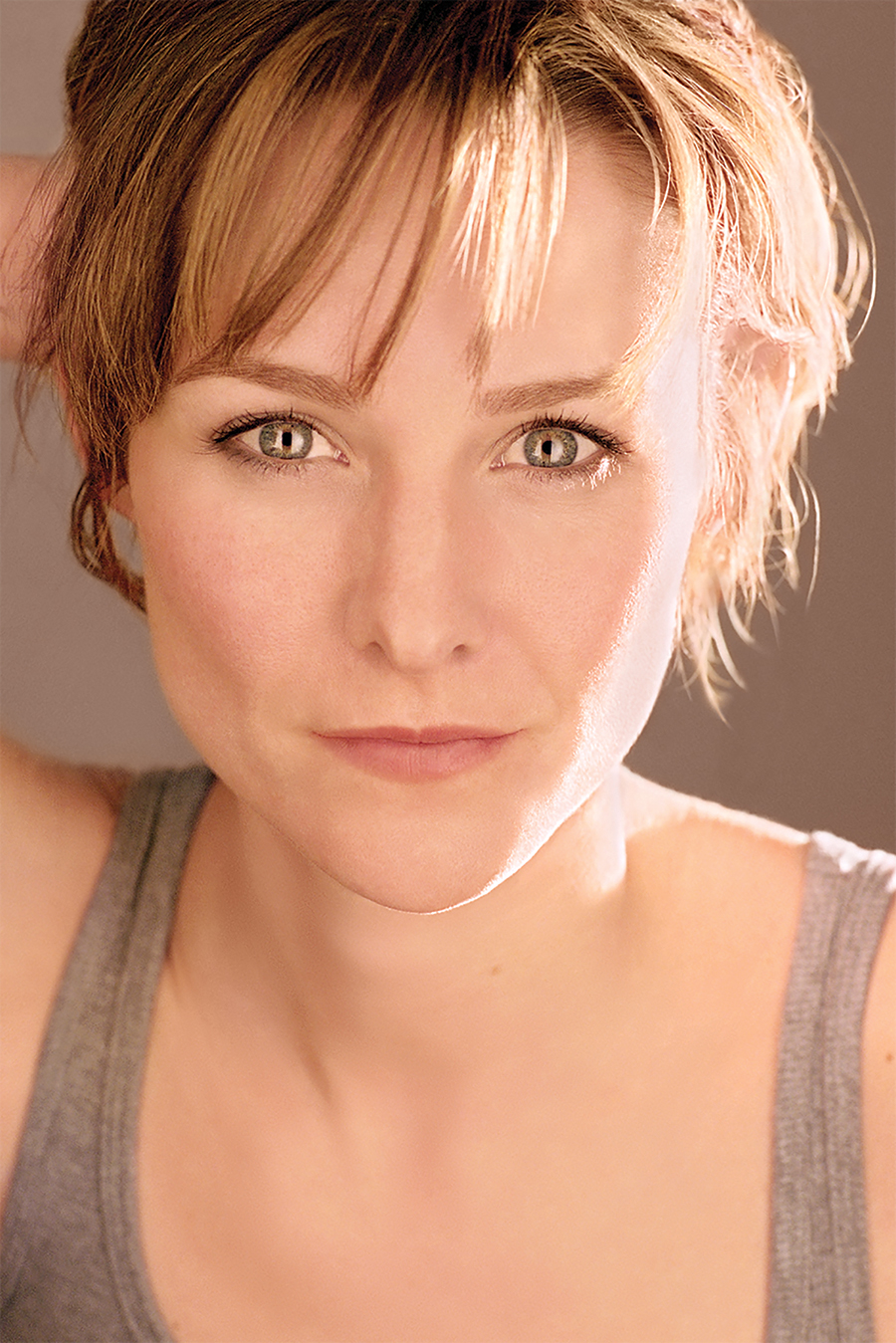
The Carolina Philharmonic, with Maestro David Michael Wolff and featuring Jill Paice, performs the holiday season’s most spirited melodies at the Carolina Hotel, 80 Carolina Vista Drive, Pinehurst, on Wednesday, Nov. 21 at 8 p.m. and again on Saturday, Nov. 24 at 3 p.m. For more information call (910) 687-0287 or go to www.carolinaphil.org.

The Rooster’s Wife

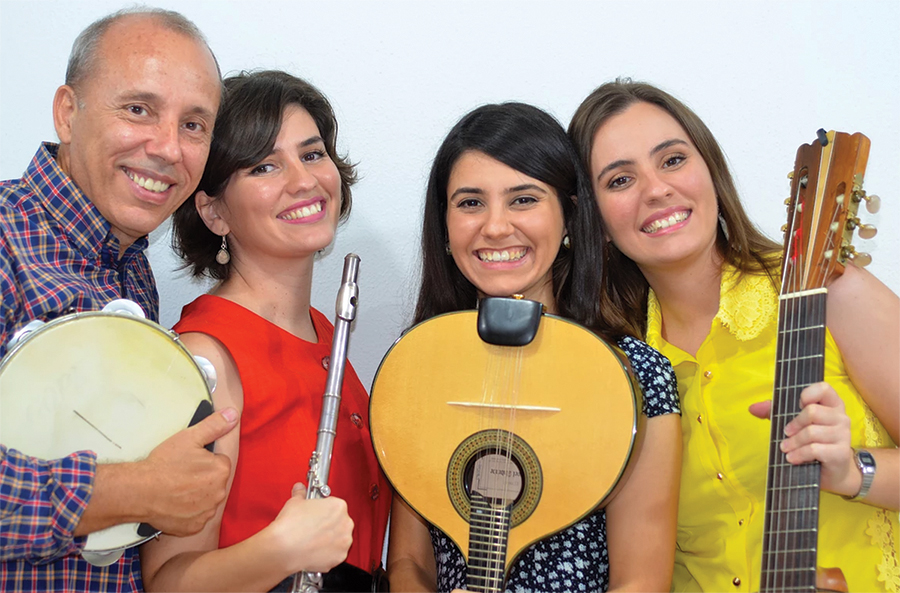
Friday, Nov. 2: Choro das 3 at the Poplar Knight Spot. This amazing band is made up of three sisters and their father playing a popular Brazilian pop music genre, among other styles. Cost: $10.

Sunday, Nov. 4: Glorifying Vines Sisters, a thriving musical institution. “If we’re going to do like Jesus did,” says singer and manager Alice Vines, “then we’re going to go wherever we’re called to go. And we’re going to enjoy ourselves when we get there.” Cost: $15.

Sunday, Nov. 11: Cane Mill Road. Members of the band grew up just down the road from Doc Watson in Deep Gap, North Carolina. Honoring the past, the band strikes a balance between preserving a bluegrass mountain sound and boldly rocking progressive interpretations of songs both new and old. Cost: $10.

Thursday, Nov. 15: Open Mic, hosted by The Parsons. Free to members.

Friday, Nov. 16: Hello June, with Sarah Rudy and Whit Alexander, who have been quietly making a name for themselves in their hometown of Morgantown, West Virginia, but the band is steadily gaining national attention. Their pulsating slice of ’90s comfort food will shake the stardust from your heartstrings. Cost: $10.

Sunday, Nov. 18: Thomas Rhyant. Like a medieval troubadour, Rhyant uses music to tell the stories of those who came before him, legends like Sam Cooke, allowing people not only to understand, but to emotionally connect with history through music. Cost: $15.

Friday, Nov. 23: Celebrate Thanksgiving family time with Live Band Karaoke led by Steve Lapping. Free to members.

Thursday, Nov. 29: Decembersongs with Amy Spence, Wild Ponies and Rod Picott, a decidedly different holiday show. Cost: $15.

Doors open at 6 p.m. and music begins at 6:46 at the Poplar Knight Spot, 114 Knight St., Aberdeen. Prices above are for members. Annual memberships are $5 and available online or at the door. For more information call (910) 944-7502 or visit www.theroosterswife.org.

Birdwatch

To Screech His Own

The spine-tingling call of the Eastern screech owl belies its size and appeal

By Susan Campbell

Listen! An eerie trill or spooky shriek from out of the darkness at this time of year just might indicate the presence of an Eastern screech owl. Territorial adults readily use a mix of screams, tremolos on different pitches and long trills to advertise the boundaries of their home range. And their vocalizations are remarkably loud for a bird that stands only about 8 inches high. They are commonly found in forests all over North
Carolina, but they particularly thrive in thick pine stands, so much of our Piedmont habitat is ideal for them. Furthermore, they are with us year-round.

Eastern screech owls can be either a dull gray or a rich rufous color, with tufts of feathers on the head giving them an eared or horned appearance. But don’t expect to spot them easily, even though they roost during daylight hours. Their dark splotches and vertical striping along the breast and belly provide excellent camouflage against their favored roosting spot, trees, where they may be sitting close to the trunk or peering out of a cavity.

As is the case with most raptors, males are larger than females. Nonetheless, females have higher pitched calls. Your best bet for spotting one is to watch for belligerent crows or flocks of songbirds signaling their presence by frenzied flight and raucous calling.

This species is found throughout the Eastern United States, as well as along the Canadian border and in easternmost Mexico. Although they may wander somewhat outside the breeding season, Eastern screech owls are not migratory. These diminutive owls breed in the springtime. A female simply lays up to six white eggs on the substrate at the bottom of the cavity. Incubation takes about a month and then the young birds take another month to develop before they fledge. All this time, while the female remains on the nest, her mate will hunt nightly for the growing family. Pairs, who usually stay together for life, favor old squirrel or woodpecker holes, as well as purple martin houses and the occasional wood-duck boxes. Pairs of screech owls will readily take to boxes made to their exact specifications, not surprisingly.

Eastern screech owls eat a wide variety of prey. Rodents make up a large portion of their diet, but they also readily catch frogs, large insects and other invertebrates including crayfish and even earthworms. They have been known to also feed on roosting birds and the occasional bat. Screech owls are very much at home feeding on mice, rats or voles that can be found around bird feeders at night — as well as moths and beetles attracted to outside lights. Screech owls are patient, adopting a sit-and-wait strategy before pouncing on their prey and swallowing them whole. Owl gizzards are specially adapted to digesting the soft parts of the creatures they eat and then balling up the bones, fur and other indigestible bits into an oval mass that is regurgitated each day. Favored roost sites or nest cavities can be found by locating piles of these masses (or pellets, as they are referred to) on the forest floor. Unfortunately screech owls often hunt along roadsides and are prone to being hit by cars as they swoop low over the pavement to grab a meal.

But overall Eastern screech owls are a successful species that has adapted well to the changes humans have made to the landscape. So spend some time outside after dark and train your ears for the trill or tremolos of our Eastern screech owl. These cute little birds are anything but scary once you get to know them!  PS

Susan would love to receive your wildlife sightings and photos. She can be contacted by email at susan@ncaves.com.

Simple Life

The Wisdom of Stars

When in doubt, look up . . . and within

By Jim Dodson

“When I have a terrible need of — dare I say, ‘religion’? — then I go outside at night and paint the stars.” — Vincent Van Gogh

Most mornings when I’m home, several hours before sunrise, rain or shine, you can find me sitting in an old wooden chair in my front yard, the day’s first cup of Joe in hand, soaking in the deep silence and looking at the sky.

I don’t paint the stars but I sure enjoy gazing on them with the aid of my iPhone’s nifty Star Guide, allowing this Earthling to identify constellations and the seasonal movement of planets. Even on cloudy or rainy mornings, Star Guide — like Superman’s X-ray vision — can penetrate the clouds, a reminder that a glorious universe and a lovely mystery await just beyond, always there.

As spiritual practices go, my predawn ritual was born on a forested hilltop near the Maine coast 30 years ago. A serious early riser since boyhood, I began stepping outside simply to see how my neighbors fared overnight, especially on November’s sharply colder nights, heralding another hard winter on the doorstep.

The “neighbors” I speak of were the woodland creatures that surrounded our peaceful kingdom off the long-abandoned Old Town Road that ran through a 500-acre forest of birch and virgin hemlock pocked with kettle holes from the receding Ice Age, woods dense with fiddlehead and cinnamon ferns, laurel hells and wild vernal springs.

Like the stars overhead, they were always there, palely loitering at the edge of the yard in the moonshine and starlight: the small clan of whitetail deer that fed off the sorghum pellets I provided through the harshest nights of winter; a flock of wild turkeys that displayed absolutely no fear of our dogs; the massive lady porcupine who waddled through the backyard from time to time (I nicknamed her Madame Defarge after Charles Dickens’ infamous revolutionary knitter), pausing to feed on my frost-wilted hostas; not to mention a young bull moose that hung around our neck of the woods for almost two years, apparently looking for a girlfriend, an age-old story.

Perhaps the toughest creatures by far were the tiny black-and-white chickadees that showed up at our side-yard feeders after the coldest Arctic nights imaginable, day-after-day, season-after-season, year-upon-year, no more than a handful of feathers and a tiny beating heart, teaching me something about the divine force at play.

Our house was a simple post-and-beam affair, a classic Yankee saltbox that I designed and helped build with my own hands, made of rugged beams hewn from Canadian hemlock. Those beams spoke to me at night, especially as we both aged, cracking and sighing and settling year after year. The surrounding gardens took me almost two decades (and most of my kids’ college funds) to build, beginning with the ancient stone walls of the farmstead that once existed on our hilltop more than a hundred years before us. Our predecessors grew corn and pole beans. I grew English roses, lush hydrangeas and heavenly lilacs, not to mention hostas as big as Volkswagens. Part of my annual November ritual after topping up my woodpile was to erect my Rube Goldberg plant protectors that could withstand being buried for months in the coming snow.

Back then, I believed this was my little piece of heaven, the rugged homestead I’d made for my family on a star-swept hill in Maine; the place I would quietly spend the balance of my days on Earth, writing and woolgathering, walking the spring and autumn woods and the Old Town Road with the dogs, forever revising my ever-changing garden, feeding the locals and memorizing the stars of the northern firmament in frosty autumn darkness. Over those two decades, I saw super moons and dozens of shooting stars — and once even the shimmering Northern Lights.

I loved that life and held it against my bones as long as I could. And then I let it go, have never been back, though I still have dreams about that house, those woods, those deep snows and frozen stars, not to mention my former woodland neighbors.

But home — this home, Carolina — unexpectedly called and I couldn’t ignore the summons. My late Southern grandmother, a grand old Baptist lady who knew the Scriptures cold, loved to say — like Thoreau, like the poet T.S. Eliot, like her husband Walter’s own grandmother, a gentle natural healer her neighbors called Aunt Emma — that life is simply a great hoop, a sacred circle, that the end of our explorations is to discover the place where we began and know it for the first time.

For better or worse, I have followed this cosmic script with the faith of a mustard seed, and now I am blessed to have beautiful Southern stars and an old forest of a different kind sheltering overhead, the towering oaks of my boyhood neighborhood, guardians of different early morning companions that are just as wild in their own suburban ways.

In place of Madame Defarge and a lovesick moose, we are visited before dawn by feeding rabbits and an owl that dolefully hoots like clockwork down the block as I sit back and study the stars, sipping my coffee, marveling at the scene overhead, as glorious as any medieval cathedral or walled City of God.

Spiritually speaking, I suppose I am what a dear friend calls a cosmic wanderer, a religious mongrel in love with the writings of the Sufi poet Hafiz, Pierre Teilhard de Chardin, the Upanishads, a little Ralph Waldo Emerson, a lot of Billy Collins and Mary Oliver, a dash of Joe Campbell and Charles Wesley’s hymns, spiced by the Bhagavad Gita and the mystic Meister Eckhart, all nicely summarized by the wisdom of my old friend Katrina Kenison, who wrote in her splendid book Magical Journey, An Apprenticeship in Contentment: “We are all one. We need only look more deeply into the nature of who we really are to see that our sense of isolation is an illusion and to have our separateness ameliorated by union. I might be but one small thread in a vast fabric, but there’s comfort in imagining the eternal interplay between my own small, temporal life and all there is.”

They’re all with me in the starry darkness, this merry band of voices.

With luck, if there is a wind in the darkness, the large Canterbury chimes I gave to my bride for our 15th anniversary — that took me the better part of an entire spring afternoon to hoist and secure in the massive white oak out back — may play three or four notes, sometimes sounding like a Buddhist bell calling one to mindfulness, other times — and I swear on my worn-out copy of Walden that this is gospel truth — the first five notes of Amazing Grace.

I cannot explain how or why this happens, but I’ve heard it with my own ears and believe it with my own heart. Likewise, I can’t explain or justify why most things happen in this passing life — joy, sorrow, tragedy, redemption — but grace certainly helps one face the day, whatever it brings.

November brings forth the two brightest planets in the Southern sky, Mars and Venus, gracing dusk and dawn like a blessing and benediction respectively while Orion, lord of our coming winter’s nights, rises below Taurus and the Pleiades in the East as Summer’s Triangle fades in the West.

The clear autumn sky never fails to make me feel both puny and thrilled by the knowledge that this same unchanging sky shone over Plato and Aristotle as they taught their students, Galileo on his balcony peering at the clockwork heavens, Marcus Aurelius penning his soulful Meditations on a lonely Roman frontier, Jesus praying in the wilderness, English lords signing the Magna Carta, Jefferson jotting notes about human independence, Lincoln speaking at Gettysburg, women marching for the vote, four brave college students sitting down at a whites-only lunch counter, the discovery of the God Particle and a phone that can see through clouds like Superman.

Beneath November’s clear and changing skies, as the soul leans inward, I use my iPhone’s wondrous Star Guide to identify the stunning moons of Jupiter, suddenly remembering C.S. Lewis’ observation that, contrary to our collective belief, we are not the center to the universe because “the center of the universe is actually everywhere.” Jesus’ version of this ancient truth may be the greatest metaphor of all for describing the potential transformation of human consciousness yet to come — that the “Kingdom of Heaven” is not somewhere up or out there — but patiently waiting for discovery deep inside us.

Perhaps human consciousness is beginning to understand that the force we call “God” is simply a streaming river of light and unconditional love that flows everywhere and through everything, as true and present as the stars that literally surround our small fragile planet wreathed in clouds or hidden by the brightest light of day, reassuringly there though we can’t — or choose not to — see it.

Not long ago, I read somewhere that the late astronomer Carl Sagan — a confirmed agnostic — believed there may be as many stars as there are grains of sand on Earth, billions of stars in hundreds of universes bearing untold numbers of unimaginable gifts. The November star child in me sure hopes this proves true.

God only knows what adventures await us.  PS

Contact Editor Jim Dodson at jim@thepilot.com.

Mom, Inc.

Snack Time

It’s worth all the trouble

By Renee Phile

They’re all watching me. I can’t move. I have to sit here until they don’t notice me anymore. I have to look casual, disinterested. The older boy plays his game; the younger one whines. If they would just stop looking at me, stop talking to me, I could get to it. I stand up, yawn for effect, and creep to the door of the bedroom.

“Bailey, no!” Mom says. My nails on the wood floor. Might as well be a car alarm. I lie down beside the door. Patience. It will have to wait. But I can’t wait! What if it’s gone by the time I get there? Libby will get it — that blasted cat. The worst day of my life was when they brought her home. She’s ridiculous and thinks she owns the place.

They stop paying attention. It was only a matter of time. I stand up. No one notices. Mom is cooking dinner (it smells good; I wonder if I will get a bite). Dad is working on his computer.

I tiptoe inside the doorway. Damn nails. “Bailey girl! What are you doing? Bailey!” The younger boy plops himself right down on me. It’s annoying, but being the patient Rottweiler that I am, I endure it.

“Kevin, get off her,” Mom says. Thank you, Mom. Kevin saunters off and I put my head down. I’ll try again in five minutes. Maybe four. Maybe three. The dinner smells so good, and Dad is still working on his computer, and the other boy is still playing his game, talking loudly in his headset to someone as he sits in front of the TV.

I stand up. No sudden moves. No one notices. Good. I inch inside the bedroom. No one sees me. Yeeeeessss! There she sits, like the queen she thinks she is — on the bed. I’m not allowed on the bed. She stares at me, and I think she is going to hiss at me, but she just stares. I stare back and inch forward, stop, inch some more until I get to the bathroom door.

“Where’s Bailey?” I hear Dad say. Oh no. They’re looking for me. I’m through the door. I’m in. There it is: Libby’s food. She never eats much of it anyway. I like to think she leaves it for me. Wait, she hates me. Either way, it’s mine.

Someone is moving in the kitchen.

“Is she outside?” Mom asks.

“I don’t think so,” I hear Dad say.

I gobble up all the food I can, not even taking a breath, like one of those pie eating contests. There it is. The bottom of the bowl. I scamper out, food still in my mouth, and lay down on the bedroom floor as nonchalant as you please. Been there for hours. The cat looks at me in disgust, and Dad comes into the room.

“Bailey? Did you eat the cat food?” How does he always, and I mean always, know? I look up at him with my eyes, but keep my head down. I don’t want him to smell the hairball formula on my breath. He walks past me and looks into the bathroom at the empty cat bowl.

“Come on. You know you’re in trouble,” he says, and I know, because, honestly, this has happened before. But, I don’t care that I have to sit in my crate for an hour. Solitary. I stand up and head to my crate while Dad follows. It’s all worth it, you see, as I lick my lips and glare at Libby, who looks at me with that strange smile.  PS

Renee Phile loves being a teacher, even if it doesn’t show at certain moments.

Wine Country

Thanksgiving Bounty

Be grateful for the cheese and wine

By Angela Sanchez

When I lived away from Moore County, I came home for the holidays with all kinds of wines and cheeses I wanted to share with my family. At Thanksgiving I’d arrive with a bag full and nothing ever hit the fridge or shelf before we sampled it. At Christmas I came bearing gifts: a nice basket of cheese, crackers, olives with chutneys and jams and a case of mixed wines wrapped with a bow.

Thanksgiving was always a big deal for us. As Southerners we had to have at least two meats. Just a turkey wouldn’t do, so we added a ham or possibly venison if my brother had been lucky on the hunt that year. My mom taught me more is better when it comes to sides and dessert. As I got older, I loved cooking with her, preparing the meal for the family and entertaining. We started with appetizers from the array of items I brought home — six or seven cheeses, always a mix of hard, soft, blue and bold, domestic and imported, with one or two types of charcuterie, olives, pickles, crackers and an exotic jam. We sipped wine as we snacked and cooked. I like to start with bubbles, so a nice bottle (or two, or three) of Cava or Prosecco would get us going. Later with dinner, we’d sit down with two bottles of wine, a white and a red. The white would be light, a dry Riesling from Alsace, France, or Germany, or a white Burgundy like Chablis or Meursault. The red would be a nice Burgundy like something from Domain Vincent Girardin. I am particularly fond of his Santenay, perhaps not as well known as other appellations in Burgundy but packing great quality for the price. And there was always French Champagne for dessert because nothing is better with cake and chocolate than Champagne.

Christmas was more traditional. My dad was Catholic and, until he became too ill to go, we went to midnight Mass on Christmas Eve. It was just my parents and I so we would unwrap the cheeses and other foods I brought home and bust into the case of wine, which was a beautiful mix of my favorites from around the world. There was enough to enjoy after Mass when we opened the gifts, sipping a red wine, most likely Italian or Rhône, at that time of night. Brunch with the rest of the family the next day started with sparkling wine again, usually mimosas with baked Brie.

Today things are much different. The day before Thanksgiving is a workday, one of the busiest days of the year, and so is the day after. That shortens our holiday a bit but we celebrate with cheese and wine just the same. The lineup is less complicated, more to the point. This year we’ll be enjoying a delicate and delightful Cava, Mistinguett. It has bright acidity with lemon and pear notes and finishes dry, a must if you want to make it through the rest of the day. Garrotxa, a goat’s milk cave-aged cheese from the same region of Spain, is a good companion. The delicate white paste and grassy, mellow flavor are a great way to start off. Perrin Reserve Rosé, with strawberry and light watermelon notes from the southern Rhône Valley, goes well with everything. It will be around all day and make another appearance as a dinner choice. Now we include a few craft beers like Southern Pines Brewing Oktoberfest, golden hued with notes of clove and marzipan. It pairs well with Goat Lady Dairy’s Snow Camp and honey. Snow Camp is a combination goat and cow’s milk camembert-style made in North Carolina. The honey will be in the comb from R2 Apiary right here in Moore County. Some salty Marcona almonds roasted in sunflower oil make a nice compliment. The meal is a bit different, too, with fewer sides but still two meats. Rolling up with the turkey and ham this year will be K.Martini & Sohn Riesling from Alto Adige in the north of Italy. Aromatic and vibrant floral, with lime and peach stone fruit and nicely balanced acidity, it’s one of the best I’ve had in quite some time. This year I’m really feeling Italy and a great grape like Montepulciano is just the right weight, not too light, not too big to pair with ham, turkey, venison and potatoes in all forms. Marramiero Dama Montepulciano DOC 2016 has a nice balance of plum, briar berries and licorice with medium tannins and just enough oak aging to keep it bright and add structure.

Enjoy the wine and cheese with the people who really matter and, above all, be grateful.  PS

Angela Sanchez owns Southern Whey, a cheese-centric specialty food store in Southern Pines, with her husband, Chris Abbey. She was in the wine industry for 20 years and was lucky enough to travel the world drinking wine and eating cheese.

Golftown Journal

Double Trouble

The colorful legacies of Billy Joe Patton and Harvie Ward

By Lee Pace

One came from a small town in the western part of North Carolina, one from a small town in the east. One was a Wake Forest man when the Baptist institution was located in northern Wake County, the other a Tar Heel from the University of North Carolina. Both played golf with flair and color. They talked to the galleries and regaled the news media, their pictures appearing in national magazines (one of them smiling on the cover of Newsweek) throughout the 1950s. Both had outstanding short games and were deadly putters. They won five Carolinas Amateur Championships between them.

Each flirted with winning major professional championships in golf. Billy Joe Patton led the Masters on the final day in 1954 before twice hitting into Augusta National’s creeks and ponds and finishing third. Harvie Ward was tied for the lead in the 1957 Masters on the final day before hitting into the pond on 11, making double-bogey and fading as Doug Ford raced to the victory.

Patton led the U.S. Open after one round in 1954.

Ward won the U.S. Amateur in 1955 and ’56.

They played on eight Walker Cup teams (Patton five and Ward three).

They both won the North and South Amateur, Ward while a student at Carolina in 1948 and Patton in the height of his working-man/crack-golfer career in 1954, ’62 and ’63. Both were right-brained golfers where feel, touch and imagination were tantamount, and each thrived on Pinehurst No. 2, a venue requiring those skills in copious amounts.

“I loved playing No. 2. You had to play a lot of bounce-up shots,” Ward reflected years later. “You couldn’t play into the green. It was more like Scottish golf — you had to bounce it in there. You used to have to hit the chip-and-run or putt from off the green on those sand greens in Tarboro. There and playing at Pinehurst helped when I won the British Amateur. They were amazed over there how good I was hitting the pitch-and-run versus the flop wedge, where you hit it in the air and stop it by the hole. I adapted to golf over there very easily.”

“When I think of Pinehurst, I think of No. 2,” Patton said. “If I listed the five best golf courses I ever played, it would never leave my hand. I don’t know if I ever thought any course was any better. I think Donald Ross just took what he had. It was a desert of sand and scrub oak and pine, and the fellow just built a golf course on it. He didn’t build it around a lake because there wasn’t a lake there.”

And both at the height of their amateur careers rejected the idea of turning professional. There simply wasn’t the money to make it the same draw it is today. Ward sold cars and later became a club pro and expert golf instructor. Patton was in the lumber business.

“As it is now, I get a terrific kick out of playing golf,” Ward said in 1955. “It’s a pleasure, rather than work. I like it that way.”

“I’ve had a good life,” Patton said in 1994. “I’ve been happy. I’ve enjoyed my golf. I’ve enjoyed my friends. I’ve enjoyed my family. I’ve enjoyed my work. I’ve spent a lot of time doing the things I wanted to do. A man can’t ask for much more than that.”

Ward died in August 2004, succumbing to a long bout with cancer. Patton followed in 2011 at the age of 88 after several years living in a retirement home.

As huge as their respective shadows were across golf in the Carolinas, surprisingly they had very little face-to-face experience with one another.

“I was in college at Wake Forest,” Patton remembered in 2007. “It was 1940, I think. Harvie was a high school kid from Tarboro. They had this little tournament in Raleigh called the Eastern Carolina Amateur. He beat me 1-up. He couldn’t have been more than 15 years old and showed up in short pants. He’d never graduated to long pants. He was very straight off the tee and was a wonderful putter. That was aggravating, getting beat by a kid like that. There was a story in the paper after that match and my fraternity brothers gave me a lot of grief.

“I evened it up a few years later. We were playing in the Biltmore Forest Invitational. I was pumped up because he’d beaten me before. We played 16 holes and I had eight 3s on my card. In fact, from the eighth hole I made five 3s in a row. I closed him out on the 16th hole. Those are the only two times I remember us playing one another. I was older than he was and then later he moved off to California.”

Ward played a game that golf writer and historian Herbert Warren Wind once described as “archaically relaxed” and possessed a “rare gracefulness to his shotmaking that made him a treat to watch.”

“I never saw Bobby Jones play, but I saw everybody else, and Harvie was the best amateur I ever saw,” Ken Venturi said. “That’s the best amateur. Harvie didn’t have a pro bone in his body. He was too much a free spirit.”

Ward spent the last 15 years of his life living in Pinehurst, taught at Pine Needles and Forest Creek Golf Club, and mentored a network of young club and teaching professionals he had developed over the years. Ward told friends he “felt like a kid all over again” in the twilight of his life.

“Harvie never lived an unpleasant day in his life,” said Furman Bisher, the venerable columnist from the Atlanta Journal. “Or if he did, he didn’t show it. He was among the most untethered, unabashed people I’ve ever known.”

Patton’s style was established as a youngster in Morganton. He began swinging hard and never looked back. “I wanted to attack everything,” he said. “It was a war within myself, to hit that little ball as far as I could.” His knees were bent at address in exaggerated fashion. He had a strong grip, a whiplash waggle and a fast backswing. He cleared his left hip quickly through impact and cut his follow-through off at chest level, a move that later prompted Byron Nelson to call him a “slasher.”

Just as Ward was a maestro with the putter, so too was Patton.

“He never missed from 6 to 8 feet,” said Joe Cheves, the longtime pro at Patton’s home course, Mimosa Hills. “In all the rounds I played with him over the years, I never remember him missing from that range. He knew he was going to make it, and you knew he was going to make it. He was a very confident putter.”

Over the 1950s and through the ’60s, Patton enjoyed a remarkable run in national circles — not to mention in and around the Carolinas. His legend grew from one end of the Carolinas to the other.

“Billy Joe was a guy with professional ability playing in amateur tournaments,” says Hale Van Hoy, the Carolinas Golf Association executive director from 1965-1991. “Most tournament players of his caliber want to play their rounds all serious, without speaking to anyone, but he was always just as friendly, just as affable in the middle of a critical North and South round or U.S. Amateur round as he would be in a weekend game with the guys.”

The consummate Patton story came from the North and South Amateur one year in the late 1950s. Patton was on the second hole of a playoff with Dr. Bud Taylor and had hooked his tee shot onto the lip of a bunker bordering the long par-4. A hundred or so people watched as he addressed the ball awkwardly with a 4-wood, his right foot in the bunker, his left foot maybe 18 inches above it and the ball in the high grass. Meanwhile, a motorist who’d probably been trying to figure out Pinehurst’s curious maze of streets stopped her car on the road next to the gallery and asked, to no one in particular, “Does anyone know where I can get a room for the night?”

Patton continued waggling. “If you can wait a few minutes you can probably get mine,” he said.

The gallery erupted. Then Patton punched out, en route to a bogey. Taylor, safely in the fairway, parred the hole and won the match.

“It was more fun following Billy Joe in the woods than it was from the fairway,” longtime caddie Jerry Boggan said. “He was something else.”

Billy Joe and Harvie — both long gone, but both still generating chuckles and warm memories across the Carolinas golf landscape.  PS

Golf writer Lee Pace has written frequently about Patton and Ward in a dozen books he’s written about golf in Pinehurst and across the Carolinas.30

The Evolving Species

Mothers of Invention

Who really thought of that?

By Michael Smith

You’ve probably read somewhere that back in 1948, Swiss engineer Georges de Mestral invented Velcro, portmanteau of the French velours and crochet — velvet and hook. He did that after a walk in the Alps with his pup when he noticed how burs had attached to his socks and to his dog’s fur. Velcro is strong. It can be stronger, much stronger, depending on the length of the hooks and the fuzziness of whatever the hooks hook into. In fact, a person wearing a suit with hooks on the back, after aligned with a fuzzy wall, was actually lifted and stuck on the wall.

You may or may not have read that Abe Lincoln was issued U.S. Patent 6,469 for his invention designed to buoy boats over river shoals; or that Einstein (yes, that one) co-invented a refrigerator that had no working parts and needed no freon — ding! U.S. Patent 1,781,541; or that Thomas Paine, ever full of common sense, received U.S. Patent 1667 for his plans for a bridge with a single arch and lattice support structure mimicking a spider web; or that Harry Houdini invented a two-part deep-sea diving suit that gave a diver a safe way to get out of it if he needed to escape the thing — U.S. Patent 1,370,316.

Unexpected inventors? Yes, well, except for their gender. Guys always get recognition. Take ol’ Ben Franklin. You remember how electrifying that boy was. Or that Wizard of Menlo Park fellow. Women inventors? They don’t get no respect. Yet, there are more female inventors than Carter’s got liver pills. But first let’s give a nod to Mr. Tim Berners-Lee, inventor of the World Wide Web. Hard to imagine life without that. So, let’s check out three women inventors, randomly selected from many.

A great place to start is with Maria E. Beasley (1847 – 1904). Maria scored her first but not even close to her last patent in 1878 for, of all things, a barrel-making machine. Suddenly that little lady was knocking down 20 grand a year for that gadget, at a time when the average earnings for a working woman were a whopping three bucks a day. (Here’s the math on that — $3 x 365 = $1,095.) It topped her former dressmaking income, plus, it gave her the freedom to become a serial inventor, chalking up things like foot warmers, cooking pans, anti-derailment devices for trains and two improved life raft designs. Maria also invented a fireproof, compact and foldable, easily stored life raft. Her 1880 raft saved a lot of lives. In fact, they were on the Titanic when it sank and are credited with helping save 706 lives. In 1880, the U.S. Census listed her as an “unemployed housewife.”

Margaret E. Knight also got dissed because of her gender. Knight’s first invention was a safety device for a mechanical loom in a cotton mill where she worked. She invented the device after watching a co-worker stabbed by a part that flew off the loom. Margaret was 12 years old. Though she did not patent the device, it was used extensively by various cotton mills.

Of her 27 patents, she is best known for inventing a machine that folds and glues paper bags so they have a flat bottom. At that time, she worked at the Columbia Paper Bag company in Springfield, Massachusetts. To patent her idea, Margaret needed a metal model of her machine. So, in the machine shop where it was being built, one Charles Annan stole her design and patented it himself. She promptly did the, then, un-ladylike thing of suing for patent infringement. Annan explained to the court that “a woman could not possibly understand the mechanical complexities” of that invention. Margaret won her suit and, in 1870, founded the Eastern Paper Bag Company. Of course, her flat-bottomed paper bags are still in use today.

Over her life, she became the prolific inventor of over a hundred different machines — shoe-cutting machines, machines that counted, a rotary engine and on and on. She was inducted into the National Inventors Hall of Fame. Queen Victoria awarded Margaret the Decoration of the Royal Legion of Honor. When she died, her obituary described her as a “woman Edison.”

Hedwig Eva Maria Kiesler was one lady nobody dissed, well, nobody but U.S. Navy brass. Ubiquitously dubbed the world’s most beautiful woman, she starred in such films as Samson and Delilah, Algiers and Comrade X. You’ve already guessed. And you’re right, of course. It’s Hedy Lamarr.

Who knew that beautiful lady also had a first-rate brain? One person that knew was her “friend,” Howard Hughes. Hughes supported her “tinkering” hobbies by instructing his science engineers to do or make anything Hedy asked for. In return, she designed a new wing shape for Hughes’ planes, to make them more aerodynamic. Other things Lamarr tinkered with included an improved traffic stoplight and a dissolvable tablet like Alka-Seltzer. But she was posthumously inducted into the National Inventors Hall of Fame for a far more serious invention.

During World War II, Hedy learned that radio-controlled torpedoes could easily be jammed and sent off course. She set about solving that problem with her neighbor, pianist George Antheil. Together, they devised and patented the “Secret Communications System.” Their solution was a system for disguising radio transmissions from the torpedo guidance mechanism to the torpedo by making the signal jump between channels in a prearranged pattern.

Together, they developed a “frequency hopping” signal that would synchronize between transmitter and receiver but could not be traced or jammed. At the heart of their system were slotted paper rolls, like those used in pianolas, self-playing, mechanically operated pianos that used perforated paper to activate the keys. Their system hopped between 88 frequencies, the number of keys on a piano.

When Lamarr and Antheil patented their system in 1941, Hedy used her married name, then Hedy Kiesler Markey. Markey was the second of Hedy’s six husbands. They turned over their patented idea to the U.S. Navy, but the Navy dismissed their system as being too bulky to successfully install in torpedoes.

In 1957, Sylvania scientists resurrected the Lamarr/Antheil idea but substituted electronic circuitry for paper rolls to provide the synchronized signals. The Navy then used the revised system in the Cuba blockade of 1962.

Today, the Lamarr/Antheil patented idea is the core of many systems, including communications satellites and cellphones used by subscribers worldwide. In 1997, Lamarr and Antheil received the Electronic Frontier Foundation Award and the Bulbie Gnass Spirit of Achievement Bronze Award, reserved for those whose inventions have significantly contributed to society.

It is easy to remember inventors that came up with things like how to make a hydrogen bomb, not so easy to remember inventions of ordinary things that changed our lives for the better. It’s even less easy to remember female inventors, like, for example, Stephanie Kwolek, who invented Kevlar, Mary Anderson, the lady who invented windshield wipers, or Josephine Cochrane, who came up with the mechanical dishwasher that she later sold to KitchenAid.  PS

Michael Smith lives in Talamore, Southern Pines, with his wife, Judee. They moved here in 2017 and wish they had moved here years earlier.

November Books

FICTION

Nine Perfect Strangers, by Liane Moriarty

In the new novel by the author of The New York Times best-sellers Big Little Lies, The Husband’s Secret, and Truly Madly Guilty nine people gather at a remote health resort. Some are there to lose weight, some are there to get a reboot on life, some are there for reasons they can’t even admit to themselves. Amid all of the luxury and pampering, the mindfulness and meditation, they know these 10 days might involve some real work. But none of them could imagine just how challenging it was going to be.

Tony’s Wife, by Adriana Trigiani

Set in the lush Big Band era of the 1940s and World War II, this spellbinding saga from The New York Times best-selling author tells the story of two talented working class kids who meet shortly before World War II on the Jersey Shore and fall in love. Both are talented and ambitious, and both share the dream of becoming singers for the legendary orchestras of the time: Glenn Miller, Tommy Dorsey, Benny Goodman. The couple marry and travel from New Jersey to Las Vegas to Hollywood, and all the dance halls in between. They become a successful singing act, until time, temptation and the responsibilities of home and family derail their dreams.

Night of Miracles, by Elizabeth Berg

Lucille Howard is getting on in years, but she stays busy. Thanks to the inspiration of her dear, departed friend, Arthur Truluv, she has begun to teach baking classes, sharing the secrets of her delicious classic Southern yellow cake, perfect pinwheel cookies and other sweet essentials. Her classes have become so popular that she’s hired Iris, a new resident of Mason, Missouri, as an assistant. Iris doesn’t know how to bake, but she needs to keep her mind off a big decision she sorely regrets. When a new family moves in next door and tragedy strikes, Lucille begins to look after  Lincoln, their son. Lincoln’s parents aren’t the only ones in town facing hard choices and an uncertain future. In these difficult times, the residents of Mason come together and find the true power of community — just when they need it the most.

The Adults, by Caroline Hulse

Claire and Matt are no longer a couple but decide that what’s best for their daughter, Scarlett, is to have a “normal” family Christmas. They can’t agree on whose idea it was to go to the Happy Forest Holiday Park, or who said they should bring their new partners, but they all go. Claire brings her new boyfriend, Patrick (never Pat), a seemingly sensible, eligible from a distance, Iron-Man-in-Waiting. Matt brings the new love of his life, Alex, funny, smart and extremely patient. Scarlett, who is 7, brings her imaginary friend Posey. He’s a rabbit. Together the five (or six?) of them grit their teeth over forced fun activities, drinking a little too much after bedtime, divulging secrets about their pasts and, before you know it, their holiday is a powder keg that ends where this debut novel begins — with a tearful, frightened call to the police.

All the Lives We Never Lived, by Anuradha Roy

From the Man Booker Prize-nominated author of Sleeping on Jupiter, The Folded Earth and An Atlas of Impossible Longing, comes a poignant and sweeping novel set in India during both World War II and the present-day about a son’s quest to uncover the truth about his mother. Though freedom may be stirring in India, across the world the Nazis have risen to power in Germany. A German artist seeks out Myshkin’s mother, Gayatri, and his arrival ignites passions she has long suppressed. Myshkin pieces together her life, a journey that takes him through India and Dutch-held Bali. Discovering the roots of the world in which he was abandoned, he comes to understand his long-lost mother, and the connections between strife at home and a war-torn universe.

NONFICTION

Becoming, by Michelle Obama

In a work of deep reflection and mesmerizing storytelling, Michelle Obama invites readers into her world, chronicling the experiences that have shaped her — from her childhood on the South Side of Chicago to her years as an executive balancing the demands of motherhood and work to her time spent at the world’s most famous address. Michelle Robinson Obama served as first lady of the United States from 2009 to 2017. A graduate of Princeton University and Harvard Law School, Mrs. Obama started her career as an attorney at the Chicago law firm Sidley Austin LLP, where she met her future husband, Barack Obama. She later worked in the Chicago mayor’s office, at the University of Chicago, and at the University of Chicago Medical Center. Mrs. Obama also founded the Chicago chapter of Public Allies, an organization that prepares young people for careers in public service.

The Allies: Roosevelt, Churchill, Stalin and the Unlikely Alliance That Won World War II,
by Winston Groom

By the end of World War II, 59 nations were arrayed against the Axis powers, but three Allied leaders — Franklin Roosevelt, Winston Churchill and Joseph Stalin — emerged to control the war in Europe and the Pacific. Vastly different in upbringing and political beliefs, they were not always in agreement, or even on good terms. Often led by Churchill’s enduring spirit, in the end these three men changed the course of history. Using the remarkable letters among the three world leaders, enriching narrative details of their personal lives, and riveting tales of battles won and lost, best-selling historian Groom returns to share one of the biggest stories of the 20th century.

Bing Crosby: Swinging on a Star: The War Years, 1940-1946, by Gary Giddins

Bing Crosby dominated American popular culture in a way that few artists have. From the dizzy era of Prohibition through the dark days of World War II, he was the nation’s most beloved entertainer. Crosby redefined the very foundations of modern music, from the way it was recorded to the way it was orchestrated and performed. In this follow-up to the acclaimed first volume, National Book Critics Circle-winner Giddins focuses on Crosby’s most memorable period and the origin story of White Christmas. This groundbreaking work traces Crosby’s skyrocketing career as he fully inhabits a new era of American entertainment and culture. While he would go on to reshape both popular music and cinema, Crosby’s legacy would be forever intertwined with his impact on the home front, a unifying voice for a nation at war. Over a decade in the making and drawing on hundreds of interviews and unprecedented access to numerous archives, Giddins brings Bing Crosby, his work and his world to vivid life — firmly reclaiming Crosby’s central role in American cultural history.

CHILDREN’S BOOKS

The Broken Ornament, by Tony DiTerlizzi

Every family has a favorite holiday decorating story — the time the cat climbed the tree or Dad fell in the bushes hanging lights. The Broken Ornament stemmed from a DiTerlizzi family Christmas when his daughter broke a holiday ornament and learned the truth: When a beloved ornament is broken, a Christmas fairy is born. The Broken Ornament should be the first request on every Christmas list this year. Children and their families are invited to join New York Times best-selling and Caldecott Honor-winning author/illustrator Tony DiTerlizzi on Thursday, Dec. 6, at 4 p.m. for an ornament making workshop and Ugly Sweater Contest at The Country Bookshop. (Ages 3-10.)

Bear Can’t Sleep, by Karma Wilson

“Oh, Bear!” mouse squeaks. “You are up too late. It is winter in the woods, and bears hibernate.” Everyone’s favorite hibernating bear is back, but this time, Bear can’t fall asleep. Certain to find an audience with the “do I have to take a nap” crowd, Bear Can’t Sleep will be the sleeper hit of the season. (Ages 3-5.)

Lovely Beasts: The Surprising Truth, by Kate Gardner

They’re the bad guys — wolves, sharks, hyenas, bees. But are they really? This simple and stunning picture book is a lesson to all that first impressions and common notions are often far from the truth. The perfect book for the holiday season and one to read far into the New Year, Lovely Beasts shares lessons that can have far reaching universal truths. (Ages 4-7.)

Fire Truck Dreams, by Sharon Chriscoe

For fans of Goodnight, Goodnight, Construction Site will adore this exciting tale of a brave little firetruck. After a big day of putting out fires and saving kittens, it’s finally time to sleep. Fire Truck makes sure all is quiet and safe, rolls back into the station for a shower, swishes and swigs a bedtime refreshment, and settles in with a bedtime story. Autographed copies are available at The Country Bookshop. (Ages 2-5.)

Grenade, by Alan Gratz

The hugely anticipated follow-up to Gratz’s New York Times best-selling, critically acclaimed phenomenon Refugee. In another searing, high-octane story, Grenade shows how fear and war tear us apart, but how hope and redemption tie us together. (Ages 12 and up.)  PS

Compiled by Kimberly Daniels Taws and Angie Tally.

True South

Family Dinners

The more they change over time, the more we need them

By Susan S. Kelly

Sure, sure, it’s turkey time, but how about the other 364 dinners someone needs to dream up, whip up, order up, serve up, and clean up for the hungry hordes? It’s been said that every family has a 10-meal rotation that they unconsciously stick to. Chicken, pork chops, spaghetti. Tacos, brats, pasta. Then it’s leftover night, or pizza night, and the rotation begins again.

In direct opposition to this menu stasis theory is the fact that, like everything else on the planet, family dinners change and evolve. At first, they’re wild, untamed things, with high chairs and thrown food. In time, bibs are replaced with napkins, and manners. The toddler turns 6, and learns to set the table. Actual conversation takes place during a family dinner, unless you make the mistake of asking a 7-year-old about the movie he saw, because a 7-year-old’s synopsis tends to last through dessert.

Then comes school. School, school, school. Tired of hearing about school, my mother decided to select a topic for discussion during our family dinners. “Tonight we’re going to talk about art,” she said one memorable table time. Muteness ensued. Cornbread was consumed. The experiment was an abject failure. Family dinners cannot bear that burden. Like nature itself, they have to wander all over the place and sprout in different directions. Also like nature, there’s an exception to every absolute: My children had friends whose parents, over Sunday dinner, would pay their kids a dollar if they could summarize the sermon at church. Their dinner table topic stayed on point. My sister handled the nightly kitchen table convos by asking everyone what the worst and best parts of their day had been. Her husband’s answer never varied: worst — getting out of bed; best — getting into bed.

Every family dinner has its accoutrements other than food. On television shows, families had sodas at dinner; only milk was served at our table. I longed for a spinning lazy Susan in the center of the table, bearing ketchup and Texas Pete bottles on its swiftly appointed rounds. I’d have settled for an upright napkin holder, so you could fish another out when yours fell out of your lap, or got sticky or shredded — a yearning that probably explains why I tend toward cloth napkins now for family dinners. Still, I hid those cloth ones away one Christmas so we could use holiday-themed ones, and didn’t find them until the following September. And still, family dinners had proceeded right on, with the one-ply paper ones.

Happy is the day when evolution gets ’round to when children can cook, rather than complain, about the unfamiliar vegetable, or the texture of the meatloaf. Then, each family member can “take a night” on a vacation, or a Wednesday. They delightedly pick the menu, proceed to shop, prepare, serve and wash up, while you contentedly enjoy the sunset, or the news. As long as you’re also content to foot the bill for tenderloin filets, or dine cheerfully on boiled hot dogs. A new era of family dinners is ushered in when girlfriends and boyfriends arrive on the scene. No more dishing out from pots and pans on the stovetop; time to up the game and make an impression with actual serving dishes. Flowers in a vase. Not candlelight, though: too much of a statement. Where there once was a clamor over who gets to say the blessing grows the nervousness of who gets picked to say the blessing.

Every family experiences years when organizing a dinner together centers around sports, meetings, babysitting and jobs, a task on a par with planning the invasion of Normandy. I wrote a novel whose plot included a family member who’d died unexpectedly. Of the grief-stricken moments of daily minutiae that followed, the most sorrowful was the evening the mother opened a kitchen drawer and gazed at the placemats. She realized that the rotating stack of four — checkered, straw, quilted — would now resume as three. The pattern of family dinners had been forever altered, hammered home by a detail as devastatingly simple as a pattern of placemats. Still, families consist of only two, too. My husband and I light candles every night. After 60, low lights are beneficial. Even the food looks better.

Fifty in a field for a reunion, four for chicken tetrazzini, a pair on stools at the counter with a bowl of soup. Breakfast for dinner. The Sunday steak. Take-out. A USPS delivery from a specialty service with every ingredient, plus recipes, included. Or just the specialty of the house — one of those 10 meals. In the end, only three ingredients truly define a family dinner: Food. Conversation. People.  PS

Susan Kelly is a blithe spirit, author of several novels, and proud grandmother.