


By Ash Alder
June evening fades in such a way you wonder if it’s all a dream.
We let go of spring, our palms now cupped to receive the first blackberries, scuppernongs, Cherokee Purples warm from the sun.
Plump strawberries slowly vanish from the patch, and when the fireflies come out to dance, out, too, comes the homemade mead.
This year, summer solstice falls on Thursday, June 21. We celebrate the longest day of the year with bare feet, new intentions, sacred fire and dance. Now until Dec. 21, the days are getting shorter.
Savor the fragrant amalgam of honeysuckle and wild rose. Feel the hum of heavy hives, porch fans and crickets. And as cicadas serenade you into dreamy oblivion, sip slowly the sweetness of this golden season.
I can’t see “Butter Beans” hand-painted on a roadside sign without hearing the Little Jimmy Dickens tune my grandpa used to sing or hum or whistle to himself on quiet Sunday drives:
Just a bowl of butter beans
Pass the cornbread if you please
I don’t want no collard greens
All I want is a bowl of butter beans.
Red-eye gravy is all right
Turnip sandwich a delight
But my children all still scream
For another bowl of butter beans.
When they lay my bones to rest
Place no roses upon my chest
Plant no blooming evergreens
All I want is a bowl of butter beans.
The Carolina Chocolate Drops sing a much sultrier song about this summer staple, but both tunes suggest that, in the South, the lima is the darling of beans.
Good for the heart (this sparks another ditty but we won’t go there), butter beans are rich in dietary fiber, protein, minerals and antioxidant compounds.
Slow cook them or toss them in a cold summer salad. Regardless of how you choose to eat them, best to get them fresh while you can.
When the sun sets on Saturday, June 23, bonfires will crackle in the spirit of Saint John’s Eve. On this night, the ancient Celts would powder their eyelids with fern spores in hopes of seeing wee nature spirits dancing on the threshold between worlds.
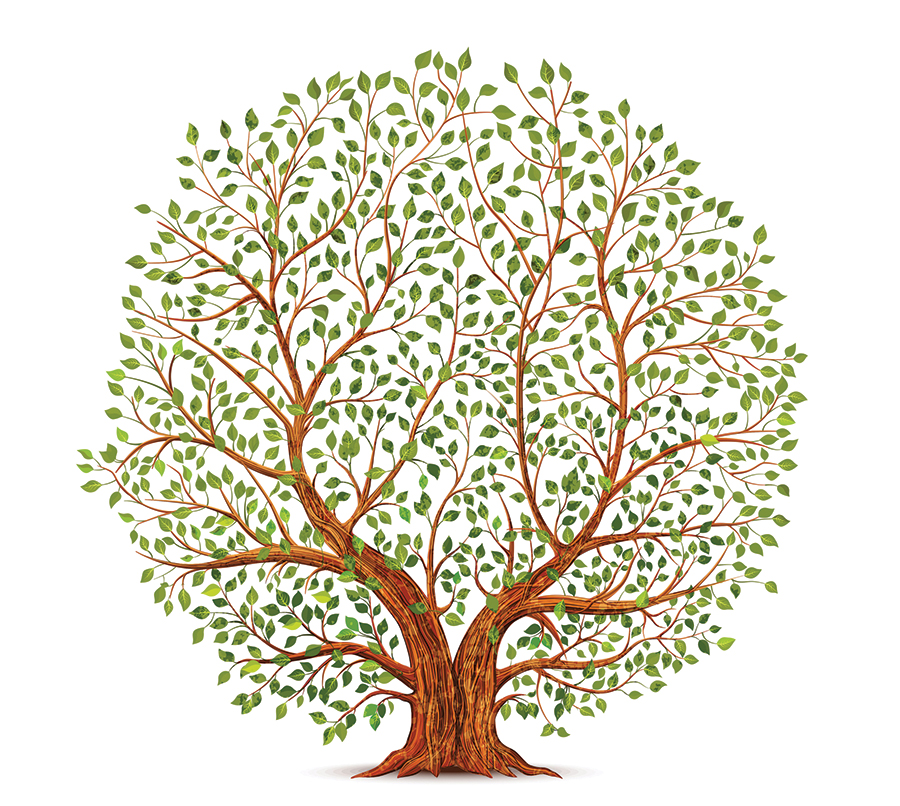
The Celts sure loved their nature spirits. According to Celtic tree astrology, those born from June 10 — July 7 resonate with the sacred oak, a tree said to embody cosmic wisdom and regal power within its expansive roots, trunk and branches. Strong and nurturing, oak types radiate easy confidence. They’re most compatible with ash (Jan. 22 — Feb. 18) and reed (Oct. 28 — Nov. 24) and ivy (Sept. 30 — Oct. 27).
If you find yourself in the company of an ancient oak on a dreamy summer evening, do be on the lookout for playful flashes of light.

Father’s Day falls on Sunday, June 17. I think of my papa’s old fishing hat, how it would slide down my brow and, eventually, past my eyelids, then remember his hearty laugh. A few seeds of inspiration for the beloved patriarch in your life:
A new feather for the old cap.
Homemade bread for mater sandwiches.
Pickled okra — local and with a kick!
Homemade mead.
Seeds for the fall garden: lettuce, cabbage, cauliflower, collards, pumpkin.

By Ash Alder
The world’s favorite season is the spring. All things seem possible in May.— Edwin Way Teale
May and the heart sings of somersaults, cartwheels across the lawn, dandelions tucked behind the ears of children.
May is a month of sweetness.
The pick-your-own-strawberries, soft-spring-rain, butterflies-in-the-garden kind of sweetness.
And magnolia-blossoms-for-Mama.
In the garden: snow peas, fennel, broccoli, kale.
In the kitchen: bearded iris in a pail.
May is a month for sweethearts — and dancing.
Dancing round maypoles, dancing round in circles, dancing round the Beltane fire.
The first maypoles were made of hawthorn, a mystical tree which the ancient Celts believed could heal a broken heart.
Breathe in spring and feel your heart somersault, hopscotch, send a flurry of dandelion seeds whirling as it cartwheels through a field of sweetness.
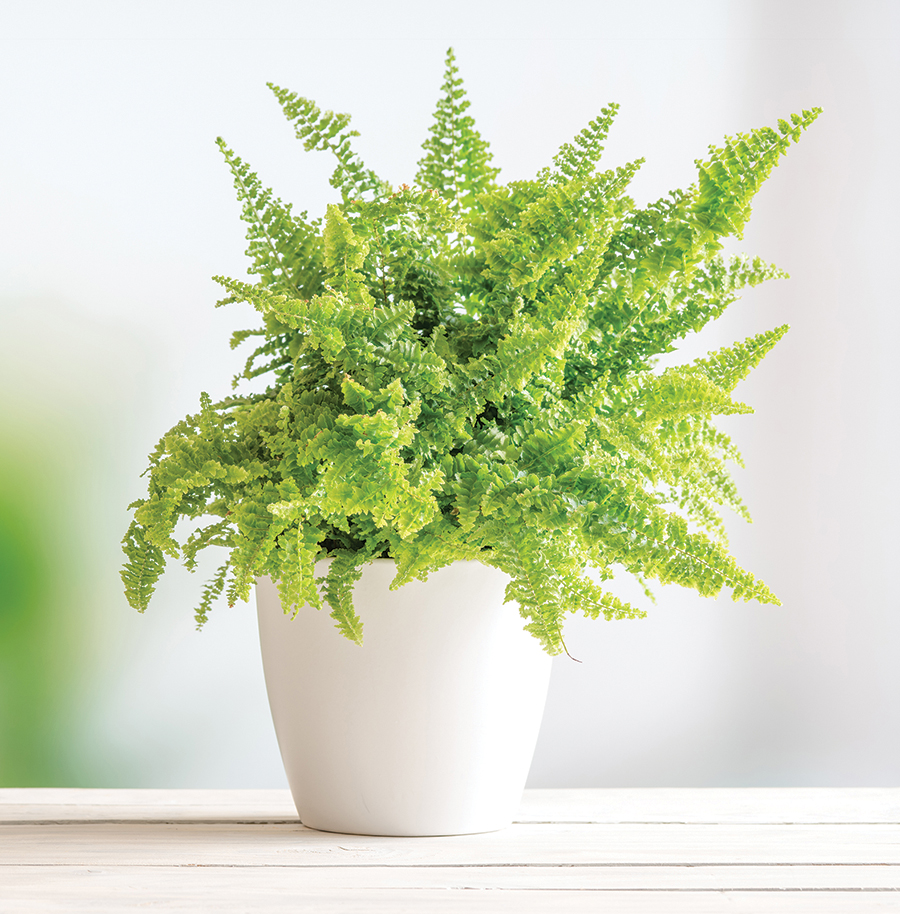
Mother’s Day falls on Sunday, May 13. I think of the hundred-year-old ferns in my grandmother’s sunroom, the ones that belonged to her florist mother, and how love, when nurtured, grows and grows.
A few seeds of inspiration for the beloved matriarch in your life:
Sprig of dogwood.
Pickled magnolia petals.
Lemon basil.
Bulbs for the garden: dahlias,
wild ginger,
climbing lily.
Stepping stones.
Wildflower crown.
Peach, pear or nectarine tree.
Basketful of dandelion (for wine).
Eternal love.
The Full Flower Moon rises on Tuesday, May 29. Also called Mother’s Moon, Milk Moon and Corn Planting Moon, this month’s moon illuminates the whitetail fawns, wide-eyed owlets, wildflowers everywhere.
According to The Old Farmer’s Almanac, the best days for planting above-ground crops this month are May 18, 19, and 26–28. Plant below-ground crops May 9 or 10.
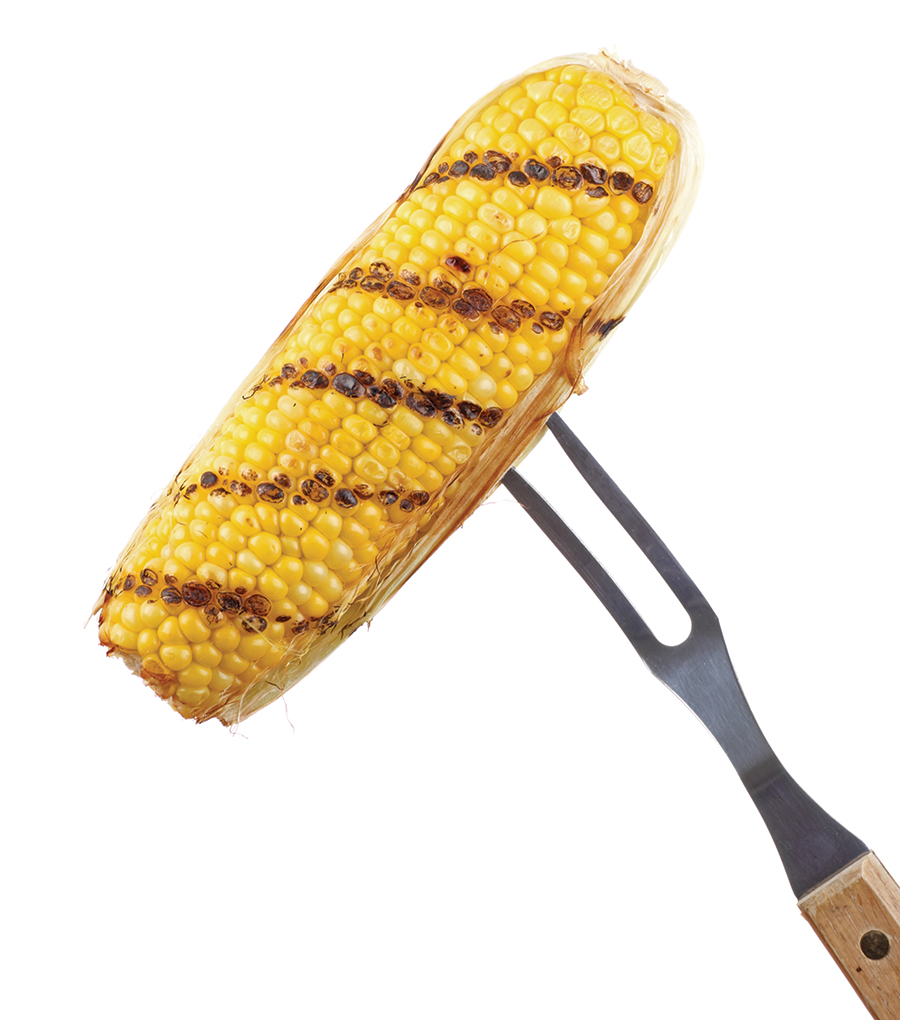
Plan now for July sweet corn on the grill.
Pickled Magnolia Flowers
Try this to add a side of whimsy to your spring salad.
Ingredients
One pound fresh young magnolia flowers
1 1/2 cups rice vinegar
One cup of sugar
One teaspoon of salt
Directions
Wash and dry petals, then put them in a sterilized jar with salt.
Mix rice vinegar and sugar in pan, then bring to boil.
Pour hot vinegar and sugar mixture over flowers. Allow to cool, then cap the jar.

If the flowering cherry tree could speak, she wouldn’t tell of her own beauty.
Words could never capture it.
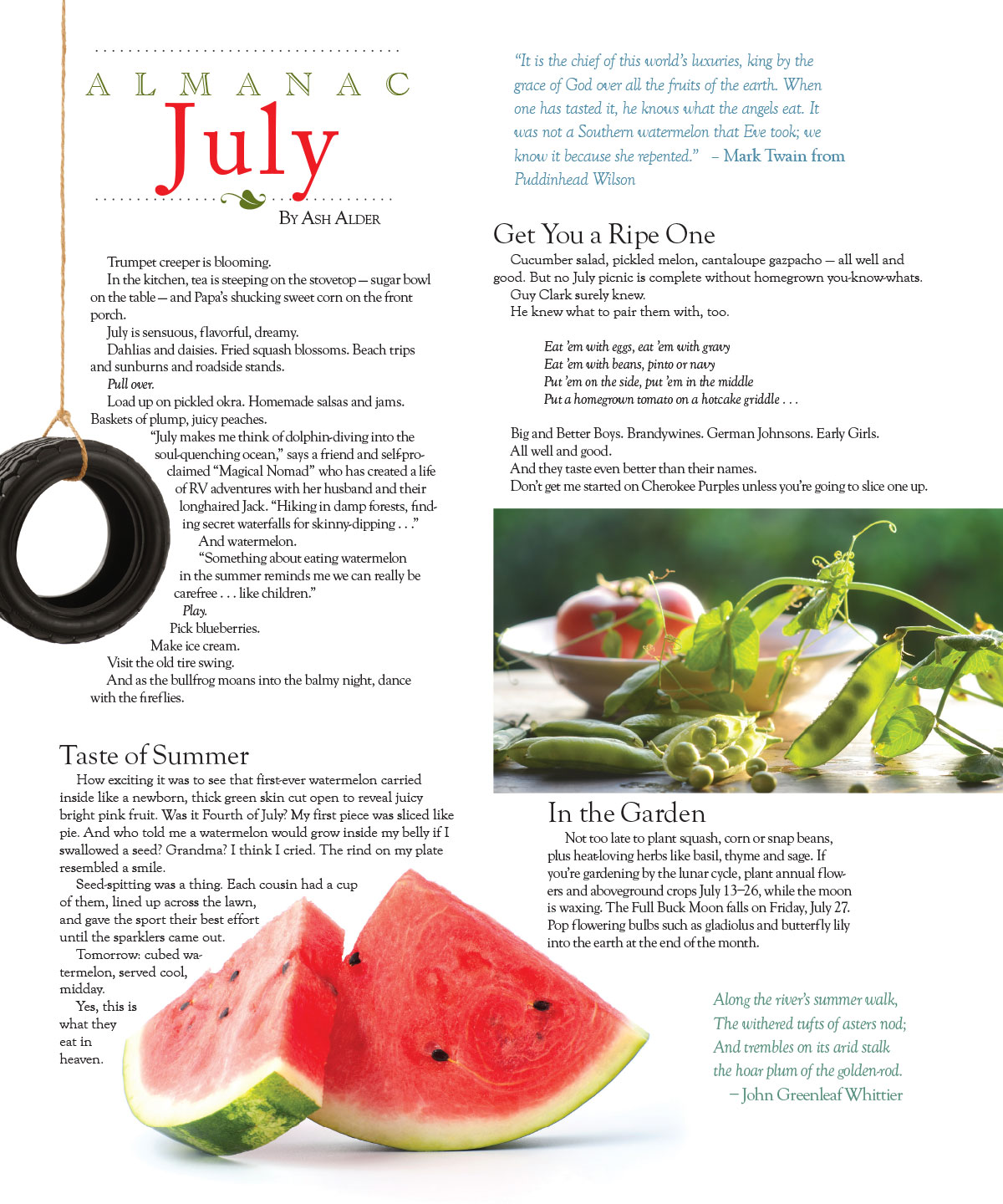
But with her powder soft voice, she might sing of the garden: banksia rose spilling over with fragrant yellow blooms; copper mobile, whirling beneath the redbud; foxglove, swooning from the tender kiss of the nectar-drunk hummingbird.
She might sing of bluebirds or violets or kissing in the rain.
Or maybe she does.
Yes, can’t you hear her? Voice like a siren. Sultry as a whisper at the nape of your neck.
Listen.
She serenades the squirrel babes, blind and naked, whose mother built their nest with stuffing from the neighbor’s patio cushions.
At twilight, she hums low while the pregnant doe clears a row of tulips sweet as candy.
Sunny jonquils harmonize with whippoorwill — Look-at-me! Look-at-me! — but the deer moseys onward.
As cherry maiden stifles laughter, all the world sings back.
Ingredients
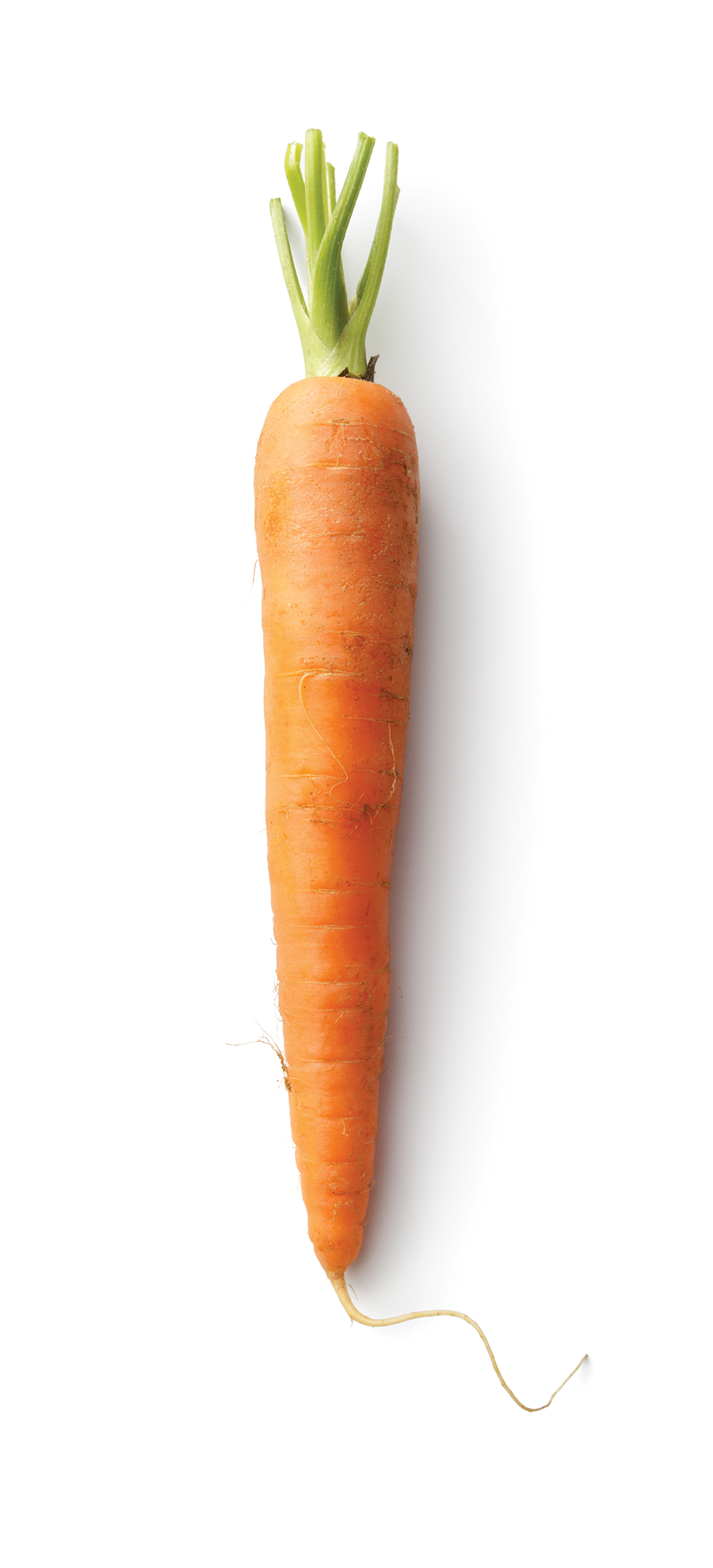
32 ounces carrot juice
8 ounces vodka
6 ounces pickle juice
juice from one-half lemon
5 dashes Worcestershire sauce
3 teaspoons crab seasoning (more for rimming)
3 teaspoons black pepper
2 teaspoons dill
2 teaspoons garlic powder
2 teaspoons ground ginger
2 teaspoons horseradish
2 teaspoons hot sauce (modify by your heat preference)
Instructions
Add all ingredients into a pitcher, then stir until combined.
Slide the flesh of a lemon around the rim of each pint glass, then place the rims onto a plate of crab seasoning to lace them.
Fill pint glasses with ice, then pour the carrot juice mixture over top. — garnish with pickled vegetables, celery, or tomatoes. Enjoy!
Plant the eggplants, beets and melons! Pumpkins, squash, green beans and peppers! And if you’re looking for a down-home summer — the white bread and black pepper type — sew the cukes and maters in the soft, cool earth.
Greek myth tells that spring is when Demeter, mother-goddess of harvest and fertility, celebrates the six-month return of her beautiful daughter, Persephone (goddess of the Underworld), by making the earth lush and fruitful once again.
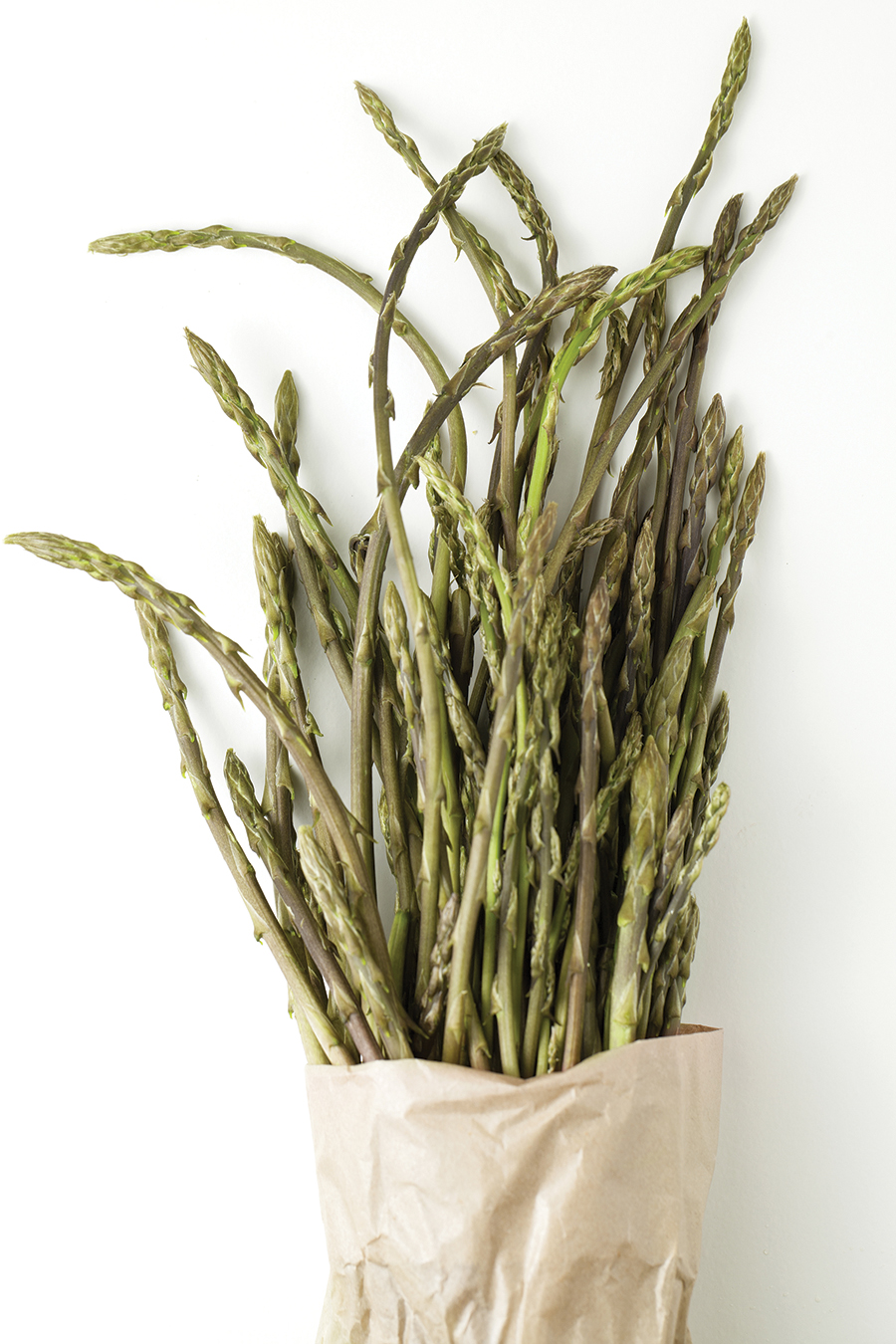
But what on earth did she do with all those tender green shoots of asparagus? Quiche. Soup. Risotto. Frittata. Asparagus custard tart . . .
In the spirit of Easter (Sunday, April 1),
how about a festive beverage to serve up with that asparagus-studded brunch?
And don’t forget all those garden parties
this month.
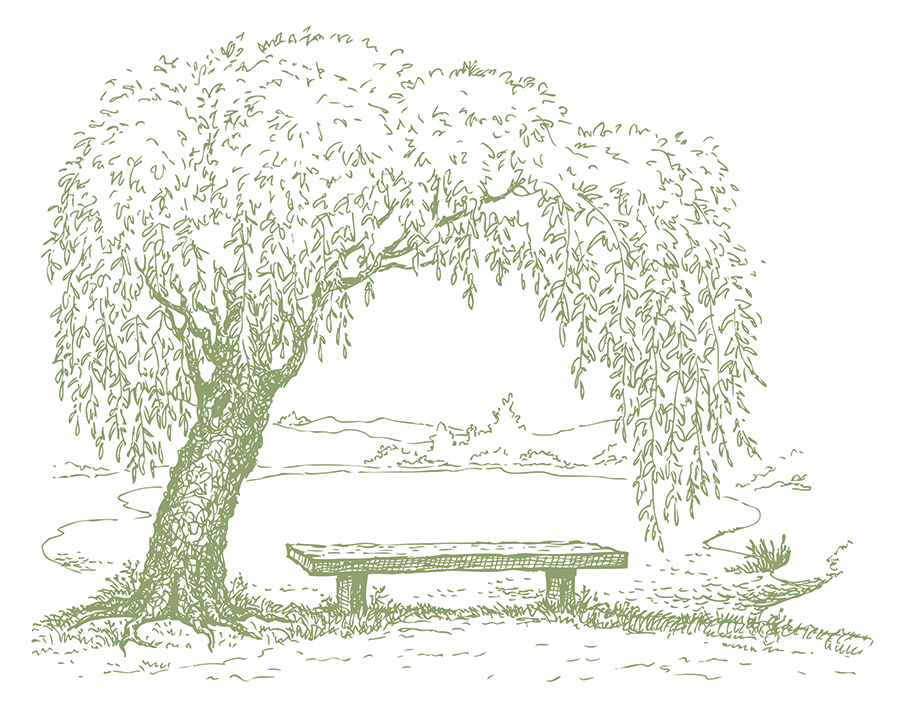
The ancient Celts looked to the trees for knowledge and wisdom. According to Celtic tree astrology, those born from April 15 to May 12 associate with willow, an enchanted tree that symbolizes love, fertility, beauty and grace. Creative, patient and highly intuitive, willow people are mystical by nature. They are most compatible with birch (December 24 to January 20) and ivy (September 30 to October 27) signs.

Something primal awakens within you on the first day of spring.
You rake the lawn, re-seed bare patches, feed the compost, prune the
fruit trees, repair the wooden trellis, and celebrate the new buds on the heirloom azalea.
Soon, the banksia rose will be a waterfall of fragrant yellow blooms, and foxglove will swoon from the tender kiss of a ruby-throated hummingbird.
Spring is synonymous with life, and each breath is nectar to your soul. As robin exhales mirthful tunes of snowdrop, crocus and daffodil, you find yourself whistling along. Today: songs of iris, thrift and pussy willow. Tomorrow: ballads of blue speckled eggs.
When the soil is workable, you sow the first of the peas, spinach, lettuce and leeks, sealing each seed with a silent prayer.
Tuesday, March 20, officially marks the vernal equinox. Urban legend has it you can keep an egg balanced upright at the exact moment that the sun crosses the plane of the Earth’s equator. Perhaps. Although you might have a better chance of cutting a deal with the wisteria.
If ever there were an optimal day to spot a leprechaun, surely it would be March 17. That’s what an Irish-blooded friend of mine stands by. As a young girl, Mary would wake with the birds on St. Patrick’s Day morn — the day before her birthday — and lie in the grass in her front yard.
“I thought for sure I would spot a leprechaun there at sunrise,” she recently told me. “I could feel it in my bones.”
Year after year she tried, but on the day before her 11th birthday, she gave up. Perhaps it was silly to believe in the magic of St. Paddy’s Day.
Or maybe it wasn’t.
At sunrise on her 11th birthday, something told her to lie in the yard once more.
“I saw a quick movement out of the corner of my eye,” she remembers, then ran across the yard to discover a perfect four-leaf clover in the grass.
“I still swear a leprechaun guided me there,” she says.
Flash forward 20-plus years to a Welsh pony farm in western North Carolina where, this time of year, when the weeping cherry is in bloom, Mary finds four- and five-leaf clovers on a daily basis — sometimes by the dozen.
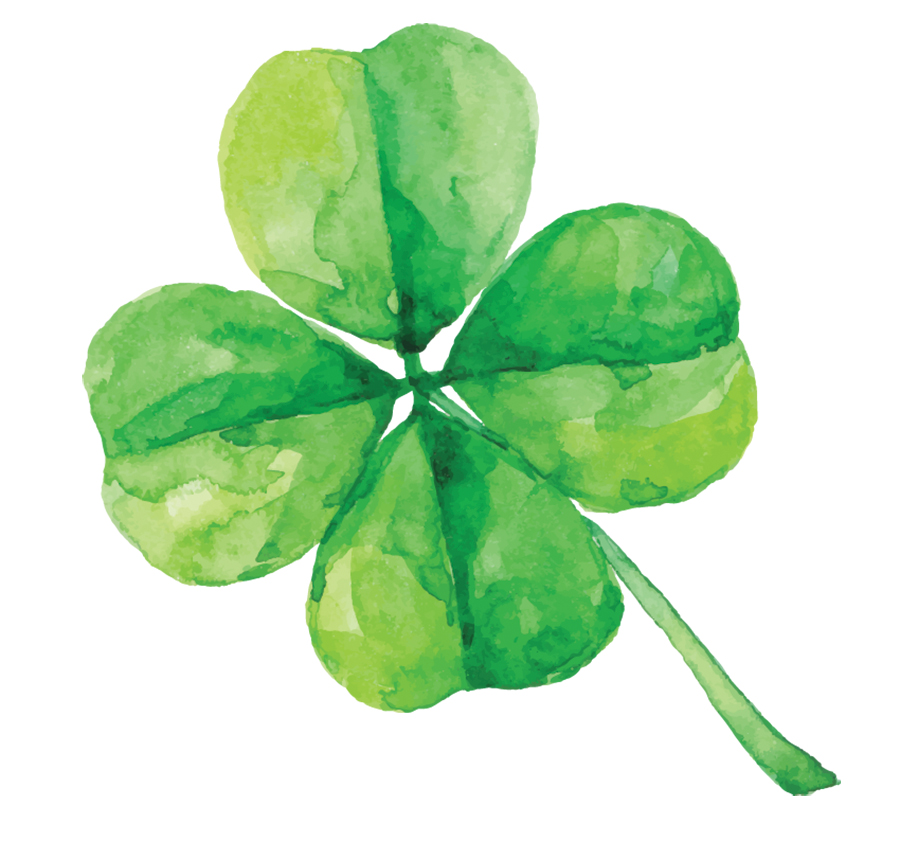
Halloween of 2015, while scanning a favorite field for an hour and a half, she found 117 four- and five-leafers, which she handed out to trick-or-treaters.
“I dressed up as a leprechaun for the occasion.”
How on this clover-loving Earth does she find them?
“Sometimes I see them as movement, and sometimes I hear their vibration,” she explains. “Nature speaks to those who listen.”
If the leprechauns aren’t guiding her, then perhaps the luck is simply in her blood. I’m inclined to believe that both are true.
The best thing about finding clovers?
“Giving them away,” says Mary. “I love seeing the smile on the face of someone who has never seen a four-leaf clover in person.”
Two full moons this month. On Thursday, March 1, celebrate the Full Worm Moon by sowing the season’s first root crops and fruiting perennials. Named by the Native Americans who so intimately knew and loved the land, this year’s third full moon signifies a softening Earth and the return of the robin. A second full moon falls on Sunday, March 31. Celebrate by doing that once-in-a-blue-moon something.
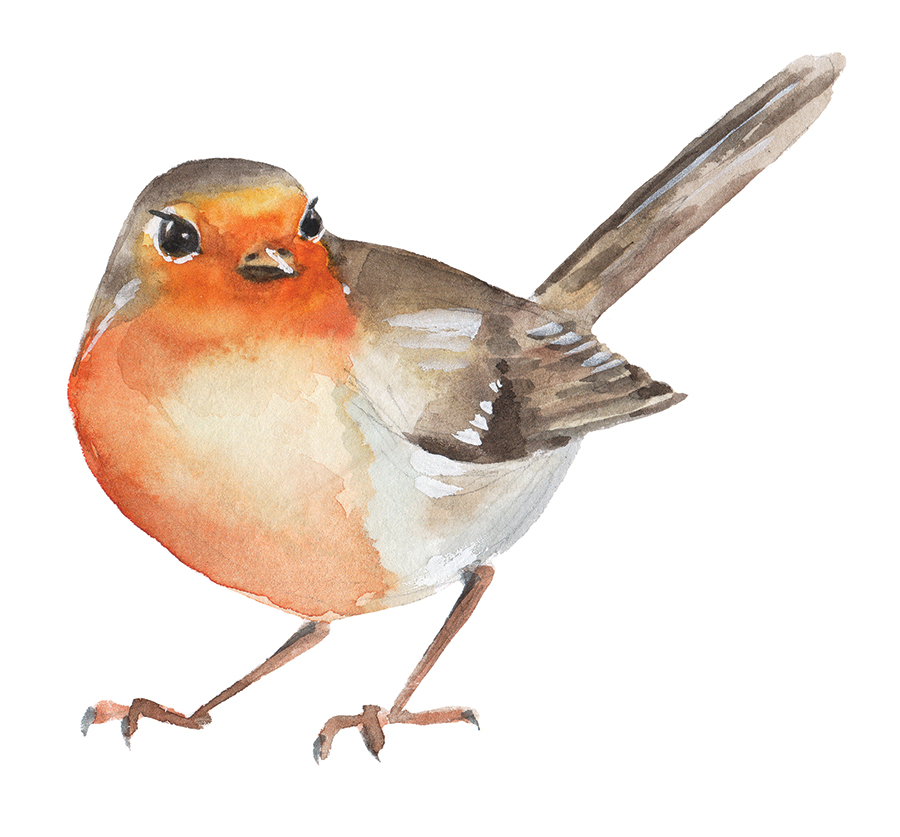
In Frances Hodgson Burnett’s classic children’s novel, a cheerful robin helps 10-year-old Mary Lennox unearth a rusty key to a long-abandoned garden.
The Secret Garden isn’t just a story of forgotten roses and the promise of spring. It’s about the healing properties of the Earth, and how, within and without, love can transmute the bleakest and most dismal places. Listen to the robin: The key is in the soil beneath you.

Perhaps it’s true that the best narratives are cyclical, taking the reader on a figurative journey that ultimately leads them back where they started, yet, through some alchemical reaction, altogether transformed. Like the fool’s journey, or the legendary ouroboros eating its own tail.
Which brings us back to January.
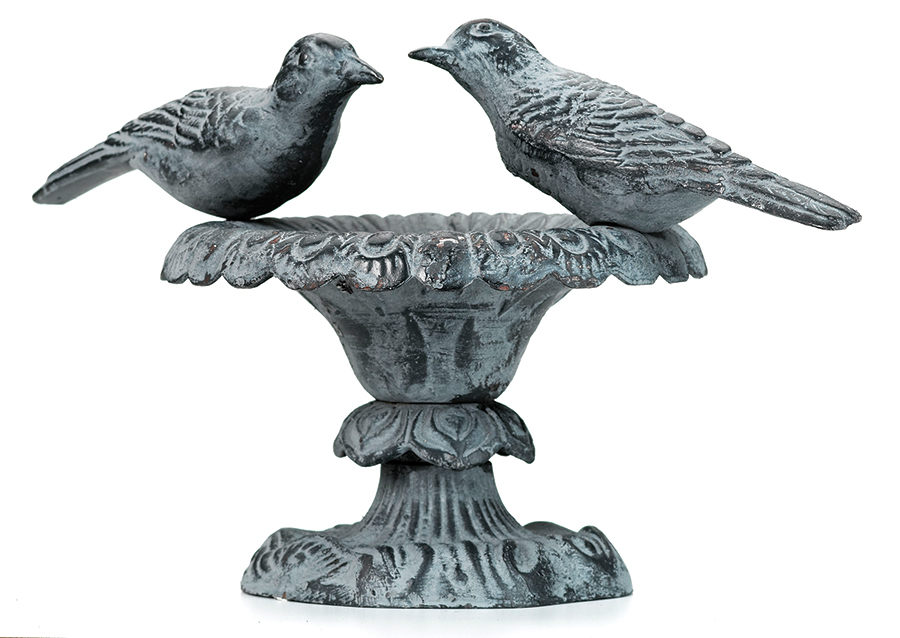
Outside, a pair of cardinals flits between the naked branches of a dogwood and the ornate rim of the pedestal birdbath. You think of the piebald gypsy cat who used to visit, how he would balance on the ledge to take a drink. Months have passed since you’ve seen him, but that drifter has charm. You’re sure he’s napping in some cozy sunroom, patiently waiting for the catkins and crocus, for the cheerily, cheer-up, cheer-up, cheerily return of the robin. The warmth of your own smile stretches across your face, and in this moment, all is well.
On this first day of January, you imagine the New Year unfolding perfectly. Steam curls from your tea mug as an amalgam of flavors perfumes the air.
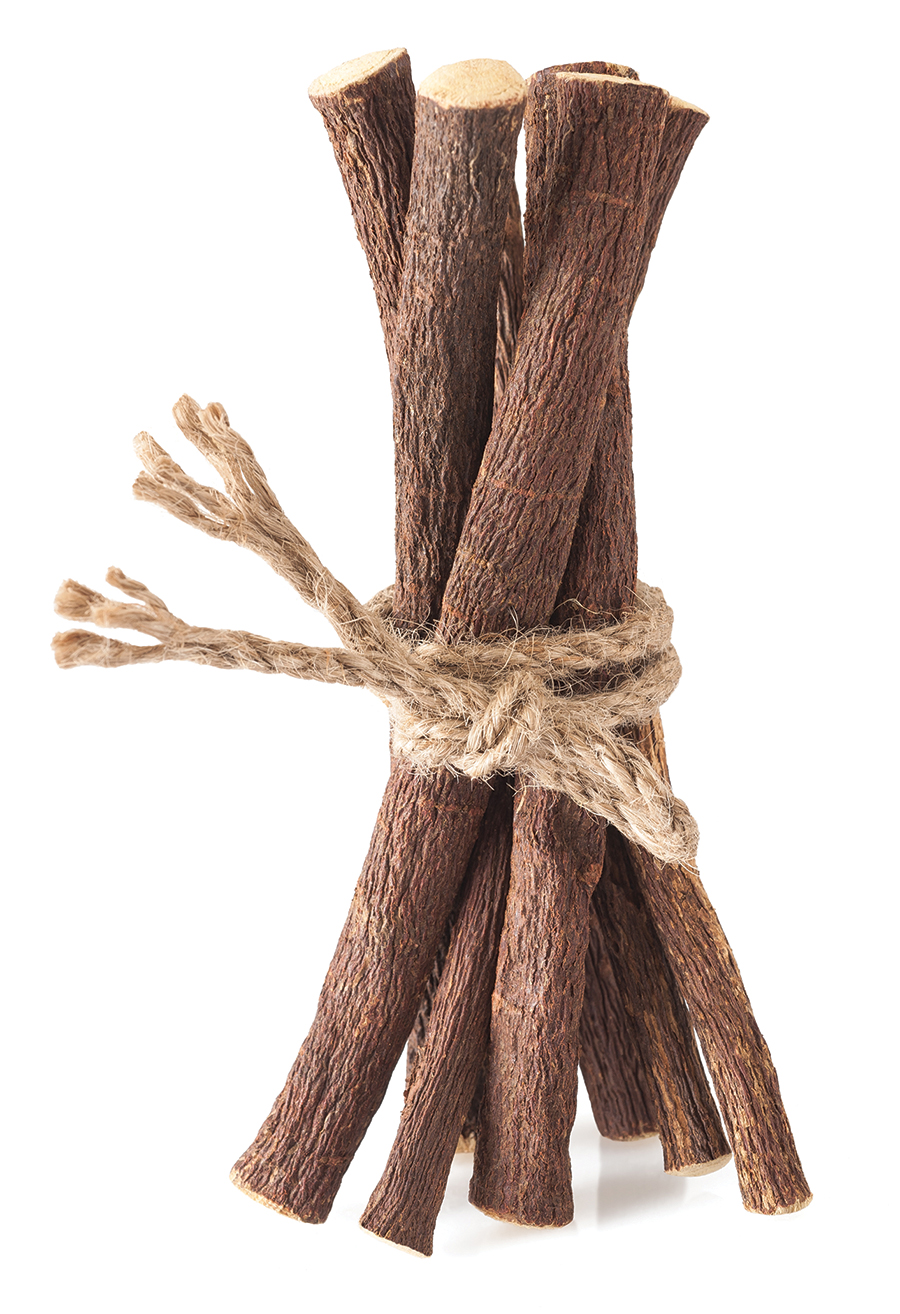
Cinnamon bark, licorice, ginger and marshmallow root . . .
Giving yourself permission to luxuriate, you reach for a favorite book of poems. “To read a poem in January is as lovely as to go for a walk in June,” said German author Jean Paul. You turn to a dog-eared page, can almost smell the honeysuckle and wild rose. You’ve read this poem many times, yet, like you, it is brand-new.
Henry David Thoreau could wax poetic on “That grand old poem called Winter.” Perhaps it’s not the easiest season to weather, but from darkness comes light. Behold phloxes and hellebores, snowdrops and winter-blooming iris, and on Wednesday, Jan. 3, until the wee hours of Thursday, Jan. 4: the Quadrantids meteor shower.
Named for Quadrans Muralis, a defunct constellation once found between the constellations of Boötes and Draco, near the tail of Ursa Major, the Quadrantids is one of the strongest meteor showers of the year. Although a just-full moon may compromise viewing conditions, you won’t want to miss a chance to see this celestial event.
Twelfth Night (Jan. 5), the eve of Epiphany, marks the end of the Christmas season and commemorates the arrival of the Magi who honored the Infant Jesus with gifts of gold, frankincense and myrrh. Seeking a hangover cure following this night of merrymaking and reverie? Ginger tea. And don’t be shy with the honey dipper. The natural sugar will help your body burn off what’s left of the wassail.
January’s blue moon falls on the last day of the month. Reflect upon the ways you let your own light shine on this rare and energetically powerful night. Like attracts like. What are you calling in for 2018?
Traditionally served in a large wooden bowl adorned with holly and ivy, wassail is a hot alcoholic cider that spells celebration. Many recipes call for port, sherry and fresh-baked apples, but here’s a simple (un-spiked) version for you. Start now and wrap your hands around a mug of hot wassail within the hour. Serves four.
Ingredients
2 cups apple cider
1 cup orange juice
Juice of one lemon
2 cinnamon sticks
6 cloves
1/4 teaspoon ground ginger
1/4 teaspoon ground nutmeg
Instructions
Combine all ingredients in a large pan.
Bring to simmer over medium-low heat.
Reduce heat. Continue simmering for 45 minutes.
Ladle into mugs and enjoy.

Deadhead the rose bush. Prune the wild muscadine. Move the front porch pumpkins to the compost pile.
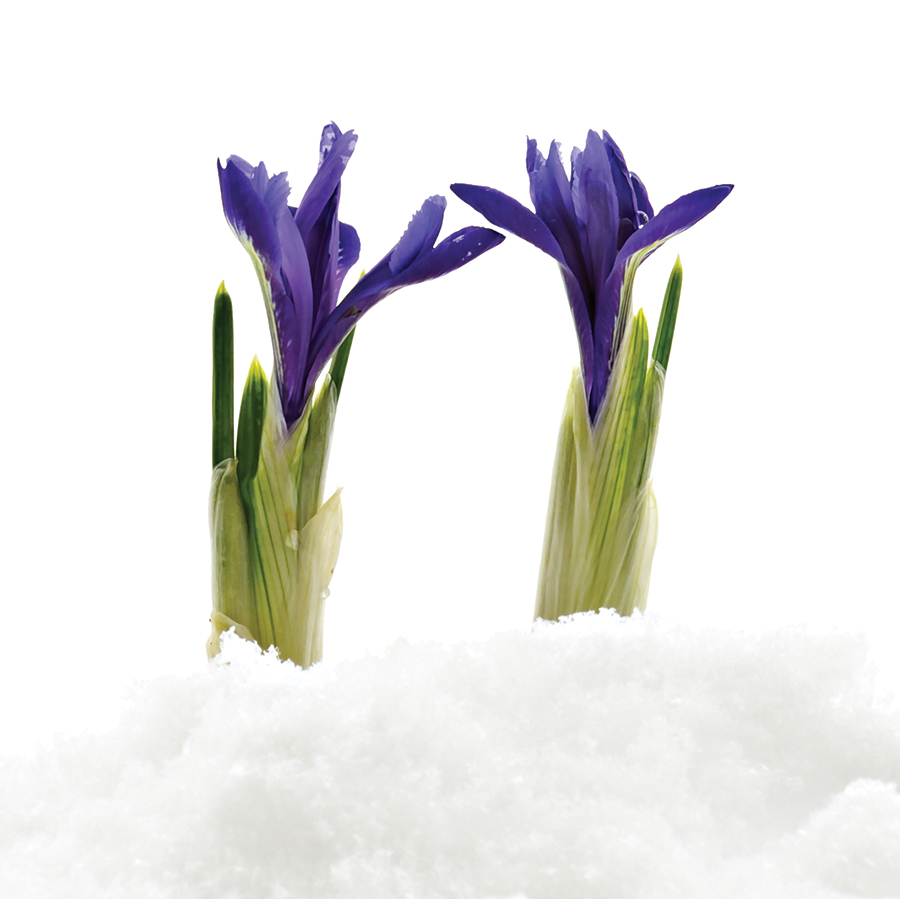
The days grow shorter, yet from darkness comes light. Behold phlox and hellebores, snowdrop and iris, camellia and winter-flowering crocus.
This month, while the soil is cool, plant spring bulbs and fruit trees, harvest edible weeds and winter greens, and when the work is done, create sacred space to enjoy the season. And beaucoup peppermint.
First cultivated in 1750 near London, England, as an experimental hybrid between water mint and spearmint, this perennial herb has long been used for its magical and medicinal qualities. According to The Oxford Companion to Sugar and Sweets, however, the candy cane came before its flavor. Sometime around 1670, a choirmaster in Cologne, Germany, asked a local confectioner to come up with a special candy stick to help pacify the young folks during the live Nativity on Christmas Eve. Shaped like a shepherd’s staff, this sugary creation surely kept them quiet (and buzzing) until the Magi arrived.
Want to grow your own? If you’re going for potency (read: high oil content), go with black peppermint, named for its dark purple-green leaves and stems. White peppermint has a milder flavor, but crush the leaves between your fingers and feel an instant calm throughout your entire being. Because this aromatic herb can quickly take over an entire garden, and because it craves rich soil and good drainage, container gardening is recommended. Full sun increases its medicinal qualities (and makes for stronger, spicier tea).
• Pear tree seed
• Bird food
• Binoculars
2 cups water
14 peppermint leaves
2 teaspoons honey
Bring water to boil
Place leaves in teacups; cover
mint with hot water
Steep for 5 minutes
Remove leaves (or not)
Add honey
Steep with fresh tarragon leaves and a quarter-inch slice of vanilla bean to enter a new realm. Add lemon wedge to continue the journey.
As we approach the winter solstice — the longest night of the year — we look to the stars to celebrate a new season, and the final hours of the year. The Geminid meteor shower peaks on the night of Wednesday, Dec.13, until the earliest hours of Thursday, Dec. 14. Sky-watchers may see as many as 60 to 120 shooting stars per hour predawn. Watching with friends or loved ones? Steep a pot of peppermint tea or keep the cocoa simmering on the stovetop for this enchanted celestial event. PS

By Ash Alder
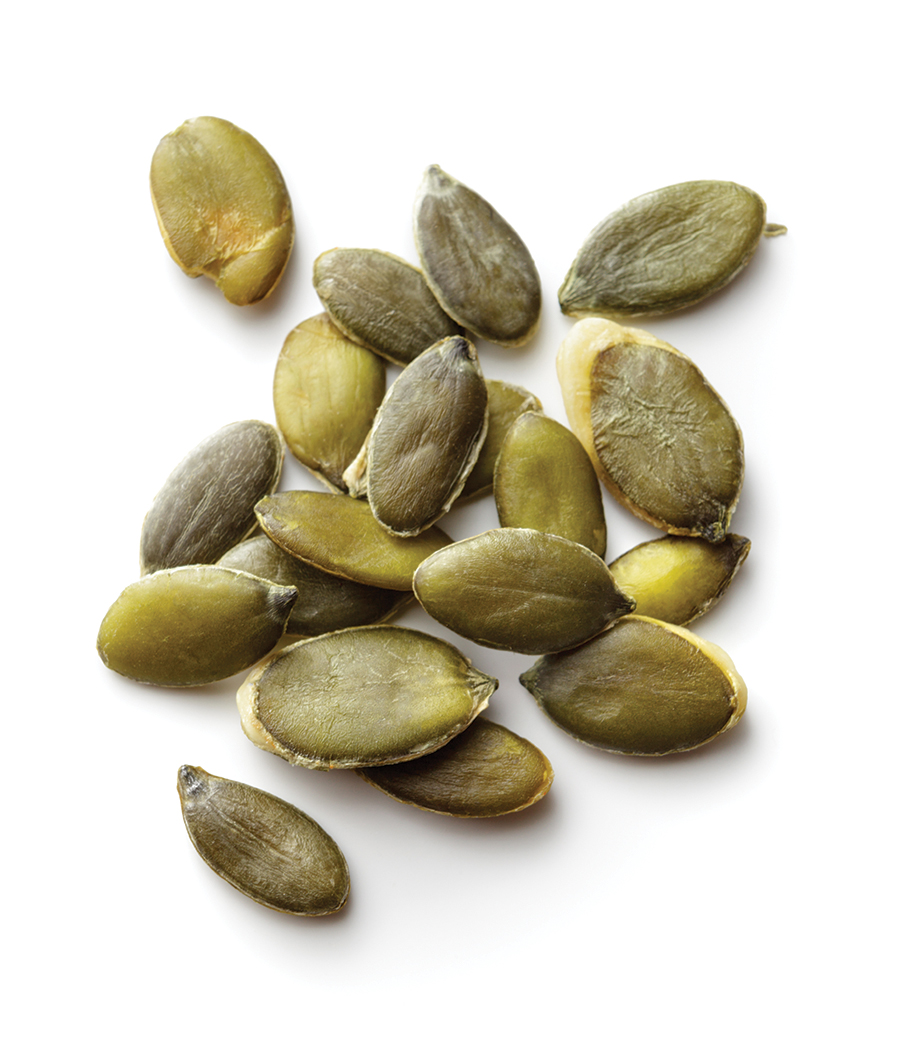
Sweet, bare-branched November. Sweet hearth fires and gray dawns and Indian corn. Sweet, sweet pumpkin bars.
Many consider this 11th month to be an auspicious time for manifestation. But first we must clear out the old. We rake leaves for compost, pull weeds, rid the garden of debris. And as we harvest the last of the eggplant and peppers, autumn sunlight washing us golden, we offer gratitude for the glory and abundance of the present moment. Wisdom and beauty are here, now. Like the white-tailed deer, peacefully grazing on the forbs and grasses along the quiet back road. She will disappear beyond the forest veil in an instant.
In the spirit of manifestation, here are 11 seeds of inspiration for the November gardener:
Sow poppy seeds on the full Frost Moon (November 4) for a dreamy spring.
Ditto larkspur. The spur of this showy and complex flower resembles the hind toe of the crested songbird for which it was named.
Watch the last of the leaves turn.
Plant a fruit tree. Fig, apple, persimmon or plum? One way to decide: Consider future chutney, pudding and pie.
Cilantro is surprisingly cold hardy. Growing some? More is more.
Feed the birds.
Plant asparagus crowns.
Stop and smell the witch hazel flowers.
Force paperwhites, hyacinth, and amaryllis bulbs for holiday bloom.
Visit a pumpkin patch.
Sow gratitude and watch it grow.
According to National Geographic, one of the “Top 7 Must-See Sky Events for 2017” will occur on Monday, November 13. In the morning twilight, low in the eastern sky, Venus and Jupiter will appear to join, separated by just 18 arc-minutes — “equal to the apparent width of a half-lit moon.” Epoch conjunctions such as this aren’t once-in-a-lifetime happenings. Still, watching the sky’s two brightest planets canoodle at dawn is nothing short of magic. You’ll want binoculars for this celestial waltz.
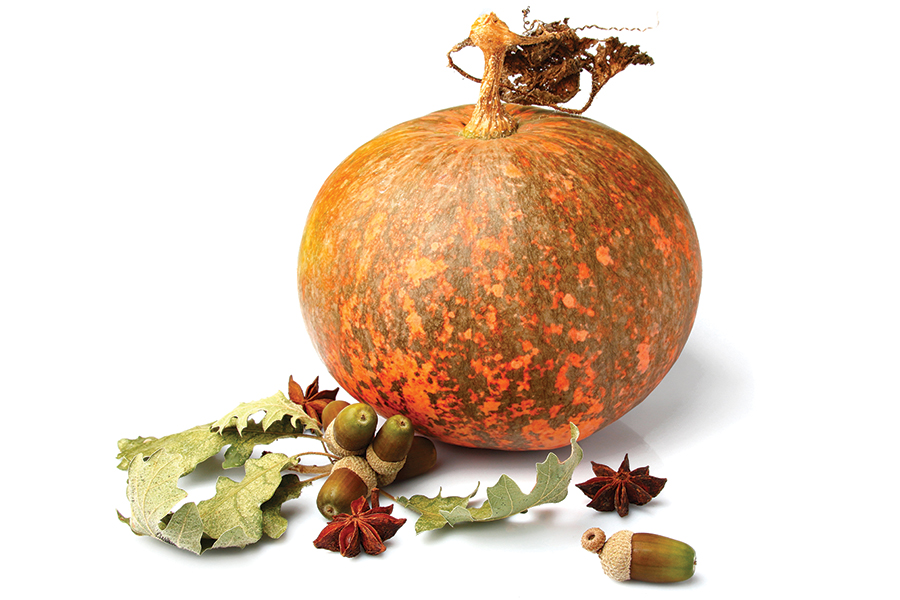
Bring the magic of nature indoors this Thanksgiving season with a centerpiece of your own creation. Hollow a pumpkin and fill it with dahlias. Ignite the senses with cinnamon and eucalyptus. Embellish with pinecones, acorns, branches, seedpods, gourds, clementine, pheasant feathers, pomegranate, bundles of wheat wrapped in twine. Allow earth to inspire you. Just save room for Aunt Viola’s pumpkin bars.
Paperwhite narcissus — or just paperwhites, as they’re more commonly known — grow just as soon as the bulbs are planted. Start them now for a wintertime centerpiece that signals spring’s faithful return. Choose a container (3 to 4 inches deep), spread an inch or two of pebbles along the bottom of it, then position the bulbs on the pebbles, pointy ends up. Add more pebbles to fill gaps and cover bulbs to the shoulders, then add water until it reaches the base of the bulbs. Check the water level daily, and when you notice roots, move the container to a sunny window. Once they flower (3 to 4 weeks), move them to a cool spot with indirect light. Enjoy. PS

July is here and you are fishing on the bank with Papa, readjusting his faded straw hat seconds before it slips down your brow again. You don’t notice. You are busy staring at the water’s surface, thinking about the dancing cricket at the end of the line.
Summer sends us time traveling. Shucking sweet corn on the front porch with mama. Potato sack racing with your cousins. Sparklers on the lawn.
Ripe blackberries straight from the bush, but nothing tastes sweeter than summer love. You relive that first kiss, stolen beneath the Southern magnolia, and daydream at the pool with flushed cheeks and pruned fingers.
Papa reaches for the bagged lunch you packed together, unwraps a tomato sandwich, takes a pull of iced tea from the thermos. He is flashing back to his own childhood summers when you feel the tug on your line.
You wrestle a tiny sunfish, straw hat now slipping down past your eyelids. The fish is too small to take home, but papa won’t let you know it. He puts down his sandwich to help you remove the hook. You slip your first-ever catch into papa’s bucket. He lifts the straw hat from your eyes, winks, and then kisses your brow.
Sure as our summer garden delivers fresh cabbage (read sauerkraut), July inspires cucumber salad, pickled melon, cantaloupe gazpacho, blueberries and whipped cream. Fourth of July falls on a Tuesday this month. We prepare for backyard barbecues, look for cool and simple dishes to delight friends and family.
At market, baskets of golden peaches spell homemade ice cream. The kids will love it. Hosting or traveling, stock up on pickled okra, scuppernongs, and heirloom tomatoes. This is a season that knows how to throw a delicious party. We oblige.
The Full Buck Moon falls on Sunday, July 9. If you’re gardening by the lunar cycle, pop flowering bulbs such as gladiolus and butterfly lily into the earth July 10–22 — day before the new moon. Not too late to plant squash, corn or snap beans, plus heat-loving herbs like basil, thyme and sage.
Summer doesn’t last forever. We’ve lived long enough to know that. As the cicadas serenade you into dreamland, allow visions of your autumn garden to come into focus. A gardener must always plan ahead.
Seeing as the spur of this month’s birth flower resembles the hind toe of a crested songbird, it’s little wonder how delphinium consolida got its common name. Larkspur (or Lark’s heel as Shakespeare called it) belongs to the buttercup family and, like the orchid, is a showy and complex flower. It’s also highly poisonous if consumed — but perhaps that’s what makes this striking beauty all the more appealing. Color variations convey different meanings. Purple says first love.
Water lilies aren’t just for frogs. Also a birth flower of July, genus Nymphaea takes its name from the Greek word meaning “water nymph” or “virgin.” A symbol of purity and majesty, the lotus flower is a spiritual icon in many cultures. Chinese Buddhists describe Heaven as a sacred lake of lotus flowers. Imagine.

Among the obscure holidays celebrated this month — Sidewalk Egg Frying Day (July 4), National Nude Day (July 14), and Yellow Pig Day (July 17), to name just a few — Build A Scarecrow Day is celebrated on Sunday, July 2. Egyptian farmers swaddled wooden figures with nets to create the first “scarecrows” in recorded history. Only they weren’t scarecrows, per se. They were used to keep quails from the wheat fields along the Nile River. If you’ve a corn crop to protect, consider making an art of it. But just remember, crows are smart cookies — and perhaps better friends than foe. PS

By Ash Alder
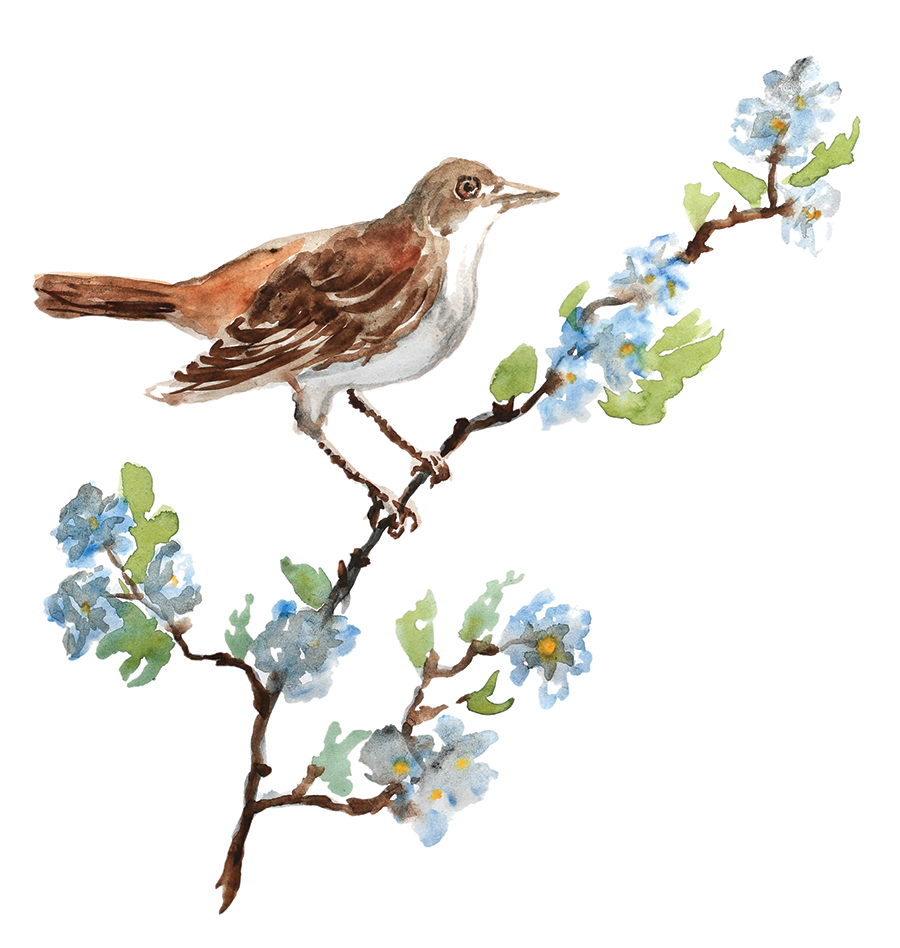
The mockingbird sings 100 songs. Ballads of honeysuckle and wild rose. Lady’s slipper. Skipper and milkweed. Plump strawberries. Cottontail and mophead hydrangeas.
June is here, he whistles, prelude to a queue of tunes about cukes and pole beans, creaky tire swings, hives full of honey. His morning song, syrupy as the last spring breeze, is interrupted by a string of sharp rasps. The tune tells how to scold a crow.
As fox kits scuffle in a pine-fringed wood, the sweep of a tail sends a troupe of dandelion seeds swirling into the dreamy green yonder. Summer is near, the mockingbird calls. We can feel the truth of it.
Cicada skin clings to the grooved bark of an ancient willow. On the solstice, a little girl finds it. The mockingbird watches her carry it home. Summer is here, the bird sings. The girl places the empty vessel on her
windowsill, hums a tune as sunlight washes over the golden amulet.
Evening unfolds. Fireflies dance beneath the sugar maple and a resident toad joins the cricket symphony. Mockingbird sleeps, yet the music swells
into the night.
The days grow longer. On Friday, June 9, a full Strawberry Moon illuminates the tidy spirals of golden hay dotting a nearby pasture. For Algonquin tribes, this moon announced ripe fruit to be gathered. Because the hives now hum heavy, the June moon is also called the Mead Moon. Honey, water and yeast. Patience. Sip slowly the magic of this golden season.
Perhaps stemming from the ancient Druid belief that summer solstice symbolizes the “wedding of Heaven and Earth,” many consider June an auspicious month for marriage. This year, Solstice falls on Tuesday, June 20. Celebrate the longest day of the year with sacred fire and dance. Now until Dec. 21, the days are getting shorter. Sip slowly the magic of these golden hours.
When the sun sets on Friday, June 23 — a new moon — bonfires will crackle in the spirit of Saint John’s Eve. On this night, ancient Celts powdered their eyelids with fern spores in hopes of seeing the wee nature spirits who dance on the threshold between worlds.
Some like it hot. Some like it cold. Whichever your preference, fresh okra is one of this month’s most delicious offerings. Also called lady’s fingers, okra is a member of the mallow family (think cotton, hollyhock and hibiscus). The edible seedpods of this flowering plant are rich in vitamins and minerals that promote healthy vision, skin and immune system. Because it’s an excellent source of fiber, okra also promotes healthy digestion.
Father’s Day falls on Sunday, June 18. Say “I love you” with a jar of pickled okra — local and, perhaps, with a kick.
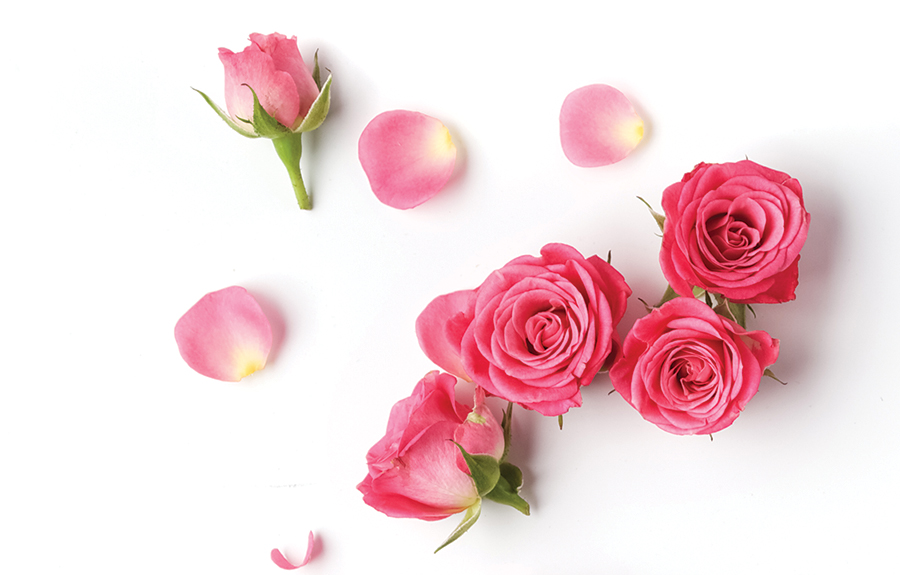
When you send someone roses — the birth flower of June — the color of the petals tells all. Red reads romance. Pink for gratitude. White or yellow for friendship. Orange for passion. PS