Return of a Southern Band

RETURN OF A SOUTHERN BAND

Return of a Southern Band

BIG STAR CELEBRATES THE ANNIVERSARY OF RADIO CITY

BY TOM MAXWELL • PHOTOGRAPHS BY JOHN GESSNER

I started drumming in a local band before graduating from UNC. One day, when I was about 21, our aged guitar player — a venerable 28-year-old — handed me a record. “Check this out,” he said nonchalantly. “I think you’ll like the drummer.” The album cover was an arty picture of a bare light bulb in a stark red room. The back cover was a flashbulb shot of three guys, who I presumed to be the band, hanging out in a darkened bar. They looked to be half in the bag, or at least very happy. Some dude with shades and impressive mutton chops was playing pinball behind them. The band was called Big Star; the album was Radio City, released in 1974.

I knew nothing about it. Radio City did not leave my turntable for weeks.

Radio City did not have the commercial success it deserved (which would have been a mixed blessing at best), but its longevity was guaranteed simply because it’s so damn good: a bright, restive, smart, immaculately produced power-pop album created during a time when most other popular music was as dense as clotted cream. Radio City might have been influenced by the Beatles, but Big Star was a Memphis band, so it’s Southern in foundational ways. For one thing, the lead vocals are sung with a slight drawl. And, for all the catchy guitar riffs and melodic hooks, there’s a pervasive melancholy to the record; a feeling of accumulated weight and encroaching decay. There are songs with titles like “What’s Going Ahn.” It’s like the British Invasion went native — which historically, I guess it did.

Beyond its Southern appeal, Radio City contains two irresistible singles — “Back of a Car” and “September Gurls” — both chiming-bright and impossibly catchy. I noticed this immediately the first time I played the record, while deeper cuts like “Morpha Too” would grow on me with every subsequent spin. In other words, Radio City is a proper album. Yet, I’d never heard of it, much less Big Star.

The reason for this is as tragic as it is ordinary: In 1972, the band’s parent label Stax Records (owner of their home label Ardent Records) entered into a distribution deal with Clive Davis at CBS Records. When Davis was fired almost immediately after, CBS lost interest in its Stax. By the time Radio City was released two years later — and although it received rave reviews and enthusiastic support at some radio stations — it was nearly impossible to find in record stores. As a result, the album died an obscure death.

But what leaped off the grooves of Radio City and into my headphones years later was very much alive and unlike anything I’d ever heard: It’s loose and tight at the same time; it incorporates both light and dark, sonically and emotionally. And my guitar player was right — I loved Big Star’s drummer, Jody Stephens. Equally powerful and melodic, his style is reminiscent of all my favorite late-’60s British drummers; rock and rollers brought up with tonal and rhythmic jazz sensibilities. By the time they recorded Radio City, Big Star was a three piece consisting of Alex Chilton on vocals and guitar (who’d already scored a few hits in the late 1960s with his previous band The Box Tops), Andy Hummel on bass, and Stephens on drums. There’s enough space in the arrangements for each of them to shine. Ardent Studios engineer John Fry captured it all in stunning high fidelity.

I asked Stephens recently about making Radio City and the nature of his professional ambitions at that time. “I don’t know that I had expectations,” he said. “I was focused on the spirit of the recording. You start with a blank slate, and it’s exciting to create those parts that you feel fit wonderfully with the other two members of the band. I got that done, and then it was just a sigh of relief. I figured rock writers would love it because I did. I figured everybody would love it because I did.”

Interestingly, it was a group of rock writers who inspired Big Star to reunite and record Radio City. Founding member Chris Bell had left the band soon after the release of their glorious debut, 1972’s #1 Record, because despite near-universal critical acclaim (“Every cut could be a single,” Billboard enthused), Stax — a soul label unsure exactly what to do with a band of white Anglophiles — didn’t get enough albums into stores to take advantage. Disillusioned, Bell withdrew.

“We drifted apart after Chris quit the band,” Stephens told me. “Then (Ardent Records co-founder) John King got us back together to do the Rock Writers Convention and that went incredibly well.” During Memorial Day weekend in 1973, more than 100 members of the National Association of Rock Writers convened in a Memphis Holiday Inn to booze, schmooze, and possibly start a union. A reunited Big Star (minus Bell) closed out the convention’s final night and blew everybody’s mind. The response was so positive that King was able to convince Chilton to stay in the band and make another record.

It appears that King conceived the Rock Writers Convention as a way to legitimize Big Star (and by extension, Ardent Records) in Stax’s eyes — which it may have done, but Stax’s ongoing decline, accelerated by its doomed distribution deal, created an inescapable reality. Big Star toured in support of Radio City, opening for Badfinger, but by that time bassist Andy Hummel had also left the band in order to complete his Bachelor of Arts degree in English literature and later an associate degree in mechanical engineering technology. He went on to have a long career at Lockheed Martin.

There would be a qualified third act: Stephens and Chilton (along with assorted friends and lovers) would go on to record a project that wasn’t so much finished as abandoned. Third (sometimes called Sister/Lovers) wasn’t even sequenced, much less issued. The recordings languished in the vault for years before being released several times; each with a different name, track list and sequence. There was even some serious discussion as to whether it was a Big Star record or an Alex Chilton solo project.

Not that the music was inconsequential: Third — with its pop mastery and exquisite overtones of dissolution — created the blueprint for indie music 20 years later. Still, as far as the late-’70s music industry was concerned, Big Star’s story had ended. Stephens went on to manage Ardent Studios (where all the Big Star records were made), while Chilton embarked on an iconoclastic solo career; one diametrically opposed to his pop music past.

But the ripples of Big Star’s influence were already making their way out of Memphis and throughout the South. Chris Stamey, a young North Carolina native, had heard the Big Star single “When My Baby’s Beside Me” in his hometown — “a radio hit in Winston-Salem (but nowhere else it seems),” he noted in his memoir A Spy in the House of Loud. Chris snagged a copy of #1 Record from a local DJ for a dollar, later discovering the “even more compelling” Radio City, “which seems to have gone directly to the cutout sale bins at the local Kmart.”

Stamey ended up playing bass with Alex Chilton when both men lived in New York in the late 1970s. Around the same time, he also founded Car Records, which issued the only Chris Bell single released during the artist’s lifetime. (Bell died a few months later in December 1978, losing control of his car on the way home from band practice and driving into a pole. He was 27.)

A year later, another young bassist named Mike Mills from Macon, Georgia, discovered Big Star — courtesy of his new friend and musical collaborator Peter Buck, who also turned Mike onto other lesser known groups like The Velvet Underground. The two would go on to form a band initially called Rapid Eye Movement, a name they later shortened to R.E.M.

“Big Star encapsulated everything I loved about rock and roll,” Mills told me recently. “Number one, they wrote great songs. Number two, they sang well. They had great guitar tones and appealed to me in a way that Top 40 radio used to when I listened on my little transistor radio. I was just blown away. Big Star records were something we could aspire to, and R.E.M. did talk them up, along with several other underappreciated bands.”

The ripple effect widened to reach the ears of a young Mississippi multi-instrumentalist named Pat Sansone, who would go on to join Wilco.

“I came across Big Star in the mid-’80s,” Sansone said. “I probably read the name ‘Big Star’ through R.E.M. — I was a big R.E.M. fan as a Southern teenager — so I gobbled up everything I could about them.”

In a way, Big Star would come to Sansone. “I went to the Bebop Record Shop in Jackson, Mississippi, which was the closest place where I could buy cool records. On one of those recordbuying trips, the clerk put Big Star’s Third on my stack and said, ‘You’re buying this.’ I took it back home to Meridian and put it on late at night — wearing headphones so as not to wake anybody up — and it just blew my mind. I bought #1 Record and Radio City as soon as I could. That music went right into my bones as a 15-year-old musician who was already in love with the Beatles.”

Jody Stephens is the only surviving member of Big Star. Andy Hummel died in 2010, as did Alex Chilton, right before a Big Star appearance at South By Southwest (for the first time since leaving the band, Andy played in tribute that night). But Big Star lives on — and not just because they made great records or influenced talented musicians. Stephens, Stamey, Mills and Sansone — augmented by The Posies’ Jon Auer (who also participated in a late-era Big Star incarnation) — have been performing Big Star material live: first with an all-star revue of Third (Stamey’s idea), followed by tours celebrating the 50th anniversary of #1 Record and now Radio City. I asked Sansone and Mills how it felt playing with the OG drummer.

“It’s amazing. There are times when we’re running a song and Jody does Jody, and the hairs on the back of my neck stand up — because it’s him: that very particular expression you’ve listened to so many times. Jody’s not winging it. He’s a drum composer. Those parts are composed, and he’s very serious about them. He’s still playing them with power and grace,” Sansone said.

“I stick to the arrangements,” Stephens told me. “It’s important. I’ve seen some musicians change arrangements on stage of songs I grew up with and loved. It might have been fulfilling to them, but it was disappointing to me.”

Mills is doing a deep dive into Hummel’s bass parts. “I feel an affinity to what he did; some of it’s what I would have done, some of it is stuff I never would have thought of. It’s really broadening my palate. But I want people to understand that we’re not slavishly imitating anything. There is a joy to this — that’s the main takeaway for us. We truly love this music and put ourselves into it.”

Their audiences resonate with and reflect this emotional commitment. “There was a lot of weight going into this,” Stephens said. “The weight of having lost Chris and Alex and Andy and John Fry. But when you hear those songs and they’re true to the recordings, it’s emotional for a lot of people — including me. At one show, a girl was holding up her boyfriend because he was sobbing. The audience is rooting for us. They want to feel those things they feel when they listen to the records. Even if it’s melancholy, there’s some comfort there.”

Long live Big Star.

Home on the Hill

HOME ON THE HILL

Home on the Hill

Perfect landing spot for a young family

By Deborah Salomon

Photographs by John Gessner

Consider it a good omen when a classic, formal, rambling house atop Weymouth Hill is strewn with kiddie stuff: high chair, playpen, toys, even a big dog bed. Birthday parties have replaced cocktail soirees; gates will secure stairways; and breakable ornaments will be shelved out of reach. The old house has a renewed purpose, with a few twists.

The trappings of youth belong to Simryn, 11-month-old daughter of Lt. Col. Stephen Peterman, stationed at Fort Liberty, and Maj. (retired) Nisha Patel, both dentists. Neither knew much about the area as they prepared to return after being stationed in Germany for three years. “We asked patients who recommended Southern Pines as a nice family neighborhood. History wasn’t our goal,” Peterman says. Starting a family was.

So was space. The couple envisioned their home as a Christmas/Thanksgiving destination for extended family. COVID, however, had dried up the market, so they relayed their requirements to a Moore County Realtor and waited.

Luck happens. At 4,900 square feet on an acre of land, this brick extravaganza dating from the mid-1920s met their spatial requirements. Peterman liked the patio for grilling and eating outside. A grassy area could be fenced for Mila, their poodle mix. The Carolina room was a bonus. They both appreciated being able to walk downtown.

But this property’s pedigree would not be swept under a Persian rug.

As Southern Pines gained the reputation as a fashionable winter watering hole for wealthy urbanites, New York architect Aymar Embury II was hired in 1913 to design the Highland Pines Inn. With him came engineer Louis Lachine. When inn guests opted to build nearby, Embury, known for elegant vacation homes, obliged. These, as well as schools, banks and offices, left a mark on the developing town. Lachine, cashing in on a lucrative market, bought land and built 10 spec houses himself. Some sported rogue designs, featuring off-center doors and windows with brick as either a building material or decoration.

Lachine had refined his esthetics by the mid-1920s when he produced Patel and Peterman’s faintly Tyrolian cottage, labeled as Colonial Revival by the National Register of Historic Places, on a prime Weymouth corner. Features included multiple dormers, casement windows and gently curved roof lines, sometimes called “skirts.”

Brick dominated — inside, outside, on walls and underfoot. Brick fences, patios, arches and walkways, plus copious greenery, make the house appear to rise from the earth. An extensive renovation/addition in 2005 continued the brick theme initiated during an era when, all too often, fire destroyed wooden shakes, shingles and clapboards.

Such was the fate in 1957 of Embury’s Highland Pines Inn.

A European flavor still sets this house apart from subsequent Weymouth construction, as do features like a closed vestibule with closet, an uncommon accent in warm climates. Patel and Peterman’s Realtor forwarded photos and a walk-through video to Germany.

“We bought it sight unseen,” Patel says. “We got a feeling from the pictures. We knew about the neighborhood. And we were trusting.”

Their return flight landed in D.C. With baggage and dog in tow, they drove straight to North Carolina, arriving at 1 a.m. “That’s when we saw the house for the first time. We knew our leap of faith worked out,” she says.

A renovation performed by a previous owner did not remove the architect’s intent, which, in dark-stained beams and window frames, echoes the Arts and Crafts movement newly popular in America. The kitchen, of course, had to go, replaced by white and stainless steel. A brick archway opening into the new sunroom/eating area with table and banquettes may have been added when the kitchen was enlarged. Otherwise, surfaces are sleek white, black and metallic. In homage to the past, an entire wall of original kitchen cabinetry remains for storage.

Was it a sign? The previous owner left a massive refectory dining room table seating 12, almost enough for those family holidays, as well as a handsome china cabinet. The TV room contains an unusual wall-mounted floor-to-ceiling gas fireplace covered in a sandy design.

Patel appreciates both the amount of light streaming through the windows, and the tall longleaf pines that create shade.

The new owners required only one adjustment in the floor plan: An oversized master bedroom closet is now Simryn’s nursery. A bonus room over the laundry in the addition became a baby-safe play area.

Furnishings are, for the most part, comfortable and family-oriented, although the couple brought back two interesting shelf-bar units based on old wooden filing cabinets. Their piece de resistance, however, is not a Victorian desk or an original Eames lounge chair. Peterman opens the garage door, revealing a gleaming, painstakingly restored 1960 Chevy Impala, red with white leather interior, purchased when they returned stateside. This gleaming specimen of mid-century auto opulence causes quite a stir when Peterman takes it for a spin.

“There’s nothing cookie-cutter about this house,” Patel concludes. “It’s very well built, unique.”

A hundred years later, Lachine’s brick landmark has served as a comfortable interlude in this military family’s life. Soon, they will move on, having added a young family’s imprint to Weymouth’s historic past — James Boyd’s late-night literary confabs morphed into bedtime story hour; bootleg booze gave way to fruit slushies; and steamy August afternoons were soothed by the cool of air conditioning.

And so the beat goes on.

Almanac

ALMANAC

September

By Ashley Walshe

September rouses you from the gentle spell of summer.

One day, between the blackberry harvest and the mighty swell of crickets, the charm took hold. Languid and blissful, you sprawled beneath the dappled shade, eyes heavy, honeysuckle on your tongue.

Rest now, summer cooed. It’s much too hot to fuss.

And, just like that, you were under. Swaddled in sticky-sweetness. Wanting for nothing. Enchanted by the lazy lull of summer.

Until now.

Something has shifted. It’s a feeling, both subtle and seismic. At once, you’re wide awake.

The air is crisper, cooler, lighter. Colors are more vibrant. Even the birds have changed their tune.

Wake up, a skein of geese clamors overhead. There’s little time to waste!

Their frequency is a code. An ancient language. A precious remembering.

Everything will change.

The light. The trees. The pulse of the season.

Look to the maple tree, the honeybee, the frenzied gray squirrel. Life is racing toward some dark unknown. Put your ear to the warm earth and listen.

This is the threshold, the quickening, the no-going-back. The final kiss of summer.

And so, you feast with all your senses. You savor the fragrance of ginger lilies, the taste of wild muscadines, the spirit of goldenrod at magic hour. You kiss summer back.

A single leaf descends with a singing wind.

Stay open to the beauty of this moment. Stay open to the knowing that everything will change.

Harvest Moon Magic

Your eyes aren’t playing tricks. When the full harvest moon rises on the evening of Tuesday, Sept. 17, it will appear larger and brighter because it is, in fact, as close to Earth as it can be. What makes this supermoon even more spectacular is the partial lunar eclipse that will reach maximum coverage around 10:44 p.m. While only a small portion of the moon’s surface will be obscured by Earth’s shadow, this partial eclipse marks the beginning of an eclipse season. An annular solar eclipse will occur on Oct. 2. Although its “ring of fire” won’t be visible from North America, don’t be surprised if you feel its powerful energetic effects.

Seeing Stars

Look! The asters are blooming. Derived from the Latin astrum, meaning star, September’s birth flower transforms the late summer landscape with jubilant constellations of white, pink, blue or purple blossoms. Often mistaken for daisies, the aster is actually related to the sunflower. (Study its bright yellow center, composed of tiny florets, and see for yourself.)

According to one Greek myth, asters sprouted from the tears of a virgin goddess named Astraea, who wished for more stars in the sky. Instead, the brilliant “stars” began spilling across the quiet earth, as they’ve done every autumn since. Magic for the eyes. Magnets for the late-season butterflies.

Bookshelf

BOOKSHELF

September Books

FICTION

The Wildes: A Novel in Five Acts, by Louis Bayard

In September of 1892, Oscar Wilde and his family have retreated to the idyllic Norfolk countryside for a holiday. His wife, Constance, has every reason to be happy: two beautiful sons, her own work as an advocate for feminist causes, and a delightfully charming and affectionate husband and father to her children, who also happens to be the most sought-after author in England. But with the arrival of an unexpected houseguest, the aristocratic young poet Lord Alfred Douglas, Constance gradually — and then all at once — comes to see that her husband’s heart is elsewhere, and that the growing intensity between the two men threatens the whole foundation of their lives. The Wildes: A Novel in Five Acts takes readers on the emotional journey, moving from the Italian countryside to the trenches of World War I and an underground bar in London’s Soho, where Oscar’s sons, Cyril and Vyvyan, grapple with their father’s legacy.

The Life Impossible, by Matt Haig

When retired math teacher Grace Winters is left a run-down house on a Mediterranean island by a long lost friend, curiosity gets the better of her. She arrives in Ibiza with a one-way ticket, no guidebook and no plan. Among the rugged hills and golden beaches of the island, Winters searches for answers about her friend’s life, and how it ended. What she uncovers is stranger than she could have dreamed. But to dive into this impossible truth, she must first come to terms with her own past. Filled with wonder and wild adventure, this is a story of hope and the life-changing power of a new beginning.

CHILDREN’S BOOKS

Puppy Talk: How dogs tell us how they feel and Cat Chat: How cats tell us how they feel, by Jess French

Kids raised with pets in the home just instinctively know how to interact with animals. For others, there’s a bit of a learning curve, and these fabulous new books are simple enough for the youngest readers while detailed enough to remind anyone that animals do talk, if people know how to listen. (Ages 2-6.)

The Tryout, by Christina Soontornvat

It’s the new school year and the start of eighth grade, and the most important thing for Christina and her best friend, Megan, is trying out for the cheer squad. Making the squad is more than just playing a sport; it means being part of a team, working together, and surviving all the challenges that come with friends, families and fans. (Ages 12 and up.)

When We Flew Away: A Novel of Anne Frank Before the Diary, by Alice Hoffman

Anne Frank’s The Diary of a Young Girl has captivated and inspired readers for decades. Written while she and her family were in hiding during World War II, it has become one of the central texts of the Jewish experience during the Holocaust, as well as a work of literary genius. With the Nazi occupation of the Netherlands, the Frank family’s life is turned inside out. In the midst of impossible danger, Anne, audacious and creative and fearless, discovers who she truly is. With a wisdom far beyond her years, she will become a writer who will go on to change the world as we know it. Hoffman weaves a lyrical and heart-wrenching story of the way the world closes in on the Frank family from the moment the Nazis invade the Netherlands until they are forced into hiding, bringing Anne to bold, vivid life.

NONFICTION

Building Material: The Memoir of a Park Avenue Doorman, by Stephen Bruno

As an academically gifted Latino kid growing up in the Bronx, Bruno’s family had high aspirations for his future, but those dreams were derailed when he followed a girlfriend to Minnesota and a dead-end job. Languishing and unable to get it together, Bruno eventually moved back home. Broke and eager to make a way for himself — and away from the oppressively religious father wreaking havoc on his love life — the affable, easygoing, quickwitted Bruno lands a much-coveted job as a doorman at a highend building on Park Avenue. Hilarity and drama soon abound as he learns the dos and don’ts of being a doorman for the rich and famous, and witnesses the antics going on behind the front entrance of this swanky building.

The Witching Wind, by Natalie Lloyd

Two unlikely friends live in a town with a mysterious magical wind that usually steals things, but this time it has stolen people — two people who are very important to the friends. From the author of the beloved A Snicker of Magic comes this story of friendship and family, and how things that are just a little bit weird can be quite wonderful. (Ages 10 and up.)

Popcorn, by Rob Harrell

Andrew is having a day. It’s picture day, of course, and his new shirt got ripped by the class bully, his glasses broken by a rogue basketball — and we won’t even talk about the ketchup rocket in the cafeteria — but now his grandma is missing, and Andrew’s stress meter is justabout to pop. Lots of kids deal with anxiety in different ways, but for some, it takes over. This funny, real, honest book is for them. Do an anxious kid a favor and put Popcorn in their hands. (Ages 10 and up.)

Alex in Wonderland

ALEX IN WONDERLAND

Alex in Wonderland

In the kingdom of the dahlia whisperer

By Emilee Phillips – Photographs by John Gessner

The French traditionally design neat, orderly and symmetrical gardens. The English tend to prefer something a bit less formal. Alex Rowland, who lives in Robbins, seemingly uses Wonderland as the blueprint for his, letting a bit of whimsy be his guide.

His home garden, which began as a simple hobby, has blossomed into a vibrant showcase of over a hundred different plants. With the help of his good friend John Boyer, something is always in bloom, but the dahlias — oh, my — stand out as the crowning glory.

Clippers lay around the garden and wedged in fences, smells of passion flowers and tomato plants fill your lungs as you walk through. To the average eye the garden might look unruly, but the tangle of veggies and flower blooms seem to complement his dahlias. Like Wonderland, the ordinary rules of order seem suspended here. Curiouser and curiouser.

“You know how they say, ‘If you can’t tie a knot, tie a lot’? Well, that’s what I do,” Rowland says with a chuckle. “Sometimes I forget what I planted where, until it comes up.”

Many of the paths have arbors wrapped with vines, providing almost a 360-degree botanical spectacle as you walk underneath. In a single section you could spot dahlias, okra, peppers and morning glories. Keeping with the normal course of nature, the garden is something of a Darwinian battlefield. “I have to make sure certain plants don’t overtake others,” he says.

His secret is 20 years’ worth of compost in raised beds. He gets truckloads delivered multiple times a year. The land may have a clay soil base, but even a deep dig in these grounds will now produce rich, dark earth.

Rowland grew up in Southern Pines but moved to Robbins 20 years ago. “It doesn’t even feel like you’re still in Moore County on this property,” he says, recalling how he started renting the farmhouse after placing an ad in The Pilot newspaper looking for something more rural. Today, he owns the 150-acre farm.

The property fits in the horseshoe of Deep River with a house, built in the 1800s, that has been lovingly renovated to retain its charm. The garden is located beside the farmhouse where he lives with his wife, Weynona, daughter, Faith, five dogs, two cats, chickens and a horse. It’s enclosed by a hand-built cedar fence made from trees taken from the farm.

Rowland owns All American Mattress and Furniture and, while he admits to spending as much time in the garden as he does at the office, the garden has begun paying off, too. He delivers the majority of his dahlias to Hollyfield Design. On occasion he’ll bring blossoms to Sweet Basil or Nature’s Own. His own kitchen island is usually covered with flowers, too.

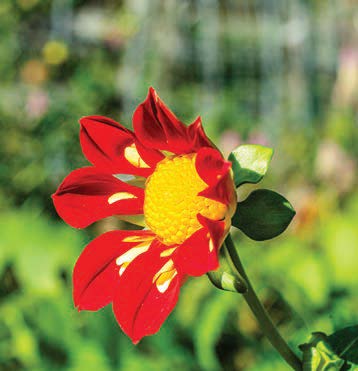
Some of the blossoms, as large as a dinner plate, have delicate petals creating a layered effect resembling the folds of a luxurious velvet gown. Others, the “pom poms,” are smaller but grow in a ball shape, granting no bad side. The stems alone can be 4 feet tall.

The dahlia varieties can have funky names and what Rowland isn’t sure of, he names himself. In his garden you’ll hear him distinguish “Strawberry Ice” from “Cafe Au Lait” or “Mango Tango.”

While dahlias in the Sandhills prefer the cooler fall weather over the intense summer heat — their colors tend to fade under the relentless sun — their full splendor emerges in mid September, early October. By then, you can expect a full display of colors. While they require a ton of water in North Carolina’s climate, despite the garden’s large size, he prefers watering by hand.

“If you plant sunflowers, they’ll bloom for a few weeks, then they’re done,” says Rowland. “But a dahlia plant? It’ll put out dozens of blooms from one plant once it’s in season.”

Rowland’s dahlias have won numerous ribbons at the North Carolina State Fair. “I have a drawer full, I’m not even sure how many. Going to the State Fair is like going to war with flowers,” he says, laughing. He and his mother, Lorna Lee Matthews, bring a truckload of dahlias each year, like knights arriving for the joust, armed with their vibrant buds.

It’s easy to see how such large, breathtaking displays of nature’s artistry would win. The flowers stand tall on sturdy stems, making them a commanding presence in any floral competition.

Though proud, Rowland loves the thrill of experimenting; he has even begun cloning certain flowers. For him, the true joy lies not just in the accolades but in the endless possibilities of what his garden can do. “I used to love taking photos of dahlias and it turned into an obsession,” he says. “I honestly hated gardening. Now look at me.”

Rowland’s ideal times of the day are sunrise and sunset, watching how the golden light transforms the land. He often enjoys the slow quiet of the morning with a cup of coffee as he tends to the weeds. Why, sometimes he may have believed as many as six impossible things before breakfast.

Almanac August 2024

Almanac August 2024

August is a hammock, a daydream, a nap in dappled light.

These searing summer days, the trees offer respite from an unrelenting heat. There, by the water. Can you imagine two more perfectly situated trees? Two more hammock-worthy specimens?

The trees have spoken. This is the spot. You cinch one rope around the trunk of a sturdy birch, secure the hammock; repeat at the trunk of a tulip poplar.

In the shade of these nurturing giants, summer softens. Sunlight flickers through a veil of green. A welcome breeze gently rocks you.

Below the canopy, cumulus clouds float across your field of vision, inviting your inner child to play.

A carousel horse becomes a Bengal tiger. A whiskered dragon shifts into a humpback whale. A never-ending carnival drifts by in slow motion.

Before long, you’ve drifted, too. As you sleep, suspended beneath the trees at the height of summer, something else is shifting.

The days are growing shorter. Soon, the last swallowtail will have vanished like a dream. The last dragonfly, too. Once more, the trees will prepare for their grand finale.

Through the dancing leaves, a sunbeam caresses your cheek, tenderly stirring you awake. The shade has revived you. Somehow, your nap has changed everything.

Beyond the trees, sunlight graces a lush and vibrant Earth. Subtle as it seems, the season is softening. Find the birch and the poplar and see for yourself.


The change always comes about mid-August, and it always catches me by surprise. I mean the day when I know that summer is fraying at the edges, that September isn’t far off and fall is just over the hill or up the valley.    — Hal Borland

A Bat Rap

International Bat Night is observed on the last full weekend of August — and has been, annually, for nearly 30 years.

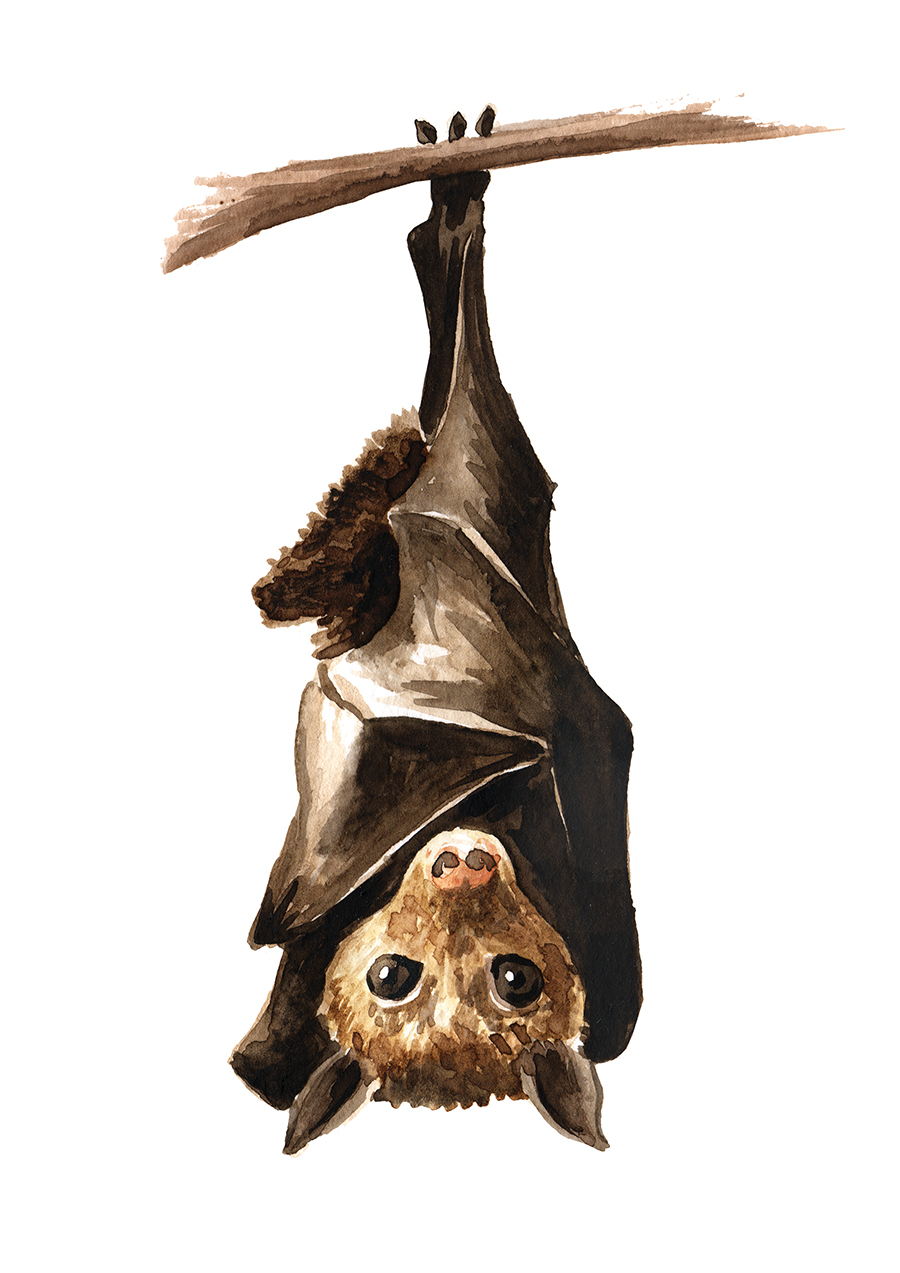
Our own state is home to 17 species of bats, creatures of the night essential to pollination, seed dispersal and pest control.

Did you know that a single bat can consume over 1,000 mosquitos in just one hour? That’s over 1,000 reasons to celebrate and protect these night-flying wonders.    

Bellyful of Sweetness

Late summer means the last of the blueberries, sure. But can you say muscadines for days? And let’s hear it for those early pears!

Because pears ripen from the inside out, they go from green to mush in a sugary blink. How do you know when they’re ready for harvest? They’ll show you.

Observe the color. Now, gently lift the fruit and give it a tender twist. If it’s ready, the pear will release itself with ease. If the pear holds tight, you’ll want to give it more time.

“There are only ten minutes in the life of a pear when it is perfect to eat,” wrote Ralph Waldo Emerson.

The poet had a point.

Give the pears a week to ripen post-harvest. If you miss the window, there’s always compote.   PS

Back to School

Back to School

Moore Montessori breathes new life into an old building

By Jenna Biter  

Photographs by John Gessner

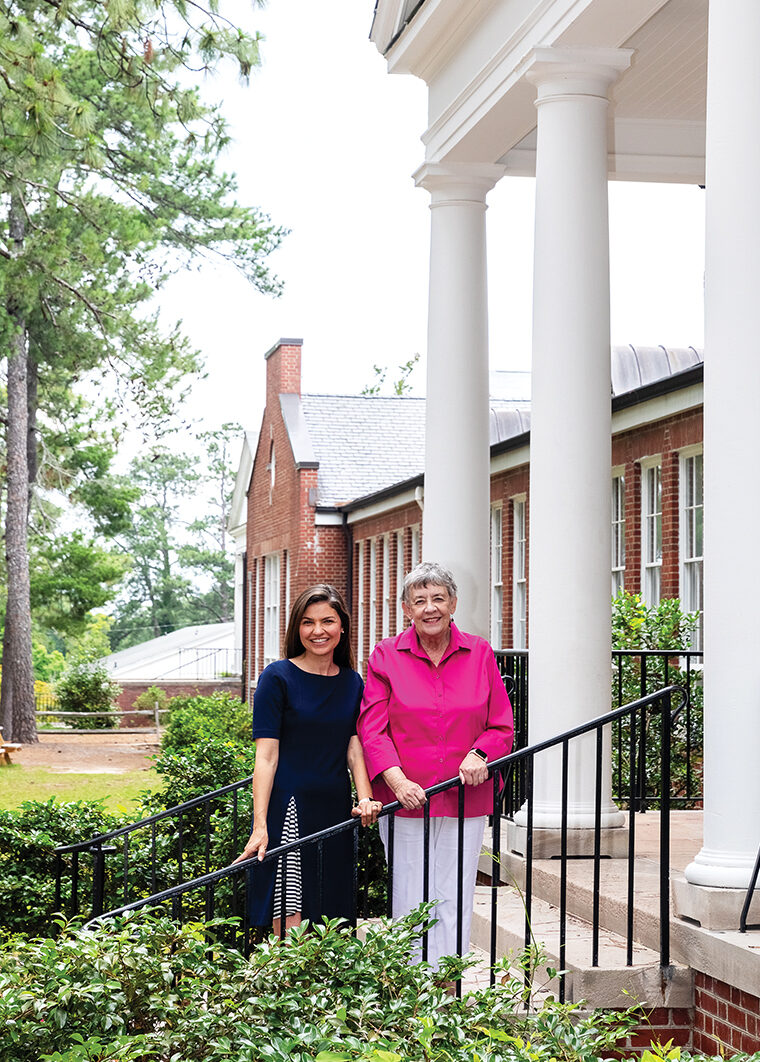
Photograph L-R: Katherine Rucker and Peggy Voss Johnson

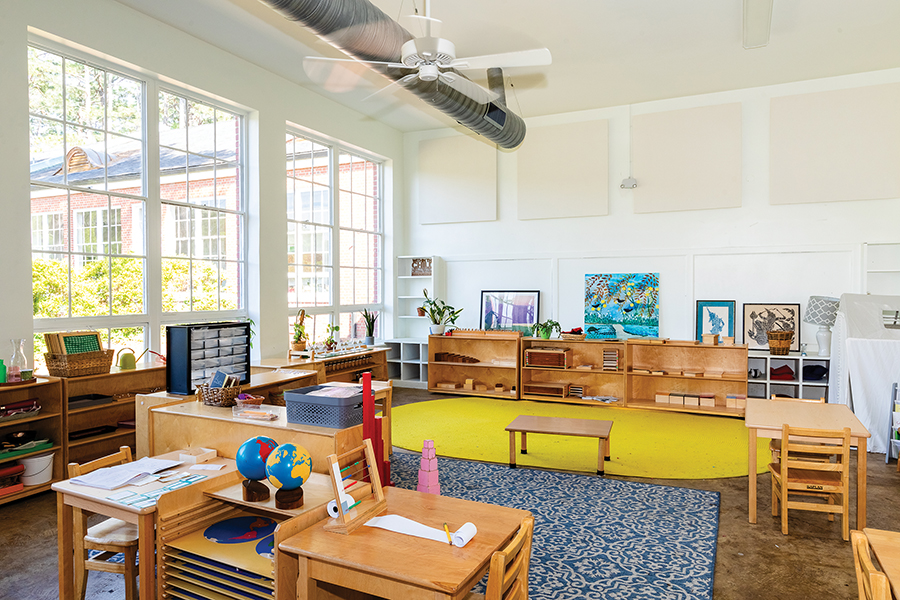
Gold sparkles from a crack bisecting the concrete. Rather than banish the blemish to history with a swipe of mortar, someone at Moore Montessori Community School chose to draw eyes to the fissure by practicing the Japanese art of kintsugi — golden joinery — on the main hallway floor.

Developed to repair broken pottery, often tea sets, sometime around the 15th century, kintsugi restores an object’s function with glue and clay while highlighting evidence of the repair in metallic lacquer.

The art form treats the cycle of growth and decay as something to be appreciated rather than disguised, a philosophy that lives comfortably at Moore Montessori in that crack in the floor of its recently renovated school on Massachusetts Avenue in Southern Pines.

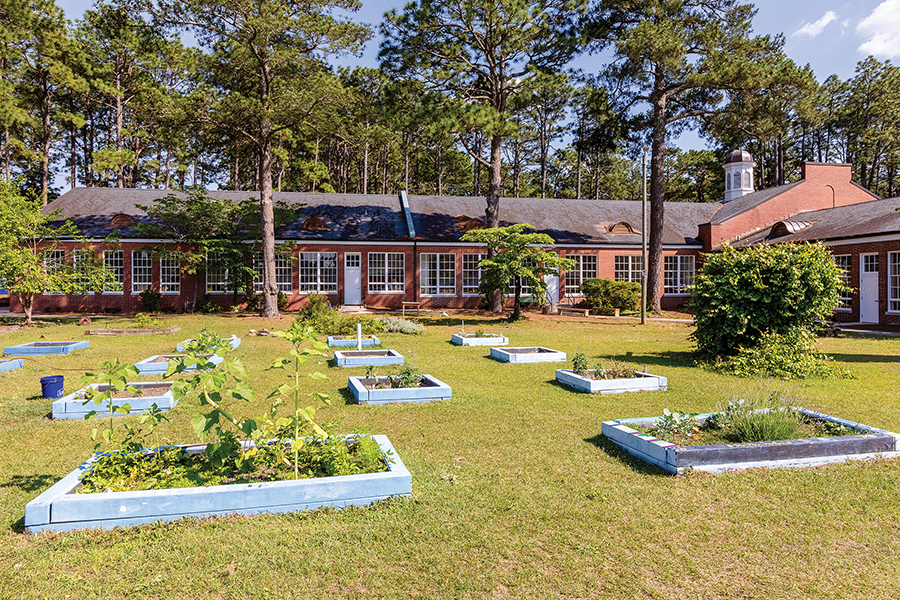
Previously known as “B Building,” now Voss Hall in recognition of generous support from the Voss family, the Georgian Revival originally opened for the 1948–49 school year. The neoclassical structure remained part of Southern Pines city schools and then the county school system for more than seven decades — through segregation, integration and beyond — until 2021.

That’s when Moore Montessori purchased the L-shaped building, distinguished by its gracious columned porch and endless stretch of yawning windows, along with the rest of the old elementary school campus, for $1.6 million.

“The front building on May Street was basically turnkey,” says Moore Montessori’s founder and head of school, Katherine Rucker, “but this building needed quite a bit of renovation.”

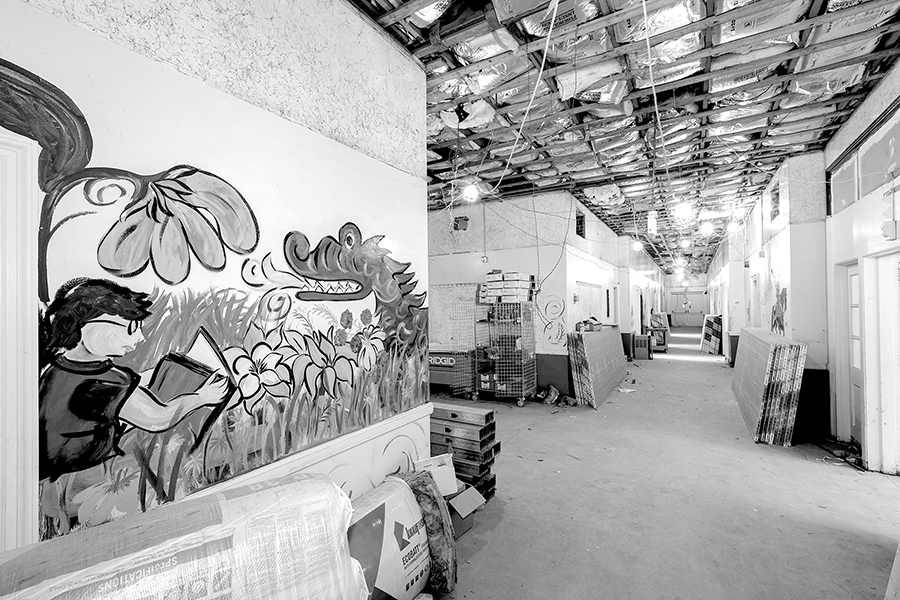
Two years of improvements and a community’s worth of sweat equity later, Voss Hall partially reopened for the start of school in 2023, with the final wing of the public charter school reopening that winter.

Thanks to Moore Montessori, an old school has new life.

Across from the May Street churches, uphill on East Massachusetts Avenue past Emmanual Episcopal, Voss Hall is a neat red brick building with wide steps and a wrought iron railing leading up to a pair of welcoming white doors. The sprawling structure occupies more than 17,000 square feet, set back a generous distance from the road where lilting birdsong could convince passersby they’ve stepped into a nature preserve.

On Sept. 3, 1948, soon after the school opened, The Pilot printed a description that could still be written today: “The one-story building, whose external architecture is Georgian Colonial (there is nothing Colonial about its modern-as-tomorrow interior), is on a large, wooded lot, its beautiful entrance shaded by the longleaf pines and magnolia trees which are distinctively Southern Pines.”

With the expertise of Raleigh architect Tim Martin and monies raised in a capital campaign, Moore Montessori was able to preserve that original picture while updating the interior to remain “modern as tomorrow” well into the next generation.

“I was just trying to get out of the way of the building coming back into its own,” Martin says.

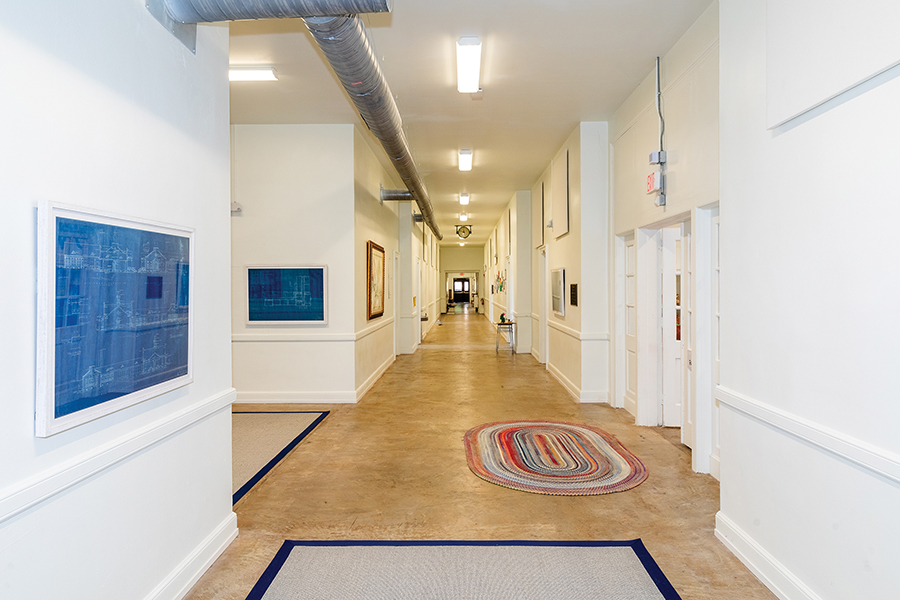
The school’s original architect, the prolific William H. Deitrick (1895–1974), known for his completion of the potato chip-shaped Dorton Arena in Raleigh, had designed the building in elegant, hand-drawn blueprints that now hang on the walls of Voss Hall. The tail end of 2021 saw the start of renovations that returned the school closer to Deitrick’s vision.

“The first step was to waterproof the building while maintaining the historical authenticity of the Buckingham slate roof,” Rucker says. Slate roofs are very nearly a lost art, and the original stone tiles for this particular build came from a quarry in Buckingham County, Virginia, hence Buckingham slate.

Despite the challenges, Moore Montessori found a slate-savvy crew from Charlotte to order the rock and complete the job. The flashing was redone and the eyebrow dormers were coppered, as was the weather-vaned cupola that crowns the roof.

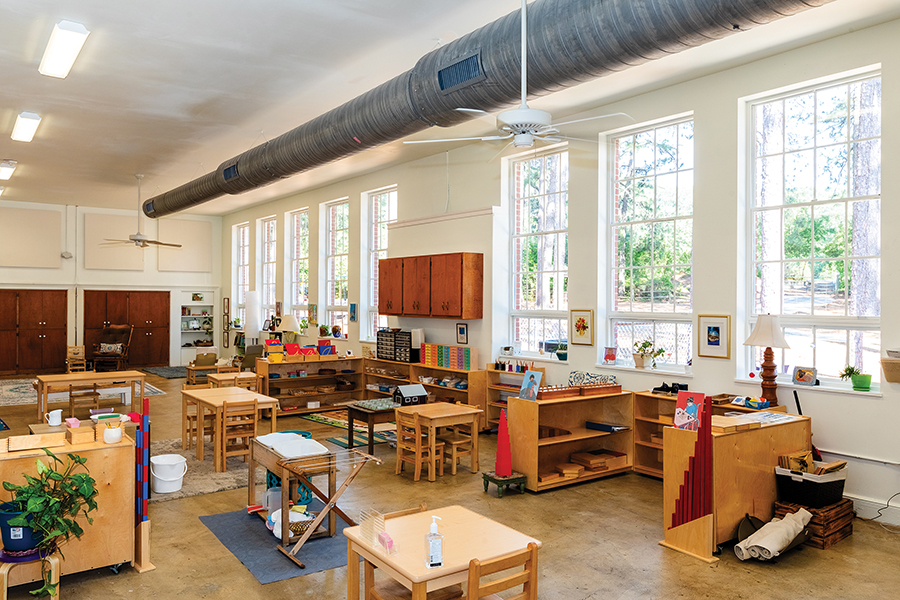
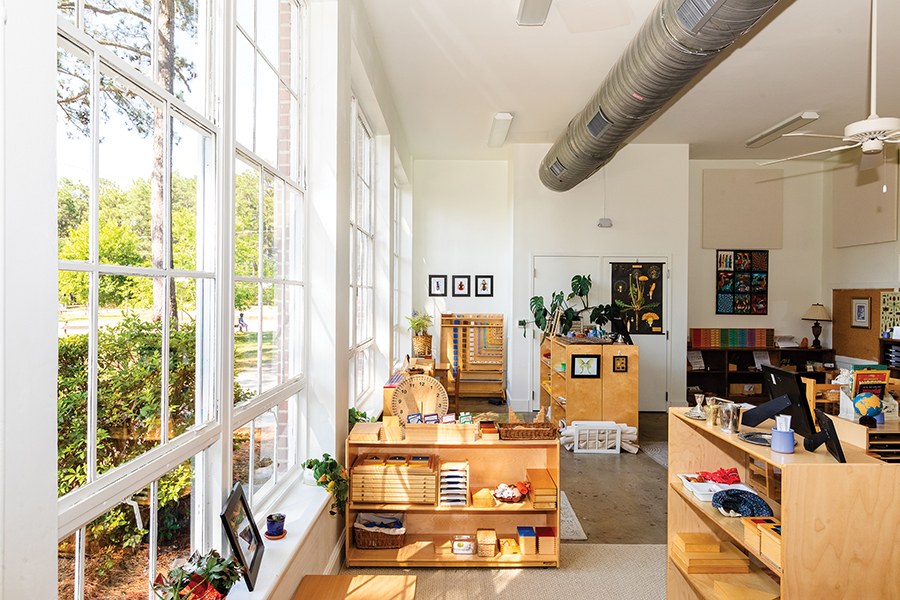
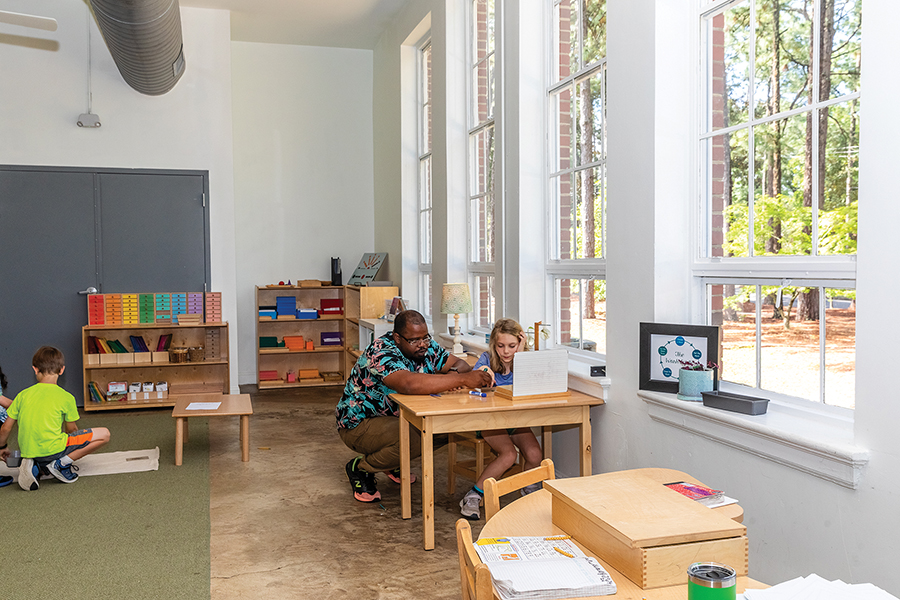
“The next summer we worked on waterproofing the windows,” Rucker says. The school still has its original 11-foot-tall, single-pane windows that needed to be reglazed and repainted.

“Then it was time to take on the interior,” Rucker says. That’s when Martin came onto the project. “Tim has a passion for restoring buildings using current footprints and materials that are already there, with minimal extras.”

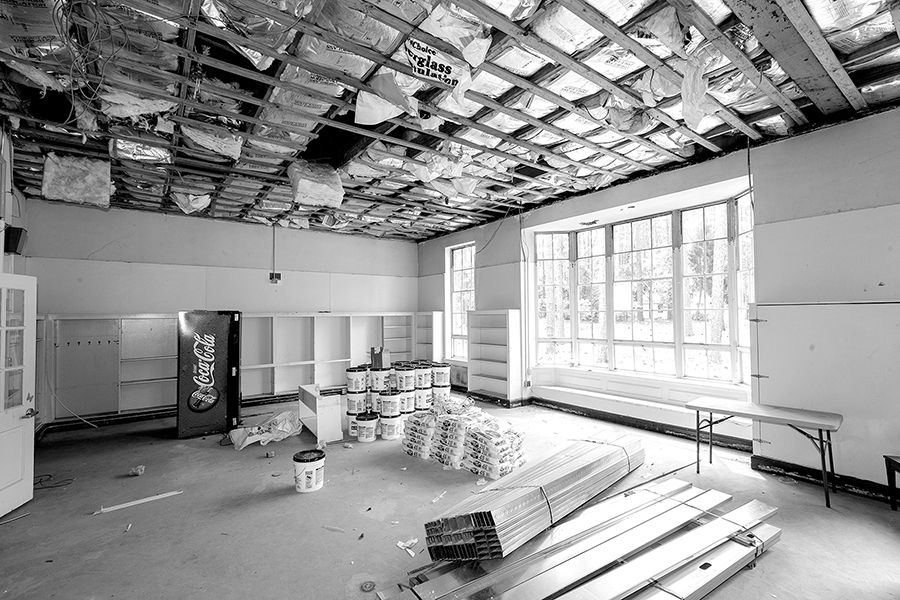
That meant reclaiming the original, in-class bathrooms for easy access, stripping away carpets to reveal concrete floors, rearranging a few walls and repainting them all, updating the HVAC system, and removing the dropped ceiling that had been added sometime in the ’80s.

Rucker actually attended grades four through eight in the very building she now heads. “I remember the blue carpet. I remember the lockers, the cubbies, which we still have,” she says. “I don’t remember the windows being as extraordinary as they are now.”

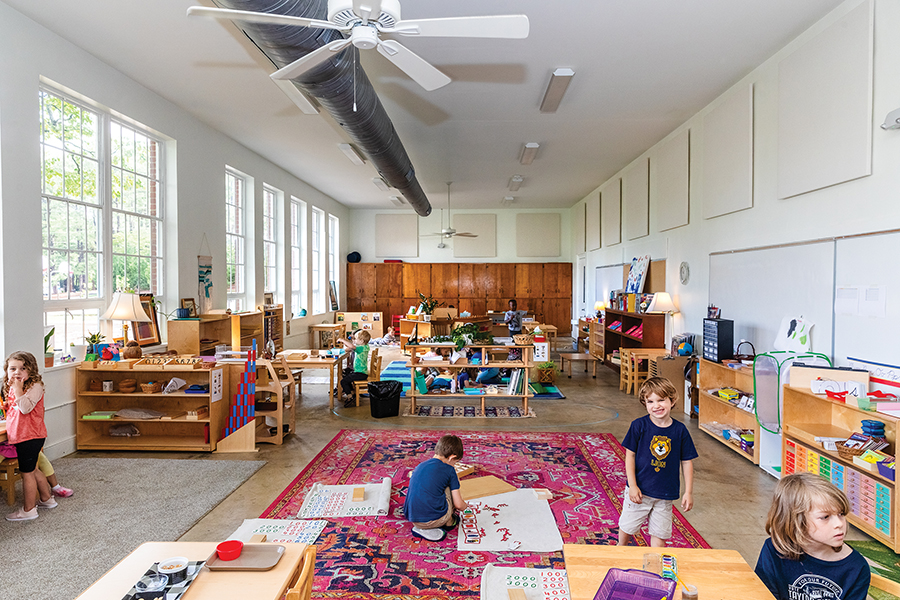
The ceilings had been dropped to minimize the space that needed to be heated and cooled, and the view through the windows suffered. With the ceiling height and view now restored, Moore Montessori is clawing back efficiency by way of passive heating and cooling. Cross breezes flow through open windows, and a dehumidification system and ceiling fans have been added. This way, the school shouldn’t have to rely on its new HVAC system as life support while it’s in session.

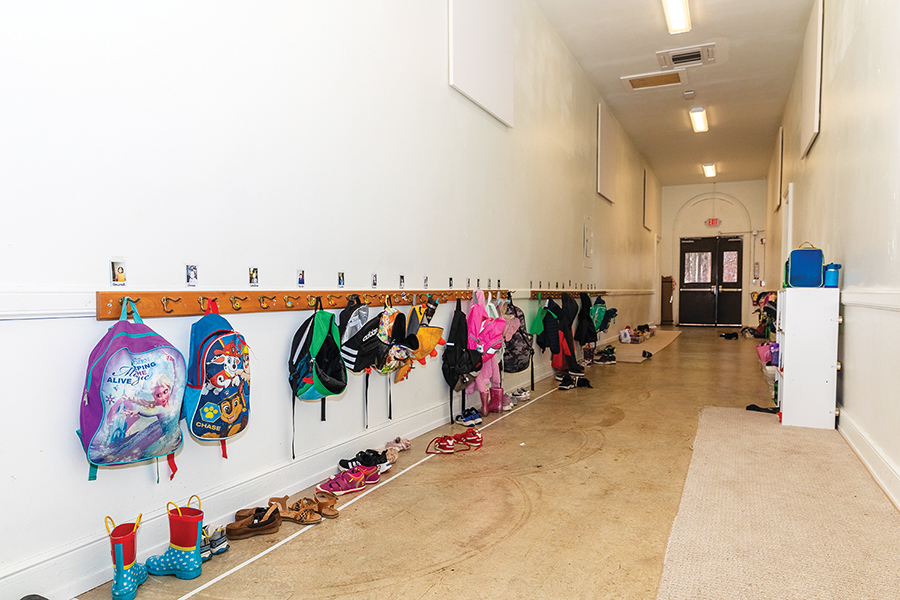
During the summer, it’s easy to see the empty building as just another historical renovation project, but come the end of another August, a rainbow of backpacks will hang in the hallway, while children pre-K through third grade work away inside classrooms aglow with natural light and the low hum of learning, as they did last year.

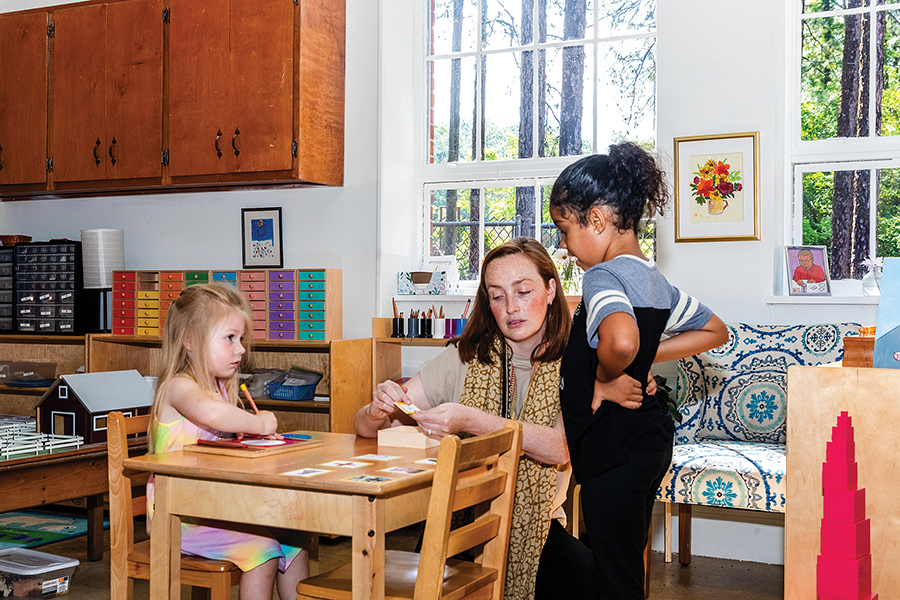
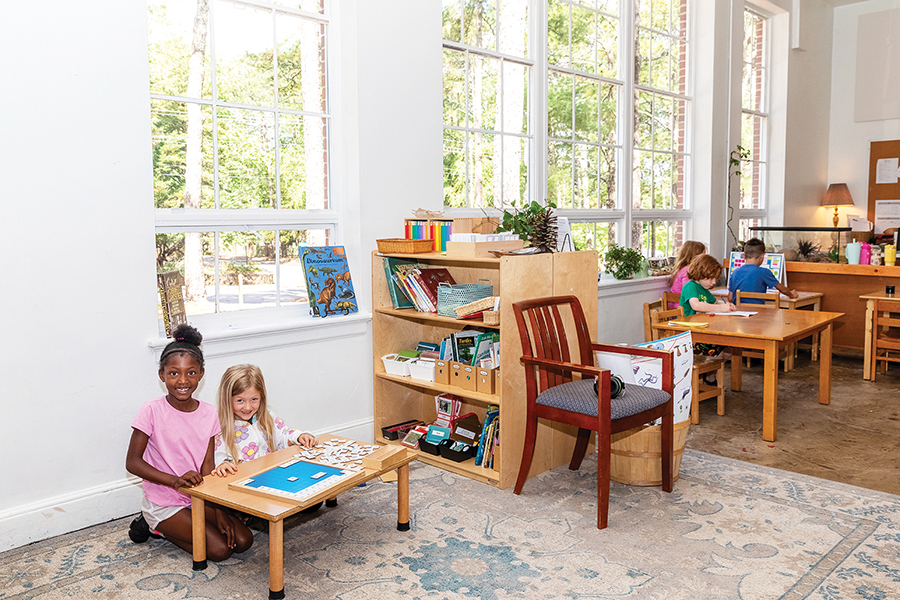
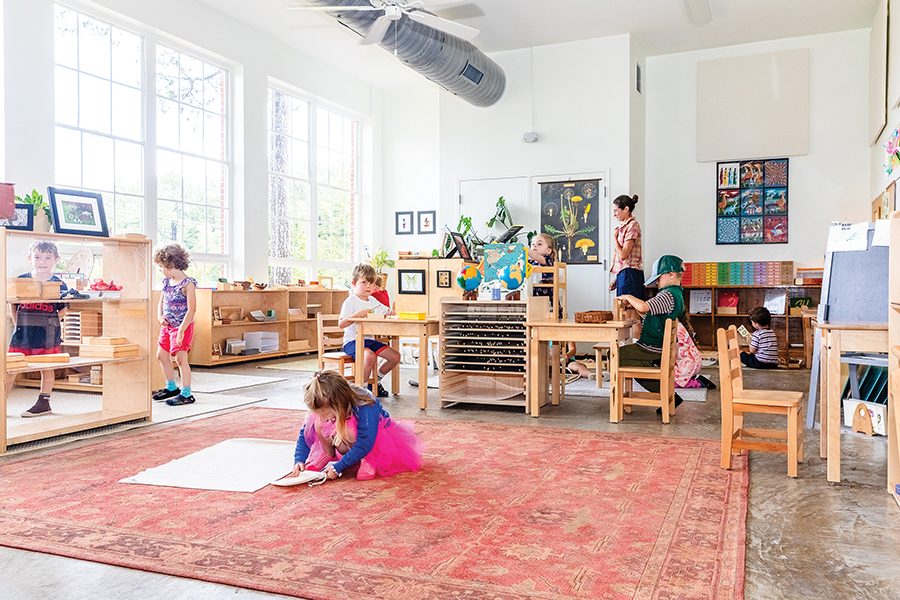
At one table in a primary classroom, a youngster presses his lips into a thin line of concentration while polishing a dinosaur figurine made of silver. The next table over, a vase of neatly arranged flowers hints that a pair of little hands has recently completed the task.

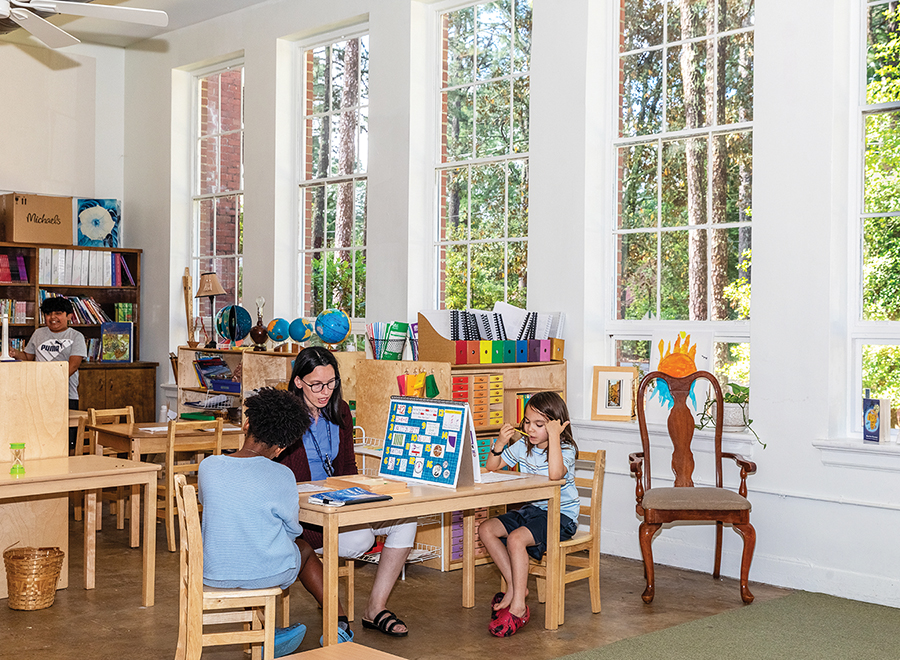
“Montessori is small group; it’s hands-on materials,” says Rucker, explaining why the students weren’t lined up in rows, all learning the same material, like in a traditional classroom. “The hand is the tool of the mind, and you learn by doing. When they’re ready for the next lesson, they can get it and work on it until they master it.”

Down the hall, in a lower elementary classroom, five or six students sit crisscross around a floor mat while a teacher shares a lesson. A few feet away, three other children are working together around a low table, called a chowki.

“There’s no front or center of a Montessori classroom,” Rucker says.

Each long, rectangular classroom has clean, white walls. They’re filled with wooden, child-sized furniture punctuated with splashes of color. “There’s no teacher’s desk. It’s a space designed for children. There are different areas to work — at desks, chowkis or on rugs,” she says.

Near the trio at the chowki, a blond-haired boy arranges tactile cursive letters to name objects: “dune,” “mule,” “tube.” The contented, self-directed activity is the goal of Montessori instruction, an educational model designed to put kids in the driver’s seat.

“I just think this is one of the most beautiful school buildings in North Carolina,” Rucker says. “It’s just so awesome. It’s one story, it’s accessible, it’s beautiful, and it’s ideal for Montessori, so I feel really lucky that we were able to save it.”

And, in the process, honoring the cycle of growth to make it a place of learning once again.  PS

Jenna Biter is a writer and military wife in the Sandhills. She can be reached at jennabiter@protonmail.com.

Sprigs of Hospitality

Sprigs of Hospitality

Where Southern tradition and grace bloom

By Emilee Phillips  
Photographs by John Gessner

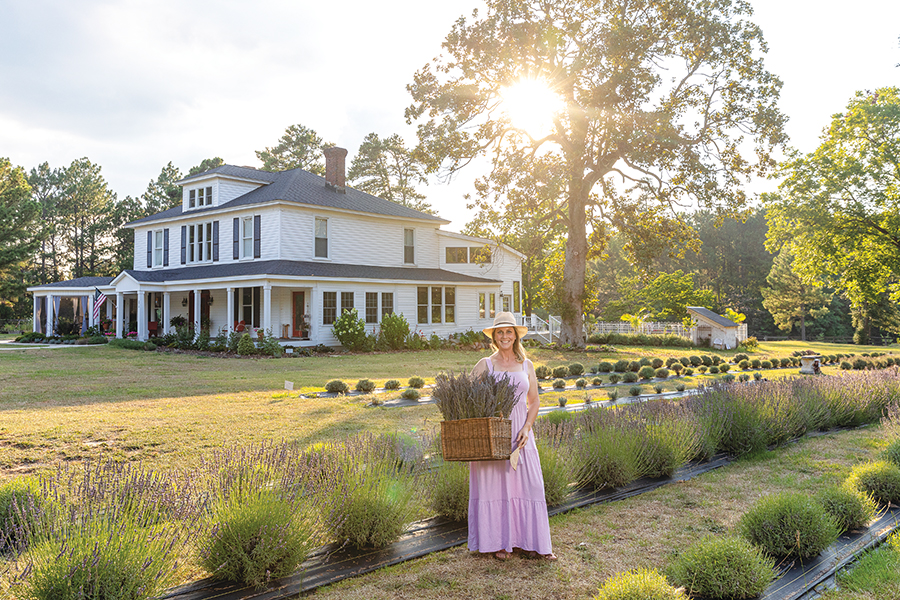
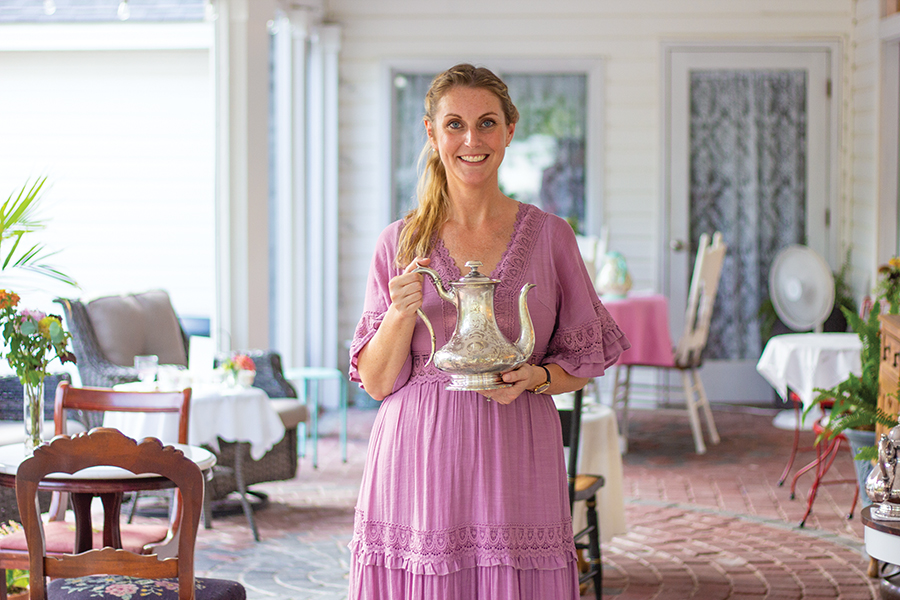
A white farmhouse stands like a quaint guardian nestled at the edge of an unhurried country town. Once a month, give or take, women arrive there, sporting fancy hats and cotton gloves, dressed for a traditional Southern tea party. The timeworn charm of Edgewood Plantation in Cameron has been transformed into Lazy Fox Lavender Farm. “It’s almost like stepping back in time,” says Lindsey Lochner, the owner.

The lavender tea parties are open to the public, so anyone can experience the increasingly lost art of high tea. It’s not merely an event; it’s a gathering woven with the threads of tradition, poise and a deep-seated appreciation for the finer, calmer, forgotten moments in life.

The Lochner family purchased the home in 2022 with the goal of farming its land. After living overseas for several years, it was time to plant roots in more ways than one. 

“We wanted to be able to give back to the community,” says Lindsey. “When you move around so much you end up taking more than giving. We were excited to be able to start giving back.”

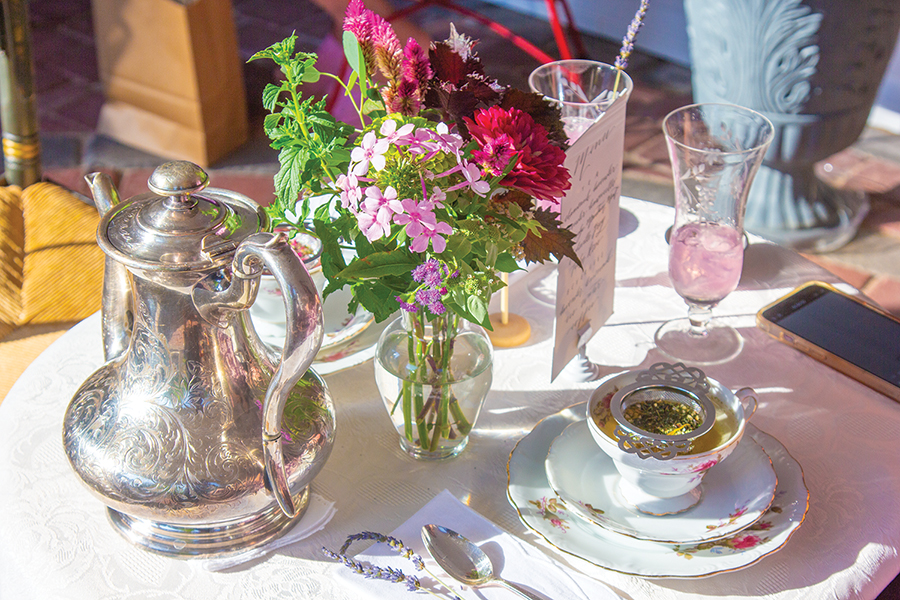
The tea parties are hosted on the screened porch of the historic Edgewood Plantation, built in 1910. The fete is a family affair where Lindsey’s four children — Jacqueline, Loren, Ana and Nathaniel — help orchestrate the production, from greeting guests and showing them to their tables, to pouring tea and serving homemade lavender lemonade garnished with harvested sprigs.

“The kiddos get really excited for it. All the tips go to them,” says Lindsey. The children dress up too, wearing white dresses with frills and a collared shirt for her son, a testament to their devotion to detail. 

The setting exudes an air of whimsy. The porch is filled with antique furniture and multiple-sized tables. Each setting has teacups and pots, mismatched, all seemingly with a tale to tell. The rustic wooden furniture is draped in soft, white and lace linens. 

Few colors evoke a sense of regal luxury quite like purple and its delicate counterpart, lavender. The presence of lavender in gardens and perfumes has long been associated with tranquility and gentility. Its pastel tones whisper refinement and grace, making the main act of the tea parties as close to perfect as it comes. Women of all ages partake. The clink of teaspoons against china resonates like a soothing rhythm section, with laughter and soft exchanges becoming the gentle melody of memories.

“I was blown away when I had a couple of ladies come from Charlotte for the tea parties. I’ve had several from Raleigh. I had to stop assuming people were local,” says Lindsey. 

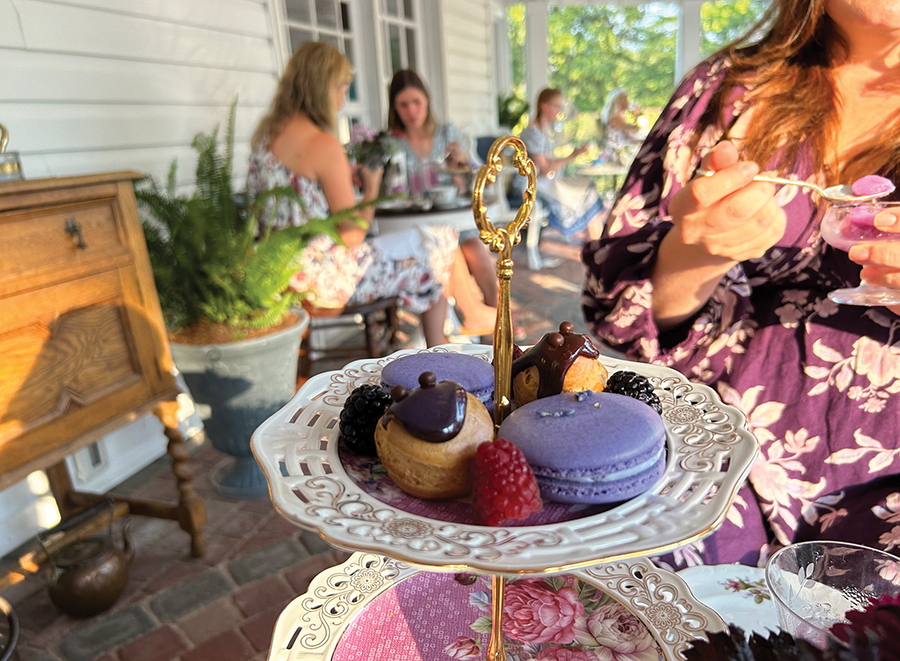
Guests choose from a selection of tea leaves before enjoying a tiered plate of goodies, many of which are lavender infused. Small bites and sweets are primarily catered from local businesses. The spread includes puff pastries, macarons, scones, lavender butter and more, varying with the season. 

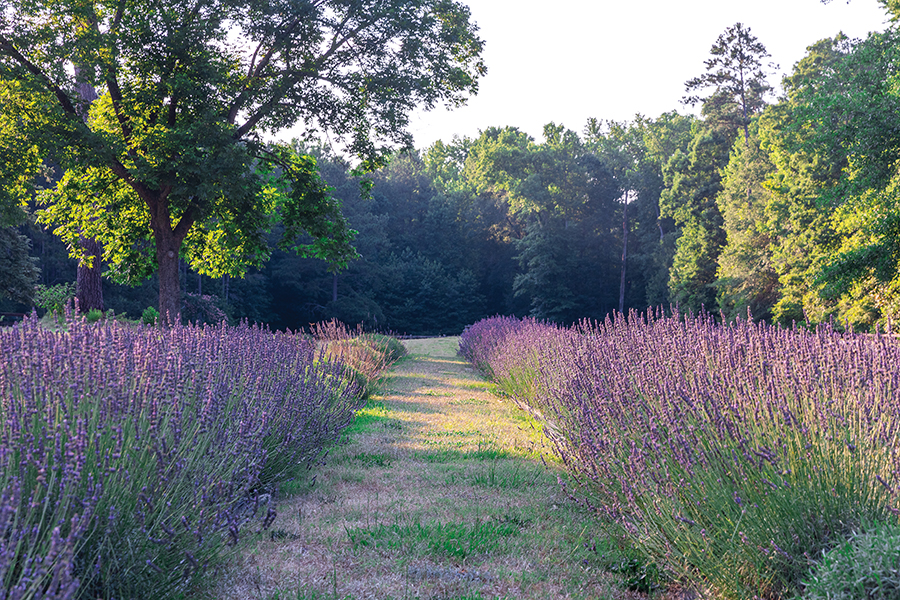
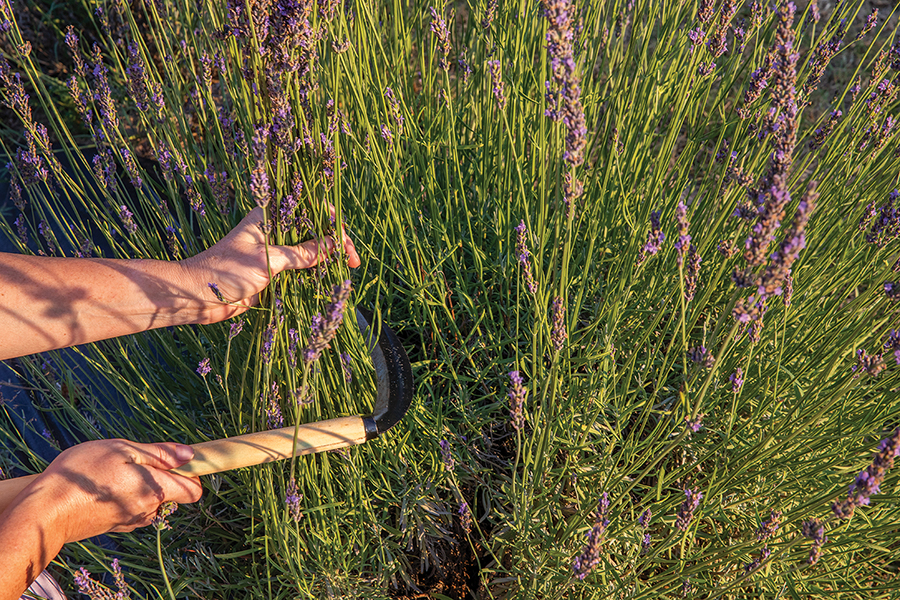
Lavender blooms in North Carolina roughly between April and July, depending on the variety. Some are deep purple, some a milky white. But Lindsey vows to always have flowers. Even when lavender isn’t in bloom she’s got sunflowers, roses and more from her garden. Visitors can also do “you pick” sessions in the summer months, as well as enjoy luxury picnics in the fragrant field. 

The Lochners started planting lavender — there are hundreds of varieties — almost immediately after moving to Cameron. They currently have 11 kinds at Lazy Fox Lavender Farm, each with distinct coloring and uses. Spanish lavender, a personal favorite of Lindsey’s, is a compact bud that she describes as “little butterfly wings” on the tip, far different from the more standard long, skinny blooms.

Lavender, Lindsey explains, is like “the Swiss Army knife of essential oils.” It’s healing, calming and has antibacterial properties. 

Sheep, hens, geese, honeybees, a dog and cats also populate the nearly 14-acre farm. “We’re really thankful to live here,” says Lindsey. “The home has so much character.”

During high tea, Lindsey enjoys sharing her knowledge of both lavender and the history of Edgewood Plantation with her guests. The estate is full of tokens from the past, like the worn-in wood flooring and the seven stained glass windows that appear to be original to the house. Near the walkway is a wide, flat stone once used by ladies stepping out of their carriages to avoid getting mud on their shoes and dresses.

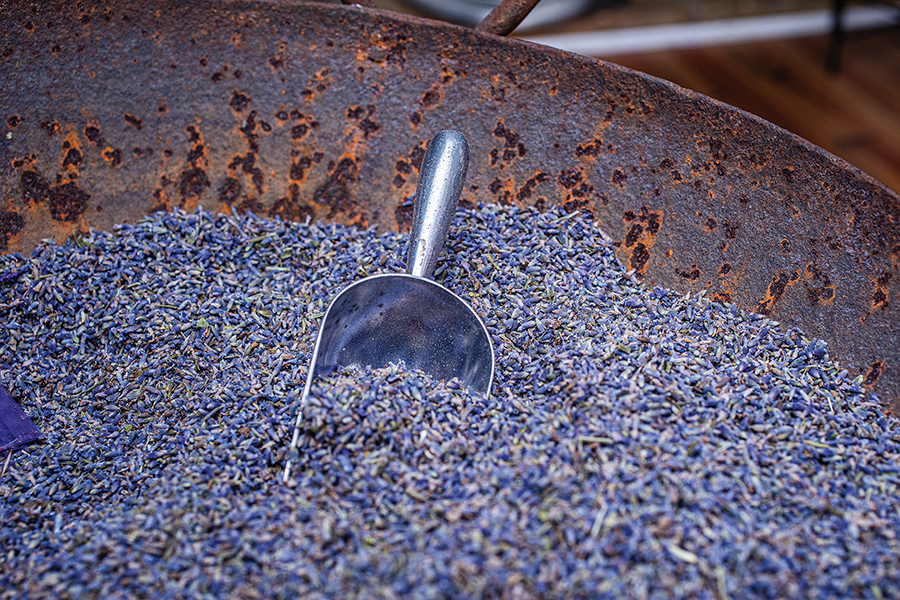
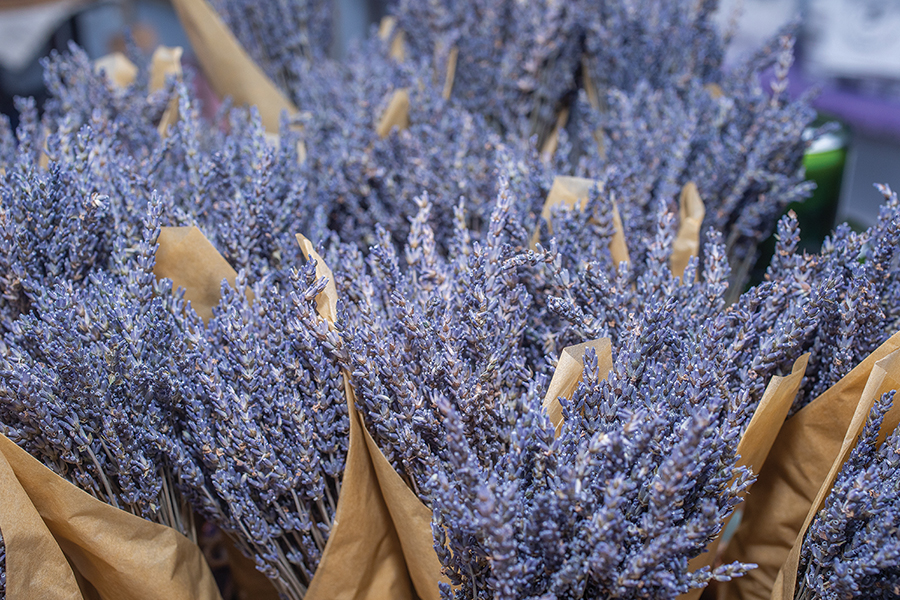
The Lochners have transformed one of the many farmhouse rooms into a store selling dried lavender bundles, lavender soaps, lotions, candles, butters and more. For the family matriarch, the farm represents togetherness, a feeling Lindsay loves to share. She wants guests to be able to slow down when they visit and appreciate the beauty of life. The parties end with a moment of gratitude for all of her new, cherished “friends.”

Aromas of teas and lavender follow guests out, wrapping around them like a light shawl, understated and comforting.  PS

For additional information visit
lazyfoxlavenderfarm.com.

Emilee Phillips is PineStraw’s director of social media and digital content.

An Afternoon, No Wind

An Afternoon, No Wind

Fiction by David Rowell

Illustration by Keith Borshak

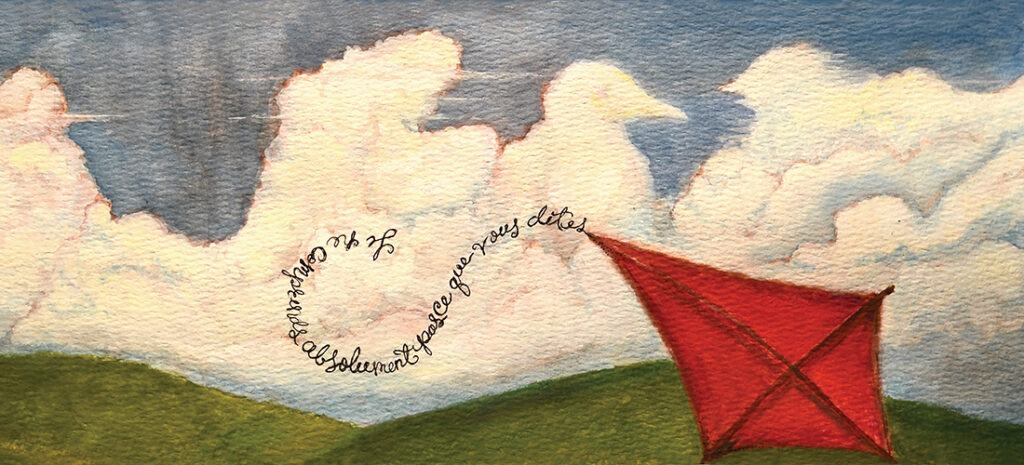
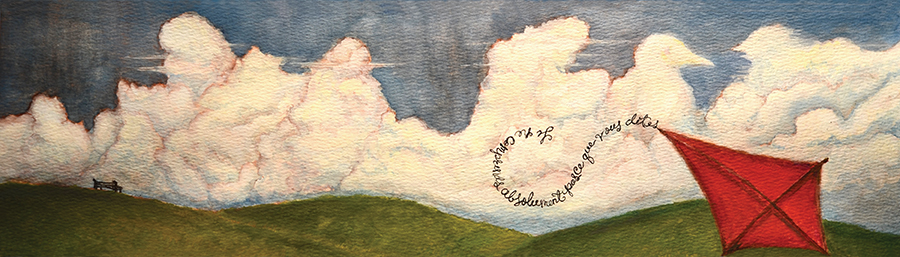
A striking, big-boned woman runs back and forth trying to fly a kite. She is surprisingly eager, considering there is no wind today. There is not enough of a breeze to sail the gum wrapper off the bench I’m sitting on. She darts tirelessly across the park as the kite drags behind her like a little dog. Every so often the kite lifts off the ground, though no higher than her head, and that’s only because she is a fast runner. This goes on for an hour.

I’m supposed to be helping my ex-girlfriend move her tanning bed into the spare room. But when the woman with the kite throws her arms up in an almost vaudevillian show of disgust, I get up, stiff from the wooden slats, and walk over to her. She isn’t aware of me until I am close enough to touch her.

“Tough day for kites,” I say.

We look at each other, and for a few seconds neither of us seems sure what to do. I back up a step or two. I am suddenly confused and can’t remember if I have spoken yet or just thought about what I might say. Tough day for kites?

“Je ne comprends absolument pas ce que vous dites.” I know it’s French, but I don’t speak a word of it. Watching her earlier, it didn’t occur to me that she wasn’t American, but up close I can see the faint olive glow of her skin, the slightly pouty curl of her lips. I consider turning around, leaving her alone, but there is something helpless about her and her shiny but now damaged triangular kite. I point to the kite, then to the sky. I blow a deep breath and shake my head no.

“No wind,” I say slowly, so slowly that I am keenly aware of how my lips feel when they move. “There is no wind.”

We stand another moment in silence, as the strangled cry of taxi horns and someone’s high-pitched laughter and the rusty churn of a nearby bicycle chain play off each other like jazz musicians. Behind the woman a mass of clouds forms a penguin, then a penguin on skates. She says something — something abrupt, like an order — and points to the kite. She points at me, then to the kite again. I reach down to pick it up.

“Oui,” she says.

I raise the kite slowly over my head, arching my brow to say, Is this OK? Is this what you want? She doesn’t indicate one way or another. Out of the corner of my eye I notice that two older women who are dressed for the tundra have stopped to watch.

She backs up and lets some string out, all the while staring into my eyes so intensely that I am afraid to look away. She nods her head once, the way mob bosses in movies indicate their willingness to listen first, before killing. Then she turns and starts sprinting, divots of grass spraying from her heels. The kite jerks out of my hand and immediately sinks, not quite hitting the ground because, as I say, she’s fast. Her ponytail thrashes behind her like a fish pulled into a boat.

She goes probably thirty yards before she looks up at the speckled sky, where she expects the kite to be. Her sturdy legs slow to a gallop, which causes the kite to touch down with feathery impact. The sad sight provokes her to grunt from the diaphragm and kick at the ground with such force that she nearly falls over. Her large frame heaves in and out. She yells something at either me or the kite (the literal translation might be, “What a piece of crap are you!”). I point up at the sky again and shake my head.

When she finishes winding up the string, she puts the kite back in my hands. I notice two small but distinct moles above her right eye. She catches me looking and balls up her face like a fist. She gives me an earful about something, to which I shrug and smile, though not with my teeth.

All afternoon we do this. And every time we try, I can tell that she expects it to go differently. Sometimes I shake my head in mock disbelief. Other times I grab a handful of grass and launch it into the air, as if that might tell us something. Once I try to hand the kite back to her and reach for the string, thinking she might appreciate the break. But she shakes her head in a frenzy, the way monkeys do in TV commercials, and holds the string behind her back. She tries running harder and for longer. If I hold the kite up with my arms even slightly bent, she refuses to start running. When yet another attempt fails, she violently reels the kite in. As we get ready again, she sucks some air into her locomotive lungs, then gives me the signal to release.

By now the sun has melted to the bottom of the sky, leaving behind a fiery red glaze. People walk by with their necks turned at awkward angles, their mouths agape with wonder. My French companion is still for the first time all day. We stand there awhile, just a few feet apart, but it’s hard to believe we’ve spent the entire afternoon together. If I ran over the hill and brought back two sno-cones, I wonder if she would even recognize me.

The man at the pretzel cart is folding down his umbrella. I imagine a big wind suddenly sweeping through the park and lifting the umbrella up over the trees, the man kicking wildly in the air as he tries to hang on. When I look over again at my partner in aeronautics, it takes me a moment to realize that she is tearing up the kite. She grips it in her muscular arms and splits it down the middle. She yanks out the sticks of the frame, fumbling with them until she snaps them over her knee. Then, with lips moving but making no sound, she grabs the tail with both hands and tries to twist it off, but she loses patience with it and is content to leave it a thin, raggedy string. Her hands are a frenzied blur of methodical destruction, though her face has an even, almost serene expression. When she is finally satisfied, she bundles up the remains and hands them to me. Instinctively I reach out to cradle the wreckage.

She lumbers toward the wrought iron entrance of the park, past the statue of George Washington on his horse, past a little boy trying to step on his balloon, which keeps darting out from under his foot. She steps directly in front of a stretch limousine so that it has to slam on brakes; still, the driver senses enough not to honk. She mows through the streets with an elephantine grace and does not fade from view until well after the darkness settles in.

I COULD GO OVER THIS AGAIN, say at what point this, then that, but it would more or less come out the same. And yet there is something that I can’t account for, even now: In my arms the kite felt like a bouquet of flowers.   PS

The Music Lover

The Music Lover

Fiction by Katherine Min
Illustration by Jesse White

Gordon Spires lived across the courtyard from Leonard Hillman, concert master of the M         Symphony, and his lover, Kyoung Wha Jun, the second violinist. Leonard and Kyoung Wha often practiced together outside in the courtyard, under the brim of a large oak tree. The neighbors would hear them playing Debussy or Brahms and sometimes something contemporary that they wouldn’t recognize.

Gordon liked to listen to them. He was in love with Kyoung Wha, who was slender and lovely, and he believed that she secretly returned his affection but could only reveal it through her music. So when she played Mozart, it was because he was Gordon’s favorite, and when she played Bach, it meant that she was biding her time, and when she played Tchaikovsky, it was surely a sign that she was ready to run off. For it was well known that Leonard beat Kyoung Wha when he was drunk, that he cheated on her with the first violist, and that he had not quit smoking like he told Kyoung Wha he would, but snuck cigarettes after matinee performances. At least these things were well known to Gordon, who was sickly and often home during the day.

One Sunday afternoon in late autumn, Kyoung Wha and Leonard played Beethoven. From his bedroom window, Gordon could see them, Kyoung Wha in a pleated blue skirt with prim white blouse, her long bangs swinging in her face as she swept her bow across the strings of her violin; Leonard, his narrow face impassive, eyes closed, chin tilted up at an unpleasant angle. Gordon could distinguish the rich, vibrant tones of Kyoung Wha’s playing from the darker, ruminative vibrations of Leonard’s, and he attributed the mistakes — rushed tempo, inconsistent meter, mawkish drawing out of notes — to Leonard, who was, in Gordon’s opinion, the inferior of the two musicians.

Taking careful aim, Gordon threw a Monopoly piece — a silver top hat — at the rounded, balding place at the back of Leonard’s head. Leonard did not stop. Gordon threw the wheelbarrow, the thimble, and the Scottish terrier. He used more force.

“What the — ?”

Beethoven came to a halt. Gordon peeked to see Leonard rubbing his bald patch, looking up at the oak tree, then down to the ground. Leonard shrugged at Kyoung Wha, who shrugged back. They resumed playing.

The next day, Gordon lobbed a satsuma, just grazing Leonard’s left temple. Leonard leapt from his chair. Kyoung Wha seemed to look straight at Gordon then, smiling sadly. Even crouched below his bedroom window, he could feel her smile penetrate his heart like the most tender of arrows.

A few days passed before they played outside again, Leonard setting up in what had formerly been Kyoung Wha’s spot, farthest from Gordon’s window, Kyoung Wha moving farther from Leonard, into a sunny patch that did not get much shade. Her face in sunlight looked faded to Gordon, wan, and when she played — Mendelssohn this time — he heard the silent suffering as separate notes from the ones that overlapped with Leonard’s, inhabiting the spaces between. She was even more beautiful in her despair, black hair against pale complexion, in an autumnal ensemble of mauves and rusts.

Gordon heaved a bottle of multivitamins, but it overshot its mark, landing, with a muffled plop, in a giant hosta.

It rained for several days after that, the afternoons overhung with mist. Gordon saw Kyoung Wha come into the courtyard in a yellow rain slicker. He thought her green rain boots splendid, as were the orange bill and bubble eyes on her hood, which were meant to make her look like a duck.

On the first clear day, Leonard appeared without Kyoung Wha. He began to play Mahler, his feet planted like andirons before a hearth. Gordon disliked the implication that music could simply go on without her. He wondered where she was, what Leonard had done to her. The lights were off in their apartment. He could see the white fringe of an afghan against the window, resting on the back of a blood red sofa.

Gordon palmed a large rock shaped like a dinosaur egg, with a rough, pock-marked surface. He raised the window and hurled it. The rock rainbowed up and out, hitting Leonard squarely on top of the head and bouncing off. The strings of the violin made a distressed, bleating sound as Leonard slumped sideways out of his chair, then fell face first against the brick walkway.

Time passed. The lights went on. Gordon saw Kyoung Wha come out, heard her call Leonard’s name. Approaching his body, she kneeled, bent to retrieve his violin by its broken neck, got up, and stumbled back inside. The lights went out.

Gordon listened, but all he heard was the sound of distant traffic.

Softly, he closed the window.  PS