A Country Boy from Springfield

A Country Boy from Springfield
By Jim Moriarty

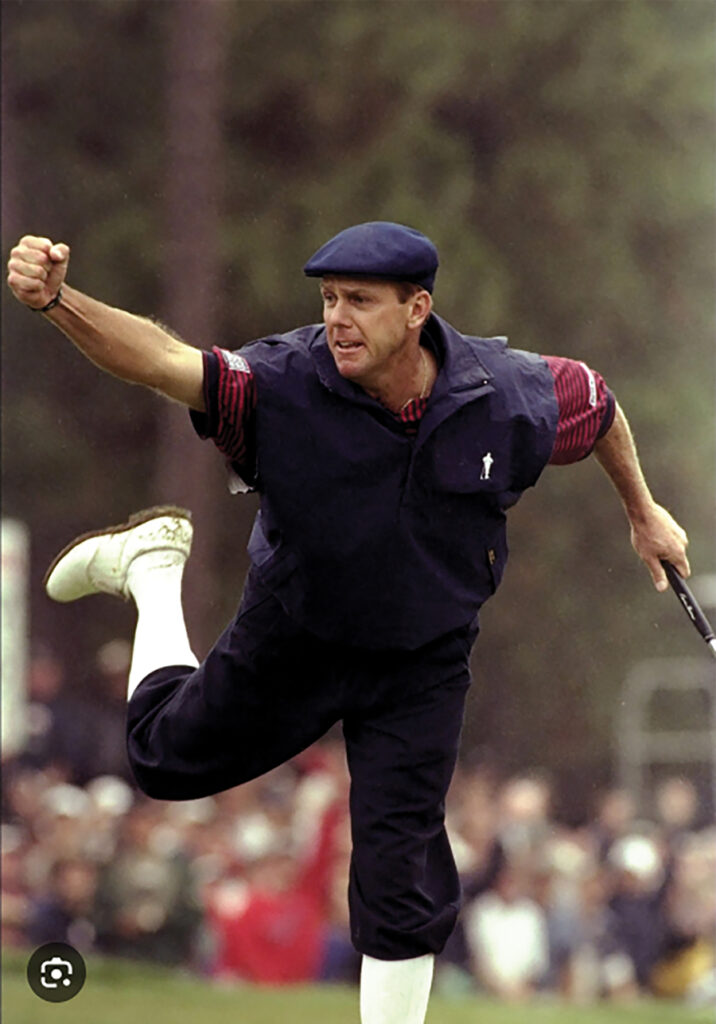
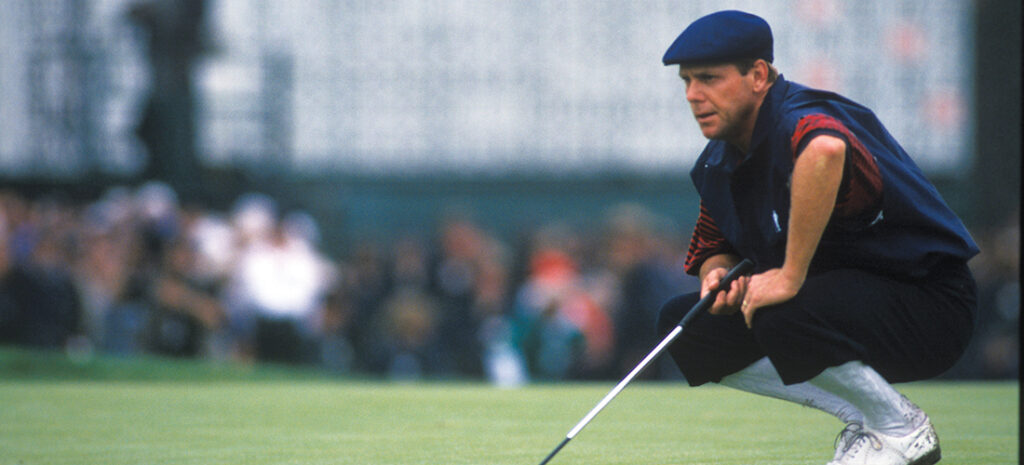
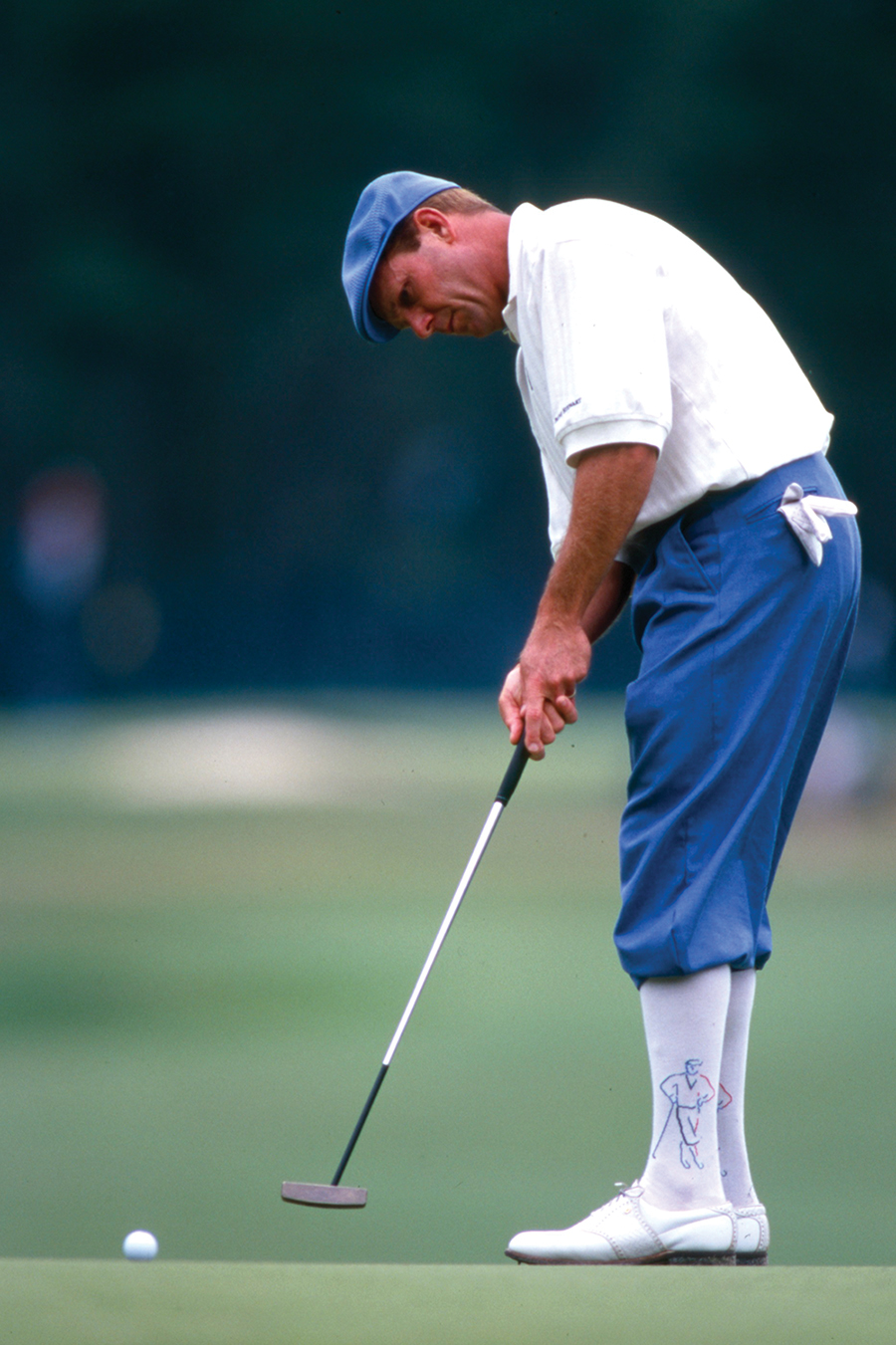
Feature Photograph: Payne Stewart during the fourth round of the 1999 U.S. Open Championship held at Pinehurst Resort and Country Club No. 2 Course in Pinehurst, N.C., Sunday, June 20, 1999. (USGA/John Mummert)

Springfield is a small town on the Ozark Plateau in a state that was red before anyone thought about color-coding them. It’s the third-biggest city in Missouri, but if it was in California, it would barely crack the top 30. The Trail of Tears passed through Springfield on what was once called the Military Road. The North and the South fought over it, and in 1865, three months after Lee surrendered to Grant, “Wild Bill” Hickok shot a man dead on its streets over a pocket watch.

In the post-World War II craze over a new medium, television, Springfield took country music nationwide with The Ozark Jubilee. A year later Chris Schenkel and Bud Palmer debuted on CBS at the Masters. Three men born in Springfield have won major golf championships, and two of them are in the World Golf Hall of Fame. St. Andrews might be the only small city east of Fort Worth to equal its output.

If Payne Stewart wasn’t in uniform, knickers custom made from bolts of Italian cloth, silk stockings, gold- or silver-tipped spiked shoes and an ivy cap in the Ben Hogan style, he was as unrecognizable in public as if a Maserati had been stripped down to a Dodge Dart. “He comes off as this real urbane, Great Gatsby type of guy,” said his longtime swing coach, Chuck Cook, “but, really, he was a Missouri mule. Just a country boy from Springfield.”

Back in the heyday of newspapers, when a sports star needed a nickname the way a clipper ship needs wind, Stewart was preceded as a major champion by Horton Smith, the Missouri Rover, and Herman Keiser, the Missouri Mortician, who won three Masters between them. While Smith was eventually associated more closely with the Detroit Golf Club and Keiser with Firestone Country Club in Akron, for a time they were both at Hickory Hills Country Club in Springfield, where Keiser worked as Smith’s shop assistant.

Hickory Hills is where Stewart learned to play, as aware of the champions who came before him as he was of characters like Ky Laffoon, who favored sky blue sweaters and socks as yellow as two daffodils, and once hustled the young Stewart on its chipping green. While Springfield’s other major champions both made their reputations in the Masters, Augusta was the big moment Stewart enjoyed least. Deeply patriotic, the National Open was above all others to him. At his father, Bill’s, insistence, he always signed his U.S. Open entry with his full name, William Payne Stewart. He didn’t like the Masters because he thought the little people were treated shabbily there, particularly the caddies.

“He really felt uncomfortable,” said Cook. “When we would go to Augusta, we’d always eat in the employee dining room instead of out front with everybody else.” Before ugly false teeth became a Halloween cliché available at every party store in America, Stewart had a set custom made by a Springfield dentist, Dr. Kurt H’Doubler. He stuck them in his mouth frequently for effect, but took particular pleasure in wearing them in the par-3 contest at the Masters.

Even if he’d lived in the age of nicknames, Stewart was too complicated for that kind of lazy gimmick. He could be arrogant and thoughtless or generous and compassionate, sometimes in the same sentence. He was a devoted practitioner of the sporting jibe, what’s mostly described now as trash talking, though it didn’t always come in the form of talk. “He was an awful fan,” said John Cook, a former U.S. Amateur champion who, like Stewart, lived in Orlando, Florida. “Just awful. I’d pick him up and we’d go to the Magic games. He’d be yelling at somebody the minute he got in the arena.”

Stewart’s seats for the NBA games were four rows behind the Magic bench, and he took great delight in ceaselessly taunting the head coach at the time, Matt Goukas. “Poor old Matty,” said Dr. Dick Coop, Stewart’s sports psychologist. “Payne just lit him up every night.” After only one season Stewart’s seats were moved, not just from behind the bench, but to the other side of the arena.

The canvas for Stewart’s needlework included golf, and he didn’t care whom he skewered. “Jack Nicklaus. Arnold Palmer. It did not matter,” said his longtime caddie, Mike Hicks. “And you know what? A lot of guys didn’t like it. Some guys didn’t mind, and if they didn’t mind, they liked Payne. But if they minded it, they didn’t like him. If they all say they liked him, they’re lying because he was tough, man. He would needle you, and he would go overboard with it. He could take it, too. But he’d get under your skin if you let him.”

Once, when Stewart was visiting Jim Morris, an old family friend in LaQuinta, California, they arranged a money game with Donald Trump. The wealthy developer was five minutes late to the first tee, but Morris and Stewart didn’t wait for him. By the time Trump pulled up in his golf cart, they were ahead on the first fairway. Stewart yelled back at him, “Trump, this ain’t one of them corporate meetings. It’s 1 o’clock and you’re either here or you ain’t here.”

Coop, at the time a faculty member at the University of North Carolina at Chapel Hill, began working with Stewart the same year Hicks became his caddie, 1988. “The first day he came to see me,” Coop said, “I told him what I’d heard about him very bluntly, very forthrightly. He calls Tracey (his wife) and she says, ‘What did he say?’ And Payne said, ‘Well, he told me I was arrogant, cocky, brash, insensitive, etc.’ She said, ‘What did you say?’ Payne said, ‘Well, I told him he was probably right.’ We started off that way.”

Stewart grew up in a one-story house on Link Street with three women and a traveling salesman, which could be a joke if it wasn’t true. His father, Bill, sold mattresses and box springs and was often on the road, leaving Payne with his sisters, Susan and Lora, and his mother, Bee, who was as rare a species in Springfield as a snow leopard: a staunch Democrat. In election season Bee filled the yard with political placards like dandelions.

“He had a lot of girl in him,” said Cook. “Ironed his own clothes. He loved to cook. He liked to dress up. Then, when he’d be with the boys, he’d be about as macho as anybody. He wasn’t afraid to try to outdrink you or outplay you or anything else.” Stewart made French toast on a local Springfield cooking show when he was 3 and reveled in making a breakfast of waffles and pancakes for his own children, Aaron and Chelsea, whenever he wasn’t traveling to play golf.

In the late 1970s, if you didn’t make it through the PGA Tour’s soulless meat grinder that was its qualifying tournament, your playing options were few. One was to go to Florida and join a mini-tour, where the prize money was the aggregate of the entry fees, less what the tour organizer skimmed off the top for himself. If they were unscrupulous, that included the prize money too. You were essentially playing for your own cash, plus everyone else’s. It was a hard lesson for even the best young former college star, being picked clean by local legends with garage-band swings who knew every blemish and blade of grass on the undistinguished courses they played. The other most commonly chosen option was the Far East, and that was where Stewart found himself after graduating from Southern Methodist University and failing to get his tour card.

Two of his traveling buddies in Asia were the Anton twins, Terry and Tom, who had played at the University of Florida. Because of the springy way they stepped, with their heels off the ground, Stewart called them Tip Toe I and Tip Toe II. While Stewart’s confidence in his golf game crossed the border of cockiness without clearing customs, it was actually more a case of the sum being greater than its parts. He swept the club back with a lag reminiscent of Bobby Jones and the hickory-shaft era. His tempo looked as effortless as the human eye wandering through a Cézanne still life, but he was neither a great driver of the ball nor the best iron player nor the best putter. In his prime, though, when it came to the short shots around the green, inside 75 yards or so, he had no peer. Some of that was learned from the hustlers in Springfield, but some of it was imported from Asia.

“We had a tremendous admiration for the Asian players’ short games. All of us learned,” said Tom Anton. “It was a great training ground. They showed us techniques around the greens, out of the bunkers, shots we’d never seen before. We’d bomb it by them but from 100 yards in, they were magicians.”

Besides a short game, the other significant acquisition Stewart made was in Kuala Lumpur when he met a 20-year-old Australian woman named Tracey Ferguson, who was at one time a draftsperson employed by Greg Norman’s father at Mount Isa Mines. He fell in love with her the moment he saw her in a string bikini. Stewart succeeded in making it through the PGA Tour’s spring qualifying school in June ’81, the same month David Graham played a near-flawless final round at Merion Golf Club to become the first Australian to win the U.S. Open. He and Tracey were married that November.

While Stewart won twice in Asia and again at the ’82 Quad Cities Open, the only tour tournament his father saw him win, his early reputation was that of a player who could come close but not finish it off at the end. He lost playoffs in ’84, ’85, ’86 and ’88. He compiled so many seconds his nickname was Avis. When he finally won the ’87 Hertz Bay Hill Classic, he donated the winner’s check to charity in honor of his father, who had passed away two years before from cancer.

After finishing in a tie for 24th in the Masters in ’89, Stewart won the next week at the Harbour Town Golf Links, an event played on a classic South Carolina low country course designed by architect Pete Dye and known for the quality of its champions, a list that included Palmer and Nicklaus, Johnny Miller and Tom Watson. Stewart would become the first player to successfully defend that title. It was in August ’89 at a Chicago suburban course named for an insurance company, Kemper Lakes, where Stewart captured his first major championship in typically controversial style.

By that time, it felt like most of the big stuff had already been done. Nick Faldo won the first of his three Masters on the second hole of sudden death when Scott Hoch agonized over, and then missed, a 2-foot sidehill wobbler on Augusta National’s 10th. The big story of the year was Curtis Strange, who took advantage of Tom Kite’s final-round 78 to become the first player since Ben Hogan to win back-to-back National Opens. “Move over, Ben,” said Strange. In the wake of the Open Championship, all the conversation was about how star-crossed Greg Norman let yet another major championship elude him. Mark Calcavecchia won at Royal Troon, defeating Australians Wayne Grady and Norman, who couldn’t even post a score in the four-hole aggregate playoff.

Stewart had played progressively better in each of the 1989 majors, going into the final round at Royal Troon just two shots behind Grady, one better than Calcavecchia. After closing with a 74, however, he was nothing more than an afterthought going into the PGA at what would become storm-ravaged Kemper Lakes — especially since he’d shot 75-76 in Memphis the weekend before. It was Mike Reid, a product of Brigham Young University, slender as a cattail stalk whose reverse-C finish was so pronounced it made grown men wince, who took command almost from the outset. Reid, nicknamed “Radar” because his drives, though short, tracked the center of what seemed like every fairway, was tied for the lead after the first round and alone at the top after 36 and 54 holes. Stewart, dressed as he did every Sunday in the colors of the local National Football League team, this time the Bears, went into the final round a full six shots off the pace.

A five-birdie back nine of 31 pulled Stewart within two of Reid’s lead and gave him reason to stick around. In April Reid had led the Masters after 13 holes on Sunday and didn’t finish well, but that disappointment was nothing compared to what happened at Kemper Lakes. He bogeyed the 16th to lose half his lead, and then smothered a lob shot from just off the 17th green and double-bogeyed, shockingly dropping a shot behind. Stewart couldn’t be still in the scoring area, pacing back and forth, even mugging for the camera. Reid had a chance to birdie the 18th to tie him but missed a 7-footer.

Stewart’s glee was demonstrable. He emerged from the scoring tent slapping high fives with anyone he saw, and that, unfortunately, included Reid as he came off the course. Stewart’s pleasure seemed blissfully ignorant of Reid’s pain. “I’m 32. I hadn’t won a major, and everybody all over the world is always asking me why,” he said. “They did the same thing to Curtis and look what happened. He won back-to-back U.S. Opens.” The contrast of Stewart’s self-satisfaction and the unselfconscious tears of the mild-mannered Reid was so stark that what should have been the affirmation of the skill and ability Stewart always believed he possessed became, instead, the coast-to-coast confirmation of his most unpleasant character traits.

Very soon after Coop began working with Stewart, he suspected his new client had attention deficit disorder and sent him to a clinician for a proper diagnosis. “I’ve got to give him tremendous credit,” said Coop. “When he found out what he had, he talked to people about it. He didn’t hide it. God gave him tremendous rhythm and tempo and neuromuscular skills, but God didn’t give him concentration.”

The knowledge of the condition led Coop and Cook to devise practice sessions tailored for someone whose ability to concentrate was, at times, tenuous. It wasn’t always, though. “With the ADD, the U.S. Open was always set up so hard that he was able to focus during the tournament,” said Cook. “The rough was so tough and greens were so fast and hard, it created a lot of focus for him that he didn’t have in a run-of-the-mill tournament.”

In March ’91 Stewart was wearing a brace to stabilize a herniated disk in his neck that had caused him to lose strength in his left arm. Reduced to nothing more than a spectator in his own backyard at Bay Hill during Arnold Palmer’s tournament, he was out for 10 weeks and unable to play in the Masters. An exercise regimen helped rehabilitate the neck, but Stewart would struggle the rest of his career with three degenerative disks in his lower back. He played at Harbour Town the week after Augusta, tied for fourth, and took aim on his most prized goal, the U.S. Open at Hazeltine CC, outside Minneapolis.

The U.S. Open had been at Hazeltine on one previous occasion, when the Englishman Tony Jacklin won in 1970, and the layout of architect Robert Trent Jones was mocked as if it had been drawn up by a 4-year-old with finger paints. After the ’70 Open, Jones made some changes, augmented later by his youngest son, Rees, a second-generation golf course architect like his older brother, Bobby.

By the time the U.S. Open returned to Minnesota, it had a trio of finishing holes as tough as any in golf, holes that would cost Scott Simpson a second national championship. Simpson, who would later become almost as well known for being actor Bill Murray’s patient partner in the annual Pebble Beach pro-am started by Bing Crosby, birdied the 14th, 15th and 16th holes in the ’87 U.S. Open at Olympic Club outside San Francisco to beat eight-time major champion and local favorite Tom Watson, who had attended Stanford University, just up the 101 Freeway.

Simpson, a University of Southern California product himself, finished in the top 10 in the next two U.S. Opens (the ones won by Curtis Strange) to earn a reputation as a dependable Open player. He had an unusual action. At address he’d slowly lower his upper body toward the ball and then rise up as he took the club back to the top. Though their swings were as similar as a Van Gogh and a mechanical drawing, Stewart and Simpson had at least one trait in common: Neither was given to making the big mistake. In a U.S. Open brilliance has far less to do with swashbuckling shotmaking than it does the ability to avoid calamity, shot-by-shot, hole-by-hole, until you’ve simply outlasted your peers. It’s about as glamorous as being stuck with the check.

Just like at Kemper Lakes two years before, a violent summer thunderstorm hit Hazeltine, but this was far worse than just an interruption in play. A darkening sky filled with electricity halted the first round just after 1 o’clock, and six men took shelter underneath the branches of a small willow tree 30 yards or so from the 11th tee. Two flashes of lightning knocked all six to the ground. William Faddell, who was not even a golf fan but who had been given the tickets by his father, died of cardiac arrest. Two months later, at the PGA Championship at Crooked Stick outside Indianapolis, another spectator, Thomas Weaver, was killed by lightning in the parking lot. The confluence of tragic events led to golf’s organizers forever changing the way they treated hazardous weather.

When play resumed, the rain-softened course gave up some good scores, including Stewart’s opening 67, which tied him with Nolan Henke, a Battle Creek, Michigan, native who would just as soon have been fishing as leading the U.S. Open. By the end of three rounds Stewart and Simpson had managed to separate themselves from the field by three shots. For almost all of Sunday Simpson was in firm control. Almost is the operative word. He reached the final three holes with a 2-shot lead over Stewart but bogeyed the 16th and 18th, while Stewart made a brave 5-footer at the last to force the Monday playoff. By the next day Hazeltine’s greens had baked out, turning crusty and unforgiving. Again, Simpson came to the last three holes with a 2-shot lead, and, again, it wouldn’t hold up. Stewart made a 20-footer for birdie on the 16th, while Simpson missed from inside 3 feet for bogey. Rattled, Simpson pulled his 4-iron on the 17th into the pond and scrambled for another bogey. Now, he was down a shot. Simpson’s approach at the 18th ran through the green, and with Stewart 5 feet away for par, he tried to chip in but couldn’t. Stewart won, 75-77.

Left: Payne Stewart during the third round at the 1999 U.S. Open Championship. (USGA/J.D. Cuban)

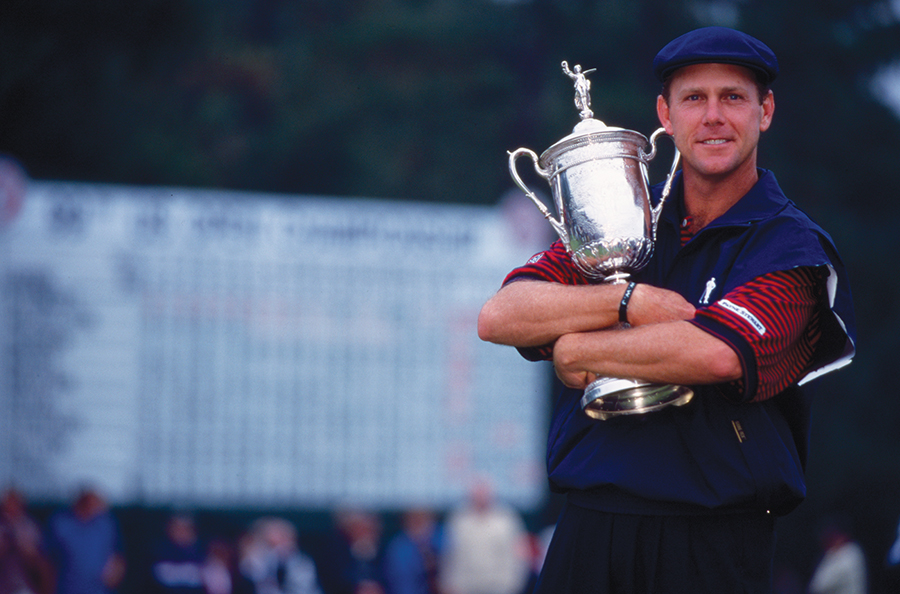
Middle: Payne Stewart holding the trophy after the final round of the 1999 U.S. Open. (J. D. Cuban/Courtesy USGA Museum)

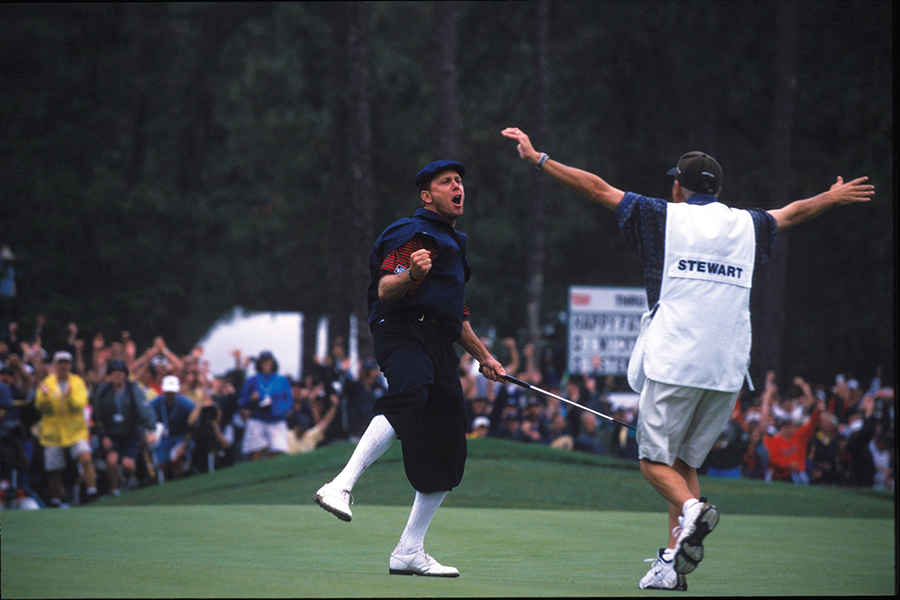
Right: Payne Stewart during the fourth round of the 1999 U.S. Open Championship held at Pinehurst Resort and Country Club No. 2 Course in Pinehurst, N.C., Sunday, June 20, 1999. (USGA/J.D. Cuban)

“It’s disappointing to lose the U.S. Open two days in a row,” said Simpson, who had played those last three holes eight over par for the week to Stewart’s one under. When it was over Stewart bought champagne for the media, a grandiose gesture he now shared with Tony Lema, who died in a plane crash 33 years before Stewart did. “I come off as arrogant sometimes,” Stewart explained to the press. “Maybe you guys caught me at the wrong time a couple of times. If you got to know me, I’m a pretty nice guy, and by God, I’ll buy champagne anytime you want it.”

In some ways the next few years were not kind to Stewart. In others they were the kindest of all. With two major championships he could command lucrative, for those days, endorsements, and he landed an equipment deal that paid him handsomely but poisoned his game. If Scott Simpson had had a reputation as a man who showed up in the U.S. Open, Stewart did, too, finishing a gut-wrenching second to Lee Janzen, not once but twice. In 1993 at Baltusrol GC in New Jersey, Janzen hit it through trees on the 10th, chipped in on the 16th, and caromed a shot off another tree and into the fairway on the 17th. He hit just six fairways and 11 greens on Sunday and beat Stewart by two.

Stewart’s back had become a never-ending source of discomfort. And, by 1994, he had the kind of midlife career malaise many top players experience. He began to wonder if it was all worth it. There is little doubt Stewart became a different person the last years of his life. He found a peace of mind that had eluded him from the time he was a boy in the balcony of Springfield’s Grace Methodist Church, where he couldn’t sit still and his father sang too loudly. “The last two years of his life, he was a really good person,” said Hicks. “He just walked a different walk.”

Everyone who knew him saw it. “He was so much more thoughtful. He was so much more concerned about other people,” said Coop. “He was more at peace with himself, too. It wasn’t a logical peace. He fought to find that peace by playing harder or playing better or being more popular, and that’s just not where it comes from. The religion really gave him a sense of what was important. I think he didn’t try as hard to be liked, and he was liked more. He was accepted more by not trying so hard to be accepted.”

Stewart, who had won only once following Hazeltine, finished second to Janzen again in the U.S. Open, this time at the Olympic Club in ’98. On Friday the USGA used a lamentable back pin position on the steeply sloped 18th green, and, with the possible exception of Tom Lehman, who four-putted it, few were bitten harder than Stewart. After missing a short, curling birdie putt, Stewart could only fold his arms, furiously chew his gum, and watch stone-faced as his ball rolled and rolled 25 feet back down the slope. Though he’d held a 4-shot lead going into Sunday, Stewart played poorly in the final round. While luck shined on Janzen once again, this time on the fifth when his tee shot into the tops of the cypress trees dropped to the ground even as he was walking back to re-tee, Stewart wasn’t as fortunate. After struggling to find a fairway, he finally did with a 3-wood on the 12th, but the ball settled into a sand-filled divot. The bad break led to two more bogeys, the most critical at the 16th, and he eventually lost to Janzen by a shot. But this was a far different Stewart than the one who had seemed so callous in victory over Mike Reid at Kemper Lakes. “He was about as gracious a loser as you could possibly have,” said Cook. “He congratulated Lee. Talked about how well Lee played, about how he just didn’t have it that day.”

Stewart’s showing in San Francisco had reinforced his self-belief for the following year in Pinehurst. Generally considered Donald Ross’ finest work among the 400 or so courses he created, the heart and soul of the No. 2 Course are its domed greens. The Pinehurst Resort suffered through some tough financial times in the ’70s and ’80s, and the No. 2 Course’s reputation had taken a hit as well. With rough grown up right to the collars of the putting surfaces, it was thought to be too easy a mark for the modern player. It wasn’t until PGA Tour commissioner Deane Beman brought the Tour Championship there in 1991, shaving the green embankments to restore the character of the course, that No. 2’s challenge emerged from its own shadow. The only course in America easily identified simply by an integer, only the best-struck shot would hold No. 2’s greens. If a player’s ball rolled off into a collection area, his next shot offered a dicey set of choices — lob it up on top, pitch it into the bank, putt it up the hill. That’s all well and good if you’re smoking cheap cigars and playing a $5 Nassau with a group of high handicaps, but when there’s a national championship at stake, those decisions become a hall of mirrors.

Stewart traveled to North Carolina after missing the cut in Memphis. He put the weekend to good use, playing a practice round with Cook, and carrying just his chipping clubs and a putter. They mapped the greens, marking them with red lights, green lights and yellow lights for the places he could not, or should not, hit the ball.

Pinehurst wasn’t the first time he and Cook had plotted a course that way. They did the same thing for every Open Championship links, too. Pinehurst, however, was the only time Stewart ever carried his yardage book himself, usually preferring to leave that job to his caddie, Hicks.

For the second straight year Stewart went into Sunday’s final round with a lead, just one stroke this time instead of the four shots he had in hand at the Olympic Club. And, for the second straight year, he was overtaken on the back nine, this time by the man he was playing beside, Phil Mickelson. And, for the second straight year, he had a tee shot land in a sand-filled divot, this time on the fourth hole. But after his experience at Olympic, he’d spent time practicing the shot and saved his par. Vijay Singh and Tiger Woods took runs at the lead, but, in the end, the championship came down to Stewart and Mickelson and the final three holes.

Only once during the week did Stewart make a red-light mistake, missing the green in the worst possible spot on the par-3 15th on Sunday. The designation earned its distinction when he had to make a long putt just to salvage the bogey that dropped him a shot behind Mickelson. Sunday of the U.S. Open always falls on Father’s Day, and Mickelson, who had just turned 29 and had yet to win his first major, was carrying a buzzer in his golf bag waiting for a call from his wife, Amy, who was expecting the couple’s first child.

On the 16th, normally a par-5 played as a par-4 during the Open, Mickelson gave Stewart’s shot back with a bogey of his own. Both players missed the green, and Stewart hit one of his weakest chips of the week, leaving himself a downhill, double-breaking 20-footer. When he curled it in the center, he barely reacted. For Coop, this was one of the most telling moments of their 11 years together.

“That putt on 16, you couldn’t make with a bushel of balls,” said Coop. “All he did was raise his right index finger to acknowledge the crowd and went right back into concentration. We worked so hard on that, so hard, not to get too high, not to get too low. He worked on his deficiencies.” With Stewart in the hole with par, Mickelson’s 8-footer missed, and now they were tied again with two to play and no one else really in the game after Woods’ bogey at the par-3 17th.

Stewart hit his 6-iron 4 feet from the hole on the 17th, and Mickelson followed with a 7-iron 8 feet away. Mickelson missed on the right, and Stewart holed to retake the lead going to the last, an uphill par four of 446 yards. Mickelson found the fairway, but Stewart’s drive landed in the right rough. All day it had been wet and uncharacteristically cool for North Carolina in June, when it’s more likely to be in the 90s than the 60s. On the practice ground, a place called Maniac Hill, Stewart had taken out his navy blue rain jacket during his warm-up but didn’t like the way it restricted his swing, so he cut the sleeves off with a pair of scissors. As Hicks and Stewart walked up the hill against the cold drizzle, the carillon from The Village Chapel, just a couple of blocks away, chimed “Amazing Grace.”

The moment Stewart saw his lie in the thick Bermuda rough, he never thought of anything but laying up short of the cross bunker. From there he’d have a 75-yard wedge shot into the back-left pin. Mickelson hit his second on the green but left himself a 25-footer with a huge right-to-left swing in it, hardly a putt he could expect to make. Trying to cobble together a classic, scrambling U.S. Open par, Stewart wedged his third 20 feet below the hole. Mickelson missed, and Stewart made his right in the middle again. This time he rose up on one leg and punched the air. Hicks tossed the flagstick away and flew into his player’s arms, wrapping his legs around him.

After picking up his golf ball, Stewart took Mickelson’s face in both his hands and told him, “You’re going to be a father. You’re going to be a father.”

That night the Open champion and his caddie drove to Mebane, North Carolina, Hicks’ hometown, for a fundraiser the following day. Stewart never entertained the notion of not showing up. Instead, the two of them sat up most of the night in Hicks’ kitchen taking turns drinking champagne from the U.S. Open trophy until the caddie could sneak away to bed unnoticed.

In September, as the days shorten, the Ryder Cup Matches have early starts, particularly the morning sessions of either four ball or foursomes. Warm-ups can begin before sunrise, and often the matches don’t end until dark. Stewart loved his music. He played in Peter Jacobsen’s band Jake Trout and the Flounders, and he was a devoted Jimmy Buffett parrothead. He traveled with a case of harmonicas in a range of keys, all of which he could violate without the slightest hint of remorse. But he was never more purposefully musical than he was at a Ryder Cup. Whenever Stewart was on the U.S. side, which he was five times, wake-up calls were completely unnecessary. Up before any of his teammates, Stewart would blast Bruce Springsteen’s “Born in the USA” at full throttle for everyone in the hotel, American and European alike, to hear. If Seve Ballesteros liked nothing better than beating Americans, Payne Stewart liked nothing better than playing for his country.

At The Country Club in Brookline, the course where Francis Ouimet won the 1913 U.S. Open in a playoff against British legends Harry Vardon and Ted Ray, the U.S. team fell woefully behind after the first two days. The Americans were four points behind, 10-6. No lead that large had ever been overcome in the history of the matches. U.S. captain Ben Crenshaw front-loaded his lineup, and the Americans won the first six singles. When Justin Leonard rolled in an improbable monster putt on the 17th, the green near Ouimet’s house where he made the crucial stroke against Vardon and Ray, the Americans stormed thoughtlessly onto the green while José Maria Olazábal stood in stoic dignity, still with a chance to halve the hole. He didn’t, though. Crenshaw kissed the green where Ouimet had beaten the Brits. The stunning U.S. comeback was complete but for one thing.

The match directly behind Leonard and Olazábal was Payne Stewart and Colin Montgomerie. The Boston crowd had been enormously unkind to Montgomerie, hurling insults about his game, his team, his body, anything they could think of. Some particularly well-lubricated and obnoxious fans were ejected from the grounds at Stewart’s insistence. When Stewart picked up Montgomerie’s ball on the 18th green at The Country Club, giving him the match, Hicks thought it was his player’s finest moment, greater even than the 18th green at Pinehurst just months before.

“What he did with Monty was the proudest moment I ever had,” said Hicks. “The old Payne Stewart wouldn’t have done that. He wouldn’t have been thinking about the big picture. I was proud of the way he handled himself the whole day. Those people were ruthless.”

The first person Stewart saw on the green was Montgomerie’s wife at the time, Eimeer. He hugged her and apologized for the fans’ behavior. At 42 Stewart had become a man in full.

It was a cool morning in Orlando, Florida, on October 25, with a few puffy white clouds in the sky. By afternoon it would be in the 70s, a perfect day for golf, and flying. Michael Kling, a captain for Sunjet Aviation, came to work at 6:30 a.m. His first officer, Stephanie Bellegarrigue, arrived 15 minutes later. They inspected and fueled Learjet n47bA, loaded a cooler with ice and soft drinks on board, and left Sanford, Florida, for Orlando International Airport at 7:54 a.m. to pick up their passengers: Payne Stewart; his agents, Van Arden and Robert Fraley; and Bruce Borland, a last-minute addition from Jack Nicklaus’ architectural team who was anxious to work with Stewart on a golf course project near Dallas.

Stewart and his wife, Tracey, were up early that morning, too. She had an appointment with a chiropractor, and Payne made pancakes for the children, Chelsea and Aaron, before the three of them left for school around 7:30 a.m. Stewart had angered some of his professional friends because he’d backed out of a commitment to play in a fundraising event that day hosted by Arnold Palmer at Bay Hill. Instead, he would stop in Dallas on his way to Houston for the Tour Championship.

The Learjet took off from Orlando International Airport at 9:19 a.m. After a series of altitude clearances, at 9:26 a.m. the pilot was instructed to change radio frequency and contact a Jacksonville controller, who cleared them to climb to, and maintain, flight level 390 to Dallas. The response, “Three nine zero bravo alpha,” are the last known words to have been spoken on the airplane.

From that moment until 12:12 p.m. central daylight time, n47bA was first intercepted by an F-16 from the Fortieth Flight Test Squadron at Eglin Air Force Base, then followed by two Oklahoma Air National Guard F-16s, joined by a pair of North Dakota Air National Guard F-16s. All reported the windows fogged or frozen and no signs of life. A cataclysmic loss of cabin pressure had turned it into a ghost ship. For nearly four hours, first in great confusion and then heartbreaking resignation, the saga played out on cable news as the Learjet flew like a porpoise through the air. Stuck in a climb, it bumped up against its maximum altitude of 48,900 feet, descended to a level where its engines functioned more efficiently, and then climbed back to its apex over and over again until its fuel tanks ran dry.

It came down like a javelin in a field outside of Mina, South Dakota, down a dirt road, behind bales of hay, where Jon Hoffman’s cows grazed. The entry wound in the Earth was shockingly compact, as much a grave as a crash site. “That’s where they are,” Hoffman said. Stewart’s last flight ended on land owned by a working man who built his own driving range just off his back porch so he could hit balls on summer evenings.

A polished stone unearthed by the force of the crash serves as its memorial. In part the engraving on it says:

He brought me up out of the pit of destruction,

Out of the miry clay;

And he set my foot upon a rock

And he gave me a firm place to stand. PS

Adapted from Playing Through: Modern Golf’s Most Iconic Players and Moments by Jim Moriarty by permission of the University of Nebraska Press. Copyright 2016 by Jim Moriarty. Copies of Playing Through can be obtained at https://www.nebraskapress.unl.edu/nebraska/9780803278653/

Blast from the Past

Blast from the Past

Photographs by Tim Sayer

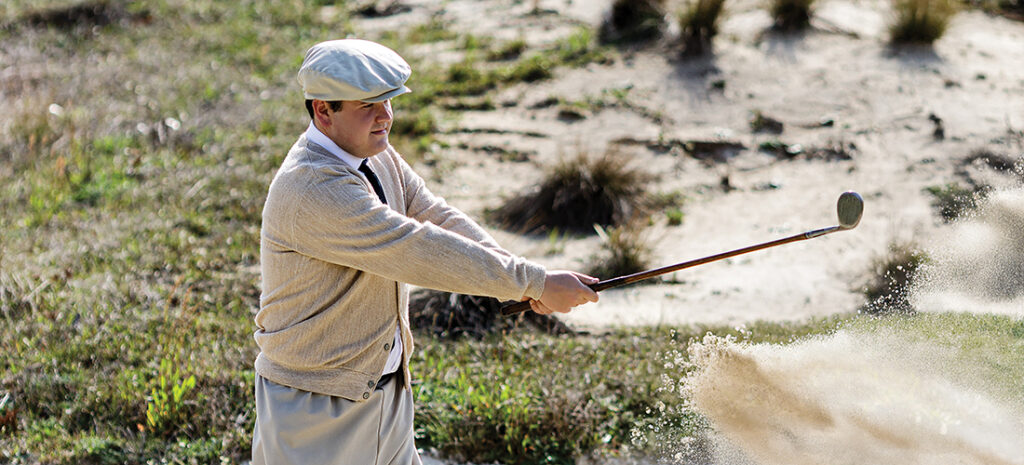
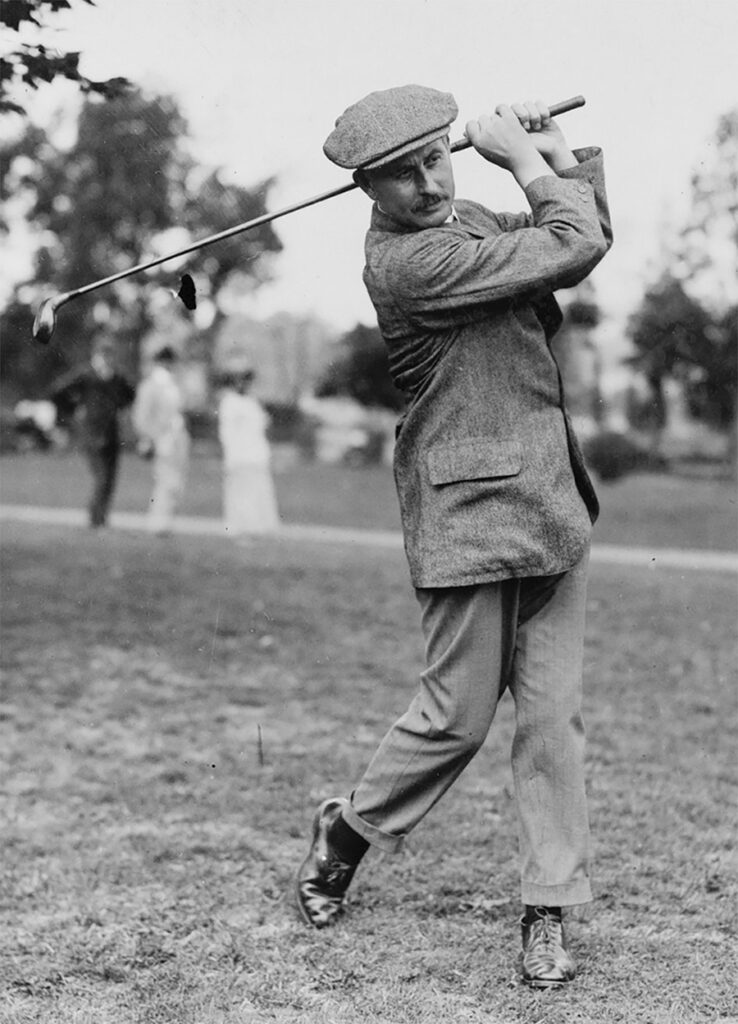
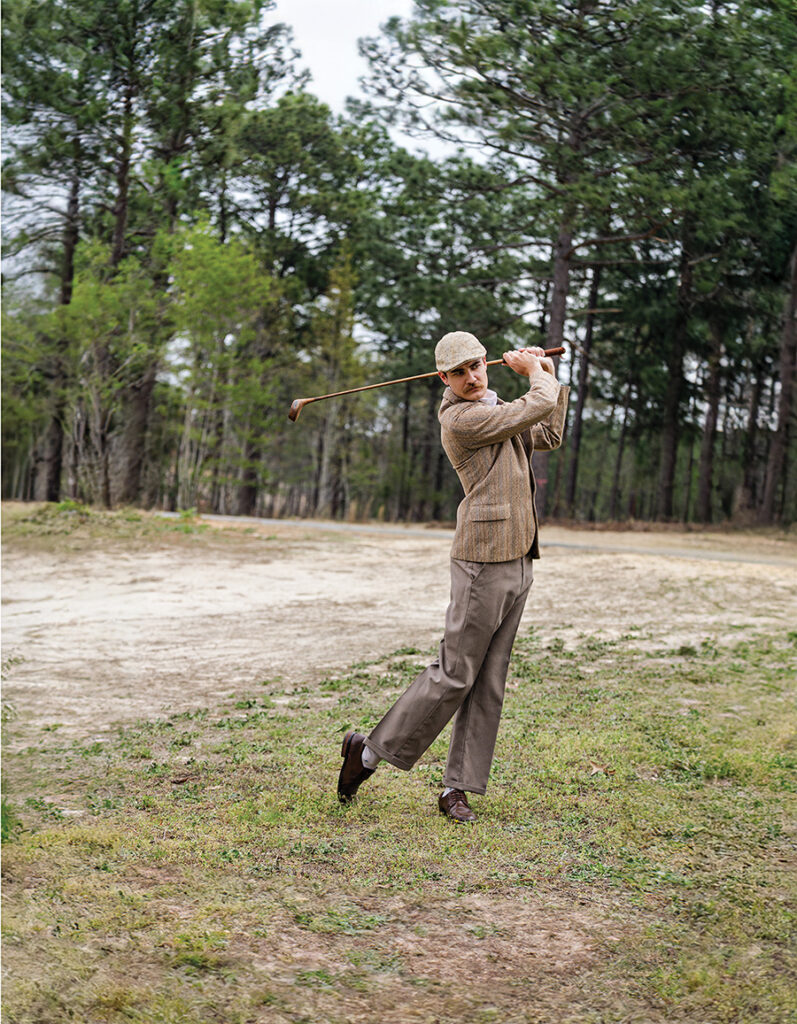
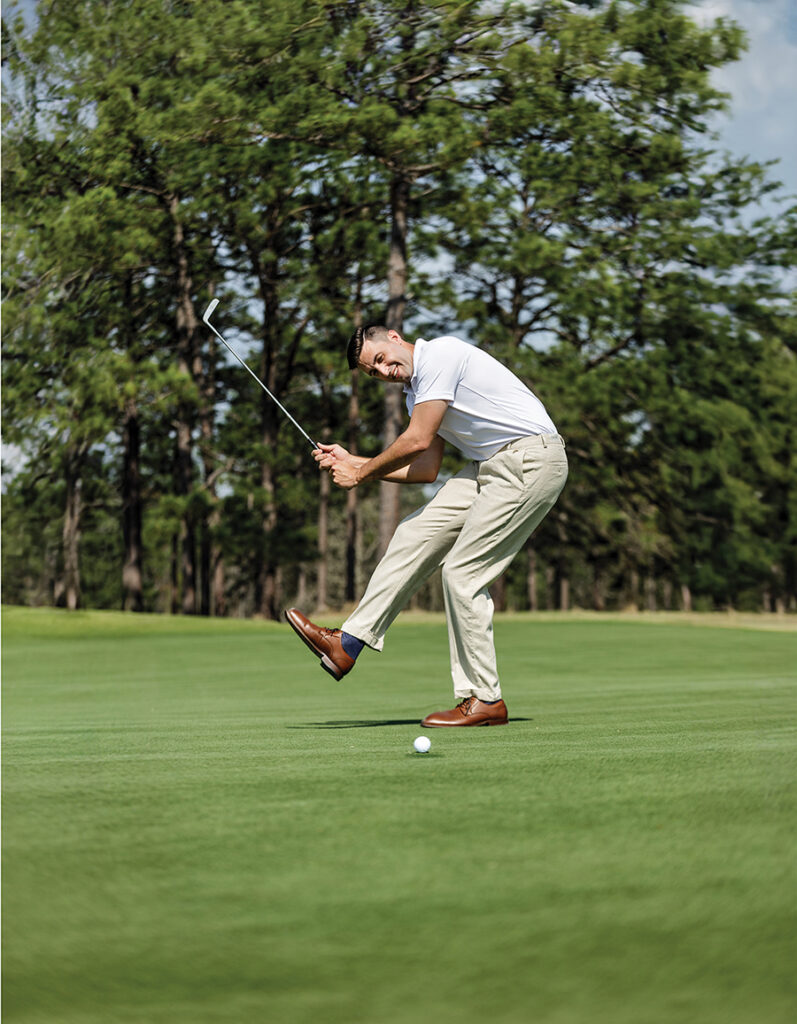
The great Harry Vardon won the sixth U.S. Open ever played in 1900 at the Chicago Golf Club. Max Busser, the lead assistant professional at Pinehurst No. 8, strikes the pose.

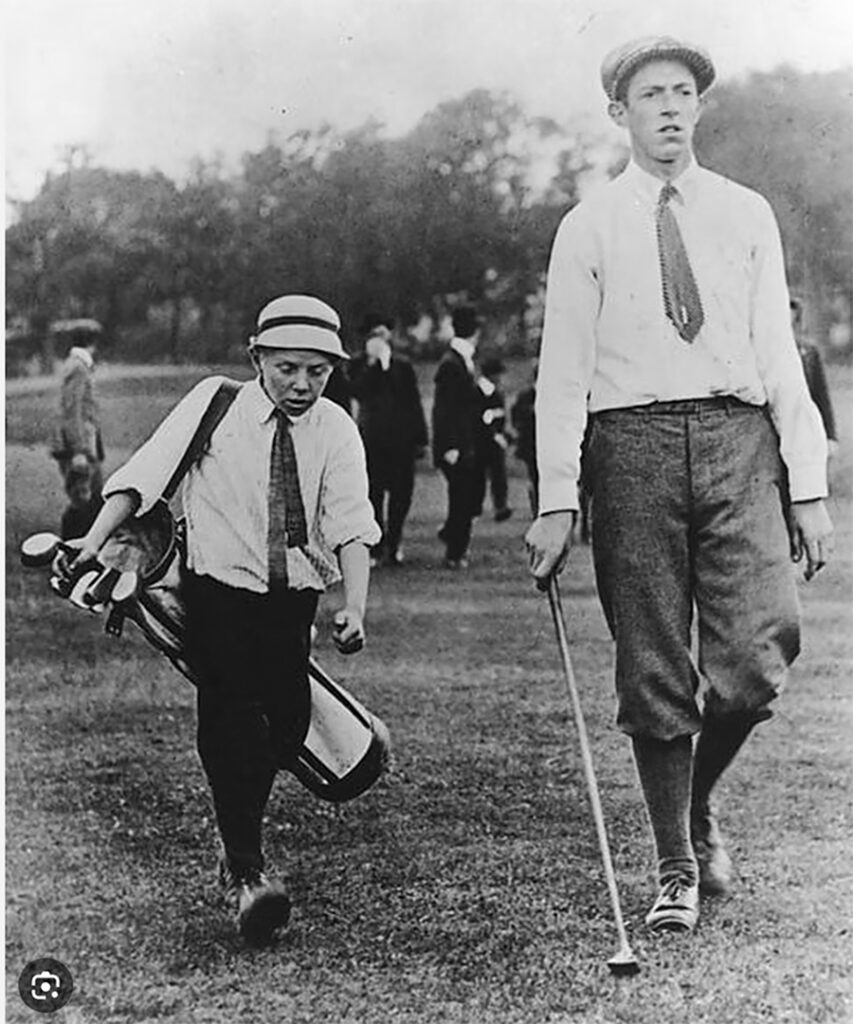
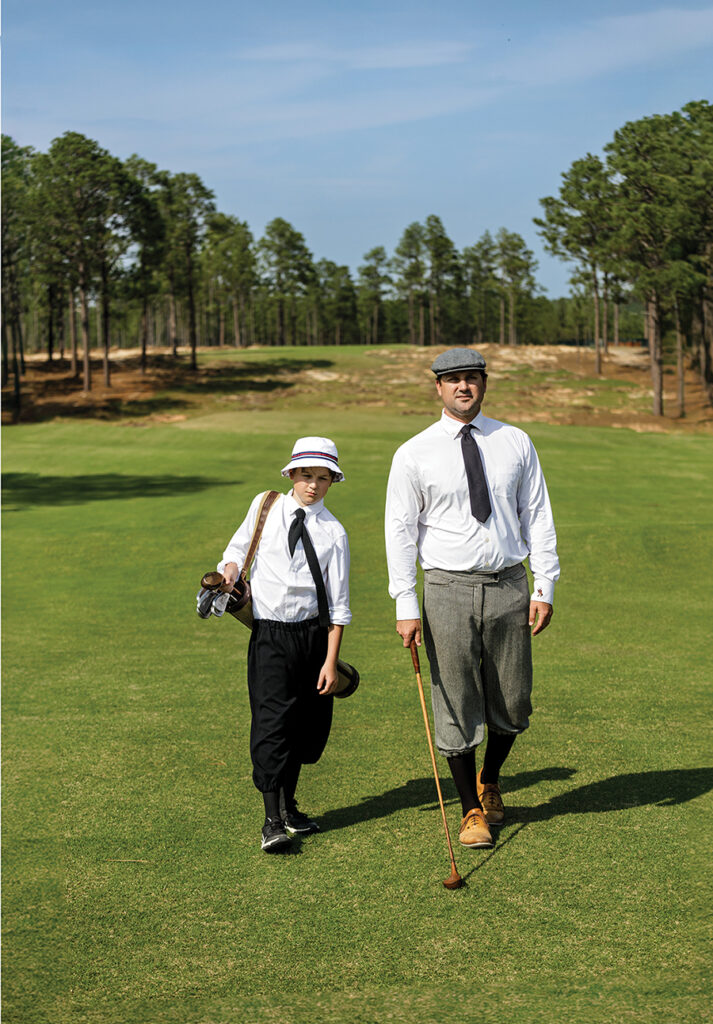
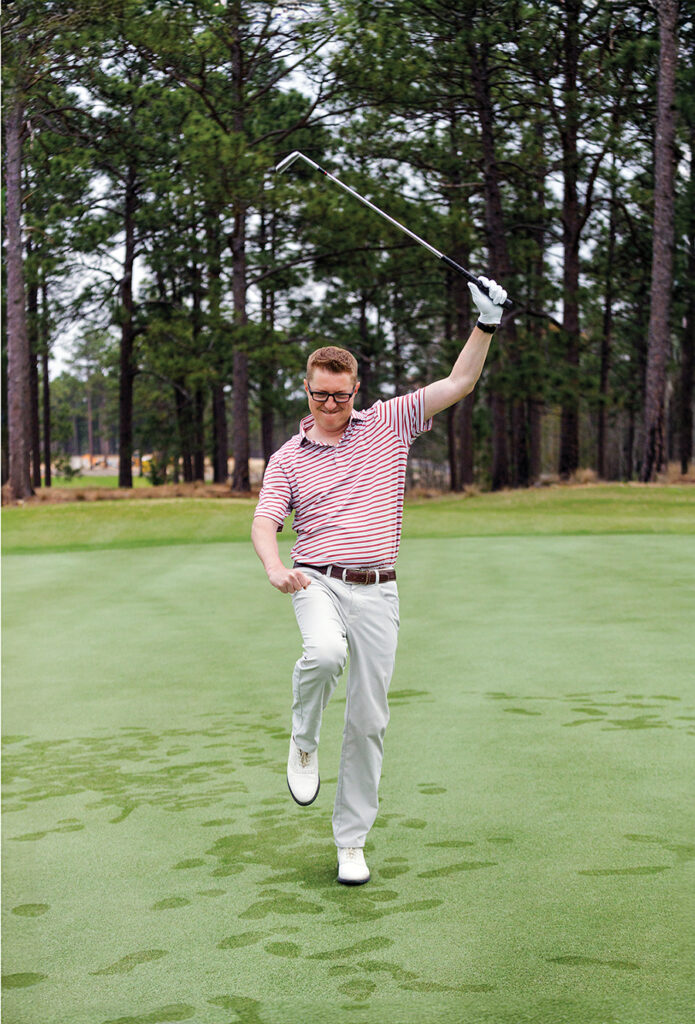
Francis Ouimet stunned the world when he defeated Harry Vardon and Ted Ray in the 1913 U.S. Open at The Country Club in Boston. Cole Stiles, the head professional at Pinehurst No. 7 and No. 9, stands in for Ouimet while his son, Parker, assumes the role of Ouimet’s faithful caddie, Eddie Lowrey.

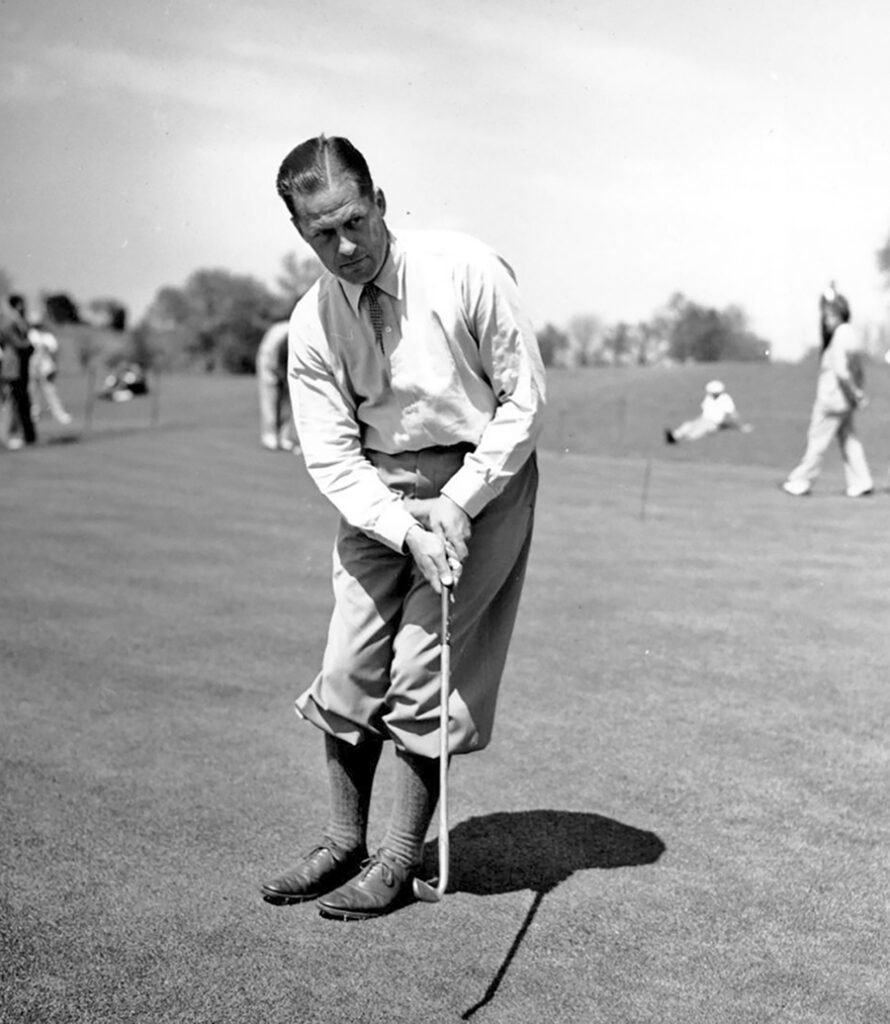
The immortal Bobby Jones won the U.S. Open four times between 1923 and 1930 in addition to his three Open Championship titles, his five U.S. Amateur championships and a single victory in the British Amateur. Matt Barksdale, Pinehurst Resort’s director of golf, plays the part.

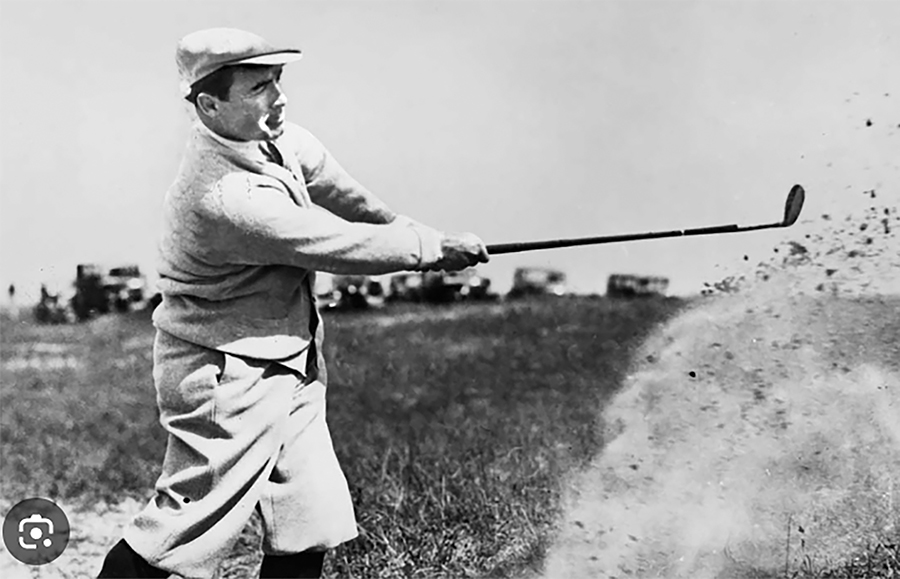
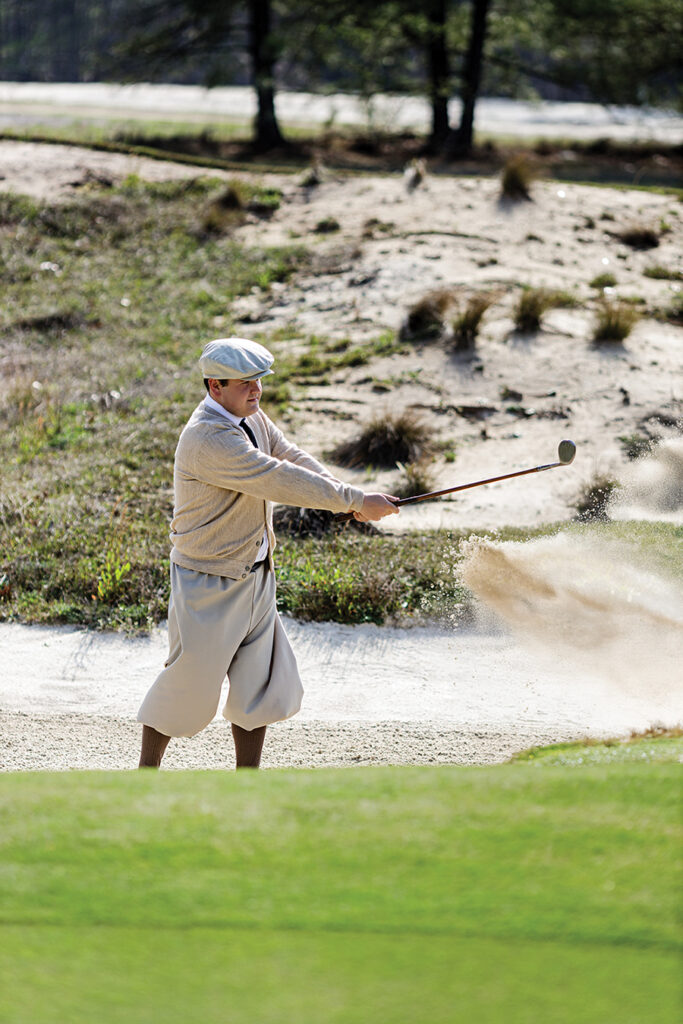
Gene Sarazen, the inventor of the modern sand wedge, won the U.S. Open in 1922 and 1932. He’s appropriately portrayed by Rob Lane, the lead assistant at Pinehurst’s newest course, No. 10, the Sandmines.

The Hawk, Ben Hogan, won the U.S. Open four times between 1948 and 1953 in addition to his five victories in golf’s other three major championships. Andrew Swindon, the assistant professional at Pinehurst’s No. 7 and No. 9, steps into his shoes.

Arnold Palmer, the King, charged from behind at Cherry Hills Country Club to add his lone U.S. Open crown to his four Masters titles and two Open Championship victories. Matt Nunez, the head professional at Pinehurst Country Club, holes the putt.

Jack Nicklaus, whose 18 major championships place him alone at the pinnacle of the sport, captured four U.S. Open titles, the first in 1962 and the last in 1980. Tyler Yancey, the head professional at Pinehurst Sandmines, the new No. 10, plays the Golden Bear.

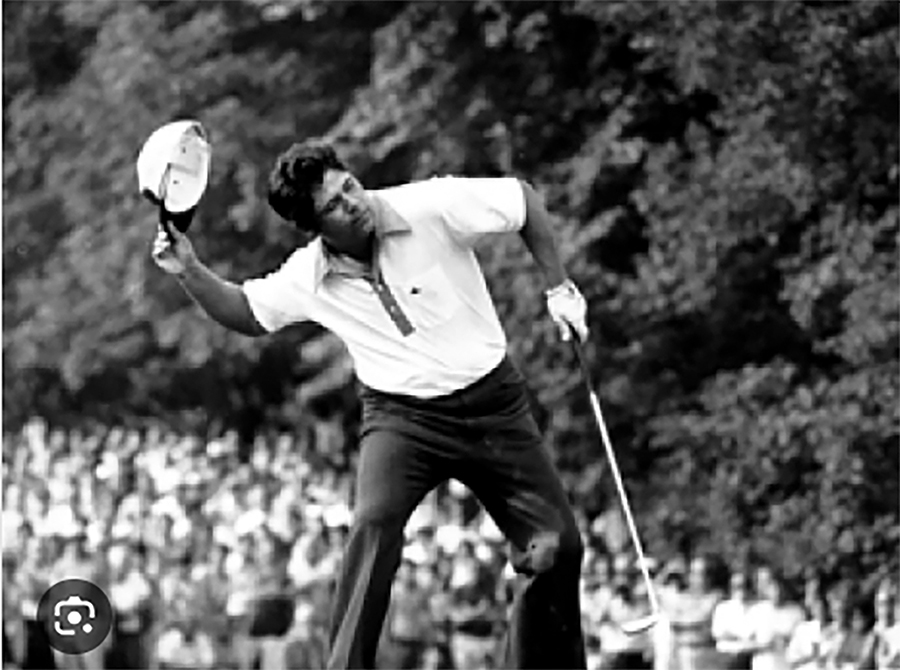
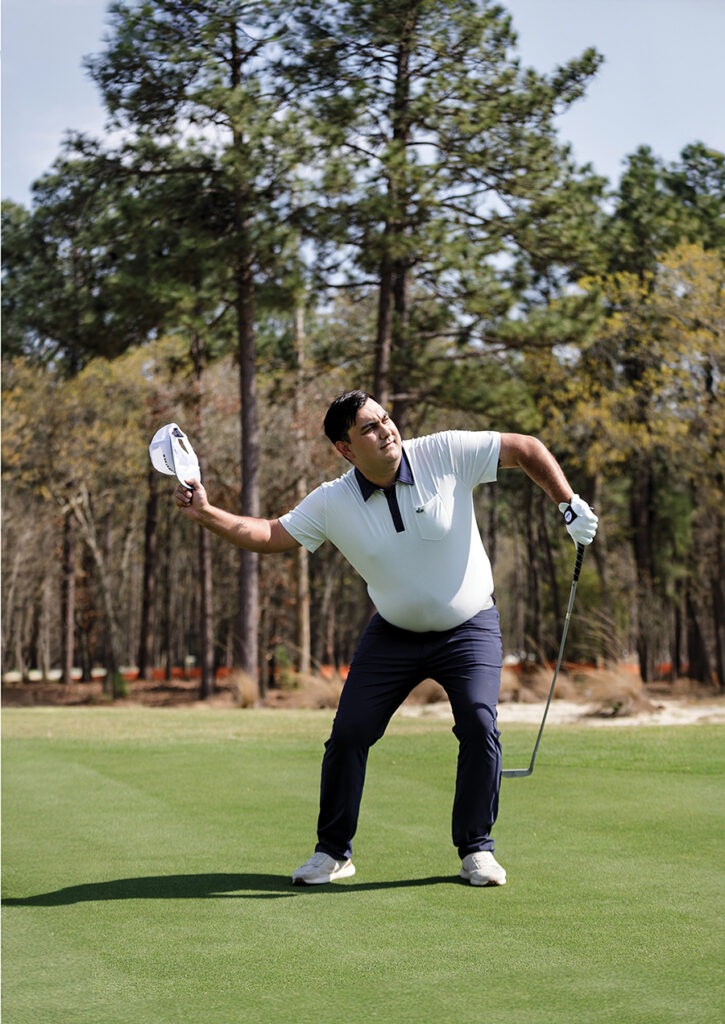
Lee Trevino, the Merry Mex, won the U.S. Open in 1968 and 1971, outdueling Jack Nicklaus in each. The toss of the cap is by Carlos Rodriguez, Pinehurst’s assistant pro at the No. 7 and No. 9 courses.

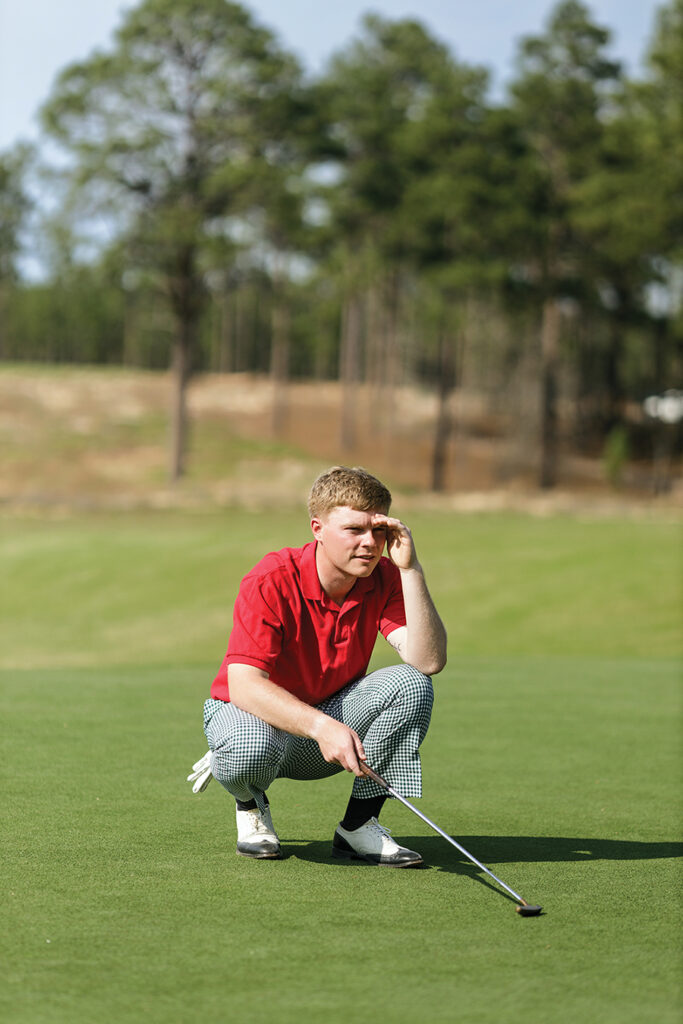
Johnny Miller’s final round of 63 on his way to winning the 1973 U.S. Open at Oakmont Country Club was one of the greatest rounds in Open history. Evin Wheaton, the assistant golf professional at the Padgett Learning Center, lines up the putt.

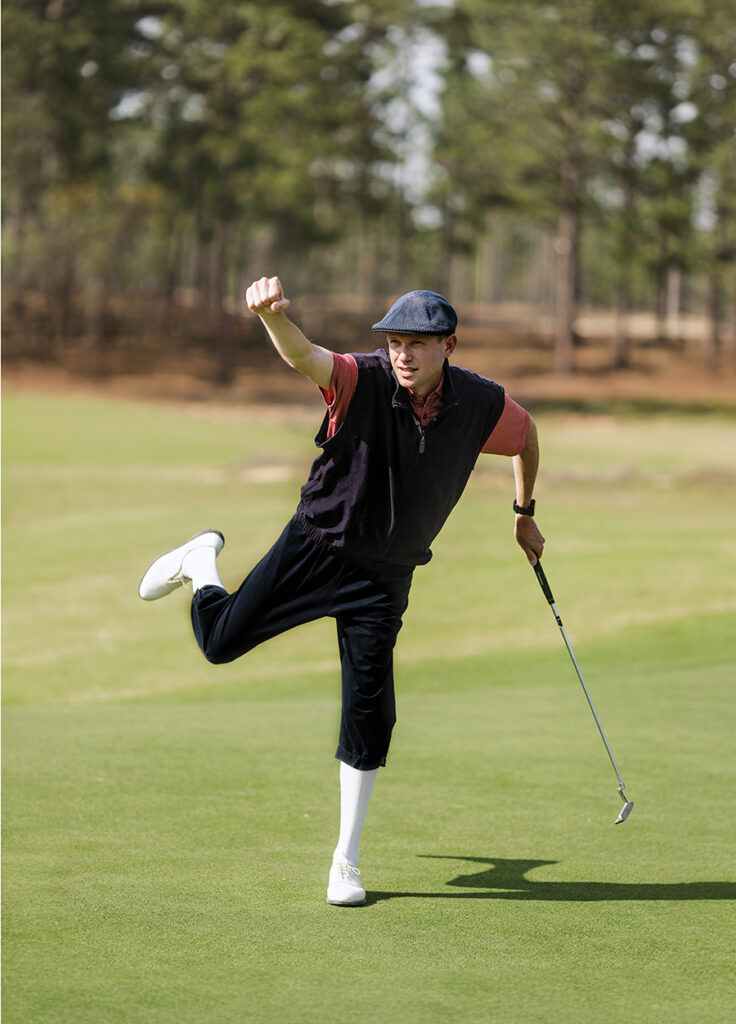
Pinehurst’s first U.S. Open in 1999 provided one of the most exciting finishes the championship has ever seen. The statue of Payne Stewart, relocated temporarily for the 2024 U.S. Open, occupies a place of honor behind the 18th green to prove it. Ryan Shpak, the manager of the Padgett Learning Center and a Pinehurst Golf Academy instructor, kicks up his heels.

The U.S. Open Issue

The U.S. Open Issue

Feature Photograph: USGA/Fred Vuich

It’s golf’s most demanding test; it’s most exhausting week.


A U.S. Open examines every aspect of a player’s game and seeks to reveal every attribute a golfer can possess — awesome power, an angelic touch, a gladiator’s heart. Our tribute to this year’s National Open begins with a nod to history, portrayed by some of Pinehurst Resort’s own professionals assuming the poses of champions past. Tom Stewart, owner of Old Sport & Gallery provided the vintage clubs with costuming help from Showboat Costumes. Of course, it’s been 25 years since the late Payne Stewart made his stunning par on the 72nd hole to finish off one of the most exciting U.S. Opens ever played. In honor of Stewart, we’re running an excerpt about him, “A Country Boy from Springfield,” from the 2016 book Playing Through. Sandhills native Bill Fields is a researcher on NBC’s golf telecasts and he invites us inside the compound for a behind the scenes look at what it takes to broadcast the U.S. Open across the globe. Lee Pace, whose golf knowledge of Pinehurst is unparalleled, tells us all about the USGA’s new Golf House Pinehurst and the return of the World Golf Hall of Fame. Jim Dodson plays a round of golf with Bob Dedman Jr., the most laid-back, down-to- earth guy who ever owned his own U.S. Open venue. Last, but far from least, Charlotte native Ron Green Jr. — for our money the best golf writer in America — answers the question “Where have all our champions gone?” And, just think, we get to do this all over again in five short years.

Poem June 2024

Poem June 2024

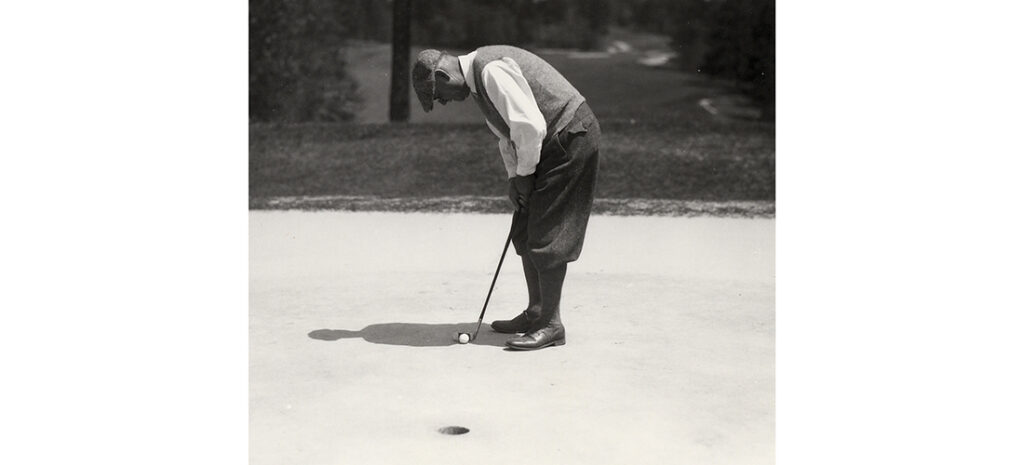
Feature Photograph: Courtesy Tufts Archives

To Donald Ross

(On receiving a picture of this famous

golf architect studying a 6-foot putt)

Brave Donald, in your suit of brown,

I see you studying your putt,

And well I know you’ll run it down;

It is a splendid picture, but

For all the woes you’ve worked for me,

Deep in a bunker you should be.

I smile to see your kindly eye;

’Tis good to see your figure fair;

Six feet away, I’ll say you lie,

And know your second put your there;

They took your picture on the green —

A pit had made a merrier scene.

I should have laughed to see you caught,

Your niblick tightly clutched in hand,

Standing where I so oft have fought

To battle with the stubborn sand;

It would have pleased me more to see

Your ball where mine so oft must be.

Yet, Donald, if perchance the day

Shall come to me when I can brag

That I, like you, have learned to play

My second shots up to the flag,

If I reach any green in two

I’ll have my picture made for you.

    — Edgar A. Guest

(Edgar A. Guest, 1881-1959, was known as the People’s Poet.
He wrote this poem for the testimonial dinner honoring Donald Ross at the Pinehurst County Club on March 20, 1930.)

Party Animals

Party Animals

N.C. Zoo celebrates five decades

By Jim Moriarty

Photographs Courtesy of N.C. Zoo

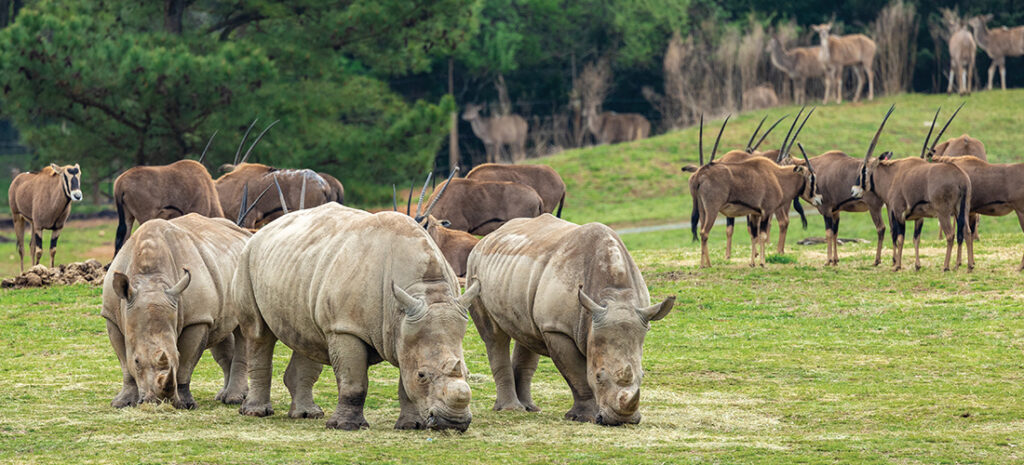
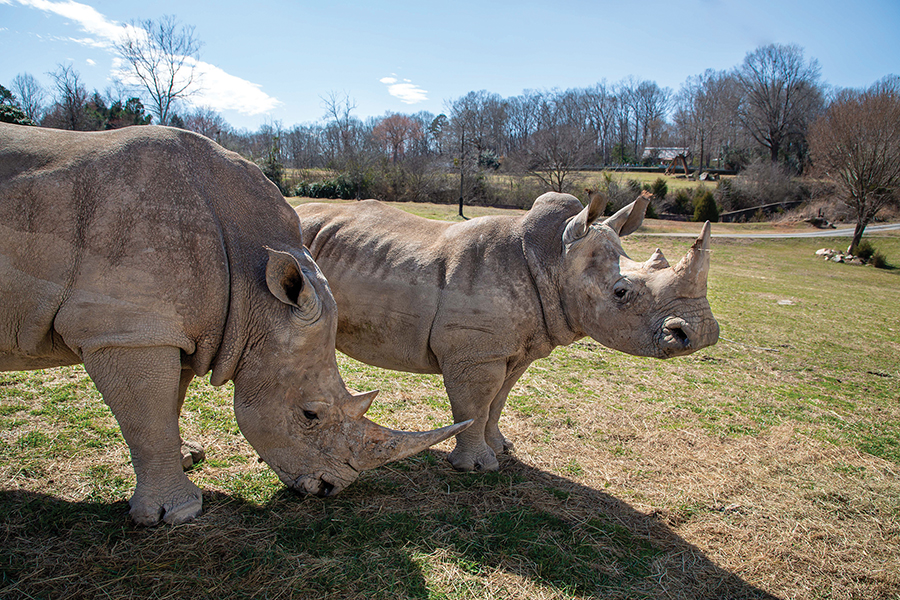
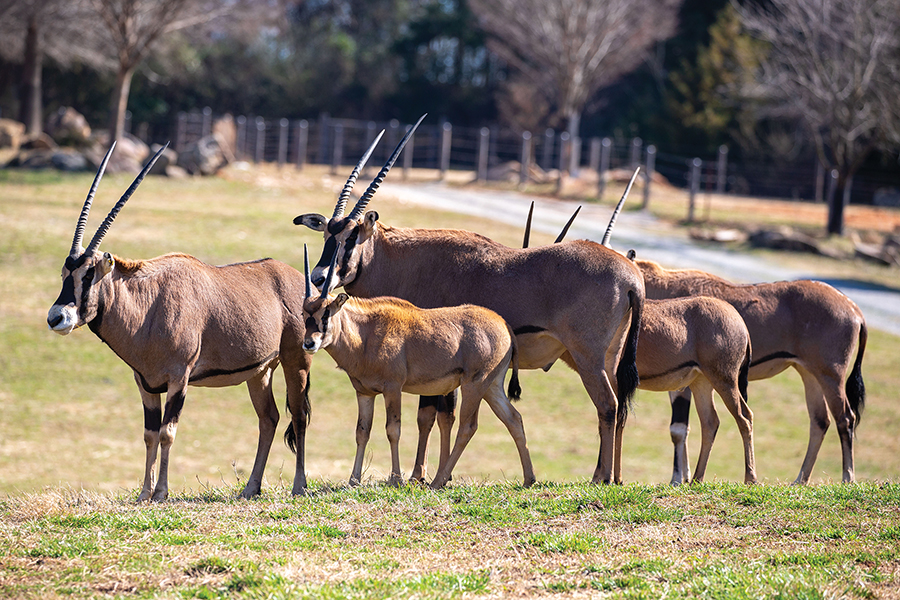
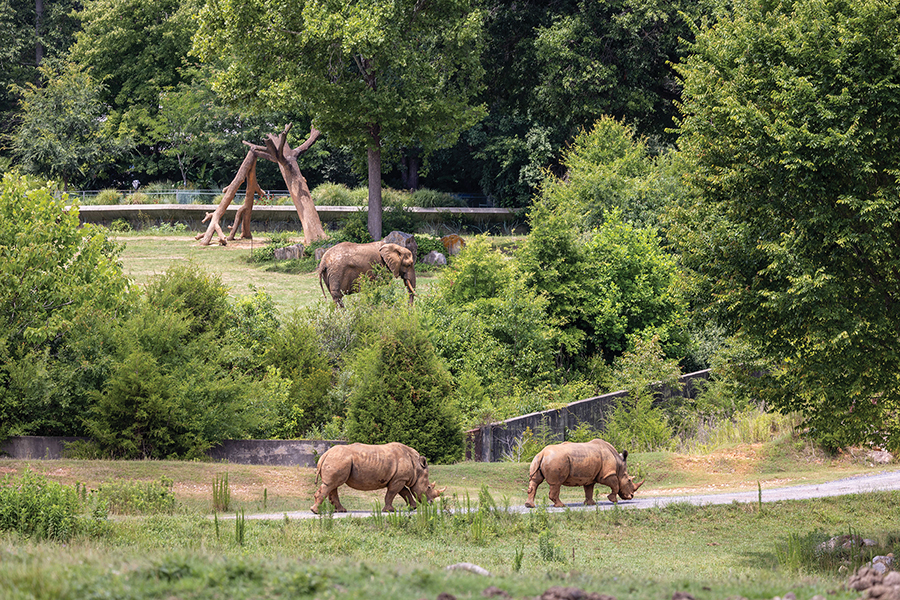
Feature Photo: Southern White Rhinos (from left to right: Bonnie, Abby and Nandi) and Fringe-Eared Oryx in background

It began with Sonny Jurgensen, Tort and Retort. None of them moved very fast, but all of them played significant roles in the birth of the North Carolina Zoo 50 years ago.

The zoo, built initially on 1,371 acres in Randolph County near Asheboro, is the largest natural habitat zoo in the world. It entertained over a million visitors last year, including nearly 90,000 students who attended free of charge. The formal celebration will be on Aug. 2, the day the interim facility was officially dedicated in 1974. Among the many promotions staged throughout the year will be the recognition, probably sometime in June or July, of the zoo’s 30 millionth guest, who will be showered with a lifetime membership, a Zoofari (an open-air trip through the Watani Grasslands), and every manner of zoological swag known to man.

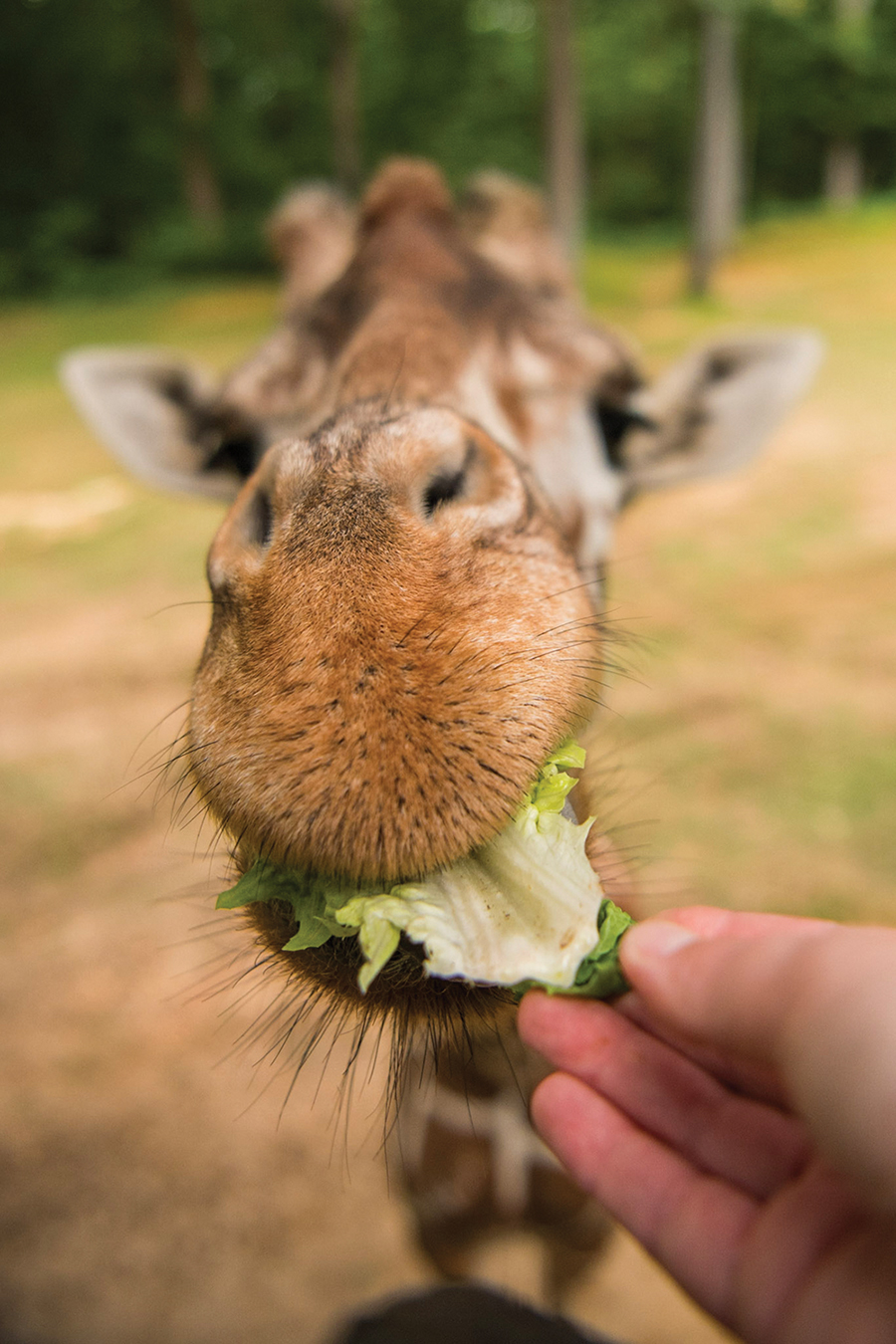
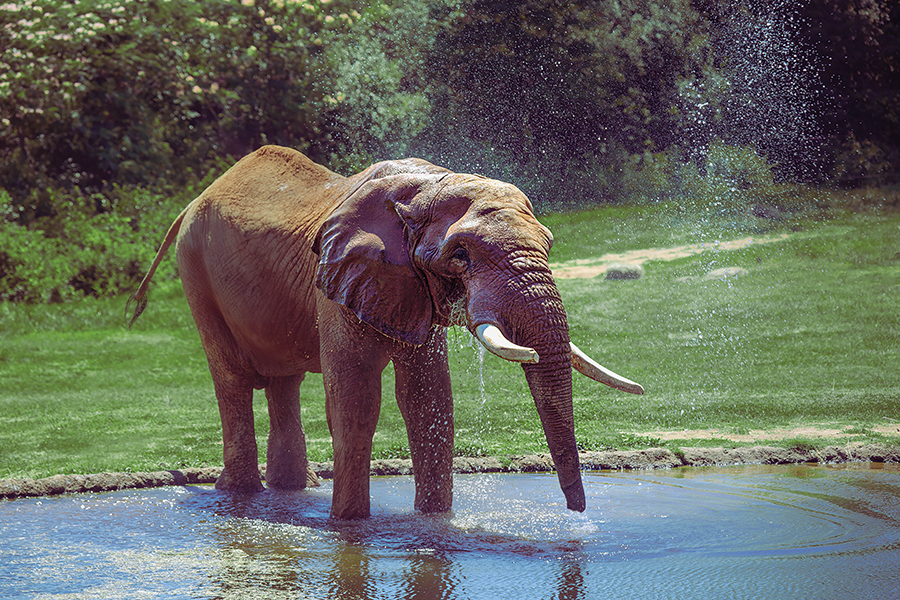
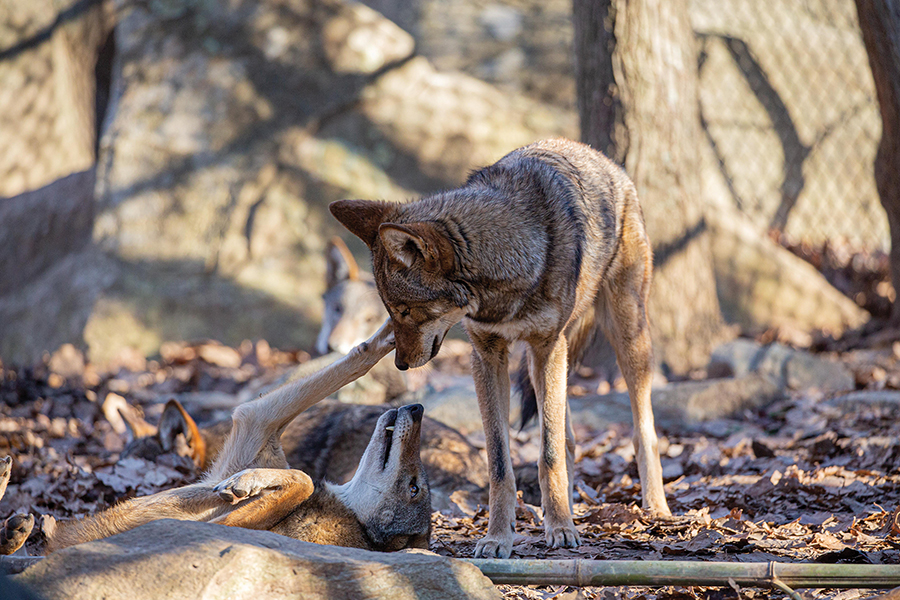
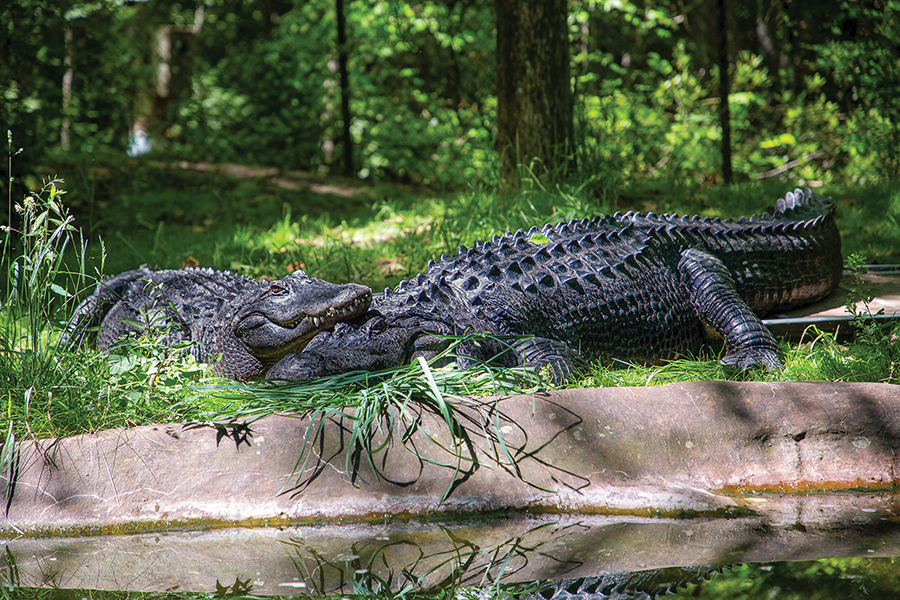
Left to Right: Giraffe (Turbo), African Elephant (C’sar), Red Wolves (from left to right: Catawba and Pearl), American Alligators (from left to right: Liv and Gatorboy)

The seed money for the zoo came, in part, from a series of four preseason football games that raised money for the feasibility study to determine the location of the zoo. The first of those games was on Aug. 19, 1967. The Washington Redskins (now Commanders, though that’s likely to change) were led by their quarterback, Jurgensen, a Wilmington native, and linebacker Chris Hanburger, who was born at Fort Bragg (now Liberty) and attended the University of North Carolina at Chapel Hill. The Giants had a Carolina connection of their own: Darrell Dess, a guard/tackle who had attended N.C. State University. The game was played at night, the first such event, at what was then called Carter Stadium in Raleigh. Washington won 31-13 in front of 33,525 who paid six bucks apiece to attend.

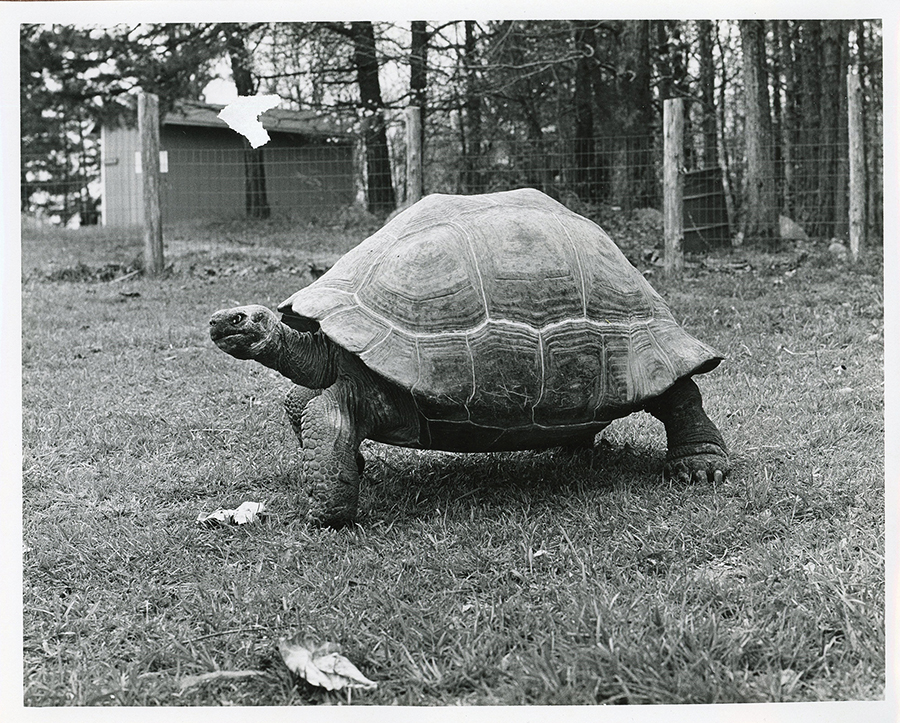
Left to Right: Southern White Rhinos (from left to right: Linda and Jojo), Southern White Rhinos (from left to right: Linda and Jojo), Galapagos Tortoise (Retort), Galapagos Tortoise (Retort)

The location that was eventually settled on for the zoo was known as the Purgatory Mountain site, named, according to legend, for the fires from the moonshine stills visible at night. Randolph County donated the land, the state legislature earmarked $2 million for the project, and hiring began.

The interim zoo, today nothing more than a staging and construction area, became home to the first animals, two endangered Galapagos tortoises named Tort and Retort, who were sent to other zoos long ago for propagation, one of the zoo’s foundational purposes. “The interim zoo was chain link, that’s all it was,” says Diane Villa, the zoo’s director of communications and marketing. “But that’s not what we were going for. What sets our zoo apart from other zoos is the original vision for what they wanted it to be. They wanted it to be good for the animals.” Its creation marked a turning point from concrete, fenced facilities to the creation of environments as close to the animal’s natural habitat as possible.

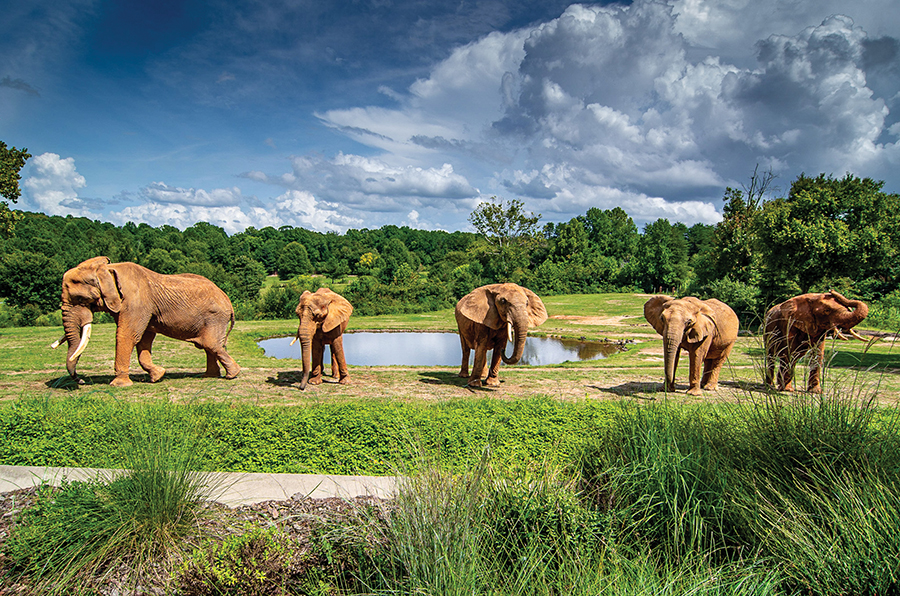
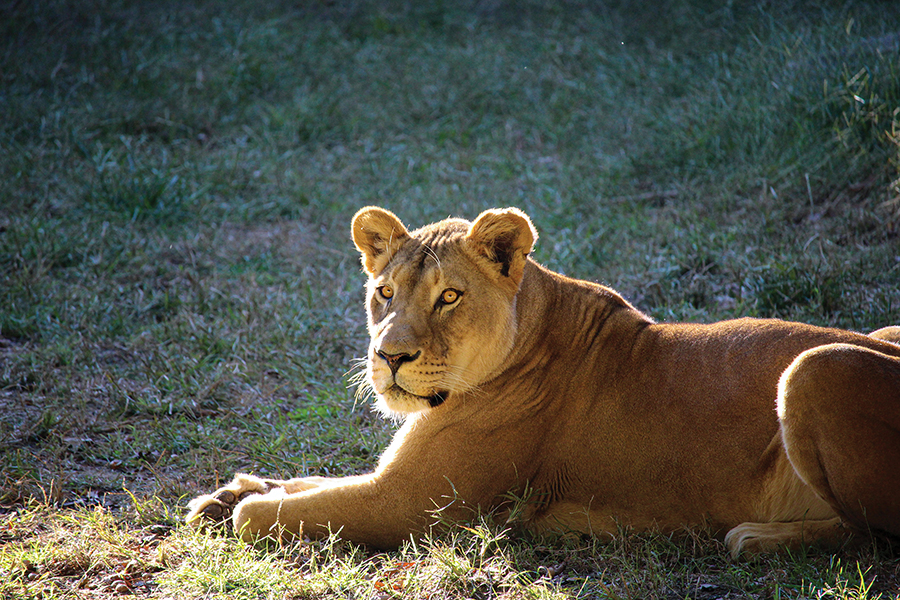
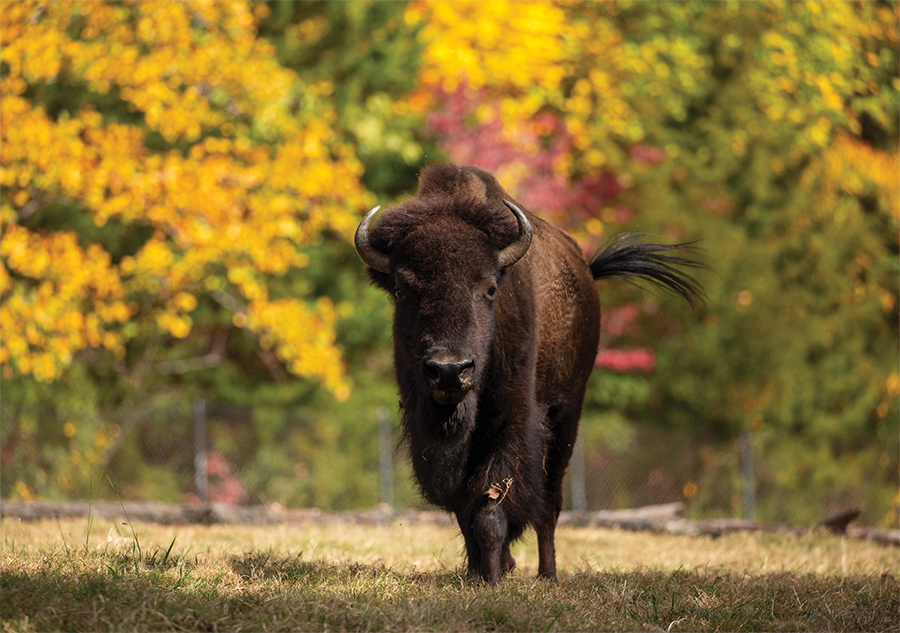
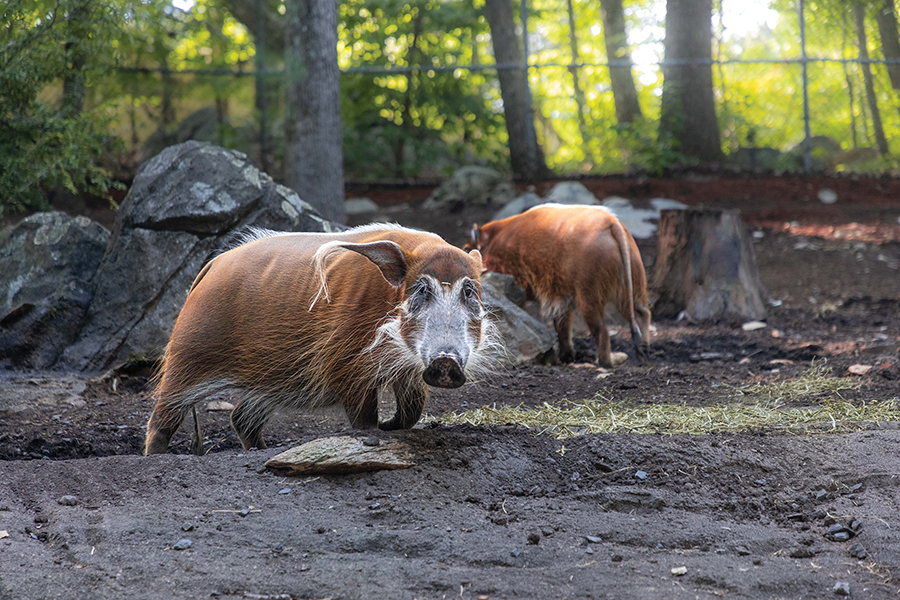
Left to Right: African Elephants (from left to right: C’sar, Batir, Rafiki, Nekhanda and Tonga), African Lion (Mekita), American Bison (Calf), Red River Hog (Patience)

Bill Parker was one of the facility’s earliest zookeepers. A graduate of Pfeiffer University (Pfeiffer College at the time), he began in ’74 and retired six years ago this September. “When I started there were probably fewer than double digits of permanent employees, mostly in administration,” he says. “They started acquiring animals in the late summer and early fall of ’74.” And it was definitely learn as you go.

By the end of the decade he was working in animal care. “I was on the African grasslands, at the time we called it the African Plains,” he says. “We were riding on the back of a truck and we had an antelope, called a nyala, that was breach birth. So we called out the vets and we started doing what we could to help the animal deliver, but it looked like it wasn’t going to survive. So, in the back of the truck, the vet did an emergency C-section and pulled the calf out. The lady I was working with — her name was Nancy Lou Gay Kiessler — who was training me to be a keeper, immediately took the calf out of the vet’s hands, wiped the mucous off its snout, and she put the snout in her mouth and started giving it resuscitation. I thought, ‘Boy, if I’m ever called to do that, I don’t know if I could.’ What it demonstrated to me was the level of care and compassion she had for that group of animals, and that calf survived.”

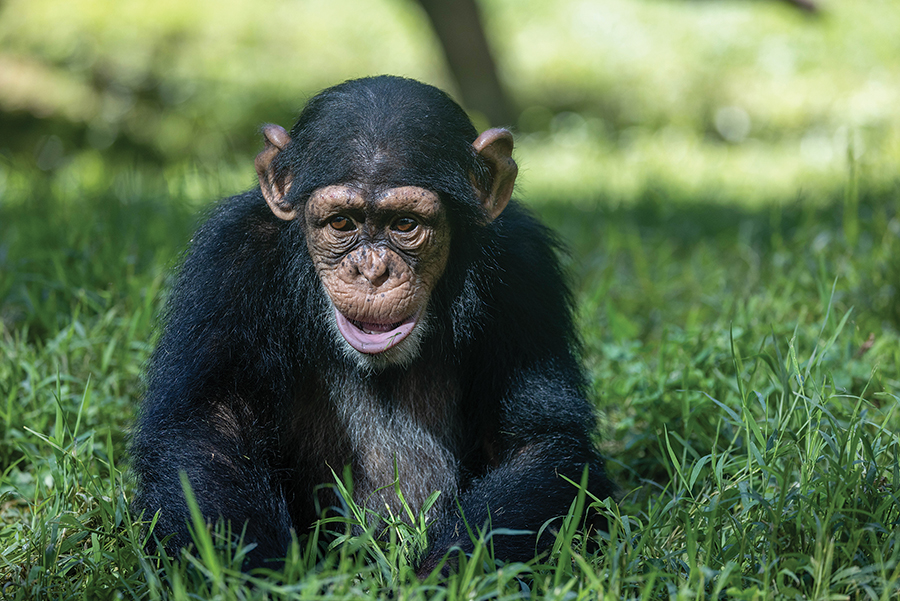
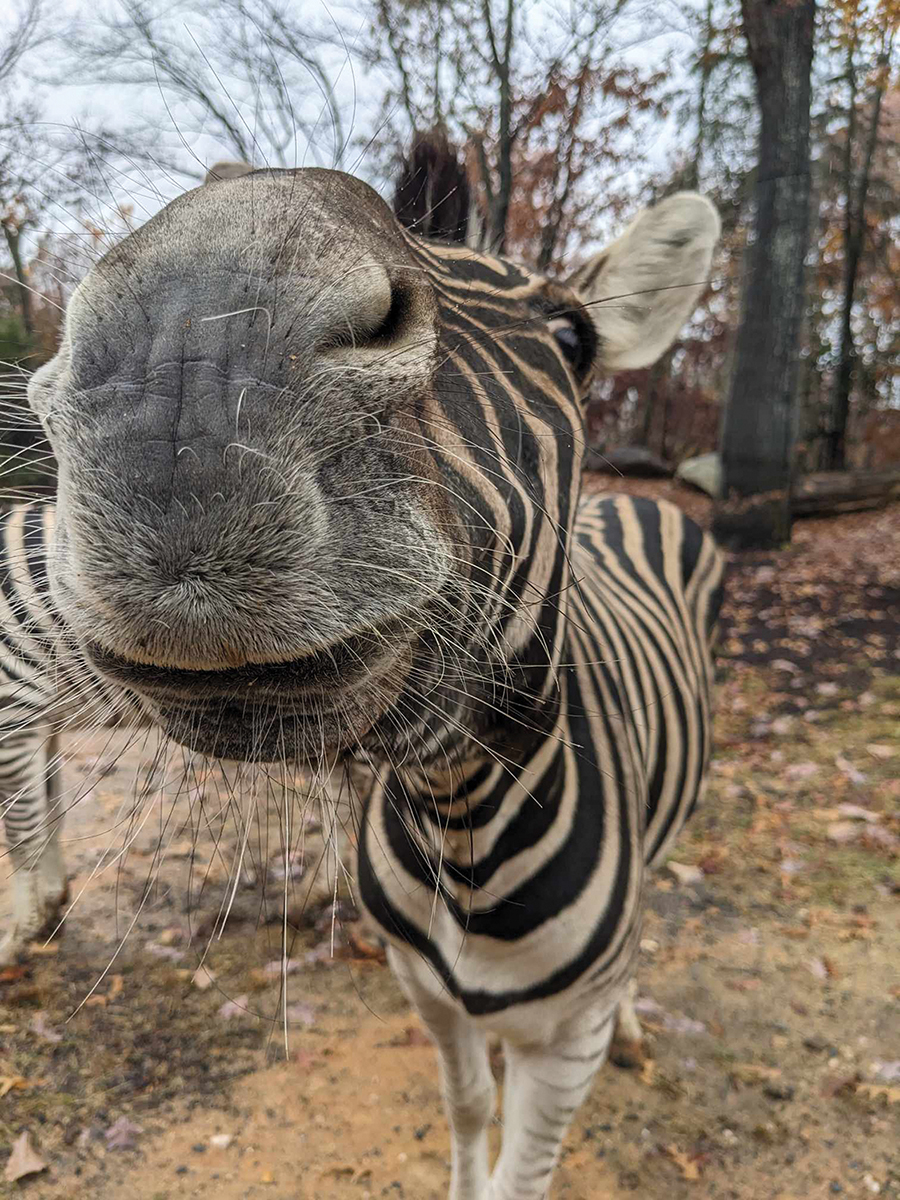
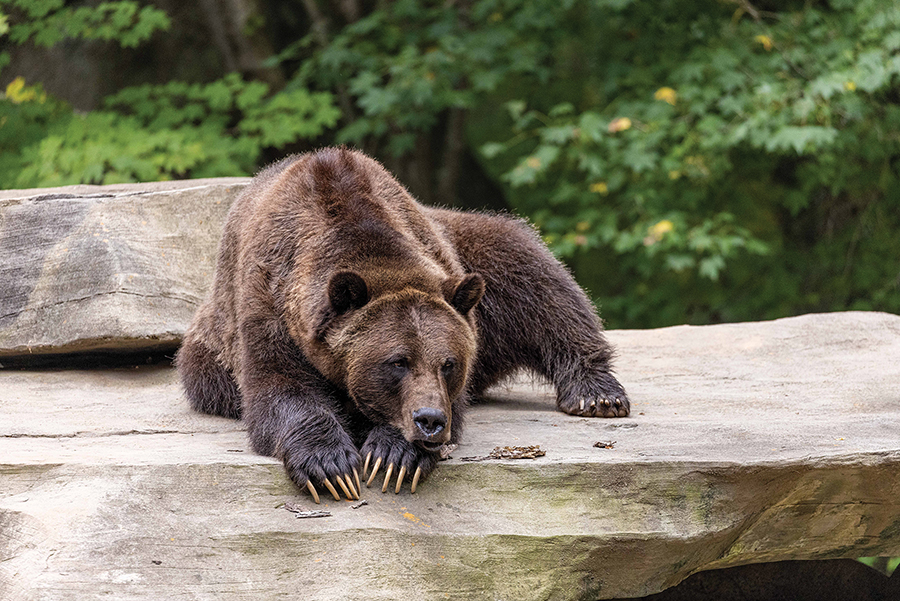
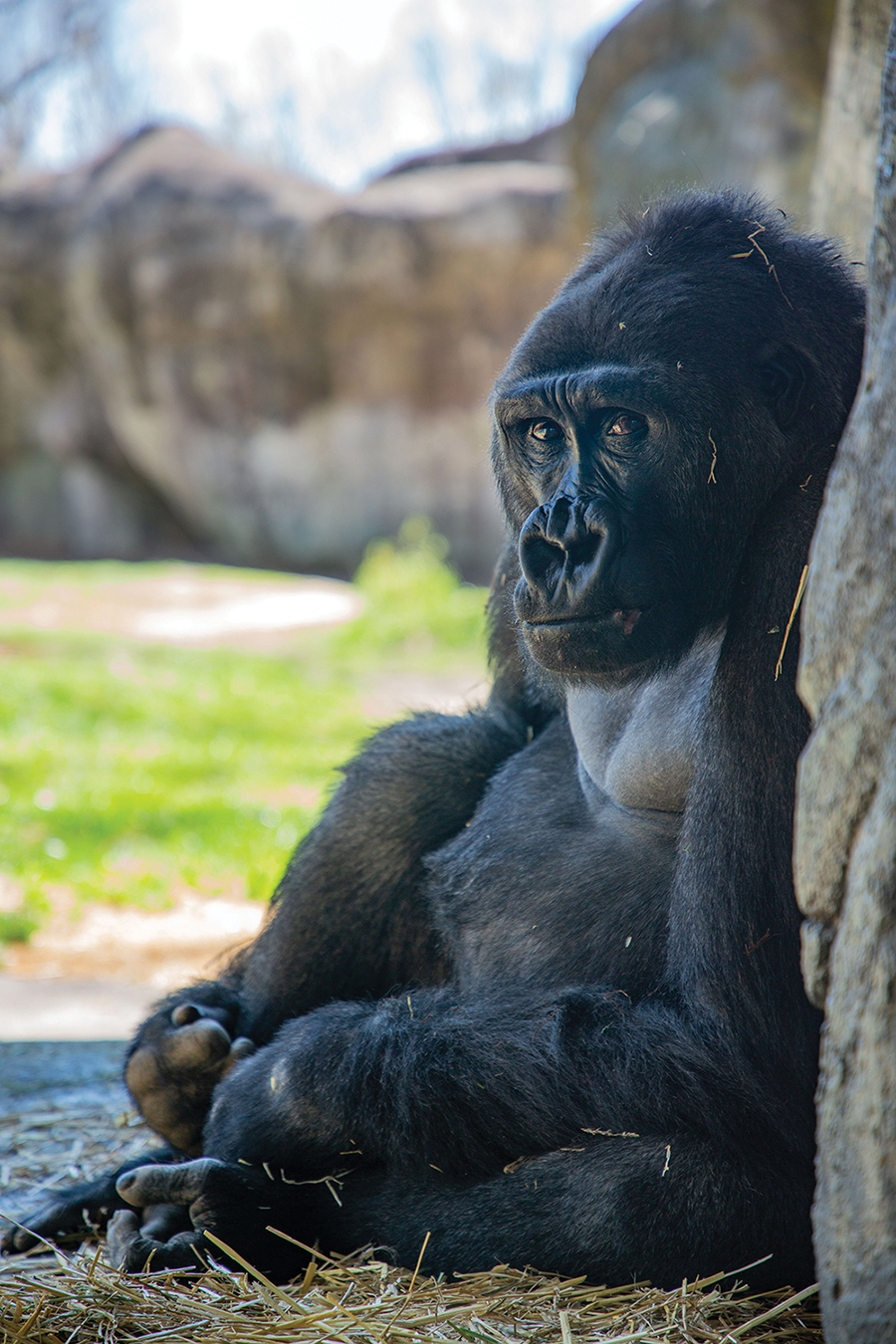
Left to Right: Ocelot (Inca) Chimpanzee (Obi), Fringe-Eared Oryx, Zebra (Spirit), Grizzly (Ronan)

Part of the zoo’s commitment in helping to restore populations of endangered species involves transporting animals to facilitate breeding recommendations in a program implemented by zoos and aquariums called the Species Survival Plan. These days the animals are shipped FedEx, but Goldston has done it driving down I-85. “My first transport was in ’99. We had a recommendation to move our male gorilla to a zoo in Atlanta. Myself and another keeper, I think we were somewhere in South Carolina, we needed to stop to refuel. It was one of those combo stations where it’s a Wendy’s on one side and a fuel stop on the other. So I’m standing in line waiting to get our food and I’m just reeking with gorilla musk. People are sniffing and turning around. ‘Where’s it coming from? Who is it?’ We just sort of cracked up.”

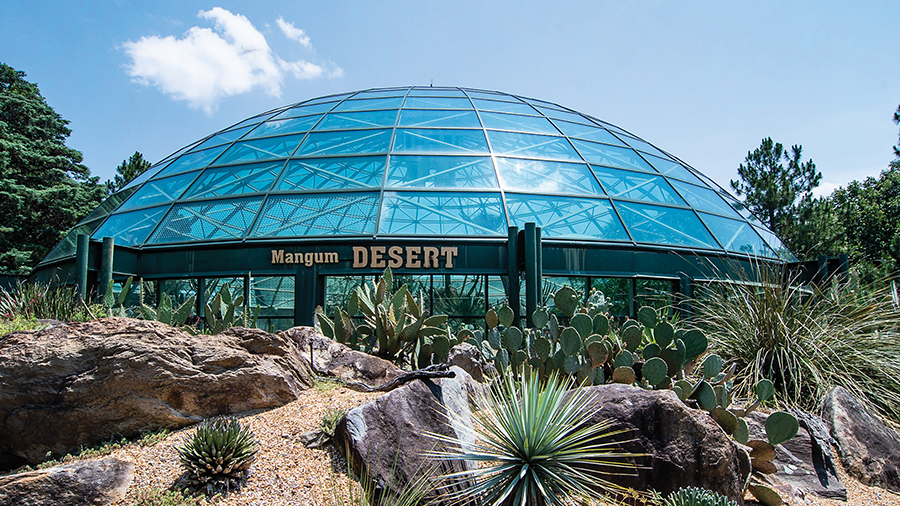
Left to Right: Elephant (Tonga) & Rhinos (from left to right: Nandi and Bonnie), Red Wolf (Warrior), Western Lowland Gorilla (Hadari), Desert Dome

If the early days had its challenges, over five decades the zoo has grown, gazelle-like, by leaps and bounds. Today it manages 2,805 acres and broke ground on an Asia region in August of ’22 that will feature tigers, Komodo dragons and king cobras, to name a few species, when it opens in two years. There are currently 305 permanent state employees with a staff that expands to roughly 700 during the highest traffic months. The zoo has three full-time vets on staff and a number of vet techs. “They work on everything from Madagascar hissing cockroaches to African elephants and everything in between,” says Villa. The zoo won the 2021 World Association of Zoos and Aquariums sustainability award.

A monitoring and reporting tool called SMART, developed by the North Carolina zoo in collaboration with the Wildlife Conservation Society and several other zoos, is being used in over 80 countries to track animals and combat poaching. “A lot of animals are in trouble. African lions, African elephants, vultures. One of our signature programs here is vulture tracking,” says Villa. “They’re part of the circle of life. African vultures are one of the steepest declining birds in the world. One of our scientists, Dr. Corinne Kendall, is one of the leading vulture experts. If there was one thing that we try to let people know, it’s that just by coming to the zoo, your admission price helps support our conservation efforts. We’re trying to be a leader for our guests.” Man and animal alike.  PS

The Perfect Shade

The Perfect Shade

A couple builds their forever home

By Deborah Salomon  

Photographs by John Gessner

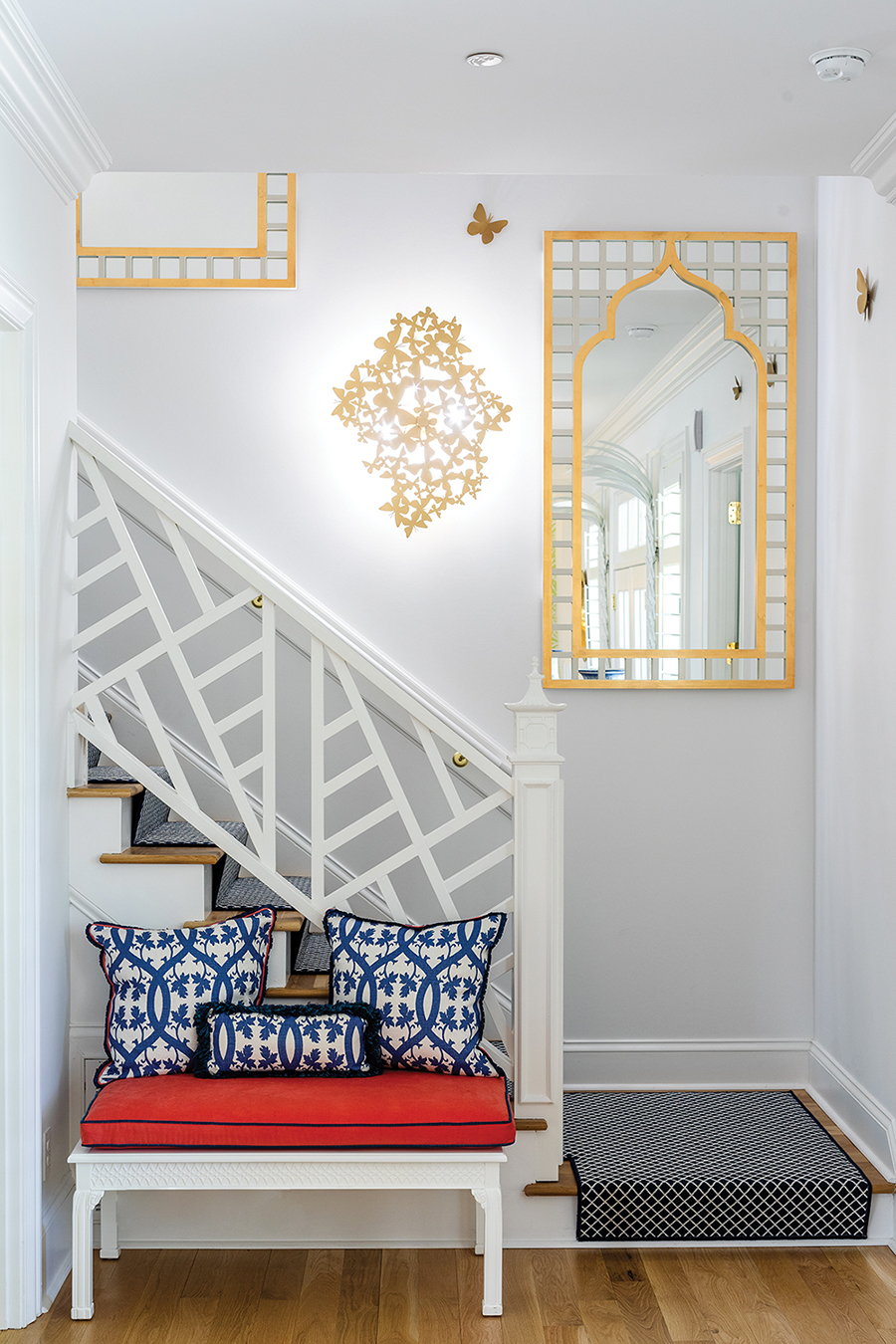
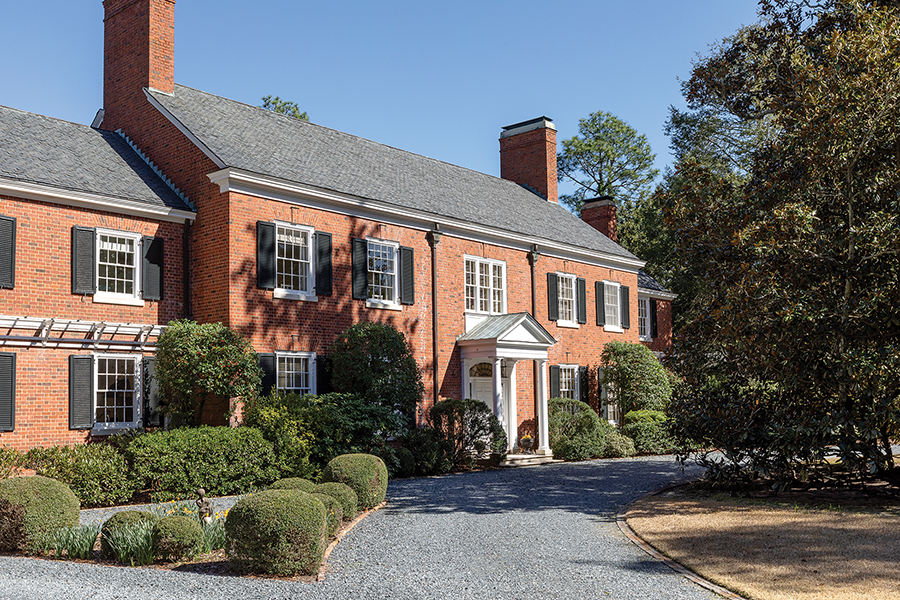
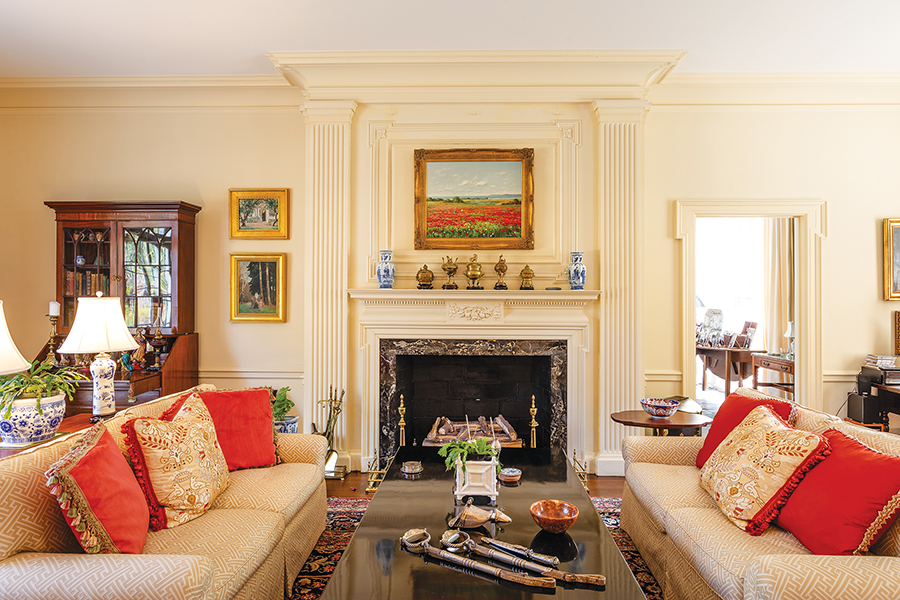
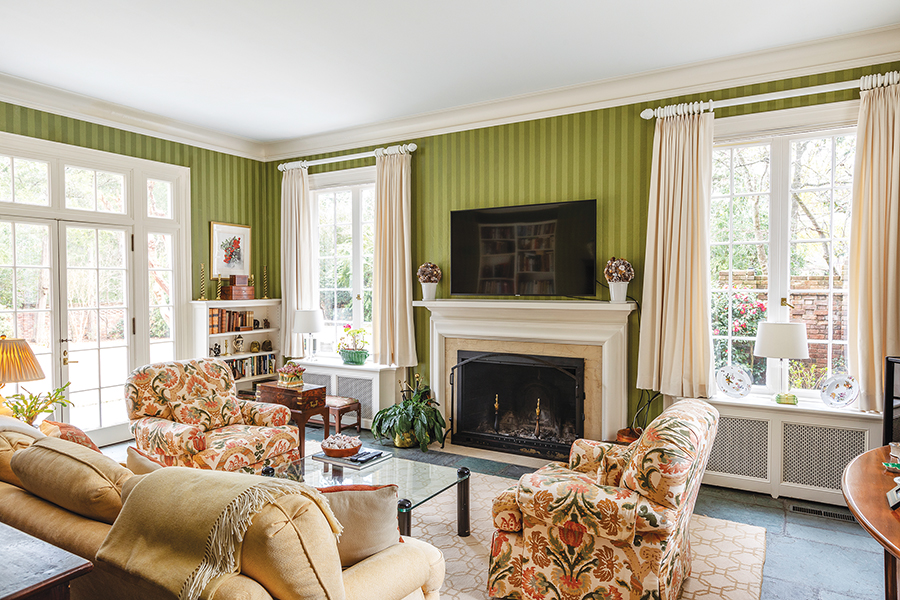
For Susan and David Wood, their sun-splashed, white-painted brick home in the East Lake section of the Country Club of North Carolina practically glows. White flowers fill the beds. Two spotless white cars repose in the driveway. Inside the front door, walls blind the eye.

One of the hardest things for Susan was finding the right white for the outside brick and inside walls. The one she chose makes Cool Whip look dingy. “White is easier to clean and doesn’t fade,” she says.

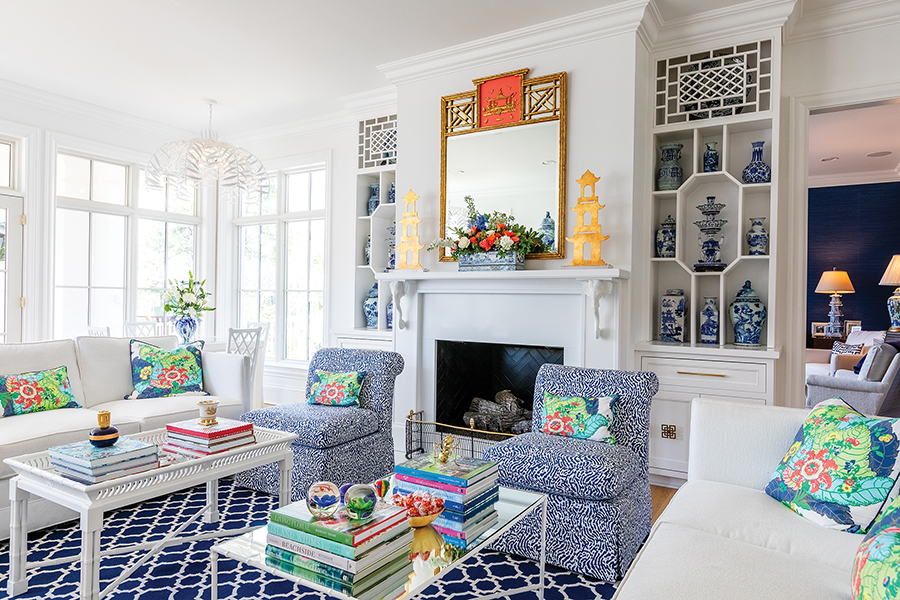
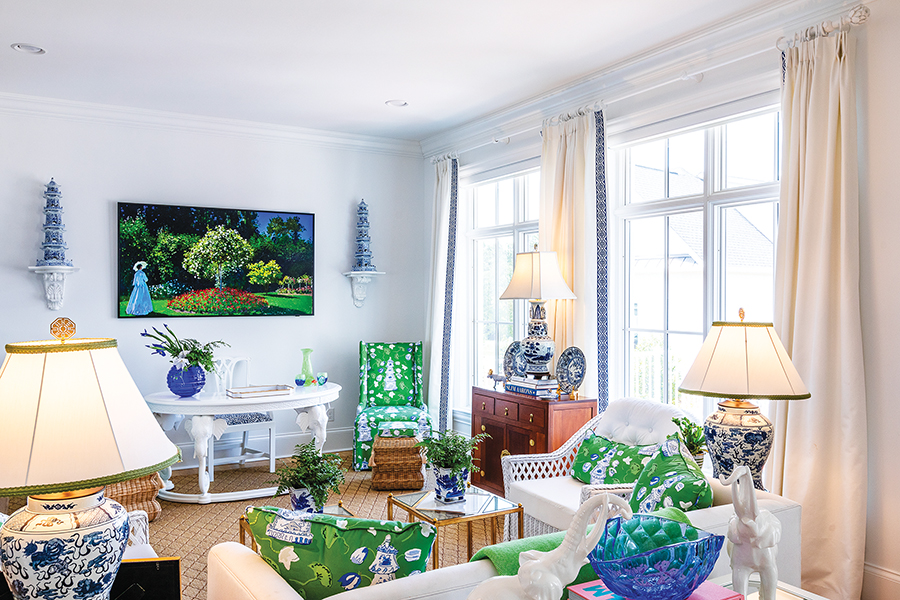
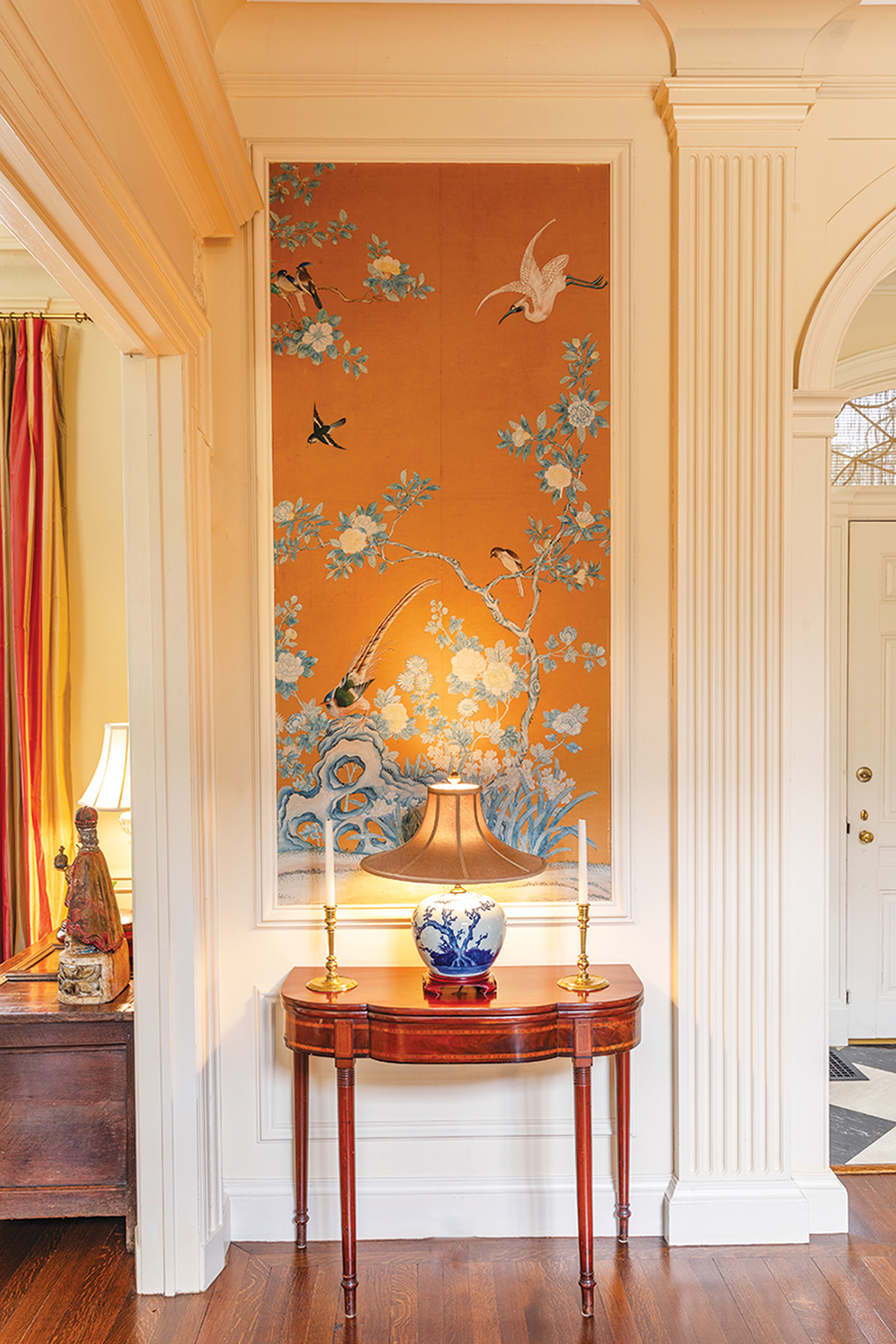
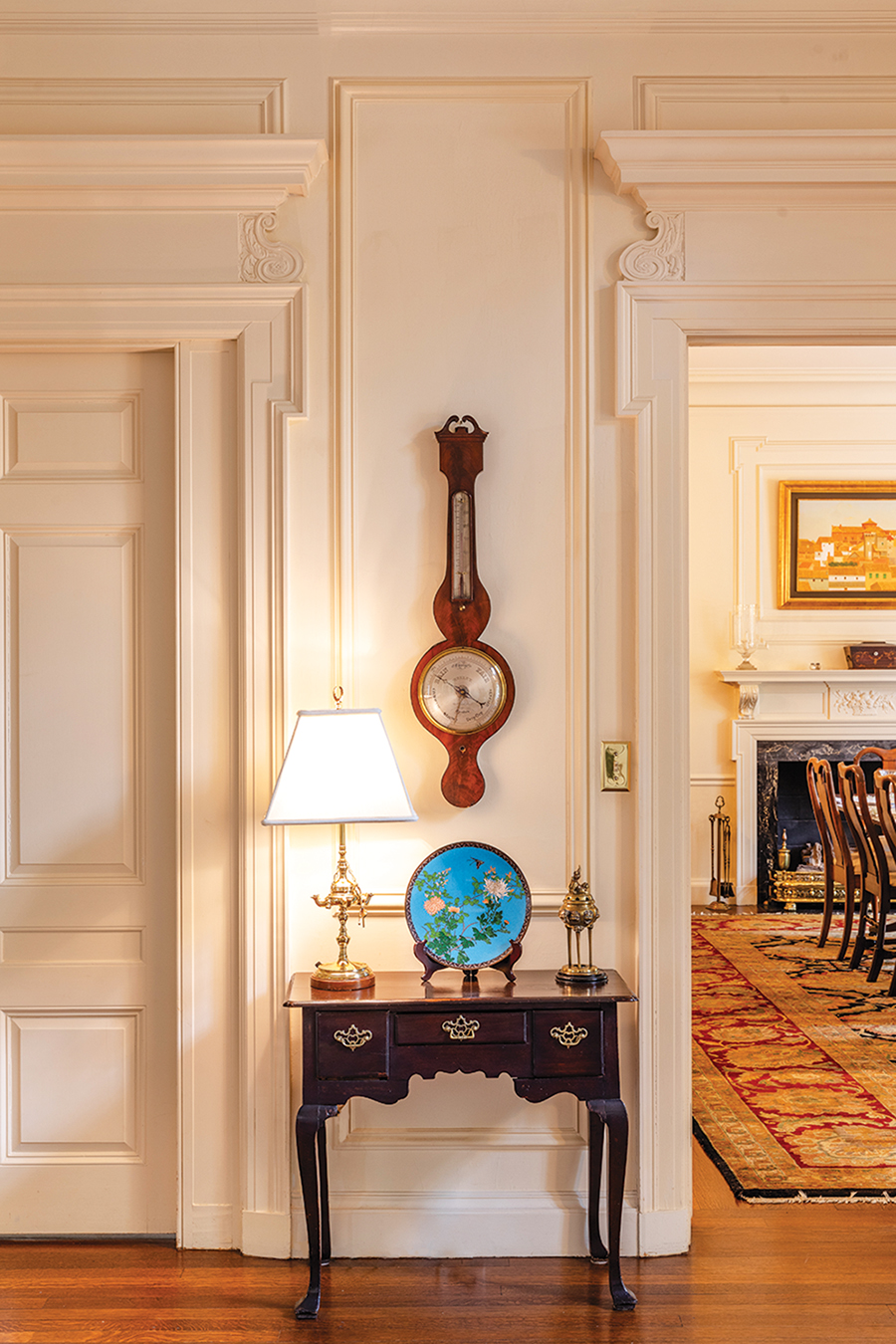
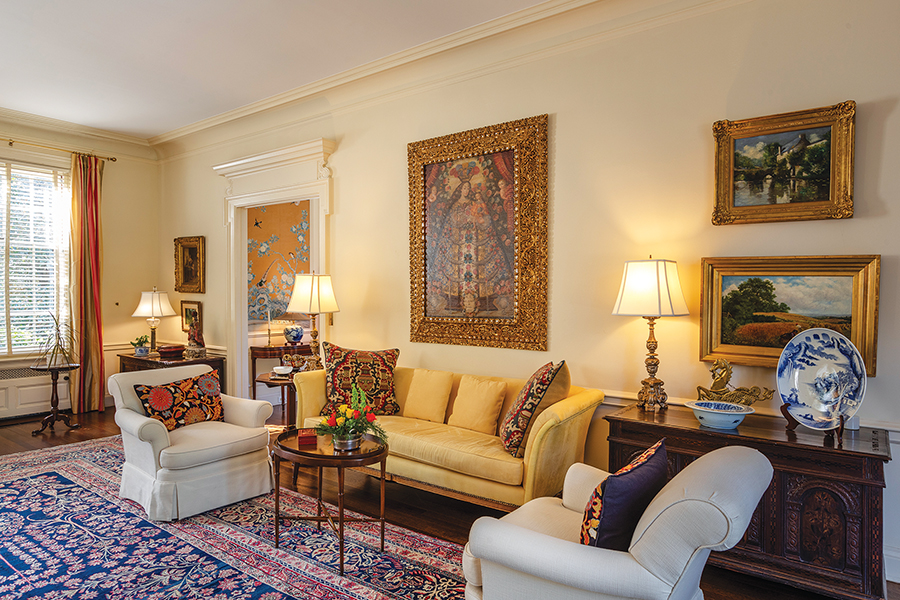
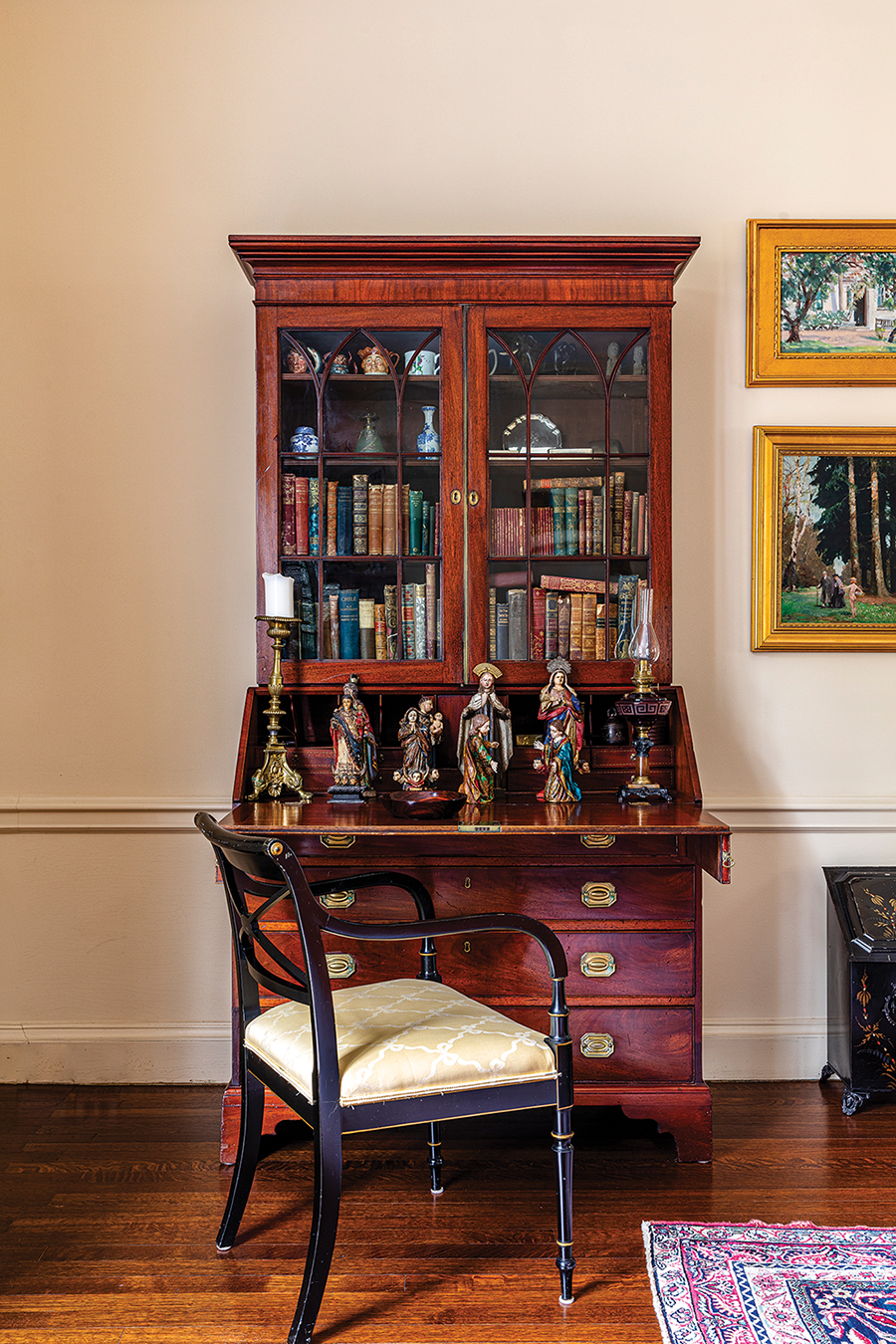
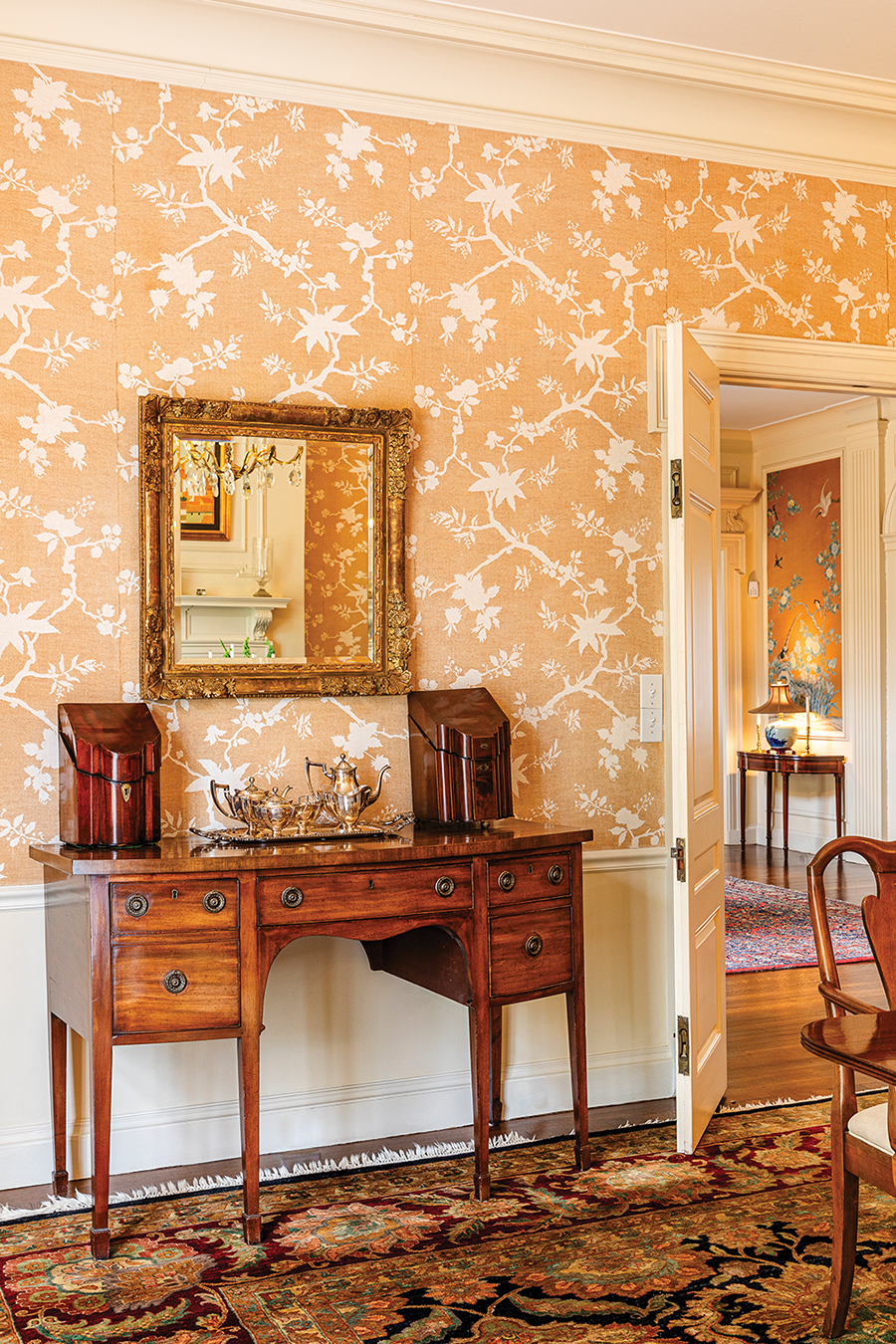
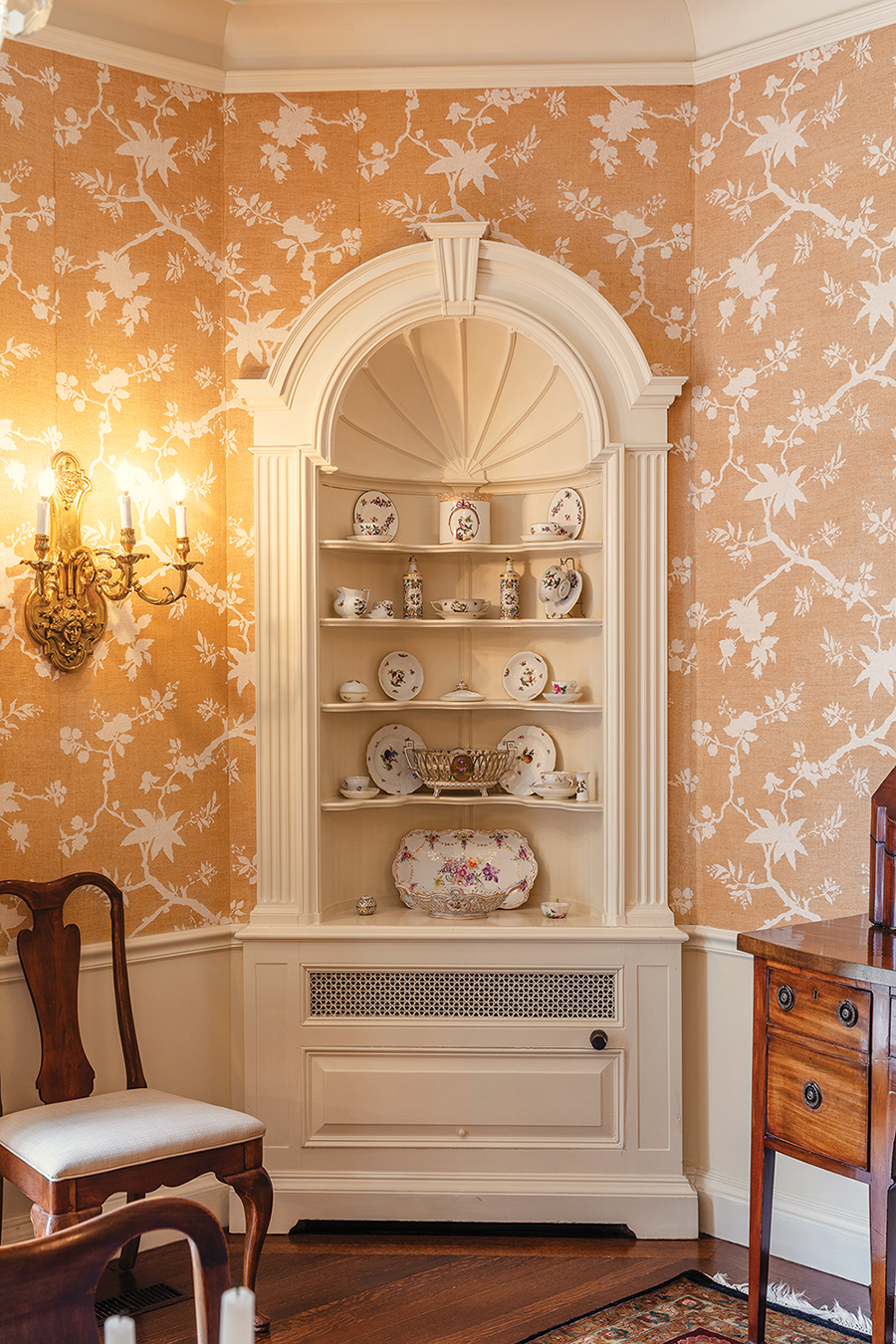
But, in fact, white is merely the backdrop for a whole-house collection of blue chinoiserie porcelain and pottery, from tiny figurines and ginger jar lamps to urns big enough to hold an emperor’s remains. Many pieces belonged to parents, grandparents and family members while others were collected through the years. For an accent color, she settled on lime green, and more recently, a pinkish coral reminiscent of Palm Beach lobster and shrimp, from whence came several of her inspirations.

It’s certainly not your typical retirement cottage. David still runs a business and Susan, a graduate of Converse College with a double major in sociology and psychology, still works four days a week in a law office in Rockingham where she’s been employed for many years.

The yellow brick road leading to the Woods’ white brick residence starts in Wadesboro, where Susan grew up in her grandmother’s house, which she describes as “wonderful, gracious Southern living.” David’s childhood was spent in Rockingham where, after obtaining a business degree at the University of North Carolina at Chapel Hill, he returned to work in his father’s business, a chain of five-and-dime stores. Susan and David were introduced by mutual friends and, after a five-year courtship, married. From the start, their homes have been enriched by family heirlooms.

“It’s the kind of house where anybody can just drop in,” says Susan.

In 2020 Susan’s mother and stepfather moved from Rockingham to Penick Village. Susan and David followed them north. After first scouting in Pinehurst, they decided to build. Susan’s method was to cut and paste photos of houses, details, colors, furnishings to be adapted by builders and interior designers, who appreciated the visuals to flesh out descriptions. The result: personal, striking, gorgeous. And often daring.

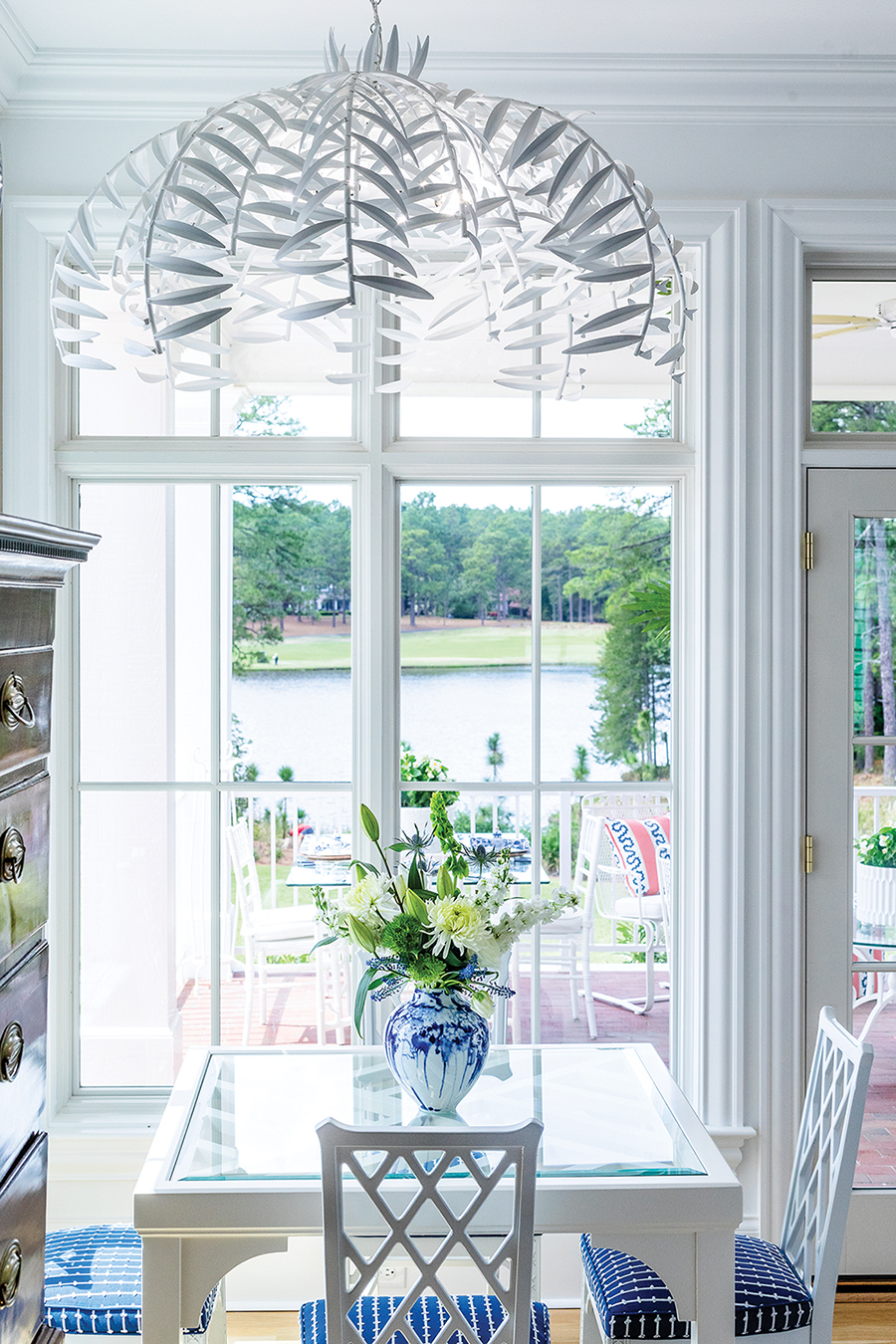
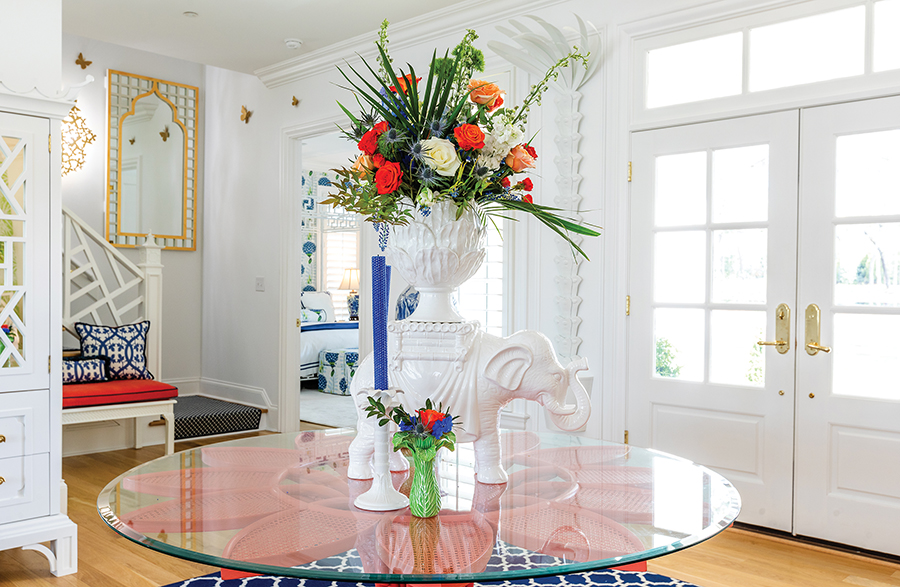
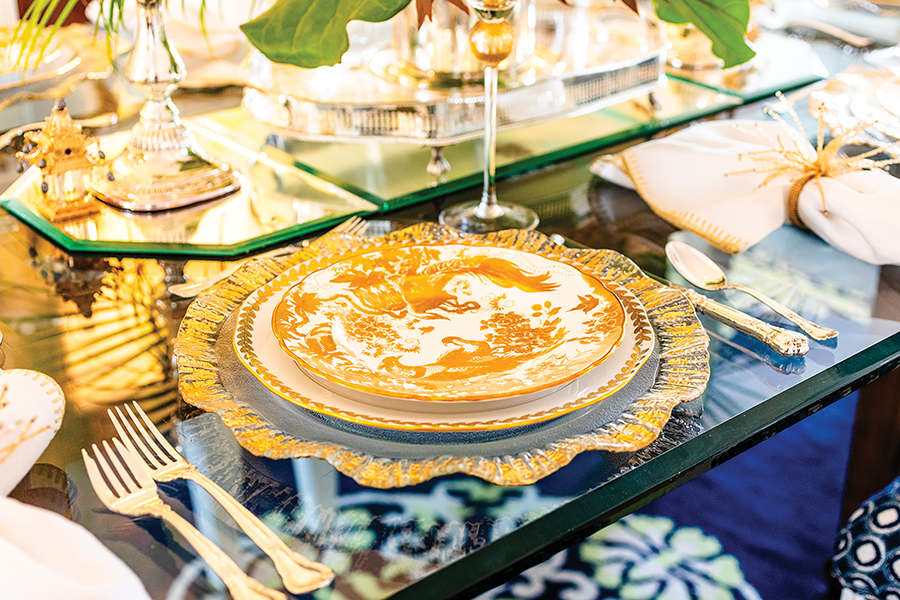
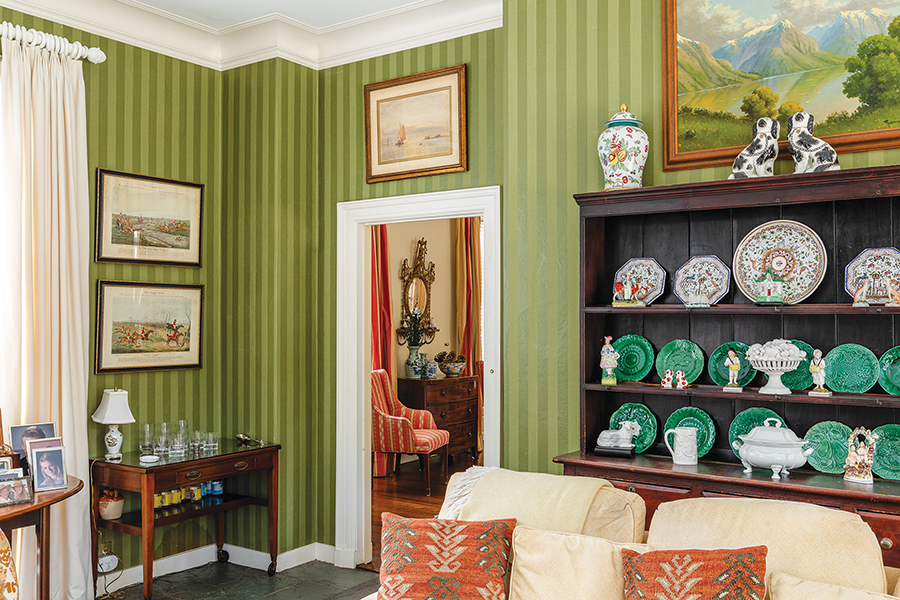
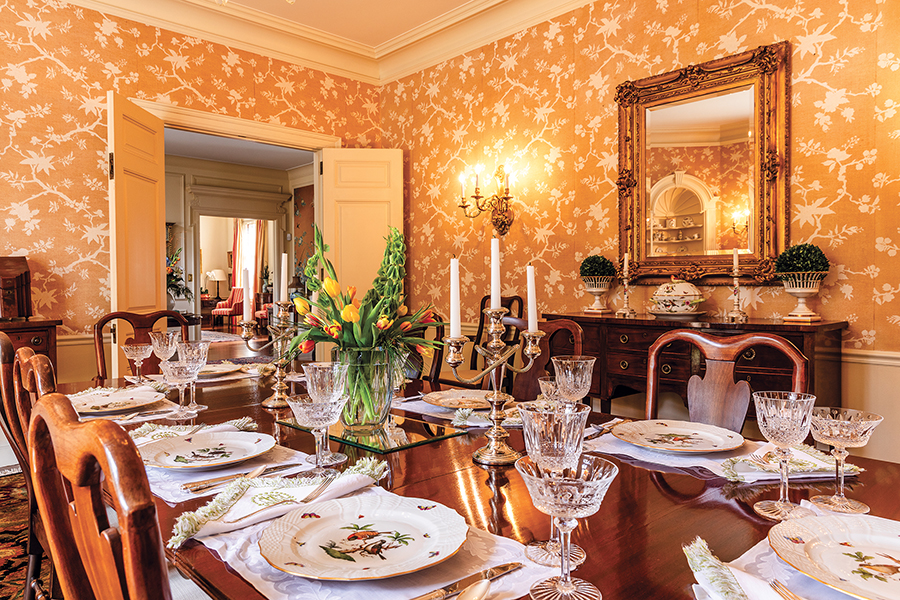
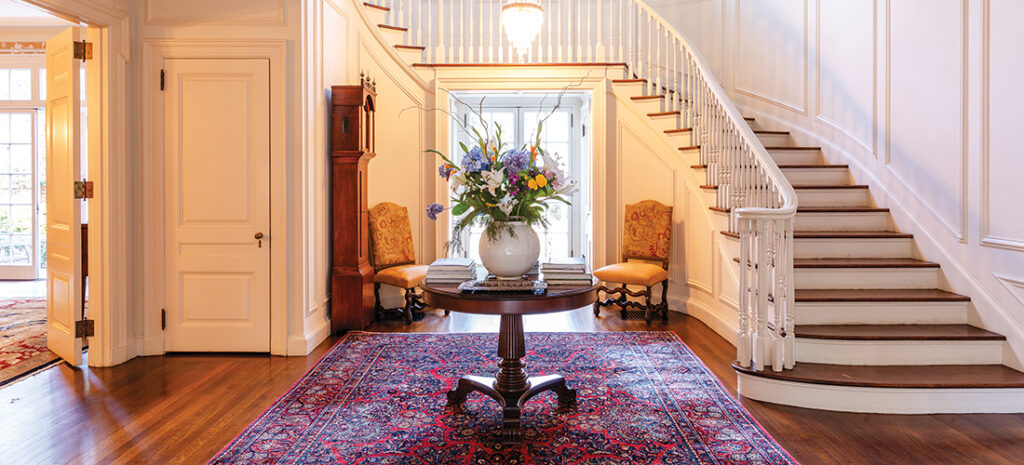
The front door, done in panes of beveled glass, opens into an enormous foyer, the kind hardly seen since antebellum plantation house layouts. In its middle is a round glass table on a fanciful base used for overflow dining, since dinner parties can be large, and the dining room, done in lime green-patterned wallpaper, opens conveniently into the foyer. Ten-foot ceilings make rooms feel larger than the actual square footage and provide space for lighting fixtures, some fit for a modern-day Phantom.

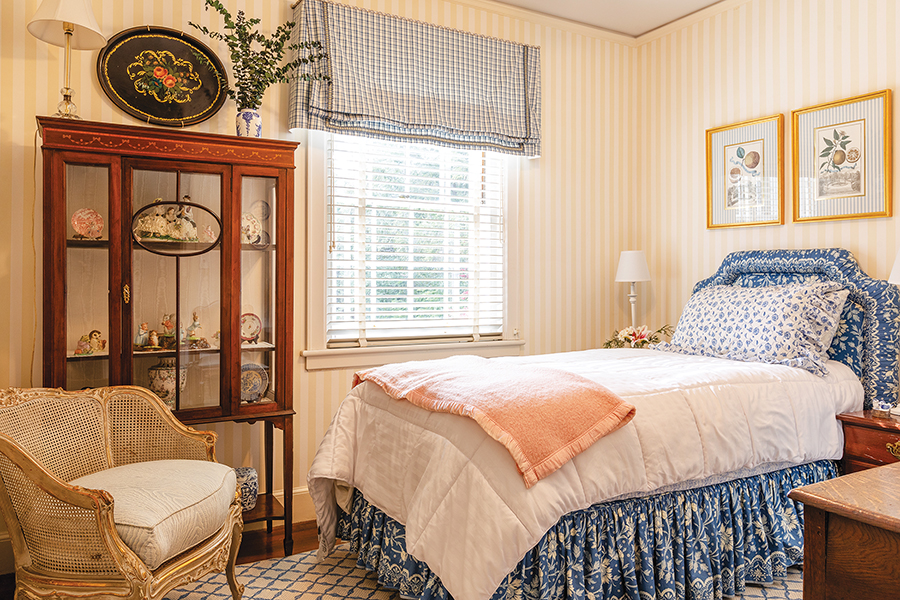
The living room introduces bright navy blue accents, repeated throughout the house. An upstairs bedroom elicits gasps for its dark blue wallpaper with circular white figures that suggest movement, while a vibrant green startles guests using the main-floor powder room.

Two glass-and-white gaming tables are positioned on one side of the living room, just inside the veranda with its own fireplace and TV, overlooking the Dogwood Course and pond. “I love playing cards and all kinds of games,” Susan says. Two elephant heads appear as brackets beneath the living room mantel, introducing another icon repeated throughout the house, including a parade of small jade elephants marching across a shelf. The kicker is a glass-topped desk held up by white elephants, a piece tracked down with dogged determination.

A Carolina room, unlike the usual screened porch, is tucked behind the living room, providing space for a mini shrine to David’s alma mater, complete with ram mascot. On the other side of the living room, a TV den has been wallpapered in navy blue grasscloth, dominated by an abstract seascape by Allison McLean.

No surprise: The ground floor master suite features the same colors with a different fanciful wallpaper. His-and-her bathrooms, closets and dressing areas are grouped together, closed off by a door.

The kitchen, a preen-point in most contemporary construction, is notable for its restraint. Moderate in size with a large island, copious storage and combination butler’s pantry and laundry room, its most startling feature is a mirror backsplash over the range.

Susan is obviously a detail person who knows what she wants and how to find it, down to old banister posts shaped like pagodas, which she spotted, had painted white, and fitted onto the posts.

The house took about a year to complete. During construction, the couple rented an apartment in Pinehurst. Now, golf lessons are on their to-do list, along with visits from family.

“We want people to feel at home here, be able to find things easily,” Susan says. To this end, the second floor has several bedrooms, bathrooms, a seating area with coffee-bar/mini-kitchen and a fringed froggy-green love seat sure to spark conversation.

So . . . how do the Woods feel now. David answers in a word: “Happy.”  PS

Wild and Wonderful

Wild and Wonderful

Pinehurst No. 2 prepares to test the best

By Lee Pace

Feature Photo: 2014 U.S. Open Photograph by Joann Dost

A December day in 1935. A man approaches the house at 120 Midland Road in Pinehurst, notices the Scottish-style stonework and arches of Dornoch Cottage, and rings the bell.

Donald Ross opens the door and greets A.W. Tillinghast.

What a meeting of the minds of the early days of golf course architecture.

Ross, 63, the son of a Scottish stonemason, apprentice in his 20s to legendary pro Old Tom Morris at St. Andrews, an immigrant to the United States who set up shop in Pinehurst in 1900 and designed notable courses across the eastern United States — from Seminole Golf Club in Florida to Inverness Club in Ohio to Oak Hill Country Club in upstate New York. His tour de force, Pinehurst No. 2, sits just behind his house.

And Tillinghast, 59, the son of a wealthy rubber goods magnate in Philadelphia, who grew up playing cricket and fell under the spell of golf on a visit to St. Andrews in 1896 where he established a mentor-mentee relationship with Morris. Tillinghast’s design acumen was on display across the land as well — from San Francisco Golf Club on the West Coast to Winged Foot Golf Club and Baltusrol Golf Club in the shadows of the New York City skyscrapers.

Oh, to have been a fly on the wall, to hear these friends and sometime competitors talk about their shared experiences — their formative years at St. Andrews, their design philosophies, the challenges of maintaining businesses and servicing clients when travel was by train and communication by post.

Surely Tillinghast espoused, to some degree, his belief that “a round of golf should present eighteen inspirations, not necessarily eighteen thrills.”

And no doubt Ross would have looked at the 72-hole facility at Pinehurst Country Club and talked about how it had become the epicenter of golf in America. “I wholeheartedly believe in golf,” Ross once said. “A country which gets golf-minded need not worry about the honor, the integrity and the honesty of its people.”

Tillinghast’s visit came at the behest of the PGA of America and his role as a consultant with the organization which in 11 months would conduct its flagship competition, the 1936 PGA Championship, on Pinehurst No. 2. They carried their golf clubs past Ross’ masterful rose garden in the backyard, through the wrought-iron gates and onto the third green.

Ross showed his guest the green complexes that he had just converted, with the help of green superintendent Frank Maples, from their previous flattish sand/clay structure to undulating Bermuda grass, shaping the sandy soil around them into a cacophony of dips and swales. He noted the roll-offs around the greens, how they penalized shots even slightly mishit and propelled balls into the hollows nearby.

Ross led Tillinghast to the fourth tee and explained how he had just added that hole and the fifth to the routing, taking them from a previous employee-only nine holes, and had arrived at the final (and current) configuration after originally unveiling the course in 1907.

They felt the taut turf under their feet, reveling in how the drainage qualities of the sandy loam made for the ideal golf playing surface. As they went, Ross explained the choices golfers had off the tee — on the par-4 second, for example — showing his friend what a lovely view it was into the green from the left side of the fairway but pointed to the gnarly bunker complex a player had to flirt with to get there. Ross nodded to the native wiregrass that grew in profusion along the fairways and how it reminded him of the whins of his native Scotland.

Did the man known in the business as “Tilly” dip into his bag for a flask and a wee snort as he was wont to do? Did Ross grouse that this new and improved No. 2 was better than any new-fangled effort from Bobby Jones and Alister MacKenzie down in the red clay of north Georgia?

All of this, we’ll never know. What we do know is what Tillinghast said after his visit.

“Without any doubt Ross regards this as his greatest achievement, which is saying a great deal,” Tillinghast offered. “Every touch is Donald’s own, and I doubt if a single contour was fashioned unless he stood hard by with a critical eye. As we stood on hole after hole, the great architect proudly called my attention to each subtle feature, certain that my appreciation of his artistry must be greater than that taken in by a less practiced eye. Nothing was lost on me, and after our round together, I told him with all honesty that his course was magnificent, without a single weakness, and one which must rank with the truly great courses in the world today.”

And, 89 years later, the show goes on.

Pinehurst No. 2 would continue to be the site of the North & South Open on the PGA Tour through 1951, with Ben Hogan, Sam Snead, Byron Nelson and Ross himself among the winners. It would host the 1936 PGA (won by Denny Shute) and the 1951 Ryder Cup (won by the Americans, 9 1/2to 2 1/2, over the team from Great Britain and Ireland).

But it wasn’t in the mix to host a U.S. Open.

Through the 1970s that union was simply impossible because Pinehurst shut down for the summer (the founding Tufts family and the staff went to Linville or Roaring Gap in North Carolina or traveled north to Maine), and the American national championship was played always in June.

When the resort went to air-conditioning and a year-round operating calendar, the idea was still problematic because of the USGA’s preference for playing courses with firm and fast greens, a challenging task on Southern courses during hot weather months. The U.S. Open was not played in the muggy Southeast until venturing to Atlanta Athletic Club in 1975, though it had already visited hot spots in Houston, St. Louis, Dallas and Fort Worth.

About the time Jerry Pate was winning in Atlanta, officials at Pinehurst Country Club began floating the idea of an Open for No. 2. The Diamondhead Corporation was five years into its ownership of Pinehurst after purchasing it in 1970 from the Tufts family, whose patriarch, James W. Tufts, launched the town and resort in 1895 as a refuge from the cold winters of New England. The Diamondhead president, Bill Maurer, conceived the World Open on the PGA Tour and the World Golf Hall of Fame in the early 1970s and wanted all the traffic, attention and accolades he could muster for Pinehurst and its No. 2 course.

It took two more decades to figure out how to bring the National Open there.

First, there was the dodgy financial bona fides of the resort and club, which eventually went bankrupt and was taken over by eight banks for two years beginning in March 1982. Robert Dedman Sr. and his Club Corporation of America bought the facility in 1984 and provided what has turned into four decades of stability, innovation and financial security, with Robert Dedman Jr. taking the baton after his father died in 2002.

Second, there was the issue of the playing surfaces.

Pinehurst and other golf courses in the Mid-Atlantic, or so-called “transition zone,” have forever been vexed over the choice for their putting surfaces between Bermuda grass, the de facto choice for Florida and warm weather climes, and bent grass, which thrives in the North. Pinehurst officials experimented with new strains of both over the 1970s and ’80s, walking that tightrope between offering smooth and playable greens for members and resort guests for 12 months of the year, and yet having the ability to get them lightning-quick while not dying in the summer for an elite competition. Pinehurst old-timers still remembered Hale Irwin and Johnny Miller taking dead aim at flagsticks during PGA Tour competitions on No. 2 in the late summer and their approach shots going splat and stopping mere feet from the hole (Hale Irwin shot 62 and Johnny Miller 63 in mid-1970s birdie-fests).

Donald Ross must have raged in his grave.

By the early 1990s, the USGA and Pinehurst officials agreed that advances in grass technology and green foundation construction would allow them to rebuild the greens and have them stand up to the world’s best players on a 90-degree day in June. The USGA announced in June 1993 that it would conduct the 1999 Open at Pinehurst. The competition was a rousing success from the perspective of ticket sales, corporate support, traffic ebb and flow, housing and, certainly, the golf course itself.

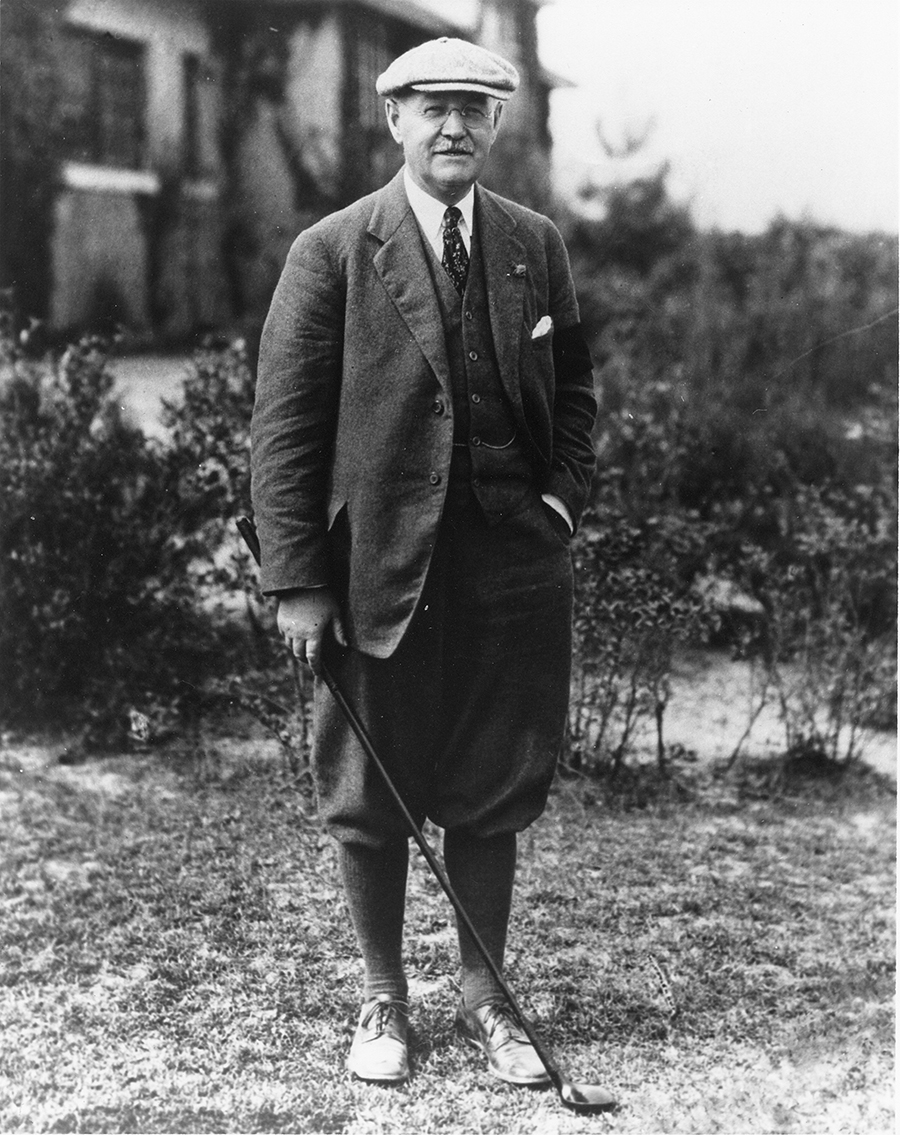
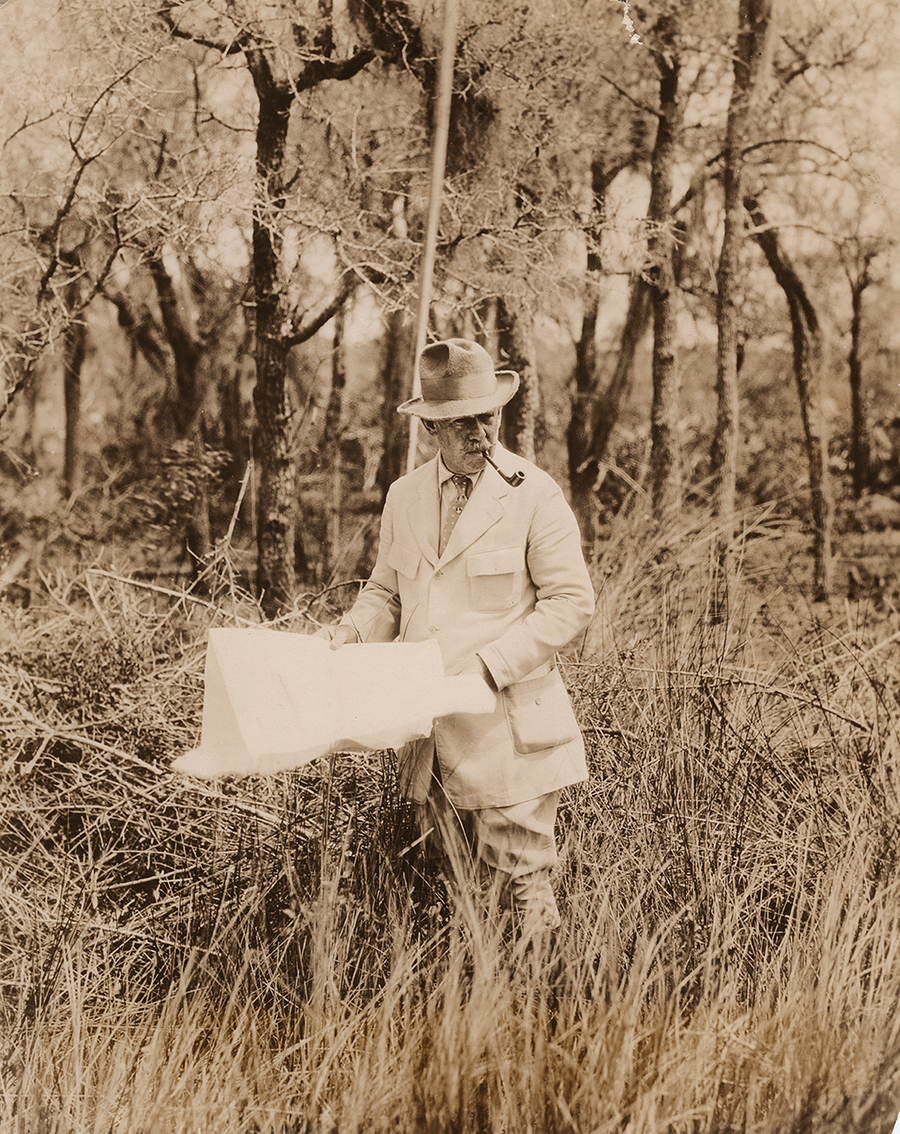
Left: Donald Ross. Courtesy Tufts Archives

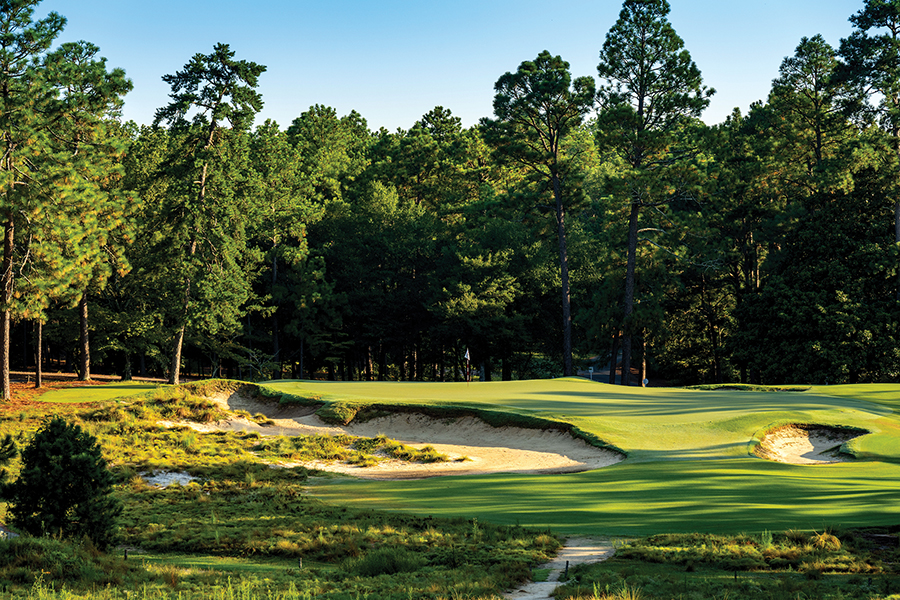
Middle: The Ninth hole of Pinehurst No. 2 Copyright USGA/Fred Vuich

Right: A.W. Tillinghast. Courtesy USGA Archives


“It’s the most draining course I’ve played in a long time,” said European Ryder Cup team member Lee Westwood.

“People sometimes ask what’s the hardest course I’ve ever played,” said two-time U.S. Open champion Lee Janzen. “Now I know.”

The Open has been contested on No. 2 twice more, and the course has played as a par-70 for each championship. The scores validate that what Ross completed in 1935 stands in fine fettle in the next century.

Payne Stewart was 1-under in winning the Open in 1999, Phil Mickelson was even-par, and Vijay Singh and Tiger Woods were 1-over. Michael Campbell won with an even-par total in 2005, with Woods at 2-over. Martin Kaymer has been low man in the three Opens, shooting 9-under in 2014, but his nearest competitors were a mile back, with Ricky Fowler and Eric Compton tied for second at 2-over.

The firm greens, the delicate chipping areas, the flow of the holes and the strategic nuances led Tom Weiskopf to venture in a 1995 conversation that Pinehurst No. 2 is a better year-round test than Augusta National Golf Club.

“Augusta National is good one week a year,” Weiskopf said. “I’ve played Augusta two or three weeks before (The Masters) and it’s a piece of cake — a piece of cake. Pinehurst No. 2 is never a piece of cake.”

The 2024 Open at Pinehurst will be the first played on the Champion Bermuda greens installed after the 2014 Open and the second of the Coore & Crenshaw restoration era. Bill Coore, a native of Davidson County who played No. 2 often during his boyhood summers, and Ben Crenshaw, the two-time Masters champion, coordinated an extensive makeover in 2010-11 that included stripping out hundreds of acres of Bermuda rough, recontouring fairways and bunkers to Ross’ design, and rebuilding the perimeters with firm hardpan sand dotted with wiregrass, pine needles and whatever natural vegetation and debris might accumulate.

“In the early days, this golf course was disheveled and brown, and the ball rolled and rolled and rolled,” Coore says. “That’s what gave it its character. There was width here, the ability to work your ball to get the best angles. Over time, that was lost. It was too green and too organized.”

“Bowling alley fairways,” Crenshaw adds. “Straight and narrow, just like a bowling alley.”

Don Padgett II was the Pinehurst president and chief operating officer from 2004-14 and the man who convinced Dedman that hiring Coore & Crenshaw and taking No. 2 back to its “golden age” from 1935 through the 1960s was the correct move. Padgett is a “golf guy,” in industry parlance, coming to the resort with a background as a PGA Tour player in the early 1970s and a longtime club professional. His father, Don Sr., was director of golf at Pinehurst from 1987-2002.

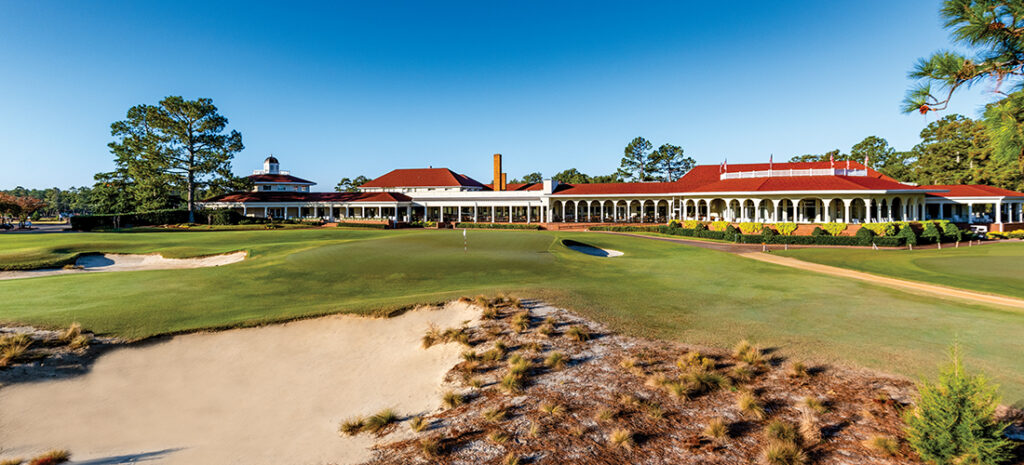
One March afternoon a decade into his retirement, Padgett is sitting in a rocking chair on the porch overlooking the 18th green of No. 2. It’s sunny and 55 degrees. The tee sheet on No. 2 is full.

“I think this is what the Tufts envisioned,” Padgett says. “If you’re from Boston, this is balmy. My dad used to say if you’re in the golf business, stand here because everyone will come to see you.”

The world of golf is coming to Pinehurst in June, and the game’s top players will find the 18 holes that so impressed A.W. Tillinghast in 1935 and will vex them in 2024.

“I think the golf course today probably presents itself as the best it ever has,” Padgett says. “It’s Ross’ concepts with modern maintenance behind it. I think he would look at this golf course and say, ‘Wow, I wish I’d had the ability to grow grass like this.’ These are his concepts with modern turf. It’s not distorted, it’s enhanced. I think he would bless it.”  PS

Chapel Hill-based writer Lee Pace has authored four books about golf in Pinehurst, including “The Golden Age of Pinehurst — The Rebirth of No. 2.” Write him at leepace7@gmail.com and follow him @LeePaceTweet.

Hooked Up to History

Hooked Up to History

Skydiving with Bush 41

By Amberly Glitz Weber

Photograph by John Gessner

Sir.

He didn’t say anything.

“Mr. President?”

No answer.

Time is very important. We’re losing time and altitude. I’m, like, is he dead? Everything’s going through my head right now.

“Sir?”

“Yeah?”

“Sir, you gotta help me get your legs up.”

It was the morning of June 12, 2014. Former President of the United States George H.W. Bush is floating toward the Earth from approximately 8,000 feet over his home of Kennebunkport, Maine, strapped to the chest of retired Sgt. 1st Class Mike Elliott, a former Golden Knight and founder of the independent skydiving team All Veteran Group. The panoramic view of St. Anne’s Episcopalian Church and the Atlantic Ocean stretch out below them. And the side pinnings that allow for a flexible landing position will not loosen. 

Maine is a long way from Linden, North Carolina, a little town 45 minutes north of Fayetteville, where Mike Elliott was born and raised. “I had four uncles who were all in the military. My grandfather was a veteran of World War II. I was the only grandchild for many, many years, and my uncles were more like my big brothers. They loved the military, which led to me loving the military,” Elliott says. “My grandfather just had that military soul. He always had the high and tight haircut, the perfect mustache. He was a book of knowledge.”

Working part time at a grocery store in Spring Lake during high school, Elliott saw soldiers walking in and out, pulling on their berets. “Whether it was the green beret or the maroon beret, I knew my destiny was to join the military,” he says. He enlisted after high school and spent a year in Baumholder, Germany, in the mechanized infantry, a titanic change for a kid from North Carolina. “It was white and snowy and I think it stayed that way the entire year.”

His first encounter with the open skies was when he was sent to Fort Campbell, Kentucky, home of the 101st Airborne Division. He became an air assault instructor and stayed in that position until war broke out, deploying as a scout in Operation Desert Shield, Desert Storm. No parachutes there. Instead, he spent his time “doing reconnaissance on a dirt bike in the desert.”

At war’s end Elliott returned to Fort Campbell and secured a post as driver to Gen. John M. Keane, then commander of the 101st. “He always called me ‘good sergeant’ and after 14 months he asked me, ‘What’s next for you, good sergeant?’ I told him I wanted to jump out of airplanes.” In 1991, Keane sent Elliott to Fort Bragg (now Liberty) and the 82nd Airborne Division, where he became a squad leader. Even now he calls it the “toughest job in the military.” After four years, he was transferred to Fort Benning, Georgia, as an airborne instructor. His skydiving destiny was coming closer.

“Walking out onto Fryer Drop Zone I see these four specks with blue parachutes come out of an aircraft,” he says. He watched them land to a precision point in the field. The specks were members of the Golden Knights, the U.S. Army’s parachute team. “I said to myself, there are people in the Army who do that, jump out of airplanes and tell people about the Army? Man, I want to do that.” Determined to get there, Elliott began the process. First he was named Instructor of the Year, an honor that gained him entry to the Fort Benning parachute team, the Silver Wings, a demonstration team that feeds applicants to the Golden Knights. Then he met a challenge he couldn’t muscle through.

“At the time I was really big into weightlifting, just a musclehead. This should have been easy stuff, but I spent 30 jumps trying to relax and get stable. I would flip through the air over and over, and right at pull time I would flatten out on my belly, and deploy my parachute, and that kept me in the program . . . that and I was Instructor of the Year,” he says with a wink.

How does a guy who can’t get stable in the air become team leader of the Silver Wings? “Finally, I realized I couldn’t fight the air. I had to take muscles out of the equation.”

Eight years into his military career he was a sergeant first class and where he wanted to be. “I was living and breathing my dream, which was to become a Golden Knight,” he says. He returned to Fort Bragg and the 82nd as a platoon sergeant, a position he held for two years under a division command sergeant major who didn’t want to lose him to the “pretty boy” parachute team. What began as a stumbling block in his path to the Golden Knights became “the greatest job ever, taking care of 30 kids,” he says. He continued to jump part time with the All American Free Fall team, the 82nd Airborne’s demo team, where he also was appointed team leader.

In 2000 Elliott finally had his chance to try out for the Golden Knights. “I thought I’d done some pretty cool things in the military, but tryouts was an eye-opener. I went in at 205 pounds and came out 185. With 15 to 20 jumps a day, you’re running and you’re rolling, and the attrition was so high.” He shakes his head. “That was one of the happiest moments of my life, getting jacketed as a Golden Knight.”

During his career with the parachute team, Elliott fostered its burgeoning tandem program. “Being able to share my passion for free fall with someone else and see that excitement in their first jump was absolutely amazing. That first year we did a lot, a lot, of tandems. The program really launched and, to this day, I think it is probably the most important element of the Golden Knights,” he says. “When you can take an educator, or a first responder, or a celebrity on a tandem jump, representing the Army in that way, and they see it through our eyes, and get a chance to enjoy that sensation and that passion. It spreads the knowledge about what we do as Golden Knights, but more importantly what we do as soldiers.”

Elliott spent 11 years as a Golden Knight. In 2007, he was the most experienced tandem instructor on the team when he got a call that would alter the trajectory of his life.

“My boss calls me in, and says, ‘C’mon in, close the door. Former President Bush wants to do another jump and we want you to be his tandem instructor.’” Of course, Bush’s first parachute jump was in 1944 during World War II as a Navy pilot shot down on a bombing raid over Japanese-occupied Chichi Jima. He’d gone on to conduct skydives and tandems with both the Golden Knights and the U.S. Parachute Association, marking every fifth birthday after his retirement by strapping on a parachute and jumping from a plane.

“So I walk out of the office, close the door, and it hits me, you’re gonna get to jump with a former president and leader of the free world. One of those moments where you know you can’t screw this up, the whole world’s going to be watching.” The mission had one more twist — it was a secret.

“No one knew. Not even the Secret Service,” Elliott says. “So we have this closed office call. I’m sitting in there, drinking coffee, eating doughnuts with the 41st president. He said, ‘Here’s the deal guys, we’re gonna keep this thing a secret.’ No one knows but Jean Becker (former Chief of Staff).”

They don’t tell Barbara Bush until the day before the jump. “I’m getting ready to do a teleconference with the 41st president. Once I’m done, they say, ‘Mrs. Bush wants to come meet you and the guys who are going to be jumping her husband tomorrow.’ So I’m standing out in front of the team and I see Mrs. Bush coming down the stairs. She had such elegance about her, just gliding down the stairs. She’s tiny, probably 4 foot 2.” He grins at the recollection. “I’m thinking she’s gonna give me a hug, say thank you for taking care of my husband kind of thing. So she walks over, I got this big, cheesy smile on my face. I was looking down at her, and she’s looking up at me. She had no smile on her face whatsoever.

“They introduce us, ‘Mrs. Bush, this is Sgt. 1st Class Elliott, he’s going to be jumping your husband tomorrow.’ And again, I’m sort of pushing my face forward a little bit, still thinking she’s gonna be giving me this big hug right? And she looks up at me and says these exact words: ‘If you hurt him, I will kill you.’ And I chuckled a little bit — she did not chuckle. She turned and walked away.”

Elliott bursts out laughing. “Turned and walked away! And I’m thinking, ‘Wow!’”

The jump was flawless. “I remember he was coming out of the crowd, waving . . . a beautiful landing. I was so grateful to say that I was a member of the U.S. Army, of the Golden Knights, at that moment; to give him that jump, something he loved. He ended up writing me a letter afterward, and he said ‘You made an old man feel young again.’ So that was just the icing on the cake, to have the opportunity to be with such an iconic figure, the 41st president, head of the CIA, world’s youngest Navy pilot shot down in World War II, and I just jumped him out of an airplane in front of a thousand people. Every network in the world was there . . . and I didn’t hurt him, so I didn’t have to face Mrs. Bush.”
Years passed, when Elliott heard from the president again. “He wanted to jump for his 85th birthday, and he requested me by name,” says Elliott. Together with the Golden Knights tandem coordinator Dave Wherley, “my best friend, airborne buddy, my little brother,” Elliott traveled to Kennebunkport for a survey of the jump site. He remembers with perfect recall the time he and Wherley spent with “41.”
“We’re walking around with the president at Walker’s Point, and this guy’s just so humble, you don’t think you’re talking to a former world leader, because he’s just such a nice guy,” says Elliott. After the survey, the president invited the two to join “him and Barbara” for dinner.

“We go into the sunroom, overlooking the water, Dave and me. Soon as we walk in, the president goes, ‘You guys want a drink?’ This is all happening in slow motion. He pours two cocktails out, so we sit there, and we’re talking to Mrs. Bush and the president about jumping. He’s telling us about being shot down, and it’s just one of those moments, where I’m like, wow.”

The next day’s jump came off perfectly. “It was just an amazing feeling to give that to him in front of the world. It wasn’t just me, it was the entire team that made the mission happen. But it was my second successful jump with the president, and after each jump, he writes me a letter. ‘Thanks for carrying all the weight, you’re the best ever. Let’s get working on my 90th birthday jump.’”

Three years later, after more than a decade as a Golden Knight, Elliott was preparing to retire. “The tandem team had been successful and I noticed that a lot of guys would leave the Golden Knights with great skill sets as far as performers in the air, as skydivers, but they wouldn’t jump anymore. They would leave the Golden Knights and just stop jumping.” He shakes his head. “I get it. It’s not the same, but myself and Dave, we were like ‘Man, there’s such potential out there. Let’s start our own team.’” 

Together, the two best friends began making their dream a reality. Elliott found sponsors and office space in downtown Fayetteville. A year later, Wherley retired and came on board full time. “I was waiting on Dave to retire,” Mike says. “He was going to be the coordinator, making phone calls and getting us locked in doing shows.” Then, 28 days later, on January 31, 2013, tragedy struck.

Elliott found his friend in his apartment having taken his own life. “It put a hole in my heart,” says Elliott, “but it also put the wind in my sails to stand this team up. This veteran suicide thing is out of control. So if we can do something positive, if we can save one life a month, one life a year, then what we do is a great thing.”

The loss of his friend redefined the mission and goal of the team. By raising awareness about veteran suicide Elliott hoped to build a legacy for his friend and brother. “Dave, he gave us our purpose for the All Veteran Group. When you have a passion for something, and that passion turns into a drive for other reasons, it’s a fusion that’s immeasurable. You know we do this out of passion, but we do it because there’s a possibility it’s going to motivate someone else, give them the strength and courage to say, ‘You know what, I’m gonna continue to live my life. There are veterans out here doing great things who love me. Why should I not want to be here?’”

Moving out to XP Paraclete, a Raeford drop zone, Elliott established new operating headquarters in the freshly dedicated Wherley Building. “I was riding the ebbs and flows of starting a parachute team,” when he got a call from Jean Becker. The same Jean Becker. The former president, now turning 90, had not forgotten his “airborne buddy.” Despite a plague of health concerns, 41 wanted to jump again — and he wanted to do it with Mike and the All Veteran Group.

“Ms. Becker calls me, she says, ‘Mike, you’re not going to believe this, his doctor is saying no, his wife is saying no, 43 (George W. Bush) is saying no, but he is determined.’”

And so Elliott launched six months of preparation, designing specially constructed heavily padded harnesses for the wheelchair-bound president, rigged to carry supplemental oxygen. The All Veteran Group’s plane at the time was a King Air 90, “a great plane, but a tiny door,” not suitable for this jump. Reaching out to the CEO of Bell Helicopter, a veteran and former Army Ranger, Elliott got a “brand-spanking new Bell 429,” transported from Texas to Maine, ready to land on the president’s front yard. “All the moving parts were coming together.”

Until the day before the jump, when Elliott received another call from Becker.

“Mike, we have a problem,” she says. “Mrs. Bush doesn’t want the jump to happen.”

Elliott shakes his head, remembering.  “I’m thinking about everything we have done to get to this point but also, ‘I’m gonna kill you’ is in the back of my mind. If Mrs. Bush doesn’t want it to happen we might as well pack up.”

Jean Becker wasn’t finished. “No, no, no, we want you to go and talk to Mrs. Bush,” she said.

“All these people around — two former presidents, a former governor — and you want me, the person she threatened to kill, to talk to her and get her approval to jump her husband tomorrow?”

Becker replied, “Yeah, that’s what we want.”

They left the office together and headed to the main house overlooking the water where they explained the situation to 41. The president interrupted, “I thought we had that all figured out.” The nonagenarian looked at Elliott and said, “Do we both have to go up and talk to her?”

It was then that George W. Bush, “43,” walked out from one of the smaller lodges. “He’s been painting, got paint all over his hands, hair looking all crazy,” says Elliott, “and Ms. Becker says to him, ‘Sir, Mike’s going to go talk to Mrs. Bush and persuade her,’ and he says, ‘Mmmm, I don’t know about that.’ Not much confidence from 43 because Mrs. Bush, she’s the head honcho. What she says is the final answer.”

Becker went in first to prepare Barbara, leaving a disconsolate trio outside on the porch.

“So here I am,” Elliott says, “a little soldier boy from North Carolina, standing here with two former presidents, waiting to go in and get clearance from a former first lady, and I was just like, ‘Man, I can’t believe this is happening.’”

Jean Becker stepped back onto the porch. “Mrs. Bush was looking out the window at all you guys, and she says, ‘I don’t want to talk to any of you.’

“Is she pissed?” 43 asked Becker.

“No, she just doesn’t want to talk to you.” The former first lady was, reluctantly, on board. George W. Bush turned and said, “Mike, you are the man.” He gives Elliott a high-five and went back to his easel.

The weather was marginal the next morning as a team of four people helped lift the 6-foot, 2-inch former president into the helicopter. At 8,000 feet the tandem jumped. “I remember the parachute opening, and once you get the parachute open, you have to loosen things up,” says Elliott. “You’re hooked up to each other at four attachment points, and the two at the hips are really important, because if you don’t get them loose, you won’t have the mobility to lean back and get that perfect landing position.”

With time going by quickly and Bush “not acknowledging anything — I didn’t even know if he was still breathing,” Elliott had only moments to prepare.

“Never got the side connections undone, so now we’re coming in hot. We’re tight together, so I roll over my shoulder onto the ground.” Straightening into position, Elliott aligned himself to take the brunt of the landing with Bush positioned on top of him, Elliott’s body acting as a buffer with the ground.

“I was thinking, I just hurt the president. I say ‘Sir, you OK?’ and then I see, he’s giving me the thumbs up, waving at the crowd. Man, it was the best feeling you could have.” Elliott smiles. “I know that day I made a 90-year-old former world leader happy.”

Another chapter with the Bush family complete, Elliott returned to leading the All Veteran Group. “That jump gave us news on a national level,” he says. It brought badly needed publicity in a niche industry, and the team has continued to maintain a tight schedule. With each year, they add more shows, more jumps, raising awareness for veterans’ issues. For a team composed of more than 80 percent former Golden Knights, they maintain their connection via train-the-trainer exchanges and internships for soldiers in need of extra support.

The All Veteran Group conducts an annual Toys for Tots event at its home base in Raeford and travels the country supporting the home-building nonprofit U.S. Veterans Corps on ceremony days. Today, their sponsor is American Airlines, and they are the official skydiving team of the Carolina Panthers.

It’s the 11th year of the team, and the schedule is relentless. “It’s demanding but I enjoy it so much. It’s relaxing — I don’t like sitting at home,” says Elliott. “I’m comfortable in this environment because I understand why we do what we do, and this passion is real and I love it and I’ll do everything that I can and continue to do it for as long as I can.”

Last year saw the All Veteran Group jump at 137 shows. The 2024 schedule has been filled with cross-country and international flights, from Texas in March jumping a 102-year old World War II veteran, to Normandy in June for a landing on Omaha Beach. He’ll be back to Texas in mid-June for another special celebration for what would have been George H.W. Bush’s 100th birthday.

Though 41 has passed on, this party will be special for Elliott, as he conducts tandem skydives with the Bush grandchildren, honoring their late grandfather. “They’re super nice people. They treat everybody the same. That’s how I remember the 41st president,” Elliott says.

So, what is it about the 60 seconds in free fall that makes it so alluring, particularly to veterans? Is it just the airborne legacy or is there something more? Elliott eyes the mementos of a long career spent in service to others, memorabilia from 41, and his best friend David Wherley’s life-sized cutout standing guard by the front door of his Raeford office. He thinks about his final jump with a president.

“It was a picture perfect moment, in between St. Anne’s Church and Walker’s Point overlooking the water, and I think at that moment, he was just kind of doing an internal shot of his life. He was just so calm and at peace.”

The stillness in that stretch between sea and sky can offer a few seconds of reflection for us all.  PS

Aberdeen resident Amberly Glitz Weber is an Army veteran and freelance writer.

Poem May 2024

Poem May 2024

Beguiled by the Frailties of Those Who Precede Us

Scrub your face with a vengeance.

Brush your teeth till your gums bleed.

Comb your hair into a pompadour, braid it

into cornrows, buzz cut a flattop with side skirts,

spit-paste that cowlick to your forehead.

That’s how it begins, this becoming who you aren’t.

A twitch or tic or two you may inherit, but the face

in the mirror you recognized only once

before you’re beguiled by the frailties of those who

precede you — your wayward Aunt Amelia,

the lying politician, tongue flickering through his false

teeth, the long-legged temptress slyly sipping a latté

at the corner coffee shop, your scapegrace 

one-eyed Uncle Bill — all of them competing

for your attention, all of them wanting you to become

who they believed they were going to be.

Between intention and action, take a deep breath

and welcome the moment you become who you aren’t.

Slap on Uncle Bill’s black eye patch,

stuff those willful curls under Aunt Amelia’s cloche,

pluck your eyebrows, rouge your cheeks, bleach

those teeth whiter than light: then stare deep into

the reflection behind the mirror: who you’ve become

will trouble you, even if you shut your eyes.  

            — Stephen E. Smith

Stephen E. Smith is a retired professor and the author of seven books of poetry and prose. His memoir The Year We Danced is being released this month by Apprentice House Press.
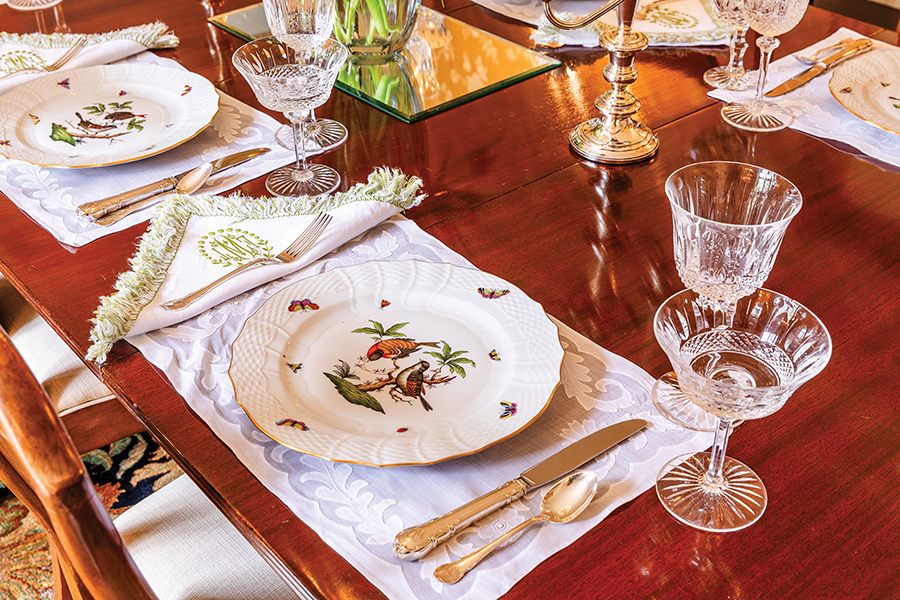
Elegance and Mystery

Elegance and Mystery

Historic estate thrives in its second century

By Deborah Salomon
Photographs by John Gessner

Green with envy: a color-coded assessment of how Pinehurst society, circa 1929, might have greeted the overwhelming but exquisite home of Nils Hersloff of Orange, New Jersey, his wife and three children, who christened it, simply, The Pines. This family residence — not to be confused with the “cottages” of the same era — eclipsed most vacation homes built before the crash. It was the last brick home constructed in Pinehurst before the Great Depression and is one of the featured homes on the 76th Annual Southern Pines Garden Club Home & Garden Tour this month.
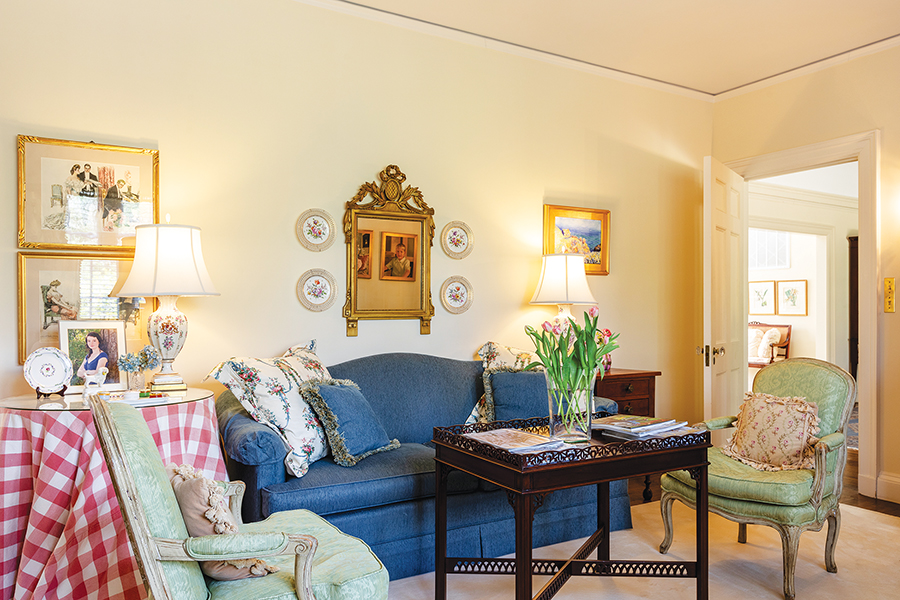
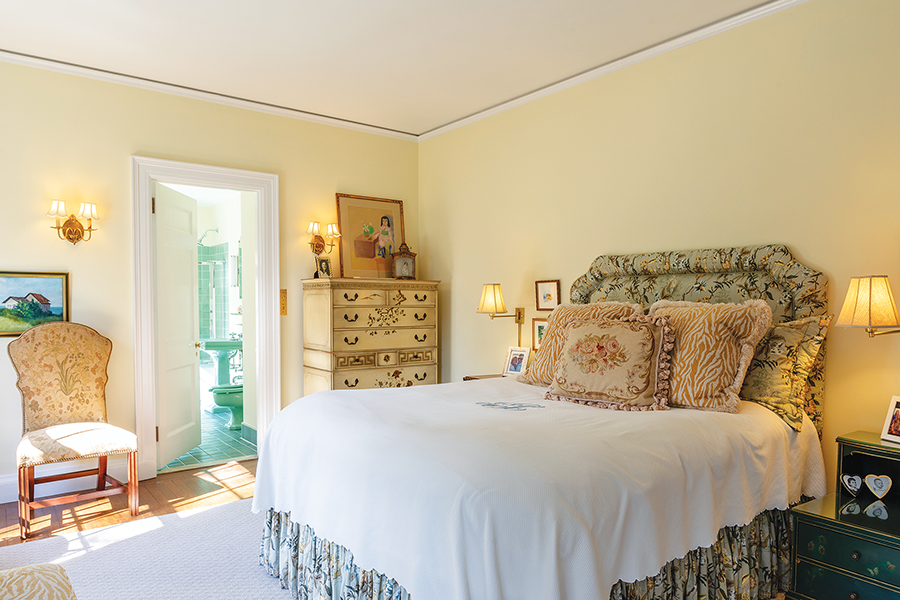
Superior materials were plentiful and expert craftsmen, hungry. In fact, a more suitable name might be The Moldings. Double, triple, quadruple, grooved, carved and overlaid, they tastefully delineate each window, door and fireplace — big money, well-spent on 6,000-plus square feet with servants’ quarters and adjacent three-bay garage topped off by an apartment for the chauffeur. Few homes of any era boast a zinc-lined closet for storing furs.

The Pines has weathered nearly a dozen ownerships. Renovations have been minimal and respectful. Since purchasing the house in 2015, John and Elizabeth Webster, appreciative of solid construction and timeless design, have adorned it with British, American, Spanish and South American antiques and art — from traditional bird motifs to small statuary (called Santos) rescued from church altars.

The result is Gatsby-era elegance with a sweet Southern drawl.

The Pinehurst Outlook once described the structure as Colonial Revival with Flemish bond brickwork, gabled roofs, a five-bay façade with central pedimental entrance porch and two-story side wings. The Swedish-born Hersloff, who began as a simple accountant but would amass a fortune in oil, shopped for art at Sotheby’s, was a Tin Whistle and rode in field trial competitions. After deciding to winter in Pinehurst, Hersloff didn’t blink at hiring Charles Platt, a landscape designer/self-taught architect and stalwart of the American Renaissance movement whose clients included Rockefellers, Astors, Carnegies and Roosevelts, as well as the Smithsonian’s Freer Gallery of Art in Washington, D.C.

Construction costs, not including the 1 1/2 prime acres in Old Town, were listed at $75,000 — an enormous sum in the late 1920s. Platt, great-grandfather of award-winning actor Oliver Platt (The West Wing, Chicago Med), died in 1933. The Pines may have been among his last projects.

In 1935, the partially clad 22-year-old newlywed hotel heiress Elva Statler Davidson was found dead of carbon monoxide poisoning in The Pines’ garage. Statler Davidson, unhappily married to a man twice her age, lived in nearby Edgewood Cottage, built by Hersloff in 1917. In Death of a Pinehurst Princess, Steve Bouser writes that the yards of The Pines and Edgewood “were open, and one could hardly tell where the boundary between the two lots ran.” Statler Davidson had standing permission to park her Packard in the neighbors’ garage. An inquest was held, but the mystery never solved.

After almost a century, what makes The Pines a showcase is no mystery, beginning in the copious foyer with de Gourney hand-painted wallpaper panels flanking the door, a teardrop crystal chandelier and the Tara staircase, ideal for bridal photos. The Webster blended family includes seven daughters and one son. “I keep hoping . . . ” Elizabeth says.

An attorney and Realtor, Elizabeth grew up in the Weymouth neighborhood on Highland Road. John, a financier and serious gardener of British lineage, moved to Southern Pines from Spain. Each owned beautiful things in need of a home. Pinehurst presented possibilities, since “we both love old houses,” Elizabeth says. They discovered The Pines, vacant for several years, online. “It appealed to me because of the light,” she says, which streams in on both sides of the elongated asymmetrical layout. No wonder its blueprints are part of the Cornell University Library collection. For Elizabeth, this would be both homecoming and challenge: retain historical significance while blending her furnishings with John’s.

She settled on a creamy French vanilla, tinged with lemon, for the main floor walls and divided the living room into sections by furniture placement. Over the sofa, a Virgin of Pomata (Peru) in a voluminous gown dominates an entire wall. Beneath it, the Persian carpet in shades of crimson and blue was woven especially for this room. The black coffee table, Asian in style, makes the sole contemporary statement. A gaucho’s stirrup and dagger are laid on it. Elizabeth’s sentimental favorite stands nearby: a “secretary” called a marriage piece because the top and bottom, English and American — although from separate desks — align perfectly. “It fits with our story,” says Elizabeth.

This retro salon may be suitable for entertaining but not for watching the evening news, which the Websters do in a sunroom off the living room. Striped turtle-green wallpaper accenting high ceilings was hung here by a previous owner. “I like flowers, John likes stripes, so we left it,” Elizabeth says. Each has an office, on separate floors.

Staffordshire, Staffordshire, everywhere: figurines, dishes, teapots, lamps. Elizabeth’s passion is on display in dining room built-ins surrounded, again, by layers of carved molding. The proportions of this room allow for two mahogany sideboards, one from Elizabeth, the other from John, which are almost twins. Here, she has held events to benefit The O’Neal School, her alma mater.

The mid-sized kitchen is another surprise, remodeled by a previous owner using some original painted cabinets. The Websters put in an island, took down a wall and added banquettes to make the servants’ dining room their sunny breakfast corner. On the wall remains the maid’s call box. Even without a butler, the butler’s pantry with warming drawer, wine storage, sink and dishwashers is a dream at dinner parties.

Upstairs, the bedrooms seem endless; the master suite opens onto a full-sized sitting room and double bathroom, one of six and a half spread throughout the house and garage. The most unusual was done in 1929 in avocado tile with tankless toilet and a sink supported by chrome legs.

The grounds are John’s domain: designing, planting, pruning, mowing. Behind the house stretches a long and grassy lawn, perfect for passing a football — or hosting a garden party, perhaps a wedding. It’s bordered by flower beds, the entirety enclosed by a brick wall constructed from materials surviving a Sanford factory fire. The Websters filled in the swimming pool, deemed beyond repair and a liability. They also removed overgrown ivy lest it damage the brick. Despite the estate name, the tree dominating the circular drive is a 40-foot magnolia, not a loblolly pine.

Ancient legends surrounding The Pines may have once deserved investigation, but this is a happy house, light and airy, spacious and livable, historic but unencumbered by dark, massive furnishings and stern ancestral portraits.

Elizabeth Webster is thrilled, seeing herself and John as caretakers, steering the house into its second century, a deal sealed with words she will never forget. “After we saw this house,” she says, “my husband said he had to buy it because of the smile it put on my face.”  PS


HOME & GARDEN TOUR

The 76th Annual Southern Pines Garden Club Home & Garden Tour on Saturday, April 13, features houses, farms and their notable landscapes. Presenting ideas for inspired living in our modern times, ticket sales to see this years collection of idea” homes and gardens will benefit the landscaping and beautification of Woodlawn Cemetery in West Southern Pines. The tour begins at 482 E. Connecticut Ave., Southern Pines. Info: www.southernpinesgardenclub.com.