Golftown Journal

The Homecoming

Putting guru David Orr brings his fantastic fundamentals back to Pine Needles


By Lee Pace

On a December afternoon, David Orr peers around the building and the wall space at the Pine Needles Golf Learning Center at the far end of the resort’s practice range. There is an enlarged version of a vintage American Golfer magazine cover featuring Peggy Kirk Bell, who owned the resort for some 60 years prior to her death in 2016. There is a 1920s photo of the par-3 third hole at Pine Needles. There are assorted other charts and images tied to the business of golf instruction.

Finally, Orr finds an uncluttered spot with no decorations or adornments.

“Here,” he says. “They can sign their names right here.”

Over a decade of teaching putting and the short game to more than 60 Tour professionals from his previous headquarters at Campbell University in Buies Creek, Orr established a tradition of having his clients sign and date a wall in his putting studio.

Justin Rose has been there. So have Hunter Mahan, Cheyenne Woods, Suzanne Pettersen, Edoardo Molinari and Trevor Immelman.

“It started when I was working with some guys who were pretty much unknown, were trying to get established on the Web.com Tour or European and Asian tours,” Orr says. “I told them, ‘I want your autograph before you become famous.’ Then I started working with guys further up the World Rankings — Justin and Hunter, guys like that. The wall kind of represents my development as a coach. It’s pretty cool.”

Orr’s career as a swing coach and putting guru has essentially came full circle in the fall of 2017 as he relocated his Flatstick Academy teaching and coaching business back to Pine Needles, where he was on the instruction staff from 2000-04 and learned the business under the tutelage of Mrs. Bell and a staff that included Pat McGowan, a PGA Tour regular from 1978-91, and Chip King, who’s gone on to become director of golf at Grandfather Golf & Country Club.

“This is a homecoming for me,” Orr says. “I think of Peggy every day. Every day. I stand on the range and look around and say, ‘Wow, every brick, every blade of grass — they’re here because of her.’ She built the dream. You cannot replace her. But it’s an honor to be back.”

Kelly Miller, the CEO of the company that owns and operates Pine Needles and its sister resort, Mid Pines, plays frequently in top amateur tournaments and last summer needed some help with his golf swing. He invited Orr to drive down from Buies Creek and look at his swing — and talk a little business. Miller had been following Orr on Facebook and on Orr’s Flatstick Academy website and saw references to golfers traveling to Buies Creek for a lesson.

“I thought, why not have those people come to Pine Needles if David is operating from here?” Miller says.

He took a 15-minute full-swing lesson from Orr, who got Miller’s swing plane adjusted from laid-off to on-line, and threw out the idea. Miller proposed that Orr could still have the freedom to teach at Campbell, work with his professional clients and travel as he does around the world to speak at instruction conferences.

But the rest of the time, he would use Pine Needles’ facilities for his individual and group lessons focusing on putting, chipping, pitching and bunker play. He would also operate multi-day short-game schools and consult with the Pine Needles staff in running the resort’s well-known golf instruction programs.

“This is a unique opportunity to get someone of David’s skill and reputation to come here,” Miller says. “David is certainly one of the top two or three putting instructors in the United States. He’ll bring some energy and an exciting niche to what we’re already doing.”

Orr says his experience working at the top level of the PGA Tour has given him a sense of accomplishment that makes the move back to Pine Needles a comfortable one at this juncture of his career. He helped Rose with his putting and short game, and then watched as Rose won the 2013 U.S. Open. A year later, he followed as Rose went head-to-head against another of his clients, Mahan, in the Ryder Cup.

“I don’t have to prove myself any longer,” Orr says. “Early on, I was like a salmon swimming upstream. Now it’s cool to step on a practice tee on tour and think, ‘I don’t have to prove anything.’ I have so much fun working with amateur golfers and juniors. I can help some younger guys and borrow from my experiences the last 10 years.”

Orr is a native of upstate New York, played college golf at Bridgewater in Virginia, and then graduated in 1991 from Oswego State in New York with a degree in political science. That summer he was working at a club in Syracuse and was impressed by the wad of hundred-dollar bills the head pro was making on the lesson tee. The idea of becoming a golf instructor lingered in the back of his mind the next several years as he played the mini-tours, and Orr eventually moved to Raleigh and worked at Cheviot Hills and North Ridge Country Club.

“I was still playing some on the mini-tour in the mid-90s when I was giving lessons at Cheviot Hills,” he says. “I won one mini-tour event but was making more teaching than playing.”

Orr joined Mrs. Bell’s teaching staff at Pine Needles in 2000 and learned over four years that there was more to teaching than simply applying the highly technical dictums from two of the enduring influences on his own swing — PGA Tour player Mac O’Grady and Homer Kelley’s book, The Golfing Machine.

“I got to Pine Needles with a lot of science in my head and learned from Peggy the art of teaching,” Orr says. “‘How-to’ instruction doesn’t work all that well. The brilliant ‘ah-ha moment’ with Peg was her drumming it into my head that you need to get students to do something in order to learn it. I can remember, David, get them out there doing it. That was a huge turning point. I learned to make instruction palatable so that people could understand it and improve.”

Orr left in 2004 to take classes in the Professional Golf Management program at Campbell and obtain his Class A-6 PGA status, which he did in 2007. He joined the Campbell faculty and became director of instruction for the PGM program, and during the late 2000s began doing extensive research into putting — from technique to equipment to green reading.

One of his motivations to crack the putting code was the fact that his own putting ability had been, in his word, “terrible” over his competitive career.

“I was terrible for many of the same reasons everyone else is,” he says. “You miss a couple short ones and you get down on yourself and all of a sudden you’re afraid. I used to avoid practicing putting. I changed putters and grips and changed my stroke. I’d go take lessons. The more I tried, the worse I got. That’s how I came to a turning point. I did the research and started teaching putting.”

One of the significant developments for him was learning the SAM PuttLab system, which uses 3-D technology to analyze some 28 parameters of the putting stroke and displays the results in easy to understand graphic reports. He and Dr. Rob Neal of Golf BioDynamics pioneered research on the working of the hands, wrists, forearms and upper arms in the putting stroke. That research became the basis for Neal’s GDB 3-D System, which in the last decade has taken putting stroke and full-swing analysis to new technical levels.

“My teaching method is based on research, not on theory,” Orr says. “I offer very little ‘how-to’ information. One of the things I learned from using SAM was, ‘Never guess what you can measure.’ That’s one of my policies: I don’t guess.”

Orr evaluates each golfer and offers suggestions and direction based on analysis of three key skills to holing a putt: Can a player read a green? How good are they adjusting to speeds of greens? And are they able to start the ball on-line?

“Those are the three skills — read, speed and line,” says Orr. “With each element, we take the guesswork out. We measure it. Then we take what you have and make it the best it can be. There is no perfect putting technique — except your own.”

Orr turns 50 in 2018 and says he’s at the perfect place at Pine Needles to write the next chapter of his teaching career. Indeed, there’s a blank space of wall in his new putting lab just awaiting some signatures.  PS

Chapel Hill-based golf writer Lee Pace has been writing “Golftown Journal” since 2008.

The Omnivorous Reader

The Last Ballad

Wiley Cash creates a model for other writers


By D.G. Martin

Readers of this magazine have come to know and admire Wiley Cash as a regular contributor of poignant essays about his family, his work, and his writing.

In the October issue, he gave us a very personal report about the origins of his latest novel, The Last Ballad. He told us that for the past five years he had been “living in a 1929 world of cotton mill shacks, country clubs, segregated railroad cars, and labor organizers with communist sympathies. Everything I know about the craft of writing and the history, culture and politics of America, especially the American South, has gone into this novel.”

Now that the book is out and Cash’s promotional book tour is drawing to an end, it is a good time to take another look at this remarkable story of blended fiction and important history.

When Cash takes us back to 1929 Gaston County’s textile mill country, he forces us to confront real and uncomfortable facts about the brutal conditions workers faced. All the while Cash uses his storytelling gifts to create a moving tale about a real person, textile worker and activist, Ella May Wiggins.

On the frame of this real character, Cash builds a moving story that puts readers in Wiggins’ shoes as she walks the 2 miles every evening from her hovel in Stumptown to American Textile Mill No. 2 in Gaston County’s Bessemer City, works all night in the dirt and dust and clacking noise, and then walks back to tend to the children she has left alone the entire night.

Cash follows her decision to support the strike at Loray Mills, where her ballad singing at worker rallies mobilized audiences more than the speeches of union leaders. He relates how her actions also provoked negative responses from union opponents that led to her death.

In the book’s powerful fourth chapter, Cash compresses the conversion of Ella May from oppressed textile worker to inspirational union hero into one evening. As she rides in the back of a truck from Bessemer City to a pro-strike rally at the Loray Mill in Gastonia, she tells Sophia, a union organizer, about her family’s struggles, the death of her beloved son, and “the weight of her children and their lives upon her heart.”

“Hot damn,” Sophia says. “And you sing too?

“Hell, girl, we hit the jackpot with you. You might be the one we’ve been looking for.”

That evening in Gastonia, in the shadow of the “colossus of the Loray Mill . . . its six stories of red brick illuminated by what seemed to be hundreds of enormous windows that cast an otherworldly pall over the night,” Ella May tells her story to the rally’s crowd and sings a song from her mountain youth that she adapted on the spot.

She began,

“We leave our home in the morning,

We kiss our children good-bye.

While we slave for the bosses,

Our children scream and cry.”

And after several more verses of struggle and woe, she concluded,

“But understand, dear workers,

Our union they do fear,

Let’s stand together, workers

And have a union here.”

When it was over, “people cheered, whistled and pointed, called her name and chanted union slogans. Flashbulbs popped and illuminated ghostly white faces as if lightning had threaded itself through the audience.”

By the end of the evening and the conclusion of the fourth chapter, Ella May has the makings of a legend and a target of the anti-union forces that will bring about her early death.

In the book’s other chapters, Cash introduces us to people who shaped Ella May’s life: her no-good husband John, her no-good boyfriend Charlie, the Goldberg brothers who ran the mill where she worked, her African-American co-worker and neighbor Violet, the union strike leaders, a 12-year-old worker who loses half his hand when it gets caught in the mill’s machinery, and Wiggin’s children as they struggle through hunger and illness.

We also meet an African-American railroad porter, Hampton Haywood, a communist union organizer. Ella May makes an unlikely friendship with Katherine, the wife of mill owner Richard McAdams. Katherine persuades her husband to sneak Hampton out of town to save him from a racist and anti-union lynch mob, risking Richard’s place in the elite social order — and his life.

The picture Cash paints is an ugly one, showing conditions of Wiggins and her fellow workers to be only a step or two away from serfdom and slavery.

Education for the workers or their children was a pipe dream, as Wiggins explained to U.S. Senator Lee Overman, when the union sent her to Washington to tell the union story. Overman had told a striker she should be in school.

“Let me tell you something,” Wiggins shouted at Overman. “I can’t even send my own children to school. They ain’t got decent enough clothes to wear and I can’t afford to buy them none. I make nine dollars a week, and I work all night and leave them shut up in the house all by themselves. I had one of them sick this winter and I had to leave her there just coughing and crying.”

In his first two best-selling novels, A Land More Kind Than Home and This Dark Road to Mercy, Cash had wide freedom to develop compelling stories and fashion endings that would surprise and satisfy his readers. But he lost this freedom with The Last Ballad. Historical fiction binds its authors to certain facts. There can be no surprise ending. Cash’s readers know from the first page that Ella May is going to be killed.

In Cash’s case, however, the genre does not restrict his great gifts in character development or in developing rich subplots that give his readers a satisfying literary experience. As a bonus they come away with a deeper comprehension of Ella May’s experiences and those of the people on all sides of the Loray labor conflict.

In his October article for this magazine, Cash, who grew up in Gastonia, explained what made writing about Wiggins a difficult task. “How could I possibly put words to the tragedies in her life and compress them on the page in a way that allowed readers to glean some semblance of her struggle?”

Recently he told me, “I wanted to write a novel that was not only true to the facts, but I wanted almost more importantly to write a novel that felt true to the experience as I understood it. When I was writing this novel I was perfectly aware that these are real events. And the facts are all there. The facts in this novel, are indisputable. And I felt like, by getting the facts right, it allowed me a scaffolding to let the characters come alive.”

So how did Cash do?

I agree with Charlotte Observer writer Dannye Romine Powell, who called The Last Ballad Cash’s “finest” novel, one that she suspects “will serve as a model for any writer who wants to transform fact into fiction.”

In creating this model for other writers of historical fiction, Cash met his challenge of putting into words Wiggins’ tragic life and the oppressive times in which she lived.

And those words and the story they tell confirm Cash’s place in the pantheon of North Carolina’s great writers.  PS

D.G. Martin hosts North Carolina Bookwatch, which airs Sundays at noon and Thursdays at 5 p.m. on UNC-TV.

Hometown

A Policeman’s Life

Duty and kindness serving the citizens of a small town


By Bill Fields

At a gathering of my Pinecrest classmates a few months ago, men and women closing in on 60 like a restless Corvette, one of them pulled me aside early in the evening to tell me a story. During a stressful year that included some challenges, listening to his recollection turned out to be a highlight of 2017.

In the late 1970s, not long after we had graduated from high school, my friend had gotten in his car after a few too many drinks at a work party. Realizing his condition, he parked in an empty lot in West End. As my friend tried to sleep it off, my father, then a deputy sheriff working the second shift, came upon the car to check it out. Startled and scared, the driver roared away quickly. Blue lights on, Dad soon followed, and my friend was pulled over, more anxious than he had been a couple of minutes earlier.

As my friend, an African-American, was recalling the encounter, it seemed like a scenario that these days all too often unfolds into disaster. But his tale didn’t have a bad ending. When my father walked up to the offending vehicle and pointed his flashlight at the driver, he recognized who was behind the wheel and let him explain what had taken place. There was no overreaction, no show of force, no ticket, no crisis. After a warning from my father and a promise from my friend to go straight home, that was it.

An anecdote isn’t everything, but hearing it sure made my night.

Dad came to law enforcement late, when he was in his late 40s, and it became a belated career after a series of jobs following World War II — farmer, gas station operator, clerk and factory foreman. He worked as a third-shift radio dispatcher in Southern Pines, then was hired as a patrolman in Aberdeen. He also had two stints as a Moore County deputy and, during the latter, when he was a warrant server, he got to drive the squad car home.

Whether wearing Aberdeen blue or Moore County khaki, Dad looked sharp in his uniform, probably cocking his hat a few degrees more toward jaunty than specified. Some of his fellow officers went for low-maintenance plastic-exterior work shoes, but my father’s black ankle boots were leather that he kept beautifully shined with a sturdy brush that seemed older than he was.

I was fascinated by the shorthand of the radio communications, the 10 codes. On the occasional snow-day morning when I was riding shotgun, there was nothing better than driving into the Town and Country shopping center and hearing Dad 10-20 at Cecil’s Steak House for breakfast. A few years later, riding through Aberdeen in my girlfriend’s orange MG en route from Chapel Hill on a sneaky trip to the beach, I knew Dad was on duty and got to the town limits hoping he was out of service having a meal.

Being a cop — although Dad hated that word — in Moore County back then was a lot more Mayberry than Manhattan. Directing traffic after July 4th fireworks at Aberdeen Lake could have been as dicey as things got. I am not aware that he ever had to draw his .38 caliber service revolver. (He let me fire it once, at a tin can out in the country north of Southern Pines, and that was enough.)

Dad was involved in one high-speed pursuit, when a car raced north at 100 miles per hour on Highway 1 until it took the Morganton Road exit and crashed at Memorial Field. Investigating bad car wrecks was the toughest part of the job. Once, on a day when Dad got home after dealing with a serious accident, he quickly corrected me when I mentioned that I wished I had been able to see it.

He was an imperfect man, but being a policeman brought out his best. On a cool, dreary day in 1980, through a rain-dappled rear window of a Powell town car on the way to Pinelawn Memorial Park, I was reminded that others thought so too. Many officers from multiple area departments lined our route and blocked intersections, traffic not the reason for their presence.  PS

Southern Pines native Bill Fields, who writes about golf and other things, moved north in 1986 but hasn’t lost his accent.

Bookshelf

February Books


FICTION

The Great Alone, by Kristin Hannah

The author of The Nightingale returns with a story of a family of three, Ernt, Cora and Leni, who move to the remote Alaskan wilderness in the 1970s. After years as a prisoner of war, Ernt is restless, tormented and given to rages. Leni is precocious and befriends a young, sweet boy whose family is on a collision course with her own.

Only Child, by Rhiannon Navin

Hiding in a coat closet, Zach Taylor hears gunshots echoing through his school as a gunman takes 19 lives, irrevocably changing the close-knit community. While Zach’s mother goes on a quest for justice against the young gunman’s parents, Zach loses himself in a world of books and art, becoming determined to help the adults around him rediscover the love and healing compassion in their lives.

White Houses, by Amy Bloom

Beginning with Lorena Hickok’s childhood and following her through Eleanor Roosevelt’s death, Bloom’s fiction brings a slice of history to life in this lively and heartbreaking biographical novel about the long-term relationship of the two women.

The Hush, by John Hart

Returning to the world of Hart’s The Last Child, it’s been 10 years since the events that changed Johnny Merrimon’s life and rocked his hometown to the core. Though Johnny has fought to maintain his privacy, books have been written of his exploits. Living alone in the wilderness outside town, Johnny’s only connection to normal life is his boyhood friend, Jack. The Hush is more than an exploration of friendship, persistence and forgotten power. It takes the reader to unexpected places, and reminds us why Hart, after five consecutive New York Times best-sellers, warrants comparison to luminaries like Pat Conroy, Cormac McCarthy and Scott Turow.

An American Marriage, by Tayari Jones

A masterpiece of storytelling, An American Marriage is a stirring love story and a profoundly insightful look into the souls of three people who must reckon with the past while moving forward — with hope and pain — into the future. Jones, the author of Silver Sparrow, writes a brilliant book that is both a joy to read and thought-provoking.

Promise, by Minrose Gwin

In the aftermath of a tornado that rips through Tupelo, Mississippi, at the height of the Great Depression, two women — one black, one white; one a great-grandmother, the other a teenager — fight for their families’ survival in this powerful novel. A story of loss, hope, despair, grit, courage and race, Promise reminds us of the transformative power of confronting our most troubled relations with one another.

NONFICTION

The Potlikker Papers: A Food History of the Modern South, by John T. Edge

The director of the Southern Foodways Alliance writes a people’s history that reveals how the region came to be at the forefront of American culinary culture, and the way issues of race shaped Southern cuisine over the last six decades.

Everything You Love Will Burn: Inside the Rebirth of White Nationalism in America, by Vegas Tenold

Embedded among three of America’s most ideologically extreme white nationalist groups for the last six years, journalist Vegas Tenold has watched these groups move from a disorganized counterculture into the mainstream. Tenold offers a terrifying, sobering look inside these newly empowered movements, taking readers to the dark, paranoid underbelly of America.

The Leading Brain: Neuroscience Hacks to Work Smarter, Better, Happier, by Friederike Fabritius and Hans W. Hagemann

Now in paperback, this book by a neuropsychologist and a leadership expert applies science-based strategies to achieve peak performance. Examples such as how to learn and retain information more efficiently, improving complex decision-making and cultivating trust and building strong teams are highlighted.

Berlin 1936: Sixteen Days in August, by Oliver Hilmes

From an award-winning historian and biographer, the 1936 Olympics told in the present tense, through the voices and stories of those who witnessed it. Berlin 1936 takes the reader through the XI Olympiad in 16 chapters, each opening with the day’s weather and, with the help of translator Jefferson Chase, describing the events in the German capital through the eyes of a select cast of characters — Nazi leaders, foreign diplomats, sportsmen, journalists, writers, socialites, nightclub owners and jazz musicians.

A Dangerous Woman: American Beauty, Noted Philanthropist, Nazi Collaborator — The Life of Florence Gould, by Susan Ronald

From the author of Hitler’s Art Thief comes a revealing biography about a fabulously wealthy socialite and patron of the arts. In Paris, Gould entertained the Fitzgeralds, Hemingway, Picasso, Joseph Kennedy and Charlie Chaplin, with whom she had an affair. During the Nazi occupation she had affairs with Germans and became enmeshed in a money-laundering scheme for fleeing high-ranking officers. In New York after the war, her money bought her respectability as an important contributor to the Metropolitan Museum of Art.

Wallis in Love: The Untold Life of the Duchess of Windsor, the Woman Who Changed the Monarchy, by Andrew Morton

Using never before seen records along with letters and diary entries, Morton’s biographical portrait of Wallis takes us through the cacophonous Jazz Age; her romantic adventures in Washington and friendship with Eleanor Roosevelt; her exploits in China and beyond; and her entrance into the strange wonderland of London society. During her journey, we meet an extraordinary array of characters, many who smoothed the way for Wallis’ dalliance with the King of England, Edward VIII.

Renoir’s Dancer: The Secret Life of Suzanne Valadon, by Catherine Hewitt

Hewitt delivers a fantastic biography of the daughter of a provincial maid who found her way to Paris and became a part of the Impressionist art movement. Having affairs with many painters and a model for Renoir and others, Valadon was an ambitious, headstrong woman fighting to find a professional voice in a male dominated world.

The Seabird’s Cry: The Lives and Loves of the Planet’s Great Ocean Voyagers, by Adam Nicolson

Seabirds have always entranced the human imagination and New York Times best-selling author Adam Nicolson has been in love with them all his life: for their mastery of wind and ocean, their aerial beauty and the unmatched wildness of the coasts and islands where every summer they return to breed. Over the last couple of decades, modern science has begun to understand their epic voyages, their astonishing abilities to navigate for tens of thousands of miles on featureless seas, their ability to smell their way toward fish and home. The Seabird’s Cry examines the science and the stories of seabirds and the current crisis of seabird decline.

Full Battle Rattle: My Story as the Longest-Serving Special Forces A-Team Soldier in American History, by Changiz Lahidji and Ralph Pezzullo

Recognized as one of the finest noncommissioned officers to ever serve in Special Forces, Changiz’s story after more than 100 combat missions in Afghanistan and 24 years as a Green Beret is an amazing tale of perseverance and courage, combat and a man’s love for America. The memoir is a first by a Muslim member of Special Forces.

CHILDREN’S BOOKS

The Word Collector, by Peter H. Reynolds

Vociferous, effervescent, torrential, guacamole, dream. Jerome collected words. Short and sweet words, two syllable treats and multi-syllable words that sound like little songs. The more words he knew, the more clearly he could share with the world what he was thinking, feeling and dreaming. What happens when Jerome decides to share his collection changes not only him, but everyone around him. (Ages 4-8)

If I Had a Horse, by Gianna Marino

Horses are the world’s best teachers as seen in this stunning, simple yet profound little book. They teach patience, gentleness, bravery, kindness, friendship, persistence, tolerance and cooperation. Perfect for horse fans, art lovers and anyone in need of a little encouragement. (Ages 4-8)

Tiny and the Big Dig, by Sherri Duskey Rinker

From the author of the beloved Goodnight, Goodnight, Construction Site comes this plucky little picture book that proves even little folks can do great things when they just dig in and stick to it. Tiny the pup proves his determination to everyone in this cute story in the vein of The Little Engine That Could. (Ages 3-6)  PS

Compiled by Kimberly Daniels Taws and Angie Tally.

In The Spirit

The Face of Alley Twenty Six

Rob Mariani makes an impression with his delicious tonic made from scratch


By Tony Cross

If you’ve kept up with some of my columns, you’re starting to see that in the world of spirits and cocktails, quality ingredients make for a better drink, from having a quality spirit (remember, quality doesn’t always mean pricier), all the way down to making a simple syrup from scratch. The market for small-batch ingredients is huge right now. I jumped on the train when I started bottling my own tonic syrup. Although I have one of the few local tonics on the market, there is a nearby company that started retailing their tonic syrup before me. I’m talking about Alley Twenty Six Tonic, created and packaged by the boys over at their bar in Durham.

The first time I tried Alley Twenty Six Tonic, I was at a meeting with the distribution company that carries my tonic syrup. One of their concerns was having similar syrups with the tonic from Durham. Luckily for me, our syrups are as delicious as they are contrasting. While my syrup has a more pronounced bitterness with baking spices, Alley Twenty Six Tonic has more of a sweet cola flavor with a touch of bitterness. The other major difference between the tonics is the fact that Rob Mariani, one half of Behind the Stick Provisions, has his syrup in way more places than I do. That’s an understatement.

Rob is the kind of person who makes a big first impression. Tall and lanky, with an imperial, handlebar-style mustache and his signature flat/newsboy cap, he always has a smile on his face. I first met him a year and a half ago at a local distillery party, and most recently sat down with him in Durham over a few of his tonic drinks.

Originally from Estonia, and raised in New York City, Rob didn’t find his passion for bartending until after moving to New Zealand in the beginning of the millennium. “I landed in Wellington and stayed there for a year. A friend hooked me up with some guys building a nightclub. I was doing construction, and at the end of the build decided that I wanted to learn to bartend there. My shift was from 8 p.m. to 8 a.m. It was a blast. I was hooked.”

Rob left New Zealand and found himself bartending at high-end restaurants in Washington D.C., including Agraria (now called Farmers Fishers Bakers) with D.C. celebrity Derek Brown. Mariani relocated to Durham afterward and helped open Alley Twenty Six in the fall of 2012. Alley was launched by owner Shannon Healy, formerly of Crook’s Corner in Chapel Hill. Healy and Mariani started making their own mixers and syrups from scratch. Healy’s recipe for their tonic syrup was a hit; that’s when the light bulb went on. Healy and Mariani launched Behind the Stick Provisions and started bottling their tonic syrup for retail. “The market for cocktail syrups was growing, and we wanted in,” says Rob. “We decided to launch our retail brand with tonic syrup because there were only a few on the market, and frankly, we liked ours better.” Rob took the original recipe, and slightly tweaked it for larger scale production.

As tonic sales blossomed, Rob realized he would need to transition from behind the bar to Behind the Stick. “After 15 years of bartending, I saw this as a great opportunity to shift jobs in my industry career. I didn’t want to leave, I just didn’t want to work till 3 a.m. anymore,” he says. “This was the logical next step for me. Now I get to work with bartenders, distillers, home cocktail enthusiasts, and an amazing cross section of the industry.” And that he has. Just follow him on Instagram (behindthestickprovisions) and you’ll see the myriad places he pops up.

As we sat down to talk, Rob had one of the barmen make me a daiquiri with his tonic syrup in place of simple syrup. As I finished it in four sips (absolutely delicious), he explained that his tonic will soon be in Moore County, hopefully by the time this column hits the street. He said he usually likes to substitute his tonic syrup in place of a traditional sugar syrup to give certain classics a spin. He also explained why he loves using his tonic in rum (and his love for rum).

I found a new bestie. I’d lie if I said I didn’t sit there at least a little jealous while he told me of his adventures to Trinidad and Martinique to visit rum distilleries. He has an upcoming trip to Barbados in February, where he plans on learning more from different distilleries, such as Foursquare and Mount Gay. I know why rum is my favorite spirit, so I asked him why it’s his.

“Rum is a versatile and misunderstood spirit,” he says. “It can be made from various forms of sugar — molasses being the most common — but pressed sugar juice for rhum agricoles has amazing earthy, grassy and funky notes that really bring the term ‘terroir’ to rum.” His recent “rum adventures” include scouting trips for places to live in the distant future. I can’t wait to visit my new bestie wherever the island may be.  PS

Tony Cross is a bartender who runs cocktail catering company Reverie Cocktails in Southern Pines.

southwords

Bill and Me

Just another day in February


By Jim Moriarty

The film Groundhog Day was selected for inclusion in the National Film Registry in 2006. Under the auspices of the Library of Congress, the Registry aims to ensure that America’s film heritage doesn’t disappear into the ether like so many of Hollywood’s earliest films did. Blazing Saddles, Fargo and Rocky were in the same graduating class.

Five years after his film was soaked in STP, or whatever it is they do to make sure it lasts longer than the pyramids, I ran into Bill Murray on the 18th green at Pebble Beach. It was just myself and about a hundred other people who surrounded him after he and some guy named D.A. Points won the AT&T Pebble Beach National Pro-Am, which also happens in February.

Murray had been the tournament’s big celebrity for decades, bigger even than one of Pebble’s owners, Clint Eastwood. His on-course antics were panned early on by the golf-is-a-religion crowd, but most people came to enjoy the show. Between shots Murray routinely scanned the gallery, looking for just the right person to become his foil, for good or ill. One year along Pebble’s fourth hole I watched him approach a mom and dad and their adorably dressed daughter, who was in the 4-year-old range. Ignoring the parents, he wagged his finger impishly at the little girl and said, “You look very put together today.” The smile on her face ran all the way from the tee to the green.

Like my own Groundhog Day, I’d been after him for a sit-down interview for years. Finally, one February, he looked at me, exhaled deeply, and said, “You know, interviews are, like, my least favorite thing to do in the whole world.” Murray doesn’t do a lot of things on his least favorite list — unless he has a new movie coming out and you’re The New Yorker — and I was clearly one of them. But now I had him cornered between the Lodge and the Pacific Ocean. Just making the cut in Pebble’s pro-am is, as the current resident of the White House would say, YUGE. But winning it? That’s priceless. Hey, you get your name on a rock by the first tee.

So, there I was. Just Bill and me. And suddenly I realized, I had to think of something to ask him. So, I went deep. “What did you get a bigger kick out of,” says I, “having a film in the National Registry or winning this?”

He stopped for a moment, then looked at me kinda the way he looked at that poor schmuck who was taking the mental telepathy tests next to the pretty blonde coed at the beginning of Ghostbusters. “The National Registry is pretty cool. That’s going to last a long, long time. But,” and he paused to put his hand on the electric shock button, “I wanted this. And I don’t want very much.”

Because there’s a website for everything, there’s one dedicated to listing most of the things February’s days commemorate, including Groundhog Day. For a month with so few days, little February seems to pack a lot of distinction into them, some more serious than others. A couple of pretty good presidents have birthdays in February. And, of course, there’s Valentine’s Day which, appropriately, is also National Organ Donor Day. National Freedom Day is the 15th. That celebrates Lincoln’s signing of the joint resolution that would become the 13th Amendment, abolishing slavery. And Feb. 3 is The Day the Music Died Day, remembering the plane crash that claimed the lives of Buddy Holly, Richie Valens and J.P. “The Big Bopper” Richardson.

Other days are slightly less poignant. There’s Don’t Cry Over Spilt Milk Day on the 11th and National Drink Wine Day on the 18th, which is followed, I presume not coincidentally, by National Handcuffs Day on the 20th. Animals, both domestic and wild, are not forgotten. International Dog Biscuit Appreciation Day is the 23rd, and International Polar Bear Day is the 27th. The month ends with one of my personal favorites, Public Sleeping Day. In leap years it must surely be followed by Little Bit of Drool at the Corner of Your Mouth Day.

But, whatever day it is, in February my mind inevitably returns to Murray. As Phil Connors says, “It’s the same things your whole life: ‘Clean up your room. Stand up straight. Pick up your feet. Take it like a man. Be nice to your sister. Don’t mix beer and wine, ever.’ Oh, yeah. ‘Don’t drive on the railroad track.’”  PS

Jim Moriarty is senior editor of PineStraw and can be reached at jjmpinestraw@gmail.com.

Good Natured

Love Your Heart


By Karen Frye

Your heart never takes a vacation. Pumping approximately 86,400 times a day, we trust that it will continue to work hard for us until we reach a ripe old age. There are practical things we can do to assist the heart in functioning its best and keep it going strong.

Heart disease is the leading cause of death in men and women, and it is also one of the most preventable. Be aware that the choices you make daily can drastically reduce your risk of developing heart disease, even if you have a family history. Eating more heart-healthy, anti-inflammatory foods and, of course, exercising top the list of smart things to do. A plant-based diet is a good one to follow, and the Mediterranean diet has many other benefits. There is the Keto, and the Paleo, and on and on. Find the one that fits you and your lifestyle. A little prevention will go a long way.

Unfortunately, the Southeastern part of the U.S. takes the lead for the highest rates of heart disease. This part of the country has the highest rates of obesity, but the whole country is getting fatter. Increased consumption of refined sugar and carbohydrates are mostly to blame. The average consumption of sugar per person, per year is over 150 pounds. Obesity can be a contributing factor to practically every health malady, and a good diet and regular exercise are the best antidotes.

Stress is another reason for deteriorating health. In fact, it can wreak havoc on you mentally and physically. While we can’t remove all the pressures of our lives, we can find ways to handle stress in a healthy way. Some simple ones are: yoga and meditation; taking a daily walk outside, and enjoying nature; knitting or singing — whatever you find that brings peace and calm feelings to you.

While it’s always important to consult your doctor before adding any supplement to your diet, here are a few suggestions to help keep your heart healthy:

Magnesium is a mineral that almost no one gets enough of in their diet. It helps to relax the arteries and makes it easier for the heart to pump blood throughout the body.

Vitamin C does more for the heart than I ever realized. Animals don’t have heart attacks because they produce vitamin C that protects their blood vessel walls. We have to add it to our diet or eat enough vitamin C-rich foods to protect our arteries.

Vitamin K — there are two forms. K1 is for normal blood clotting, while K2 is important for cardiovascular health. It transports calcium into the bones where it’s needed, and out of the arteries where it can cause atherosclerosis.

Coenzyme Q10 is a metabolic enzyme produced by the body, but it may be beneficial to add it in supplement form, especially if you are over the age of 50 or have a history of heart disease. It combats oxidative stress in the cells and strengthens the heart.

Omega-3 is a well-studied supplement for heart health. This essential fatty acid reduces the risk of heart attack and stroke. We have a major imbalance of fatty acids in our diet from consuming too much Omega-6 and not enough Omega-3, creating more inflammation. Supplementing with Omega-3 also helps raise our healthy cholesterol levels (HDL).

Your heart is so amazing. Keep it happy and healthy.  PS

Karen Frye is the owner and founder of Nature’s Own and teaches yoga at the Bikram Yoga Studio.

Winter Stews

On a cold winter’s night, wrap your hands around a bowl and you will begin to understand why these hearty one-pot meals have sustained people in the South for centuries

By Jane Lear

A stew, with its deep, soulful flavor and intoxicating aroma, is a stellar example of what can happen when household economy meets benign neglect. The main ingredient is often an inexpensive cut of meat, and it is perfectly comfortable on a back burner while you tend to other things. A stew offers comfort and sustenance, makes a great party dish since it’s at its best when prepared ahead, and ranges from homey (chicken and dumplings) to haute (boeuf bourguignon).

The term stew, by the way, generally refers to a mixture simmered until it makes its own thick sauce. The technique is an unhurried, transformative one that results in a spoon-friendly meal that is far more than the sum of its parts.

Beyond that, though, things get murky. It’s difficult to separate stews from bogs, burgoos, chowders, gumbos, hashes, muddles, mulls and purloos, and frankly, I don’t want to even try. What distinguishes them all in my book is that they are thoughtful, unpretentious and highly adaptable to seasonal ingredients or the contents of your larder. And given our increased appetite for global flavors, the Persian chicken stew called fesenjan (with walnuts and pomegranate seeds), a Mexican posole (pork, hominy, and chiles), a Moroccan tagine (lamb, prunes and apricots), or a Brazilian feijoada (black beans, bacon and chorizo) are well within the reach of any home cook with access to a good supermarket.

One of the most famous Southern contributions to the genre is Brunswick stew. The standard line is that it originated in Brunswick County, Virginia, on a hunting trip in 1828, when Dr. Creed Haskins’s black camp cook, Jimmy Matthews, made a squirrel stew bolstered with onions, stale bread and seasonings.

This provenance is hotly debated among aficionados in Brunswick County, Georgia, and Brunswick County, North Carolina. And let’s face it, it seems reasonable to presume that Native Americans in the region were concocting stews of wild game long before anyone else arrived on the scene. “In that sense,” wrote John Egerton in his masterful Southern Food: At Home, on the Road, in History, “there was Brunswick stew before there was a Brunswick.”

These days, the squirrel in Brunswick stew has been displaced by chicken or other domesticated meats, and additions include a highly peppered melange of vegetables such as onions, potatoes, tomatoes, butter beans and corn. I tend to prefer it with rabbit or chicken, and even though the meat is traditionally shredded into long strands, keeping it in bite-size chunks makes a nice contrast with the tender vegetables.

There are many other renowned stews to be found in the South, including the burgoo of Kentucky (similar to Brunswick, it’s unique in its use of mutton or lamb); the terrapin stew of Maryland and the Eastern Shore of Virginia; oyster stew, which you’ll find all along the Atlantic and Gulf coasts; and Pine Bark Stew, which is said to have originated along the Pee Dee River near Florence, South Carolina, in the 1700s. The true origin of the name is lost in the mists of time — there are as many hypotheses as there are recipes — but the dark brown stew incorporates freshwater fish such as bass, trout or bream into a flavorful slurry of bacon, potatoes, onions, tomatoes (sometimes in the form of canned soup and/or catsup) and often curry powder.

And then there is the Frogmore stew of South Carolina and Georgia. Named after an old sea island settlement and sometimes called Beaufort stew or a seafood or Lowcountry boil, this  crowd-pleasing jumble of shrimp, spicy smoked link sausage, corn on the cob, and often crab and potatoes is at home anywhere on the southeast Atlantic coast. Frogmore stew is eaten differently than other stews: After the ingredients are boiled, they’re drained before being heaped on a large platter and typically served outside on newspaper-covered tables, with an abundant supply of beer and wine. In other words, what is not to love?

A favorite stew of mine is one that does not have a Southern provenance, but it sure is good, and can be easily cobbled together for a weeknight supper or casual evening with friends. The star of the show is escarole, a type of endive that at first glance looks much like a loose head of lettuce. Although the leaves turn a bit drab in color when cooked, don’t let that deter you. They also become supple and succulent, and their pleasant bitterness plays beautifully with two humble, often unsung ingredients: white beans and Italian sausage. This stew is a happy reminder that the word thrift is often a synonym for delicious. And if you’ve been wanting to incorporate more beans and greens into your diet, it’s a great place to start.

Escarole, White Bean and Sausage Stew

Serves 4 to 6 (the recipe can easily be doubled)

Like so much of my culinary repertoire, this stew hearkens back to my years at Gourmet magazine, where it was a staff favorite. The recipe was originally from American Brasserie, a cookbook by Chicago chefs Rick Tramonto and Gale Gand, and the only embellishments you need are a loaf of crusty bread and, for after, a crunchy green salad. If I can’t find escarole for some reason, I stir in leftover cooked kale, collards or other pot greens. And although diced plum tomatoes add freshness, color and a hit of acidity, if you can’t find good ones, then leave them out. If you’re fortunate enough to have leftovers, a spoonful or two makes a good topping for crostini.

1 teaspoon extra-virgin olive oil, plus more for drizzling over finished stew

1 pound bulk Italian sausage (sweet and/or hot), broken into bite-size pieces

About 5 large garlic cloves, minced

1/2 teaspoon red pepper flakes, or to taste

1 head escarole, washed, trimmed, and cut into 2-inch pieces

3 cups cooked or canned white beans such as great northern or navy (drained and rinsed if canned)

3 cups chicken broth

1/2 stick unsalted butter, cut into a few pieces

1/2 cup finely grated Parmigiano-Reggiano, plus more for sprinkling over finished stew

2 plum tomatoes, diced

2 tablespoons chopped fresh flat-leaf parsley

Coarse salt and freshly ground fresh pepper

Heat the oil in a deep large skillet or other heavy wide pot over moderately high heat until hot. Brown the sausage, stirring occasionally, for about 10 minutes. Add the garlic and red pepper flakes, then cook, stirring, just until garlic is softened, a minute or so. Add the escarole and cook, turning with tongs, until wilted. (You can add the escarole in batches if necessary, depending on the size and depth of your pot.)

Add the beans and cook, stirring, 1 minute. Add the broth and bring to a gentle boil. (You can make the stew ahead up to this point. Let it cool completely, uncovered, before refrigerating, covered. Then reheat before continuing.)

Stir in the butter, tomatoes, and about half the parsley, then cook, stirring, until the butter is melted and the stew is hot. Season with salt and pepper. Ladle the stew into warmed bowls and sprinkle with remaining parsley. Serve with olive oil and Parmesan.  PS

The former senior articles editor at Gourmet magazine, food writer Jane Lear has been based in New York for 30-odd years. There are some relatives in Georgia, North Carolina, and Virginia who believe she is still going through a phase after college.

How to Survive a Book Tour

Patience, planning and a sense of serenity

By Wiley Cash

I have been fortunate to publish three novels in the past five years, and I have been even more fortunate that my publisher has sponsored national book tours for each of my books. After the years it takes to write and publish a novel — much of that time spent in solitude and self-doubt — it is very rewarding to visit a bookstore, library or college campus and meet people who have read your work. I love hitting the road to answer questions, sign books and learn what readers are reading when they are not reading my books. When I first sat down to write my debut novel, I never imagined I would be so fortunate.

For my most recent tour in support of The Last Ballad, I spent almost two full months on the road, most of it alone. The wonderful time spent with readers is only a fraction of what you do when you are on book tour. The vast majority of your time is spent running through airports, eating fast food late at night, lying awake in hotel rooms, missing your family and wondering if — in the end — the grind of the road helps book sales. This essay is about how to survive those many long, lonely moments.

Here are a few steps you can take to overcome the perils of the book tour. I ask you to keep in mind that this is what has worked for me. Because of many factors, a book tour is not the same experience for everyone; this is based only on mine.

Gear: If you will be taking any flights longer than an hour, consider getting a neck pillow. Yes, they are awkward to pack and you will look silly carrying it through the airport, but nothing is more awkward or silly than your head lolling against your seatmate’s shoulder or your chin bouncing against your chest while you fight sleep in midair. A vacuum-sealed, stainless-steel thermos also comes in handy: It will keep water cool and coffee hot for hours while you travel. You may also want to invest in an extra phone charger with a long cord. Outlets in hotels are often located behind the headboard or bedside table, and a long cord makes it easy to charge your phone and use it as an alarm clock without moving furniture in your room. Finally, take a book, and make sure to take a book you actually want to read instead of a book you think you should be reading.

Airport: Always check your bag if your host or publisher is paying for your travel because book tours can be long, and a day off from lugging your luggage is a gift. Otherwise, find a carry-on bag that holds a lot of stuff and is easy to transport. After checking your bag, empty your pockets before security and put everything except your ID and boarding pass into one of the small, zippered compartments on your carry-on luggage. There is nothing more annoying than standing at security while people empty their pockets before going through the metal detector. The same people will hold up the line on the other side of security while spending even longer putting everything back into their pockets. Do not be that person. For the same reason, wear shoes that are easy to slip off and on, and go ahead and take your laptop out of your bag. If you find yourself holding up the security line for any reason, do not be cute about it. The security line is not an open mic. There is nothing cute or funny about wasting people’s time when they are rushing to catch a flight.

Food: Except for in a few cities, the food is irredeemably bad at most airports. There is no way around this. I have no suggestions to make about airport food except to avoid it if you can. Once you arrive at your destination, spend a few minutes scouting around online for good food that is nearby. When eating on the road, I walk a fine line between finding something convenient and fast while also wanting to have a distinct culinary experience. If I am in Austin I want to have the best barbecue. If I am in New Orleans I want to have the best gumbo. If I am in New England I want to have the best clam chowder. Keep in mind that “the best” does not always mean the “most famous.” Trust the people at the bookstore and hotel when it comes to food. They are locals. They know. There is also no judgment, at least not from me, for eating cheap pizza or a quick sandwich. You will often find yourself short on time, and settling on something simple is an easy way to make quick decisions. A book tour is not a vacation, and you cannot plan to eat like you are on vacation.

Hotel: I have a particular routine when I check into hotels. I like to feel settled, so if I am staying for more than one night I unpack the necessary clothes and place them in drawers, and then I put my shaving kit on the bathroom counter before stashing my luggage in the closet. Then I turn on the television (CNN or ESPN) and iron the shirts and pants I plan to wear. I always iron during leisure time because there is nothing more hectic than ironing as you are preparing to rush out to a bookstore or catch a taxi to the airport. Clothes unpacked and ironed, I unplug the alarm clock by the bed. If you do not do this you can plan on it going off at 5:00 a.m. and being unable to figure out how to stop it. Go ahead and unplug it and set the alarm on your cellphone. No outlets close to the bedside table? Thank goodness you have your extra-long cord for the charger. Are you a coffee drinker? Most hotels have in-room coffee makers with coffee available. Some hotels have free coffee in the lobby. No matter what the setup, avoid Styrofoam cups because coffee served in Styrofoam cups is an offense to humanity that cannot be forgiven. I know of a few writers who pack their favorite mugs along with fresh coffee and French presses. This is not a bad idea.

Family: I have traveled with my family, and I have traveled without my family. It is easier to travel without my family, especially if we are staying in one hotel room, but it is also very lonely. To offset said loneliness I will often FaceTime with my wife and our girls. This inevitably ends with one child or another wanting to hold the phone while the other child gets upset, which inevitably ends with the phone being dropped or hung up or repossessed by my wife. Everyone gets off the phone feeling a little sadder and more frustrated than before the call. Sometimes I find it better to have my wife text me photos of herself with our daughters, and she posts many of these on Instagram so I can flip through them before bed. But I always go to bed feeling a little sad. I often wonder if it would be easier and less frustrating just to hear their voices instead of seeing their faces.

For me, the easiest part of book tour is standing in front of a group of readers and discussing my book. The hardest parts are being away from my family and the constant feeling that I am running late for the next thing, whether that thing is a flight, a reservation, an interview or ride.

But a book tour can also feature pleasant surprises that masquerade as disappointments. At the end of the most recent tour I was on the way home from out west when I missed a flight in Salt Lake City due to fog. It was noon, and the next flight that could get me home to Wilmington would not leave until midnight, and I would have to connect in Atlanta and would not arrive home until late the following morning. After getting my new tickets I had two options: sulk in the airport all day or go out and see something of Salt Lake City, a place I had never visited before.

I caught a cab into the city and had an incredible day. I visited the King’s English, one of the most iconic bookstores in the country. I had lunch and a beer at a local brewery. I visited the Mormon Temple downtown, and I ended the day with an impromptu decision to catch a Utah Jazz game before catching the train back to the airport.

It was an exhausting day that had begun with great disappointment, but it ended in joy and the certainty that despite how long I had been away and how far I was from North Carolina, I was headed back to my wife and children. I unzipped my backpack, removed my neck pillow, and settled in for the long flight(s) home.  PS

Wiley Cash lives in Wilmington with his wife and their two daughters. His new novel The Last Ballad is available wherever books are sold.

PinePitch

The Montagues and Capulets en Pointe

On Sunday, Jan. 21, the Sunrise Theater will present the Bolshoi Ballet, captured in HD live from Moscow as they perform the company’s premiere of “Romeo and Juliet.” With choreographer Alexei Ratmansky’s dramatic urgency and Prokofiev’s romantic and cinematic score, this production of Shakespeare’s beloved story of the two star-crossed lovers who defy their feuding families to be together is both fresh and timeless. This is classical ballet at its finest. The show begins at 12:55 p.m. and runs for 2 1/2 delightful, if heart-wrenching, hours. Tickets are $25. Sunrise Theater is located at 250 N.W. Broad St., Southern Pines. For more information, call (910) 692-8501 or visit sunrisetheater.com.

The Carolina Philharmonic

Begin your New Year with two of the most celebrated orchestral masterworks of all time: Beethoven’s Fifth Symphony and Schubert’s Unfinished Symphonies. Beethoven’s “knock of fate” — the most famous four notes in Western civilization — begins an epic journey of transformation that ends in renewal and triumph. Schubert’s Unfinished Symphonies are haunting and uplifting; and the mystery of what prevented him from finishing his most immortal work remains as great today as when the notes first flowed from his quill. Join Maestro David Michael Wolff on Wednesday, Jan. 10, as he leads the Carolina Philharmonic in an unforgettable concert, beginning at 7:30 p.m. at Owens Auditorium, Sandhills Community College, 3395 Airport Road, Pinehurst. Tickets range from $30 to $60, and military and student discounts are offered. For more information, call (910) 687-0287 or visit www.carolinaphil.org.

Meet the Author

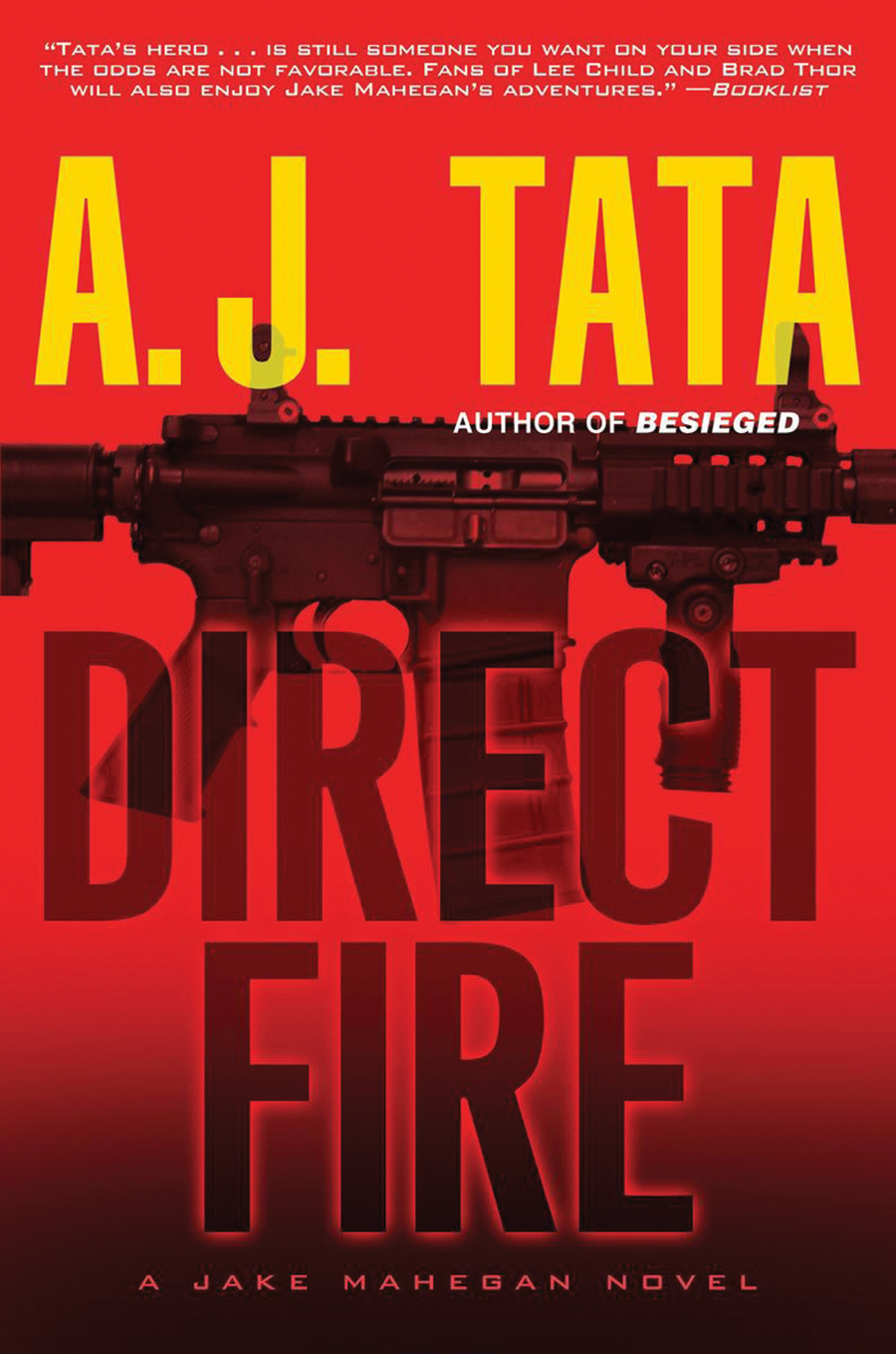
A.J. Tata is an author of nine novels; a speaker; a national security expert; and a retired brigadier general of the U.S. Army, who commanded nearly 25,000 troops on his last combat tour in Afghanistan. You can meet Gen. Tata at The Country Bookshop on Saturday, Jan. 13, at 12 p.m. and hear him talk about his latest thriller, Direct Fire, in which Capt. Jake Mahegan is fighting the war on terror in America — right here in North Carolina. The Country Bookshop is located at 140 N.W. Broad St., Southern Pines. For more information, call (910) 692-3211.

Chamber Music at Weymouth

On Sunday, Jan. 7, the popular, Durham-based Mallarmé Chamber Players are coming to Southern Pines as part of the Weymouth Chamber Music Series. These flexible and innovative professional musicians celebrate diversity and innovation in their programs, which often include new or rarely heard works. The evening’s ensemble will feature Elizabeth Phelps on violin, Suzanne Russo on viola, Nate Leyland on cello and Jeremy Thompson on piano — all of whom you will have the opportunity to meet at the reception following the concert. Tickets are $10 for Weymouth members and $20 for non-members and are available at the Weymouth Center office, in person or by phone, 10 a.m.–2 p.m., Monday-Friday; or at the door on the day of the performance. The concert will take place from 3–5 p.m. at the Weymouth Center for the Arts, located at 555 E. Connecticut Ave., Southern Pines. For more information, call (910) 692-6261 or visit www.weymouthcenter.org.

A Walk in the Winter Woods

The towering longleaf pines of the Weymouth Woods-Sandhills Nature Preserve rise up majestically over expanses of wiregrass, ferns and other native plants, providing a habitat for many rare and intriguing creatures. On Saturday, Jan. 6, join a park ranger at 8 a.m. for a 2-mile walk along easy trails to look for dark-eyed juncos, yellow-bellied sapsuckers, ruby-crowned kinglets and other birds visiting North Carolina over the winter. Or just enjoy the glimpse into the past — when longleaf pine forests like this one covered millions of acres in North Carolina and the southeastern U.S. Bring binoculars and field guides if you have them, and dress warmly. The Preserve is located at 1024 Fort Bragg Road in Southern Pines. Call (910) 692-2167 for more information.

The Rooster’s Wife

Friday, Jan. 5: Farmer and Adele bring Texas swing, and a whole lot more. $10.

Sunday, Jan. 7: The Gibson Brothers, two-time International Bluegrass Music Association Entertainers of the Year, make their annual stand at the Spot in a matinee and evening performance. Doors open at 11:59 a.m. for a 12:45 p.m. brunch and show for $40, or $33 without brunch. The evening performance at 6:45 p.m. includes dinner for $42, or $33 without dinner.

Sunday, Jan. 14: Louise Mosrie and Cliff Eberhardt, with insight and lamentations, joy and sorrow, sing songs that get right to the heart of what matters. $15.

Friday, Jan. 19: Ben and Joe (Hunter and Seamons) perform acoustic blues, ragtime and folk music of the Northwest. $10.

Sunday, Jan. 21: The Contenders, with their infectious rhythms and sublime two-part harmonies, bring amazing songs to life. With special guest Randy Hughes opening. $15.

Friday, Jan. 26: Graymatter plays your favorites and some new songs that will be your favorites at this dance party. $10.

Sunday, Jan. 28: Chicago-bred banjo and fiddle player Rachel Baiman brings her new project to the Spot: songs with a message, and chops to match. $15.

Doors open at 6 p.m. (11:59 a.m. for Jan. 7 brunch performance) and music begins at 6:46 at the Poplar Knight Spot, 114 Knight St., Aberdeen. Prices given above are advance sale. For more information, call (910) 944-7502 or visit www.theroosterswife.org for tickets.

Stitches and Clay

The Arts Council of Moore County invite you to attend the opening of ACMC’s January exhibit, “Stitches & Clay,” at the Campbell House Galleries on Friday, Jan. 5, from 6 to 8 p.m. The exhibit showcases works by Judy Foushee of Freeman Pottery (miniatures), Rita Ragan (needlework miniatures) and the Sandhills Quilters Guild. Come meet the artists and enjoy light refreshments as well as quilting and sewing demonstrations. Hosts for opening night reception are Anne Jorgensen of Raven Pottery, the Sandhills Quilters Guild, Robin Smith and Dotty Starling. The reception is free and open to the public, and the exhibition will run through Jan. 26. The Campbell House Galleries are located at 482 E. Connecticut Ave. in Southern Pines. For more information, call (910) 692-2787.

Musical Depictions and Cheerful Notes

On Thursday, Jan. 11, the North Carolina Symphony performs at Lee Auditorium. Rune Bergmann will conduct the evening’s program, which pairs Mussorgsky’s “Pictures at an Exhibition,” a poignant and thrilling tribute to the composer’s artist friend, with Beethoven’s Symphony No. 4, a cheerful and sunny composition. Prior to the 8 p.m. performance, you are invited to meet the musicians in the Band Room, starting at 7 p.m. Tickets cost from $18 to $49 and are available at the door or in advance through the N.C. Symphony Box Office, The Country Bookshop, or the Arts Council of Moore County (Campbell House). Lee Auditorium is located at Pinecrest High School, 250 Voit Gilmore Lane, Southern Pines. For more information, call (877) 627-6724 or visit www.ncsymphony.org.