Rush, Rush, Rush

You said you need a what?

By Renee Phile

A few months ago, around 6:50 a.m., the boys and I were on our way to school when David, my 14-year-old, from the backseat says, “I guess I’m not going to my band concert tonight. It’s really not a big deal.”

I nearly swerved off the road. There are only two concerts a year, and they are both quite the events. “What? Of course you’re going. Why would you say you aren’t?”

“My white shirt and the black pants are too small.”

I nearly swerved off the road again. “Really? When were you going to tell me?”

“I forgot.”

“So you decide to tell me on the way to school on the day of the band concert when you know I have to work all day.”

“Sorry. I don’t need to go. It’s not a big deal. My band teacher will understand.”

“Oh, so she has been preparing you for months for this concert and you think she will totally understand if you don’t go because you failed to tell your mom in time that you need new clothes?”

“Maybe.”

I was afraid of anything that might spill out of my mouth and I guess they were, too, because  we drove to school in silence.

After work I rushed to Kohl’s to find the required white dress shirt and black pants and, of course, they weren’t on sale. What choice did I have? I was being held up at the point of a band concert. I bought the clothes and picked up David from wrestling practice 30 minutes before he had to be at the concert.

“You really didn’t need to worry about it Mom. My band teacher would understand. She’s pretty reasonable.”

Um, you’re welcome.

***

A few weeks later Kevin and I were sitting at David’s wrestling match. Now, these matches typically last around three hours or more, so a wrestling match night is a late night. Kevin, my 9-year-old, between bites of popcorn, said in the most nonchalant voice, “Mom, can we stop by Walmart on the way home?”

“Why?”

“I need something for a project.”

“What project?”

“Something about solar systems. It’s due tomorrow.”

“Kevin, please tell me this is a joke.”

“I forgot about it until just now.”

Frantic, I sent a text to his teacher, apologized for bothering her at home, and said Kevin told me he has a project due tomorrow and this is the first time I have heard anything about it. (No smiley face.)

She texted back promptly and said that, yes, there was a discovery project on the solar system due in the morning, and it was also the end of the grading period, so he couldn’t turn it in late.  (Smiley face and a thumbs up.)

That night was spent gluing and coloring Mercury, Venus and Mars. Around and around we go.

The rules are simple: Tell me your due dates; give me notes from school when you get them; let me know what you need for a project a week ahead of time. Nowhere in the rules do the words “last minute” appear. I know they’re genetically capable of advance planning because when a friend is having a birthday party in two weeks, Kevin hands me the invitation right away and reminds me about it five times a day. They can do it, I just know they can.

Renee Phile loves being a mom, even if it doesn’t show at certain moments.

PinePitch

Our Little Hummingbirds

One of the delights of spring is the return of our hummingbirds, and it’s not too early to start thinking about getting your garden ready for them. Come hear local ornithologist and wildlife ecologist Susan Campbell talk about “Plants that Nurture and Attract Hummingbirds.” Campbell is the North Carolina authority on hummingbirds, and you may have seen her at Weymouth Woods, where she conducts research and bands hummingbirds as they pass through.

Sponsored by the Sandhills Horticultural Society and Sandhills Council of Garden Clubs, the talk takes place Friday, March 16, at 1 p.m. at the Ball Center at Sandhills Community College. Campbell  will describe hummingbirds’ physical attributes and tell you the best ways to attract them. The event is free, but registration is required, so if you are interested, please email landscapegardening@sandhills.edu to reserve your spot. SCC is located at 3395 Airport Road, Pinehurst. For more information, call (910) 692-6185.

Dining with History at the Shaw House

Back by popular demand, the creamed chicken and waffles luncheon will be served at the Shaw House Tea Room on Monday, March 19. Two years ago, the Moore County Historical Association revived the luncheon, once offered daily at the circa 1821 Shaw House. Chefs Jim Jones, co-president of MCHA, and Roberta Williams will prepare the delicious food on-site. There will be pitchers of maple syrup to drizzle on the waffles for fans of the creamed chicken-waffle-syrup taste combination. The dessert will be the traditional prune cake.

There are two seatings: one at 11:30 a.m. and another at 1 p.m. Lunch will be served in both the Shaw House and the Garner House, an 18th-century cabin behind the Shaw House, both located at corner of Morganton Road and Broad Street in Southern Pines. Take-out service will be available. After lunch, diners are invited to visit the gift shop.

The price per guest is $20. Please call (910) 281-5417 to make a reservation (required). For more information, call (910) 692-2051.

From Rio to Pinehurst

The Tufts Archives and Given Memorial Library will hold its 2018 Spring Colloquium, “Where Is Golf Going?” featuring renowned golf course architect Gil Hanse, on Wednesday, March 21, in the Cardinal Ballroom at the Carolina Hotel. Hanse designed the Olympic Course in Rio de Janeiro — where golf returned as an Olympic sport for the first time in over a century — in addition to creating Pinehurst’s acclaimed short course, The Cradle, and designing the highly praised Castle Stuart Golf Links in Inverness, Scotland. He’s currently working on a redesign of the Pinehurst No. 4 course. Tickets are $100. Cocktails begin at 5:30 p.m. and dinner at 6:30 p.m. The Carolina Hotel is at 80 Carolina Vista Drive in Pinehurst. Tickets are available at the Tufts Archives, 150 Cherokee Road in Pinehurst or at www.giventufts.org. For additional information call (910) 295-3642.

Magic and Mayhem

Dr. Jonathan Drahos and the Uprising Theatre Company invite you to join them on Thursday, March 15, for “Magic and Mayhem,” a benefit sponsored by the village of Pinehurst at the Fair Barn in support of Shakespeare in the Pines Summer Festival’s June presentation of A Midsummer Night’s Dream.

The festive evening begins with a cocktail reception at 6:30 p.m., followed by a short performance of songs and scenes reflecting the “magic and mayhem” celebrated in A Midsummer Night’s Dream. The evening will also include food, a silent auction and music.

Tickets for individuals are $75, $140 for couples, and $650 for tables of 10. You can purchase tickets at the door and online. The Fair Barn is located at 200 Beulah Road South, in Pinehurst. For more information and tickets, visit www.uprisingtheatrecompany.com.

Soup and Bread

Come to “Empty Bowls 2018,” a fundraising event to benefit Sandhills/Moore Coalition for Human Care, a nonprofit corporation that provides food, clothing and emergency resources to our Moore County neighbors in need. The date is Sunday, March 4, from 12 to 2 p.m., at the Country Club of Whispering Pines, where you will enjoy live music and delicious soups and desserts prepared by area restaurants and chefs, including Filly & Colts, Chef Clay White, Wolcott’s and Scott’s Table.

A general admission ticket of $40 also entitles you to a keepsake pottery bowl. A limited number of $20 tickets, without keepsake bowls, are available. Tickets for children ages 10–15 are $8 while children 9 and under can partake for free. Sponsorship opportunities are available. The venue is located at 2 Clubhouse Blvd., Whispering Pines. For tickets and more information, call (910) 693-1600 (option 5) or visit www.sandhillscoalition.org.

BYOT (Bring Your Own Talent)

The Arts Council of Moore County routinely invites all Moore County artists — actors, dancers, graphic designers, musicians, photographers, singers, visual artists, writers and other creative types — to get together for Artists Meetups. On Thursday, March 22, from 6 to 8 p.m., the Trinity Community Outreach Center will host an open mic acoustic event for singers, poets. A house piano, drums and sound system will be provided. Unlimited signups. Photographers, painters and dancers are welcome to capture and interpret the music. Savory and sweet snacks and light beverages provided. This is a free ACMC event. All artists are welcome to come and share their creative passion. The TCOC is located at 972 W. Pennsylvania Ave., Southern Pines. For more information, call (910) 692-2787 or visit www.MooreArt.org/ArtistsMeetup.
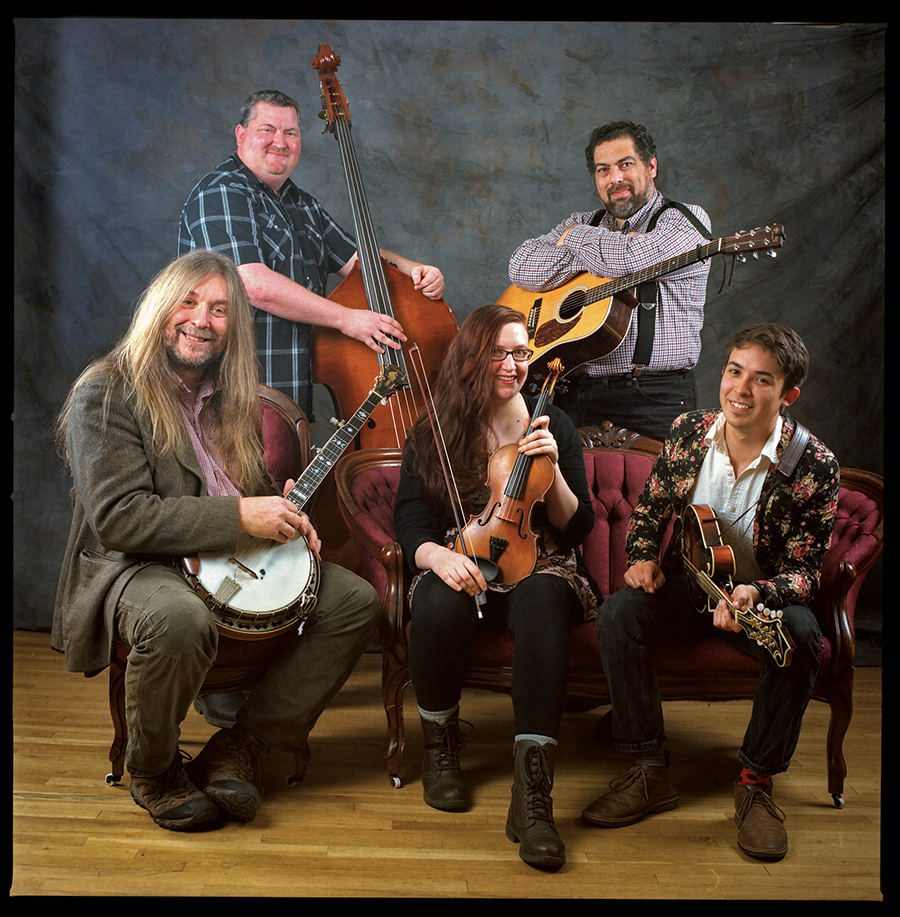
The Rooster’s Wife

Friday, March 2: The Kennedys. Now in their 22nd year as recording artists, the Kennedys are continually touring the United States and United Kingdom, playing acoustic folk rock at its finest. $10.

Sunday, March 4: Merlefest on the Road. Andy May, the Barefoot Movement and the Waydown Wanderers mix traditional Appalachian with whatever other styles they are in the mood to play. $20.

Sunday, March 11: Hiroya Tsukamoto and Kyshona Armstrong offer Japanese folk music and poetry through words and music. $15.

Thursday, March 15: Open mic.

Friday, March 16: Ms. Adventure’s Avril Smith, Vickie Vaughn and Kimber Ludiker play fiddle, bass, and guitar and have voices that soar through original and traditional tunes.

Sunday, March 18: Scroggins and Colorado perform a powerful, high mountain bluegrass explosion that features banjo and mandolin, incredible vocals and easy stage banter. $20.

Friday, March 23: The Steel City Rovers mix Celtic and North American traditions; and offer sophisticated musical arrangements and clever lyrical compositions. $10.

Sunday, March 25: Ameranouche — a rip-roaring ensemble playing hot acoustic, Gypsy-inspired music on traditional French jazz guitars. $15.

Doors open at 6 p.m. and music begins at 6:46 at the Poplar Knight Spot, 114 Knight St., Aberdeen. Prices given above are advance sale. For more information, call (910) 944-7502 or visit www.theroosterswife.org for tickets.

Sounds on the Grounds Fundraiser

On Sunday, March 25, from 4 to 8:30 p.m., come to the Weymouth Center for Arts & Humanities for a family-friendly fundraiser in support of the beautiful grounds, historic buildings and Weymouth’s wonderful community programs. Hear music by Momma Molasses, playing with James Villone and Evan Campfield on bass; 80’s Unplugged; Whiskey Pines; and Becca Rae. Enjoy food and beverage provided by Kona Ice, Wildfire Pizza, Swank Coffee, Southern Pines Brewery and Weymouth (wine), among others. Shop at pop-up stores. Tickets are $10 for members, $15 for non-members, $5 for teens (ages 12–15) when accompanied by an adult. No charge for children under 12. This event is hosted by Weymouth Young Affiliates. Weymouth Center is located at 555 E. Connecticut Ave., Southern Pines. For more information, call (910) 692-6261 or www.weymouthcenter.org.

Back the PAC

Join the Pinecrest Athletics Club at the Fair Barn on Saturday, March 10, in an evening filled with friends, food, dancing and fundraising in support of all student athletes at Pinecrest High School. From 6 to 11:30 p.m., enjoy beer, wine, hors d’oeuvres and music by DJ King Curtis. The evening will also include live and silent auctions. Tickets are $50 for individuals. Tables of eight may be reserved. You can purchase tickets at Cameron and Company, Village of Pinehurst; Knollwood Fairways and Driving Range, Southern Pines; Pinecrest High School; and First Bank, Pinecrest Branch; or by contacting Christa Gilder at (910) 528-1437 or christa.gilder@mzero.com.

Green with Envy

Doing St. Paddy’s Day the Southern way

By Tom Allen

You are what your ancestors ate. And drank. Sometimes.

Credit English forebears for my fish and chips hankering. Hot tea, too. But a recent Ancestry.com search shows a wee bit o’ green pulsing through my veins. Therefore the Irish branch on my family tree should support corned beef and cabbage. But no. A split decision. I love cabbage. Ditto potatoes and soda bread slathered with Kerrygold butter.  But, even on St. Patrick’s Day, I can’t stomach corned beef. Maybe that’s because nobody in Ireland eats the Americanized permutation, which replaced bacon — too expensive for poor Irish immigrants.

Funny thing is, I’m a deeply rooted Southerner who doesn’t appreciate a thick Better Boy tomato slice on white bread, made mushier with mayo. Duke’s, of course.  “Unheard of,” some folks say.  “Treason,” others sneer.  My reply?  “Sorry, it’s a texture thing.”

Leprechauns aside, March 17 marks the feast day of Ireland’s beloved patron saint.  In Ireland, until later in the 20th century, the day was more religious than raucous.  While family and faith are important to the celebration, pubs and parades now mark the occasion as well.  An estimated 33 million pints of Guinness are downed in that 24-hour period.

In America, St. Patrick’s Day is a one-day deal, but the Emerald Isle spends several days tipping its hat to the good fellow credited with Christianizing the island nation and driving out those legendary snakes.  According to a friend with Irish roots, lots of folks wear green, even live shamrocks, but pinching is purely American.  Pinch an Irishman who’s not wearing green and you’re liable to catch a left hook.

As for Irish food, colcannon, not corned beef, is a St. Patrick’s Day staple.  The mixture of creamy mashed potatoes and cabbage or kale is served with bacon, a combination that makes me smile.  But who whips up colcannon around here?

I’m a foodie traditionalist.  Therein lies the pickle.  Give me Hoppin’ John on New Year’s Day, burgers and dogs on July 4, turkey from Thanksgiving to Christmas.  But what’s a Southern boy, with a bit of Irish ancestry, supposed to eat on St. Paddy’s Day?  If not corned beef, perhaps a pork option honoring those frugal Irish immigrants who gave up their pricey bacon?  Try cured and fried.  Make mine country ham, sliced paper thin and seared in an iron skillet.  Perfect, I say, with a plate of steamed cabbage.  Pair with some buttermilk biscuits, spread with Kerrygold butter, of course, and dig into a fine pot of gold at the end of the rainbow.

Speaking of pickles, St. Patrick’s Day always falls during Lent, a season when some abstain from meat on Fridays.  Last year, the feast fell on a Friday.  Fortunately, some bishops in communities with large Irish-American populations relaxed the rule, granting one-day dispensations, so the faithful didn’t have to choose between sinning and nibbling on their beloved corned beef.

No such pickle this year, since St. Patrick’s Day falls on Saturday.  So simmer a pot of cabbage. Load up that slow cooker with a slab of corned beef brisket, or, if you’re like me, fry up some slices of North Carolina’s WayCo country ham.  Don a bit of green, offer a word of thanks for good souls like Patrick, then sit down to a salty feast that’s sure to keep those Irish eyes smiling.  Erin go bragh!

Tom Allen is minister of education at First Baptist Church, Southern Pines. 

Walter’s Saw

Cutting through time

By Jim Dodson

Save for a handsaw, an old pocket wallet and quiet memories, they are all that I have left of him.

The wallet is a fine piece of work, a gentleman’s pebble grain leather breast wallet, beautifully stitched and bearing my grandfather’s initials in gilt lettering: W.W.D.

William Walter Dodson was a skilled carpenter and electrician who helped raise this region’s first electrical transmission towers and worked on the crew that wired Greensboro’s Jefferson Standard Building. During the Second World War, he also made cabinets for PT boats and built bookshelves for local public libraries.

The wallet is in mint condition, lined with fine silk, its state of preservation suggesting it was scarcely used. I think my dad brought it to my grandfather upon returning from military service in England and Normandy, in 1945. My guess is, Walter rarely used it because he was a workingman who rarely, if ever, dressed up. As I remember him, he was a preternaturally quiet but gentle man in rumpled cotton pants who was either fishing or in his woodshop or massive vegetable garden — the three places I spent most of my time with him. There was always the stump of a King Edward cigar in his mouth.

Walter’s handsaw, on the other hand, shows years of steady use, well worn and rusted in places near its simple wooden handle. I suppose it must be 80 years old if a day.

Both wallet and saw came my way decades ago and traveled with me to Georgia and Maine and back to Carolina in order to complete the sacred circle old elephants and most Southerners observe before they translate to a gentler, kinder place.

I inherited the items from my father, who never used the wallet either — too nice, he claimed — but did use that old handsaw for years until power saws showed up in his own woodworking workshop. He made bookshelves and tables for friends and family.

Not surprisingly, I picked up the woodworking bug too, clearly something in the bloodline.  We hail, after all, from a long line of Carolina woodworkers, at least one of whom was a celebrated cabinetmaker.

Walter’s grandfather — my great-great-granddad — was one George Washington Tate, a prominent citizen of Alamance County who helped survey the boundaries of the state’s central counties following the Civil War, but was best known for his grist mill on the Haw River and his skill at crafting fine furniture.

Last summer, while attending a seminar at the Museum of Early Decorative Art (commonly known as MESDA) on the Scots-Irish furniture makers who filtered into the Carolina back country during the 18th century, I heard G.W. Tate’s name mentioned in a tone of near reverence by an expert on Piedmont furniture making, who noted that one of his most notable surviving pieces is a handmade wardrobe displayed in a Williamburg museum of early American furniture. Tate Street in Greensboro is named for this man.

She was delighted when I informed her afterwards that I knew of a second splendid handwork of Tate’s. My second cousin Roger Dodson and his wife, Polly, had recently had us to supper and showed us a handsome old walnut corner cupboard that bore his distinctive mark “G.W. Tate.”

It was his grandson Walter, however, for whom I’m partially named, who first placed a saw in my hand. One Christmas when I was about 6 or 7 years of age, visiting my grandparents in Florida, he gave me a miniature tool box with a small hammer, screw drivers and handsaw.

In his modest workshop, he also showed me how to saw a straight line and hammer a nail — small tasks that seemed almost magical at the time.

Somehow that kid’s toolbox disappeared over the years, probably because I used its tools constantly to build forts in the woods around our house. I recall using them to build my entry for the annual Cub Scout Pinewood Derby. My car got eliminated early, which was perfectly fine with me. I much preferred building forts and crude furniture.

It wasn’t until I was over 30 and living on the coast of Maine that two abiding passions hit me with a vengeance, both of which I trace to a quiet carpenter and gardener in rumpled pants.

The first struck when my wife and I built a post and beam house on a forested hill in Maine. I helped the housewrights place the structural beams, but did most of the interior finish work myself, learning as I went.

Not only did I lay and peg the 16-inch ancient pine flooring boards salvaged from a 19th-century barn in New Hampshire, I also designed and built the kitchen’s counter and cabinetry from scratch. Ditto the adjoining walls of pine bookshelves in the living room. My distinctly Southern mama, when she first walked into our home, smiled and remarked, “Honey, all this wood is very pretty. But when are you going to finish this house?”

The Canadian hemlock beams and pine floors and cabinets cast a golden glow over everything, especially as the sun shone through our tall south-facing windows. Over nearly two decades that followed, I loved the subtle creaks and moans the beams and floors made as the house settled and the wood aged, especially in the dead of winter when the sun struck the beams and the house emitted out a lovely scent of the forest. I thought of this as the house exhaling in a contented way that my late grandfather would likely have approved.

Walter probably would have liked the rustic farm table and occasional table I made for the living room, too. The table we gave away when my second wife and I moved home to North Carolina. The occasional table went to my first wife’s house, where it’s still in use and quite loved today.

Walter Dodson passed on when he was 64. I was 11, my first funeral, and it was really sad to see him go. He looked remarkably peaceful in his big wooden coffin, dressed in the only suit I ever saw him wear. My grandmother was a serious Southern Baptist, though Walter rarely darkened the doorway of any church. Time on the water or in his workshop or garden were his idea of worship, his way celebrating the gift of life.  Anyone who works intimately with wood or tends a garden through the seasons would completely understand.

As I write, this Walter is also 64 years old and preparing to build a set of ambitious bookshelves for the cozy room my wife and I have decided would make a splendid library in the old house we’ve been slowly redoing over the past 20 or so months.

I have my eye on a fancy new power saw that will do just about anything from the finest trim work to cutting a rough plank flooring. It costs more than my gifted, gentle grandfather probably made in a year.

Proof that you can take the boy out of the woodshop but not the other way around, however, resides in the fact that Walter’s handsaw will be hung somewhere in my new woodshop where those bookshelves will be born, a sweet reminder that the hand that shapes the cut was created long before the saw ever touched wood.

Contact Editor Jim Dodson at jim@thepilot.com.

Still Dormie

New life for the Coore-Crenshaw course

By Lee Pace

It was exactly 10 years ago this spring that Bob Hansen sat down to breakfast at the Pine Crest Inn to talk about his lifelong love affair with golf, his memorabilia collection, his involvement in a Brunswick County golf course called The Thistle, and a new club he was developing located 5 miles to the northwest of the village of Pinehurst.

The new enterprise was called Dormie Club. It was to be a private enclave with local and national membership components, a place for purists to congregate and walk a rough-hewn and old-style course designed by North Carolina native Bill Coore and his design partner, Ben Crenshaw. Hansen waxed eloquent about the old-soul template for the club and what he hoped would be a lack of pretense — just golfers sticking a peg in the ground and having a game.

“Golf is life-shaping,” Hansen said. “You get an opportunity to be completely away from the business world, from cellphones and traffic and all the noise out there. You get out on the golf course with people, and you find out real quick what’s on their minds. For the most part, you’ll see that fog from their everyday life evaporate and see that their commitment is to the game. Guys are wrought up with stress, but put your bag on your shoulder and go hit some shots and it changes your whole day.”

Hansen spoke of the genesis of the name “Dormie,” taken from the golf term meaning that a golfer in match play has a lead equal to the number of holes left to play. He cannot lose.

“’Dormie’ has been in the Scottish language for hundreds of years,” Hansen says. “In the context of this club, its primary meaning is that you have come to a point in life where nothing much bad can happen, where you can do me no harm. ‘I am dormie’ — the worst I can do is tie. I am at a point where I am comfortable and can relax.”

It turns out the “dormie” metaphor was far more ticklish than Hansen and his partners would ever dream. Over the following 12 months, the S&P 500 would be cut in half, and two venerable financial institutions would implode and go belly up. The timing for a new club was horrendous at best, dreadful at worst. The course opened in 2010, but the lofty visions of the Dormie brain trust never materialized. The golf operation never actually closed, but the original plans and infrastructure were stuck in the muck. In recent times, there was not even a head golf professional, just a clerk to take golf fees from the public and the package players that the club needed for its trickle of cash flow.

“Bob had excellent vision for the club,” says Mike Phillips, the club’s original membership and sales director who first worked at Dormie from 2009-13. “He was very smart in bringing Coore and Crenshaw in and basically giving them carte blanche to do what they wanted to do on the golf course. He showed them the boundaries of the property and said, ‘Use what you want and call me when you’re through.’

“The fact that the course never closed during some tough times says volumes about how good it is. The site is hard to match in terms of peace and tranquility.”

Coore and Crenshaw’s first smash hit in the golf design business was Sand Hills, a 1995 build-it-and-they-will-come club in central Nebraska. A member there is Tom Peed, who built a publishing empire centered in the heavy machinery and agricultural worlds of the Midwest and has three sons working for the business. One of them, Zach, is a crack golfer who played at Nebraska Wesleyan College and now is running a division of the company that has purchased four golf courses from Nebraska to Texas to Virginia and, now, to the Sandhills of North Carolina.

Dormie Club was bought in January by Dormie One Properties, which will operate it as one of a network of clubs that includes Briggs Ranch Golf Club in San Antonio, Texas, Ballyhack Golf Club in Roanoke, Virginia, and Arbor Links in Nebraska City, Nebraska. New management will honor tee times and outings already on the books, but in time the club will be strictly private — per the original vision. Local, national and corporate memberships will be available, and membership at one club includes access to each club in the Dormie One network, which the Peed family intends to expand. Plans for a clubhouse and 15 four-bedroom villas are in the works. Phillips, who has returned to the Dormie team as membership director and land sales broker, says the owners hope to break ground by summer, and plans call for no more than 60 to 70 golfers a day.

Coore visited the club in early January 2018 and planned a second trip soon after to complete a punch list of to-do items for the club maintenance staff, things mostly a result of tree and underbrush growth over the eight years since the course opened.

“Ben and I are very pleased with the new developments,” Coore says. “In talking to the Peed family and walking the golf course with them, they really do want it to reach its potential. It’s not been that far off. It’s a very positive thing — not just for Dormie, but for golf in the Pinehurst area. Basically the course just needs a little polishing, nothing major. It’s actually in very good condition.”

The club is located near the intersection of Hwy. 73 and Beulah Hill Church Road and has two lakes (one of them 55 acres large) and 100 feet of elevation change. There are the pine forests typical of the area, but a rich abundance of hardwoods as well.

The designers’ idea for the course when they began in 2006 was to incorporate the look and feel of the No. 2 course, which Coore played often as a junior in the 1950s and ’60s — hard running, plenty of width for strategy, interesting green complexes, no Bermuda rough anywhere. Tees, fairways and greens would be maintained, everything else left as nature had created it. Since there is no real estate within the course, it’s relatively compact and walkable (caddies are available).

“By no means did we envision a copy of No. 2,” Coore says. “But we wanted to take some of the principles we felt applied to No. 2 and other courses Mr. Ross had done in the Sandhills and say, ‘This is our interpretation of what golf in the Sandhills might look and feel like.’”

The finished design requires a deft touch in places — there are two par-4s drivable for long-hitters (the third and 14th, both under 300 yards), but often a player will deduce the smart attack is to lay back and have a full spinning wedge from a hundred yards. Delicacy is also required on the par-3 12th, which stretches only 98 yards with tees stair-stepping upward from back to front. Brute force is demanded on the closing holes — 17 is a par-5 with a vast expanse of sand and nature to carry, and 18 is a long par-4 uphill.

Coore remembers routing the course from walking the land and surveying the topo maps — before wetlands had been designated. He knew from experience and instinct which areas of the property would likely be deemed wetlands and thus untouchable for the playing areas. He was amused and pleased to learn that his routing and the government-issued wetlands map meshed nicely.

“If they had handed me a map at first with the wetlands delineated, I’d have handed them back and said, ‘You can’t do a golf course here,’” Coore says. “But it worked out fine. It just proved to me that if you lay the golf course out the way the land wants to go, in most cases the wetlands are going to be OK. The topos will tell you a lot of things, but they won’t tell you the feel of the place. You have to go walk a site and experience it, get a feel for the way the golf course will circulate. Because we laid the holes out the way you would naturally play from one high, across a low to the next high, the wetlands had little impact.”

And so Dormie Club enters its second iteration, hopefully one that will see it emerge as a winner in extra holes.

Chapel Hill-based writer Lee Pace wrote about Coore and Crenshaw and their restoration of Pinehurst No. 2 in his 2012 book, The Golden Age of Pinehurst.

Go Fish!

In the swim of things with brilliant, imaginative and elusive Pisces

By Astrid Stellanova

Cast a net into the sea of life, and marvel at the roundup of famous Pisceans. As if Albert Einstein weren’t enough, what about Kurt Cobain, George Washington and Dr. Seuss? Throw in Andrew Jackson and Jack Kerouac for a little special sauce, and see who would be best friends and roommates in the great hereafter. If anything is fishy about Pisces in the here and now, it is how they can hide their amazing selves in plain sight. Brilliant in ways you cannot stereotype, they will slip right out of your hands before you ever hook them, these delightfully slippery fish.  –Ad Astra, Astrid.

Pisces (February 19–March 20)

Time was when you were so forgiving (and distracted) that you would let anybody have their way if they were nice and remembered to say “thank you.” In the nicest way possible, you have learned to push back and find your footing concerning a subject that vexed you for most of 2017. Now you have to learn to say: Play me or trade me. Somebody who wants your talents may not realize how valuable they truly are. But, Sugar, you know.

Aries (March 21-April 19)

A natural wit allows you to come back swinging smartly no matter how deep the wound. But your inner wisdom may be telling you not to head into a knife fight with a stick of butter and a yeast roll. Little Ram, have you been duped? Let that sink in a minute, Sugar. Now, deep breaths. Head up, spine straight, and don’t
look back.

Taurus (April 20–May 20)

A tornado ripped through your life late last year, and you ain’t quite over it. What happened caused you to go right off the rails and then wallow in the ditch. That is not your style, Star Child. If anything motivates you to start over, it is knowing somebody one-upped you. Don’t tear their heart out and eat it with a nice Chianti. Find a way forward.

Gemini (May 21–June 20)

Could this month get any better? Possibly. You finally pulled your fingers out of your ears and started listening to your own heart and living your own life — not your sister’s, not your daughter’s, not your Mama’s. A special little secret is about to unfold.  You’ll be tap dancing all the way to the bank, metaphorically speaking. 

Cancer (June 21–July 22)

It is not that complicated. If you didn’t get what you wanted the last time around, suck it up and take a do-over. You can’t keep your children young and in your grasp forever. But you sure can make the home front happy. That, and take their car keys away. Don’t whine. Be the driver.

Leo (July 23–August 22)

Your two favorite words this month: refund due. Yes, Sweet Thing, the IRS is going to be your ally. Not for nothing did you lose so much money on Sea Monkeys and Sonic Egg Beaters. Turns out, some kinds of pain are deductible! Restrain your entrepreneurial impulse until you are back in the black. 

Virgo (August 23–September 22

You’ve never looked better, prompting a lot of folks to think you’ve found new love. Only you know the actual facts (as opposed to the alternative ones): You have found it a lot easier to be inside your own skin. Honey, that new ’tude ushers in one of the best springtimes in memory. Don’t blink and miss the fact that this ain’t a cosmetic fix, but an inside job — and an important development.

Libra (September 23–October 22) 

It is true that money can’t buy happiness, but it dang sure can buy puppies. At last, practical and generous you have funded your own happiness. This recent splurge may be one of the wisest moves you’ve made in ages. Next up: Discover the bliss of not giving a damn what anybody else thinks!

Scorpio (October 23–November 21)

The bottle before you purred, “Yes, amazing Scorpio, you ARE the wisest and best of all!” You drank that in, didn’t you, Sugar? Well, surprise, surprise.  You stayed at the party too long. A little sober reflection might bring you actual wisdom. It stings, realizing your need for affirmation took over.  But now you have opportunity to see clearly . . . truly.

Sagittarius (November 22–December 21)

Recently you have felt sick and tired of feeling sick and tired. That was the exact moment you began to change your life in a very productive way. No need to be all things to all those you love. If you spell resentment, it would look a whole lot like your name, Sugar. Ready to stop?  It’s that simple.

Capricorn (December 22–January 19)

In the anything-worth-doing-is-worth-overdoing category of life, you may have just taken first place honors and won a new badge. Try for second place, Honey. It is admirable that you care enough to over-deliver. But you cannot sustain this kind of effort. Just. Try. Less.

Aquarius (January 20–February 18)

It was the perfect birthday for you. Now, an important task. More than one person in your orbit relies upon your gentle counsel. It will surprise you to learn who, as you respect them greatly and view them as a spiritual guide. You are an old soul; you know validation comes from within.

For years, Astrid Stellanova owned and operated Curl Up and Dye Beauty Salon in the boondocks of North Carolina until arthritic fingers and her popular astrological readings provoked a new career path.

The Mighty Onion

A superfood for your garden

By Karen Frye

Superfoods became sought after several years ago, and are still going strong. They are highly nutrient dense in antioxidants, vitamins and minerals.  Usually they are plant based, and sometimes exotic.  Acai, goji berries and moringa are a few of the superfoods that are not typically grown in the U.S. and can be rather expensive to add to your diet. We are more familiar with easy-to-find blueberries and raspberries. 

A vegetable that tops the list of healing foods, and one you should include if you’re planting a garden this spring, is the onion. It has been used throughout the ages to treat and heal health maladies from head to toe. They grow easily here, and can be added to your diet in many ways.

Grown all over the world, onions were one of the most highly revered vegetables in cultures dating back to the Egyptians. They have even been used as currency. Onions were placed in the tombs of kings, including King Tut. 

What makes the onion so rich in healing benefits, even more so than its relative, garlic? They are rich in a potent, well-studied bioflavonoid and powerful antioxidant, quercetin, used to treat seasonal allergies. Quercetin kills cancer cells and prevents plaque buildup in the arteries.

Onions also contain sulfur compounds. These compounds have antimicrobial and anti-fungal properties that have been studied in connection with the prevention and treatment of heart disease, atherosclerosis, cancer, diabetes, asthma and many more health problems.

Eating onions regularly can help lower cholesterol, lower blood pressure and reduce your risk of heart attack and stroke. We think of garlic as a potent remedy for these conditions, and a lot of people take garlic capsules daily for prevention. Actually, onion oil is 10 times more potent than garlic oil. 

Adding onions to your plate can help balance your blood sugar and assist in normal functioning of the liver and kidneys. Women who eat onions daily had a bone density about 5 percent higher than those who only ate onions occasionally. And eating onions regularly may help prevent periodontal disease, by reducing the harmful bacteria that leads to this problem. Even though it’s best to eat them raw, the nutritional benefits are still available if you sauté, steam or bake them. Fried onions, however, lose a lot of value.

Topically, onion juice can be a very effective treatment to reduce scars. It’s so effective that there are some skin care products that use onion extract in their concoctions. A friend shared with me that his mother always reached for a raw onion to rub on insect bites to alleviate the itch. Onion poultice is easy to make, and works wonders for respiratory conditions. Simply slice a few onions and steam them for about 10 minutes. Pat them dry and wrap in a clean medium-sized dish towel. Place the warm (not too hot) poultice on the chest to break up congestion and coughing.

An onion a day may keep the doctor away. After all, food is our best medicine.

Karen Frye is the owner and founder of Natures Own and teaches yoga at the Bikram Yoga Studio.

Spring Forward

But only when the cows do

By Ray Linville

If it wasn’t for the railroads, we might not be losing an hour of sleep on the second Sunday in March when we spring forward and advance to daylight saving time.

The railroads, after all, are responsible for pushing us to adopt time zones in this country to improve communications and travel coordination. Until then, time zones were determined locally. Can you image the chaos if Raleigh and central North Carolina were on a different time than Asheville?

Actually, something similar did happen. From 1883 (when our country’s four time zones were established) to 1946, Asheville and points west in this state were in the central time zone while we kept time with others in the eastern zone. After time zones became standard, it was an easy step to create daylight saving time — and necessary during wartime as a fuel-saving measure.

Benjamin Franklin, famous for the maxim “Early to bed, early to rise, makes a man healthy, wealthy and wise,” knew better. He didn’t rise at daybreak, and he certainly didn’t want to see the sun an hour early. When he encouraged people to get up early — for the benefit of saving on candle use in the evening — he meant it as a joke.

Tar Heels might have more in common with Pennsylvanian Franklin than we realize. In 1945 when World War II ended, the federal requirement for “war time,” as DST was known, also ended. For decades, observance of DST throughout the country was inconsistent. However, North Carolina never observed DST again until 1966, when the state began following the national schedule.

The argument that DST benefits farmers was long ago debunked. Cows follow a schedule based on the sun, not the hour on our clocks. Even energy conservation today is questionable because any savings in reduced lighting are more than offset by additional demands for air conditioning in the summer evenings.

It was hard enough before the age of the internet to spring forward. Now it’s almost impossible. High schoolers are up late and get so little sleep that their parents are asking for later and later start times.

My granddaughter, Katie, now in seventh grade, has it bad. Because high school students can’t get up early, the middle schoolers win the first bus routes. She sets her alarm clock for 6:15 each school morning to get up for the earliest bus in her county. Imagine her joy for springing forward this month.

In contrast, when I was a teenager in the era of no social media or video games, I got up before sunrise to complete a morning newspaper route well before school began. That alone required that I went to bed early, regardless of Franklin’s advice.

Then in college I struggled to attend 8 o’clock classes. Yes, colleges used to have classes that early.

South Carolina may be leading the region in determining what choice is better — daylight or standard. One legislator has proposed a bill that lets voters decide in a referendum this November if that state should continue to observe daylight time. How would you vote?

For me, the decision would be easy. My days of springing forward are over. I’m with the cows. Sunlight determines my schedule, unless the railroads again have a better idea.

Ray Linville writes about Southern food, history and culture.

Sporting Life

Gearing Down

February is a month to take stock


By Tom Bryant

February, according to many of my outdoor friends, is the dregs of winter. If you enjoy the great outdoors, there’s not much you can do that month. Most hunting seasons are closed, and it’s too cold to fish. If you play golf, a sunny day will let you on the course, if it’s not frosted over in the morning. But I’m afraid golfing never became one of my outdoor pursuits. I’d much rather be pursuing birds than following a little round ball. That’s not to say golf’s not a great sport, I’ve just never tried it. Too many other things appealed to me at a young, formative age.

So what to do in February? I use this down time to sort through and try to organize winter gear that I’ve accumulated over the years. I believe it was Gene Hill, the famous author and columnist for Field and Stream, who once stressed the importance of acquiring sufficient items for days afield. In essence, he said if you find an important piece of gear that fits your requirements to a T, you’d better buy two, because the gremlins, those who often throw curves to befuddle us folks who appreciate the finer points of outdoor gear, will quit making it.

While going through hunting shirts that are hanging in a closet I dedicated to hunting and fishing apparel, I realized that Mr. Hill’s premise was exactly right. I have two heavy chamois shirts that I bought from a clothing outlet in Burlington about 30 years ago. Over time they have become buttery soft and a pleasure to wear. One is khaki, the other dark green. I wear them mostly when duck hunting, and sometimes I’ll slip one on when I’m just hanging around the house. They are especially comfortable when I’m lounging by a blazing fire. I have other shirts designed for outdoor wear and they suffice on most occasions; but when I really want to be comfortable, I’ll pull out my old favorites.

There are also a couple of wool mackinaw trousers; well, one is a pair of trousers and the other overalls. When all the red you can see on the outdoor thermometer is a little bit at the bottom, these are the most important pieces in my closet. I’ve spent many a day in a frozen duck blind, warmed by these amazing garments that have only gotten better over the years.

My problem is I keep trying the new clothing dedicated to hunting and fishing, but nothing seems to come up to the high standards set by my old stuff. Maybe it’s because I’m used to the old and haven’t given the new a real chance; and maybe it’s because the old is broken in and well worn, but I’ve tried, and here’s a recent example. I have several other chamois shirts, some that I’ve purchased and some that were gifts. Initially, they were stiff as cardboard and after several washings they’ve shrunk to a size that would fit a 14-year-old. They are now in a pile, destined to hang on racks at Good Will. Hopefully, a 14-year-old will be able to use them.

Coats seem to be cut smaller, T-shirts and underwear almost disappear after a few washings, and trousers have become restrictive and uncomfortable. I really don’t mean to sound like an old curmudgeon, disappointed in new gear. There are some items that more than fit my strict standards.

L.L. Bean still makes good stuff. I have a pair of their boots that I’ve worn forever, and the good thing is when they are on their last legs I can send them back to the company and they will rebuild them. Same with Barbour coats. I’ve had one of their classic jackets for at least 20 years. I ripped the coat while grouse hunting in Michigan and thought it was a goner; but at the suggestion of a good friend, I sent it back to the factory and they repaired it almost as good as new.

While on a recent duck hunt to Mattamuskeet, my hunting buddies and I commiserated about the lack of well-built hunting gear and how our choices in apparel are decreasing. But more importantly, so are available localities for hunting and fishing. I’ll be the first to admit that we have seen a lot of sunrises in our sporting endeavors, as our ages will attest; but in the last few years, the decline of hunting space has diminished alarmingly. Black Creek Swamp, where I cut my hunting teeth on squirrels, is now bordered by a country club with huge houses and an 18-hole golf course. Now the creek is just a directed stream with rock borders, not a decent locale for any self-respecting squirrel.

Four hundred acres of some of the best habitat for deer, turkeys, ducks and otters plus a creek full of bream and even a bass or two is a place I hunted and fished for over 20 years. Unfortunately, the land has been cut up into 10-acre mini-farms and sold to city folks who like to think they’re living in the country. Also suffering the same fate is Plimhimmon Plantation on the banks of the Tred Avon River in Maryland. For 15 years, we goose hunted that magnificent farm and have wonderful memories I wouldn’t trade for anything.

My companions in the field and I could easily say, what the heck? We’ve seen it and done it and it’s unfortunate it’s gone, but what can we do? I have what I think is a good answer to that question: As geezers, we can continue to talk about it. As long as we do, those times and habitats will not be forgotten, and maybe some of them can even be reclaimed.

There is a bright light on the horizon, though, and that’s the place where I go every winter to replenish my soul: Hyde County and Lake Mattamuskeet. The little town of Engelhard steps right out of the past. Located on the Pamlico Sound, the quaint fishing and farm village remains as it was many years ago. Karen and Dale Meekins are owners and hosts of the Hyde County Lodges, where we hang our duck-hunting hats and are as hospitable as you would expect them to be. Their families go way back in the area and are well known and respected as folks who honor the land and wild country and waters where they have made their home. I enjoy their company.

Also, I have made a tradition of stopping by Gibbs Country Store in the morning as I’m leaving the area. It steps right out of the past, potbelly stove and all. I always get a cup of coffee from the never empty coffee pot, fill it half full and check out at the old register. Mr. Gibbs is usually there and will say, “That’ll be 50 cents.” He’ll then look in the cup. “Nope, you only got half a cup, give me a quarter.”

As long as I’m able, I’m going to continue my annual trek to Hyde County. The visit never fails to improve my outlook for the future of the great outdoors.  PS

Tom Bryant, a Southern Pines resident, is a lifelong outdoorsman and PineStraw’s Sporting Life columnist.

Birdwatch

Love Bird

For the American woodcock, February is mating season


By Susan Campbell

February is the month for love — and for the American woodcock, this is certainly the case! By midmonth this pudgy, short-legged, long-billed denizen of forest and field is in full courtship mode. Almost everyone, however, will miss its unique singing and dancing since it occurs completely under the cover of darkness.

American woodcocks, also called “timberdoodles,” are cousins of the long-legged shorebirds commonly seen at the beach. Like plovers, turnstones, dowitchers and other sandpipers, these birds have highly adapted bills and cryptic plumage. Woodcocks, having no need to wade, actually sport short legs, which they use to slowly scuffle along as they forage in moist woods and shrubby fields. This behavior is thought to startle worms and other soft-bodied invertebrates in the leaf litter and/or just below the soil surface. Their long, sensitive bills are perfect for probing and/or grabbing food items. And camouflaged plumage hides woodcock from all but the most discerning eye.

And, speaking of eyes, American woodcocks have eyes that are large and strategically arranged on their heads. They are very high up and far back such that they can see both potential predators from above as well as food items in front and below them.

Beginning in late winter, male American woodcocks find open areas adjacent to wet, wooded feeding habitat and begin their romantic display at dusk. Their elaborate come-hither routine begins on the ground and continues in the air. Typically, the male struts around in the open area uttering repeated, loud “peeent” calls. He will then take wing and fly in circles high into the sky, twittering as he goes. Finally, the male will turn and drop sharply back to the ground in zigzag fashion, chirping as he goes. And like a crazed teenager, this is followed by repeated rounds of vocalizations.

Where I live along James Creek in horse country in Southern Pines, displaying begins on calm nights in December. Some of these individuals are most likely northern birds that have made the journey to the Southeast retreating from colder weather. They may just be practicing ahead of some serious hanky-panky in early spring back up North. Regardless, females are known to visit multiple spots where males are known to do their thing before they choose a mate. So it behooves the males to display as often as possible to impress as many females as they can during the weeks that they are on the hunt for a mate.

Although long hunted for sport, it was Aldo Leopold, the renowned conservationist, who implored sportsmen to better appreciate these little birds. They are well adapted for a forest floor existence, hidden from all but their mates come this time of the year. And, on rare occasions, from birdwatchers keen on getting a glimpse of the American woodcock’s antics come late winter.  PS

Susan would love to receive your wildlife observations and photographs at susan@ncaves.com.