Weekend Away

Urban Wonderland

The Madcap gents hightail it to bustling Greenville

By Jason Oliver Nixon

Recently, at High Point Market, John and I ran into a Greenville native and friend and, over drinks, we discussed the state of downtown HP.

“You think downtown High Point struggles,” our pal said. “Greenville was worse back in the day. Twenty years ago, you just wouldn’t go to most of downtown. And now it’s really breathtaking. The restaurants, the shopping, the river walk and access to nature . . .”

Intrigued, John and I did our homework. Once the self-proclaimed textile capital of the world, Greenville, S.C., languished for decades when fabric firms moved overseas. Happily, a visionary urban revitalization master plan kicked off in the 1990s and continues to transform this once-uncut gem into the poster child for what a small-scale city downtown can become. Families love it. Foodies love it. BMW has its international manufacturing HQ here. Find Michelin’s U.S. headquarters there, too. It’s super walkable, super dog friendly. Heaps of nature make hiking and biking ideal. Expect loads of art galleries and working artist studios. Furman University. Cultural venues that range from the Children’s Museum of the Upstate to the Shoeless Joe Jackson Museum, plus a world-class performing arts center. And a smattering of charming, newly spruced-up towns surrounding the city make for great day trips.

So on a crisp late fall afternoon, John and I piled into the Subaru and set sail for the three-hour drive to this mythical city in the northwest corner of South Carolina. We left the pups behind.

Home base for the weekend was The Westin Poinsett, a historic, 12-story property smack in the middle of Main Street’s hustle and bustle.

The Poinsett has had a seesaw history since its 1925 opening. After decades as a glittering hostelry it eventually morphed into a retirement home. And then, in the late 1970s/early 1980s, it was abandoned and regularly vandalized. Now, in a beige-on-beige sort of way, the Poinsett sparkles anew after its late 1990s restoration.
Speaking of hotel design, downtown Greenville lacks a good one-off boutique hotel: It’s all Hyatt Place and Aloft (perfect for folks with dogs), Hilton and Hampton Inn. Fortunately, a sleek AC Hotel by Marriott will soon open just down from the Poinsett, and construction of the high-style Grand Bohemian Greenville, perfectly situated at the base of Reedy River Falls, approaches completion.

Checked in, John and I hightailed it for sunset cocktails at the stylish UP on the Roof bar situated, incongruously, atop the Embassy Suites downtown. We wanted a birds-eye view to kick off the weekend festivities, and that’s just what we got. John and I sipped artisanal cocktails and took in the stunning vistas of downtown and the surrounding mountains.

After drinks, we walked a few blocks to Urban Wren, a newly opened eatery tucked into an urban neighborhood blossoming with brand-new lofts next to the still-busy Norfolk Southern tracks. Think an interesting, slightly vexing menu that travels from Italy to Asia and India with a few stops in between. Pair the far-flung menu with cement floors and an edgy Brooklyn vibe that caters to a young, stylish, and, apparently, moneyed crowd.

“Wow, $44 for salmon,” I blurted.

John harrumphed and commented on how packed the restaurant was. Jammed, in fact.

Even during a pandemic, the Greenville restaurant scene bristles with electricity. And residents are truly passionate — and vocal — about their dining-out likes and dislikes.

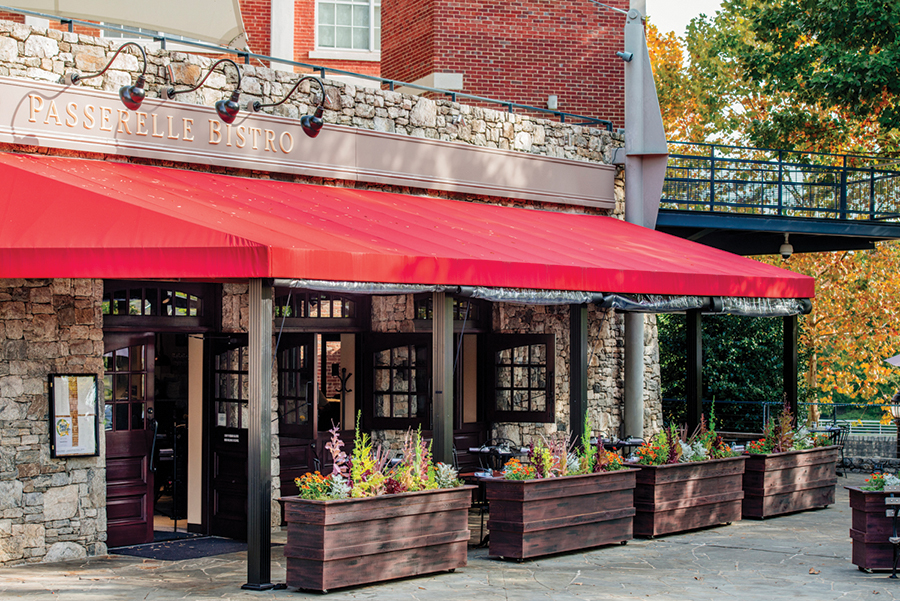
A Greenville friend checked in, “You have to go to ASADA and Fork and Plough. And you must have cocktails at EXILE and the Swordfish (Cocktail) Club. You will love Willy Taco Feed & Seed and Bar Margaret. And lunch at Afghan restaurant Aryana is a must. Have a glass of rosé and the pickled beet and pear salad at Passerelle Bistro overlooking the falls to take in the view but be sure to get off the beaten path — there are so many amazing options further afield.”

And so John and I mapped out a plan.
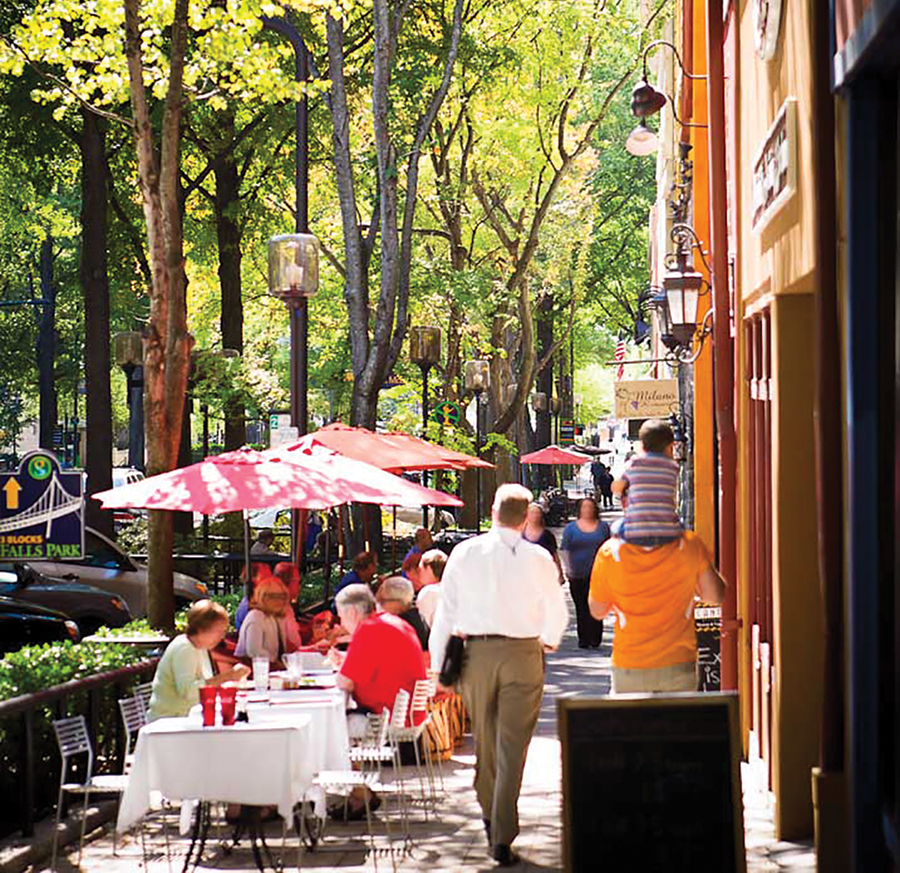
Saturday morning kicked off with superlative pastries and lavender-scented lattes at French-owned Le Petit Croissant cafe and from there we walked Main Street to the baseball stadium and back across the Reedy River.

The transformation of Falls Park on the Reedy is the crown jewel of the city’s impressive revitalization. Once all but hidden by a 1960s-era highway bridge, the stunning, mist-kissed falls are now part of a vast river walk that is populated with walkers and bikers who enjoy the numerous cafes and shops and taking in the views from the architecturally stunning pedestrian-only Liberty Bridge.

We stopped at the wonderful M. Judson Booksellers next to the Poinsett, explored Mast General Store, and popped into superlative men’s store Rush Wilson Limited. The sidewalks were bustling.

“It’s so nice to see so many people out and about,” mentioned John. “It almost feels ‘normal.’”

After exploring downtown, we hopped into the car and visited the buzzy parking lot sale at The Rock House Antiques. We stopped at the Hampton Station dining and entertainment complex and considered lunch al fresco but realized we were perhaps too old for the man bun and tattoos/ax throwing/mac and cheese scene. Instead, we visited the charming Greer, a vest pocket-sized town that, like Greenville, has been lavished with much urban-planning love. We were smitten with the blocks-long burg, explored Plunder for antiques and lunched upon crepes at Barista Alley. We drove to the nearby Hotel Domestique, a Provençal-style inn that caters especially to cyclists, and ogled the stonework and postcard-perfect nature views at the 1820s-era Poinsett Bridge.

We stopped in the town of Travelers Rest, an epicurean’s delight at the foot of the Blue Ridge Mountains just outside Greenville. So many restaurants! Driving back into town, we stopped for dinner at the James Beard-nominated working farm-cum-eatery Oak Hill Café and lapped up a terrific local cheese plate and duck confit with spaetzle.
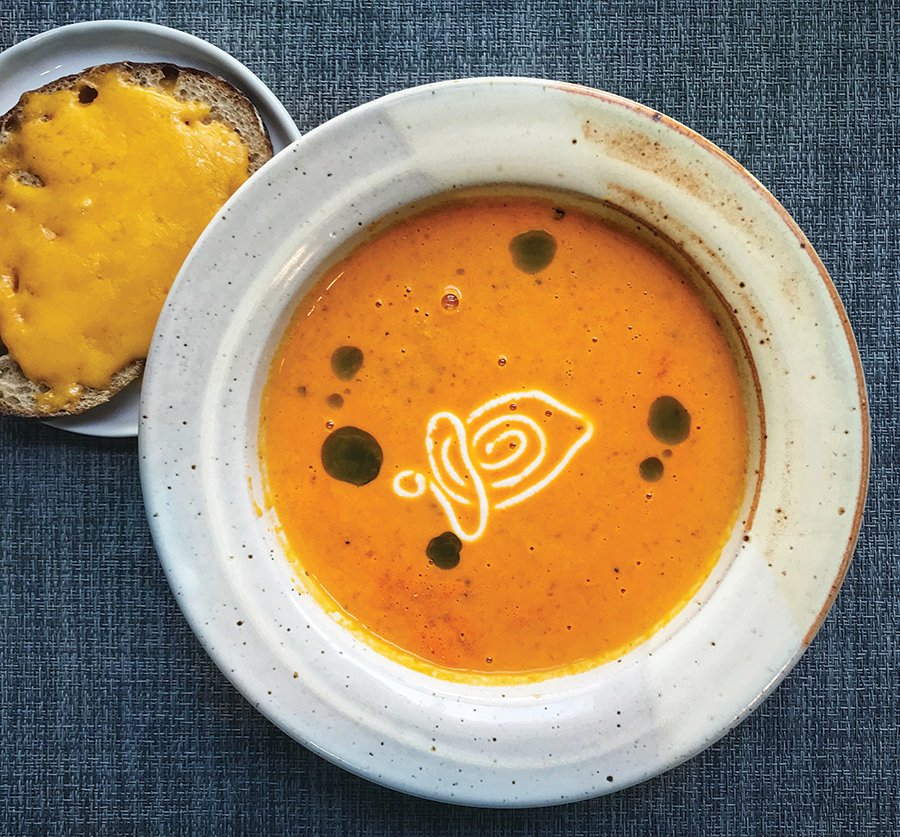
Sunday morning was languid and began with a Tuscan-inspired lunch on the balcony at Main Street’s Jianna, where a glass of montepulciano paired perfectly with spot-on people watching and a shared plate of pasta.

Phone buzzing, it was our Greenville friend texting a slew of other restaurant and must-visit ideas.

“You need to meet artist Joseph Bradley. Try the cheese at Blue Ridge Creamery. Brunch at Topsoil. And I think you’d like the lunch counter at the Pickwick Pharmacy.”

Ah, so much to see, so little time. And so many reasons for a return visit.

With that in mind, John and I turned off our phones and spent the afternoon on the river walk with a picnic blanket and a pile of books and magazines.

The distant roar of the falls only added to the bliss.  PS

The Madcap Cottage gents, John Loecke and Jason Oliver Nixon, embrace the new reality of COVID-friendly travel — heaps of road trips.

PinePitch

Tour de Trees

OK, 2020. No Christmas parades. Check. No New Year’s parties. Check. But the town of Southern Pines will still have festive trees lining its streets for the holidays, courtesy of local merchants and civic organizations. Consider it an opportunity for a bit of socially distanced holiday cheer and, while you stroll around town, a little window shopping.

Bryant House Birthday Bash

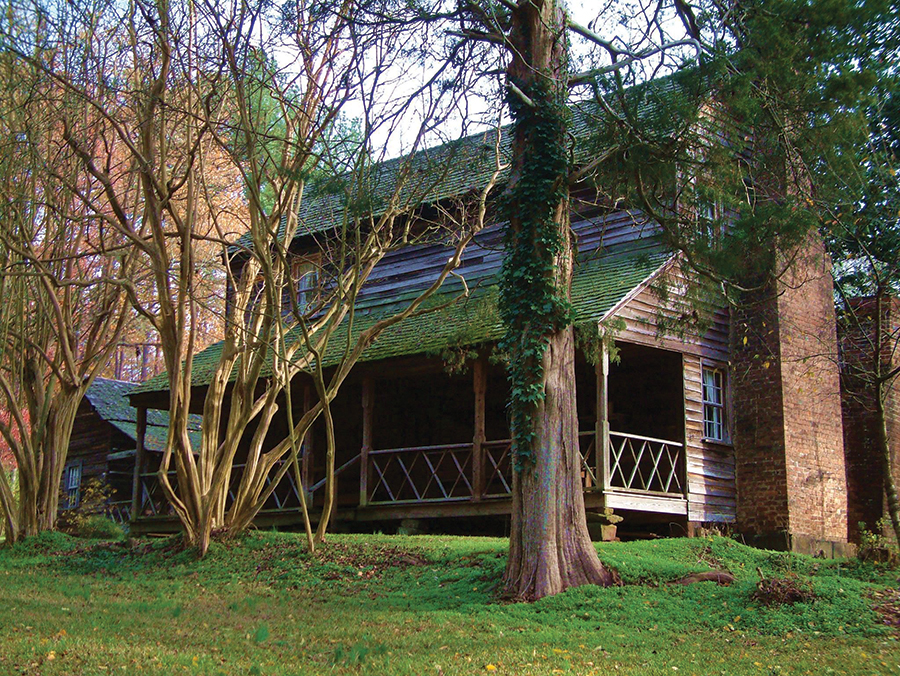
Rain or shine, bring the family to celebrate the 200th birthday of the Bryant House, combined with Heritage Day, on Saturday, Dec. 5, from 10 a.m. – 4 p.m., at 3361 Mt. Carmel Road, Carthage. There will be live music, Christmas cheer, war interpretations and craft demonstrations. For additional information call (910) 692-2051 or go to www.moorehistory.com.

Holiday Concert

The Sandhills Community College Holiday Concert will feature choral and piano arrangements to get everyone in the holiday spirit. The concert will be live streamed from the Bradshaw Performing Arts Center on Sunday, Dec. 6, beginning at 4 p.m. You can find it on YouTube at a web address too confusing to contemplate but easy to search.

Shaw House Tours

The historic Shaw House, the Garner House and the Sanders Cabin at 110 W. Morganton Road in Southern Pines will be open for tours and Christmas gift shopping Thursdays and Fridays beginning Dec. 3 from 1 – 4 p.m. Proceeds benefit the Moore County Historical Association and help preserve our heritage. For additional information call (910) 692-2051.

Open House

Enjoy a winter wonderland of holiday décor and gifts at Hollyfield Design, 130 E. Illinois Ave., Southern Pines, beginning Friday, Dec. 4, from 9 a.m. – 5 p.m. Christmas pet photos will be available on Dec. 6 from 1 – 3 p.m. Get digital files in exchange for donations of cat food for Animal Advocates of Moore County. Sunday hours will be 11 a.m. – 4 p.m. For more information call (910) 692-7243.

Nothing Runs Like a Reindeer

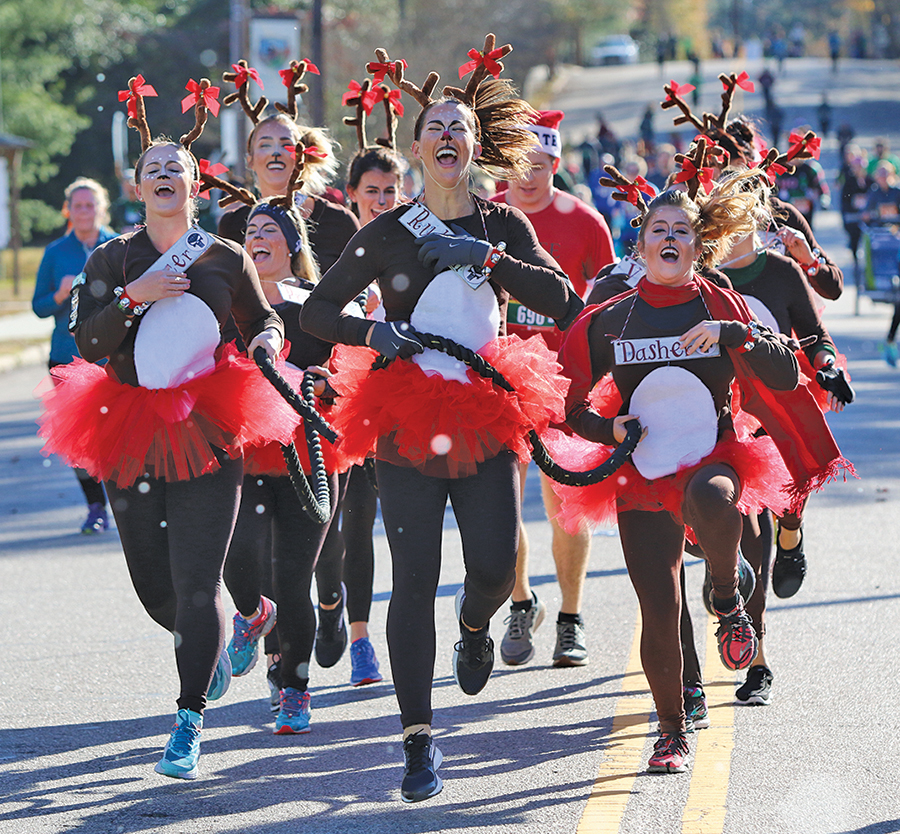
The annual 5K Reindeer Fun Run through the downtown neighborhoods of Aberdeen takes place on Saturday, Dec. 5, from 7:15 a.m. – 12 p.m. The run is for all skill levels, from walkers to trotters to people who are in distressingly good physical condition. For information call (910) 693-3045 or go to www.reindeerfunrun.com.

A Cuppa

The Sandhills Women’s Exchange, 15 Azalea Road in Pinehurst, is having “Tea Time at the Cabin” on Sunday, Dec. 13 from 10 a.m. – 2 p.m. There is limited seating of only 16 guests. There will be a second seating from 2 – 4 p.m. The cost is $50 per person. For information and reservations call (910) 295-4677.

All Dressed Up (And Nowhere to Go)

Peruse vintage fashions from 5:30 p.m. – 9 p.m. on Tuesday, Dec. 8, at the Poplar Knight Spot, 114 Knight St., Aberdeen. The Rooster’s Wife and Moon Vintage Goods will put on a socially distanced trunk show of fashions ranging from the ’70s to the ’00s. There will be eggnog and gift wrapping. Limited to 20 shoppers at a time. For information go to theroosterswife.org or call (910) 944-7502.

The Naturalist

Among Kings and Killers

Abundant life on an island at the end of the world

Story and Photographs by Todd Pusser

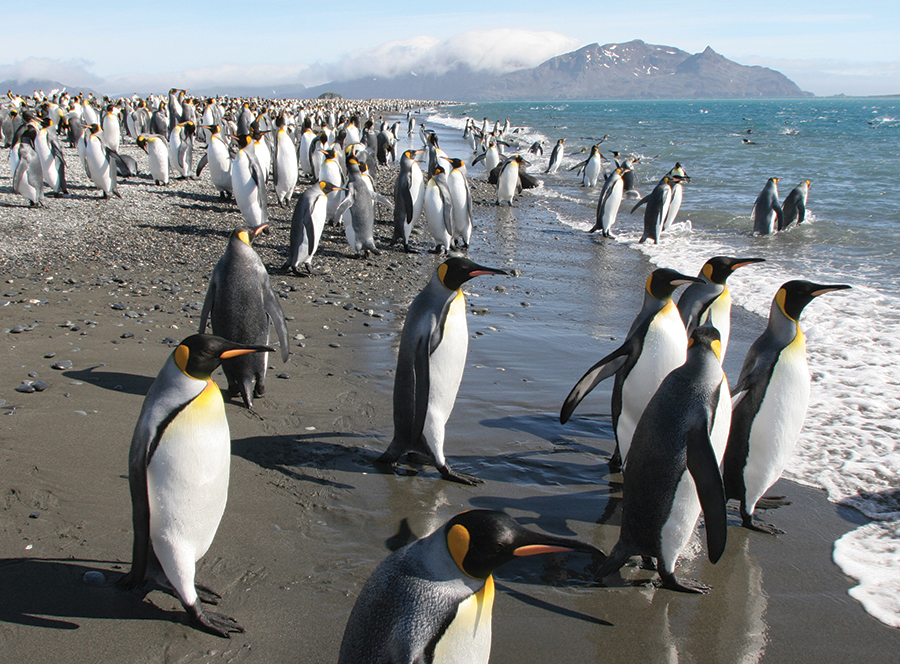
Words cannot describe it. Photographs will never do it justice. It has to be experienced, firsthand, to fully appreciate the sheer scale and magnitude. Standing before me, as far as the eye could see, were thousands upon thousands of penguins, all packed tightly together, each bird over 3-feet tall and weighing 25 pounds.

The immense rookery was full of frenetic energy, with birds constantly coming and going, tending to young, and greeting one another with rapid head nods and throaty, guttural calls. It was a complete sensory overload, a bit like standing in the middle of Times Square during a pre-COVID rush hour. I was on one of the most remote spots on the planet, about as far away from humanity as one can get, witnessing one of Earth’s greatest wildlife spectacles.

Lying just north of Antarctica and surrounded by the nutrient-rich waters of the southern Atlantic Ocean, South Georgia is a crescent-shaped island, 100 miles long, and full of rugged, 10,000-foot tall snowcapped mountains. A British territory, the island was first observed in 1675 by London-born Antoine de la Roché, whose ship had been blown off course while traveling from South America to England.

The 150,000 pairs of king penguins stretched from the shoreline all the way up the side of a mountain that was flanked by two broad, icy glaciers. The rookery on Salisbury Plain, near the northwest corner of South Georgia, is the largest on the island and one of the largest in the world.

King penguins are the world’s second largest species of penguin, surpassed only by their close cousins, the emperor penguins, who prefer to nest on the icy continent of Antarctica just to the south. Their regal-like plumage, befitting their common name, is composed of a layer of densely packed black and white feathers (to help shield against the cold) and a brilliant orange facemask.

Working as a naturalist for a tour company that specialized in travel to remote locations around the world, I had landed on the beach earlier that morning with 10 other passengers. As we carefully made our way along the sandy shoreline, dodging a caravan of penguins returning to the beach from an offshore foraging venture, we paused to watch a pair of massive southern elephant seal males (so named for their immense noses) bellow territorial warnings to one another.

Southern elephant seals, like king penguins, are creatures of superlatives. As the largest seal on the planet, males can grow to 16 feet in length and reach weights of 4 tons.

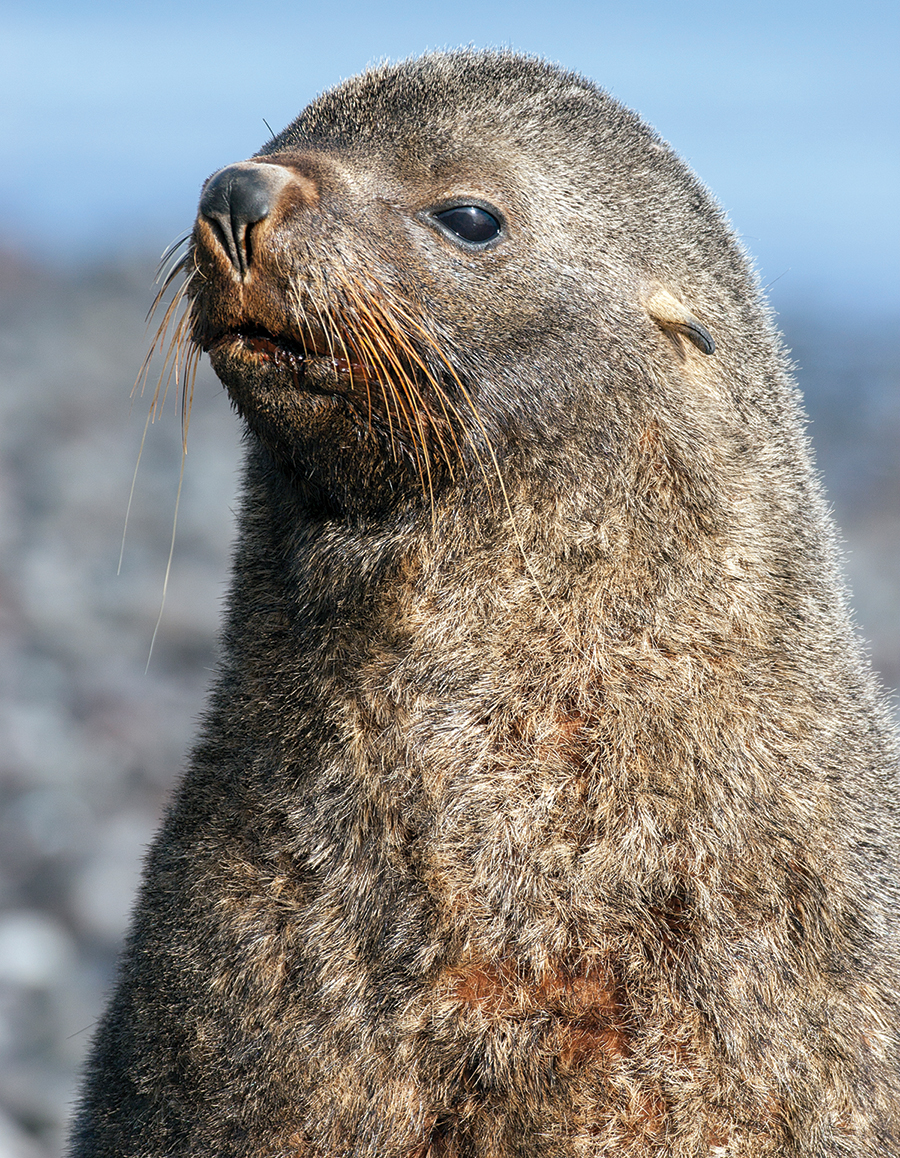
Scattered among the elephant seals and penguins are hundreds of Antarctic fur seals. Most were sleeping, stretched out on their bellies on the sandy beach, but some were sitting high up on tussocks of tall grass, surveying their surroundings. Looking a bit like domestic dogs, with dense fur coats, small heads and pointed snouts, Antarctic fur seals, as well as the larger elephant seals, are living testaments to the resiliency of Mother Nature.

When the famous sea captain James Cook landed on the island in January 1775, claiming it for the British crown and naming it after King George III, he found the land to be barren and inhospitable. However, he reported on the vast numbers of seals found along its rugged shores. Within five years, commercial ships from Britain and the United States descended upon the island in droves to hunt and harvest the abundant pinnipeds.

Elephant seals were killed for their oil and the fur seals harvested for their coats. In just a single year, one British vessel took 3,000 barrels of oil and over 50,000 fur seal skins. That kind of hunting pressure was not sustainable, and soon seal populations were nearing total collapse. Commercial sealing activities folded because there were simply not enough animals left alive to the make the business profitable. In 1972, international laws were established to protect marine mammals around the world, and since that time, populations of elephant seals and fur seals have made a remarkable recovery.

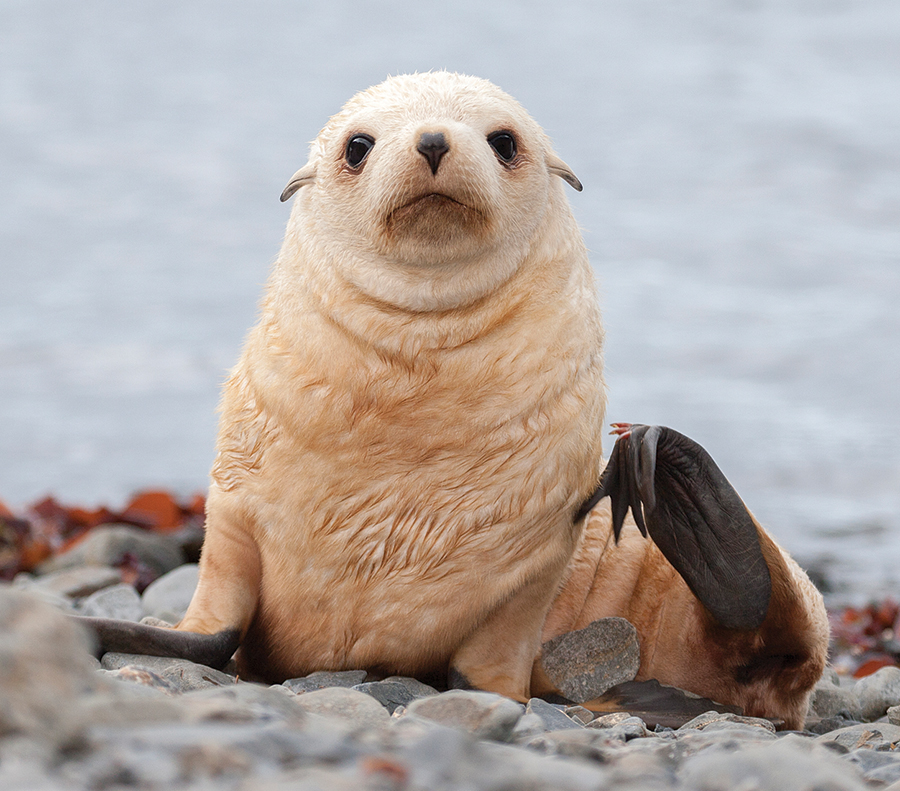
As we toured the immense penguin rookery, one young fur seal caught my eye. Unlike the other seals on the beach, which were dark brown, this one was a striking honey-blond color. This pale condition, likely a recessive genetic trait akin to albinism, is rare in fur seal populations and occurs in just 1 percent of the population. Our group stopped and aimed long telephoto lenses at the youngster, who seemed just as curious about us as we were about him.

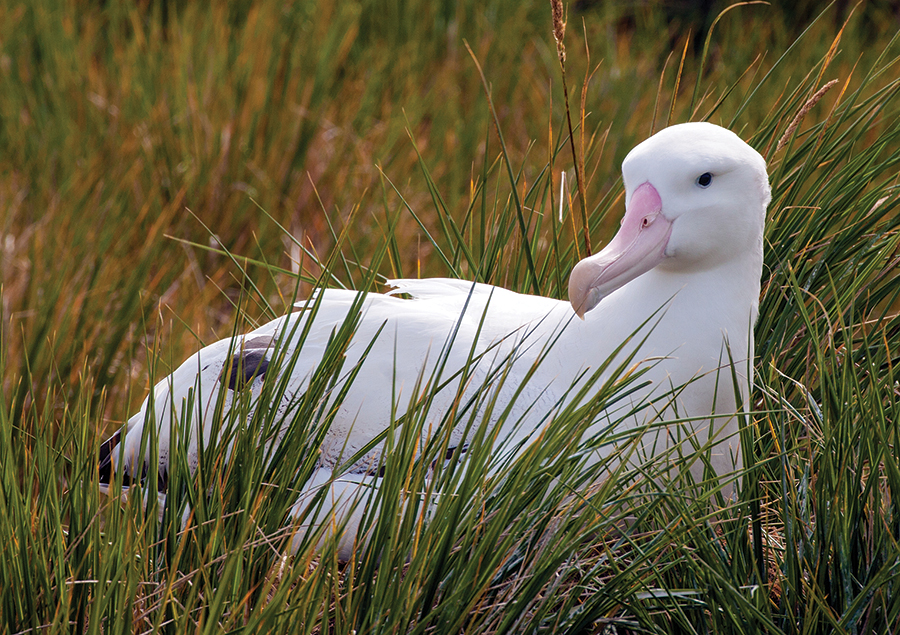
Glancing out to sea, just beyond the blond fur seal, I caught sight of another superlative creature flying high above the waves. With a wingspan approaching 12 feet, the wandering albatross is Earth’s longest-winged flying bird, inspiring generations of sailors with its immense size and ability to glide effortlessly through the air in the strongest of gales. Later in the day, we would stop on nearby Prion Island, a small islet in the bay, to observe wandering albatrosses on their nests.

Albatrosses, penguins and seals, oh my. South Georgia is truly one of the great wildlife meccas on the planet. Even the waters surrounding the island host a tremendous diversity of life. Just the day before, as our ship approached the island from the west, we stumbled upon one of the greatest concentration of marine creatures I have ever seen in 25 years of sailing the high seas.

Under a brilliant blue-sky day, with only a light breeze blowing across the surface of the ocean, we stumbled upon an immense gathering of whales. As far as the eye could see, the tall blows of fin whales, the second largest animal on the planet (capable of reaching lengths over 80 feet and 70 tons), rose above the surface of the water. Dozens of the immense creatures were in view at any one time. Scattered here and there among the fin whales were rotund southern right whales and the occasional humpback whale.

As our ship transited carefully through the area, a long line of seabirds, consisting of prions, petrels and albatrosses, followed. A small group of hourglass dolphins rushed over to play in the wake left behind by the moving vessel. Life was everywhere.

We had crossed the Antarctic Convergence, a zone where the cold currents from Antarctica meet the warmer waters of the Atlantic Ocean. The meeting of these currents can vary from year to year and our ship just happened to be in the right place at the right time.

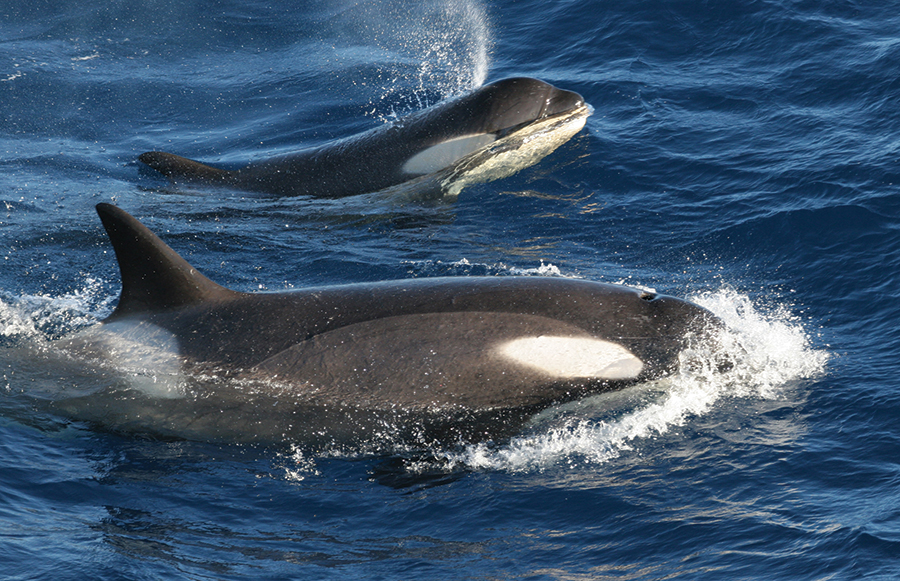
The sighting of the day happened just after noon, when a large group of killer whales approached the ship. Killer whales (a bit of a misnomer, as they are not actually a whale but rather the largest member of the dolphin family) have striking panda-like black and white markings, and when a mother and her calf surfaced close to the bow of the ship, numerous oohhs and aahhs erupted from passengers and crew alike. The group of 20 or so killers accompanied the ship for the better part of an hour and left a lasting impression on all those onboard.

I frequently look back at the images I took during my time around South Georgia. To witness such an abundance of wildlife, especially during this day and age, when so much of the natural world is feeling the negative effects of humanity, was an extraordinary privilege. It also offers a glimmer of hope for the future. If our society — all seven billion of us — can achieve the economic and political resolve to mitigate the decline of the natural world, humans and the other wild creatures that call this planet home, will flourish.  PS

Naturalist and photographer Todd Pusser, who grew up in Eagle Springs, N.C., works to document the extraordinary diversity of life both near and far. His images can be found at www.ToddPusser.com.