The Omnivorous Reader

The Soong Saga

North Carolina’s link to the fall of The Last Emperor

By D.G. Martin

One of North Carolina’s most interesting stories takes us back to the 1880s when a young Chinese boy winds up in Wilmington, where he converts to Christianity and then returns to China as a missionary. He becomes wealthy, and his family becomes extremely powerful. How it all happened is a saga that is almost unbelievable.

In Wilmington there is a small granite monument on the grounds of the modest, lovely Fifth Avenue Methodist Church building. It reads: “Charlie Jones Soong, father of the famous Soong family of modern China, was converted to Christianity in the old Fifth Street Methodist Church, which stood on this site. He was baptized on Nov. 7, 1880, by the Rev. T. Page Ricaud, then pastor. One of his six children, Madam Chiang Kai-shek, whose Christian influence is world-wide, is the wife of China’s devout generalissimo and president. Erected in 1944.”

Here is the report from the November 7, 1880, Wilmington Star announcing an event that would ultimately have a profound impact on modern Chinese history: “Fifth Street Methodist Church: This morning the ordinance of Baptism will be administered at this church. A Chinese convert will be one of the subjects of the solemn right (sic), being probably the first ‘Celestial’ that has ever submitted to the ordinance of Baptism in North Carolina. The pastor, Rev. T. Page Ricaud, will officiate.”

That Celestial, as some Americans then referred to a Chinese person, was Charlie Soong, a teenager, whose North Carolina Methodist sponsors arranged for his education and subsequent return to China as a missionary.

A minister in Wilmington persuaded Durham tobacco and textile manufacturer Julian Carr to take an interest in Soong. Carr brought Soong to Durham and then arranged for him to enroll as the first foreign student at Trinity College in Randolph County.

Carr and Soong developed a “father-son” lifelong friendship, despite Charlie Soong’s serious flirtation with Carr’s niece, which resulted in Charlie’s exile to Vanderbilt University for more religious training. After being ordained as a Methodist minister, Soong went back to China as a missionary. Once there he drifted into business, developing the Bible printing operation that became a springboard to greater financial success, often with Carr’s backing.

When much of China’s limited manufacturing capacity was under the control of foreigners, Soong showed that the Chinese could do it for themselves. He helped construct a platform on which China’s modern manufacturing base is built. He printed Chinese Bibles so inexpensively that they drove the competition — mostly Europeans — out of business and, in the process, became one of the country’s wealthiest and most powerful business and political insiders.

It was the last days of the Qing Dynasty and “The Last Emperor,” and China was in revolutionary turmoil. Soong helped fund the activities of the major revolutionary leader, Sun Yat-sen, sometimes called the “founder of the Chinese Republic.”

Soong sent most of his children to the United States for education. When his three daughters came back to China, they married prominent Chinese. One daughter, Ching-ling, married Sun Yat-sen and, as Madame Sun Yat-sen, remained an important figure in Chinese government long after her husband’s death. She even served under Mao Zedong as a vice-chairman of the People’s Republic from 1949 to 1975.

The oldest daughter, Ai-ling, married banker H.H. Kung, who became finance minister in the Nationalist government.

Another daughter, May-ling, married Chiang Kai-shek, who led the Nationalist government until he was driven to Taiwan by Mao’s forces in 1949. Madame Chiang Kai-shek was well known to Americans and a favorite of many until her death in 2003 at the age of 105.

One son, T.V. Soong, represented China at the founding of the United Nations in San Francisco in 1945. After the Communist takeover of China, he moved to the U.S. and became a highly successful banker.

The Soong family was so important in China that it is sometimes referred to as The Soong Dynasty, the title of the most popular and detailed version of this story, written by Sterling Seagrave and published in 1985. It presented an unfriendly version of the family history, but a review in The New York Times saw it differently. “Indeed the charm of the man often outshines Mr. Seagrave’s attempts both to debunk him and make him sinister,” said the Times.

A more recent book by former Greensboro resident Ed Haag, Charlie Soong: North Carolina’s Link to the Fall of the Last Emperor of China, gives us a more balanced account. Although the Charlie Soong story is not new, Haag dug up previously unpublished material, much of it from the Soong papers housed at the Duke University library. Haag explains better than earlier authors how Charlie Soong became so wealthy. While others have written about Soong’s missionary work leading to a business printing Bibles, his association with a flour mill in Shanghai also contributed to his success. According to Haag, Soong’s greatest wealth came from his role as a “comprador,” a fixer and go-between who helped bridge the different customs and expectations of Western suppliers and traders and their Chinese counterparts. Those North Carolinians who already know about Charlie Soong will appreciate Haag’s refinements and additions. For those who never heard of Soong, Haag’s book is a great starting point.

But the Soong family’s connection to North Carolina doesn’t end there.

On Aug. 30, 2015, his great-grandson Michael Feng came to Wilmington to be baptized in the same church where his great-grandfather received the sacrament. Feng and his wife, Winnie, are longtime active participants at The Episcopal Church of the Heavenly Rest, a historic church in New York City, at Fifth Avenue and 90th Street.

“It was the church of my grandfather, T.V. Soong, where Winnie and I were married and raised our two children,” said Feng. “I had just never gotten around to being baptized. I guess my parents were too busy when I was young. Winnie had been after me for a long time to be baptized. And when we were planning a trip to North Carolina for a wedding, we decided this would be a wonderful time and place for my baptism.”

Feng explained to the congregation at Fifth Avenue Church that his family remained grateful to the North Carolinians who provided his great-grandfather the educational, spiritual and financial resources that made the difference for Charlie Soong. “He gave these resources to his children and our family,” said Feng of a Chinese dynasty announced in a note in the Wilmington Star 135 years before.

Almost seven years after his baptism in Wilmington, Michael and Winnie Feng remain active at the Church of Heavenly Rest, where there is another North Carolina connection. The leader of that church is its rector, the Rev. Matthew Heyd, who grew up in Charlotte and was a Morehead Scholar and student body president at UNC-Chapel Hill.

Surely, Charlie Soong would be pleased.  PS

D.G. Martin hosts North Carolina Bookwatch Sunday at 3:30 p.m. and Tuesday at 5 p.m. on UNC-TV.

His favorite book is Don Quixote by Miguel de Cervantes

Bookshelf

August Books

FICTION

Damnation Spring, by Ash Davidson

For generations, Rich Gundersen’s family has chopped a livelihood out of the redwood forest along California’s rugged coast. Now, Rich and his wife, Colleen, are raising their own young son near Damnation Grove, a swath of ancient redwoods on which Rich’s employer, Sanderson Timber Co., plans to make a killing. For decades, the herbicides the logging company uses were considered harmless. But Colleen is no longer so sure. As mudslides take out clear-cut hillsides and salmon vanish from creeks, her search for answers threatens to divide a town that lives and dies on timber.

Once There Were Wolves, by Charlotte McConaghy

Inti Flynn arrives in Scotland with her twin sister, Aggie, to lead a team of biologists tasked with reintroducing 14 gray wolves into the remote Highlands. She hopes to heal not only the dying landscape but Aggie too, unmade by the terrible secrets that drove the sisters out of Alaska. Inti is not the woman she once was, either, changed by the harm she’s witnessed. As the wolves thrive, Inti begins to let her guard down, even opening herself up to the possibility of love. But, when a farmer is mauled to death, Inti knows where the town will lay blame. Unable to accept her wolves could be responsible, she makes a reckless decision to protect them. If the wolves didn’t make the kill, then is something more sinister at play?

Lightning Strike, by William Kent Krueger

Aurora is a small town nestled in the ancient forest alongside the shores of Minnesota’s Iron Lake. In the summer of 1963, it is the whole world to 12-year-old Cork O’Connor, its rhythms as familiar as his own heartbeat. When Cork stumbles upon the body of a man he revered hanging from a tree in an abandoned logging camp, it is the first in a series of events that cause him to question everything he took for granted about his hometown, his family and himself. Cork’s father, Liam O’Connor, is Aurora’s sheriff, and it is his job to confirm that the man’s death was the result of suicide. In the shadow of his father’s official investigation, Cork begins to look for answers on his own. Together, father and son face the ultimate test of choosing between what their heads tell them is true and what their hearts know is right.

Children of Dust, by Marlin Barton

In researching his family history in the year 2000, Seth Anderson discovers an unexpected story from the late 1800s. In 19th century rural Alabama, his relative, Melinda Anderson, struggles to give birth to her 10th child, tended by Annie Mae, a part-Choctaw midwife. When the infant dies just hours after birth, suspicion falls upon two women — Betsy, Annie Mae’s daughter and the mixed-race mistress of Melinda’s husband, Rafe; and Melinda herself, worn out by perpetual pregnancies and nurturing a dark anger toward her husband. Seeking to clear her own name, Melinda enlists the help of a conjure woman who dabbles in dark magic. Filled with haunts, new and old, Children of Dust is a novel about the relationship between two women allied against a violent man with secrets of his own.

NONFICTION

A Brief History of Motion: From the Wheel to the Car to What Comes Next, by Tom Standage

Beginning around 3500 BCE with the wheel — a device that didn’t catch on until a couple of thousand years after its invention — Standage zips through the eras of horsepower, trains and bicycles, revealing how each successive mode of transit embedded itself in the world we live in. Then, delving into the history of the automobile’s development, Standage explores the social resistance to cars and the upheaval that their widespread adoption required. Cars changed how the world was administered, laid out and policed, how it looked, sounded and smelled — and not always in the ways we might have preferred.

All In: An Autobiography, by Billie Jean King

An inspiring and intimate self-portrait of the champion of equality that encompasses her brilliant tennis career, unwavering activism, and an ongoing commitment to fairness and social justice. King recounts her groundbreaking tennis career — six years as the top-ranked woman in the world, 20 Wimbledon championships, 39 grand-slam titles, and her watershed defeat of Bobby Riggs in the famous Battle of the Sexes. She poignantly recalls the cultural backdrop of those years and the profound impact on her worldview from the women’s movement, the assassinations of Martin Luther King Jr. and Robert F. Kennedy, the anti-war protests of the 1960s, the civil rights movement, and, eventually, the LGBTQ+ rights movement. She describes the myriad challenges she’s faced — entrenched sexism, an eating disorder, near financial peril after being outed — and offers insights and advice on leadership, business, activism, sports, politics, marriage equality, parenting, sexuality and love.

YOUNG ADULT

Dog Island, by Jil Johnson

Willy stared out through the crisscross wires of his cage. He had figured out a few things. One, being born a spunky beagle wasn’t always cookies and naps. Two, there was no way he was staying in this barbed wire apartment. And three, as he listened to the rows of dogs barking and howling, he wasn’t going alone. (Ages 8 and up.)

CHILDREN’S BOOKS

Becoming Vanessa, by Vanessa Brantley-Newton

That first day of school can be hard on anyone, but especially if your name is looonnng and has more than one “s” and your style is a little more colorful than your new classmates. But, no matter what, it is important to be yourself. Stunning illustrations reminiscent of the brilliant Molly Bang bring this important first-day-of-school book to life. This one is a must-have for rising kindergartners. (Ages 4-6.)

T. Rexes Can’t Tie Their Shoes, by Anna Lazowski

Baby horses can stand up. Narwhals change color. And red sea urchins can live for 200 years! But nobody can do everything. Laugh out loud with the animals of the alphabet as they show what they can and cannot do in this super-cute ABC book that is perfect for story time, bedtime or anytime. (Ages 3-7.)

The Foodie Flamingo, by Vanessa Howl

At the Pink Flamingo restaurant, it’s shrimp, shrimp, shrimp, shrimp. But when Frankie the Flamingo gets a wild feather to sample something different, she becomes Foodie Flamingo. Soon everyone is sampling new things and the Pink Flamingo will never be the same! Fun with food for all ages. (Ages 3-6.)

How To Spot a Best Friend, by Bea Birdsong

It’s easy to spot a friend, but how do you know when you’ve discovered a best friend? This sweet story is the perfect read together for the night before back-to-school or any new situation. (Ages 4-7.)  PS

Compiled by Kimberly Daniels Taws and Angie Tally.

Angie’s favorite book is The Autobiography of Alice B. Tolkas by Gertrude Stein and Kimberly loves The Power of One by Bryce Courtenay.

Into the New

By Frances Mayes

Illustration by Gerry O’Neill

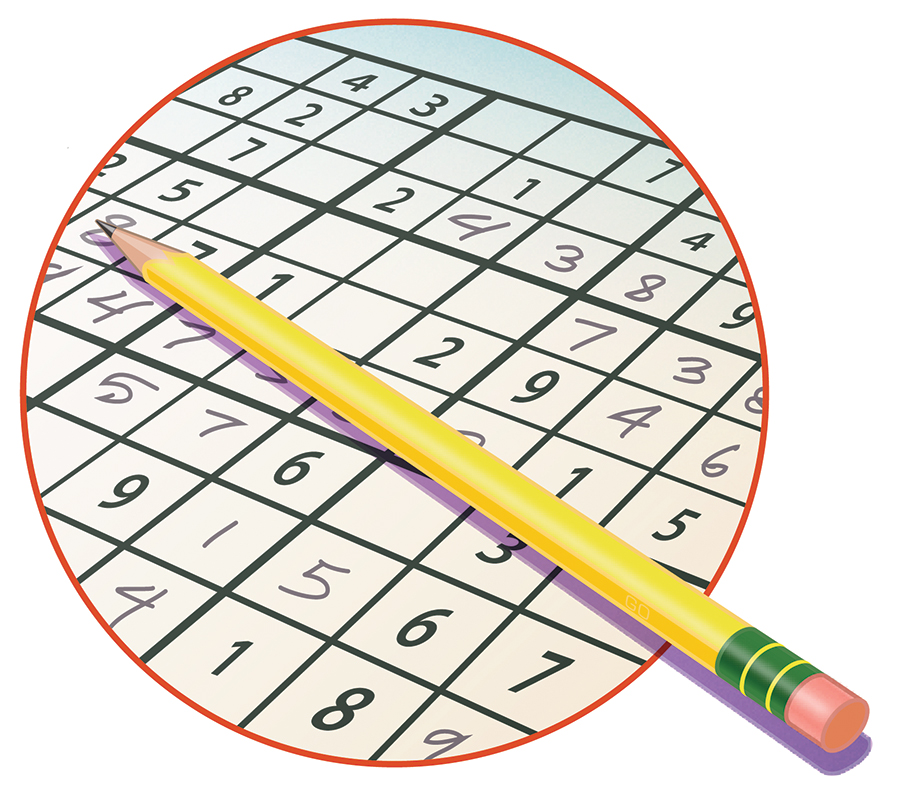
During the pandemic, I became enthralled with The New York Times word game, the Spelling Bee. I’d never been attracted to crossword puzzles, Mensa quizzes or those already-penciled-in Sudoku squares in airline magazines. I’d rather read a book. But there I was at midnight, spending good hours I should have used on my nascent novel, staring at seven letters that must be arranged into words. At least I could excel at finding the pangram — the word that uses all the letters.

What I couldn’t do at all was imagine what my fictional characters Charlotte, Lee and Annsley possibly could be up to in their imagined world, given that a plague was loose in the real world. Their concerns seemed of no concern.

But I was learning dozens of new words such as lambi, boba, libelee, doggo and ricin — words that proved useless outside of boosting me from “amazing” status to “genius.” Ah, genius. What an accomplishment, that is, until the next morning when the new puzzle appeared.

Many friends also had developed obsessive activities. My husband, Ed, seemed always to be mowing the grass, even measuring the height so it remained at 2 inches. My friend Susan tore through several Indian cookbooks, leaving containers of spicy food at our back door constantly, and an Amazon truck pulled up daily at our across-the-street neighbor’s driveway. She was shopping maniacally.

Those of us who were lucky survived that suspended and puzzling and frustrating siege. Remember wiping off grocery bags on the porch? Remember when fashion masks in silk prints appeared? Remember those annoying suggestions to keep a gratitude journal? For decades, we’ll be puzzling through this aftermath of grief, its effects on students, what refusal to believe the virus existed means, the incalculable, staggering losses, the global politics, on and on. Per ora, for now, as the Italians always caution, we are reassessing, realizing that we are lucky to do the things we so took for granted.

Are we in a Brave New World?

By metabolic nature, I’m a traveler. After having covered a lot of the globe and written many books about place, of course I knew that those journeys play a major part in my life. During confinement, I chafed. I started spending hours researching the history of Cyprus, the accommodations at Machu Picchu, a hike from Bratislava to Prague.

Working on the Spelling Bee one week about eight months into house arrest, I came to an impasse. Instead of forming the usual words, I saw that I was picking the letters for “London,” “Rome,” “Miami,” “Hawaii.” Not allowed, any place names, but my travel gene was taking over. I couldn’t get “bountiful,” “exciting,” “texting” but adamantly typed in “Paris,” “Kenya,” “Greece.”

Travel, it turns out, isn’t just what I like to do, it’s who I am. Did others find such truths?

I pushed my novel to the back of my desk — bye-bye Annsley, Lee, Charlotte — and began writing about home. Where’s home? Why leave home? What happens when you do leave home? Why do memories of various homes come back over and over in dreams? How do you make a home? The pull of this subject, so unlike my novel, took over my days.

I quit pouring that second, third glass of wine with dinner; I exercised; I lost twenty pounds. Despite all the activity, the desire to go, just go, became overwhelming.

Ed and I donned N95 masks and traveled to our home in Italy. I felt like we held our breaths the entire way. We were allowed in because we have residency cards. Everyone greeted us like returning Olympic stars.

We quarantined at our home, then lined up for entering the negozio di frutta e verdura for groceries, enjoyed our friends within the limits of our houses, harvested our olive crop, and, before returning to North Carolina, spent two days in Rome prior to departure.

Rome alone. I walk. All day. At night. Walking the soles off my shoes. In this slowed, surreal scape, here’s Rome washed clean, the city showing its beauty unalloyed. I revisit favorites of mine, even though many are closed — Bramante’s Tempietto on the Janiculum Hill, the Baroque extravaganza Palazzo Colonna, the chalk pastel palazzi on Piazza San Lorenzo in Lucina, kiosks of botanical prints and severe engravings of ruins at the Mercato delle Stampe, Gelateria del Teatro for sublime gelato of lavender and white peach, or cherry, or orange and mascarpone. Who can choose?

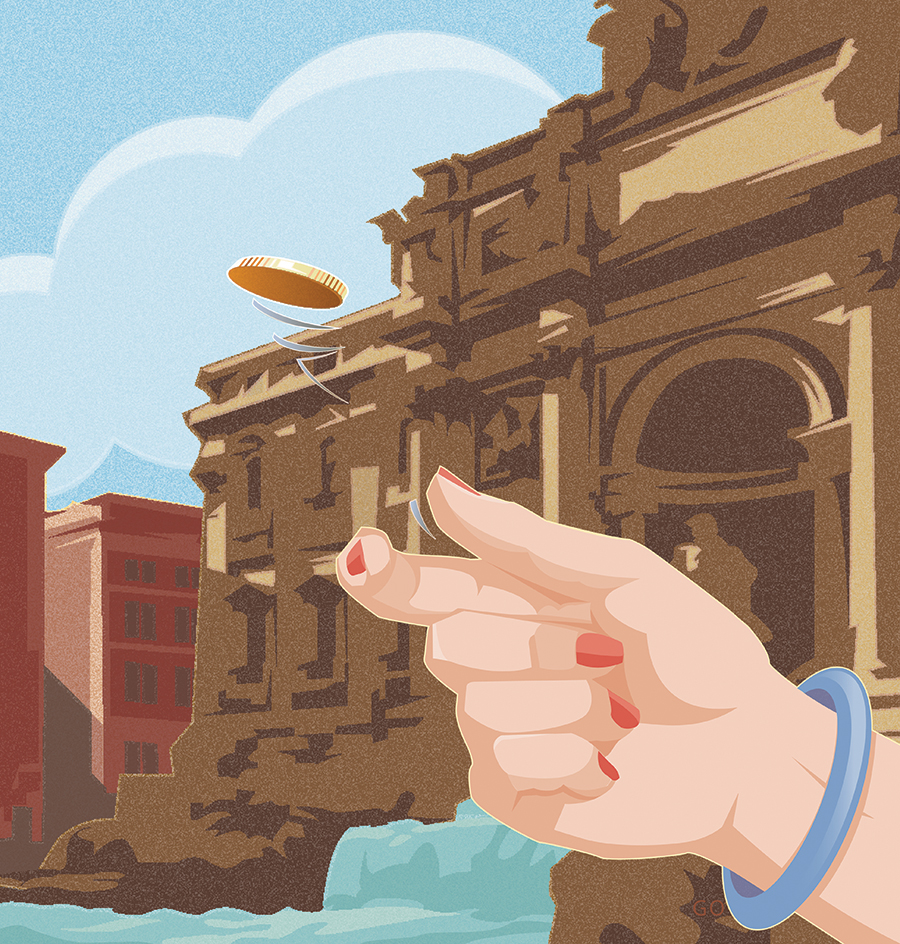
At Trevi fountain, Ed and I stand there alone. For the first time in decades, I toss a coin. In Piazza Navona, too, I can hear the musical splash of water from the Four Rivers fountain and walk around the lovely ellipse of the ancient stadium. The great Marcus Aurelius, copy of the second-century bronze rider, atop his prancing horse at Michelangelo’s Piazza del Campidoglio, gains in majesty as he surveys a vacant piazza. Totally real, Rome feels imagined, conjured as one of Italo Calvino’s invisible cities.

     Eerie. There’s a lone woman with red fright-wig hair wobbling along the sidewalk with a basket of oranges; the familiar aroma of dark coffee wafting out of a bar, where the barista stands polishing glasses for no customers. The sky is a color a watercolorist might mix, find it too milky pale, and decide to stir in another dollop of cerulean. Trajan’s Column seems to tilt against rushing clouds. The forum appears doubly ancient, columns white as bleached femurs. Church bells send out circles of silver sound. The sculptural pines, the vulgar magenta bougainvillea, the surprise of palms.

Because Rome was still “yellow,” low-risk but cautious, some restaurants are open for lunch outside. We order both the fried artichokes and the artichokes with tender homemade pasta. We’re talking about whether anything of this Rome can be carried forth into normal times. We remember the day we showed our grandson 18 fountains in one day. We remember that Keats rode a pony around the Piazza di Spagna in his last weeks. We remember an apartment we rented with a roof garden that looked down on a clothesline with flapping giant underpants. The waiter forgets our glasses of wine, apologizes, and brings over a whole bottle. (That’s Rome.) I’m thrilled to see Rome like this: an unforgettable, once in a lifetime experience for this traveler.

I hope never to see Rome like that again.

After a day, I missed the scramble to see what’s on at the Quirinale, new restaurants, friends toasting at wine bars, shopping for shoes, tracking down 10 things on my to-see list. All this amid a chaos of sirens, horns, weaving motorcycles, tsunamis of tourists, overflowing garbage bins, buses spilling out groups from all over the world, silly goofs trying to get in the fountains. Life. People, annoying, glorious people.

Back at home, the bleak holiday season arrived, then in January, hallelujah: the vaccine. A quasi-normal life recommenced.

Am I grateful for this period of solitude, introspection, focus? Not a bit. I’m grateful that no one I love died, that’s it. Let’s not whitewash: the period was relentlessly awful and a flash of panic washes over me when I wonder if it will happen again.

What remains? Is there no silver lining? Yes, the major takeaway: a heightened awareness of carpe diem, seize the day. I love so many people; have I said so enough? All the posts and emails showed friends making their level best of the situation. I saw anew their humor, resourcefulness, brilliance, thoughtfulness and determination. They signed off not with “ciao,” or “xoxo,” but now with “Love you,” “Miss you,” “Always and Forever.”

Don’t forget this, I told myself, when we’re back at Vin Rouge and JuJu, toasting and chatting and exchanging plans, feeling invincible. We are not invincible. The drastic happened. Don’t forget the lively crowds in Istanbul, the subway crush in New York, the swarms reveling in the extreme beauty of Cinque Terre. Living their lives. Keep the table set, keep the antenna alert for friends in need, keep working to know what’s really going on, keep the rosé chilled, write the check to someone running on ideals, say you are dear to me, order the flowers, the Georgia peaches, the book I just read that X might enjoy. Oh, I do this, but now, my effort doubles and cubes.

Brave New World — we know Aldous Huxley’s depressing novel and his title has been used and used, ironically and seriously. Maybe used up. He took the words from Shakespeare’s The Tempest and the whole quote is now somewhat lost. The last half of the sentence is best. Miranda speaks, “O brave new world, that has such people in it.” What mind-bending losses.

Memento vivere, remember to live. We go on now, together. You are dear to me.

I didn’t give up on the daily Spelling Bee but if I can’t be a quick genius, I click over to visit Annsley, Lee and Charlotte. They’ve been waiting a long time to resume their lives. When last seen they were arising from the table after a dinner party, about to make enormous changes. I think they are ready.  SP

Frances Mayes is a novelist, poet and essayist known for work including the New York Times bestseller Under the Tuscan Sun. She and her husband split their time between North Carolina and Italy.

Her favorite book is One Hundred Years of Solitude by Gabriel García Márquez.

The World is Still the World

Fiction by Daniel Wallace

Illustrations by Lyudmila Tomova

On our last day at the beach the sun came out, and the fog, which for that whole week had draped the shore in a veil of cotton, burned away: we discovered there was an ocean here, after all. It wasn’t blue, really, closer to black, but when the waves flattened out across the beach, the water was perfectly clear and full of minnows and tiny crabs.

The shells were just so-so, mostly shards of something that used to be beautiful, like ancient pottery washed up from the ocean floor, there to remind you the world was old.

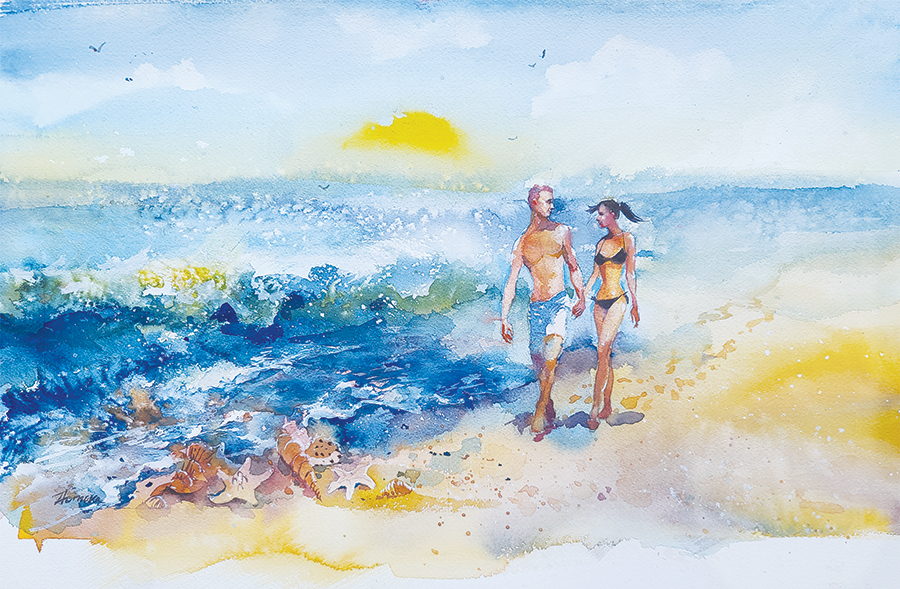
I’d like to say that these discoveries inspired in us a recognition of our own mortality, but the truth was it just felt good to have the sun on our shoulders as my wife and I — so young, newlyweds in fact — walked across the warming sand, hand in hand. She was wearing a black two-piece, simple and very small, and so striking that even the women we passed couldn’t help but stare. Her hair (thick and chocolate brown) was in pigtails, and somehow this girlish maneuver heightened her brazen but effortless display of pure, glorious womanhood. I was invisible in the best possible way.

“I’m glad our honeymoon wasn’t ruined,” she said.

I stopped walking and looked at her. “I didn’t know it was even close to being ruined,” I said. “We’ve made love like a hundred times, read three novels and watched an entire season of The Walking Dead. That’s almost perfect.”

“Yeah,” she said. “I didn’t mean ruined. But you can’t go back and tell people that it was foggy and it rained the whole time and you read and watched TV. It sounds gloomy.”

“You skipped the part about making love.”

“Because you can’t tell people that.”

“No,” I said. “Let’s tell them it was sunny every day and we swam with the dolphins.”

“But that would be wrong,” she said, and we laughed. Somehow this had become a joke: saying but that would be wrong after every wrong thing we talked about doing. I have no idea why or how, but it was hilarious to us, just to us, the way that something that clearly isn’t funny becomes funny for reasons impossible to explain. “That being said, I’ll totally never forget that ride we took on the humpback whale.”

“Because it’s unforgettable. We’ll tell our kids about that.”

“Little Johnny and Marie.”

“I thought we’d settled on Zeus and Hera?”

“I just think that might put too much pressure on them, honey.”

I slapped my forehead, and a few grains of sand fell into my eyes. “Of course, you’re right. Why did I never think about that? Sometimes I feel like I knew nothing until we met.” Pause. “At least I know you’re a goddess.”

She squeezed my hand. “Keep ’em coming,” she said.

“Don’t worry. We’re good for the next ten years at least.”

“Whoa. You stockpile flatteries?”

“Flatteries are my specialty.”

“Oh no,” she said, in a husky whisper, knocking against me with her shoulder. “No, they’re not.”

How long had we been walking? I had no idea. I stopped and looked behind us: I couldn’t see our hotel or any landmark at all. Civilization had disappeared behind the curve of the shore. I could imagine that we were on a deserted island, looking toward the horizon for a rescue we knew would never come. I don’t know what she was thinking, but she had that faraway look in her eyes as well, and as I looked into them (her eyes were the color of ivy), the tail end of a wave chilled my toes. I almost gasped it was so cold.

She turned to me.

“I’m going in,” she said.

“No way.”

“I could never live with myself if I went to the beach and didn’t get in. I would be ashamed for the rest of my life. You’re coming in, too.”

“I don’t think so.”

“You’re my husband now,” she said. “You have to. It was in our vows.”

“Those vows were ambiguous.”

“On purpose, just for occasions such as this.”

She let go of my hand and took a deep breath, girding herself. I took a step toward the water myself, but with her hand on my stomach, she held me back.

“I’m first in,” she said. “I’m always first in. Ever since I was little. That’s what I want on my tombstone: First In, Last Out. Remember that.”

“I will.”

“I’m serious,” she said, and she studied my face. “You’ll remember?”

“I’ll remember. But I didn’t know that about you.”

“Well,” she said. “I guess there’s a lot you don’t know about me.”

“Oh yeah? Like what?”

But she was already gone. She ran into the water, whooping, and kept running as fast as she could, but slowed as the water got deeper. She pushed into it until she couldn’t walk at all, and then she dove under, disappearing completely for what seemed like a long time. Then she reappeared about five yards out, the bigger waves rolling against her back, lifting and releasing her, up and down, up and down. I think she was smiling.

We’d planned a big wedding, with friends and family coming in from all over. There was going to be a band and your choice of chicken or fish or veg, and a first dance and a sound system that could turn even my mousey 80-year-old Aunt Muriel’s voice into that of a roaring lion. But all that was postponed, of course. We’d talked about waiting, to do what we’d hoped to do just a little bit later. When things got back to normal. But we couldn’t wait a minute longer. We were married at the courthouse, with our two best friends, witnesses to our contract, safe behind a Plexiglas wall. Now here we were at the beach, in the days just before summer, the rest of our lives ahead of us. Six days of fog and rain, one day of sun, and then the rest of our lives.

She waved, I waved.

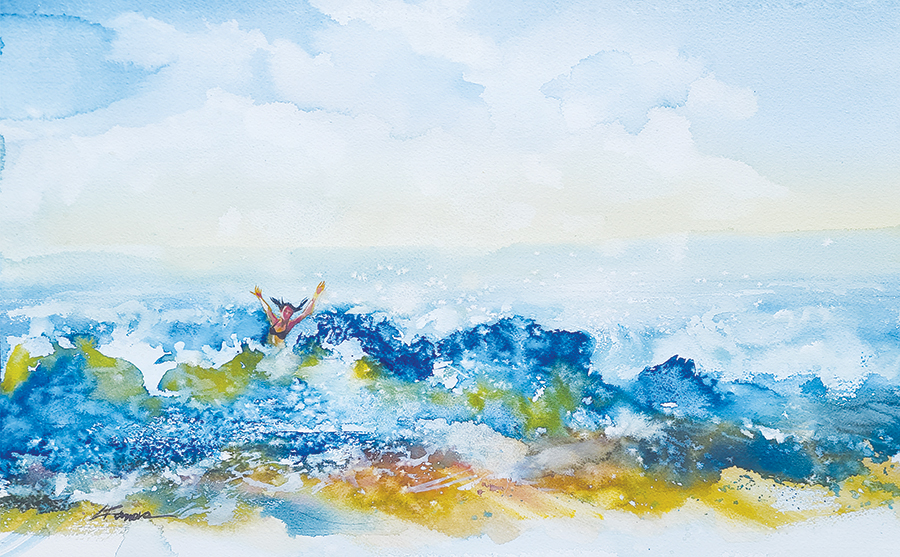
“Come and get me if you dare!” she yelled into the wind, my freckled goddess in the wine-dark sea, the woman who had already told me the words she wanted on her tombstone when death does us part. I wanted to tell her what I wanted on mine, too, but the water was cold, and she was already so far away.  PS

Daniel Wallace is the author of six novels, including Big Fish and, most recently, Extraordinary Adventures. He lives in Chapel Hill, where he directs the Creative Writing Program at the University of North Carolina.

My most recent favorite book is Bewilderness, by North Carolina writer Karen Tucker. It’s a rollercoaster, page-turning literary gem.