Southwords

SOUTHWORDS

Santa’s Coming, Regardless

By Robert Inman

It starts every year, without fail, the day after Thanksgiving. Grownups begin to threaten young people over Santa Claus. The air is full of dire predictions about what might happen Christmas Eve if children aren’t something close to saintly. It is the bludgeon used to produce clean plates at mealtime, tidy rooms, impeccable manners and timely homework.

Of course, adults have been putting the evil eye on children’s behavior since time immemorial. My grandmother, for example, had a special word of terror for young folks who trampled her flowers, tracked mud on her rug, or swung too high in her porch swing. “Nasty stinkin’ young’uns,” she’d bark, “I’m gonna pinch your heads off.” Mama Cooper was a sweet and kind person who never would have pinched the head off a radish, much less a child, but she could strike fear into her grandchildren. We were careful around her flowers, her rug and her porch swing.

So the grownup weapon of fear is a time-honored tradition. But the direst predictions of ruin and misfortune, it seems, are always saved for the Christmas season. “If you don’t clean up your plate, Santa Claus won’t come.” “Act ugly one more time, buster, and you’ll find a bag of switches under the tree for you on Christmas morning.” Well, baloney.

I came to my senses about the Santa Claus business when I met Jake Tibbetts, a crotchety old newspaper editor who appeared in my imagination one day and then took over the pages of my first novel, Home Fires Burning. Jake had a built-in bull-hockey detector, and he could spot nonsense a mile away. Jake’s grandson Lonnie lived with Jake and his wife, Pastine, and when Christmas rolled around, Mama Pastine put the pox on Lonnie about Santa’s upcoming visit.

At the breakfast table one morning, Lonnie let a mild oath slip from his 10-year-old lips. Mama Pastine pounced. “Santa Claus has no truck with blasphemers,” she said.

“Hogwash,” Daddy Jake snorted. “Santa Claus makes no moral judgments. His sole responsibility is to make young folks happy. Even bad ones. Even TERRIBLE ones.”

“Then why,” Lonnie asked, “does he bring switches to some kids?”

Jake replied, “This business about switches is pure folklore. Did you ever know anybody who really got switches for Christmas? Even one?”

Lonnie couldn’t think of a single one.

“Right,” said Daddy Jake. “I have been on this Earth for 64 years, and I have encountered some of the meanest, vilest, smelliest, most undeserving creatures the Good Lord ever allowed to creep and crawl. And not one of them ever got switches for Christmas. Lots of ’em were told they’d get switches. Lots of ’em laid in their beds trembling through Christmas Eve, just knowing they’d find a stocking full of hickory branches come morning. But you know what they found? Goodies. Even the worst of ’em got some kind of goodies. And for one small instant, every child who lives and breathes is happy and good, even if he is as mean as a snake every other instant. That’s what Santa Claus is for, anyhow.”

Well, Daddy Jake said it better than I ever could. I believe with all my heart that he is right, just as I have always believed fervently in Santa Claus and still do.

I believed in Santa Claus even through the Great Fort Bragg Misbehavior of 1953. My father was stationed at Fort Bragg with the Army, and I was in the fourth grade at the post elementary school. The day before school let out for the Christmas holidays, Santa Claus landed on the playground in an Army helicopter. It was, to me and my classmates, something akin to the Second Coming. When we went out to welcome Santa, the teachers stationed the first- through fourth-graders on one side of the playground and the fifth- and sixth-graders on the other. When Santa’s chopper landed, I learned why. We little kids were yelling our heads off for Santa to leave us some goodies under the tree a few nights hence. Across the way, the fifth- and sixth-graders were yelling, “Fake! Fake!”

Some of my classmates were crestfallen. It never fazed me. I figured those big kids were wrong then, and still do. Santa Claus is for real. Just look in a kid’s eyes and you’ll see him.

(By the way, I’m sure the fifth- and sixth-graders didn’t get switches for Christmas. Maybe they should have, but they didn’t.)

Grownups are wrong, too, when they threaten kids with the loss of Santa. Daddy Jake was right. We adult types need to grant the kids their unfettered moment of magic. If they act up, threaten to pinch their heads off. But leave Santa out of it. 

Southwords

SOUTHWORDS

Gee, I Really Love You

Car ride after car ride, song after song

By Jenna Biter

I peer into the rearview while the Dixie Cups keep singing.

Goin’ to the chapel, and we’re, gonna get ma-a-a-rried. Goin’ to the chapel, and we’re, gonna get ma-a-a-rried. . .

I drop an octave.

Gee, I really love you, and we’re . . .

I go back up.

. . . gonna get ma-a-a-rried. Goin’ to the chapel of love, oh, baby.

She’s staring blankly into space. The 1,000-yard stare, I call it. And the song loops.

Goin’ to the chapel, and we’re, gonna get ma-a-a-rried.

OK. I’m paying attention the whole time this time, all two minutes and 50 seconds. I reposition my hands on the steering wheel and focus on the double yellows.

Spring is here. The-uh-uh sky is blue. Whoah-oh-oh.

I waggle my head back and forth.

Birds will sing, as if they knew, today’s the day, we’ll say, ‘I do,’ and we’ll ne-ver be lonely any more. Because we’re . . .

Hard stomp, jazz hands, move toward the camera. That’d be perfect, I think. Costuming would be, hmmm, I don’t know, hard shoes? For sure, to emphasize the “hard stomp.”

. . . goin’ to the chapel of love.

Ugh. I stopped listening again. I glance in the rearview; still awake.

Bells will ring. The-uh-uh sun will shine. Whoah-oh-oh. I’ll be his, and he’ll be . . .

I used to wonder why music apps have a repeat mode. Actually that’s not true. I didn’t wonder. I just never used it.

. . . goin’ to the chapel of love.

OK. Now I’m really going to listen.

Goin’ to the chapel, and we’re, gonna get ma-a-a-rried.

I drum my fingers on the leather.

Goin’ to the chapel, and we’re, gonna get ma-a-a-rried. Gee, I really love you, and we’re, gonna get ma-a-a-rried. Goin’ to the chapel . . .

I wonder, when the Dixie Cups recorded “Chapel of Love” in 1964, did they think anyone would loop the song for hours on end? Doubt it, though they might’ve dreamed it.

I take another look.

“Yes!” I exclaim — in my head, not out loud.

She’s “reading labels.” That’s what I’ve named it, when she turns her head to the side, middle through pinky fingers in her mouth, lolling eyes trained on the labels on the sidewall of her car seat.

To give proper credit, my dad was the first to ponder whether the Dixie Cups could have imagined the staying power of their pop love song. My parents originally sang the tune to my older brother 30-plus years ago. We don’t know why it puts babies to sleep; we just know it does. And you don’t mess with success.

I turn down the volume.

Goin’ to the chapel, and we’re . . . 

I look in the mirror. Out like a light.

The Dixie Cups strike again.

Southwords

SOUTHWORDS

The Monster

And other commonsense solutions

By Ashley Harris

It was a delicate operation. The patient sat dejected on the floor, his “arm” dangling uselessly by his side. Just five minutes earlier, I had innocently slid the hose of my precious vacuum along the floor under the nightstand to suck up loose tumbleweeds of dog hair. Suddenly, the comforting whir of the motor was replaced by a death rattle.

“Help!” I screamed to my husband, J.P. But when I ran into the living room, I saw that he had on headphones, the protective gear worn by any baseball fan whose wife was doing loud chores. “I need you!”

“The Dodgers are playing the Padres.”

“This is an emergency!” I clenched my teeth.

Of all the vacuums I have ever owned, my 7-year-old, swivel-headed model is my favorite. We move together like Nureyev and Fonteyn, sweeping across the floor in artistic harmony.

I hauled the victim into the kitchen for triage. We peered down the dark hole of the hose and, even with the flashlight, couldn’t see anything.

“Can you think of something you might have vacuumed up that could be clear?”

Aha! I hadn’t seen the cap to my hairspray in weeks and, I confessed, it was clear.

“Congratulations,” J.P. said. “You have managed to vacuum up something that perfectly matches the diameter of the hose. That takes finesse.”

I had no time for clever remarks. “Let’s try this,” I said, handing over a steak knife. This tool remains one of my favorite commonsense solutions, useful for tasks well beyond its intended purpose. Never mind the scar I still bear on my left hand from the time, at 6 years old, I used one to pry a hardened collar of glue from my Elmer’s.

I held the hose steady while J.P. tried to jiggle the cap free, but the trusty knife did not work. We had no more luck with the screwdriver or the pliers, and the situation grew more dire with every attempt. Each tool we poked into the hose only pushed the cap even farther down, along with my heart.

“Why don’t we try the drill?” asked J.P.

For a normal person, the space between a crazy idea and better judgment is at least 30 seconds. Not for me. In my mind, this was pure genius. Why didn’t I think of it myself?

The cordless drill is J.P.’s most cherished tool, the equivalent of my vacuum. “Now, I don’t know how safe this is,” he warned. “You’re going to have to hold the hose perfectly still while I drill into the cap. If you move, the drill could damage the hose or worse, hit you. You sure you want to do this?”  

I dismissed the pesky notion that most deadly accidents happen in the home because I was as desperate as I was stupid. I held the hose, standing at arm’s length, in case J.P. slipped. And he drilled and drilled, rattling my bones with every thrust and parry. Still, the cap would not yield.

“This is going to take forever,” he said, glancing back at the Dodgers in the bottom of the seventh.

“What about The Monster?” I asked, in a wave of inspiration.

The Monster, a three-quarter inch drill bit, emerges from the toolbox only for special occasions, like when we needed to drill drainage holes in the discarded satellite dish we use for the seat in the swing we made for Tulsi, our bossy corgi.

“That could work,” J.P. said. “But we have to be very careful. You have to hold the hose, and you cannot move a muscle.”

I held on with both hands, shaking like an apprentice snake wrangler holding her first python. With one shove, that pesky cap shattered, spewing plastic shrapnel all over the kitchen. Hallelujah! We did it!

I plugged my vacuum back into the electrical outlet, and a quick flip of the on button confirmed that suction was fully restored. J.P. donned his headphones and planted himself in front of the television and I was happily vacuuming again, sucking up the shards of my sin.

Southwords

SOUTHWORDS

The Cup Runneth Over

By Jim Moriarty

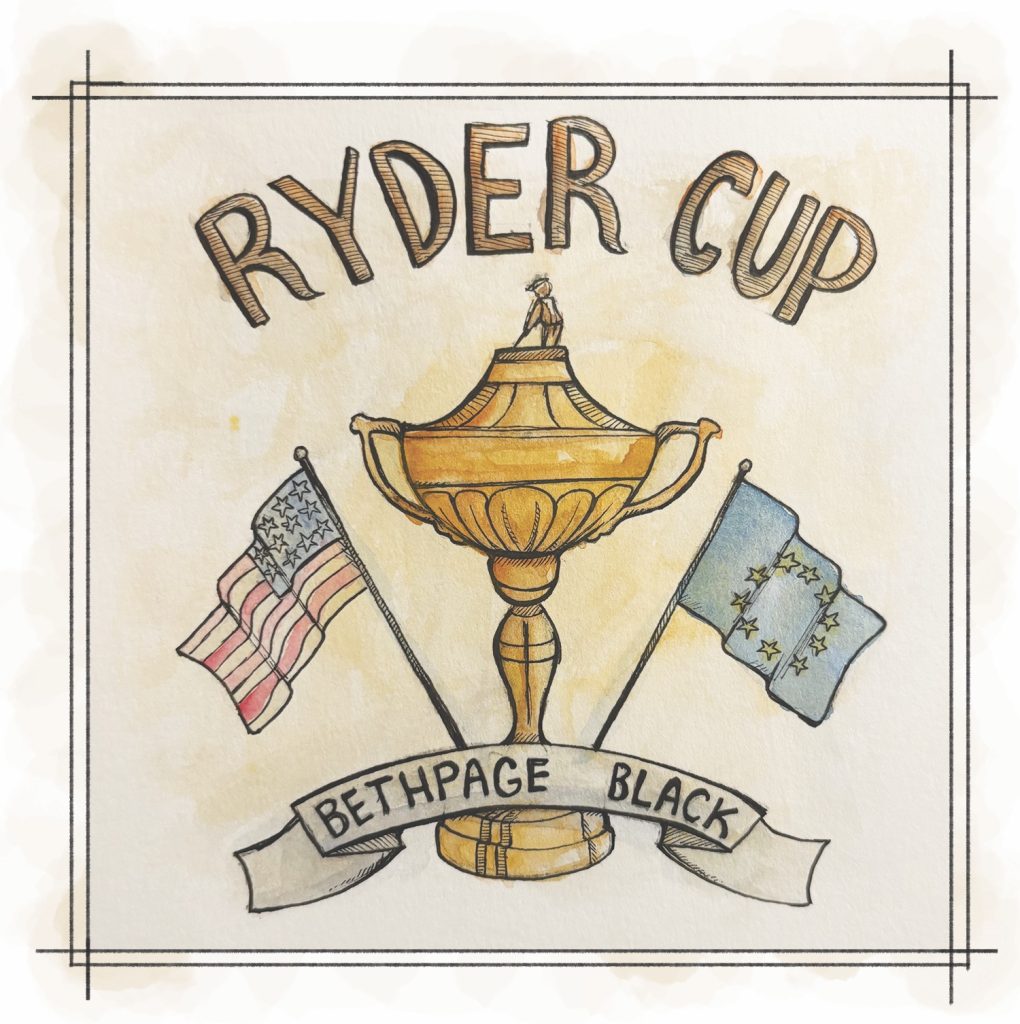
Fall is always football, but every other September, it’s the Ryder Cup, too.

My first Ryder Cup was 1983 at PGA National in Palm Beach Gardens. With a nod to the South Florida heat index, that one was played in mid-October, though since then, every Ryder Cup on this side of the pond has — at the very least — begun in September. The Ryder Cup wasn’t always the spectacle it is today and surely will be at Bethpage Black on New York’s Long Island, where the Americans will try to reclaim the trophy they lost two years ago in Italy.

When it was in Pinehurst in ’51, they paused the matches (in those days between the U.S. and Great Britain & Ireland) to go to the UNC-Tennessee football game in Chapel Hill. Sam Snead, a man often governed by pocketbook issues, took advantage of the day off to do a paid exhibition. At PGA National in ’83 there were probably more people scurrying off in their golf carts to play the other courses than there were watching the matches. Rory McIlroy once described the Ryder Cup as an “exhibition” until he played in one. “Hell of an exhibition, isn’t it?” his teammate Graeme McDowell asked McIlroy as the victorious Europeans sprayed each other with Champagne in 2010, as if Wales wasn’t already soggy enough.

Jack Nicklaus and Tony Jacklin were the captains in ’83. The U.S. had won 11 of the previous 12 Ryder Cups, the lone exception coming in 1969, when the teams tied with the U.S. retaining the cup. That was the year Nicklaus set the sportsmanship bar, conceding Jacklin’s putt on the 18th. The putt was long enough to engage the nerves but short enough that neither thought Jacklin would miss it. Nicklaus believed the tie was a fitting end. Why even take the chance? He picked up Jacklin’s coin.

At PGA National, the two sides went into the Sunday singles tied 8-8. The first match out that day was Seve Ballesteros, the Masters champion, against Fuzzy Zoeller, who had a green jacket of his own and a back brace to ease his pain. When the hobbled Zoeller won four straight holes from the 12th to the 15th, the match came to 18 all square. Both players drove into thick Florida rough. Zoeller’s second found the fairway. Ballesteros could barely advance his ball, hacking it forward 20 yards into a deep fairway bunker 250 yards from the green. Advantage America. Zoeller might squeeze a whole point from Europe’s most dominant figure. I was a few yards away when Seve pulled out his 3-wood. My first thought was that he was certifiably insane. No way was he clearing the lip with a 3-wood. Then he hit one of the greatest single golf shots ever struck in these biennial matches, a high cut to the front edge of the green. Zoeller hit a 2-iron to 10-feet. Fuzzy missed and Seve got up and down to give each team a half point. Nicklaus called Ballesteros’ 3-wood “the finest shot I’ve ever seen.”

The Americans defeated the Europeans 14 1/2 – 13 1/2 as lightning flashed on the horizon. One of Seve’s teammates on the ’83 side was Nick Faldo, who just happens to do one of the finest Seve impressions in the civilized world. The European locker room was a somber place after the narrow loss. They’d given it all and come up short. In bursts Seve. “We must celebrate!” Faldo says in his best Ballesteros lilt. “This is a victory for us!” Seve was right, of course.

The next year Europe broke the string of losses by winning at The Belfry. At the team celebration afterward, the wives began singing their own version of “America,” from West Side Story. “We’re going to win in America! We’re going to win in America!” And all the boys joined in. “That was a great moment,” says Sir Nick. And win they did, at Jack’s place in Ohio.

Since losing in Palm Beach, Europe has won 12, lost 6 and tied one, good enough that year to retain the cup. The U.S. will be favored at brutish Bethpage. The New York fans will be obnoxious; the traffic on the Long Island Expressway will be horrendous; but don’t underestimate the defenders. They still know how to sing.

Southwords

SOUTHWORDS

Sleeping It Off

When in doubt, hit snooze

By Emilee Phillips

“What did I miss?” I ask through a yawn and a stretch. This is a common refrain from me. I can sleep on any and every mode of transportation. From the outside it may look like sleeping just about anywhere, just about any time, is my superpower. In some ways, that isn’t untrue.

The reality is slightly more complicated. I’m prone to motion sickness. Not a little bit prone. More like projectile . . . you know what . . . prone. If I’m not in the driver’s seat or, at the very least, in the passenger’s seat — with a cautious driver — you can forget about it. Even being still and looking at something at the wrong angle can make my head spin. State fairs and Tilt-a-Whirls are sworn enemies. The very thought brings on waves of nausea. 

The trouble is that I love to travel. So what’s a girl to do? 

Dramamine has been a normal part of my life since long before I was able to spell it. Road trips, plane rides, boat rides, they’re brutal without it. Those tiny little pills worked wonders keeping me from losing my breakfast, lunch and dinner. The only downside is that they make me groggy.

I say downside because, to be honest, in my altered state I’m not the best traveling companion. My sister dubbed my car-induced sleeping “carcalepsy.”

The last big trip I went on was to Guatemala with my boyfriend, Nate. The country was beautiful to look at . . . absolute chaos to drive through.

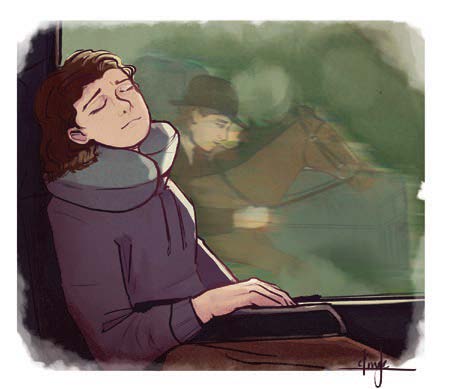
So, naturally, we ditched the idea of renting a car and opted for “efficient and cost-effective” public transportation: a bus. That’s how we ended up on what I can only describe as a rollercoaster on wheels, careening through the jungles on a journey from Panajachel to Guatemala City. We were advised the trip could take anywhere from three to six hours depending on potholes, washouts, traffic and whether or not a rogue cow decided to stand in the middle of the road like a crossing guard.

I knew the only way for me to get through this was to sleep. I took an extra bit of my medicine, found a neck angle that wouldn’t paralyze me, and willed myself into a bus-induced slumber.

The roads were winding, bumpy and full of holes big enough to swallow a Volkswagen whole. Slamming on the brakes was a frequent occurrence. Passing slower vehicles, I’ve been told, was like an Indiana Jones sequel, causing even Nate to hold his breath.

During a rest stop, I barely opened one eye when I saw Nate hop off for a snack. For a moment I considered following him but realized that food might give me energy, and energy meant awareness, and awareness meant I’d have to experience the ride. No thank you.

After six hours we pulled into Guatemala City, and I woke up dazed, victorious and the opposite of nauseous, whatever that is. As we de-bussed, Nate gave a little wave to a couple that had been sitting a few rows up from us. Apparently, the three of them had bonded over our mutual survival.

After we were out of earshot from our fellow travelers and walking toward our hotel, Nate started chuckling.

“What?” I asked, rubbing my eyelids and trying to remember what continent I was on.

He scratched his head and said, “So, uh, that couple I waved to? They’re from Germany. Super cool. Thought the ride was nuts.” I nodded. Of course they did. Who wouldn’t?

“Yeah, well,” Nate continued, barely containing his laughter, “they also asked me if I drugged you.”

I blinked. “WHAT?” I had apparently slept through my own kidnapping.

“At first I thought it was a joke but they seemed serious. They couldn’t believe you slept through all of that,” he said motioning behind us. “ I had to tell them I didn’t drug my girlfriend. She drugged herself . . . with Dramamine.” 

Poor Nate having to plead his innocence to complete strangers. Worst case of carcalepsy ever.

Southwords

SOUTHWORDS

The Hot Dog Rule

Cutting food down to size

By Jim Moriarty

Some years ago I tried to convince the editor of Coastal Living to do a story on the search for the ultimate beach hot dog. He looked at me as if I’d suggested he commit hari-kari with a shucking knife. If Coastal Living was going to talk about food, he said, that food was going to come out of the ocean one way or the other. I felt like a one-eyed king in the land of the blind.

This is not uncommon for those of us who consider the hot dog to be the most highly evolved of all God’s consumables. I came by this understanding as a mere child when dinner on humid summer nights often consisted of a hot dog and a refreshing pint of cold root beer at the B&K drive-in. Slather on the mustard. Dish on the relish. Sprinkle on the onion. No ketchup, please. We weren’t heathens, after all.

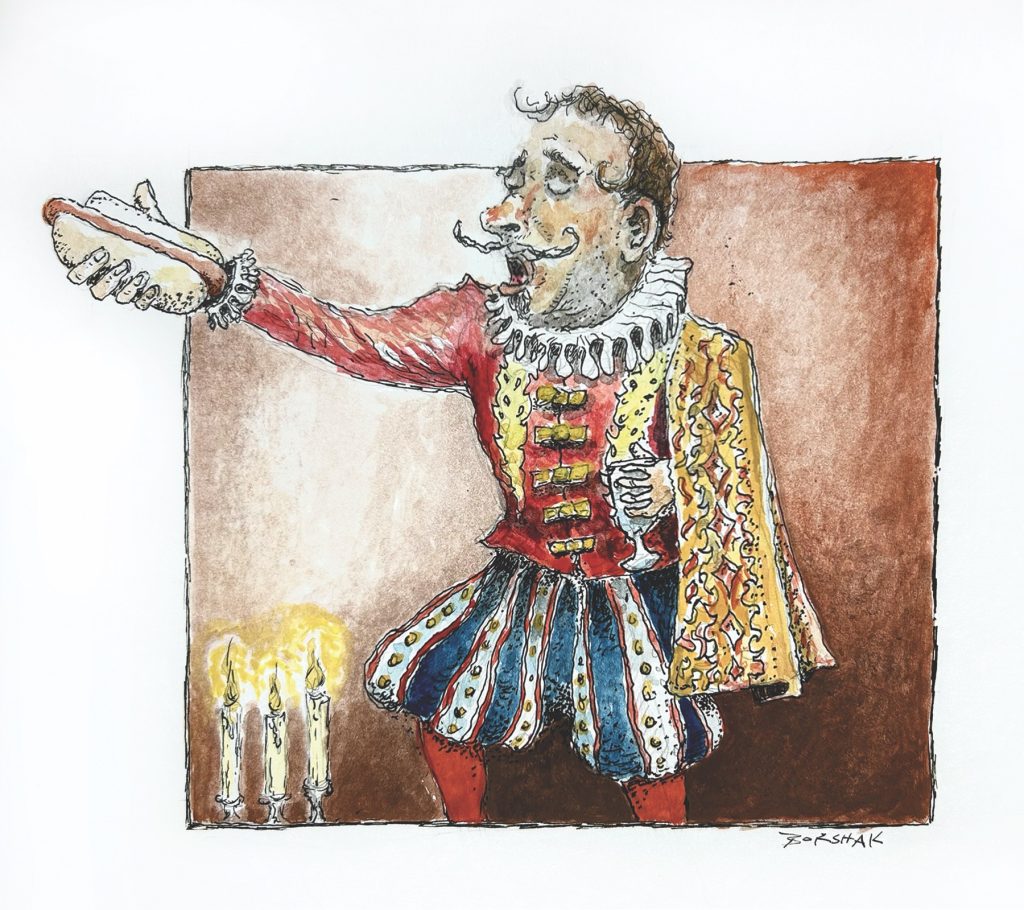
Later, as I matured, hot dogs purchased on sweltering afternoons at Wrigley Field from ballpark vendors singing “red hots, get yer red hots” as if it was Verdi’s Rigoletto only served to enhance my belief in the lofty place occupied by the hot dog in the hierarchy of all food. Passing hot dogs, slathered in mustard and chased by an Old Style, down a row of Cubs fans like a bucket brigade putting out a four alarm fire was its own rite of passage. No ketchup, of course. We weren’t savages, you know.

I have a friend at my pub, the Bitter and Twisted, who is as committed to the noble hot dog as anyone I’ve ever known. He is widely traveled, worldly beyond my comprehension, and he claims, with apologies to his West Texas roots, that the very best hot dog he’s ever had was in Reykjavik, Iceland, at Bæjarins Beztu Pylsur, which translates to “The Town’s Best Hot Dogs.” People line up down the block and around the corner to get them, he says. They sell 1,000 a day. If it’s not the town’s best dog I can’t imagine what is.

Hot dogs are beyond utilitarian. They are civilized — yet another reason why they reign supreme — which brings me to The Hot Dog Rule. I don’t mean to cast aspersions at Michelin and all its fancy-schmancy stars, but The Hot Dog Rule is as basic to the laws governing human behavior as not wearing a white shirt when you eat spaghetti. In sum, no sandwich should be more difficult to eat than a hot dog.

When it becomes necessary to deconstruct a sandwich as tall and as vertical on the plate as the leaning tower of Pisa, layered with slabs of tomato, piles of pickles, heads of lettuce, pounds of processed deli meats, mountains of kale, all held together with plastic picks the size of the Excalibur, such a sandwich must be found to be in violation of The Hot Dog Rule. If you have to break your sandwich down into all its component parts as though you’re rebuilding an automobile transmission before you can think about managing a bite, such a sandwich must be found to be in violation of The Hot Dog Rule.

I admit, there are gray areas. For one thing, there is the matter of spillage. But to be perfectly honest, a snippet or two of diced onion or a soupçon of relish falling overboard is hardly the same thing as needing a forceps to pry your jaw open wide enough to take a bite of a sandwich the size of a MINI Cooper.

As for chili dogs, I’m going to have to plead the fifth.

Southwords

SOUTHWORDS

Magazine Magic

A glossy ticket to other worlds

By Ruth Moose

I LOVE magazines. Always have, always will.

A new magazine is like a gift box to open and unwrap its surprises, goodies, dreams. Even the feel of them: not too heavy, not too bulky. Just right to tuck in your carry-on, under your arm as you go out the door, hold upright in the good light as you read. Perfect for the beach. Who wants to add the weight of War and Peace to the towels, snacks, blankets, chairs, umbrella . . . all to heft and carry? It’s a vacation, not powerlifting.

Magazines are color, inspiration, ideas. They may not weigh much, but they open doors to other worlds.

I grew up in a house with few books: a big Bible (my grandfather was a Baptist preacher); a child’s storybook Bible; a dictionary; some cookbooks (including the red and white gingham covered Original Better Homes & Gardens); and books my wonderful aunt (who was a librarian) sent me for birthdays and Christmas. Mary Poppins, Little Women, Black Beauty and, of course, Robert Louis Stevenson’s A Child’s Garden of Verses. I cherished them all.

What was new and different and fresh every month, though, were our magazines. Good Housekeeping, McCall’s, Ladies’ Home Journal, Redbook and more. Reader’s Digest always. When a new issue came, my father would pick it up after supper and read out loud to my mother while she stood at the ironing board. “Life in These United States.” They would laugh together at the silly, harmless foibles of our common humanity. I did the vocabulary quiz after I browsed the articles. Sometimes, we’d get a Guidepost or Progressive Farmer. Though we lived in the city of Albemarle, both my parents had grown up on large farms. Our house was in the middle of some vacant lots where we raised vegetables for our table all summer, canning and freezing some for the winter.

Summers were long and hot and boring with little to occupy our days after Bible school’s two weeks ended. My mother had a daily rule: After lunch, which we called dinner, we had to observe “quiet time.” My brothers and I went to our rooms, closed the doors and were absolutely silent. No TV. No phones (of course). No talking. We didn’t have to nap, though sometimes we did.

What we had were our magazines. My brothers got copies of Boy’s Life and Wee Wisdom, maybe Ranger Rick. I got Seventeen for a few important years and felt very sophisticated. One of our neighbor girls, Jodie, was 5 years older than me and oh, so worldly. She loaned us True Story but my mother would never let me read it. That didn’t keep me from thinking up excuses to visit across the street and snatch some browsing time in Jodie’s under-the-mattress stash.

Meanwhile, Mother took her fresh copies of Better Homes & Gardens, McCall’s and Redbook to the front porch, where it was cooler, and she could browse at a leisurely pace all the new recipes, window treatments, and biographies of the rich and famous we all thought we knew. After devouring our magazines cover to cover, we’d pass them along to friends, family, neighbors.

They were what kept us current with the world, our vocabularies refreshed, our reading skills practiced. They made us feel richer in dreams, our universe widened with words and colors even when that universe didn’t extend much farther than the block we lived on.

Southwords

SOUTHWORDS

Ah, the PGA

A good time was had by all

By Jim Moriarty

I’ve had a fondness in my heart for the PGA Championship since 1979 when I wrote what we used to call the “gamer” for Golf World magazine, the little engine that could, founded by Bob Harlow in Pinehurst in 1947. Often regarded as the least of golf’s four majors, it was my first time writing about any of them, and I remain deeply and profoundly in like with it. What I produced doesn’t belong in the journalism hall of fame but there is enough persiflage in it to suggest the troublesome wiseass I would become. Besides, anything that can be won five times each by Walter Hagen and Jack Nicklaus is good by me. The 107th running of the club pros (the PGA of America is, after all, their organization) will be conducted this month on the magnificent Quail Hollow Club in Charlotte, which makes me wish it was 1979 all over again.

That championship was played at Oakland Hills Country Club in suburban Detroit, not far from the Red Fox, an upscale restaurant on Telegraph Road where, four years earlier, Jimmy Hoffa was supposed to meet with a couple of Tonys and was never seen again. If memory serves — and these days it rarely does — the media was lodged in a Holiday Inn also not far from the Red Fox. The hotel was in the midst of renovations, which meant the rooms were cheap. The lone non-negotiable requirement of any media hotel was (and I’m guessing still is) that the bar be functional and the hours generous. In this regard it was tiptop. In others, not so much.

One day when I returned from the course, tired and sweaty, I pushed the button to get on the elevator and was greeted by half a dozen enthusiastic policemen with sidearms, bulletproof vests and a battering ram. They were headed for the same floor my room was on to make a drug bust. One of them politely offered to squeeze me in but I told them, “Naw, you all go on, I’ll catch the next one” — a minor subterfuge that, of course, required a timely visit to the hotel bar.

That year a journeyman pro named Rex Caldwell, nicknamed Sexy Rexy, held the 54-hole lead by two shots over Ben Crenshaw, four clear of David Graham, Jerry Pate and Tom Watson. Tall and thin, Caldwell was flashy in his flared trousers and made good copy. A bit too good. He was quoted guaranteeing a victory. “You can make book on it,” he supposedly said. What Rex actually said was, “Hell, I’ll be nervous. You can make book on that.”

After dinner on Saturday night, when I got back to the hotel I ducked into the bar. There was Rex in a corner booth with a woman under each arm. For all I knew they were his cousins but I, for one, wasn’t going to make book on Caldwell winning the PGA.

David Graham, the Australian, wound up beating Ben Crenshaw, the crowd darling, in sudden death but only after David choked away a two-shot lead with a double bogey on the 18th. Graham has never claimed it was anything other than the pressure of the moment. What was remarkable is that he was able to walk off that last green — “I felt like I was 6 inches tall,” he said — and gather himself enough to win a playoff. He had to make a 25-foot putt on the first extra hole and a 10-footer on the second, just to stay alive.

Graham came up hard. He quit school at 13 and left home at 16. He has described his father as “a nasty guy” and, as far as I know, from the day he left they never spoke to each other again. David had an edge to him but if you were his friend, he was the kindest, most loyal man you could ever know.

Dick Taylor, the editor of Golf World who sent me to cover the ’79 PGA, considered David a dear friend. Two years after Oakland Hills, Graham won the U.S. Open at Merion Golf Club producing what I still consider the finest exhibition of ball-striking ever in the last round of our Open. He hit 17 greens. The one he missed was on the collar of No. 17. An inveterate club tinkerer and designer — Graham fashioned the irons Crenshaw used at Oakland Hills — on the Monday after Merion, Taylor called Graham’s home to congratulate his friend privately, not in the public of a media mash up. David’s wife, Maureen, answered the phone. Dick said, “For God’s sake, tell him to leave those clubs alone.”

Maureen relayed the message. From his shop, Graham yelled back, “Tell him I’m regripping them right now!”

Southwords

SOUTHWORDS

Live in the Meow

Curiosity didn’t kill this cat

By Emilee Phillips

Cats having nine lives is a cliché. Orange cats being a menace is another. But my childhood cat, Simba, fits the bill for both.

He was trouble from Day One. We found him abandoned under an azalea bush and roaring his little kitten head off. I had never heard such a small animal make so much noise. After capturing the terrified little guy, I discovered he also had six toes, like the Hemingway cats. Trouble.

Simba has always preferred the jungle — er, pine trees — to the cushy indoors. He roamed and picked fights, holding his own in the wild kingdom (our neighborhood). The cat was a scrapper through and through but always came when his name was called. He had a soft spot for family. Or so we thought.

When we moved to horse country Simba went along for the ride. It’s not uncommon for animals to run off after a move. They may get confused and try to find their way back to their former abode. 

Shortly after we relocated, Simba disappeared. I imagined him weaving in and out of briars, riling up goats, scurrying around towering horses like a night bandit. I hollered for him daily, nightly. Not a meow was heard in response. The family searched for him but the new house was out where coyotes regularly lurked. We feared the worst.

After a couple of months, we accepted that our family cat was gone. We honored him with a framed picture that read “Forever in Our Hearts,” with the years of his life inscribed on the back.

But we were wrong. He hadn’t used up all those lives just yet.

My mother and I were shopping in Raleigh one day the next summer when she got a call. “Hi there. I’m a security guard at Penick Village. I, um, think I have your cat.”

We exchanged looks of confusion. “Is it black?” asked my mother, thinking perhaps our second cat, Zelda, had decided to visit some distant, unknown aging relative. 

“No, ma’am, it’s orange.”

“Orange!” we exclaimed in unison.

“Yes, ma’am, I’ve seen him out here every night for the last few months. I figured it was a stray. He finally let me get close enough to grab him and he had a collar. Thought I would try calling.” 

We zoomed back. It was dark by the time we got there, and the cat was nowhere to be seen. I stalked the retirement community for the next three days. 

I asked anyone I saw outside on the street, “Have you seen an orange cat?” To my amazement, nearly all of them said, “Yes.” Great, I thought, my cat has been family shopping. No doubt capitalizing on extra rations from multiple residents. I handed out my phone number like I was passing out Junior Mints. 

On the third day, I got a call. A sighting!

I rushed to Penick Village and jumped out of the car. “Simbaaaa!” I yelled. Next thing I knew I hear a “bwrrr” and out popped my cat from the bushes. I half expected it to be some lookalike, some faux Simba, but it was my very own six-toed little feline. He rolled on his back and purred, seemingly indifferent to the fact that he had been missing for 10 months.

I coaxed him with treats and, after a moment of deliberation, he sauntered over with an accusatory look as if to say, “Yo, where you been?” Once in the car, he jumped into my lap as though this was just another chapter in his great escape.

A wave of emotions rushed over me: happiness, bewilderment . . . and annoyance that my cat decided he wanted to experience an easier pace of living. Well, I was taking him out of early retirement.

The reasons for Simba’s disappearance remain a mystery, having chosen assisted living even over our previous residence. Once I got him home, he didn’t bother with the cat bed we’d set up for the return of the prodigal tabby. Instead, he flopped down on the windowsill, resuming his rightful place with a lazy stretch.

We knew at that moment he wasn’t just returning from his brief sabbatical. He was back, all the way back, ready to once again rule over his empire of pillows and food bowls, with no intention of going missing again, except perhaps to a particularly sunny patch of grass somewhere nearby.

As for us, we crossed out the dates on the back of Simba’s frame and updated the picture — mug shots, front and side.

Southwords

SOUTHWORDS

Wanna Bet?

The bad luck of the draw

By Jim Moriarty

Games of chance have never been profitable for me. I’m convinced there is a genetic component to the deficiency. My father, who I did not know well, was a non-professional gambler. By this I mean he bet on the horses lavishly but was very bad at it. From what I gather, a lot of bettors study the racing sheet like they’re preparing to take the law boards. My father, on the other hand, was one of those gamblers who bet on a horse because he thought its name was cute or the jockey had just the right shade of blue in his silks. It wasn’t a method that held great promise, and he derived exactly the amount of success from it that you would anticipate.

This carried over to my lone experience betting at the Stoneybrook Steeplechase, that springtime Moore County tradition that was like no other. Since Stoneybrook frequently happened the same week as the Masters, work most often called me to Augusta, Georgia, instead of to the Walsh family farm off Youngs Road. One year, however, the two events diverged, and I was able to attend the races with what seemed like half the state of North Carolina. It was a springtime extravaganza in ways I cannot begin to explain.

Naturally, our tailgating group organized a pool to bet on the races, a practice as common as big hats and cold beer. Given my background, I harbored no illusions of either win, place or show. My expectations were low but were, somehow, exceeded. We drew our numbers from a hat. This alleviated any chance of my putting my father’s methodology to use, which, to be candid, I viewed as something of a plus. I don’t remember what number I drew but, like everyone else, I bellied up to the rail to watch the start of the race.

Just like that, they were off. A thundering herd. I searched among them for my horse. He must be hidden in the pack, I thought. The earth shook as they pounded past. I double-checked the number on the slip of paper in my hand. My horse had gone missing.

Confused, I looked back toward the starting line. My horse wasn’t there, either. In fact, he had never gotten beyond it. When the flag went up and the rope dropped, my trusty steed had wheeled in the opposite direction and put a surprising amount of distance between himself and the rest of the horses, until he found a likely spot to jump the fence into the infield, where, presumably, he was meeting friends for a mint julep. My father would have been so proud.

As poor as this wager might have been, it wasn’t my worst gambling faux pas. That came in a Ladbrokes bet shop in the town of St. Andrews, Scotland. The Open Championship was there in 1990. By then Tom Watson was in his 40s and, to be bluntly honest, his championship game had gone to seed. Still, he had very nearly beaten Seve Ballesteros on the old links six years before.

The odds on Watson were 50-1. I thought, how could this not be worth a few quid?

And so I stepped to the window and put down £20 pounds on my sentimental favorite, the eight-time major championship winner. I walked out of the shop in one of St. Andrews’ back alleys into the bright July sunshine, dreaming of what I would buy when my aging ship came in. As luck would have it, at that very moment a sea gull the size of a nuclear submarine flew directly overhead and dropped a load of sewage on me that could have put out a forest fire. Without hesitation, I tore my ticket in half and tossed it into the nearest trash bin.

Watson and I both missed the cut.