The Bell and the Ballerina

THE BELL AND THE BALLERINA

The Bell and the Ballerina

Fiction by Jim Moriarty
Illustrations by Matt Myers

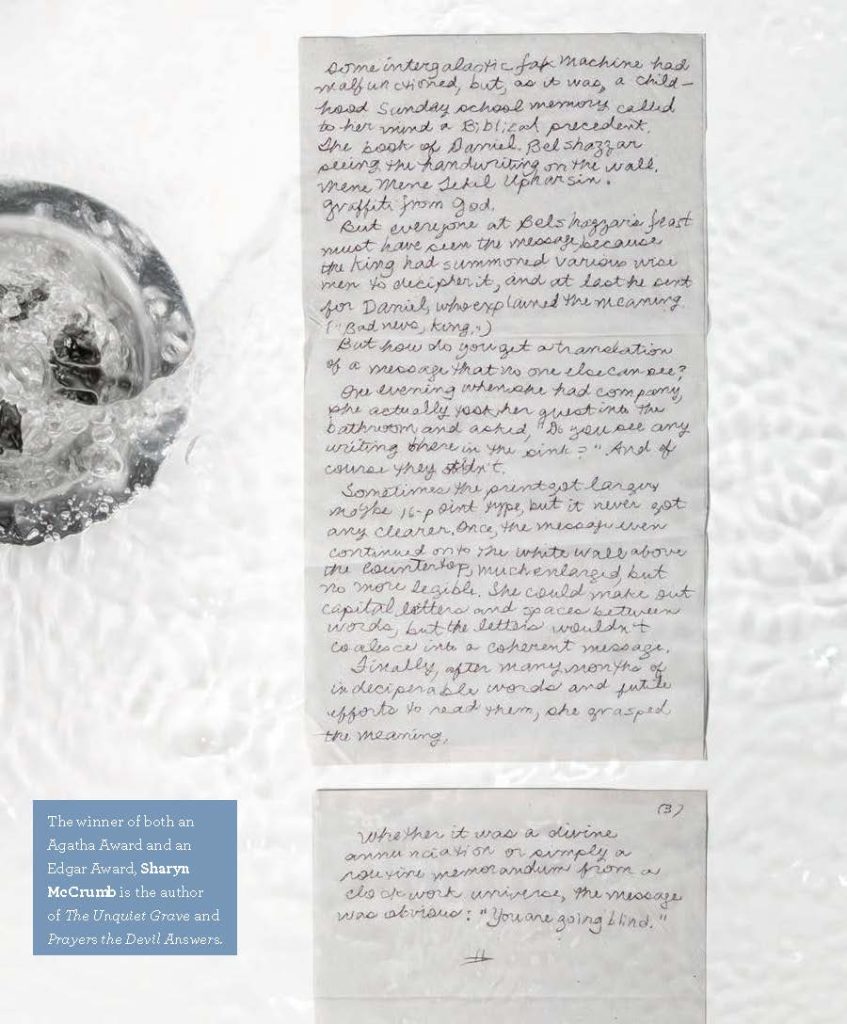
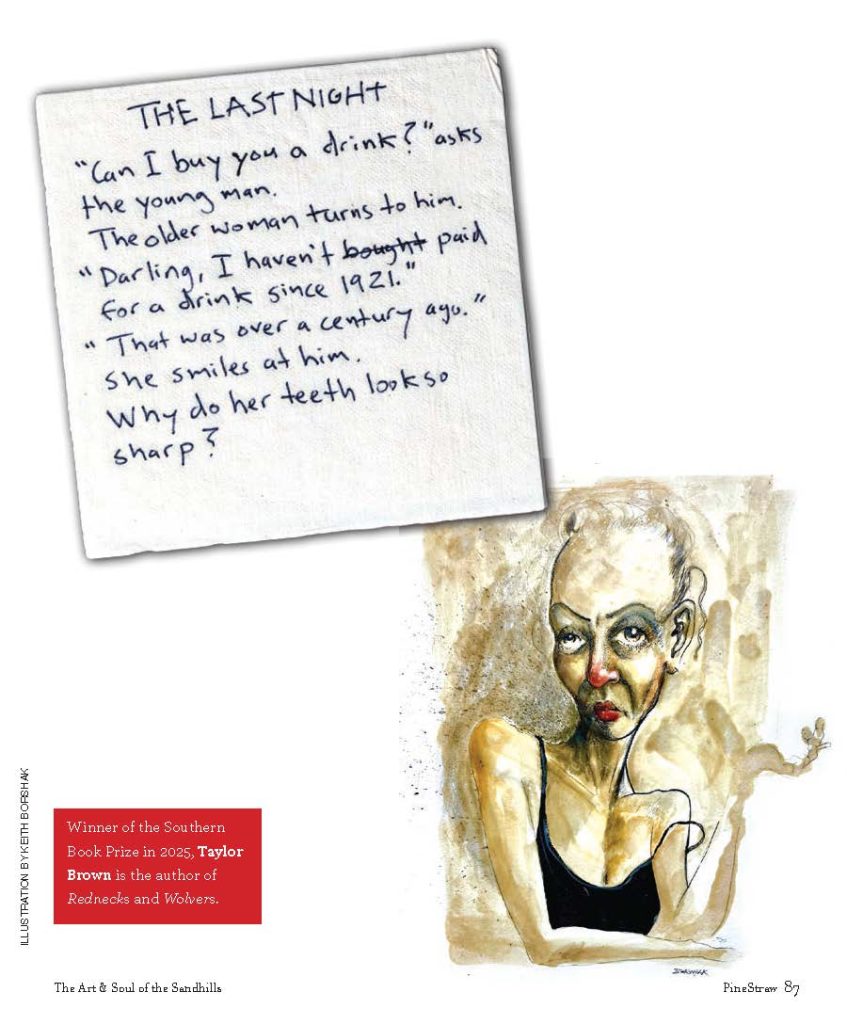
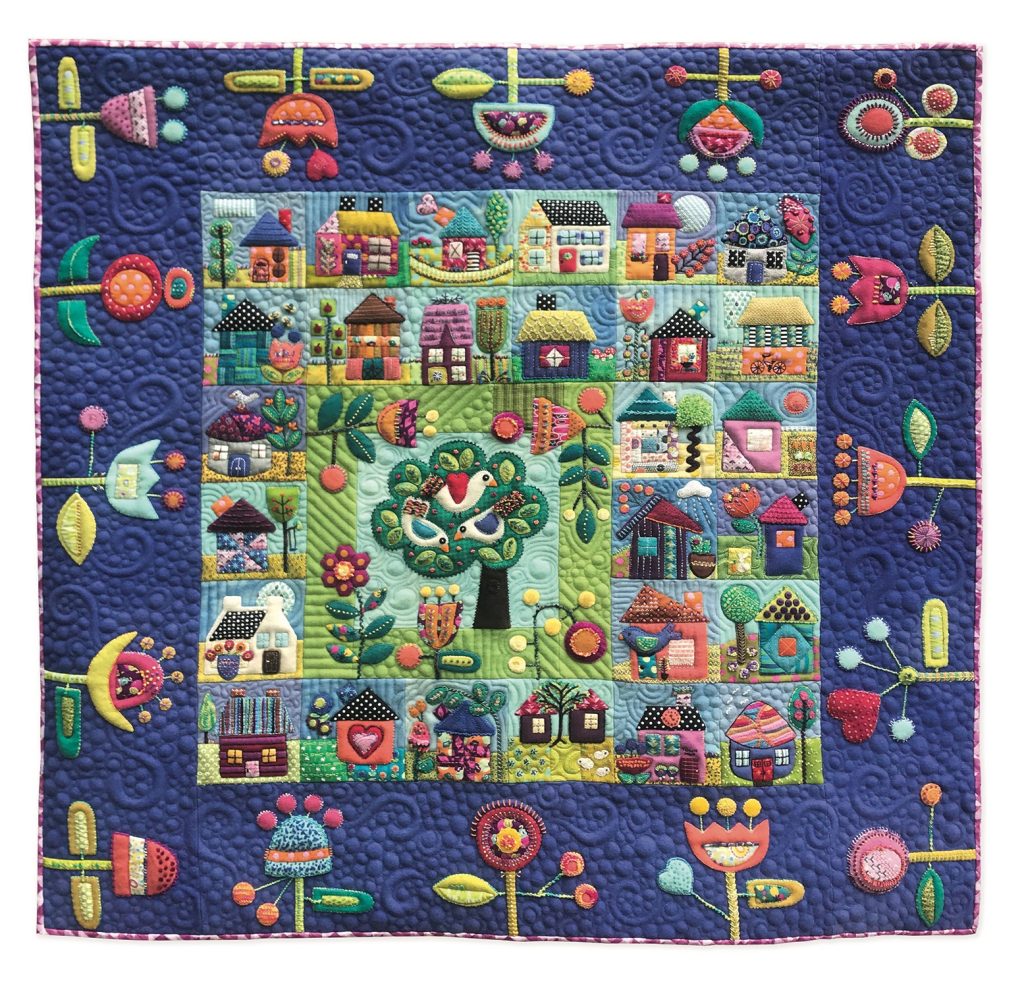
Every Christmas, for as long as I can remember, the ornament Mother took special care to hang on the tree was a silver bell. For 11 months of the year it lived in a green felt bag, occupying a corner in the storage box that came down from the attic each December. It was the first, and sometimes only, ornament she put on the tree. It had a red ribbon for hanging, tear drop openings to let its high, sweet tones escape, and a name ornately engraved in the silver:

Emma

Sometimes Mother would smile when she found just the right spot for it. The last few years I’ve watched as her eyes misted over. The name existed nowhere on our family tree. I had often thought of asking Mother who Emma was and where the bell came from but never did, fearing the memory might bring more heartache than pleasure. But when we packed up her things — she was moving away to live with her sister Taylor — I knew she wouldn’t want her silver bell left behind. I also knew it was time to ask.

“Mother,” I said as I dangled the bell from its red ribbon. “Who is Emma?”

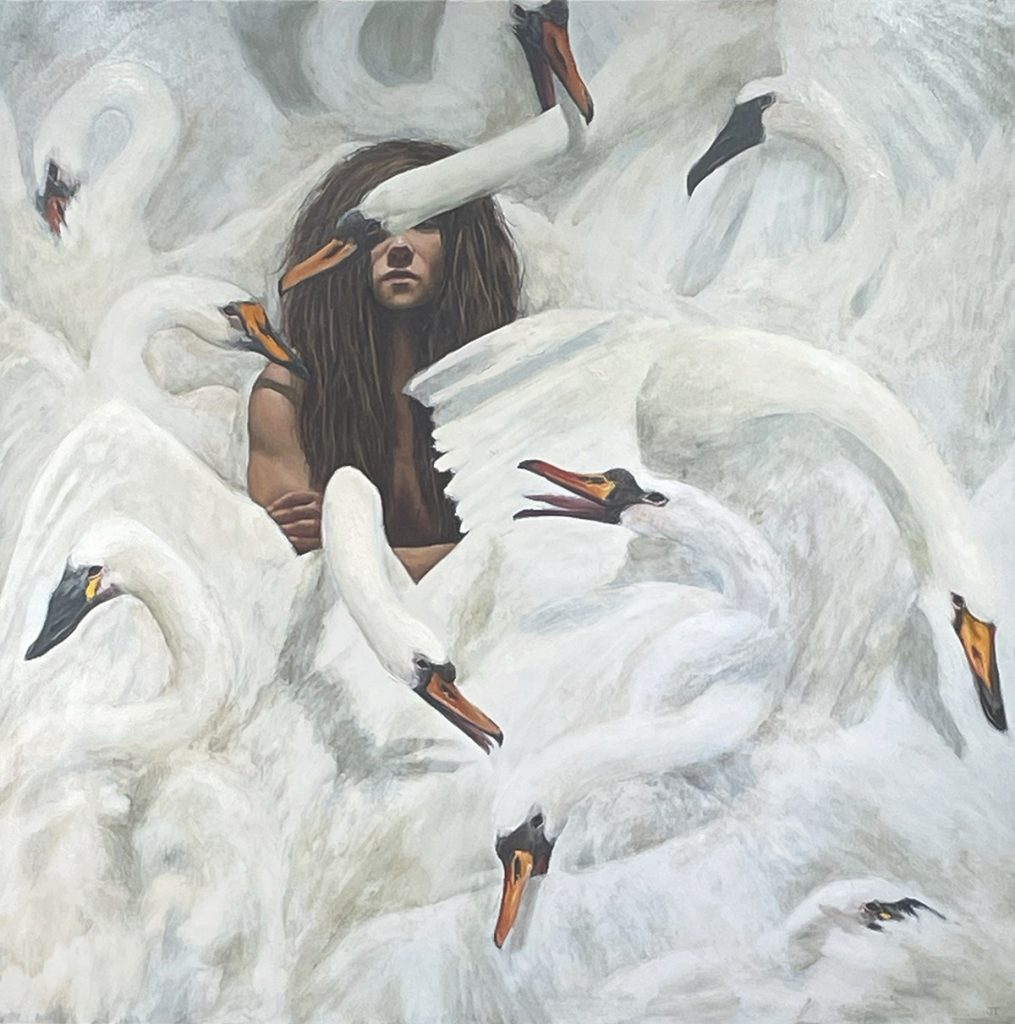
Jenny and Emma looked like sisters but they were closer than that. Jenny’s eyes were just as brown as Emma’s, and their hair color was borrowed from the same wheatfield. Side by side, they were often mistaken for twins. If one grew half an inch one month, the other would catch up the next. This went on and on from the first day they could remember and into their eleventh year. All that time, even when they tried to look different — Jenny’s hair in a bun and Emma’s in a ponytail — by the end of the day it all came unraveled and they looked just alike again.

Among the first memories they shared was being watched by the older ones, the neighborhood gang.

“Where is Emma?” Jenny asked.

“Don’t worry, we’ll find her,” Tommy said, because he was a very good older brother.

“Where is Emma?” Jenny said again, and then again.

“Stop crying,” Tommy said. “Look, look. There she is!”

And it was Emma. And Jenny took her hand and held it as tightly as she could.

“Now you two stay here,” Tommy ordered.

“Don’t follow us,” Jenny’s sister Taylor warned them.

“It’s too dangerous,” said Derek from down the street, as if he and all the rest were setting off into the bone-chilling wilderness.

Of course, it wasn’t really scary at all. They just didn’t want two little girls tagging along. And so Jenny and Emma held hands and watched the old ones, all of them, go sliding down the hill, ducking under the sassafras limbs and laughing until they were gone from sight. But even when they were left behind, Jenny and Emma knew something no one else did: Their souls were connected and always would be.

Everyone knows that the very best friends can sometimes do different things, but even when Jenny and Emma were apart, they were together. Emma was the fastest girl in school, and when she ran a race no one cheered louder for her than Jenny. And Jenny loved ballet — oh, how she could pirouette — and no one applauded louder when she danced in her recitals than Emma.

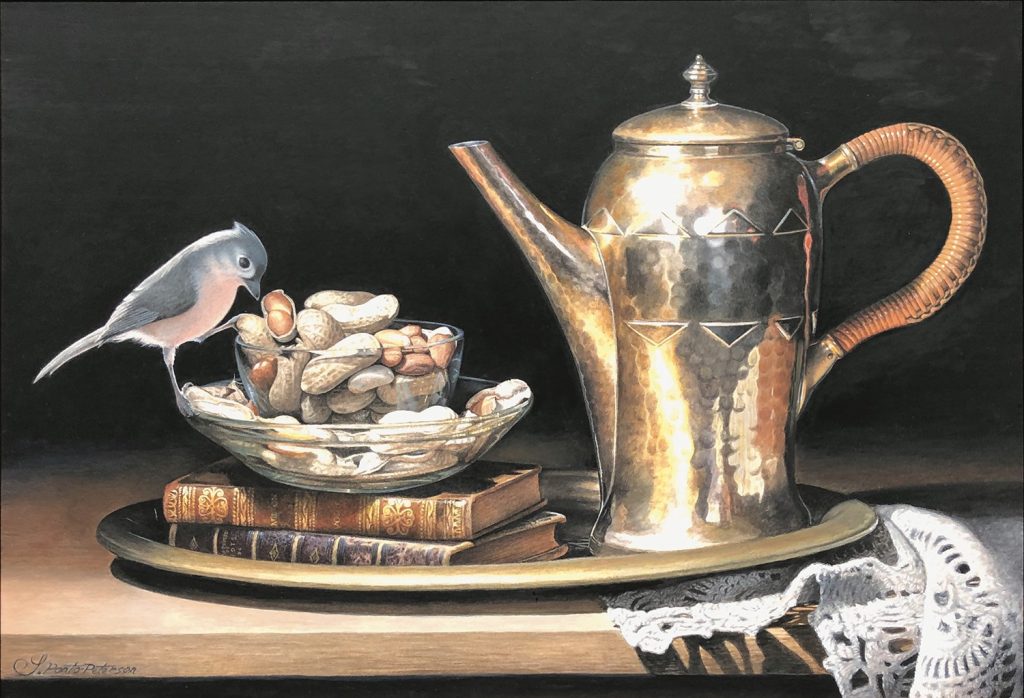
Families have Christmas traditions all their own, too. In Jenny’s house everyone had an ornament that was theirs and theirs alone and only they could hang it on the tree. Jenny’s father had a copper teapot, and Mother a miniature oaken bucket. Every year Father would tell the story of the teapot and the bucket, survivors from their first Christmas tree, in an apartment Mother and Father lived in before any of the children were born. Tommy’s ornament was a dinosaur. Taylor’s was a pair of tiny blue beach sandals. Jenny’s, of course, was a crystal ballerina. How that dancer would twirl!

Emma and Jenny had a tradition of their very own. On Christmas Eve they left their shoes on the porch by the front door — even their houses looked exactly alike — and in the night their shoes filled up heel-to-toe with packages of chewy red and green and yellow and orange gummy bears, each to each, because they both loved them so.

This year, though, Jenny didn’t feel much like leaving her shoes by the door. Emma was moving away. And not just to a different house a few streets across town but to a whole different state hundreds and hundreds and hundreds of miles away. The day before Christmas it was cold outside and as they sat in the living room by Emma’s Christmas tree, Jenny asked her friend if she had a special ornament just like Jenny did.

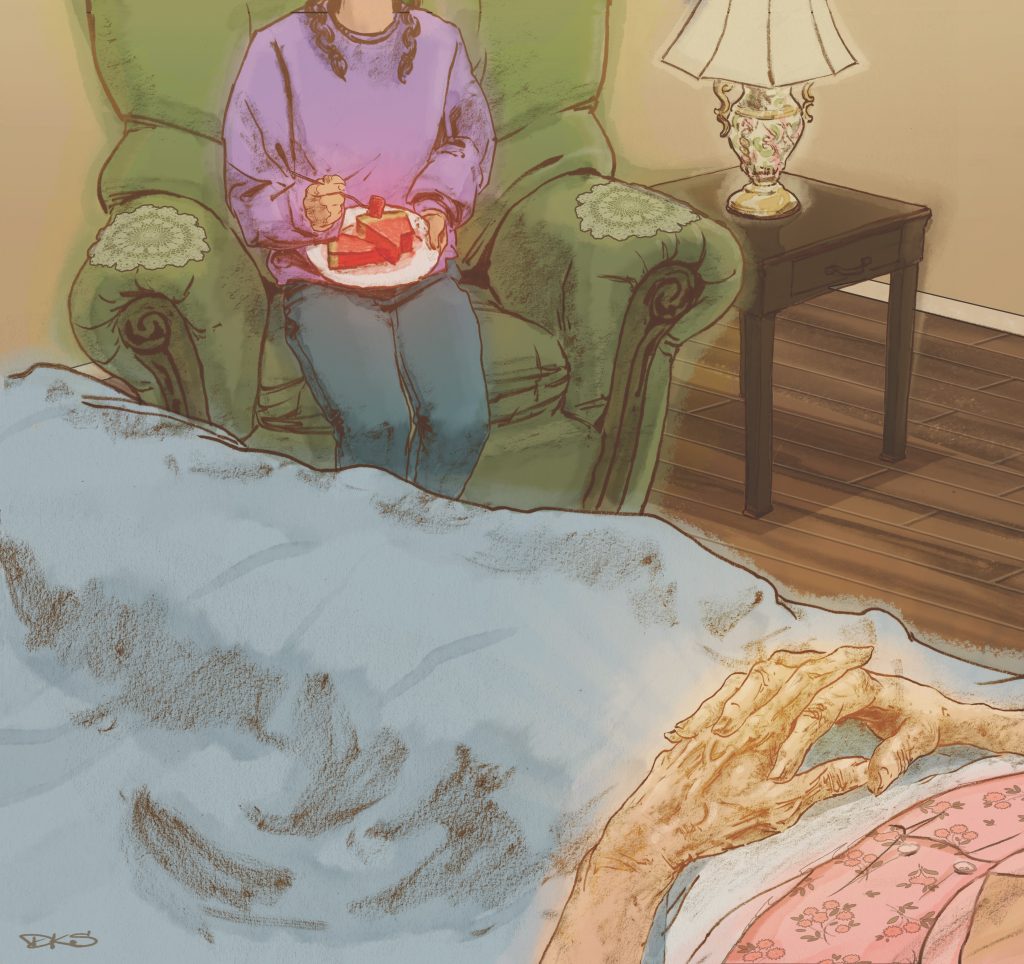
Emma got up from the floor, reached high up, almost to the star, and took her own special decoration down. It was a silver bell with her name on it in the most elegant writing Jenny had ever seen. Emma gave it a shake and a delicate, beautiful note came out of it.

“Why do you have to move?” Jenny asked her.

Emma sighed. “My mother got a new job.”

“Where?”

“Out West,” Emma said, trying to say it with a hint of adventure but it sounded like the dark side of the moon.

“West,” Jenny said. That was where the sun went down.

That night was Christmas Eve, the best night of the year in Jenny’s house. It was the night they put up their tree. After everyone found the perfect spot for their special ornament, they had one last tradition before disappearing upstairs to wait for morning to come. They were all allowed to open one present. Just one. Father opened his first. Then Mother opened hers. Then Tommy, then Taylor. Jenny was the youngest and had to wait the longest.

Father passed a long, thin present to Tommy. “I wonder what this is,” her brother said as he shook it and put it up to his ear, pretending he couldn’t figure out what was inside the wrapping when it couldn’t have been anything else in the whole world but a hockey stick. Everyone laughed, even Jenny. And they oohed and aahed at the sweater, as downy as kitten fur, when Taylor pulled it over her head. “It’s so soft,” she said.

“This is for you, Jenny,” her father finally said and gave her a small, rectangular box. Jenny pulled the ribbon apart on the top, then pried the tape off one end. She knew what it was, too, but was afraid to hope too hard. It was a plain old shoebox but inside it she found the most wondrous thing — her very first pair of point shoes. Jenny gasped, and she looked at her mother and father and her sister and brother. She pulled her slippers off in a rush, put her feet in her new ballet shoes and tied the pink ribbons around her ankles to hold them in place. She stood up in the middle of the living room, beside their tree with all the lights and ornaments, kicked aside the wads of wrapping paper and empty boxes and twirled and danced and leaped with joy.

Jenny danced around the living room and through the dining room and back through the living room and out the front door onto the porch where her new shoes made a musical sound, scraping and clicking against the wooden deck as if she was keeping time with her heartbeat. As she held her arms out, posed exactly so, and turned and turned, her head flipped around one last time and she saw Emma watching from her living room window. Her best friend in the whole world waved to her and Jenny waved back and they smiled at each other as though their smiles might never vanish.

Though she was very sad, before she went to bed Jenny put her brand new point shoes out on the porch by the door. Then, later that night, when everyone was asleep, she crept down the stairs. The lights on the tree were shining and there were piles and piles of presents, so many she had to slide some out of the way to reach her crystal ballerina. She unhooked it from the tree and sneaky-peeky in the cold night air, carried the ballerina next door, up the stairs onto Emma’s porch. There were two running shoes by the door and Jenny filled the first with gummy bears, then slid her ballerina oh so carefully inside the second.

In the morning when Jenny woke up she rushed downstairs faster than Tommy and quicker than Taylor, past the tree in the living room, past all the presents, straight to her front door where she had left her new point shoes. One was filled heel to its very hard toe with brightly colored gummies. Inside the other was a silver bell. And a note:

We will always be a pair.

Soon, too soon, a big truck backed up to the house next door. But no matter how many winters passed or how many states separated them, even after they each had little girls of their own, the bell and the ballerina found special places on Christmas trees because souls go on forever.

Men In Kilts

MEN IN KILTS

Men In Kilts

Aye, lads, it’s not the crime, it’s the cover-up, especially when it comes to raising money for a good cause. A dozen Moore County men donned the kilts of their clans to pose as pin-ups for a 2025 calendar supporting the Moore County Historical Association. The calendars are available at the Shaw House, 110 W. Morganton Road, Southern Pines and the Country Bookshop, 140 N.W. Broad Street, Southern Pines.

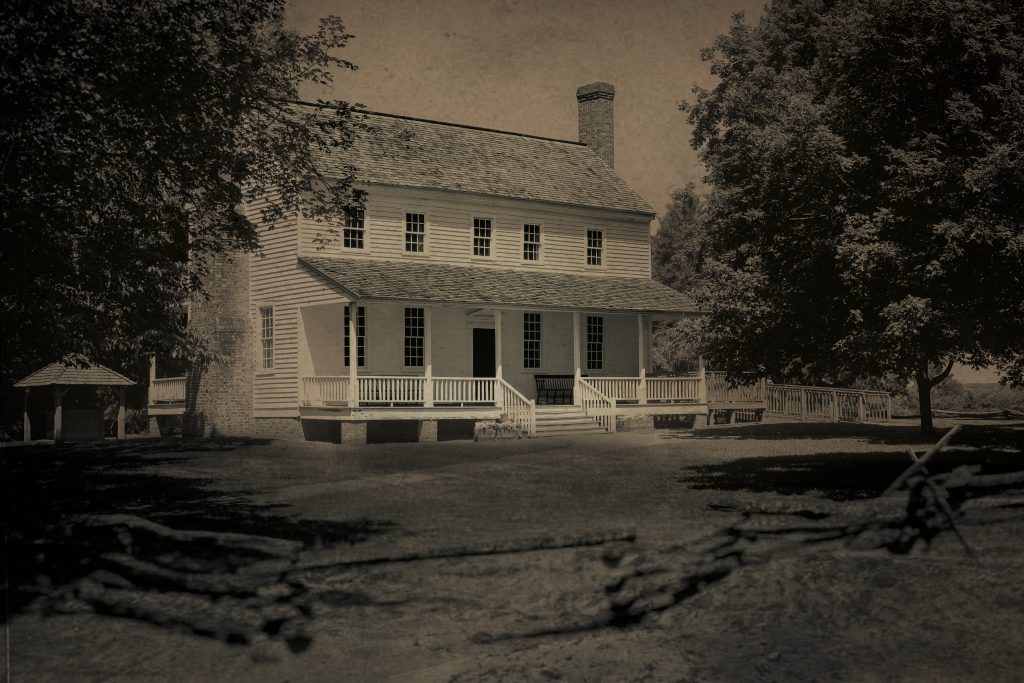
Photographed on the grounds of the Moore County Historical Association’s Historic Properties

Christmas with Dylan

CHRISTMAS WITH DYLAN

Christmas With Dylan

By Bland Simpson    Photograph by Elliott Landy

“A little more to the left.”

“No. It’s fuller around to the right.”

“Just try it my way and you’ll see.”

“Now the stand’s leaking.”

“Somebody’s liable to get electrocuted.”

“I swear you’ve got the best side to the wall.”
“I thought we’d be through by now.”

“You’re right — it was better back to the left.”

“Oh, God. I’ve already gone and tied it to the wall sconce.”

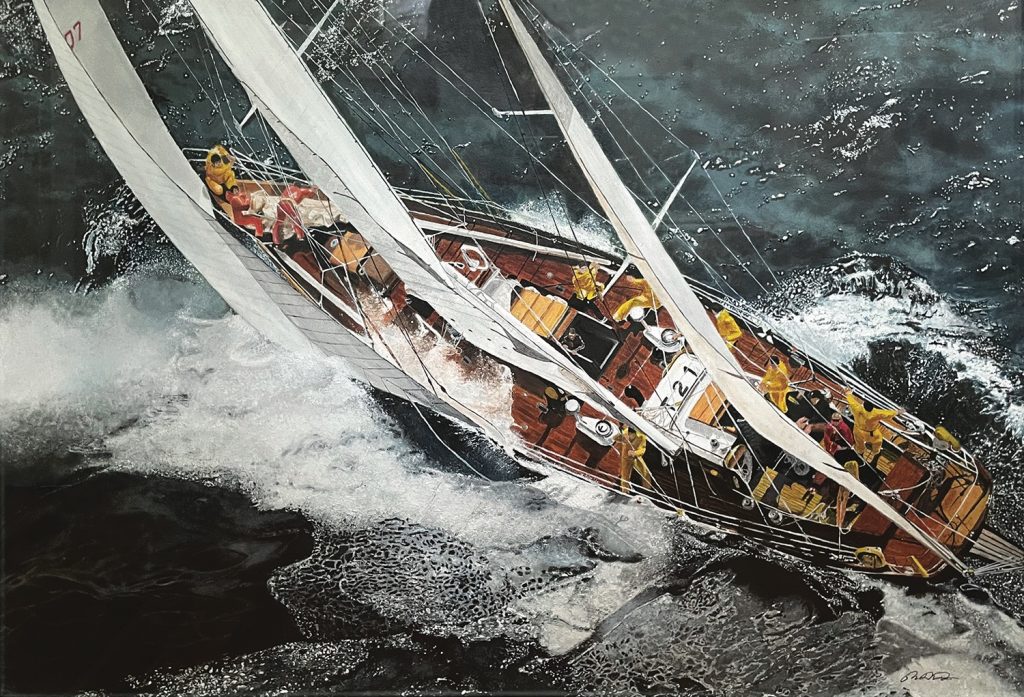
It was a few days before Christmas, 1968, and my family had gathered. The living room was filled with the intense clean resinous smell of the tree. Once we had it hoisted into place, we set about the bristly business of decorating. I was twenty, and my mind was full of music. Withdrawing to the sofa, I thought: Bob Dylan wouldn’t be caught dead doing this.

“The angel’s crooked.”

“Let’s not have the angel this year.”

“Not have the angel?!”

I decided to make a pilgrimage to Woodstock, New York, to see Dylan. It didn’t slow me down a bit that I had little to tell the man except that I was inspired by his songwriting. To shake Dylan’s hand, that would be Christmas enough.

The next afternoon, with no more than fifty dollars, I set out. I was catching a ride north with two friends from UNC, paying my share of all the twenty-six cents per gallon gas we’d burn, and coming back south by thumb. Fifty dollars would be plenty.

This was really my second pilgrimage to Dylan and Woodstock. The first I had undertaken several weeks before, during Thanksgiving, and had abandoned outside of East Stroudsburg, Pennsylvania. I got cold and lost my nerve on a little-traveled high-ridge country road there, and I turned back. On the way home I caught a ride with a Black schoolteacher, who carried me all the way down 81 through the Shenandoah Valley night. We drank a beer together the last hour before he let me out, and agreed that things might be getting better between the races, or at least we hoped they were.

Then a trucker hauled me from Hillsville down the Blue Ridge Mountains. When we stopped at a Mount Airy diner and I didn’t order anything, he thought I was broke and made me let him buy me a cup of coffee and a chance on a punchboard. Back in the semi, he gave me some liquor, which I drank from a six-ounce hillbilly souvenir jug he’d stashed under the seat. He let me off at 52 and 40 in Winston-Salem about four in the morning.

Immediately a hunter with an enormous buck strapped to the top of his Impala picked me up. A couple minutes later he said: “Look, I hope this don’t bother you none but I got to hear some music.” He popped an eight-track of Johnny Horton’s Greatest Hits into the tape player, and the car was full of the songs I’d learned to sing by: “Battle of New Orleans” and “Sink The Bismarck!” and “North to Alaska.” The teacher and the trucker and the Horton-loving hunter made me think better of the pilgrimage business. I forgot the Stroudsburg cold and knew I’d try again.

It was several weeks later, the evening of December 10th, when we piled into my friend’s ’65 Rambler and went roaring up the three-laned U.S. 1, which is these days a ghost road just south of the Petersburg Turnpike. On and on, all night, the first of many deep and dreamless long-haul trips up and down the Eastern Seaboard. I was astounded at the size and magnificence of the great bridge at Wilmington, aghast at the dazzling lunar landscape, gas flares and chemical air of north Jersey. One of my more worldly companions gazed upon the scene and remarked with a combination of pride and disgust: “America flexing her muscles!”

From the George Washington Bridge we looked out over the vast glare of Manhattan. In less than a year it would be my home, but that night it made me feel thoroughly out of place, for a few moments sorry I had even come. Soon it was past, and we were in the dark Connecticut country, and it was snowing lightly. I recovered my spirits; after all, I was on a mission.

They were driving me towards Storrs, Connecticut, to see the Hickey family, late of Chapel Hill, and coincidentally to perform a flanking maneuver to approach Woodstock from the north and east. The plan had been to leave me in New Haven where the big roads fork, but at the last minute my compatriots, who were bound for Boston, found it in themselves to veer off to the north and take me right into Storrs.

They left me at a gas station at first light, a gray dawning, six or eight inches of snow on the ground and more still coming down. I showed up oafish and unannounced at the Hickeys’ home between eight and nine in the morning, four days before Christmas. They masked whatever annoyance they might have felt and greeted me affectionately.

All four daughters in the Hickey family were home for Christmas except the one who drew me there. She wasn’t expected for another twenty-four hours or so. No matter. The other three were going ice-skating that day, and so, now, was I. Most folks don’t forget their first time on ice-skates, and with good reason.

Sue did finally come home, and we had a lovely New England time that next day. It was brisk, and the sun was bright on the unmelting snow. She got over the surprise of my presence, commiserated with me about the Tower-of-Babel Christmas tree back home, and wondered what I would say to Bob Dylan, himself, when we met. After breakfast the next morning she drove me out to the highway, and I was soon up at the Massachusetts Turnpike in the company of a Goddard student driving a Volkswagen with skis strapped to the back.

He was on intersession, he told me. He was going somewhere to ski for six or eight weeks, for which he would get academic credit. We drove west towards New York and the Hudson, and, before he left me off at the Saugerties exit, I had seen groves of chalk-white paper birches for the first time.

A couple of artists, a man and a woman, in a dingy old Pontiac drove me from Saugerties to Woodstock. They said they were friends of Bob’s, and suddenly everything felt very chummy. The artists called themselves Group Two-One-Two, after the route number of the Saugerties-Woodstock road. A few years later, when I was living on the Upper West Side in New York, I would see a notice in the Village Voice about a show they were having down in SoHo and meant to ramble down and take a look. But the notice would stay taped up on the refrigerator until well past the closing of their show, and I would never make the trip.

Group Two-One-Two’s explanation of where exactly Bob Dylan lived was so convoluted that I stepped into a shop in downtown Woodstock, a bakery, and asked them. In moments I was tromping on out of town through a wood and up a hill towards something called “The Old Opera House.” Dylan’s driveway, the bakers said, was right across from it.

It was about eighteen or twenty degrees in the middle of the afternoon, and I wasn’t used to such cold. I didn’t feel dressed for it, but I certainly looked like I was. I had on a Marine greatcoat from a surplus store south of Wake Forest, a slouch hat from a surplus store on Granby Street in Norfolk that I’d bought on my way to see Cool Hand Luke with my Virginia cousins, and a pair of snakeproof boots from Rawlins, Wyoming, that I’d bought on my way to be a cowboy in eastern Montana. (You, or your beneficiary, said the card in the boot box, got a thousand dollars if you died of snakebite while wearing the boots, providing the snake bit you through the boots.) All this was practical and, back home in North Carolina, warm winter wear, though my mother lamented that I looked like something from the Ninemiles — a remote swamp in Onslow County down east. It hardly mattered here. In Woodstock everyone looked like something from the Ninemiles.

Without my even thumbing for it someone offered me a ride, and there I was at The Old Opera House. There turned out to be six or eight driveways next to and across from the place, no names on mailboxes, certainly no sign that said: “This way to Bob Dylan’s house.” I waited. About twenty minutes went by before a thin man in his thirties came striding up the paved road. He would have walked right past me, but I spoke up: “Excuse me, do you know which one of these driveways goes to Bob Dylan’s house?”

“This one.” He pointed at the one he was starting down.

“Thanks.” I fell in beside him, and we walked fifty yards or so before either of us spoke again.

“Is Bob, uh, expecting you?”

“No.”

“Hunh. I don’t know if it’ll be cool for you to just . . . go up to his house.”

This was discouraging, but what could I do? Go back to the bakery and telephone for an appointment? “I’ve come from North Carolina,” I announced.

“Oh.” He gave up, and we kept walking. A few hundred yards into the woods the road forked, and he pointed towards a long low building of dark logs that looked like a lodge. “That’s Bob’s house.” Then he disappeared down the other fork.

In the driveway at Bob’s house were a ’66 powder blue Mustang and a boxy 1940 something-or-other with the hood up. Two men, one of them small and weedy, the other bulky and bearded, were working on the engine. I stomped up in my snakeproof boots, but neither of them looked up. After a minute or two of staring over their shoulders at the old engine, I finally said, quite familiarly, “Bob around?” The weedy man didn’t respond, but the big fellow gave a head-point at the log lodge and said, “Yeah.”

Sara Dylan answered the door, gave me a blank look, and closed the door. About two minutes later Bob Dylan himself appeared and stepped out onto the small porched entry. He wore blue jeans, a white shirt buttoned all the way up and a black leather vest, and he was very friendly and relaxed.

“Bland. What kind of name is that?”

A family name, I said. Then just to make sure he’d hear me right, he asked me to spell it.

“Bland. Well, I sure won’t forget that.” He talked in person just like he sounded on record in “The Ballad of Frankie Lee And Judas Priest.”

“North Carolina, that’s a long way.”

I agreed, but I wanted to meet him, shake his hand, tell him I admired his work, that I wanted to write songs myself.

“What did you want to do before you got this idea about writing songs?”

“I was going to go to law school.”

“Well,” he said, more serious than not, “country’s gonna need a lot of good lawyers. Maybe you ought to keep thinking ’bout that.”

This wasn’t what I had traveled hundreds of miles to hear. I started asking questions. Did he live in Woodstock all the time? Most of the time, he said, but he was thinking about moving to New Orleans. When would he have a new record out? In the spring — “I’m real happy with this one.” He was talking about “Nashville Skyline,” which he had just finished. I asked about a song of his the Byrds had recorded a song I’d heard out in Wyoming the summer before. “Yeah, I know the one you mean, but I can’t call the name of it right now — it’s in there somewhere.” The song was the riddle-round “You Ain’t Going Nowhere.”
We talked along like that for almost forty-five minutes, during which time I felt the cold acutely. Dylan was dressed in shirtsleeves, but he didn’t seem to notice the cold at all. He must have known my head was full of hero-worship, and he was kind enough to let my time with him be unhurried. The moment of my mission played out as naturally as the tide. I was immensely grateful, am grateful yet.

The pilgrim was ready to go home. I pulled my map out, unfolded it, and while we talked about what the best way to head back south was, the bulky fellow lumbered over from the old car where he and the weedy man had been working all the time. The mechanic ignored me, and I ignored him right back, which was easy enough: I had the entire eastern United States spread out in front of me. My mind was on the road, but I did want one last word or two with Bob Dylan. He gave Dylan a report on all the things that weren’t wrong with car, then said: “I think we can get it started if we hook it up to the battery charger.”

“Okay,” Dylan said. “It’s in the garage.”

“I got it already, and tried to hook it up, but even with that long cord it won’t reach. We need another extension cord.”

“Extension cord,” Dylan said, and looked past the big man at the old car. He thought about the request a few moments, then shook his head.

“Gee, Doug,” he said, “I’m afraid we just used the last extension cord on the kids’ Christmas tree.”

Here’s to 30 Years

HERE'S TO 30 YEARS

Here's to 30 Years

Celebrating the Artists League of the Sandhills

By Jenna Biter     Photographs by John Gessner

Dozens of guests swirl about a long, rectangular room. A vase of sherbet roses and powder blue hydrangeas anchors the space on a table in the center. It’s a cool dusk outside, but inside the walls, the atmosphere is warm. It’s heated by the chatter of old and new friends, or at least friendly strangers. They flit in and out of conversations, gabbing and howling like they’re enjoying one last party at the end of the world.

They aren’t, of course. The Artists League of the Sandhills begins most months like this, with a gallery opening held the first Friday evening in that slender room in the not-for-profit organization’s headquarters. The building is situated not at the end of the world but at the end of Exchange Street, with its rear wall kissing the main train tracks that slice through historic Aberdeen.

A woman leans toward a friend while pointing at a small portrait of a lady peering through a monocle on the opposite wall. “We’re getting . . . ” she begins, but her voice trails off as she gets lost in the art. She walks across the room, magnetized. A red sticker on the artwork’s label marks it sold not long into the event.

The time of the gallery openings is always the same — 5 p.m. to 7 p.m. — but the theme varies from one show to the next. In August it was small art. In September viewers with reading glasses were grateful to see the works return to regular size. In October, the gallery showcased figures and faces, and November boasts the biggest event of the year, the annual fall exhibit and sale, which opens with a public reception Friday, Nov. 8, and hangs through Dec. 20.

The sprawling gallery show features somewhere around 150 new pieces of art, with works for sale by many of the league’s dozens of members. If you wander across the one-story building, through two large classrooms, past a framing station and a library of catalogued art books and into a maze of cubicle-like studios, you’ll find an additional 300 or so pieces for sale. With a pocketful of dollars and a can-do spirit, you could easily redecorate your entire house with an evening’s offerings.

The November opening is an art lover’s delight, but this year it’s something more — the exhibit marks a milestone anniversary, too. Originally the Workshop of the Sandhills, 2024 marks 30 years since the Artists League opened shop in the same old Aberdeen Rockfish railroad warehouse that it occupies today.

As if on command, a train roars past, releasing a protracted honk into the graying night sky. The blast is a visceral reminder of the league’s modest beginnings, when a pair of retired executives scrubbed through oil and grime to transform a century-old train depot into a gathering place for artists of all calibers and kinds.

The Sandhills knew Chuck Lunney as the audacious and distinguished World War II pilot who swooped his B-29 bomber under the Golden Gate Bridge on a dare, but he’s also remembered as an advertising professional and lifelong artist with an interest in art education and community, driven to create an organization for likeminded folks. Lunney found one such mind in retired sales manager and watercolorist Mike D’Andrea at a Campbell House Galleries reception sometime in the 1980s. After a half-decade’s search for the perfect location for their artists’ haven, the men opened the Artists League of the Sandhills on Oct. 26, 1994, in one-half of a dirty train terminal. When the town of Aberdeen offered to rent them the building for a dollar per year, the word “perfect” suddenly seemed to describe the broken building tucked all the way back on a forgotten side street.

“Their goal, I think initially, was to have 20 artists just so they could pay the bills,” says Pam Griner, the league’s office manager of 14 years. Sure, rent was dirt cheap, but they still had to keep the lights on.

The initial goal was immediately surpassed. According to a Nov. 10, 1994 article in the Moore County Citizen News-Record, 28 local artists signed up the very first day.

Thirty years later, both founders have since passed — Lunney, 93, in 2012, and D’Andrea, 89, in 2018 — but their legacy lives on in the organization they scrubbed into existence. The Artists League now occupies the entire warehouse, and membership bumps its head against 200, with tens of artists able to key into studios 24/7.

There’s always a waitlist for those 34 cheap-as-bananas workspaces.

In a typical week, members teach art classes Monday through Friday on media that run the full artistic gamut from oil to watercolor. Nationally known professional artists visit to host multiday intensives several times per year. With the fees from those classes and workshops, memberships and generous donations, as well as a small percentage of sales from the monthly art shows, the league stays up and running.

As more guests shuffle in, more red stickers claim ownership. The show led off with a large work of art, a reinterpretation of Gustav Klimt’s Lady with a Fan — a dove has been added in an upper corner. A blurb on the wall explains why. Beyond the Klimt-alike more paintings, a scratchboard engraving of a goat, and mixed media of all types ranging in size from postcard to poster, snake around the room like a boa constrictor squeezing onlookers into a tight-knit group.

Most of the league’s artists are amateurs — stay-at-home moms or refugees and retirees from their day jobs — while others have taught or made art their entire lives. It doesn’t really matter who they are, the members bond over art. Learning it, loving it, making it. They exchange Christmas cards during the holidays, often crafted in a special December class, offer bedside company when ER visits become a sad reality, and grab lunch together even when it isn’t in the Artists League’s break room.

The spirit of community bubbles over, into the corners of the gallery space and out the front doors like an uncorked bottle of champagne. Even in the dim light of evening when the last guests are walking to their cars, the atmosphere is as bright as the roses and hydrangeas still on the center table.

“The new community facility offers artists, from the beginner to the accomplished, the opportunity to share their knowledge, gather inspiration and improve their skills,” the News-Record said in 1994.

Besides the word “new,” the same sentence could be printed today.

Not the Last Waltz

NOT THE LAST WALTZ

Not the Last Waltz

After a brief and soul-crushing hiatus, the Sunrise Theater in downtown Southern Pines will once again show the ultimate tryptophan antidote, The Last Waltz, on Thanksgiving night. The award-winning rock documentary of what was billed as The Band’s farewell performance was filmed on Thanksgiving Day, Nov. 25, 1976, by director Martin Scorsese. Released in 1978, the film is so highly regarded it was selected by the Library of Congress for inclusion in the United States National Film Registry in 2019.

The members of The Band were Levon Helm, Rick Danko, Garth Hudson, Richard Manuel and Robbie Robertson. At 87, Hudson is the only member still living. The venue was Bill Graham’s Winterland Ballroom in San Francisco, where The Band debuted as a group in 1969. Starting at 5 p.m. the audience of some 5,000 was served turkey dinners. There was an orchestra for ballroom dancing, and Lawrence Ferlinghetti was among a group of poets who gave readings. The Band began performing around 9 p.m.

And what a concert it was.

When the idea of a farewell performance was hatched, mostly by Robertson, who wanted to quit the touring life, the idea was to invite Bob Dylan and Ronnie Hawkins — their original employers — to join them. The guest list exploded from there, eventually including both Dylan and Hawkins, Bobby Charles, Ronnie Wood, Ringo Starr, Muddy Waters, Paul Butterfield, Neil Young, Joni Mitchell, Van Morrison, Dr. John, Neil Diamond, Eric Clapton and more. They were backed by a large horn section. Later, sound stage work that included Emmylou Harris and the Staple Singers was added to the film.

The documentary begins with The Band performing what was, in fact, their last song of the night, “Don’t Do It.” From there the film progresses more or less in chronological order of play — songs like “Stage Fright,” “Up on Cripple Creek,” and “The Night They Drove Old Dixie Down” — mixed in with the studio sessions and interviews with the members of The Band, conducted by Scorsese.

In one anecdote, Robertson explains that the classically trained Hudson would join the group only if every member would pay him $10 a week for music lessons so that he could tell his parents back in Canada that he was a music teacher and not just a rock and roll musician.

The Last Waltz begins on Thursday, Nov. 28, at 7 p.m., and admission is free. The leftovers will keep until morning.

Poem November 2024

POEM NOVEMBER 2024

Great Blue Heron

He looked like an old man hunkered down
in a faded blue overcoat, his collar turned up,
shoulders hunched. He didn’t seem bothered

by the shallow water his feet were covered

by, nor the chill winter air blowing around
his bare pate. But then his narrow head rose

like a periscope, higher and higher — swiveled
in the direction of a hardly perceptible splash.

Slowly, he moved toward the sound on legs
as skinny as walking sticks, to the place where
dinner was served and eaten so fast, any cook

would wonder if he tasted it. It was enough,
however, to restore his quiet contemplations.

Hunger sated, he curled his long neck into its
warm collar, and stood as still as a painting

while the sun sank and the snow moon kept

rising like a white balloon over the darkening
lake, the stark tree branches, and a lone heron
blending, bit by bit, into the blue light of dusk.

                           — Terri Kirby Erickson

Preserving a Historic Graveyard

PRESERVING A HISTORIC GRAVEYARD

Preserving a Historic Graveyard

Woodlawn Cemetery is hallowed ground in West Southern Pines

By Elizabeth Norfleet Sugg     Photographs by Laura Gingerich

In a quiet acreage filled with arching, magnificent pines rest the memorials to a multitude of lives well spent. Woodlawn Cemetery, a historically African American burial ground, is on the corner of West New York Avenue and South Pine Street in West Southern Pines, surrounded by neighborhood streets carved out by families who came to this budding town to seize opportunity and put down deep roots.

A year after Southern Pines incorporated in 1887, the Seaboard Air Line Railroad began its route through the town, a desirable East Coast midpoint. With nearby Pinehurst opening its resort in 1895, the two municipalities were in the early stages of developing a tourist economy as fair-weather resorts, in the process generating a range of service jobs that lured workers to the area. Fort Bragg, now Fort Liberty, opened in 1918, and a continued migration to West Southern Pines came from men and women who served in the military. They met others in this close-knit community and began second careers becoming teachers, principals, nurses, opening an auto repair shop, corner stores, and ministering at a growing cluster of churches — living lives that would inspire generations to come. It’s both striking and humbling to learn that over 170 veterans from conflicts as far apart as World War I and the Persian Gulf War are buried at Woodlawn.

“Woodlawn Cemetery is a home to so many who gave to this nation, and their descendants continue to give,” says retired Col. Morris Goins, whose family has deep roots in West Southern Pines beginning  with his grandparents, Theadore Roosevelt and Marie Goins. His father, Thomas Theadore Goins, and four uncles served in the U.S. Army in World War II, the Korean War and the Vietnam War, collectively. Two of his uncles, Master Sgt. Henry Lewis Wooten Jr. (1925-1963) and Command Sgt. Maj. Fredrick Robinson (1933-2009), received the Bronze Star and the Purple Heart.

Goins’ uncle Cecil Roosevelt Goins (1926-2000) served in World War II when the Army was still segregated and became one of the few African American officers in the 1st Infantry Division during the Korean War. Later, in the U.S. Marshals Service, Cecil Goins went to Selma, Alabama, following the violence of Bloody Sunday. Another historic assignment took him to Houston, where he protected Muhammad Ali during his trial for refusing to be drafted in 1967 during the Vietnam War. Another uncle, retired Maj. Allen Thurman Goins (1935-1997), was a Cobra helicopter pilot in Vietnam. On a flying mission making a “gun run” into a small village, his helicopter — call sign Panther 6 — was hit by ground fire. A bullet burrowed between Goins’ cheek and flight helmet, another between his temple and helmet. He woke up in a hospital. The injuries caused periodic seizures, ending his flying career. Decades later Morris Goins was walking in Washington, D.C., dressed in his uniform, when an older gentleman stopped him, read the name on his chest and asked if there were any aviators in his family. Given away by a strong family resemblance, Goins confirmed that the person the gentleman served with was his Uncle Allen.

In 1923 West Southern Pines became one of the first incorporated Black townships in North Carolina, and even after it was annexed by the municipality of Southern Pines in 1931, the community maintained its significant rooted heritage. Woodlawn Cemetery began on land that belonged to the Buchan family, about 6 -7 acres that backed up to the Rosenwald School built by the West Southern Pines township in 1925. As the neighborhood grew, the heart of the community was its school and the tree-lined burial ground that abutted it.

Retired Lt. Col. Vincent Gordan, one of four sons of a school principal and an elementary school teacher, grew up in a Sears and Roebuck house around the corner from West Southern Pines High School. Gordan was working as a senior trainer at the Pentagon on September 11, 2001. After American Airlines Flight 77 struck the Pentagon’s west side, Gordan immediately began knocking on doors to help evacuate the building. The next day cots were brought in for Gordan and his colleagues to begin orchestrating the multi-level U.S. response to the attack by al-Qaida. Gordan’s final career move was as a division chief for the U.S. Census Bureau managing a $200 million budget. The experience proved invaluable when the late Rev. Fred Walden asked him to take over a nonprofit to help reinvigorate the West Southern Pines community — the Southern Pines Land & Housing Trust.

Walden was a beloved figure in Southern Pines, a veteran himself having served as an Army chaplain assistant. When he moved his young family back to Moore County in 1973 he continued a legacy begun by his great-grandparents, followed by his grandparents, parents, siblings, aunts, uncles and their children. Taking over from his uncle, A.C. Walden, he ran the West Side Garage for 45 years, balancing faith ministries, serving on the Southern Pines Town Council, membership at the Rufus McLaughlin American Legion Post No. 177, and becoming a founding member of the Rotary Club of the Sandhills. Walden established the nonprofit Southern Pines Land & Housing Trust (SPLHT) to help protect property for the African American community and others in Southern Pines, and to aid people in keeping their land to foster the creation of generational wealth so vital to sustained financial well-being. In 2018, Walden called Gordan to come home and help reinvigorate the organization and its mission. His words were, “Vince, I need you.”

“My original reason (for taking the position as board chair) was because Fred saw his community going down,” says Gordan. “When I came home from the military West Southern Pines was a totally different atmosphere and environment than the one I left. There were changes that needed to be made, and I now, too, wanted to make them.”

The organization is headquartered in the former schoolhouse that in the 1940s became the segregated West Southern Pines High School and that in the 1960s evolved into the desegregated Southern Pines Elementary School. The Land & Housing Trust campus includes a playground named for an adored school principal, Blanchie Carter Discovery Park, the school gymnasium and auditorium — both of which can be rented out through the West Southern Pines Center, an entity under the umbrella of the SPLHT. In recent years Woodlawn Cemetery has also been overseen by the SPLHT with the Buchan family formally deeding the land to the Trust. The cemetery’s point person is yet another veteran, retired Staff Sgt. Bill Ross, who was a special populations coordinator with the Moore County Schools until his retirement there.

“Woodlawn was the only place to bury African Americans up to the 1970s,” says Ross, who like Gordan grew up in West Southern Pines, walking to school in the family-oriented neighborhood. Ross’ maternal grandparents were Claude and Essie Strickland, who moved from the Dunn area to West Southern Pines in the late 1800s. Claude Strickland opened a popular corner grocery and also worked for Hayes Book Shop delivering newspapers. What spurs Ross’ volunteer service is a desire to bring back “the camaraderie that I grew up with, that family connection, our community.” Once a star basketball player in the nearby gym, Ross watches over his family members buried in Woodlawn, his father Lucius Ross, a WWII veteran, mother Edith and, tragically, his daughter Barbra, who died in 1998.

Bringing much needed structure to the care and landscape of Woodlawn Cemetery has been a goal of the SPLHT board. In 2023 Gordan and Ross reached out to the Southern Pines Garden Club for its assistance updating the landscaping at both the front and side entrance gates. With funds raised from their annual Home & Garden Tour, the Southern Pines Garden Club also committed to building the recently completed brick memorial wall where brass nameplates will honor the veterans buried there. Patrick Kujawski of RK Masonry donated the labor.

Morris Goins and his wife, Yolanda, a mathematics professor pursuing a Ph.D. in higher education and the daughter of retired U.S. Army veterans Leon and Pearline Pempleston of Petersburg, Virginia, also plan to contribute to the restoration of Woodlawn. Plans in the works include irrigation installation, sodding the entire cemetery, employing ground-penetrating radar to locate old graves without markers, installing markers where there are none or where they’ve been lost, and creating a fund where the SPLHT can regularly contract with a landscaper for weekly maintenance.

For decades the maintenance was done by family members and volunteers like longtime friends Peggie Caple and Joyce Jackson, who joined the West Southern Pines Garden Club Cemetery Committee. Annual Memorial Day celebrations were held through 2019 to help raise money for landscaping and to pay Woodlawn’s longstanding caretaker Halbert Kearns. The group planned Woodlawn Cemetery Days with special speakers in addition to music events at area churches called “Woodlawn Day in Song.” The effort was aided by twice-a-year cleanup days conducted by the Pinecrest Air Force Junior ROTC. The cemetery committee was dedicated to the cause, even outlasting the garden club itself. Originally from Virginia, Jackson was the clerk in the Southern Pines Water Department during the week and worked evenings and weekends in the Carolina Dining Room at the Pinehurst Resort. Caple is a West Southern Pines native who has never lived more than a few blocks away from her childhood school and Woodlawn Cemetery. A longtime director of financial aid at Sandhills Community College, she finished her career there as the disabilities and placement testing coordinator.

“In our area Woodlawn is the resting place of African American descent,” says Caple.

The renewed spirit to preserve West Southern Pines is special to Matthew Walden, Fred Walden’s son, who is also a minister. Under the leadership of executive director Sandra L. Dales, he serves on the SPLHT board, which is securing funding to convert the former school and its campus into a multipurpose community and business center with an incubator kitchen and workspace for area entrepreneurs. Nora Bowman is chief operating officer of the West Southern Pines Center and handles the renting of the gymnasium and auditorium as well as the development of local events. Bob Smith is the curator of the future museum at the SPLHT dedicated to preserving the history of the area’s remarkable citizenry. Walden’s involvement with the organization his father began is born of the same desire to bring back the family-oriented community that he believes has been so vital to grounding his life. On walks through Woodlawn, he’s with family.

“When I see their names, memories come alive,” he says.

To learn more about the SPLHT or to contribute financially or as a volunteer, visit splandandhousingtrust.org.

Cabin Chic

CABIN CHIC

Cabin Chic

Destination down a dirt road

By Deborah Salomon     Photographs by John Gessner

Interesting people pull together interesting houses, sometimes for themselves, other times as business ventures.

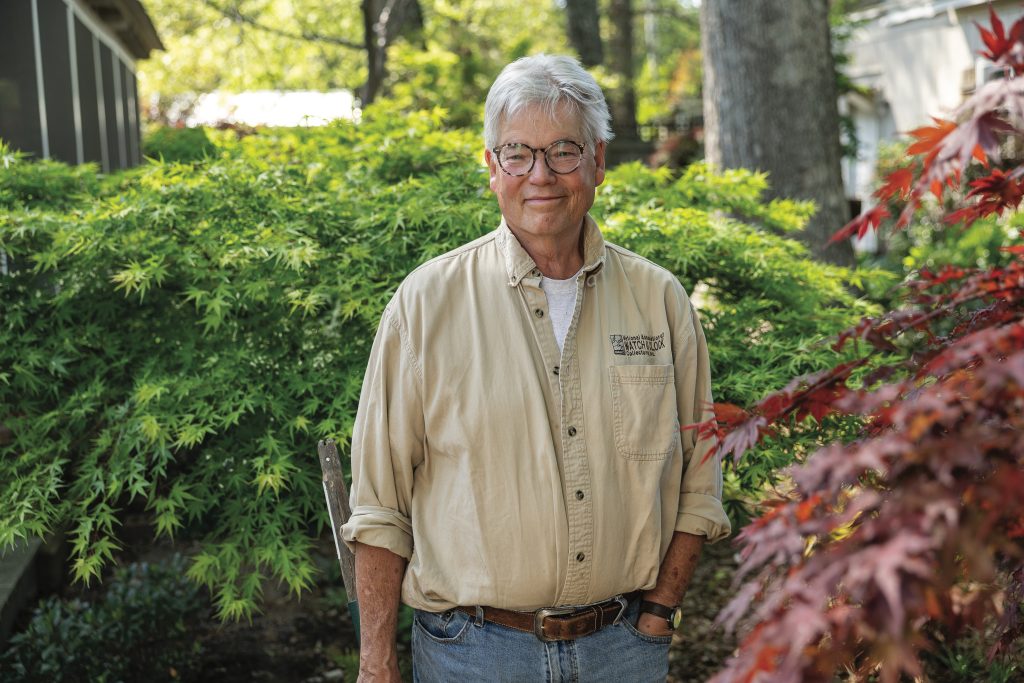
“Interesting” barely describes Graham Settle, who grew up in a Sanford family of veterinarians; whose educational background stretches from East Carolina University to Harvard; whose careers extend from Wall Street to international diplomacy; and whose passport entries – including Afghanistan during tense times — would make Marco Polo envious.

“After 18 years living abroad with diplomatic credentials, my wife and I decided on a career as a free agent for global missions,” Settle says. “We had narrowed possible places (for home base) down to three: Singapore, Tirana (Albania) and Pinehurst.”

But when humans plan, fate may have other ideas. Shortly before making the move, Settle’s wife died of a brain aneurysm, leaving him alone with two young children.

In February 2014 he left Kazakhstan with the children, a kitten and six duffle bags to bring his wife’s remains back to the United States. Although not on the original list, they moved into a condo in Raleigh. Before long, Settle decided to home-school the children by traveling the world for a year.

Fast forward . . . they’re college age now, and Dad, shadowed by his German shepherd named Oscar, isn’t a pipe-and-slippers guy. He needed a project, somewhere to reclaim his roots. No surprise, then, that his real estate portfolio opens with the nation’s largest, if defunct, truffle farm.

In Carthage. Who knew?

Truffles, ultra-gourmet ,uber-ugly tubers (not mushrooms or rich chocolate bonbons), grow underground, requiring trained pigs or dogs to sniff them out. Prices start in the neighborhood of $200 per ounce and, depending on the variety, can run into the thousands.

But why would this adventurous world traveler want to farm truffles, no matter how exotic?

He doesn’t, really.

The wild and wooly 250 acres of Spring Hills Farms he purchased in 2020, in addition to the bankrupt truffle farm, suited another plan: a venue for weddings, business retreats, family holidays and other gatherings supervised by Mother Nature. Settle allowed air conditioning and cell access but, sorry, no Wi-Fi, no TV. Instead, on chilly nights, logs radiate heat from the east iron woodstove.

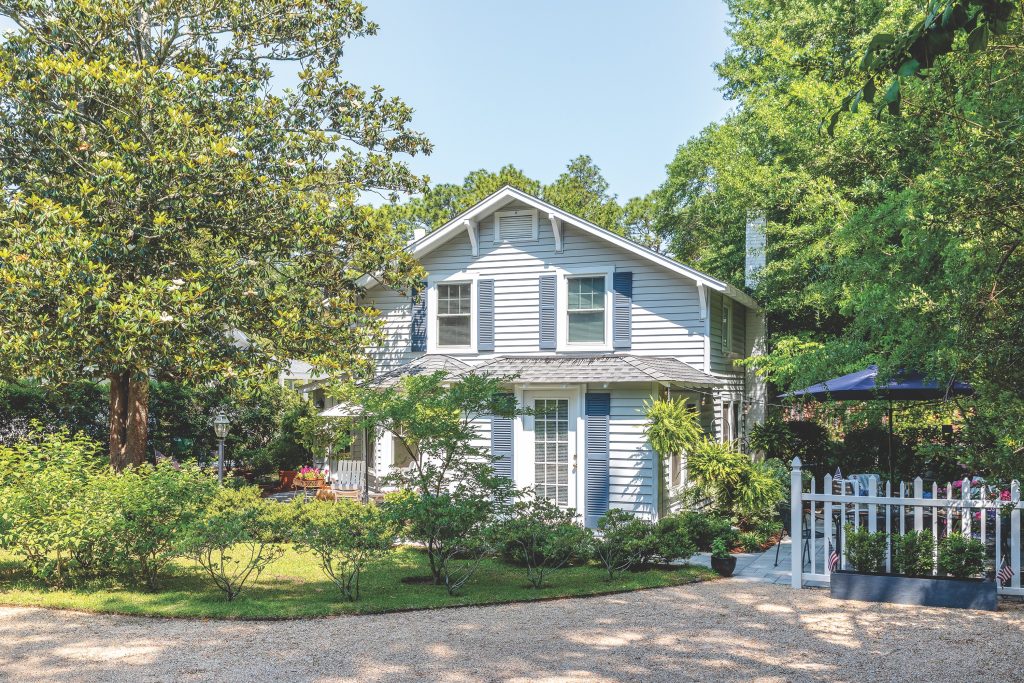
To protect the wildlife (whom he feeds) from coyotes Settle fenced the acreage, an act he compares to framing a work of art. This frame measures more than 3 miles. He paid five figures to bury wires visible from the cabin, which faces Morses Lake, and is accessed by a narrow, bumpy dirt road.

Settle describes the cabin, built in 1971, as “the middle of nowhere, the center of everything.” Quite the approbation, coming from a man who has been on the edge of everywhere and done an awful lot. But the cabin, formerly used to prep veggies to feed the truffle hogs, needed work. It had to remain “rustic,” a la Country Living, but luxurious enough to draw the Range Rover crowd.

Practical, too. Even fun.

The interior is an open two-story space with 15 windows and a sleeping loft. The kitchen corner (gas stove, dishwasher, jumbo fridge, copper-glass backsplash) has an interesting 6-foot-square table on wheels and original cabinets, all suitable for caterers. The loft accommodates two double beds arranged on a cashmere rug, from Mongolia, no less. Beneath the loft, a mattress fits a cedar swing, suspended by ropes, creating another sleeping space. Pine plank walls are painted charcoal navy, while the reddish ceiling fans evoke a tiki bar. A round leather rust-colored ottoman/storage unit houses a feather-down topper quilt brought back from Pakistan.

A Tiffany floor lamp passes for authentic, though Settle says everything is either a knock-off or secondhand, including a magnificent 9-foot tufted leather sofa where Oscar, Settle’s constant companion, is allowed to nap. The effect is masculine casual, a whiff exotic, except for the flowered curtains — chosen by Settle’s three sisters — of the Laura Ashley persuasion. For the kicker Settle opens an interior door with a flourish. “Hemingway cabin; Martha Stewart loo,” he says with a grin. The toilet-bidet combo sports a heated, lighted seat.

Spring Hills Farms has hosted one small wedding ceremony by the lake, with guests seated on benches made from split tree trunks and the reception under a tent.

There’s no denying the calm, the peace, of being surrounded by nature, its vistas, sounds and aromas. Settle has a place in Seven Lakes, also the Raleigh condo, but his heart remains in rural Moore County.

Destination weddings are all the rage. Safari, anyone? Spring Hills Farms is reaching out to city slickers weary of hotel extravaganzas, riverboat cruises and Caribbean beaches. Oscar and those thousand-dollar truffles are waiting just down Union Church Road.

Five for the Hall of Fame

FIVE FOR THE HALL OF FAME

Five for the Hall of Fame

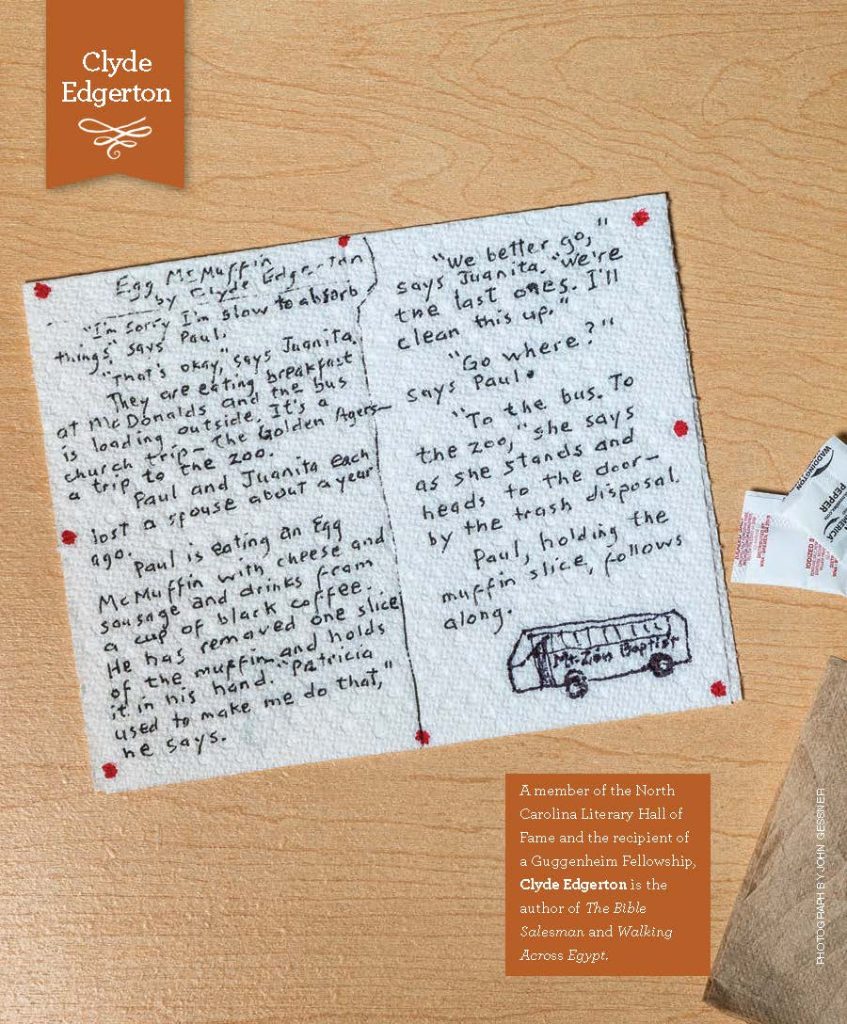
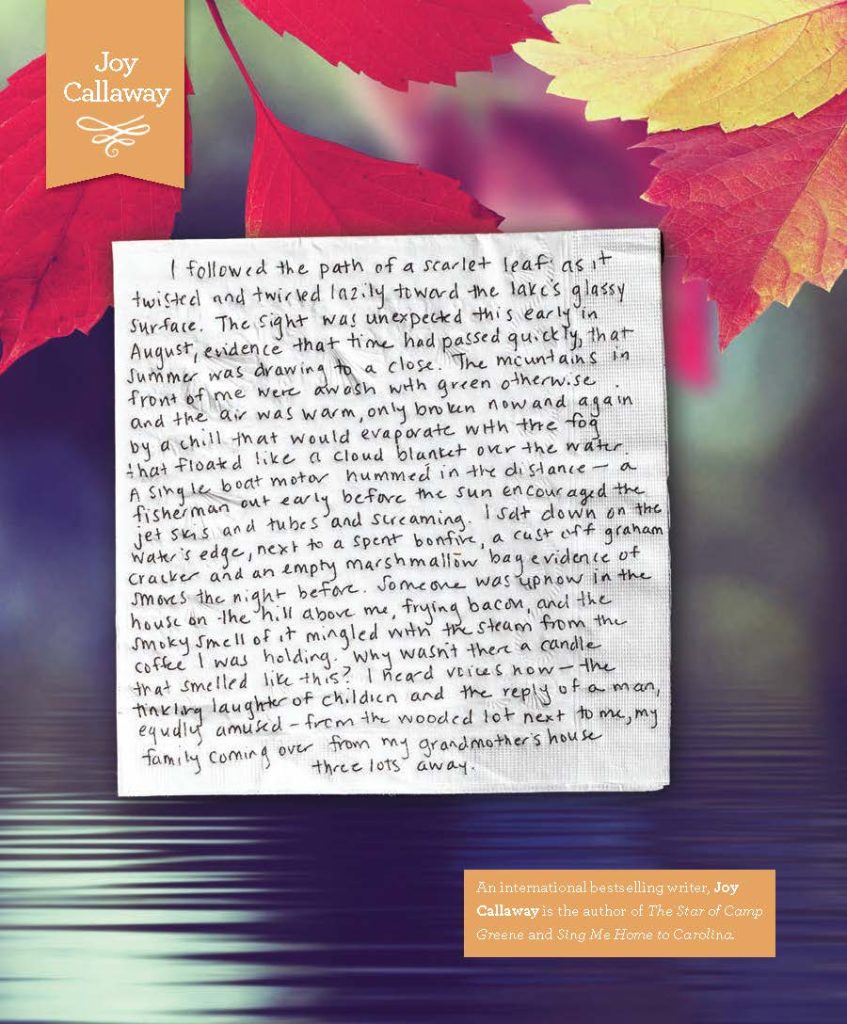
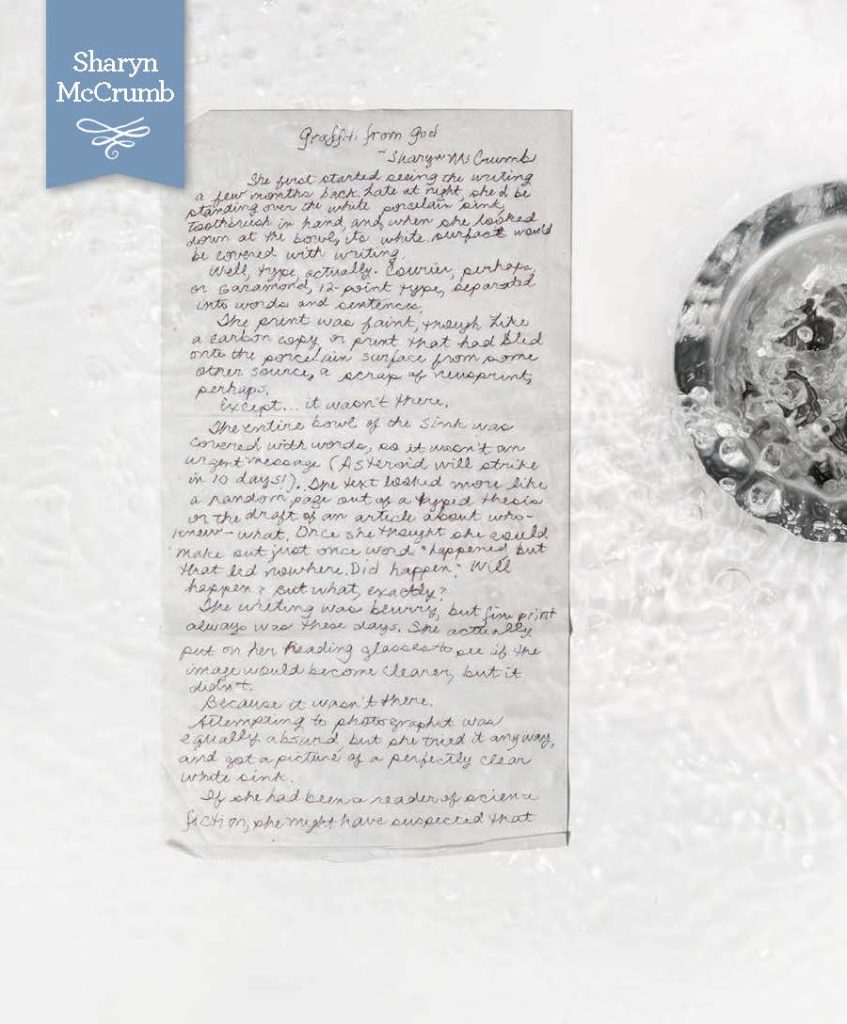
The new inductees to the North Carolina Literary Hall of Fame include two bestselling novelists, a famed author-educator, a world-renowned master of haiku and a former North Carolina poet laureate. Ron Rash, Kaye Gibbons, Anna Julia Cooper, Lenard Moore and Joseph Bathanti will join the pantheon of North Carolina’s most celebrated literary voices in the biannual induction on Sunday, Oct. 6, at 2 p.m., at the Weymouth Center for the Arts & Humanities. The festivities are free of charge and open to the public.

Anna Julia Cooper

It has been 60 years since Anna Julia Cooper departed the world at the age of 105.

Consider for a moment the breadth of her life: Born into slavery in Raleigh in 1858, three years before Fort Sumter was fired upon, Cooper was the youngest child of Hannah Stanley, a woman enslaved by the man who was presumably Anna’s father. On Feb. 27, 1964, Cooper died in her sleep in her Washington, D.C., home, just 17 days after the Civil Rights Act passed in the United States House of Representatives, and a few months before Lyndon B. Johnson would sign it into law.

“It isn’t what we say about ourselves,” she told an interviewer on her 100th birthday, “it’s what our lives stand for.”

The life of Anna Julia Cooper — educator, essayist, poet, scholar, cultural critic and theorist — was the subject of a recent play, Tempestuous Elements, written by Kia Corthron and performed at the Arena Stage in D.C. “Yet for all her accomplishments,” said a review in the Washington Post, “Anna Julia Cooper remains a relatively obscure figure. Kia Corthron’s Tempestuous Elements . . . gives Cooper the Mount Rushmore treatment she so richly deserves.”

As another reviewer remarked, “My main question is, why didn’t I know about her until this play?”

In 1867 Cooper was among the first students admitted to St. Augustine’s Normal School and Collegiate Institute, an Episcopal school founded in Raleigh to educate those freed from slavery. Even there she bristled at excluding women from courses in theology and the classics. In 1877 she married George A.G. Cooper, a teacher at St. Augustine’s who was 14 years her senior. He would die two years later.

In 1881 Cooper enrolled at Oberlin College in Ohio, the first college in the U.S. to admit both Blacks and women. Even there Cooper had to fight, successfully, to gain admittance to the “gentlemen’s course” of study. She graduated with a Bachelor of Arts degree in 1884 and followed that with a Master of Science degree in mathematics in 1887. Shortly thereafter she was invited to join the faculty of what would become known as M Street High School, later Dunbar High School, in Washington, D.C. In 1892, Cooper authored A Voice from the South by a Black Woman of the South, a collection of essays credited as the first discourse on Black feminism.

At the beginning of one chapter, Cooper mentions a book titled Shall Women Learn the Alphabet, which proposes that such a thing should be prohibited by law. “Please remember this book was published at the beginning of the Nineteenth Century,” Cooper continued. “At the end of its first third, (in the year 1833) one solitary college in America decided to admit women within its sacred precincts, and organized what was called a ‘Ladies’ Course’ as well as the regular B.A. or Gentlemen’s course.

“It was felt to be an experiment — a rather dangerous experiment — and was adopted with fear and trembling by the good fathers, who looked as if they had been caught secretly mixing explosive compounds and were guiltily expecting every moment to see the foundations under them shaken and rent and their fair superstructure shattered into fragments.”

So, yes, this was a woman who could write.

In the wake of the international success of A Voice from the South, Cooper addressed the World’s Congress of Representative Women held in conjunction with the World’s Fair in Chicago in 1893. In 1900 she was on the executive committee of the first Pan-African Conference in London and was the only woman ever included in the American Negro Academy.

In 1902, Cooper became the principal of the M Street High School, and it is her five-year stint there, confronting the racial and gender inequities of the Jim Crow era, that serves as the basis for Tempestuous Elements.

Cooper insisted on a college prep, classical liberal arts curriculum. M Street sent graduates to Harvard, Yale, Brown and Oberlin. She invited W.E.B. Du Bois to address her students. It was her bristling refusal to dumb down the curriculum that led to her confrontation with a white-dominated board of education that was insisting on a “colored curriculum.”

According to Shirley Moody-Turner, the editor of The Portable Anna Julia Cooper, “The tactics used to discredit Cooper followed a recognizable pattern: public shaming, presumed incompetence, questioning her professional judgment and other innuendoes used to cast doubt on her fitness to lead.” This included rumors of a liaison with John Love who, along with his sister, was taken in by Cooper after they were orphaned and continued living with her into adulthood.

Lastly, Cooper was accused of insubordination, of which she was profoundly guilty. She was dismissed from her position in 1906. “When Cooper arrived for the first day of school, the janitor barred her from entering the building,” writes Moody-Turner. “Police officers observed from across the street. They were ordered to arrest Cooper if they deemed she was creating a disturbance. With her students watching from the windows, Cooper — always a model of dignity and decorum — exited the school grounds.” Her curriculum, however, survived her.

After the M Street debacle, Cooper taught for four years in Missouri before returning to M Street to teach Latin. Following the death of the wife of a nephew (according to the Oberlin College alumni records), in 1915 Cooper adopted their five children: Anna, Regia, John, Marion and Andrew.

When the children were old enough to be enrolled in boarding schools, Cooper continued her academic pursuits, obtaining a degree from the Sorbonne in Paris at the age of 67, the fourth African American woman to receive a Ph.D. there. Following her retirement from teaching, she became the second president of Frelinghuysen University, an institution that educated Black adults while they continued to work.

Appropriately, Cooper may have written her own epitaph in that long-ago interview on the day she turned 100: “I don’t remember ever having taken anything just for myself.”

Joseph Bathanti

Believing that the study in his home was in such a state of cyclonic disarray that meeting there would be an impossibility, or at least an embarrassment, Joseph Bathanti and I sat together in the humble space — roughly the size of a mini-storage shed — reserved for a professor of English at Appalachian State University.

He was on crutches, though this sounds worse than it was. His tendons, ligaments and joints were taking a breather from long-distance running. On the desk near his phone is an autographed copy of the album The Freewheelin’ Bob Dylan. It’s separated by a pile of books, a pair of scissors and whatnot from a copy of Howl. On the wall is a photograph of Roberto Clemente, a hero, beside a flier cordially inviting the public to follow the crowd to see and hear Sen. John F. Kennedy in October 1960.

The bookcases — there are exactly as many as the space will accommodate — are filled with volumes standing up, lying down, stacked and tilted, the top shelf crowned with baseballs, bobbleheads, photos of kids and more books. Joan Didion is near Gay Talese, who’s not far from Existentialism from Dostoevsky to Sartre, which is right above Becoming a Writer. The chair I occupy beside his desk is covered in garish Picasso-chic fabric. Against the wall behind it is an enormous playing card, the jack of hearts, which served as the cover of his book The High Heart.

Named North Carolina’s poet laureate in 2012, one of Bathanti’s go-to lines is, “Pittsburgh is my beloved hometown, but North Carolina is my beloved home state.” He has taught in our prisons and colleges, been to our hospitals, our shelters, our daycare centers and our soup kitchens. In actual fact, he is Pennsylvania’s gift to us.

Bathanti grew up in East Liberty, an Italian working-class neighborhood in Pittsburgh. “My dad was a steelworker, my mother a seamstress. They’re union people. They just work and work and work and work, so my sister and I can have this kind of life,” he says. He came to North Carolina as a VISTA volunteer, fresh out of grad school. “I didn’t know what I wanted to do but I had a ponderously long list of things I couldn’t stomach the thought of doing,” he says. The first thing he did was meet the love of his life, Joan Carey, also a VISTA volunteer, in the same ballroom that was a set piece in Gone with the Wind.

“Jean Paul Sartre said somewhere that he pretended to be a writer until he became a writer,” says Bathanti. “I think that’s how we go about our lives. We pretend to be a father until we become a father. So, I just stayed with it. I continued to write badly, but I wrote less and less badly.”

He became a teacher at Central Piedmont Community College. “I made a living teaching,” he says. “I haven’t made a living on my writing at all, which most writers don’t. They have a straight job, as I like to say, so they can pay the rent, the gas.”

He fell into North Carolina’s community of writers. Kay Byer. Tony Abbott. Sam Ragan. Ron Bayes. Fred Chappell. Lee Smith. Too many to mention them all. “They invited me to their tables. They talked to me. They read my stuff. Initially you think everything you write is incredibly brilliant like, wow, I just reinvented the wheel. I got more objective about my work, kind of blue collar, shoulder to the wheel, pigheaded, hang in there with it, which is sort of my method. There aren’t a lot of long runs, let’s put it that way. Three or four yards at a crack. But that’s OK,” says the former four-sport athlete at Pittsburgh Central Catholic High.

Having authored over 20 books across various genres, Bathanti has accumulated virtually every plaudit his adopted state has to offer — poet laureate, the North Carolina Award in Literature, the Order of the Long Leaf Pine and on and on. But the Literary Hall of Fame is on another level.

“It means everything,” he says. “I’m terribly grateful that a Yankee interloper, a son of Italian immigrants, has entered the pantheon. To me, it’s about my mom and dad. I’m taking Joe and Rose into the Hall of Fame with me, in a lot of ways. My whole family of immigrants, my cousins, my aunts, my uncles, all those people who work so hard, so selflessly. I show up here at age 23, a volunteer to work in the prison system who wants to be a writer but has never written a bloody thing except English papers. I would have never thought that something like that was possible. It was the very beginning of everything happening. It was kind of a magic portal I feel like I stepped through.”

Into our land. Into our literature.

Lenard Moore

It would be ironic if it weren’t so profoundly true that Lenard Moore has used the smallest of nets to capture, in stark and stunning detail, the chaos of our lives and his. A master of haiku and its many associated forms — tanka, senryu, renku and on and on — Moore was the first Southerner and first Black president of the Haiku Society of America, and the author of too many poems to count. He has been published in over 30 genres and translated into more than 20 languages.

With the pockets of his dapper sport coats stuffed with tiny notebooks, Moore doesn’t just write every day; he writes everywhere.

“I write all times of the day,” he says. “I write in the morning. I write at night. Walk through the woods, I write. Go to the beach, I write. In the mountains. It doesn’t matter. I go to basketball games, I always have a journal on me. I might have three.” In 1982, sitting in a Western Sizzlin’ all day, drinking a pitcher of sweet tea, he wrote 1,447 poems, and has stopped counting ever since.

Twenty years ago Moore lost his only child, his daughter Maiisha, a student at East Carolina University, in a car accident two weeks after her 22nd birthday. Her self-portrait is on the wall of his bedroom. There are Chinese fortune cookies wrapped in cellophane on the coffee table in his living room next to his daughter’s dictionary, its well-worn pages marked with as many yellow sticky notes as there are bees in a hive. On the shelf of an end table nearby is Maiisha’s Bible.

“That’s the worst thing that can happen to you. It’s kind of devastating. I went to the library about every evening for a year,” he says. “I wrote about her. I challenged myself. Writing is healing. If you go through tragedy, trauma or whatever, writing is there to help you.”

hot afternoon
the squeak of my hands
on my daughter’s coffin

It became one of Moore’s best-known haiku. “That poem kind of haunted me. At the burial I was the first one they called up to put a rose on the casket,” he says. “I put my hand on the coffin, maybe my hands were sweaty, I don’t know. I remember my hands slipped down the side and there was a loud squeak. It probably was about three days before I wrote it down. The poem just haunted me so I had to write it.”

Born in Jacksonville, North Carolina, in 1958, Moore grew up in rural Onslow County, the eldest child in a large family. He was priming tobacco by age 13, “climbing the tier poles; hanging the tobacco; in the field, on your feet; walking those long, long rows; sunup to past sundown.” He and his brothers chopped wood for his grandfather after school. “I think I got a knack for writing from listening to my grandfather tell stories. I’m sure that had something to do with it. I think if you write your truth and you document it and you try to have structure to it, you will be able to get an audience — if you tell the truth in that work. Emily Dickinson said, ‘Tell the truth but tell it slant.’”

In athletics he excelled on the track team, when he was known not as Lenard (pronounced Len-ARD) but as Dwane. He ran the mile relay for White Oak High School, and he and his sister, Angela, cleaned up at local dance competitions in the ’70s. “Sports helped me,” he says. “I don’t give up.”

He won his first poetry prize in 1981 as a member of the 139th AG Postal Company stationed in Stuttgart, Germany. Back in the States, looking for that “audience,” he made sure he had “52 envelopes out at all times” to publications large and small.

Much of Moore’s work shares a kinship with the blues and jazz, his tight language giving form to genres that can expand and contract with the very lack of it. “I’ve performed a lot with jazz musicians all over the country, Canada, too. Hopefully, that’s a trademark of my work. Music,” he says. He writes about Dizzy Gillespie, Ray Charles, Nneena Freelon, John Coltrane and Nina Simone, but also of the clubs, as in the last two stanzas of “Girl Tap Dancing.”

She clicks, pats, taps

Shoes shocking the floor,

Arms swirl, whirl,

Legs stamp, swing,

Feet notes smoke, beat

The floor, the floor.

She taps, clicks, pats,

This sister firing the floor,

Arms encompass endless circles,

Legs slide, glide,

Displace air, filling space,

Black feather bobbing as she taps.

“This great community of writers, I’m humbled and honored to be a part of them,” says Moore of his induction into the Literary Hall of Fame. “It means a lot when home celebrates you. Home appreciates your work. Home gives you a nod to what you’re trying to do. Trying to document, write about the natural world, write about family, write about relationships, write about music. It makes me feel good that North Carolina appreciates that.”

Kaye Gibbons

Kaye Gibbons was born in Nash County, North Carolina, in 1960, to Alice Dorothea Gardner and Charles Batts, a tobacco farmer. After their deaths, she lived with different relatives before settling in with her brother and his wife in Rocky Mount, where she graduated from high school in 1978. She attended North Carolina State University before transferring to UNC-Chapel Hill to study Southern Literature with Louis Rubin. In 1984, she married Michael Gibbons, a landscape architect.

That same year, at the age of 24, Gibbons wrote her first novel, Ellen Foster, published by Algonquin Books, the company Rubin founded in 1982. Praised as an extraordinary debut, Eudora Welty described the work as possessing “the honesty of thought and eye and feeling and word.” Walker Percy said, “Ellen Foster is a Southern Holden Caulfield, tougher perhaps, as funny . . . a breathtaking first novel.” In 1987, the novel won the Sue Kaufman Prize for first fiction from the American Academy and Institute of Arts and Letters, a Special Citation from the Ernest Hemingway Foundation, the Louis D. Rubin Writing Award, and other major awards. Now considered a classic, it is taught in high schools and universities, alongside works like The Adventures of Huckleberry Finn, Catcher in the Rye and To Kill a Mockingbird. The book has been widely translated and was produced for CBS television’s Hallmark Hall of Fame, starring Emily Harris and Jenna Malone.

Gibbons’ second novel, A Virtuous Woman, also received wide praise in the United States and abroad. The story, told in the voices of a dying wife and her widowed husband, was dubbed “a small masterpiece” by the San Francisco Chronicle. Both Ellen Foster and A Virtuous Woman were chosen as Oprah Book Club selections in 1998 and led the New York Times bestseller list for many weeks.

In 1989 Gibbons received a grant from the National Endowment for the Arts to write a third novel, A Cure for Dreams, published by Algonquin in 1991. Writing about three generations of women, she used transcripts from the Federal Writers’ Project of the Great Depression, housed at Wilson Library in Chapel Hill. Gibbons said she discovered for the first time “the voice of ordinary men and women as a pure form of art and force of nature.” The Los Angeles Times Book Review described the novel as “full of unforgettable scenes and observations, characters drawn surely and sharply, and writing that is both lyrical and lightning keen.” It won the PEN Revson Award for the best work of fiction published by an American writer under 35 years of age, the Oklahoma Homecoming Award, the Sir Walter Raleigh Award for Fiction, and the Nelson Algren Heartland Award from the Chicago Tribune.

When Charms for the Easy Life was published in 1993, it became an instant bestseller. The novel takes place between 1910 and 1945 in the home of three generations of highly intelligent and forthright eastern North Carolina women. It was followed by Sights Unseen, published in 1995, and a winner of the Critics Choice Award from the San Francisco Chronicle.

The following year, her sixth novel, On the Occasion of My Last Afternoon, was a story set during the Civil War. The Orlando Sentinel found it to be “a muscular narrative that humanizes all sides of that bloody conflict — North and South, Black and white, male and female.” Gibbons was described as “one of the most lyrical writers working today” by Entertainment Weekly.

In 1996 she became the youngest writer to receive the Chevalier de L’Ordre des Arts et des Lettres, recognizing her contribution to French literature. She spoke at the Pompidou Center in Paris and at the University of Rennes. In 1998, she received the North Carolina Award for Literature and, in 1999, North Carolina State University awarded her the honorary degree of Doctor of Humane Letters. She also received the Carolina Alumni’s Distinguished Young Alumni Award and was invited to become a member of the Fellowship of Southern Writers. She served as a judge for the Robert F. Kennedy Book Awards and wrote the introduction to the Modern Library Edition of Kate Chopin’s The Awakening and Other Stories.

Divining Women, published in 2004, is set during the influenza epidemic of 1918. Gibbons also wrote The Other Side of Air that year, which was left unfinished after the death of her close friend, the writer Jeanne Braselton. The sequel to Ellen FosterThe Life All Around Me By Ellen Foster — was published in 2005.

Gibbons is currently working on a memoir about the intersection of mental illness and creativity in her work, and has spoken and written about the need to remove the stigma from illnesses, like bipolar disorder, which she was diagnosed with in 1981.

— Adapted from the N.C. Writers’ Network

Ron Rash

Finding Ron Rash’s home is easy enough: Bear left at the tethered goat and keep climbing. Both a resident and chronicler of the high country, Rash is praised for his portrayals of the struggles and grit of the common and uncommon folk — from whom he is descended — of the Appalachians. A teacher, first in high school and then in a community college, Rash achieved his first critical success as a poet. His debut collection, Eureka Mill, draws on the experience of his grandparents’ generation, migrating from the mountains to find work in the cotton mills and the cultural upheaval attending it.

Though Rash has become internationally known as a novelist, his work stayed home in the mountains. His bestselling 2008 novel Serena is the story of a newlywed Northern couple, George and Serena Pemberton, and the full-blooded ruthlessness of the title character as the couple cause multiple tragedies in their pursuit of riches. The book was a finalist for the Pen/Faulkner Award.

A recipient of a Guggenheim Fellowship in 2017, Rash’s most recent novel, The Caretaker, was selected by The New York Times as one of its best books of 2024. “I set this novel on my grandparents’ farm between Blowing Rock and Boone because the happiest time of my life was spent on that farm,” says Rash. “The cemetery (appearing in the novel) is up there. Everything is the way it is in the book. I’ve always wanted to write about that place and finally did.”

Rash’s writing life, in a sense, began with a pulled hamstring — a poet in disguise with a soft tissue problem. Tall and fit, he was a more than serviceable track star running the 800 meters in high school and college. “I’m a terribly obsessive person,” he says. “I’ve never been interested in being well-rounded. I was training one day in the winter and it gave. Sometimes those things can heal but this one wouldn’t. I’d been dabbling with writing but then it was, what now?”

What now became poems and short stories. “I tried to write a couple of novels when I was in my 20s and another one when I was about 30,” he says. “They were terrible. I burned them. Did a service to the world. They were really bad but that was OK, I was learning. I didn’t try to write another novel until I was in my mid-40s. That was One Foot in Eden. I read it and thought, this is something I can have my name on and not be ashamed of.”

By his own admission, Rash’s nature tends to be solitary, and it shows in his workday. “I’m repetitive, structured, ritualistic. I eat breakfast, exercise for an hour, get a big thing of unsweetened tea. Get my pencils laid out. Everything kind of has to be in the right place. I like to write in my office (at Western Carolina University) because it’s so monastic.”

The session may last an hour or six. “When I was working on Serena I’d go 10 hours a day at times,” he says. “The part I love is editing. I hate first drafts. What I love is getting to the last stages. That’s when I’m just listening to sounds. The writers I love, when you read them you’re gliding. You don’t have those stumbles where the sentence is awkward or the word just seems to be wrong.”

In The Caretaker, Rash writes:

As he neared Middlefork, Blackburn saw to the left where, among broken slabs of stone, small blue flowers bloomed. If you came upon periwinkle in woods or a meadow, Wilkie said a graveyard likely had been there. It had always struck Blackburn how something fragile as a flower could honor the dead longer than stone. Longer than memory too, a lot longer.

If Rash showed early symptoms of a man who would lead an author’s life, those signs didn’t come solely in the form of an 800-meter race. “As a child my father had severe mental problems. He had to be institutionalized at times. I would go to my grandparents’ farm,” he says of the land occupied by The Caretaker. “It was peaceful. I could go out in the woods. In a way, I found solace in nature — no TV, no vehicle — and just wander. The land borders the Blue Ridge Parkway. I was like Huck Finn. I was just kind of daydreaming.”

Selection as a member of the North Carolina Literary Hall of Fame is particularly poignant for a writer whose work lives so organically within the state. “So many of the writers who have inspired me are in there,” he says. “Fred Chappell, Lee Smith, Robert Morgan, they’re the generation that showed me the possibilities, and how to do it right. Each of them taught me something different. I think Fred gave me a sense of the possibilities of humor. Robert Morgan really showed me the possibilities of the details, the significant details of a place, knowing the landscape. Lee opened up the possibilities of writing stories. A wonderful sense of storytelling.”

His list of mentors, real and spiritual, unwinds as he talks: Thomas Wolfe; Robert Penn Warren; a bushel of European writers introduced to his universe by Chappell.

To the extent to which such honorifics are capable, there is one thing the Hall of Fame can do. “I am drawn to things that can be forgotten,” says Rash. These five inductees will not be among them.

Poem

POEM

October 2024

The Doorman at the
Washington Hilton

Regal in his red cap and Nehru tunic,

he summons with a silver whistle,

depended from a silver tassel

around his neck,

a taxi for Jacob,

our first-born –

mere minutes to make his train

to Philadelphia, then another

to New York, and the plane

to Dubai, then Zambia.

How can it be that you raise children

for the world and they rush off to it,

places and people you’ll never see.

Is that your son, the doorman asks.

When I am unable to answer,

he tells me of his son, in Iraq,

his fear of the telephone

he can’t bear to answer.

All week, this man has held doors for me,

hailed cabs,

smiled as if he did not have such a son.

    — Joseph Bathanti