So Bad It’s Good

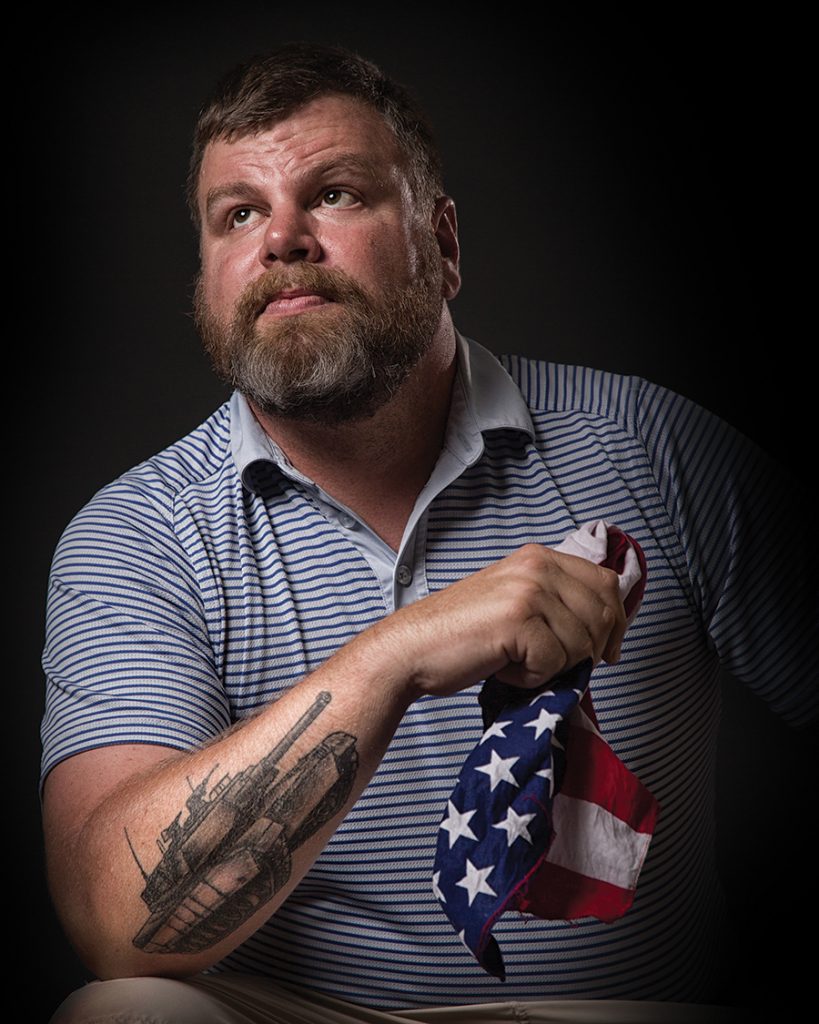
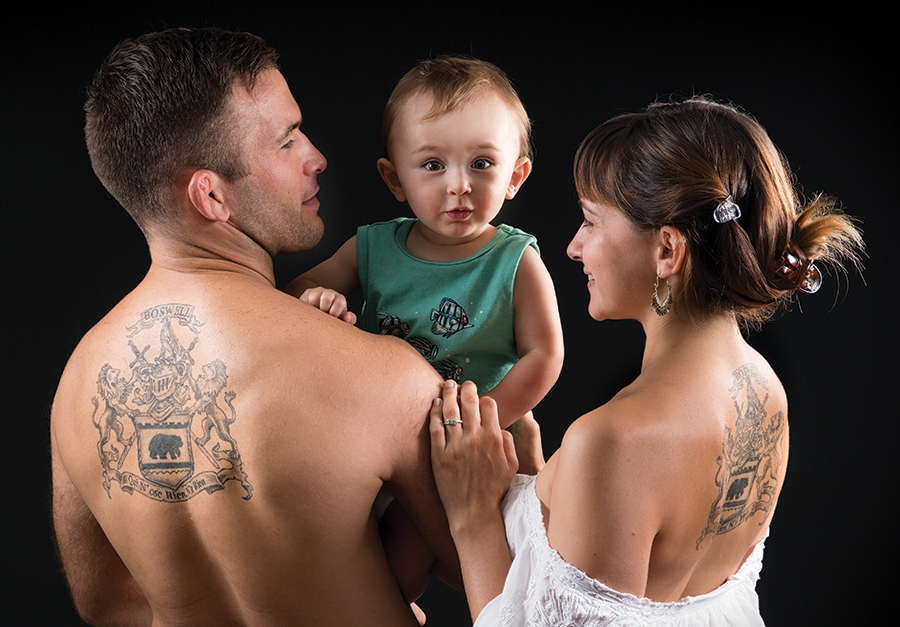
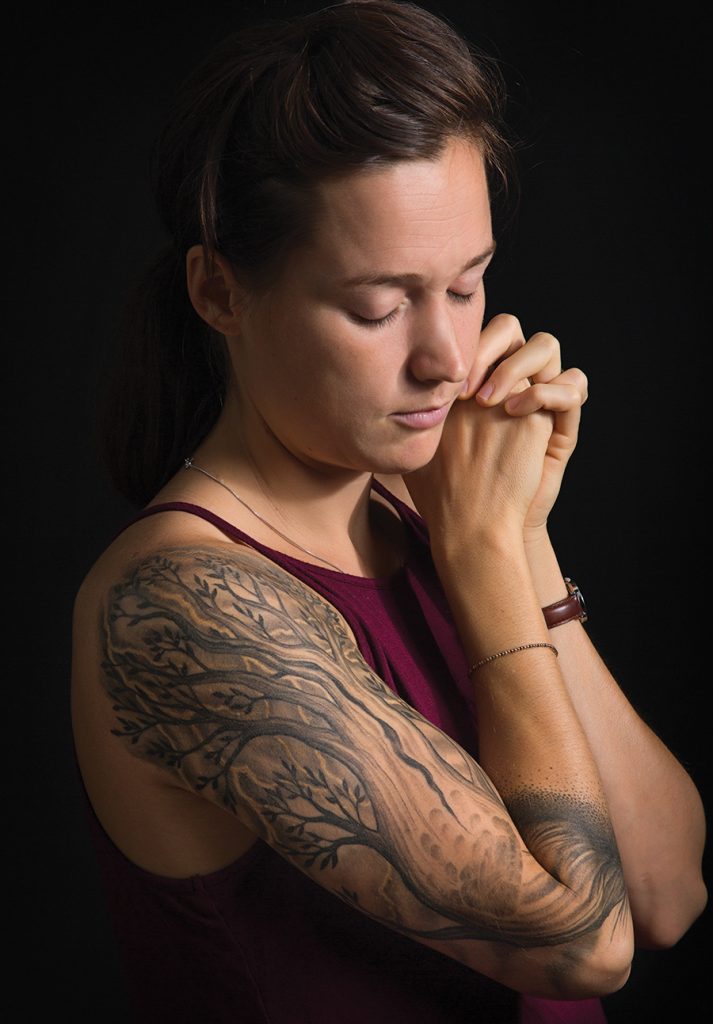
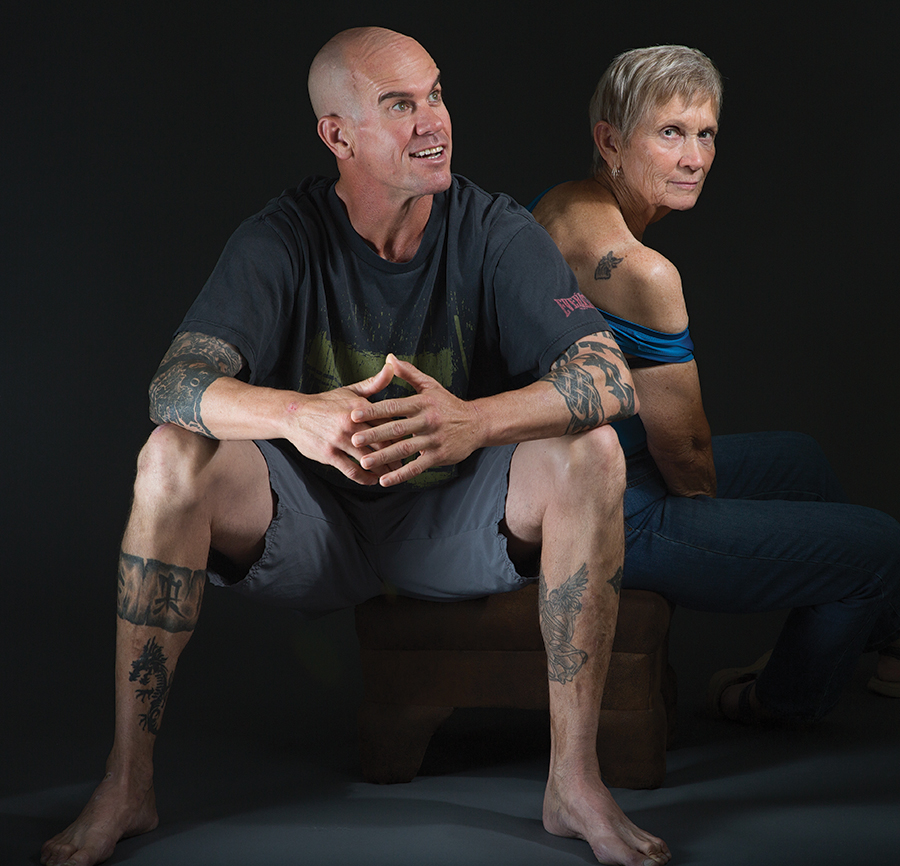
Famous banned book covers artfully reimagined

Featuring Denise Baker, Romey Petite, John Gessner and Laurel Holden


The first summer I went away to Boy Scout camp at age 11, I took an internationally banned book along for casual reading.

Of course, at the time, I didn’t know it was a famously banned book. It was simply a thick paperback volume from my dad’s overstuffed bookshelf that featured a classical drawing of a nude Aphrodite on its cover. The author had a cool handlebar mustache. I thought it might be about an Englishman’s adventures in the Near East and remember a blurb on the cover that said something to the effect: “The Book that Shocked an Entire Continent.”  The title was My Life and Loves, by Frank Harris.
In fact, the author was a controversial Irishman and author, newspaper editor, short story writer and social gadfly who railed against censorship and puritanism in all forms. His lurid and engaging 600-page memoir — which was banned in Britain and America for 40 years and first published privately in Paris — related colorful tales about his close friendships with leading politicians and celebrities of the Victorian Age. But it also brought down the ire of the U.S. Postal Service and British and American censors for its explicit depictions of the author’s sexual exploits with willing Victorian Age debutantes.
The book, I learned many years later, tainted the otherwise estimable career of Harris, who authored well-respected biographies of Shakespeare, Goethe and his close friend Oscar Wilde, among others. He was also pals with the likes of George Bernard Shaw and Winston Churchill.

Needless to say, My Life and Loves was potential dynamite in the hands of an 11-year-old Tenderfoot Scout and would surely have gotten me sent packing before the Friday Mile Swim had anyone known the revealing subject matter contained therein. I remember telling friends it was just a boring book about Greek and Roman mythology.

Today My Life and Loves is considered a classic of eroticism and historical reporting. I still own a copy.

In this spirit, just for fun — being August and our annual Reading Issue — we invited several talented artists and photographers from our three sister magazines to imagine updated covers for famous banned books of their choosing.

As they lavishly prove, even if you can’t judge a book by its cover, you can sure have fun illustrating something that was once considered so bad for you — it’s good.

Jim Dodson


Ulysses

by James Joyce

Serialized in the U.S. 1918-20. Published 1922. Banned in the United Kingdom until 1930s. Portion of serialized version found obscene in the U.S. in 1921, effectively banning the book. In 1933 United States v One Book Called Ulysses finds book not to be pornographic, therefor not obscene.


Denise Drum Baker taught visual arts for 34 years before retiring from Sandhills Community College three years ago. She’s a printmaker, artist, teacher, mother of two grown and happy children, and an ambassador for Moore County Cultural Arts. She falls into fun orchestrating a sister cities relationship with Newry/Mourne, County Down, Northern Ireland. Carving woodblocks is her favorite form of printmaking because the process hasn’t changed much in over 400 years. She can be contacted at artsnob@live.com.


The Handmaid’s Tale

by Margraet Atwood

Published 1985. Recipient 1985 Governor General’s Award for English Language, fiction; 1986 nominated for Booker Prize and Nebula Award; 1987 recipient Arthur C. Clarke Award. Banned or challenged in some schools for profanity, lurid passages.


Romey Petite is a writer and illustrator hailing from New Orleans and a contributor to PineStraw’s “Bookshelf” column. He is sometimes mistaken for an oddly dressed mannequin when sitting next to the picture window in his most frequently patronized coffee shop. His favorite thing to do is take a walk while listening to a good audiobook. He can be contacted at romeypetite@gmail.com.


Animal Farm

by George Orwell

Written in 1943-44. Published 1945. Banned in the Eastern Bloc until the end of the Communist Era in 1989. Won a Retrospective Hugo Award in 1996. Listed No. 31 on the Modern Library List of Best 20th Century Novels.


Laurel Holden is a native of Southern Pines who graduated from The Center for Cartoon Studies in White River Junction, Vermont, in 2013. She is a writer and illustrator who moonlights as a librarian at the Southern Pines Public Library. She lives in Southern Pines with partner and collaborator, Romey Petite, and their corgi, Felix. She can be contacted at laurelmax.holden@gmail.com.


Fahrenheit 451

by Ray Bradbury

Published 1953. Recipient 1954 American Academy of Arts and Letters Award in literature. Book was completed in two nine-day sessions on a typewriter rented for 10 cents per half hour. Banned in some schools for vulgarity, obscenity and, in one instance, a description of
the burning of The Bible.


John Gessner contributes editorial images to national and international publications including The Wall Street Journal, Golf Magazine, Our State, PineStraw, O. Henry and Business North Carolina, among many others. He creates advertising images, photographic installations and works with writers on coffee table books and special projects. His hobby is music photography. Contact him at john@johngessner.com.


Your Husband is Cheating On Us

Fiction by Jill McCorkle


Your husband is cheating on us. I’m assuming that he hasn’t told you yet. I’m the test wife and he tries everything out on me first, I mean everything. Remember when he got hooked on that massage oil that heats up with body temp? Now maybe you liked it, but I sure didn’t. I got a rash, but of course, I have extremely sensitive skin and always have. I mean, I am Clinique all the way. If you were writing up this triangle (fast becoming a rectangle), then you’d be the one with sensitive skin, the fair, hothouse flower, and I’d be the scrub grass by the side of the road.

And look at you — some tan. I know that you go to Total Skin Care and get in the sunning beds. It’s odd how he tells me all about you. There have been many times when I’ve said, well, why don’t you just go on home then? And of course, that’s the ironic part, because he always does. But, girl, like are you thick? I would know if my man had been out messing around. Like I know your perfume — Chloé — and the fact that you have not picked up on my Shalimar is amazing. I wear the stuff the way it’s supposed to be worn — heavy; I’m one of those women people ask not to be seated next to on the airplane. At my last clerical job they ran a ban on perfume in the workplace after I’d been there a week, so I had to quit on principle. That’s me, a quitter; a principled quitter. When the going gets tough I get the hell out, always have.

I’ve come here today with a proposition for you, but before I get into that, I thought you might like to hear a bit about me. I’d think you’d want to, given that I know everything there is to know about you. I know your mama died last January, and I have to tell you that I almost called you up to give my condolences. I mean, I’d been hearing about how awful her illness was and how you were traveling back and forth to tend to her. I heard you on the answering machine many times when I’d be over here cooking dinner. I’ve got to tell you that I just love your kitchen — that commercial-size stove and those marble countertops. Was he feeling guilty when you all remodeled, or what? You and I both have excellent and very similar tastes. Don’t look at my hair. It’s not a good day. You should see me when it’s just cut and blown dry. Maybe I can show you some time.

Anyway, one of those nights when I heard you on the machine, you were crying so hard that I almost picked up, so strong was my urge to want to comfort you. When Mr. Big got home, I told him there was a message I felt he had to listen to right that minute, and of course, he did, but then did he call you? No, ma’am. And did he call to check on your son, who he had dumped off at the Anderson house and them not even home from work yet? I told him that if I had a son I believe I’d be more responsible with him, and he just pawed the air like l might be dumb. He must do that to you a lot, too. I’m sure he must. I even suggested I excuse myself, go to the mall or something so he could have his privacy but he just waved again and shrugged, like, nayyhh. Well, that was the first time I stopped and asked myself just who in the hell was this man I was sharing my (or your) bed with? I looked at him in a completely different way after that. I mean, how could he hear you sobbing and carrying on like that and not rush to call you? I see your surprise and I’m sorry. We all grow up and find out that the truth hurts. But here’s some truth you might like. I did not sleep with him in your bed that night. I faked myself a migraine (complete with blinding aura) and made him drive me straight home. Do you think he ever looked all around to make sure your neighbors weren’t looking? Hell, no. Either too stupid or just didn’t give a damn, I can’t figure which. I moaned and groaned and talked of the bright lights I was seeing out of my right eye (I told him the left had already shut out in complete blindness), and honey, he drove faster than the speed limit. I have always noticed how men (at least the ones I’ve come into contact with) can’t stand to observe pain. It just sends them right up a tree. I have also faked menstrual cramps with Mr. Big on several occasions, and so I know in great detail (he talks a hell of a lot, doesn’t he?) that you have just terrible periods and always have. My bet is that you’ve faked your share, am I right? Well, either way, I know how you sometimes ask him to crush up some Valium into some juice that you sip through a straw so you don’t have to sit up and straighten yourself out. Genius. Make that Mr. Big Ass work! But honey, I’m not so sure I’d trust him, you know? If I were you I might mix my own cocktails.

But enough about that, I wanted to tell you about me. Get yourself a drink if you like, or a cigarette. I know you smoke. He knows you smoke, even though you think he doesn’t. I mean, the man is slow for sure, but he isn’t completely out of the loop. He has smelled it in your hair, even though he says you spray lots of hairspray and perfume (he doesn’t know you wear Chloé — I do). So come on out in the open and just smoke. I smoked for years and I absolutely loved it. But I quit years ago. I am actually one of those who quit because of Yul Brynner coming on television and saying that, when I saw him there doing that ad, then it meant he was dead. Lord. That was a moving experience. I was holding a cigarette in my hand and was seven months pregnant (yes I have had a life, too), and I felt like Yul was looking directly into my eyes. Talk about an aura. Yul had an aura, and don’t be like Mr. Big and make a joke about his baldness. I felt his soul reach out and grab me by the throat and say, Put out the butt. I went out on my back stoop, took one final drag (a long, delicious drag), and then I thumped that butt clean across the darkened backyard where it twinkled and glowed for just a brief second before dying.

If I was somebody who could like have one cookie at a time or could eat the designated portion written at the top of the recipe or on the side of the box, then I’d ask you to give me a cigarette, but we know better. If I had one cigarette, I’d have a carton. I have always told people that if I was ever given the bad news that my number had been drawn in that great bingo game we call fate and I only had a little bit of time left, that I’d get me a cooler of beer and a carton of cigarettes and several bottles of Hawaiian Tropic (the oil with the red label for tropical-looking people), a tape deck with all my favorites from when I was teenager: Pet Clark and Chad and Jeremy, you know my time, I’m a few years older than you, I think. And I’d just stretch out and offer myself to the sun; a burnt offering. Burnt, greased, and buzzing like a bee.

The baby? You’re asking about my baby? Well, let’s just say that if I had a baby then my last wish would be a very different one. But that’s not something I like to talk about. I’ll tell you what I did come to talk about. You see, I have been thinking that we should get rid of Mr. Big. That’s right, don’t look so shocked until you hear me out. It would be just like in that movie that came out a year or two ago, only I do not want to get into a lesbian entanglement with you. I mean, no offense or anything, it’s just not my cup of tea. Actually I would like some of whatever you’re drinking. Diet Coke is fine. Don’t slip me a Mickey, okay? A joke, honey. That’s a joke. I’m full of them. Probably every joke you’ve heard over the past eight years has been right from my mouth. Mr. Big has no sense of rhythm or timing — in anything, you know?

Truth is you look a far sight better than how he painted you, and you look a damn lot better than that photo of you all in that church family book. I mean it made me sick to see Mr. Big Ass sitting there grinning like he was the best husband in the world when of course I knew the truth. Honey, there are facts and then there are facts, and the fact is that he is a loser with a capital L.

Arsenic is big where I’m from. I guess anywhere you’ve got a lot of pests there’s a need for poison, and then maybe your perception of what constitutes a pest grows and changes over the years. There was a woman from a couple of towns over who went on a tear and fed arsenic to practically everybody she knew. If she had had herself a religious mission like Bo and Peep or Do and Mi, whatever those fools were called who tried to hitch a ride on the comet by committing suicide in new Nikes, or like that Waco Freak, or, you know, that Jim guy with the Kool-Aid down in Guyana, she’d have gotten a lot of coverage – People magazine, Prime Time, you name it. When they finally wised up to her, she had enough ant killer stashed in her pantry to wipe out this whole county. It’s big in this state. Cyanide, too, might be good because you’ve got that whiff of almond you might could hide in some baked goods. But I don’t know how to get that.

I know what you’re thinking, sister. I’ve been there. You see, your husband has been faithful to me for eight long years, and why he up and pulled this stunt I don’t know. Middle-age crazy, I suspect. Maybe he wanted somebody younger and shapelier. Maybe he wanted somebody a little more hot to trot like my oldest friend — practically a relative — who sleeps with anybody who can fog a mirror, and her own little lambs fast asleep in the very next room.

If I had had my own little lamb, my life would have been very different. And I was going to tell you about the real me, so I’ll just begin before I go back to my plan. You keep thinking about it while I do my autobiography for you. You see, I think that my first knowledge that I would live the life I do is when I was in the eighth grade and my foot jumped right into a size nine shoe. Now I’m looking over and I see that you are about a seven and a half, which is a very safe place for a foot to be these days. That’s a safe size. But I hit nine so fast and all of the women in my family said, “Where did she get that foot?” My brother called me Big Foot. My great-aunt said, “Oh my God in heaven, what if she grows into those?” This from a woman who was so wide, her butt took up a whole shopping aisle at the CVS. I mean, it isn’t exactly like I came from aristocracy but they thought so, or at least they thought that a slim little petite foot meant that somebody way, way back stepped off the boat in some size fours.

I maxed out at a size ten when I was a senior in high school. There they are, full-grown pups, and honey, there isn’t a single shoe on the market that I don’t order and wear. Sometimes I have to order a ten and a half (I firmly believe that this is the result of the Asian influence in this country). I finally got to an age where I could look out at the world and say, “Fine — I am of good solid peasant stock; I am earth woman, working the fields, turning the soil.” I can dig with my hands, and I can dig with my feet. My folks aren’t sitting out on the veranda as much as they’d like to be. They are picking cotton and tobacco leaves, and when they get their tired hot bodies back to the shanties at the edge of the field, then here comes The Mister from the Big House. I know that might sound stupid to you, but the size of my feet made me both tough and subservient. I thought long ago that it could all turn around with me meeting the right person at the right time, but that has yet to happen.

You know when I first met Mr. Big, though, I thought it might be happening. Part of the reason I liked him so much that first time is because he talked a lot about you and your son, and he really did seem to care. I even asked him the first time we met in a more personal way, you know, didn’t it bother him that he was cheating on you. He said at the time that it was okay because you were cheating on him; I let it be an excuse because he did look pretty cute back then, but I think I knew that you weren’t really having an affair. I mean, you had a one-year-old. Now, I’ve never had a one-year-old but I sure do read enough, and know enough folks who do, that I know the odds of you having time to run around were out of the question. You were probably lucky to get a shower, am I right?

He showed me a picture of your son the first night I ever met him — a cute little thing, plump and grinning — but after we started sleeping together he never showed me any more pictures of your boy. Or you for that matter, other than Mr. Big’s Holier Than Thou Church Photo. I should have known to leave him alone right then. I should have said Kiss Off and disappeared. And I’m still not entirely sure why I stayed, except that I was very lonely and I knew that he was safe.

I’m still lonely. I know you might think I’m putting too much stock on the size of my feet, but in my mind it is a physical symbol of my difference in my family. They are all over there in the nice warm room lit by firelight, and I’m way off yonder by the barbed-wire fence with snow on my boots while I shiver and peep in. I’ve always felt that way, and therefore, I’m comfortable with it. I used to get hopeful every now and then, but I got over it.

And this woman! She is much younger than you are, honey. And she has got boobs such that you could place a cafeteria tray there (man-made, I’m sure). Short skirts. Over the knee boots, I mean, really. Everybody says I have awful taste in clothes, and I do much better than she does. I mean to tell you Mr. Big has hit bottom. Here he had us, two perfectly good-hearted, good-looking women, and he falls for that? If  I were you, I might even take precautions against disease. She might be packaged to look clean, but that is one sordid thing. Check her out some time. I have her working schedule at Blockbuster’s, and I know her address and phone number. As a matter of fact I’ve already started in harrassing her for you. Don’t thank me. I’m doing it for me, too.

So, I say we bump him off. Real easy. Slip him the poison. Start in small doses and then up it and up it until he’s so sick with what seems to be the flu or some awful stomach problem and then we either choke or smother him, say he did it while trying to be a pig and eat while you weren’t around. If you carry it through, you know, fall completely apart — grieve, rage, mention that hussy whore girlfriend down at Blockbuster, don’t tamper with the will (a document that does not make a single mention of me!), then they’ll believe you, especially when you say that you feel you’ve got to get that man in the ground as quickly as possible.

Done. Then you just go on about your business and I go on about mine and they might put Miss Blockbuster in the slammer. Truth is that I don’t have much business and never have.

I almost had a baby one time. The daddy was nowhere to be found. Get up and shake the sheets, and he’d blown clean out the window and down the road, never to be heard from again. Well, here came a baby. Everybody kept telling me to get rid of it, but when have I ever done what anybody said to me? Never. So I plodded along, planning. I had lots and lots of plans. But it was a bad joke — a fake baby. No breath, no heartbeat. I looked at it and realized that was my life. No breath, no heartbeat. No life for me. I’m a slave girl — a servant. I’m one rung lower than a dog.

Mr. Big is too low to be called a dog; that would be an insult to canines everywhere. He didn’t call you back that time. He was never there for me, not that I ever expected it; but what if just once he had been? What if just once somebody had taken better care of me, taken me to a real doctor, gotten some help. And Mr. Big knows that you’ve been feeling down lately, but does Mr. Big care? No. I say we kill him.

Oh, but I see doubt in your eyes. I see love, and for that I sure am sorry for you. You better lose that light, honey.

Bring him down. Think of Delilah. Cut off his strength and watch him go blind and pull a building down on himself. Sap him while you can.

Oh, my, stop crying. Lord. I didn’t come over here for this. You are not the woman I thought you were from that photo in the church book. You looked to me in that picture like a women who could enlist in a complicated plot, but you are a bundle of jumpy weepy nerves. I know that we’d no sooner put Mr. Big down under, but what you’d be confessing and giving out my name. You are a tattletale. You were probably one in school and you’re still one. I still call and hang up on the tattletale from my school, that’s how much I hate a tattletale.

Oh, yeah, I can see it all, now. You’re sitting there thinking about how you could nail me. The wife would get it easy. A woman under stress conned by the mistress. You’re crazy if you think I’d fall for that one. I may not have any children to worry over, but I have pride. I have dignity. I have the child I almost had and lots of times that keeps me in line. I imagine where he’d be right now, twelve years old — my son waiting for me to get home so he can complain about what I don’t have in the refrigerator. I tell people, maybe men I might’ve just met, “Oh no, I don’t stay out late. My son will be waiting for me.” Don’ think I don’t know what it feels like. I was pregnant. I had mood swings. I studied all those wonderful little pictures of the fishy-looking baby growing legs like a tadpole — moving from water to land, just that easily.

But you have everything for real. You have Mr. Big legally.

You are hopeless woman. I’m the one that ought to be crying! Snap to. Listen to some good advice, because in a minute I’ll be out of here. You tell him that you know all about that little bitch he’s been seeing (she works at Blockbuster Video and wears way too much eye make-up). Tell him he better shape his butt up or you are out of here, sister. Make him sweat. I mean I don’t want a thing to do with him, you know? So use me. Call me by name. Tell him I’ll come to your divorce hearing and help you clean up. Get him back if you want him, and make him behave. But don’t let him off easy. Pitch a blue blazing fit. Scream, curse, throw things. Let him have it, honey. Your husband is cheating on us. Let him have it. And when all is said and done, please just forget that I was ever here; that I ever walked the earth. After all, I’m Big Foot. Who knows if I even exist.  PS

Jill McCorkle is a daughter of Lumberton (NC) and an award-winning author of ten novels and books of short stories. Five of her books have been named Notable Books by the New York Times and four of her short stores appeared in the Best American Short Stories series. Like Lee Smith, her fellow Good Ol’ Girl, Jill is a resident of Hillsborough and a North Carolina treasure.

Mani/Pedi

Fiction by Lee Smith


come here to be touched. I want the lotion, the rubbing, the smoothing, the stroking, the pressing, the kneading fingers, the touch on my toes and feet and legs and hands and shoulders. Oh and I always get the neck massage, too, in addition to the deluxe manicure and the hot stone pedicure and the warm wax treatment on both feet and hands. I especially love the moment when each hand or foot slides into its own plastic bag filled with that melted wax, you think it’s too hot and you can’t stand it, but you can. And I especially love Kim, a round sweet Filipino woman, the salon owner’s wife, who is doing me today, both for her wonderful plump firm hands and also her strength as she goes deep, deep into the tight muscles of my calves and neck. If I can’t get Kim, I ask for Rosa, thin, tense, and angry, or Luis, a gentle, beautiful young man who seems wistful or sad to me though who knows if that is true or not. None of these people speak English beyond the most rudimentary and necessary terms such as “Mani-pedi too-too?” or “Hot-hot?” as I put my feet into the tub, or “You like?” as Kim asks now, massaging my calves, then “Feel so good!” with a nice big smile as she brings the hot towel to cover my knees and lower legs and feet. This is heaven. I smile, too. I love it that we can’t really communicate. I’m not here to talk, I’m here to be touched.


Since Charlie died, many people have actually come up to me and said, “Well, it’s a blessing, isn’t it, after all this time,” or “It’s so sad, but it must be a relief, too.” The fact is, it is not a blessing, and it is not a relief, either. So what if Charlie couldn’t speak to me for the last four years? He knew me, I’m sure of that. The body has its own way of knowing, bone to bone, skin to skin. I believe it comforted him when I touched him or turned him so that we lay curled together side to side like spoons in a drawer, flesh to flesh as in our long life together, two old high school teachers, married for 45 years. The body has a knowledge of its own, this is why I kept him at home and I don’t care what anybody thought of that, my son or his wife or the hospice people or anybody.

So now? I don’t miss Charlie himself, he’d been gone for years. But I do miss his body, his flesh, the feel of him, the touching. So I come here. I come way too often, I know, especially considering that I don’t really have any nails to speak of, I never have. I come too often and I stay too long.

But so does this other woman, also older, like myself, a blowsy, disheveled blonde who occupies the other pedicure chair in this secluded back alcove. I’ve seen her here several times. Today, she has already had her manicure; she waves her hands through the perfumed air, then holds them up to admire her perfect nails, tapered hot pink points, while her feet and ankles soak in the hot tub.

This is a reversal of the standard routine. Usually the pedicure is first, then the manicure while the toenails are drying under the special light at one of the nail stations. I love that special light, so warm on my feet, I love the tiny fan on my fingernails. I tip extravagantly when I leave.

“They already told me I can just soak as long as I want,” this woman suddenly leans forward to tell me, sounding defensive.

What a surprise, a real jolt! I have never talked to any other customer here in The Purple Orchid in this rundown strip mall out on the highway north of town, far from my own staid neighborhood and all my regular haunts. I can’t think what to say.

“I’m having a real bad day,” she goes on, leaning forward, ”but I swear, it always calms me down to come in for a mani/pedi. Kim sweetie, could you come over here and jack up the heat for me, hon? Hot-hot please-please!” she calls, and Kim leaves my chair to go over to her. “Just a little bit more, yes-yes hot-hot, that’s good, that’s good hon, that’s perfect! Thank you, sweetie.”

Kim comes back to me and the other woman settles back in her chair. She was beautiful once, I can see that, about 40 years and 40 pounds ago, in a beauty queen sort of way. In fact she was a beauty queen, I’m sure of it, Miss This or Miss That, back in the day, which was my day, too, of course. But I was not a beauty queen or a cheerleader or a majorette. No, I was in the Beta Club, and the French club, and the band. Flute. This woman’s hair is still fairly full and too long for her age, almost big hair. Hers is not the practiced smile of the professional beauty contestant, though, but an engaging, lopsided grin.

“I tell you what,” she says, looking straight at me, “I really do need to calm down today. I need to focus. I’ve got to get myself together.”

“Well, me too,” I hear myself saying. Maybe this is true.

Kim takes off the hot towel now and massages my feet, rubbing lotion between each toe, buffing that recalcitrant callus with a pumice stone, then trimming my toenails, first one foot, then the other.

“Yeah, I’ve seen you in here before,” the blonde says. “My name is Sandy Neighbors, honey, and my husband is Manly Neighbors, that’s the one that does everybody’s taxes in this whole town, you may have seen his billboards, he’s got them up everyplace, there’s one right near here where Church Street runs into Route 60. Manly Neighbors, he’s got a red tie and a great big old shit-eating grin.”

I start laughing, I can’t help it, I have seen that guy on that billboard, and she’s right. I haven’t laughed in so long it hurts.

“Yeah, he’s real busy right now,” Sandy says. “It’s tax season, you know” — it’s April — “so Mr. Manly Neighbors, Mr. Important, Mr. Big, he just can’t do a goddamn thing with his wife, he’s so busy, he’s a workaholic anyhow, even at the best of times. I think that’s what happens when you grow up poor, you know, you just can’t ever make too much money, you can’t believe it’s real somehow. Him and his mom used to eat the old bread that the Mick or Mack grocery store was throwing out, that’s how poor they was, so I guess we just can’t imagine.”

I really don’t know what to say to that, which doesn’t matter anyway as Sandy Neighbors just goes right on talking while Kim trims my nails and then expertly applies the polish on my toenails, Tijuana Holiday, something new for me, I picked it for the first time today, usually I choose something more subdued such as Dawn Blush which is almost mauve. But who cares? What does it matter?

“Ooh, I just love that red,” Sandy Neighbors says. “And you’ve got the prettiest feet, too!”

I have never been told this before.

“You look real good, honey,” Sandy pronounces now, while leaning way over the side of her pedicure chair to haul up an enormous sequined tote bag which she begins rummaging around in, finally pulling out a bottle of Mike’s Hard Lemonade which I know to be the real stuff that they sell at the liquor store and at the convenience store up the highway where I go to buy my cigarettes, Salems, which I have started smoking again now after quitting for 30 years, nobody knows it though, I don’t do it in public ever, just mostly in the car out on the Interstate or out on the bedroom balcony late at night when I just can’t sleep. Now Sandy is all bent over feeling around in the tote bag again, emerging finally with a flushed face and one of those old churchkey openers that I haven’t seen in years.

“Ta-da!” she pops off the top, throws her head back, and takes a big pull on the bottle then grins at me. “This here is my special lemonade,” she says. “It calms me down real good.” She takes another swig, looks all around as if for spies, then leans across to say to me confidentially, “Actually I’m just going to set over here a while and drink some of my lemonade and try to pass this, this kidney stone that’s just about to bother me to death.”

I was nonplussed. “Can you just do that?” I ask. “Just like that? I mean, pass a kidney stone just because you want to?”

“Well, I don’t know,” she says. “Stick around and we’ll see. But I read in a magazine that citrus is real helpful. And this lemonade is pretty damn good, too. You want to try some?”

“Sure,” I say, and she pops the top of another one and leans way across the pink carpet so I can reach out and get it. I take a big swallow. This stuff is wonderful.

“So what do you think?” she asks. “Pretty good, huh? I think it’s relaxing, too. In fact, I’m getting real relaxed already.”

“I can see that,” I say, settling back, taking another long pull on this longneck bottle, which amuses me, the wordplay, I mean, “long pull” and “longneck.” I used to be a poet in my youth. ”I’m getting pretty relaxed myself.” I take another drink. “So, what’s happening over there? Any progress with that kidney stone?“ I ask, while a part of me seems to have levitated to the ceiling where I hover over us both, me and Sandy Neighbors in our pretty pink alcove which looks like the inside of a seashell, I think suddenly, one of those big curly conch shells that you can blow into.

“Well, I don’t know,” Sandy says, “I can’t tell yet. But I’d really like to go ahead and pass it so I can go on this Senior Water Aerobics Club trip tomorrow. I sure don’t want to pass it while we’re all on the bus. And I’ve already paid for the trip.”

“But where are you going?” I ask, thinking of nearby bodies of water: Kerr Lake, Jordan Lake . . .

“Oh honey, we’re not going swimming! Lord, it’s way too cold for that!” Sandy laughs at my stupidity. “No, honey, we’re going to Savannah on a big fancy bus, it’s a scenic tour kind of thing. Of course I’ve already been to Savannah one time with Manly” — she rolls her eyes — “we had a free trip we won at a Rotary Club raffle. But this trip will be completely different, a girl thing, so it’ll be lots more fun. They’ve got a bar about every 20 feet in Savannah, plus all this old architecture and culture and shit, and low country cooking, that’s what they call it down there, ‘the low country.’”

“I’ve heard that,” I say.

“Hey, you know what? You ought to come along with us!” Sandy cries.

I drain my lemonade, trying to imagine this. Maybe I look doubtful, because she adds, “Without the husbands, you know, why we’ll just have the best time in the world. So you can leave yours at home too.”

“I would,” I say, “but you know, this is kind of short notice.”

She gets out two more longnecks, pops the tops, and hands one over. “Well, even if you can’t make this trip, you ought to join our water aerobics club anyhow, we have a lot of fun in there, splashing around and gossiping. Plus it’s real good for your arthritis and balance and everything.”

This is exactly the kind of suggestion my daughter-in-law and my sister keep making all the time.

“When do you meet?” I ask in spite of myself.

“Ten o’clock Tuesday and Thursday mornings,” she says, “in the pool at the Orange County Recreation Center.”

I shake my head. “I’m a poet,” I say. “That’s when I work.”

“Work?” Sandy snorts. “I thought you said you was a poet.”

“I mean, that’s when I write,” I say, firmly now, convinced of it.

“Well, why don’t you write some other time, then?” Sandy asks with a big shit-eating grin. “You ought to come. You’d just love us!”

“Maybe I will,” I say, just as Sandy grabs both arms of her pedi chair and starts yelling. “Oh oh! Oh my God! Watch out! It’s happening! It’s coming! It’s coming right now!” she shrieks, hanging on for dear life.  PS

Lee Smith, who resides in Hillsborough, is the award-winning author of 13 novels and four short story collections and a beautiful memoir of growing up in rural Virginia called Dimestore, published in March of 2016 by Algonquin Books. She is one of the brightest lights of American fiction, a true gift to the Old North State, and an old friend of this magazine.

Poem

Wild Words

I’ll not read poetry at bedtime anymore —

those wild words gang up,

go roaming in my head,

jump synapses, gathering speed,

picking up more of their kind,

bringing little phrases

to the threshold of my sleep

like proud cats leaving

mice on a doorstep.

Some I shoo away,

but others will not let me rest

till they finally shake me awake,

and with pen scratching sleepily

on the back of a store receipt,

I quickly let them out.

— Laura Lomax

The Cake Lady’s Best

By Jim Dodson     Photograph by Mark Wagoner

Before our second official date two decades ago, my wife-to-be Wendy put me to work boxing up wedding cakes.

Please note that I said “cakes.” For there were more than 100 of them — perfect little wedding cakes meant for two, gorgeously decorated confections created for a Bridezilla who believed all guests deserved their own personal wedding cake.

“She saw it in a magazine and went to all the local bakeries but nobody wanted to take on the job,” Wendy explained with a laugh as we set about carefully boxing up the baby bridal cakes. Once they were packaged, they were ferried into the kitchen by various neighbors in her cul-du-sac in Syracuse, N.Y., who’d graciously offered their refrigerators for storing the miniature works of art.

Following the delivery, she even rewarded me for my assistance with a cake that didn’t make the final cut. It was spectacularly good, some kind of buttery white cake with a raspberry filling. The bride, for the record, was over the moon with the diminutive delicacies.

Over dinner later that night, I asked Wendy how she had developed her cake-making chops. She explained that she’d always been the natural baker in her family of three daughters, but really found her footing when Karen, her middle sister (Wendy is the eldest) needed a wedding cake. Wendy offered to make it, expertly copying an elaborate cake fromMartha Stewart’s 1995 bible on nuptials, Weddings.

The cake apparently was a big hit and word quickly circulated. Within a relatively short time Wendy had developed a cottage industry she called The Cake Lady and saw a steady stream of folks wanting cakes for all occasions showing up on her suburban Syracuse doorstep. By then she had deepened her considerable knowledge of cake-making by taking an advanced course in the craft and by devouring every classic and modern book she could find on the subject of making cakes.

One afternoon not long after my serious courtship of her commenced, I breezed into her kitchen and saw a large wicker basket filled with fresh-popped popcorn sitting on her kitchen counter. I blithely grabbed a handful of it, discovering, to my horror and embarrassment, that I was holding a gooey glob of icing. The cake was actually a groom’s cake, meant for a fellow whose favorite snack food was popcorn.

I was caught literally licking my fingers — the icing was excellent — when my own unflappable girlfriend entered the kitchen, took one look at my boneheaded gaffe, laughed it off and got to work repairing the damage. Soon that basket of “popcorn” was as good as new — and I knew without question this gal was the one for me.

Two years later, she made our own stunning wedding cake crowned by a bouquet of beautiful summer flowers for the rowdy lobster bake and reception we threw under a harvest moon on our forested hilltop in Maine. A crowd of 100 was expected. A crowd at least half again that size showed up.

The cake was gone within minutes after we cut the first piece, which I never even got a taste of (only the remnant cake tops saved in the refrigerator), an indication not only of how beautiful Wendy’s cakes typically are but — far more important in her view — how delicious.

Over the next decade, as the schoolteacher, wife and part-time baker made cakes for every sort of occasion for friends, co-workers and relatives — rarely charging anything save for major wedding cakes — I was often pressed into service as the cake delivery man and general factotum.

There were some memorable near disasters — like the three-pedestal all-butter cream wedding cake some mad bride in love with the fountains of Versailles ordered for the hottest summer day in Maine. As it sat in an unair-conditioned alumni house on the Bowdoin College campus, there was an interminable delay during which the butter cream began to melt and the entire back of the cake ran downhill. I received a remarkably calm telephone call from Wendy asking me to bring several of our children’s wood alphabet blocks, a screwdriver and some shims to the alumni house. By the time I got there, she’d managed to somehow recreate the back of the cake and soon stabilized the pedestals with the aforementioned blocks. Talk about grace under fire — or heat wave, as it were.

Then there was the wedding party where, moments after we delivered the cake, the groom’s auntie slapped the bride’s mother and all hell broke loose — almost taking Wendy’s beautiful cake with it.

After that, Wendy more or less hung up her wedding cake apron and concentrated simply on making outstanding cakes for friends and family. In our household, the joke is that mama’s cake tops — the portion sliced off the top of a baked cake to allow a flatter surface for decorating — are works of art in and of themselves and never fail to disappear to the last crumb.

Requests for her cakes always seem to surge at the holidays and in summer, when friends are going away and need something special for family dinners.

These two summer standouts are my favorites: a spectacular coconut cake and a strawberry-whipped cream cake that never fails to set picky brides aswoon.

Like all gifted bakers, the former Cake Lady is happy to share her favorite recipes — especially since her husband no longer has to worry about delivering them.

Coconut Cake

Icing:

6 cups confectioners’ sugar

6 sticks (1/2 cup each) of unsalted butter

1 tablespoon vanilla

1/4 cup coconut milk

Combine all ingredients in the bowl of an electric mixer and beat on high for 10 minutes.

Cake:

2/3 cups of unsalted butter

2 1/2 cups of sifted cake flour

1 2/3 cups of sugar

1 teaspoon salt

3 1/2 teaspoons of baking powder

1 1/4 cups milk

1/2 cup coconut milk

3 eggs

1 teaspoon vanilla

One large bag of unsweetened, grated coconut

Preheat oven to 350 degrees.

Lightly butter and flour the bottom and sides of two 9-inch cake pans (or use Baker’s Joy spray).

In the bowl of an electric mixer, combine the flour, sugar, salt and baking powder. Mix for 30 seconds.

Add the remaining butter and 1/4 cup milk and coconut milk and start beating. While beating, add another 1/2 cup milk.

Add eggs, the remaining 1/2 cup milk and vanilla. Beat 2 minutes longer. Pour equal amounts into each pan and bake 35 to 40 minutes.

Let pans stand for 5 minutes and then remove cakes to cooling racks.

To Assemble:

Set one layer on a cardboard round. Spread one cup of icing on the top of the first layer and generously sprinkle grated unsweetened coconut on top. Place second layer on top and ice the top and sides with the coconut icing. Sprinkle coconut on top and sides of cake, pressing coconut into sides as you go. Serve!

Whipped Cream Strawberry Cake

Icing:

6 cups confectioners’ sugar

6 sticks (1/2 cup each) of unsalted butter

1 tablespoon vanilla

1/4 cup heavy cream

Combine all ingredients in the bowl of an electric mixer and beat on high for 10 minutes.

Remove 1 1/2 cups of icing and beat in 1/3 cup of strawberry purée (recipe below)

Strawberry purée:

2 cups fresh or frozen strawberries (if using frozen store-bought strawberries, use unsweetened)

1 teaspoon sugar

Combine and purée in the bowl of a food processor.

Cake:

2 cups sifted cake flour

1/2 teaspoon salt

3 teaspoons baking powder

3 egg whites

1 cup (1/2 pint) heavy cream

1 1/2 cups sugar

1/2 cup cold water

1 1/2 teaspoons vanilla extract

Preheat oven to 350 degrees. Lightly butter and flour the bottom and sides of two 8-inch cake pans (or use Baker’s Joy spray).

Sift the flour, salt and baking powder together three times and set aside. Beat the egg whites until stiff but not dry. Whip cream until stiff and fold into eggs. Add sugar gradually and mix well, folding in with a rubber spatula. Add dry ingredients alternately with water in small amounts, beginning and ending with the flour mixture. Blend well. Pour equal amounts into the pans and bake until the center is set, about 30–40 minutes. Let cool in pans for 10 minutes and then remove to cooling racks.

To Assemble:

Spread the strawberry icing in the middle. Top with second layer and cover the entire cake with the vanilla frosting. Add decorative boarders on top and bottom. Fill in top with fresh strawberries. Serve with additional strawberry purée on side.  PS

Kings of the Castle

An architect out to conquer the world blazes a trail through Vineland

By Deborah Salomon     Photographs by John Gessner

North Page Street has a certain aura, a whiff of bygone times — a neighborhood apart from elegant Weymouth a few blocks east. The faded houses sit back aways, sheltered by towering magnolias. Even the ones in disrepair appear family-friendly, with wide porches where kids played on rainy days. Residents once strolled down these streets of an evening. Yards twinkled with fireflies, waiting to be caught in Mason jars.

Children skipped up to Broad Street for ice cream.

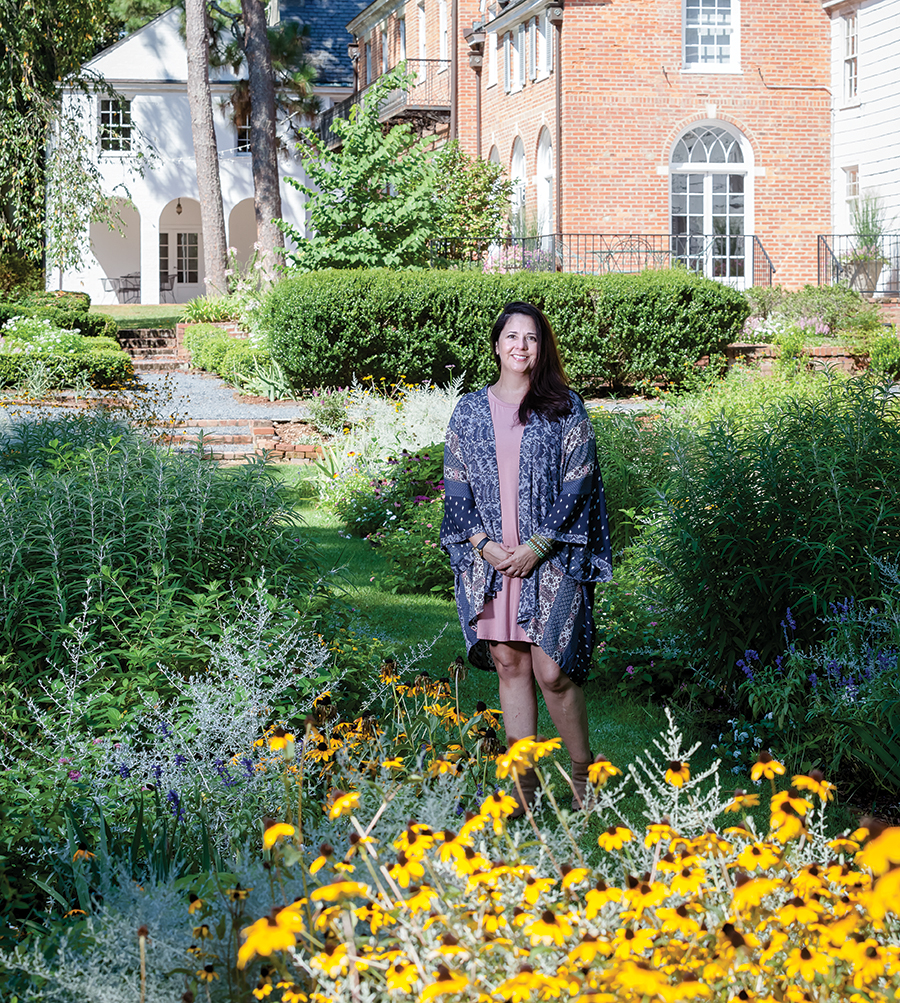
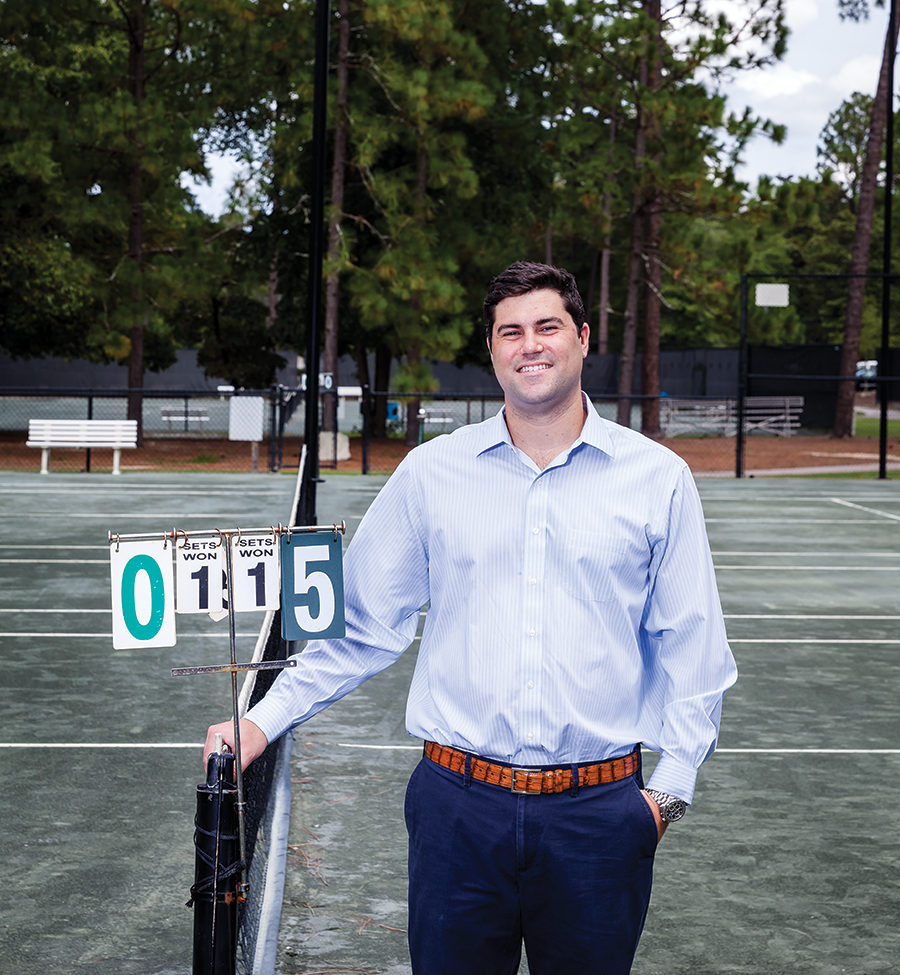
Back then, time was marked by passing trains. Now, the early summer haze is shattered by hammers and saws wielded by sweating hard-hatters working for Dean King: architect, developer, builder, entrepreneur, businessman, preservationist. A boyish 40, Dean exudes the enthusiasm of a teenager out to conquer the world.

“I want to build for myself. I want to take risks, flip houses, make money,” he says.

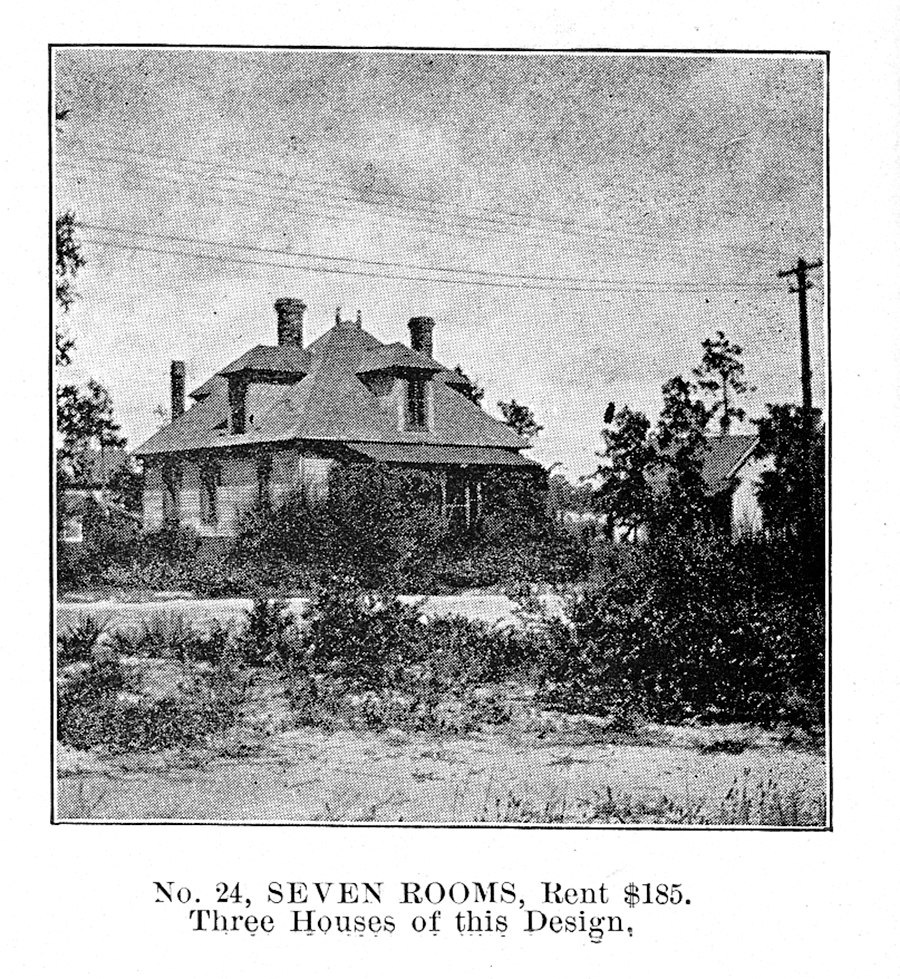
Not only does he walk the walk and talk the talk . . . he lives the life. Dean, his beautiful wife, Tori, and adorable children, Levi and Josie, occupy, for now at least, half of a rambling Southern Victorian guest house — Magnolia Lodge — which he bought, tore down to the studs and built back as a duplex, which he will eventually rent, as he does the other half, probably to military families.

Annie Oakley slept here. So did Al Adams, whose mother operated the guest house with nine units beginning in 1936.

“It was a wonderful house to grow up in,” says Al, who lived there from age 4 to 19. He recalls climbing the magnolia tree to eat scuppernong grapes from the arbor — and getting cornered by a wasp. At mealtime, he rang a bell calling boarders, mostly retired Northern ladies, to the table. After dinner, they would play croquet on a court where the garage now stands.

Much as they love millennial transformation, the Kings will move when Dean finishes renovating the rambling classic a few hundred yards away. Tori’s on board; in 11 years they have moved nine times, saving thousands by taking advantage of the two-year tax deferment.

How so, these urban nomads?

Dean grew up in Rockingham. His talents surfaced early. “I was always artistic, liked to build stuff,” meaning a kids’ hideaway and a two-story tree house constructed with scrap lumber. He parlayed his skills into a degree in architecture, from UNC Charlotte, then lived high in North Carolina’s largest city. By day, he worked for a company that designed hotels. By night, “I enjoyed myself like a young man living downtown and making good money should.”

Not good enough. “I didn’t want to sit in an office — and hotels didn’t excite me.”

A friend who started Pinnacle Development Design Build in Southern Pines suggested he move. Dean knew the area, realized the potential. Tori, a high school teacher and photographer from Ohio, supported the idea.

They relocated in 2005. With partners and associates, Dean designed several projects, including The Pinnacle Lofts on West Pennsylvania Avenue and Broad Street Lofts, both examples of the urban redevelopment trend which entices people to live downtown, or nearby, in new units or repurposed buildings, with services within walking (or biking) distance. The concept took hold in the ’90s as decaying factories in Manhattan’s Soho, Tribeca and Meat Packing District became fashionable condos. Abandoned tobacco warehouse and textile mill residential developments in Durham and elsewhere followed suit.

Dean was convinced: “Urban density is the way to go.” A younger demographic was discovering downtown Southern Pines, one that could afford west of the tracks (formerly Vineland) but not the historic district, where “cottages” designed in the Roaring Twenties by Aymar Embury have been rebirthed as mini-mansions.

Building Pinnacle Lofts was straightforward new construction, but buying an entire block of North Page Street (with a partner) in 2014 seemed risky, since 100-year-old structures like the Magnolia are usually money pits.

“I was scared to death,” Dean admits. Removing asbestos alone cost $25,000.

The house had stood vacant for half a dozen years. Dean describes the interior as “gross,” which actually proved inspiring. Since nothing but the bones and chimneys were salvageable, he could follow his imagination.

Because “imaginative” best describes the interior.

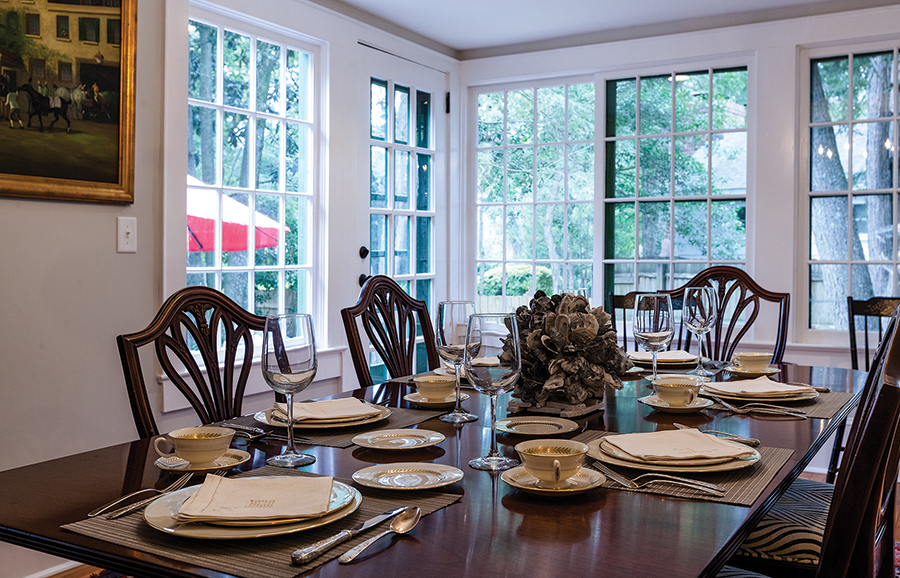
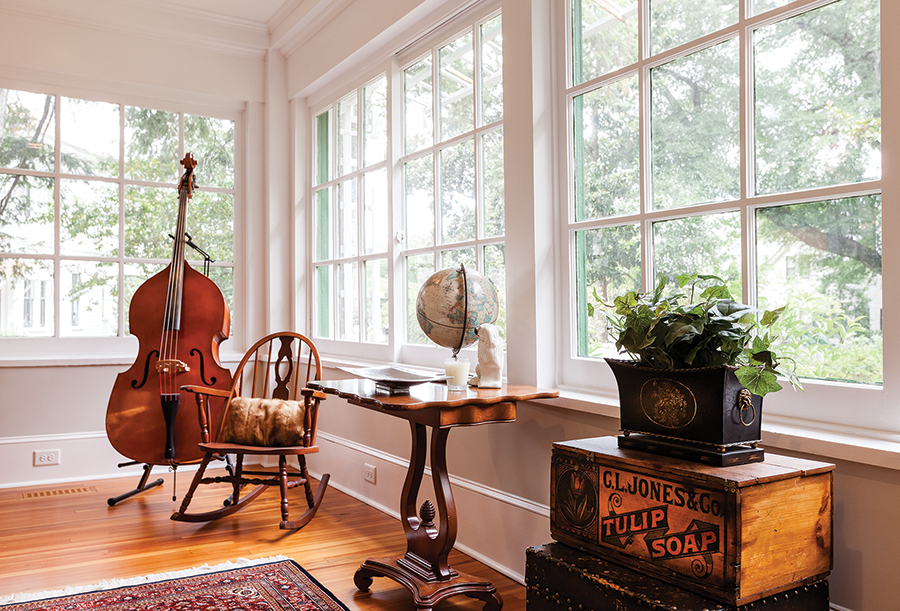
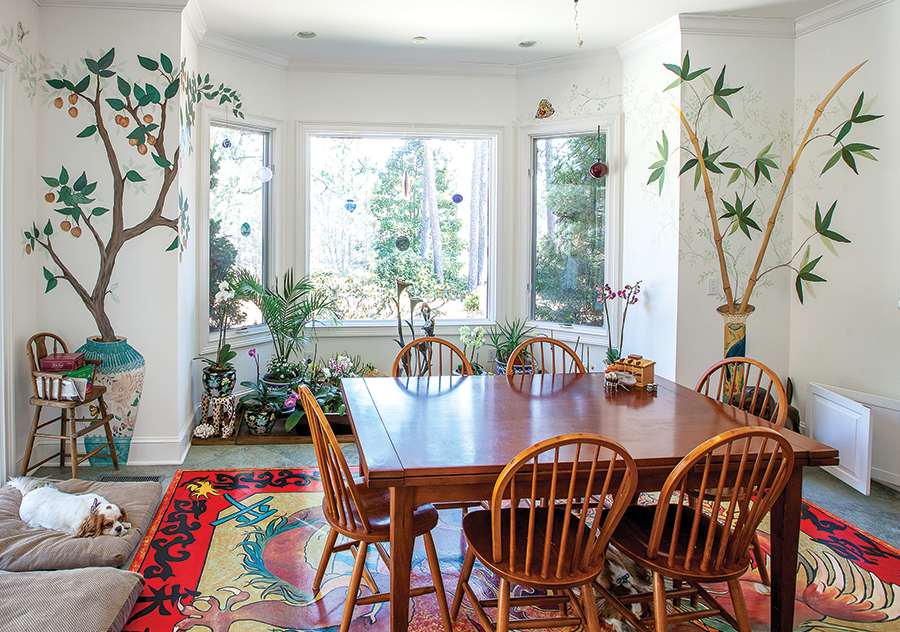
But first, the porch — 48 feet long, with a slanted ceiling and original posts and floorboards that Dean labored to preserve. Before social media, people connected on porches. Here, Tori and Dean sit for hours on rockers and a church pew they salvaged from a fire pit. “I like to think how many people have sat on this front porch in the last 100 years,” Tori says. The porch is especially useful, since the house has no conventional living room. Instead, just beyond the front door, what Adams remembers as Magnolia Lodge’s lobby became the foyer and family dining area with a sloping ceiling, built-in shelves under the stairs and a bay of paned windows. Tori’s office with separate entrance, formerly Al’s bedroom, is off to the right.

Front, center and open stands the kitchen — something that would have been hidden out back in the early 1900s when the house was new. A massive butcher block from White’s Grocery in Rockingham, a business run by Dean’s family, represents the past, along with simple cabinetry, exposed shelving, an oxen-yoke pot rack, ceramic tile backsplash, a bank of brightly painted school lockers, original doors and windows with wavy glass. Tori has brightened snow-white walls, moldings and columns with faux antique signs and vivid pottery. The original floorboards, some approaching 20 feet, must have been milled from tall local heart pine. Exposed brick chimneys, board-and-batten walls, panel doors and moldings provide texture.

Off the kitchen is a narrow sitting room — more TV den than parlor — which suits the young family. Bath and powder rooms, none quite the spa variety, were wedged into the tight layout.

“Dean is good at maximizing space,” Tori says.

Wall décor is limited to poster-sized art photos of the children.

A narrow flight of stairs with original banister and newel posts leads to the bedrooms — adequate but not huge. “People don’t spend time in the master bedroom anymore,” Dean reasons. But he did provide a dressing room and closets, often tiny in even spacious Southern Victorians.

At the top of the stairs a sunroom with original stained glass panels and a low table and chairs is where Levi and Josie draw and play games. “My mother used to grow flowers there,” Al says as he points to where the bedrooms had been, even remembering names of the boarders.

The house has a third floor with more bedrooms, but given its condition, Dean “left it for the ghosts.”

Except for a few old pieces, the furnishings throughout pit Ikea against Pottery Barn — sleek, tasteful, utilitarian, perfectly suited to a young family on the move. Tori boldly mixes formal upholstered dining room chairs with a rough picnic table and benches. An old railroad trolley serves as a coffee table in front of a modern sectional sofa with a side table painted pastel turquoise. Woven rugs in geometric patterns complete the casual look.

An attached double garage is, Dean admits, a necessary anachronism. He will tuck one around back, out of sight, in their next address, just down the street.

“But I’m not sure we’ll ever have a forever home,” Dean admits. Until then, “We’re living in a brand new 100-year old house . . . with good vibes.”  PS

Almanac

Time Traveling

July is here and you are fishing on the bank with Papa, readjusting his faded straw hat seconds before it slips down your brow again. You don’t notice. You are busy staring at the water’s surface, thinking about the dancing cricket at the end of the line.

Summer sends us time traveling. Shucking sweet corn on the front porch with mama. Potato sack racing with your cousins. Sparklers on the lawn.

Ripe blackberries straight from the bush, but nothing tastes sweeter than summer love. You relive that first kiss, stolen beneath the Southern magnolia, and daydream at the pool with flushed cheeks and pruned fingers.

Papa reaches for the bagged lunch you packed together, unwraps a tomato sandwich, takes a pull of iced tea from the thermos. He is flashing back to his own childhood summers when you feel the tug on your line.

You wrestle a tiny sunfish, straw hat now slipping down past your eyelids. The fish is too small to take home, but papa won’t let you know it. He puts down his sandwich to help you remove the hook. You slip your first-ever catch into papa’s bucket. He lifts the straw hat from your eyes, winks, and then kisses your brow.

Rest is not idleness, and to lie sometimes on the grass on a summer day listening to the murmur
of water, or watching the clouds float across the sky, is hardly a waste of time.
— John Lubbock

Full Buck Moon Magic

Sure as our summer garden delivers fresh cabbage (read sauerkraut), July inspires cucumber salad, pickled melon, cantaloupe gazpacho, blueberries and whipped cream. Fourth of July falls on a Tuesday this month. We prepare for backyard barbecues, look for cool and simple dishes to delight friends and family.
At market, baskets of golden peaches spell homemade ice cream. The kids will love it. Hosting or traveling, stock up on pickled okra, scuppernongs, and heirloom tomatoes. This is a season that knows how to throw a delicious party. We oblige.

The Full Buck Moon falls on Sunday, July 9. If you’re gardening by the lunar cycle, pop flowering bulbs such as gladiolus and butterfly lily into the earth July 10–22 — day before the new moon. Not too late to plant squash, corn or snap beans, plus heat-loving herbs like basil, thyme and sage.

Summer doesn’t last forever. We’ve lived long enough to know that. As the cicadas serenade you into dreamland, allow visions of your autumn garden to come into focus. A gardener must always plan ahead.

Larks and Nymphs

Seeing as the spur of this month’s birth flower resembles the hind toe of a crested songbird, it’s little wonder how delphinium consolida got its common name. Larkspur (or Lark’s heel as Shakespeare called it) belongs to the buttercup family and, like the orchid, is a showy and complex flower. It’s also highly poisonous if consumed — but perhaps that’s what makes this striking beauty all the more appealing. Color variations convey different meanings. Purple says first love.

Water lilies aren’t just for frogs. Also a birth flower of July, genus Nymphaea takes its name from the Greek word meaning “water nymph” or “virgin.” A symbol of purity and majesty, the lotus flower is a spiritual icon in many cultures. Chinese Buddhists describe Heaven as a sacred lake of lotus flowers. Imagine.

Ah, summer,
what power you
have to make us
suffer and like it.

— Russell Baker

Something Different Dept.

Among the obscure holidays celebrated this month — Sidewalk Egg Frying Day (July 4), National Nude Day (July 14), and Yellow Pig Day (July 17), to name just a few — Build A Scarecrow Day is celebrated on Sunday, July 2. Egyptian farmers swaddled wooden figures with nets to create the first “scarecrows” in recorded history. Only they weren’t scarecrows, per se. They were used to keep quails from the wheat fields along the Nile River. If you’ve a corn crop to protect, consider making an art of it. But just remember, crows are smart cookies — and perhaps better friends than foe.  PS

The Wizard of Pinehurst

Sandhills’ Renaissance man Rassie Wicker

By Bill Case

It was accepted as Gospel in Pinehurst that Rassie Wicker’s ability to perceive, study and comprehend the world around him bordered on the supernatural. Hardly any subject escaped his quest for knowledge. He seemed to understand everything and could fix anything.

That was until July 22, 1944, when the War Department message dreaded by every serviceman’s family arrived. The telegram said that Lt. Jim Wicker, Rassie’s 23-year-old son, had been missing in action since July 7, barely a month after the Allies landed on the beaches of Normandy. A veteran of 27 bombing missions over Germany, Jim had been lost over Holland when the B-17 Flying Fortress he co-piloted collided in mid-air with another B-17. Most of the 10-man crew had perished. Jim and two enlisted men were unaccounted for.

Home on leave seven months earlier, Jim married Nancy Richardson, his high school sweetheart and the daughter of Pinehurst’s postmaster. It was the young bride who shared the news of the War Department’s wire with Rassie, his wife, Dolly, and Jim’s sister Eloise, casting the twin clouds of fear and uncertainty over the entire family.

Rassie was no stranger to the horrors of war, having soldiered on the front lines in the Meuse Argonne Offensive, the largest and bloodiest operation of World War I that cost over 26,000 American lives. When Jim revealed his intention to sign up for cadet training as an Army Air Corps pilot in 1942 — unbeknownst to his family he had already taken flying lessons — Rassie cautioned him that wartime service was “ugly, spirit-breaking labor, done under strict orders and under the most heartbreaking conditions.” If he was determined to serve, Rassie urged him to seek placement in a photographic post. After all, Jim had already been trained as a civil cartographer. Rassie admonished his son, “I thought I made it plain enough that I was not agreeable to your going into the air force as a pilot, bombardier, or navigator of combat ships.”

Rassie practically begged his son to reconsider. “The thought of your having to go through what I know would be ahead of you would be enough to unbalance what little reason of which I am possessed, and I don’t know what it would do for your mother,” he wrote. “The loss of you to us would mean the wreck of us both.” The son disregarded the father’s advice and reported to Nashville for officer’s flight training.

Now, with Jim missing, Rassie faced the potential — even probable — loss of his son. What possible comfort could there be in having been prescient? If anything, it made his grief all the more palpable. Rassie had gained a reputation in Pinehurst as a man of exceptional capability who adroitly performed any task he set out to do, regardless of its complexity. While his primary occupation was that of a surveyor and civil engineer, the 52-year-old Wicker’s versatility was such that those who knew him, if asked to name the skill at which he most excelled, could easily have given any of a dozen responses. Instead, he sat helpless.

Born in 1892 to James Wicker and Lucretia Mills, Rassie attended a one-room schoolhouse in his birthplace in nearby Cameron. It does not appear that he received any formal schooling in Pinehurst after James moved the family there in 1902. But, like Abraham Lincoln, Rassie read everything he could get his hands on, up to and including the Sears & Roebuck catalog.

Rassie’s father found that his cabinetmaking skills were in high demand in the 7-year-old community. Setting up shop near where the Manor Inn is now located, James received the bulk of his woodworking projects from Leonard Tufts, who assumed control of the family’s privately owned resort and town in the wake of James Tufts’ death, also in 1902. The young Rassie found work in the company town, too, starting as a delivery boy in the pharmacy. An enterprising teenager who nonetheless had time for a bit of fun (lanky and raw-boned, he participated in a farcical local baseball game in a red and green suit), Rassie quickly came into contact with the print shop employees who worked in the same building as the pharmacy. Soon, he had two jobs. Given the daily menu alterations at the Carolina Hotel, there was an unending flow of printing work, and it was not long before he mastered that trade.

The young man’s aptitude for catching on quickly wasn’t lost on Tufts, who used Rassie in a wide variety of roles. He assisted Pinehurst’s electrician, Owen Farrey, and lineman, Seward McCall, in cutting down the trolley line after Leonard decided to discontinue the service. When the installer of the first elevator in the Carolina Hotel walked off the job in a huff, leaving the elevator stranded at the top floor, it was Rassie who got the call. Despite knowing next to nothing about the equipment, he managed to bring the lift to the ground and, with typical dispatch, returned it to working order. Under the tutelage of civil engineer Francis Deaton, he helped survey the properties Leonard was buying, selling or developing. Rassie relished solving the kind of mathematical problems where there was only one right answer, and surveying required the same sort of exactitude. In an effort to enhance his knowledge, the largely self-educated Rassie passed the entrance exam into North Carolina College of Agriculture and Mechanic Arts (now North Carolina State University).

After completing the 1911-12 academic year in Raleigh, he was back working in Pinehurst, spending an ever-increasing percentage of his time in surveying. Though he never completed his studies, Rassie was permitted to hang out a shingle as a registered civil engineer since his work in the field predated the state’s establishment of educational requirements. In 1912, someone convinced him to run for Moore County surveyor and he cruised to victory. There was only one problem: At the swearing in, Rassie learned he was one year shy of meeting the position’s minimum age requirement of 21. Accordingly, he stepped down.

Rassie’s surveying work required him to spend considerable time out of doors in the forests and fields of Moore County, and he reveled in the observation of nature. With three friends, he organized a five-day paddle down the Little River from Vass to Fayetteville, constructing two homemade boats for the voyage. Upon arriving at the party’s destination, Rassie reported to the Pinehurst Outlook that “we tied up to wharves of that old town; changed our river clothes for railroad style, bode our (homemade) boats farewell, and bought tickets to Aberdeen.”

By 1917, Rassie was already considered a person of prominence in Pinehurst. The Outlook listed him among those who “built the community.” He married his sweetheart, a 21-year-old Cameron native, Mary “Dolly” Loving and, like his son after him, left almost immediately for military service overseas. He survived the Western Front physically unscathed and returned to Pinehurst in 1919. Jim was born in 1920, and Eloise came in 1922. In 1923, the burgeoning family moved into the house that Rassie built at 275 Dundee Road in Pinehurst.

In addition to surveying, Wicker ran the movie projector at the new Carolina Theatre in Pinehurst. He supervised a five-man crew building houses for Leonard Tufts, an assignment he was unable to perform as expeditiously as Leonard would have liked. Despite Rassie’s crew completing construction of 10 homes inside of 11 months, Leonard expressed his dissatisfaction. “(Y)ou should have completed 47 houses,” complained the tough taskmaster. The beleaguered Rassie informed his boss he was incapable of meeting such an unrealistic target, and he voluntarily excused himself from further homebuilding. Leonard appears not to have taken the resignation personally, since he continued to inundate Wicker with other assignments.

One task involved preparing a detailed map of the entire Sandhills area — a job Rassie, Francis Deaton and James Swett undertook in 1921. Much of the area was still unsettled dense pine forest. Land elevations and precise paths of Moore County’s watercourses were unknown. The laborious and meticulous work took nearly a decade to complete. One result of this effort was the decision to focus on development in the triangle between Pinehurst, Southern Pines and Knollwood. The Pilot reported in November 1931: “Rassie Wicker has been in the field on the proposed extension of Pennsylvania Avenue from the top of the hill in ‘Jimtown’ (Western Southern Pines) to the boundary of Pinehurst.”

While mapping unidentified creeks, Wicker took it upon himself to name them. According to Tony McKenzie’s “Tribute to Rassie Wicker,” Rassie called one offshoot of a creek “Joe’s Fork” in honor of a Jamaican, Joe Melton, who “drove an oxcart from hotel to hotel collecting food scraps and taking them to the Pinehurst piggery.” Republican political operatives once again began floating Rassie’s name as a candidate for county surveyor. He wryly shot down that trial balloon with a Will Rogers’ style quip. The Pilot reported that Wicker “denies the allegation and spurns the allegator.” Rassie went on to say, “ I always was, is, and always will be a Democrat.”

Rassie’s work in Pinehurst brought him into contact with the landscape architect Warren Manning, a protégé of the man who designed New York City’s Central Park, Fredrick Law Olmsted. As the Tufts’ architect-in-charge, Manning had the final say regarding nearly all plantings in the village. A sponge for absorbing the insights of experts, Rassie’s acquaintance with Manning enabled the younger man to learn how the interrelation of selected plantings could enhance a home or streetscape. Rassie opened his own business, Pinehurst Landscape Service, by the mid-1920s to capitalize on the numerous opportunities for a landscaping enterprise in a village less than 20 years old built on pine barrens.

By the end of the Roaring 20s, Leonard Tufts’ son Richard began to supplant his oft-ailing father in running Pinehurst’s affairs. The father and son, however, shared their appreciation of Rassie Wicker. In a personal letter, Richard raved, “You are getting a reputation with us as an architect, landscape designer, and the sort of handyman to refer things to when we want something that looks extra nice.”

Rassie was given the responsibility for locating and laying out new streets along with the water and sewer lines. According to Tony McKenzie, Wicker “took the liberty of giving all the newest streets names. He chose to use the last names of the people who provided manual labor to build Pinehurst.” They included Graham, Short and Caddell. He supervised construction of the Given Library and the hangar for the Moore County Airport. Leonard entrusted Rassie with the preparing and placing of historic markers identifying the ancient Yadkin Trail, four of which still remain.

Everything Rassie encountered seemed to pique his curiosity. Though often racked with migraine headaches, he invariably finished three books in a three-day period — the allowable bookmobile lending policy at the time — then scoured National Geographic and the Encyclopedia Britannica, front-to-back and A-to-Z. Surveying and mapmaking led him to an interest in the historic derivations of land titles in Moore County. His research dated back to the initial grants of the king of England. The completion of that project spun off into a deeper history of the county and ultimately the state. He became an organizing member of the North Carolina Society of Historians and a valued contributor to the Moore County Historical Association. He wrote numerous columns he titled “Historical Sketches” in The Pilot. One of his writings described his successful search for the North Carolina homes of Scottish heroine and Revolutionary War figure Flora MacDonald. His research culminated in the publication of a book that continues to be a leading reference for county historians, Miscellaneous Ancient Records of Moore County, compiling a massive amount of 18th century data.

His landscaping work led to the study of the local flora and fauna. After locating a sweetgum tree in Pinehurst, he took the time to compare its characteristics with other known varieties of the species. It turned out there existed no other known sweetgum tree with similarly shaped lobes on its leaves. The uniqueness of the discovery was subsequently confirmed by a nationally known expert at Harvard University.

As if those pursuits weren’t enough, he had hobbies, too, including playing the piano, making his own dulcimer, singing in a chorus, acting in the occasional theater production, beekeeping and orchid growing. Perhaps Rassie’s most unique interest was sparked after he found a nest of orphaned quail in his yard and adopted them as pets. His care and feeding of the birds ultimately led to their taming. He cultivated wild plants he thought might improve their diet. His domesticated “Peewee” even fluttered its way into feature stories in The Pilot and Pinehurst Outlook.

His never-ending pursuit of learning took him beyond this world to a study of the heavens. He became an astronomer. Wanting a telescope to gaze more closely at the stars, Rassie fabricated one himself. In 1935, he contributed periodic columns to the paper with the purpose of educating its readers on locating the planets — “The Heavens in October,” etc.

Wicker was an inveterate writer of letters to local newspapers. Rather than pontificate he would raise issues overlooked by everyone else. And, though usually soft-spoken, he could launch into vituperative commentary when circumstances warranted. Concerned that a proposed constitutional amendment would transfer power from the “common people” to the state legislature, he colorfully opined that “(i)f it does, then it should be hung higher than Haman, drawn and quartered, boiled in oil, beheaded, disemboweled and buried in the deepest sea, and its tomb forgotten.” As part of the war effort, in 1944 Wicker was working as an engineer in Sanford for General Machinery and Foundry when he learned that his son, Jim, was missing in action.

The Wicker family tried to stay strong, but that was next to impossible. Jim’s wife, Nancy, wrote daily letters to her husband, holding them in safekeeping that he might one day have an opportunity to read them. Earl Monroe, Rassie’s best friend, noted that the interminable waiting for news about Jim drove Rassie, “a little crazy.” Finally on September 23rd, a telegram arrived confirming that Jim, after safely parachuting to the ground, had been captured by the Germans and was being held as a prisoner of war. The Wicker family was overjoyed. The only other survivor of the midair collision from his B-17 was the waist gunner, Clyde Matlock.

Jim was held in captivity at Stalag Luft I until May 1, 1945, when the camp’s guards fled as the Russian Army approached from the east. The Russians liberated the prisoners at 10 a.m. Two weeks later, Jim arrived at Camp Lucky Strike in France to await transport home. He soothed his anxious family, telling them, “All of you stop worrying now. I’m practically in the front yard.” And fittingly, it was Independence Day when he finally arrived home. Jim later received numerous commendations for his heroic service, including the Distinguished Flying Cross.

Rassie returned to his usual activities in Pinehurst, but managed to spend increasing amounts of time with Earl Monroe, his son Bud, now 80, and Tony McKenzie at the blacksmith shop at the corner of Rattlesnake and McCaskill roads. Bud recalls that Rassie loved working there as well as in his small workshop at home. Rassie welded and woodworked, like his father had. He gave away everything he made to his friends and children, including intricately crafted grandfather and grandmother clocks.

Bud Monroe proudly shows off several of Wicker’s handmade wooden pieces at his Murdocksville Road home. “How on earth are you going to go about describing what an incredible wizard Rassie Wicker was?” asks Monroe.

Wicker kept surveying until very late in life. A familiar and welcoming site in Pinehurst was Rassie driving his old Chevy down Cherokee Road with his surveyor’s rod protruding out the back window. As he aged, the white-haired Rassie began “taking on something of the majesty of an Old Testament prophet.” His community sought ways to honor him. In December 1971, he was the recipient of the Sandhills Kiwanis club’s Builders Cup for “the year’s most outstanding contribution to the county, made without thought of personal gain.” He passed away the following October at age 80. Dolly would die 16 years later.

Recognition continued to come to Rassie posthumously. On Sept. 18, 1995 Pinehurst’s Village Council held a ceremony at the World Golf Hall of Fame to celebrate the naming of its newly acquired 100-acre recreational site, Rassie Wicker Park.

Jim Wicker piloted airplanes in the military for 21 years, and continued in aeronautic related activities thereafter. He and Nancy had two children, Jim, Jr., and Jill Wicker Gooding, both of whom maintain homes in Pinehurst. Rassie and Dolly’s daughter, Eloise, emulated her father’s penchant for scientific inquiry. She graduated from the University of North Carolina with a degree in botany and became Chapel Hill’s curator for its herbarium, part of the North Carolina Botanical Garden.

In a heartfelt message to Eloise who had just graduated from college, Rassie Wicker wrote, “I (and you too) know the pleasure — the deep and soul-satisfying pleasure — of having knowledge as one of your possessions. Not a knowledge confined to one subject, but a broad intellectualism which gives you a deep appreciation, not only of the distant and unapproachable things, but also of the little, homey, everyday creatures and incidents of which everyone’s life is made up … a bug or a worm or a plant each going about [its] appointed task, not haphazardly but in conformity with some great plan. These things come to me occasionally with overpowering force, but I have learned to keep them to myself except to a certain very few people who have seen this picture.”

Rassie Wicker did his best to see the whole picture. His passion flowed from a strongly held belief that the more he studied the world, the more he would be able to discern recurring patterns, to see how everything in it — the beauties and the mysteries — fit together.  PS

Pinehurst resident Bill Case is PineStraw’s history man. He can be reached at Bill.Case@thompsonhine.com.

First in Film

The Founders highlights a new Sandhills festival

By Jim Moriarty

It may not be the seismic shift that occurred when talkies came to town in 1929, but when the curtain goes up on Tar Heel Shorties, a one-day film festival on July 8 at the Sunrise Theater, it will have the same kind of ground floor appeal. The festival is being curated by Dan Brawley, the director of the enormously successful Cucalorus Film Festival now in its 23rd year in Wilmington.

Cucalorus already has one satellite festival, Surfalorus, in its sixth season in Dare County, and Brawley, also the president of the international organization Film Festival Alliance, hopes to find the same kind of traction in the Sandhills he found in the surf. “There are so many talented young filmmakers in North Carolina,” says Brawley. “If we develop this properly over the next several years, we could be drawing students from every university. The barriers to making really high quality films have all vanished. The history of Cucalorus is all about being deeply connected to local creators and then bringing people in from the outside and making connections. That’s what we’re really trying to do, cultivate creative talent, make connections with other creative talent and then, it’s sort of off to the races.”

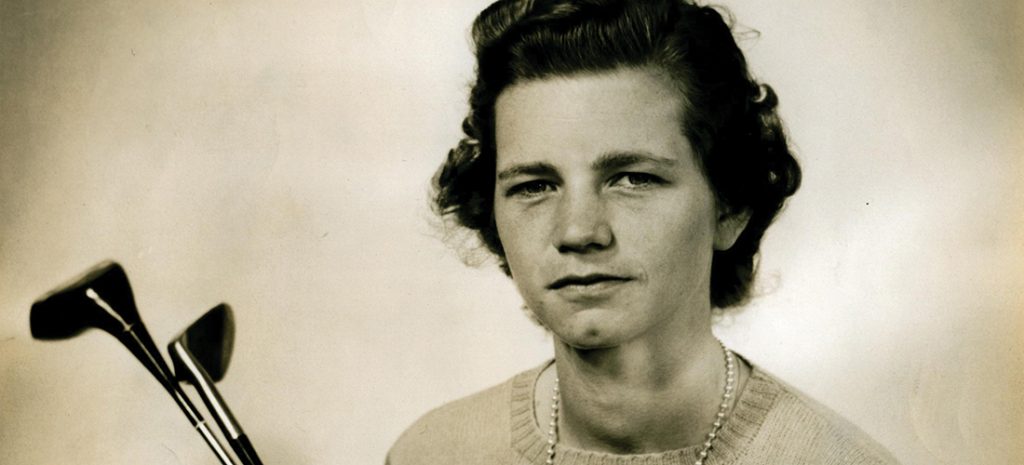
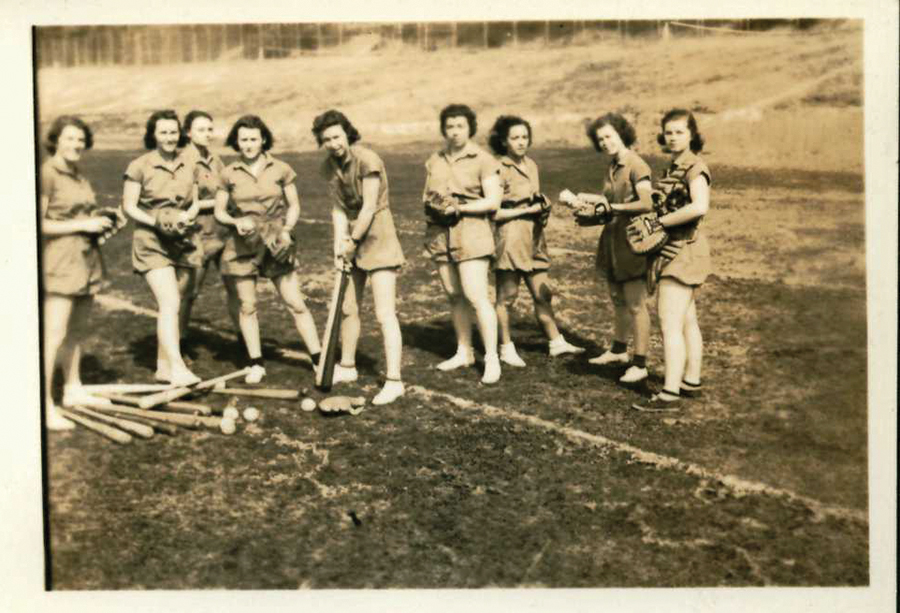
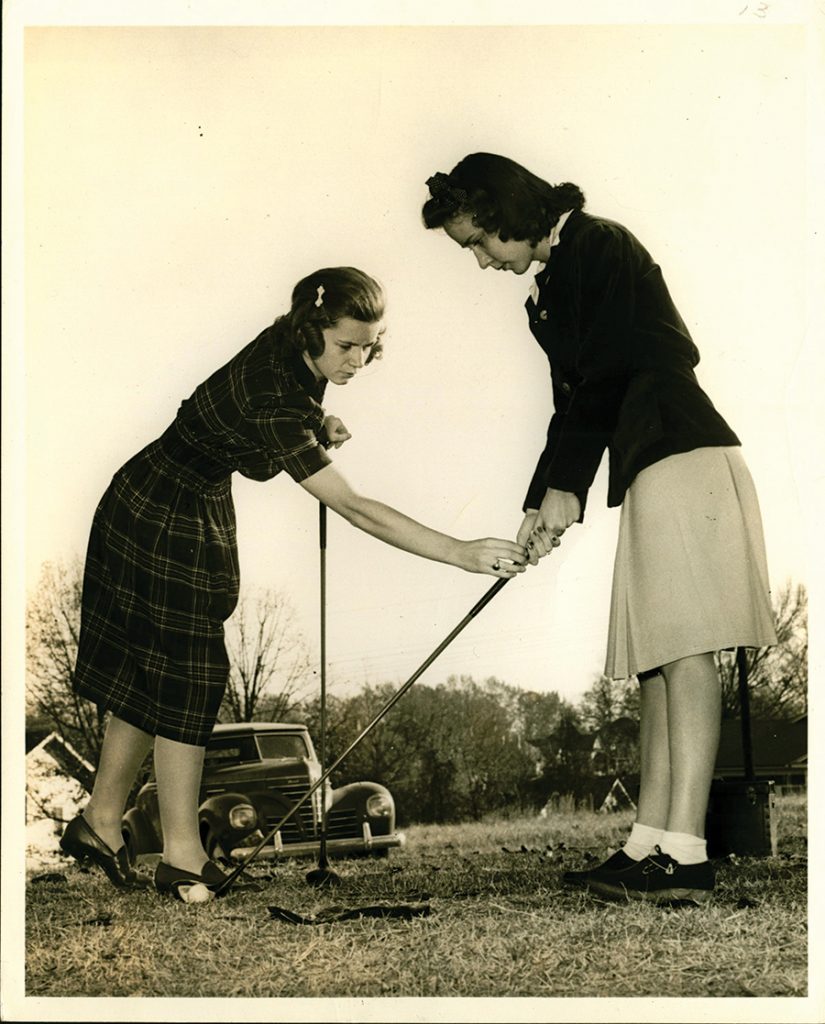
Tar Heel Shorties will begin at 5 p.m. with a “shorts block.” There will be a meet-and-greet party from 6 to 7:30 p.m. followed by a full-length feature, the recently released film about the 13 founding members of the Ladies Professional Golf Association, titled The Founders. The producer and director of The Founders, Charlene Fisk, will be one of the artists in attendance.

Brawley’s selection of films, beginning with The Founders, is tailored to the community. He spun through 690 shorts in the Cucalorus database to winnow the selection down to between eight and 11. One of them will be What It Was, Was Football, by Duncan Brantley, a short from Cucalorus’ third season incorporating the famous Andy Griffith routine. “It’s funny, funny, funny stuff,” says Brawley. “An essential part of the film festival experience is going to see a shorts block. For one, you see the directors who will be famous in 10 years. You also see the art form developing and evolving in front of your eyes. You’ll see something clever or innovative that’s really groundbreaking in a short film, then four years later it’s in a feature film. The short films this year are either by kids or about kids, a very family-oriented block.”

Bringing the festival to the Sandhills is something of a homecoming for Brawley. He has an uncle in Southern Pines, but more than that, the ’96 Duke University graduate spent a couple of summers boarding at the Pine Crest Inn. Slight of build with flyaway red hair and a beard and mustache that could slip undetected into any artists’ co-op, he was the No. 2 player on the golf team behind longtime PGA Tour veteran Joe Ogilvie. “I’d wake up every morning and I’d walk over to the country club and practice with my golf coach, Eric Alpenfels,” says Brawley, of his pine Crest days. “I’d head back there at night. I’d have dinner in the dining room. I knew all the waitresses. I’d play solitaire in the corner of the lobby every night.” And, as a bonus, he made a small fortune hustling tourists chipping golf balls into the fireplace.

Obviously, The Founders is a film with deep roots in the Sandhills. While the LPGA doesn’t officially acknowledge Peggy Kirk Bell as being among the original 13, the founders themselves all viewed her as No. 14. Mrs. Bell appears in a lot of the movie’s archival footage. “There were two or three things that we had to lose in the film that we labored over,” says Fisk. “No. 1 was Peggy Kirk Bell. The remaining founders all have that same respect for her and include her in that group. She’s so important. After Karrie Webb saw the film, the one thing she brought up was Peggy.”

At the time of the film’s making there were four living founders and, naturally, the movie focuses on them, with Babe Zaharias and Patty Berg as stars in absentia. “The first person I called was Louise Suggs,” says Fisk of the project’s genesis. “She said, ‘Who are you and why are you making this film?’ She just read me the riot act, and when I got off the phone I kind of was in tears. I can’t do this. They obviously don’t want to do it. She was very protective of the story. I called Marilynn Smith next and she’s Miss Personality and she had the exact opposite reaction. ‘Oh, my gosh, honey, we’ve been wanting to tell the story. I can’t believe you want to talk about it.’ That was the beginning. Five years later, we’re releasing it.”

While it s form is documentary, with all the reality that implies in the interviews, the movie captures the sheer determination of a group of young women and the drama of the all-too-human jealousies. The archival footage alone is a treasure for golf fans, but the storytelling lends the narrative its universal appeal.

“To get all this archival content was the most impossible task,” says Fisk. There were five women putting the film together working out of Fisk’s Atlanta loft. They started with the USGA, went through the families of the founders, then on to the families of other players. “We were getting boxes of stuff people had never even looked at. Boxed up in garages and basements. We went and got old vintage projectors. It was like Christmas every time we’d get a box. That opening shot of that swinging golfer, that was a film reel that Betty Hicks’ family sent us. The footage of Babe sticking her face in the camera is from Bonnie Bell. It was kind of crazy that these 30-year-old women could be so elated by footage of these women from the ’50s.”

Getting things off the ground, whether it be Tar Heel Shorties or The Founders, is never easy. “We would have no money,” Fisk recalls. “I would be super frustrated. We were just hitting wall after wall after wall. One day one of the writers, Dana Lee, said, ‘You know what, we’re just like the founders. Nobody helped them. They had to keep doing it and doing it and doing it. They did it because they believed in it. Don’t forget. That’s why you’re doing it.’”

Now, it’s at a theater near you.  PS

Jim Moriarty is senior editor of PineStraw and can be reached at jjmpinestraw@gmail.com.

Saturday, July 8

Tar Heel Shorties
Film Festival

5 p.m. – Shorts Block:

Swimlapse / Eddie Schmit

In the shadow of a chilling accident, a young lifeguard struggles to return to work while teaching a reluctant girl to swim.

Sugar / Kristin Pearson

An animated collage of the futility of a good night’s sleep.

Courtesy Call / Jim Haverkamp

A free agent for decency tries to reach out and touch someone – usually, someone who doesn’t like to be touched.

Ignite / Christopher Zaluski

Ron Killian has big art dreams. On the brink of age 50, he’s worried that time may be running out. As a way to reinvent himself, he has created a new art medium using fire. He now spends his days inside his Asheville, N.C., bungalow burning canvas, paper and paint, creating unique pieces that the world may never see.

What it Was, Was Football / Duncan Brantley

A naïve country preacher accidentally finds himself at a football game. He has no idea what he is seeing, but describes it as best he can. A visual recreation of Andy Griffith’s classic radio comedy routine.

Bernerd / Marshall Johnson

Bernerd, the controlled burn spokesman, is here to teach us about fire safety. Unfortunately he’s lost his way and now his method mostly involves a trail of lit cigarettes and smoldering ruins. Come with Bernerd as he teaches one family the importance of random fire.

The Private Life of a Cat /Iris Monahan

In 1947, Alexander Hammid (the cinematographer husband of the famous experimental filmmaker Maya Deron) made a silent documentary chronicling his cat having kittens. Fifty years later, Iris Monahan and her dad Dave added cat voices, funky music, and a few laughs.

Acito on the Mound / Shawn Lewallen

The spirit of baseball lives on long after players leave the field. A visit to the pitching mound after saying goodbye to a friend brings back memories of a rough game.

6 p.m. – Meet & Greet with Attending Filmakers

7:30 P.M. – Feature Film

The Founders

They were not supposed to be athletes. They were not supposed to get paid to play. They were not supposed to call the shots. But in 1950, 13 amateur women golfers battled society, finances and sometimes even each other to create the Ladies Professional Golf Association.

North Carolina State Toast

Here’s to the land of the long leaf pine,

The summer land where the sun doth shine,

Where the weak grow strong and the strong grow great,

Here’s to “Down Home,” the Old North State!

Here’s to the land of the cotton bloom white,

Where the scuppernong perfumes the breeze at night,

Where the soft southern moss and jessamine mate,

’Neath the murmuring pines of the Old North State!

Here’s to the land where the galax grows,

Where the rhododendron’s rosette glows,

Where soars Mount Mitchell’s summit great,

In the “Land of the Sky,” in the Old North State!

Here’s to the land where maidens are fair,

Where friends are true and cold hearts rare,

The near land, the dear land, whatever fate,

The blessed land, the best land, the Old North State!

Photograph by Tim Sayer of the oldest longleaf pine tree