Sprigs of Hospitality

Sprigs of Hospitality

Where Southern tradition and grace bloom

By Emilee Phillips  
Photographs by John Gessner

A white farmhouse stands like a quaint guardian nestled at the edge of an unhurried country town. Once a month, give or take, women arrive there, sporting fancy hats and cotton gloves, dressed for a traditional Southern tea party. The timeworn charm of Edgewood Plantation in Cameron has been transformed into Lazy Fox Lavender Farm. “It’s almost like stepping back in time,” says Lindsey Lochner, the owner.

The lavender tea parties are open to the public, so anyone can experience the increasingly lost art of high tea. It’s not merely an event; it’s a gathering woven with the threads of tradition, poise and a deep-seated appreciation for the finer, calmer, forgotten moments in life.

The Lochner family purchased the home in 2022 with the goal of farming its land. After living overseas for several years, it was time to plant roots in more ways than one. 

“We wanted to be able to give back to the community,” says Lindsey. “When you move around so much you end up taking more than giving. We were excited to be able to start giving back.”

The tea parties are hosted on the screened porch of the historic Edgewood Plantation, built in 1910. The fete is a family affair where Lindsey’s four children — Jacqueline, Loren, Ana and Nathaniel — help orchestrate the production, from greeting guests and showing them to their tables, to pouring tea and serving homemade lavender lemonade garnished with harvested sprigs.

“The kiddos get really excited for it. All the tips go to them,” says Lindsey. The children dress up too, wearing white dresses with frills and a collared shirt for her son, a testament to their devotion to detail. 

The setting exudes an air of whimsy. The porch is filled with antique furniture and multiple-sized tables. Each setting has teacups and pots, mismatched, all seemingly with a tale to tell. The rustic wooden furniture is draped in soft, white and lace linens. 

Few colors evoke a sense of regal luxury quite like purple and its delicate counterpart, lavender. The presence of lavender in gardens and perfumes has long been associated with tranquility and gentility. Its pastel tones whisper refinement and grace, making the main act of the tea parties as close to perfect as it comes. Women of all ages partake. The clink of teaspoons against china resonates like a soothing rhythm section, with laughter and soft exchanges becoming the gentle melody of memories.

“I was blown away when I had a couple of ladies come from Charlotte for the tea parties. I’ve had several from Raleigh. I had to stop assuming people were local,” says Lindsey. 

Guests choose from a selection of tea leaves before enjoying a tiered plate of goodies, many of which are lavender infused. Small bites and sweets are primarily catered from local businesses. The spread includes puff pastries, macarons, scones, lavender butter and more, varying with the season. 

Lavender blooms in North Carolina roughly between April and July, depending on the variety. Some are deep purple, some a milky white. But Lindsey vows to always have flowers. Even when lavender isn’t in bloom she’s got sunflowers, roses and more from her garden. Visitors can also do “you pick” sessions in the summer months, as well as enjoy luxury picnics in the fragrant field. 

The Lochners started planting lavender — there are hundreds of varieties — almost immediately after moving to Cameron. They currently have 11 kinds at Lazy Fox Lavender Farm, each with distinct coloring and uses. Spanish lavender, a personal favorite of Lindsey’s, is a compact bud that she describes as “little butterfly wings” on the tip, far different from the more standard long, skinny blooms.
Lavender, Lindsey explains, is like “the Swiss Army knife of essential oils.” It’s healing, calming and has antibacterial properties. 

Sheep, hens, geese, honeybees, a dog and cats also populate the nearly 14-acre farm. “We’re really thankful to live here,” says Lindsey. “The home has so much character.”

During high tea, Lindsey enjoys sharing her knowledge of both lavender and the history of Edgewood Plantation with her guests. The estate is full of tokens from the past, like the worn-in wood flooring and the seven stained glass windows that appear to be original to the house. Near the walkway is a wide, flat stone once used by ladies stepping out of their carriages to avoid getting mud on their shoes and dresses.

The Lochners have transformed one of the many farmhouse rooms into a store selling dried lavender bundles, lavender soaps, lotions, candles, butters and more. For the family matriarch, the farm represents togetherness, a feeling Lindsay loves to share. She wants guests to be able to slow down when they visit and appreciate the beauty of life. The parties end with a moment of gratitude for all of her new, cherished “friends.”

Aromas of teas and lavender follow guests out, wrapping around them like a light shawl, understated and comforting.  PS

For additional information visit
lazyfoxlavenderfarm.com.

Emilee Phillips is PineStraw’s director of social media and digital content.

Tumbleweed

Tumbleweed

Fiction by Shelia Moses  
Illustration by Raman Bhardwaj

My man is like a tumbleweed. He just rolls around and catches everything that crosses his path — every woman that is. I am telling you he’s just like a tumbleweed. That is the reason I did not want to come to this one-horse town to live. But Hogwood, North Carolina, is my Tumbleweed’s home, and he wanted to come back to be near his dying daddy. That was four years ago. His daddy, Mr. Pop, is still alive. So why are we still here?

I knew Tumbleweed would start rolling with the gals that used to love him as soon as the train stopped in Weldon to let us off in 1952. We was only here one day before we ran into one of his old gals, Missy, in the grocery store. That was the beginning of Tumbleweed going back to his old ways. First he told me that Missy was his cousin. Then I looked at that boy of hers, Boone, and I knew Tumbleweed was lying. I knew he was the daddy. Look more like Tumbleweed than Tumbleweed look like himself.

“Come on Sweet Ida,” he said to me.

“Come on nothing, Tumbleweed. You lied to me again. You know good and well Missy ain’t your cousin. You know that boy is your boy.”

“Na’ll Ida, Boonie ain’t no boy of mine. I only got six boys and two girls. You know that.” He say that mess like he proud that he left a baby in every town between Wildwood, New Jersey, and Hogwood. He ain’t never had no wife, so what he bragging for?

Missy ain’t saying a word. She just smiling and turning from side to side like she can’t stand still around my Tumbleweed. That boy Boonie ain’t got good sense. He don’t even know what we talking about. Guess we better leave before he eat up all the candy in the grocery store that Missy ain’t even offered to pay for. He definitely Tumbleweed’s boy because he always want something for nothing.

Can’t be too crazy, now can he?

“Oh stop looking for reasons not to love me gal.” Then Tumbleweed pulled me in his arms in the store that was filled with people. The store always filled with people from Rich Square, Jackson, and Hogwood on a Friday evening. It’s payday, even for the field hands. The womenfolks was looking when Tumbleweed pulled me closer. I forgot all about that boy that looked just like my man. I remembered all the reasons I love myself some Tumbleweed.

I love him for the same reason all these North Carolina womenfolks love him.

He a man! A real man! My man!

He ain’t all fine or nothing. He just a man that you gots to have.

Come that Monday morning we was back working in the ’bacco field. I was hanging ’bacco in the hot barn loft while Tumbleweed drove the truck for Mr. Willie who own all this land and ’bacco. Right now he ain’t driving. Tumbleweed just sitting and waiting to take us home. I think Mr. Willie had extra folks in the field that day. Extra women to prime this ’bacco. Extra women to look at my Tumbleweed.

They can’t fool me. That old Bessie was there shaking her big behind all over the place. She the only woman I know that wear tight skirts in the ’bacco barn. I can’t believe I left my job waiting tables at that rich country club in Wildwood to come here to prime ’bacco. Tumbleweed claimed it is a good way to make a living.

Look at him sitting over there looking at me up here in the loft and all the other women that love him out in the field.

“You want some water?” Bessie yelled to my Tumbleweed when it was time for us to knock off for lunch.

He did not answer her.

He better not!

“Anything Tumbleweed want, I can get for him,” I said, climbing down the hot barn loft for lunch.

“Fine,” Bessie said as she laughed like she knew something that I did not know. “I can get Tumbleweed some water later tonight,” she whispered and walked over to the tree to eat her pork and beans and crackers.

“Say it again,” I said as I ran up behind her. Bessie turned around in slow motion. She must have eyes in the back of her head.

I did not get far when them sisters of hers all jumped up from the ground at the same time.

“Where you going city girl?” her oldest sister Pennie Ann asked as she rolled up the sleeves on her shirt while kicking her can of beans out of the way.

I will fight anybody, anywhere for my Tumbleweed, I thought to myself.

I tried to roll up my sleeves too.

That is all I remember. The next thing I know I am lying in the back of Tumbleweed’s truck and he’s looking down at me.

“How many fights you going to have girl?” he said like he was almost sad.

“How many women you gonna love Tumbleweed?” I said as I reached for my head that was really hurting now. The knot on it felt mighty big.

Tumbleweed leaned over me and kissed me real hard with his big black lips.

All the womenfolks looked at us. They wished they was me.  PS

An Afternoon, No Wind

An Afternoon, No Wind

Fiction by David Rowell

Illustration by Keith Borshak

A striking, big-boned woman runs back and forth trying to fly a kite. She is surprisingly eager, considering there is no wind today. There is not enough of a breeze to sail the gum wrapper off the bench I’m sitting on. She darts tirelessly across the park as the kite drags behind her like a little dog. Every so often the kite lifts off the ground, though no higher than her head, and that’s only because she is a fast runner. This goes on for an hour.

I’m supposed to be helping my ex-girlfriend move her tanning bed into the spare room. But when the woman with the kite throws her arms up in an almost vaudevillian show of disgust, I get up, stiff from the wooden slats, and walk over to her. She isn’t aware of me until I am close enough to touch her.

“Tough day for kites,” I say.

We look at each other, and for a few seconds neither of us seems sure what to do. I back up a step or two. I am suddenly confused and can’t remember if I have spoken yet or just thought about what I might say. Tough day for kites?

“Je ne comprends absolument pas ce que vous dites.” I know it’s French, but I don’t speak a word of it. Watching her earlier, it didn’t occur to me that she wasn’t American, but up close I can see the faint olive glow of her skin, the slightly pouty curl of her lips. I consider turning around, leaving her alone, but there is something helpless about her and her shiny but now damaged triangular kite. I point to the kite, then to the sky. I blow a deep breath and shake my head no.

“No wind,” I say slowly, so slowly that I am keenly aware of how my lips feel when they move. “There is no wind.”

We stand another moment in silence, as the strangled cry of taxi horns and someone’s high-pitched laughter and the rusty churn of a nearby bicycle chain play off each other like jazz musicians. Behind the woman a mass of clouds forms a penguin, then a penguin on skates. She says something — something abrupt, like an order — and points to the kite. She points at me, then to the kite again. I reach down to pick it up.

“Oui,” she says.

I raise the kite slowly over my head, arching my brow to say, Is this OK? Is this what you want? She doesn’t indicate one way or another. Out of the corner of my eye I notice that two older women who are dressed for the tundra have stopped to watch.

She backs up and lets some string out, all the while staring into my eyes so intensely that I am afraid to look away. She nods her head once, the way mob bosses in movies indicate their willingness to listen first, before killing. Then she turns and starts sprinting, divots of grass spraying from her heels. The kite jerks out of my hand and immediately sinks, not quite hitting the ground because, as I say, she’s fast. Her ponytail thrashes behind her like a fish pulled into a boat.

She goes probably thirty yards before she looks up at the speckled sky, where she expects the kite to be. Her sturdy legs slow to a gallop, which causes the kite to touch down with feathery impact. The sad sight provokes her to grunt from the diaphragm and kick at the ground with such force that she nearly falls over. Her large frame heaves in and out. She yells something at either me or the kite (the literal translation might be, “What a piece of crap are you!”). I point up at the sky again and shake my head.

When she finishes winding up the string, she puts the kite back in my hands. I notice two small but distinct moles above her right eye. She catches me looking and balls up her face like a fist. She gives me an earful about something, to which I shrug and smile, though not with my teeth.

All afternoon we do this. And every time we try, I can tell that she expects it to go differently. Sometimes I shake my head in mock disbelief. Other times I grab a handful of grass and launch it into the air, as if that might tell us something. Once I try to hand the kite back to her and reach for the string, thinking she might appreciate the break. But she shakes her head in a frenzy, the way monkeys do in TV commercials, and holds the string behind her back. She tries running harder and for longer. If I hold the kite up with my arms even slightly bent, she refuses to start running. When yet another attempt fails, she violently reels the kite in. As we get ready again, she sucks some air into her locomotive lungs, then gives me the signal to release.

By now the sun has melted to the bottom of the sky, leaving behind a fiery red glaze. People walk by with their necks turned at awkward angles, their mouths agape with wonder. My French companion is still for the first time all day. We stand there awhile, just a few feet apart, but it’s hard to believe we’ve spent the entire afternoon together. If I ran over the hill and brought back two sno-cones, I wonder if she would even recognize me.

The man at the pretzel cart is folding down his umbrella. I imagine a big wind suddenly sweeping through the park and lifting the umbrella up over the trees, the man kicking wildly in the air as he tries to hang on. When I look over again at my partner in aeronautics, it takes me a moment to realize that she is tearing up the kite. She grips it in her muscular arms and splits it down the middle. She yanks out the sticks of the frame, fumbling with them until she snaps them over her knee. Then, with lips moving but making no sound, she grabs the tail with both hands and tries to twist it off, but she loses patience with it and is content to leave it a thin, raggedy string. Her hands are a frenzied blur of methodical destruction, though her face has an even, almost serene expression. When she is finally satisfied, she bundles up the remains and hands them to me. Instinctively I reach out to cradle the wreckage.

She lumbers toward the wrought iron entrance of the park, past the statue of George Washington on his horse, past a little boy trying to step on his balloon, which keeps darting out from under his foot. She steps directly in front of a stretch limousine so that it has to slam on brakes; still, the driver senses enough not to honk. She mows through the streets with an elephantine grace and does not fade from view until well after the darkness settles in.

I COULD GO OVER THIS AGAIN, say at what point this, then that, but it would more or less come out the same. And yet there is something that I can’t account for, even now: In my arms the kite felt like a bouquet of flowers.   PS

The Music Lover

The Music Lover

Fiction by Katherine Min
Illustration by Jesse White

Gordon Spires lived across the courtyard from Leonard Hillman, concert master of the M         Symphony, and his lover, Kyoung Wha Jun, the second violinist. Leonard and Kyoung Wha often practiced together outside in the courtyard, under the brim of a large oak tree. The neighbors would hear them playing Debussy or Brahms and sometimes something contemporary that they wouldn’t recognize.

Gordon liked to listen to them. He was in love with Kyoung Wha, who was slender and lovely, and he believed that she secretly returned his affection but could only reveal it through her music. So when she played Mozart, it was because he was Gordon’s favorite, and when she played Bach, it meant that she was biding her time, and when she played Tchaikovsky, it was surely a sign that she was ready to run off. For it was well known that Leonard beat Kyoung Wha when he was drunk, that he cheated on her with the first violist, and that he had not quit smoking like he told Kyoung Wha he would, but snuck cigarettes after matinee performances. At least these things were well known to Gordon, who was sickly and often home during the day.

One Sunday afternoon in late autumn, Kyoung Wha and Leonard played Beethoven. From his bedroom window, Gordon could see them, Kyoung Wha in a pleated blue skirt with prim white blouse, her long bangs swinging in her face as she swept her bow across the strings of her violin; Leonard, his narrow face impassive, eyes closed, chin tilted up at an unpleasant angle. Gordon could distinguish the rich, vibrant tones of Kyoung Wha’s playing from the darker, ruminative vibrations of Leonard’s, and he attributed the mistakes — rushed tempo, inconsistent meter, mawkish drawing out of notes — to Leonard, who was, in Gordon’s opinion, the inferior of the two musicians.

Taking careful aim, Gordon threw a Monopoly piece — a silver top hat — at the rounded, balding place at the back of Leonard’s head. Leonard did not stop. Gordon threw the wheelbarrow, the thimble, and the Scottish terrier. He used more force.

“What the — ?”

Beethoven came to a halt. Gordon peeked to see Leonard rubbing his bald patch, looking up at the oak tree, then down to the ground. Leonard shrugged at Kyoung Wha, who shrugged back. They resumed playing.

The next day, Gordon lobbed a satsuma, just grazing Leonard’s left temple. Leonard leapt from his chair. Kyoung Wha seemed to look straight at Gordon then, smiling sadly. Even crouched below his bedroom window, he could feel her smile penetrate his heart like the most tender of arrows.

A few days passed before they played outside again, Leonard setting up in what had formerly been Kyoung Wha’s spot, farthest from Gordon’s window, Kyoung Wha moving farther from Leonard, into a sunny patch that did not get much shade. Her face in sunlight looked faded to Gordon, wan, and when she played — Mendelssohn this time — he heard the silent suffering as separate notes from the ones that overlapped with Leonard’s, inhabiting the spaces between. She was even more beautiful in her despair, black hair against pale complexion, in an autumnal ensemble of mauves and rusts.

Gordon heaved a bottle of multivitamins, but it overshot its mark, landing, with a muffled plop, in a giant hosta.

It rained for several days after that, the afternoons overhung with mist. Gordon saw Kyoung Wha come into the courtyard in a yellow rain slicker. He thought her green rain boots splendid, as were the orange bill and bubble eyes on her hood, which were meant to make her look like a duck.

On the first clear day, Leonard appeared without Kyoung Wha. He began to play Mahler, his feet planted like andirons before a hearth. Gordon disliked the implication that music could simply go on without her. He wondered where she was, what Leonard had done to her. The lights were off in their apartment. He could see the white fringe of an afghan against the window, resting on the back of a blood red sofa.

Gordon palmed a large rock shaped like a dinosaur egg, with a rough, pock-marked surface. He raised the window and hurled it. The rock rainbowed up and out, hitting Leonard squarely on top of the head and bouncing off. The strings of the violin made a distressed, bleating sound as Leonard slumped sideways out of his chair, then fell face first against the brick walkway.

Time passed. The lights went on. Gordon saw Kyoung Wha come out, heard her call Leonard’s name. Approaching his body, she kneeled, bent to retrieve his violin by its broken neck, got up, and stumbled back inside. The lights went out.

Gordon listened, but all he heard was the sound of distant traffic.

Softly, he closed the window.  PS

Where She Sits

Where She Sits

Fiction by Randall Kenan
Illustration by Gary Palmer

They were in the little dining room off the kitchen when he finally told her. He paced about, motioning with his hands.

She just sat there, staring down. Feeling nothing. Maybe. Or just plain tired.

“I can’t do it anymore, Sandra,” he said.

Sandra said nothing. Slowly, she moved her hand over the oilcloth, steadying herself.

“I don’t care what your family says about me,” he said. “I don’t care. I can’t . . . I’m not . . . I’ve got to . . .”

She might have asked Dean about the children. But the idea that he would come up with some sleazy nonsense only made her feel a wave of nausea. Sandra put her head down.

Dean stopped behind her. She could feel the tension in the air; without seeing him, she knew he was clenching and unclenching and clenching his fists. He did that when he was angry. “Did you hear me? I’m leaving.”

Sandra raised her head. “Then go.”

He stood there for the amount of time it takes a frying egg to turn white and walked from the room.

Sandra reached out and caressed the table, and remembered. Not so much remembered as allowed a flood of images, past scents, past sights, to overtake her, fill the void she was now harboring. Each image evoked something like a feeling. So much took place in this room, upon this very surface. Not merely the food served, or the homework fretted over, or the cards played, or the beer spilled, or the puzzles arranged. Moments occurred right here. And now, in this instance of illusions shattered, of dreams wrecked and a heart frozen, these moments seemed to simmer before her, behind her eyes, and she could only hold on to them, to find some strength.

She had inherited this very table from her great-grandmother. Made of pine, by whom she did not know, it had been oiled, dented, dusted, polished, chipped, varnished, battered, peed upon, burned, broken, mended, hammered, nailed, or some such for decades. If it could feel, she knew she’d feel the way it felt now . . .

“Sandra? Damn it! . . . Where is my . . .”

The first true memory of her grandmother had been watching her across this expanse, on the other end, smiling and slicing with pride a piping hot blueberry pie. No, child, wait for it to cool. And so many mornings, days, nights, her mother at that same end: What you doing out so late? Sandra! An A in math! Now that’s good. Girl, don’t you ever raise your voice at me. I’ll knock the taste out your mouth! You heard about Uncle William, didn’t you? . . .

“Sandra, can’t find my . . .”

As if he actually expected her to come in there and help him to pack, to leave; as if any of this fault rested on her shoulders; as if she was expected to go along to get along; as if she would be unreasonable to go into the kitchen, get a butcher’s knife, and chop him into seventeen billion little pieces.

She ran her hand out against it again, against its smooth flatness, as if to absorb some of its stolid solidity.

Here, she served him his first taste of her cooking: catfish, greens, mashed potatoes, corn bread; here, she told her mother she was to wed the man who made her legs feel like overcooked spaghetti and her heart feel like butter. Here, where she tended him, listened to his tales of boring sales meetings and petty office feuds, and where he entertained his buddies (when not in front of the TV); here, where she fed and consoled and interrogated first one, then two daughters; here, where she slowly watched the shoals of her marriage erode, grain by grain.

Oh, if it could talk . . .

“Sandra.” He stood in the door. She didn’t want to look up at him. She had nothing to say.

“Good-bye.”

She did not look up, as he turned, wordless, and walked down the hall. As the door clicked behind him, she held fast. He may go, but some things would remain. A part, a piece, a fixture, a witness. Even now.   PS

The Playhouse

The Playhouse

Fiction by Max Steele
Illustration by Mariano Santillan

The professor was standing now before the doors of the American Embassy. He was early for an appointment with an old frat brother, a legal attaché who would help him procure a fast Mexican divorce. There was no urgency really in getting a divorce. It was simply that he could not concentrate on a permanent separation. When he tried he would end up in a hot soapy shower thinking about putting on freshly starched cotton clothes. Someone should have warned him in Raleigh not to drink on the plane. Here he was in Mexico City, a mile high, still a bit dazed.

Three blond children, not more than five or six years old, obviously embassy kids, a little girl and two little boys, were playing house in and around a sort of blueprint design of squares and rectangles drawn with green chalk on the sidewalk. A solid block of taxicabs, more than the professor had ever seen, was passing on the Paseo de la Reforma.

Something about the broad boulevards and the taxi horns reminded him strongly of Paris, where twenty years ago he had spent his one sabbatical. The next year he had met his wife, who often reminded him that he had never taken her to Paris as he had promised. Or done any fun things. There was never enough money on his salary, she accused him, to do any fun things. In the late autumn air the feeling of déjà vu was so strong that he felt it was a dream, or a forgotten passage from a novel he was living through.

The two boys were now standing near him whispering, and the little girl was in the chalk-line house, busily sweeping, putting things on shelves, getting pots out of a stove only she could see, and washing dishes in the silent sink.

At a signal he did not notice, the small boys, giggling and full of themselves, marched slowly to the front of the house and knocked on the door. “Knock. Knock.”

The little girl seemed genuinely surprised. She came through the house, untying her apron and opened the door, drying her hands on the apron.

“Oh, there you are!” She was quite annoyed. “Late again, as usual. And furthermore you have brought a perfect stranger home to dinner.” Oh, she was vexed. “Without even asking. Without even calling!”

“Yes, my dear,” the little husband said proudly, full of his secret. “I would like for you to meet the man who owns the merry-go-round.”

As the boys entered the house, the professor glanced at his watch. He was still five minutes early. Enough time to walk to the far corner.

As he strolled up the dark gusty boulevard, he could still hear the high laughter of the children, and at the sound of their thin, excited voices his heart almost broke. After all, how were they to know (for they were still children), how could he have known she would run off with the man who owned the merry-go-round?  PS

Summer Shorts

Summer Shorts

Summer Shorts

August is more than sweet tea, watermelon and air conditioning. At PineStraw, it’s our Summer Reading Issue. This year’s selections are drawn from the collection of stories  entitled “Long Story Short” published in 2009 by the  University of North Carolina Press. The volume showcases the writing of 65 well-known North Carolina authors working in the genre called “flash fiction.” In Japan these short-shorts are called  “palm-of-the-hand” stories. Here are five easy pieces to enjoy on a hot day under a beach umbrella.

Our Writers

RANDALL KENAN (1963-2020) was a professor of English at the University of North Carolina at Chapel Hill and the recipient of a Guggenheim Fellowship, a Whiting Award, and the John Dos Passos Prize.

Katherine Min (1959-2019) received an NEA grant, a Pushcart Prize, a Sherwood Anderson Foundation Fiction Award, two New Hampshire State Council on the Arts Fellowships, and a North Carolina Arts Council Artist Fellowship.

SHELIA MOSES was raised in Rich Square, N.C., the ninth of 10 children. She is a writer, director, producer, poet and playwright. She has been nominated for the National Book Award and named a Coretta Scott King Honoree.

DAVID ROWELL was born and raised in Fayetteville, North Carolina, and graduated from the University of North Carolina at Chapel Hill. He was the deputy editor at the Washington Post Magazine for nearly 25 years.

MAX STEELE (1922–2005) directed the University of North Carolina at Chapel Hill Creative Writing Program for 20 years before he retired in 1988. He was an editor at Paris Review and Story Magazine and the recipient of two O.Henry Awards.


and Illustrators

RAMAN BHARDWAJ  is an international muralist, illustrator, fine artist, and graphic designer. Born in Chandigarh, India, he has had solo exhibitions in India, Norway and the USA, has painted more than 50 murals in North Carolina and illustrated 16 books.

KEITH BORSHAK has worked in advertising and design as a graphic designer, art director and creative director, receiving dozens of Addy Awards over his 30-year career. His illustration and design work has been recognized by Communication Arts Advertising Annual, The One Show, and the Graphis Design Annual.

GARY PALMER graduated from Ringling College of Art and Design. His work has been published in Wildlife in North Carolina, Ducks Unlimited, Shooting Sportsman, Better Homes and Gardens and Texas Monthly in addition to commissions for The North Carolina Museum of Natural Science, The Nature Conservancy and the National Park Service.

MARIANO SANTILLAN is a contractor for the U.S. Army Special Operations Command where he works as a web developer and illustrator. His “other” clients include Ohio State University, Fayetteville State University, The Washington Post, Cricket Magazine, and The Atlanta Journal- Constitution.

JESSE WHITE is an illustrator, author, and muralist. She graduated with a BFA in studio art from the University of North Carolina at Chapel Hill and earned her master’s in art education from Virginia Commonwealth University.

Poem August 2024

Poem August 2024

Steadfast

A lone tree fell in my woods

But it didn’t hit the ground

Or make that debated sound

It fell into the steadfast embrace

of another tree

With its outstretched branches free

They lean into each other

The broken and the strong

The living and the gone

It’s only with a passing breeze

And a creaking, crying bough

That they make sure we hear them now

    — Kayla Stuhr

Kayla Stuhr is a Scottish visual artist, writer, and award-winning filmmaker.

A Visit from the King

A Visit from the King

Arnold Palmer’s sentimental journey

By Bill Case

Feature Image: Stephen Boyd with the King (Photograph courtesy of Stephen Boyd)

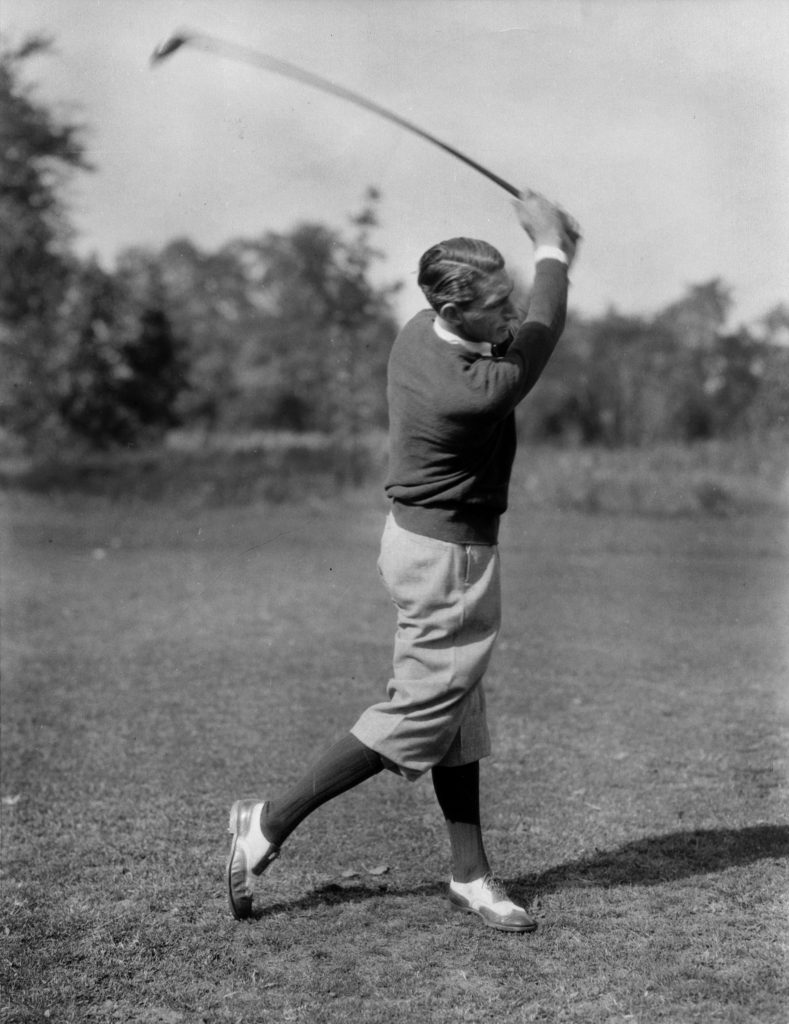
There is no denying he was a magnificent player. Arnold Palmer’s glistening record of 62 PGA tour victories, including seven major championship titles, unquestionably ranks him in the highest echelon of golf’s greats. But it would be a stretch to place him at the top of that elite list. Jack Nicklaus, Tiger Woods, Ben Hogan and Sam Snead all outperformed Palmer in terms of winning tournaments. And though there was a period when the Latrobe, Pennsylvania, native was the game’s best player, his dominance was relatively short-lived. Arnold won all seven of his major championships from 1958 to 1964.

But even if he was not the greatest golfer of all time, Palmer achieved unique success in the sport in other ways. From his emergence as a superstar in 1958 until his death in 2016, he reigned as the most beloved figure in the game; a man whose endorsement of a product, be it motor oil or an eponymously named beverage, ensured its success. Palmer’s enduring marketability brought him wealth far beyond that of any player preceding him. According to a Forbes magazine article some years ago, Palmer earned an estimated $875 million in endorsements, appearances, licensing agreements and golf course design fees. And golf prospered with him.

Timing was a factor. The televising of golf was gathering steam just as Palmer arrived. Blessed with loads of charisma, Arnold’s good looks, blue collar background and go-for-broke approach exuded a telegenic presence that appealed to men and women alike.

Arnold Palmer and his father, Deke (middle back row), and friends at The Manor (Photograph courtesy of Tufts Archives)

Thrilling come-from-behind triumphs in two 1960 majors, the Masters and U.S. Open, enhanced his mystique. The “charge” to victory at Cherry Hills Country Club was particularly sensational. Palmer lagged seven strokes back after 54 holes. Prior to the final round, sportswriter-confidant Bob Drum (later a Pinehurst resident) told Arnie he had no chance, that he was “out of it.” Defiantly, an enflamed Palmer drove the green on the opening hole, and with a deluge of early birdies, mounted a historic comeback to capture his only National Open.

Even before this triumph, his ever-expanding legion of adoring followers was mustering to form “Arnie’s Army.” Whether he won or lost, his troops whooped, hollered and cheered Palmer whenever he hitched his pants or tilted his head. And they never stopped.

Doc Giffin, Arnold’s longtime friend and personal assistant, succinctly explained Palmer’s magnetic appeal. “Arnold liked people, and people liked him because they knew he liked them.” His broad smile when photographed with fans was genuine; he never rejected an autograph request, painstakingly signing with a crystal-clear signature. “No shortcuts, no scribbling,” Palmer admonished many a fellow professional. “Look everyone in the eye and take the time to thank them.” This fastidiousness extended to fan mail, which he never threw away. With Doc’s assistance, the appreciative Palmer answered every letter.

Palmer was the King, but no life is without its hardships. In 1997, then 68, Palmer was diagnosed with prostate cancer. On the same day in 1998 that he received a final dose of radiation, he learned that Winnie, his wife of 45 years, had been diagnosed with ovarian cancer. He would call it the worst day of his life. Winnie died in 1999.

By the time Palmer played in the 2004 Masters tournament — his 50th appearance — he grudgingly acknowledged it was time to start saying goodbye. “I’m through. I’ve had it. I’m done, cooked, washed up, finished, whatever you want to say,” he said. “It’s time.” It would be his final appearance in a regular Tour event.

Palmer was not, however, the sort to do nothing. He spent considerable time and treasure in the fight against cancer, funding hospital facilities in Pennsylvania and Orlando, Florida. He thrust himself into his multifarious business ventures with renewed vigor, attending engagements throughout the country. To reach far-flung destinations, Palmer, an accomplished and passionate aviator, piloted his own plane — a Cessna Citation X.

And he still played frequently, almost daily, at Orlando’s Bay Hill Golf Club, rounds featuring good-natured teasing between the King and his playing partners. Most importantly, he found a new love, Californian Kathleen “Kit” Gawthorp. Winnie and Arnold had become friends with Kit and her first husband, Al Gawthorp Jr., when Arnold competed in tournaments at Pebble Beach. Palmer and Gawthorp would later become involved in Pebble’s ownership group. Kit and her husband would subsequently divorce, and following Winnie’s death, Arnold and Kit began seeing one another. The couple announced their engagement on Oct. 16, 2003.

“Kit loves to watch sports, she loves to be at home, and I think that’s really what my dad needs,” observed Arnold’s daughter Amy Saunders. “I think he needed someone who enjoys the things he enjoys, and I think that everybody embraced Kit.”

During Kit’s visit to Latrobe in early May 2004, Arnold suggested they fly south to Pinehurst for an overnight sojourn. Palmer revered Pinehurst and wanted to show it off. Spur-of-the-moment travel was not unusual for them. With co-pilot Pete Luster manning the right seat, Palmer could fly his Citation X to the Moore County Airport in just over an hour.

For arrangements at the Pinehurst end, Arnold turned to his jack-of-all-trades assistant Giffin. The former Pittsburgh Press writer and press secretary of the PGA Tour started working for Palmer in 1966 and would continue to do so until Palmer’s death in 2016. Described in Kingdom magazine (a Palmer enterprise), Doc’s wide-ranging responsibilities included dealing “with everyone: writers, broadcasters, paupers, pretenders, potentates and presidents, including Eisenhower, Clinton and George W. Bush, to name three.” When in Latrobe, the two men typically gathered around 5 p.m. at Palmer’s home for what Giffin puckishly referred to as a “debriefing” — the mutual imbibing of a cocktail or two.

Doc knew the person to call in Pinehurst was Stephen Boyd, the resort’s manager of media relations and special services. Boyd joined the resort’s employ in the mid-1990s, after departing a similar position with American Airlines. Giffin asked him if he could arrange to have Arnold and his fiancée met at the airport, and if he could make hotel and dining reservations for the couple.

“Of course,” replied Boyd. “When are they coming?”

“Tomorrow,” Doc said.

This was no problem for Boyd, who was used to last-minute requests. He asked which hotel the couple would prefer while in town and whether or not they wanted to play golf.

“I’ll let Arnold answer those questions.” Doc said. “He’s right here. I’ll put him on.”

Palmer told Boyd he had no intention of playing golf. “Arnold said he’d like to take Kit on a tour of Pinehurst,” recalls Boyd. “He wanted to share with her the things he had experienced here that meant so much to him.” He wanted to stay in the Manor Inn, a choice that surprised Boyd. At the time, the hotel was rather threadbare, lagging well behind the Carolina Hotel and the Holly Inn in the resort’s lodging offerings.

Arnold Palmer and Harvie Ward (Photograph courtesy of Tufts Archives)

(Photograph courtesy of Stephen Boyd)

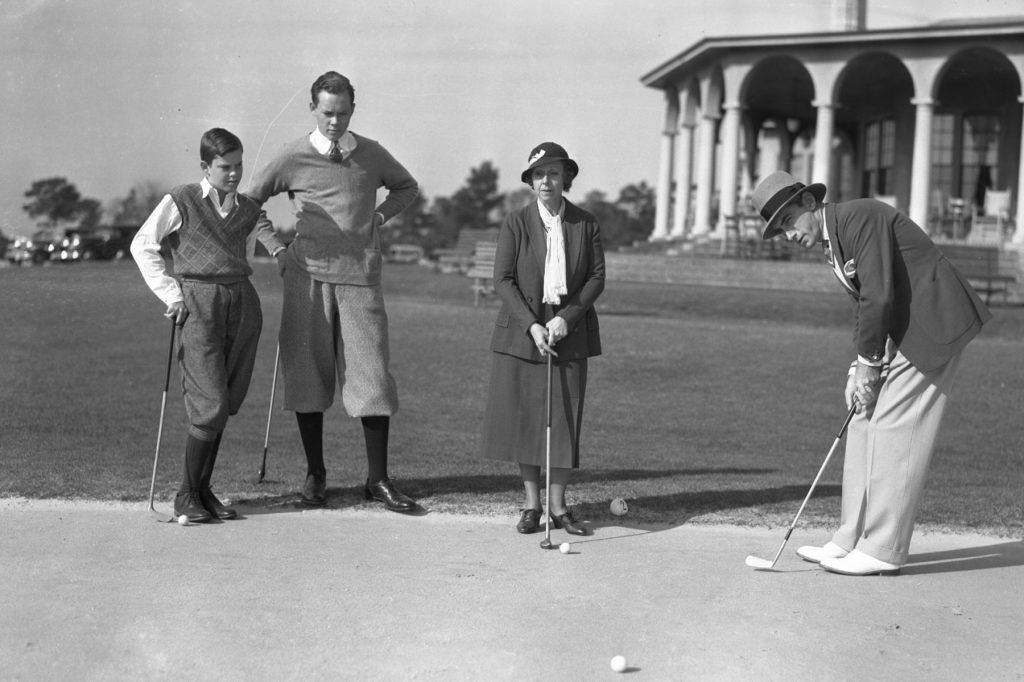
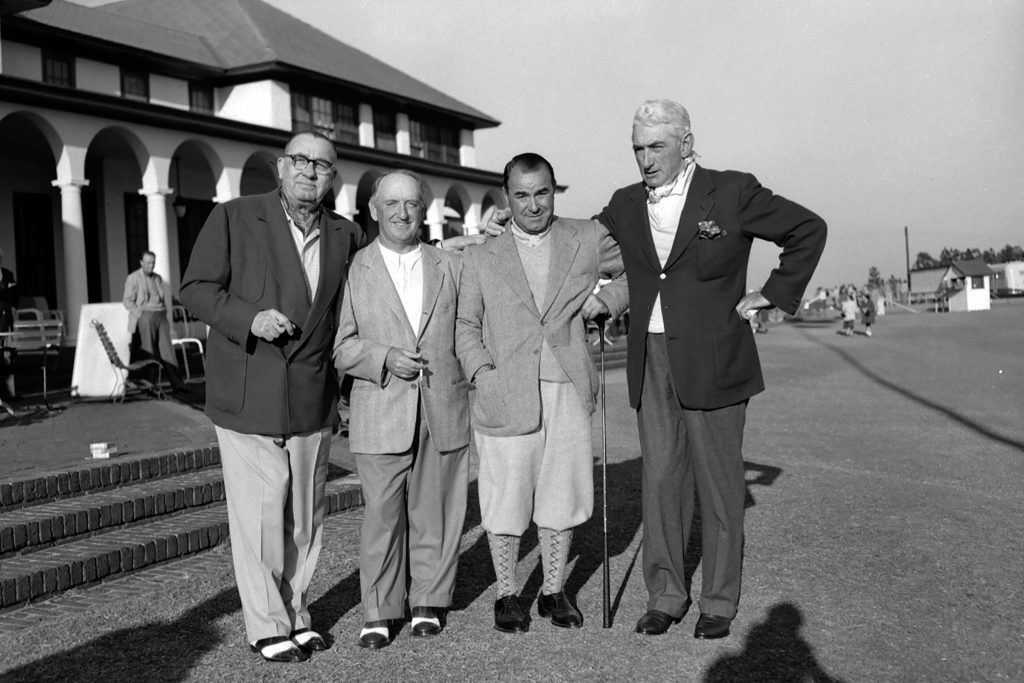
Palmer had a sentimental reason for his selection. The Manor was where he, his father, Milfred “Deke” Palmer and his dad’s buddies bunked on their golf vacations in Pinehurst during the 1940s and early ’50s. Those visits became a lifelong source of fond memories for the King.

The first occurred when Palmer was 18, and he was immediately smitten. “I loved Pinehurst. I thought it was the most beautiful place I’d ever seen. It was heaven, really,” said Palmer. Pinehurst’s No. 2 course bowled him over, too. It was “the best golf course I had ever played,” he said. “And this was in December, and it snowed about 6 inches. We had to go home because it was snowing so heavily.”

When Bud Worsham, Arnold’s close friend from junior golf, urged his buddy to consider joining him on Wake Forest University’s golf team, the young Palmer was all ears. Worsham persuaded Wake’s athletic director to grant Palmer a full scholarship, employing the clinching argument “Arnold’s better than me!” The two would transform Wake’s golf team into a national powerhouse, with Palmer carrying off two NCAA individual titles.

With Pinehurst little more than an hour’s drive away, team excursions to play No. 2 were frequent. Arnold won his conference’s individual championship on the storied Donald Ross layout, though he was less fortunate in the annual North and South Amateur, where his best finish was a 5 and 4 semifinal loss to a UNC star named Harvie Ward.

When Worsham was killed in a car accident in October 1950, the devastated Palmer dropped out of school and joined the Coast Guard. Following a three-year stint, he returned to Wake Forest for an additional year. After leaving college for good, Palmer won the 1954 U.S. Amateur, turned pro later that year, and joined the PGA Tour.

The tour did not hold events in Pinehurst during the first 17 years of Palmer’s professional career but, when it returned to the resort in 1973, Palmer was invariably in the field. And, in September 1974, he was inducted into the new World Golf Hall of Fame in a ceremony behind No. 2’s fourth green.

Thirty years later, Palmer and his fiancée weren’t coming to Pinehurst for a ceremony — they just wanted to experience the town’s unique atmosphere. Boyd selected a suitable room at the Manor and ordered it stocked with Ketel One vodka and Rolling Rock beer, both Palmer’s favorites.

The next day Arnold, Kit and co-pilot Luster took off for the Moore County Airport. Kit relished flying with Arnold in the Citation X, even toying with the idea of obtaining a pilot’s license herself. She recalled a moment during one of their early flights together when Palmer pointed out the curvature of the Earth. “That was so neat,” Kit said. “The sun was setting, and it created a mystical picture.”

Boyd already enjoyed a favorable impression of the man. In 1994, while at American Airlines, Boyd was invited by Pinehurst CEO Pat Corso to attend a match between Palmer and Jack Nicklaus on course No. 2 for Shell’s Wonderful World of Golf. On the evening prior to the match, Boyd attended a reception where he marveled at how Palmer painstakingly greeted and chatted with each guest as if there was nothing he would rather do and no place he would rather be.

After Palmer’s Cessna touched down at Moore County Airport around 1 p.m., as they exited the plane, he asked Kit to take a picture of him posing with Boyd. Giffin had arranged for Palmer to have a Cadillac available (another Palmer endorsement) on the airport tarmac. “My car was in the airport parking lot,” says Boyd. “I told Arnold what I was driving, and that he should just follow me into Pinehurst.” But Palmer had other ideas. “Stephen, you get in with us and sit up with me. You can show us around,” directed the King. 

As the luggage came off the plane, Boyd saw a set of golf clubs. “Mr. Palmer,” he said, “I thought you weren’t going to be playing golf on this trip.”

“I’m not,” replied Palmer with a broad smile, “but you don’t come to Pinehurst without your clubs.”

After first checking on the precarious state of the Carolina Golf Club, located near the airport, a course he had designed with associate Ed Seay in 1997, Palmer turned the Cadillac in the direction of Pinehurst and asked Boyd to provide an impromptu tour for Kit’s benefit. “I talked about the Tufts family, Frederick Law Olmsted, and the history of the village,” says Boyd. “I pointed out homes belonging to Annie Oakley, the Fownes family, Admiral Zumwalt, and others — just a quick historic overview.”

Palmer pulled up to the front door of the Manor by 2 p.m. He asked Boyd for a recommendation on a place to have a glass of wine. Stephen suggested the Pine Crest Inn, just a 200-yard walk from the Manor. “Of course,” responded the pleased Palmer, remembering the establishment. “That’ll be perfect.”

It was early in the afternoon, and the Pine Crest was empty of patrons except for Arnold and Kit, who sat at the bar. Andy Hofmann, wife of proprietor Bob Barrett, remembers their visit. The three chatted for a bit before Andy asked how Ed Seay was doing, knowing he was having health issues. Seay, Arnold’s course architecture partner, had stayed at the Pine Crest while designing Pinehurst Plantation, now Mid-South Country Club. The beefy former Marine had become a popular presence. Rather than answering Hofmann directly, Arnold looked to Kit to respond. “She shook her head,” says Andy. “I already knew Ed had cancer.”

Palmer took note of three stools at the bar displaying name tags of three renowned golf writers who had been entrenched regulars at the Pine Crest: Bob Drum, Dick Taylor and Charley Price. Palmer picked up his cellphone and called Giffin to inform him he was at the Pine Crest bar, sitting with Drum, Price and Taylor. “Doc knows those guys are long gone, and he thought I’d lost my mind,” Palmer told Boyd.

It was a beautiful spring day, and Boyd had arranged for the couple to have dinner around 5:30 p.m. on the outdoor patio at the Holly Inn. The Holly didn’t accept dining reservations on the patio — not even for a king — so Boyd stood in line for a table.

“I was watching for Arnold and Kit, who I assumed would walk up the hill from the Manor,” says Boyd. He caught sight of them right at 5:30, holding hands, as they rounded the corner of Cherokee Road with Palmer sporting his customary look — loafers without socks and a cashmere sweater, loosely tied around his neck.

Once the couple was seated, Boyd told them to have a wonderful evening and began stepping away. “Sit down!” Palmer ordered. “Have dinner with us.” Boyd stayed, but only for a drink.

Corso and his wife, Judy, happened to be dining on the patio that night as well. “What was remarkable is that everyone knew it was him, but no one chose to disturb them,” says Corso. Following dinner the couple continued their sightseeing. Among the stops was Taylortown, home of the resort’s African American caddies, several of whom — including the legendary Willie McRae — had carried Palmer’s bag over the decades.

Boyd joined them for breakfast the following morning at the Carolina Hotel, and afterward, the three sauntered slowly down the halls off the hotel lobby. Palmer inspected the historic photographs hanging on the walls as if they were treasured Rembrandts. Near the Cardinal Ballroom, one photo in particular caught his attention. “Come here, Kit,” he said. “That’s the guy.” He pointed to a picture of Arthur Lacey, the official involved in the most controversial rules dispute of Palmer’s career. 

Lacey had been the captain for the Great Britain and Ireland side in the 1951 Ryder Cup at Pinehurst and became a resident of the village after marrying a local woman he met during the matches. In the 1958 Masters, he was the rules official at the 12th green when Palmer’s ball became partially imbedded. Lacey denied Palmer relief. Annoyed, Palmer made a double bogey with that ball but also played a second ball with which he made a par. Tournament chairman Bobby Jones overruled Lacey, concluding that the score on Arnold’s second ball was the one that should count. Jones’ ruling proved crucial to Palmer winning his first Masters. Nevertheless, debate swirled for decades.

On the patio of the Holly the evening before, Boyd had mentioned to Palmer that his old friend Harvie Ward was a Pinehurst resident. Not only had Ward been a golfing rival, he’d dated Winnie before she and Arnold married in 1955. Boyd passed along Ward’s contact information and Palmer did, indeed, reach out, visiting Ward at his home on Blue Road. It would be their final meeting. Ward died four months later.

After he and Kit left Pinehurst, Palmer sent a message to Boyd, telling him their visit “brought back a lot of old memories for me and reminded me how much Pinehurst has always meant to the Palmer family.”

Three months later, at the U.S. Senior Open at Bellerive Country Club in St. Louis, Boyd was assisting in the media center. The USGA assigned him to accompany Palmer’s group, keeping photographers at a proper distance and otherwise making sure that the King could get from point A to point B without too much difficulty.

It was uncomfortably warm in St. Louis, and the 74-year-old-Palmer and his aching back felt the heat’s effects. At one point, he began veering off to the right of center. Boyd asked him if he was OK. Palmer assured him everything was fine. He’d spotted an old friend in the gallery and wanted to say hello. That old friend was baseball great Stan Musial.

Palmer’s trips to Pinehurst weren’t at an end after 2004, and every time he visited, Boyd was his man on the ground. On one trip, at Boyd’s request, Palmer recorded a video expressing his heartfelt feelings about the No. 2 course. When the King returned to Pinehurst in June 2007, for his induction into the North Carolina Golf Hall of Fame, Boyd’s connection with him deepened further. Palmer’s thank-you message was profuse in its praise. “Thanks for all you did from touchdown to takeoff for Doc, Pete (co-pilot Lustek), and me,” he wrote.

“Arnold went out of his way to make me his friend, not just someone who met him at the airport,” says Boyd. “For that I will always be grateful.”

Before passing away in 2016, Palmer made one final pilgrimage to Pinehurst during the 2014 U.S. Open. Reiterating his affection for the town and No. 2, he vowed, “I’m going to come back and play it again before I give up the game.”

The King would have if he could have.  PS

Pinehurst resident Bill Case is PineStraw’s history man. He can be reached at Bill.Case@thompsonhine.com.

Ice Cream & Company

Ice Cream & Company

Scooping out the world of frozen treats

Story and Photographs by Rose Shewey

Ice cream is by far the most enticing frozen dessert on hot summer days — no argument here. But Southern summers are long, and even the most lickable scoop can taste flat after months of indulgence. Why not shake things up a little and expand your freezable repertoire? For a simple icy cold treat, try granita — even the fanciest kind requires little more than a flavorful liquid and a freezer. Or dive into the world of sorbets — add a scoop of berry sorbet to your Prosecco and call it a float. For the youngest (and young at heart), coconut water turned into popsicles will not only cool you down but replenish and nourish your body. Get the scoop on how to add variety to your frozen dessert spread. Brain freeze guaranteed!

Apricot Honey Gelato

If you thought gelato was just a ritzy name for ice cream, you would be (mostly) wrong. While gelato literally means “ice cream” in Italian, American ice cream and gelato aren’t made the same way, and as a result, differ in texture and density. To make a no-churn gelato at home, prepare a custard, chill, and fold in whipped cream. Freeze for about one hour and stir; repeat this twice more before allowing the gelato to fully freeze. For a seasonal fruit take, mix in fresh apricot compote and drizzle with honey.

Strawberry Sorbet with Pink Pepper

If you’re new to making sorbet — which, in essence, is pureed fruit and sugar — start with strawberries. With lots of pectin acting like a thickener, strawberries will make an exceptionally creamy sorbet, reminiscent of regular ice cream. For an out-of-the-ordinary twist, fold in pink pepper, which adds a spicy, citrusy note. To make an instant, no-churn sorbet, try this: Add 4 cups of frozen fruit with 1/4 cup honey and a dash of lemon juice to a food processor (not a blender) and mix until creamy.

Cold Brew Frozen Yogurt
with Cacao Nibs

Cold brew coffee, yogurt and hazelnuts, sweetened with honey and a sprinkling of chocolate, is practically breakfast — and a healthy one, at that. Take your favorite frozen yogurt recipe (no-churn recipes are a good option if you don’t have an ice cream maker) and add a dash of cold brew coffee. Sweeten with honey instead of granulated sugar, and fold in dark chocolate chips or cacao nibs for a little crunch. It’s a fine way to start your day or a welcome pick-me-up in the afternoon. 

Coconut Water Popsicles

Get your dose of electrolytes on hot, sweaty summer days with coconut water popsicles. Add fresh or frozen fruit, such as pineapple, berries or kiwi; mix with a dash of fruit juice (lemon juice works well) for more flavor; add edible flowers for a whimsical touch. Coconut water is an excellent substitute for sports drinks, minus the added sugars and synthetic ingredients, and will keep you hydrated all summer long. These pops are even kid-approved — mix in a little honey if your babes have a sweet tooth.

Pink Grapefruit Aperol Granita

Granita is likely one of the most under-appreciated frozen treats outside of Sicily. This glittering, icy snow doesn’t require any special equipment — all you need is a shallow tray, a fork and a freezer. For a Grapefruit Aperol Granita, heat 1 cup of water with the zest of a grapefruit and about 1/2 cup sugar until the sugar dissolves. Chill, mix in 5 cups grapefruit juice and 1/2 cup Aperol, and freeze in a tray for about 1-2 hours, then start scraping with a fork from the edges to the center. Repeat every 30 minutes until the mixture has turned into sequined ice flakes.  PS

German native Rose Shewey is a food stylist and food photographer. To see more of her work visit her website, suessholz.com.