The Set-Up Man

Pinehurst’s Bob Harlow, golf’s promotional genius

By Bill Case   

Photographs from the Tufts Archives

When Bob Harlow learned that golf great Walter Hagen was looking to hire a full-time manager in 1921, the 32-year-old newspaperman quit his job as sports editor of the Associated Press’s Radio Division, and leaped at the opportunity to represent “The Haig.” No other professional golfer had ever hired a personal agent, but then, no other professional golfer had ever been Walter Hagen.

Not yet 30 himself, Hagen had already won the United States Open Championship twice, earning a mere $475 for his second national title. The real money, however, was in exhibitions, and Hagen was both fond of making real money and bad at keeping it once he got it. Enter Bob Harlow, glad-hander of warmth and unflinching good humor, a well-educated world-class multi-tasker who, for roughly a decade — and more, depending on your tolerance for conflicts of interest — would resolutely arrange and manage the myriad details of Hagen’s intense schedule, sometimes as many as five exhibitions a week spread across the map like paint splatters. It was a business relationship requiring nothing more formal than a Champagne toast, a money match made in heaven. Harlow would collect it and Hagen would spend it.

If Hagen knew he needed organizational triage, Harlow seemed particularly well-suited to apply the tourniquet. Herbert Warren Wind, the venerable golf writer, described Harlow as “the only man who could undress, take a shower, dress, call his wife, and write a postcard in something less than nine minutes.” A native of Massachusetts and the son of a Congregational Church minister, Harlow was a graduate of Phillips Exeter Academy and the University of Pennsylvania. Having himself worked for three different East Coast dailies, including the New York Tribune, he knew how to schmooze the local sportswriters whose fawning coverage was required if Hagen’s exhibitions were to produce a handsome gate.

Harlow’s theatrical flair matched Hagen’s own and helped him transform the star golfer into Sir Walter, a Roaring 20s commercial brand. In a 1928 exhibition match between Hagen and Archie Compston, Harlow hired a Scotland Yard detective so massive he looked like the Matterhorn with a brush mustache to stand as Hagen’s bodyguard. Furthermore, and much to the delight of the tabloid cartoonists, Harlow prevailed on the giant of a man to wear a Sherlock Holmes deerstalker hat. Harlow was widely believed to have been the ghostwriter of some of The Haig’s best lines, burnishing the image — apocryphal in degrees — of Hagen the champion carouser, partying the night away before appearing for matches the following day in a chauffeured limousine still clothed in a rumpled tux when, in truth, he was more likely to have watered the potted plants with most of his drinks.

Hagen describes their touring retinue in The Walter Hagen Story. “We had a regular caravan — three or four Cadillacs or Lincolns, my chauffeur heading the group in one, Harlow in the second, my caddie with my clothes and golf equipment in the third. I must have played, at one time or another, every golf course in this country. Guarantees didn’t mean much to me. I’d play for the gate and pray that I’d acquired the type of personality and game to draw the crowds. After the matches we’d stuff the money in a suitcase and gun the motors to the next date.” It was Harlow who was in charge of the cash, the crowd, the persona and the getaway.

Adding even more showmanship — as if that commodity was ever lacking — to many of the exhibitions was the presence of Australia’s Joe Kirkwood, the first of the great trick shot artists, who met Hagen at the 1921 North and South Open in Pinehurst. A 13-time winner of professional events, Kirkwood typically paired with Hagen in four-ball games against local hotshots. Then Kirkwood would display his fabulous array of trick shots with Sir Walter providing humorous commentary. It was a great gig. They roamed the country picking up as much as $1,000 a match at blue blood country clubs but settling for far lesser sums at nine-hole dog-patch layouts and, in the process, inspiring a generation of players to take up the game.
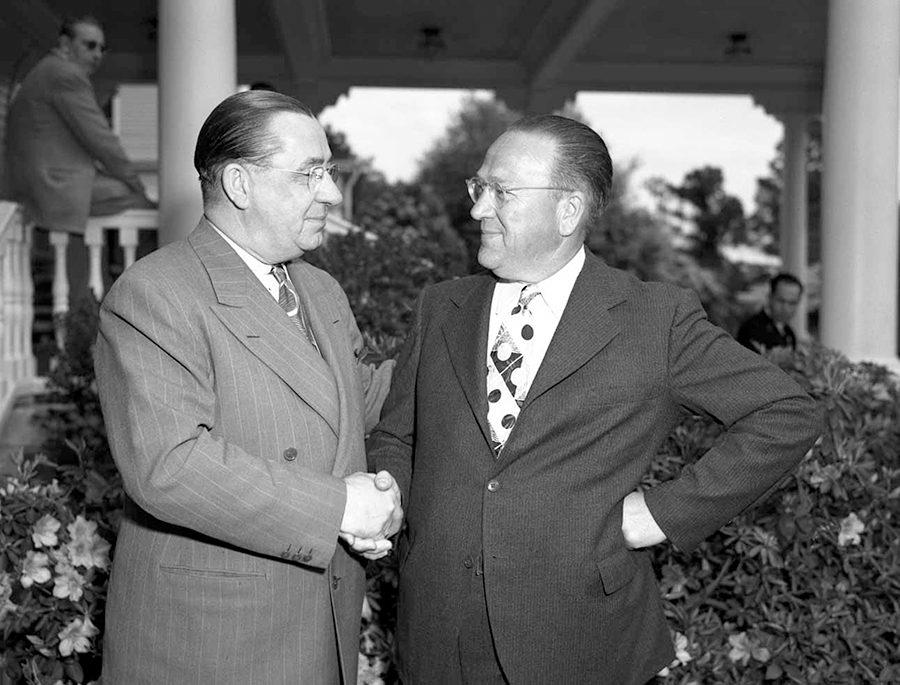
And it didn’t hurt the Hagen-Harlow fortunes that Hagen could pass for a movie star. Deeply tanned, not a single follicle of his immaculate black hair out of place, the always self-assured Hagen packed in the crowds. It was estimated he netted $45,000 annually from exhibitions. And he continued to play brilliantly in the big moments. During their association Hagen captured four Open Championships in Great Britain and five PGA Championships (four in a row from 1924 through 1927). The undisputed king of match play prevailed in 29 consecutive matches during that remarkable string. His unflappability coupled with recurring dramatic recoveries from seemingly impossible situations tended to dishearten opponents.

The only challenger to Hagen’s standing as the world’s finest golfer was the nonpareil amateur Bobby Jones. Both players spent their winters in Florida playing a lot of golf and selling a little real estate at two Gulf Coast country club developments — Jones at Whitfield Estates Country Club (now Sara Bay CC), Hagen at Pasadena Golf Club (now Pasadena Yacht & CC). “Matches of the Century” were a dime a dozen in the era of exhibitions, but if anything deserved the moniker, it would be Hagen v. Jones. In 1925, Harlow brokered the deal right down to the coin flip — a 72 hole home-and-home match to settle bragging rights and promote their respective clubs. It quickly turned into a rout with Hagen handing Jones the most lopsided defeat of his career, 12 holes up with 11 to play.

As if handling Hagen’s business wasn’t job enough, Harlow served as the guiding hand for the first National Golf Show held at New York City’s 71st Regiment Armory in May 1924. He arranged for promotional appearances by Hagen, Kirkwood, Gene Sarazen, Glenna Collett Vare and Alexa Stirling. Sixty-five exhibitors displayed equipment and clothing under one roof. A “Le Petit” (miniature golf) course was available for play, and the 8,000 patrons were wowed by a life-sized two-story clubhouse specially constructed for the exposition. Harlow also arranged for an exhibit of trophies from all of the major championships and, in a classic piece of Harlow marketing, emphasized their importance by posting an armed guard at the display.

In all matters, Harlow was shamelessly quick to leverage his association with Hagen. In February 1926, he wrote to Pinehurst titan Leonard Tufts that he and Hagen would be visiting again since Hagen planned to enter the North and South Open. After dispensing that welcome news, Harlow immediately segued into his sales pitch, writing, “ I should like very much to devote my publicity affairs and promotion work to Pinehurst from that time until after the North and South (Amateur) Championship.” He pointed out that the women’s field the previous year “was not too strong” and that he knew all the top Florida female amateurs and was sure he could get them to attend the 1927 event. Tufts replied that he hadn’t been all that impressed with the number of people Harlow had been able to produce in the past, yet still he consented to house him at the Carolina for “ten days to two weeks and $100 for expenses.”

Harlow and Tufts did the same tango the following February. With the 1927 Southern Open in Atlanta the week prior to the North and South Open, Harlow tried to sell the proposition that if Tufts retained him to represent the resort in Atlanta, “Pinehurst should obtain practically the entire Atlanta field . . . (as) it will be easy for me to persuade them to stop in Pinehurst on their way north.” Harlow naturally followed with his trump card. “I will have Walter Hagen in Pinehurst for the North and South Open as usual.”

Donald Ross opined that, while he was not opposed to retaining Harlow, the pros playing in Atlanta would likely appear in Pinehurst regardless. Club management conjured up a more difficult task for the promoter. “Why not ask him why he cannot bring Bobby Jones here for the North and South?” Harlow agreed to make the ask, but cautioned Jones would likely decline because of law school commitments at Emory University while unabashedly noting that if Jones was ever going to appear for anyone, “he would for Walter Hagen and myself as our association with him has been very friendly.” Tufts provided Harlow the same lodging and expenses afforded him in 1926.

In 1930, the PGA of America hired Harlow as its first official tournament bureau manager. The post involved the day-to-day organization of tournaments and public relations. In the throes of the Great Depression, Harlow faced the tall order of simply keeping what passed for the “tour” alive. Country clubs were closing. Sponsors reduced purses. Other events simply vanished from the calendar. Moreover, the PGA never had been able to schedule a full year’s slate of tournaments. Players still needed club pro affiliations to make ends meet. Harlow’s goal was to build a tour that would alter that paradigm. “It is entirely possible,” he claimed, “that in the future there will be sufficient tournaments and prize money — and with a schedule so changed that it will keep the better players profitably engaged for practically 12 months a year.”

There were plenty of blank spaces in the schedule and Harlow set about filling them. In 1931, the owner of the Miami Biltmore Hotel faced tax problems, and Harlow convinced him his predicament could be eased by holding a tournament on the hotel’s Donald Ross-designed course and donating the proceeds to charity. The Warm Springs Spa, where Franklin Roosevelt had undergone treatment for polio, would be the ideal beneficiary. The resulting Miami-Biltmore Open was a rousing triumph while also offering the tour’s richest purse, $10,000. The fundraising effort led to establishment of the March of Dimes.

Harlow stepped up the fledgling tour’s promotional efforts. He authored the first Tournament Players Record Book, which provided local newspapermen “a ready source of material to promote a tournament and write preview stories.” He continued writing his golf column and began publishing his own periodical, Golf News. Harlow sought to make “permanent news about golf as prominent as major league baseball.” He cajoled Hagen into speaking at fundraising dinners and exhorted local media to go the extra mile to promote tournaments because, like actors in a theater, the pros would not perform their best “playing to empty fairways.”
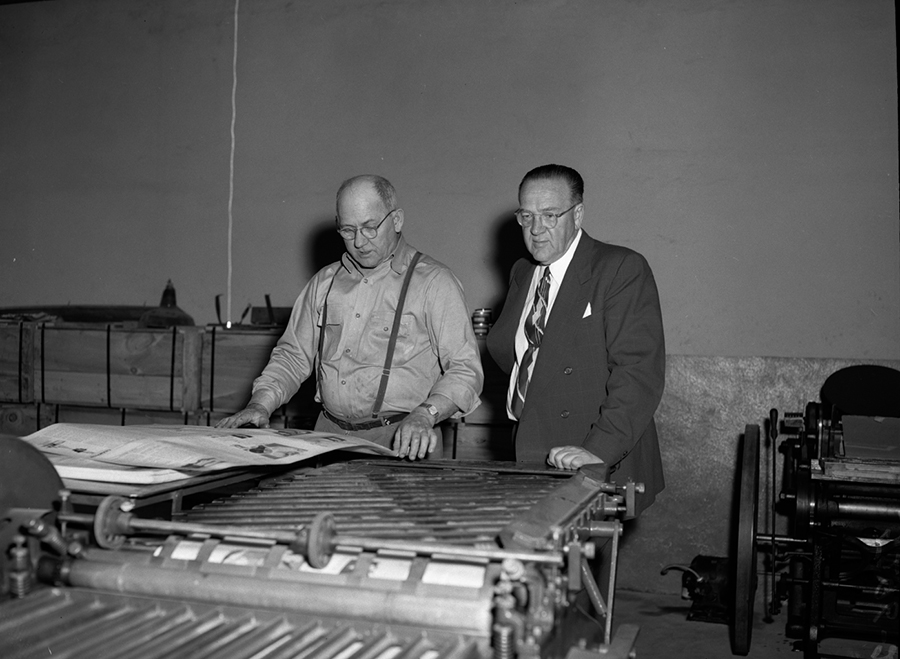
Prior to Harlow, players arranged their own starting times, teeing up when they wanted with whom they wanted. Hagen was a habitual offender, often appearing hours after he was expected. Harlow instituted mandatory tee times, prevailing on the local papers to publish them 24 hours in advance so fans would know when their favorites would be playing. Aware that there were players who failed to act with proper decorum, he issued a code of conduct, continually reminding pros that tournament golf was a form of show business, and they needed to act accordingly.

Compensation for the head of the PGA’s tournament bureau didn’t look much like the million dollar contracts and private jets enjoyed by today’s PGA Tour pooh-bahs. Moonlighting was more necessity than option. Harlow remained cozy with Hagen and managed the affairs and schedules of other players like Horton Smith, Ed Dudley and Paul Runyan. In the spring of 1932, after convincing American Fork & Hoe Company to underwrite a tour stop in New Orleans, Harlow extended his stay an extra day or two. By the time he left the Big Easy, he’d been sacked as tour manager almost certainly because of perceived conflicts of interest representing star players.

The players, led by Hagen, were outraged. They threatened to break away and form their own tour. In October of 1933, the PGA returned Harlow to his job, but by December of 1936 he was fired again. Despite his undeniable success keeping the tour alive in uncertain times, the higher-ups still seethed that he did not devote full time to the affairs of the tournament bureau.

A preternaturally optimistic person, Harlow, now 48, looked for an environment where he and wife, Lillian, a former New York opera singer, could flourish. Given his previous association with Leonard and Richard Tufts, Pinehurst seemed a logical choice. Maybe the Tuftses could be of assistance. They were. Harlow was hired as head of publicity for the resort in 1937 and held that position until World War II.

Not long after settling in Pinehurst, Harlow purchased The Pinehurst Outlook, a newspaper hitherto published weekly during the resort’s high season. Begun in 1897, the Outlook had focused on the social comings and goings of guests and members of the town’s swish cottage colony. Its offices were located in The Harvard Building (now the Old Sport & Gallery). Harlow became editor and publisher, and Lillian served as business manager.

In the November 12, 1939 edition of the Outlook, Harlow announced a new publishing schedule — every weekday during the season except Mondays, plus all Sundays. He intended to ramp up golf coverage. “The Editor . . . has long had a desire to assemble the . . . golf news of the world under one journalistic roof, and on this page, each Sunday, will endeavor to present at least a portion of the more interesting golf news which is not widely circulated by the daily press,” Harlow wrote. “It seems that a Pinehurst newspaper is a proper place for such material.”

While some national news would be reported in the Outlook, its general policy would be to avoid the “terrific controversies of the day.” As Harlow put it, “Pinehurst is a resort where visitors wish to forget for a time the problems of this disturbed world.” Still, as the winds of war blew in ’39, Harlow used golf to illustrate frightening changes taking hold in Germany. In one writing, he worriedly speculated what might be occurring at Berlin’s Wannsee Golf Club, ruefully noting that fully half the membership, including its president, Hans Zanuck, was Jewish.

Harlow attracted remarkable talent to his hometown newspaper. Charles Price, a premier golf writer of his generation, cut his teeth covering local events for the Outlook. Nationally known golf writer Herb Graffis contributed a regular column. And Harlow, a gifted essayist himself, composed numerous noteworthy pieces. He was proudest of crafting a series of articles commemorating the Pinehurst resort’s 50th anniversary in 1945. Laboring until 3 a.m. for three successive nights and authoring 24 pages of copy four days in a row, his work still ranks as an indispensable account of Pinehurst’s first half-century.

Believing the scope of the paper’s golf coverage would befit a national publication, Harlow hatched a weekly magazine ambitiously titled Golf World on June 18, 1947. While other golf periodicals existed, Harlow’s new publication raised the bar for scholarly writing about the game. Working in tandem with associate editor Tom O’Neil and with Lillian in charge of circulation and advertising, the magazine garnered 5,000 subscribers the first year of operation. Harlow re-emerged as a player on the national golf stage.

The offices of the Outlook and Golf World moved to the Pinehurst warehouse building, the white structure still located across the road from the 18th tee of PCC course No. 3. The burden of managing two publications proved too great, even for the energetic Harlow. On August 3, 1950, he announced the sale of The Pinehurst Outlook to the Wilson family. (It would cease regular publication in 1961.) With the Harlows able to concentrate their efforts on Golf World, circulation continued to grow, rising to 9,000 in its first five years. The same year he sold the Outlook, Harlow hired 14-year-old Tony McKenzie to do odd jobs, eventually including lithography and typesetting. McKenzie remembers many of golf’s great names breezing in to pay their respects to the publisher in his second floor office. Harlow’s ready supply of Wild Turkey and Seagram’s Seven Crown provided refreshment for the likes of Jimmy Demaret, Lloyd Mangrum, and Hagen himself. Tony remembers Sam Snead coming by too, although the Slammer was known to be abstemious.
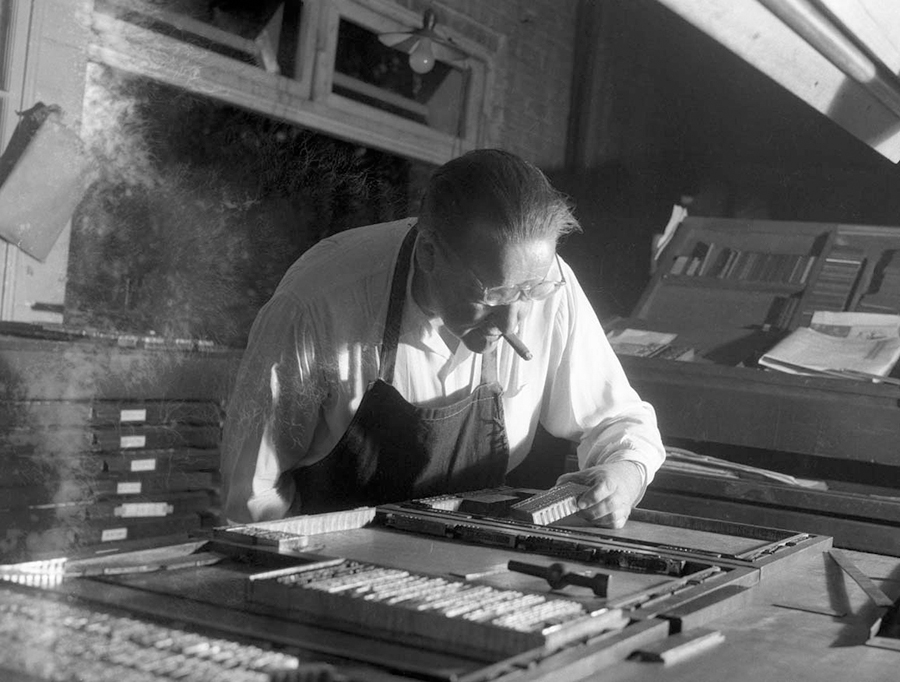
On November 15, 1954, Harlow died suddenly at age 65, a victim of coronary thrombosis. By then his little magazine had subscribers in “every state of our country, every province in Canada and sixty foreign countries,” wrote Herb Wind. “Golf World was successful because it had the chatty, everybody-here-knows-everybody-else flavor of a home town newspaper. It had that flavor because Bob Harlow was a hopelessly friendly and companionable man.” The Outlook reported that his untimely death, “cast a pall of gloom over the entire village.” His friend and benefactor Richard Tufts remarked, “The world of golf has lost its best friend . . . I always came away from any contact with him stimulated mentally by his opinions and refreshed by the honesty of his purpose.” Harlow’s successor at the PGA Tournament Bureau, Fred Corcoran, wrote: “He opened the door to riches for American professional golfers. Yet he never forgot that golf is a game.”

A mourning Lillian Harlow announced that Golf World would continue and “. . . will be better than ever. It must be so as a monument to Bob.” And the magazine did continue under the editorship of Dick Taylor without missing a beat. Lillian moved the offices from the warehouse building to Southern Pines, and continued her ownership until 1972. After two interim owners, the New York Times Company bought Golf World in 1989 and relocated the magazine to Connecticut, joining another NYT property, Golf Digest. In 2001, it sold both magazines to Condé Nast. Golf World’s paper publication was terminated following the 2014 Open Championship. At the time, it was the game’s longest running publication. The title survives on Golf Digest’s website.

The list of the magazine’s contributors is long and venerable. It served as a platform for the likes of Ben Wright, Bob Drum, Al Barkow, Lorne Rubenstein, Bob Verdi, Dave Anderson, John Feinstein, Curt Sampson, Geoff Shackelford, Steve Eubanks, Nick Seitz, Moore County resident Jaime Diaz and PineStraw’s Jim Moriarty and Bill Fields, to name just a few.

In 1988, Harlow was inducted into the World Golf Hall of Fame. The only others enshrined for writing about and/or publicizing the game are Corcoran, Wind, Graffis and, most recently, Dan Jenkins. He joined Donald Ross and Richard Tufts as the only Pinehurst residents in the Hall.

Of the notable golf people who have called Pinehurst home, Bob Harlow’s name is rarely mentioned. Among visitors to the modern golf Hall of Fame near St. Augustine, he would rank right at the top of the “Who’s that?” list. But, a trailblazer’s footprints can have a light touch.  PS

Pinehurst resident Bill Case is PineStraw’s history man. He can be reached at Bill.Case@thompsonhine.com.

Almanac

February, a form

Pale-vestured, wildly fair,—

One of the North Wind’s daughters,

With icicles in her hair.

– Edgar Fawcett, “The Masque of Months” (1878)

.

 The Snow Moon

Perhaps no poem paints a more fitting portrait of this time of year than Thomas Hardy’s classic verse about a “blast-beruffled” bird whose joyful song pierces the silence of a dark and desolate eve like an arrow through autumn’s last apple.

Read: February is here. Behold the first glorious explosion of golden daffodils.

Although “Darkling Thrush” is set at the cusp of a new year (and century), its haunting image of “tangled bine-stems” slicing the sky “like strings of broken lyres” invokes, at least for this nature lover, the bleakest yet most beautiful days of winter. Since the heaviest snows tend to fall this month, the full moon on Friday, Feb. 10, has long been called the full snow moon. The Cherokee called it the bone moon because, well, food was so scarce that supper was often marrow soup.

Speaking of soup, now’s time for root vegetable stews and chowders thick with heavy cream and gold potatoes. Make enough and you can eat from it all week — a quick and hearty fix after a cold evening spent pruning the rose bush and deadheading pansies. Through the kitchen window, a brown thrasher gently swings on the suet feeder before disappearing with twilight. It’s cold, but daylight is stretching out a little further every day. The soup simmers on the stovetop. Spring will be here soon.

Say it with Flowers

Violet and primrose are the birth flowers of February. The old folk poem calls the flower blue, but violets bloom mauve, yellow and white, too. Gift a lover a violet on Valentine’s Day and they’ll read: I’ll always be true. As for the primrose, a pale yellow perennial that thrives in cool woodland glades, the message crackles like an ardent fire:
I can’t live without you.

.

Love looks not with the eyes, but with the mind

And therefore is winged Cupid painted blind.

Nor hath love’s mind of any judgment taste;

Wings and no eyes figure unheedy haste.

And therefore is love said to be a child

Because in choice he is so oft beguiled.

– William Shakespeare, A Midsummer Night’s Dream


A Grimm Fellow

Wilhelm Grimm, younger of the Brothers Grimm, was born Feb. 24, 1786, in Hessen, Germany. Perhaps that’s why National Tell a Fairy Tale Day falls just two days later, on Sunday, Feb. 26. In addition to publishing a hefty collection of folk tales — “Hänsel and Gretel,” “Der Froschkönig” (“The Frog Prince”), “Dornröschen” (Sleeping Beauty), “Schneewittchen” (“Snow White”), and on and on — the brothers started writing a definitive German dictionary in 1838, but never did get around to finishing it. Add a little extra magic to this month of love by spinning a tale about fairies or mermaids, or, in the spirit of this bleak wintry season, perhaps something a bit darker. Like the one where the evil stepsisters cut off their toes to make the glass slipper fit.

Oscar Comes to Town

Why should we let Los Angeles have all the fun when there’s plenty of glitz and glamour to spread around in the Sandhills?

Photographs by Tim Sayer and John Gessner

Dreamgirls

Jennifer Hudson won the Academy Award for Best Supporting Actress in 2007 in her acting debut in Dreamgirls, adapted from the 1981 Broadway musical of the same name. Her character, Effie White, is left behind when Curtis, the man she loves and the group’s manager, replaces her as the lead singer of The Dreams, the Motown group based on The Supremes, that rises to stardom without her. Barely getting by in inner city Detroit with her daughter, Magic, Effie revives her career when she reconciles with her brother, C.C., who writes and produces her comeback hit, “One Night Only.” Our Effie, Courtney Pearson, is an Appalachian State University alum in a graduate program in the University of North Carolina at Pembroke, who teaches sixth grade English at West Pine Middle School. And what better stage for Effie to belt out her comeback single than at Casino Guitars in Southern Pines, the place where musical dreams really can begin?

Photograph by Tim Sayer

Gown from Brides Etc.

Makeup by Gabriela Villaseñor/Retro Salon

Mary Poppins

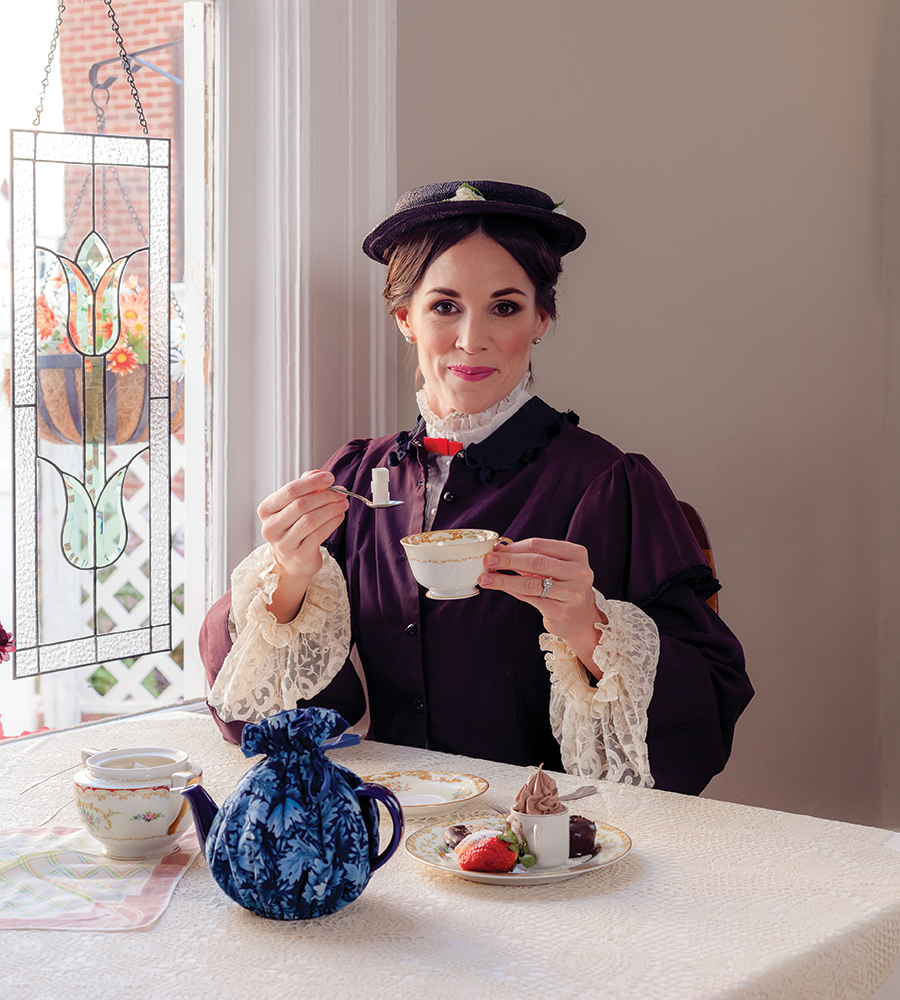
In every job that must be done, there is an element of fun, so it shouldn’t come as any surprise to see Mary Poppins seated at a window table in Lady Bedford’s Tea Parlour and Gift Shoppe in Pinehurst. After all, a spoonful of sugar helps the medicine go down. With her portrayal of the title character in the 1964 Disney movie, Julie Andrews won an Academy Award for Best Actress in her feature film debut. Our Mary Poppins, Christy Tucker, didn’t float down from the sky with the use of her umbrella, nor does she carry an enchanted carpetbag. Christy does, however, have three children of her own to nanny, 4-year-old Wyatt and his 2-year-old twin brothers, Wesley and Whitt. As perfect a setting as Lady Bedford’s may be for a spot of tea, don’t expect any penguin waiters or a tea party on the ceiling with Uncle Albert because, well, that would just be supercalifragilisticexpialidocious.

Photograph by John Gessner

Costuming by Marcie Haberstroh/Showboats Neverland

Makeup by Megan Weitzel/Retro Salon

Hair by Meredith Jacob/Retro Salon

The Blind Side

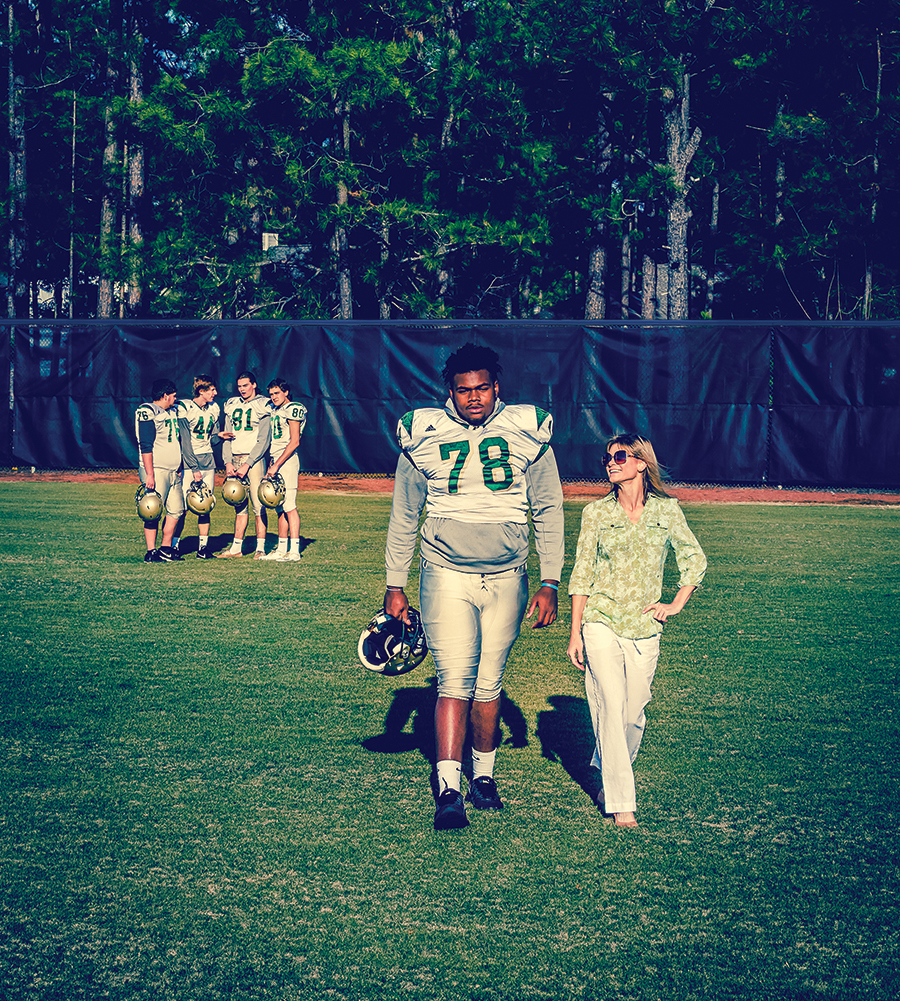
In 2010 the Oscar for Best Actress went to Sandra Bullock for her appearance in the film The Blind Side, playing the role of Leigh Anne Tuohy, who opens her home to a teenage football prodigy, Michael Oher. Running away from one foster home after another, Oher, who now plays left tackle — the blind side — for the Carolina Panthers, is left homeless by the death of his father and the drug addiction of his mother. Slowly but surely he becomes a member of the Tuohy family and is eventually adopted by them. Our Leigh Anne is Kelly Kilgore, the mother of two daughters, Ava and Audry, and the owner of RIOT (Run in Our Tribe), a running and specialty athletic store on Pennsylvania Avenue, who pulls off the performance with the help of the Pinecrest Patriots. Jehari Whitfield (78) turns in a solid portrayal of Oher, aided by his teammates Will Robson (76), Langdon McFay (44), J.D. Robinson (81) and Davis Byrd (80).

Photograph by John Gessner

Hair and makeup by Ariana Cooper/Beautopia

Ray

Brother Ray. The Genius. Jamie Foxx won the Academy Award for Best Actor for his gritty portrayal of Ray Charles in the 2004 movie Ray. Blind from the age of 7, raised on a sharecropping farm in Florida, Ray Charles passed away shortly before the film’s release. Charles learned to read music using Braille at the Florida School for the Deaf and Blind, but it was his creative combination of blues, rhythm and blues and gospel that produced an entire new genre. His fame came at personal cost, including a struggle with drug addiction. Charles’ long list of hits included “I Got a Woman,” “What’d I Say” and “Georgia on my Mind.” Who better to sit in at the piano for Charles than Paul Murphy? The pastor of the Trinity AME Zion church in Southern Pines started playing at The Carolina Hotel, where this picture was taken, in the early 1980s.

Photograph by John Gessner

Costuming by Marcie Haberstroh/Showboats Neverland

Annie Hall

Giving neuroses a good name, comedian Alvy Singer, played by the movie’s writer/director Woody Allen, falls in love with Annie Hall, portrayed by Diane Keaton, who won the Oscar for Best Actress in the 1977 eponymous movie. Together they stand in line for the movie The Sorrow and the Pity, where Marshall McLuhan makes an imaginary appearance to explain to another theatergoer why he’s gotten it all wrong. Alvy and Annie fall in love over a meal of boiled lobster, but the relationship falls apart when they move in together. They reconcile, if only temporarily, when he rushes to Annie’s rescue after she calls him in a needy panic — though only to kill a spider. We found our Annie, Annie Arroyo, a graduate of James Madison University who works for First Flight Digital, the media arm of The Pilot, hanging out not in Manhattan but outside The Given Outpost in Pinehurst.

Photograph by Tim Sayer

Costuming by Marcie Haberstroh/Showboats Neverland

The King’s Speech

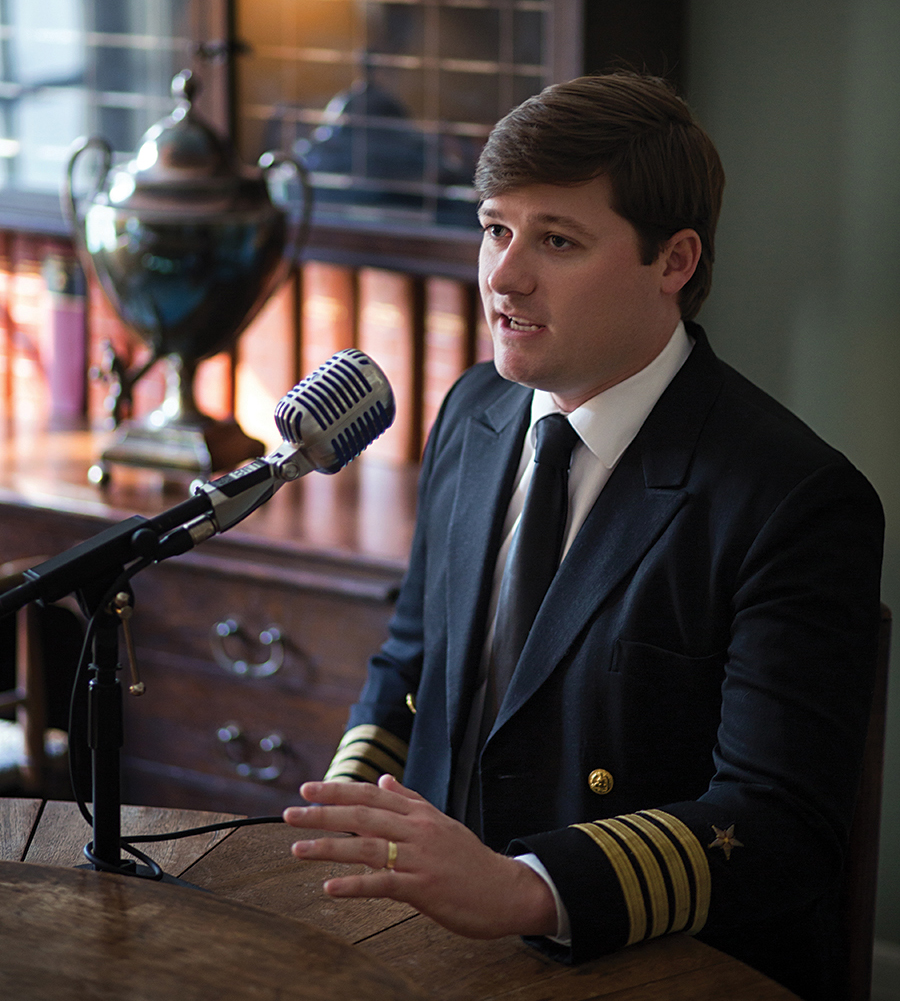
When King Edward VIII abdicates his throne in order to marry the American socialite Wallis Simpson, his brother, Albert, aka “Bertie”, succeeds him as King George VI. Colin Firth won the Best Actor Oscar for his portrayal of the royal who conquered his awkward stammer in the 2010 film The King’s Speech. Cautioned by his father, George V, about the importance of communication in the age of radio, Albert seeks the aid of an Australian, Lionel Logue, whose sole training came from working with shell-shocked soldiers after World War I. With Logue’s help, Bertie takes the mic following Britain’s declaration of war with Nazi Germany and delivers his radio address almost flawlessly. While Logue points out some less-than-perfect w’s, Albert replies, “Well, I had to throw in a few so they’d know it was me.” Southern Pines Assistant Town Manager Chris Kennedy, a 10th generation North Carolinian, rises to the occasion as our king at the Weymouth Center for the Arts and Humanities.

Photograph by Tim Sayer

Costuming by Marcie Haberstroh/Showboats Neverland

Roman Holiday

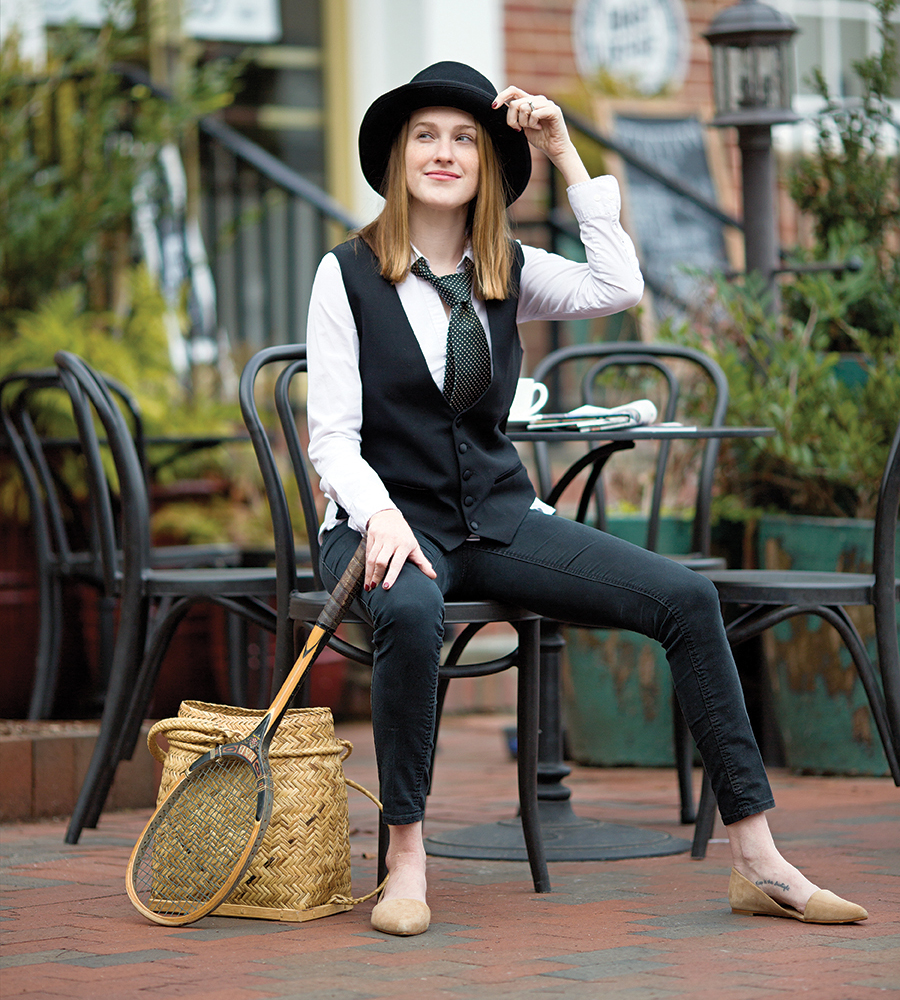
A crown princess sets off from the embassy of her undisclosed country to explore Rome da sola. She finds love, and Audrey Hepburn found an Oscar for Best Actress in the part of Ann in the classic 1953 romantic comedy. An expatriate American newspaper reporter, Joe, finds, but does not recognize, the princess (who calls herself Anya Smith) and invites her — in an abundance of caution — to spend the night in his apartment. Her regal comportment amuses Joe, played by Gregory Peck. In the morning, having slept through a scheduled interview with Princess Ann, Joe pretends to his editor that he was actually there until his boss tells him the interview was canceled. Joe sees her picture, realizes who is in his apartment and senses a scoop. Hijinks ensue. Our Ann is Ella Burkes, a stylist at Bamboo, a Boutique Salon in Southern Pines. She doesn’t have a crown but she does have a wiener dog, Norman.

Photograph by Tim Sayer

Hair and makeup by Ella Burkes/Bamboo Salon

Costuming by Marcie Haberstroh/Showboats Neverland

Grievance

The winter wind is searching for a love

To love her like one loves the fall,

spring, summer, seasons better thought of

Than her silent biting chill, her pall.

Forgotten, crystal blooms on bare-branched trees,

Crisping air that skates on glassy lakes

Wakes the spirit, opens sleepy lungs to breathe

While snowflakes choose their own design to make.

Now she hisses sleet through blizzard teeth,

Love me for who I am and what I bring.

There is no resurrection without death,

Without a sleep, no dreams, no notes to sing.

Hear my lonely recitative,

Say you love me. Say it to me, please.

— Sarah Edwards

Old House, New Look

Metamorphosis of a village showplace

By Deborah Salomon     Photographs by John Gessner

Hundred-year-old houses like Red Gables harbor mysteries, secrets. Who (or what) was Ailsa, the name on the gate shingle — a girl or the islet off Scotland? What is known about the people who autographed boards — one dated 1918 — uncovered during renovation, now framed in the kitchen? And why — in an age when Pinehurst homes had a crawl space, at best — does this house own a brick-walled basement sturdy enough to withstand a tornado?

“I kept driving by . . . I always wanted to live in the house,” says Holly Davis.

Now, she does. After 18 months of respectful renovation and new construction, the house within sight of the Carolina Hotel is once again a showplace, a comfortable family home and gallery for Southern folk art.

By the early 20th century word had spread through the Northeast that Pinehurst was a desirable winter destination for high society — and so much closer than Palm Beach. Some snow birds stayed at hotels or rented one of the founder’s, James Walker Tufts, cottages, while the deepest pockets built their own. In 1909 Mrs. Emma Sinclair of Boston commissioned architect W.W. Dinsmore, also of Boston, to build what the Kennedys might call a compound: two structures collectively named Red Gables after the clay-tiled roofs, so she could winter alongside her daughters. In 1918 the property was sold to Henry B. Swoope, a Pennsylvania coal baron.

Red Gables, along with its sister cottage and log cabin, changed hands several times, endured multiple updates, but stood empty and sad when a friend told Holly that, finally, the property was for sale.

“I was glad the house needed work,” Holly recalls. “That scared off people. I could see the potential.”

Holly grew up in Illinois, moved to Durham; her husband, Carty Davis, comes from New Orleans. They lived in Atlanta before deciding a smaller city would be better for the children. The area offered schools, culture, interesting people. In 2002 they built a residence in Forest Creek. Holly, who studied graphic design at N.C. State, enjoys building and renovating. “I can (visualize) the space when I see plans, which is helpful.” Eventually, like many transplants, they gravitated to the village. “I much prefer a historic house with so much more character,” Holly says.

This she vowed to preserve by keeping the footprint virtually intact and cherishing details, such as crystal teardrop sconces and chandeliers, oversized windows, a glass-front built-in bookcase. Instead of a spa tub, she refinished a claw-foot, original to the house. Aesthetically reluctant to convert to gas, four fireplaces trimmed in exquisite moldings still burn wood.

Vinyl trim was replaced and a fresh layer of stucco applied to exterior walls which, with the red tile roof, completed the Mission style that caused a ripple in the early 1900s. Alas, the tile roof is gone, but fat Tuscan columns — another uncommon architectural detail — remain on the porch.

Some interior space was rearranged, but not the twin entrances placed on opposite sides of the living room with its coffered ceiling — once dark wood, now painted white. Holly deemed the dining room unnecessary. Instead, she used it for a family room-den and placed a small, elegant round dining table with curved upholstered chairs at one end of the living room. Most mealtimes the family gathers around an 8 1/2-foot kitchen table made to order using lumber salvaged from Liggett & Myers Tobacco Co. warehouses.

Main floor space was also adjusted for a master suite, leaving the three upstairs bedrooms for guests.

Mrs. Emma Sinclair, the Swoopes and their nine children would gasp at the kitchen, which had been redone,’70s fashion, when the Davises purchased the house. Holly wanted everything ripped out, including the ceiling and room above it, making way for a vaulted space clad in painted wideboards, with recessed lighting. This established a scale suiting tall cabinets, a marble island and countertops, and a range hood befitting a castle, all in soothing gray and white. No tabletop appliances or gadgets break the expanse.

“I’m not a clutterer,” Holly says.

But she is a collector. “I love Southern primitive folk art,” which she encountered near the Davises’ beach retreat on Fripp Island, South Carolina. “The raw materials, the emotions — they paint about life,” often life filled with poverty and pain in the post-Reconstruction South. Her favorites include Sam Doyle, a black artist from St. Helena Island, South Carolina, who painted on scrap metal in the African-influenced Gullah tradition. Figures are flat, frontal; coloring is primary, bold. Also represented is Clementine Hunter from Louisiana’s Natchitoches Parish. Hunter, a domestic servant at Melrose Plantation who could neither read nor write, painted on any objects she could find, as well as canvas. She died in 1988, at 101, leaving a thousand visual memories of her gritty existence.

Holly successfully juxtaposed a scene by Alabama farmhand Jimmy Lee Suddeth, who used a mud-based paint tinted with berries, against a marble-topped antique chest from Carty’s Louisiana homestead. Other pieces were brought back from a family trip to Africa.

But, in truth, no period or style defines the result. Holly’s aversion to clutter extends throughout the house, which is furnished with a spare hand, allowing each piece an impact. She trolls junk stores for dressers, headboards and other pieces, paints and “distresses” them herself to resemble well-worn heirlooms. Neutrals prevail except for bursts of color — bright navy on a bedroom carpet and spread, an even brighter orange chair illuminating another bedroom, one small olive green wall in the monochromatic kitchen, sunflowers and orchids in the living room — pure panache.

Across the stone terrace stands a massive new garage with an upstairs office-apartment and balcony, designed and stucco-clad to blend with the house. When landscaping the triple lot Holly was able to retain decades-old plantings, which shield them from traffic. “But we like hearing music (from events on the green) and the bagpiper,” who serenades the hotel every evening. When the Davis children are home they walk to the Roast Office for coffee; Carty Davis and yellow Lab Charlotte are regulars in the village.

Houses, like crops, fashions and seasons, move in cycles — at least the lucky ones. Red Gables, aka Ailsa House, long a wallflower, blooms a debutante once again, this time with all-new systems and wine shelves in her cellar fortress.

Credit Holly’s patience: “I just hope what we’ve done to this home will make it last another hundred years.”  PS

Wintry Mix

Without warning, you alter my day —

wanting more firewood before

it becomes soggier with morning snow.

I see no reason to disembark the sofa.

Horizontal before the fireplace,

I offer you a quilt that needs no tinder —

but your posture is stern and straight.

Rising, I moan like only I can, still unconvinced.

Children sled outside, asphalt’s black spine

revealed with each pass, down the block where

we sometimes stroll comfortable evenings,

or other everyday occasions when we leave,

yet return. Warm in a wool scarf I gave you,

you emerge smiling, extending leather gloves

to fend off spiders and splinters, and seize

some oak, encouraging me to hurry inside.

— Sam Barbee

from That Rain We Nee30

Magna Carta Man

“Little old bookbinder” Don Etherington held — and preserved — history with his hands

By Jim Moriarty

Photographs by John Gessner

Surrounded by thickheaded hammers, scalpels that look like they’ve escaped from an operating theater and a cast iron vice, Don Etherington sits on a stool in his bookbinding workshop and talks about the heart attack that led to his quadruple bypass surgery as if it was a trip to the Circle K. It was a delightful, warm November day a little over a year ago. He had turned 80 a few months before. He felt a sharp pain in his chest, took a nitroglycerin pill, waited five minutes and took another. The pain didn’t go away so he called 911. His house is four from the corner. By the time the paramedics got him to the end of the road, he was gone.

From the other side of the studio, his wife, Monique Lallier, a designer of artistic book covers as highly prized as Etherington’s own, picks up the narrative. “He said, ‘You know this nurse in the ambulance, she was sooo nice,’” she says, her French-Canadian accent making the encounter in the rear of a rescue vehicle sound just slightly naughty. “I said, ‘Of course she was nice, she was happy to see that you came back.’”

Etherington laughs. “So,” he says, “this is my second time around, actually.”

The first one wasn’t half bad.

“I’m just a little old bookbinder,” Etherington says. Indeed, he is. One who has laid his hands on the 1297 Magna Carta and the Declaration of Independence, to name just two. And it all started with a pair of dancing shoes.

Born in 1935, living in a Lewis Trust building — flats for the poor — in central London, Etherington was a child of the Blitz. His mother, Lillian, cleaned houses. His father, George, was a painter by trade who’d been a prisoner of war for four years during the War to End All Wars and came home a changed man. “He was a hard guy,” Etherington says.

With the exception of roughly half a year when Etherington was evacuated to a house in Leeds that lacked indoor plumbing, buzz bombs and shelters were what passed for a routine childhood. “I used to roam the streets with a bunch of guys,” he says. “I’d go around at night — I can’t believe this myself — with a shopping bag and pick up all the pieces of German shrapnel. I’m, what, 5? It’s beyond imagination. The Blitz, the only time it really affected me, was when the flats got bombed. That night 73 of my school chums got killed in that one air raid. I think it was a doodlebug (a V-1 bomb). It hit the corner of our apartment block, skidded into the shelters, where a lot of people got killed, and it bounced off there into the school.

“It was like part of life. You’d hear the drone coming over and then all of a sudden, it would stop. We could tell where it was going to hit. We’d say, ‘Oh, that’s going to hit Hammersmith or that’s going to hit Kensington.’ We didn’t have that feeling that it was awful and depressing. It was our life. When you go through that, certain things don’t affect you as much. Basically, what I’m trying to say is that we were very resilient and resourceful.”

After the war, barely into his teens, Etherington did two things that would change the trajectory of his life, and he doesn’t know why he did either one. First, at 13, given a list of potential fields of study at the Central School, he ticked off bookbinding, jewelry making and engraving. He was chosen for bookbinding and off he went, still in short trousers. “I came away that first day knowing I loved it,” he says. “From that day on, nearly 70 years, I’ve been happy doing what I’ve been doing, which is very special.”

The second was those shoes.

“I took myself off the streets,” he says. At 14, he bought a pair of dancing shoes, marched into a studio in what was, to him, the fancy Knightsbridge section of London, and took up ballroom dancing. Medals and jobs came his way. He met his first wife, Daisy, when he helped open a dance studio in Wimbledon. “To this day, I don’t know how I went from strolling the streets, getting into all sorts of stuff, from that to doing dancing. The only thing I could say is when I went to Saturday cinema, I loved watching Fred Astaire and Ginger Rogers. I got enamored and thought, boy, I’d love to go to America.” Etherington danced his way into his 80s, including at Green’s Supper Club in Greensboro.

After a seven-year apprenticeship in binding at Harrison and Sons in London, followed by a brief stint restoring musical scores at the BBC, Etherington took a position as an assistant to Roger Powell, the man who bound the illuminated manuscript The Book of Kells into four volumes in 1953. “I went to Roger. He said, ‘What do you know about bookbinding?’ And I said, ‘Absolutely everything.’ For the next few years he showed I didn’t know a damn thing,” says Etherington. His work with Powell and his partner, Peter Waters, was followed by a position at Southampton College of Art, where Etherington developed a bookbinding and design program in addition to producing his own designs, the artistic covers he’s created throughout his life.

In the first week of November 1966, after a period of prolonged rain and threat of the collapse of several dams on the Arno River, a release of floodwater hit Florence, Italy, traveling nearly 40 miles an hour. The Biblioteca Nazional Centrale, virtually under water, was cut off from the rest of the city. The damage was incalculable. Powell and Wright asked Etherington to join the British team being dispatched to Italy to help. “They had 300,000 books floating in the water. Before we got there these student volunteers got them out of the water, out of the mud, out of the oil and put them on a truck to be dried in tobacco kilns up in the mountains. Not to blame them because nobody knew, but it was the wrong technique. Here you’ve got covers floating all around and you’ve got books floating all around. In those days, they weren’t titled. All these scholars were having to try to match up that cover with that book with no indication other than size.”

Out of this disaster, the field of book conservation was born. “We started to talk to German, Danish, Dutch bookbinders and restorers for the first time. We started talking about different techniques. Never would anybody share secrets — including England. All of a sudden, we’re talking together around coffee or whatever. It was just a whole different mindset,” says Etherington.

For two years, he spent between six and eight weeks in Florence teaching conservation techniques to the Italians. His first trip to Italy, at the age of 31, was the first time he’d ever been on an airplane. Etherington stayed in a pensione on the Arno River whose owner looked like Peter Sellers, and his fellow lodgers included two bankers from Milan, a prostitute who didn’t talk much, and a countess who had been married to a high ranking German general in the Weimar Republic who delighted in regaling her dinner companions with personal recollections of the Aga Khan.

Etherington would, himself, hit on a previously untried technique, using dyed Japanese rice paper in mending leather bookbinding to add strength unachievable with the leather alone, an approach that’s still used. “People give him a lot of respect for being one of the early conservators,” says Linda Parsons, who joined Etherington at the founding of what would become known as the Etherington Conservation Center (now the HF Group) in Browns Summit.

Four years after the Florence flood, Etherington was asked by Wright to join him at the U.S. Library of Congress as a training officer. He spent a decade in D.C. in various capacities. Among the projects he consulted on were teaching FBI agents about printing techniques, typefaces and paper characteristics to help them reassemble shredded documents found behind the Democratic party offices at the Watergate Hotel — some of which related to the scandal itself — and preparing Lincoln’s manuscript of the Gettysburg Address for display at the Gettysburg National Military Park. As if he had nothing else to do, Etherington penned a full-blown dictionary, Bookbinding and the Conservation of Books, listing every tool, material and technique related to the field he’d help create.

From the Library of Congress, Etherington was hired to launch a conservation program at the Harry Ransom Humanities Research Center at the University of Texas in Austin. There he was asked by Ross Perot to supervise the care and transportation of the 1297 version of the Magna Carta.

“There’s about 17 versions in existence. The 1297 one was the version the Founding Fathers used to write the Constitution of the United States. Ross is a big collector of Americana. He bought it for $1.5 million, which was pretty cheap at the time. It was found in the archives of a family in England. I was very surprised that England allowed it out. When I saw it, it was in really, really good shape. The ink was very black. There was question whether it was legitimate. Many scholars looked at it and authenticated it but, boy, it was questionable at the time.

“When you have an early document, you have a seal — I think it’s Edward I — and a silk strap. Because of maybe packing it or making sure it didn’t hang loose, someone turned the tie and put it on the back and stuck Scotch tape on it. I know it sounds stupid but it was that way. At some point, it went up for sale. This guy bought it for $22 million so Ross didn’t do too bad.”

By 1987, Etherington had fallen in love with Monique on a trip to Finland. His sons, Gary and Mark, were grown, and he decided to rearrange his life and leave Austin. He and Monique moved to Greensboro to begin a for-profit conservation company in association with Information Conservation, Inc. It would morph into the Etherington Conservation Center. The company performed the conservation and display preparation for the Constitution of Puerto Rico. They prepared and conserved the Virginia Bill of Rights. And Etherington was asked to work on the Charters of Freedom exhibit — the Declaration of Independence, the Constitution and the Bill of Rights — for the National Archives as the parchment consultant on the Declaration of Independence, helping to design how the badly faded document was to be displayed. Like a sure-handed heart surgeon, one concentrates on the process, not the patient.

“A lot of people who are not in this business, they think it’s a little bit scary,” he says. “I try not to think too much about the importance of it to history or to our country or whatever, because once you start doing that, instead of treating it with surety, you’re treating it with tentative hands, and that’s the worst thing that could ever happen to you.”

Etherington’s archive resides at the Walter Clinton Jackson Library at UNCG. “He’s internationally known,” says Jennifer Motszko, the library’s manuscript archivist. “He basically was there at the founding of his field where they started to come up with systemizing ways to preserve and conserve materials. But then he’s become a well-known entity in fine arts binding. You mention him in that circle, he and Monique define that area.”

In celebration of artists and their craft, the UNC Wilmington Museum of World Cultures has designated Etherington and Lallier North Carolina Living Treasures. Etherington has worked on everything from family Bibles to a 14th century Haggadah, from first century Chinese papyrus rolls to a rare copy of James Joyce’s Ulysses, from personal treasures to national ones. Still, every day at 5 p.m., studio work ceases. It’s time for the Etherington Cocktail. One part gin. Two jiggers of sweet Vermouth and a splash of tonic water.

“I’ve been very lucky doing things,” says Etherington.

Now he gets to toast a second go-round.  PS


Positive Outlook

Preston McNeil met Don Etherington when the family’s Chi-Poo, Mali, a Chihuahua/poodle mix, gnawed the edges of the study Bible belonging to his wife, Brenda. McNeil, who moved to North Carolina from New Jersey in 1988, has owned businesses ranging from carpet cleaning to cookie stores, and dabbled in jewelry design. He decided he could add bookbinder to the list by taking the chomped-on Bible apart and putting it back together again.

“So, I did,” he says. “It was a book that worked.” All the new binding lacked was lettering. McNeil found a place where he could have it imprinted. When the man behind the counter made out the invoice he noticed McNeil’s address. It was the same street Etherington lived on. “He said, ‘Take this book and show Don what you’ve done,’” says McNeil. “So, I took it to Don and he goes, ‘Uh, I see some mistakes but you did pretty good.’ He invited me in. And I’ve been going to him from that point on.”

After a couple of years studying with Etherington, McNeil felt confident enough to redo a friend’s Bible. “Then I began to buy my own equipment. Now, I have a full studio downstairs,” he says. And another business, Gate City Binding. “I wish I had learned to do this when I was 36,” says McNeil, who’s actually three decades older than that. “I love it so much.”

His seven-year apprenticeship with Etherington and his new skill set led to a delicate and difficult commission, rebinding the volumes of the Pinehurst Outlook, the newspaper that published continuously from 1897 to 1961, that reside in the Tufts Archives at the Given Memorial Library. The project is being paid for entirely with donations designated for that purpose.

“The majority of the Outlooks I’ve worked with are fully separating from the original binding,” he says. “The spine is deteriorating. Everything is dry-rotting on the interior. The books are all newspapers. If they need to be restitched, they’ll be restitched. If they need to be reglued, I reglue them. Then rebuild the whole spine. It goes from individual papers to a book again. It’s building a book from scratch, essentially.”

Just like his new career is built from scratch. “I take from his mind, put it into my mind,” says McNeil of his mentor, Etherington. “I take from his hands, and I hope it’s coming out of my hands.”

A Good Fit for the Goodmans

A Pinehurst family grows into well-planned home

By Deborah Salomon     Photographs by John Gessner

On the border dividing Generation Xers from millennials sits a beautiful house occupied by a matching family: young(ish), sociable, fit, bright, busy.  The house is stylish yet comfy, practical and pretty — an heirloom-free zone in Pinehurst, better known for senior(ish) CEOs, globetrotters and generals, now attracting this new demographic that enjoys walking or jogging to the village after shooting hoops in the driveway.

Meet the Goodmans: Laura, from New England-prim Wellesley, Massachusetts; Kenny, whose roots extend deep into Tar Heel textile and furniture industries; Cate, 15, an avid participant in Odyssey of the Mind; and sports enthusiast Matthew, 12.

Golden retriever Ruby, and Ollie, a sweet Corgi-blend rescue, complete the portrait.

Kenny (N.C. State) and Laura (Vanderbilt) met in Raleigh. They decided on Pinehurst when Kenny returned to the family business, located in Ellerbe. Laura found the public schools fine and the village friendly: “Here, you walk into a store and everybody says hello, knows your name. That wouldn’t happen in Wellesley.”

They built an 1,800-square-foot house with white vinyl siding, green shutters and a front porch overlooking Pinehurst No. 6, where they were bombarded with stray golf balls. This didn’t work with a new baby. Time to build a forever house, designed to their specifications by Pinehurst architects Stagaard & Chao, known for parabolas and arches, niches, vaulted ceilings and the Fair Barn renovation.

But, Laura maintains, with off-white shingles, and paneled front door flanked by benches, the look combines New England with Old Town cottages commissioned by the Bostonian Tufts family.  Yet those very cottages, many enlarged and restored beyond their original glory, were oblong or square. The Goodmans chose an L-wing, which creates a front courtyard, giving the house on a corner lot facing a well-traveled street more of a manor appearance. Multiple high roof pitches impart the illusion of a second story when there is none, except for an attic playroom.

* * * * * *

Whatever generational banner they hoist, the Goodmans were forward-thinkers when laying this footprint during the great Great Room Era. “I wanted three separate living spaces,” Laura says, “so when the kids want to watch TV we can close the door.” True prescience, considering the house was built in 2002, when Cate was a toddler and Matthew not yet born. Ditto placing the children’s quarters in the L-wing (with its own entrance), the master suite at the opposite end.

The smiling Goodmans welcome friends through a wide front door, into a wider foyer, then straight into the living room overlooking terrace and garden, where father and son throw a baseball. Even the living room is divided by furniture placement into two conversation areas. Architectural niches show off a pair of small antique chests, while the peaked ceiling is softly illuminated by rope lighting tucked into a cornice molding.

Opposite the living room, sunlight streams through bare windows in the dining area, where a wall indentation frames a tall red-lacquered Chinese armoire topped with oversized black ginger jars. Unobstructed access between the two rooms allows setting up long tables for holiday gatherings

Many furnishings came from a family-owned business that closed, other pieces from Pinehurst village boutiques. A velvet slipper chair in the master bedroom originated with Laura’s grandparents. Laura cannot find a word that encompasses their decor style, from a massive drum coffee table to Asian bamboo, sleigh beds and carved French provincial settees, only that the pieces relate beautifully.

“We like clean lines, no clutter,” Kenny adds.

* * * * * *

A guest bedroom in the master suite wing — now Kenny’s home office — highlights a recent palette reversal. Its unusual teal walls set off the white sleep sofa (just in case), a set of Chinese prints illustrating silk-making, bamboo blinds, a retro leather club chair, and a framed newspaper story about his grandfather, who served as Richmond County sheriff for 44 years.

“We never used this room; now we use it every day,” Kenny says.

In a daring move, they painted the wall of wood cabinetry in the master bathroom, also the dark kitchen cabinets, an unusual and soothing dove gray, adding a granite countertop pattern that swirls rather than spatters. Kitchen layout and size is a paradigm of restraint. The island expands counter space, nothing else. “I’m an electric girl,” Laura says, explaining her choice of a smooth cooktop and built-in ovens instead of an industrial gas range. She has a coffee nook and wine rack but no pastry area, refrigerated drawers or wine cellar. The chrome yellow Dualit toaster — a British award-winner used by fine restaurants — stands, statuesque, against the white ceramic tile backsplash.

On one side of the kitchen is a “sitting room” similar to one Laura remembers from an aunt’s house. Upholstery fabric there and elsewhere comes from Goodman textile manufacturing. On the other side of the kitchen, a charming corner breakfast nook with upholstered banquettes and beyond that, the TV room. With door. Family dinner is obligatory, with no electronic distractions. Off to one side, a screened gazebo awaits fine-weather dining.

Whimsy trumps classic in the guest powder room, wallpapered in ragged blue spots on white, straight off a Dalmatian.

In the teens’ wing, a long wall of built-in bookshelves serves Cate’s passion for reading. Matthew likes his room, “because I have a basketball hoop on the wall.” Cate selected colors for her sitting-bedroom, a bright turquoise that compliments her long red hair.

By sizing rooms moderately, the 4,000-square-foot total does not overwhelm, as it might if allocated to a cavernous great room or huge master suite.

“I just like how inviting and warm and light and well-laid-out my house is,” says Cate.  Indeed, gleaming hardwood floors, Persian runners and area rugs, interesting architectural details, fresh colors, a convenient location with other millennials nearby,  backdrops the lifestyle and leisure of a new Pinehurst demographic exemplified by the Goodmans, for whom life certainly seems good.  PS

Almanac

Begin Again

In many cultures, the first day of the year is considered to be a sacred time of spiritual rebirth and good fortune — a time to cleanse the soul and reopen one’s mind to the notion that anything is possible. Draw yourself a lavender salt bath. Light a beeswax candle. Indulge your senses with woodsy and earthy aromas such as cedarwood and sage, noticing how they recharge, calm and nurture you.

Be gentle with yourself on this first day of January. Celebrate exactly where you are — in this moment — and allow yourself to imagine the New Year unfolding perfectly. Look out the window, where the piebald gypsy cat drinks slowly from the pedestal birdbath. Notice the bare lawn, the naked branches stark against the bright, clear sky. Experience the beauty of this barren season, of being open and willing to receive infinite blessings. There’s nothing to do but breathe and trust life.

Breathe and trust life . . . 

Slice the Ginger

The Quadrantids meteor shower will peak on the night of Wednesday, January 4, until the wee morning hours of Thursday, Jan. 5. Named for Quadrans Muralis, a defunct constellation once found between the constellations of Boötes and Draco, near the tail of Ursa Major, the Quadrantids is one of the strongest meteor showers of the year. Thankfully, a first quarter moon will make for good viewing conditions.

Speaking of Twelfth Night (January 5), the eve of Epiphany marks the end of the Christmas season and commemorates the arrival of the Magi, who honored the Infant Jesus with gifts of gold, frankincense and myrrh. Indeed it is a night of merrymaking and reverie. That said, if you’re seeking a hangover cure come Epiphany (January 6), ginger tea is an excellent and delicious home remedy.

Here’s what you’ll need:

4–6 thin slices raw ginger (more if you like a tea that bites)

1 1/2 ½–2 cups water

Juice from 1/2 lime, or to taste

1–2 tablespoons honey or agave nectar (optional)

And here’s what you’ll need to do:

Boil ginger in water for no less than 10 minutes. You really can’t over do it, so load up on ginger and simmer to your heart’s content.

Remove from heat; add lime juice and honey or nectar.

Sip slowly and allow your world to recalibrate.

Mercury shifts from retrograde to direct on Sunday, January 8. It’s time to take action. Plant the tree. Tackle your garden to-do list. And since Saturday, January 28, marks the celebration of the Chinese New Year of the Fire Rooster, a little advice from the bird: Be bold; live loud; don’t hold back.  PS

Small Gifts

There’s an old saying that good things come in small packages. So do amazing acts of kindness

By Jim Moriarty     Photographs by Tim Sayer

It’s the season of our better angels. But warmheartedness isn’t only expressed by that larger-than-usual tip or that unexpected check and, thankfully, it doesn’t appear just once on a calendar. Our communities are populated by the generous of spirit who give without fanfare and often go unnoticed, though never unappreciated. How fortunate are we to live in a land of small kindnesses? There are not enough pages in this magazine during an entire year to show everyone who helps with their hands or their time or their talents. What follows is a tiny slice of that circle, a sliver of grace, shown here to represent the rest. You know who your are, and so do we.

ps-gifts1-12-16

Tom Burke

Tom Burke is a specialist. He specializes in bonding.

Burke and his wife, Trudy, moved to Pinehurst from Boston 24 years ago after touring the South looking for just the right spot to retire. She was a registered nurse, and he was a salesman for a trucking and shipping company. Intending all along to work a while longer, when they got here she took a job at FirstHealth Moore Regional Hospital. “I was looking through The Pilot and saw that Pine Needles Golf Club was looking for semi-retired people who could walk four to five miles a day,” says Tom. “Exercise, that’s what I wanted.” That’s what he got. Then, one day, Trudy came home from the hospital and said they were looking for volunteers to rock babies.

Fresh from the experience of rocking his own grandson, Burke was keen on the idea. “I went over and applied,” he said. “It’s wonderful. It’s really very soothing.” Of course, baby-rocking is but a tiny subset of the huge number of volunteer jobs at the hospital — and a coveted one at that — but no one does it better than Burke, who has logged 993 baby-hours since 1998. “They give me whoever’s cranky,” he says with a smile. “I get there at 2 o’clock. Get my gown on. Wash up and scrub. I sit down and they put my baby in my arms and I rock them for two hours. It’s unbelievable. I would say 85 percent of the babies are asleep within five minutes. Even the ones that have problems. You can feel it, as soon as they put them in your arms. It’s strictly the human bond. We just completely relax.”

ps-gifts2-12-16

Ken Loyd

Ken Loyd learned to play the piano as a boy in Momma Gaddis’ house in Atlanta. “I would sit down and just plunk out melodies, or try to,” says Loyd of the rickety old piano in his grandmother Kate Gaddis’ living room. “My father heard me playing two of his favorite songs, ‘Ramblin’ Wreck from Georgia Tech’ and ‘Dixie.’ I was just playing them with one finger but he thought I had possibilities.” That led to 10 years of lessons. After graduating from UNC-Chapel Hill, Loyd took a job teaching third grade at Farm Life School, a career that lasted 33 years. The piano became a teaching tool. It’s also a gift, one he shares in the lobby of FirstHealth Moore Regional Hospital’s Outpatient Registration.

Loyd began volunteering to play at the hospital shortly after the piano was donated in 2000, before he quit teaching. “I’d leave school as soon as I could because there wasn’t much point playing there after 5 o’clock,” he says. “When I did retire, I started coming in the mornings. This is a nice balance in my life. I volunteer at some nursing homes, too. Do sing-a-longs at two or three places.

“This sort of distracts people from the medical reasons they might be there,” he says. “I think it gives them a little bit of comfort, a little peace of mind. I don’t know what people’s favorite songs are, but after playing for 57 years, you do sort of know the kinds of music that appeal to people.” He’s got a playlist that’s over 300 songs long.

“I probably see more smiles than the doctors do.”

ps-gifts3-12-16

Peggie Caple

Some people help with a hammer and a screwdriver. Peggie Caple wields a deft ballpoint pen. Caple, who still lives in the house she built next door to where her parents lived in West Southern Pines, worked in the Sandhills Community Action Program in Carthage, the Moore County Schools and at Sandhills Community College, where she was the director of financial aid, retiring from the college after 21 years. A hospice volunteer for over a decade, Peggie began working with the Sandhills/Moore Coalition for Human Care six years ago screening and assessing need.

“I love it because that’s helping people who are in need in our community,” she says, sitting at a table in the basement of the Trinity AME Zion Church, another beneficiary of her service. “The applicants come in and I talk with them and see what we can do to help them. We provide food, free clothing and sometimes some financial assistance. But it has to be an emergency, a real need. We want to help them get on their feet. People who have lost jobs or for some reason their life has gone downhill and they just need a helping hand. I enjoy working with an agency that offers that helping hand.”

Christmas is her favorite time of year. “I wish we could have Christmas all the time,” she says. “People seem much nicer. A little nice goes a long way. I welcome that.”

ps-gifts4-12-16

Tom Palmquist

Sometimes stuff just needs to be done, and when it does, Tom Palmquist is your guy. After a 20-year management career in Flint, Michigan, working directly for General Motors and another 10 for subsidiaries of the Chevrolet division, Palmquist and his wife, Carol-Ann, retired to Pinewild following the recommendation of some friends from his native western Pennsylvania. “We moved here shortly after retirement, built a home and moved in May of ’02,” he says. Palmquist began volunteering at Community Presbyterian Church but got hooked on the Boys and Girls Club after just a few visits, and now routinely puts in as many as 300 hours during the course of the year.

“They’re doing a great job with kids,” he says. “They have so much energy. You go in there when the kids are in there; it’s just unbelievable. They’re working so hard to move that energy in a positive direction with all kinds of reinforcement. I just think it’s an excellent program.”

Palmquist reinforces with a paintbrush. “A lot of it comes down to painting,” he says, laughing at his handyman role. “We painted the interior of the old building, for the most part. And I painted for them down at the facility they use in Aberdeen. And repairing things. Ping-Pong tables. They had a sign out at the end of the street between the ballfields on Morganton Road. The hurricane blew it right out of its frame and broke it. So, I’m working on that. I have it at home in my garage, trying to patch it, see if I can save it and put it back where it belongs. Things come loose here and there. Shelves. I don’t know that you can call it carpentry work. I’m not an expert. And I don’t get into anything like electricity or plumbing. A flashlight with three batteries is about my limit.”

ps-gifts5-12-16

Stephen Fore

Food trucks are all the rage these days, but few ever dished up more manna than What’s Fore Lunch? When Hurricane Matthew devastated the interior counties of North Carolina, Stephen Fore, a Southern Pines native, local chef and food truck entrepreneur who got his first Easy Bake Oven when he was 5 years old, hit the road for Lumberton.

Fore got a call from Ron Scott, a local attorney who had been sending supplies to Rock Church of God. “I’m up early. I get the message at 4:30, by 6 a.m. the ball is rolling,” says Fore, who talked to store managers at Fresh Market and Lowes Foods. “Within 2 1/2 days, we started serving. We got there at 10:45 Saturday morning and by 1:30 we had delivered 650 plates. People who didn’t have power. People who were displaced from their homes. They were getting put up six to a room in a motel. So, we did a spaghetti plate dinner with green beans and yeast rolls. Coke and Pepsi donated 600 sodas.”

With the anonymous backing of a local doctor, Fore returned a week later. “We said we’d be serving by 4 o’clock. A mother with about a 6-or 8-year-old daughter and a son walk in at about 3:35. We’re doing cheeseburger, mac and cheese, green beans, yeast rolls, just another big spread. So, this mother comes in a says, ‘Is it time yet?’ Someone says, ‘No, honey, we’ll be ready in about 20 minutes.’ We’re running back there. To get food ready for 800 people in about an hour is tough. I brought some extra chicken, so I ask, ‘Can I make you a sandwich or something?’ The mother looks at me and says, ‘That would be awesome. My daughter hasn’t eaten today.’ It was 3:30 in the afternoon. I make a chicken sandwich. The little girl comes back about five minutes later, says that was the best chicken she’s ever had and she wants to know if she could have another one. I said, ‘Sweetheart, you can have as many as you want.’”

It’s a long way from over. Fore is trying to raise money by Dec.15 so the kids affected by the flood in Lumberton can have something resembling a Christmas. “They have nothing. Literally nothing.”

ps-gifts6-12-16

James Johnson

James Johnson grew up in the Bronx, New York, but in March 1971, he was in the 196th Infantry, a member of the Americal Division, fighting to stay alive at Chu Lai, a base in Central Vietnam. “We tried to get them to let us go back in the field but they wouldn’t let us go,” says Johnson, a Purple Heart recipient. “Three-thirty in the morning we got overrun but we held the hill until we could get out.”

A disabled veteran, Johnson volunteers an hour a day, making food pickups in his white Toyota truck for the Boys and Girls Club, delivering kindness in cardboard boxes. “I go to Fresh Market five days a week, pick up at 10 in the morning and I’m back by 11 o’clock. I do Outback and Bonefish on Tuesday. Every other week I do Olive Garden,” he says.

It’s all part of the plan. “Let them see that there’s more important things in life, there’s a lot of skills and jobs out there you can get,” he says. “You don’t have to do drugs. You don’t have to be around bad people. Go somewhere where you can learn something.

“Help somebody else that’s in need,” he says. “It’s like in the war, the Vietnamese people needed food. When you had extra canned goods, you would give it to them. You see how the little kids run up to you and they speak to you. You’ve got something nice, you just turn it loose. You’re not looking for anything in return. Like the Lone Ranger would do. ‘Hi-Ho, Silver. Away!’ You came to do a good deed and you took off. And that’s the way it is with me. I just come to do something good and go away. I’m not looking for anything in return.”

ps-gifts7-12-16
Photo by John Gessner

Richard and Inge Hester

Having moved from Jeffersonville, in southern Indiana, seven years ago to get closer to the grandkids in Carthage, Richard and Inge Hester fell in love with a little red building with a long handicap ramp. It’s the one in back of the Sandhills/Moore Coalition for Human Care, where they’ve been ringing up bargain priced treasures and necessities — not necessarily in that order — two days a week for the past six years.

“We fell in love with the Barn, if you can believe that,” says Inge.

“I do the lifting and carrying,” says Richard.

“I’m the finance manger,” says Inge. “He doesn’t really care about the cash register.”

Not all the castoffs that come through the Pennsylvania Avenue door are in, well, pristine condition. Richard pulls a vacuum cleaner out of the corner to show it off. “I took that home,” he says of his private workshop. “Cleaned it completely. Put a new bag in it. Test it. Make sure it works. I sold a Dyson this morning.”

“Twenty-five dollars,” says Inge. “You can’t beat that.”

Richard honed his skills working for Caterpillar Inc. for 33 years. “I like to tinker,” he says. “There’s a testing area back there where I test VCRs, stuff like that. Small appliances, I take home and fool with. I can’t pass a tool up. I’ve got wood lathes. An old chair comes in, take it home, fix it up. Bring it back.”

Anything that hangs around too long goes on the ‘free’ table. “If we have to haul it to the dump, then we have to pay for it,” says Richard. Money is supposed to come in, not go out.

The niche they fill is need. “There’s a lot of satisfaction in it,” says Inge. “It’s a good cause, a really good cause.”  PS