December

December orphans the dove

permits growing pains flight

whispers this is why you fought —

in a wrap of bright cerements

weans solstice with a mutter and a kiss

bestows sparkle to ruined promises.

December lends diamonds

spins a symphony in crackling trees

waltzes us to the whistle of sleet —

seizes the ripple in my weary stream

warns a feral life knows no end

argues reasons to abridge the verdict.

December chaperons chill

points out the joy in an ashen sky

bends all light across the gaunt branch —

she liquors my lips with her tongue

allows secrets loosed on a smile

re-pours the bitter vintage till it is gone.

December is a confession

knocking down the tell-tale curtain

promising weakness will set you free —

directs congealed communions

palming our dead leaves as wafers

proffers intinction in a frosty spirit

and glazes gravestones so I can sleep.

— Sam Barbee

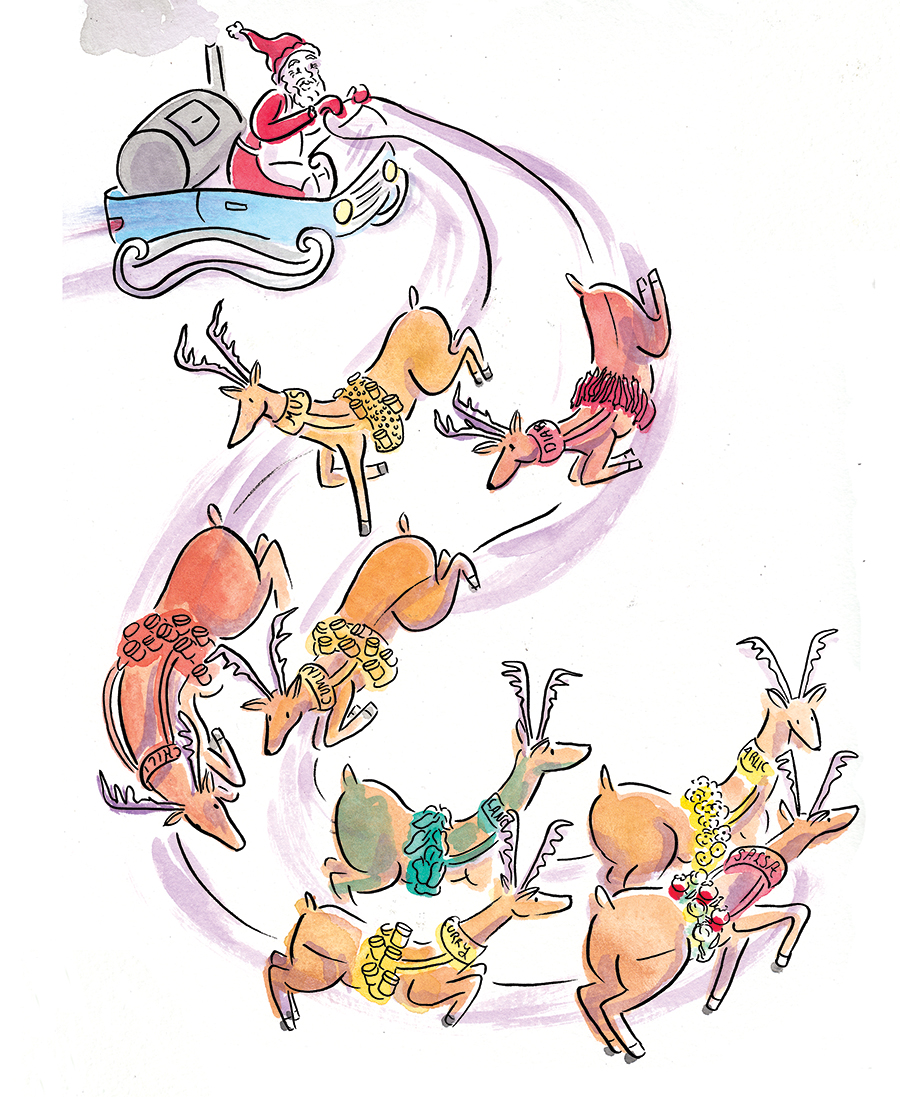
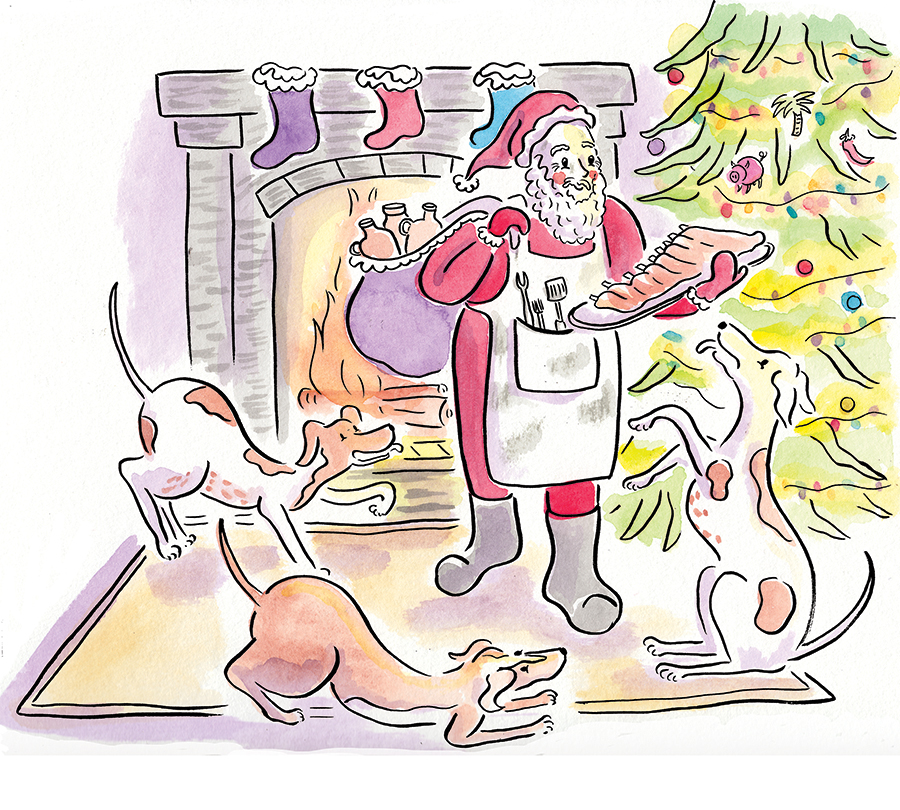
The Night Before Christmas, Y’all

Illustrations by Laurel Holden

‘Twas the night before Christmas, when all thro’ the towns,
Not a creature was stirring, not even the hounds;

The stockings were hung by the chimney with care,
In hopes that St. Nicholas soon would be there;
The children were nestled all snug in their beds,
While visions of barbecue danc’d in their heads,
And Mama in her ‘kerchief, and I in my cap,
Had just settled our brains for a long winter’s nap-
When out on the lawn there arose such a clatter,
I sprang from the bed to see what was the matter.
Away to the window I flew like a flash,
Tore open the shutters, and threw up the sash.
When, what to my wondering eyes should appear,
But a miniature sleigh, with briskets and beer,
With a little old driver, so lively and quick,
I knew in a moment it must be St. Nick.
More rapid than beagles his sauces they came,
And he whistled, and shouted, and call’d them
by name:
Now! Salsa, now! Garlic, now! Curry, and Poblano,
“On! Chili, on! Cumin, on! Mustard and Diablo;
“To the top of the porch! to the top of the wall!
“Now dash away! dash away! dash away all!”
As pine needles before the hurricane fly,
Twist in the wind and mount to the sky;
So up to the house-top the sauces they flew,

With the sleigh full of ribs – and St. Nicholas too:
And then in a twinkling, I heard up above
The clatter and clang of a labor of love.
As I drew in my head, and was turning around,
Down the chimney St. Nicholas came with a bound:
He was dress’d in an apron, from his head to his foot,
And the front was all tarnish’d with grease marks and soot;
A sack full of ribs was flung on his back,
And he look’d like a smoker just opening his stack:
His eyes – how they twinkled! his dimples how merry,
His cheeks were like RedHot, his nose like a cherry;
His droll little mouth was drawn up like a bow,
And the beard of his chin was as white as the snow;
The stump of a pick he held tight in his teeth,
And the aroma of smoke hung around like a wreath.
He had a broad face, and a little round belly
That shook when he laugh’d, like hot soup in a deli:
He was chubby and plump, a right jolly old elf,
And I laugh’d when I saw him in spite of myself;
A dash of wasabi and a twist of his head
Soon gave me to know I had nothing to dread.
He spoke not a word, but went straight to his work,
And laid out the ribs; then turn’d with a jerk,
And putting his finger aside of his nose
And giving a nod, up the chimney he rose.
He sprung to his sleigh as fast as a missile,
And away they all flew to the Pig and the Whistle:
But I heard him exclaim, ere he drove out of sight-
Happy Christmas to all, and to all a good night. 
PS

Priceless

Jump-starting a financial giant

By Jim Moriarty     Photograph by Tim Sayer

If the U.S. Postal Service has to use a forklift or your internet provider has to double its bandwidth to deliver your MasterCard bill after the holiday season you really have no one to blame but yourself. However, if you did feel the need to look around for a convenient scapegoat, look no further than Gary Southard. It wouldn’t be strictly accurate to say that Southard invented MasterCard, but it wouldn’t be entirely wrong either. It’s a bit like asking which Wright Brother invented manned flight. At the end of the day, the hang time is what really mattered — even if decades down the line you end up hoisting your credit limit on Southard’s petard.

Southard, who has lived in Pinehurst with his wife, Sue, for the past 20 years, was the first president of the operating company that administered Master Charge, an infant venture of four California banks that would eventually metamorphose into the MasterCard behemoth that employs something in the neighborhood of 12,000 people today. Southard strolled into the picture somewhere at intersection of serendipity, salesmanship and destiny. “In November of 1966 I was hired from State Street Bank in Boston to go and do the start up, bring this company operational,” says Southard. “So I was the first employee and had the great title of president.” Today, MasterCard ads saturate TV and its billboards are ubiquitous in airports around the world. When Southard saw one in Dubai, his reaction was positively grandfatherly. “I didn’t feel it was my child,” he said, “but I have a warm place in my heart.”

Born in Joplin, Missouri, in 1929 (yes, the man who helped get MasterCard off the ground was born the same year the stock market crash rang in the Great Depression) and grew up in Robinson, Illinois, home of the Heath candy bar. He attended the University of Illinois, was commissioned a second lieutenant in the Marine Corps and is a veteran of the Korean War. In March of 1953, he joined IBM where he quickly found himself seated on the same dais with Tom Watson Sr., the company’s benevolent dictator, and his successor, Tom Watson Jr., being fêted as their salesman of the year. After a brief stint with RCA where he and 18 other IBM refugees made a mostly unsuccessful attempt at starting their computer division, he joined State Street Bank in its mutual fund group.

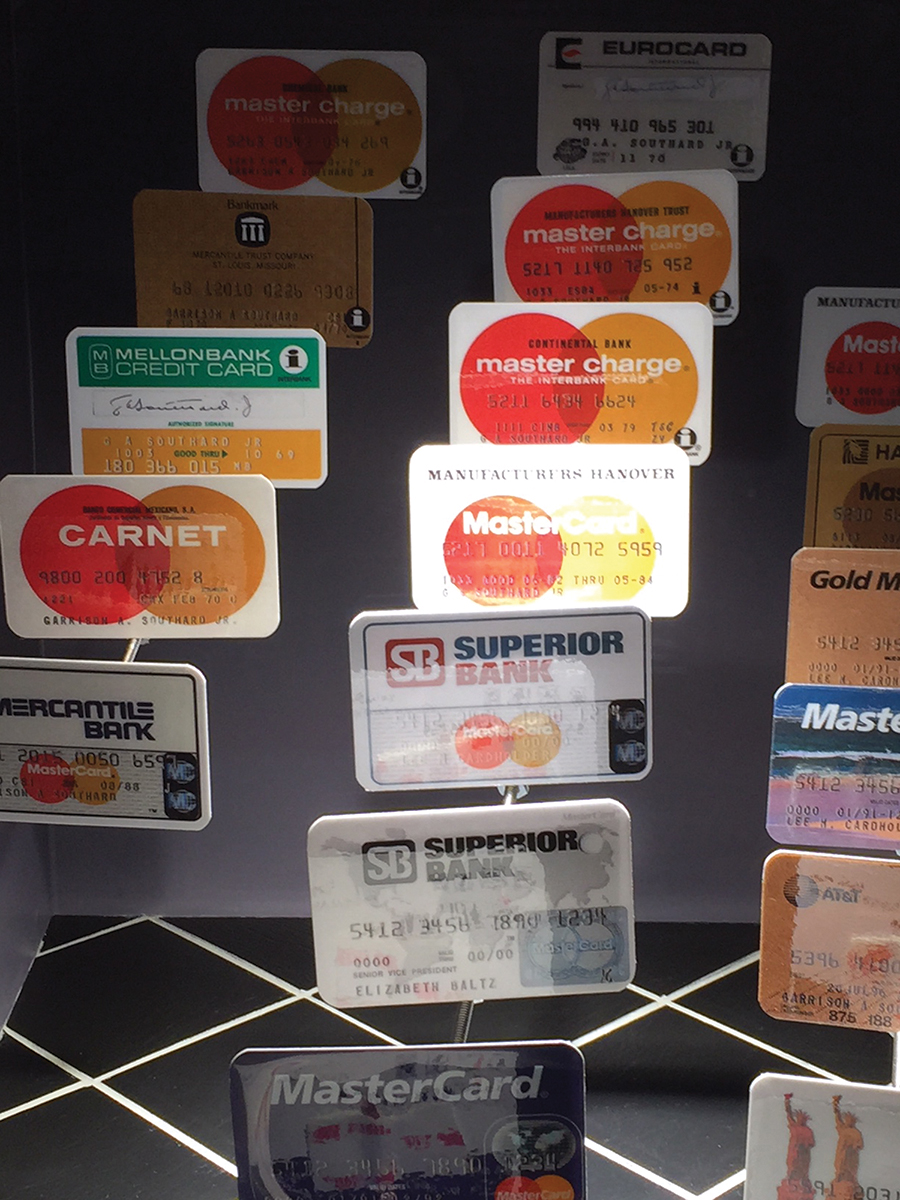
The four California banks that ultimately moved him from one coast to the other — Wells Fargo, Crocker, UCB and Bank of California — didn’t want to be in the credit card business at all but felt they couldn’t avoid it since Bank of America introduced its card, BankAmericard, in 1959. Rather than issue cards separately, they wanted something with a common card face. With Southard’s help, they formed a company to accomplish just that. Its success kicked off a lot of begetting. The California Bank Card Association (the first venture of the four banks) begat Western States Bank Card Association, which begat Interbank Card Association (when the big Eastern banks joined in), which eventually morphed into MasterCard. The entire process took something in the neighborhood of a dozen years and left a footprint in the buying and selling of goods as big as Sasquatch’s.

“The actual first Master Charge card went in the mail on July 7th, 1967. They issued cards to all their checking account holders in good standing,” says Southard. “Theft from mailboxes became a problem. When we started out, we had four Keystone Cops from L.A. as our security.” One of the banks even issued a card to: Jesus Christ, Church of the Latter Days Saints, Alameda, CA. “To the best of our knowledge, it was never used,” says Southard. It wasn’t just security that was primitive. Merchants had to physically look in a printed ledger to see if a card was still good. “What MasterCard is today, they handle 68,000 transactions a second. They do all the authorizations,” says Southard. “Visa and MasterCard are technology companies. We started with punch cards. Young people never heard of punch cards. It was pushing a lot of paper.”

The now famous interlocking circles on the face were the design product of a Los Angeles ad agency, Foote, Cone and Belding. “Then they had the colors of burnt orange and ochre,” says Southard. “Our board of directors was five at California Bank Card Association at the time. The vote was 4 to 1. The one against was me. I would never have made it in the advertising world.”

If Southard was a Wilbur or an Orville, Karl Hinkey, a top executive at Marine Midland Bank from Buffalo, New York, was the Godfather. He wanted his cardholders to be able to use them when they traveled to California. Enter Interbank and all the big boys — Midland, Chemical Bank, First National City Bank (Citibank), Manufacturers Hanover. “Because Master Charge had been so well accepted throughout the west, they decided it would become the common card for Interbank Card Association,” says Southard, who left his home a block from the Presidio Wall in San Francisco to move to New York to run it. And the rest is history, or at least commerce. Mexico, Japan, Canada and Great Britain all began accepting the card. “The growth was amazing,” says Southard.

By 1973, Southard had moved on to form his own consulting business which he kept up until he retired. Why not? By then he knew most of the big bankers at most of the big banks in the U.S., if not the world. He had three children, Gary (Ry), Susan and Jonathan who rarely lived in the same place long enough to learn their teachers’ names. “Military families stayed put more than we did,” says Ry jokingly, who has moved to Moore County and is a fund-raiser for the Boys & Girls Club of the Sandhills in Southern Pines. “I lived in 18 homes before I graduated from high school. Nine states. Twelve school systems.”

If anything, this nomadic existence seems to have had a distinctly artistic influence on Southard’s three children. Ry went to the San Francisco Art Institute where he majored in photography and minored in sculpture and painting. “I’m an artist,” he says, “but I didn’t want to be a starving artist.”

Susan, who moved to Southern Pines last year, is the founder and director of the Phoenix-based Essential Theatre, now in its 28th season. She has a Master of Fine Arts from Antioch University and is the author of Nagasaki: Life After Nuclear War for which she received the Dayton Literary Peace Prize and the Lukas Book Prize, both in 2016.

And Jonathan, the youngest, has a degree in theater from Trinity University in San Antonio. “I was a child actor starting at 6 or 7 years old,” he says. “Never anything big. In Rogers and Hammerstein musicals or Damon Runyon comedies I was ‘the kid.’” Now, the kid’s resume includes being first assistant director on somewhere between 75 and 80 feature films, including Titanic. “I’m about to start my 10th film with a company called Emmett Furla Oasis, very prolific action filmmakers,” he says. It’s a movie starring Sylvester Stallone. “I just did one with him last spring, Escape Plan 2.”

That the children of someone who spent a lifetime in the financial world would find their way into the arts may not be all that odd. Following his divorce in the early ‘70s, Southard was working with First National Bank of Chicago as a consultant when he met Sue who has four children of her own. They would marry 10 years later. “She found a lovely apartment for me on the Gold Coast,” says Southard, so he moved from Manhattan to the shore of Lake Michigan. While he lived in Chicago, if he wasn’t busy walking the city’s famous baseball announcer, Harry Caray, home from a routine pit stop at Sage’s, a local watering hole, Southard became a patron of the arts for the Steppenwolf Theatre Company, using his business acumen to take it from a glorified community theater to regional and national success.

“I was asked to join the board and got involved with fund-raising,” says Southard. “We had these great actors, but we didn’t have enough money to pay them. A lot of them were working two, three jobs trying to stay alive. Gary Sinise. John Malkovich. John Mahoney, who played the grandfather on Frazier. Jeff Perry who’s now with Scandal. Terry Kinney who is directing a play on Broadway. Laurie Metcalfe who’s got a Tony. Sue and I used to take them out to dinner to feed them. We had an open house at the little theater, and we’d bring gallons of jug wine. You’d have guys like Roger Ebert there. We started raising money. AT&T had a big headquarters in Chicago. Eventually, they wound up giving $500,000 and that really put them on the map.” Since Gary and Sue moved to Pinehurst, a village they remembered from a trip to take tennis lessons, Gary has served as president of the board of the Ruth Pauley Lecture Series for four years and another six on the Arts Council of Moore County.

Apparently, he had lots of credit to go around. Like Jonathan says, “I didn’t understand, really, until my adulthood the impact of what he was doing.” If you need a reminder, all you have to do is check your statement.   PS

Jim Moriarty is senior editor of PineStraw and can be reached at jjmpinestraw@gmail.com.

Almanac

Winter Is Here

Deadhead the rose bush. Prune the wild muscadine. Move the front porch pumpkins to the compost pile. 

The days grow shorter, yet from darkness comes light. Behold phlox and hellebores, snowdrop and iris, camellia and winter-flowering crocus.

This month, while the soil is cool, plant spring bulbs and fruit trees, harvest edible weeds and winter greens, and when the work is done, create sacred space to enjoy the season. And beaucoup peppermint.

First cultivated in 1750 near London, England, as an experimental hybrid between water mint and spearmint, this perennial herb has long been used for its magical and medicinal qualities. According to The Oxford Companion to Sugar and Sweets, however, the candy cane came before its flavor. Sometime around 1670, a choirmaster in Cologne, Germany, asked a local confectioner to come up with a special candy stick to help pacify the young folks during the live Nativity on Christmas Eve. Shaped like a shepherd’s staff, this sugary creation surely kept them quiet (and buzzing) until the Magi arrived.

Want to grow your own? If you’re going for potency (read: high oil content), go with black peppermint, named for its dark purple-green leaves and stems. White peppermint has a milder flavor, but crush the leaves between your fingers and feel an instant calm throughout your entire being. Because this aromatic herb can quickly take over an entire garden, and because it craves rich soil and good drainage, container gardening is recommended. Full sun increases its medicinal qualities (and makes for stronger, spicier tea).

Stocking Stuffers

Pear tree seed

• Bird food

• Binoculars 

Peppermint Tea for Two

2 cups water

14 peppermint leaves

2 teaspoons honey

Bring water to boil

Place leaves in teacups; cover

mint with hot water

Steep for 5 minutes

Remove leaves (or not)

Add honey

Steep with fresh tarragon leaves and a quarter-inch slice of vanilla bean to enter a new realm. Add lemon wedge to continue the journey.

In seed time learn, in harvest teach, in winter enjoy. — William Blake

Celestial Shower

As we approach the winter solstice — the longest night of the year — we look to the stars to celebrate a new season, and the final hours of the year. The Geminid meteor shower peaks on the night of Wednesday, Dec.13, until the earliest hours of Thursday, Dec. 14. Sky-watchers may see as many as 60 to 120 shooting stars per hour predawn. Watching with friends or loved ones? Steep a pot of peppermint tea or keep the cocoa simmering on the stovetop for this enchanted celestial event. PS

Their Darkest Hours

For brilliant red poinsettias, keep them under wraps

By Ross Howell Jr.

For years as a grad student and later as an itinerant bachelor, I put off buying Christmas decorations because I didn’t want to move them from one apartment to the next. Holiday decorating for me meant buying poinsettias — usually in foil-wrapped containers — to get instant seasonal cheer with minimal effort.

Besides, poinsettias have a cool history.

Indigenous to Mexico, Euphorbia pulcherrima owes its popular name to Joel Poinsett. Born in 1779 to a wealthy family in Charleston, South Carolina, Poinsett was a world traveler. President John Quincy Adams appointed him as the first Minister to Mexico in 1825. While visiting south of Mexico City, Poinsett saw a plant known among locals as Flor de Nochebuena, or “Christmas Eve flower.” An amateur botanist, Poinsett sent samples back home. Propagated and sold, the plants by 1836 had become known in the States as “poinsettias.”

So what did I do with my once-lovely poinsettias after the holidays were over? I dumped the then-desiccated plants into the trash.

As time passed, my lazy approach to holiday decorating left me feeling guiltier and guiltier.

All those plants I’d tossed. What if I’d tried to winter them over, do whatever mysterious things needed to be done to have them erupt in scarlet again the following Christmas?

Then one evening a message popped up on my neighborhood listserv.

“Is anyone in the area trying to force poinsettias? We are trying to do it but have to travel during the ‘dark time’ and need someone to tend them for us.” The sender was Tom Krissak.

Surely Krissak could give me a shortcut to poinsettia success. I mean, he already knew there was something called “dark time.”

Turns out, Krissak — retired from the funeral business — had sent the message on behalf of his partner, Samuel Johnson, who’s the gardener in their household. Krissak gave me Johnson’s number.

“Oh, I really just took up plants after I retired a couple years ago,” Johnson confesses over the phone.

He tells me he grew up in northern Virginia but has lived all over the world. A mathematician, Johnson first came to Greensboro to teach at Guilford College.

After years at Guilford, he left Greensboro for a time and studied the law, became a practicing attorney and returned to Greensboro for a second time.

“I like trying to keep plants alive,” Johnson says, “but I have just the opposite of a green thumb. If you want to talk about poinsettias, you need to call Esther Maltby.”

Maltby is a neighbor who recently stepped down after seven years as director of the Dunleith Community Garden on Chestnut Street.

“Esther and I worked out a deal,” Johnson continues. “She’s caring for the poinsettias while we’re away. If they live, we’ll split the plants between us.”

So what’s Maltby’s take on the poinsettia project?

“It’s really Samuel who’s done all the research,” Maltby says. “I just agreed to babysit.”

Maltby tells me she grew up in Pakistan, the daughter of Protestant missionaries. Her father was an engineer; her mother a teacher. Poinsettias were prolific where they lived in Pakistan, growing into bushes 8 to 12 feet tall.

“I never gave a thought to cultivating little ones,” Maltby says with a laugh.

Her strategy for forcing the poinsettias to bloom is to keep them in light—but not direct sunlight — for eight hours a day. Then she plunges them into darkness — under cardboard boxes covered by blankets — for the remaining 16 hours of the day.

When Maltby sees red bracts sprouting, she’ll stop the “dark time.” She began the process in mid-October, a little concerned about having enough time to bring the plants to full Christmas glory.

“Samuel messages me every day, asking how the poinsettias are doing,” she says. “I tell him they look good; they’re putting out lots of green leaves.”

She pauses.

“I sure hope this works,” she says.

Me, too.

Regardless, I realize now keeping poinsettias holiday-to-holiday requires way more mindfulness than a lazy guy like me can muster.  PS

Ross Howell Jr. is getting ready for Elon University’s January term, when he’ll be teaching a general studies course entitled “A Brief History of Truth.”

The Untamed Lady

Film star Gloria Swanson dazzled the Sandhills, making a movie here in 1926

By Bill Case

Well before the clock struck midnight ushering in the new year of 1926, Pinehurst was abuzz with the report that a film crew from Paramount Pictures would be visiting the Sandhills in short order to film several scenes for a new movie. Even more electrifying was the news that Gloria Swanson, arguably Hollywood’s biggest star, had been cast in the film’s lead role.

The presence of Swanson’s name on theater marquees had guaranteed blockbuster profits for Paramount in the 26 silent films she had made for the company. Most of these movies were produced and directed by the studio’s legendary filmmaker Cecil B. DeMille. It was DeMille who had lured Swanson to Paramount in 1918, having been mesmerized by young Gloria’s alluring screen presence, first noted in Mack Sennett comedies, and then wasted in worse than mediocre films made by a lesser studio. DeMille realized that the 4-foot-11 Swanson was not a prototypical bombshell beauty. Much of her appeal stemmed from the unmatchable glamour and elegance she naturally projected on screen. DeMille capitalized on these qualities by branding Swanson as the ultimate clotheshorse.

Women focused on Swanson’s attire and appearance and flocked to the cinema to see Gloria adorned in the latest (and sometimes over-the-top) styles. Whether ornamented in peacock or ostrich feathers, turbans, jewels or beads, she defined chic. Swanson’s haute couture attire definitely influenced women’s fashions in the ’20s. Her captivating appearance coupled with torrid on-screen romances with heartthrob actors like Rudolph Valentino and Wallace Reid made for an irresistible combination for moviegoers. Swanson’s success had given her considerable leverage in dealings with Paramount, which now compensated her upward of $20,000 weekly.

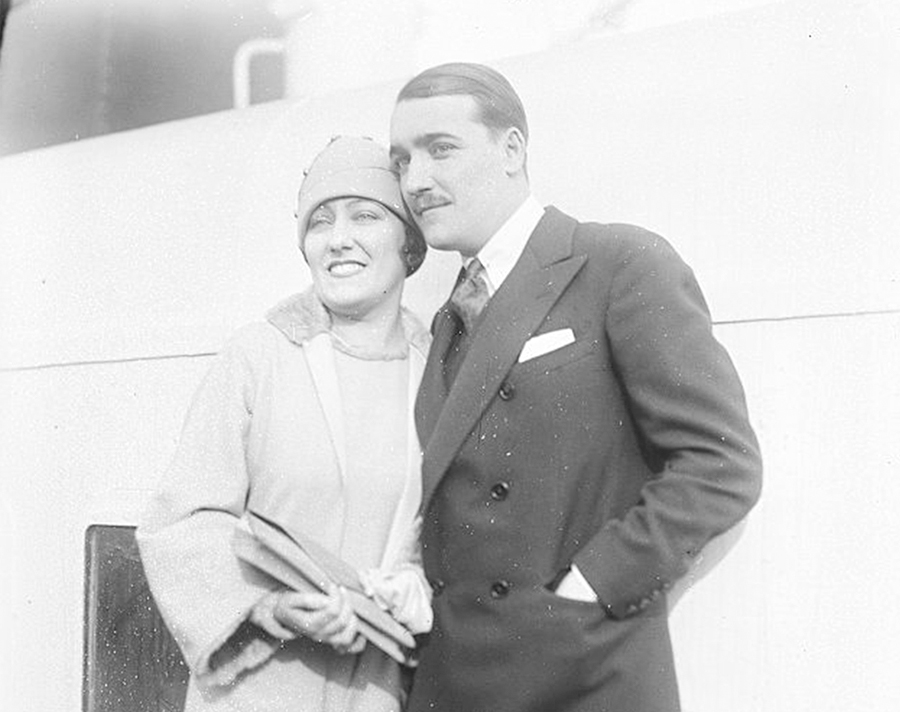
The Hollywood star’s love life also provided considerable grist for the movie tabloids. The 26-year-old had already been married three times — the first at age 17 to fellow actor Wallace Beery, who subsequently became an A-list star himself. She separated from Beery a year later, asserting in her memoir that Beery physically abused her. Swanson’s second marriage, in 1920, to film producer Herbert Somborn seemed more a business arrangement than the product of a love affair. The couple did parent a daughter, also named Gloria, and adopted a son, Joseph, during their union. But that marriage crumbled also. The ink on the divorce decree was barely dry when in January 1925, Gloria married her third husband in France. A member of French nobility, Henri de la Falaise, Marquis de la Coudraye, had met Gloria while serving as her interpreter during the filming of Madame Sans-Gene. Handsome, attentive and multilingual, Henri was an authentic war hero, having demonstrated valor fighting for France in the trenches during The Great War. His status as a marquis allowed Swanson to enhance her already regal stature in show business with a title of her own. The only marital box that Henri could not check was the one marked “finances.” He had very little money of his own despite the fact that his mother was a scion of the Hennessy cognac family. Still, it seemed the couple was well matched and that Gloria’s heretofore turbulent personal life would culminate in a fairy-tale ending. Henri would accompany his wife, the “Marquise,” to Pinehurst for the filming.

Preceding the glamorous couple was the film’s director, Frank Tuttle, who arrived on Monday, the 4th of January, and promptly scouted the area for potential scene locations. Better known in Hollywood circles as a writer, Tuttle had recently directed a handful of movies for Paramount, but had not previously directed Gloria Swanson. The 30-member Paramount troupe, along with Gloria’s co-star, Lawrence Gray, trailed Tuttle into town. On Thursday evening, an eight-piece band, which included legendary Pinehurst caddie Robert “Hardrock” Robinson, greeted Gloria and Henri upon their arrival at the Southern Pines railroad station platform. The stage was set for the shooting of the film eventually to be called The Untamed Lady.

Swanson described the plot of the movie as a “story about a spoiled rich girl (St. Clair Van Tassel) who almost ruins her life with her willfulness but who is rescued before it is too late by a young man who truly loves her in spite of her faults.” The script called for scenarios involving car wrecks and gallops on horseback. Given that Swanson was an experienced horsewoman, Tuttle presumed he would have no need for a double for the heroine’s riding scenes.
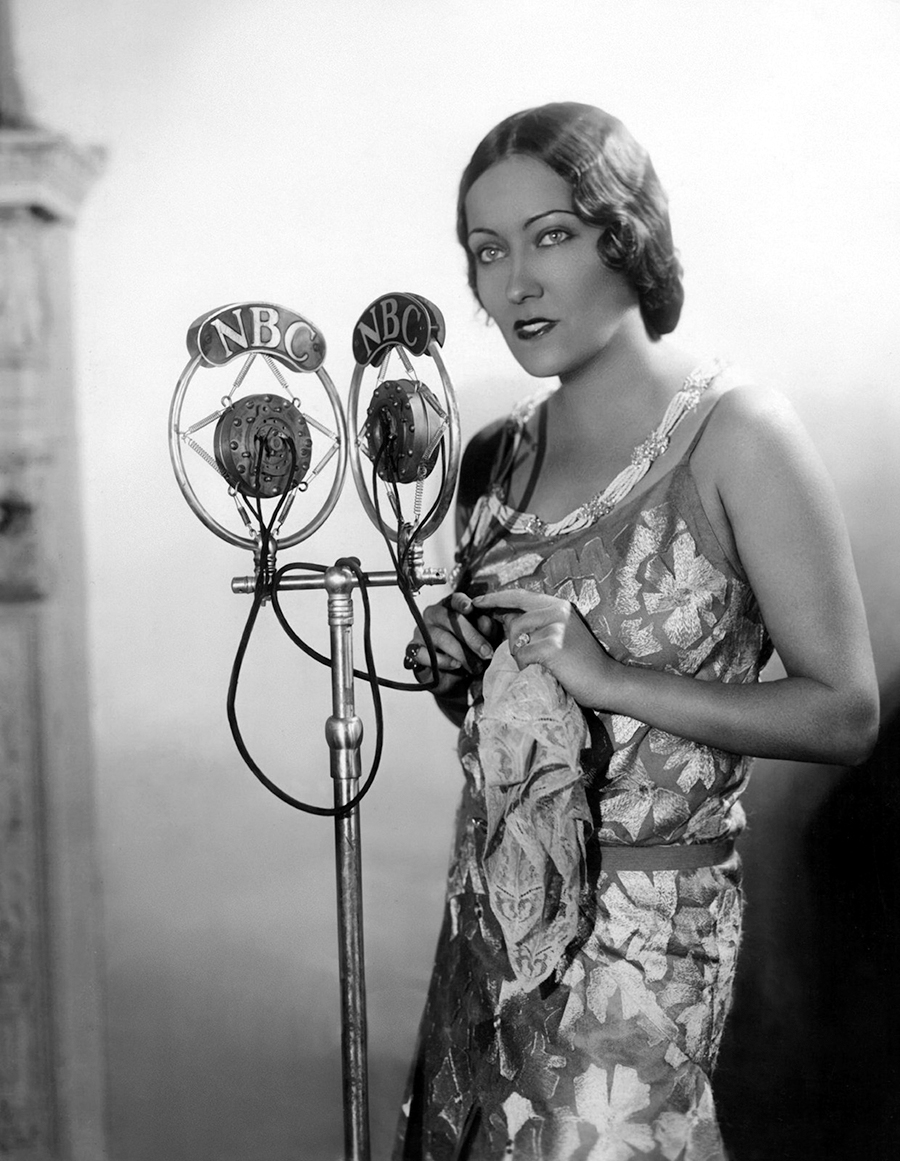
Even Pinehurst golfers, who normally displayed scant interest in cinema, were intrigued by the arrival of Swanson and the Paramount production crew. The Pinehurst Outlook reported that even the best players had “changed their playing schedules in order to be thoroughly acquainted with the doings of the small movie company that has come to this resort.” And interest in the production extended well beyond the Sandhills. The Elizabeth City Daily Advance reported “scores flocked into the Carolina Hotel to get a glimpse of the famous screen actress. Parties of girls, all ‘Swanson fans’ drove in from High Point, ninety miles away . . . Charlotte and other nearby points sent their unofficial and curious delegations. All in all, Pinehurst seethed with an activity such as is common only in boom towns.”

Though Swanson may have appeared happy and carefree to her adoring fans, she was beset with turmoil regarding her future in filmmaking. Frustrated by what she deemed to be Paramount’s poor script selections as well as the heavy workload demanded of her by the studio, Swanson had decided the previous July not to renew her contract with the company. Instead, she had inked a new deal with United Artists (UA), where she anticipated that she, like fellow UA superstars Charlie Chaplin, Douglas Fairbanks and Mary Pickford, would have the freedom to choose scripts she liked. UA would also afford Swanson the opportunity to independently produce movies herself, and do so on a less demanding schedule. But before beginning her new association, she was contractually obligated to make two final movies for Paramount, the first of which was The Untamed Lady.

Swanson believed that Paramount intended to make as much money as it could in these last two films by stripping the production expenses to the bone with “no big directors, no expensive stories, (and) no large casts.” She was particularly displeased with the studio’s selection of Frank Tuttle as the director of The Untamed Lady, later suggesting that “out of insecurity . . . he (Tuttle) pretended to be utterly confident at all times, the dapper Ivy League type who always had the answer ready before the question was asked.” While Gloria was initially inclined to “breeze through” the filming without making any special effort, it occurred to her that she soon would be producing her own movies so, “if the studio was determined to throw me into rote parts . . . I would take all the extra energy I might have used in more demanding roles, and devote it in learning how to make pictures. In other words, I would turn Paramount into my producing school if I could.” And she did, redirecting scenes that Tuttle had already approved, making changes to the script, and consulting one-on-one with the crew’s technicians. Swanson would reflect that Tuttle (who would ultimately enjoy a successful directing career) may have come to regard her as “more willful than the girl in the script.” Nevertheless, Swanson considered the filmmaking knowledge gained during her two weeks in Pinehurst to have been invaluable preparation for the more active production role she undertook in later movies.

Tuttle chose the Sandhills Woman’s Exchange cabin as the location for one scene. McKenzie’s Pond (near what is now Juniper Lake Road) was selected for another in which the obstinate St. Clair Van Tassel insists on driving across an unsafe bridge in flagrant disregard of a warning sign. At the time, McKenzie’s Pond teemed with activity. Picnickers and folks out for a brisk walk enjoyed the serene atmosphere where farmers brought their grain to Jesse McKenzie’s mill, formerly known as Ray’s Mill. Within a decade of the filming of The Untamed Lady, the dam collapsed, and all vestiges of McKenzie’s Pond would disappear. Later the dilapidated remnants of the old mill burned to the ground. Today, visitors would be hard-pressed to envision the site’s once idyllic setting.

Not surprisingly, the marquise and marquis were feted during their stay in Pinehurst. Swanson and her husband were guests of honor at a dinner dance held at Pinehurst Country Club arranged by Mr. and Mrs. Arthur N. Pierson Jr., of Westfield, N.J. Mr. and Mrs. Frank Tuttle, Mr. and Mrs. Richard Tufts, and Lawrence Gray were among the attendees. Charles Picquet, the general manager of Pinehurst’s Carolina Theatre, hosted the couple at the theater for a Friday evening affair. Gloria also made a splash at the Gun Club, which had invited members of the film troupe to take part in the club’s weekly shooting competition. Showing dead-eye proficiency, Swanson took home first prize among the female contestants.
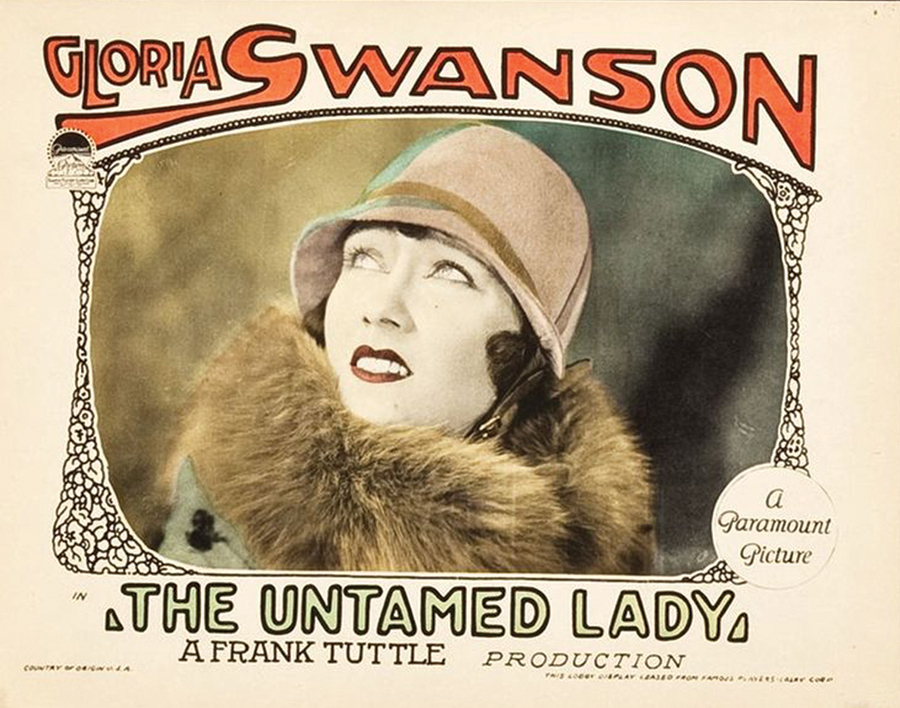
The Sandhills had been chosen as a venue for the January filming with the belief that the location would be southerly enough to be snow-free. But on the eve of the climactic scene in which Gloria was to make a dash on horseback to a log cabin to warn Lawrence Gray’s character that the movie’s villain was in hot pursuit, snow blanketed Pinehurst. With a costly delay beckoning, Tuttle scrambled to find the nearest suitable snow-free location. He found one on Drowning Creek, 15 miles south of Pinehurst, complete with a log home called Mosagiel Cabin. The 3,000-acre site, which later became part of Camp Mackall, was then owned by local attorney J. Talbot Johnson. Tuttle made arrangements with Johnson for access to the property late on a Sunday night. By 9 a.m. the next morning, the crew, together with Gloria, her horse, and 10 Packard automobiles, had made the journey to Mosagiel Cabin. An hour later the day’s shooting began. The Pilot reported that Swanson soon was engaged in “riding the pine woods at more than the speed limit and tearing up the turf in the effort to rescue the unsuspecting fellow at the house.”

Then, after 10 minutes in the saddle, Swanson suddenly stopped the horse in its tracks. Dismounting, she walked it back to the corral and informed the nonplussed Tuttle that she could not go through with any further riding. She made no further explanation for her sudden decision, nor did Tuttle ask for one. In her autobiography, she explained that, “I had the clearest premonition of tragedy as I rode, a voiceless warning that I must never ride again. I knew that Henri’s father had died after a riding accident, but the feeling I had admitted of no logical connection. It was a command of terrifying force . . . I couldn’t dream of ignoring it. Moreover, I knew that nothing would induce me to ever ride again.” Swanson’s double completed the shooting.

The Carolina Hotel prepared sumptuous dinners for the film company at Mosagiel Cabin both Monday and Tuesday nights. At the conclusion of filming, a reception was held at the cabin where some of the locals savored the chance to chat with Swanson and the rest of the troupe. The Pilot reported the impression of one guest who gushed that “Gloria is a peach,” and that the cast was “chummy as if they were home folks.” Gloria was effusive in her flowery praise of the Sandhills. She expressed her love of Pinehurst, Mosagiel, the climate, the delicious atmosphere, the pine trees, the elegant pine straw carpets to ride over, and the wonderfully clean water.

After final editing was expeditiously completed, The Untamed Lady was set for release on March 22. The well-connected Charles Picquet finagled pre-release world premiere showings at the two Carolina Theatres, by having the film air-freighted from Los Angeles at the cost of $200. Two presentations were scheduled for March 17 in Pinehurst with two more scheduled the following day at the theater in Southern Pines. The Pilot reported that “probably one of the biggest crowds ever drawn by a single attraction came flocking into the two Carolina theatres” to attend the movie, and to see how the area’s familiar points appeared on the big screen. The report concluded that “the show was all right. The crowd was pretty near the whole population.”

But when the film made its grand opening the next week, reviews were tepid at best. The New York Times’ review described the film as “a sort of farfetched, modernized conception of The Taming of the Shrew, but as Miss Swanson does not look like a shrew, and never acts as if she really needed taming, one may gather that, taking it by and large, William Shakespeare’s play has somewhat the better of the film.” Gloria Swanson’s rueful observation that Paramount sought to punish her imminent departure with a substandard production may not have been far off the mark.

After completing an obligatory final movie for Paramount, Swanson plunged into her eagerly anticipated association with United Artists. For a while, she became something of an entrepreneurial trailblazer for women in cinema, employing the technical knowledge she acquired in Pinehurst to not only act in her films but produce them and assume the financial risks involved. She looked to Henri for advice, but the marquis’ skills did not really run in that direction. For the most part, Gloria was on her own. And though she now had a good working understanding of the filmmaking process, she had yet to learn how to control costs by keeping shooting on a tight schedule. By the star’s own admission, her first production effort took “nine months to make instead of six weeks.” Far over budget, The Loves of Sunya depleted an unhealthy portion of Swanson’s cash reserves.

Undaunted, she undertook the task of bringing Sadie Thompson to the screen. The story featured a puritanical minister attempting the reformation of Sadie — a prostitute (played by Swanson). Instead the minister falls in love. Swanson cleverly maneuvered the then controversial project past the objections of the censors, and made what was subsequently regarded as one of the best of the silent movies. Swanson felt that Sadie was a potential box office hit, but she harbored a concern that many theater owners might refuse to exhibit the film. If that happened, she could be financially ruined. To make matters worse, Sadie had run over budget and Swanson needed cash, both for her own needs and for financing her next picture.
So it was a beleaguered Swanson who met banker Joseph P. Kennedy (father of U.S. President John F. Kennedy) for lunch to seek financial assistance and advice. It was the start of a star-crossed relationship. After reviewing her finances, Kennedy informed Gloria that her affairs were a mess. He offered to take charge and restore order. Worn down by her debts, and impressed by Kennedy’s business acumen and take-charge persona, Gloria agreed. Before long Joe Kennedy had taken over Swanson’s entire life. He would urge her to sell her distribution rights to Sadie to get clear of her mounting debts. Despite misgivings, she did so. As she expected, the movie became a hit, and Gloria would regretfully watch as the buyer amassed large profits.

As Kennedy was making a concerted effort to wriggle his way into the film business himself, he cajoled Swanson into making a picture in a joint venture with his own fledgling operation, RKO Pictures. Kennedy insisted that the talented Erich von Stroheim direct the movie. But Von Stroheim was notorious for causing interminable delays and that unfortunately occurred on their project, Queen Kelly. Saddled with staggering overruns, the movie was never released in the U.S., though a modified version was shown in Europe. Swanson’s reliance on Kennedy’s judgment as a movie mogul seemed misplaced.

To complicate matters, the two had become lovers. Gloria would later write that though she enjoyed a happy marriage with Henri, she “knew perfectly well that whatever adjustments or deceits must inevitably follow, the strange man beside me, more than my husband, owned me.” Kennedy managed to lure Henri away from Gloria’s side by hiring him to fill a position in Paris as European director for Pathé Studios.

The Swanson-Kennedy film collaboration coincided with the advent of “talkies.” Many silent movie stars were unable to make the transition to sound, but Swanson possessed a clear and pleasing voice and had little difficulty. Her first talking picture, The Trespasser, was a major success, but a second effort was less so. Her professional and personal relationship with Kennedy came to an abrupt end after Gloria questioned Joe’s attribution of certain expenses connected to Gloria’s individual account. The end of their affair came too late to salvage Swanson’s marriage to the marquis and the two divorced.

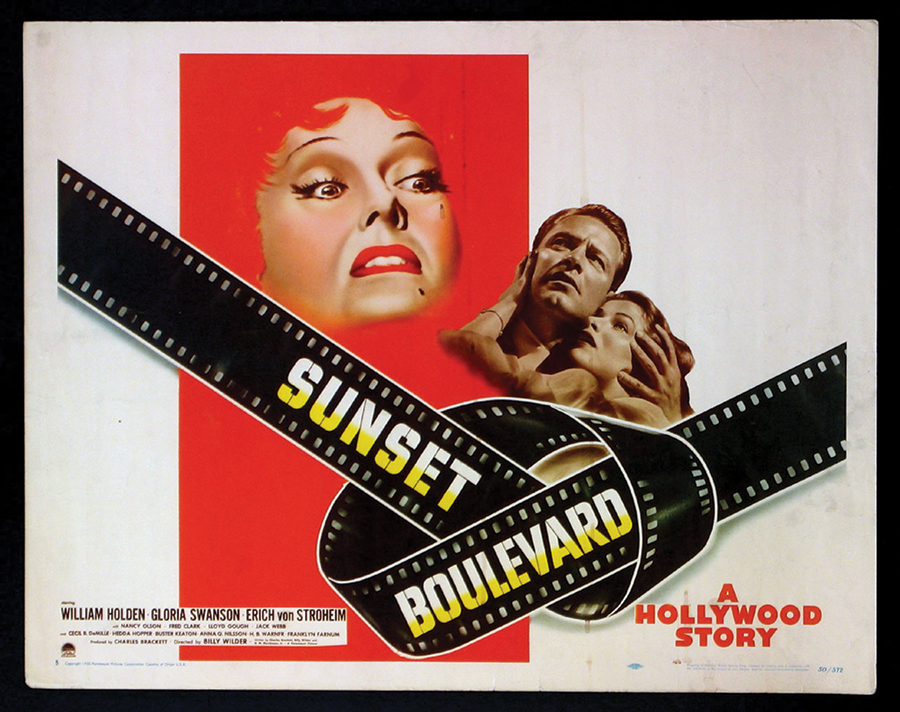
Swanson continued to acquire husbands and make movies thereafter, but her star definitely waned as she entered her 30s and the moviegoing public’s tastes changed. By 1949, she was reconciled to the fact that she would never make another movie, having been off the screen altogether for over eight years. But then director Billy Wilder cast the 50-year-old actress as a faded silent motion picture star who dreams of a comeback in Sunset Boulevard. Swanson’s knowing, on-the-mark performance won an Oscar nomination and capped a remarkable comeback that the character she played — the delusional Norma Desmond — failed to achieve. Today, Sunset Boulevard is regarded as one of the all-time film noir classics.

Swanson considered most of the roles offered her after Sunset Boulevard to constitute pale imitations of her Norma Desmond character, and she turned them down. She made only three films thereafter, though she performed often on stage and in television productions. She busied herself as a nutritional advocate, writing her autobiography, and painting and sculpting. She died in 1983 at age 84.
But what became of the film of The Untamed Lady? Like those who had attended the picture’s March, 1926 sneak preview at the two Carolina Theatres, I had hoped to view how McKenzie’s Pond, the Sandhills Woman’s Exchange cabin and Mosagiel Cabin appeared on screen. However, as is the case with many of the old silent movies, no reels of the film are known to presently exist. In the early days of filmmaking, a studio rarely retained a movie in its library unless someone in charge felt there was a prospect the film might be rereleased in the future. Often, the last exhibitor in a run was not even asked to return the movie to the studio.

“There was no market for a film after its theatrical run,” explains Todd Berliner, professor of film studies at the University of North Carolina at Wilmington. “Studios made a practice of retaining their movies only after television and video became potential ancillary markets, allowing the studios to reap benefit from an existing film.”

The Film Foundation, a nonprofit organization founded by Martin Scorsese and dedicated to film preservation, estimates that 90 percent of American films made before 1929 are lost. The Library of Congress believes that 75 percent of all silent films are lost forever. Nonetheless, there remains a slim chance that The Untamed Lady could turn up one day. In 1978, a cache of silent movie reels was discovered beneath an ice rink in the Yukon. The films were in good condition having been protected by the permafrost from decomposition.

Today North Carolina is no stranger to the cinema. The Color Purple, The Last of the Mohicans, Dirty Dancing and Talladega Nights were all filmed here by major studios. But Paramount’s production of The Untamed Lady stands as Hollywood’s first feature film shot on location in the Tar Heel State. So it was that North Carolina’s film debut and the Golden Age’s greatest female movie star joined to captivate the Sandhills for a fortnight.  PS

Pinehurst resident Bill Case is PineStraw’s history man. He can be reached at Bill.Case@thompsonhine.com.

A Light Touch for Christmas

Creating a Scandinavian Yuletide

By Deborah Salomon     Photographs by John Gessner

Deck the halls with boughs of holly? Probably not.

Chestnuts roasting on an open fire? Old school.

Little drummer boys? March on by.

At this echelon Christmas theme parks — Victorian, teddy bear, monochromatic — become passé. Instead, Southern Pines floral designer Matthew Hollyfield befriends his client, studies her home, her furnishings, her art and personality, even her clothes. He interprets these clues into his plan.

Since Marilyn Grube, a retired federal judge with sparkling eyes and smile, is all about gardening, Matt goes au naturel — local greenery framed by many lights shaped like berries or, flanking the front door, tiny flowers.

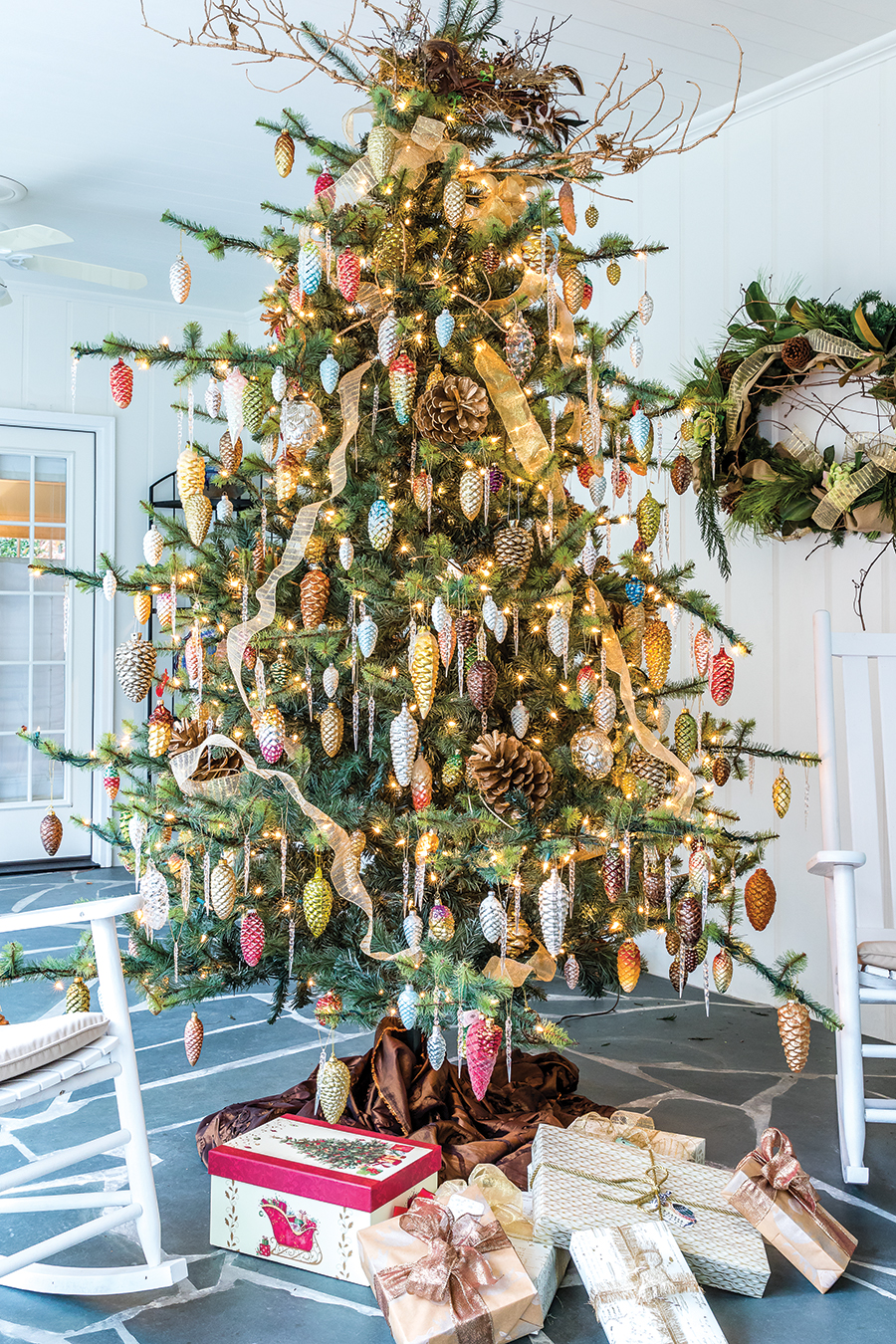
The result tiptoes a line between ho-ho-ho basic and bouffant, as in faux snow and glitter. At Chez Grube, a quiet elegance rules while allowing a few wow moments — a single 9-foot Christmas tree placed on the covered terrace but visible through windows and French doors, decorated entirely with painted glass pine cones, crowned by a bird’s nest rather than a star.

This organic style invites onlookers to come closer, touch, marvel at details.

Marilyn presents interesting material for Matt’s personality profile.

Marilyn and her husband James, both golfing Californians, had visited Pinehurst for 30 years. The East Coast posed an adventure, first Atlanta, then Pinehurst, where they retired in 2008 for familiar reasons: “I felt a connection because Pinehurst was open to outsiders from all over the country. They live here because they want to,” says Marilyn. She sought a house with gardening potential but wasn’t interested in the elongated red brick built in 1969 and hidden from the road by an overgrown berm. The Realtor had never been inside. Let’s have a look, she convinced them.

Not only did the garden (“A forest, really.”) have possibilities, but Jim and Marilyn could envision stripping the house down to its studs and rebuilding with a light, airy, California presence — exterior brick painted white, archways instead of doorways, miles of crown moldings, and wall space for an impressive art collection, from Abraham Lincoln to Morgan horses bred by her father to splash-dash contemporaries, portraits of her sons and mother and a few fanciful photographs. The ceilings are high, the rooms, oversize.

“My husband was a big man . . . he wanted elbow room,” Marilyn says.

Once ensconced, she joined, volunteered, entertained and, of course, gardened. “It is my passion and frustration,” the latter meaning insects and varmints. “I never heard of voles. And the deer! In California, I grew roses; here, camellias and hydrangeas.”

For the first few years, Christmas décor remained traditional. “I was used to family Christmases, a very special time. We went all-out heavy reds and greens.” After Jim died in December, 2013, “I ran away for four years. This is the first Christmas doing it my way.”

How so? She chose Swedish, knowing nothing of bearded gnomes, only that Scandinavian décor is spare and well-designed — also that it might suit her collection of painted and lacquered figurines on Yule themes, exquisitely hand-carved from small-leaf linden or birch, brought from Russia by Ilana Stewart of Old Sport & Gallery in Pinehurst Village.

“Look at the expression in his eyes,” Marilyn says, lifting a Santa, lovingly.

“I design them, then they are painted by families with acrylic paint I bring from the U.S.,” explains Russian-born Ilana, a longtime Delta flight attendant. “Children do the sanding. (These skilled jobs) support many families so the kids can attend university.” No duty is imposed on hand-carried craft art.

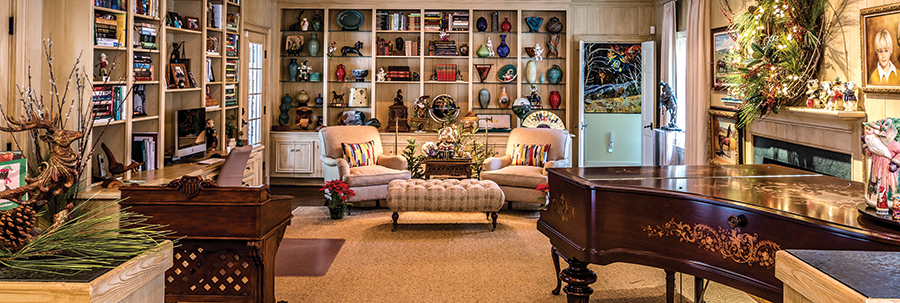
Most of the figurines are displayed in the sunken library, which Marilyn calls a bridge between the kitchen/dining room and the contrasting contemporary living room. The library also houses a grand piano with inlaid panels, built for royalty in 1898 by Bluthner of Germany, purchased and rebuilt for Marilyn’s mother, a concert-worthy pianist, by her father. “This is my most valuable possession, emotionally,” she says. Other appreciative Bluthner owners have been Tchaikovsky, Liberace, Debussy and The Beatles.
That living room is from another world. Sleek, angular retro Scandinavian designs are done in white, turquoise and kelly green except for an heirloom bureau holding family Christmas photos and Jim Grube’s carved desk table, used during his entire legal career, now spread with a puzzle which the family works on during the holidays.

Matt has shifted the Christmas palette accordingly to white and pastels, his population from Santas to angels; all melt into the aura of a cool, bright space created by Marilyn after her husband’s death.

“Matt is bold, fearless,” this devoted client says. Their relationship is one of trust. Matt listens, then plans, then installs without sharing many particulars with Marilyn. Ordinarily, a floral designer works from a concept, a color, a collection or even a price point and presents his or her ideas for approval. The assignment could be one room or an entire house, billed by the hour or job. Services usually include installation and, if desired, deconstruction and packing. Matt and four elves readied the Grube residence for Christmas in about five hours.

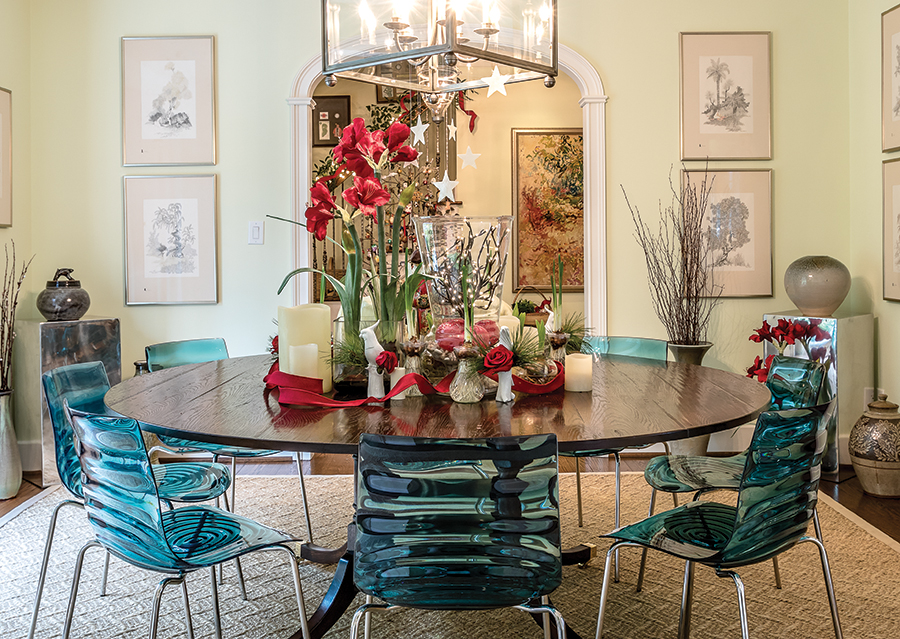
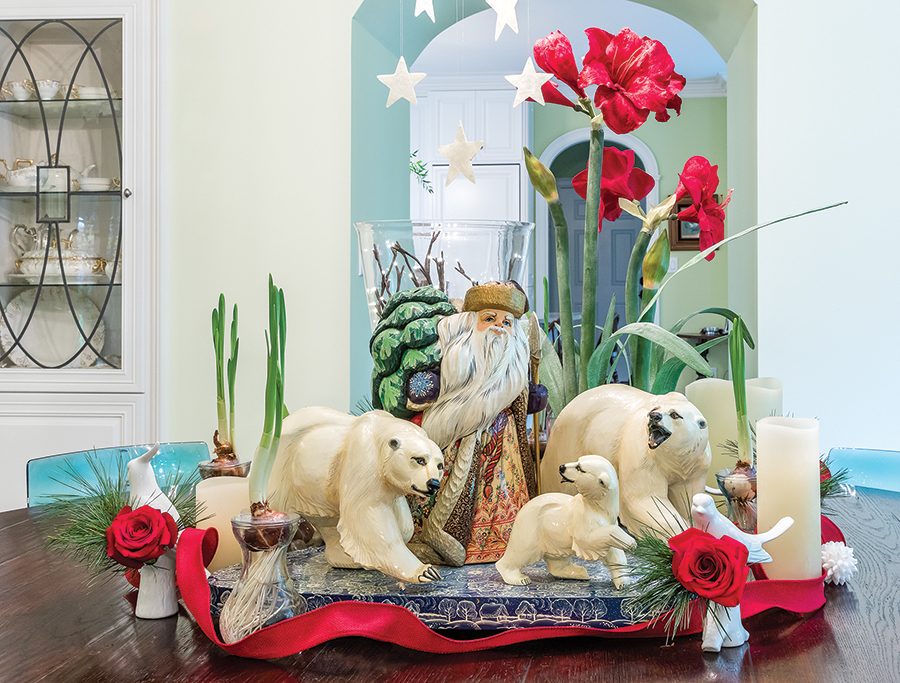
Back in the dining room, “Matt made my table magical,” Marilyn beams, by juxtaposing Papa, Mama and Baby polar bears leading Santa on his journey against red silk amaryllis and paper whites. Must not discount the decorative value of the table itself — large, round, dark, deeply grained wood reminiscent of a mountain lodge, here surrounded by molded acrylic chairs in brilliant turquoise.

Matt follows the natural path into the kitchen where he expresses Noel through fruit — a citrus wreath and rusticus vine over the sink, lemongrass from Marilyn’s garden, an old armature holding apples, garlands of smilax. “Matt and I debated over the oranges and lemons, since they’re not red,” Marilyn says. “But they’re seasonal now in California, which reminds me of home.”

She makes a point for regional icons. An authentic Christmas tree would be a Judean date palm, not spruce or balsam, whereas dinner might feature spit-roasted lamb or goat, maybe chicken, but certainly not turkey — and never ham.

gingerbread cottage from The Bakehouse in Aberdeen, an antipasti plate with green olives and tiny red peppers complete Christmas in a kitchen both glamorous yet  restrained. One full-sized oven, a warming drawer mounted under the island and a narrow Sub-Zero supplemented by wine and cold drink storage in the butler’s pantry suffice.

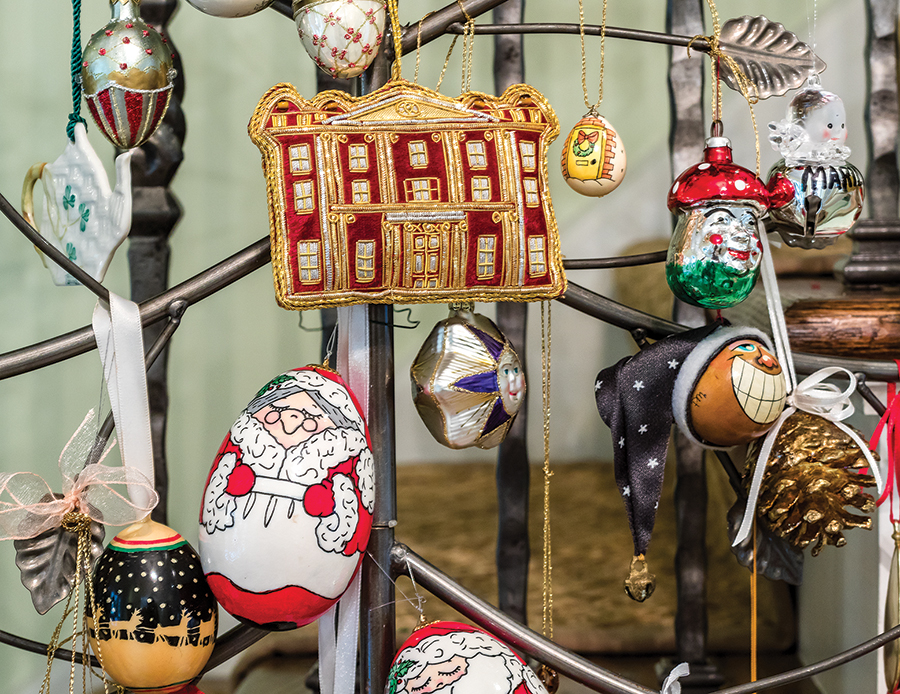
In the front hallway a flat metal tree holds Marilyn’s collection of mini-ornaments, some vaguely Scandinavian, including delicate painted eggshells.

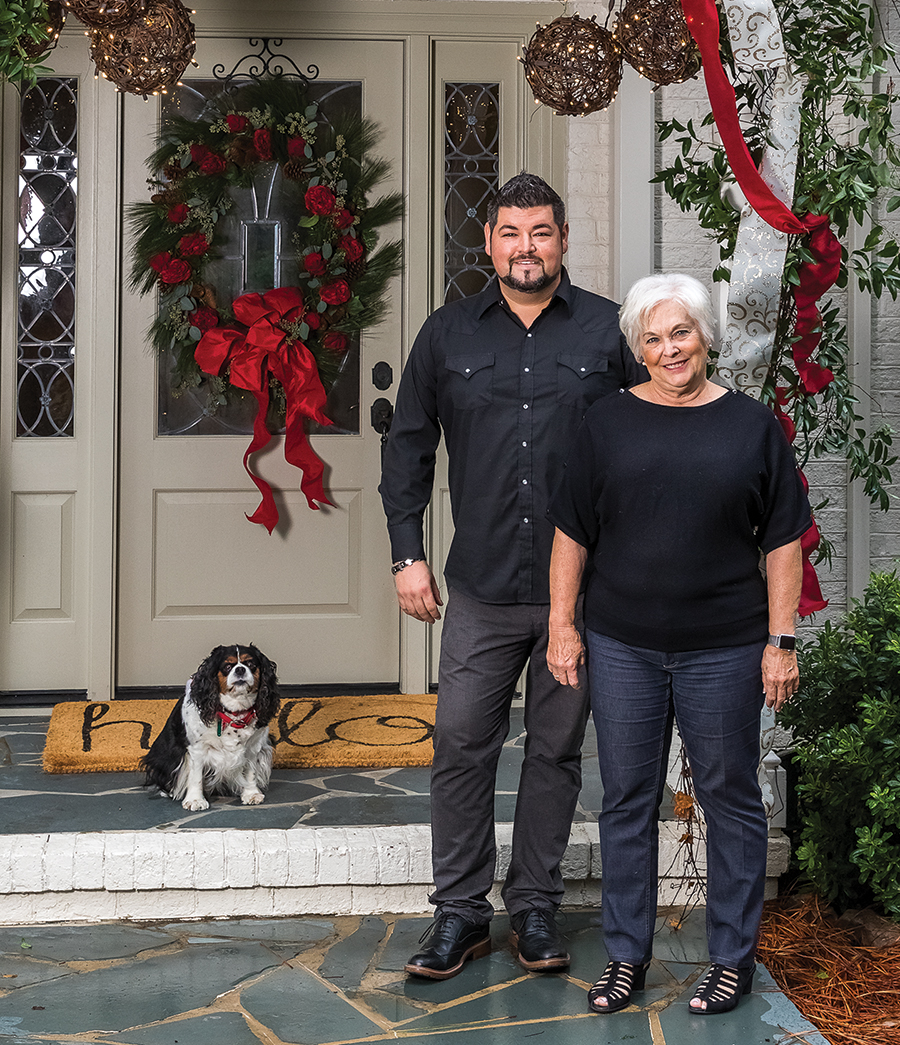
The entrance now makes sense given Marilyn’s leanings toward light, fresh and natural. Wired ribbons and tiny bulbs seem to float through greenery. The door wreath is oval and the mat says, simply “Hello.”

With the job done, Marilyn awaits children, grandchildren, other family and guests. “I have happy memories of Christmas, as a child,” she says. “When the ornaments are unpacked, I feel they are my sentimental friends; they have personalities that go back 30 years.” Beginning now, she will take them forward against a new background, perhaps in a different language:

A God Yul (Merry Christmas, in Swedish) to all … and to all a God Natt.  PS

The Glen Rounds Legacy

Three friends fondly remember a rip-roarin’ ring-tailed artist

By Stephen E. Smith

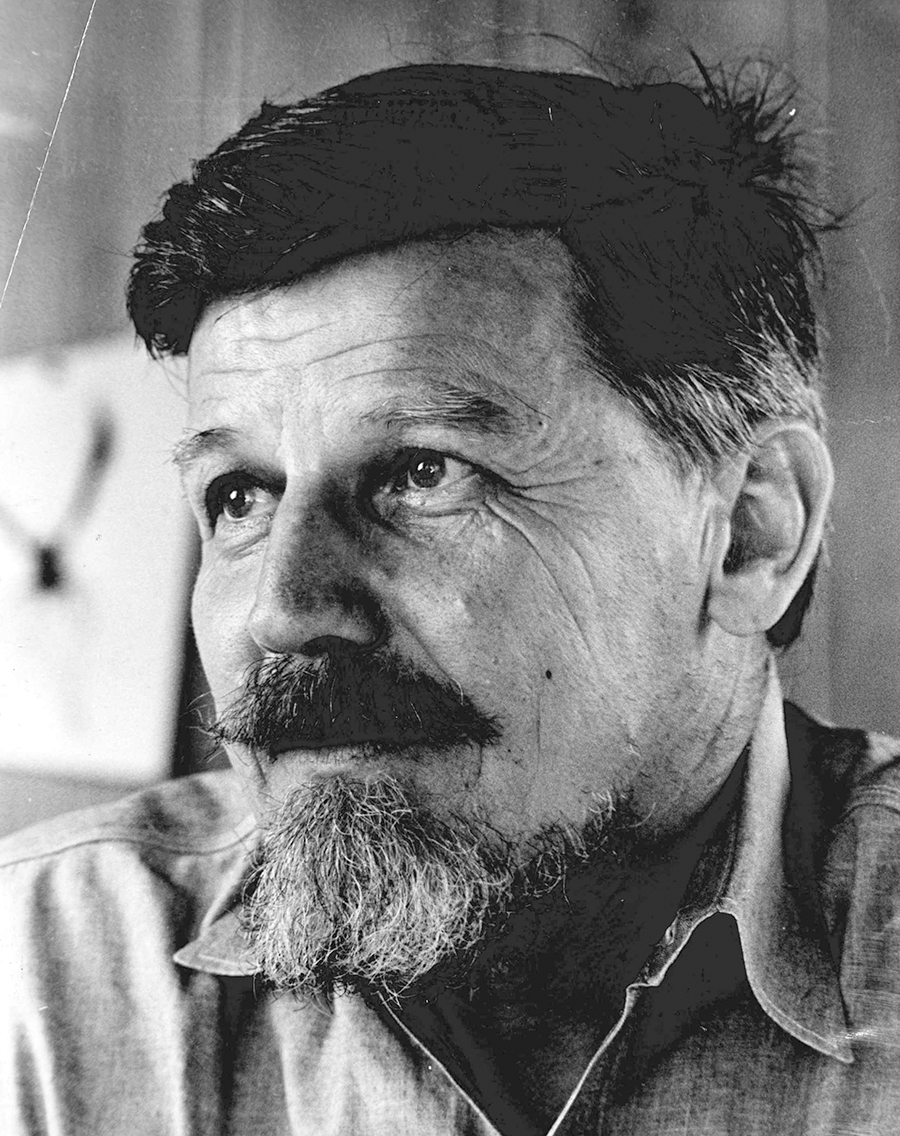
When Southern Pines artist-author-raconteur Glen Rounds was in his mid-90s, he broke his back in a fall and was carted off to the hospital where they immediately removed his gallbladder. A few days later, I visited him and asked, “How are you feeling, Glen?”

“Well,” Rounds said, without cracking a smile, “I feel like those Kansas City girls felt after the Texas cowboys left town: I hurt a little bit all over.”

Rounds was the real deal, an-honest-to-God ring-tailed roarer who authored 103 children’s books. He was also the recipient of the Parents’ Choice Award, six Lewis Carroll Shelf Awards, the New York Times Outstanding Book Award, the Kerlan Award from the University of Minnesota, and the North Carolina Award for Literature.

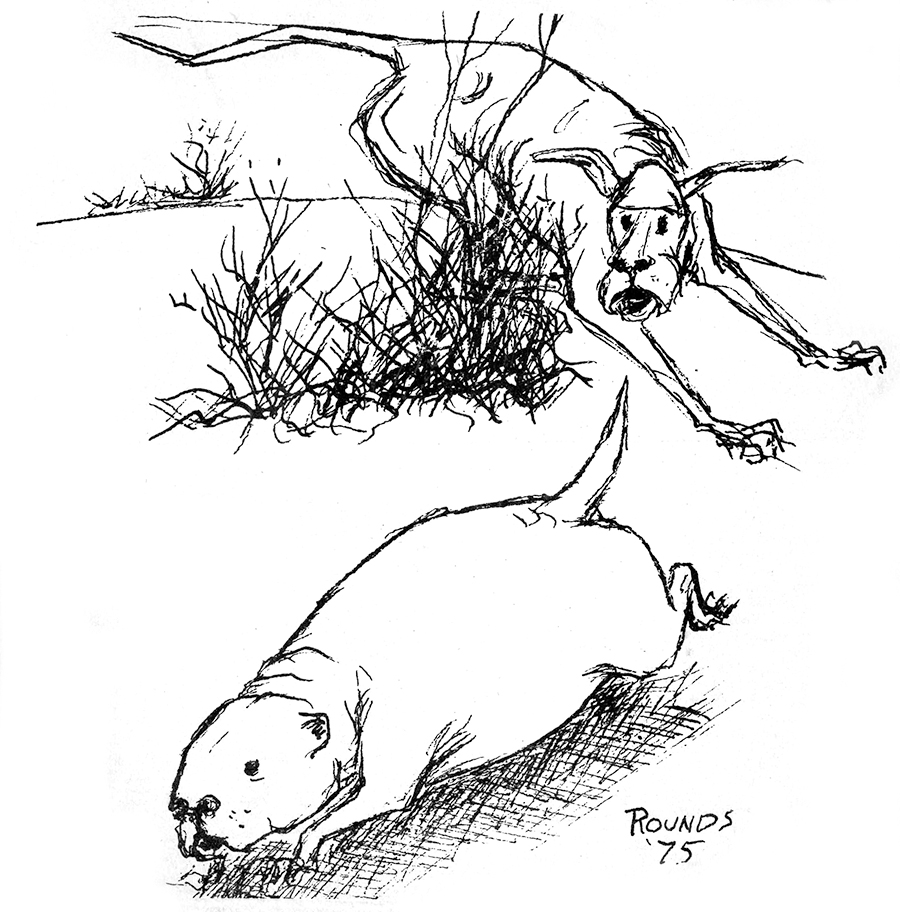
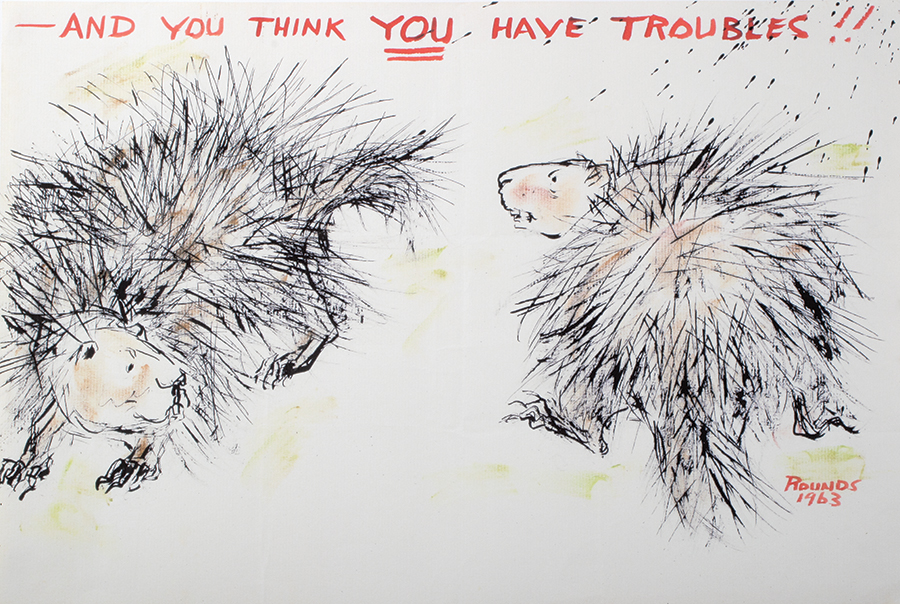
Every Groundhog Day, Rounds’ drawing of a plump, outraged Punxsutawney Phil would grace the front page of The Pilot, and after the spring running of the Stoneybrook Steeplechase, sinewy, intoxicated, loose-jointed partygoers would stagger, waddle and wiggle their way through a Rounds’ drawing, again on the front page. A week or two later an observant reader would notice that the figure in the middle of the Stoneybrook drawing was buck naked. “How’d that get into the paper?” the disgruntled reader and a chagrined editor would want to know.

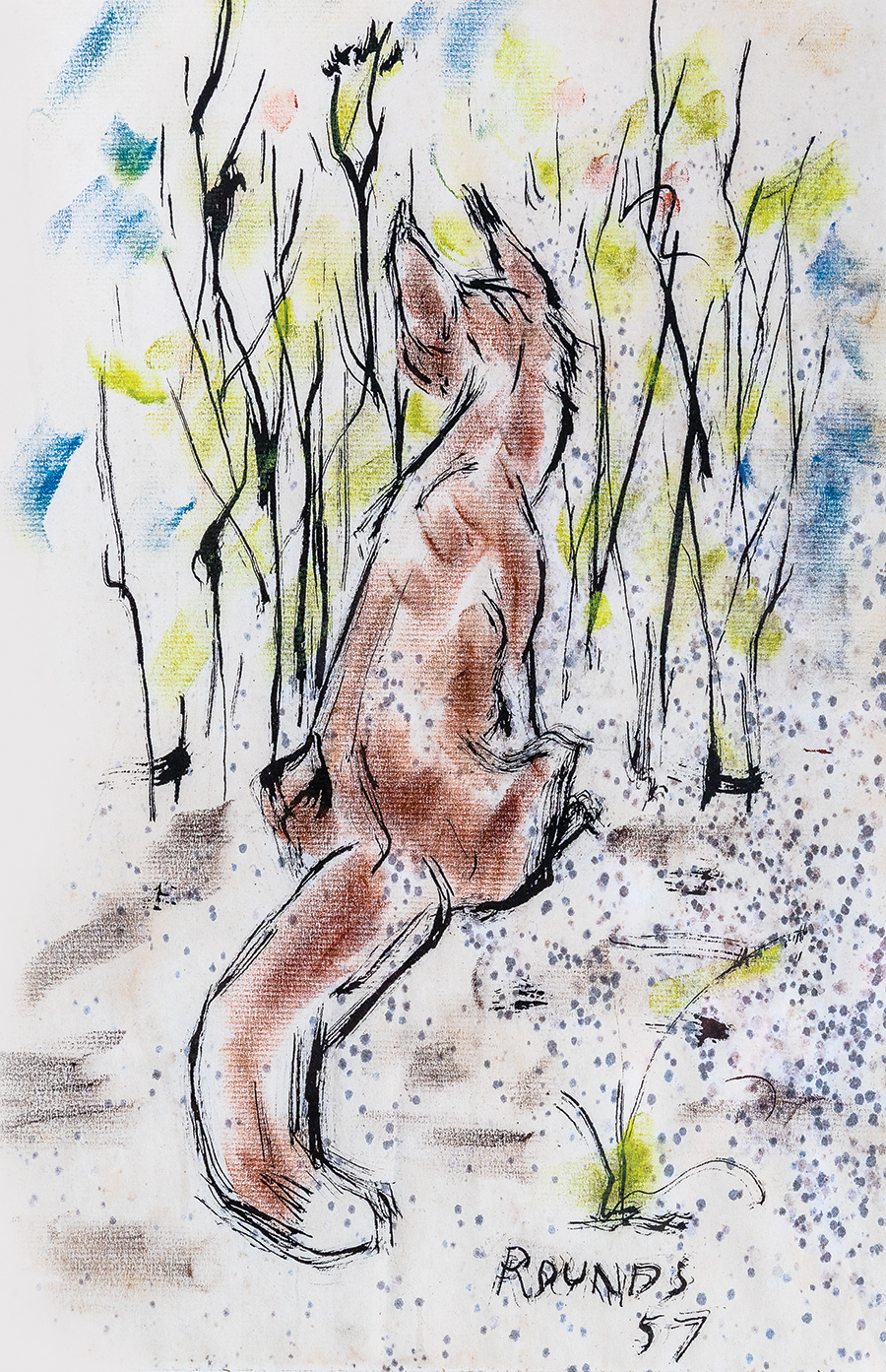
Rounds’ most enduring gifts to the community were the hundreds of drawings he bestowed upon friends and neighbors who were celebrating special occasions. Without warning these minimalist sketches of high-stepping hounds, plump wayward women, and skinny wranglers would appear in mailboxes or stuffed in door jams. Many of them were signed: “The Little Fiery Gizzard Creek Land, Cattle & Hymn Book Co.” A few of Rounds’ drawings survive still on basement walls of businesses in downtown Southern Pines.

But Rounds’ most ephemeral gift — his most perishable legacy — was storytelling proffered in the moment, narratives that don’t survive in his books or his art. He was a teller of fabulous fictions rife with hyperbole, and for more than 50 years, he buttonholed unsuspecting passersby on Broad Street in Southern Pines with yarns that might last an hour or more. If you were his victim on a warm spring day, one of these outlandish tales would imprint itself, despite numerous twists, turns and lengthy digressions, indelibly in your brain. Years later, a random synaptic connection would propel an injured Easter Bunny, procreating porcupines, or a pack of blue tick hounds vividly into your imagination. Anyone caught up in the telling of one of Rounds’ beguiling tales wished for a videocam to record every word, every facial tick, the subtle smile that graced his craggy face.      

Glen Rounds died on September 28, 2002 at the age of 96, but a few recordings of his deftly choreographed tales survive. This charming anti-Easter fable, tentatively entitled “A World Full of Bad Rabbits,” is transcribed from an audiotape I recorded in the late ’80s.

“It all started years ago when somebody mentioned mad March hares. Why would the hares go mad in March? Nobody knew. It might be part of March or into April, this madness with the hares.

“So this old rabbit, he’s an old-timer, sees this paper go blowing across and right down in front of him. It was The Pilot, I think, and he looked down at that thing and all of a sudden he makes some strange noises, jumps about three foot in the air and takes off screaming as much as a rabbit can scream and bumping into sagebrush and cactus and stuff. And the other rabbits who hadn’t been inoculated said, ‘What the hell ails him?’

“The paper said something about Easter being 13 days away, and when the older rabbits saw this, they commenced to have fits. Why did the mention of Easter drive these rabbits into madness? It was always the older ones that went mad. So I researched it and ran it down and what I found it was the old rabbits who’d been through a lot of Easters who were going into this madness.

“Well, it was simple enough! You know yourself that everybody’s going out for the Easter bunny. They have Easter egg hunts in the churches and the President of our United States, if he’s not too busy this year, will have an Easter egg hunt. It’s the Easter bunny laying all these eggs! Now birds go around laying eggs in the most unsuitable places and in that color and this. But rabbits don’t lay eggs unless they’ve been forced to do it.

“Compare the anatomy of a bird with a rabbit, and the bird is especially made to excrete an egg very neatly — and enjoy it! But a rabbit isn’t made like that. Not only are they forced to lay eggs about this size but in various colors. A lot of people see an old rabbit and he looks like hell and they say, ‘He must have been hit by a car.’ Car hell! He just got through laying a dozen Easter eggs. I got drawings of a rabbit that went through two seasons of laying eggs like that, and he can hardly get around.

“After a rabbit has laid an egg, he’s never the same. It does something to their psyches, and it does something to their egg-laying parts. So what we’re trying to do is say, ‘Please, look. Why? If you want Easter eggs in colors, the birds will lay them everywhere. Let the birds do it; they enjoy laying eggs.’ If we don’t do something we’ll end up with a world full of bad rabbits.

“So we need to go to the churches and the President of the United States, well-meaning people, but where the hell they got the idea it was the business of rabbits to lay eggs I don’t know! So I’m forming an organization that says write to your friends, ‘Save the Easter Bunny!’ And then send five cents to me, that’s all a membership costs, and I’ll put up big billboards that say, ‘SAVE THE EASTER BUNNY!’ We need a concerted effort by everybody. See, they have a law about you can’t abuse a dog; it’s cruelty to animals but nobody’s worried about saving the Easter bunny’s butt. Five cents isn’t too much to contribute.” 

Stephen E. Smith is a retired professor and the author of seven books of poetry and prose. He’s the recipient of the Poetry Northwest Young Poet’s Prize, the Zoe Kincaid Brockman Prize for poetry and four North Carolina Press awards.

By Denise Baker

I was a new professor of visual arts at Sandhills Community College when I met Glen Rounds. Glen’s wife Betty, Stephen Smith and I were trying to get Glen to commit to an art exhibit at the college gallery. Glen finally granted us permission with one condition, “The Girl,” that was me, would come over and help him go through his artwork and pick the pieces to be in the show. Every time I knocked at the door of his home on Pennsylvania Avenue, he would yell to Betty: “The Girl is here!”

I was ecstatic. For every piece of Glen’s art I chose, there was a story to be told. Anyone who knew Glen knew he loved to chat.

I don’t think I was prepared for the massive art collection that Glen accumulated over the years. He was the type of artist who sketched on anything, and one of his favorites was the old Pinehurst Gazette, which used to be extremely large. The images were great, but Glen drew on both sides so if you framed one side you buried the other. Glen was a recycler long before it was fashionable and I was captivated by his work, and of course his stories of working with Thomas Hart Benton and rooming with Jackson Pollock who, at the time, was a student of Benton’s.  

Glen had flat files of etchings, woodblock prints, lino prints, ink drawings and colorful sketches from all of the children’s books he was most famous for. The early linoleum prints that Glen created had a touch of Thomas Hart Benton with The Grapes of Wrath as subject matter. As a printmaker, I was in heaven and I convinced Glen that the printing plates and woodblocks should be on exhibit with the rest of the art. I am a proud owner of several of Glen’s early prints, and they are among my most prized possessions.  

Another thing that Glen did as I was trying to go through the thousands of pieces of art was to stop me and say, “Let me show you something,” and he would proceed to carve delicate images in oversized erasers. The amount of detail that Glen could get in a 1 x 2 inch eraser was magnificent and just watching those enormous rough hands do magic with an X-Acto knife was worth every second of lost curating time. It took me more than nine months to go through his art, but I got to hear amazing stories and watch a master at work. Glen gave me one of his hand-carved erasers with a cowboy and a horse on it, and to this day I love to stamp envelopes with it. The stamp reminds me of the stories he told of the Wild West and heading out with his artist friends.   

Glen loved to walk to the Southern Pines post office twice a day and talk to everyone he saw along the way. Decked out in his rugged old denim jeans, dapper in his long gray hair and mustache, he was ready to tell a story to anyone who had the time to listen. He was truly the essence of the classic eccentric. I was lucky, I got to listen, watch and absorb everything he offered “The Girl.”  

Denise Baker taught visual arts for 34 years before retiring from Sandhills Community College. She’s a printmaker, artist, teacher and an ambassador for Moore County Cultural Arts.

By Dr. Michael Rowland

Glen Rounds and I met as patient and doctor. He’d undergone multiple surgeries and radiation treatments, and I convinced him he needed another surgery. I asked him to follow me to my secretary’s office. I always walked at a very fast clip, and when I reached the office, I expected him to be a good distance behind me. Instead, he ran into my back. At age 77, he’d kept up with me, step for step, and was not even out of breath.   

We spent six long hours in a complex surgery — and he recovered uneventfully, living almost 20 more years, during which we enjoyed a close friendship. There were other complicated surgeries, but Glen was amazingly resilient, like the Energizer Bunny, practically bionic. 

Our relationship was complex, starting as doctor/patient and evolving until we were like brothers, with the same feeling of trust and love such a bond implies. He’d been around so long, doing so many different things in so many different places with so many wonderful people, and he had a way of making each person he interacted with feel important. He shared parts of himself generously, and he made you feel like family. You’d get busy and miss seeing him for a time but when you next met him it was like you’d seen him just yesterday. He had that very special and unique talent and personality that immediately put you at ease. I always wished I had half his charm.

When Glen learned that I was building a barn on my farm, he proudly told me a story about his uncle, the doctor, who designed and built a barn, with Rounds’ help. Wood was a rare and expensive commodity on the Plains, and the trainload ordered by his uncle was systematically measured, cut, drilled and notched according to his uncle’s directions. The locals continually ridiculed Rounds’ uncle for wasting and destroying all that expensive wood. The next spring a barn raising was held and the pieces of the puzzle came together quickly and precisely, just as his uncle had planned, shaming the neighbors who had mocked him all winter as he sawed and drilled the boards into neat piles.   

Eventually, our joint efforts to keep him healthy, sometimes without his full cooperation, brought our friendship to the most personal level. I believe he was grateful for the extra decades we achieved together. We would talk about what we would do when he reached 100, and he would just groan.

 One of the four photos hanging in the dining room where I eat breakfast was taken in early September 2002, just a short time before Glen’s death. He and I talked that summer as my barn with living quarters upstairs was being built. We moved in during August of that year. Glen wanted to take a tour of the new barn because he’d worked so hard with his uncle those many years before. Glen was using a wheelchair and made use of our new lift my parents had me put in so they could get upstairs. Knowing this photo was the last one taken of him makes it extra special to me.  

When Glen died, I could not have felt greater loss. And yet he’d said to me on multiple occasions that he was ready for the next destination and weary from the problems and pain his failing body forced him to live with. I wasn’t ready for our relationship to end.  There is always guilt a physician feels when a patient dies, yet I have the consolation of his having lived a long and productive life that brought so much joy to so many. I still miss him dearly. His picture, looking like Paladin (Have Gun Will Travel), is in front of me every morning. I still feel he is a part of my life since I can look up and see him smiling down on our dining room, one of the last places he visited before leaving us for good.  PS

Michael Rowland is an organic grass-fed beef farmer, retired general surgeon, and nutrition lecturer.

The Sidelines of Thanksgiving

For good reason, as the formerly living symbol of our greatest national feasting day, an exquisitely roasted (or deep fried) turkey is the dramatic star of most Thanksgiving tables.

But like a successful long-running play, it’s often the supporting cast of  memorable traditional side dishes that typically makes the production come together so splendidly. Dishes from the sidelines of Thanksgiving , after all, are often where home cooks and chefs alike  show off their greatest skills and true culinary magic.

Everyone has their favorites, including six gifted restaurateurs from the Sandhills who graciously offered to share their favorite Turkey Day side dishes with PineStraw’s hungry readers.

Frankly, we can’t think of a more fitting way to give thanks.

Warren Lewis

Chef Warren’s

Squash Medley

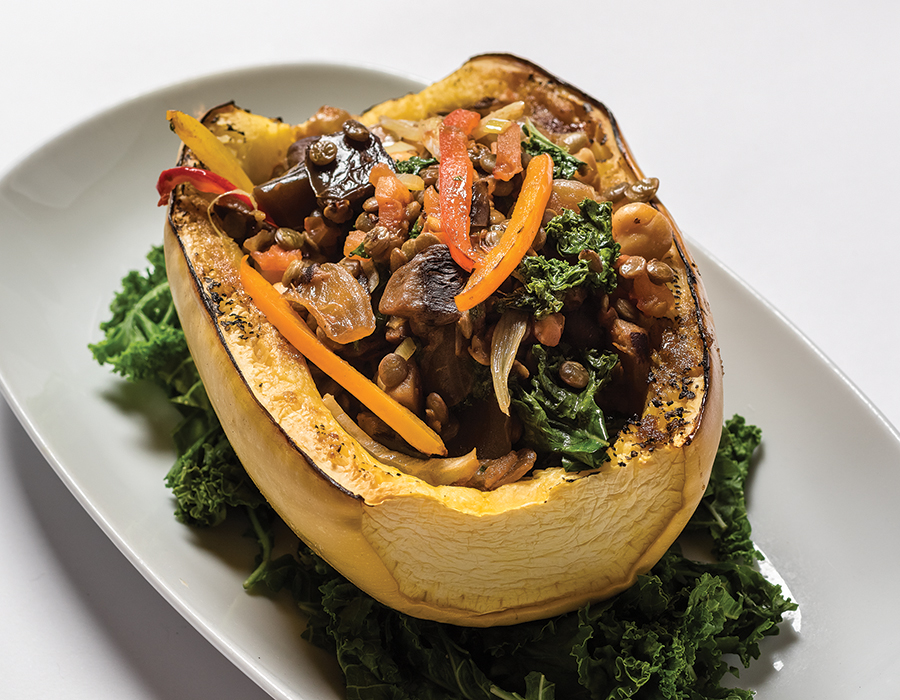
Spaghetti squash has, as a child, amazed me. It’s squash and spaghetti all at the same time! Paleo sasta! Brilliant! Add a bit of brown sugar and life is good.

Marianne throws a huge Thanksgiving dinner every year. Spaghetti squash is usually on the menu. A few years back we had a couple of vegetarian friends coming by, last minute. I was tasked with putting together an entree for them. Eyeing the freshly baked squash, I quickly got to work. With the layering of flavors, the carnivores ate more than the vegetarians, and thus, this dish was born.

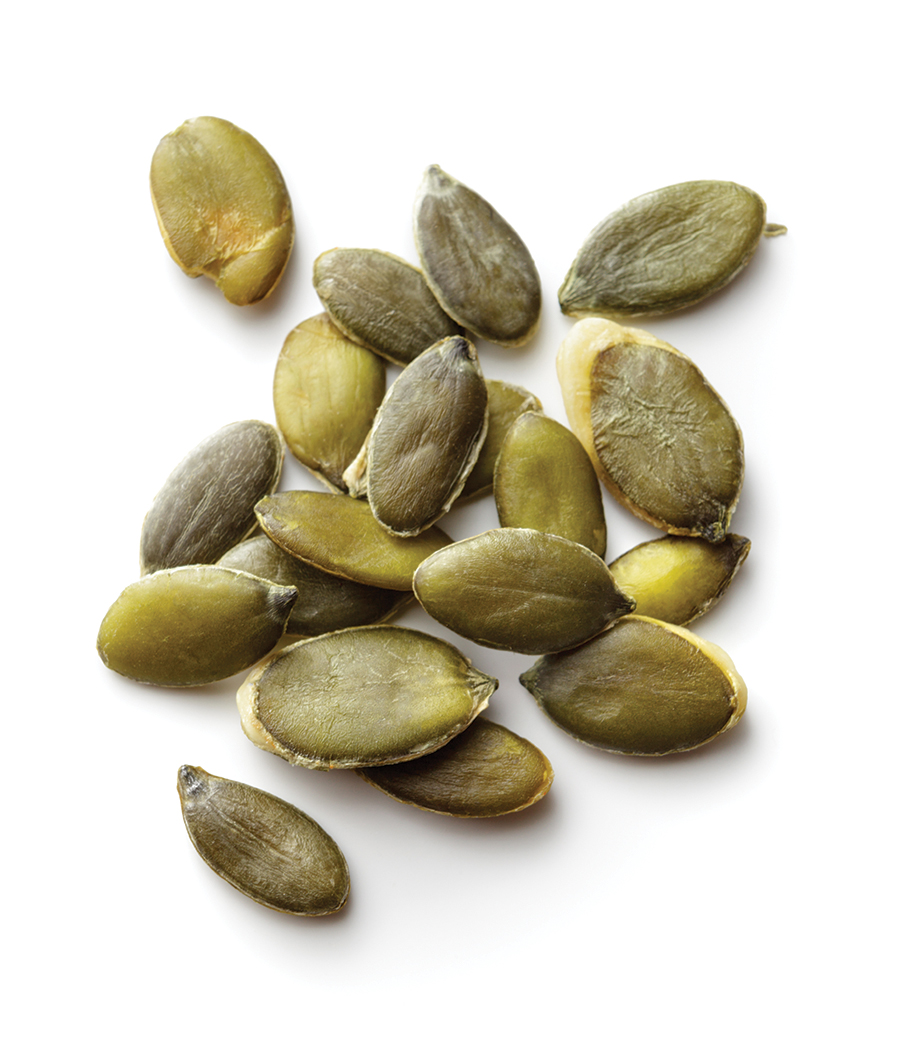
Preparation is pretty straight forward. The squash is split in half and the seeds removed. The insides are seasoned with salt, pepper and a bit of dark brown sugar. It’s baked at 350 for about an hour. When the squash comes away like spaghetti, it’s done.

The eggplant is diced and salted in olive oil, while the lentils are boiled away in slightly salted water.

To assemble the dish, I toss some shaved onions in a pan with some more olive oil. When the onions are translucent, the eggplant and lentils are added, maybe some kale and sweet bell peppers. I like to finish the mix with some salt and pepper, feta and fresh herbs.

Peter Hamm

Chapman’s Food and Spirits

Rissotto with Squash and Greens

This recipe is a great fall addition, easy to prepare ahead of time and finish last minute for guests. It’s great to pair with poultry, fish or steak. Since amounts will vary, it’s a basic guide of ingredients and not a precise recipe.

Start with a basic arborio rice purchased from the grocery and follow preparation instructions. Roast acorn squash, seasoned with salt and pepper until golden and tender. Take whole butter and fresh garlic and sweat until translucent. Add in the cooked squash and deglaze with white wine. Next, add the risotto base, chicken stock and heavy cream. Lightly simmer until rice absorbs and begins to thicken. Fold in fresh spinach or choice of green. Finish with Parmesan cheese and season to your liking with salt, pepper and chili flake.

Orlando Jinzo and Sonja McCarrell

The Leadmine 

Brussels Sprouts with Bacon Marmalade
and “Man Of Law” Mustard

Shopping List:

Brussels sprouts 1 pound, French Dijon 4 ounces, French grain mustard 4 ounces, yellow mustard seed dry 4 ounces, slab bacon 6 ounces, Vermont maple syrup grade A 4 ounces, apricot nappage 2 ounces, coarse Kosher salt, fresh ground pepper, peanut oil, raw sugar, apple cider vinegar 4 ounces, Man of Law six-pack.

Cut Brussels in half from root to tip, leaving as much of the tender stem attached as possible.  Deep fry (great way to cross-utilize that turkey fryer) 375-400 for up to 1 minute — you’re looking for a nice bronze color, season with salt and fresh cracked pepper.

Drizzle with maple syrup and be generous with the Man of Law Mustard and Bacon Marmalade

Man of Law Mustard

Boil dry mustard seeds in water and a can of Man of Law IPA until hydrated. Drain and let mustard seeds soak overnight in Man of Law IPA. Combine Dijon, whole grain and soaked mustard seeds with liquid. Add more Man of Law to get your desired consistency and season with salt and pepper

Bacon Marmalade

Cut bacon slab into large cubes or lardons and cook in the oven at 375 for 15 minutes or until caramelized all around. Drain very well on a paper towel to remove all the fat. Heat sauté pan medium high and return the bacon to the pan with raw sugar, apple cider vinegar and apricot nappage until nappage is completely dissolved. Cool to room temperature and store or use immediately.

Karen Littlefield

Filly & Colt’s Restaurant at Little River Golf and Resort

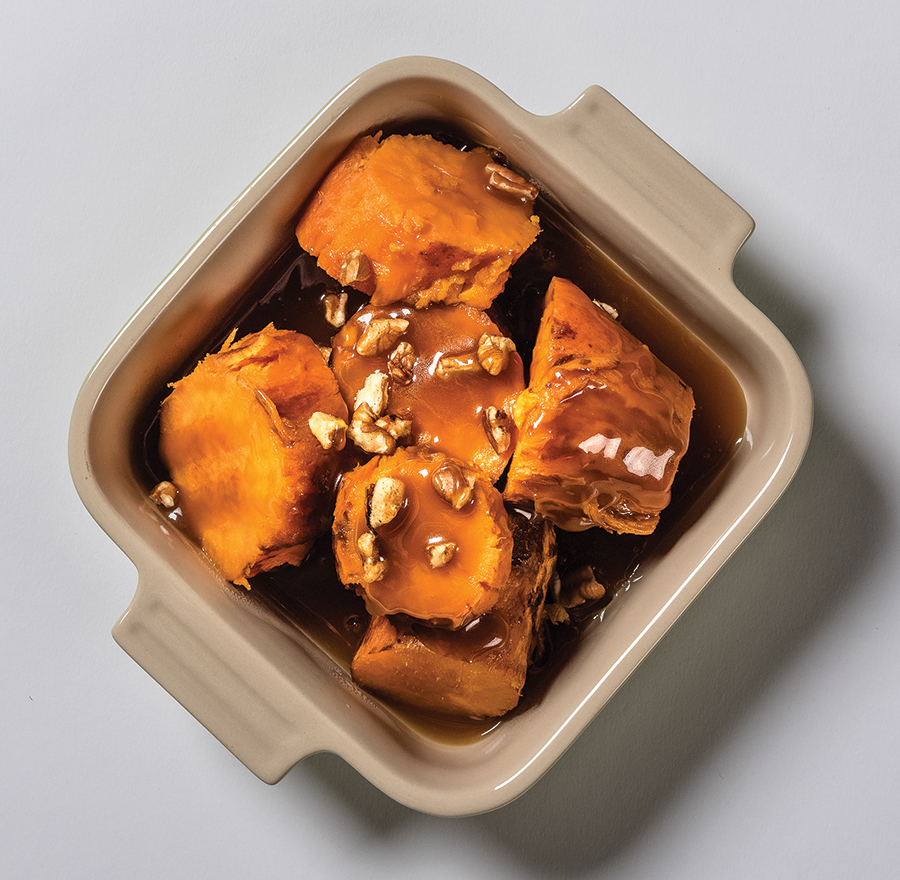
Candied Yams

4 sweet potatoes — baked with skin on till tender in 350 degree oven

1 stick butter

1 cup dark brown sugar

1/2 teaspoon Salt

1/4 cup dark rum or bourbon

Melt butter and brown sugar to soft ball stage

Add liquid and stir — this will be a thick syrup.

Slice peeled sweet potato into syrup and coat well.

Optional — garnish with chopped toasted pecans.

Leslie Philip

Thyme & Place Cafe

Corn Pudding

1/4 cup sugar

3 tablespoons all-purpose flour

2 teaspoons baking powder

2 teaspoons table salt

6 large eggs

2 cups heavy cream

1/2 cup butter, melted

6 cups fresh or frozen corn kernels

Vegetable cooking spray for baking dish

Preheat oven to 350 degrees. Stir together sugar, flour, baking powder, and salt in a small bowl.

Whisk eggs together in a large bowl; whisk in cream and melted butter.

Gradually add sugar mixture, whisking until smooth; stir in corn.

Pour mixture into a lightly greased  13 x 9 inch baking dish.

Bake at 350 degrees for 40 to 45 minutes or until mixture is deep golden and set. Let stand 5 minutes.

Tammy Waterbury

Beefeaters

Winter Squash Hash

This is so simple, it’s not even a recipe . . . just a guideline. Choose your favorite winter squash, root vegetables, potatoes and herbs, and just get creative. In this picture, we used butternut squash, sweet potato, russet potato, rutabaga and onion; about a cup of each. You can add turnips, acorn squash, fingerling potatoes, carrots, parsnips, more or less anything else you love. Peel and deseed the squash. Peel your other favorite veggies and dice all to similar size. And simply toss in a few tablespoons of olive oil, salt and pepper to taste. Spread out on a sheet pan, or casserole dish, but not too deep so everything cooks evenly. Roast at 325. Our trick is to set the timer for 15 minutes, stir, and 15 minutes more, and 15 minutes more until everything is cooked through and slightly caramelized. Plus, you’re less likely to forget about it that way. Top with your favorite chopped fresh herbs, such as sage, oregano or Rosemary, and drizzle with a little melted butter.  Enjoy!

You can easily turn this side dish into a main course with the addition of sausage, ham or leftover turkey.  PS

Almanac

By Ash Alder

In the evenings
I scrape my fingernails clean,
hunt through old catalogues for new seed,
oil work boots and shears.
This garden is no metaphor —
more a task that swallows you into itself,
earth using, as always, everything it can.

—Jane Hirshfield, November, “Remembering Voltaire”

Sweet, bare-branched November. Sweet hearth fires and gray dawns and Indian corn. Sweet, sweet pumpkin bars.

Many consider this 11th month to be an auspicious time for manifestation. But first we must clear out the old. We rake leaves for compost, pull weeds, rid the garden of debris. And as we harvest the last of the eggplant and peppers, autumn sunlight washing us golden, we offer gratitude for the glory and abundance of the present moment. Wisdom and beauty are here, now. Like the white-tailed deer, peacefully grazing on the forbs and grasses along the quiet back road. She will disappear beyond the forest veil in an instant.

In the spirit of manifestation, here are 11 seeds of inspiration for the November gardener:

Sow poppy seeds on the full Frost Moon (November 4) for a dreamy spring.

Ditto larkspur. The spur of this showy and complex flower resembles the hind toe of the crested songbird for which it was named.

Watch the last of the leaves turn.

Plant a fruit tree. Fig, apple, persimmon or plum? One way to decide: Consider future chutney, pudding and pie.

Cilantro is surprisingly cold hardy. Growing some? More is more.   

Feed the birds.

Plant asparagus crowns.

Stop and smell the witch hazel flowers.

Force paperwhites, hyacinth, and amaryllis bulbs for holiday bloom.

Visit a pumpkin patch. 

Sow gratitude and watch it grow.

Celestial Kiss

According to National Geographic, one of the “Top 7 Must-See Sky Events for 2017” will occur on Monday, November 13. In the morning twilight, low in the eastern sky, Venus and Jupiter will appear to join, separated by just 18 arc-minutes — “equal to the apparent width of a half-lit moon.” Epoch conjunctions such as this aren’t once-in-a-lifetime happenings. Still, watching the sky’s two brightest planets canoodle at dawn is nothing short of magic. You’ll want binoculars for this celestial waltz.

The Gathering

Bring the magic of nature indoors this Thanksgiving season with a centerpiece of your own creation. Hollow a pumpkin and fill it with dahlias. Ignite the senses with cinnamon and eucalyptus. Embellish with pinecones, acorns, branches, seedpods, gourds, clementine, pheasant feathers, pomegranate, bundles of wheat wrapped in twine. Allow earth to inspire you. Just save room for Aunt Viola’s pumpkin bars.

Paperwhites 101

Paperwhite narcissus — or just paperwhites, as they’re more commonly known — grow just as soon as the bulbs are planted. Start them now for a wintertime centerpiece that signals spring’s faithful return. Choose a container (3 to 4 inches deep), spread an inch or two of pebbles along the bottom of it, then position the bulbs on the pebbles, pointy ends up. Add more pebbles to fill gaps and cover bulbs to the shoulders, then add water until it reaches the base of the bulbs. Check the water level daily, and when you notice roots, move the container to a sunny window. Once they flower (3 to 4 weeks), move them to a cool spot with indirect light. Enjoy.  PS

To the attentive eye, each moment of the year has its own beauty, and in the same field, it beholds, every hour, a picture which was never seen before, and which shall never be seen again.

– Ralph Waldo Emerson