HomeTown

My 15 Minutes

Glory came, and then it went


By Bill Fields

During a boyhood in which sports attracted and held my attention like nothing else, I was not the best or the worst, neither star nor scrub. Girls did not give me Valentines because I was the strongest or the fastest, but I wasn’t the last one picked when shirts met skins either.

Like most kids, I was athletic filler, my standard of play seldom matching my passion for anything that involved a ball.

Once, I won.

In the fall of 1967 I was 8 years old, a third-grader learning to write cursive when a bully named Billy wasn’t giving me a hard time. I liked school but loved football — playing touch or tackle in the neighborhood or watching the East Southern Pines Blue Knights on Friday nights and the Washington Redskins on Sunday afternoons.

Participating in Punt, Pass & Kick, now that I was of minimum age, was as natural as eating grits for breakfast.

Ford sponsored the skills competition, so that meant a visit to the local dealer, Jackson Motors, to sign up. Entrants received a comics-styled booklet with rules, inspiration and pointers. National Football League commissioner Pete Rozelle and Chicago Bears owner/coach George Halas offered introductions, the latter holding the large spoils for a grand prize.

“How’s THIS for a trophy?” Halas said in his strip. “It’s one of six national PP&K Champion Awards that SOME youngster will cart away from the Playoff Bowl in Miami January 7th. Look close — it might have YOUR NAME on it!”

It would be a long and difficult road from the Sandhills to South Florida. Local, Zone, District, Area and Division contests preceded the big day in the Orange Bowl, where six finalists would be sporting uniforms like the pros. We had help, though, from reading the life stories of, and tips from, three NFL standouts: punter Dave Lee of the Baltimore Colts, quarterback Bart Starr of the Green Bay Packers, and kicker Bruce Gossett of the Los Angeles Rams.

“Ankle should be stiff as ball hits instep slightly back of ball’s center,” Lee wrote. “Don’t curl toes . . . stretch them forward.”

“Wrist action!” urged Starr. “Don’t ‘push’ the ball! A good wrist snap and finger action will provide needed spiral.”

“Stand relaxed 8 or 9 yards behind ball with shoulders square to intended line of flight,” Gossett said. “ . . . Your kicking toe should point directly downfield.”

The Gogolak brothers were having sidewinding success by this point, but touting soccer-style kicking must have been too revolutionary an idea for the NFL. Gossett’s biography noted that his father was a weekend soccer player but discouraged his son from following suit. “All you’ll do is ruin your legs for other sports!”

Leading up to the Saturday afternoon of the Local competition at Memorial Field, I tried to apply the expert instruction. (Starr’s wisdom was harder to take because I was a Sonny Jurgensen guy.) I punted over our clothesline, passed to buddies and kicked through barked goal posts, imagining a crossbar. When the time came, there was no room for error: one punt, one pass and one kick, with the amount off-line subtracted from how far the ball went in each skill.

I’d like to believe there is a typo in the yellowed clipping from The Pilot about that day, because the story says my total distance was only 106 1/2 feet. But the paper reported my puny number because it was tops among the 8-year-olds, and I left the ballpark with, as the literature had promised, a “distinctively designed, handsomely crafted PP&K metal trophy.”

If the Ford folks didn’t loosely model the prize after an Oscar statuette, then there’s no sand in Southern Pines. The figure is holding a ball, not a sword, and standing on a football-shaped pedestal instead of a film reel. It is gold paint, not 24-carat and sure doesn’t weigh 8 1/2 pounds like an Academy Award. But it has some heft and a regal look.

I would not make it to Miami until I was grown man. The next round was in Asheboro, and despite new confidence and a new white sweatshirt, I flubbed my punt and finished near the bottom. My PP&K glory was fleeting. The gold man, though, has survived the decades, a shiny reminder of my win.  PS

Southern Pines native Bill Fields, who writes about golf and other things, moved north in 1986 but hasn’t lost his accent.

Writer’s Life

Writing The Last Ballad

The story behind the story, and an excerpt


By Wiley Cash

When I began writing my new novel The Last Ballad, an excerpt of which is printed here, my wife and I were living in Morgantown, West Virginia. It was the fall of 2012. My first novel, A Land More Kind Than Home, had been published in April, and I had recently completed the manuscript for my second novel, This Dark Road to Mercy. I had two novels behind me, but that fall I was staring down a story that I did not believe I had the talent or the heart to tackle. That story was the story of the Loray Mill strike, which unfolded over the spring and summer of 1929 in my hometown of Gastonia, North Carolina.

Although I grew up in Gastonia, I never heard a word about the strike or about the young woman who became the face of it. Ella May Wiggins was 28 years old when the strike occurred. She had given birth to nine children, but only five of them survived poverty-related illnesses. Her husband had abandoned her for what looked to be the final time. She earned $9 for a 72-hour workweek in a mill in Bessemer City, North Carolina. Like many people on the eve of the Great Depression, Ella and her children were barely hanging on. After learning about the strike at the nearby Loray Mill, Ella joined the National Textile Workers Union and wrote and sang protest ballads that were later performed by Woody Guthrie and recorded by Pete Seeger. She traveled to Washington, D.C., and confronted senators about working conditions in Southern mills. She integrated the labor union against the will of local officials. But these bold actions that Ella took were not without consequence. The decisions she made would alter the course of her life and affect her family for generations.

I first learned of the strike and the story of Ella May Wiggins after leaving North Carolina for graduate school in Louisiana. I considered writing about her over the years, but each time I sat down to write I struggled to tell Ella’s story for two reasons. First, not much is known about her. She was born in east Tennessee in 1900. She lost her parents and married young and had children with a no-good man. She left the mountains for the good life promised by the mills in the South Carolina upstate and North Carolina piedmont. She lost children. Her husband disappeared. She joined the strike. Then her tragic life spiraled further toward tragedy. Details of her life are scant, and I knew that if I were going to write about Ella I would have to be comfortable telling a story that I could not learn. But that is what writers do: We allow the germ of an idea, be it the idea of a story or the idea of a person, to infiltrate our minds, and we attempt to meet that idea with our own creations. I was prepared to do that.

What I was not prepared to do was face the second thing that made writing about Ella’s life so difficult: How could I possibly put words to the tragedies in her life and compress them on the page in a way that allowed readers to glean some semblance of her struggle?

I began working on the novel in earnest in the spring of 2013, and then my own life got in the way. My wife and I left West Virginia and returned to our beloved North Carolina after being away from home for 10 years. We had a daughter in September 2014, and then another daughter in April 2016. I lost my father a month a later.

While attempting to chronicle the tragedies, as well as the many triumphs, of Ella’s life, I was blind to the goings-on in my own. When my wife and I returned to North Carolina it gave me the chance to revisit the sorrow of my leaving it a decade earlier, and I thought about Ella leaving the Tennessee hills, a place she would never see again, for the linty air of a mill village. Unconsciously, each time I held one of my newborn daughters in my arms I wondered how Ella had managed to continue on after losing four children. When I lost my father at 38 I found myself wondering how Ella had weathered the deaths of both parents before even turning 20. While I knew I could never understand the power of Ella’s life, perhaps I could harness it by exploring the depths and pinnacles of my own.

In the following excerpt, which opens the novel, you will meet a young woman named Ella May Wiggins who is still reeling after leaving home over a decade ago. She has lost a child, and she fears she may lose more. She is struggling to survive and keep her children alive. But she is tough, tougher than me for sure, probably tougher than anyone I have ever known. It was an honor to write about her and put words to a story that has been untold for far too long.

*  *  *

Ella May knew she wasn’t pretty, had always known it. She didn’t have to come all the way down the mountain from Tennessee to Bessemer City, North Carolina, to find that out. But here she was now, and here she’d been just long enough for no other place in her memory to feel like home, but not quite long enough for Bessemer City to feel like home either.

She sat on the narrow bench in the office of American Mill No. 2 — the wall behind her vibrating with the whir of the carding machines, rollers, and spinners that raged on the other side, with lint hung up in her throat and lungs like tar — reminding herself that she’d already given up any hope of ever feeling rooted again, of ever finding a place that belonged to her and she to it. Instead of thinking thoughts like those, Ella turned and looked at Goldberg’s brother’s young secretary where she sat behind a tidy desk just a few feet away. The soft late-day light that had already turned toward dusk now picked its way through the windows behind the girl. The light lay upon the girl’s dark, shiny hair and caused it to glow like some angel had just lifted a hand away from the crown of her head. The girl was pale and soft, her cheeks brushed with rouge and her lips glossed a healthy pink. She wore a fine powder-blue dress with a spray of artificial, white spring flowers pinned to the lapel. She read a new copy of Gentlemen Prefer Blondes, and she laughed to herself and wet her finger on her tongue and turned page after page while Ella watched.

How old could that girl be? Ella wondered. Twenty? Twenty-five? Ella was only twenty-eight herself, but she felt at least two, three times that age. She stared at the girl’s dainty, manicured hands as they turned the pages, and then she looked down at her own hands where they rested upturned in her lap, her fingers intertwined as if they’d formed a nest. She unlocked her fingers and placed her palms flat against her belly, thought about the new life that had just begun to stir inside her, how its stirring often felt like the flutter of a bird’s wing. She didn’t know whether or not what she felt was real, so she’d decided not to say a word about it to Charlie, not to mention a thing to anyone aside from her friend Violet.

Charlie had blown into Bessemer City that winter just like he’d blown into other places, and Ella knew that one day he’d eventually blow out the same way he’d come in. He didn’t have children or a family or anything else to tether him to a place where he didn’t want to be.

“I hadn’t never wanted a child,” he’d said after they’d known each other for a month. “I just never found the right woman to care for a child the way I want it cared for.” He’d come up behind Ella and spread his palm over her taut belly as if trying to keep something from spilling out. She’d felt his hand press against the hollowed-out space between her ribs and her hips. She was always so racked with hunger that she found it hard to believe that her body offered any resistance at all. “But who’s to say I’m always going to feel that way?” he’d said. “I might want a family of my own just yet.” Maybe he’d meant it then, and, if so, she hoped he still meant it now.

Perhaps it was the soft thrash of wings against the walls of her belly that made Ella think further of birds, and she considered how her thin, gnarled hands reminded her of a bird’s feet. She placed her palms on her knees, watched her knuckles rise like knobby mountains, saw her veins roll beneath her skin like blue worms that had died but never withered away. What was left of her fingernails were thick and broken, and it was laughable to imagine that someone like Ella would ever spend the time it would take to use a tiny brush to color such ugly things.

She resisted the urge to lift these awful hands to her face and allow those fingers to feel what waited there: the sunken, wide-set, dark eyes; the grim mouth that she imagined as always frowning because she did not believe she had ever smiled at herself when looking into a mirror, and she had only seen one photograph of herself in her lifetime, and she was certain that she was not smiling then. She recalled the photograph of a younger version of herself taken more than ten years ago; she and John and baby Lilly posing for a traveling photographer inside the post office down in Cowpens, South Carolina. John with his arm thrown around Ella’s shoulder, his face and eyes lit with the exaltation of the gloriously drunk, Lilly crying in her arms, what Ella knew to be her own much younger face blurred in movement as it turned toward Lilly’s cries at the exact moment of the camera’s looking. John had purchased the photo, folded it, and kept it in a cigar box that rattled with loose change and the quiet rustle of paper money when and if they had it. Ella had removed the photograph and gazed upon it from time to time over the years, but never to look at her own face. She’d only wanted to see the face of her firstborn, the girl who was now a tough, independent young lady who mothered her little sister and brothers more than Ella had the time or the chance or the energy to. John had left her — left them all, for that matter — over a year ago, and Ella assumed that he’d taken the cigar box with him because Lord knows he’d taken all that money, but the only thing that Ella missed now was the photograph.  PS

Wiley Cash lives in Wilmington with his wife and their two daughters. His forthcoming novel The Last Ballad is available for pre-order wherever books are sold.

Bookshelf

October Books

Fiction

The Last Ballad, by Wiley Cash

The author of the celebrated best-seller A Land More Kind Than Home returns with a new novel. Set in the Appalachian foothills of North Carolina in 1929 and inspired by actual events, it chronicles an ordinary woman’s struggle for dignity and her rights in a textile mill.

Origin, by Dan Brown

A new Robert Langdon thriller that takes him to a location he’s never been before — Bilbao, Spain. On a trail marked by modern art and enigmatic symbols, Langdon uncovers clues that ultimately bring him face-to-face with a shocking discovery
. . . and the breathtaking truth that has long eluded us. 

Manhattan Beach, by Jennifer Egan

From one of the greatest novelists of our time, winner of a National Book Critics Circle Award, a National Book Award, the Pulitzer Prize and best-selling author of A Visit from the Goon Squad, comes a stunning new novel set in Brooklyn in the years before and during World War II. With the pace and atmosphere of a noir thriller and a wealth of detail about organized crime, the merchant marine and the clash of classes in New York, Egan’s first historical novel is a masterpiece.

Stolen Marriage, by Diane Chamberlain

In 1944, 23-year-old Tess DeMello abruptly ends her engagement to the love of her life when she marries a mysterious stranger and moves to Hickory, North Carolina. Strangeness ensues . . .

Rules of Magic, by Alice Hoffman

From beloved author Alice Hoffman comes the prequel to her best-selling novel, the classic Practical Magic, taking us inside the lives of Jet and Frances Owens before Sally and Gillian came along. While this new novel connects her older fans to the previous book, Rules of Magic stands on its own as a marvelous work in Hoffman’s canon.

Seven Days of Us: A Novel, by Francesca Hornak

A warm, wry, sharply observed debut novel that portrays what happens when a family is quarantined together over the holidays — and when keeping secrets is no longer an option.

The Rooster Bar, by John Grisham 

Mark, Todd and Zola came to law school to change the world, to make it a better place. But now, as third-year students, these close friends realize they have been duped. They all borrowed heavily to attend a third-tier, for-profit law school so mediocre that its graduates rarely pass the bar exam, let alone get good jobs. And when they learn that their school is one of a chain owned by a shady New York hedge fund operator who also happens to own a bank specializing in student loans, the three know they have been caught up in The Great Law School Scam.

The Power, by Naomi Alderman

When an unknown charge begins to emerge in teenage girls the power dynamics of men and women change until the novel reflects our world in a mirror. 

Nonfiction

Leonardo da Vinci, by Walter Isaacson

This is the fourth of Isaacson’s acclaimed biographies of geniuses who joined the disciplines of art and science: Benjamin Franklin, Einstein, Steve Jobs, and now “the greatest genius of all time,” Leonardo da Vinci.

We Were Eight Years in Power, by Ta-Nehisi Coates

The narrative is bookended by two new essays that look back at the Obama era, and forward to what’s coming next. Each essay includes a new, short introduction detailing how Coates’ thoughts have evolved, and why it reflects significantly on the Obama era.

Grant, by Ron Chernow

The Pulitzer Prize-winner and biographer of Alexander Hamilton, George Washington and John D. Rockefeller, Chernow returns with a sweeping and dramatic portrait of one of our most complicated generals and presidents, Ulysses S. Grant.

Code Girls: The Untold Story of the American Women Code Breakers of World War II, by Liza Mundy

Washington Post reporter Liza Mundy reveals the previously hidden history of the women who worked in secrecy to defeat the Axis forces in WWII. Using recently declassified government documents and interviews with the surviving women, Code Girls unveils their efforts to invent new technologies and techniques that helped win the war. Many of the women never broke their vow of secrecy and hadn’t revealed their heroics to their own families until Mundy called.

Bunny Mellon: The Life of an American Style Legend, by Meryl Gordon

With access to all of her papers, Gordon chronicles Bunny Mellon’s life throughout the 20th century. 

From Here to Eternity: Traveling the World to Find the Good Death, by Caitlin Doughty

Exquisitely illustrated by artist Landis Blair, From Here to Eternity is an adventure into the morbid unknown, a story about the many fascinating ways people everywhere have confronted the very human challenge of mortality.

David Sedaris Diaries: A Visual Compendium, by David Sedaris

Discover dimensions of David Sedaris even his devoted fans haven’t seen. Jeffrey Jenkins compiled ephemera stuffed into decades of Sedaris’ diaries to make this coffee table collection.

Sisters First: Stories from Our Wild and Wonderful Life, by Jenna Bush Hager and Barbara Pierce Bush

An American story unlike any other: Jenna and Barbara Bush share essays about growing up not just in the public eye, but in the White House, first as grandchildren and then the children of the president. Theirs is not a political book. Barbara runs a health nonprofit in Africa, and Jenna works in the media. It’s a celebration of sisterhood and true patriotism.

American Wolf: A True Story of Survival and Obsession in the West, by Nate Blakeslee

A riveting multi-generational wolf saga that tells a larger story about the clash of values in the West (and the nation as a whole) between those fighting for a vanishing way of life and those who believe a more diverse world is a richer one.

The Origins of Creativity, by E.O. Wilson 

The most famous and important evolutionary biologist since Darwin brings us a book about the origins of creativity, the defining role of our species, highlighted by the Third Enlightenment when science and the humanities merge.

The Second Coming of the KKK: The Ku Klux Klan of the 1920s and the American Political Tradition, by Linda Gordon 

By legitimizing bigotry and redefining so-called American values, a revived Klan in the 1920s left a toxic legacy that demands reexamination today. This book has impeccable scholarship, obvious relevance and has a state-by-state analysis including a long chapter set in Oregon.

Children’s books

The Antlered Ship, by Dashka Slater

“Do islands like being alone? Do waves look more like horses or swans?  And what’s the best way to find a friend you can talk to?”  Marco the fox has so many questions.  So when the brilliant Antlered Ship anchors in the harbor, he sets off to check it out.  Reminiscent of vintage Chris Van Allsburg, this gorgeous book illustrated by the Fan Brothers, Terry and Eric (The Night Gardner), is sure to get Caldecott nods this award season. Ages 4-8.

Princess Truly: I am Truly, by Kelly Greenwalt

Whether it’s tying a shoe, taming a lion, learning Japanese or becoming an engineer, this powerful little book truly does encourage girls to set their personal goals high.  Whether for graduation, birthday or just an ordinary day, I Am Truly is the perfect way to tell an amazing young woman just how awesome she is. Ages 4-8.

Superbat, by Matt Carr

Pat is an ordinary bat who wants to be a superhero, but having the ability to fly, amazing hearing and being able to locate things in the dark are not enough to make him super in a colony where everyone else has the same talents. Just as Pat is pondering, “What is a superhero anyway?” the opportunity arises to find out.  With fun bat facts and the recognition that everybody is somebody, Superbat is a great choice for fall. Ages 3-6.

Snow and Rose, by Emily Winfield Martin

An unusually large gentle bear, a strange little man, a boy who lives in a world filled with mushrooms, a mother who knits while she waits and two very special sisters come to life in this wonderfully told tale by the amazingly talented Emily Winfield Martin.  Sure to become a classic, Snow and Rose is the perfect read-aloud for long winter nights. Ages 7-10.

Warcross, by Marie Lu

Warcross is all the rage.  Absolutely everyone plays this virtual reality game where the commonplace becomes spectacular, the flawed made perfect, and where advanced players are practically gods.  So when almost-homeless hacker Emika Chen takes advantage of a glitch and finds herself invited to the championship game, she is thrown into a world of glitz, glam, challenge and intrigue like she could never have imagined. This fast-paced gem of a gamer-thriller will keep readers on the edge of their seats with twists and turns.  Ages 12 and up.

Invictus, by Ryan Graudin

From the very first page, readers will find themselves buried in this fascinating book. A genre-bending time travel adventure for young adults and sci-fi/fantasy loving adults alike, Invictus keeps the reader enthralled until the last page.  Age 12 and up. PS

Compiled by Kimberly Daniels Taws and Angie Talley

The Omnivorous Reader

Martin’s Mixture

A former two-time governor argues that science points to God


By D.G. Martin

What would be rarer than a total eclipse of the sun?

My answer: a serious book about science or religion written by a former governor of North Carolina or any other state.

We had our solar eclipse in August, and our former two-term governor Jim Martin has given us a serious book on both science and religion.

As the son of a Presbyterian minister and a Davidson College and Princeton University trained chemist, Martin is a devoted believer — in both his religion and the scientific method. His book Revelation Through Science: Evolution in the Harmony of Science and Religion is his effort to show that the discoveries of science pose no threat to Christianity or any other religion.

He is a champion of the scientific method and, without apology, endorses the discoveries his fellow scientists have made, including the Big Bang theory of the origin of the universe and basics of the Theory of Evolution.

But, as a lifelong Christian, he believes the Bible is “the received word of God, the Creator and Sustainer of the universe and of any life it holds, on Earth or elsewhere. I believe the Bible is our best guide to faith and practice.

“I believe there is, and can be, no irreconcilable conflict between science and religion, for they are revealed from the same God. Even more than that, as a Christian, I believe that God is most clearly revealed in the life and teaching of Jesus Christ. Furthermore, I firmly believe that a loving God intended us to have the capacity to observe and interpret nature, so that we would grow in understanding the majesty and mystery of His creation and all that followed.”

How can Martin reconcile his scientific truths with the biblical account of a six-day creation or with the related belief that the Earth was created about 6,000 years ago?

He admits that has not always been easy. When he was active in politics and serving as governor from 1985 through 1993, he would sometimes avoid discussion of these questions. For instance, once during his time as governor he visited the small town of Hobucken on Pamlico Sound. He stopped at the local fishing supply store at R. E. Mayo Fish & Supply and saw a “monstrous skeletal whale head standing right outside the store.”

Martin remarked to some of the local people, “Wow! That whale must have lived and died there millions of years ago!”

In his book, Martin writes that everything got quiet. Then, one person responded, “No, sir, we reckon she couldn’t have been there more’n six thousand years!”

Martin admits, “I did not stand my ground and debate the age of the Earth with these fine gentlemen. I knew what I knew, part of which was that they knew what they knew, and this debate was not winnable.”

Now Martin is ready, not to debate, but to explain that science’s conclusions about the time of creation (13.7 billion years ago) and the age of the Earth (4.5 billion years ago) are firmly based. More importantly for him, they are not in conflict with religion, including the creation accounts in the Book of Genesis.

In his 400-page book he lays out a seminar for the “educated non-scientist,” explaining the awesome complexities and orderliness of our world. He gives details of the sciences of astronomy, physics, biology, evolution, geology, paleontology, organic chemistry, biochemistry and genomics, including efforts to spark living organisms from inert chemicals.

With every scientific advance or explanation of how the world came about and works now, Martin says there is a further revelation from the Creator.

Does he assert that these advances prove the existence of God?

No, but throughout the book he points out what he calls “anthropic coincidences” that made for a universe that “was physically and chemically attuned very precisely for the emergence of life, culminating thus far in an intelligent, self-aware species.”

Recently he explained to me the importance of the power of gravity or the “gravity constant.” “If the pull of gravity were slightly stronger,” he said, “the universe would’ve collapsed. If it was slightly weaker, there’d be no stars, the same, because it had to be precisely balanced with the energy and power of that burst of expansion from the beginning, so astronomers therefore conclude that there was a beginning, just as in Genesis 1:1, In the beginning, Pow.”

Martin explained that, like gravity, “there are a number, about a half dozen, physical constants, all of which are precisely balanced for us to be here. One astronomer said, ‘It’s as if the universe knew we were coming.’ All of this implies purpose, and science cannot ask questions about purpose. Science cannot get answers about purpose, but that doesn’t mean there’s no purpose. It’s clear from this evidence that we didn’t get here by unguided chance. In that way, science points to God. In that way, science tells us that God is. Science does not tell us who God is. It doesn’t differentiate between different denominations, different theological traditions, or insights, or reasonings, but it does support all of them in that sense.”

If these discussions of science and religion are too complicated for readers, they should not put down the book before reading its final chapter in which Martin describes his personal journey of faith, study, service, and tolerance and respect for the opinions of those who see things differently.

As a political figure and former Republican governor, does Martin share his thoughts on science and politics? 

He asks his readers, “Which political party is anti-science?”

Their answer, he says, would likely reveal their political orientation.

Martin agrees with Alex Berezow, founding editor of the “RealClearScience” website. Berezow asserts that partisans in both parties are “equally abusive of science and technology, albeit on different topics and issues.”

Martin confesses that several positions held by many Republicans are unsustainable in light of the findings of science. He notes that some Republicans believe global warming is a myth.

But, he writes, “Denial is indefensible.”

He continues, “Instead of futile denial that excessive carbon dioxide from combustion of coal and oil contributes to global warming, Republicans should let science be science.”

Anyone who thinks this statement represents Martin’s complete acceptance of a liberal environmentalist position on clean energy would be misled. His response to the carbon crisis is increased reliance on nuclear power because wind and solar alternatives can only make minor contributions to our energy needs. In bold print he asserts, “If we cannot accept nuclear power as an irreplaceable part of the solution, how serious are we about the problem?”

Whether or not you agree with Martin’s views on religion, science or politics, his book is a welcome gift to a country that is in great need of what his book gives us: clear, thoughtful, and respectful discussion of important, misunderstood, and controversial topics.

Too bad such books are as rare as a total solar eclipse.  PS

D.G. Martin hosts North Carolina Bookwatch, which airs Sundays at noon and Thursdays at 5 p.m. on UNC-TV.

Good Natured

Halloween Healthy

A trick-or-treat of delicious alternatives


By Karen Frye

When my girls were young, and Halloween was near, I would feel a bit of apprehension as the day got closer. I was certain that the root cause of most childhood maladies came from the overconsumption of sugar, artificial colors and preservatives; those topped the list of ingredients we tried to avoid.

But one of my daughters had another agenda. I will always remember the Halloween she went trick-or-treating with a friend, and filled a pillowcase with candy. She hid her stash in a drawer, and when I eventually found the pillowcase, it was mostly empty candy wrappers!

These days we don’t have to be quite as concerned. With increased awareness and availability, you can provide great treats for Halloween without the unwanted mystery ingredients. There are gluten-free, nut-free, dairy-free, preservative- and additive-free choices for children who must avoid these ingredients because of allergies. There are gummy worms and bears, lollipops, jelly beans and many healthier choices compared with the corn syrup-rich candies that flood the market.

If you are creative and want to have a little party for the occasion, even for grown-up goblins, here are some spooky snacks you can make that everyone will love to eat:

Veggie Skeleton Make a very tasty skeleton out of celery and carrot sticks as the arms and legs, broccoli as the feet and hands; a small bowl of hummus or veggie dip for the head with olive slices as the eyes and mouth; curly kale as the hair; sliced mushrooms or cucumbers for the hips; and red bell pepper slices for the ribcage. Your family will love this and the kids might enjoy helping create this masterpiece.

Banana Ghosts Peel bananas and cut them in half at the middle. Place on a plate on the flat end of the banana. Decorate with little chocolate chips for the eyes and mouth.

Fruit Monsters Cut strawberries into slivers (these are the tongues). Cut Granny Smith apples into quarters, removing the core. Carefully cut out the mouth from each quarter of the apple. One apple makes four monsters. Rub a little lemon juice on the apple, so it doesn’t turn brown. Spread your favorite nut butter on the inside of the apple mouths. Use sunflower seeds or sliced almonds as teeth on the top of the mouth. Place the strawberry tongue inside the mouth, using nut butter as glue. Use candy eyes (you can find these in the baking section) on the top of the apple.

YumEarth Organic Pops These non-GMO lollipops taste amazing. Your kids will never believe that they’re vegan. With flavors like Very Very Cherry, Wet-Face Watermelon, Strawberry Smash, Googly Grape and Perfectly Peach, you’re sure to please the little trick-or-treaters coming to your door.

Make your Halloween a healthy one.  PS

Karen Frye is the owner and founder of Natures Own and teaches yoga at
the Bikram Yoga Studio.

Simple Life

Prayers and Poetry

To see inward, first look up


By Jim Dodson

Early one morning not long ago, as I do most days, I took the day’s first cup of Joe out to the front yard to sit for a spell in an old wooden Adirondack chair that provides a wide view of the night sky. Something about its vast clockwork beauty comforts me. My foundling dog, Mulligan, seems to dig our predawn ritual, too.

October and November’s skies, particularly in the hours well before sunrise, are among the clearest of the year, and this particular morning was outstanding, with Venus shining over my left shoulder and a gibbous moon over the right, casting faint shadows on the lawn.

The stillness was deep, the silence broken only by a lone dog barking miles away and the sound of a train grinding over the horizon to its destination.

Such peaceful hours — my version, I suppose, of an ancient matins ritual, a venture into thin spaces — always restore something needed in me, a healing sense of optimism and gratitude. Pieces of my favorite poems and prayers waft through my mind.

The recovering journalist in me, however, understands that the serenity of a glittering firmament is either a gift from God or a grand parlor trick of the universe, merely the latest quiet before the storms of another day on this beautiful blue planet we inhabit.

As I sat there gazing up at the early stars, the largest Atlantic hurricane of modern times was bearing down upon the Florida Straits, a Cat 5 storm with eight million people in its sights. Overnight, an 8.1 earthquake had rocked the coast of Southern Mexico, the largest recorded in that nation in 100 years, killing 96, many in their beds.

This was mere days after a Gulf hurricane transformed Houston into a waterland of death and misery, robbing tens of thousands of their homes. There were also record wildfires burning out West and killer floods across India.

Suddenly I heard the voice of my old Latin teacher, Professor A.

“So, young souls, why are you here?” he asked on the first day of Introduction to Latin and the Classics. This was the fall of  1971.

A girl spoke up to say she believed Latin was necessary for the law career she hoped to have someday.

Another, aiming for medicine, concurred.
“I heard it was a fun class and I need three credits to graduate,” offered some wiseguy in back. The class laughed.

Around the room it went until it came to me.

Truthfully, a freshman English lit and history major, I was there because I’d opted to sign up for three Latin courses in order to avoid a single course in calculus, what my faculty advisor referred to as the “classical death option.”

“The second book I ever owned was an illustrated book of Greek and Roman Myths,” I said, hoping that would suffice.

Professor A. smiled. “If I may ask, what was your first?”

The Little Prince,” I replied.

This brought another smile. “Perhaps someday you will be an astronaut.”

Then, a bit of advice. “Anytime you wonder why you’re really here on this Earth, I suggest that you simply look up and let the wonder fill you the way it grounded ancient travelers and sages. The sky makes philosophers of everyone.”

Four autumns later, on my way home to Greensboro to take a job as a rookie reporter at my hometown paper, I dropped by Professor A.’s office to say thank you for opening a larger world to me. Because of him, I’d read Cicero and Ovid and a translated Odyssey and come to love the Meditations of Marcus Aurelius. If my grasp of Latin wasn’t the best, though a few bits bubble up from time to time, my understanding of the Roman and Greek minds was like a gift from the gods, something I would take with me — and turn to — throughout my life and career.

Luis Acevez was a dapper little man, a scholarly son of Guadalajara who favored tweed jackets and striped bowties. His bearing was formal, Old World. He stood and offered me his hand, wished me Godspeed with a hint of a bow and that same Socratic smile. “Any time you lose your way or forget why you are here, just look up and the stars will remind you.”

He went to his shelf and pulled out a slim volume, a new Penguin edition of Emperor Aurelius’s famous meditations.

“Salve,” he said, offering the classic Roman greeting which meant Hail and Live Well!

I saw Professor A. only one other time. If I believed in accidents, this might simply have been a happy one. But life has shown me there’s no such thing as accidents.

Many years later, I was briefly visiting the campus to receive an honor for my writing. While killing time at the student bookstore, I spotted him — almost didn’t recognize him without his tweeds and striped ties, not really sure he would remember me.

“Ah,” he said with delight, “the young fellow who didn’t become an astronaut after all.”

I was touched that he remembered me. He’d been retired for more than a decade. I was even more touched when he mentioned that he’d taken great pleasure in following my career as a journalist.

By this point in my still-young working life, I’d written about everything from pointy-headed Klansmen in Alabama to serial killers in Atlanta. I’d covered so many misbehaving politicians and so much violent death and mayhem across my native South, I’d finally been forced to flee to a winding green river in Vermont to try to sort out the world and find a measure of inner peace. That’s where I discovered arctic winter nights full of glittering stars and a silence so deep and healing, I heard my own pulse slowing down. That’s where I reread the classics, rediscovered that old copy of the Meditations and started my life anew. My presence on the campus was because of a memoir I’d published about my final travels with a wise and funny father, an adman with a poet’s heart who helped me find the way to a more fulfilling life.

Though I never mentioned his name, Professor A. had played a part in that eventual rebirth and memoir.

So I thanked him again for that new Penguin edition of the Meditations which was still with me, now dog-earred, impossibly marked up and coming apart at the seams.

This seemed to please him.

Since that time, whenever the world itself appeared to be coming apart at the seams, I have turned to poets and Rome’s Philosopher King for useful perspective. 

“And anytime I forget why I am here,” I told my old professor, “I simply look up at the stars.” He just smiled.

“Salve,” he said.

“Salve,” I returned the ancient greeting.

This is why I sit beneath the stars most mornings with my coffee and my dog, Mulligan, named for a second chance at life, regardless of season or weather. Even if they aren’t visible, I know the stars are always there.

Often I send up a simple prayer of thanks — the medieval Christian mystic Meister Eckhart says a simple thank-you works wonders — and other times I simply think about poets and philosophers who’ve helped me on my long journey from darkness to light, especially an adman with a poet’s heart and a dapper little professor who found his guidance in the stars.

“Last night,” wrote the poet Wallace Stevens, “I spent an hour in the dark transept of St. Patrick’s Cathedral where I go now and then in my lonely moods. An old argument with me is that the true religious force in the world is not the church but the world itself: the mysterious callings of Nature and our responses.”

Over supper recently, a friend who described her pilgrimage to see the Summer’s eclipse in totality as “a spiritual experience,” remarked that the record hurricane and earthquake were merely Mother Earth explaining that we have become careless stewards of this marvelous blue planet.

I suddenly remembered a passage from the old Emperor that I committed to memory decades ago: “Think of your many years of procrastination; how the gods have repeatedly granted you periods of grace, of which you have taken no advantage. It is time to realize the nature of the universe to which you belong, and of that Controlling Power whose offspring you are; and to understand that your time has a limit to it. Use it, then, to advance your enlightenment.”

Almost on cue for the gods, another old friend at the table who finds his deepest healing in making music with his one of his six guitars, began quoting a Southern troubadour named Walt Wilkins, whose song perfectly explained my mornings beneath the heavens.

I can’t explain a blessed thing
Not a falling star, or a feathered wing
Or how a man in chains has the strength to sing
Just one thing is clear to me
There’s always more than what appears to be
And when the light’s just right
I swear I see poetry
PS

Contact Editor Jim Dodson at jim@thepilot.com.

Diane & Scott Gerbereux

DIANE & SCOTT GERBEREUX

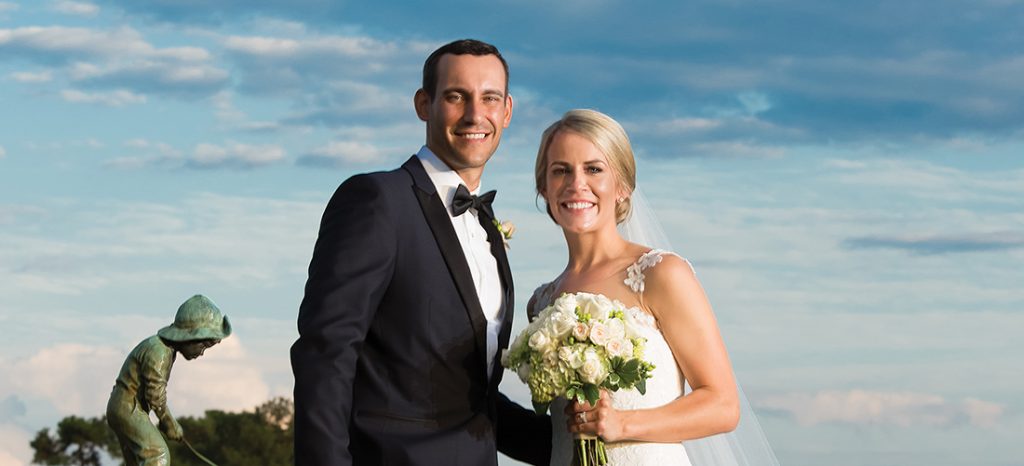
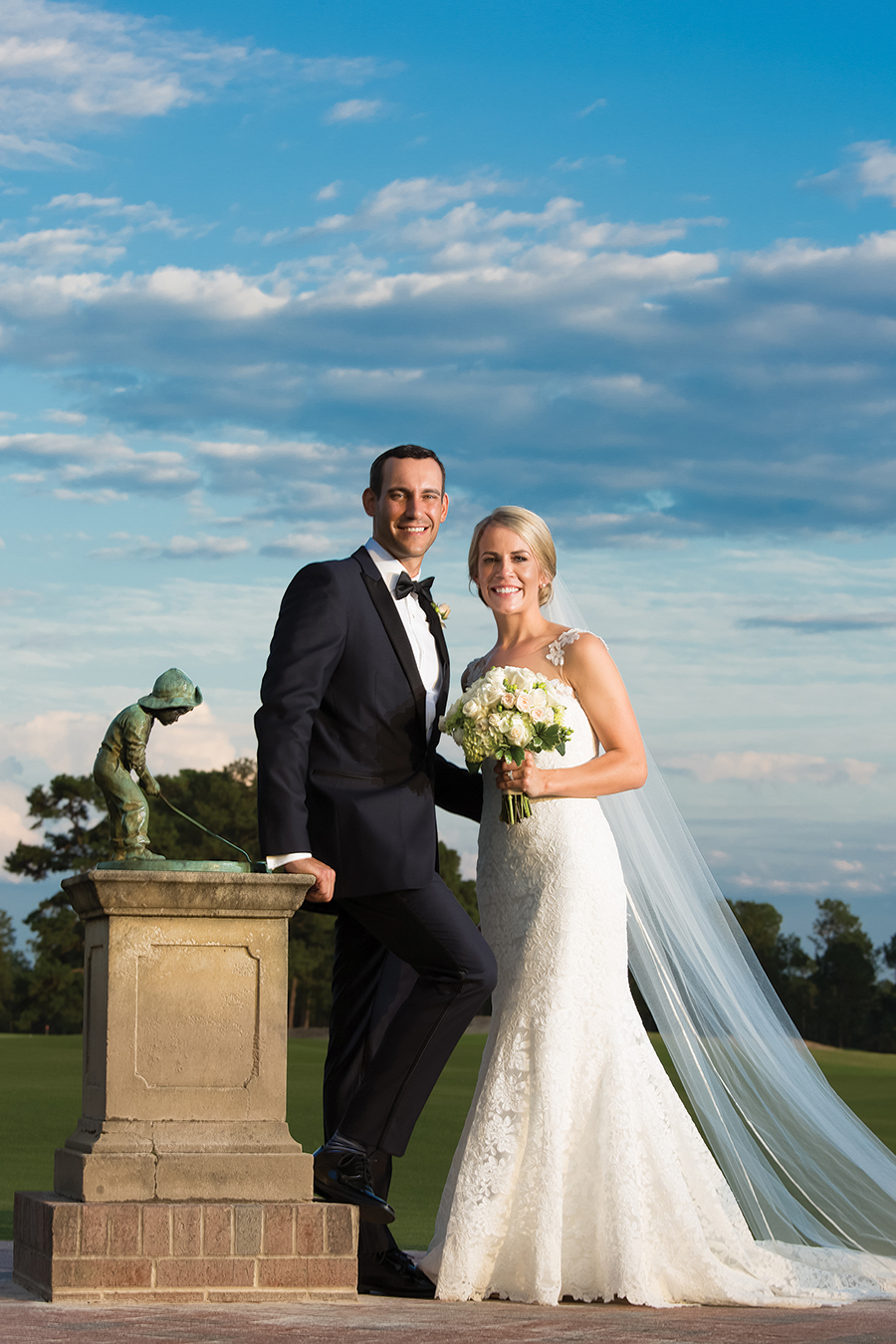
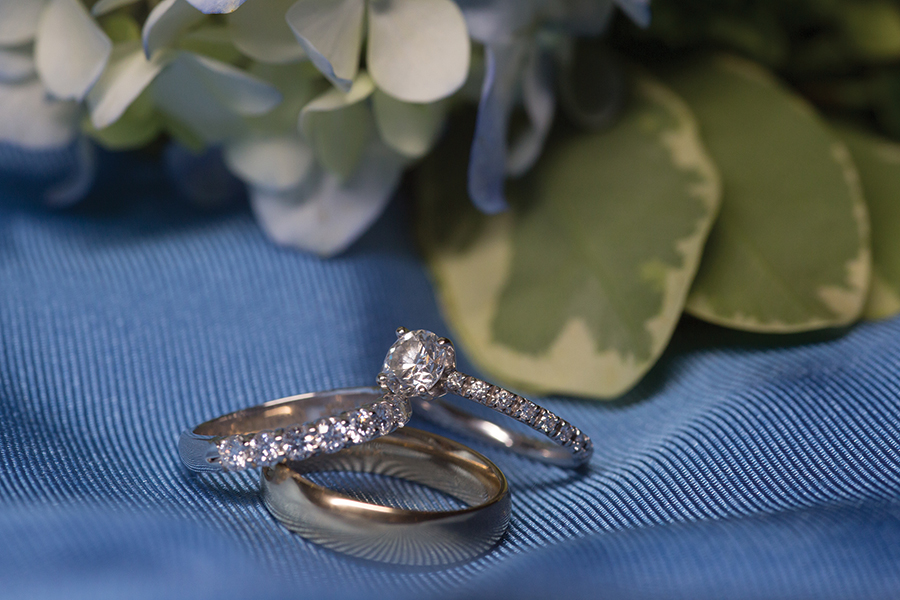
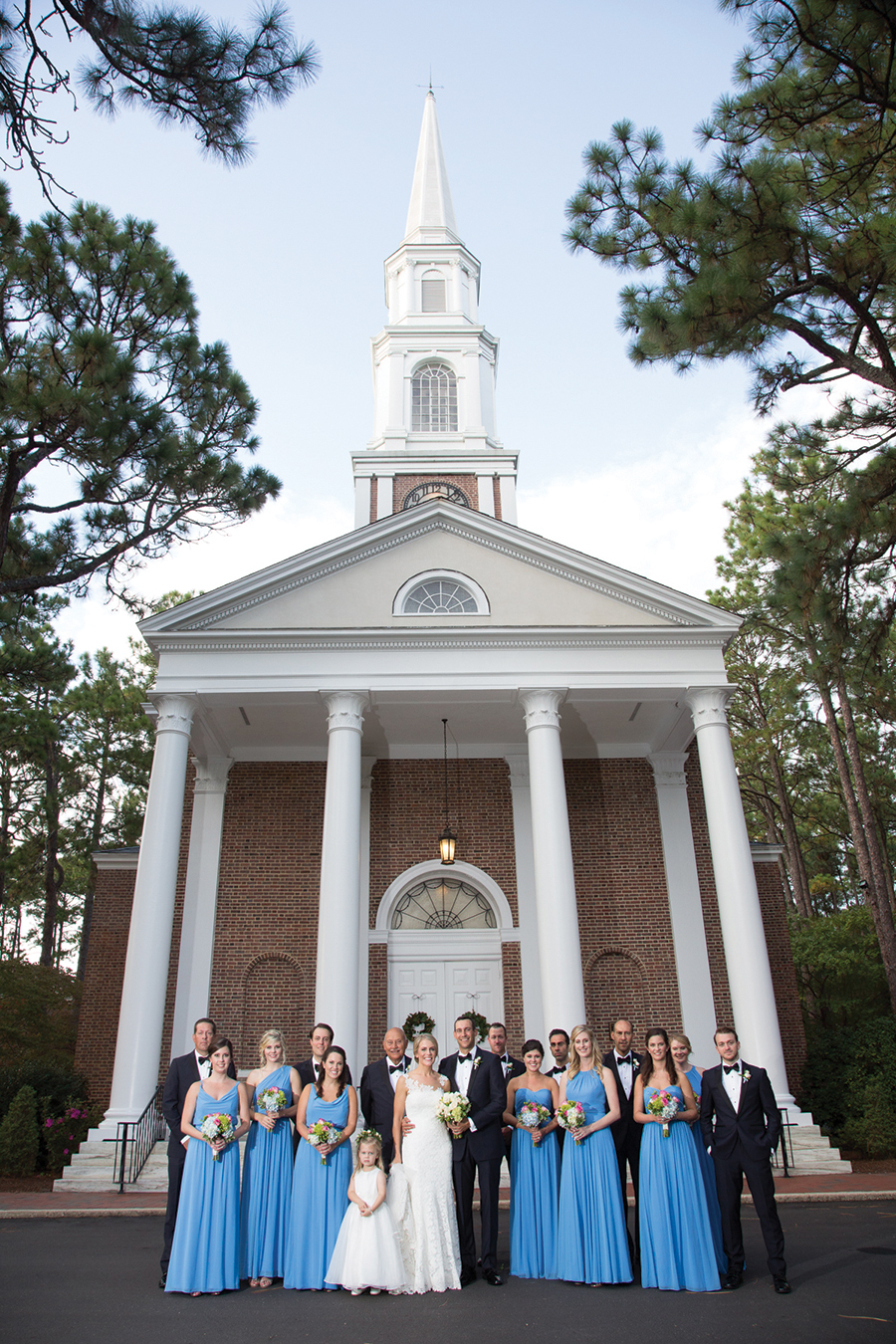
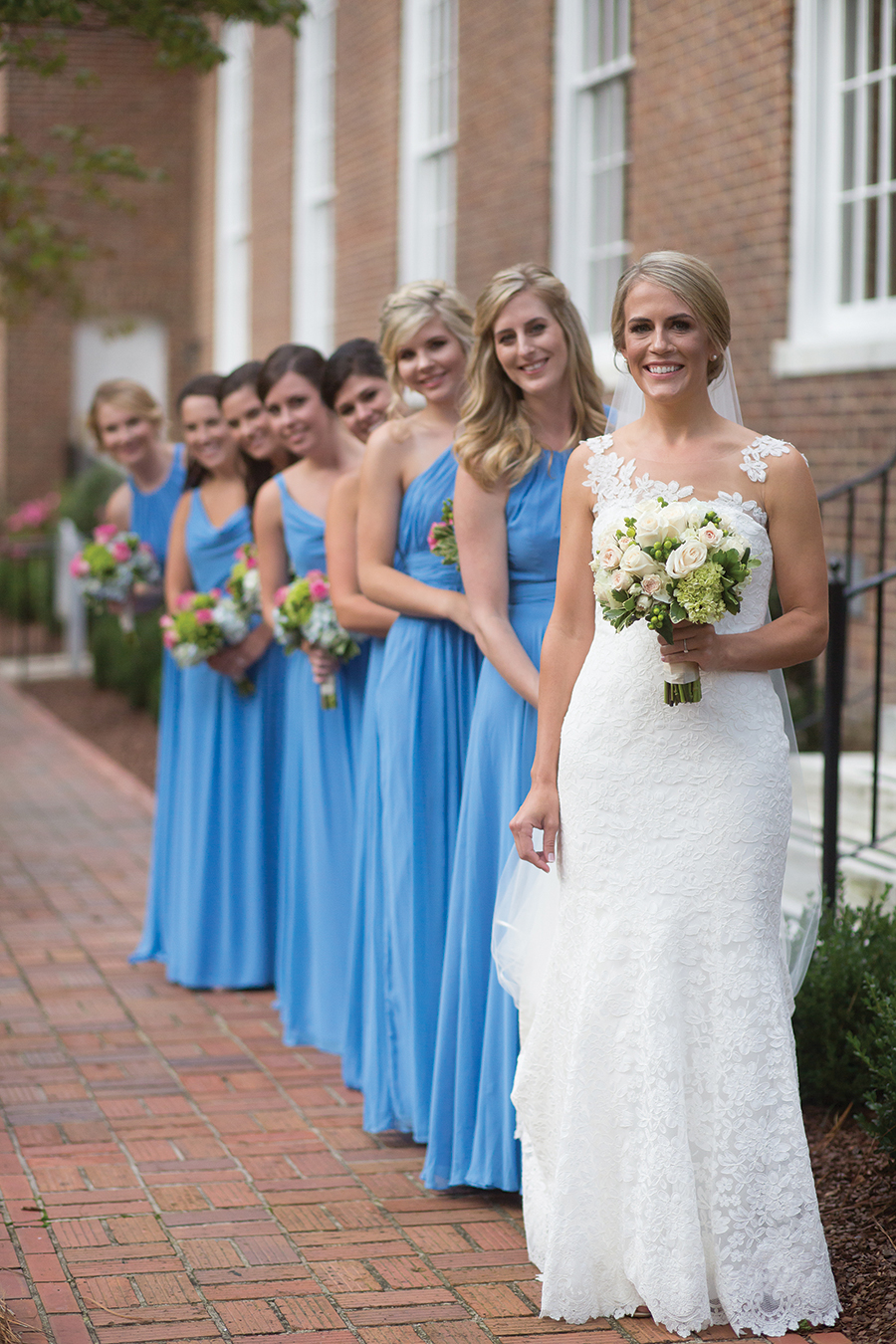
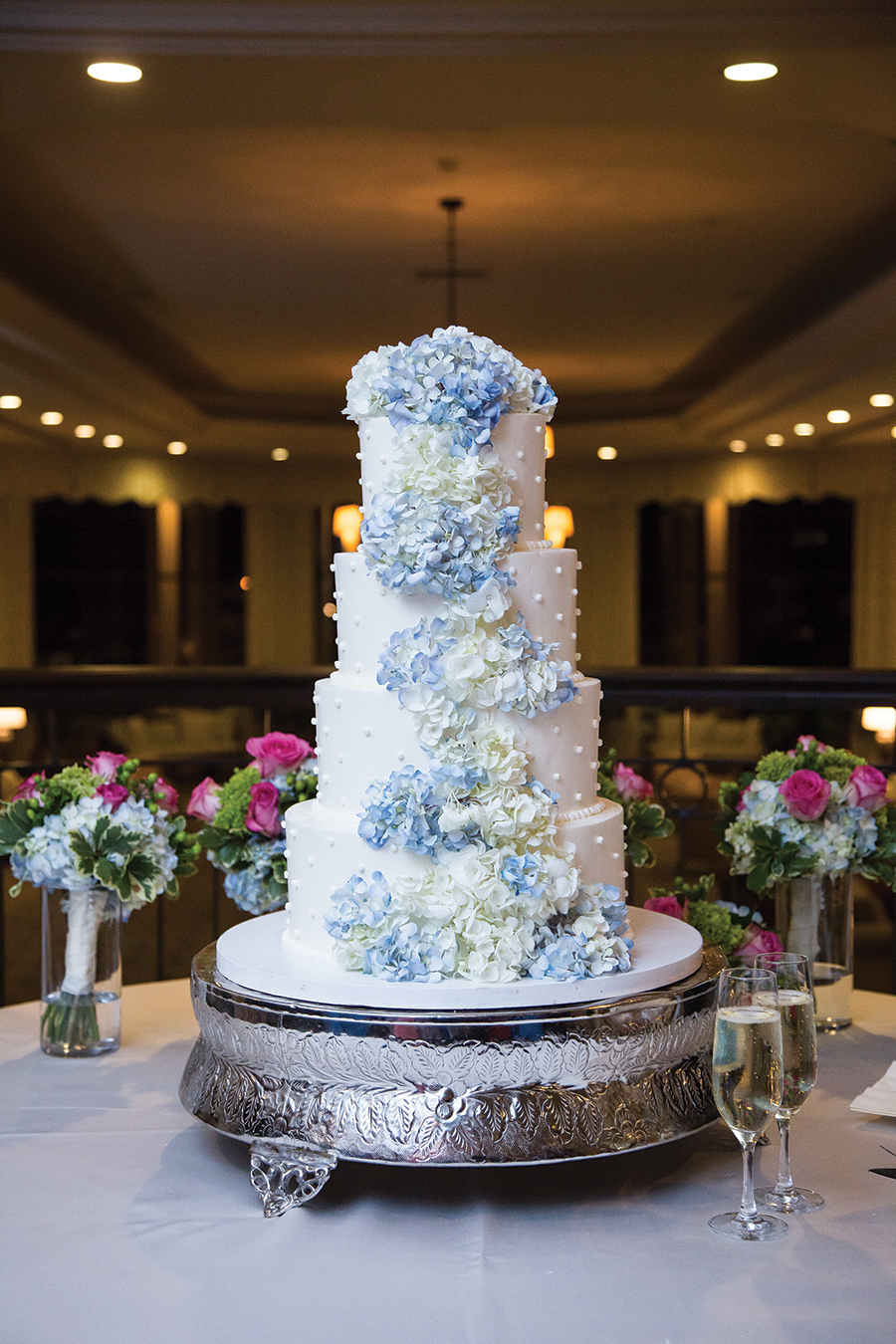
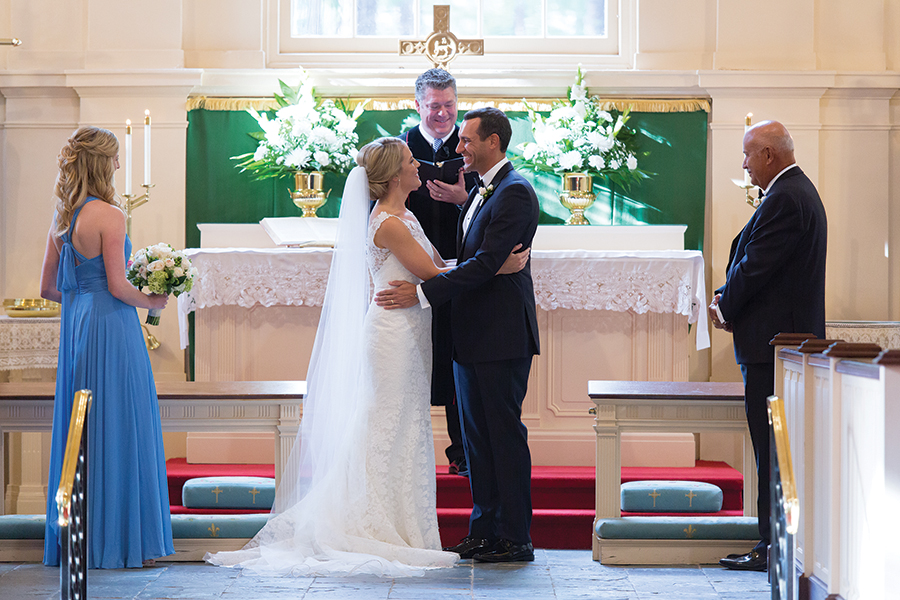
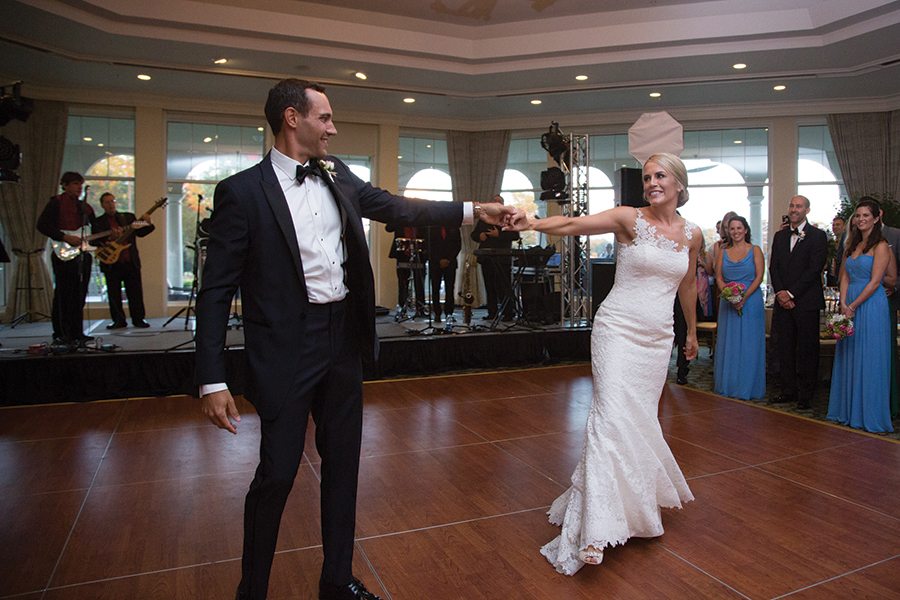
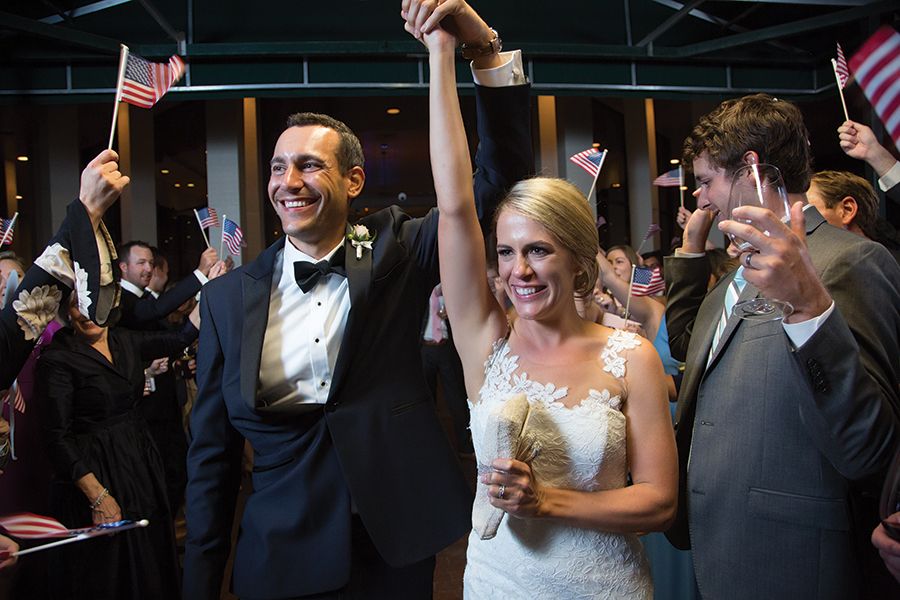
A classic Southern wedding in Pinehurst was the natural choice for Diane and Scott Gerbereux. After getting engaged in 2016, Diane moved to Pinehurst to join Scott, who works at Carolinas Golf Association. The ceremony was held at The Village Chapel and the reception at the Pinehurst Resort, complete with a cocktail hour and miniature golf games on the putting green of Pinehurst No. 2. Giant cutouts of the newlyweds’ faces were passed around at the reception for a humorous touch. Family and friends decorated the dance floor with the forged faces, and documented the celebration with custom Snapchat geofilters around the resort.

Photography: Sayer Photography Ceremony: The Village Chapel | Reception: The Outlook Room at the Pinehurst Resort Dress: Romona Kevez | Shoes: Badgley Mischka | Wedding Attire: Bella Bridesmaids and Generation Tux | Flowers: Jack Hadden Floral & Events | Hair & Makeup: Danielle Blue, Elevation Hair Studio & Brittani Bacat | Cake: Pinehurst Resort | Entertainment: Ceremony – Laura Wyatt, Reception – Irresistible Groove

Chelsea & Kevin Krysty

CHELSEA & KEVIN KRYSTY

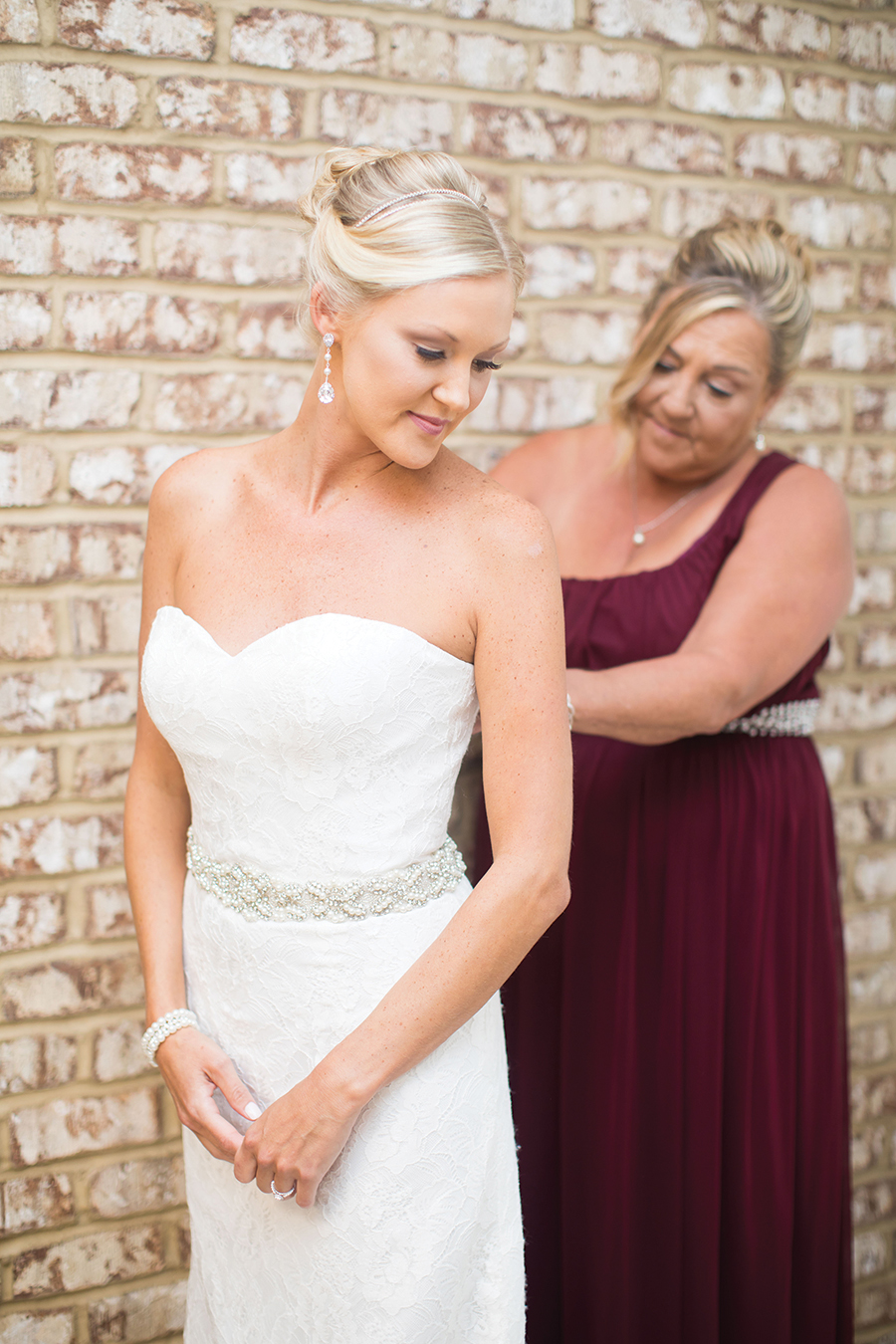
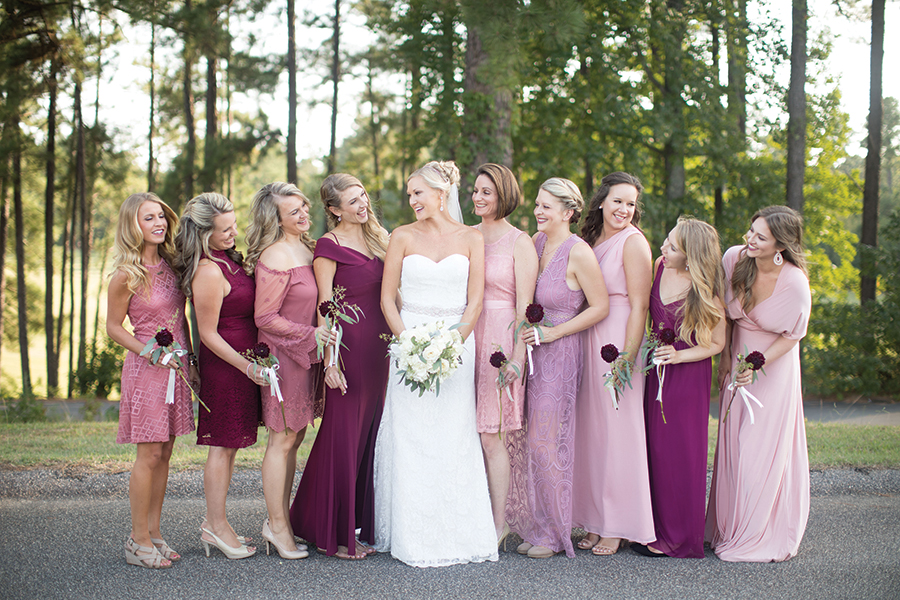
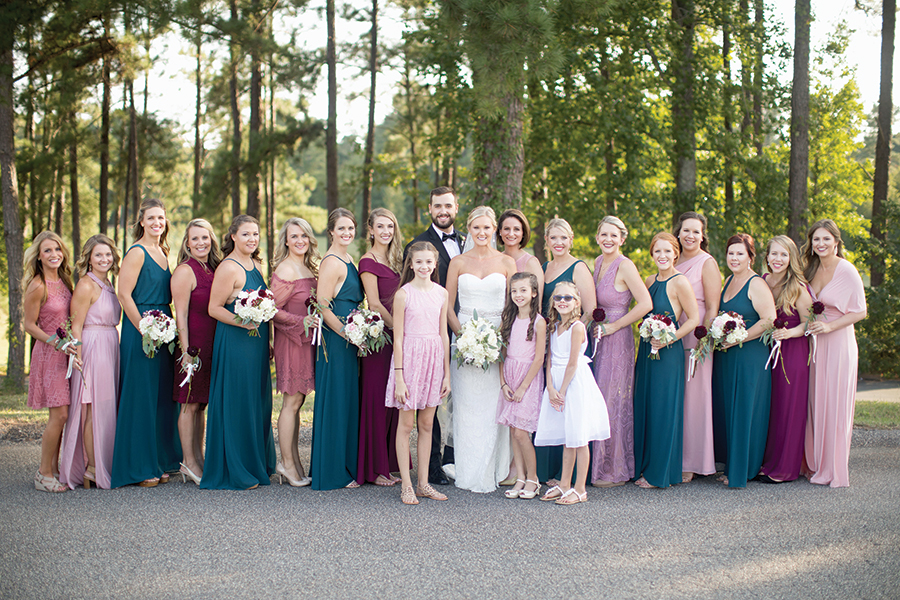
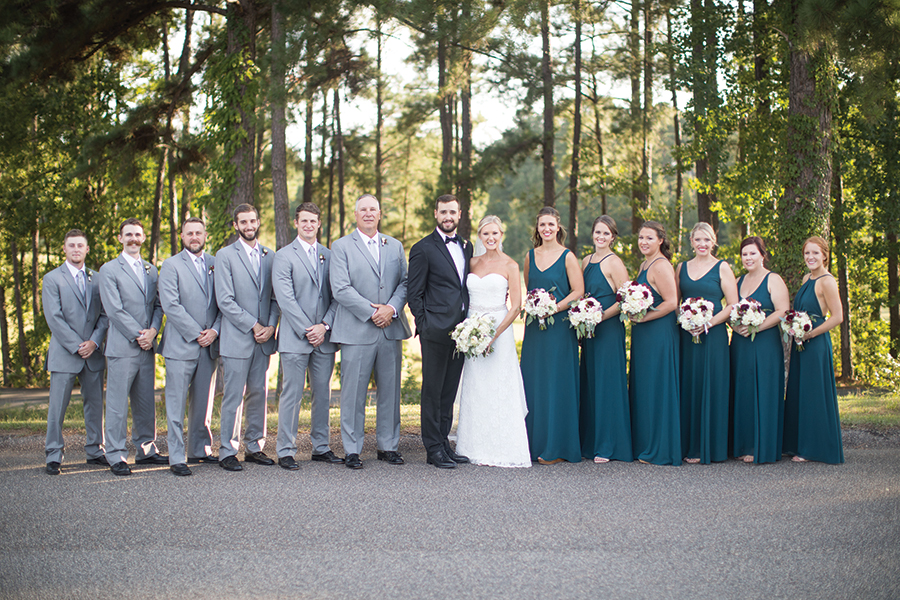
Chelsea and Kevin Krysty wed in the place of worship where they met and fell in love: Grace Church of Southern Pines. Their ideal wedding was one that would honor and glorify God, and they worked to ensure those in attendance felt the love of Jesus. The bridesmaids were prayed over and gifted floral robes and personalized bangles, while the grooms received ties and journals. Chelsea shared a special moment dancing with her grandmother, who passed away a few weeks after the wedding. They felt truly blessed on their big day, and no obstacle, big or small, could diminish the love in the air.
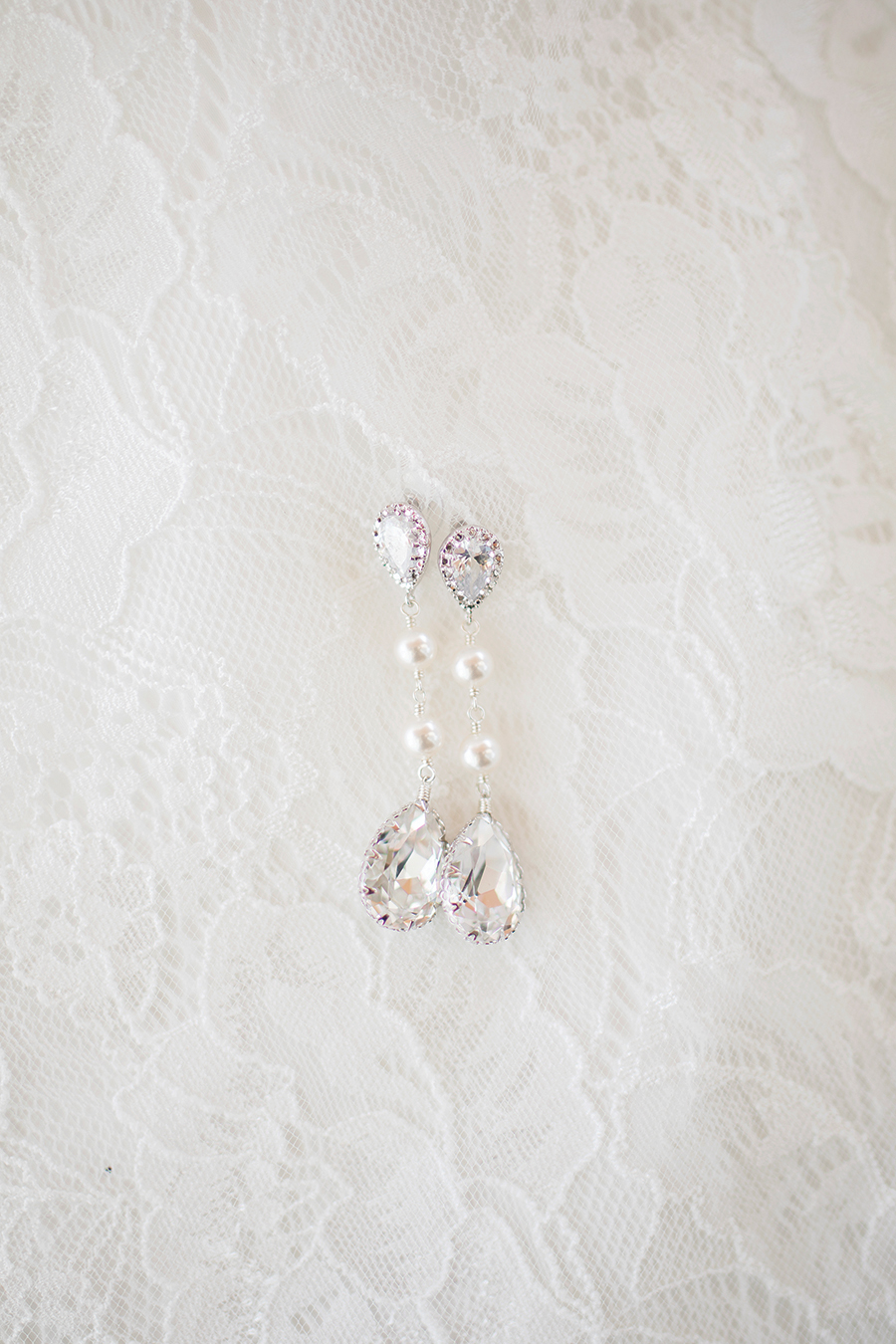

Photography: Paige Kentner Photography Ceremony: Grace Church | Reception: Little River Golf & Resort Dress: Wedding Dress Me | Wedding Attire: Bridesmaids, showmeyourmumu.com, Groomsman, Jos. A. Bank | Flowers: Chelsea Myrick, Midway Trading Co. | Hair & Makeup: Chelsea Regan, hair and makeup artist | Cake: Filly & Colts

Brooke & Colby Bellville

BROOKE & COLBY BELLVILLE

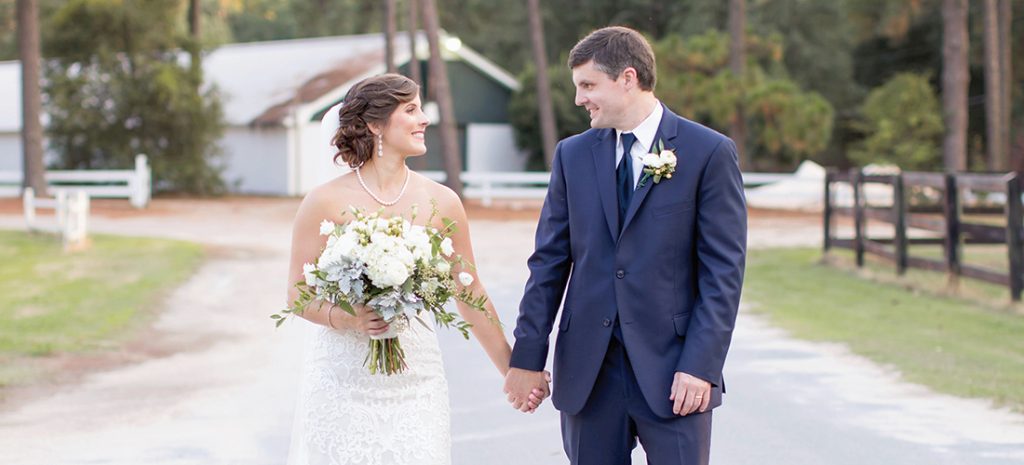
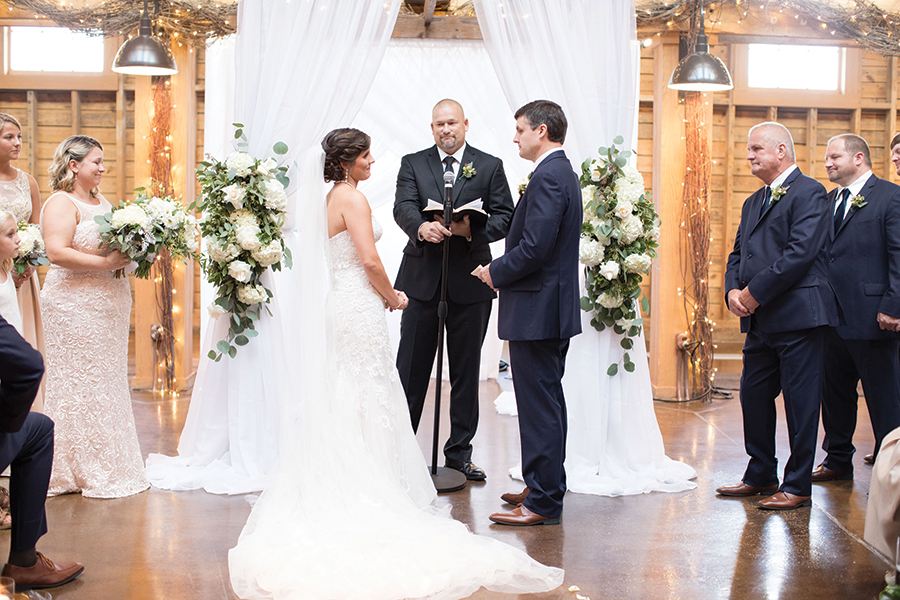
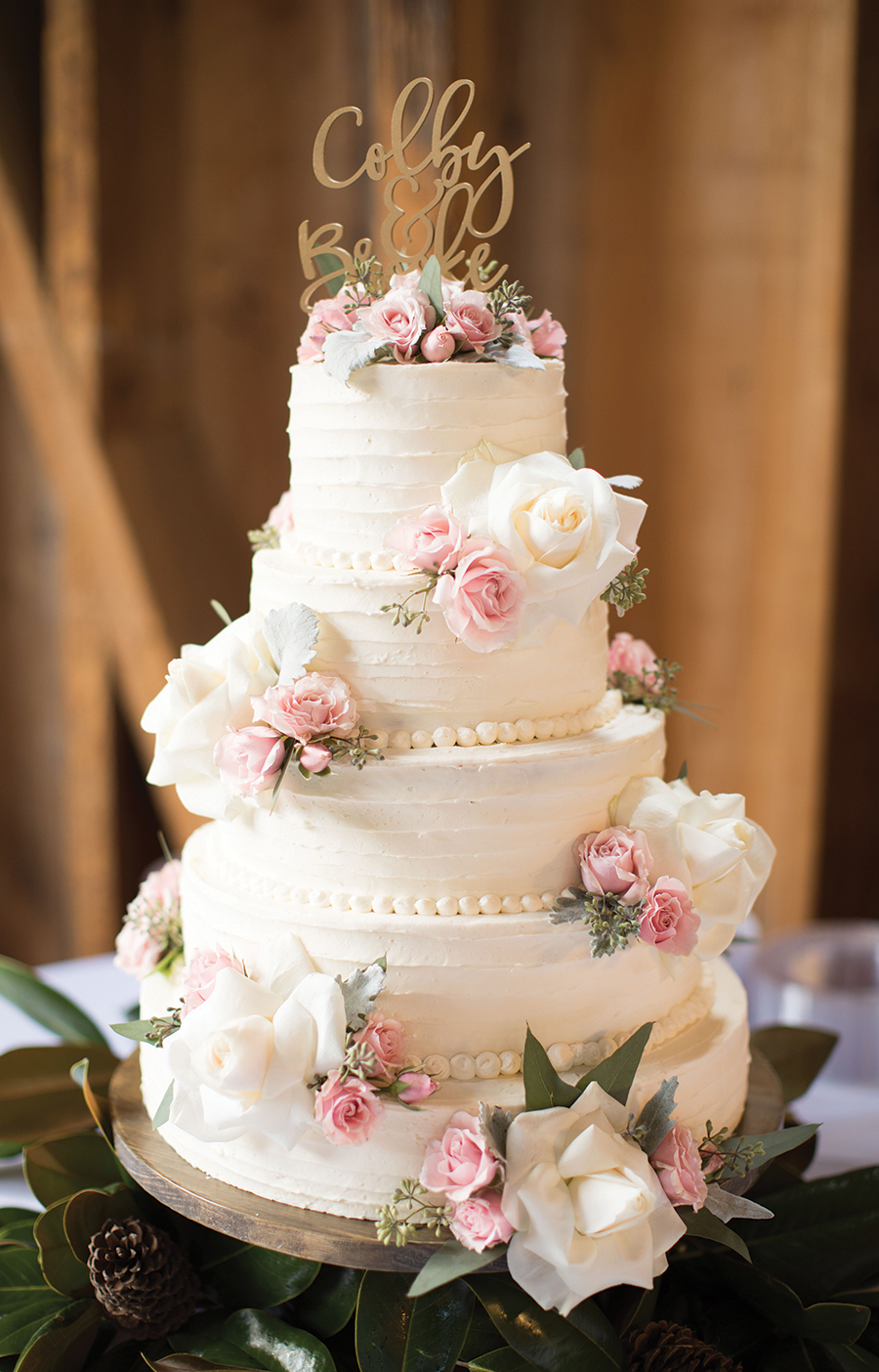
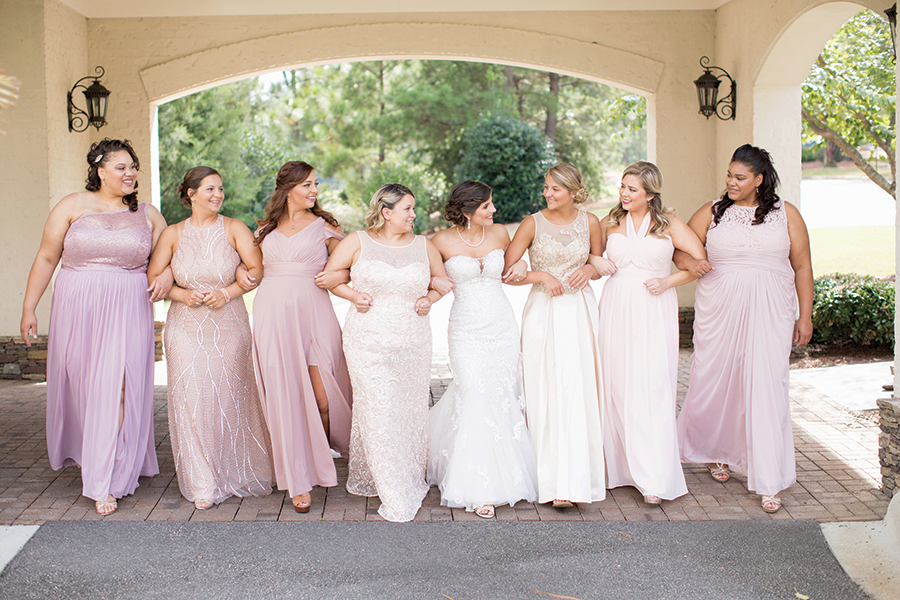
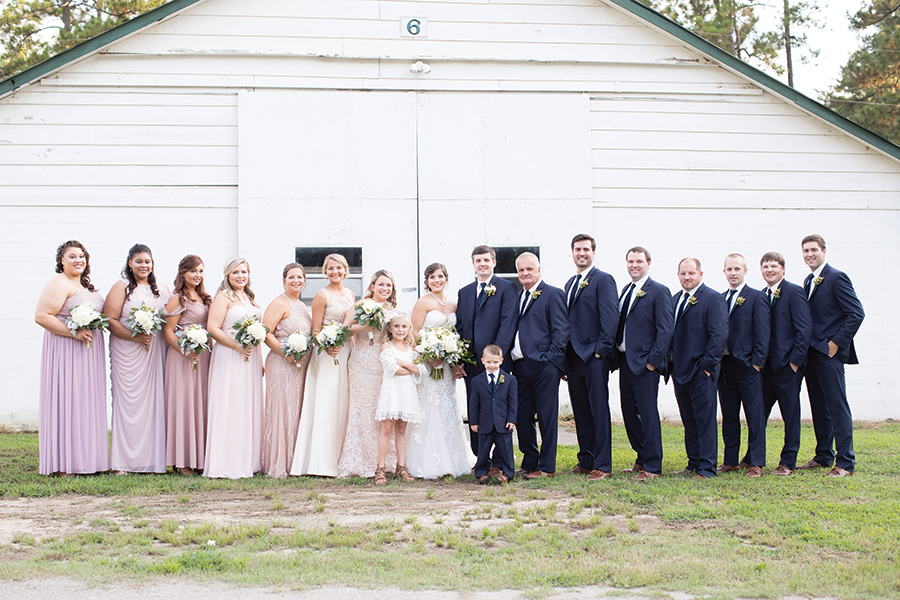
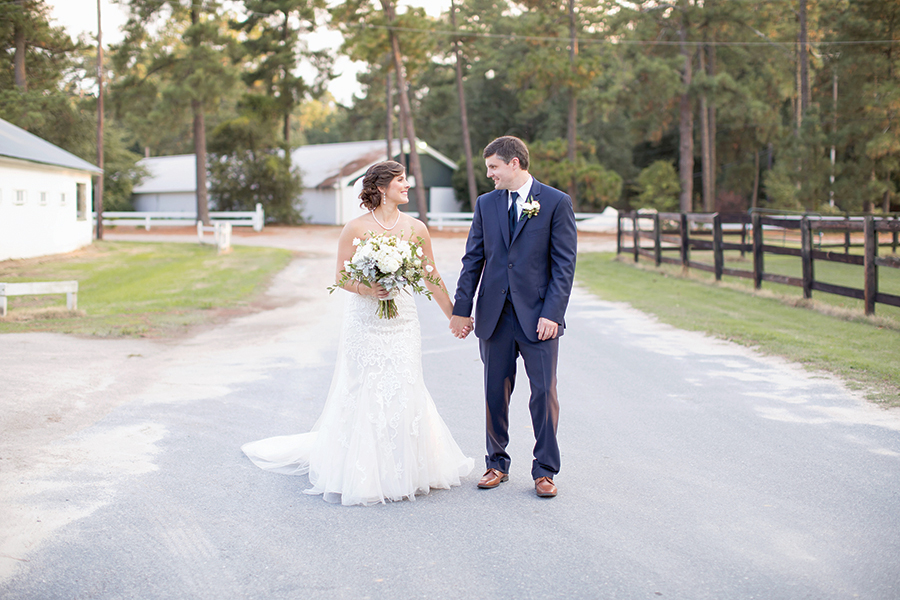
Pine cones, pine needles, and Southern magnolias adorned the Fair Barn for Brooke and Colby Bellville’s Pinehurst themed wedding. Brooke grew up in Moore County, but Colby calls Alabama home, so the couple made sure to include pine cones straight from Alabama in the décor. The groom added to the affectionate atmosphere when he pulled an old napkin out of his pocket and read his hand-written vows. It was the napkin Brooke had written her number on and gave to Colby more than three years earlier when they met at Ruth’s Chris Steakhouse in Charlotte. At the reception, The Sand Band kept the Pinehurst party going with Carolina beach music and oldies.

Photography: Paige Kentner Photography Ceremony: The Fair Barn | Reception: The Fair Barn Dress: Stella York | Wedding Attire: Brides, Etc. | Shoes: Anthropologie | Flowers: Southern Belle Florist | Hair & Makeup: Katie Cottingham of Charmed Salon, Makeup artist Chelsea Bishop | Entertainment: The Sand Band