The Kitchen Garden

Sage Advice

It’s for more than just stuffing

By Jan Leitschuh

Sage, common culinary sage, is having a “moment” in creative cookery. Yet most of us still associate this undemanding, wooly gray-green herb with the Thanksgiving feast, as the classic, earthy seasoning for stuffing.

Or, of course, you could just use it to ward off negativity and unwelcome spirits. Long used in Native American and other cultures around the world, a smoky sage smudging is considered a space-purifying ritual. (Though white sage is most common, according to many sources, good old common sage will do the trick, too.)

There are many beautiful sages in the salvia world, with over 900 species in this mint-family member. Some are grown for flowers, texture and bulk in the garden. 

But it’s November. In this season of harvest and feasting, common culinary sage is worth a closer look. 

Or is it common?

Besides the classic evergreen perennial herb with the woolly, grayish leaves, you can also find other, more colorful varieties at some garden centers, such as green-gold, white-edged, curly, purple-leaved and tricolor culinary sages. All add texture and interest to the garden, with an edibility bonus.

There are still more edible sages, such as pineapple sage, whose lovely golden leaves and spiky red flowers are beloved by hummingbirds, butterflies and gardeners late summer to frost. But this sage grows faster and much larger than the common sage, reaching 3-4 feet in a single season. As the name suggests, the scent and flavor are reminiscent of pineapple. Fresh leaves are edible, and can be interesting in salads, or dried for a delicious tea.

Sages like our Sandhills soils, but our humidity? Less so. Air circulation will keep it happy. Sage likes a well-drained soil, preferably with a bit of compost worked in before planting. Attractive spikes of purple flowers appear in mid-summer, which attract birds, bees and butterflies. Prune plants back in the spring just as new growth resumes. Harvest leaves through the season as needed. This will keep the plant bushy. Since this resinous herb is evergreen in most zones, you can harvest sage well into late fall.

But how do we use thee? Let us count the ways . . .

First of all, there’s sage toothpaste. Truly. Google it if you don’t believe me. Apparently, studies show that sage contains over 60 useful compounds, many of which are beneficial to the mouth and gums, significantly decreasing mouth ulcers and inflammation of the gums.

Sage also has potent antibacterial, antifungal, antiviral and antimicrobial properties that help destroy cavity-causing bacteria and neutralize microbes that promote dental plaque. Sage also contains healing compounds that ease coughs and accelerate the healing of wounds, helping to soothe sore, swollen or bleeding gums.

Who knew?

A tea made from two tablespoons of dried or fresh sage is said to provide relief from teeth- and gum-related problems such as toothache and sore or swollen gums. (Brew the sage for a few minutes in boiling water, cool for 10 minutes. Swish in the mouth for 30 seconds and spit. Or, enjoy a cuppa.) A sage tea bag can also be placed on the gums to soothe the aching or inflamed area.

But it is the foodie aspects we wish to look at in this season of eating.

First off, meat. Sage was traditionally added to fatty meats. Sage is what makes breakfast sausage so unique in its taste. You can make your own breakfast patties and control the quality, adding a tablespoon of minced sage to a pound of ground pork sausage, also working in some red pepper flakes to taste, a teaspoon each of salt and brown sugar, half a teaspoon of black pepper, perhaps a pinch of cloves or marjoram.

Grilling out? Chicken bathed in an olive oil marinade with chopped sage, lemon balm, oregano, garlic, onion and thyme can lend a flavor similar to lemon herb chicken, say fans. The leftovers can be almost better!

A crusty Parmesan-sage pork chop with a dollop of homemade spicy applesauce on the side can warm up a fall supper. There are a number of such recipes on the internet.

I put sage in with roasts and most of my stews and simmer-dishes, along with other garden herbs like oregano, thyme, rosemary, celery and basil. Why wait for stuffing the whole turkey? I love cooking sage with ground turkey for quiche, or you could use in shepherd’s pie. Or just go ahead and make some dressing — comfort food for a late fall evening. 

Foodies favor their sage leaves fried in brown butter until crispy. Garlic is a common addition. From there, they might toss the buttery mix in with ravioli, in a white wine cream sauce, with pierogi or boiled cheese tortellini.

Others use the fried leaves on top of butternut squash soup — or any soup, for that matter. Another seasonal pairing is oven-baked sweet potatoes, or better yet, baked sweet potatoes and apples. Still others enjoy the fried sage leaves with a beet and goat cheese salad with balsamic vinegar.

A chicken or veal saltimbocca is common in Italian trattorias. The meat is enveloped in a tasty wrap of fresh sage leaves and thin slices of prosciutto. Again, recipes abound online.

Or, to cure what ails you, nothing is better on chilly days than homemade chicken noodle/rice soup with fresh sage. Others go the sweet-savory route, infusing honey with sage and adding to teas.

A sage chimichurri — a green Argentinean pesto-like sauce traditionally made with parsley — can be used as an accompaniment to spinach-stuffed mushrooms, fish, meats or pork sausages. (See recipe below.)

For all its culinary and medicinal properties, common sage should not be ingested in large amounts for a prolonged period of time, say, as essential oils or large quantities of tea. Sage contains small amounts of thujone, a neurotoxin also found in the notorious 19th century liqueur absinthe, thanks to the wormwood used in the recipe. Oregano also contains minute amounts of thujone.

Apparently, thujone is mildly psychoactive. Van Gogh and Picasso were big fans back in the day, claiming inspiration from absinthe. Thujone is actually found in many plants used in cultural spiritual rituals to enhance intuition. (So, back to the whole smudging thing.)

But the amounts ingested in seasonings, flavorings and smudgings are quite minute. Studies have shown three or four cups of sage tea do no harm, although if you have an existing condition that affects the kidneys or liver, or you’re taking some medications that may interact with thujone, you may wish to proceed with some caution and awareness.

If you wish to deploy the culinary benefits of this simple garden herb, perhaps start with the classic dinner sauce chimichurri, adapted for sage. Smudging optional.

Sage Chimichurri

1/4 cup sage leaves and stems, minced finely

1/4 teaspoon red pepper flakes

1/2 teaspoon salt

1 clove garlic, peeled and crushed or minced

1 tablespoon red wine vinegar

1 tablespoon water

3 tablespoons oil

Mix ingredients well and use as a marinade, or serve in a bowl as an accompaniment to spoon over pan-seared fish, sliced flank steak, stuffed mushrooms, grilled meats or pork loin.  PS

Jan Leitschuh is a local gardener, avid eater of fresh produce and co-founder of Sandhills Farm to Table.

Good Natured

Giving Thanks Daily

Why wait for a holiday?

Whose heart is fixed upon the good because it is the good shall fill his soul with good. — Ernest Holmes

By Karen Frye

Why dedicate just one day of the year to be thankful? There are 364 more days to be appreciative for all the things, great and small, in our lives. Giving thanks is a practice that supports us in a positive way.

Gratitude journals are an effective tool to practice being grateful. Once we are focused on the things we appreciate by writing them down daily, we establish a much deeper experience of gratefulness, and no longer need the list. It simply becomes part of our daily routine. You begin to see more goodness and the glass will be half-full rather than half-empty. By honoring the good in our lives, we are creating a lifestyle that will enrich us each day.

Going through challenging times like these puts life into perspective. Giving thanks for our blessings is important and can sometimes change outcomes to our benefit. It will certainly make the journey, and the challenges, easier to tolerate if we grasp some control over our mental outlook.

When we see good all around us and within us, only more good can come to us. If like begets like, then we are drawing to us the very best in life in every respect. When we are grateful for blessings large and small we create a magnetic attraction to more divine and wonderful things: more happiness, more prosperity, good health and, most of all, love.  PS

Karen Frye is the owner and founder of Nature’s Own and teaches yoga at the Bikram Yoga Studio.

PinePitch

TRUST BUT VERIFY: As our communities deal with the challenges presented by the novel coronavirus, please be aware that events may have been postponed, rescheduled or existed only in our dreams. Check before attending.

Munch Some Brunch

Support the Weymouth Center for the Arts and Humanities on Sunday, Nov. 1, by taking home some delicious eats from Thyme and Place Café, or bring a blanket and picnic on the grounds at 555 E. Connecticut Ave., Southern Pines. Boxed brunches are $20 for Weymouth members and $30 for non-members. For more information call (910) 692-6262 or go to www.weymouthcenter.org.

Ted Fitzgerald/The Pilot

Art on Offer

The Artists League of the Sandhills will be opening its 26th annual Art Exhibit and Sale on Friday, Nov. 6, from 10 a.m. to 3 p.m. at 129 Exchange St., Aberdeen. For information visit www.artistleague.org or call (910) 944-3979. The Arts Council of Moore County will also hold its opening reception for “Moore Artful Women” featuring the work of Beth Garrison, Paula Montgomery, Fay Terry and Mary Wright on Nov. 6 from 6-8 p.m. at the Campbell House Galleries, 482. E. Connecticut Ave., Southern Pines. Visitors will need to reserve time slots at 30-minute intervals. Masks will be required. For information go to www.mooreart.org or call (910) 692-2787.

Pop Up in the Pines

A community shopping fair dedicated to bringing together chic boutiques, talented artisans, food trucks and unique handmade goods springs to life on Sunday, Nov. 8, from 11 a.m. to 5 p.m. at the Southern Pines Brewery, 565 Air Tool Drive, Suite E, Southern Pines. Face masks will be required.

Get Your Goat On

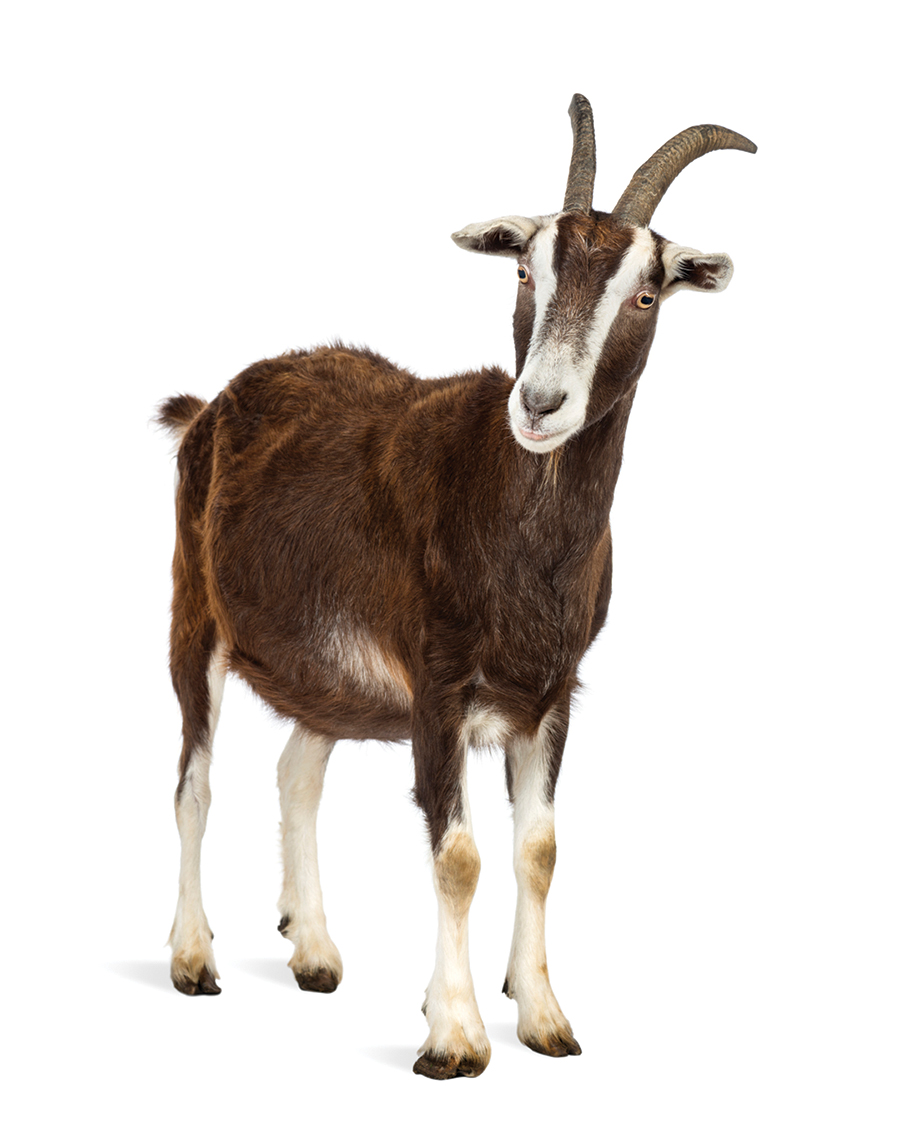
Visit Paradox Farm in November and hang out with the goats, feed some chickens and pigs, and take a peek at the new sheep. Group tours of Paradox Farm Creamery, 449 Hickory Creek Lane, West End, will be available on Friday and Saturday from 10-11:30 a.m. Tickets for 2-10 people are $100; 11-15 are $150. For information call (910) 723-0802 or visit www.ticketmesandhills.com.

Festival of Trees

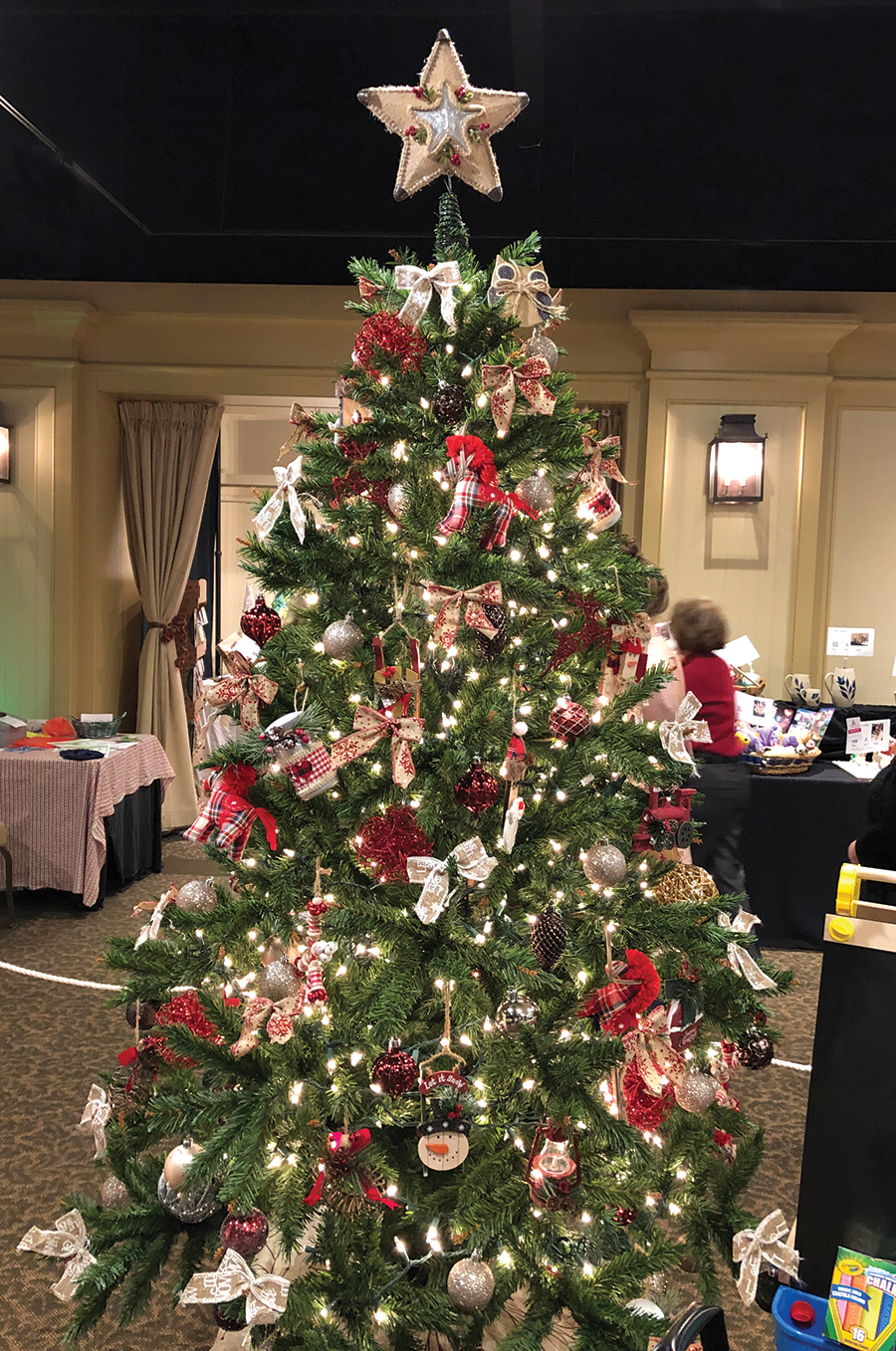
The 24th Annual Sandhills Children’s Center Festival of Trees will take place Nov. 18-22 at The Carolina Hotel, 80 Carolina Vista Drive, Pinehurst. Unlike previous years, the festival will be a ticketed event. For more information and tickets go to www.FestivalofTrees.org.

Spinning Wheel

Thirty pottery shops and almost 100 ceramic artists will come together for the Celebration of Seagrove Potters Tour, the largest sales and collector event of the year. The tour begins on Friday, Nov. 20, from 10 a.m. to 5 p.m. and continues daily through Nov. 22. It starts at Luck’s Cannery, 798 N.C. 705, Seagrove. For more information go to www.discoverseagrove.com/celebration.

A Christmas Carol

The Sunrise Theater will present the radio play of Charles Dickens’ A Christmas Carol on Nov. 28 and 29, times to be determined. There will be matinee and evening performances on both days. For more information visit www.sunrisetheater.com or call (910) 692-8501.

As Seen in the Sway:

Meet the Maker: The Saburro Shop

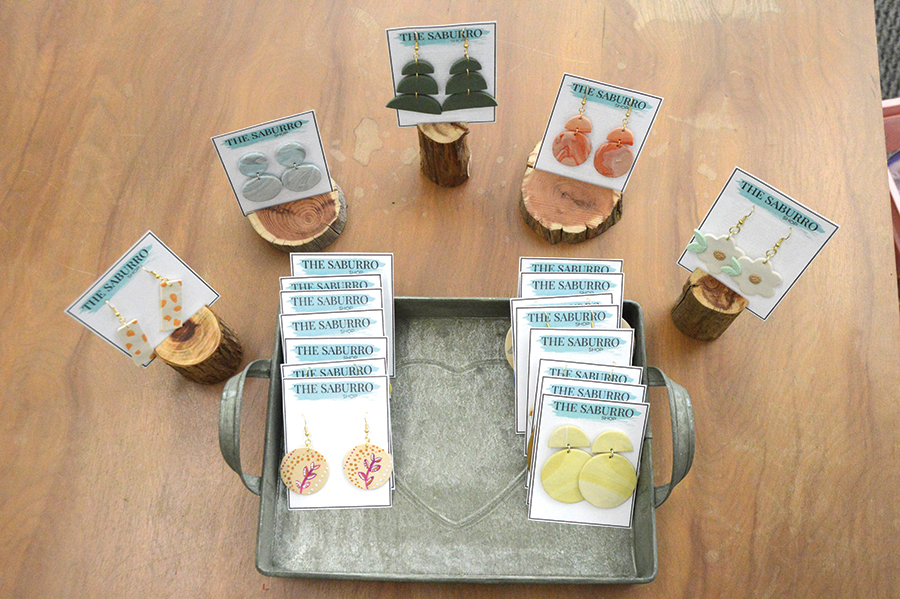
Scroll through The Saburro Shop on Instagram and you’ll find a little bit of everything. Bethany Saburro started her business in 2016, selling mostly custom woodwork and hand painted wooden signs, but recently found her niche in the earring world.

“I remember seeing a pair of earrings in a department store and thinking, ‘wait, I could make that,’” Bethany said.

She started out with wooden earrings, but later began experimenting with polymer clay, which have become her best sellers.

Each pair of earrings are uniquely designed by Bethany. From flowers to geometric shapes, each pair is different from the next.

A longtime lover of creating, Bethany used art as an escape. The Saburro Shop started out as mostly a hobby, but without the distractions of daily routines during quarantine, she felt inspired to invest more time in The Saburro Shop.

Bethany mostly sells her work through Instagram and occasionally on Etsy. You can also find it at Pine Scone Cafe in Pinehurst and Southern Pines, and My Sister’s Porch in Aberdeen.

“It’s so satisfying to do something that you love and to find that other people love what you spend your time and efforts on, too,” Bethany said.

Follow The Saburro Shop on Instagram to see what Bethany will come up with next.


Home by Design

Cooking for Julia

Cheesy olives and a smoky homage to one of the greats

By Cynthia Adams

When the spunky Southern writer Julia Reed died in September, it felt personal.

Reed was a character in her own stories, a real hoot and a holler, as my Mama Patty would have said. Her columns, design books and sassy cookbooks (one title was inspired by her mama’s spiking sangria with a kick of vodka) showed a penchant for storytelling and squint-eyed observations. 

Her New Orleans homes — one on First Street and a post-divorce duplex in the Garden District — were crammed with books, family heirlooms, paintings, antiquities but also found-objects like bird nests and turtle shells. She even called the new pad a “Cabinet of Curiosities,” a habit wealthy Victorians famously kept.

Reed’s memoir, The House on First Street: My New Orleans Story, was considered her best work. It was a love letter to post-Katrina New Orleans. (Reed’s Newsweek piece described a sign that advised NOLA looters: “Don’t Even Try. I am Sleeping Inside with a Big Dog, an Ugly Woman, Two Shotguns and a Claw Hammer.”)

Reed was classy — and wealthy — enough to upholster a pair of antique rattan chinoiserie sofas in hand-dyed silks. She bought vintage beauties from Magazine Street, where some of the South’s finest antiques wind up on offer. Her design sense was kicky and admired. 

She wrote One Man’s Folly about Furlow Gatewood, the gifted antiquarian who has restored several of the most beautiful homes to be found, gathering them all on his compound in Americus, Ga.

Reed not only knew Gatewood but stayed in one of his gorgeous homes, each of which are stuffed full of jaw-dropping treasures. They probably ate cheese straws, Gatewood’s favorite, and drank hard liquor. She no doubt brought her own deviled eggs and cheesy olives, which were touted in surprising places like The New York Times.

Cheesy olives, it was said, are the first party fare to be scarfed down.

The week she died of cancer at age 59, we were seeing two friends for Covid cocktails. It was time to drop my envy of Reed, her cool houses, great writing gigs and friendship with 95-year-old Gatewood, my celebrity crush.

I pored over her top five recipes, which the Gray Lady republished, determining to pay homage to Reed.

Even though her father was a Republican operative who worked for the Bush family, she was always diplomatic and her humor was bipartisan.

Once asked about a pol’s chances during a tony Washington, D.C. book tour, sipping vodka-infused sangria from a blue highball glass, Reed quoted Louisiana’s Edwin Edwards: “The only way I can lose this election is if I’m caught in bed with either a dead girl or a live boy.” 

The room dissolved in guffaws, because no matter where you stand on party lines, that was a bon mot.

(Actually, it qualified as a sangria-infused wet quip.)

But I digress. Cheesy olives sounded a lot like pigs in a blanket at first reading. Except, the dough, in addition to flour and egg, contains a block of cheddar and a hunk of butter. (And there is no pig.)

This was to be the virgin run of a stand mixer, bought years ago because of the rare color, a Chinese Chippendale green. It looked good on the counter. 

Thus, learning why, a dough hook, which this mixer didn’t have, is a thing. Cheesy dough clumped like a primordial life form to the beaters, with gleaming chunks of butter grinning through.

Wrestling the goopy dough from the beaters, I fashioned it around each Spanish olive. The results resembled The Little Prince illustrations.

I pried them off my fingers onto a cookie tray. The whole shebang required nearly an hour’s labor, the oven preheating most of those slow-moving minutes. 

The oven was hot enough to singe off my eyelashes, brows and fine facial hair.   

Next up: Reed’s exemplary pralines.

I substituted light brown sugar in the recipe. Measuring, mixing and anticipating the first taste of those olives — I beavered on with the candy.

The whining mixer was nearly up to the task of folding evaporated milk into butter, pecans and sugar. 

I mixed and mixed some more.

In the minutes stolen for a swift bathroom break, smoke had begun to billow from the oven. As in, call the fire station billows.

Turning off the oven I snapped on the oven light; the cheesy olives were pancake flat, bubbling in a screed of oil. That is, what oil wasn’t now pooled in the bottom of the oven. 

It was as if I had just laid eight ounces of cheddar cheese and two ounces of butter on the oven’s bottom and hit “incinerate!” 

The roiling smoke grew denser. I hesitated a second before opening the oven to grab the pan (rimless, another big mistake) and sprinted outside, our two dogs leaping and trying to get a good look.

After much swearing and flapping of towels and deployment of a floor fan, the kitchen smoke began to clear. 

“I have always said that danger — or at least the possibility of it — is a crucial element of any good party,” observed Reed. 

I was succeeding on that score. 

The pralines would cook stove top, thank God. 

I grimly set to melting sugar and copious amounts of butter in a double boiler. Standing over it with a cooking thermometer to gauge the perfect temperature, I couldn’t help but cuss a little. (I’d heard of good cooks who deliberately falsified recipes so nobody could steal their thunder.)

It was suspicious, how much fat burbled out of those disastrous olives, is all I’m saying. Then I noted: There was no mention of a double boiler. 

With lined pans waiting, I finally spooned up the praline goo. Being no fool, I knew better than to make candy on a rainy day; it was dry as a bone outside. But — the pralines never achieved the glistening appearance Reed described.

No matter, I scraped the last, suspiciously granular bits off the side of the saucepan and tasted, burning my index finger and tongue. Yep. They were granular alright.

Setting up rapidly, the pralines looked more like coconut stacks from Cracker Barrel. 

They did not look like pralines.

Earlier, we had made boiled peanuts, more Southern fare, and in a pique, I decided to make a cold soup.

The cheesy olives were misshapen lumps and the pralines were weird. But the peanuts were heavenly. I plunked them in a silver bowl and served up the whole shebang on good platters. Somewhere in the great beyond, Reed was having a belly laugh.   PS

Cynthia Adams is a contributing editor to PineStraw and O.Henry.

Jordan Wood + Gabriel Venegas

JORDAN WOOD + GABRIEL VENEGAS

Photographer: BellaGala Photography

Wedding Coordinator: Caroline Naysmith

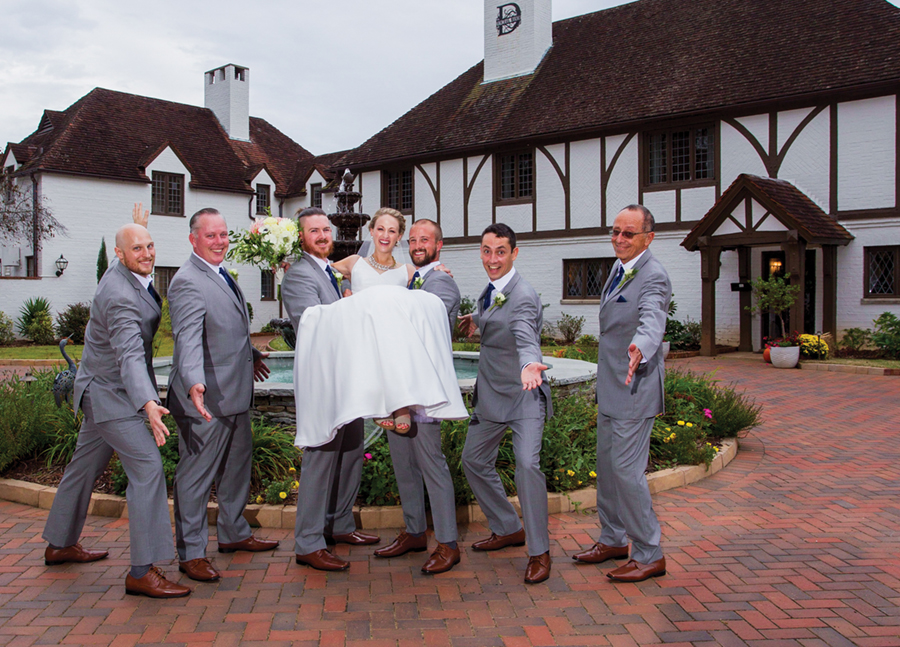
Over two years of near-daily trips to visit her horse’s stable in Southern Pines, Jordan fell in love with an abandoned estate on East Connecticut Avenue. Some time later, that estate would become Duncraig Manor & Gardens — and she, its first bride. With the help of owners Don and Caroline Naysmith, the venue’s first big event was a wedding weekend that looked just as beautiful in person as it did on the livestream to Gabriel’s extended family in Chile.

The manor’s ample square footage provided more than enough space for a ceremony in the garden terrace, a reception on the front patio, and rooms for out-of-town guests. And while the coronavirus led Jordan to shrink the guest count, it also freed up her favorite artist, Brendan James, to play during the ceremony, first dance, and part of the reception. The music continued well into the night, as Jordan and her father — a former music producer — performed a father-daughter rendition of Frank Sinatra’s “You Make Me Feel So Young.”

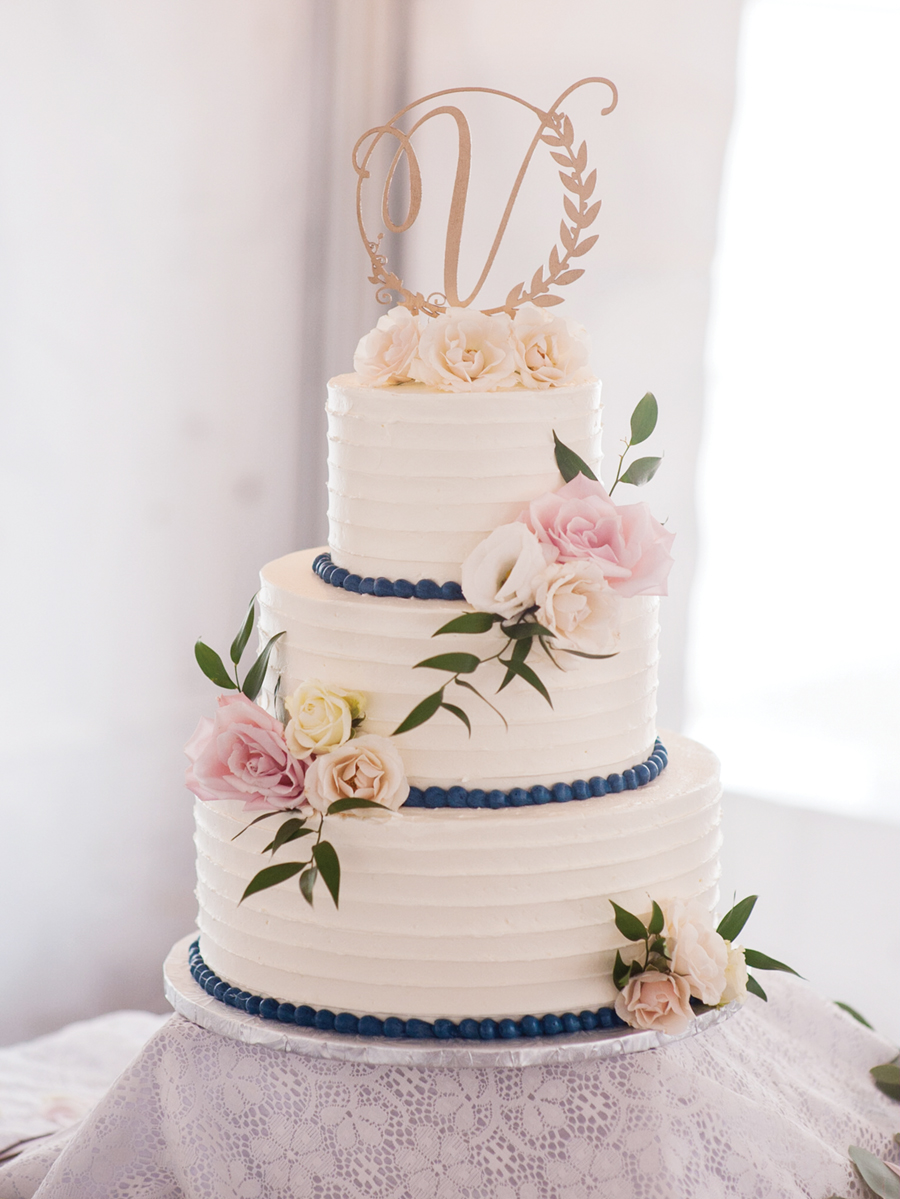
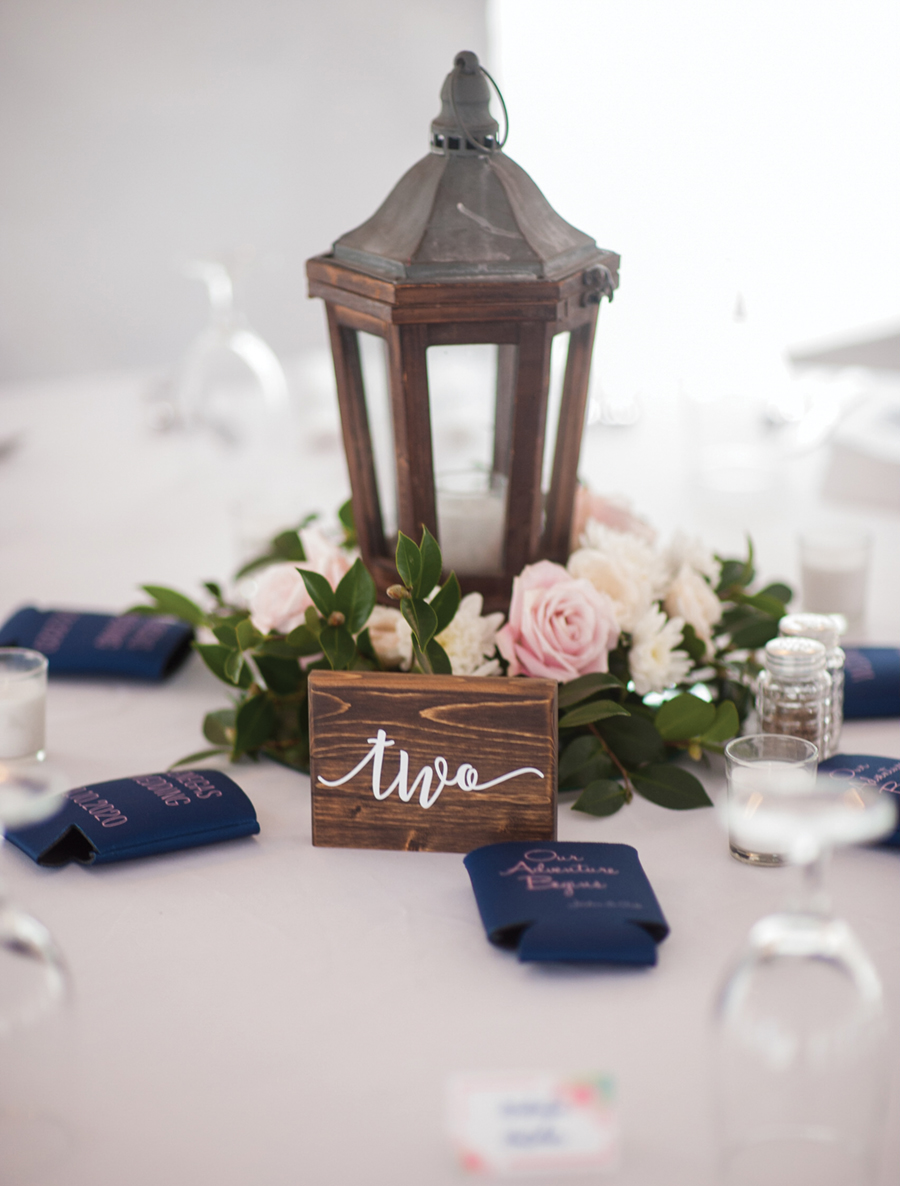
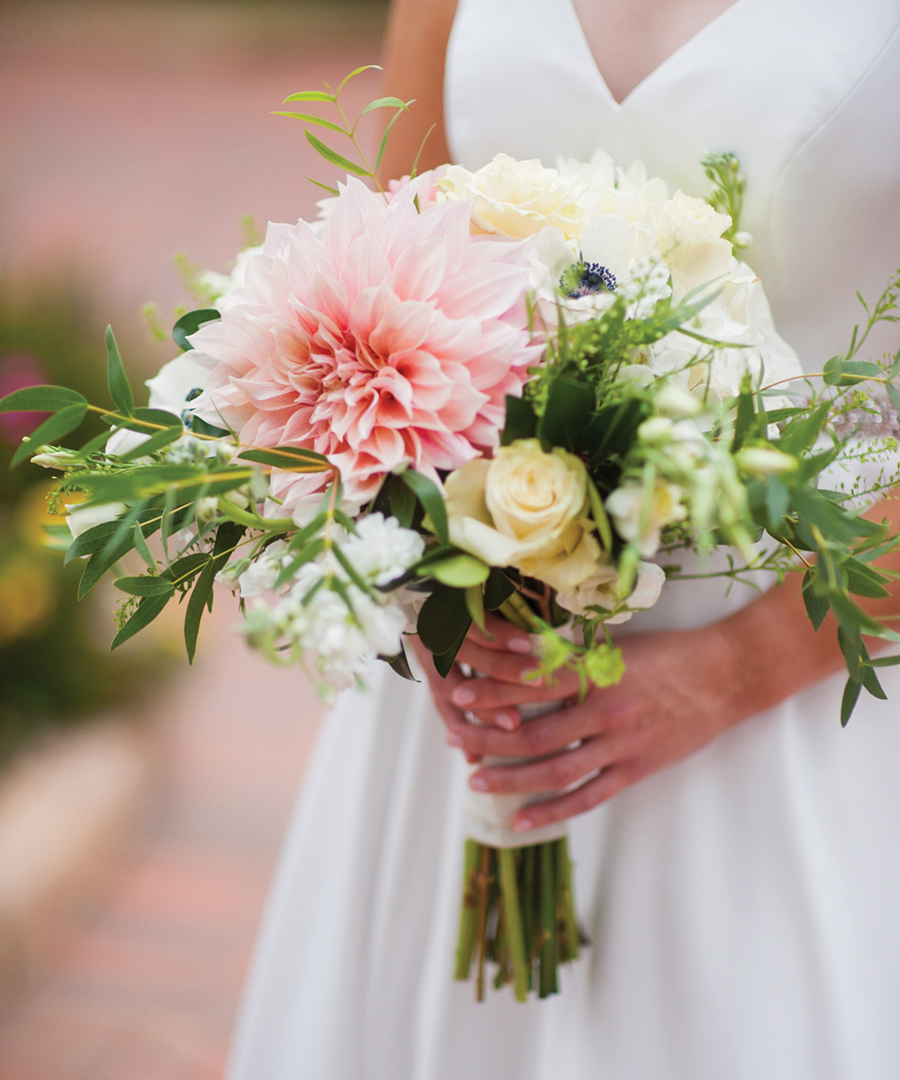
Ceremony & Reception: Duncraig Manor & Gardens | Dress: Kate McDonald, Duniway Dress | Shoes: Badgley Mischka | Jewelry: Sash: Elizabeth Bower, Necklace & Earrings: Olive & Piper Hair & Makeup: Karma Spa Lounge & Beauty Bar | Bridesmaids: David’s Bridal | Groomsmen: Men’s Wearhouse | Flowers: Hollyfield Design, Inc. | Cake: The Bakehouse | Catering: Thyme & Place