Party Animals

Party Animals

N.C. Zoo celebrates five decades

By Jim Moriarty

Photographs Courtesy of N.C. Zoo

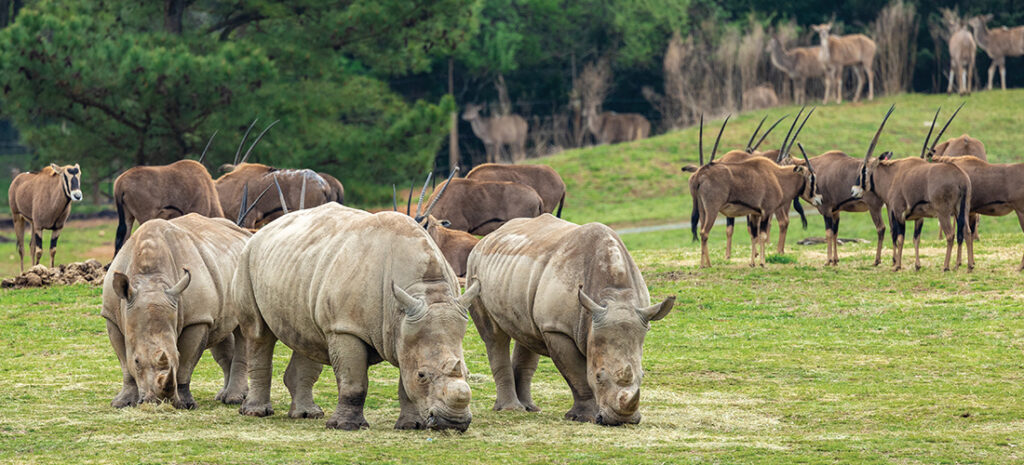
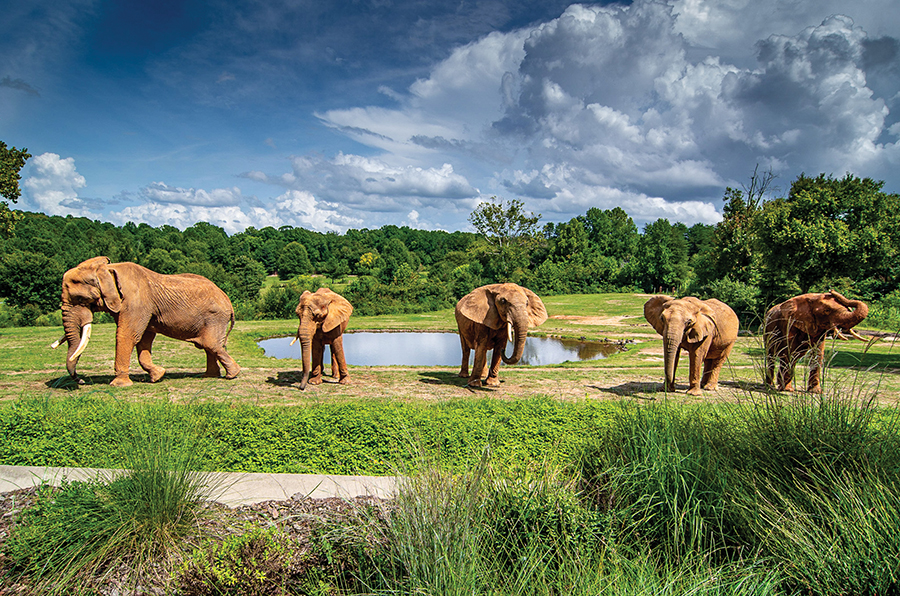
Feature Photo: Southern White Rhinos (from left to right: Bonnie, Abby and Nandi) and Fringe-Eared Oryx in background

It began with Sonny Jurgensen, Tort and Retort. None of them moved very fast, but all of them played significant roles in the birth of the North Carolina Zoo 50 years ago.

The zoo, built initially on 1,371 acres in Randolph County near Asheboro, is the largest natural habitat zoo in the world. It entertained over a million visitors last year, including nearly 90,000 students who attended free of charge. The formal celebration will be on Aug. 2, the day the interim facility was officially dedicated in 1974. Among the many promotions staged throughout the year will be the recognition, probably sometime in June or July, of the zoo’s 30 millionth guest, who will be showered with a lifetime membership, a Zoofari (an open-air trip through the Watani Grasslands), and every manner of zoological swag known to man.

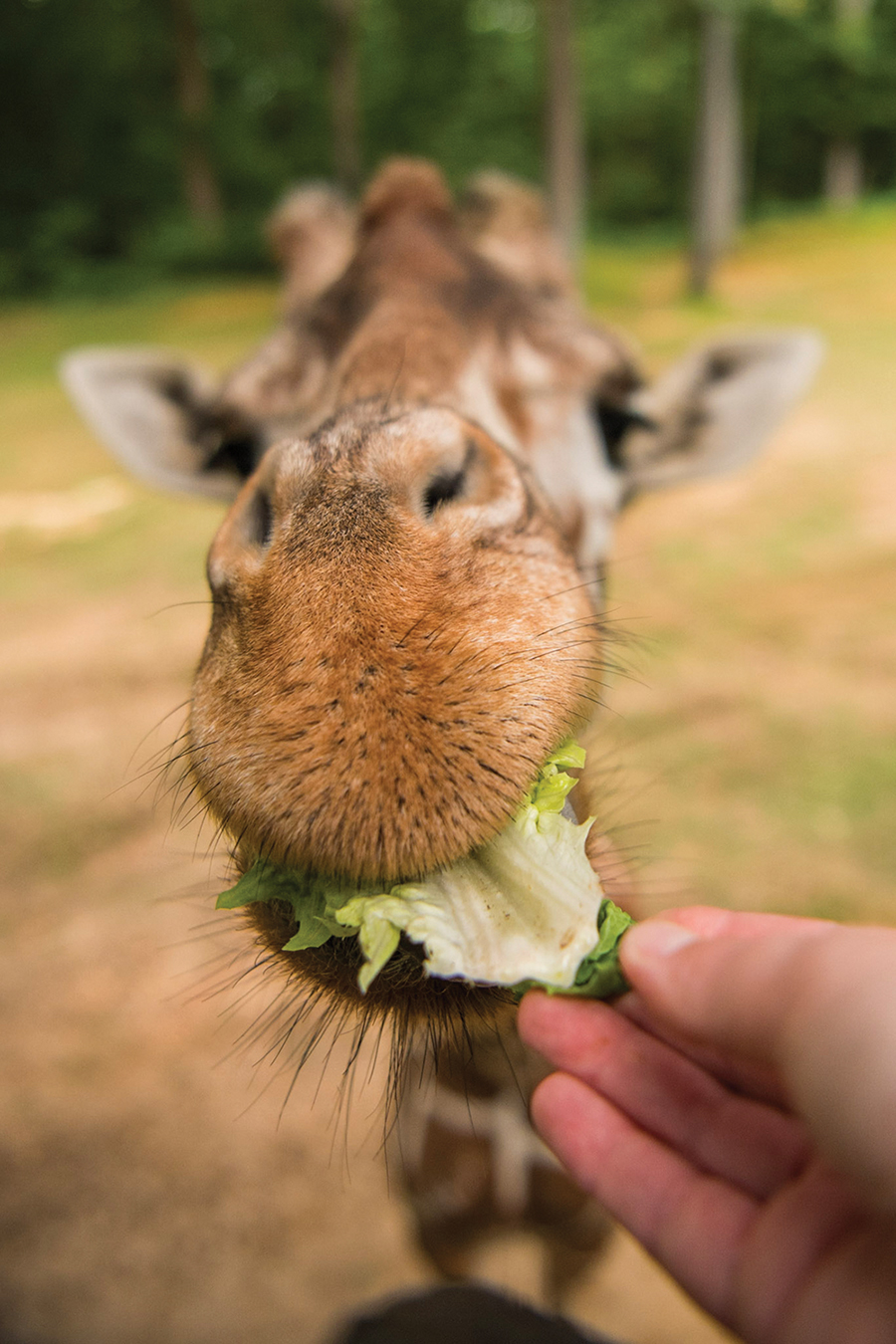
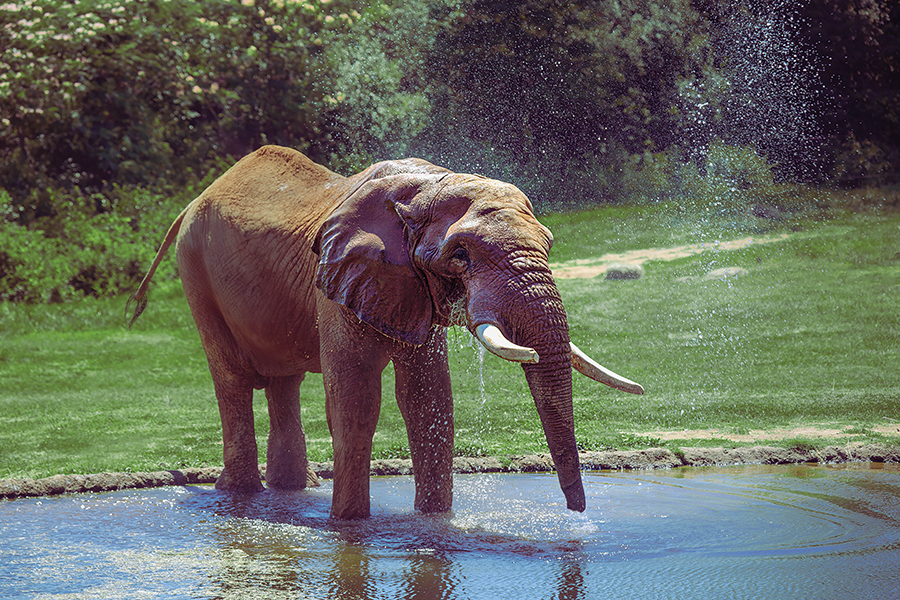
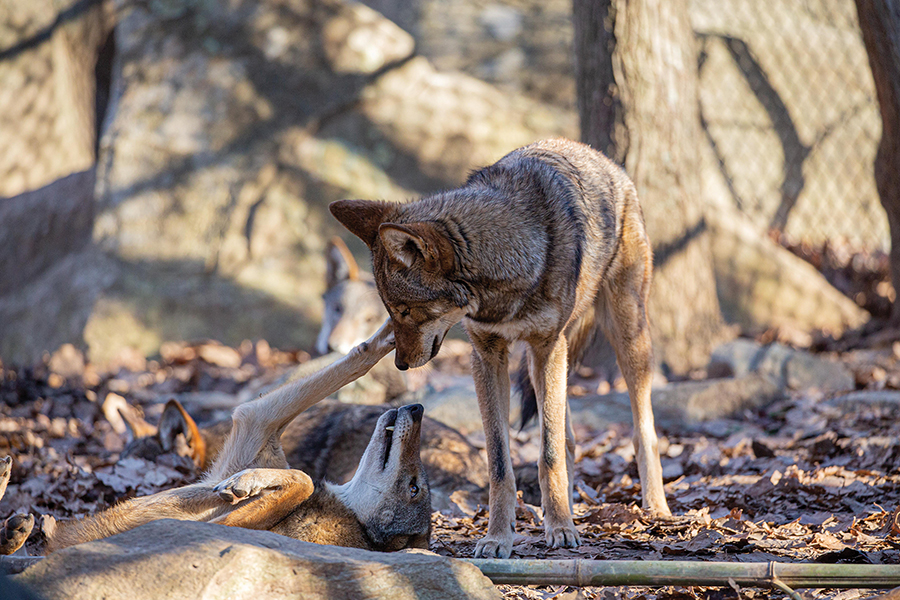
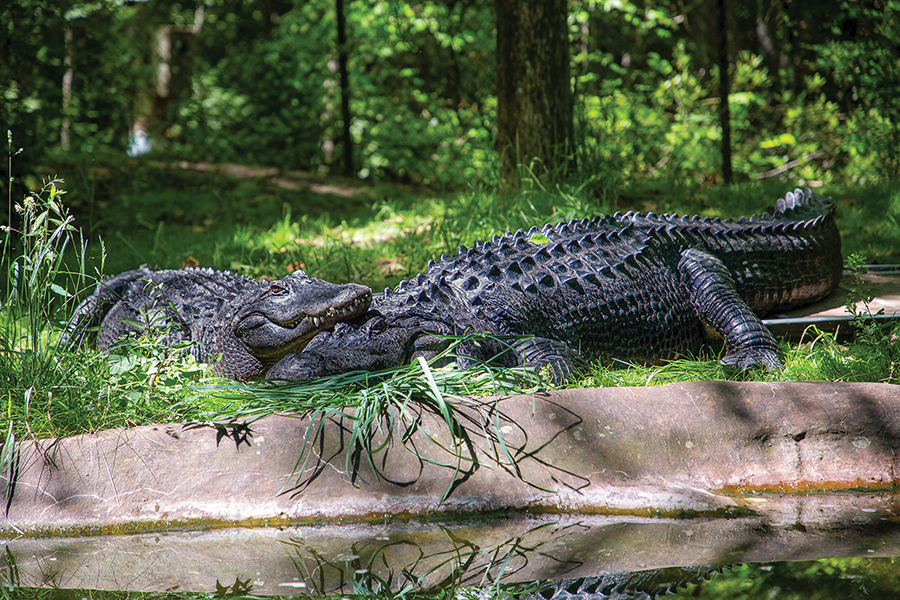
Left to Right: Giraffe (Turbo), African Elephant (C’sar), Red Wolves (from left to right: Catawba and Pearl), American Alligators (from left to right: Liv and Gatorboy)

The seed money for the zoo came, in part, from a series of four preseason football games that raised money for the feasibility study to determine the location of the zoo. The first of those games was on Aug. 19, 1967. The Washington Redskins (now Commanders, though that’s likely to change) were led by their quarterback, Jurgensen, a Wilmington native, and linebacker Chris Hanburger, who was born at Fort Bragg (now Liberty) and attended the University of North Carolina at Chapel Hill. The Giants had a Carolina connection of their own: Darrell Dess, a guard/tackle who had attended N.C. State University. The game was played at night, the first such event, at what was then called Carter Stadium in Raleigh. Washington won 31-13 in front of 33,525 who paid six bucks apiece to attend.

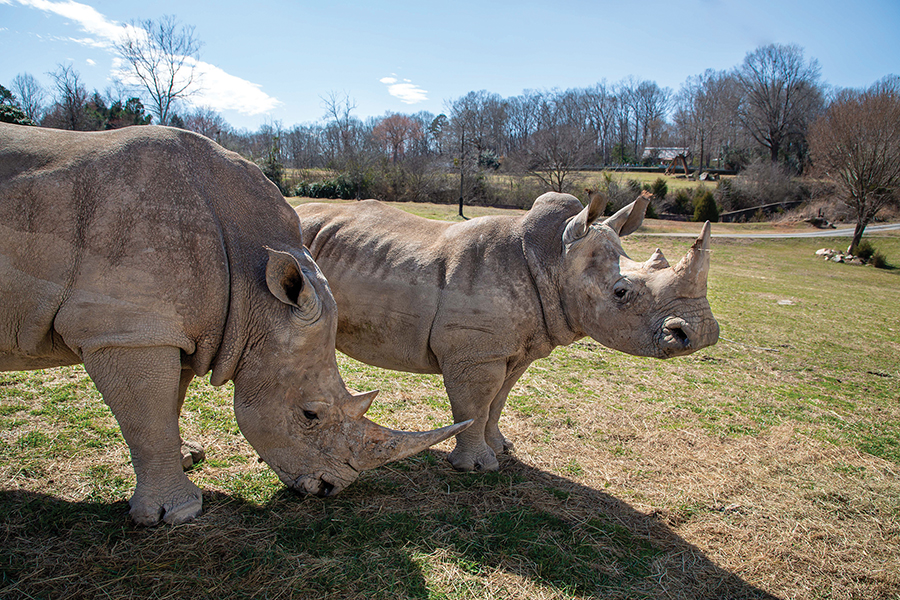
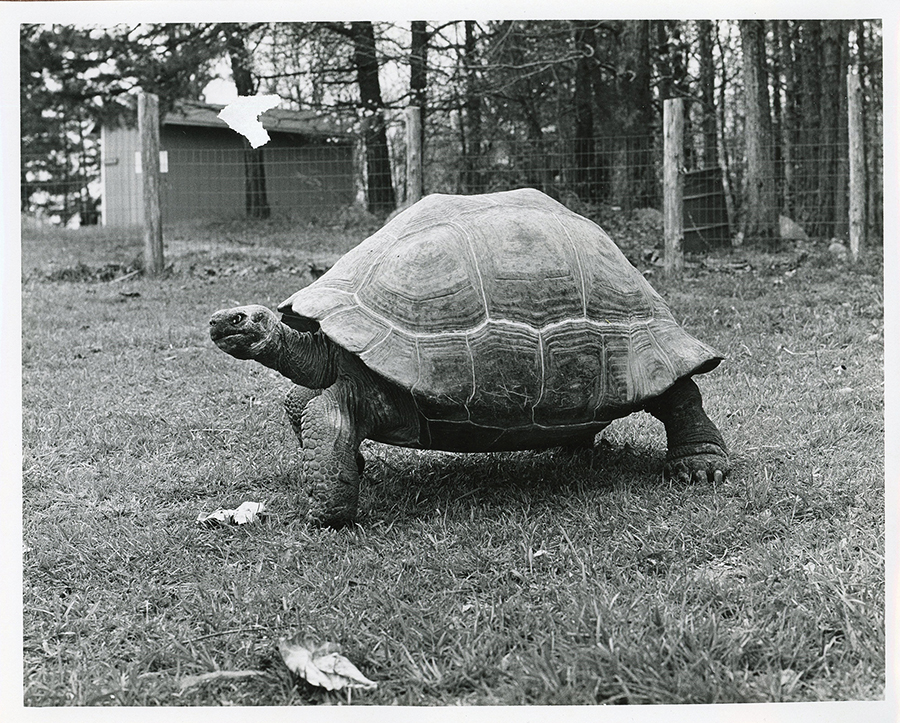
Left to Right: Southern White Rhinos (from left to right: Linda and Jojo), Southern White Rhinos (from left to right: Linda and Jojo), Galapagos Tortoise (Retort), Galapagos Tortoise (Retort)

The location that was eventually settled on for the zoo was known as the Purgatory Mountain site, named, according to legend, for the fires from the moonshine stills visible at night. Randolph County donated the land, the state legislature earmarked $2 million for the project, and hiring began.

The interim zoo, today nothing more than a staging and construction area, became home to the first animals, two endangered Galapagos tortoises named Tort and Retort, who were sent to other zoos long ago for propagation, one of the zoo’s foundational purposes. “The interim zoo was chain link, that’s all it was,” says Diane Villa, the zoo’s director of communications and marketing. “But that’s not what we were going for. What sets our zoo apart from other zoos is the original vision for what they wanted it to be. They wanted it to be good for the animals.” Its creation marked a turning point from concrete, fenced facilities to the creation of environments as close to the animal’s natural habitat as possible.

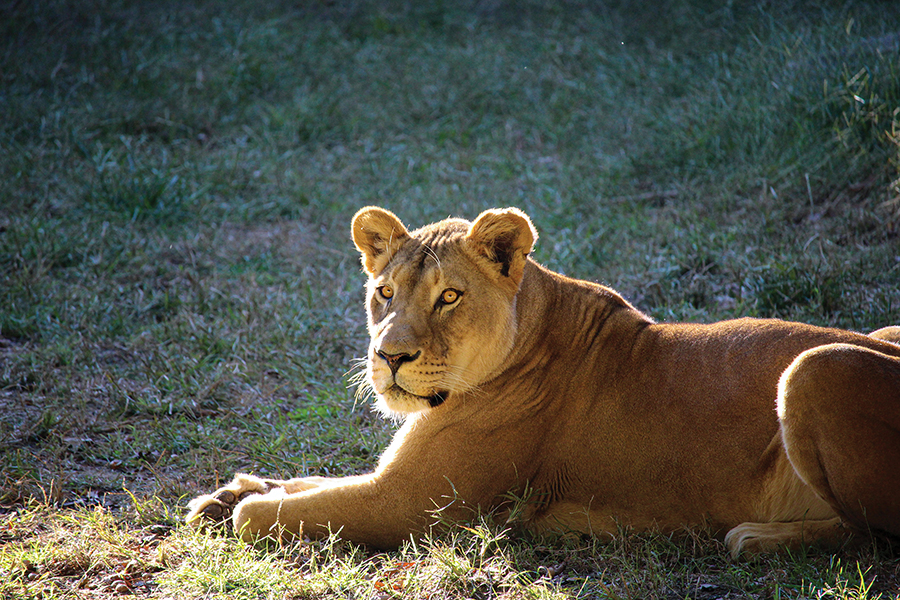
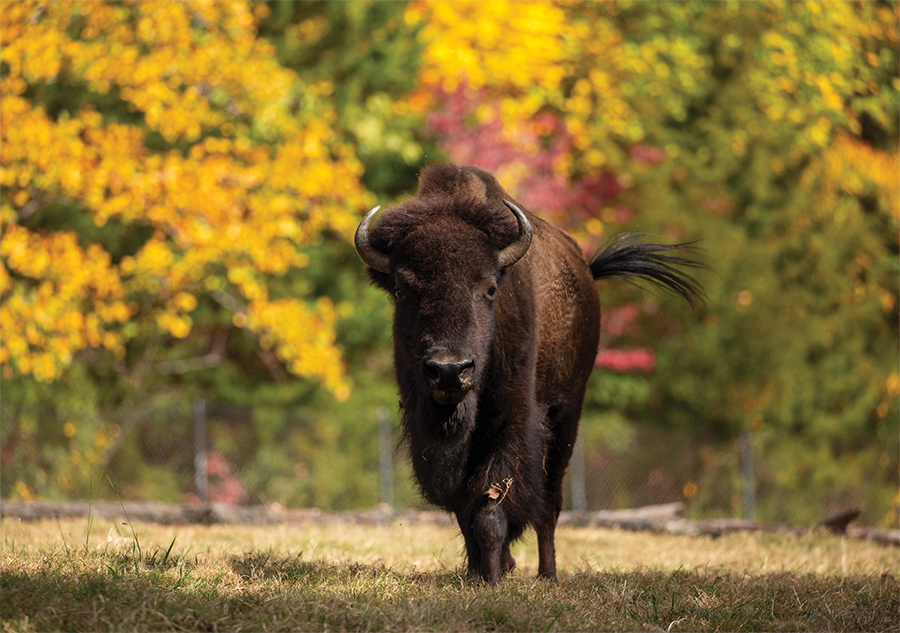
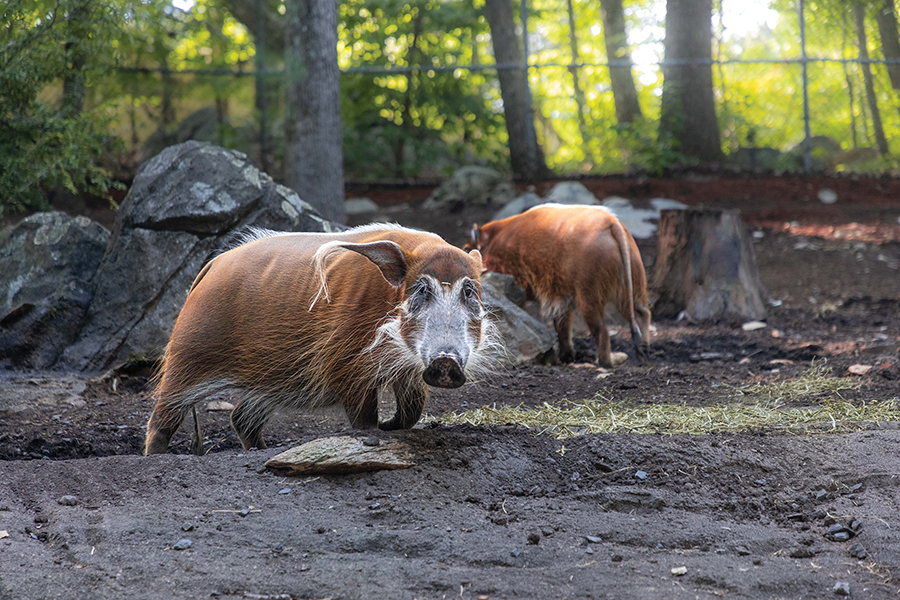
Left to Right: African Elephants (from left to right: C’sar, Batir, Rafiki, Nekhanda and Tonga), African Lion (Mekita), American Bison (Calf), Red River Hog (Patience)

Bill Parker was one of the facility’s earliest zookeepers. A graduate of Pfeiffer University (Pfeiffer College at the time), he began in ’74 and retired six years ago this September. “When I started there were probably fewer than double digits of permanent employees, mostly in administration,” he says. “They started acquiring animals in the late summer and early fall of ’74.” And it was definitely learn as you go.

By the end of the decade he was working in animal care. “I was on the African grasslands, at the time we called it the African Plains,” he says. “We were riding on the back of a truck and we had an antelope, called a nyala, that was breach birth. So we called out the vets and we started doing what we could to help the animal deliver, but it looked like it wasn’t going to survive. So, in the back of the truck, the vet did an emergency C-section and pulled the calf out. The lady I was working with — her name was Nancy Lou Gay Kiessler — who was training me to be a keeper, immediately took the calf out of the vet’s hands, wiped the mucous off its snout, and she put the snout in her mouth and started giving it resuscitation. I thought, ‘Boy, if I’m ever called to do that, I don’t know if I could.’ What it demonstrated to me was the level of care and compassion she had for that group of animals, and that calf survived.”

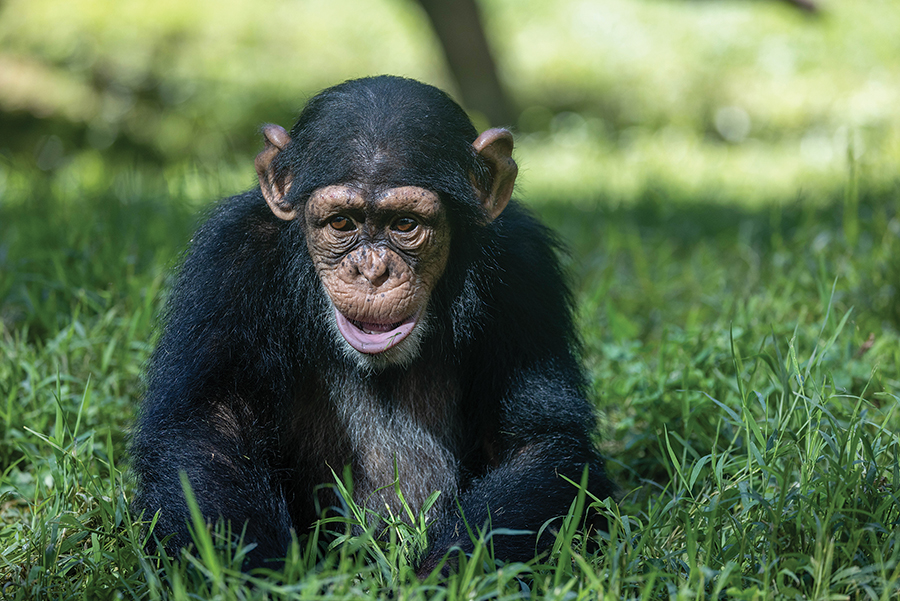
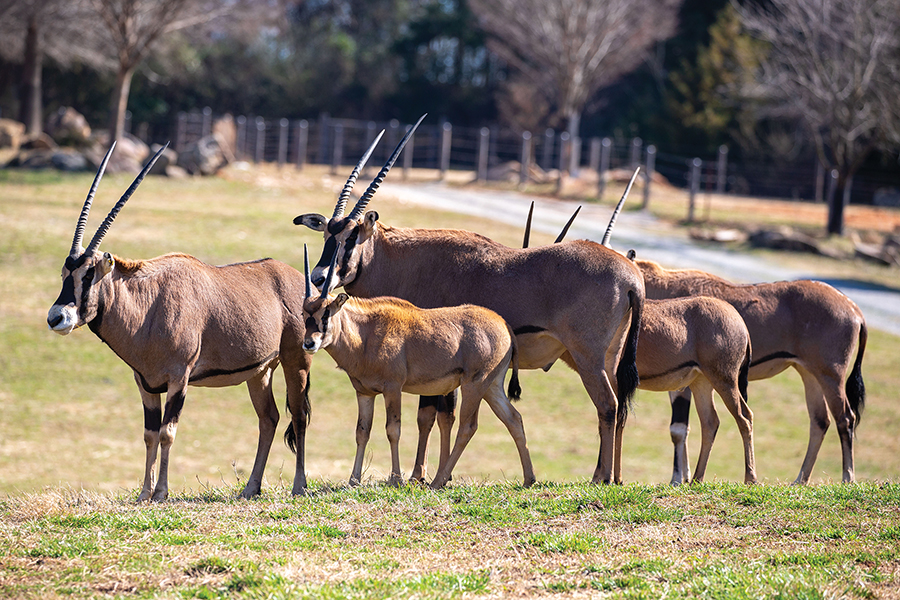
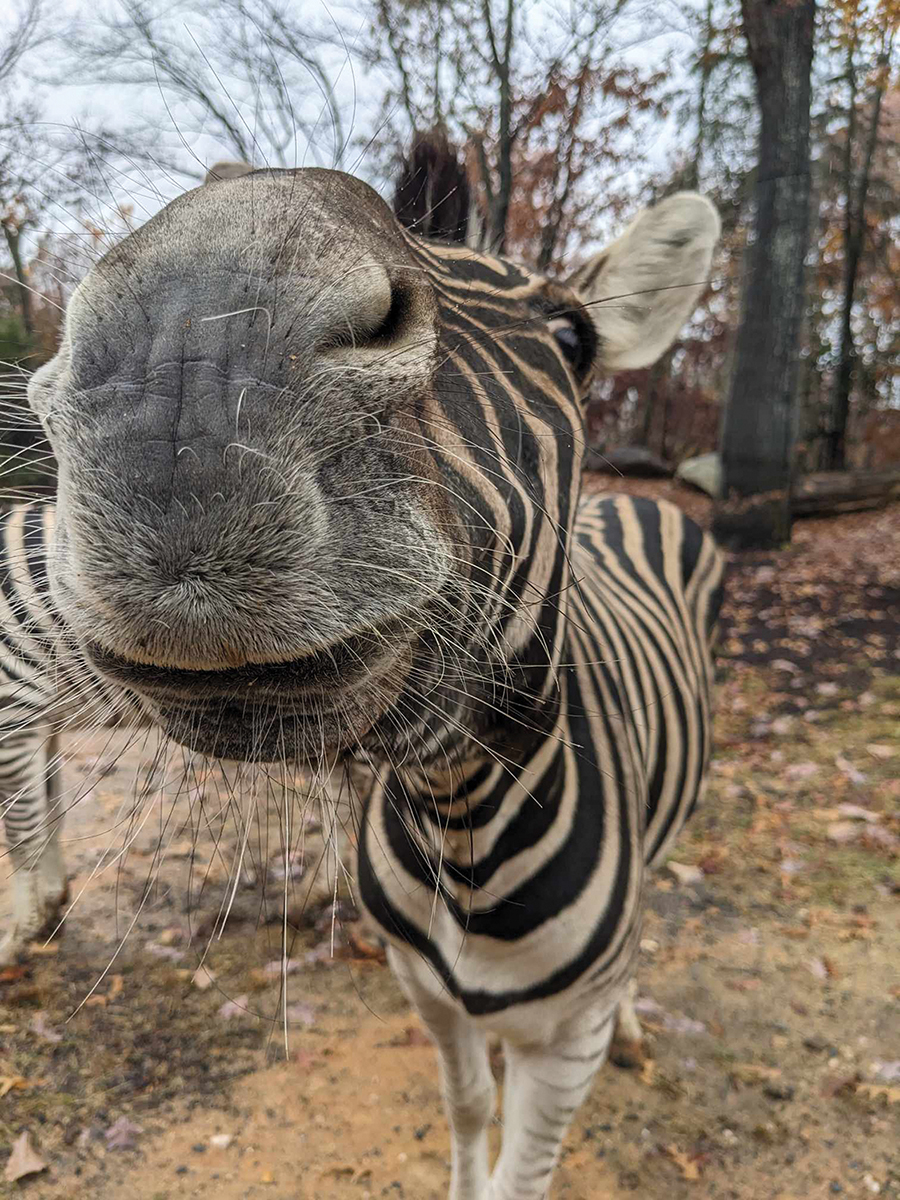
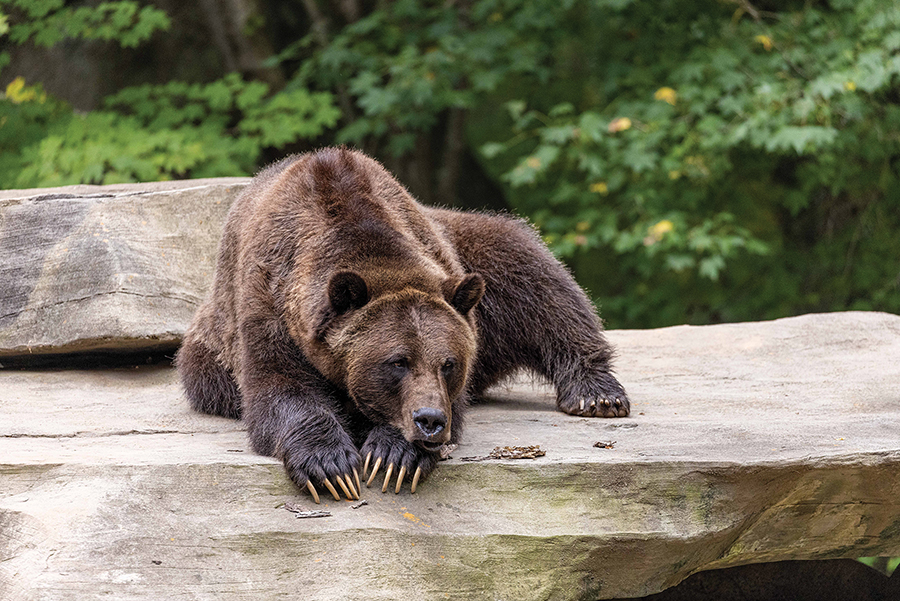
Left to Right: Ocelot (Inca) Chimpanzee (Obi), Fringe-Eared Oryx, Zebra (Spirit), Grizzly (Ronan)

Part of the zoo’s commitment in helping to restore populations of endangered species involves transporting animals to facilitate breeding recommendations in a program implemented by zoos and aquariums called the Species Survival Plan. These days the animals are shipped FedEx, but Goldston has done it driving down I-85. “My first transport was in ’99. We had a recommendation to move our male gorilla to a zoo in Atlanta. Myself and another keeper, I think we were somewhere in South Carolina, we needed to stop to refuel. It was one of those combo stations where it’s a Wendy’s on one side and a fuel stop on the other. So I’m standing in line waiting to get our food and I’m just reeking with gorilla musk. People are sniffing and turning around. ‘Where’s it coming from? Who is it?’ We just sort of cracked up.”

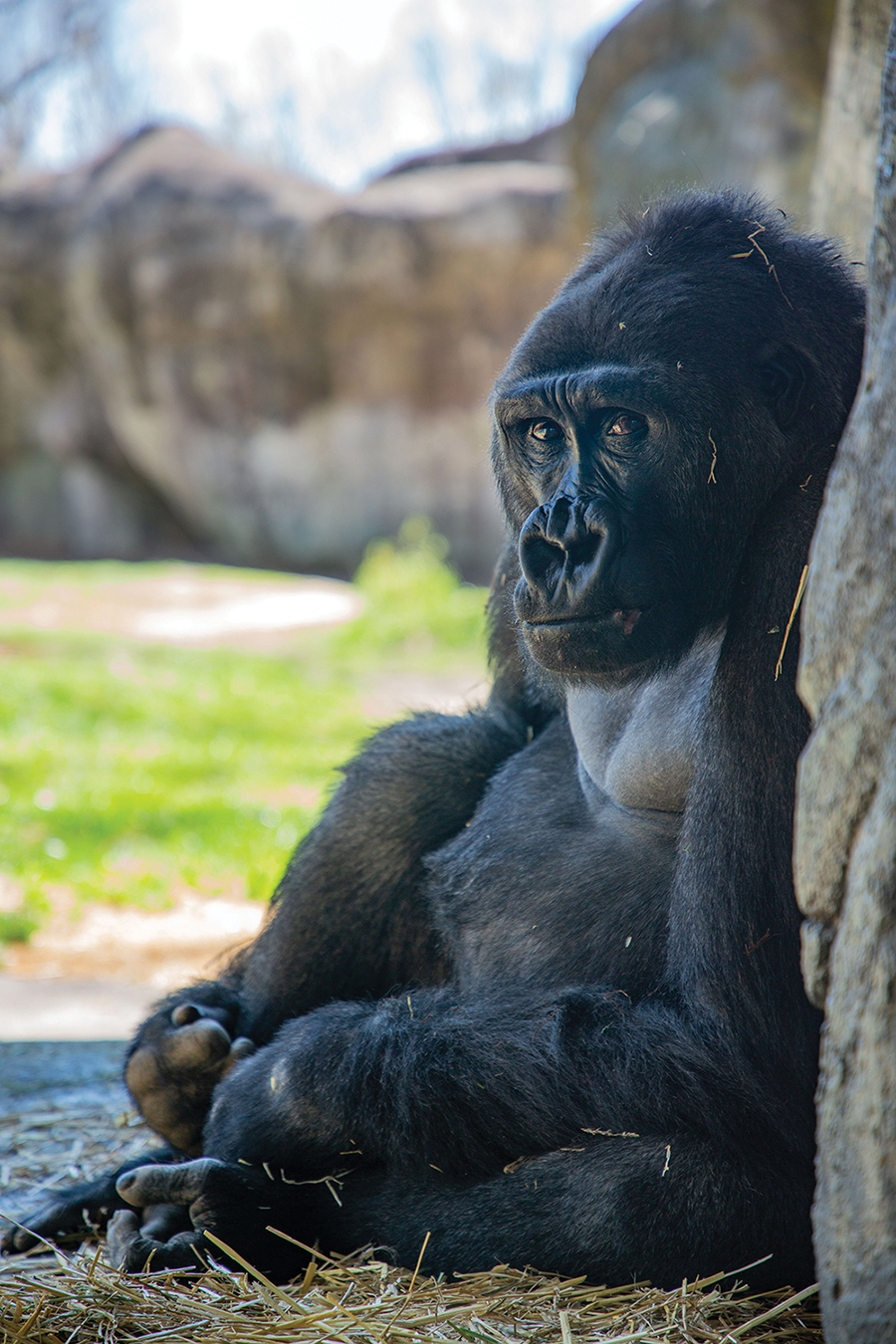
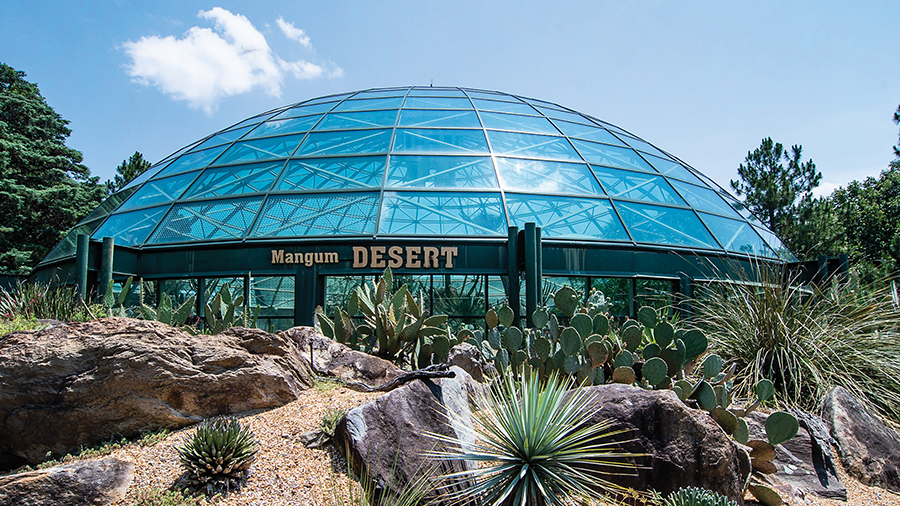
Left to Right: Elephant (Tonga) & Rhinos (from left to right: Nandi and Bonnie), Red Wolf (Warrior), Western Lowland Gorilla (Hadari), Desert Dome

If the early days had its challenges, over five decades the zoo has grown, gazelle-like, by leaps and bounds. Today it manages 2,805 acres and broke ground on an Asia region in August of ’22 that will feature tigers, Komodo dragons and king cobras, to name a few species, when it opens in two years. There are currently 305 permanent state employees with a staff that expands to roughly 700 during the highest traffic months. The zoo has three full-time vets on staff and a number of vet techs. “They work on everything from Madagascar hissing cockroaches to African elephants and everything in between,” says Villa. The zoo won the 2021 World Association of Zoos and Aquariums sustainability award.

A monitoring and reporting tool called SMART, developed by the North Carolina zoo in collaboration with the Wildlife Conservation Society and several other zoos, is being used in over 80 countries to track animals and combat poaching. “A lot of animals are in trouble. African lions, African elephants, vultures. One of our signature programs here is vulture tracking,” says Villa. “They’re part of the circle of life. African vultures are one of the steepest declining birds in the world. One of our scientists, Dr. Corinne Kendall, is one of the leading vulture experts. If there was one thing that we try to let people know, it’s that just by coming to the zoo, your admission price helps support our conservation efforts. We’re trying to be a leader for our guests.” Man and animal alike.  PS

The Perfect Shade

The Perfect Shade

A couple builds their forever home

By Deborah Salomon  

Photographs by John Gessner

For Susan and David Wood, their sun-splashed, white-painted brick home in the East Lake section of the Country Club of North Carolina practically glows. White flowers fill the beds. Two spotless white cars repose in the driveway. Inside the front door, walls blind the eye.

One of the hardest things for Susan was finding the right white for the outside brick and inside walls. The one she chose makes Cool Whip look dingy. “White is easier to clean and doesn’t fade,” she says.

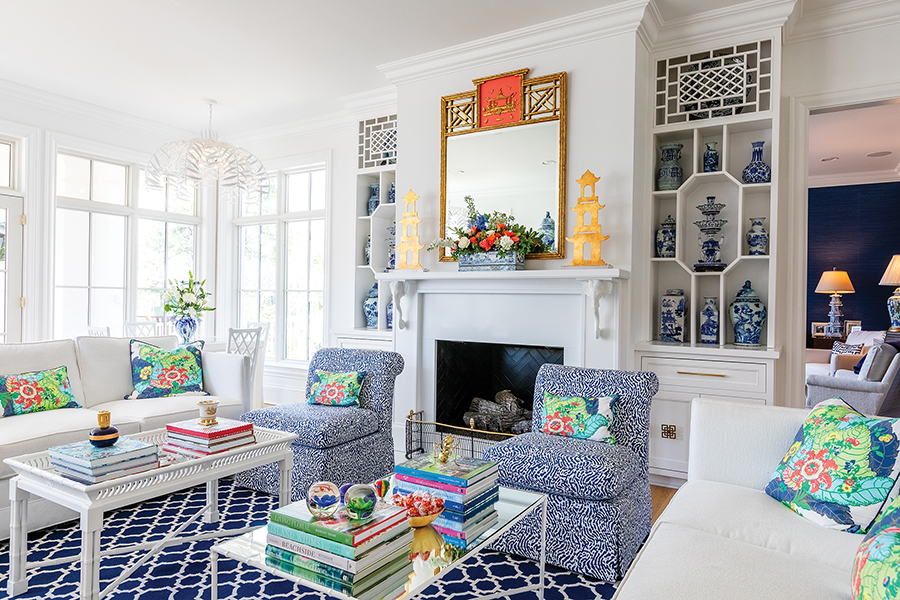
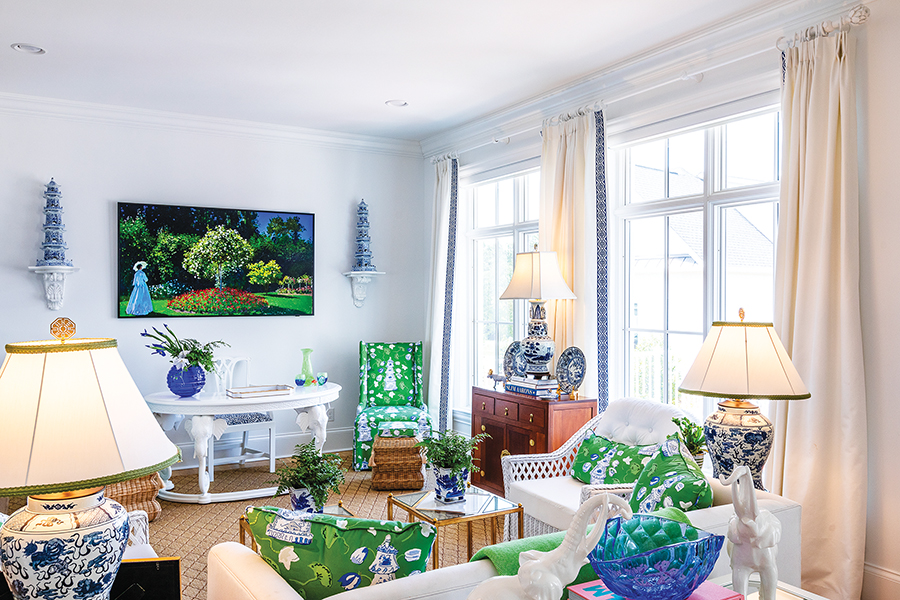
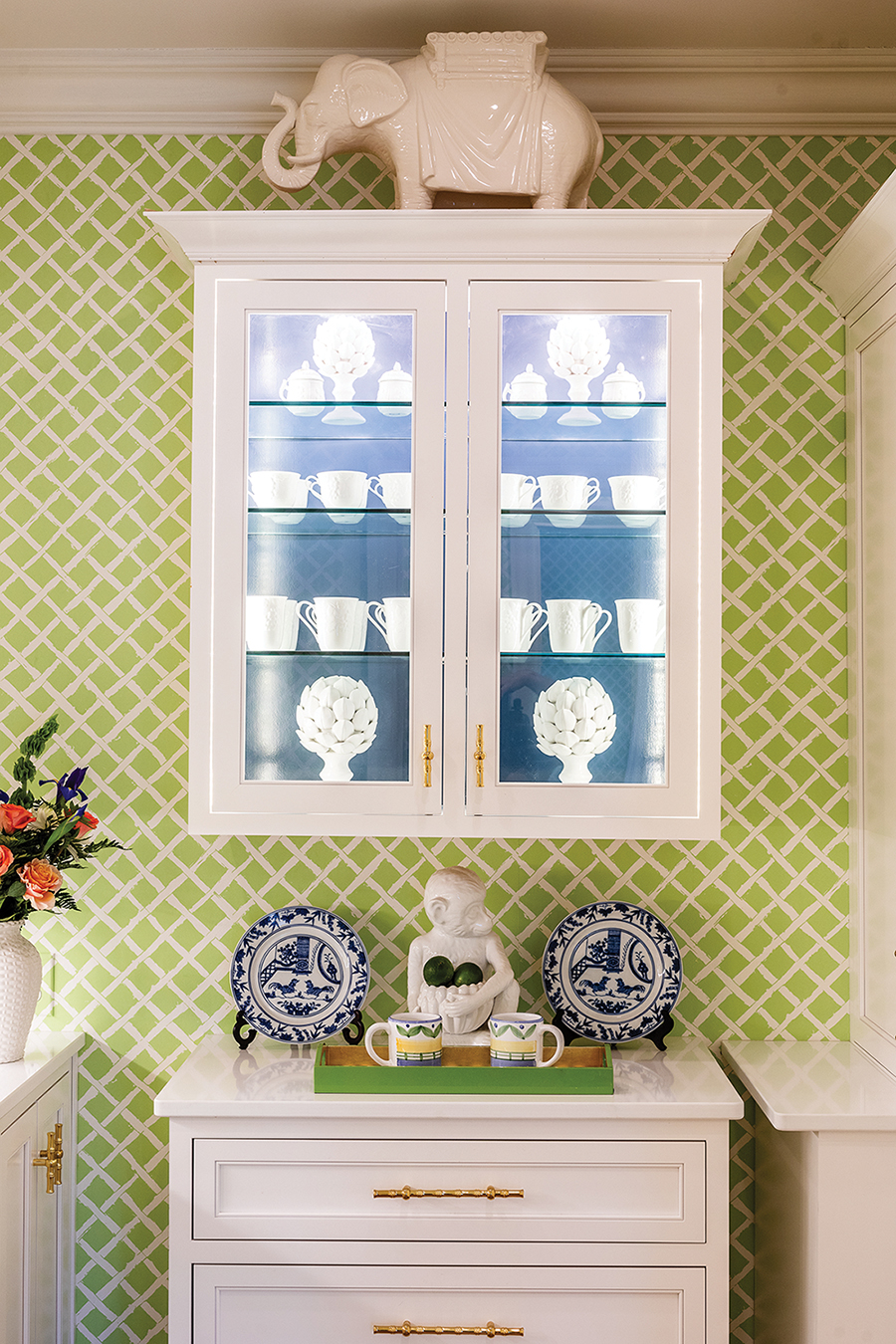
But, in fact, white is merely the backdrop for a whole-house collection of blue chinoiserie porcelain and pottery, from tiny figurines and ginger jar lamps to urns big enough to hold an emperor’s remains. Many pieces belonged to parents, grandparents and family members while others were collected through the years. For an accent color, she settled on lime green, and more recently, a pinkish coral reminiscent of Palm Beach lobster and shrimp, from whence came several of her inspirations.

It’s certainly not your typical retirement cottage. David still runs a business and Susan, a graduate of Converse College with a double major in sociology and psychology, still works four days a week in a law office in Rockingham where she’s been employed for many years.

The yellow brick road leading to the Woods’ white brick residence starts in Wadesboro, where Susan grew up in her grandmother’s house, which she describes as “wonderful, gracious Southern living.” David’s childhood was spent in Rockingham where, after obtaining a business degree at the University of North Carolina at Chapel Hill, he returned to work in his father’s business, a chain of five-and-dime stores. Susan and David were introduced by mutual friends and, after a five-year courtship, married. From the start, their homes have been enriched by family heirlooms.

“It’s the kind of house where anybody can just drop in,” says Susan.

In 2020 Susan’s mother and stepfather moved from Rockingham to Penick Village. Susan and David followed them north. After first scouting in Pinehurst, they decided to build. Susan’s method was to cut and paste photos of houses, details, colors, furnishings to be adapted by builders and interior designers, who appreciated the visuals to flesh out descriptions. The result: personal, striking, gorgeous. And often daring.

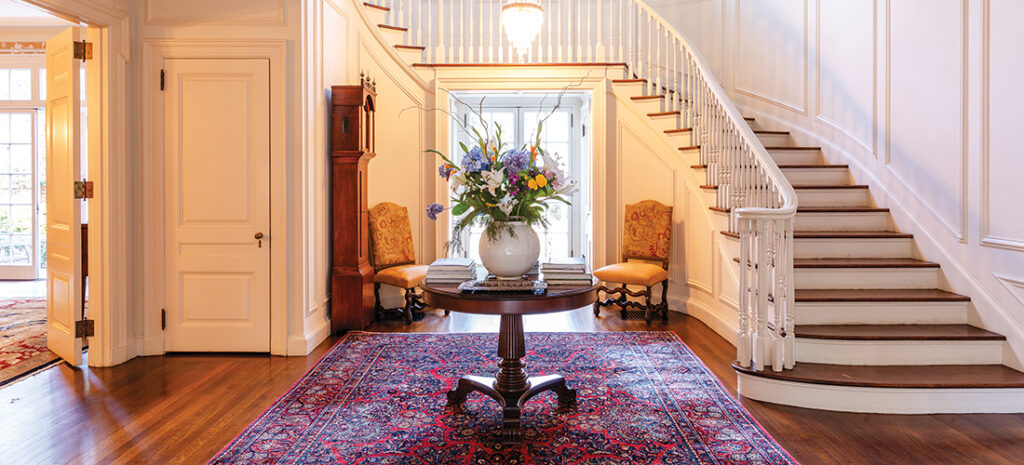
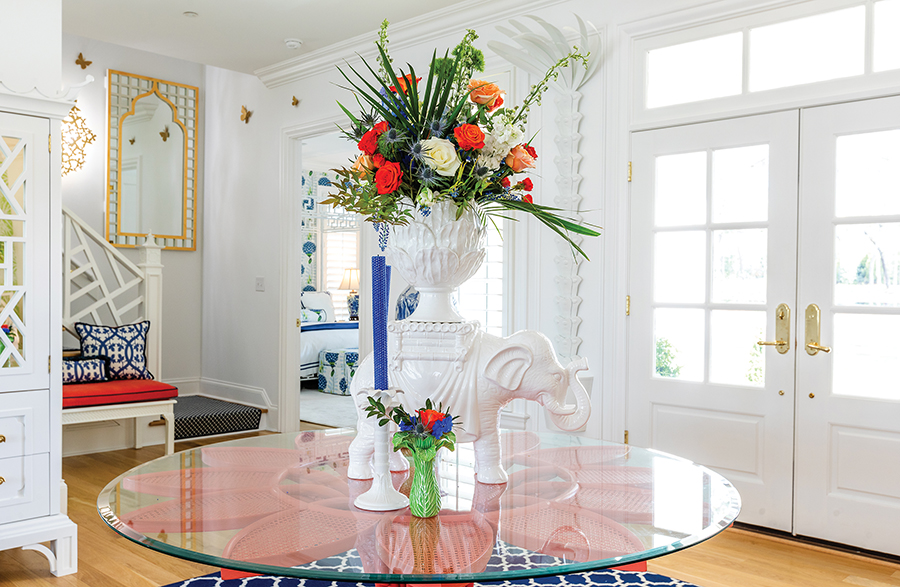
The front door, done in panes of beveled glass, opens into an enormous foyer, the kind hardly seen since antebellum plantation house layouts. In its middle is a round glass table on a fanciful base used for overflow dining, since dinner parties can be large, and the dining room, done in lime green-patterned wallpaper, opens conveniently into the foyer. Ten-foot ceilings make rooms feel larger than the actual square footage and provide space for lighting fixtures, some fit for a modern-day Phantom.

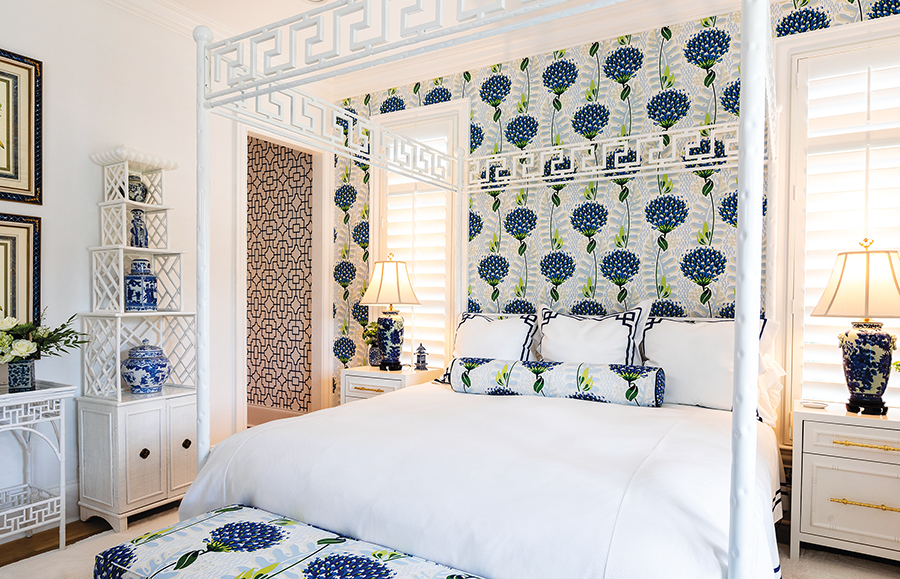
The living room introduces bright navy blue accents, repeated throughout the house. An upstairs bedroom elicits gasps for its dark blue wallpaper with circular white figures that suggest movement, while a vibrant green startles guests using the main-floor powder room.

Two glass-and-white gaming tables are positioned on one side of the living room, just inside the veranda with its own fireplace and TV, overlooking the Dogwood Course and pond. “I love playing cards and all kinds of games,” Susan says. Two elephant heads appear as brackets beneath the living room mantel, introducing another icon repeated throughout the house, including a parade of small jade elephants marching across a shelf. The kicker is a glass-topped desk held up by white elephants, a piece tracked down with dogged determination.

A Carolina room, unlike the usual screened porch, is tucked behind the living room, providing space for a mini shrine to David’s alma mater, complete with ram mascot. On the other side of the living room, a TV den has been wallpapered in navy blue grasscloth, dominated by an abstract seascape by Allison McLean.

No surprise: The ground floor master suite features the same colors with a different fanciful wallpaper. His-and-her bathrooms, closets and dressing areas are grouped together, closed off by a door.

The kitchen, a preen-point in most contemporary construction, is notable for its restraint. Moderate in size with a large island, copious storage and combination butler’s pantry and laundry room, its most startling feature is a mirror backsplash over the range.

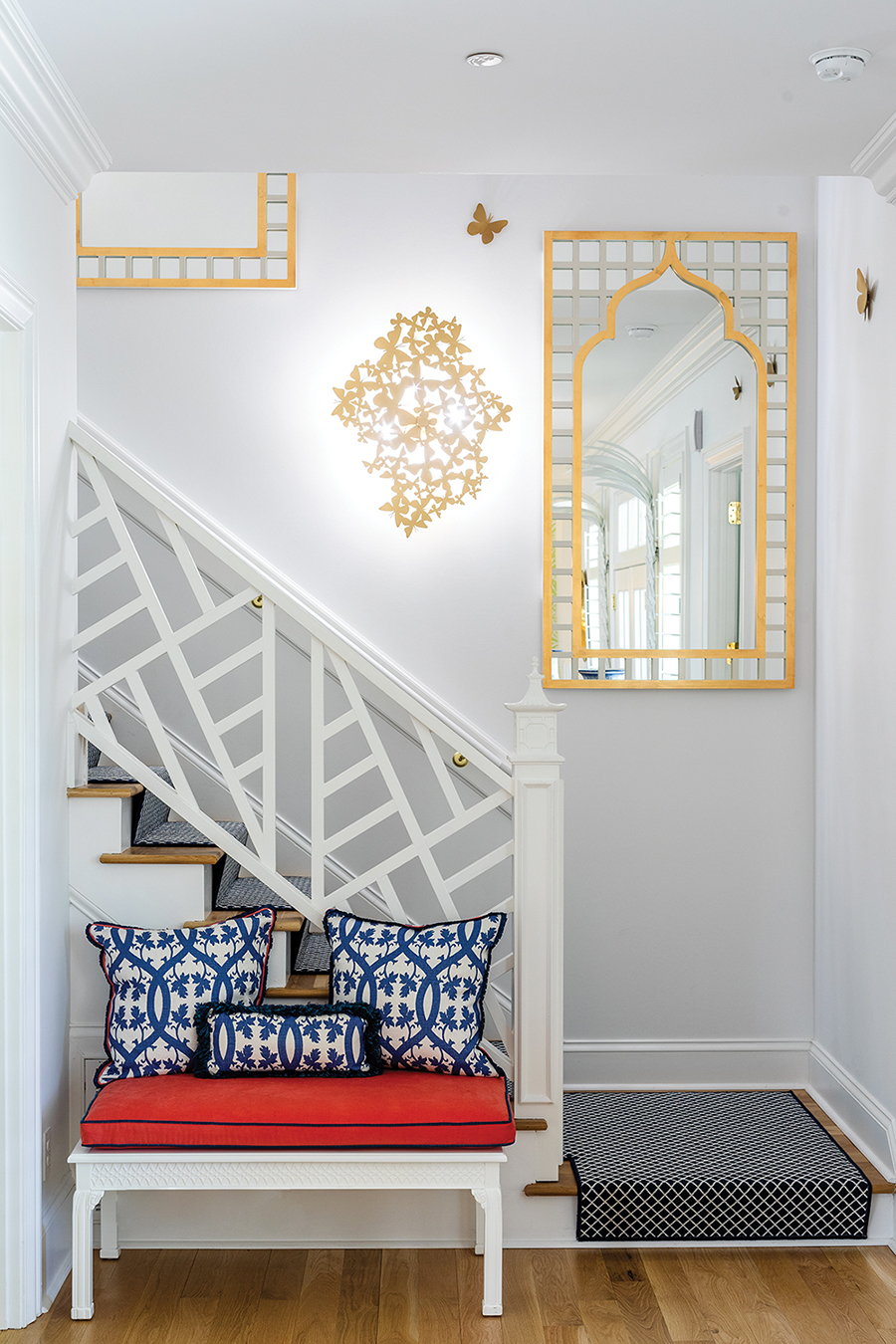
Susan is obviously a detail person who knows what she wants and how to find it, down to old banister posts shaped like pagodas, which she spotted, had painted white, and fitted onto the posts.

The house took about a year to complete. During construction, the couple rented an apartment in Pinehurst. Now, golf lessons are on their to-do list, along with visits from family.

“We want people to feel at home here, be able to find things easily,” Susan says. To this end, the second floor has several bedrooms, bathrooms, a seating area with coffee-bar/mini-kitchen and a fringed froggy-green love seat sure to spark conversation.

So . . . how do the Woods feel now. David answers in a word: “Happy.”  PS

Wild and Wonderful

Wild and Wonderful

Pinehurst No. 2 prepares to test the best

By Lee Pace

Feature Photo: 2014 U.S. Open Photograph by Joann Dost

A December day in 1935. A man approaches the house at 120 Midland Road in Pinehurst, notices the Scottish-style stonework and arches of Dornoch Cottage, and rings the bell.

Donald Ross opens the door and greets A.W. Tillinghast.

What a meeting of the minds of the early days of golf course architecture.

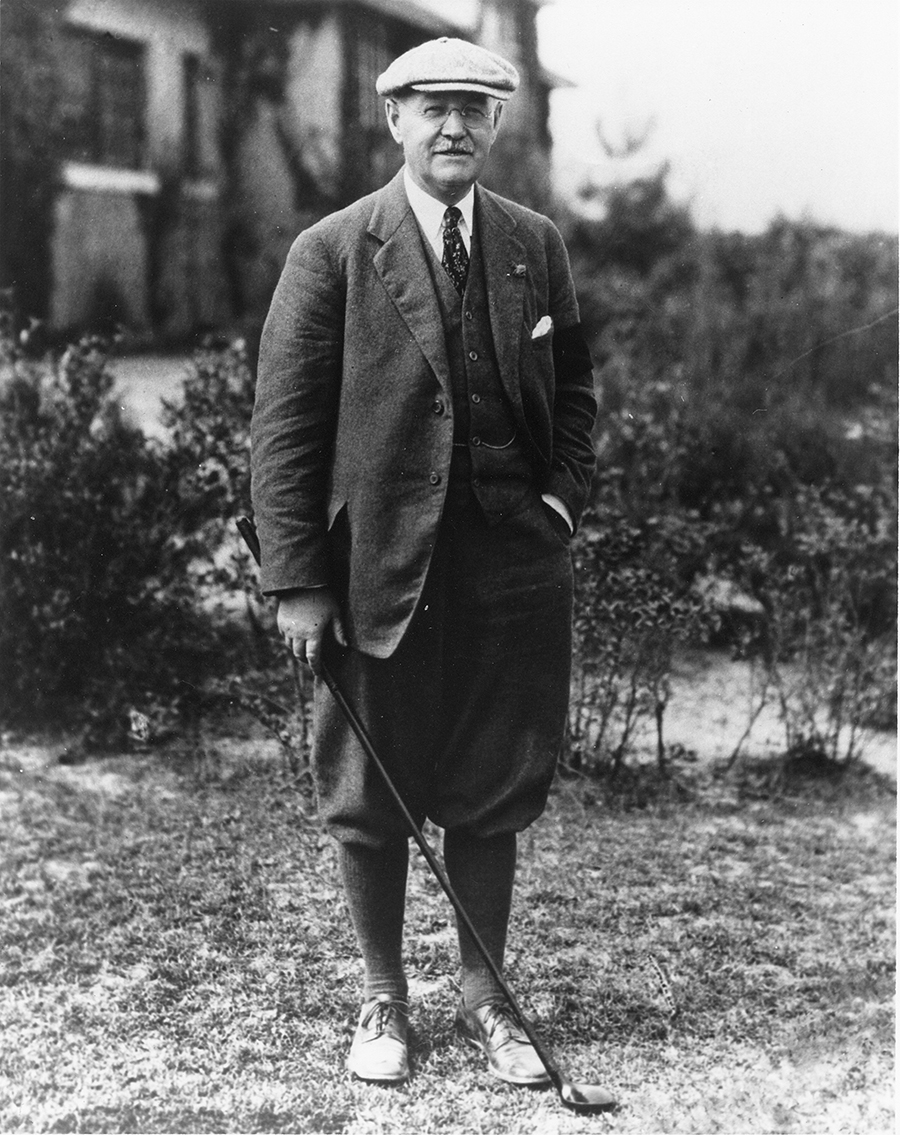
Ross, 63, the son of a Scottish stonemason, apprentice in his 20s to legendary pro Old Tom Morris at St. Andrews, an immigrant to the United States who set up shop in Pinehurst in 1900 and designed notable courses across the eastern United States — from Seminole Golf Club in Florida to Inverness Club in Ohio to Oak Hill Country Club in upstate New York. His tour de force, Pinehurst No. 2, sits just behind his house.

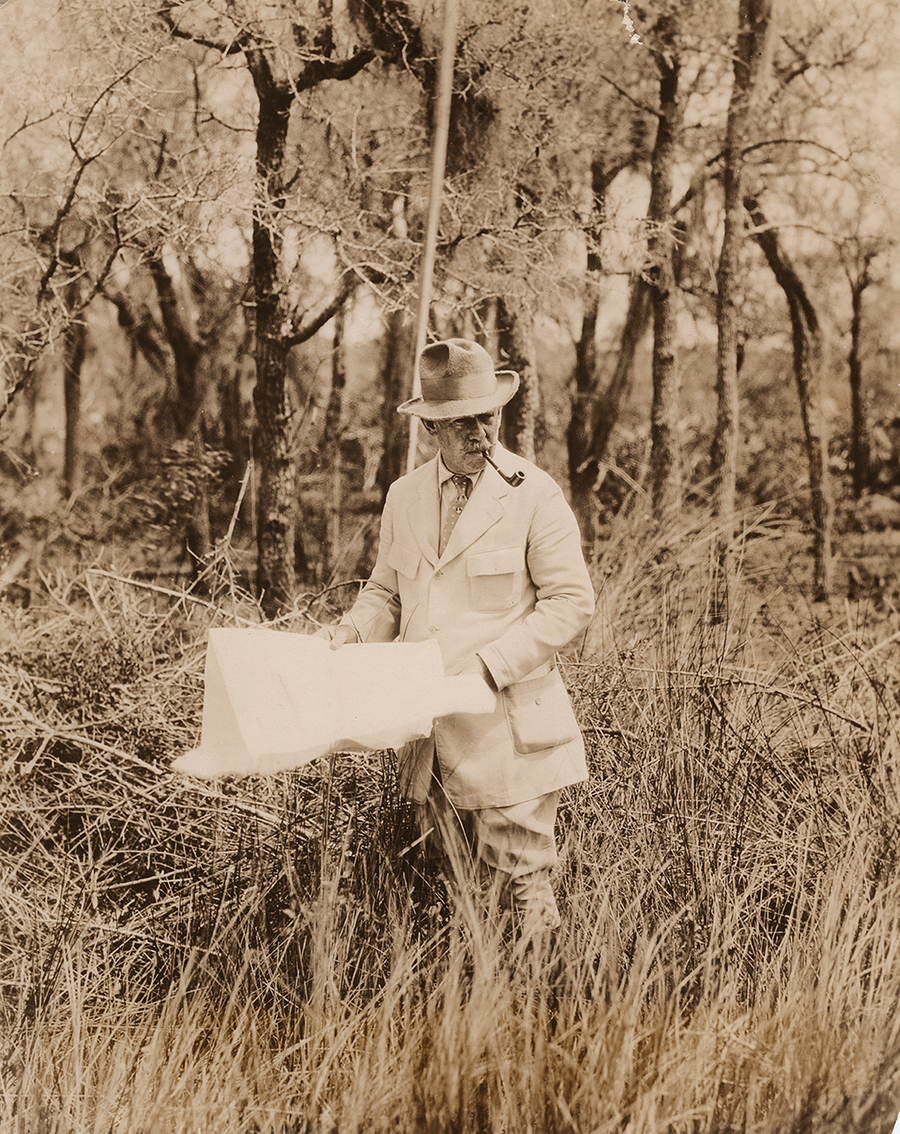
And Tillinghast, 59, the son of a wealthy rubber goods magnate in Philadelphia, who grew up playing cricket and fell under the spell of golf on a visit to St. Andrews in 1896 where he established a mentor-mentee relationship with Morris. Tillinghast’s design acumen was on display across the land as well — from San Francisco Golf Club on the West Coast to Winged Foot Golf Club and Baltusrol Golf Club in the shadows of the New York City skyscrapers.

Oh, to have been a fly on the wall, to hear these friends and sometime competitors talk about their shared experiences — their formative years at St. Andrews, their design philosophies, the challenges of maintaining businesses and servicing clients when travel was by train and communication by post.

Surely Tillinghast espoused, to some degree, his belief that “a round of golf should present eighteen inspirations, not necessarily eighteen thrills.”

And no doubt Ross would have looked at the 72-hole facility at Pinehurst Country Club and talked about how it had become the epicenter of golf in America. “I wholeheartedly believe in golf,” Ross once said. “A country which gets golf-minded need not worry about the honor, the integrity and the honesty of its people.”

Tillinghast’s visit came at the behest of the PGA of America and his role as a consultant with the organization which in 11 months would conduct its flagship competition, the 1936 PGA Championship, on Pinehurst No. 2. They carried their golf clubs past Ross’ masterful rose garden in the backyard, through the wrought-iron gates and onto the third green.

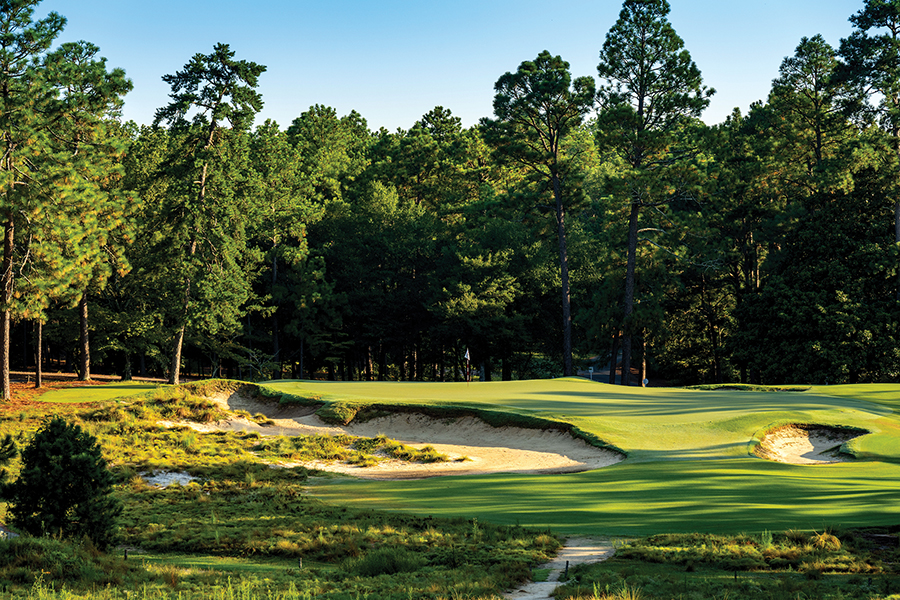
Ross showed his guest the green complexes that he had just converted, with the help of green superintendent Frank Maples, from their previous flattish sand/clay structure to undulating Bermuda grass, shaping the sandy soil around them into a cacophony of dips and swales. He noted the roll-offs around the greens, how they penalized shots even slightly mishit and propelled balls into the hollows nearby.

Ross led Tillinghast to the fourth tee and explained how he had just added that hole and the fifth to the routing, taking them from a previous employee-only nine holes, and had arrived at the final (and current) configuration after originally unveiling the course in 1907.

They felt the taut turf under their feet, reveling in how the drainage qualities of the sandy loam made for the ideal golf playing surface. As they went, Ross explained the choices golfers had off the tee — on the par-4 second, for example — showing his friend what a lovely view it was into the green from the left side of the fairway but pointed to the gnarly bunker complex a player had to flirt with to get there. Ross nodded to the native wiregrass that grew in profusion along the fairways and how it reminded him of the whins of his native Scotland.

Did the man known in the business as “Tilly” dip into his bag for a flask and a wee snort as he was wont to do? Did Ross grouse that this new and improved No. 2 was better than any new-fangled effort from Bobby Jones and Alister MacKenzie down in the red clay of north Georgia?

All of this, we’ll never know. What we do know is what Tillinghast said after his visit.

“Without any doubt Ross regards this as his greatest achievement, which is saying a great deal,” Tillinghast offered. “Every touch is Donald’s own, and I doubt if a single contour was fashioned unless he stood hard by with a critical eye. As we stood on hole after hole, the great architect proudly called my attention to each subtle feature, certain that my appreciation of his artistry must be greater than that taken in by a less practiced eye. Nothing was lost on me, and after our round together, I told him with all honesty that his course was magnificent, without a single weakness, and one which must rank with the truly great courses in the world today.”

And, 89 years later, the show goes on.

Pinehurst No. 2 would continue to be the site of the North & South Open on the PGA Tour through 1951, with Ben Hogan, Sam Snead, Byron Nelson and Ross himself among the winners. It would host the 1936 PGA (won by Denny Shute) and the 1951 Ryder Cup (won by the Americans, 9 1/2to 2 1/2, over the team from Great Britain and Ireland).

But it wasn’t in the mix to host a U.S. Open.

Through the 1970s that union was simply impossible because Pinehurst shut down for the summer (the founding Tufts family and the staff went to Linville or Roaring Gap in North Carolina or traveled north to Maine), and the American national championship was played always in June.

When the resort went to air-conditioning and a year-round operating calendar, the idea was still problematic because of the USGA’s preference for playing courses with firm and fast greens, a challenging task on Southern courses during hot weather months. The U.S. Open was not played in the muggy Southeast until venturing to Atlanta Athletic Club in 1975, though it had already visited hot spots in Houston, St. Louis, Dallas and Fort Worth.

About the time Jerry Pate was winning in Atlanta, officials at Pinehurst Country Club began floating the idea of an Open for No. 2. The Diamondhead Corporation was five years into its ownership of Pinehurst after purchasing it in 1970 from the Tufts family, whose patriarch, James W. Tufts, launched the town and resort in 1895 as a refuge from the cold winters of New England. The Diamondhead president, Bill Maurer, conceived the World Open on the PGA Tour and the World Golf Hall of Fame in the early 1970s and wanted all the traffic, attention and accolades he could muster for Pinehurst and its No. 2 course.

It took two more decades to figure out how to bring the National Open there.

First, there was the dodgy financial bona fides of the resort and club, which eventually went bankrupt and was taken over by eight banks for two years beginning in March 1982. Robert Dedman Sr. and his Club Corporation of America bought the facility in 1984 and provided what has turned into four decades of stability, innovation and financial security, with Robert Dedman Jr. taking the baton after his father died in 2002.

Second, there was the issue of the playing surfaces.

Pinehurst and other golf courses in the Mid-Atlantic, or so-called “transition zone,” have forever been vexed over the choice for their putting surfaces between Bermuda grass, the de facto choice for Florida and warm weather climes, and bent grass, which thrives in the North. Pinehurst officials experimented with new strains of both over the 1970s and ’80s, walking that tightrope between offering smooth and playable greens for members and resort guests for 12 months of the year, and yet having the ability to get them lightning-quick while not dying in the summer for an elite competition. Pinehurst old-timers still remembered Hale Irwin and Johnny Miller taking dead aim at flagsticks during PGA Tour competitions on No. 2 in the late summer and their approach shots going splat and stopping mere feet from the hole (Hale Irwin shot 62 and Johnny Miller 63 in mid-1970s birdie-fests).

Donald Ross must have raged in his grave.

By the early 1990s, the USGA and Pinehurst officials agreed that advances in grass technology and green foundation construction would allow them to rebuild the greens and have them stand up to the world’s best players on a 90-degree day in June. The USGA announced in June 1993 that it would conduct the 1999 Open at Pinehurst. The competition was a rousing success from the perspective of ticket sales, corporate support, traffic ebb and flow, housing and, certainly, the golf course itself.

Left: Donald Ross. Courtesy Tufts Archives

Middle: The Ninth hole of Pinehurst No. 2 Copyright USGA/Fred Vuich

Right: A.W. Tillinghast. Courtesy USGA Archives


“It’s the most draining course I’ve played in a long time,” said European Ryder Cup team member Lee Westwood.

“People sometimes ask what’s the hardest course I’ve ever played,” said two-time U.S. Open champion Lee Janzen. “Now I know.”

The Open has been contested on No. 2 twice more, and the course has played as a par-70 for each championship. The scores validate that what Ross completed in 1935 stands in fine fettle in the next century.

Payne Stewart was 1-under in winning the Open in 1999, Phil Mickelson was even-par, and Vijay Singh and Tiger Woods were 1-over. Michael Campbell won with an even-par total in 2005, with Woods at 2-over. Martin Kaymer has been low man in the three Opens, shooting 9-under in 2014, but his nearest competitors were a mile back, with Ricky Fowler and Eric Compton tied for second at 2-over.

The firm greens, the delicate chipping areas, the flow of the holes and the strategic nuances led Tom Weiskopf to venture in a 1995 conversation that Pinehurst No. 2 is a better year-round test than Augusta National Golf Club.

“Augusta National is good one week a year,” Weiskopf said. “I’ve played Augusta two or three weeks before (The Masters) and it’s a piece of cake — a piece of cake. Pinehurst No. 2 is never a piece of cake.”

The 2024 Open at Pinehurst will be the first played on the Champion Bermuda greens installed after the 2014 Open and the second of the Coore & Crenshaw restoration era. Bill Coore, a native of Davidson County who played No. 2 often during his boyhood summers, and Ben Crenshaw, the two-time Masters champion, coordinated an extensive makeover in 2010-11 that included stripping out hundreds of acres of Bermuda rough, recontouring fairways and bunkers to Ross’ design, and rebuilding the perimeters with firm hardpan sand dotted with wiregrass, pine needles and whatever natural vegetation and debris might accumulate.

“In the early days, this golf course was disheveled and brown, and the ball rolled and rolled and rolled,” Coore says. “That’s what gave it its character. There was width here, the ability to work your ball to get the best angles. Over time, that was lost. It was too green and too organized.”

“Bowling alley fairways,” Crenshaw adds. “Straight and narrow, just like a bowling alley.”

Don Padgett II was the Pinehurst president and chief operating officer from 2004-14 and the man who convinced Dedman that hiring Coore & Crenshaw and taking No. 2 back to its “golden age” from 1935 through the 1960s was the correct move. Padgett is a “golf guy,” in industry parlance, coming to the resort with a background as a PGA Tour player in the early 1970s and a longtime club professional. His father, Don Sr., was director of golf at Pinehurst from 1987-2002.

One March afternoon a decade into his retirement, Padgett is sitting in a rocking chair on the porch overlooking the 18th green of No. 2. It’s sunny and 55 degrees. The tee sheet on No. 2 is full.

“I think this is what the Tufts envisioned,” Padgett says. “If you’re from Boston, this is balmy. My dad used to say if you’re in the golf business, stand here because everyone will come to see you.”

The world of golf is coming to Pinehurst in June, and the game’s top players will find the 18 holes that so impressed A.W. Tillinghast in 1935 and will vex them in 2024.

“I think the golf course today probably presents itself as the best it ever has,” Padgett says. “It’s Ross’ concepts with modern maintenance behind it. I think he would look at this golf course and say, ‘Wow, I wish I’d had the ability to grow grass like this.’ These are his concepts with modern turf. It’s not distorted, it’s enhanced. I think he would bless it.”  PS

Chapel Hill-based writer Lee Pace has authored four books about golf in Pinehurst, including “The Golden Age of Pinehurst — The Rebirth of No. 2.” Write him at leepace7@gmail.com and follow him @LeePaceTweet.

Hooked Up to History

Hooked Up to History

Skydiving with Bush 41

By Amberly Glitz Weber

Photograph by John Gessner

Sir.

He didn’t say anything.

“Mr. President?”

No answer.

Time is very important. We’re losing time and altitude. I’m, like, is he dead? Everything’s going through my head right now.

“Sir?”

“Yeah?”

“Sir, you gotta help me get your legs up.”

It was the morning of June 12, 2014. Former President of the United States George H.W. Bush is floating toward the Earth from approximately 8,000 feet over his home of Kennebunkport, Maine, strapped to the chest of retired Sgt. 1st Class Mike Elliott, a former Golden Knight and founder of the independent skydiving team All Veteran Group. The panoramic view of St. Anne’s Episcopalian Church and the Atlantic Ocean stretch out below them. And the side pinnings that allow for a flexible landing position will not loosen. 

Maine is a long way from Linden, North Carolina, a little town 45 minutes north of Fayetteville, where Mike Elliott was born and raised. “I had four uncles who were all in the military. My grandfather was a veteran of World War II. I was the only grandchild for many, many years, and my uncles were more like my big brothers. They loved the military, which led to me loving the military,” Elliott says. “My grandfather just had that military soul. He always had the high and tight haircut, the perfect mustache. He was a book of knowledge.”

Working part time at a grocery store in Spring Lake during high school, Elliott saw soldiers walking in and out, pulling on their berets. “Whether it was the green beret or the maroon beret, I knew my destiny was to join the military,” he says. He enlisted after high school and spent a year in Baumholder, Germany, in the mechanized infantry, a titanic change for a kid from North Carolina. “It was white and snowy and I think it stayed that way the entire year.”

His first encounter with the open skies was when he was sent to Fort Campbell, Kentucky, home of the 101st Airborne Division. He became an air assault instructor and stayed in that position until war broke out, deploying as a scout in Operation Desert Shield, Desert Storm. No parachutes there. Instead, he spent his time “doing reconnaissance on a dirt bike in the desert.”

At war’s end Elliott returned to Fort Campbell and secured a post as driver to Gen. John M. Keane, then commander of the 101st. “He always called me ‘good sergeant’ and after 14 months he asked me, ‘What’s next for you, good sergeant?’ I told him I wanted to jump out of airplanes.” In 1991, Keane sent Elliott to Fort Bragg (now Liberty) and the 82nd Airborne Division, where he became a squad leader. Even now he calls it the “toughest job in the military.” After four years, he was transferred to Fort Benning, Georgia, as an airborne instructor. His skydiving destiny was coming closer.

“Walking out onto Fryer Drop Zone I see these four specks with blue parachutes come out of an aircraft,” he says. He watched them land to a precision point in the field. The specks were members of the Golden Knights, the U.S. Army’s parachute team. “I said to myself, there are people in the Army who do that, jump out of airplanes and tell people about the Army? Man, I want to do that.” Determined to get there, Elliott began the process. First he was named Instructor of the Year, an honor that gained him entry to the Fort Benning parachute team, the Silver Wings, a demonstration team that feeds applicants to the Golden Knights. Then he met a challenge he couldn’t muscle through.

“At the time I was really big into weightlifting, just a musclehead. This should have been easy stuff, but I spent 30 jumps trying to relax and get stable. I would flip through the air over and over, and right at pull time I would flatten out on my belly, and deploy my parachute, and that kept me in the program . . . that and I was Instructor of the Year,” he says with a wink.

How does a guy who can’t get stable in the air become team leader of the Silver Wings? “Finally, I realized I couldn’t fight the air. I had to take muscles out of the equation.”

Eight years into his military career he was a sergeant first class and where he wanted to be. “I was living and breathing my dream, which was to become a Golden Knight,” he says. He returned to Fort Bragg and the 82nd as a platoon sergeant, a position he held for two years under a division command sergeant major who didn’t want to lose him to the “pretty boy” parachute team. What began as a stumbling block in his path to the Golden Knights became “the greatest job ever, taking care of 30 kids,” he says. He continued to jump part time with the All American Free Fall team, the 82nd Airborne’s demo team, where he also was appointed team leader.

In 2000 Elliott finally had his chance to try out for the Golden Knights. “I thought I’d done some pretty cool things in the military, but tryouts was an eye-opener. I went in at 205 pounds and came out 185. With 15 to 20 jumps a day, you’re running and you’re rolling, and the attrition was so high.” He shakes his head. “That was one of the happiest moments of my life, getting jacketed as a Golden Knight.”

During his career with the parachute team, Elliott fostered its burgeoning tandem program. “Being able to share my passion for free fall with someone else and see that excitement in their first jump was absolutely amazing. That first year we did a lot, a lot, of tandems. The program really launched and, to this day, I think it is probably the most important element of the Golden Knights,” he says. “When you can take an educator, or a first responder, or a celebrity on a tandem jump, representing the Army in that way, and they see it through our eyes, and get a chance to enjoy that sensation and that passion. It spreads the knowledge about what we do as Golden Knights, but more importantly what we do as soldiers.”

Elliott spent 11 years as a Golden Knight. In 2007, he was the most experienced tandem instructor on the team when he got a call that would alter the trajectory of his life.

“My boss calls me in, and says, ‘C’mon in, close the door. Former President Bush wants to do another jump and we want you to be his tandem instructor.’” Of course, Bush’s first parachute jump was in 1944 during World War II as a Navy pilot shot down on a bombing raid over Japanese-occupied Chichi Jima. He’d gone on to conduct skydives and tandems with both the Golden Knights and the U.S. Parachute Association, marking every fifth birthday after his retirement by strapping on a parachute and jumping from a plane.

“So I walk out of the office, close the door, and it hits me, you’re gonna get to jump with a former president and leader of the free world. One of those moments where you know you can’t screw this up, the whole world’s going to be watching.” The mission had one more twist — it was a secret.

“No one knew. Not even the Secret Service,” Elliott says. “So we have this closed office call. I’m sitting in there, drinking coffee, eating doughnuts with the 41st president. He said, ‘Here’s the deal guys, we’re gonna keep this thing a secret.’ No one knows but Jean Becker (former Chief of Staff).”

They don’t tell Barbara Bush until the day before the jump. “I’m getting ready to do a teleconference with the 41st president. Once I’m done, they say, ‘Mrs. Bush wants to come meet you and the guys who are going to be jumping her husband tomorrow.’ So I’m standing out in front of the team and I see Mrs. Bush coming down the stairs. She had such elegance about her, just gliding down the stairs. She’s tiny, probably 4 foot 2.” He grins at the recollection. “I’m thinking she’s gonna give me a hug, say thank you for taking care of my husband kind of thing. So she walks over, I got this big, cheesy smile on my face. I was looking down at her, and she’s looking up at me. She had no smile on her face whatsoever.

“They introduce us, ‘Mrs. Bush, this is Sgt. 1st Class Elliott, he’s going to be jumping your husband tomorrow.’ And again, I’m sort of pushing my face forward a little bit, still thinking she’s gonna be giving me this big hug right? And she looks up at me and says these exact words: ‘If you hurt him, I will kill you.’ And I chuckled a little bit — she did not chuckle. She turned and walked away.”

Elliott bursts out laughing. “Turned and walked away! And I’m thinking, ‘Wow!’”

The jump was flawless. “I remember he was coming out of the crowd, waving . . . a beautiful landing. I was so grateful to say that I was a member of the U.S. Army, of the Golden Knights, at that moment; to give him that jump, something he loved. He ended up writing me a letter afterward, and he said ‘You made an old man feel young again.’ So that was just the icing on the cake, to have the opportunity to be with such an iconic figure, the 41st president, head of the CIA, world’s youngest Navy pilot shot down in World War II, and I just jumped him out of an airplane in front of a thousand people. Every network in the world was there . . . and I didn’t hurt him, so I didn’t have to face Mrs. Bush.”

Years passed, when Elliott heard from the president again. “He wanted to jump for his 85th birthday, and he requested me by name,” says Elliott. Together with the Golden Knights tandem coordinator Dave Wherley, “my best friend, airborne buddy, my little brother,” Elliott traveled to Kennebunkport for a survey of the jump site. He remembers with perfect recall the time he and Wherley spent with “41.”

“We’re walking around with the president at Walker’s Point, and this guy’s just so humble, you don’t think you’re talking to a former world leader, because he’s just such a nice guy,” says Elliott. After the survey, the president invited the two to join “him and Barbara” for dinner.

“We go into the sunroom, overlooking the water, Dave and me. Soon as we walk in, the president goes, ‘You guys want a drink?’ This is all happening in slow motion. He pours two cocktails out, so we sit there, and we’re talking to Mrs. Bush and the president about jumping. He’s telling us about being shot down, and it’s just one of those moments, where I’m like, wow.”

The next day’s jump came off perfectly. “It was just an amazing feeling to give that to him in front of the world. It wasn’t just me, it was the entire team that made the mission happen. But it was my second successful jump with the president, and after each jump, he writes me a letter. ‘Thanks for carrying all the weight, you’re the best ever. Let’s get working on my 90th birthday jump.’”

Three years later, after more than a decade as a Golden Knight, Elliott was preparing to retire. “The tandem team had been successful and I noticed that a lot of guys would leave the Golden Knights with great skill sets as far as performers in the air, as skydivers, but they wouldn’t jump anymore. They would leave the Golden Knights and just stop jumping.” He shakes his head. “I get it. It’s not the same, but myself and Dave, we were like ‘Man, there’s such potential out there. Let’s start our own team.’” 

Together, the two best friends began making their dream a reality. Elliott found sponsors and office space in downtown Fayetteville. A year later, Wherley retired and came on board full time. “I was waiting on Dave to retire,” Mike says. “He was going to be the coordinator, making phone calls and getting us locked in doing shows.” Then, 28 days later, on January 31, 2013, tragedy struck.

Elliott found his friend in his apartment having taken his own life. “It put a hole in my heart,” says Elliott, “but it also put the wind in my sails to stand this team up. This veteran suicide thing is out of control. So if we can do something positive, if we can save one life a month, one life a year, then what we do is a great thing.”

The loss of his friend redefined the mission and goal of the team. By raising awareness about veteran suicide Elliott hoped to build a legacy for his friend and brother. “Dave, he gave us our purpose for the All Veteran Group. When you have a passion for something, and that passion turns into a drive for other reasons, it’s a fusion that’s immeasurable. You know we do this out of passion, but we do it because there’s a possibility it’s going to motivate someone else, give them the strength and courage to say, ‘You know what, I’m gonna continue to live my life. There are veterans out here doing great things who love me. Why should I not want to be here?’”

Moving out to XP Paraclete, a Raeford drop zone, Elliott established new operating headquarters in the freshly dedicated Wherley Building. “I was riding the ebbs and flows of starting a parachute team,” when he got a call from Jean Becker. The same Jean Becker. The former president, now turning 90, had not forgotten his “airborne buddy.” Despite a plague of health concerns, 41 wanted to jump again — and he wanted to do it with Mike and the All Veteran Group.

“Ms. Becker calls me, she says, ‘Mike, you’re not going to believe this, his doctor is saying no, his wife is saying no, 43 (George W. Bush) is saying no, but he is determined.’”

And so Elliott launched six months of preparation, designing specially constructed heavily padded harnesses for the wheelchair-bound president, rigged to carry supplemental oxygen. The All Veteran Group’s plane at the time was a King Air 90, “a great plane, but a tiny door,” not suitable for this jump. Reaching out to the CEO of Bell Helicopter, a veteran and former Army Ranger, Elliott got a “brand-spanking new Bell 429,” transported from Texas to Maine, ready to land on the president’s front yard. “All the moving parts were coming together.”

Until the day before the jump, when Elliott received another call from Becker.

“Mike, we have a problem,” she says. “Mrs. Bush doesn’t want the jump to happen.”

Elliott shakes his head, remembering.  “I’m thinking about everything we have done to get to this point but also, ‘I’m gonna kill you’ is in the back of my mind. If Mrs. Bush doesn’t want it to happen we might as well pack up.”

Jean Becker wasn’t finished. “No, no, no, we want you to go and talk to Mrs. Bush,” she said.

“All these people around — two former presidents, a former governor — and you want me, the person she threatened to kill, to talk to her and get her approval to jump her husband tomorrow?”

Becker replied, “Yeah, that’s what we want.”

They left the office together and headed to the main house overlooking the water where they explained the situation to 41. The president interrupted, “I thought we had that all figured out.” The nonagenarian looked at Elliott and said, “Do we both have to go up and talk to her?”

It was then that George W. Bush, “43,” walked out from one of the smaller lodges. “He’s been painting, got paint all over his hands, hair looking all crazy,” says Elliott, “and Ms. Becker says to him, ‘Sir, Mike’s going to go talk to Mrs. Bush and persuade her,’ and he says, ‘Mmmm, I don’t know about that.’ Not much confidence from 43 because Mrs. Bush, she’s the head honcho. What she says is the final answer.”

Becker went in first to prepare Barbara, leaving a disconsolate trio outside on the porch.

“So here I am,” Elliott says, “a little soldier boy from North Carolina, standing here with two former presidents, waiting to go in and get clearance from a former first lady, and I was just like, ‘Man, I can’t believe this is happening.’”

Jean Becker stepped back onto the porch. “Mrs. Bush was looking out the window at all you guys, and she says, ‘I don’t want to talk to any of you.’

“Is she pissed?” 43 asked Becker.

“No, she just doesn’t want to talk to you.” The former first lady was, reluctantly, on board. George W. Bush turned and said, “Mike, you are the man.” He gives Elliott a high-five and went back to his easel.

The weather was marginal the next morning as a team of four people helped lift the 6-foot, 2-inch former president into the helicopter. At 8,000 feet the tandem jumped. “I remember the parachute opening, and once you get the parachute open, you have to loosen things up,” says Elliott. “You’re hooked up to each other at four attachment points, and the two at the hips are really important, because if you don’t get them loose, you won’t have the mobility to lean back and get that perfect landing position.”

With time going by quickly and Bush “not acknowledging anything — I didn’t even know if he was still breathing,” Elliott had only moments to prepare.

“Never got the side connections undone, so now we’re coming in hot. We’re tight together, so I roll over my shoulder onto the ground.” Straightening into position, Elliott aligned himself to take the brunt of the landing with Bush positioned on top of him, Elliott’s body acting as a buffer with the ground.

“I was thinking, I just hurt the president. I say ‘Sir, you OK?’ and then I see, he’s giving me the thumbs up, waving at the crowd. Man, it was the best feeling you could have.” Elliott smiles. “I know that day I made a 90-year-old former world leader happy.”

Another chapter with the Bush family complete, Elliott returned to leading the All Veteran Group. “That jump gave us news on a national level,” he says. It brought badly needed publicity in a niche industry, and the team has continued to maintain a tight schedule. With each year, they add more shows, more jumps, raising awareness for veterans’ issues. For a team composed of more than 80 percent former Golden Knights, they maintain their connection via train-the-trainer exchanges and internships for soldiers in need of extra support.

The All Veteran Group conducts an annual Toys for Tots event at its home base in Raeford and travels the country supporting the home-building nonprofit U.S. Veterans Corps on ceremony days. Today, their sponsor is American Airlines, and they are the official skydiving team of the Carolina Panthers.

It’s the 11th year of the team, and the schedule is relentless. “It’s demanding but I enjoy it so much. It’s relaxing — I don’t like sitting at home,” says Elliott. “I’m comfortable in this environment because I understand why we do what we do, and this passion is real and I love it and I’ll do everything that I can and continue to do it for as long as I can.”

Last year saw the All Veteran Group jump at 137 shows. The 2024 schedule has been filled with cross-country and international flights, from Texas in March jumping a 102-year old World War II veteran, to Normandy in June for a landing on Omaha Beach. He’ll be back to Texas in mid-June for another special celebration for what would have been George H.W. Bush’s 100th birthday.

Though 41 has passed on, this party will be special for Elliott, as he conducts tandem skydives with the Bush grandchildren, honoring their late grandfather. “They’re super nice people. They treat everybody the same. That’s how I remember the 41st president,” Elliott says.

So, what is it about the 60 seconds in free fall that makes it so alluring, particularly to veterans? Is it just the airborne legacy or is there something more? Elliott eyes the mementos of a long career spent in service to others, memorabilia from 41, and his best friend David Wherley’s life-sized cutout standing guard by the front door of his Raeford office. He thinks about his final jump with a president.

“It was a picture perfect moment, in between St. Anne’s Church and Walker’s Point overlooking the water, and I think at that moment, he was just kind of doing an internal shot of his life. He was just so calm and at peace.”

The stillness in that stretch between sea and sky can offer a few seconds of reflection for us all.  PS

Aberdeen resident Amberly Glitz Weber is an Army veteran and freelance writer.

Elegance and Mystery

Elegance and Mystery

Historic estate thrives in its second century

By Deborah Salomon
Photographs by John Gessner

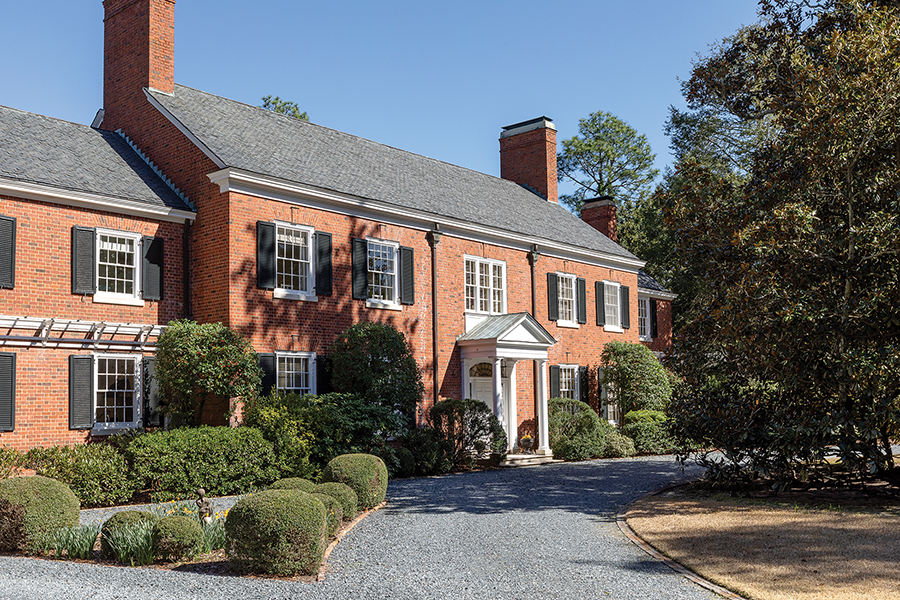
Green with envy: a color-coded assessment of how Pinehurst society, circa 1929, might have greeted the overwhelming but exquisite home of Nils Hersloff of Orange, New Jersey, his wife and three children, who christened it, simply, The Pines. This family residence — not to be confused with the “cottages” of the same era — eclipsed most vacation homes built before the crash. It was the last brick home constructed in Pinehurst before the Great Depression and is one of the featured homes on the 76th Annual Southern Pines Garden Club Home & Garden Tour this month.

Superior materials were plentiful and expert craftsmen, hungry. In fact, a more suitable name might be The Moldings. Double, triple, quadruple, grooved, carved and overlaid, they tastefully delineate each window, door and fireplace — big money, well-spent on 6,000-plus square feet with servants’ quarters and adjacent three-bay garage topped off by an apartment for the chauffeur. Few homes of any era boast a zinc-lined closet for storing furs.

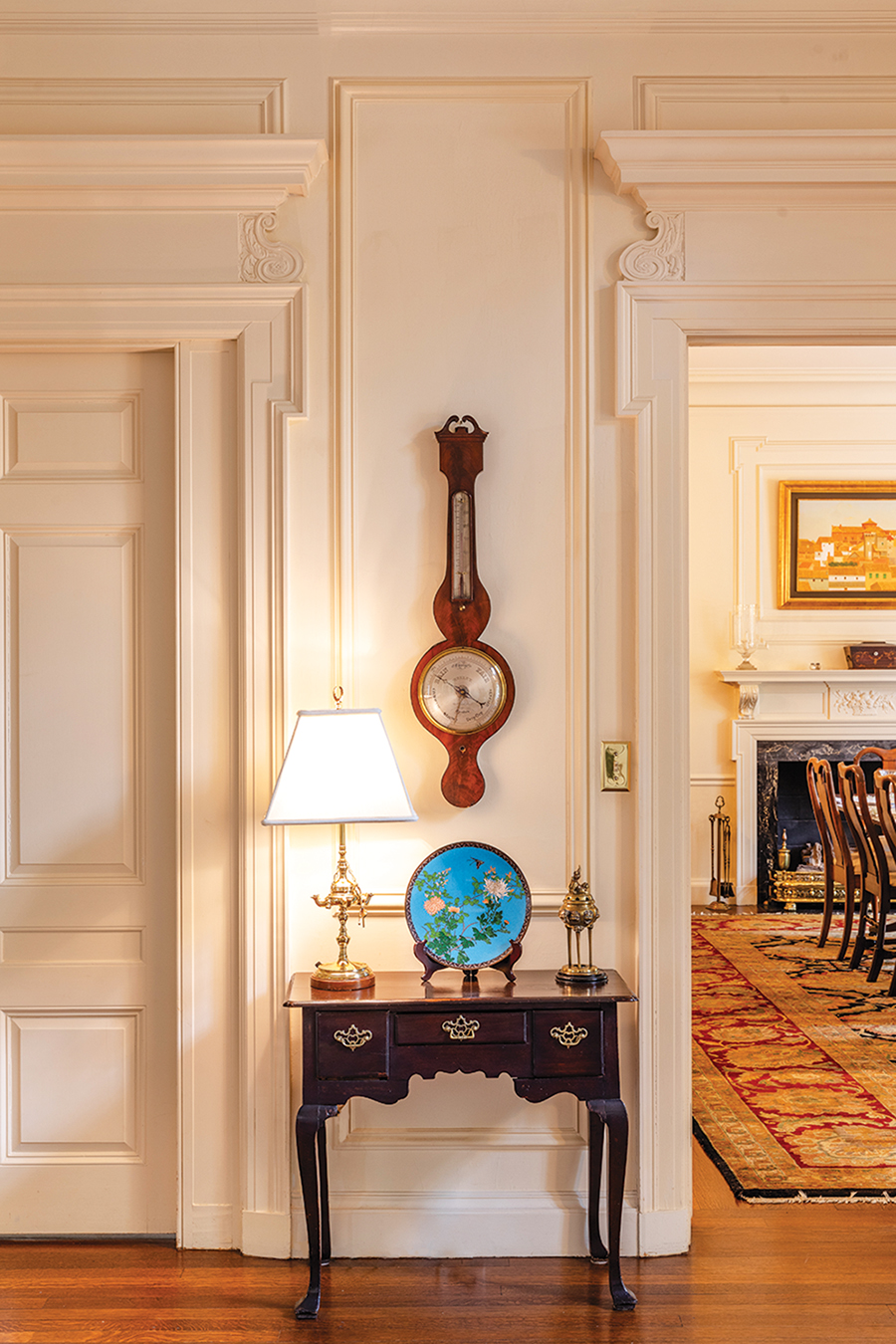
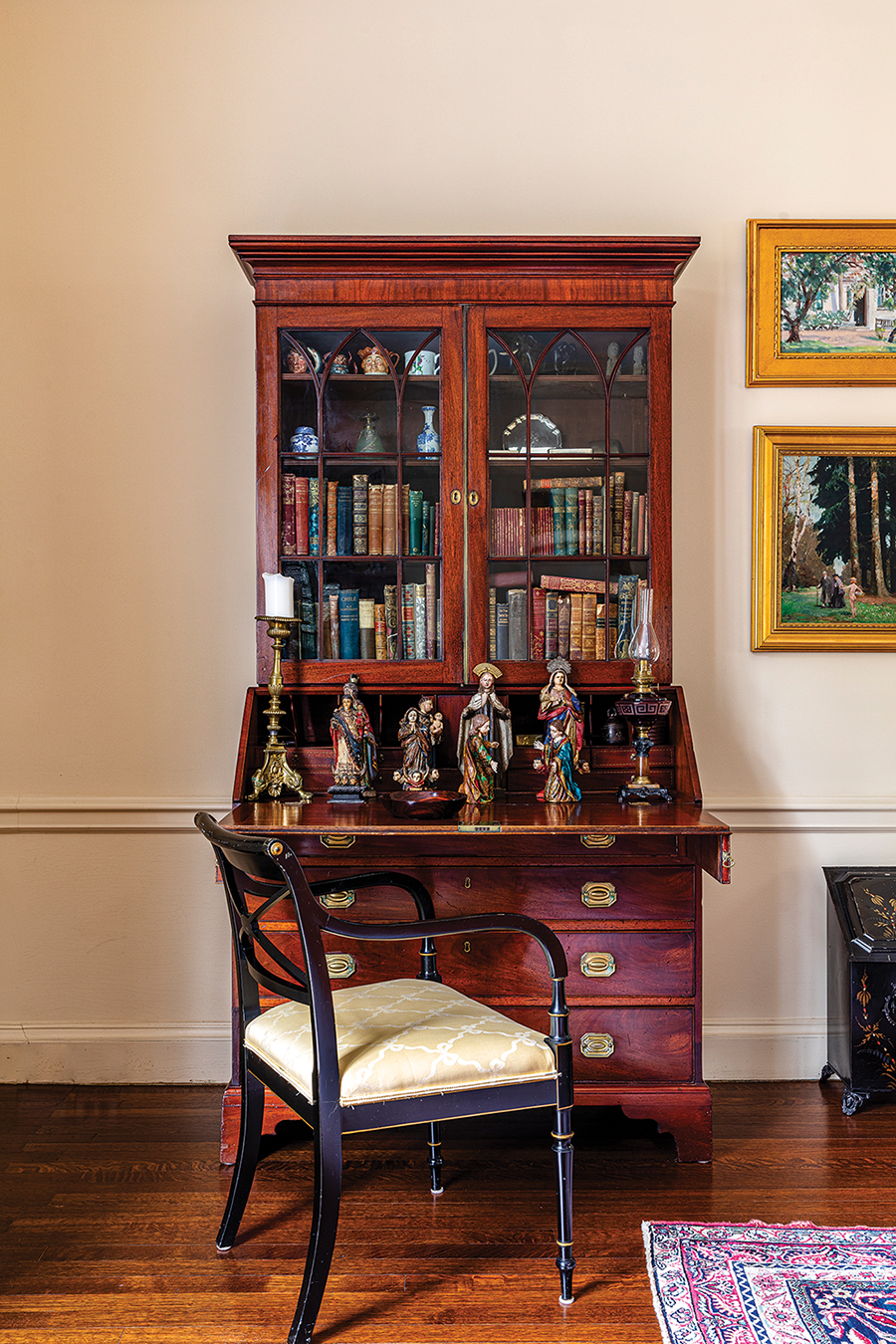
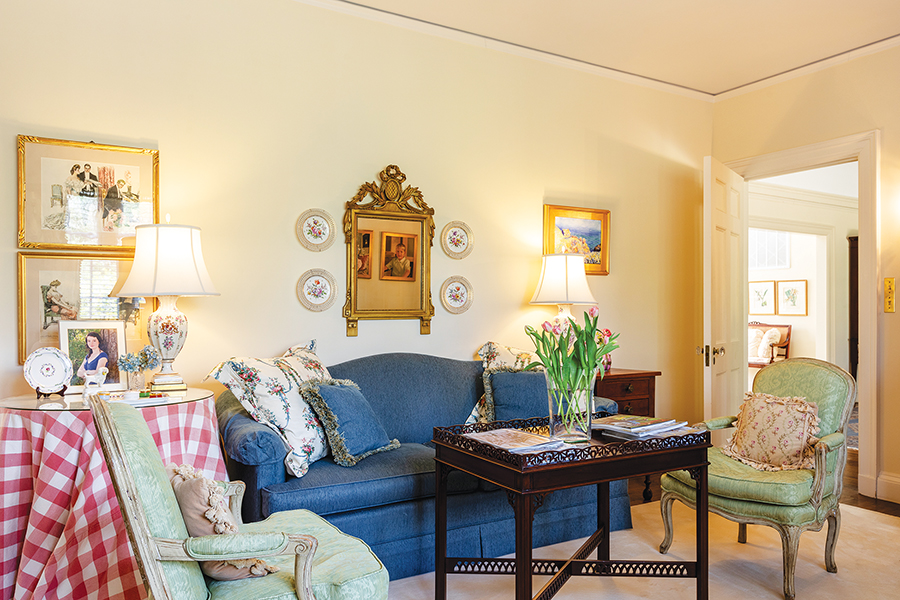
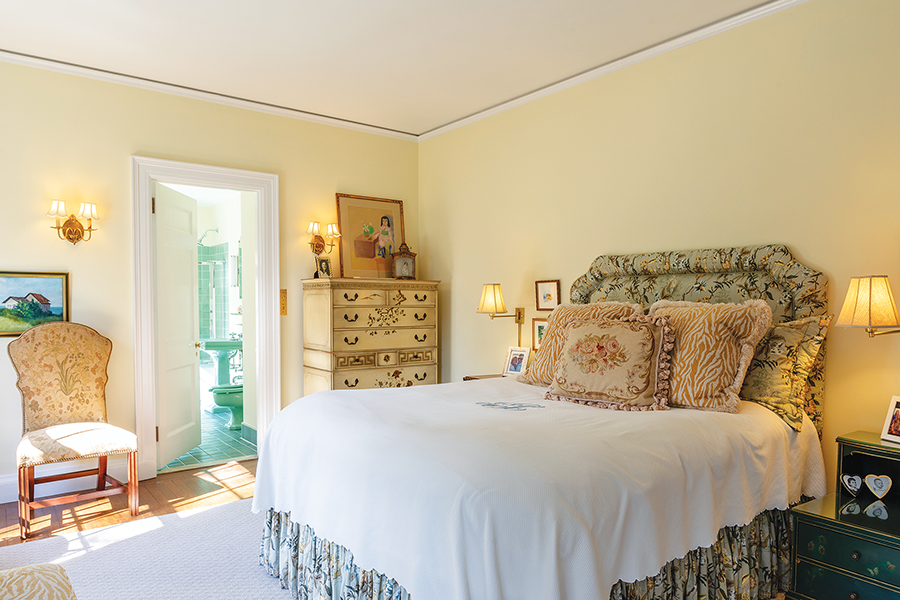
The Pines has weathered nearly a dozen ownerships. Renovations have been minimal and respectful. Since purchasing the house in 2015, John and Elizabeth Webster, appreciative of solid construction and timeless design, have adorned it with British, American, Spanish and South American antiques and art — from traditional bird motifs to small statuary (called Santos) rescued from church altars.

The result is Gatsby-era elegance with a sweet Southern drawl.

The Pinehurst Outlook once described the structure as Colonial Revival with Flemish bond brickwork, gabled roofs, a five-bay façade with central pedimental entrance porch and two-story side wings. The Swedish-born Hersloff, who began as a simple accountant but would amass a fortune in oil, shopped for art at Sotheby’s, was a Tin Whistle and rode in field trial competitions. After deciding to winter in Pinehurst, Hersloff didn’t blink at hiring Charles Platt, a landscape designer/self-taught architect and stalwart of the American Renaissance movement whose clients included Rockefellers, Astors, Carnegies and Roosevelts, as well as the Smithsonian’s Freer Gallery of Art in Washington, D.C.

Construction costs, not including the 1 1/2 prime acres in Old Town, were listed at $75,000 — an enormous sum in the late 1920s. Platt, great-grandfather of award-winning actor Oliver Platt (The West Wing, Chicago Med), died in 1933. The Pines may have been among his last projects.

In 1935, the partially clad 22-year-old newlywed hotel heiress Elva Statler Davidson was found dead of carbon monoxide poisoning in The Pines’ garage. Statler Davidson, unhappily married to a man twice her age, lived in nearby Edgewood Cottage, built by Hersloff in 1917. In Death of a Pinehurst Princess, Steve Bouser writes that the yards of The Pines and Edgewood “were open, and one could hardly tell where the boundary between the two lots ran.” Statler Davidson had standing permission to park her Packard in the neighbors’ garage. An inquest was held, but the mystery never solved.

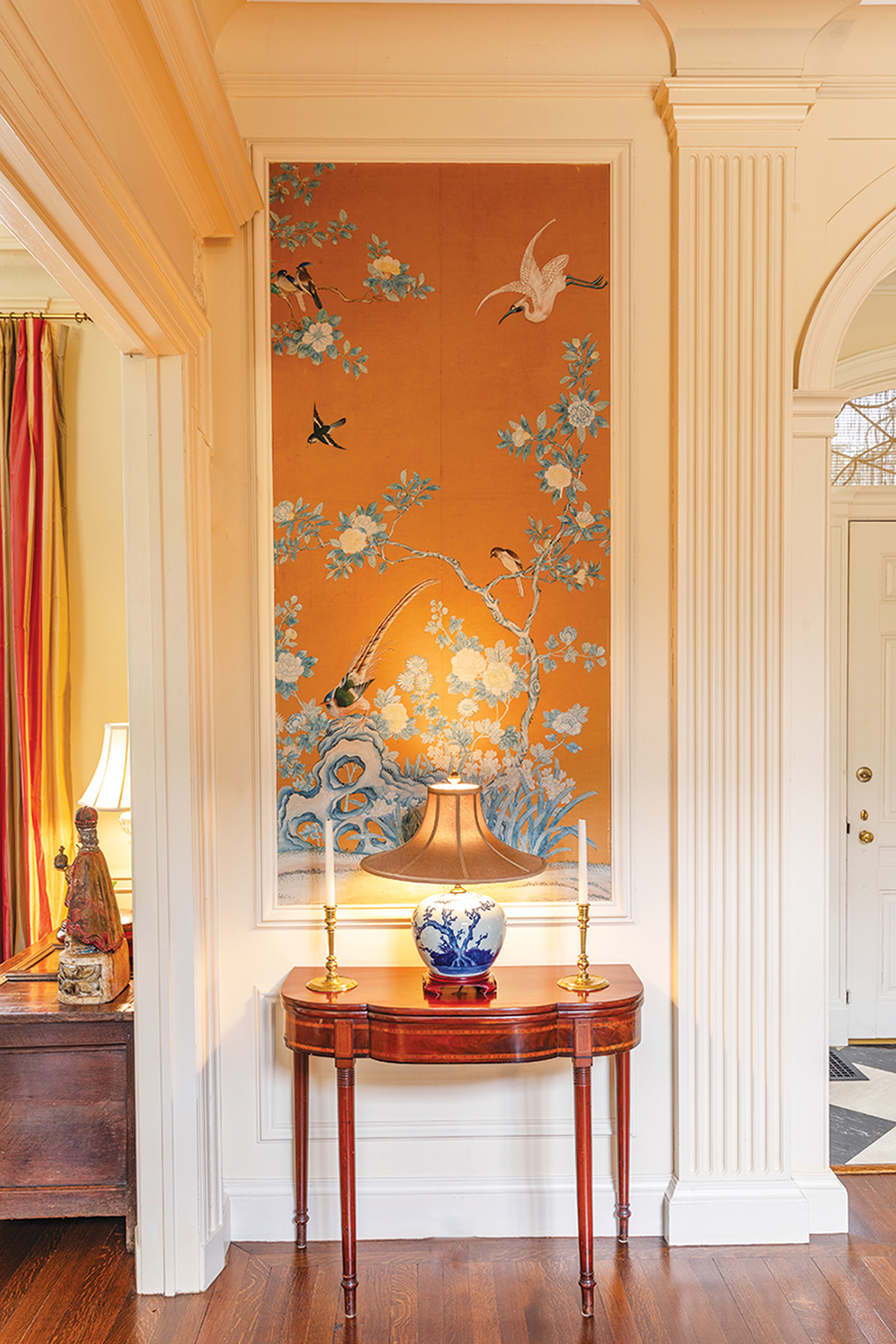
After almost a century, what makes The Pines a showcase is no mystery, beginning in the copious foyer with de Gourney hand-painted wallpaper panels flanking the door, a teardrop crystal chandelier and the Tara staircase, ideal for bridal photos. The Webster blended family includes seven daughters and one son. “I keep hoping . . . ” Elizabeth says.

An attorney and Realtor, Elizabeth grew up in the Weymouth neighborhood on Highland Road. John, a financier and serious gardener of British lineage, moved to Southern Pines from Spain. Each owned beautiful things in need of a home. Pinehurst presented possibilities, since “we both love old houses,” Elizabeth says. They discovered The Pines, vacant for several years, online. “It appealed to me because of the light,” she says, which streams in on both sides of the elongated asymmetrical layout. No wonder its blueprints are part of the Cornell University Library collection. For Elizabeth, this would be both homecoming and challenge: retain historical significance while blending her furnishings with John’s.

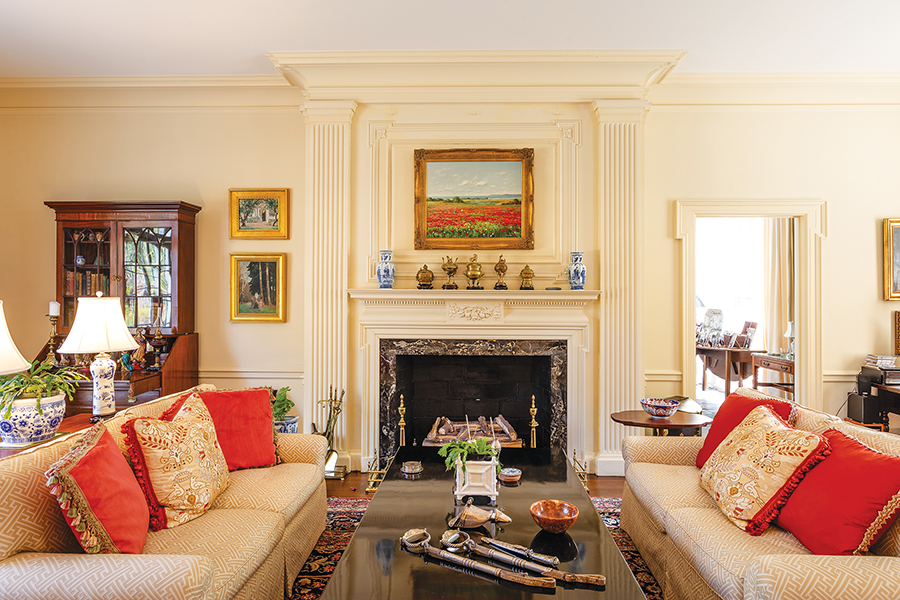
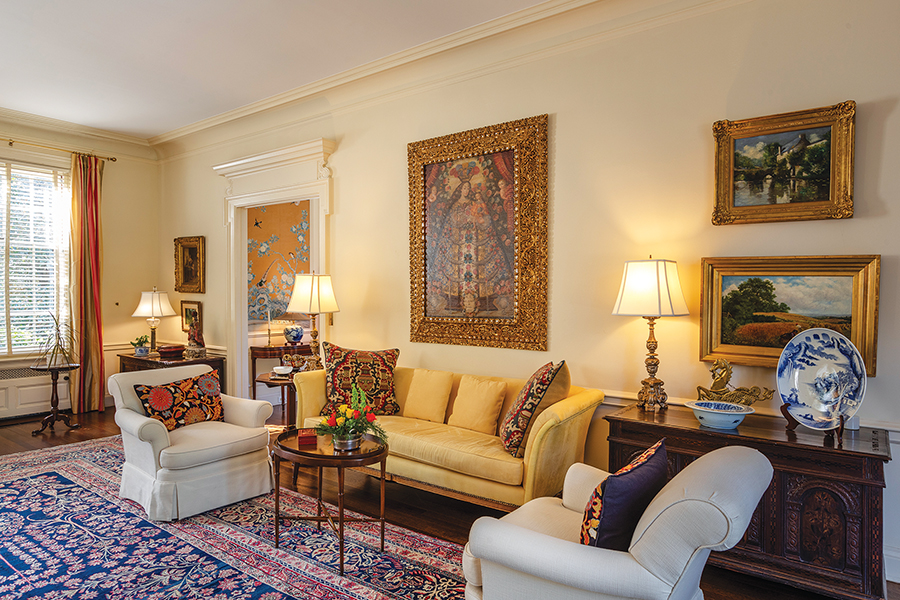
She settled on a creamy French vanilla, tinged with lemon, for the main floor walls and divided the living room into sections by furniture placement. Over the sofa, a Virgin of Pomata (Peru) in a voluminous gown dominates an entire wall. Beneath it, the Persian carpet in shades of crimson and blue was woven especially for this room. The black coffee table, Asian in style, makes the sole contemporary statement. A gaucho’s stirrup and dagger are laid on it. Elizabeth’s sentimental favorite stands nearby: a “secretary” called a marriage piece because the top and bottom, English and American — although from separate desks — align perfectly. “It fits with our story,” says Elizabeth.

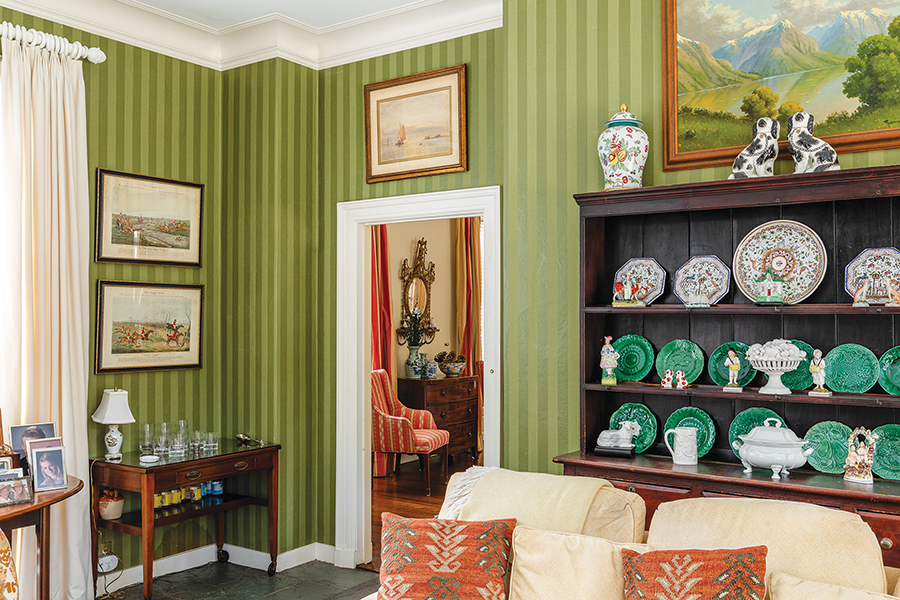
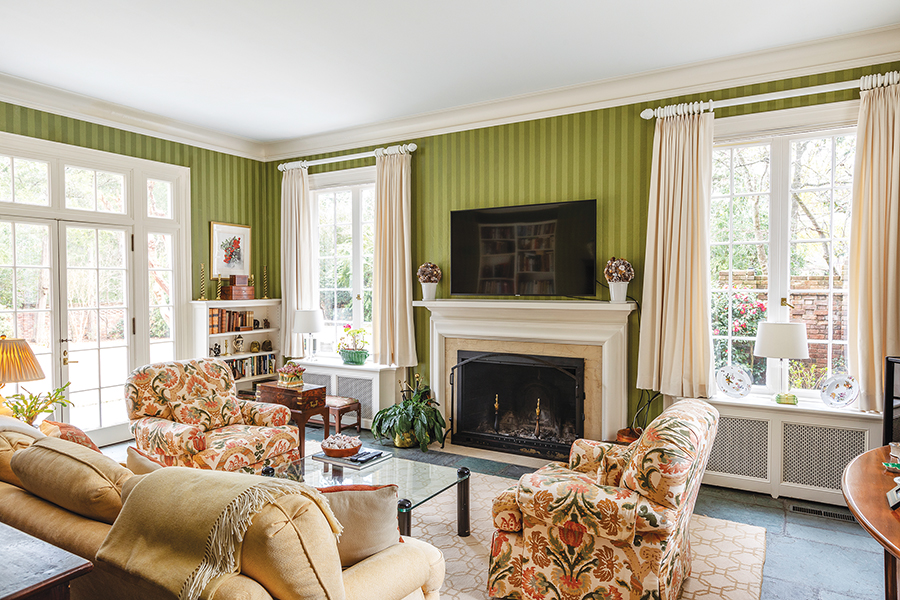
This retro salon may be suitable for entertaining but not for watching the evening news, which the Websters do in a sunroom off the living room. Striped turtle-green wallpaper accenting high ceilings was hung here by a previous owner. “I like flowers, John likes stripes, so we left it,” Elizabeth says. Each has an office, on separate floors.

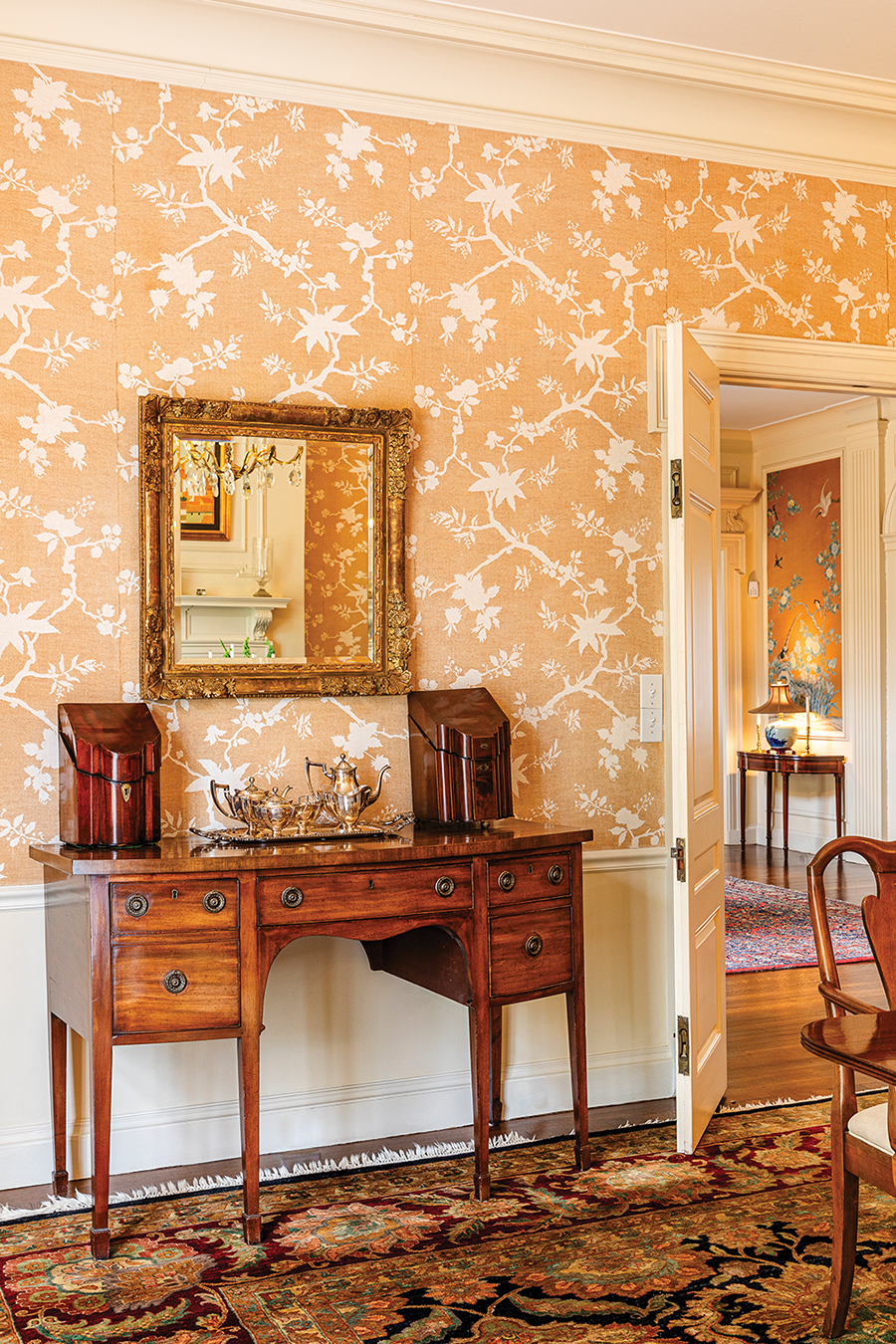
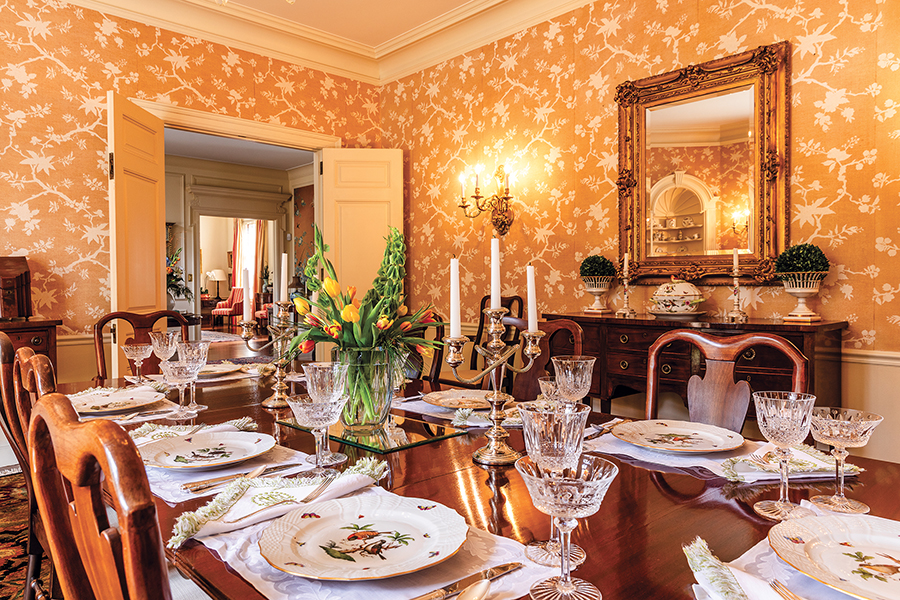
Staffordshire, Staffordshire, everywhere: figurines, dishes, teapots, lamps. Elizabeth’s passion is on display in dining room built-ins surrounded, again, by layers of carved molding. The proportions of this room allow for two mahogany sideboards, one from Elizabeth, the other from John, which are almost twins. Here, she has held events to benefit The O’Neal School, her alma mater.

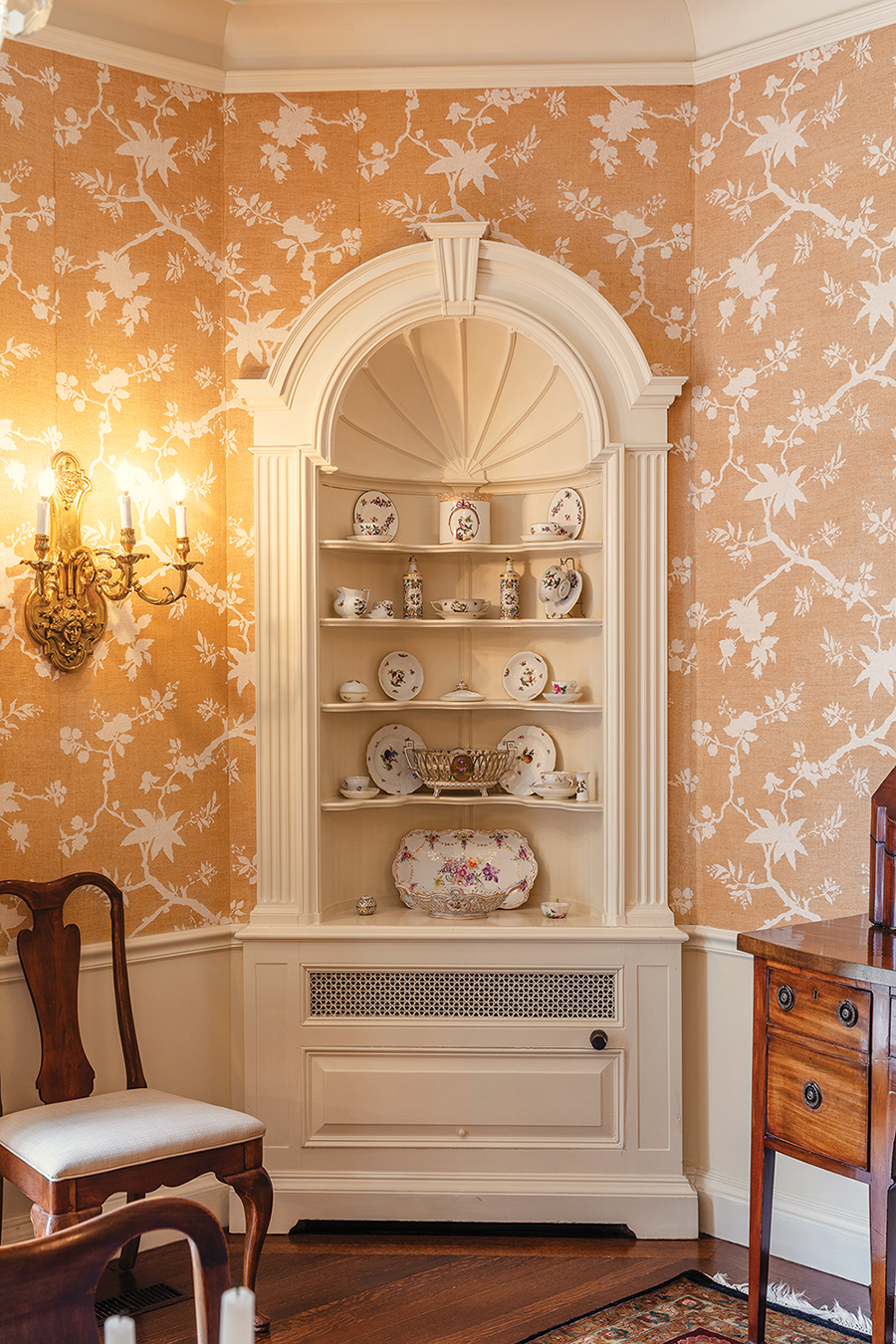
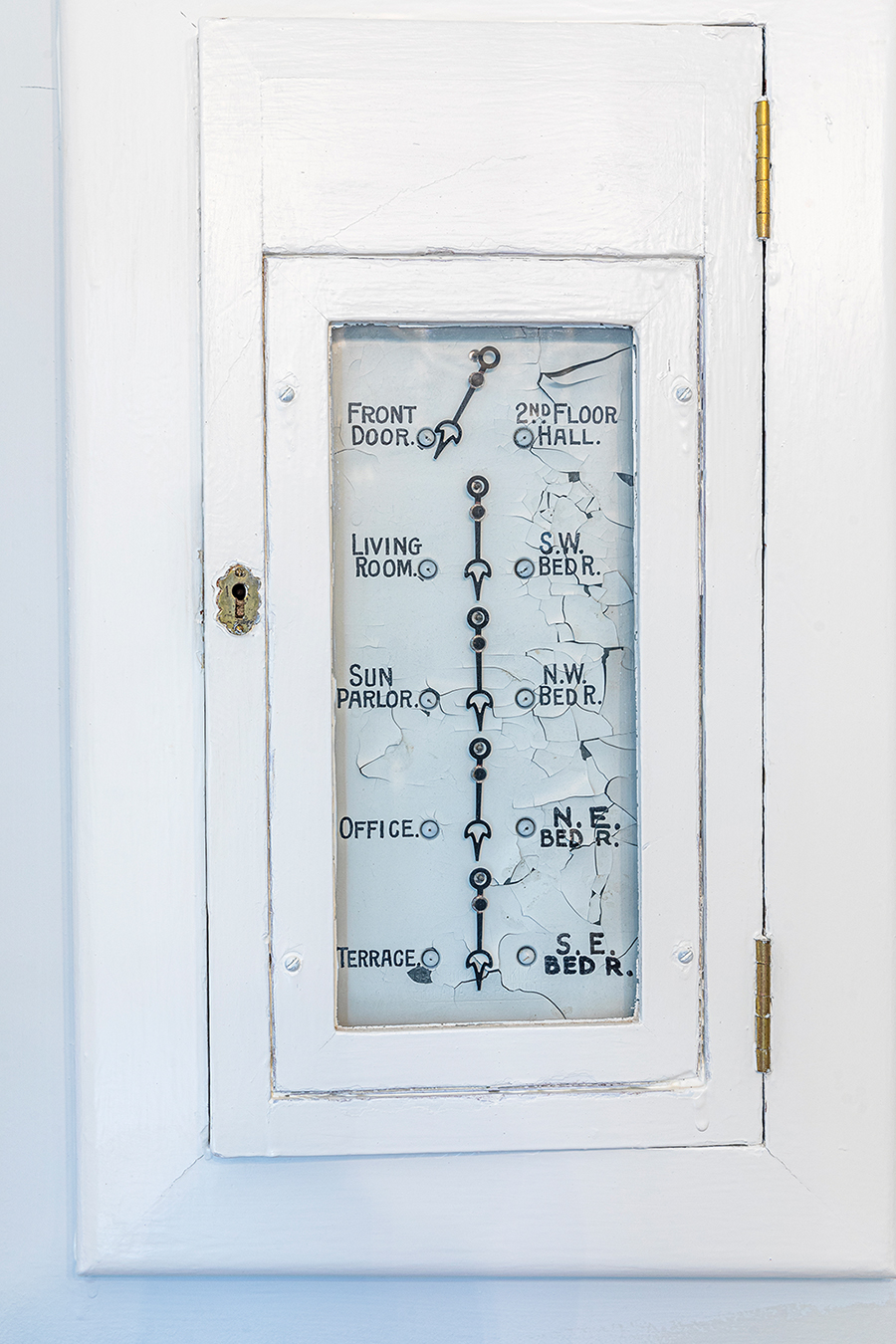
The mid-sized kitchen is another surprise, remodeled by a previous owner using some original painted cabinets. The Websters put in an island, took down a wall and added banquettes to make the servants’ dining room their sunny breakfast corner. On the wall remains the maid’s call box. Even without a butler, the butler’s pantry with warming drawer, wine storage, sink and dishwashers is a dream at dinner parties.

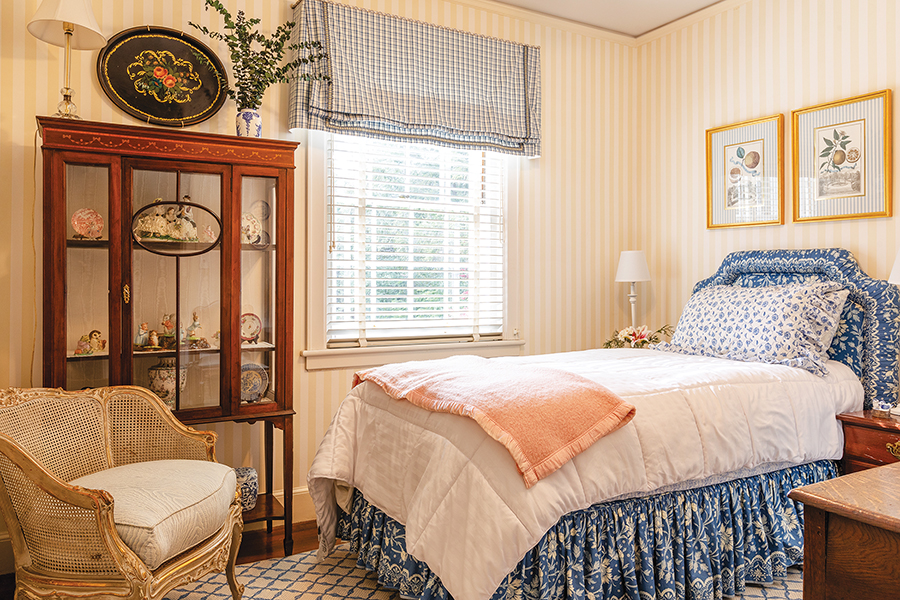
Upstairs, the bedrooms seem endless; the master suite opens onto a full-sized sitting room and double bathroom, one of six and a half spread throughout the house and garage. The most unusual was done in 1929 in avocado tile with tankless toilet and a sink supported by chrome legs.

The grounds are John’s domain: designing, planting, pruning, mowing. Behind the house stretches a long and grassy lawn, perfect for passing a football — or hosting a garden party, perhaps a wedding. It’s bordered by flower beds, the entirety enclosed by a brick wall constructed from materials surviving a Sanford factory fire. The Websters filled in the swimming pool, deemed beyond repair and a liability. They also removed overgrown ivy lest it damage the brick. Despite the estate name, the tree dominating the circular drive is a 40-foot magnolia, not a loblolly pine.

Ancient legends surrounding The Pines may have once deserved investigation, but this is a happy house, light and airy, spacious and livable, historic but unencumbered by dark, massive furnishings and stern ancestral portraits.

Elizabeth Webster is thrilled, seeing herself and John as caretakers, steering the house into its second century, a deal sealed with words she will never forget. “After we saw this house,” she says, “my husband said he had to buy it because of the smile it put on my face.”  PS


HOME & GARDEN TOUR

The 76th Annual Southern Pines Garden Club Home & Garden Tour on Saturday, April 13, features houses, farms and their notable landscapes. Presenting ideas for inspired living in our modern times, ticket sales to see this years collection of idea” homes and gardens will benefit the landscaping and beautification of Woodlawn Cemetery in West Southern Pines. The tour begins at 482 E. Connecticut Ave., Southern Pines. Info: www.southernpinesgardenclub.com.

A Touch of England

A Touch of England

Creating a cottage garden in Pinehurst

By Rob VanderVoort 

Photographs by John Gessner

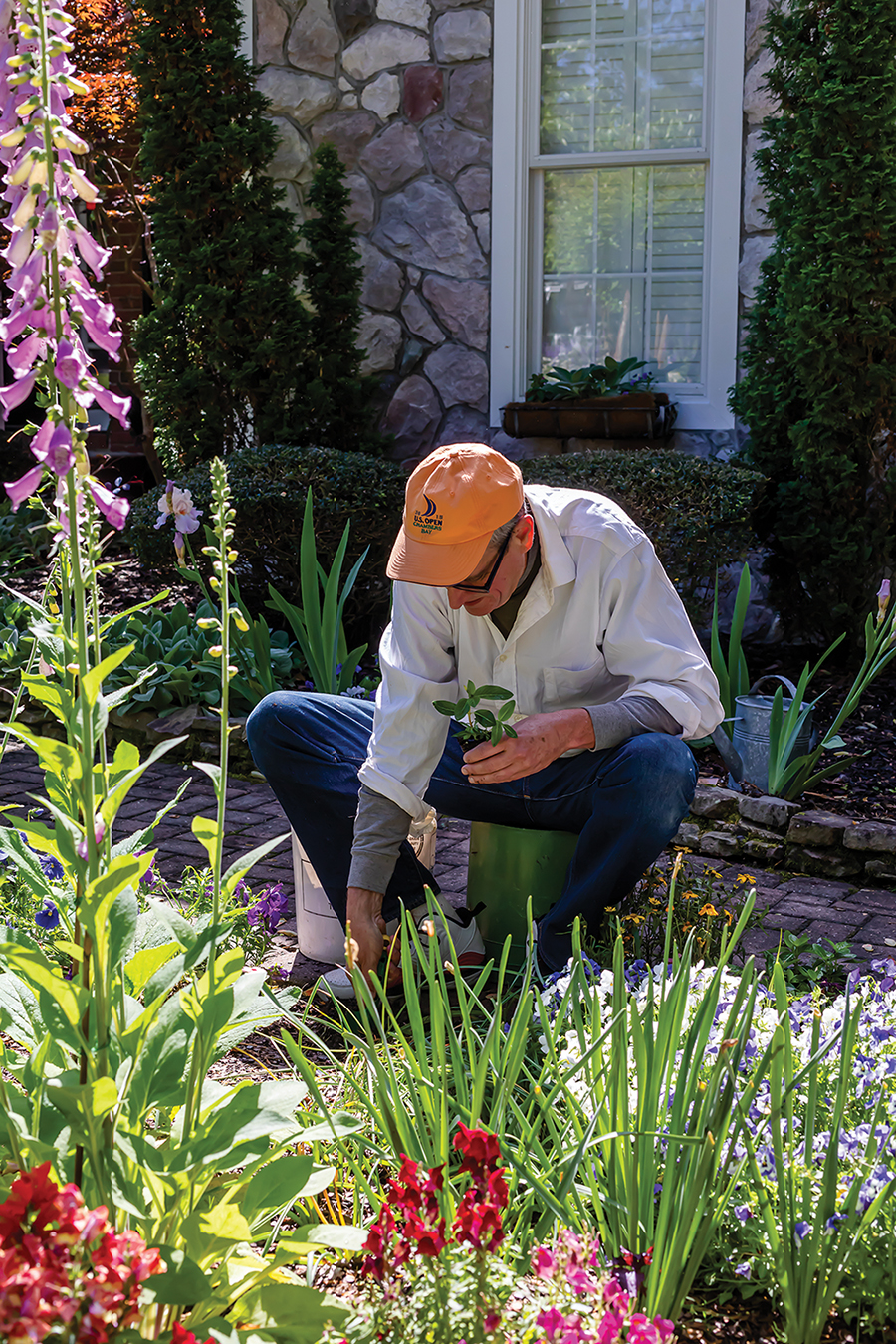
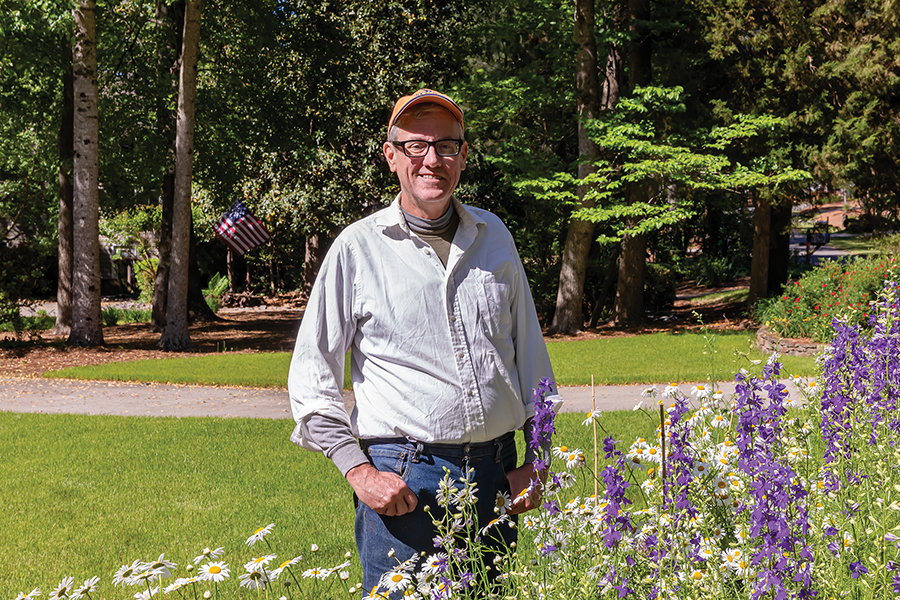
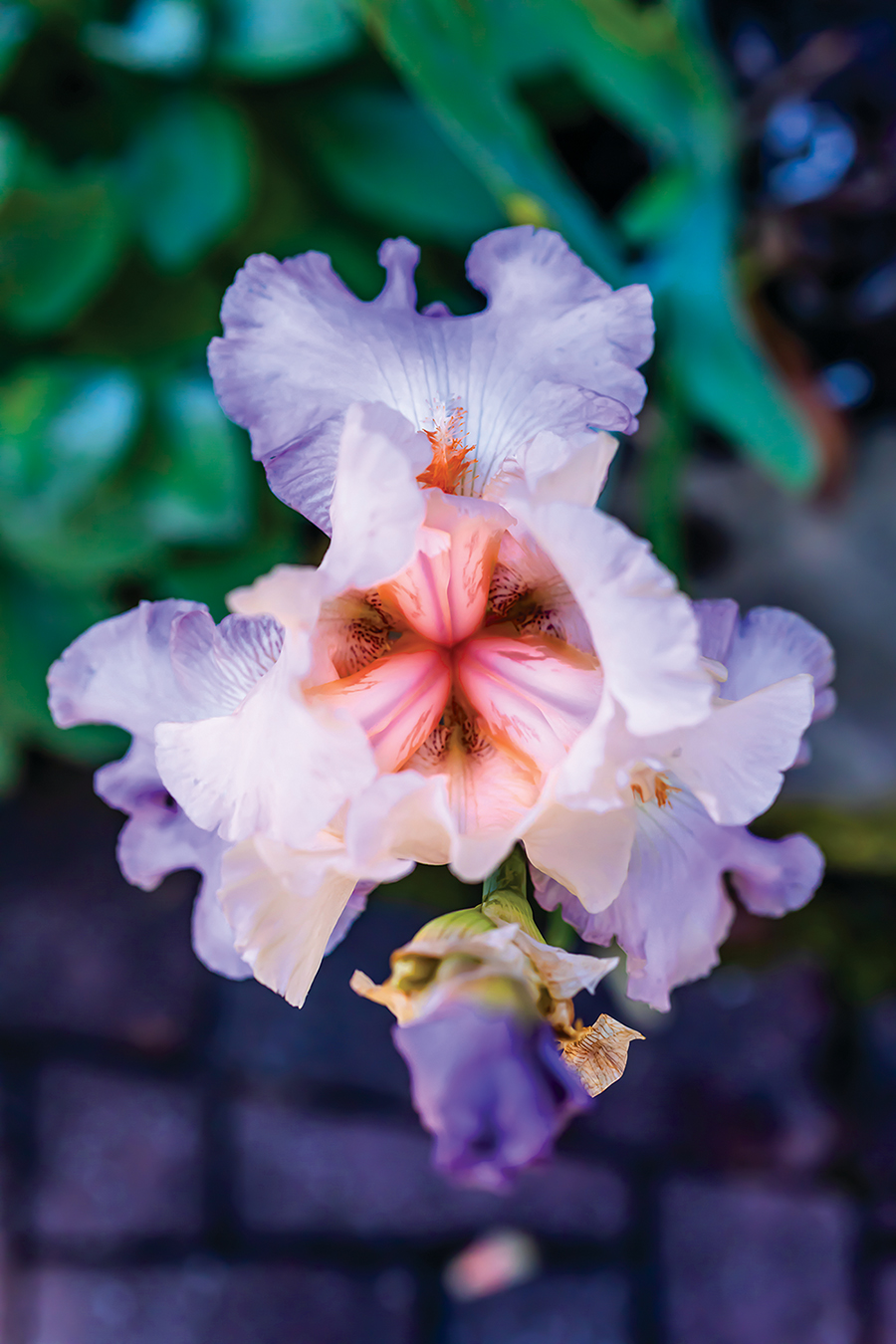
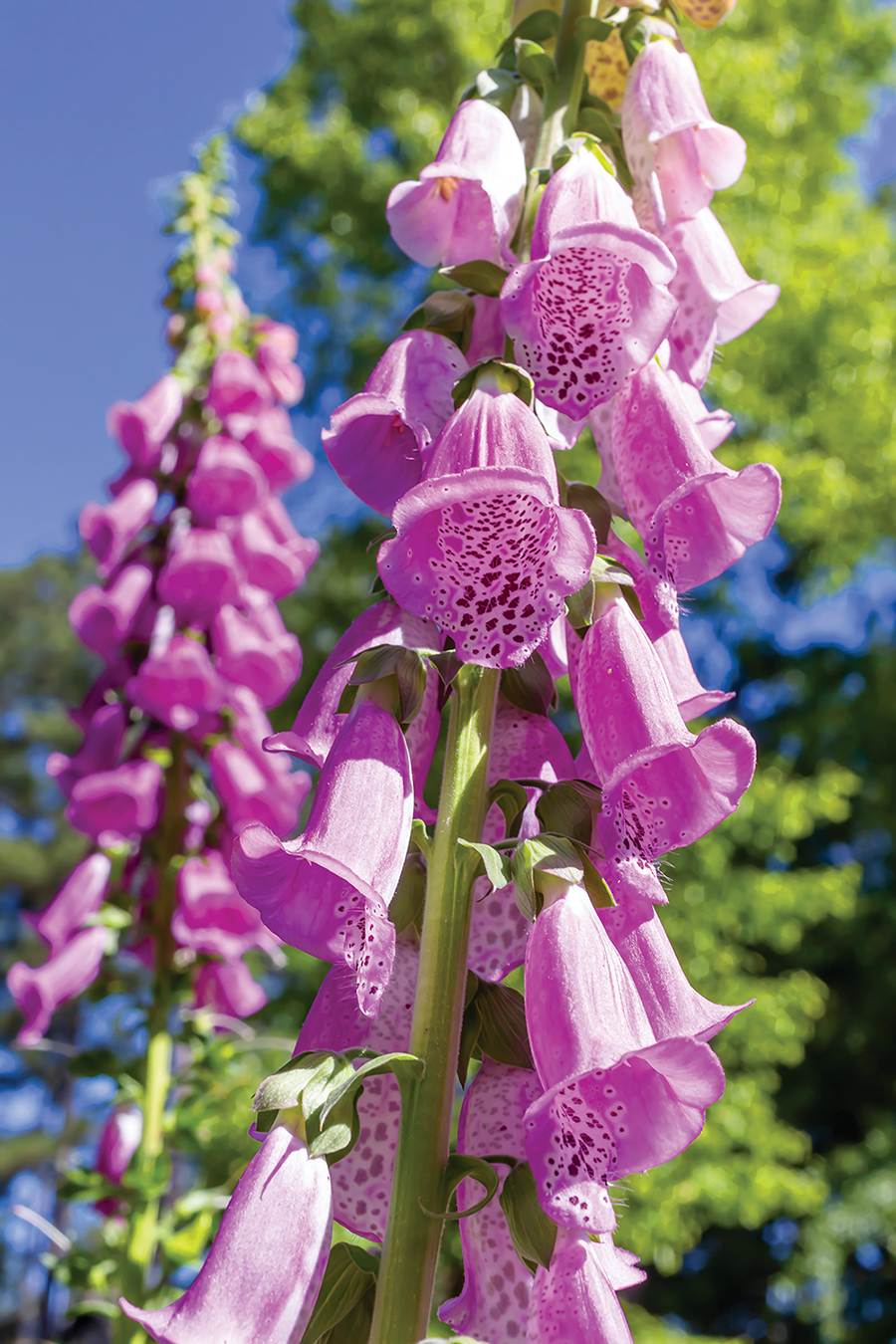
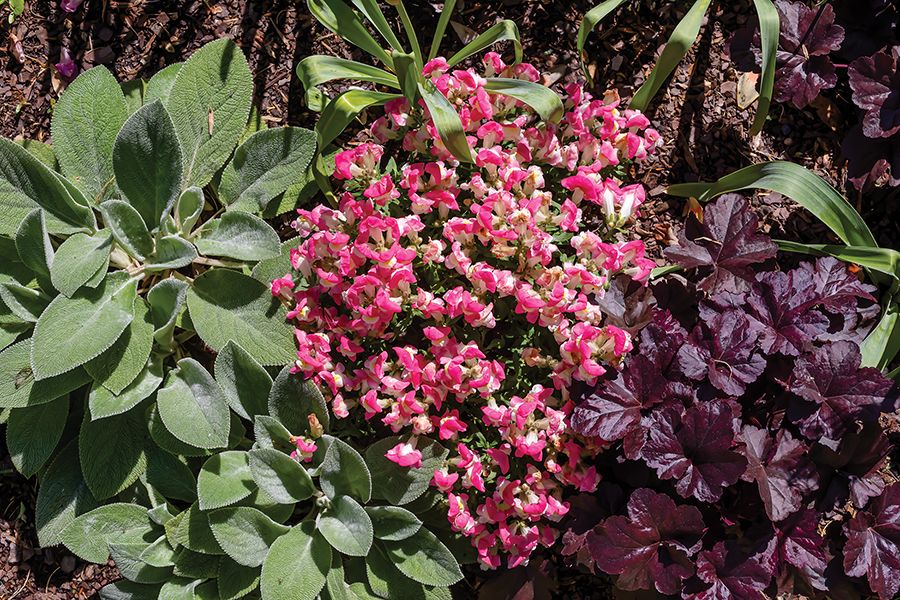
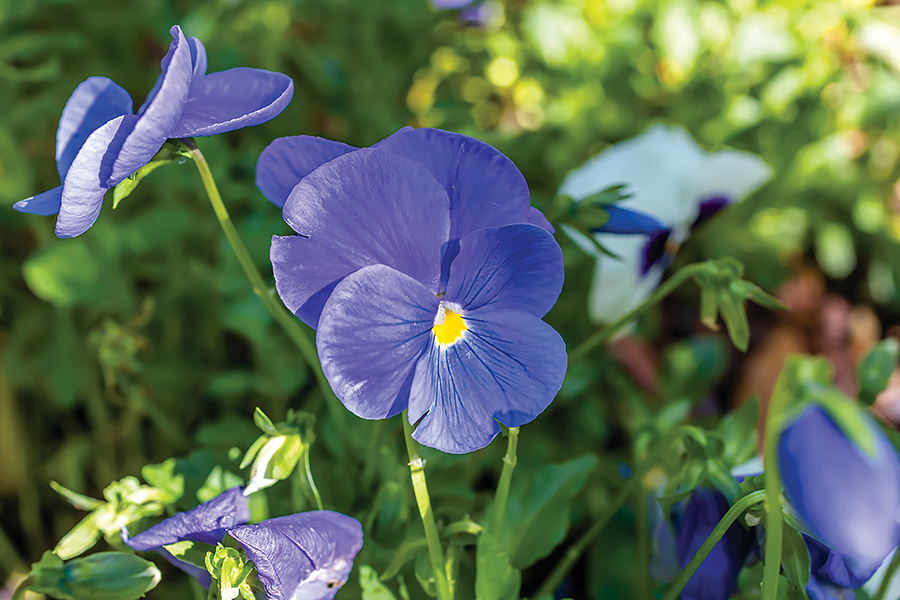
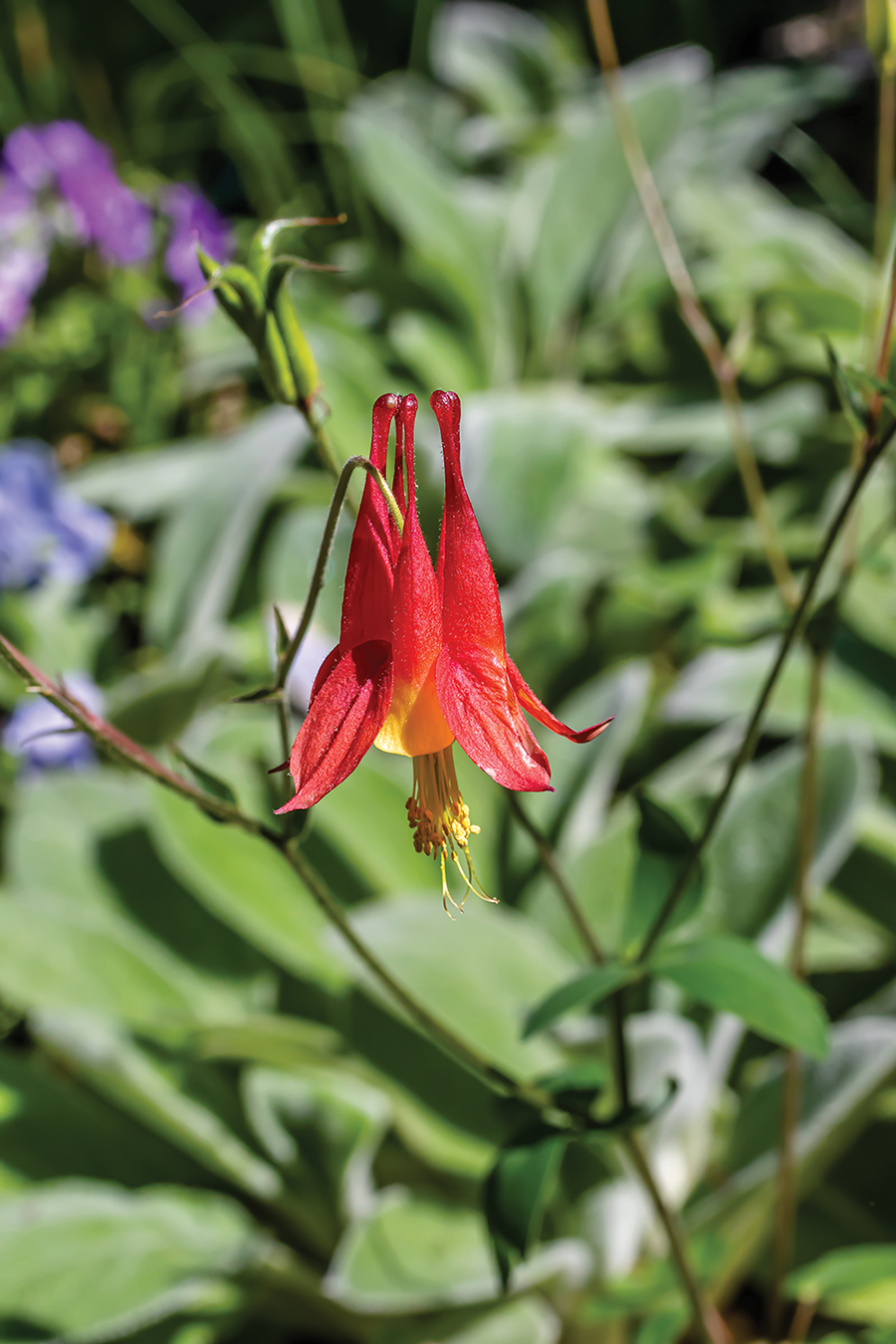
Cottage gardening originally developed in England, using dense, informal plantings of native flowers and herbs to create the most charming effects. When I was asked to design a garden for a property off Pinehurst No. 3 I was excited because I knew the house and was sure it would work perfectly with the cottage garden style. The beds feature foxgloves, daisies, iris, larkspurs, columbines, snapdragons and violas, all traditional cottage garden plants.

I like to keep the iris and columbines close to the path. Columbine is best there because the flowers are so complex. They are usually two-toned, the light petals contrasting with the darker, spurred sepals that make the flowers look like a group of small birds. This intricacy has to be seen up close to be appreciated. Columbines look great by a gate but are lost in the distance.

Iris, in contrast, can be seen from the street. I keep it by the path to show off its foliage. Unlike most perennials that go dormant in the winter, the grayish, lance-shaped leaves of the iris persist year-round. They have a striking, sculptural quality that is enhanced by proximity to hardscape elements like fences and walks. They also play nicely with masses of fuzzy gray lamb’s ears, the contrasting texture set off by a similarity of color.

Larkspurs and oxeye daisies form the bulk of the planting. These bloom consistently at the same time as foxgloves, so their cool blue and the white can set off the warm dark pink of the foxgloves. And, oh, the foxgloves! They are truly magnificent. Their height and spire-like form give an architectural element to the mixed plantings. Snapdragons echo their form on a smaller scale, and violas bring the color down to the ground plane.

You won’t often find foxgloves in garden centers, except the occasional blooming plant in the spring. I start mine from seed in mid-summer and set them out in the fall. I find this technique works for many biennials and perennials that do well in regions north of us but can’t take our summer heat. Essentially you treat them like over-wintered annuals. Sow them in the summer, transplant them out in the fall, enjoy the flowers in the spring, and then remove the plants when they’re finished blooming in May or June. Hollyhocks, delphinium, sweet William, bells of Ireland, snapdragons and sweet peas all do well with this treatment, although I’d wait till Christmas to sow the sweet peas.

If you’re interested in trying a cottage garden of your own, a handy resource is Cool Flowers, a great short book by Lisa Mason Ziegler. Ziegler is a cut flower grower in the Virginia Beach, Virginia, area, in the same horticultural zone as Pinehurst. She explains this technique in greater detail. I wish you luck!  PS

Robert VanderVoort studied and taught landscape architecture at N.C. State University and has gardened in the Sandhills for more years than he cares to say. Reach him at voortex16@gmail.com.

Flourishing in a Field of Dreams

Flourishing in a Field of Dreams

When nothing can keep a good man down

By Claudia Watson  

Photographs by Laura L. Gingerich

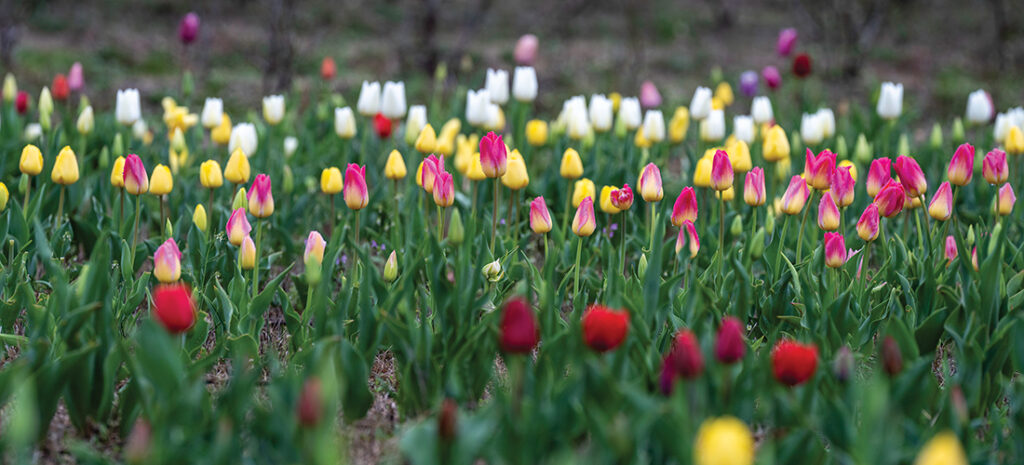
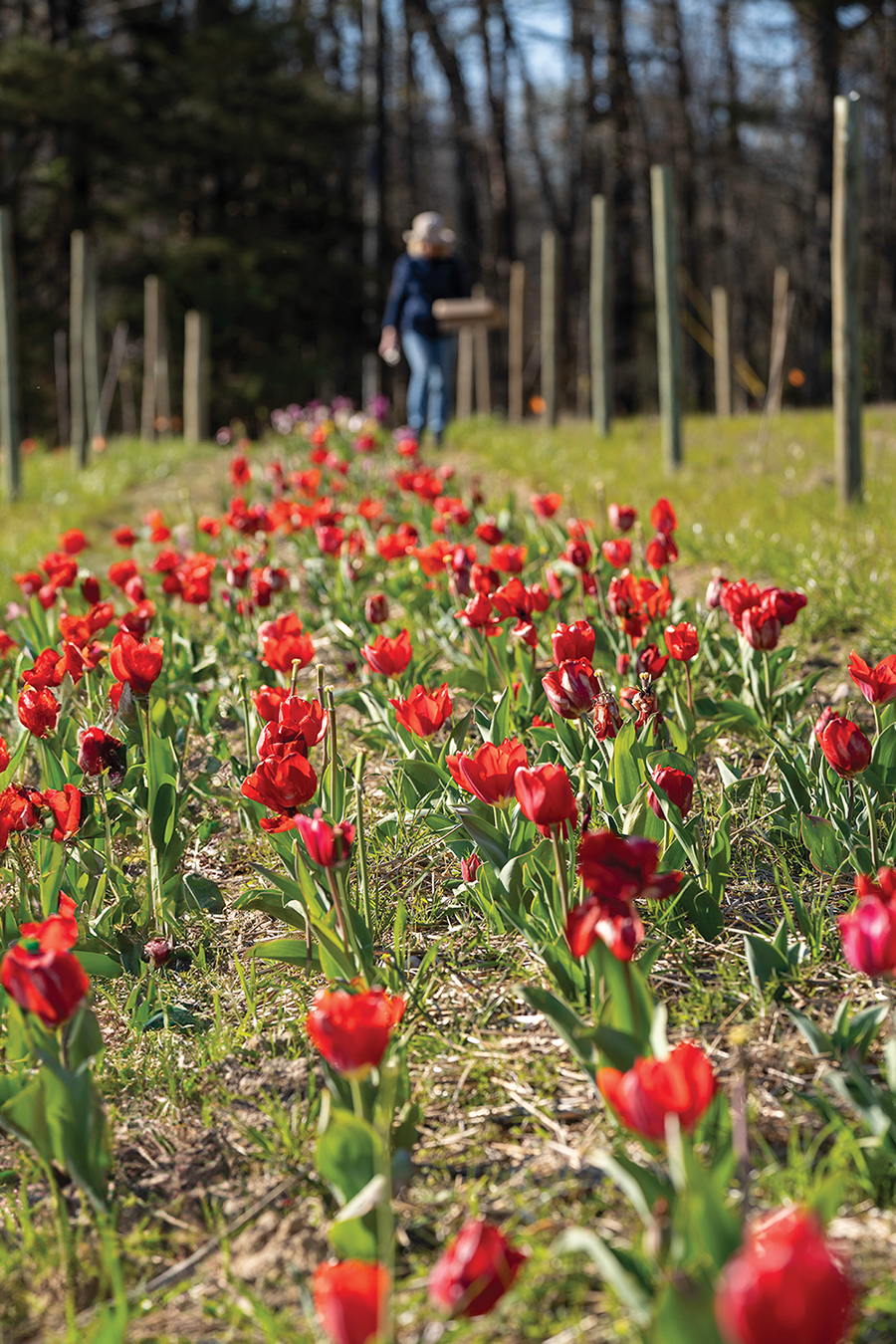
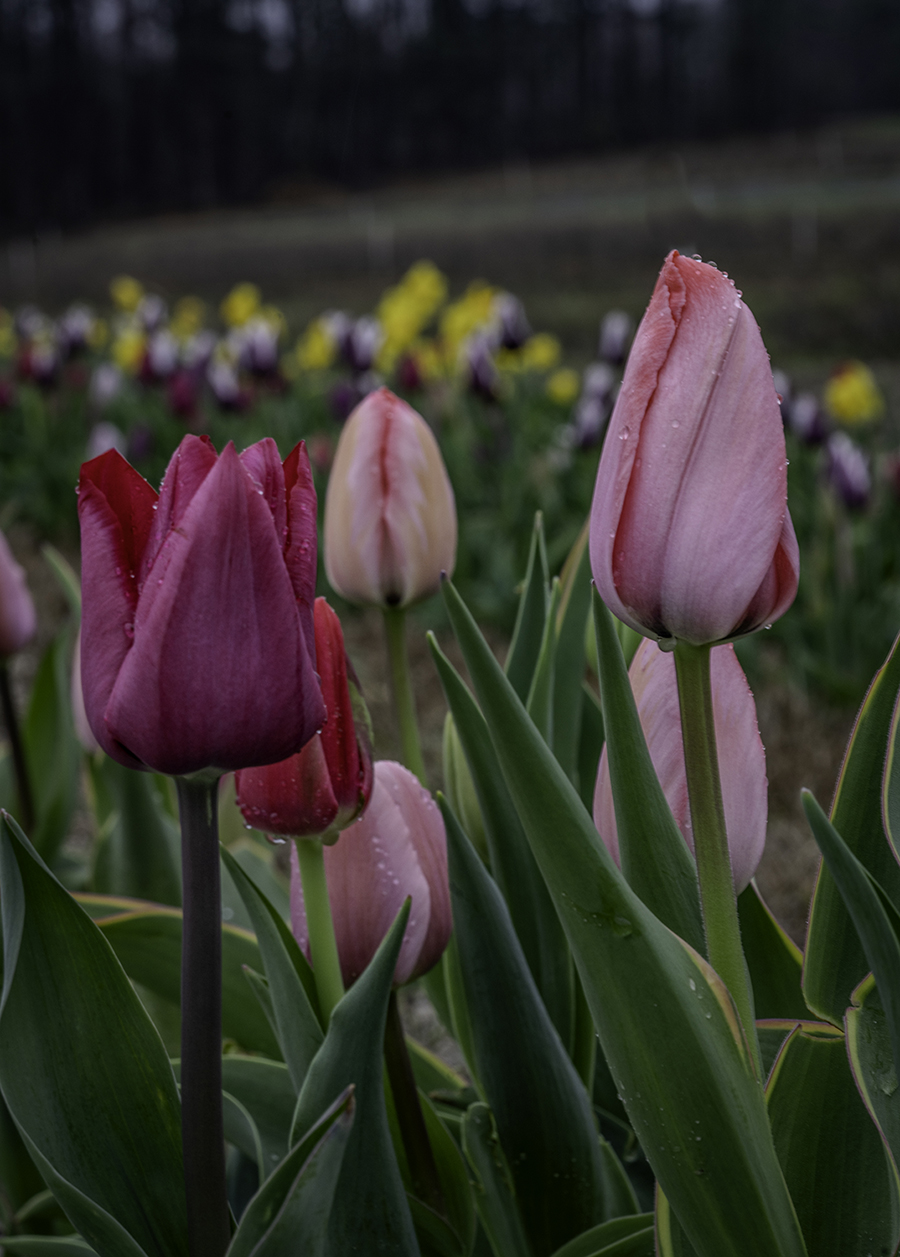
Acres of farmland rest under the rays of golden sunlight, soothing the bareness of winter’s rough edges. But there’s a surprise at the turn on the highway. A tidy roadside patch of vibrant tulips bursts through the hard-crusted earth, shouting, “Look at me!”

Families, children dressed in their Easter best, grannies and young lovers, all tiptoeing through fields of tulips, not in Holland, but bucolic White Hill. Photographers follow. All sharing the unexpected joy and the promise of hope at Blueberry Hill Farm.

This April marks the second year Blueberry Hill Farm, known for its juicy-sweet, plump blueberries, hosts a festival of blooms, a much-anticipated harbinger of spring. And that’s just what the farm’s owners, Anthony and Janice Dyson, wished for.

“I wanted the area in front of our retail storefront to be colorful and welcoming with a small roadside patch of flowers,” says Janice. “We felt folks would stop to see the flowers and come in to see all the fresh products we offer from the farm, not just at the blueberry time.”

Then she grins, adding that their eldest son, David, ignited with imagination, had a more significant dream.

A graduate of N.C. State University’s Landscape Agriculture program and a professional landscaper, David always shared his mother’s fondness for flowers. “When I graduated, I managed a commercial landscaping business. We used a lot of fall, spring and summer flowers,” he says. “When my mom told me her idea, I thought, ‘Hey, I can do this but on a larger scale.’”

After months of research and meetings with large tulip farm owners in North Carolina, David did the implausible. In the fall of 2022, instead of planting a simple flower bed for his mom, he planted 20,000 tulips in several trial plots by the roadside and on the gentle slope that borders a large pond on their 25-acre farm. Success followed.

“Last spring it wasn’t uncommon to see people blow by us on the highway, turn around, and come back to walk in the fields and cut some flowers to take with them,” he says. “That made my day.”

The new technicolor landscape on Blueberry Hill Farm is joyful and optimistic, revealing its poignancy only after you discover how it’s been achieved.

On a summer’s day in 2017, David, his wife, Katie, younger brother, Derek Dyson, and others took a couple of river boats to a swimming spot on the Black River in Sampson County.

“We’d been there a lot over the years, and I knew it well. I dove into the water several times, but the last time I didn’t come back up,” says David, recalling the terror of being helplessly submerged under water. “I felt like I had 10 seconds to live.”

The others jumped in and searched the murky river. Nothing. Then Derek, a firefighter for Sanford, found him, and they pulled David to the river’s edge. He was airlifted to the New Hanover Regional Medical Center in Wilmington.

David had crushed the C5 vertebra in his spine, causing him to be paralyzed from the waist down and classified as a person with quadriplegia. After surgery he was transferred to the Shepard Center in Atlanta, one of the nation’s top hospitals for rehabilitation, where he remained for nine weeks.

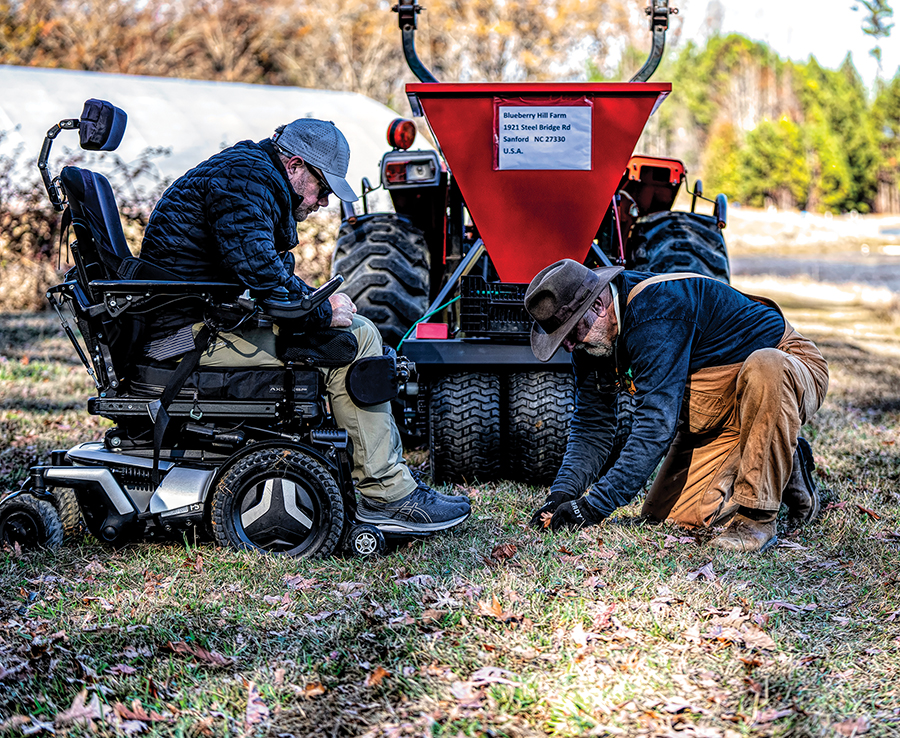
“When we came home, I couldn’t sit up without help,” he says. He and Katie sold their two-story home and built a handicap-accessible home for themselves and their son, Carson. His physical therapy regimen is nearly a full-time job. Now, he frequently drives his handicap-accessible van from their home in Greensboro to White Hill. Anthony says David can get anywhere in his standing power chair.

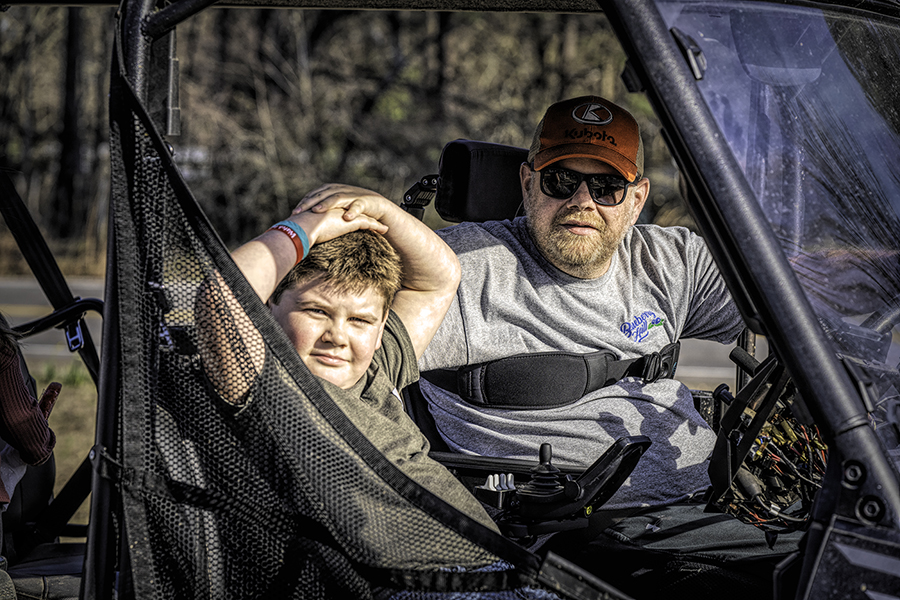
A modified ATV, courtesy of North Carolina Vocational Rehabilitation, has put David back into the fields at Blueberry Hill Farm, where he’s in control and savors every moment.

“Though I can’t plant, this ATV gives me the ability to go anywhere in any weather condition on the farm,” he says, using a dashboard lever to lock his chair into the ATV floorboard. I hop in and fasten my seatbelt. “Do you want to go 5 mph or 50?” he says with a smile as we take off. It’s November, and it’s tulip-planting day.

“I utilize my entire agriculture background for the farm,” he says, pointing to the rows of dormant blueberry, raspberry and blackberry bushes and muscadine vines. “Now, it’s the flowers, too. We handle it all, from the soil amendments through harvest and everything in between.”

A few days before my visit, over 45,000 tulip bulbs arrived in a refrigerated semi-trailer and were off-loaded into the farm’s cooler. “This is all David’s doing,” says Anthony, opening the cooler door where stacks of plastic crates marked with the bulb’s variety and color waited. “He’s a whiz on the computer and quite adept at sourcing, and all of our tulip bulbs are shipped to us directly from the Netherlands.”

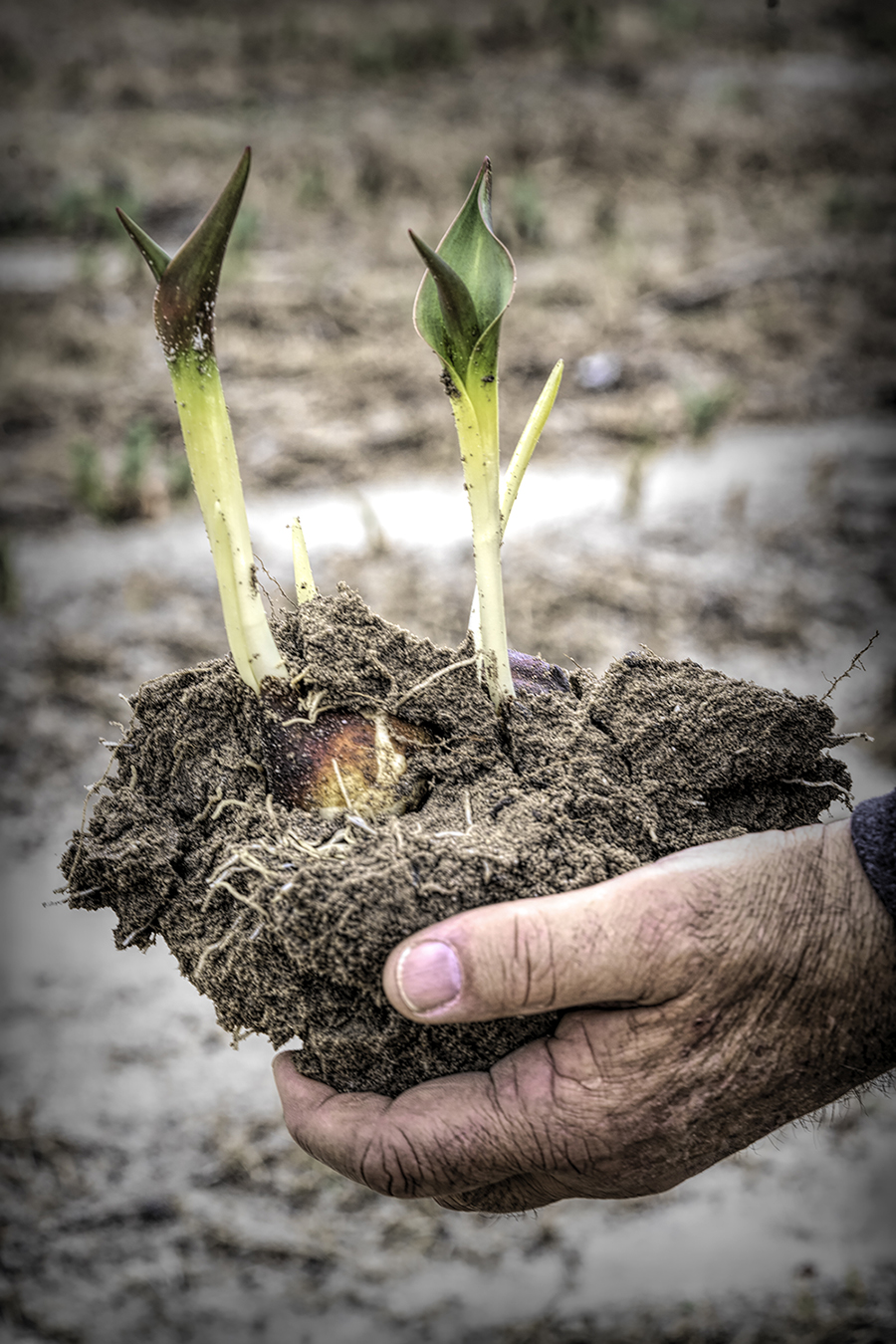
The tulip often invokes thoughts of the Netherlands, and indeed, the Dutch deserve credit for its global popularity and exciting history. However, it is not indigenous to that country. The tulip is native to a vast area, including the arid climates of Africa, Asia and Europe. It’s a perennial, bulbous plant that blooms in various colors from early to mid-spring. Like most bulbs, it needs cool dormancy (vernalization) to bloom, making it challenging to grow in North Carolina.

“The weather is finicky — especially nowadays — it’s hot, then cold,” says David, a loyal Wolfpack fan sporting his N.C. State cap as he steers the ATV. “When planting, the soil temperature must be 55 degrees or below to ensure good root development before winter sets in.” Last November the soil was too warm to plant until late in the month, as referenced in the region’s newly acquired 8A growing zone. Pre-cooled bulbs from the Netherlands ensure proper root development and avoid stunned blooms.

“Soggy soil is the kiss of death for bulbs,” he says. “But our soil is very sandy, and it drains a bit too fast to hold the needed moisture for tulips.” Organic matter should be worked 10 inches into the soil, followed by applying slow-release nitrogen-phosphorus-potassium fertilizer (10-10-10 or 3-5-3). Tulips also need plenty of sunshine.

This spring at Blueberry Hill Farm, visitors will experience variety. Tulipa Darwin hybrids are among the showstoppers, including the vibrant yellow ‘Novi Sun’ and one of the tallest tulips, ‘World’s Favorite’, a tomato-red flower with golden yellow petal edges.

If you crave sweets, ‘Tom Pouce’, aptly named for the lusciously sweet Dutch pastry, is your treat. This flower is pale to bright pink with a creamy, golden-yellow base. And just in time for spring weddings, the pure white and very statuesque ‘Wedding Dress’.

We’re also planting some remarkable mixtures of Triumph, Darwin hybrid, Double, Lily-flowering and Single Late tulips to offer constant color throughout the spring season,” says David.

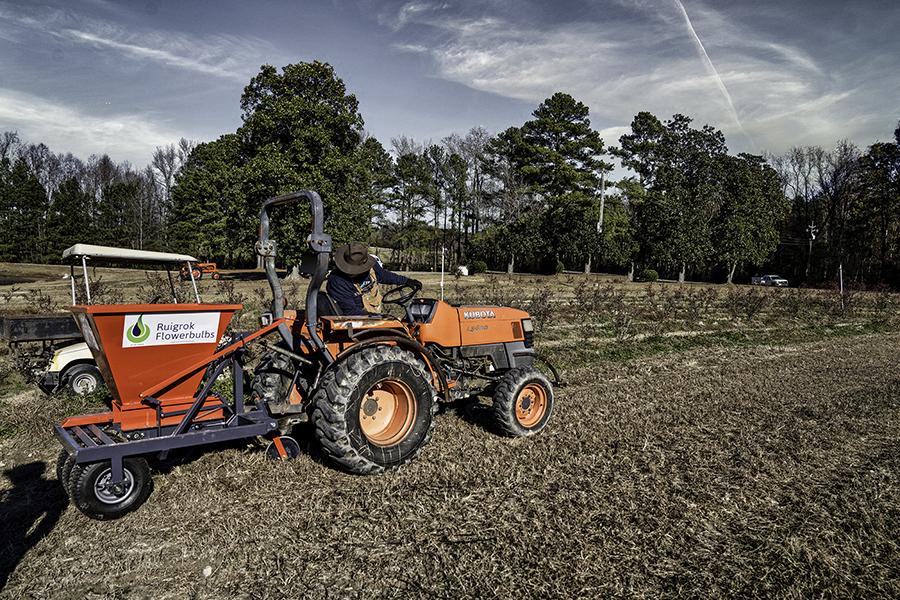
At the edge of one field, he stops the ATV a few feet from a beloved orange 1952 Allis-Chalmers tractor nicknamed Allis. She’s just recovered from a spitting and sputtering session that called for repairs. Healthy again, Allis is pulling a bulb-planting machine the farm purchased from the Netherlands.

“It’s our new tool and we’ll get all 45,000 bulbs set out in the next couple of days,” David says. “In 2022 my dad made a template out of PVC pipe that the workers pushed into the soil to plant the 20,000 bulbs. It took weeks.”

Standing by the bulb planter, Derek hollers, “Hey, what color do you want next? Yellow?”

“No. Yella!” shouts Janice, enthusiastically correcting her son’s pronunciation. “In my family, it was always ‘yella’ and they tease me about it.”

Derek dumps a crate holding hundreds of “yella” tulip bulbs into the bulb planter. Allis pulls the planter over an intended row, using its steel discs to cut a 10-inch-deep trench, drop one bulb with roots down, and then cover the trench with its three rear wheels, settling the soil.

“Hey, no bulbs left behind!” says eagle-eyed David, pointing to some bulbs that jumped the trench and need planting.

“It’s only our second year, and this is amazing,” he adds as he presses the accelerator lever on the ATV and takes off across the edge of the farm. Here, he’s carefully choreographed mixed planting to include a mood-lifting view of thousands of perennial daffodils (Narcissi), anemones, globes of alliums, Spanish bluebells (Hyacinthoides hispanica), and cobalt-blue grape hyacinth (Muscari armeniacum) blooming en masse along with the tulips.

Once those early spring flowers fade, a stunning display of 10,000 peony-like ranunculi will appear, including Ranunculus aviv and Ranunculus picotee varieties. Hundreds of unfurling peonies and poppies will inspire the romantic.

When the summer heat rises, the landscape gives way to summer perennials, including natives, rose mallow (Hibiscus lasiocarpos), black-eyed Susan (Rudbeckia hirta), and lupine (Lupinus). Vibrant zinnias and sunflowers grown from seed will provide an energizing space in late summer.

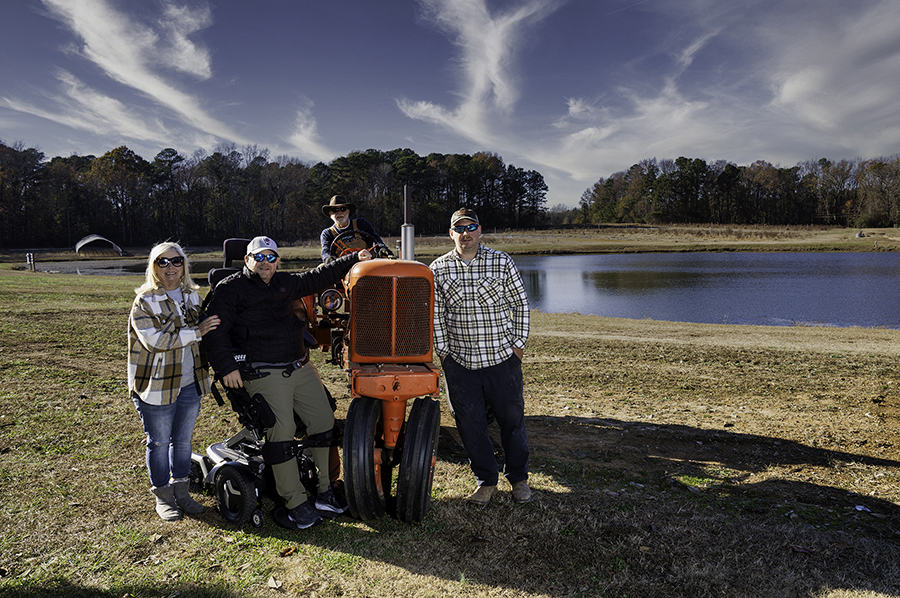
After a final pass of the farm, we head back to the pond, where it’s time for a family photo with Allis, the tractor.

“It’s truly magic,” Janice says as she surveys the farm in the late afternoon sun. “David is strong, determined, courageous and unstoppable. Along with our faith, this farm heals us and keeps us moving forward.”

David stands next to Allis with the assistance of his chair, mother and father. He is quiet but smiling. Perhaps fueled by gratitude, he understands the power of the moment — a moment of joy for life on the land that provides their hearts with peace, plenty and purpose.

Spring is nature’s reminder that resilience blooms from within.  PS

The Dyson family actively encourages visitors to take a stroll, cut flowers or just come and share the joy of spring. Blueberry Hill Farm, located at 3250 White Hill Road, Sanford, is open 10 a.m. to 6 p.m. Monday through Saturday, and 1 p.m. to 6 p.m. Sunday. It’s a u-pick farm for berries and flowers (they supply the clippers and flat box for flowers). Fresh-cut flowers are available for pickup, as is a tasty jar of sugar-free Traffic Jam, or Blueberry Jam made with the farm’s berries, in the storefront. Admission: $4 per person; u-pick flowers $1.50 per stem. No pets, please.

(Instagram @blueberryhillupick).

Claudia Watson is a freelance writer and longtime contributor to PineStraw and The Pilot who finds joy daily, often in a garden.

Buzzing with the Bees

Buzzing with the Bees

How Midnight Supply came to “bee”

By Jenna Biter  

Photographs by John Gessner

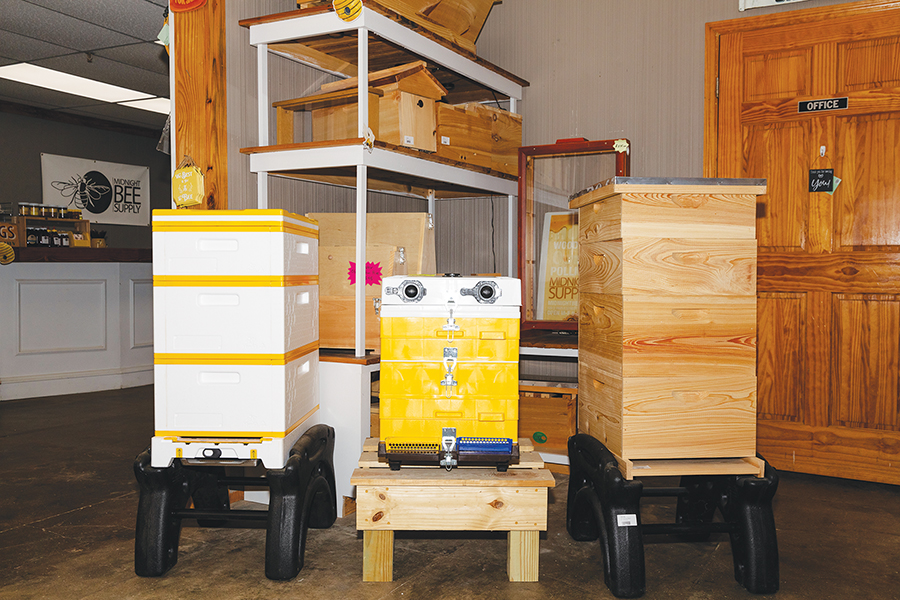
OPEN glows red on the window near another sign advertising local honey for sale. In the space between the two, what resembles a stack of wooden bankers boxes, or maybe a tall wooden filing cabinet, can be seen through the glass, sitting near the front of the country store. It’s quiet on the outside but, inside, it’s a veritable — sorry — beehive of activity.

The peculiar woody contraption won’t be there long.

The next customer will push through the shop’s happy honey-yellow door, tender payment at the counter, and in exchange, haul the thing away to fill it with the humming of a colony of tens of thousands of honeybees.

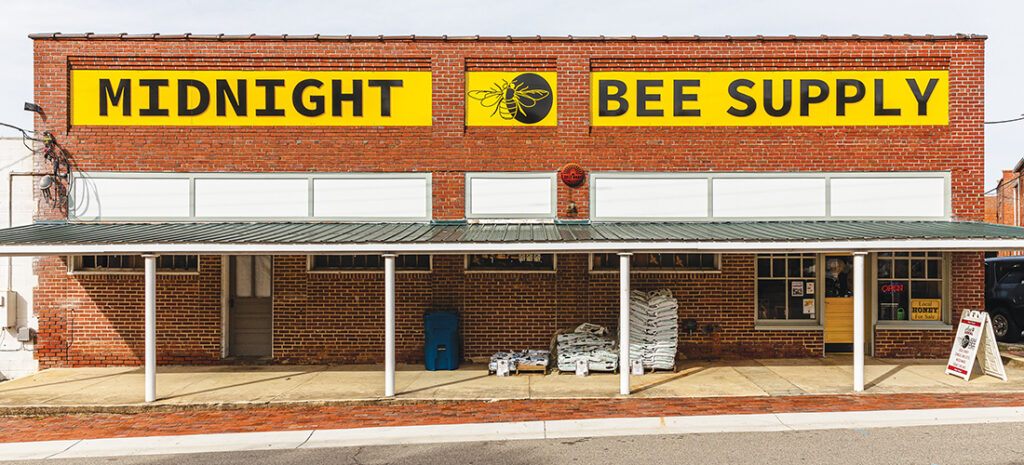
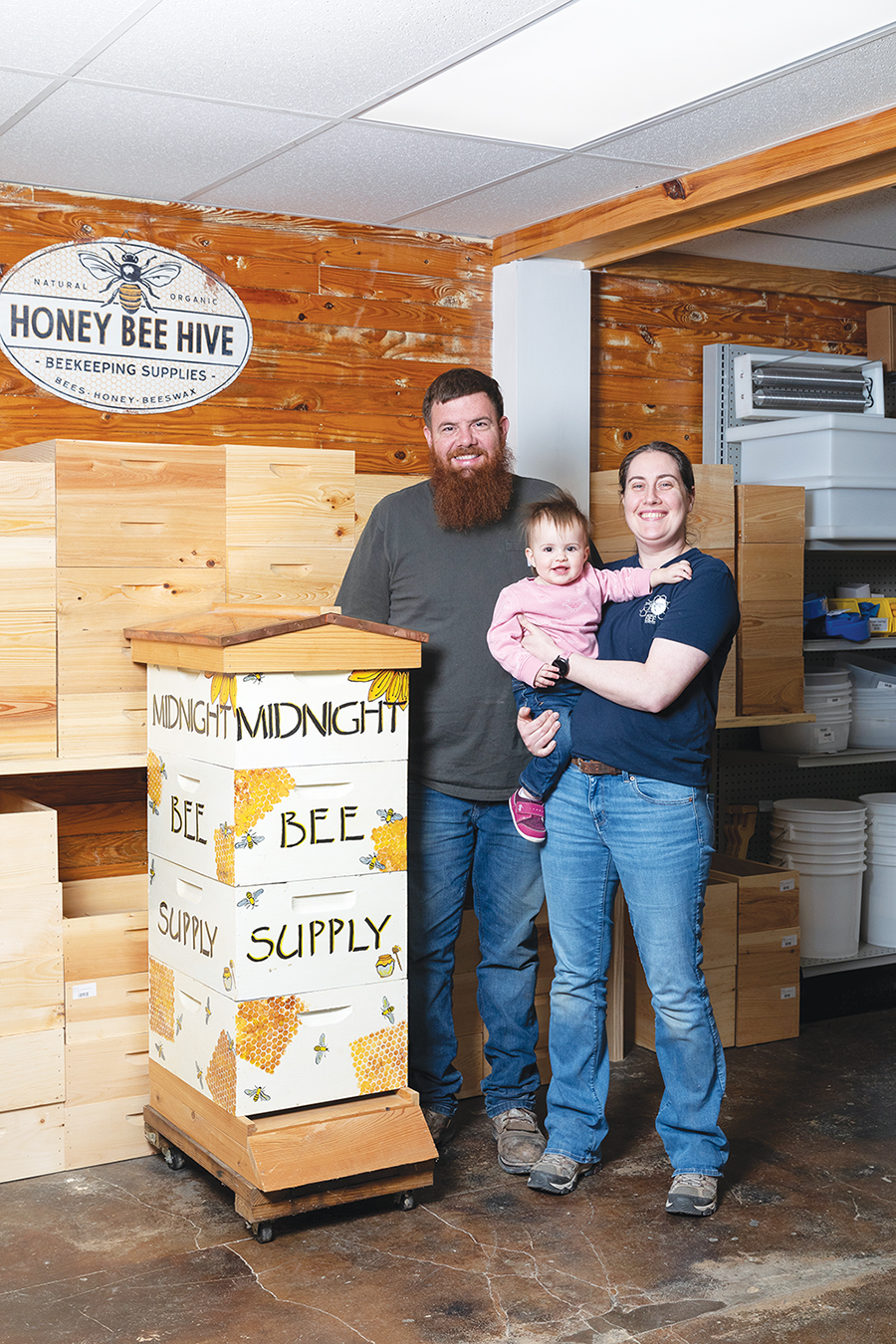
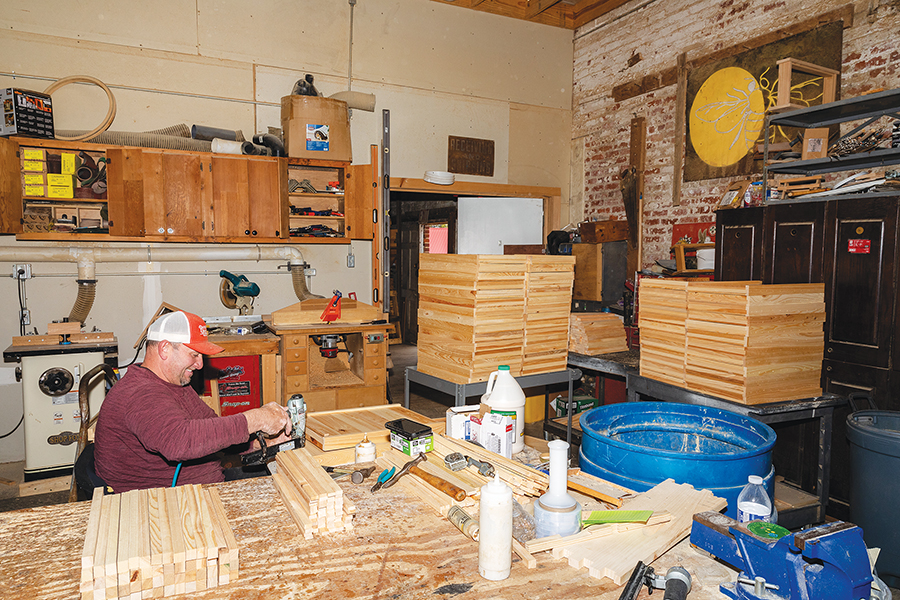
That’s because, as you might have figured, the thing isn’t a pile of hand-carved bankers boxes or a filing cabinet hewn from pine. It’s a beehive, one of the many that Erin and Calvin Terry Jr. make and sell at Midnight Bee Supply, their beekeeping storefront/woodshop on East Maple Street, in Vass.

“A bee box is like a mayonnaise jar,” Calvin says. “It’s a mayonnaise jar because it’s got mayonnaise in it.” He pauses. “If that same jar’s got jelly in it . . . ”

Erin joins in, as if they’d rehearsed the line 100 times like Abbott and Costello, Wheeler and Woolsey, Bert and Ernie, “ . . . it’s a jelly jar.

“So a box is a box, but when you fill it with bees, it’s a bee box,” Erin says, delivering the punchline.

The couple’s 1-year-old daughter, Maggie, babbles approvingly from her Pack ’n Play behind Mom’s chair. An enlarged printout of a Google review hangs above her on the office wall. “The store smells wonderful, like fresh cut wood,” it reads. From a room over, the buzzing of saws adds an exclamation point.

Midnight Bee Supply has been operating out of that brick warehouse in Vass since 2016, a handful of years after Calvin got into the business on something of a whim. While studying at N.C. State, the construction engineering major registered for a beekeeping course, enjoyed it, got high marks in it, and parlayed the experience into a part-time job working for Jack Tapp, a beekeeper who ran Busy Bee Apiaries out of the basement of his Chapel Hill home.

“Whoever was building his hives at the time wanted some ridiculous price for a cypress hive body,” Calvin says.

“His background is in construction and things like that,” Erin says of her husband. “So he looked at that and went,Oh, I could build that.’”

Calvin spent his Fourth of July learning how to construct bee boxes for Tapp. “I took him five, and he said, ‘Yeah, give me 50,’” Calvin says. He filled the order, no problem, then follow-ups, and more after that, eventually taking orders from David Bailey, who bought Busy Bee in 2013, renamed it Bailey Bee Supply, and moved the business to a plaza in Hillsborough.

“David took it to the next level,” Calvin says. “I was still in school, and we were doing a lot of deliveries to Bailey Bee Supply at midnight.”

Hence Midnight Bee Supply. The business had a name before it had a place.

At first Calvin built the bee boxes in his grandfather’s Johnson Street workshop and sold out of his parents’ garage on Saturdays. Now, a dozen or so years later and a mile across town, he’s ripping through more than 100,000 board-feet each year.

Calvin points to a stack of softwood planks piled high on the woodshop floor. He says something but the mechanical droning of planers and table saws drowns out his words. Back on the other side of the shop door, the noise fades and, with the lilt of a fourth-generation Vass native, he explains that cypress makes all the difference in the high-quality preassembled hives like the ones at the front of the store. The wood’s oils provide a level of natural waterproofing that extends hive longevity. Pine, on the other hand, is the budget option. Regardless of the material, Calvin and his handful of employees shape the wood into the Langstroth hive body preferred by the vast majority of customers.

Considered the father of American beekeeping, Philadelphia native Rev. Lorenzo L. Langstroth patented his eponymous beehive on Oct. 5, 1852, and it remains the most common style used in North America today. Langstroth’s design is modular, constructed from a series of vertically hung boxes and removable frames with 3/8-inch gaps called “bee space.” The small gaps ensure that the bees won’t seal their home shut with honeycomb or bee glue, making it easier for beekeepers to conduct hive inspections and honey collection without irritating the colony.

Calvin starts in on the anatomy of a Langstroth hive. “You’ve got a bottom board,” he says, patting the stack at the front of the store, almost as if he’s patting the rump of the family dog. “That’s a deep box.” The lesson swivels into something more like internal medicine. “If you want your top box honey only, no eggs, a queen excluder keeps . . . ”

Calvin and Erin whirl through the store, pointing to and naming all the accoutrements a beekeeper could want — specialty boxes for harvesting honeycomb, slatted racks, and different frames and feeders, as well as pest control supplies and supplemental honeybee food for the hard winter months.

“That’s basically a large centrifuge used to separate the wax from the honey,” Erin says, eyeing a silver-bellied cylinder called a honey extractor. “We’ve got a little bit of everything for anything you might be doing.” And that includes Erin’s expert beekeeping advice.

Like Calvin, she attended N.C. State, though their time on the Raleigh campus didn’t overlap. Erin, who has a degree in natural resources, conducted research with mosquitoes and genetics, and post-graduation, took a job with the school’s honeybee research lab. It was a six-month temp job tailor-made for her research experience that transformed into a happy seven years.

“I loved the bees,” Erin says, “so the longer I was there, the more I was getting into beekeeping, not just research. And then when we met, it just kind of snowballed into this,” she says, her voice lifting as she looks around the store. The earthy aroma of sawdust hangs in the air.

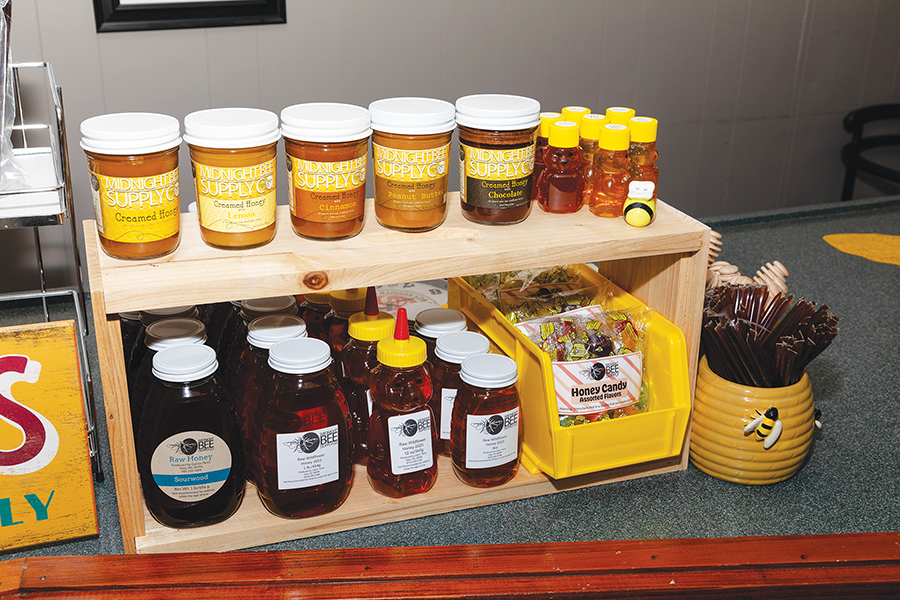
For consumers who prefer honeybee products without the chance of stings, the Terrys sell beeswax candles, quilts handmade by Grandma, and of course, raw and creamed honeys produced from their own apiary and bottled by Calvin’s parents.

Honey production has always been part of Calvin’s business model. “We keep several hundred hives of bees,” Erin says. “You keep bees, you make honey.”

Anticipating the life cycle of the honeybee, which revolves around the flow of nectar, is what the Terrys do, both as beekeepers and as a beekeeping supplier. “First of February starts spring for us,” Erin says. “Spring is busy on all fronts because this is when beekeepers are thinking about their bees most.” After enduring the freezing winter — all the while feeding on honey stores and protecting the queen bee from the elements — the vulnerable survivors emerge from the hives to forage for nectar and restart honey production. Beekeepers help that process along.

It’s that brisk but sunny time of year when customers flow steadily into the front while wholesale orders ship out the back. Sixteen pallets of hives are waiting to be picked up.

“We stay busy, absolutely,” Erin says.

As busy as . . .  well, you know.  PS

Jenna Biter is a writer and military wife in the Sandhills. She can be reached at jennabiter@protonmail.com.

The Legend Next Door

The Legend Next Door

Three acclaimed poets, Stephen E. Smith, Shelby Stephenson and Joseph Bathanti, share their recollections of St. Andrews University’s Ronald Bayes, a driving force in North Carolina’s literary world


Making Magic in the Hinterland

By Stephen E. Smith

The sun is at our backs as we turn off U.S. 1 onto 15-501 South toward Laurinburg, ticking away the 25.2 miles to the least likely poetry mecca in America — the tiny St. Andrews College campus. It’s January 15, 1980, and my brother-in-poetic-crime, future N.C. Poet Laureate Shelby Stephenson, and I are on our way to hear Black Mountain poet Joel Oppenheimer, poetry editor for The Village Voice, a news and culture publication known for being the country’s first alternative newsweekly, give a reading from his new St. Andrews Press book, Names, Dates, & Places.

Trust me: Laurinburg, North Carolina, for all its attributes, is a far, far distance, socially and intellectually, from Greenwich Village, New York. So how is it that a significant 20th century American poet was reading at what was then called St. Andrews College? Maybe there was mystery and magic at the heart of it. But if you adhere to the Great Man Theory, the answer is, in a literary sense, simple: Ron Bayes.

I met Ron in July 1972 at a meeting of the North Carolina Writers Conference in Wilmington. I happened into the luncheon meeting where he was holding forth on his literary plans for St. Andrews College — a creative writing major, a national literary magazine (The St. Andrews Review), a student literary magazine (Cairn), a literary press that would publish 15 books a year, a reading series that would, if his plans came to fruition, be the envy of every college and university in the state, a visiting artist program, weekly student poetry readings, etc. It seemed overly ambitious for a newly cobbled-together college in the hinterland, but Ron was emphatic. He would do it all.

The assembled writers, many of whom were college professors who organized readings and edited literary magazines, were skeptical. They understood the time and effort necessary to accomplish the litany of projects Ron enumerated. He’d have to contend with the college bureaucracy, academic politics, the scarcity of funding, department jealousy and infighting, and an underlying lack of interest from students and faculty. The barriers were formidable. And Ron would have to carry out his plans while teaching his classes and writing and publishing his own work. It seemed an impossible undertaking.

More than 50 years later, it’s safe to say that Ron Bayes delivered on every promise: America’s finest poets visited the St. Andrews campus, gave readings, and conducted workshops. Literary magazines flourished. Student readings were held every Thursday night, and chapbooks of their work were published. Writers of national and regional import had their books published by St. Andrews Press.

For at least 20 years, Shelby Stephenson and I attended the readings, and we can testify that the St. Andrews campus was a hotbed of literary enthusiasm. Where else in North Carolina could you have dinner with James Dickey, James Laughlin or Robert Bly in a mediocre Chinese restaurant?

On that January night in 1980, I had a lengthy conversation with Joel Oppenheimer, and we became fast friends, corresponding until he died in 1988. I learned all I needed to know about the Black Mountain School of Poetry. On another memorable occasion, Robert Creeley, an unassuming and generous Black Mountain devotee, and I talked for hours at dinner at one of Laurinburg’s restaurants. I could list a hundred such evenings fraught with enlightenment if time and space permitted. The St. Andrews poetry scene was vibrant and enticing. I was never disappointed by an evening listening to aspiring poets read their creations on the tiny campus tucked away in languid Laurinburg. 

Alas, all things pass away, and so it was with the St. Andrews poetry scene. Literary magazines moved online, poetry readings became less popular with students, publishing and distributing books proved prohibitive, and the college’s institutional focus shifted to more financially rewarding pursuits. Shortly before he retired, Ron, who remained steadfastly enthusiastic about his teaching, told me that his students stared out the window and yawned, their interests attracted by more practical pursuits. The college’s financial foundation was always tenuous, and the emphasis on the academic experience adapted to ensure institutional survival. But none of these inevitable transformations detract from Ron’s achievement. He was a leader in North Carolina’s writing community for over 50 years, and a poet of national reputation who taught and inspired thousands of students.

A few years ago, I pulled into a parking lot on the Delmarva Peninsula behind an old clunker with a St. Andrews parking sticker peeling off the back bumper. I asked the middle-aged driver if he knew Ron Bayes. He beamed and nodded. “That guy changed my life,” he said. “My world is a lot more interesting because I had Ron Bayes as a teacher and mentor.”

Ron would have been pleased.

Lyrical Earthliness

By Shelby Stephenson

Ronald H. Bayes wooed and wowed the universe with poetry and his love for the arts; moreover, his compassion for helping others get into print still seems miraculous to me; plus, he created the atmosphere for hundreds of writers to read at the St. Andrews Forum, which he also founded. The roll of writers seems endless: James Laughlin, Robert Bly, Betty Adcock, Julie Suk, Stephen Smith, Joseph Bathanti, Tom Wolfe, Mary de Rachewiltz, Agnes McDonald, Shirley Moody, Margaret Baddour, Ann Deagon, Jonathan Williams, Jeffery Beam, Guy Owen, Paul Jones, Tom Hawkins, Anna Wooten, Marty Silverthorne, Fred Chappell, Terry Smith, Joel Oppenheimer, Robert Creeley, Lenard Moore, Glenna Luschei, Tom Patterson and on and on, even as he was writing his own poems seemingly right out of worlds of conversations.

What a beautiful life! To create situations for himself and others to find themselves in the Arts!

Fred Chappell: “Few poets have written so broadly and intensively of our modern culture as Ronald Bayes has done.” Betty Adcock: “Ron Bayes and his work have been our connection to schools of thought and poetry outside the South, as far away as Japan. A chief mentor and publisher of poets in North Carolina for decades, he is one of our treasures.” North Carolina’s current poet laureate, Jaki Shelton Green, aptly describes the Bayesian predicament: “A perpetual feverish stimulation navigating extreme terrain and a resounding fate of the senses.”

Ronald H. Bayes’ The Collected Poems (St. Andrews University Press, 2015) teems with the politics of resonant symbols. The Bayesian artistry presents, “in minutest detail, a poignant and intense emotional lingering, lyrical as hollyhocks forever blooming,” Fred Chappell has written, adding, “We owe him ebullient thanks.”

Here are some of the titles of books Ronald H. Bayes has written: Dust and Desire; History of the Turtle; The Casketmaker; Porpoise; King of August; Tokyo Annex; A Beast in View; Guises: A Laurinburg Litany; Fram.

I cannot overstate the fact that Ronald H. Bayes has been out-front, always making new worlds for word-lovers. Every entry in The Collected Poems shows that he is on his own, always experimental, carrying on out of his love of Black Mountain writers and artists and, especially, Ezra Pound. All the while Bayes gives his own beautifully aesthetic songs of emotions moving freely in and out of the music of his lines. In Fram, for example, he presents his life as a boy in Umapine, Oregon. Bayes’ vision dazzles word-games and pun-puns. Inner experiences seem outer; yet what appears beyond the page sings with feeling. “Home”: “I think / think of the years and long light and the end of light.” The syllables buoy longing. Images keep moving: “A matter of toward. / A matter of affirmative through.”

Readers enjoy entering his lines. Joseph Bathanti has written: Ronald H. Bayes “has given his life to the state of North Carolina, to the state of poetry in North Carolina, and made it the state of poetry.”

Patron Saint of Poetry

By Joseph Bathanti

No one of Ron Bayes’ stature — as poet, critic, playwright, renowned iconic professor for years and years at, then, St. Andrews Presbyterian College in Laurinburg — was more selfless, more over-the-top generous, or turned on more people to poetry. He was beloved by his students, beloved by anyone with whom he crossed paths, including cats and dogs — cats especially — whom he adored.

Ron never married, and he never had his own blood-children, but the legions of St. Andrews student-poets he launched over his long, sterling career remain his children; he loved them passionately without stint.

Hundreds of testimonials to Ron from former students have been recorded, and here’s just one sampling from Tom Patterson, St. Andrews, class of 1974, an illustrious North Carolina writer, art critic, and renowned authority on Outsider Art: “Ron Bayes changed my life. Had it not been for him I would not have attended St. Andrews, and wouldn’t have become the kind of writer I am. Had it not been for Ron, in fact, I might not have become a writer at all.” Neal Bushoven, Ron’s great friend and another iconic St. Andrews professor, once declared: “At one point, Ron Bayes had over half of the campus writing poetry.”

But it was not just St. Andrews students and faculty who sat at Ron’s bronzed feet. More than anyone before him, or after him, he democratized poetry across the state of North Carolina. Ron made writing poetry, for so many of us, not only the thing to do, but the only thing to do. Through his visionary and blazing work ethic — and the fact that he seemed to know every living writer on the planet — Ron single-handedly created in Laurinburg, N.C., of all places, on the campus of St. Andrews, the crosshairs, the nexus, the very heart of poetry in our fair state.

In 1969, he founded not only St. Andrews Press, but also the college’s Writers Forum. For 41 years, every blessed Thursday evening, without fail, he hosted readings on campus by poets, fiction writers, essayists, playwrights, you-name-it. Imagine: 41 years — like DiMaggio’s streak of hitting safely in 56 straight games. A record that will never be broken.

Yes, very famous writers arrived — Carolyn Kizer, Reynolds Price, Romulus Linney, James Dickey, Diane Wakoski, Tom Wolfe, Dana Gioia, Richard Blanco. The list of luminaries who read at The Writers Forum is mind-blowing. Ron was also intimates with Black Mountain College legends like Robert Creeley, Jonathan Williams, Joel Oppenheimer, Charles Olson, Ed Dorn, Fielding Dawson — and he hauled them to campus as well. But there were also student and fledgling poets, poets from the community, voices seldom heard, voices yearning to be heard, who also, in many cases, were launched at the St. Andrews Writers Forum. He evangelized so many of us.

I remember receiving my invitation from Ron to read in The Writers Forum in 1985. I nearly fainted — not only that I had been invited to read at the premier haven for writers in North Carolina, but that Ron Bayes (everyone with a stake in poetry in North Carolina knew who that was) — had written to me and had signed his very name on the postcard-invitation.
A postcard I still have and cherish.

I also want to be very clear: Ronald Homer Bayes was a giant among North Carolina writers, as well as writers well beyond our state’s borders. He was very much celebrated and known in Japan, especially. In fact, he was great friends with Yukio Mishima, one of the most significant writers of the 20th century, considered again and again for the Nobel Prize for Literature during the 1960s. Ron is the author of 14 groundbreaking, often avant-garde and always ahead of their time volumes of poetry; two books of prose; a monograph of literary criticism, John Reed and the Limits of Idealism; as well as two works for the stage, An Evening with Ezra Pound and An Evening with William Carlos Williams.

What’s more, I have never known another with more extemporaneous facility in spinning the English language into the most voluptuous and surprising locutions at a whim. He quoted verbatim, down to the syllable, Pound and Auden, Kipling and Yeats. He was powerfully funny, gloriously irreverent, charismatic, and notoriously philanthropic. Ron always managed to surreptitiously scoop up the check after those Thursday night feasts — near-bacchanals — at Fong’s and New China before the wild motorcade to campus for the ritual Thursday night readings.

But let me circle back to Ron’s students and close on that note: how he loved them, how they worshipped him. The holy man at St. Andrews, he handed them fire. He remains, to my mind, North Carolina’s patron saint of poetry. On that sacred note — and not a whit of blasphemy intended from this acolyte of St. Ron’s — here’s an excerpt from the penultimate email I received from him: “I think from the middle of Nov. til Xmas week was the most satisfying and pleasant time ever. 9 former students flew out to Asheville for a reunion at Black Mt. They are now all in their late 40’s and early 50’s and came from as far away as Chicago, NY, and Atlanta.  All that time back ! and as a highlight of the first of two nights, they gave a reading from my works they had put together. I was the audience of one. It was too sweet and flattering to tear up. I just smiled.”  PS

Apprentice House Press will publish Stephen Smith’s memoir The Year We Danced in May. Shelby Stephenson was North Carolina’s Poet Laureate 2015-18; his current books are Cow Mire Songs and Country. Joseph Bathanti was North Carolina’s Poet Laureate 2012-2014 and is the author of the recent books, Light at the Seam and The Act of Contrition & Other Stories.

Philadelphia Airport

Rather tired at the Philadelphia Airport

And the plane to board

An hour and three coffees away.

What irony that at five-thirty a.m.

I am at last moved by emotion

(It has been a long time)

When the unavoidable, continual soft-music loudspeaker

Romps a certain German polka.

And I remember another airport,

Other years,

And I who have never wished to go back before

Wish to go back.

But one never can in time

(And does space matter much?).

Want some irony?

In Germany it was (you weren’t there)

And I loved you: Christ! With what passion of intensity,

Jealous of whomever you were with

With the dawn pink and blue and grey and

The trees mushrooms clumping

Like wanting Breughel

To red-in country rompers

— Or maybe someone good at satyrs—

And I remember the other airport

I remember a polka

And that I loved you.

Now each in maze muddled and oh-so-adjusting

And we no longer love . . . why kid? And I am not

Even jealous in wild imaginings.

A few people

A few more people

Now we move . . . you move . . . I move . . . from progress

To progress

Unlove to unlove

Anticipating only departures.

            — Ronald Bayes

Poem April 2024

Poem April 2024

Penumbra

My father taught me a civil trick.

If you get caught during a rainstorm

at a downtown restaurant, just ask

the bartender if someone left a black umbrella. They will present you with

a cardboard box chock full of them.

It is not a lie: Someone really has left behind each one. You have left many. Part of the loophole is to make sure to give that umbrella to someone who needs it, or at the very least, leave it
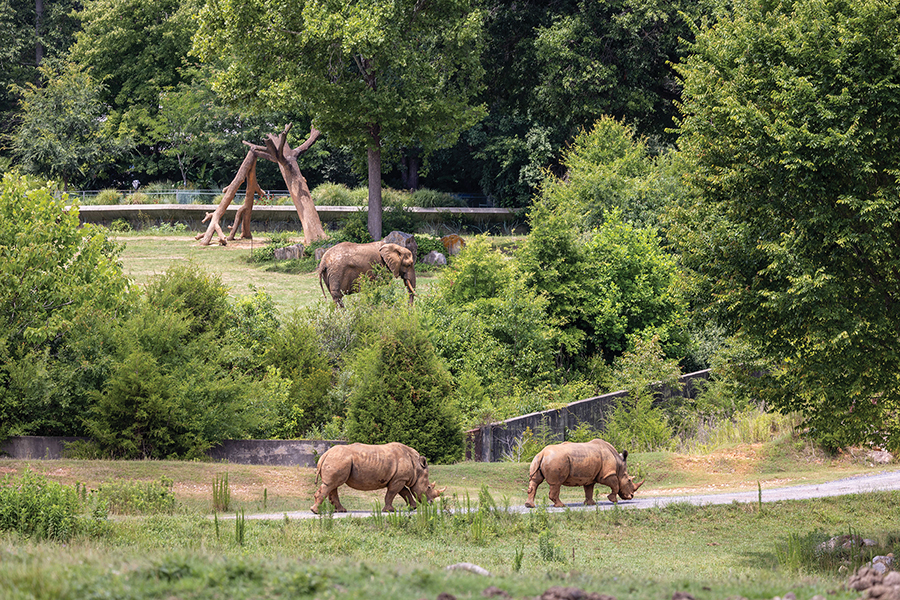
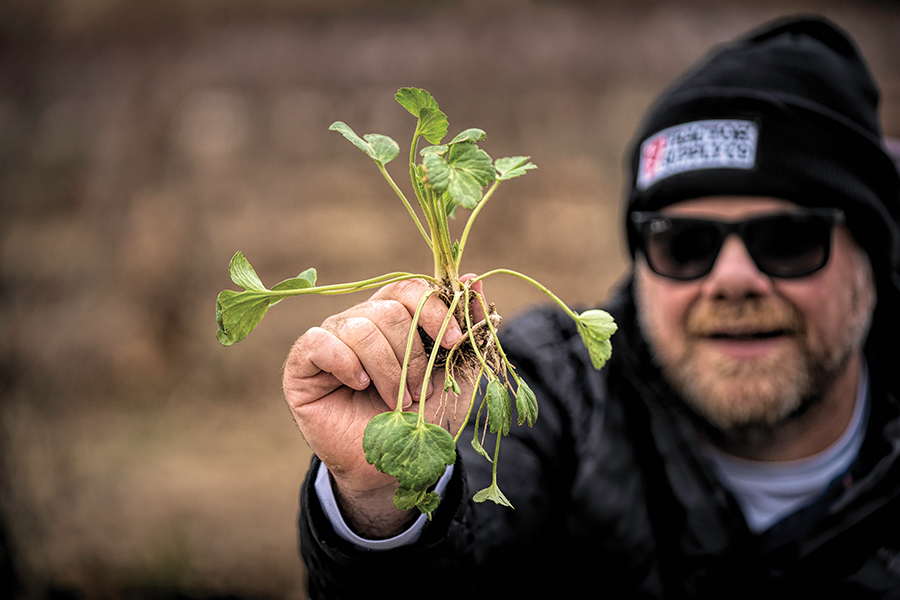
in a shady vestibule, on the coat rack next to that sad windbreaker. Otherwise it doesn’t count. Now they could call this all a life hack, but I consider that lacking. The process of inheritance is about so much more than getting what you need.

            — Maura Way

Maura Way’s second collection of poetry, Mummery,
was published in November 2023 by Press 53.