CALIFORNIA GOES CAROLINA
California Goes Carolina
With charm, art and a dash of fun
By Deborah Salomon
Photographs by John Gessner
Some houses come with their own histories. Others conform to their residents’ tastes and lifestyles. A very few built by builders or interior designers for personal occupancy showcase materials and expertise. This one began with a sad event, then blossomed into a happy ending.
Randy Boyd, an interior designer based in California’s Laguna Beach and Palm Springs, had been friends with Joyce Reehling, a New York-based TV, film and stage actress, for more than 30 years. Joyce and her husband, Tony Elms, retired to Pinehurst in 2008, where their contributions to the arts community have been significant. When Tony died in 2024, Randy visited Pinehurst to support Joyce. He and partner Mark Stine, liked what they saw: a pretty little town filled with interesting people involved in worthwhile activities. Some but not all were retirees. They were looking to relocate and saw much to like beyond Pinehurst’s reputation for golf.
“We fell in love with the village, the charm, the people,” Randy says.

Finding the right living space was a major factor, given Randy’s profession, which he planned to continue pursuing. The shoemaker’s children, after all, mustn’t go barefoot. He and Mark shared similar tastes. Neither pined for historic Pinehurst properties, a good thing since most Old Town Taras and Georgians are spoken for. Better a bright, breezy Camelot that Randy could transform with ideas gained as an antique dealer, the kind who scours France and sends back shipping containers full of fascinating stuff.
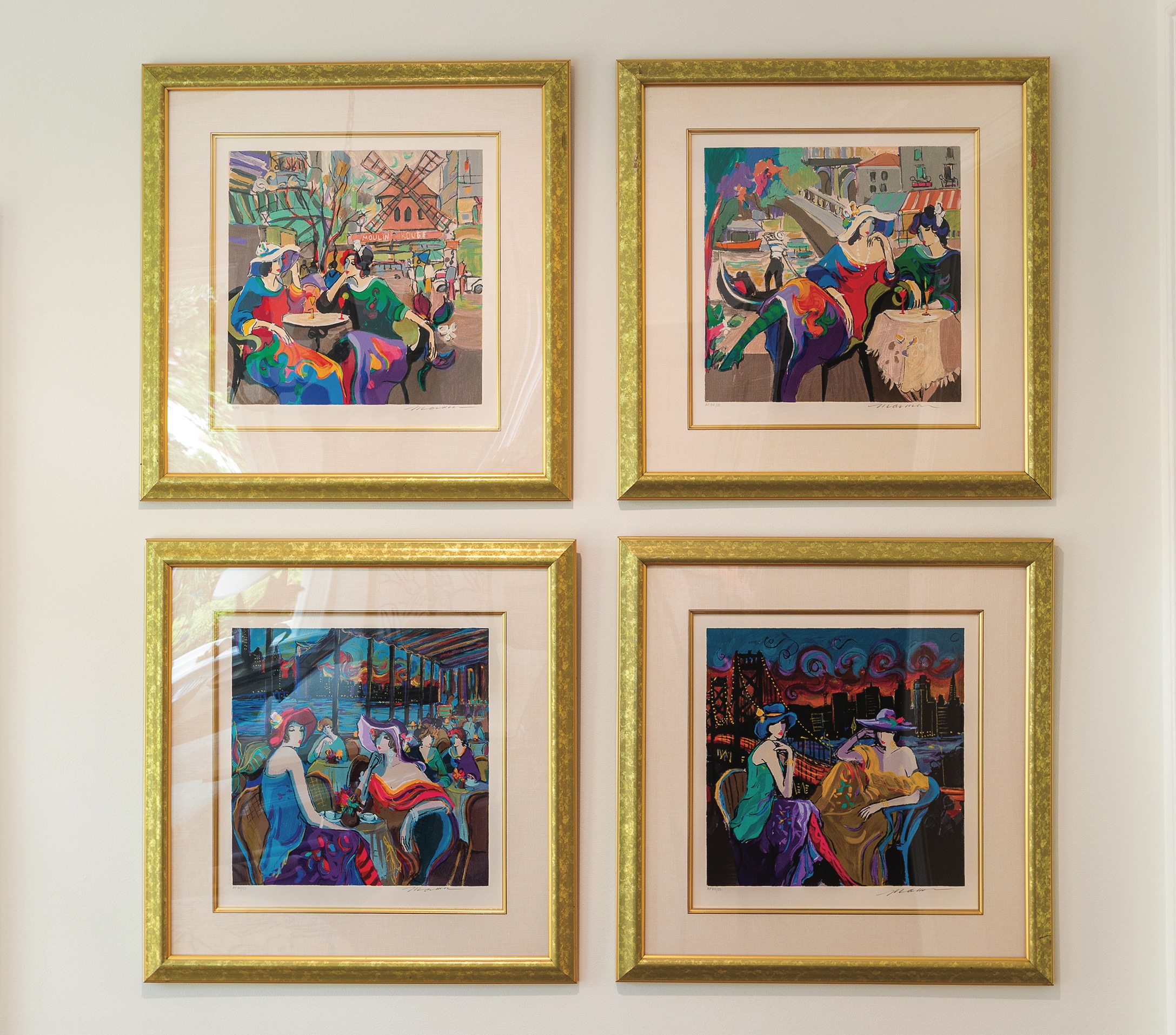
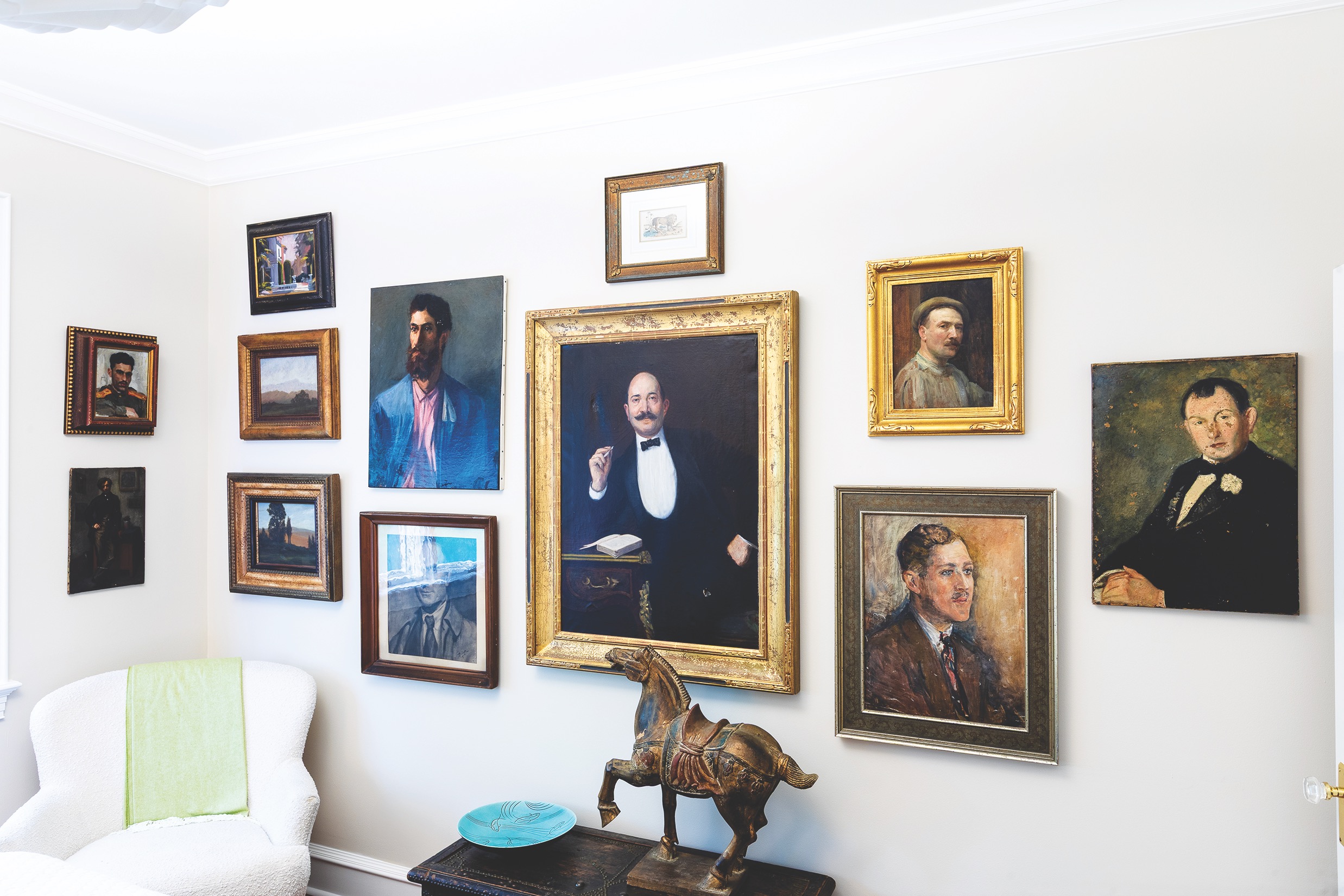
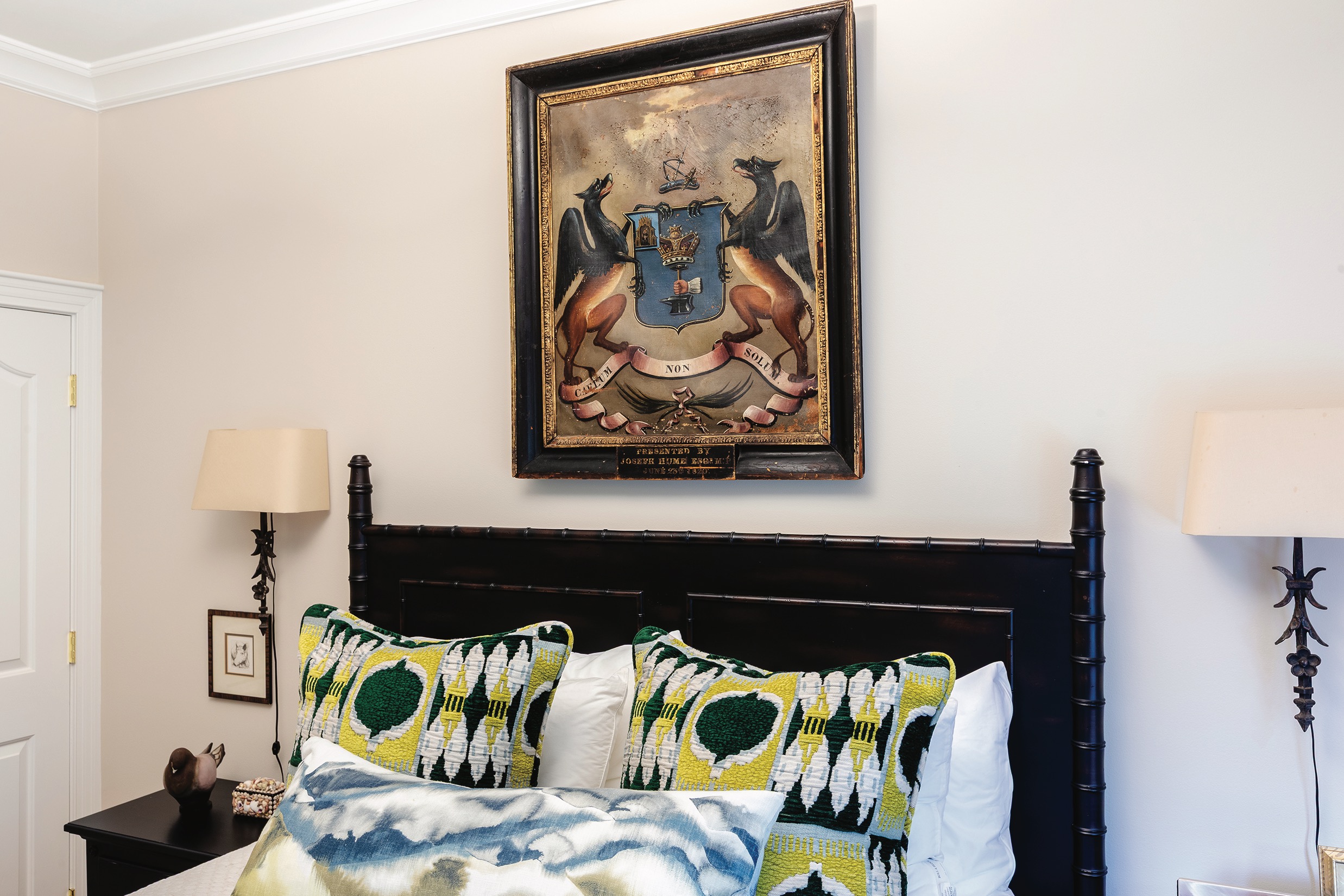
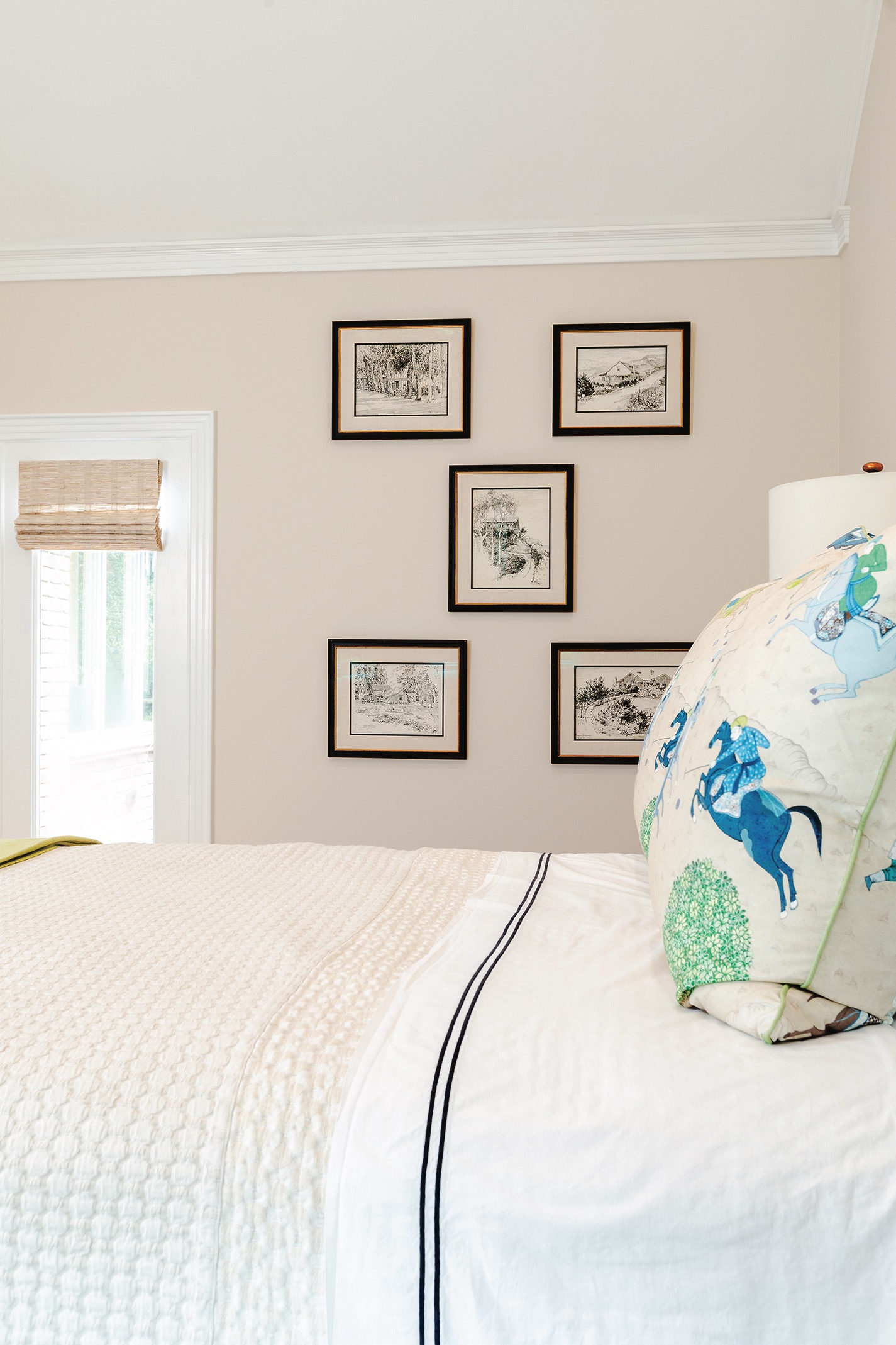
How about two handsome armoires, one shelved for shoes, a rustic pine grandmother clock and statuesque lamp bases? But all the right stuff is just the beginning. Randy nods “yes” when asked if hanging photos and paintings isn’t an art itself: height, layout, subjects, frames. He measures and draws, then mocks up on the floor. Originality counts, like a bedroom wall hung with portraits of men, likely 19th century, with facial hair and pensive expressions.
“The guy in the middle reminds me of Poirot,” Randy says. “He makes me smile.”
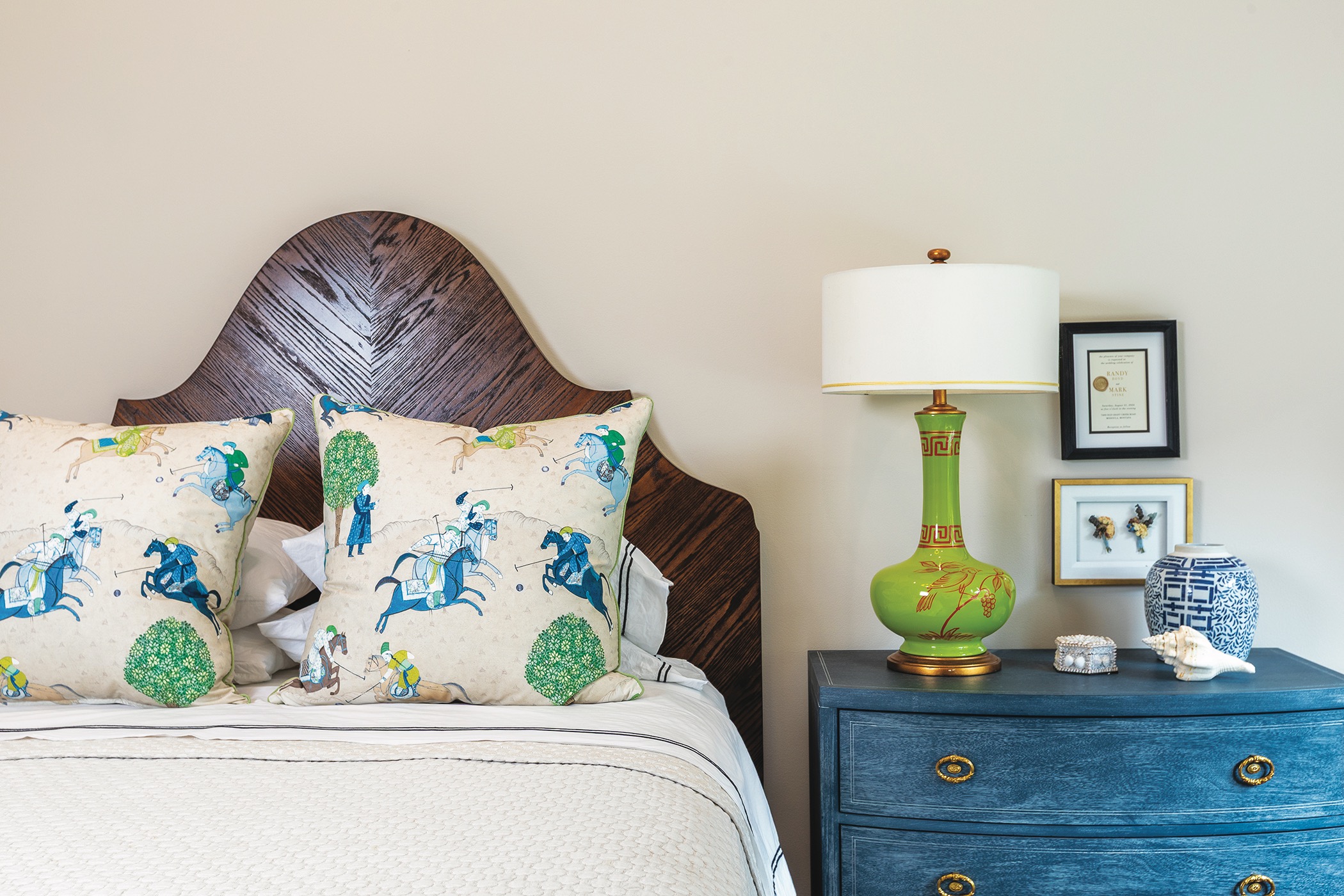
Another bedroom pays homage to Randy’s mother and grandmother, their nearly life-sized portraits dominating intersecting walls. Color, even white, adds excitement, like the filmy white “veils” hanging off tall bedposts; the overstuffed quilt where two big dogs sleep; blankets woven with multi-colored threads; a chair upholstered in lime green, others covered in line drawings of rabbits on a white background — all different, all unusual, related only by their unpredictability.
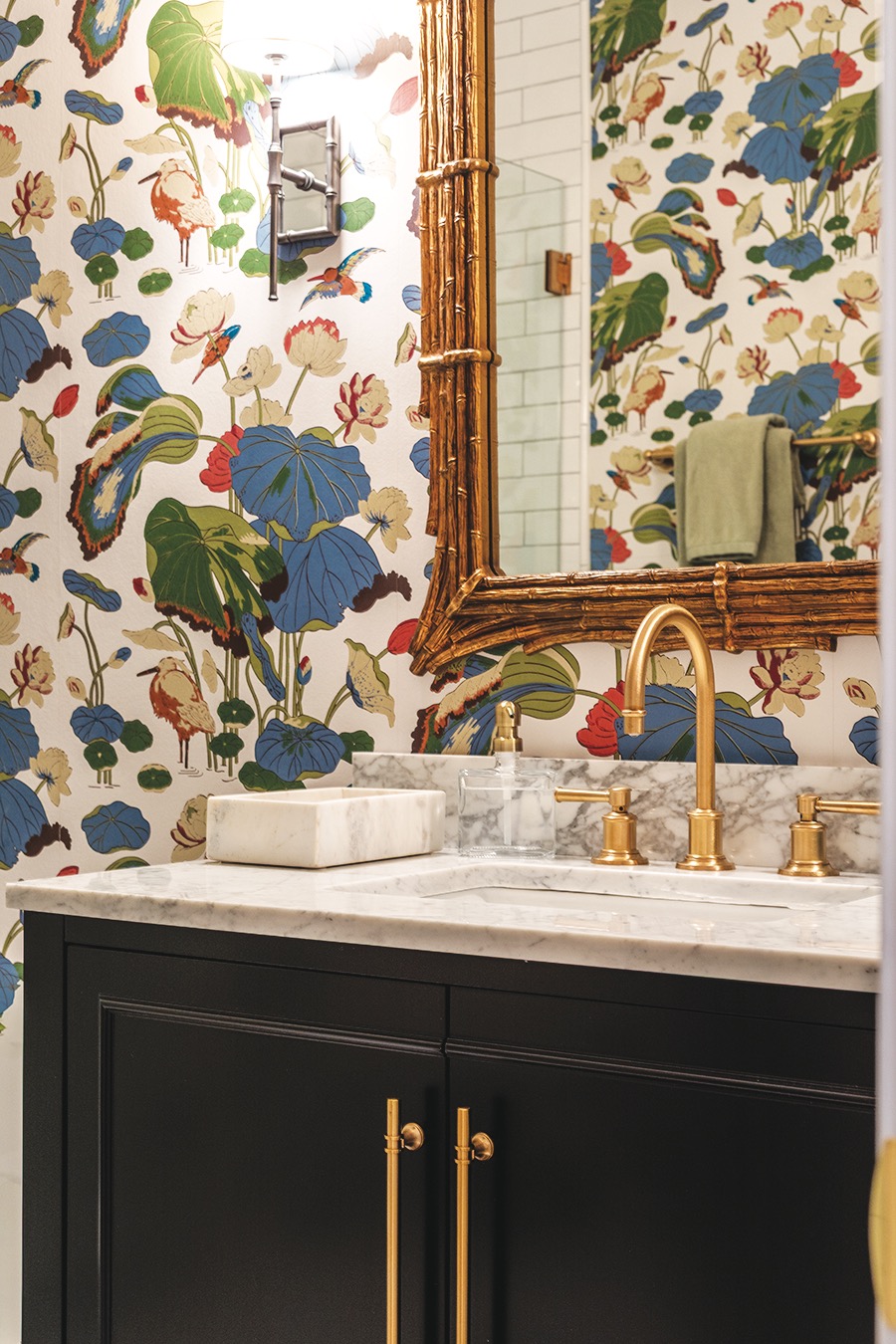
Both bathrooms required gutting. One returned papered in rich jewel-toned leaf shapes, the other in staccato black and white.
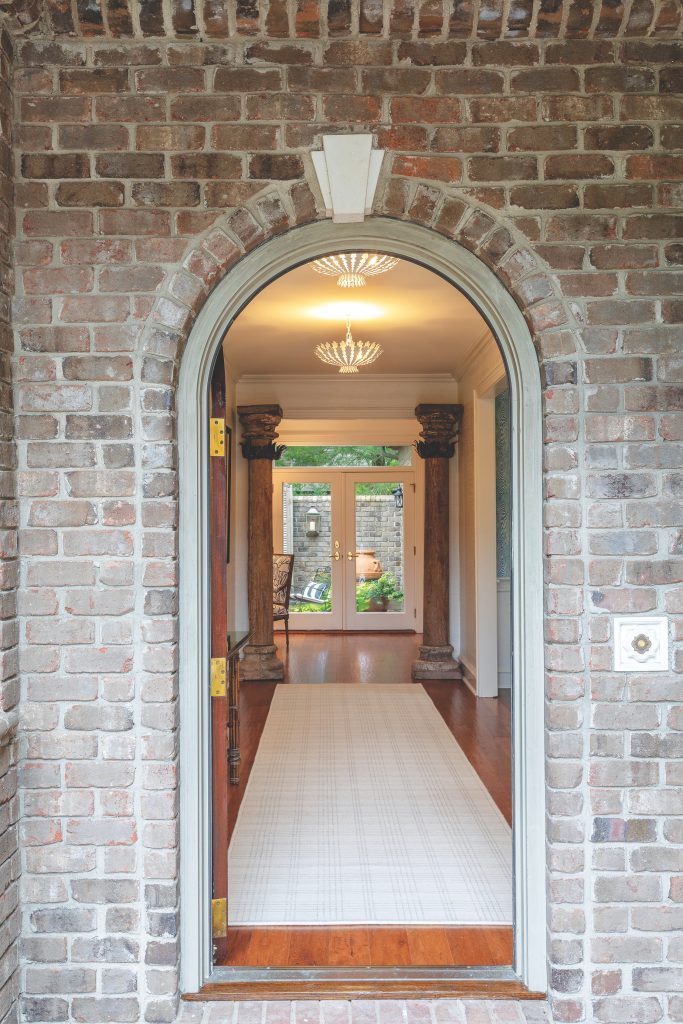
Variety, tempered by surprise, rules. Art, formal or not-so, needs an airy, well-lit display venue. At 2,300 square feet, this semi-detached brick unit with 13-foot salon ceilings, an eyebrow front door and British-themed neighborhood signage fit the couple’s furnishings. Mature trees, a reprieve from longleaf pines, manicured boxwoods and weathered brick exteriors give a settled appearance, while two walled terraces anchored by olive oil jug planters expand entertaining space.
Randy and Mark purchased the unit, hired a contractor, rented an air B&B for the duration and got to work. The project took less than a year. They, along with their two pups, moved in May, along with Randy’s business, Thurston Boyd Interior Design.
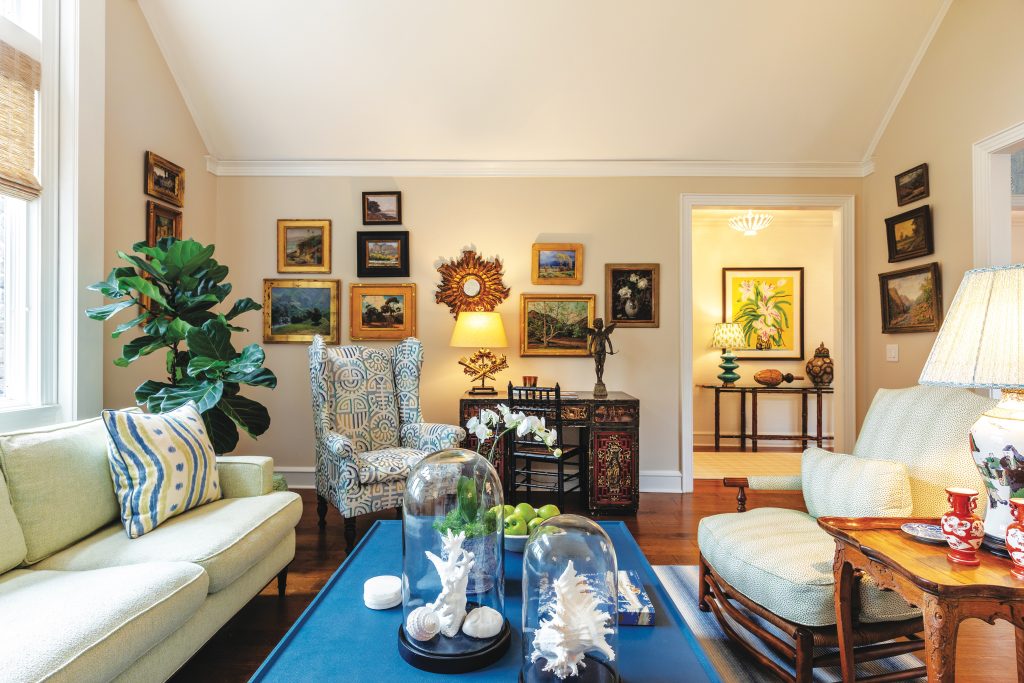
Each room showcases several pieces or a collection. In the living room, Lucite shelves hold bright Chinese roof tiles in the form of warriors protecting the property. In ancient times, quality of workmanship symbolized wealth and social status. Balancing their artistry, a contemporary sofa and simple painted wood coffee table face the proscenium opening into the dining room, where four paintings (by Mark’s niece) of flowers in vases suggest, in brilliance and style, Van Gogh sunflowers or a mixed bouquet by Cézanne. Hung against wallpaper that wriggles with life, they are anything but “still.” A massive, intricately carved desk, perhaps Asian, offsets the colors, as does a gathering of spider-webby landscape prints.
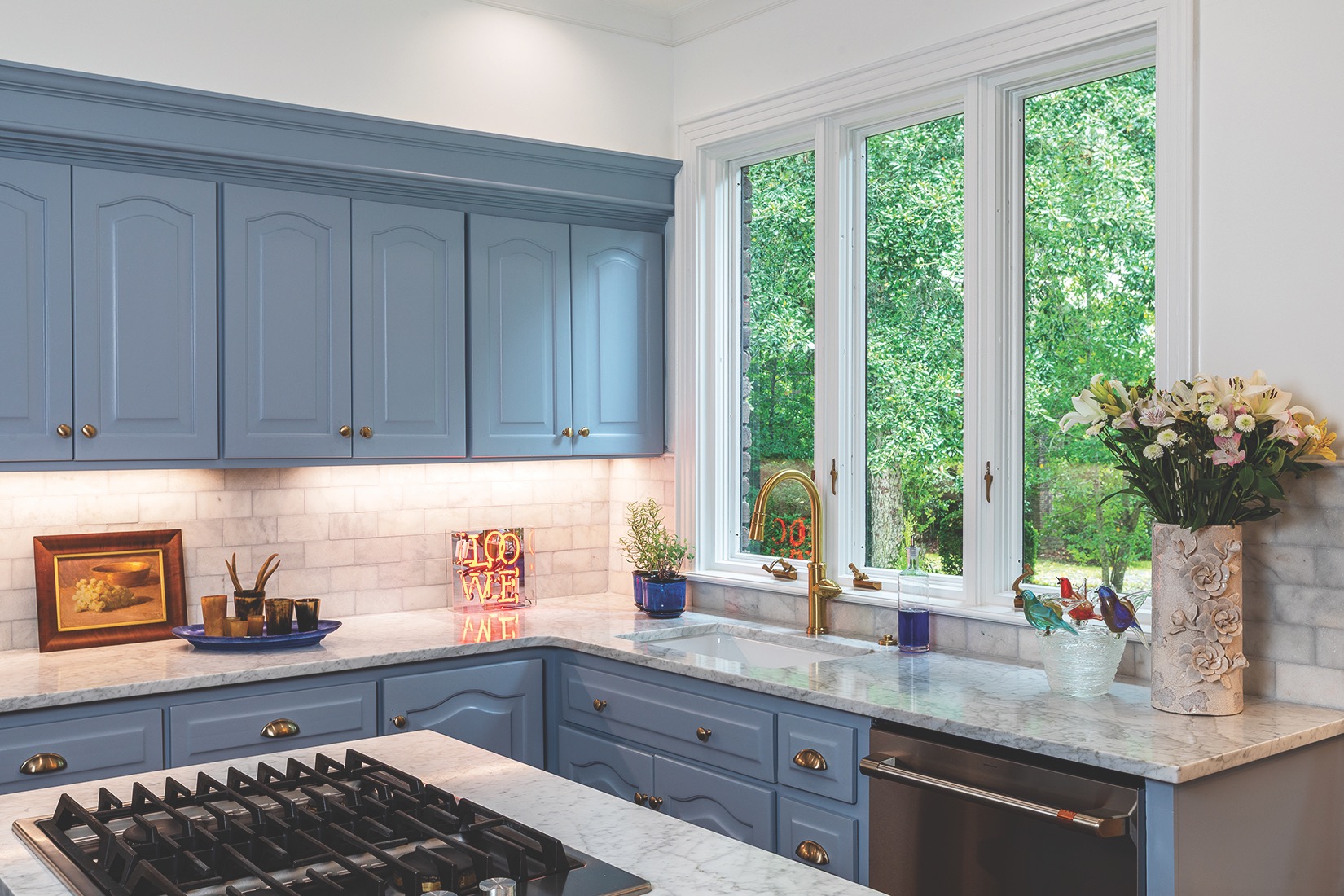
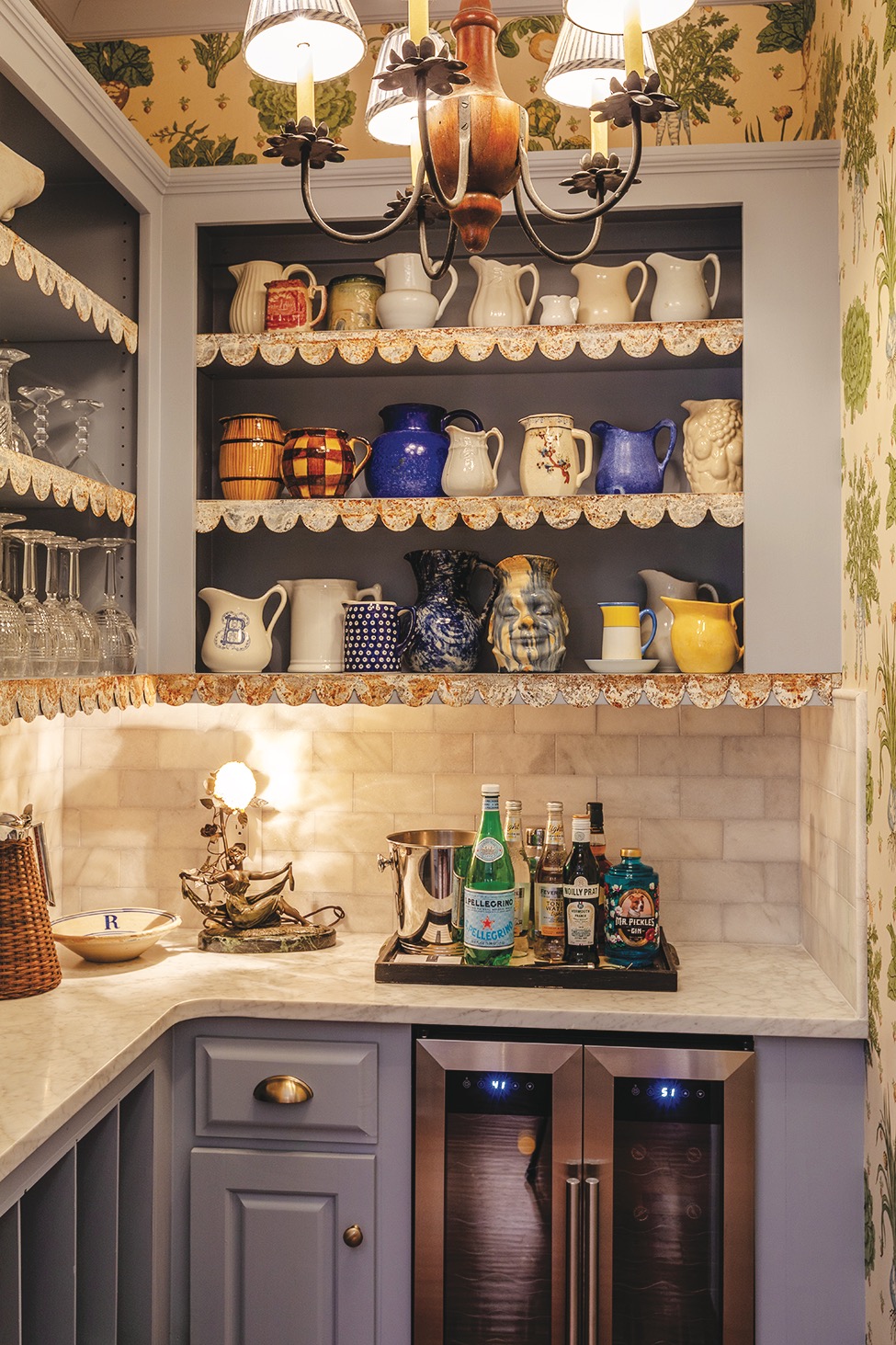
The kitchen, small but efficient, locates the gas range top on a center island. Almost bare countertops and blue-grayish cupboards impart Shaker plainness interrupted only by a collection of whimsical ceramic pitchers aligned on a pantry shelf. A sideboard with a built-in frontal wine rack resides here.
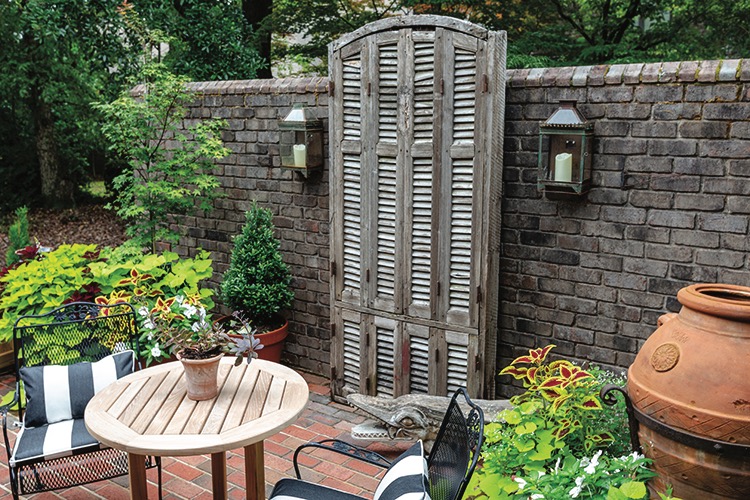
Opposite the kitchen is a dining area — a touch more formal than a breakfast nook — that opens out onto a patio, where a life-sized alligator, carved from wood, lurks among the planters. Throughout, carpet and tile were replaced by stained hardwood, knotty and laid randomly.
Nothing here blares California, but nothing screams Old Pinehurst, either — the house lacks a name or a resident ghost. It blends practicality with charm, fine art with a dash of fun, all the trademarks of “Pinehurst Now,” where wine-tastings, farmers markets, walking tours, pickleball and food festivals fill out calendars.
“People are so friendly,” Mark says. “It’s like we’ve lived here for years.”