
A CREATIVE CORNER
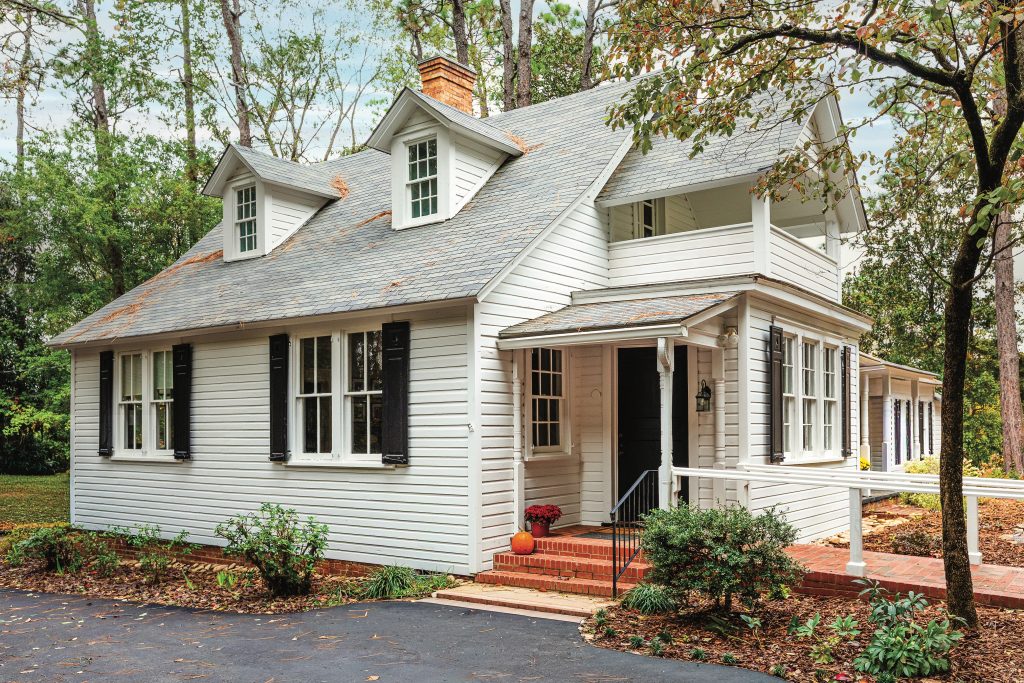
A Creative Corner
The refurbishing of Lamont Cottage
By Deborah Salomon
Photographs by John Gessner
A house doesn’t have to be a home. It can evolve into an office, a store, a B&B, a museum. In can even be a serene hideaway for Writers in Residence at the Weymouth Center for the Arts & Humanities.
Lamont Cottage, tucked behind the Boyd homestead and shielded by overgrowth, answers to this role. After decades as a rental property, it has been remodeled, adapted, refurbished and furnished in mid-20th century mode plus AC, Wi-Fi, washer/dryer and a patio.
So where’s the giant wall-mounted, stream-fed TV? Nowhere to be found.
Writers are there to write, not watch the Game of the Week. After days of solitary work, midnight confabs with other writers occupying the four bedrooms (two adapted for mobility issues) carries forth a tradition practiced by James Boyd, when Thomas Wolfe, Sherwood Anderson, F. Scott Fitzgerald and other literary giants of the 1920s Jazz Age stayed for a spell at Weymouth, the sprawling Boyd estate. According to legend, Wolfe arrived in Southern Pines by train late one summer night, walked up the hill to Weymouth, got in through an open window and crashed on a sofa. Whatever the actual details of his visit, Fitzgerald later felt compelled to send Boyd a letter of apology.
Katharine Lamont, barely out of her teens and from an equally wealthy/sporty clan, fell in love with James and built the cottage (originally called The Gatehouse because of its location) for herself, living there until their marriage in 1917. The couple occupied the cottage again in 1922 during the construction of the current Boyd house, and Katharine served as her husband’s secretary/acolyte while he wrote Drums, a hefty volume published in 1925 and touted in its day as the best historical novel of the Revolutionary War. Katharine lived in the cottage one more time, moving back after James’ death, at 50, in 1944.
The literary coterie that flourished in and around Weymouth added glitter to Moore County’s reputation for mild winters, golf and horses. Its artistic dimension was greatly enhanced in 1979 when Sam Ragan, N.C. poet laureate, editor and publisher of The Pilot, and Weymouth board president, instituted the Writers in Residence program. Published North Carolina authors were invited to stay in the house for one or two weeks to work on their projects. Writers had to reside in N.C. or have strong ties to the state.
As vast and charming as the Boyd house is, navigating its stairways presented an accessibility problem. A solution came from the writers themselves, says Glenda Kirby, current board chairman. Why not renovate Lamont Cottage? The possibility was discussed but derailed by COVID.
Tabled but not forgotten. When the subject was broached again in 2024 the entire board agreed. “It was part of our mission,” says Kirby. Funds came from donations and other sources, and the project came in under budget.
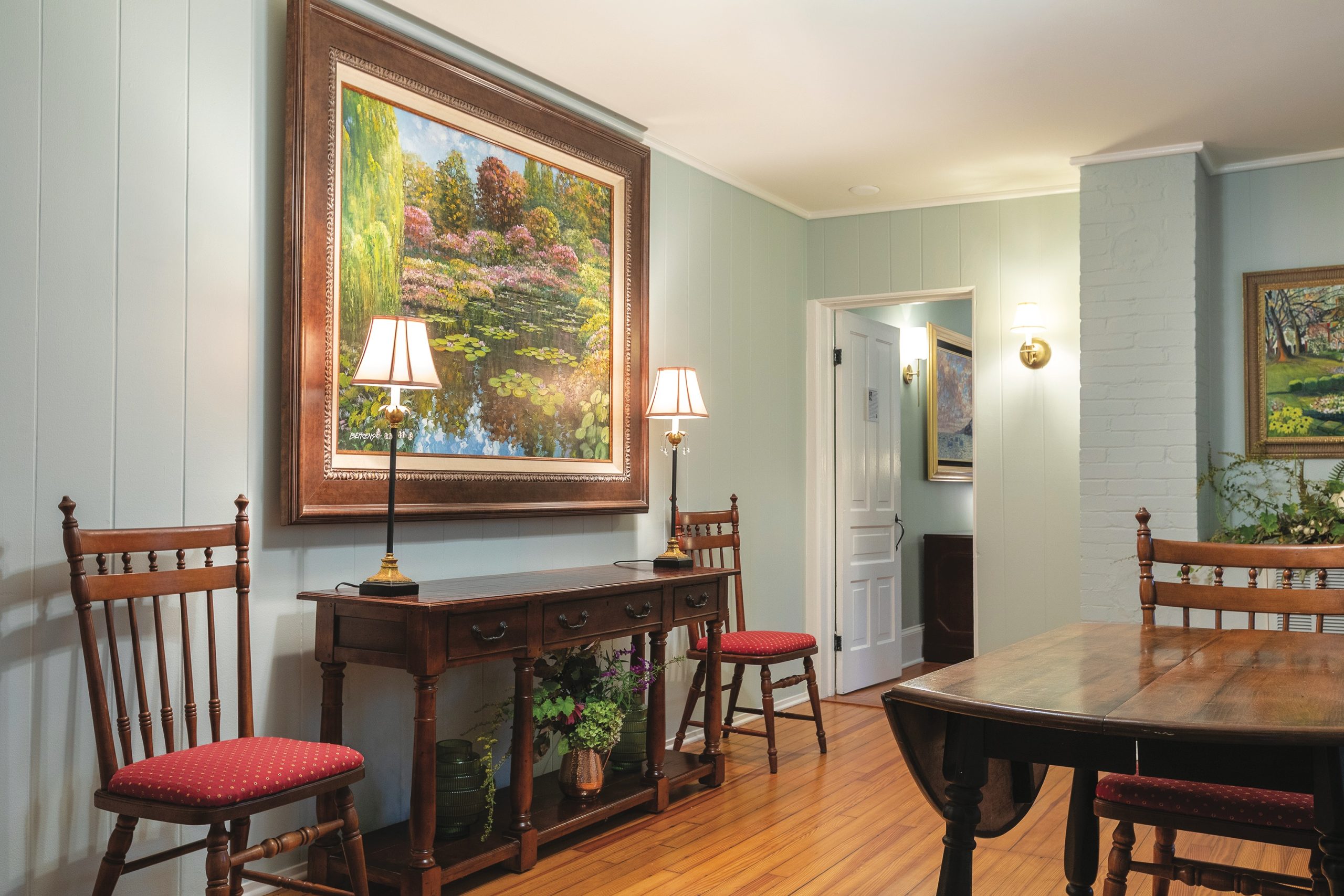
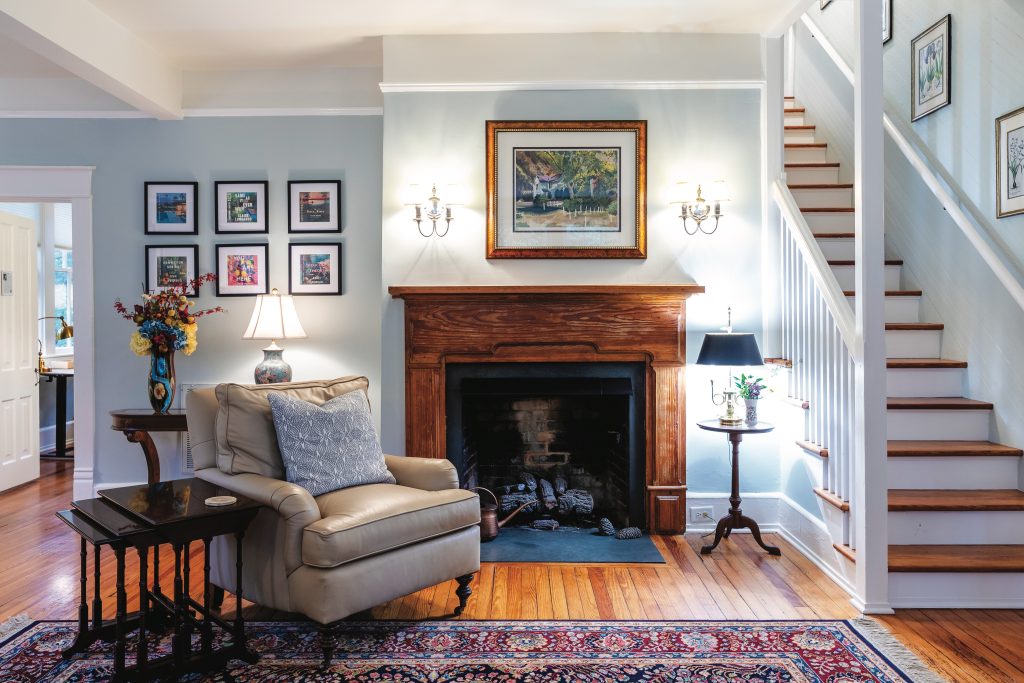
The ground floor now has three bedrooms, one accessibility-friendly, with a ramp at the front entrance. Adjustments were made without harming handsome woodwork, heavy paneled doors, moldings, baseboards, mantelpiece and native knotty pine floors that were newly refinished.
Each of the four bedrooms bears the name of a female N.C. Literary Hall of Fame author. A terrace and several porches invite socializing on cool evenings.
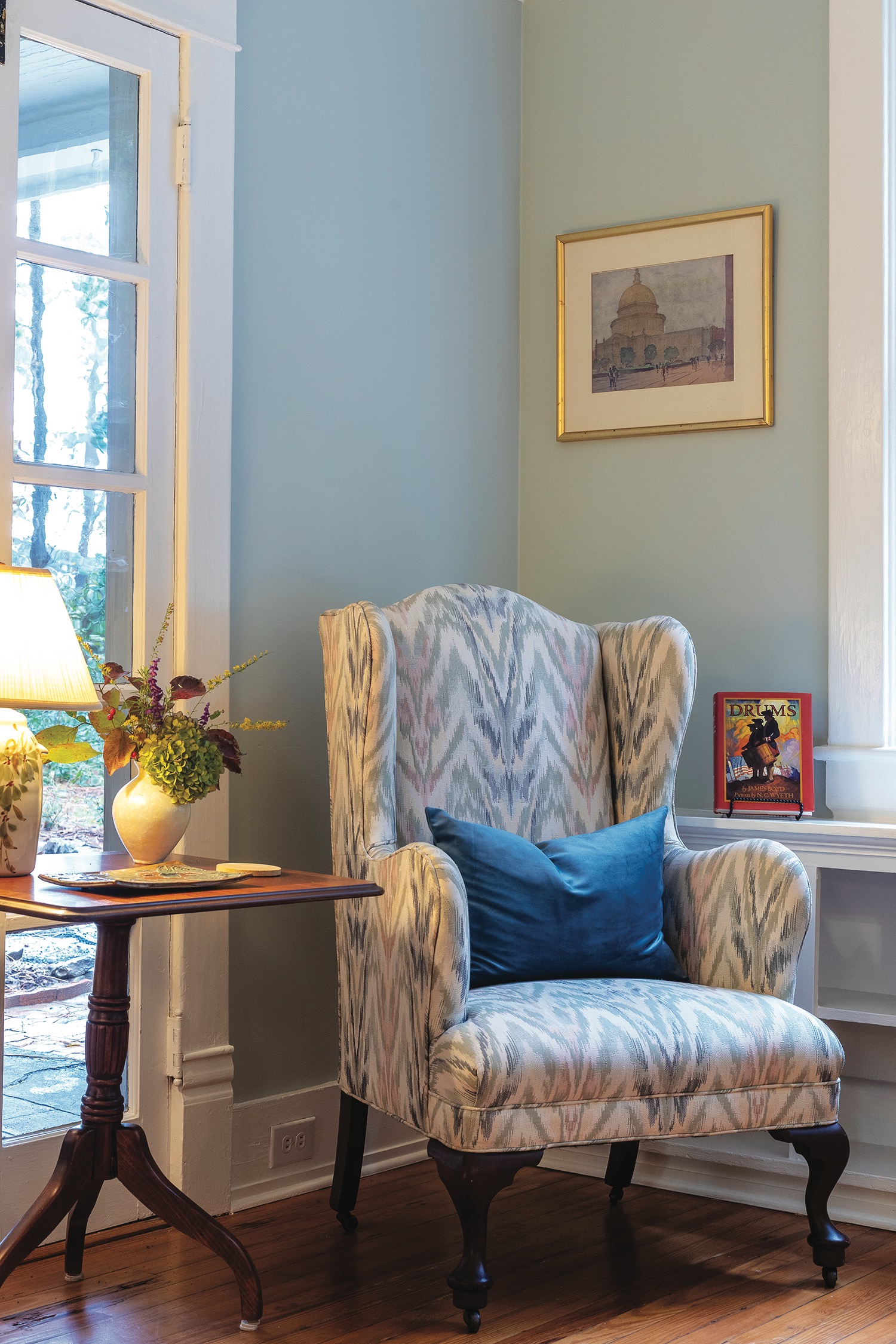
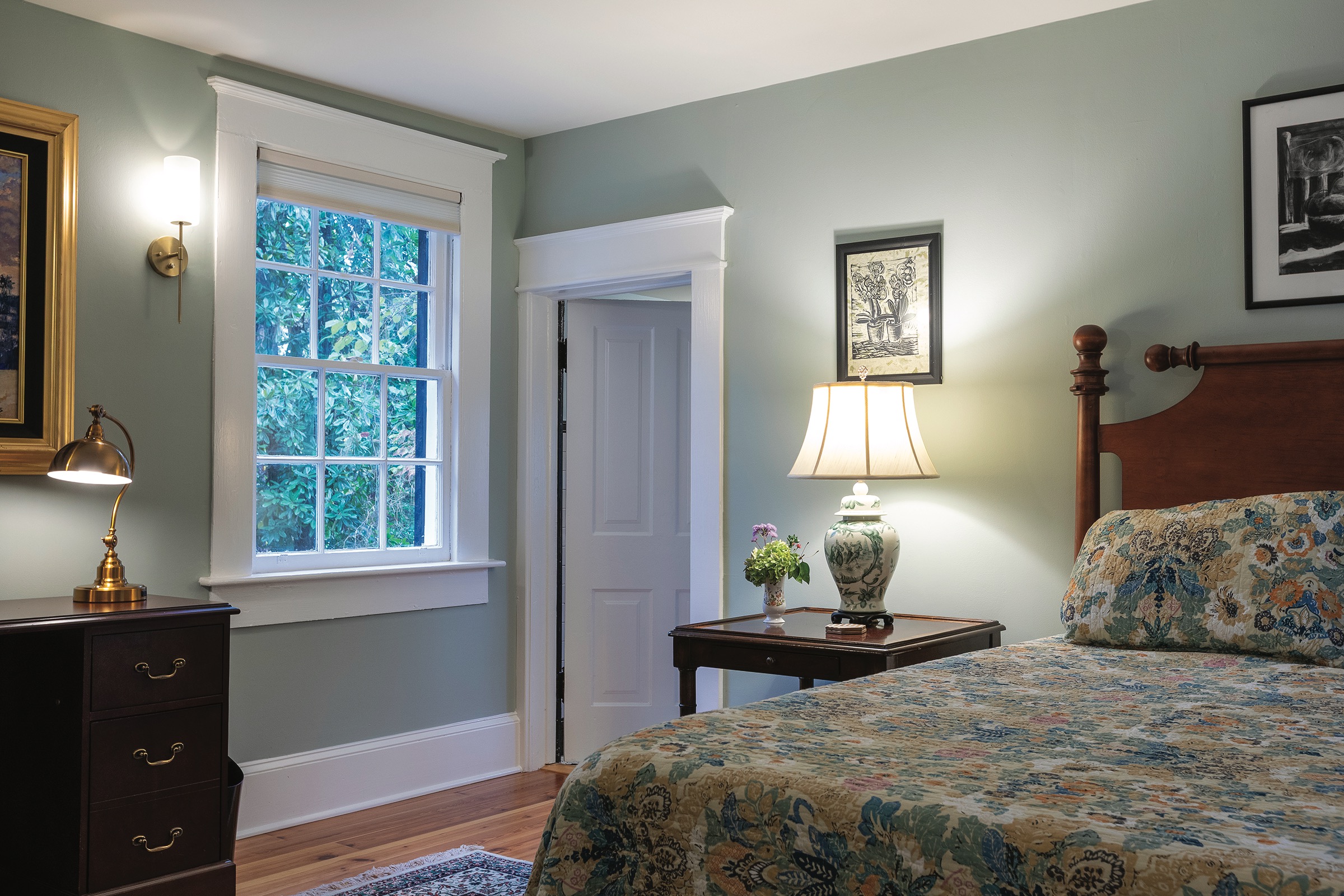
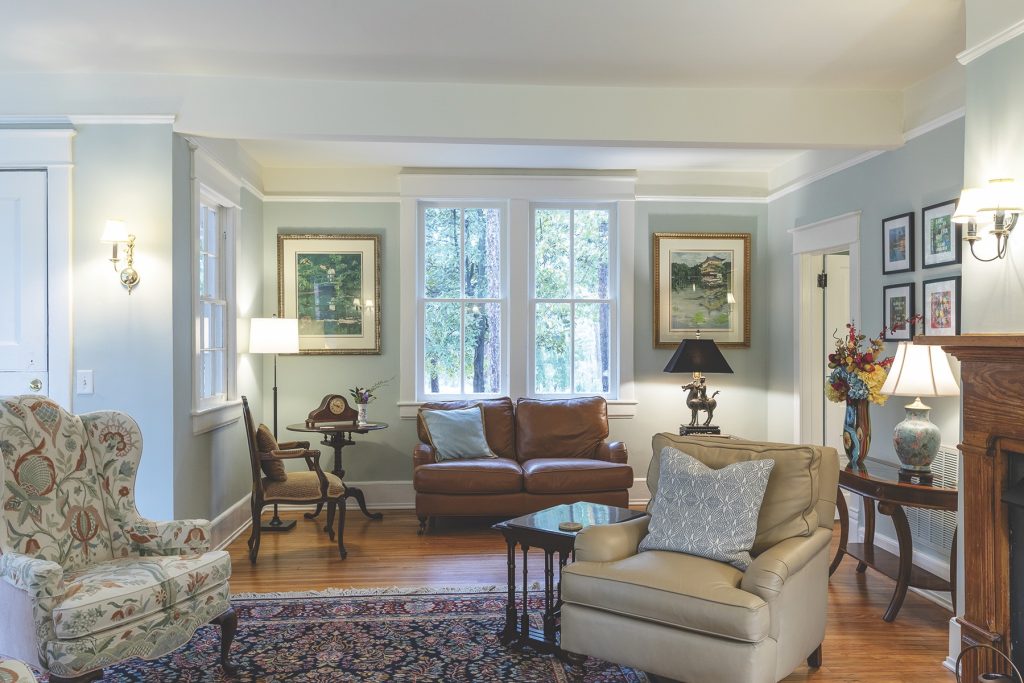
Except for the pale yellow kitchen, walls throughout share a soft, calming green. “I selected it to create a sense of serenity,” says Kathryn Talton, one of the muses responsible for planning the cottage renovation, along with Kirby, Katrina Denza, Pat Riviere-Seel and a committee of dedicated volunteers.
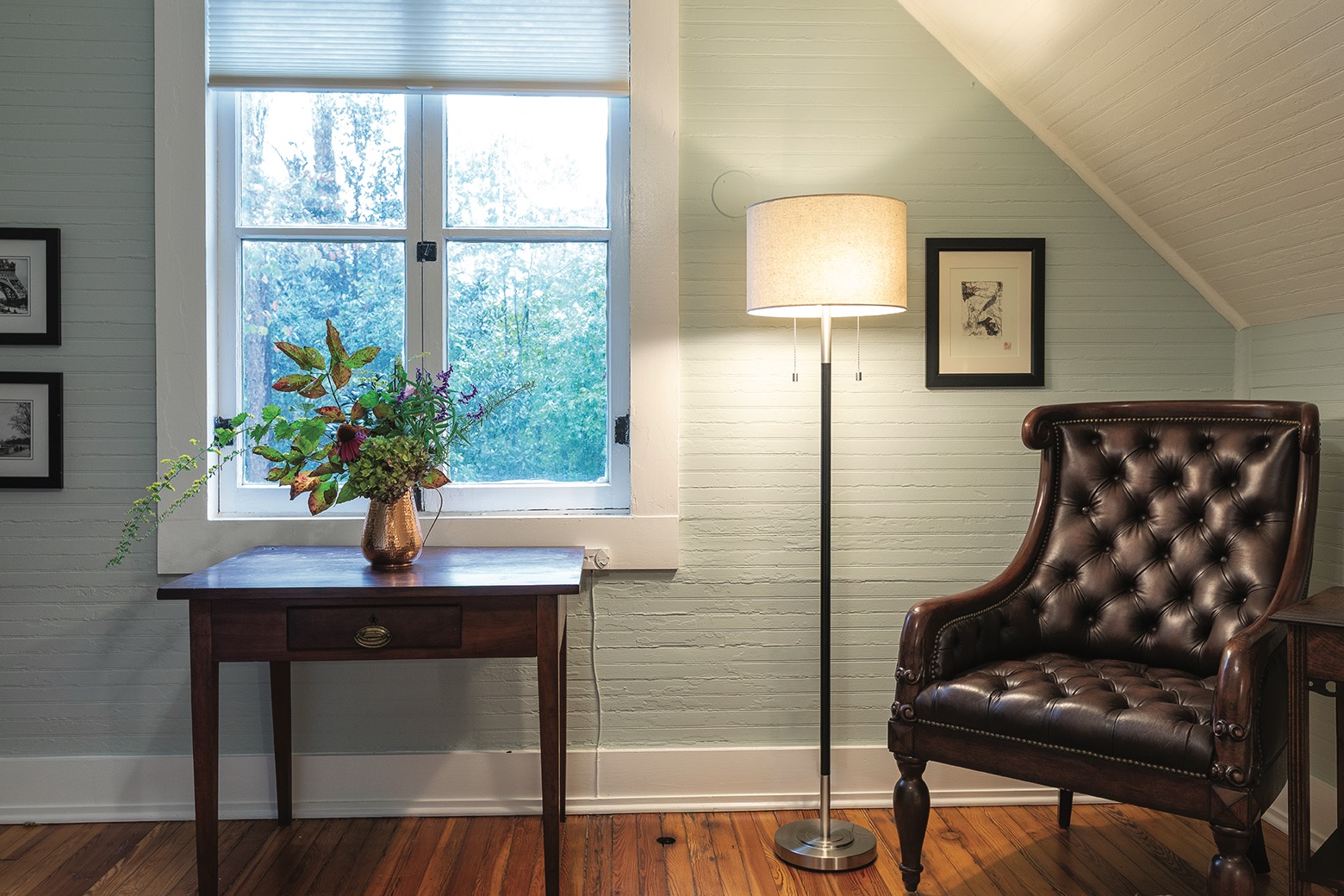
Furnishing the house was a challenge, even for a muse. Word got round and donations trickled in, some from the recent renovation of the Carolina hotel lobby do-over. Volunteers scavenged through used furniture outlets in search of hidden gems. Wing chairs were reupholstered. A butter-soft leather settee speaks to a quality lifestyle, as does an enormous sleigh bed and side table/nightstands, some dainty, one with a thick, dark marble top. Quilts are made from flat, small-print fabric, nothing puffy. Donated lamps cop the blue ribbon, especially a classic “trumpet” and a stocky part-porcelain Chinese specimen, one of several nods to Asian décor. The art is spectacular, from landscapes to prints and portraits. Writing niches, some looking out over treetops, have office-friendly tables to accommodate a laptop and source materials.
In Katharine Boyd’s time, kitchens leaned utilitarian. Here, the muses part ways, opting for black appliances (including a dishwasher and oversized fridge), a smooth-top electric stove and a pantry divided into four so each guest can stash his or her coffee and cereal. Pots, dishes, cutlery, of course, for DIY meals. Chatelaines of Katharine Lamont Boyd’s echelon didn’t use sporks and paper plates.
The word “cottage” underestimates this 2,000-plus-square-foot showplace, especially when it comes to its tall, multipaned windows in the sitting room, the shimmering sunlight revealing wavy original glass. No ghosts have as yet been spotted, but writers might watch for a slender lady with big round eyeglasses peering through the wavy panes watching over authors plying their craft.
“Sometimes you can feel Katharine’s presence here,” Riviere-Seel says. “She’s a good spirit.”