

Dear Manley (if I may),
I got your penitentiary address from Henry Dampier, a character of mine who also sells Bibles. He knows you and I assume you know him.
A few days ago, Henry told me about your recent criminal activities, including getting caught again — stealing boxes of Gideon Bibles and then razoring out the title page (referencing “Gideon”).
I’ve not read the story “Good Country People” in a good while but I remember being drawn to your cleverness in that story, and also, aspects of your appearance — especially your yellow socks rolled down “to your ankles” or something like that. Images get stuck in your head, you know? 
I am sending you this letter to let you know that you have been an inspiration to me in at least a couple of ways:
1. I sometimes go to bed at night happily anticipating the next morning’s completion of a scene I’m writing. On the second or third reading of “Good Country People,” when I was still a young writer, I came to realize that heaven for me would be the opportunity to write the last half or so of “Good Country People” — the part that would include your second visit to Hulga’s mother’s house. I realized that to know you were going back to visit again, and that I could write out what then happened, would be a kind of delightful heaven on earth for me. All this (including reading about your relationship to Hulga) fell onto me as I was learning to write fiction.
2. A couple of writers got in touch with me early in this century, saying they were hoping to publish a book-length tribute to Flannery O’Connor, written by different writers — would I contribute?
Of course.
I decided to contribute a short story that included my character, a Bible salesman who was not you (but who knew you). I also wanted to include a “misfit” in my story — one who knew Miss O’Connor’s famous character, The Misfit. I wondered if the writers hoping to publish the O’Connor tribute book would accept a story rather than an essay. I was afraid they’d say no, so I didn’t ask, I just wrote the story, and I liked it so much I eventually made it into a novel: The Bible Salesman. I never heard from the writer/editors again, but was very happy, of course, that they — and you — helped me write a novel.
Thank you for your inspirations and best of luck in your post-prison endeavours. I wish for you the very best in all things. I read that you recently said that you were “going straight” now.
Have you ever thought about entering politics?
Please write back.
Sincerely,
Dear Ned Merrill,
This is the last time I’ll write to you. All the other letters have been returned to me, the sole response stamped on the unopened envelope by some heartless machine: OCCUPANT UNKNOWN. MOVED. VACANT. NO FORWARDING ADDRESS. Why do I keep hoping that somehow you will have returned to the house in Bullet Park, and that you will get my letter (the 5th? 6th?) and write back with an upbeat apology, explaining where you’ve been and what happened to you? I wonder if you even know.
I’m a fan, Ned. Maybe not a fan of yours but a fan of your incredible plan — to swim that Sunday morning the eight miles from the Westerhazy’s pool to your own home, realizing you could make it almost the entire way pool to backyard pool. You were not a young man, either, when the idea came to you, and perhaps that’s why you did it: a younger man would not have felt the need to prove to himself (and to all the lesser mortals) that something so incidental could be done, and certainly not with the same heedless and drunken joie de vivre. Only a man who had nothing to lose would do it, precisely because (whether he knew it or not) he had lost everything already. The old man’s still got it I can hear you telling yourself, over and over again, in those pools before the rains came.
You remind me of my father. You were more his generation than mine. I think you would have liked him. So many of the poolside scenes you swim through remind me of those “midsummer Sundays” at our own home, the kind when everyone sits around saying, “I drank too much last night.” I didn’t drink — I was just a kid — but my parents did. This is after we moved from Homewood to Mountain Brook, when my father started making real money and we had the pool in our backyard; in Homewood, we just had grass.
Those were the Sunday mornings the Hurleys would come over. Jack and Mary. They brought the V8 juice and the celery; my parents supplied the vodka, Worcestershire sauce, and Tabasco. By the pool they would shine themselves up with Baby Oil and sip on their Bloody Marys well into the afternoon, as the Alabama sun beat down on them. The Wallaces and the Hurleys drank, laughed, smoked, swam, all at the same time, too, sometimes, ashtrays and glasses balanced on a long yellow float.
As it was with you (there’s a bar beside almost every pool you swim through on your journey home) those Sunday mornings were just as much about drinking as the party the night before may have been. Drinking was assumed. An expectation. No matter how many Sunday morning Bloody Marys they had though (and it was impossible to say how many, because they came to the poolside in a gigantic pitcher) they were never drunken, or even tipsy. They were relaxed. “This is so relaxing,” they said, eyes closed behind their porthole-sized sunglasses. And the sun baked them lobster red.
They all seemed so old to me then, years beyond counting. But no: in 1970 I was 11 and my father was a mere 40 years old. The hair on his arms was going gray though and he wasn’t in the best of shape. Still, he would race me in the pool and win going away. And, like you, Neddy, he had a “simple contempt” for people who did not hurl themselves into pools, and pull themselves out of them by the curb — no ladder for him. He still had it! At 40 he was at the top of his game. That’s what it looked like anyway.
I imagine you were about 40, too, when your story takes place, when you almost seem to figure out how lost you were, and how much you’d lost.
Which brings me to why I’ve been writing to you.
My father died in 1997. He was 67, same age as I am now. And I can’t ask him, obviously, so I’m writing you to ask: When you swam back home, through almost a dozen pools, having a drink at as many of them as you possibly could, and when you made it back home and found that everything you had taken for granted wasn’t there anymore, when you caught up with yourself and the reality of your world — what did you do next? I can ask you that, right? Just because one story ends doesn’t mean they all do. When you finally don’t have it anymore, what do you have? How long can you keep on swimming? That’s what I want to know. That’s what I need to know. Sooner the better too, because summer is almost over. That’s how it feels, anyway.
Thanks, and I hope all is well,

Dear Smith (Colin, if I may):
I recently reread Alan Sillitoe’s brilliant novella, The Loneliness of the Long Distance Runner, in which you, the inimitable first-person narrator, claim to have authored the tale. Thus, the novella becomes a pedigree of metafiction. Most interesting — and I wish I had Sillitoe to consult on the matter. Is it he who brings you to life? Or are you the agent of that feat? And please stop me, if this gets to sounding like some puffed-up, egghead scholarly treatise.
Your voice is unforgettable. I’ve always had a soft spot for the cheeky and you have a gift for smartassery that would have been cherished in the working-class Little Italy of Pittsburgh in which I grew up, where the art of biting off your nose to spite your face has been empirically perfected. Tough kids with El Dorado-sized, Marxist chips on their shoulders and a viral antipathy for authority to match yours — and not a scrap of remorse among them. In truth, Colin, you’re a revolutionary; the authorities like to keep your sort in stir. You scare the bloody hell out of them. You even allude to Hungary and what I presume is the Hungarian Revolution of 1956; and there’s also the mention of “a big boot . . . likely to smash any nice picnic [you] might . . . make for [yourself].” It seems you’ve studied your fellow Englishman, Orwell: “If you want a picture of the future, imagine a boot stamping on a human face — forever.” You are a prole, one of the fellaheen, among those the “whip-hand” aims to force to their knees.
But you can take a punch as well as deal one. You throw the big race — the Blue-Ribbon Prize Cup for Long Distance Cross Country Running — so coveted by the “governor,” the borstal warden, a “pot-bellied pop-eyed, bastard” as you dub him — even though you’re meters and meters ahead of your closest competitor and the finish line’s in sight. Like a convict, mere hours from parole, who jumps the fence. Rather than curry favor, you symbolically spit in the governor’s eye, which fetches you his outrage and a goodly dollop of additional hardship in borstal. More than anything, you exemplify so gloriously Albert Camus’ famous injunction from “The Myth of Sisyphus”: “There is no fate that can not be surmounted by scorn.” It’s the gesture, the gorgeous immemorable flourish, that seems precious, near sacramental, to you — that piss-on-everything mentality. It recalls Marlon Brando as he dies in Last Tango in Paris: removing the chewing gum from his mouth and fixing it to the underside of the balcony railing before collapsing. How I admire your flare for self-immolation — Bravo! — though I don’t possess your threshold nor stamina for Purgatory.
But, of course, there’s more to it than that. Isn’t there always? You hail from a withered home where the only things in abundance are neglect, ennui and not enough dollars — and let’s not even broach the subject of love, though it’s there, but in the guise of yearning and desperation; nor should we mention your philandering mam; and your dad, whom you find dead, “ . . . like a skinned rabbit . . . lino and carpet” soaked in his blood. A tram-load of dysfunction. Trauma. Post traumatic stress.
You’ve a heart, Colin Smith, and a capacious one, though you purposefully secrete it beneath the bilious Eiderdown of regret

and cynicism. After all, you’ve been — what we call here in North Carolina — state-raised, first in Remand Homes, now in borstal — one joint after another — plotting your next lame caper and committed to the life of a lammist. You’re only seventeen, already “institutionalized.” Your name, Colin, means “whelp” or “young hound.” There it is: the childhood state in which you’re forever immured. Of course, all that’s left to you is scorn. Blessed searing scorn.
I actually have run from the “coppers” a few times and have found myself, along with a gaggle of my mates, in the backseat of a police car — but, just to be clear, for the most innocuous empty-headed schoolboy pranks, and we were released with barked threats of juvie and the legendary rubber hose designed to put would-be juvenile delinquents on the straight. Nothing even close to robbing a bakery and stashing the lolly in a drainpipe where it flows from the spout in a downpour and damningly presents itself at the feet of the suspicious copper at your door. I’ve not the sand for a life of crime and I had the tireless love and guidance of hard-working parents. They dreamt a better life for me long before I figured out how to dream that dream myself — and I continually remind myself of the advice dispended to Nick Carraway from his father in the second sentence of The Great Gatsby: “Whenever you feel like criticizing anyone . . . just remember that all the people in this world haven’t had the advantages you’ve had.” Again, there it is. More to the point, I’ve never been incarcerated — Grace of God, and all that — though, over the years, I’ve spent considerable time in prisons as a writing teacher. I’ve also been a long-distance runner, though with nary a jot of your virtuoso clout.
Thus, I’ve now twigged you coming and going; and, make no mistake, I strangely love you and your ilk, taking my place in the cellblock, shackled to a prison cot. And I know enough to declare you a poet and contemplative. You offer not only a lyric tutorial on running — I’ve never read a more convincing account of the fabled “runner’s high” — but your metaphysical riff on being the first and last man on earth simultaneously, as you run the dawn “frozen fields,” is the stuff of magic, clearly rooted in holy writ.
So, my iconoclastic falling-down funny brother-comrade, I look forward to your next book, and I pray you’re on the free side of concertina when you pen it. Please: never stop running; that’s how I imagine you — and weeping, perhaps as Jesus wept at the death of Lazarus.
Fingers crossed this missive makes it to you. Penitentiary mail is notoriously unreliable, and I hope this passes the grubby-handed censors.
In peace and solidarity,

Dear Charlotte,
Salutations! I have loved and admired you for 60 years and never glimpse the shining threads of a web that I don’t think of you. For almost 75 years, you have taught children — young and old — about friendship and the seasons and cycle of life. You have shown us the best and the worst of humanity, from fat greedy rats to innocent humble souls like Wilbur, forever loyal in his love and devotion. Your voice is one of reality and acceptance of life’s journey — a wise observation of grief — and what an individual leaves behind for future generations.
Here in the state of North Carolina, there are 8.2 million of Wilbur’s kind, not counting the additional wild ones roaming and rooting. Imagine the many webs it would take to save them! And especially at a time when there is so much talk about bacon products — soda, toothpaste, lollipops and cologne! — to name a few. I suspect the desire some have for bacon is not unlike what you felt about the many flies you devoured. But still, it is always hard not to think of Wilbur when pork products are discussed. And he was Some Pig; he was Terrific, in fact! And what a lucky guy he was to have you and Fern and your many descendants in his life.
We could use your wisdom these days, Charlotte. You said: People are very gullible. They’ll believe anything they see in print. And oh, what an understatement that is. You would not even believe what people are believing! And it goes beyond print — made-up photos and videos, manufactured voices. There is a widespread struggle for truth. And there are those who make Templeton the fat rat look like Gandhi. Some even tried to use your name as code for a cruel, coldblooded operation designed to harm innocent people. You will be pleased to know that there was great public outrage over the use of your good name. After all, you taught the opposite. When Wilbur asked why you had been so kind to him, you said: By helping you, perhaps I was trying to lift up my life a trifle. Heaven knows anyone’s life can stand a little of that.
Are there enough webs? Enough words? I like to believe that wisdom such as yours will always be repeated and if said and seen enough, will continue to hatch and grow. Your words to Wilbur are always worth repeating and you, dear Charlotte, are my reason for allowing discrete cobwebs in corners and the eaves of the porch (thank you), and you remain a reminder to stop and admire the intricate and beautiful artwork of nature and declare it a miracle and rightly so.
Sometimes your voice comes to me in the cadence of an elementary school teacher’s voice, reminiscent of all those times after lunch we were told we could rest our heads on our desks and just close our eyes and listen while chapter by chapter, the teacher’s voice would lull us into your world and your final day with Wilbur: These autumn days will shorten and grow cold. . . . Winter will pass, the days will lengthen, the ice will melt in the pasture pond. The song sparrow will return and sing, the frogs will awake, the warm wind will blow again. All these sights and sounds and smells will be yours to enjoy, Wilbur — this lovely world, these precious days . . .
Your story left me crying and grieving too many times to count, Charlotte. I didn’t want Fern to grow up and choose time with a boy over time with Wilbur. And I didn’t want you to die. How could you die?! But then I learned something incredibly valuable. I could read your book all over again, and suddenly there you were — salutations! — and even knowing what was coming, I could once again get lost as I feared for Wilbur’s safety, marveled at your messages and hoped that Templeton — fat rat that he is — might have a change of heart. In addition to all else, you taught me the power of words on the page.
Thank you for all you have given to millions of readers (no exaggeration), and may your book always grace the shelves of schools and libraries as it finds its way into young hands and changes their lives in wonderful ways.
With sincere love and appreciation,

Dear Celie,
My mother taught me that the color purple was associated with royalty, luxury, power, spirituality, mystery and creativity, but your story taught me that purple was often a bruise, a dictionary version of a common contusion that happens when blood vessels under the skin break from an impact, leaking blood into the surrounding tissue. I became obsessed with the color purple in the 1970s and curated my second wedding in 1979 around shades of lavender, violet, grape, lilac, wisteria, magenta, fuchsia, mauve and plum . . . all juicy luxurious colors not knowing that within a year those lush sensual shades would be prickly stains on my broken heart.
When I met you in 1982 after my “royal purple marriage” withered away, your definition of purple seemed to make so much more sense to me. Thank you for daring me to turn all the wounded flower petals upside down and crawl inside them to explore the other side of breaking skin and ruptured voice.
Thank you for your lessons about reclamation, fulfillment and independence. In the 1980s your presence in the world became a map for many women who were struggling with granting themselves the urgent and necessary permissions they needed in order to begin unraveling the expectations enforced and placed upon us by society, whether it originates from our gender or race.
Our Southern lives are not too far apart. We both grew up in a time period with gender inequality and racial division. We both grappled with expectations placed upon us by male authority figures in our lives, taking on the responsibilities which come with expectations, while our own dreams and desires are muted, invisible, and erased.
Like you, Celie, I broke the bonds of betrayal, emotional impoverishment, self-hate, and began carving a pathway for the self that remembered to remember who she is and who she truly belongs to while re-embracing the color purple inside my gardens. Tiny purple blooms run rampant as groundcover almost choking out the other plants and my thoughts return to your words, “I don’t know how to fight. All I know how to do is stay alive.” So I allow them to make their own choices about survival and the other plants manage to keep on living.
And like the purple groundcover, you reminded us that we were never the bruises or the myths that someone tried to convince us that we were. Thank you, Celie, for demonstrating how you transformed from a silenced, abused victim to an independent, self-actualized woman. Thank you for demonstrating that female solidarity and “womanist” love are essential for overcoming both racial and patriarchal oppression.
Dearest Celie, you taught so many of us to sing out loud in fields of lavender declaring that we are a full embodiment of spiritual wholeness . . . celebrating how our relationships with other women can heal us and help us embrace the power to reject male supremacy, find our voices, reclaim our bodies, sexuality and cultural identity.
Celie, you may not remember, but my mother and my teenage daughter met you at the same time I met you. One paperback copy of Alice Walker’s The Color Purple was passed back and forth between the three of us. We were three generations in a matriarchal household daily discussing your identity search, racism, sexism and sensitive, often contrasting, generational perceptions about self-worth and double consciousness.
Thank you for being the character that my mother cheered on knowing you would not perish. Thank you for all the questions your character served nightly at our dinner table.
Thank you, Celie, for the uplifting lessons that my daughter and I taught each other about the power of intuitiveness, the power of utterance, the power of silence and witness, and all the grace that we granted each other in order to agree to disagree about your journey to liberation.
I am truly grateful for you allowing the ink’s breath to dream you awake.
With deep respect and admiration,

Darl Bundren
Mississippi State Asylum
Jackson, Mississippi
Alright now, Darl,
I thought of you the other day. I went for a long drive, trying to find some open country. I had to pass by all sorts of places you never, thank God, got to see: storage units, used car dealers, Korean barbecue, nails, nails, nails. I was in search of a landscape you would have encountered on the way to Jefferson with your family. On a backroad that dipped through a stand of pine down to a sudsy river I pulled over and felt, suddenly, your presence. I remembered how, when I first met you many years ago, in college, I didn’t understand you because the professor said I had to. He wanted me to understand his version of you. He wrote on the board some of the things you said: “The hallway looks like a searchlight turned into rain.” He said what the hallway represented and the searchlight and the rain. All of a sudden it was Psych 101.
He barely mentioned the passage that spoke to me the most, the one that, if I had to sum you up (and why should I, how could I, though that’s the sort of thing we did in classes back then, pick a line and slim you down to fit it): “In a strange room you must empty yourself for sleep. And before you are emptied for sleep, what are you. And when you are emptied for sleep, you are not. And when you are filled with sleep, you never were. I don’t know what I am. I don’t know if I am or not.”
It wasn’t just because I had a hard time sleeping, then and now, or because, around the time when everyone else’s mind shuts down, mine ramps up. The way that second sentence ended in a period instead of a question mark opened something up for me: how a little squiggle of punctuation makes a question more desperate than the way you wrote it, which is just as much statement. But not. That’s what I liked. It is, but not. I didn’t know what I was, I didn’t even know if I was or not. Most days that is still the half-statement, half-question, Darl. See, you stuck with me, even though it’s been forty years now.
This kid who sat beside me in class said, “This mess is harder to understand than calculus if you ask me.” I had not asked him and had no idea how to even spell calculus, but I wanted to say, it’s not that bad if you listen hard and also maybe it’s just hard in a different way.
I do get that some of the things you said took a while to hear, though. You said you heard teeth in your brother Jewel’s breath. And, “In sunset we fall into furious attitudes, dead gesture of dolls.” That one went right over my head. But in that same chapter you said, “If we could just ravel out into time. That would be nice. It would be nice if you could just ravel out in time.” I never heard anyone say “ravel,” always “unravel,” and I too wanted to untwist into time. If I could just. Instead, I got more twisted up. I never forgot to wonder how nice it would be to ravel out. You taught me that also, Darl.
I wrote a term paper on you. I compared you to Hamlet, because, see, I don’t think you were as crazy as everyone claimed. I believe you were faking it sometimes, because faking crazy is a way out of just going along. You never did just go along. The people in Jefferson called you “queer.” They meant odd. I read up on you recently and found a few professors saying you liked men. They said you were queer, as in “a queer,” like people used to say back in high school. Queer was a slur, but over time it has become an umbrella term classifying all kinds of sexual configurations. I like how that word has changed meaning, how it went from the worst thing you might get called in high school to a word people nowadays use with pride. I get a kick out of the professors who don’t understand the original meaning of the word. He’s a queer one, I heard people say about some fellow when I was growing up, but the next time they would say he was peculiar. The professors seemed to believe you were confused about everything; therefore, you must be confused about what you like and who you like to do it with. “I don’t know if I am or not” does not mean you are confused. It means you know way more than the rest of us and are too smart to claim that such things can be figured out one way or another.
A hillbilly Hamlet! Wrote the professor at the end of my term paper. He gave me a B minus. To get an A on any term paper about you (as if our connection had any kind of term limit; as if I didn’t believe you when you said, “it is as though time, running straight before us in a diminutive line, now runs parallel between us like a looping string, the distance being the doubling accretion of the thread and not the interval between”) would have bummed me out big time. I’d as soon my GPA suffer than agree with the professor and confine you to what struck me as another life sentence in the state asylum up in Jackson, where they shamefully sent you.
I ran into the kid who said he preferred calculus on the quad one day. Fuck a bunch of Faulkner, he said. I’m going to see if I can’t take that class pass/fail. I was reminded of what you said about your brother: “Jewel knows who he is because he does not know that he does not know whether he is or not.” Though I liked that kid. I like people like him, for they make me question how they know what I don’t know and whether I even know it.
You don’t have to write back. I like writing to you, Darl. I feel myself raveling right out.
Signed,


 Clyde Edgerton was inducted into the North Carolina Literary Hall of Fame in 2016. He is the author of 10 novels, a book of advice, a memoir, short stories and essays. He has received a Guggenheim Fellowship and, most recently, a 2025 O. Henry short story award. He lives in Wilmington, N.C.
 Jill McCorkle was inducted into the North Carolina Literary Hall of Fame in 2018. Her first two novels were published simultaneously in 1984 by the newly launched Algonquin Books of Chapel Hill. The author of seven novels and five short-story collections, her many accolades include the John Dos Passos Prize for Excellence in Literature and the North Carolina Award for Literature.
 Daniel Wallace will be inducted into the North Carolina Literary Hall of Fame in 2026. He is the author of six novels, a memoir, a short story collection and a children’s book. Wallace is the J. Ross MacDonald Distinguished Professor of English at the University of North Carolina at Chapel Hill, his alma mater.
 Michael Parker will be inducted into the North Carolina Literary Hall of Fame in 2026. He is the author of eight novels and three collections of short stories. He has received fellowships in fiction from the North Carolina Arts Council and the National Endowment for the Arts, as well as the Hobson Award for Arts and Letters, the North Carolina Award for Literature, and the 2020 Thomas Wolfe Prize.
 Joseph Bathanti was inducted into the North Carolina Literary Hall of Fame in 2024. Among his many awards are the Sam Ragan Fine Arts Award, the Sherwood Anderson Award and the North Carolina Award for Literature. He is the author of over 20 books, including poetry, novels, short stories and nonfiction. He was North Carolina’s poet laureate from 2012-14 and joined the faculty of Appalachian State University in 2001.

Jaki Shelton Green was inducted into the North Carolina Literary Hall of Fame in 2014 and is the ninth and current poet laureate of North Carolina. Her honors include receiving the North Carolina Award for Literature in 2003 and the North Carolina State University 2026 Honorary Doctorate of Humane Letters. Author of 10 books of poetry, an LP and two audio collections, she serves as poetry editor for Walter magazine and is a professor of Documentary Poetry at Duke University.
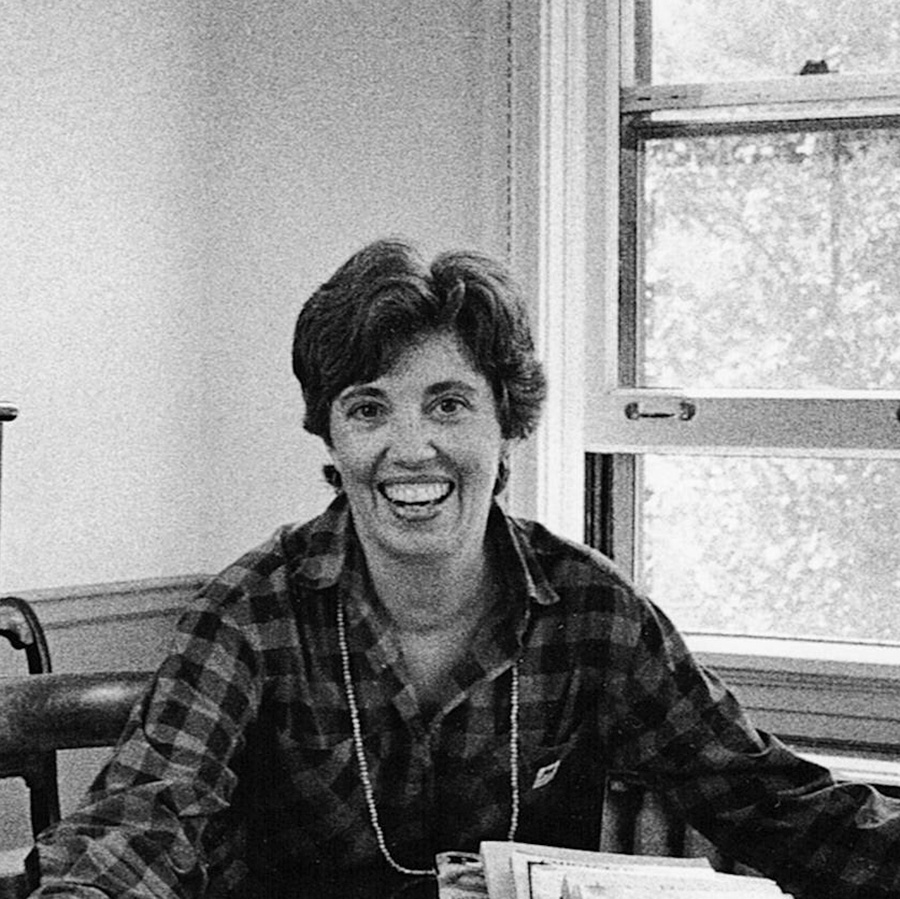 Shannon Ravenel will be inducted into the North Carolina Literary Hall of Fame in 2026. Born and raised in Charleston, South Carolina, she was editor of the Best American Short Stories series for 13 years and one of the founders of Algonquin Books of Chapel Hill. In 1986 she introduced the annual anthology New Stories from the South. During her time at Algonquin, Ravenel nurtured and advanced the work of numerous writers from the American South, including Clyde Edgerton and Jill McCorkle. PS