
THE NATURALIST
The Butterfly of Death
Encountering the black witch moth
Story and Photographs by Todd Pusser
“Todd, you’re going to want to see this!” shouts Maurice Cullen from his backyard. “And bring your camera!”
I can tell by the urgency in his voice that Maurice has found something pretty cool. For the past hour, beneath the light of an August moon, I have been standing in his neighbor’s yard trying to photograph sphinx moths nectaring on flowers, and I already have my camera in hand. I race over to his backyard gate, open it, circle the swimming pool and approach Maurice, who is standing in the far corner of the yard, next to a wooden fence.
“Check this out,” he says pointing the narrow beam of a flashlight up into a Chinese privet tree. There, in the center of a large branch overhanging the fence, is an immense brown-colored moth, with sharply pointed wings.
“It’s a black witch,” says Maurice excitedly. “Take some pics before it flies away!”
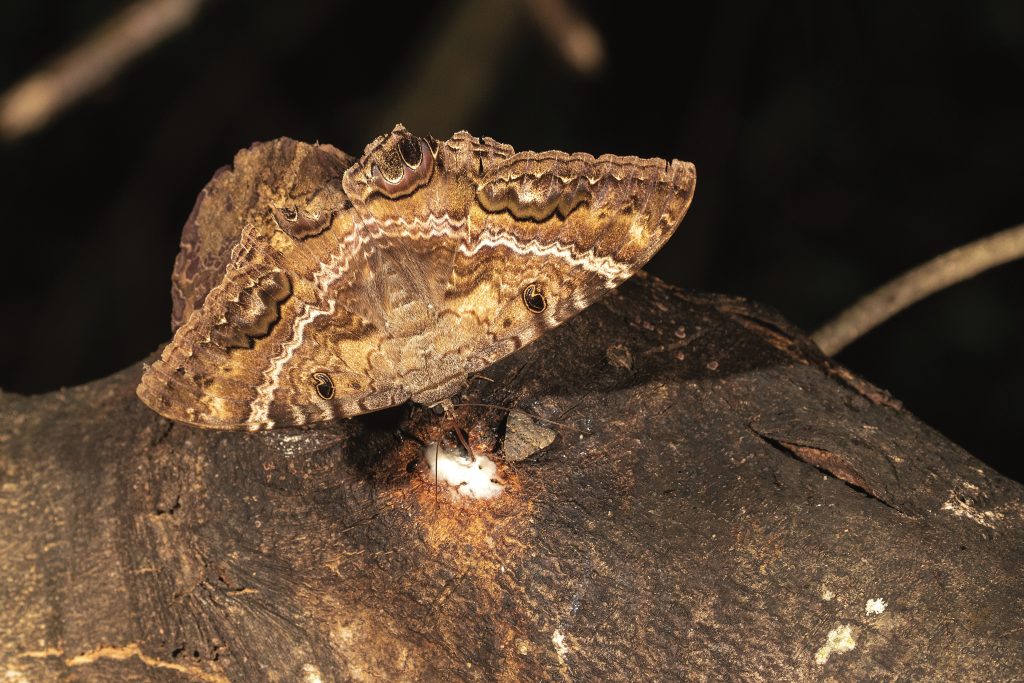
Fumbling with the controls of my camera and adjusting my flash power, I frame the moth in my viewfinder. Its long proboscis is buried deep within a steady stream of sap leaking from a small crack in the tree’s bark. The sap, a natural sugary concoction that entices all manner of insects the same way blood in ocean water attracts sharks, has been leaking from various cracks along the tree’s trunk and limbs all summer, drawing in such winged wonders as red-spotted purple butterflies and giant cicada killer wasps.
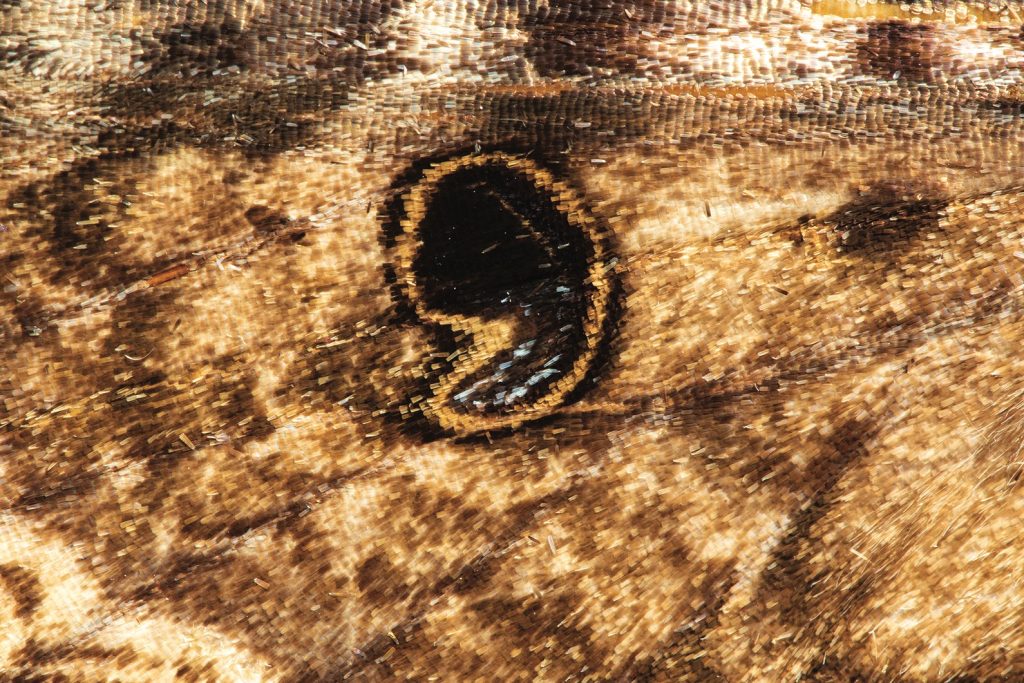
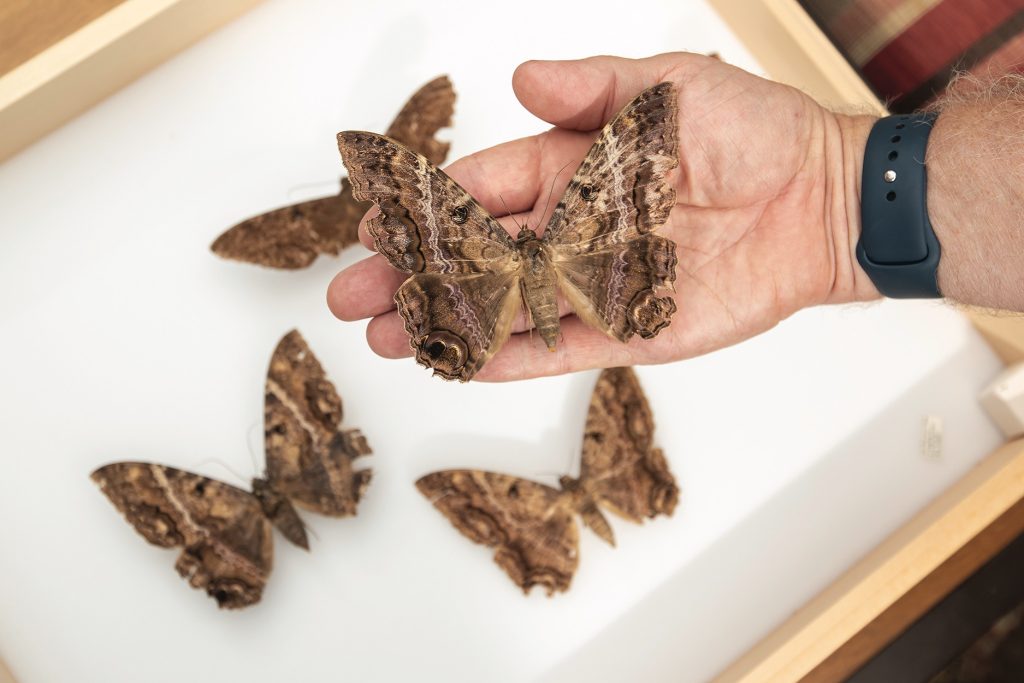
Snapping off a few frames of the witch, I note the distinctive comma-shaped marks on its forewings and a prominent white line running across its hindwings, a telltale field mark identifying this particular moth as a female. Measured from wingtip to wingtip, black witch moths are the largest insects in North America, with some having wing spans that surpass 7 inches. The one that Maurice and I are staring at is somewhat smaller, with a wingspan of “only” 6 inches or so. With such large wings, the moth resembles a bat in flight.
An hour earlier, I had seen a large moth streak across the neighbor’s yard in the fading twilight and had brushed it off as a more common silkmoth, possibly a Polyphemus moth. It was likely the black witch making a beeline for the sap well on the privet tree.
Black witch moths are found throughout the Neotropics, from the Caribbean down to Brazil. The moths are powerful migrators and frequently reach the southern United States and points farther north. Historically, they were rarely observed as far north as Virginia, where we are currently standing. Now that most people have powerful cameras buried within their phones and loaded with a plethora of citizen-science apps, like Inaturalist, black witch moths are being reported more frequently throughout the continental United States. Still, Maurice, at 66 years of age and a lifelong butterfly and moth watcher, has never seen one alive in the state. It’s a cause for celebration, albeit a cautious celebration, as few animals harbor as many myths and superstitions as the black witch moth.
In Colombia, legend states that sorceresses who have died and failed to enter the gates of heaven have been cast back to Earth in the form of black witch moths. In Mexico, the black witch moth is known as the Mariposa de la Muerte, the butterfly of death. It is believed that if one flies into someone’s home, that person will soon perish. In other parts of Mexico, people say that if a black witch moth flies over your head, you will soon lose your hair — a fate some view as worse than death. In Jamaica, the black witch moth is called a Duppy Bat, and is believed to be a lost soul. In other parts of the Caribbean, the moth is thought to be an actual witch in disguise, and to see one means someone has cast an evil spell on you.
Continuing to take photos, I stop briefly to review the images on my camera’s LCD. Glancing back up to the tree limb, the black witch moth is no longer there, having disappeared into the inky black sky like some ghostly apparition. “Ahhh, man, that’s disappointing,” sighs Maurice, who wanted more time to ogle the winged marvel. I laugh nervously, hoping that the moth has not exited the yard by flying over my head.
Lorem ipsum dolor sit amet, consectetur adipiscing elit. Ut elit tellus, luctus nec ullamco
Instead, I choose to think about the more cheerful legends surrounding the black witch moth. One in particular stands out above all others. In the Bahamas, folklore calls black witch moths Money Bats. Locals believe that if you are fortunate enough to see one, prosperity will soon follow.
Perhaps tonight on the way home from Maurice’s, I’ll stop at the local gas station and buy a Powerball ticket.
rper mattis, pulvinar dapibus leo.