THE INN PLACE

The Inn Place
Return of the Magnolia
By Deborah Salomon • Photographs by John Gessner
In a mere 130 years the Magnolia Inn has gone from overflow to intimate, a destination within a destination. Completed in 1896, just one year after the Holly Inn, the Magnolia began as a boarding house — its rooms referred to as chambers — needed to comfortably house the servants, doctors, even some family members of people attracted to James Walker Tufts’ new health resort for consumptives built on 6,000 acres in the Sandhills of North Carolina.
Closer than Florida and located on a north/south rail line, with an adorable village layout designed by the firm of Olmsted, Olmsted & Eliot — fresh from the completion of its work at Biltmore House in 1895 — and implemented by his right-hand man, Warren Manning, Pinehurst was positioned to attract those in need of a little R&R in the pine-scented outdoors. There was just one problem: The disease, as it turned out, was communicable. Hanging around in groups was contraindicated. Just two years after its founding, the resort’s raison d’etre had been undermined. Pinehurst needed to find another path.
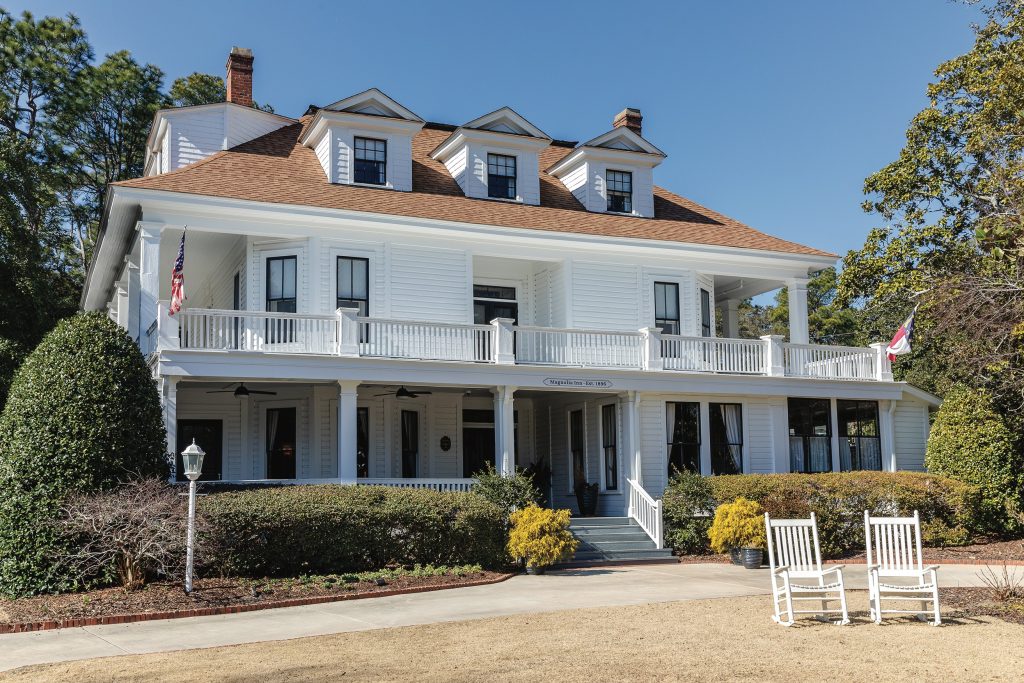
As luck would have it, the timing more or less coincided with the arrival in 1901 (the year the Carolina Hotel, the “Queen of the South,” opened) of a Scottish golf professional named Donald Ross. There were already 18 holes to be tended, built by Dr. Leroy Culver and John Dunn Tucker, Pinehurst’s first golf pro. The game, growing exponentially in the United States at the dawn of the 20th century, would become the backbone of Tufts’ resort. The Magnolia, designed by architect Lyman Sise (the brother of Gertrude Sise Tufts and the man who also designed the Holly Inn), morphed into an annex, handling the overflow from the Harvard, Berkshire and Holly inns, ultimately adding the Carolina to the mix.
With deep Boston roots, Tufts knew how to attract talent from New England. He snared J.L. Pottle from the Highland House in Jefferson, New Hampshire, to be the first manager of Magnolia Inn. Pottle arrived with a complete staff of maids, janitors, cooks, handymen and other staff. An 1898 advertisement for the Magnolia in the Pinehurst Outlook touted “the finest Northern cooks.” Another boasted of amenities like steam heat, electric lights, bathrooms with hot water and “perfect sanitary arrangements’’ all for $8 to $12 per week.
In the 1920s the Magnolia was sold to Mr. E.J. Fitzgerald, manager at the Carolina, who used it as an annex to the main hotel. Fitzgerald’s wife continued to run the Magnolia after his death. Pottle’s son also remained in the area. During that period Dr. Francis Owens, who would become one of the founders of Moore Memorial Hospital, maintained his office in the Magnolia, even performing some minor surgeries and child deliveries on the premises.
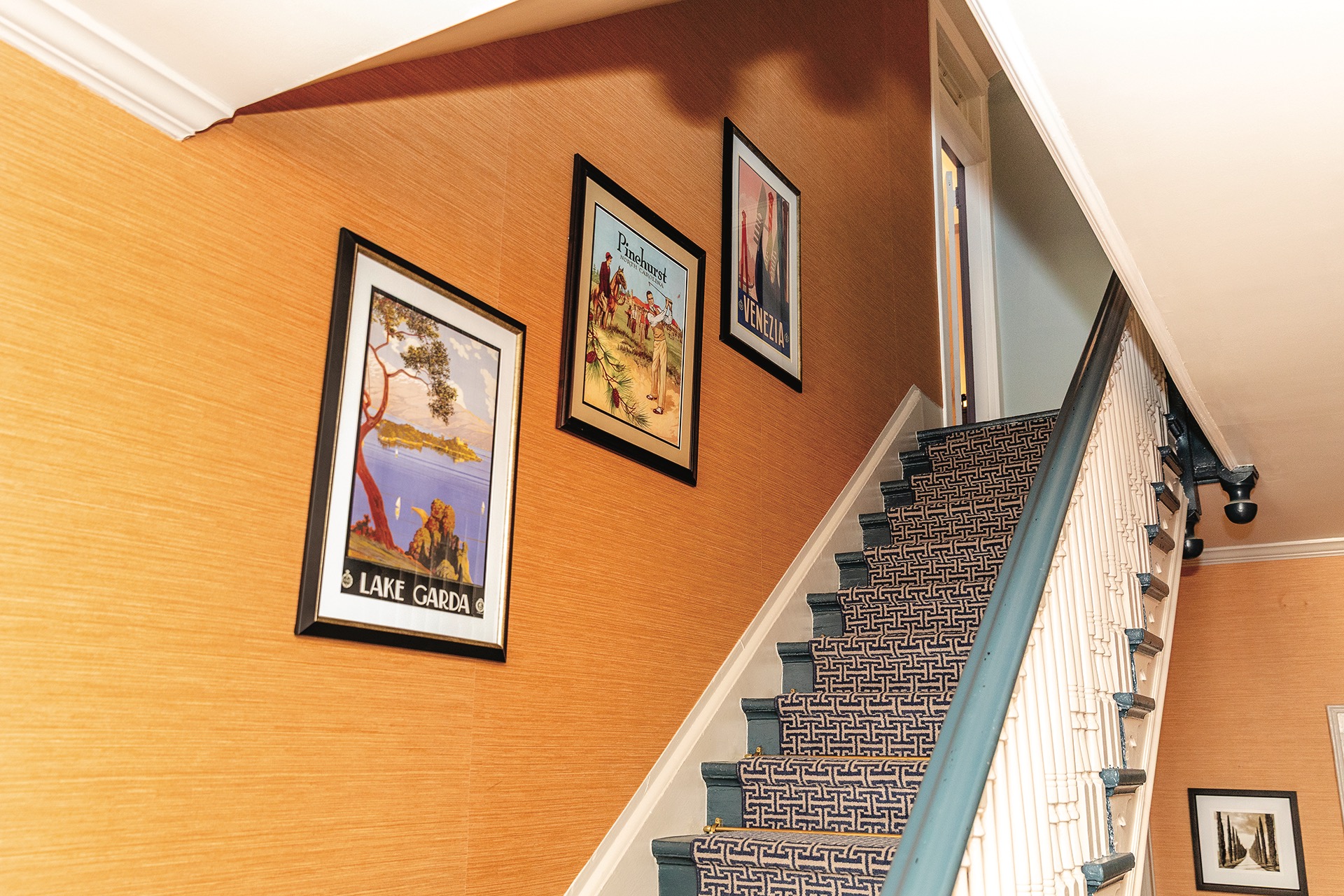
If its occupants changed over time, so did its footprint. The lovely Queen Anne-style building with 14 bedrooms was originally five stories rising between the village and the Carolina. Porches, verandas and rocking chairs hugged the structure. Not long after the completion of the Carolina, the Magnolia underwent its most drastic alteration. The building was making it difficult to see the village from the grand, new Carolina — and vice versa — so the top two floors were lopped off. The Magnolia still contains an interior stairway that now leads, well, absolutely nowhere.
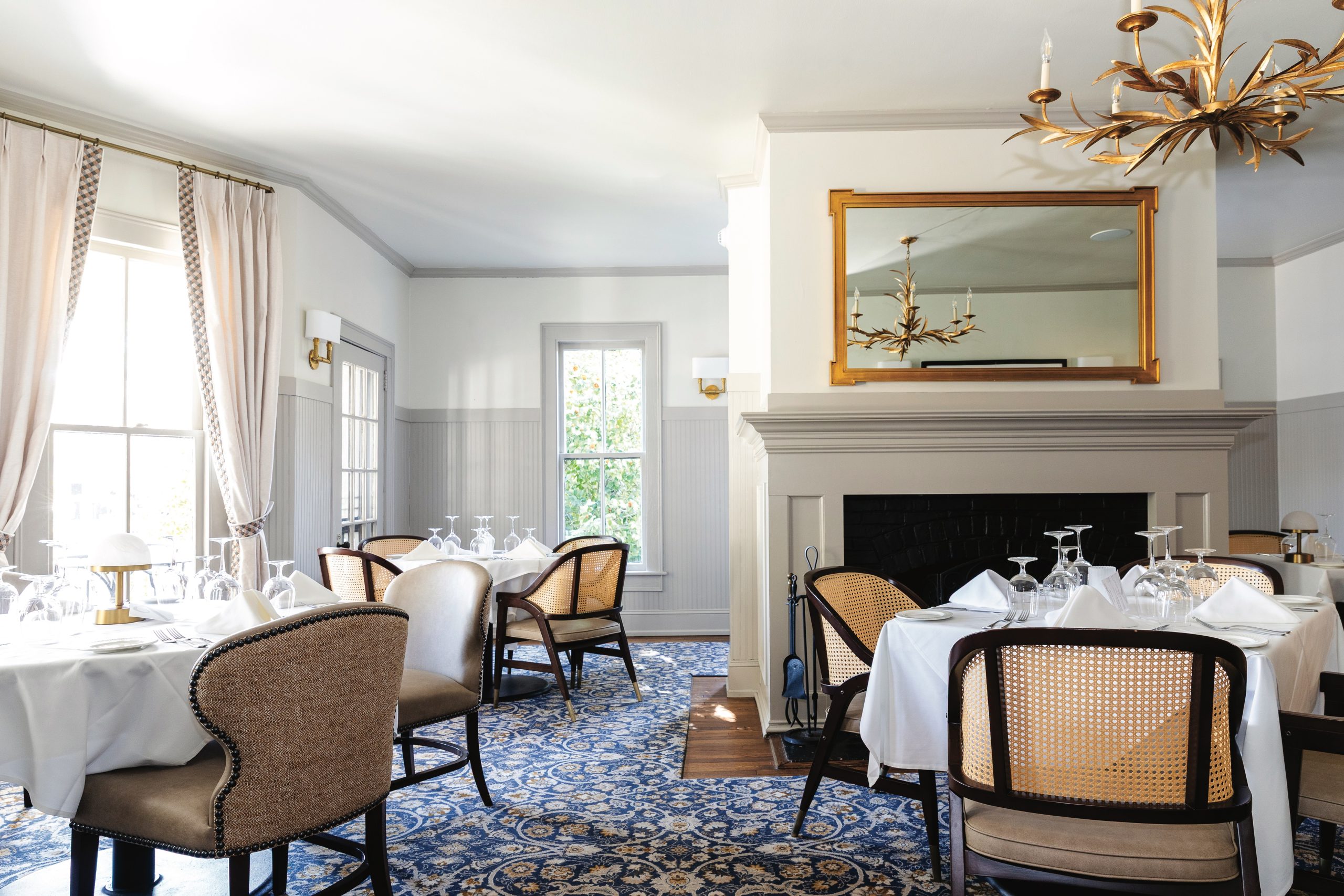
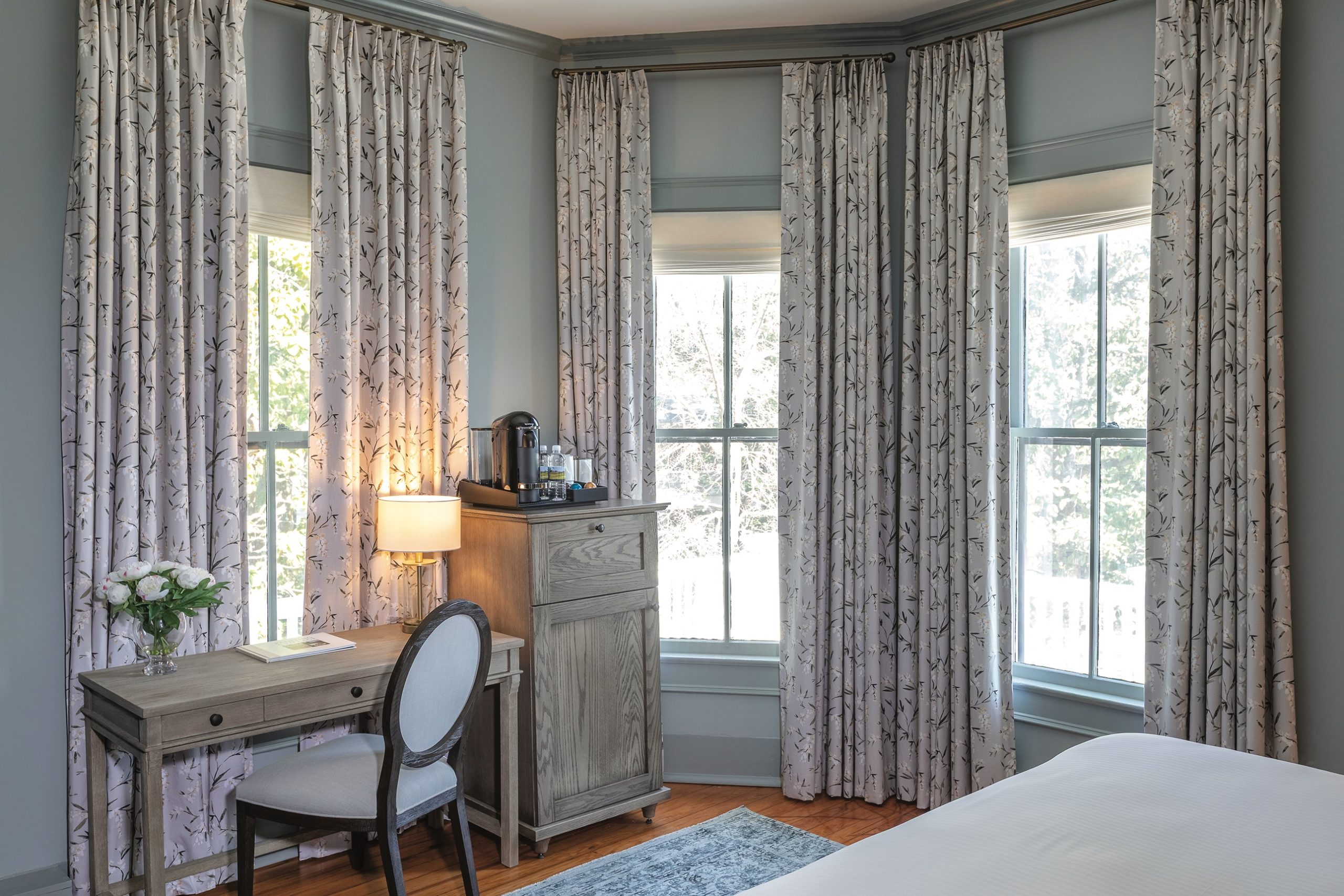
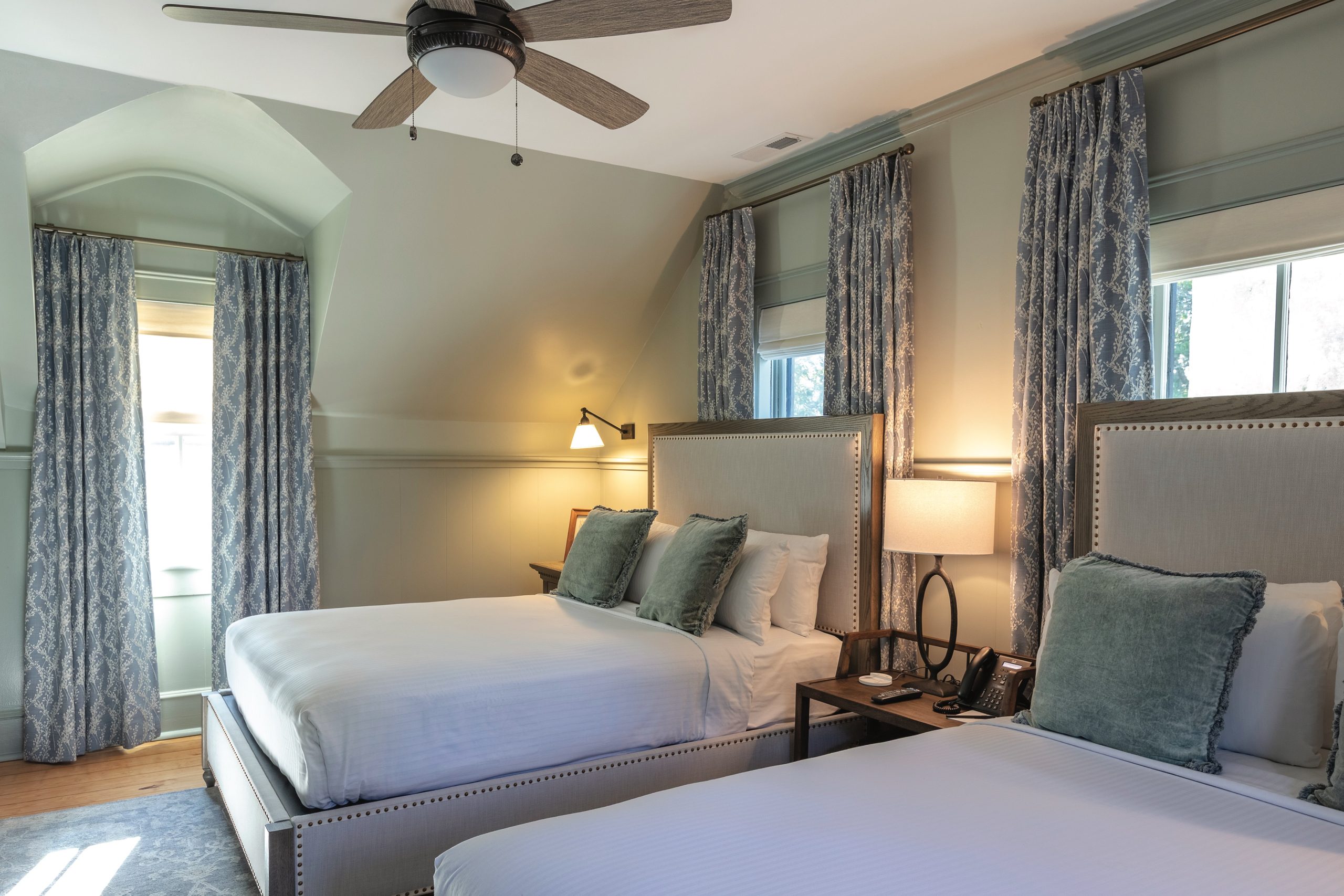
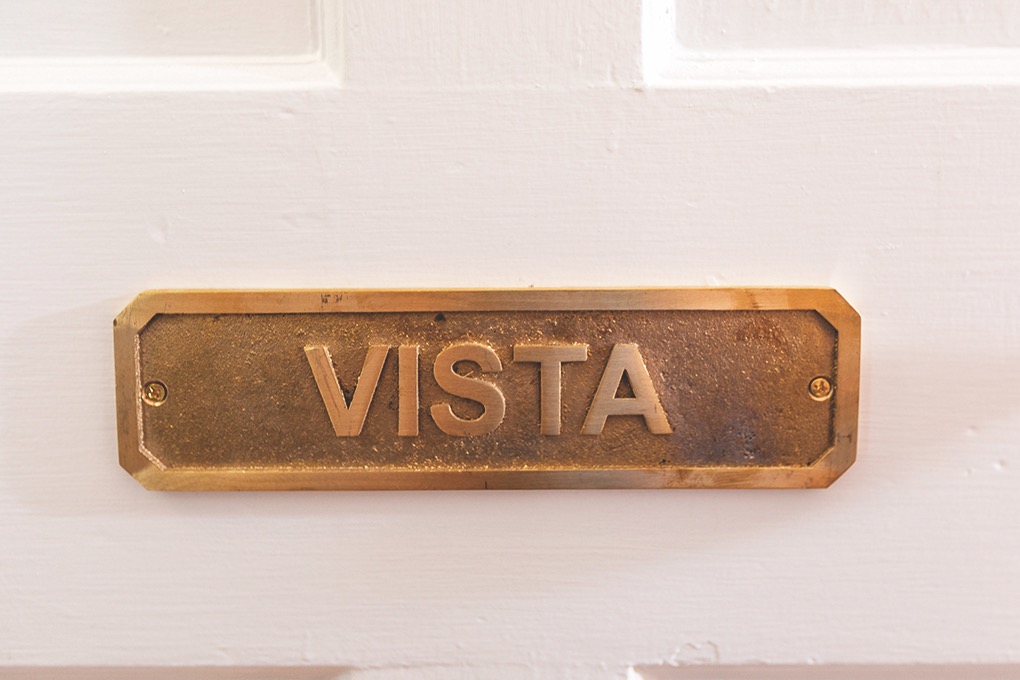
After a half dozen or so changes of ownership through the latter half of the 20th century and the beginning of the 21st, the Magnolia was reacquired by the resort in 2023. It no longer answers to the name boarding house and instead is a stately presence overlooking village streets where well-dressed vacationers browse the shops and relax from days on the golf course. Inside, eight posh bed/sitting rooms, called spaces, each identified with a brass plate bearing the name of a village street, showcase period and early-modern furnishings. Colors are soft grays and pastels. Padded headboards, pull-across drapes, bay windows and angular upholstered chairs suggest the ’50s.
The enticing aroma comes from fine Italian dining at the in-house Villagio Ristorante & Bar, and the only surgery performed in the Magnolia Inn these days is stress removal.