
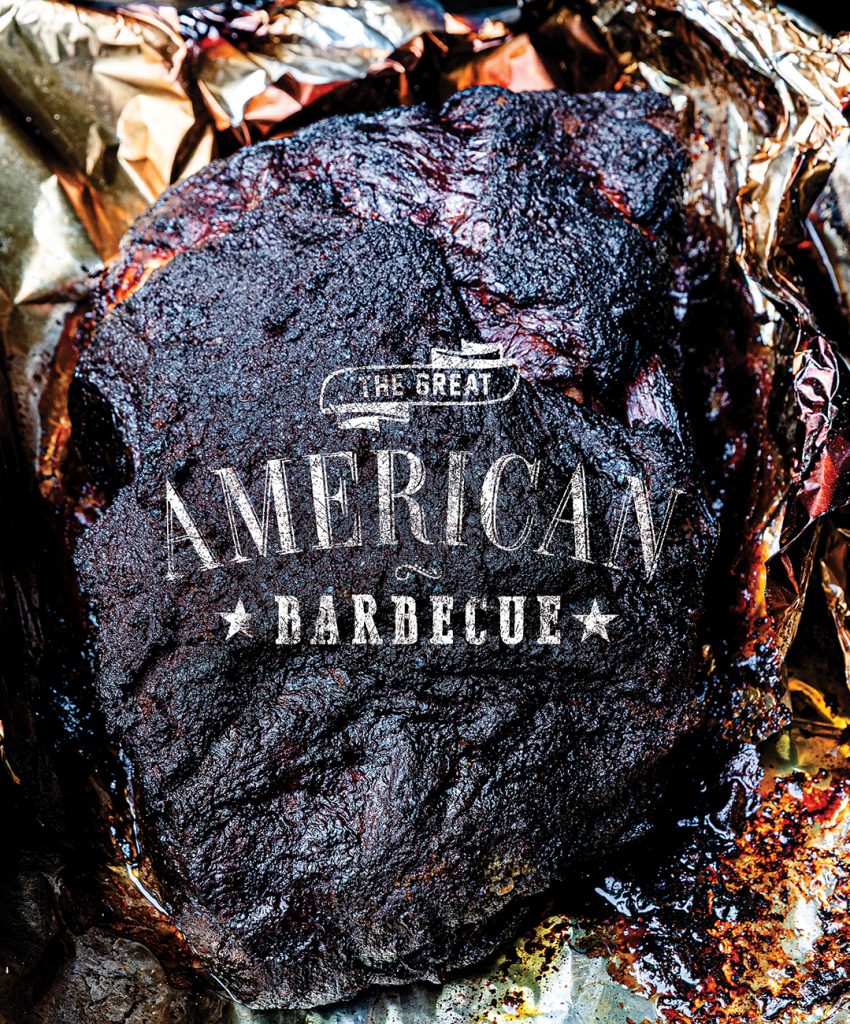
The Great American Barbecue
When the Coastal Plain meets the Piedmont
By Warren Lewis
Photographs by John Gessner
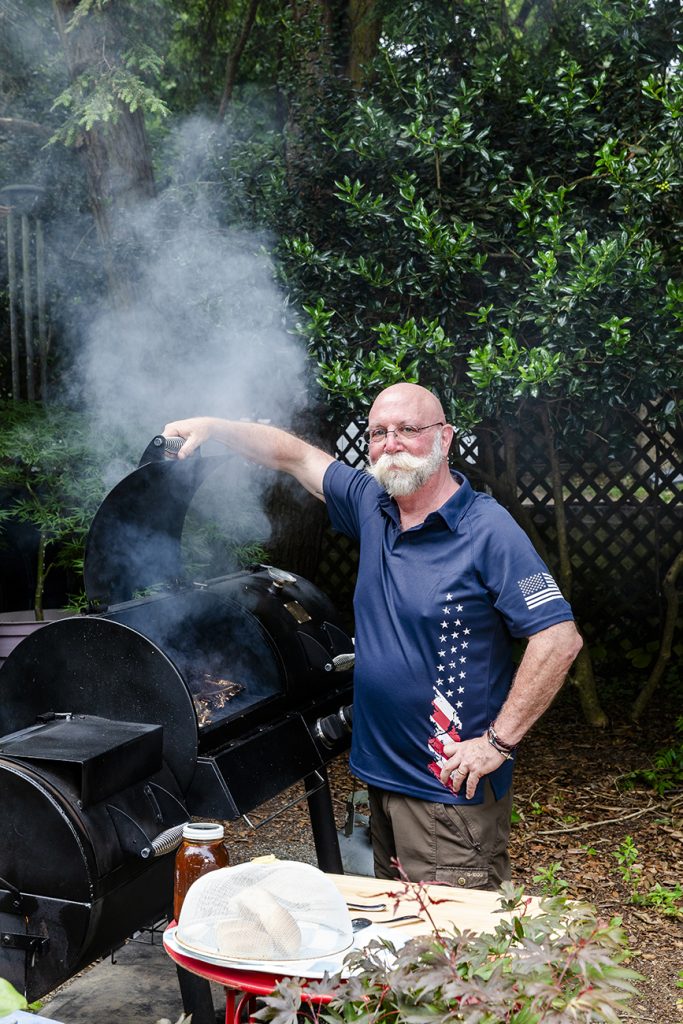
I was in trouble. Marianne, my better two-thirds, had invited friends over for a barbecue. Sounds easy enough — but the couples are from opposite sides of the state: vinegar-based barbecue vs. tomato-based barbecue. I’d rather discuss religion and politics. What’s a chef to do?
How about I begin at the beginning? Let’s talk location, culture and soil.
The Sandhills of North Carolina occupy a band of ancient coastal sediment running through Moore, Richmond, Hoke and Scotland counties — about from Southern Pines and Carthage west toward Laurinburg and Rockingham. The soil is sandy and quick-draining, good for longleaf pine, wire grass and peaches. The heat and sun can be relentless.
Barbecue in the Sandhills sits in geographic and cultural tension. The Eastern North Carolina tradition — vinegar-only, whole hog, hardwood coals — comes from the Coastal Plain counties to the east. The Lexington tradition — tomato-touched dip, pork shoulder, hickory smoke — comes from the Piedmont to the north and west. Aah! The tension of being the middle child. (Did I mention that I’m in the middle of two sisters?)
So here’s my compromise: a local pork shoulder cooked over hickory or oak, pulled and chopped, finished with a sauce that is predominantly vinegar but carries just enough of the Sandhills character — a touch of sweetness and depth. It’s a pretty solid compromise.
Note: With all recipes, read ’em through thoroughly, paying attention to rest periods and timing.
The Meat
Buy a bone-in pork butt, 8 – 10 pounds. This is the upper shoulder — well-marbled and deliciously fatty. It is the right cut for a long, slow cook. Just the right size for a dozen folks or so. Source locally, as Moore County has a fair number of working farms. A pork butt from a hog raised in the Sandhills’ sandy soil pastures will have a cleaner, slightly sweeter flavor than a commodity shoulder. It is worth the effort to seek one out. Plus, it seems like the right thing to do.
The Rub
The Sandhills rub is slightly more seasoned than the near-naked salt-and-pepper of the pure Eastern N.C. tradition, but it does not reach for the spice-cabinet ambition of Western barbecue. The goal is to season the exterior, build a modest bark, and stay out of the way of the smoke and the sauce.
Ingredients
4 tablespoons kosher salt
2 tablespoons coarsely ground black pepper
2 tablespoons brown sugar
2 teaspoons paprika
2 teaspoons garlic powder
1 teaspoon cayenne pepper
1 teaspoon dry mustard
Mix all ingredients thoroughly. Apply generously to all surfaces — fat cap, meat side, bone side, all the sides. Pat it in. Do not rub hard; you want it to sit on the surface, not be worked into the meat.
Wrap loosely and refrigerate overnight. Pull the shoulder from the refrigerator 2 hours before it goes on the smoker.
The Sandhills Sauce
This is where the Sandhills parts ways with the strict Eastern tradition. The sauce begins with vinegar — cider vinegar as the primary acid, white vinegar for sharpness — but it carries a small amount of ketchup for body and color, a touch of brown sugar for the faint sweetness the region’s palate expects, and a measured hand with the pepper.
Ingredients
3 cups apple cider vinegar
1 cup white distilled vinegar
¼ cup ketchup
¼ cup local honey
2 tablespoons brown sugar
2 teaspoons crushed red pepper flakes
3 teaspoons coarsely ground black pepper
1 teaspoon cayenne pepper
1 teaspoon kosher salt
1 teaspoon dry mustard

Method
1. Combine all ingredients in a jar or bottle with a tight lid.
2. Double check that the lid is tight. (No, I don’t want to discuss it.) Shake it like a Polaroid ’til it’s all mixed nice.
3. Let the sauce rest at room temperature for at least 24 hours before using. The pepper blooms in the acid and the flavors knit together. Three days of rest is better. Maybe make a double batch.
4. Taste before using. The sauce should lead with vinegar sharpness, finish with gentle heat, and carry a faint background sweetness that does not announce itself. Adjust cayenne for heat, brown sugar for sweetness, or add a splash of cider vinegar if it needs more edge.
The Cook
Cook this pork shoulder on an offset smoker, a kettle or any setup that allows you to maintain indirect heat and introduce real wood smoke. Use hickory — it is the wood of this region and this style. Oak is acceptable. No fruitwood. No mesquite. No Duraflame logs. (David, I’m talking to you.) Grab a book and settle into your favorite chair. This is gonna take a while. I like to do a barbecue when there is no moon, so I can stare at the stars all night. Barbecue is a real commitment.
Target temperature: 225 to 250 degrees Fahrenheit at the grate. Expected cook time for an 8 – 10 pound bone-in butt: 10 to 14 hours. Plan for the 14 hours.
1. Bring the smoker to a stable 225 to 250 degrees before the pork goes on, fat cap up. Place the shoulder with the thicker end toward the heat source if using an offset.
2. Manage the fire for clean, thin smoke. Hickory is an assertive wood — use it with a measured hand. Two or three fist-sized splits or large chunks at a time, added as needed to hold temperature. You want smoke, not a smudge.
3. At three hours, check the fire and note the color developing on the exterior. You can peek, but not too long as you’ll lose temperature. Take pictures. Let the bark form undisturbed.
4. At around 160 – 165 degrees internal temperature, the stall will set in. The temperature will plateau and hold — sometimes for two hours, occasionally longer in humid Sandhills summer heat. Hold your position. The collagen is converting to gelatin, and the exterior is doing important work. Take more pictures.
5. At the stall, wrap the shoulder in two layers of heavy-duty foil. Return it to the smoker and continue cooking at the same temperature. The foil pushes through the stall by trapping moisture — nothing worse than dry barbecue — while the interior completes its breakdown.
6. Continue cooking until the internal temperature reaches 200 – 205 degrees and the bone wiggles freely. The probe should slide into the thickest part of the flat with no resistance — easy, clean, like butter that has been sitting in a warm kitchen. Use the “bone test.” It’s more accurate than a thermometer.
7. Remove from the smoker. Keep in the foil. Wrap in a towel (Not a bath towel. Again, I don’t want to discuss it.) and rest in a dry cooler for a minimum of 1 hour. Two hours is better.

Pulling and Saucing
Sandhills pulled pork is pulled first, then chopped — somewhere between the long-strand pulled pork of Memphis and the fine chop of the Eastern N.C. tradition. You want medium pieces, roughly torn, with some variation in texture. The bark pieces, the fatty point of the shoulder, and the leaner flat should all be present in the finished pile.
1. Remove the bone. If cooked properly, the bone will have no meat on it. Pull the shoulder apart into large sections with two forks or your hands. Yes, it burns a little. Michelangelo didn’t complain while he spent four years on his back with his arms up painting.
2. Roughly chop the pulled pieces on a large cutting board — 8 – 10 passes with a heavy knife, turning the pile as you go. You want irregular chunks, not a fine mince.
3. While the meat is still hot, add the Sandhills sauce generously — start with a big splash — and toss to coat.
4. Taste. Add more sauce. The pork should be glossy, moist, and tangy with the faint sweetness of the sauce behind the vinegar. Let it rest in the pan for 5 minutes, then taste again. The meat will absorb a surprising amount of sauce while hot.
Serving
Serve on white bread or plain buns — the bread is not a vehicle, it is a participant. It absorbs the sauce that runs off the pork and becomes something you eat deliberately, not a wrapper you discard. A plain white hamburger bun is correct. A brioche bun is not.
Traditional Accompaniments
White bread or plain hamburger buns
Vinegar-dressed coleslaw — cabbage, cider vinegar, a little sugar, celery seed, no mayonnaise
Baked beans — cooked low and slow with a piece of the pork if you have it
Hush puppies or cornbread
Sliced peaches in season — a Sandhills addition that needs no explanation. Maybe pop them on the grill for a moment.
Extra Sandhills sauce on the side
Sweet tea, cold and very sweet
Ice cream
Final Notes
Cook it for a Saturday. Start it Friday night. Let the neighbors smell it in the morning. Invite them over. Serve it at noon on paper plates under the pines with sweet tea and peaches and people who are not in any hurry to be anywhere else.