
SOUTHWORDS
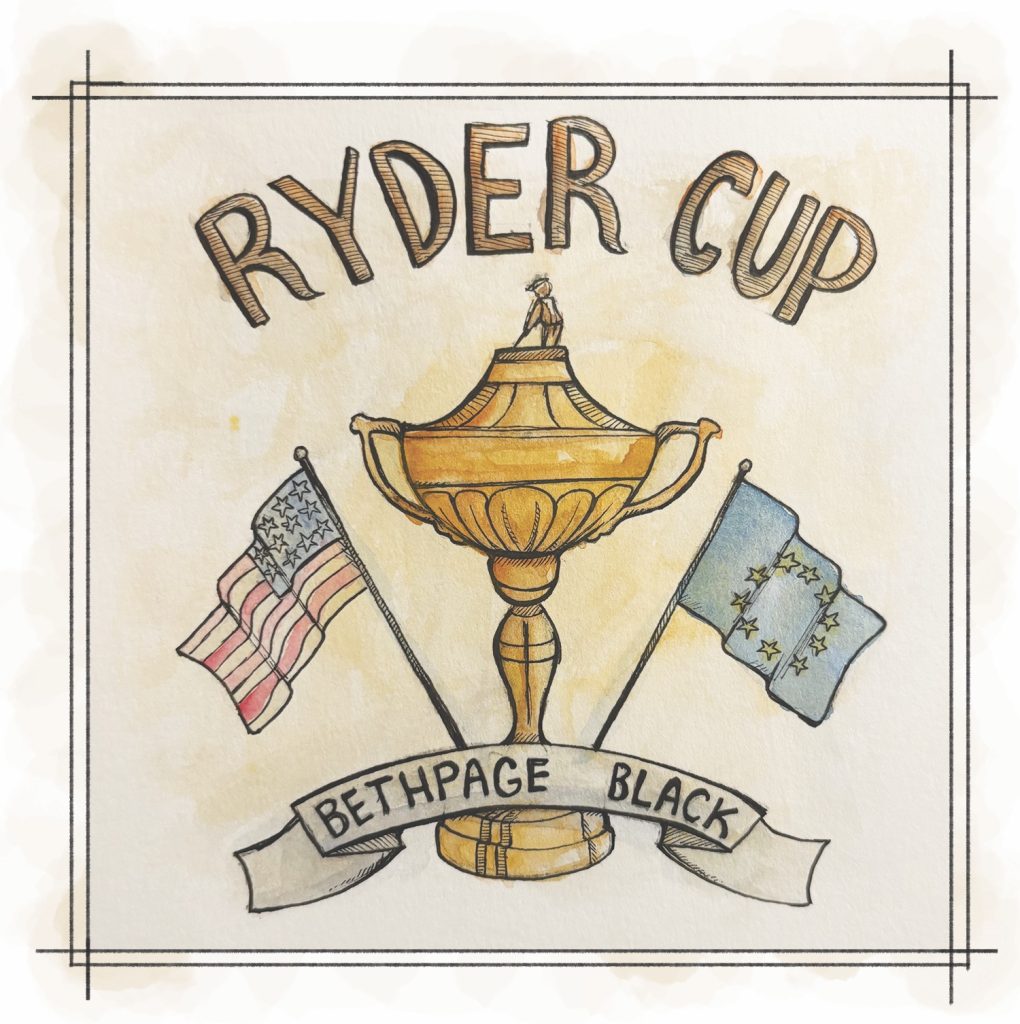
The Cup Runneth Over
By Jim Moriarty
Fall is always football, but every other September, it’s the Ryder Cup, too.
My first Ryder Cup was 1983 at PGA National in Palm Beach Gardens. With a nod to the South Florida heat index, that one was played in mid-October, though since then, every Ryder Cup on this side of the pond has — at the very least — begun in September. The Ryder Cup wasn’t always the spectacle it is today and surely will be at Bethpage Black on New York’s Long Island, where the Americans will try to reclaim the trophy they lost two years ago in Italy.
When it was in Pinehurst in ’51, they paused the matches (in those days between the U.S. and Great Britain & Ireland) to go to the UNC-Tennessee football game in Chapel Hill. Sam Snead, a man often governed by pocketbook issues, took advantage of the day off to do a paid exhibition. At PGA National in ’83 there were probably more people scurrying off in their golf carts to play the other courses than there were watching the matches. Rory McIlroy once described the Ryder Cup as an “exhibition” until he played in one. “Hell of an exhibition, isn’t it?” his teammate Graeme McDowell asked McIlroy as the victorious Europeans sprayed each other with Champagne in 2010, as if Wales wasn’t already soggy enough.
Jack Nicklaus and Tony Jacklin were the captains in ’83. The U.S. had won 11 of the previous 12 Ryder Cups, the lone exception coming in 1969, when the teams tied with the U.S. retaining the cup. That was the year Nicklaus set the sportsmanship bar, conceding Jacklin’s putt on the 18th. The putt was long enough to engage the nerves but short enough that neither thought Jacklin would miss it. Nicklaus believed the tie was a fitting end. Why even take the chance? He picked up Jacklin’s coin.
At PGA National, the two sides went into the Sunday singles tied 8-8. The first match out that day was Seve Ballesteros, the Masters champion, against Fuzzy Zoeller, who had a green jacket of his own and a back brace to ease his pain. When the hobbled Zoeller won four straight holes from the 12th to the 15th, the match came to 18 all square. Both players drove into thick Florida rough. Zoeller’s second found the fairway. Ballesteros could barely advance his ball, hacking it forward 20 yards into a deep fairway bunker 250 yards from the green. Advantage America. Zoeller might squeeze a whole point from Europe’s most dominant figure. I was a few yards away when Seve pulled out his 3-wood. My first thought was that he was certifiably insane. No way was he clearing the lip with a 3-wood. Then he hit one of the greatest single golf shots ever struck in these biennial matches, a high cut to the front edge of the green. Zoeller hit a 2-iron to 10-feet. Fuzzy missed and Seve got up and down to give each team a half point. Nicklaus called Ballesteros’ 3-wood “the finest shot I’ve ever seen.”
The Americans defeated the Europeans 14 1/2 – 13 1/2 as lightning flashed on the horizon. One of Seve’s teammates on the ’83 side was Nick Faldo, who just happens to do one of the finest Seve impressions in the civilized world. The European locker room was a somber place after the narrow loss. They’d given it all and come up short. In bursts Seve. “We must celebrate!” Faldo says in his best Ballesteros lilt. “This is a victory for us!” Seve was right, of course.
The next year Europe broke the string of losses by winning at The Belfry. At the team celebration afterward, the wives began singing their own version of “America,” from West Side Story. “We’re going to win in America! We’re going to win in America!” And all the boys joined in. “That was a great moment,” says Sir Nick. And win they did, at Jack’s place in Ohio.
Since losing in Palm Beach, Europe has won 12, lost 6 and tied one, good enough that year to retain the cup. The U.S. will be favored at brutish Bethpage. The New York fans will be obnoxious; the traffic on the Long Island Expressway will be horrendous; but don’t underestimate the defenders. They still know how to sing.