
OMNIVOROUS READER


The Untethering of Time
Finding the truths in historical fiction
By Anne Blythe
These days, as social media platforms and conflicting political rhetoric abound, it can be difficult to discern fact from fiction. It’s tempting to reflect on the past to try to understand what might be prologue.
Sometimes, though, the history that has been fed to us over time turns out to be pure fiction — or at least some version of it. Other times fiction is better able to get to the nitty-gritty truth. Historical fiction with its modern lens on days gone by can release the anchors of time and enhance a reader’s experience and understanding of the past in ways that non-fiction does not always accomplish.
Three North Carolina writers from this genre, to name a few, have taken a stab at blurring the lines between the invented and the real with new historical fiction that spans many decades, and in one case centuries.
Charlotte-based author Joy Callaway transports readers of her seventh book, The Star of Camp Greene: A Novel of WWI, far beyond the Queen City’s modern financial district and tree-lined neighborhoods back to 1918, when the U.S. Army had a training facility about a mile west of what is now Uptown.
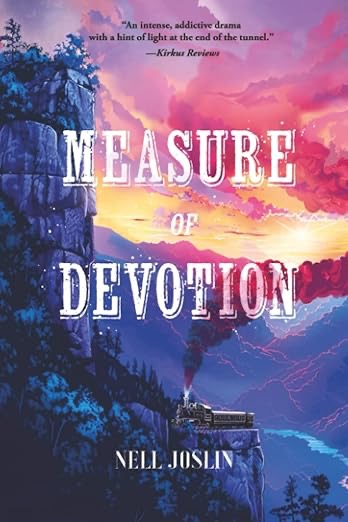
Nell Joslin, a Raleigh lawyer turned writer, takes readers of her debut novel, Measure of Devotion, back to the Civil War era as she chronicles a mother’s harrowing journey from South Carolina, where she was a Union supporter, to the battleground regions of southeastern Tennessee to tend to her critically wounded son, who enlisted with Confederate troops in defiance of his parents’ wishes.
And Reidsville-based Valerie Nieman, a former newspaper reporter and editor turned prolific author, takes readers on a journey to ancient Scotland in Upon the Corner of the Moon in her imagined version of Macbeth’s childhood before he became King of Alba in 1040.
Though the books are very different, each was born from digging through historical documents, archives and histories of the time, as well as a bit of on-the-ground research.
Callaway’s main character, Calla Connelly, is based on the real-life vaudeville star Elsie Janis, a so-called “doughgirl” who sang, spun stories and cartwheeled across the stage for American troops on the Western Front. The Star of Camp Greene opens with Calla toughing her way through a performance in the makeshift Liberty Theatre tent at the North Carolina training camp. The soldiers gathered were all smiles until a pall was cast over her act by the news of deaths in the Flanders battlefields near Brussels.
Despite the push of men moving to the back of the tent to absorb the unwelcome announcement, Calla thought it was important to continue the entertainment, providing a crucial diversion during somber times. But her head hurt. Sweat soaked through her costume as heat flushed through her body before an icy cold set in. The Spanish flu was circulating around the world, claiming more lives than the overseas conflict for which Camp Greene was training soldiers.
Calla was bent on impressing the men enough that word would spread to Gen. John J. Pershing. In her mind, he would make the final decision whether or not she could join the team of performers who traveled overseas to entertain the troops — and thus honor the memory of the fiancé she had lost to the war there. But she couldn’t stop the spinning as she tried desperately to belt out lines from George M. Cohan’s “Over There.”
Stricken with the deadly influenza, Calla ends up in the hospital. While recuperating, she overhears a piece of classified military intelligence resulting in her confinement at the Charlotte camp, where she’s assigned a chaperone until further notice. While prevented from traveling to the front, it opens her to the possibility of new love and gives Callaway an opportunity to explore themes of patriotism and injustice.
Measure of Devotion also tells the story of a war era through a strong, compelling female character. Through vivid and immersive writing, Joslin uses the 36-year-old Susannah Shelburne to bring life to the story of mothers nursing wounded sons near Civil War battlefields.
Susannah, who grew up in Madison County, North Carolina, and her husband, Jacob, live in South Carolina, where they are opposed to slavery in the very land that is fighting to preserve it. Jacob’s family had owned slaves, but the thought of another person being nothing more than property appalled him. After inheriting Hawk, Jacob granted him his freedom and paid him to work for him. They also employed Letty, a character whose homespun wisdom, optimism and love adds a welcome layer to a tender and complicated story.
The Shelburnes’ son, Francis, joined the 6th South Carolina Volunteers in the early years of the war, and on Oct. 29, 1863, his parents receive a telegram letting them know that their son had been severely wounded by shrapnel near his hip joint. Susannah leaves her ailing husband and travels by rail to Lookout Mountain, Tennessee, with hopes of sparing Francis’ leg from amputation while nursing the 21-year-old back to health. He’s in a fevered state when she arrives.
Joslin adroitly and compassionately explores heady themes that divided the country more than 150 years ago, and the hardships and ravages of a nation at war with itself.
Nieman’s Upon the Corner of the Moon is book one of two that explores some of those same issues in 11th-century medieval Scotland. Rather than relying on William Shakespeare’s depiction of Macbeth, Nieman alternates her deeply researched tale of the budding powers of the Macbethian royal court through three voices — Macbeth, Gruach, who becomes his queen, and Lapwing, a fictional poet.
Separately, Macbeth and Gruach are spirited away from their parents to be fostered into adulthood during an era of constant warfare and the unending struggle for power. Nieman ladles up a dense, deeply reported version of these two well-known characters before they meet. We see Macbeth as an adolescent warrior in the making, and Gruach being groomed in Christian and pagan ways to be given away in marriage. Ultimately, what unfolds is a tale of legacy, power and fate.
These three books of historical fiction bring factual bits of the past to the present, leaving much to ponder about their truth.