
HOMETOWN
Up to Speed
Adventures behind the wheel
By Bill Fields
My birthday came and went this spring without much fanfare, but not before I remembered that it marked 50 years of driving.
These days, not all teenagers are eager to get behind the wheel upon turning 16. That wasn’t the case in North Carolina half a century ago, when obtaining one’s driver license was a rite of passage that preceded the right to vote or buy a beer.
Of course, we were well prepared for the road test and written exam at the police station in Aberdeen because we had taken driver’s education in high school, where for decades instructor Otis Boroughs taught the course with the tenacity of a drill sergeant and the thoroughness of a graduate-level professor. Boroughs had intense eyes, a buzz cut, and his tone was as serious as the 16-mm films about the perils of drinking and driving that he showed during class.
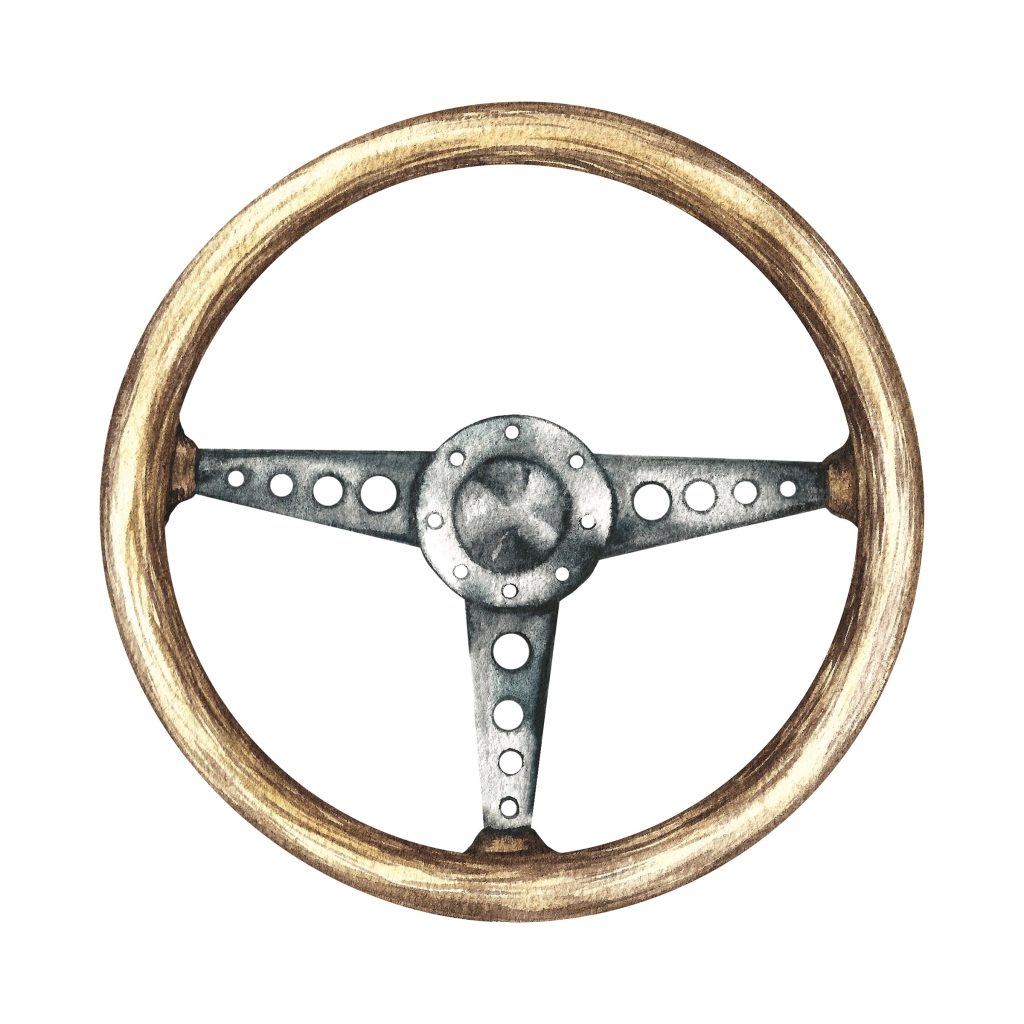
When you were out in the training car with him, Boroughs rode shotgun. He was watchful and wary, making sure your hands were on the steering wheel at 10 and 2 o’clock, and that you were keeping the proper distance from the car ahead (a car length for each 10 miles per hour of speed). There was usually a second student, in the backseat, waiting for his or her turn to be scrutinized. I can still sense my right foot trembling over the pedals when Boroughs had me pull over on a quiet side street in Southern Pines to demonstrate whether I knew how to parallel park.
Mr. Boroughs died last year, at 87, but I believe he would be pleased that his favorite mantra still comes to me as easily as my Social Security number: “Keep your eyes on the road and your mind on the job of driving.”
Plenty of people driving these days never heard that slogan, or if they have, don’t follow it.
I was reminded of that recently when I drove from Connecticut to North Carolina and spent a couple of weeks in Southern Pines before returning north. On interstates, the lane drifters and weavers were many. For lots of drivers, a turn signal is merely a suggestion to be ignored. Tailgating is common.
The day after I got to town, while stopped at a red light on U.S. 15-501, a car hit my small SUV from behind.
“I wasn’t paying attention,” the young driver, a man who appeared to be in his 20s, admitted as we spoke before pulling into a parking lot to exchange information. It’s clear he wasn’t following either tenet of Mr. Boroughs’ frequent classroom admonition.
Fortunately, the damage to my vehicle — and his — was very minor. And hopefully, he learned a lesson.
I certainly was taught something a decade after getting my license, in what has been my closest call on the road. I was hurrying to Newark airport to catch a flight to Raleigh after the conclusion of the 1985 U.S. Amateur at nearby Montclair (N.J.) Golf Club. It had been raining, and I was going too fast on the exit ramp when I lost control. My rental car skidded sideways for what seemed like the length of a football field but probably traveled half that distance. I didn’t hit anything. After catching my breath, I continued — slowly — to the rental car return.
My other near misses have been because of others. I’ve dodged steel beams falling off a flatbed truck in Memphis, a car barreling through a red light in High Point, and a motorcyclist darting through traffic as if it was a death wish on I-85 in southern Virginia.
Perhaps owing to part of a semester spent with Otis Boroughs, along with my personality, I don’t have a lead foot. One time, however, early one morning on a long, lonely stretch of straightaway in rural Nebraska, driving a rental car that possessed some pep, I decided to see what it felt like to travel over 100 mph. Just once.
I topped out at 107 in my Don Garlits moment, keeping my eyes on the road and my mind on the job of driving all the while.