
DISSECTING A COCKTAIL
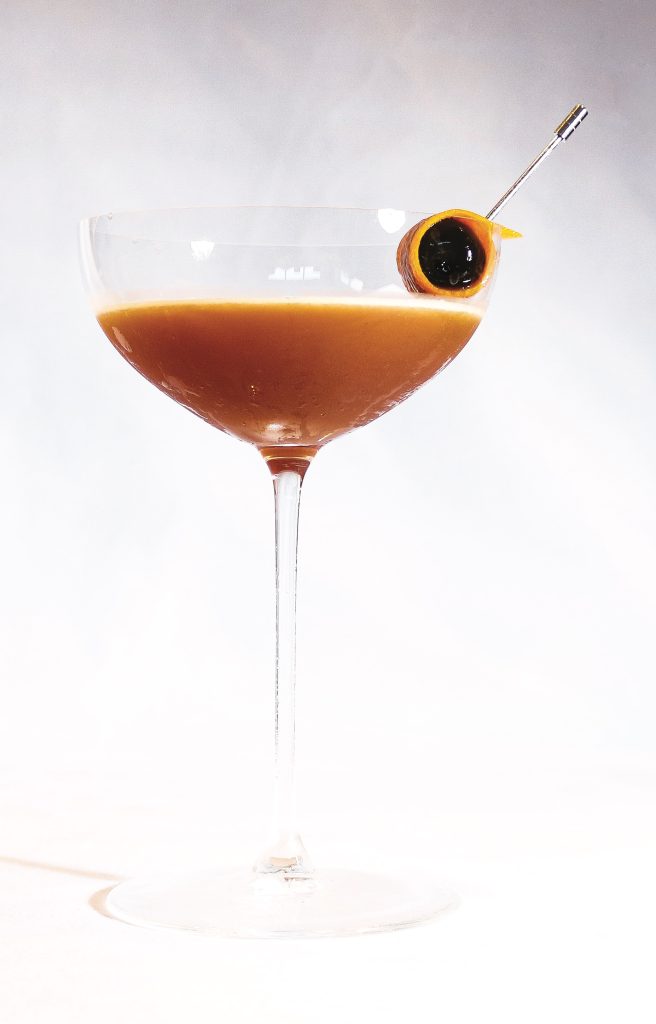
Blood and Sand
Story and Photograph by Tony Cross
I hereby present to you a cocktail that I’ve never really enjoyed: the “Blood and Sand.” Well-known to bartenders, it’s a relatively unknown classic cocktail to drinkers. Even though the creator of this cocktail is a mystery, it originally appeared in Henry Craddock’s The Savoy Cocktail Book in 1930. The Blood and Sand takes its name from the 1922 silent film Blood and Sand, starring Rudolph Valentino. The movie follows a matador, Juan Gallardo, whose rise from poverty to become one of Spain’s greatest bullfighters ends in tragedy, romantic betrayal and death.
On paper, the ingredients for the cocktail don’t seem to make sense: equal parts Scotch whisky, cherry Heering, sweet vermouth and orange juice. Admittedly, it does taste better than the specs would lead you to believe. The problem, as I saw it, is that it has never tasted great. Enter acid-adjusted juices. Adding citric and malic acids to juices like grapefruit, orange and pineapple allows you to have one juice in the mix instead of two. More juices means more dilution, means more of a balancing act with your sweetener and alcohol.
When I learned of acid-adjusting from bartender Dave Arnold, one of the first drinks I thought of was the Blood and Sand. Orange juice on its own is missing that citric punch, something that this drink is lacking. Ingredients are meant to be toyed with, and by playing around with these specs, we can take a drink that is just OK to a drink that’s really good. You’ll also notice that I do away with “equal parts” as I up the amount of whisky.
Specifications
1 1/4 ounce Scotch whisky (do not use one that is over-peaty)
3/4 ounce acid-adjusted orange juice*
1/2 ounce cherry Heering
1/2 ounce sweet vermouth
Execution
Combine all ingredients into a cocktail shaker, add ice, and shake hard for 10-15 seconds. Strain into a chilled cocktail coupe. Garnish with orange peel and brandied cherry.
*Acid-adjusted orange juice: per 100 ml of fresh orange juice, mix in 5.2 grams of citric acid.