
CELEBRATING POETRY

Celebrating Poetry
Spurred on by the success of Black History Month and Women’s History Month, the American Academy of Poets organized the first National Poetry Month in April 1996. Over its 30 years of existence, it has grown into the largest literary celebration in the world, involving readers, students, teachers, librarians, booksellers, publishers, events and, oh yes, the occasional poet. It’s possible to sign up to receive a “Poem-a-Day” in your inbox (curated by Dorianne Lux), request a National Poetry Month poster, encourage participation in the “Dear Poet” project for students in grades five through 12, and consult a “Poetry Near You” calendar. To quote Emily Dickenson, “If I feel physically as if the top of my head were taken off, I know that is poetry.” You may feel free to lose your head every month of the year, but April
is a good place to start.

I first read Naomi Shihab Nye’s poetry in the mid-1990s. I quickly became a fan of her work, and “Valentine for Ernest Mann” has long been one of my favorites. The quirkiness of the first stanza — the idea of ordering a poem like ordering a taco — made me smile and want to read on. Then in the second stanza comes the kindness and generosity that shine through all her work. Instead of dismissing this rather audacious request (which was an actual demand from a middle school student), Naomi leads him, and us, into an exploration of how we too can find our own poems. “What we have to do/is live in a way that lets us find them.” She reminds us that we all have poetry in us, if we are attentive to the small meaningful moments in our lives. She doesn’t lecture us about it; instead, she gives us that wonderful example of the man who saw skunks as beautiful, and her images make them beautiful too. Her gentle and genuine words make us realize there is beauty everywhere if we are open to seeing it.
This poem has stuck with me over the years. When I was teaching both children and adults, I would share it to encourage students to make lists of where they could find their own poems. When I was writing my first book of poetry I came back to the line “Maybe if we re-invent whatever our lives give us/we find poems” and realized that was exactly what I was doing. Naomi’s work shows us that poetry is a way of accessing our true feelings, be they of beauty or wonder or moving through difficult times. Born to an American mother and Palestinian father, Naomi Shihab Nye captures in her poetry the humanity that connects us all. She has spent over 40 years traveling the world leading poetry workshops with both children and adults that spread that humanitarian spirit. I am grateful for her presence through poetry.
— Joanne Durham
Valentine for Ernest Mann
By Naomi Shihab Nye
You can’t order a poem like you order a taco.
Walk up to the counter, say, “I’ll take two”
and expect it to be handed back to you
on a shiny plate.
Still, I like your spirit.
Anyone who says, “Here’s my address,
write me a poem,” deserves something in reply.
So I’ll tell a secret instead:
poems hide. In the bottoms of our shoes,
they are sleeping. They are the shadows
drifting across our ceilings the moment
before we wake up. What we have to do
is live in a way that lets us find them.
Once I knew a man who gave his wife
two skunks for a valentine.
He couldn’t understand why she was crying.
“I thought they had such beautiful eyes.”
And he was serious. He was a serious man
who lived in a serious way. Nothing was ugly
just because the world said so. He really
liked those skunks. So, he re-invented them
as valentines and they became beautiful.
At least, to him. And the poems that had been hiding
in the eyes of skunks for centuries
crawled out and curled up at his feet.
Maybe if we re-invent whatever our lives give us
we find poems. Check your garage, the odd sock
in your drawer, the person you almost like, but not quite.
And let me know.
From Red Suitcase, by Naomi Shihab Nye. Copyright 1994 Naomi Shihab Nye. Used by permission of the author.
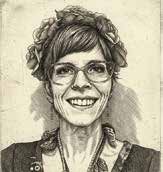
I’m sure I had read persona poems before I encountered Gabrielle Calvocoressi’s debut collection, but certainly none had struck me the way this one did. The excerpt I’ve selected is the last of 10 sections in the poem, which is also the title of the book. Each section is written from the poet’s imagined first-person perspective of an individual who was touched by Amelia Earhart’s final flight and disappearance, beginning with an ordinary bystander in section I all the way to her husband in section X. The facts of Earhart’s story (which I vividly remember learning in elementary school) are compelling enough. But when Calvocoressi filters them through the eyes of carefully curated characters — some who knew her personally and some who didn’t — those facts simultaneously gain dimension and become more intimately human. I had been under the impression that contemporary poetry was generally supposed to derive from personal experience, influenced on occasion by outside research. Reading The Last Time I Saw Amelia Earhart and the other suites of persona poems in this book allowed me to see just how a poet could use their imagination in service of their work, bringing fictional narrative into lyrical verse and giving the reader an even deeper insight into something we thought we already knew. Though it’s taken me years to come around to it, it’s given me permission to do the same.
— Morrow Dowdle
The Last Time I Saw Amelia Earhart
(An Excerpt)
By Gabrielle Calvocoressi
X. George Putnam, husband
Afterwards she was everywhere:
a map in the glove compartment,
shoes on the stairs, her wedding ring
on the bathroom sink. I found
her house keys by the phone
and wondered how she’d get back
inside. Of course I wasn’t the only
one: everybody thought they’d seen
her, especially children
who wondered if she was hiding
from me. One girl wrote,
When my father yells
I hide in the barn. Do you have a barn?
The last time I saw Amelia Earhart
she was three steps ahead of me,
crossing to the other side
of the street. I almost died trying
to reach her, called her name
over the traffic and when she turned back
it was a young man, startled
by my grasping hand, saying sorry
but I was mistaken. Then she was gone;
clothes sent, car sold, nothing left
to look for. Except airplanes
where are everywhere now
and take me back to her, turning
away from our expectant faces.
Excerpt from The Last Time I Saw Amelia Earhart by Gabrielle
Calvocoressi, Persea Books, 2005.
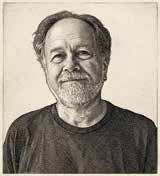
I am a graduate of SUNY Brockport, where I chose to continue my study of reading and writing poetry after finding my way to it in community college. As it happened, two poets who’d become, for me, extremely important influences, preceded me at Brockport, Michael Waters and Li-Young Lee. Style-wise, these are different poets entirely, except for the attention to poetic craft and texture both bring to their work.
The recipient of many awards and honors, Li-Young’s backstory is as extraordinary as his poetry. He was born in 1957 in Jakarta, Indonesia, to Chinese parents, and his father had been a personal physician to Mao Zedong while in China.
Eating Together is a poem in which his father figures prominently, and the poem’s title presents us with an irony. That is, the family is not together as the recently deceased father is absent.
Rooted in Confucian principles of respect, it is a common and traditional practice in Chinese culture for the head of the household (often the father or the eldest member) to be honored with the head of the fish. Therefore, this is a poem of transition. The mother now assumes the father’s role as head of the family and is afforded that respect.
Like so much of Lee’s poetry, this selection is notable for its quiet tone and sensory texture. Grief is in the poem, of course, but the fact need not be uttered. Instead, the reader is provided a closure of beauty and, at its core, an extraordinary simile. The dead father is compared to a snow-covered road in a pine forest, and we understand that here, death is blessed relief, as he is “lonely for no one.”
— John Hoppenthaler
Eating Together
By Li-Young Lee
In the steamer is the trout
seasoned with slivers of ginger,
two sprigs of green onion, and sesame oil.
We shall eat it with rice for lunch,
brothers, sister, my mother who will
taste the sweetest meat of the head,
holding it between her fingers
deftly, the way my father did
weeks ago. Then he lay down
to sleep like a snow-covered road
winding through pines older than him,
without any travelers, and lonely for no one.
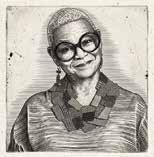
This poem, from the volume In the Lateness of the World, eloquently speaks to the work of witness both externally and internally. “Early Confession” resonates with my own work as a documentary poet whose work also questions and engages in the interior domains of political, social and personal struggle. Carolyn Forché has always evoked and amplified beauty in the difficult and often traumatic everydayness and ordinariness of life, mirroring ourselves in the webs of each other’s experiences and humanity. I’ve never known how to walk away from suffering, and I too have asked, what might my path have been if I had not chosen this path? What if I had lain down in the drifts to finish a dream? The pastoral imagery and metaphors create a wisp of a trailing scent; an invocation, or a lamentation for life, death, consciousness, and our intimate lives. “Early Confession” is an invitation to seek clarity, declare purpose, and assume agency both given and liberated. This poem is an affirmation for my ethic of wonder and need to focus my creative intentions and resolutions on the wonders and realities of the world. Forché has always written poetry that returns us over and over again to how to purposefully witness wonder and humility as wholesome emotions that will never exist with destruction. “Early Confession” reawakens a primal portal for becoming receptive to what lies around us in our communities that are inherently worth preserving and protecting. The poem draws me personally to bear witness to my own self-cultivation for learning how to fully inhabit the path that I’ve chosen and that chooses me back. I am grateful for the vast landscape this singular poem constructs, reminding the reader to forge new connections with the self that guide us to inhabit and forge new connections on the path, guiding our sense of wonderment outward toward full radical amazement.
— Jaki Shelton Green
Early Confession
By Carolyn Forché
If I had never walked the snow fields, heard the iced birch,
leant against wind hard toward distant houses, ever distant,
wind in the coat, snow over the boot tops, supper fires
in windows far across the stubby farms, none of them
my house until the end, the last, and late, always late, despite how early
I’d set off wearing gloves of glass, a coat standing up by itself.
If I had never reached the house, but instead lain down in the drifts
to finish a dream, if I had finished, would I have
reached the rest of my life, here, now, with you whispering:
must not sleep, not rest, must not take flight, must wake.

When I was at NC State in the late 1960s, Guy Owen was already a legend. The journal he founded and edited, the Southern Poetry Review, was well-established. His second novel, The Ballad of the Flim-Flam Man, had been made into a movie. His collection of poetry, The White Stallion and Other Poems, won the Roanoke-Chowan award. There wasn’t much he hadn’t done or wasn’t doing. At the time there was an active revolt against traditional forms, against poetry for the ear. I felt that revolutionary spirit too. But having had a grandmother who would, at the drop of a hat, recite verse, I wanted the sounds, the music, as well. When I read Owen’s poem, I was taken by how different it was than the early 20th century verse my grandmother loved and how different from the writings of the Beats that so attracted young poets like me in the late 1960s. The poem is so full of sound and surprise. In just 16 lines, it manages to be psychologically complex and simple, dream-like and real, innocent and wise, showing tension between father and son. Although I was a computer science major who had failed introductory English (I am a terrible speller), Guy talked with me a little and was kind. Not long after, I published the longest poem ever in the student literary journal, the Windhover. (Someone else checked and corrected my spelling). Guy remembered that. A few years later at the first North Carolina Writers Conference I attended, he remembered me in the best way; he invited me to share his whiskey. We talked about poetry. I mostly listened. The horse, he admitted, had been black, but at the Bread Loaf Writers’ Conference the editor of Poetry told him that if the horse was white as a ghost or as dawn it would be a better poem and would be published in his respected journal. It was published in Poetry as “The White Horse.” Somewhere along the way, the horse now white became a stallion. I learned a lot about how small revisions and particular details can greatly improve a poem. Today, 20 years older than Guy was when he died in 1981, I return to “The White Stallion.” It seems to me a masterpiece. So accessible and so mysterious. I can hear Guy talk about it again. I can taste his whiskey. Jack Daniel’s, since you asked. — Paul Jones
The White Stallion
By Guy Owen
A white horse came to our farm once
Leaping, like dawn, the backyard fence.
In dreams I heard his shadow fall
Across my bed. A miracle,
I woke up beneath his mane’s surprise;
I saw my face within his eyes.
The dew ran down his nose and fell
Upon the bleeding window quince. . . .
But long before I broke the spell
My father’s curses sped him on,
Four flashing hoofs that bruised the lawn.
And as I stumbled into dawn
I saw him scorn a final hedge,
I heard his pride upon the bridge,
Then through the wakened yard I went
To read the rage the stallion spent.
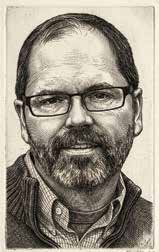
I once had a poetry teacher who said try and write lines so good someone will want to have them tattooed on their body. Quite a goal, indeed, but Joe Mills’ poems are full of such lines.
I could have picked a dozen of his poems but I chose Savings from his collection, This Miraculous Turning, which won the 2015 Roanoke-Chowan Award for Poetry. I’m a huge fan of what I think of as the classic Mills’ poem: accessible, personal, often funny and about family, with an ending that kicks you in the gut but also somehow lifts you up. Mills is the author of seven poetry collections and a professor at the University of North Carolina School of the Arts, where he holds the Susan Burress Wall Distinguished Professorship in the Humanities. While his poems are smart, they are not the sort of poems that feel like a puzzle to be solved. Not that that means they are “easy.” You do have to do some work, but his poems pull you in and share something about his life that also feels universal.
One of the things that strikes me first about Savings is the conversational tone. It starts off with a narrator telling you a simple story of setting the clocks back for daylight saving, but it can’t just be about that, can it? By the second stanza, it’s becoming more personal as the poet brings in the scale and his wife’s blood pressure pills. The third and final stanza really gets to what the poem is about — family and how we want to hold on for as long as we can, whether it’s for an aging parent, a spouse, or in this case, your children. I have a friend who, upon reading a book he really enjoyed, throws the book across the room. Perhaps as a sign of respect, or awe, or I wish I’d written that. Whenever I read a Joe Mills book, I throw it good and hard across the room. But not too far, because I know I’ll soon want to pick it up and read more of his lovely poems.
— Steve Cushman
Savings
By Joe Mills
Last night we set the clocks back
gaining an extra hour to sleep
or drink or read, and I walked
through the house changing the time
in the coffee maker, the stove,
the VCR, the thermostat
then I went into the bathroom
to twist the dial on the scale
a few pounds lighter
and I moved the numbers down
on the blood pressure machine
so my wife wouldn’t need as many pills,
then to the children’s rooms
to erase the doorframe marks
and repencil them slightly lower,
not to the point we again would need
strollers or slings, just an inch or two,
to make these days last longer.

One of many things I love about reading poetry is seeing a poet’s thought process unfold as I read. How they move from wonder to thought to wonder. At the core of Taylor Johnson’s poetics seems to be making visible his thoughts, his concerns, and his loves. “Menace to” is such a great example of the Venn diagram of Taylor’s mind. The poem draws a diagram around the speaker’s enemies: money and plastic. On the other side of that diagram, comrades. As he does, Taylor complicates the speaker’s position. Wi-Fi is an enemy as well, allowing the speaker to reach out to those comrades. Thus, as the speaker states, “wifi is a money for me,” while Wi-Fi kills the houseplants. The speaker is aware of his complicity, as he states: “My enemy is distance growing dark, distance growing politely in my pocket as connection.” The Venn diagram becomes even more complicated as the enemy grows larger, into a drone that is literate, “well-read and precise and quiet,” yet is still connected to the “money” that opens the poem and the wifi in the second stanza. Taylor ends by turning the poem back on himself, the new computer, enemy as well, becomes a tool to destroy the enemy, to reach again, comrades.
— Tyree Daye
Menace To
By Taylor Johnson
after June Jordan
Nightly my enemies feast on my comrades
like maggots on money. Money being my enemy
as plastic is my enemy. My enemy everywhere
and in my home as wifi is
a money for me to reach my comrades
and kills my house plants. My enemy
is distance growing dark, distance growing
politely in my pocket as connection.
I must become something my enemies can’t eat, don’t have
a word for yet, my enemies being literate as a drone is
well-read and precise and quiet, as when I buy something
such as a new computer with which to sing against my enemies,
there is my enemy, silent and personal.