
BOOKSHELF


July Books
By Kimberly Daniels Taws
FICTION
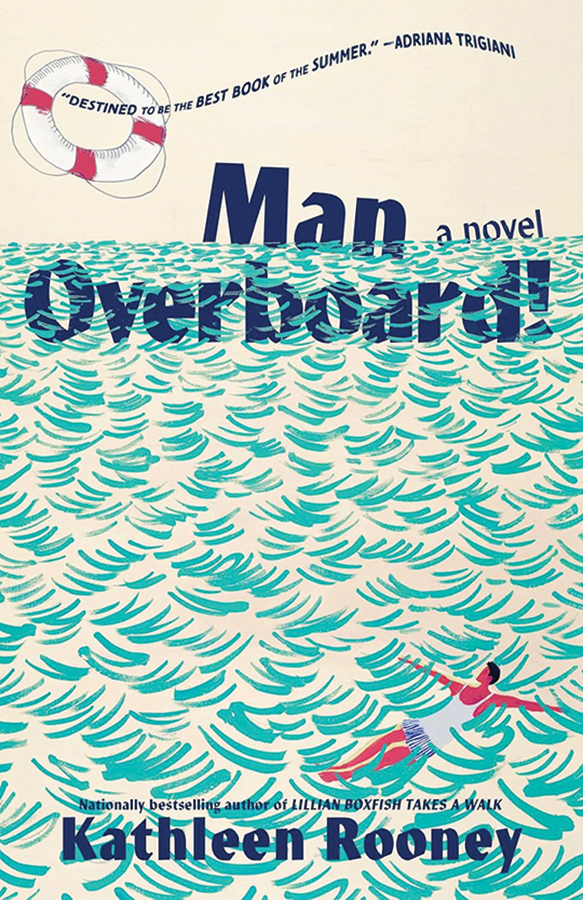
Man Overboard! by Kathleen Rooney
Patrick “Kick” Kilpatrick, a former college swimmer, hates the ocean. Has always been terrified of it. And now he’s in a real pickle. Drifting alone in the sea after falling (or jumping?), Kick must survive. Breath by breath, hour by hour in the lonely sea. As the waves crash over him, so do the thoughts and memories of just how he got there. A Thanksgiving cruise with an obnoxious brother-in-law; a father who gives the Great Santini a run for his money; and a mother who already left the family boat, so to speak, a long time ago. His family may be complicated, and the pains of life may seem unbearable — infuriating enough to leap from the deck — but maybe the will to survive is stronger. Inventive and slyly hilarious Man Overboard! is about what keeps us going no matter how choppy the waves of our journey become.
Habits of the Sea, by Shea Ernshaw
The night Clay Lockhart’s wife dies, a violent storm tears their home — and the eight hectares of land beneath it — away from the Scottish coast, sending it adrift into the Atlantic. Thirty years later, 12-year-old Ellie Mills discovers the fabled floating island off the coast of Nova Scotia and finds Clay still living in the weatherworn farmhouse perched on its highest hill. When the island vanishes overnight, Ellie is left questioning whether it ever existed at all. Decades later, the island resurfaces, and Ellie, now in her 30s, returns, determined to uncover the truth. What she finds is even stranger: Clay hasn’t aged a single day. Faced with the impossible, Ellie learns that some mysteries aren’t meant to be solved, and that a life shaped by wonder may hold more promise than one bound by certainty.
NONFICTION
All That’s Unseen: An Appalachian Memoir, by Emilee Hackney
Born and raised deep in the hollers of the Appalachian Mountains, Emilee Hackney knew little beyond the ridgelines and coalfields of southwest Virginia. As an eighth-generation Appalachian, her childhood was steeped in the stories of her grandparents — tales of the coal mines’ brutal grip and the way the land, both beautiful and unforgiving, never quite let anyone go. At 14, Emilee meets Sam, a senior at her high school, who offers her a glimpse at a promising future together. But as they begin attending services at Deliverance Christian Church as a couple, Emilee is thrust into the radical realm of Pentecostalism. In a culture where marriage at 19 isn’t uncommon, Emilee is engaged to Sam. Eager to make her relationship work, she embraces the extremist doctrines of the religion, submitting herself fully to God, to Sam, and to a life of repentance. But what she doesn’t yet know is the man she plans to marry is not who he claims to be. Years later, Emilee finds herself isolated from friends, family and her own sense of truth. Wracked with shame and self-doubt, she reaches a breaking point. On the verge of spiraling out of control, in a stunning act of defiance and hope, she applies to Harvard; against all odds, she is accepted. From the magisterial mountains of Tazewell to the halls of Cambridge, Emilee begins the arduous process of reinventing herself and her relationships with her home, faith and values.
Utopia for Our Century: A Manifesto of Hope, by David Albertson and Jason Blakely
In Thomas More’s Utopia, a traveler from the New World delivers a shocking message: On a lost island beyond the horizon, people live far better lives than in Europe. More, a leading intellectual of his day, was murdered by Henry VIII in 1535 for refusing to sign a loyalty oath, but his utopian vision inspired some of the most consequential movements in the modern world. In their provocative manifesto, Albertson and Blakely retrieve More’s insights and apply them to our moment.
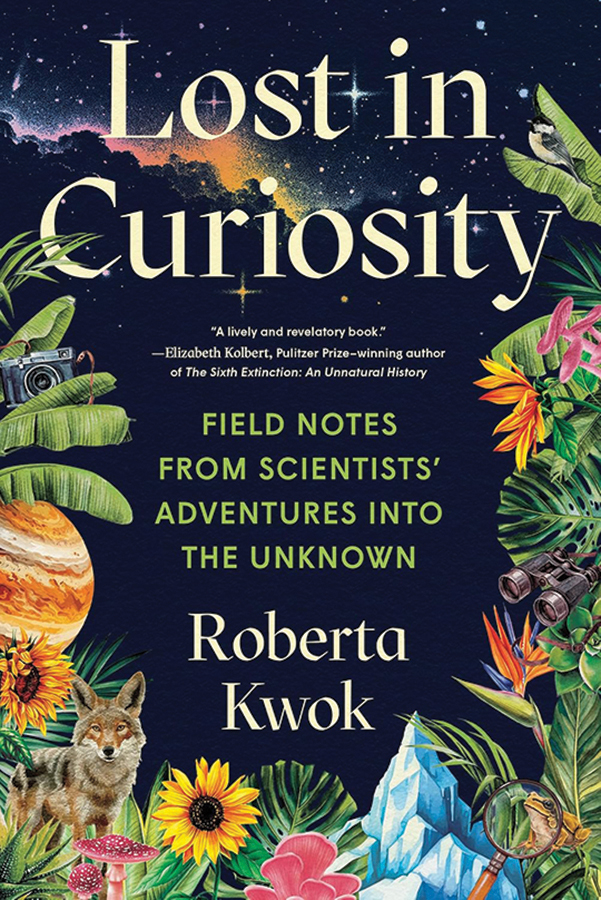
Lost in Curiosity: Field Notes from Scientists’ Adventures into the Unknown,
by Roberta Kwok
The real story of science isn’t a triumphant breakthrough. It’s messy, mysterious and deeply human. Chronicling researchers’ struggles and hopes in the field and lab, Kwok documents it all: fending off relentless snowfall on a remote Greenland glacier; desperately searching for an elusive frog in the rainforests of Borneo; and scrambling to capture fleeting signals of a faraway moon outside our solar system. These are the untold stories of devoted young scientists and restless minds chasing nature’s riddles. From enigmatic fossils and mind-bending physics to the puzzling behavior of wild animals, Lost in Curiosity is a journey through the questions that keep scientists up at night.
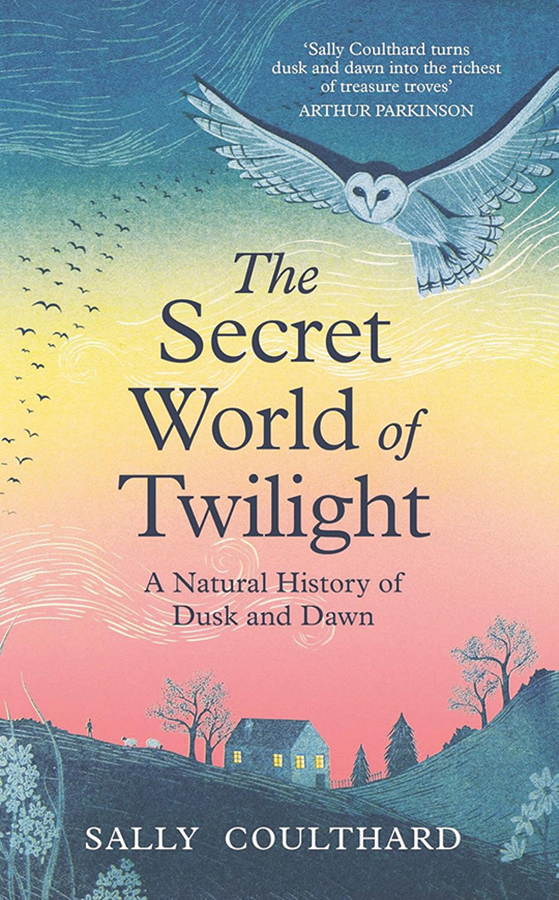
The Secret World of Twilight: A Natural History of Dusk and Dawn, by Sally Coulthard
Every day, in the brief stretch of time just before sunrise and soon after sunset, magic happens. Twice a day the atmosphere is partially illuminated by a sun that’s hiding below the horizon, creating a sky that glows with soft, diffused light — opening the secret world of twilight. Circadian rhythms affect almost all living things, including animals, plants and even microbes. They, of course, profoundly affect us too. In a world when so many of us live according to rhythms defined by artificial light, or in spaces that remove any connection with the outside, the need to understand and celebrate twilight has never been greater. Coulthard celebrates 30 iconic and often surprising animals and plants that thrive in this liminal, otherworldly space.
CHILDREN’S BOOKS

Weaver and the Web, by Chris Baker
A long night ahead means plenty of time for web-making and bug-catching for this meticulous orb-weaver spider in this non-fiction picture book that captures the spider’s point of view. With gentle text and arresting art, this read-aloud leads you through the ups and downs of one orb-weaver spider’s night. From making her web, re-making her web, and eventually ensnaring some succulent moths, this moonlit adventure encourages you to see the world from a spider’s perspective. (Ages 4-8.)
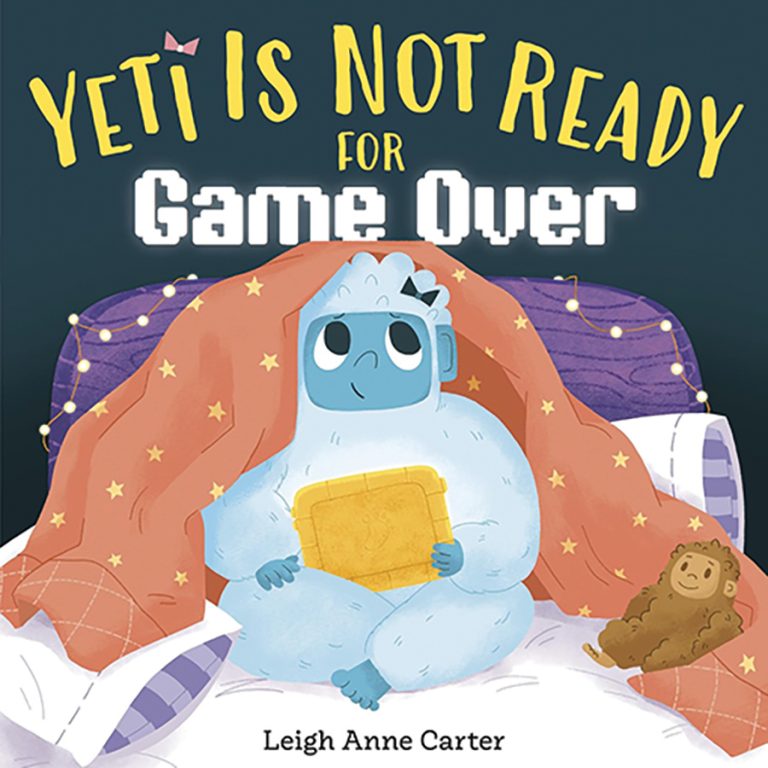
Yeti Is Not Ready for Game Over, by Leigh Anne Carter
It is time to take a break from screens, but Yeti is NOT ready. She is so close to winning this fun game on her tablet! She doesn’t have time for chores, lunch or even friends! Can Yeti put the tablet down? Or will she find a way to stay glued to her screen? With a little compassionate help from Dad, Yeti Is Not Ready shows just how hard it can be to get off the screen — and how good for our bodies, brains and ideas taking a break can be. (Ages 3-7.)