
Blood in the Sand
Revolutionary War mayhem at Piney Bottom
By Bill Case
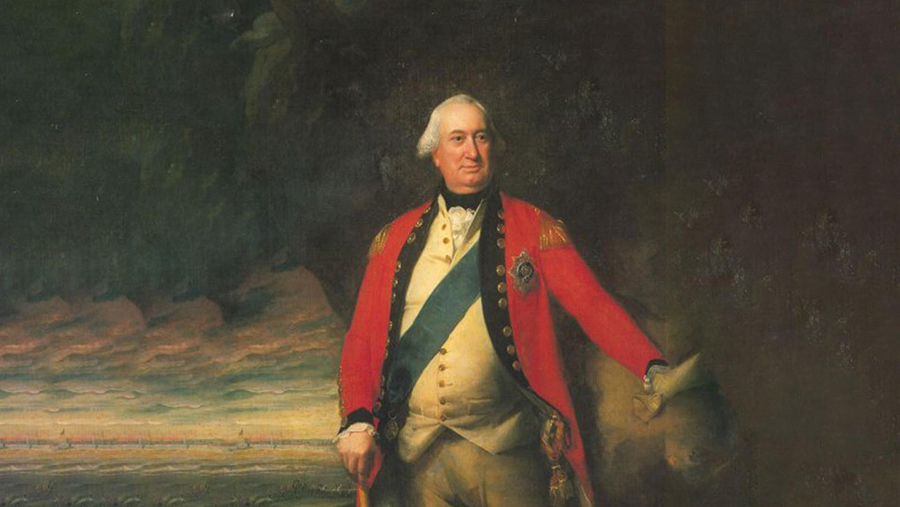
When Lord Gen. Charles Cornwallis, commander of the British Army in the South, invaded North Carolina in September 1780, it marked the end of nearly 4½ years of relative peace in the state. Patriots (also referred to as “Whigs”), whose control had been mostly unchallenged since the early days of the war, suddenly faced potential loss of their lives, property, and their Whig-led state government. Triggered by the theft of a young woman’s bolt of brown cloth, the hostilities would also come to the Sandhills, culminating in a series of attacks and counterattacks marked by grisly and unspeakable cruelty.
Anguished Tarheel Patriots initially feared Cornwallis’ army was unstoppable. The British had subdued Patriot opposition in neighboring South Carolina with relative ease. Lord Henry Clinton, overall commander of the British forces in America, had occupied Charles Town (Charleston) in May 1780 following a seven-week siege of the city. Clinton’s hostile seizure resulted in the capture of 5,000 Patriot soldiers, including many North Carolinians. Three months later, Cornwallis scored a major victory at the Battle of Camden (South Carolina), routing Continental troops mismanaged by Gen. Horatio Gates.
Flushed with confidence, Cornwallis thought it unlikely he would encounter significant Patriot resistance in North Carolina and, in fact, anticipated that thousands of Loyalists, mostly transplanted Scottish Highlanders, would be joining the British in the fight.
North Carolina’s Loyalists (also called Tories) had been laying low since February 1776. That was when a newly formed regiment of kilted Highlanders were crushed in a deadly encounter with Patriot militia at Moore’s Creek Bridge near Wilmington. In their ill-fated charge across the bridge, the Highlanders were greeted with devastating gunfire that nearly obliterated their regiment.
As a result, the Patriots ruled supreme in North Carolina for the ensuing 4½ years. British Royal Gov. Josiah Martin was forced to flee to a Royal Navy ship off the coast. The state’s chastened Loyalists were subjected to a plethora of reprisals: burning of homes, confiscation of property and imprisonment.
Traditionally, the Highlanders had been blood enemies of the Crown, particularly after their clans were annihilated by the English in the 1746 Battle of Culloden in Scotland. The aftermath of that debacle led to the Clearances, in which Highlander clans were unceremoniously uprooted from their ancestral homes.
Several factors were involved in the Highlanders about-face. Most had taken oaths of allegiance to the king as a condition of his permitting their emigration to America, and many of the transplants had received generous land grants in return. Remembering their devastating defeat at Culloden, the Highlanders were understandably reluctant to undertake a second, likely doomed, rebellion against what they perceived was the invincible British Army.
Financial considerations also played a role. The majority of Highlanders were entrepreneurs — farmers, millers, timber and turpentine harvesters, merchants — and loathe to disrupt the marketing of their products to England.
The British invasion got off to a promising start. Cornwallis’ advance guard stormed into Charlotte. After a skirmish, his troops drove the defending Patriot militia toward Salisbury. The Crown scored another major victory in early 1781 when British Maj. James Craig occupied Wilmington. Seizure of the seaport secured for the Redcoats a vital supply depot as well as control of the entrance to the Cape Fear River.
Emboldened by the presence of British troops, North Carolina’s Loyalists re-emerged as a fighting force. British Maj. Patrick Ferguson recruited over 1,000 of them. They joined a militia that protected Cornwallis’ left flank. Ferguson warned settlers west of the Blue Ridge not to resist his troops or else he would “march his army over the mountains, hang their leaders, and lay their country to waste with fire and sword.”
As Cornwallis had predicted, violent Loyalist uprisings started springing up in the state. A notable example occurred in Anson County, near present day Wadesboro, where the commandant of the Anson County Regiment, Col. Thomas Wade, and his brother-in-law Patrick Boggan were victimized by Tory retribution. Wade’s house was burned; the Tories confiscated his crops and personal property.
Fearful for their lives, Wade, Boggan and other members of the Anson County Regiment packed their wagons and fled with their families to the Neuse River, near the Pamlico Sound, an area relatively free of Tories.
The triumphant victory Cornwallis envisioned would stall due to unexpected setbacks elsewhere. Mountain frontiersmen (tagged the “Overmountain Men”), infuriated by Maj. Ferguson’s threats, teamed up with Patriot militia to rout Ferguson’s Loyalists in the Battle of Kings Mountain on Oct. 7, 1780. The major was killed in the clash.
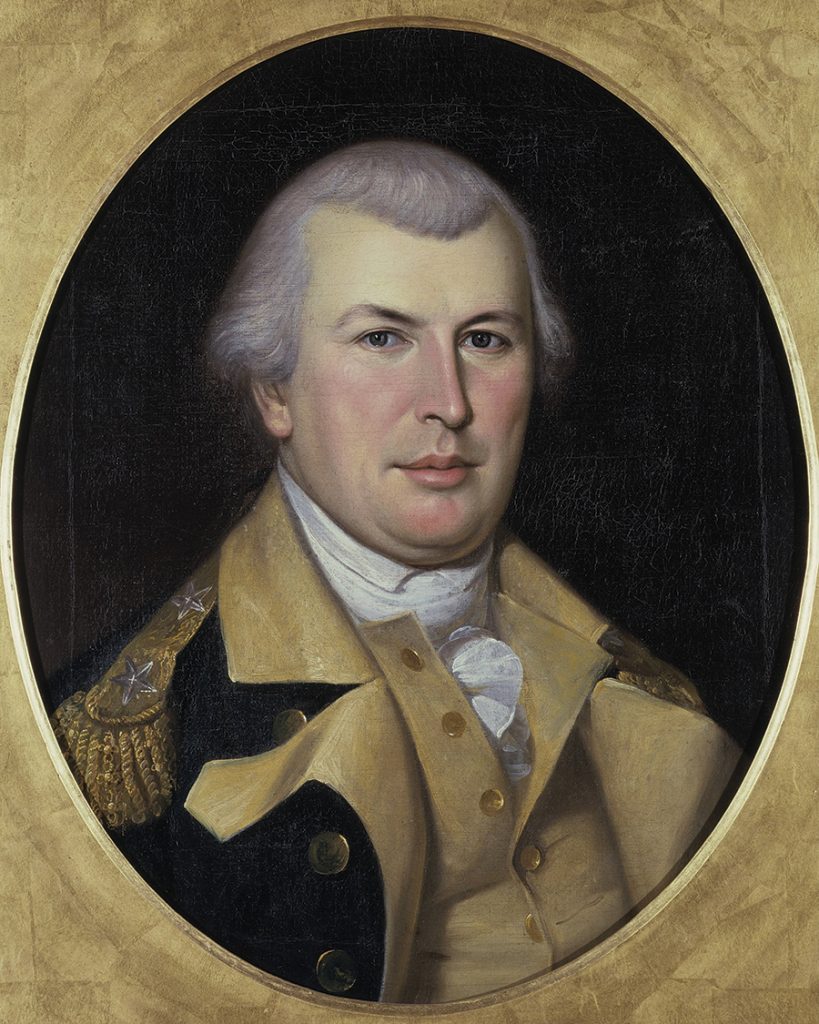
Another blow to Cornwallis’ southern strategy occurred in December 1780, when George Washington appointed Gen. Nathanael Greene to replace Gates as southern commander of the Continental Army. Greene brought to the post new energy, resilience and resourcefulness, notably absent under Gates’ leadership. He adopted a strategy of frustrating the enemy, wearing it down by attrition, rather than risking all in a decisive battle. “We fight, get beat, rise, and fight again,” he wrote Washington.
Then on Jan. 17, 1781, a wing of Greene’s Continental Army, led by Brig. Gen. Daniel Morgan, and accompanied by Patriot militia, defeated British and Loyalist troops at the Battle of Cowpens in South Carolina. Morgan’s triumph resulted in the capture of over 500 enemy combatants. With prisoners in tow, Morgan headed north toward Salisbury, to link up with Greene.
Given the unforeseen depletion of his army, Cornwallis deemed it critical to free Morgan’s prisoners and restore them to his own ranks. The general gave chase, hoping to destroy Morgan’s force before it could join Greene. To expedite his pursuit, he ordered the jettisoning of his army’s excess supplies, including, to the soldiers’ dismay, their rations of brandy. But the elusive Morgan escaped Redcoat clutches, successfully linking up with Greene in Salisbury.
Undaunted, Cornwallis continued to stalk Greene’s reunited army, looking to force a battle before it crossed the Dan River into Virginia. Again, Cornwallis came up short. Greene successfully eluded the British, winning the so-called “Race to the Dan.” When he crossed the river into Virginia, 600 Commonwealth militiamen joined his ranks.
Thus reinforced, Greene crossed back over the Dan into North Carolina. His combined forces now outnumbered those of Cornwallis 2-to-1. The savvy Greene was at last ready to meet the British in a pitched battle.
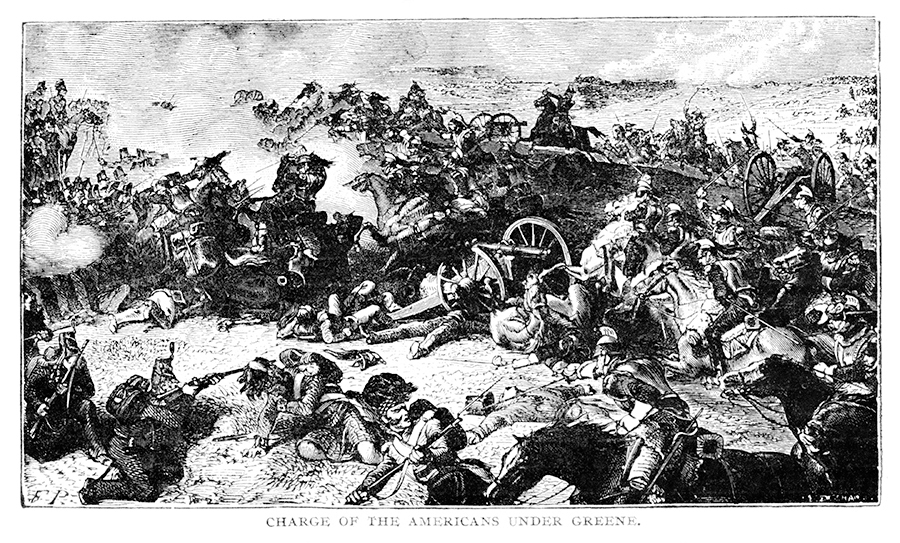
Cornwallis met Greene head-on. The Battle of Guilford Court House near Greensboro on March 15, 1781 was described by author Phillips Russell as the “grimmest ever fought on North Carolina soil.” In his book North Carolina in the Revolutionary War, Russell suggests that the Ides of March confrontation became “a determining factor in the outcome of the American war for independence. . . . It was critical in every aspect.”
While Greene’s soldiers were ultimately driven from the field, Guilford Court House was, at best, a Pyrrhic victory for Cornwallis. His men suffered heavy casualties: 500 killed and wounded — almost a quarter of his remaining army. Many of the general’s best officers were lost, and he himself was wounded. Furthermore, the remaining Redcoats were exhausted and famished, due in part to their commander’s questionable decision to ditch supplies.
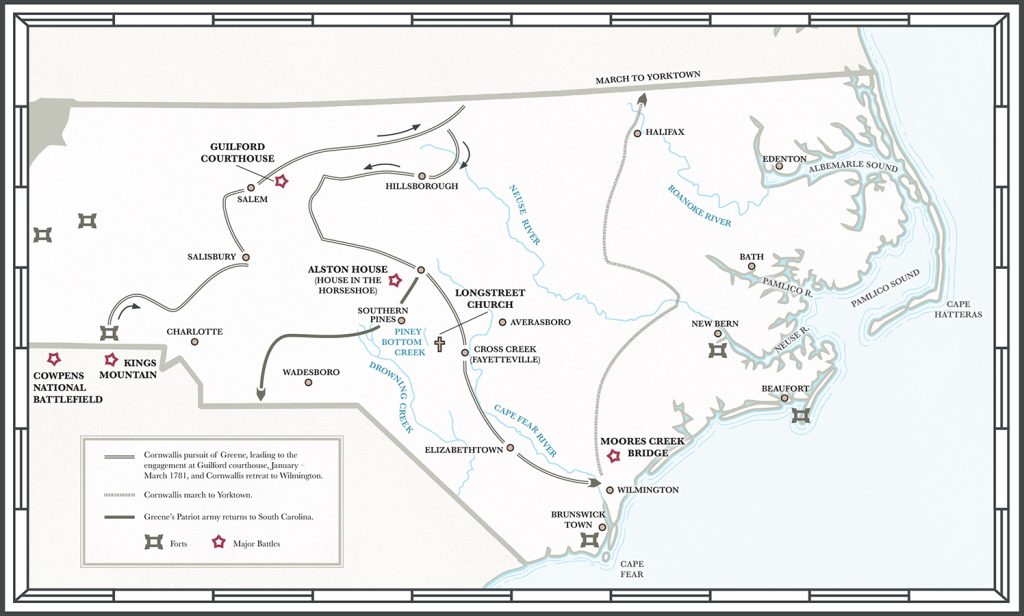
To replenish his men, Cornwallis marched them toward Cross Creek (present day Fayetteville), a Loyalist stronghold that supposedly housed a storage facility laden with British supplies. En route the army trekked through Pittsboro and across the Little River. Cornwallis spent one night at a home located at what later became Fort Bragg. When he arrived at Cross Creek, the general found that Patriot supporters had emptied the warehouse. To feed his increasingly desperate soldiers, Cornwallis had no choice but to lead them on to Wilmington, still controlled by the Crown. The bedraggled Redcoats finally arrived at the port on April 7, 1781.
Cornwallis had had enough of the Carolinas. In a communication with Clinton, the general recommended the war be fought elsewhere. “Until Virgina is in a manner subdued,” he claimed, “our hold of the Carolinas must be difficult if not precarious. The rivers in Virginia are advantageous to an invading army. But North Carolina is, of all provinces in America, the most difficult to attack . . . ”
After a two-week rest, Cornwallis marched his reinforced army north to Virginia. When he exited North Carolina, the British no longer posed a significant threat to Whigs in the state’s interior, though a residual force led by Maj. Craig still controlled Wilmington and the surrounding coastal areas.
Cornwallis’ departure was demoralizing to North Carolina Loyalists. They generally viewed his campaign in the state as a failure that had reinvigorated the Patriots’ quest for independence.
But one vengeful Tory leader was undeterred. During the summer of 1781, wily David Fanning led several spectacular raids. His militia captured 53 prisoners at the Chatham County Courthouse in Pittsboro and forced the surrender of Philip Alston’s Whig militia at the House in the Horseshoe in Moore County. He even kidnapped Whig Gov. Thomas Burke in Hillsborough.
With the British Army gone and Loyalist fervor somewhat cowed, Thomas Wade and Patrick Boggan figured it would be relatively safe for their families and militiamen to pack up their wagons and head home to Anson County, 150 miles from their Neuse River hideout. Yes, they would be passing through Tory-dominated areas, but with Cornwallis gone, weren’t Loyalists going to retreat into the shadows again? If Fanning’s militia remained a threat, the seemingly omnipresent Tory couldn’t be everywhere at once, could he?
As a precaution, Wade sent the women and children off first with just a couple of his militiamen to guard them, figuring the innocents wouldn’t be harmed by Loyalists. In addition, the Anson County men, along with Capt. Culp from South Carolina, started their own journey home, crossing the Cape Fear River at present day Averasboro (Hartnett County), where they camped. That night, a few of Wade’s men, off on a personal frolic, raided the home of John McDaniel, a Loyalist who employed a young orphan girl, Marren McDaniel, as a servant. Marren had spun enough rough brown cloth to make a dress, but Wade’s men pilfered the coarse cloth from the loom while the shocked girl stood by. When McDaniel’s Highlander neighbors heard what had happened, their reaction was outrage. They deemed the militiaman’s callous treatment of the defenseless girl as a crime almost worse than house burning. Revenge was suddenly in the air. Wade’s militia would have to pay!
“Cunning John” McNeill stepped forward to play a key role in the Highlander’s response to the pillaging of the poor girl’s cloth. He was one of six sons of Jennie Bahn McNeill, a crafty businesswoman active in selling cattle. When Jennie saw the Revolution brewing, she hedged her bets, insisting that three of her sons (including John) support the Tories while her remaining sons aligned with the Patriots. The gambit enabled Jennie to market cattle to both camps.
However, John’s allegiance to the Tories was no ruse. After the raid of McDaniel’s home, he urged his neighbors to gather at midnight the following day at the Longstreet Church, a log cabin structure in Argyll — a small community of Scottish-born settlers that would ultimately vanish after being incorporated into Fort Bragg, 137 years later.
On the morning of the meeting, Cunning John rode his horse 25 miles to the eastern side of Fayetteville, where he visited Ebenezer Fulsome, a patriotic Whig. Fulsome would later confirm McNeill did not commence his ride back home until around sundown. Cunning John had established a plausible alibi (which later proved useful) regarding his whereabouts during the night.
According to Malcolm Fowler’s book, Valley of the Scots, McNeill, presumably galloping his mount to near exhaustion, did make it from Fayetteville to the meeting at Longstreet Church around 1 a.m. Those he had summoned, bearing Scottish surnames like McDougald, McKay, McLeod, Blue, Black, Monroe, Ferguson and Patterson, had waited anxiously to hear what McNeill had in mind.
The plan was simple: attack Colonel Wade’s sleeping camp an hour before daylight and kill as many members of his militia as possible. Cunning John knew where the Anson County men were likely to be bivouacked — the old campground at Piney Bottom Creek (located within Fort Bragg, 7 miles east of today’s Southern Pines).
Local historian and 20-year U.S. Army veteran Matt Mutarelli has diligently studied the events that unfolded at Piney Bottom and makes presentations locally regarding them. His military service includes a lengthy stint in Special Operations, and he speaks with authority when he commends Cunning John’s foresight in figuring out where Wade would be setting up camp.
“From a military perspective,” says Mutarelli, “McNeill executed a superb job of predictive and terrain analyses. He took into account Wade’s likely path home, his rate of travel, prevailing weather and available resources.” McNeill also proved himself an excellent networker. In the course of a single day, Cunning John assembled 200 to 300 Tories, many of them hailing from far corners of Moore County.
When the conclave at Longstreet Church was over, the assembled Highlanders faced a 10-mile nighttime ride through the woods to Piney Bottom. As they mounted their horses at the church, their scheduled attack was a mere five hours away.
Just before daybreak, the Highlanders came within earshot of Wade’s camp at Piney Bottom. A sentry hailed them, but the attackers remained silent. The lack of response prompted Wade’s sentry to fire. One of the Highlanders, Duncan McCallum, shot back. The attack was on.
There are varying accounts of what followed; the one closest in time to the incident was authored by Rev. E. W. Caruthers in 1854. In his book Revolutionary Incidents and Sketches of Character, he writes, “Then (the Highlanders) rushed upon the sleeping company just as they were roused by the fire of the sentinel’s gun, and shot down five or six of them but the rest (save one) escaped leaving everything behind them.”
Unfortunately, a young boy accompanying Wade’s militia was slow to awaken and was trapped inside his wagon as the Highlanders approached. The youngster’s name is unknown, nor is it reported how he happened to be accompanying the Anson County militia. Caruthers describes the boy as “motherless” and a “protege” of Col. Wade, who had grown fond of him. The author describes what happened next in gruesome detail.
The lad, “before he was fully awake, cried out, ‘Parole me! Parole me!’ Duncan Ferguson, a renegade deserter from the American Army, told him to come out and he would parole him. He came out and dropped to his knees, begging for his life, but seeing Ferguson approaching him in a threatening manner, he jumped up and ran. Ferguson took after him and Col. McDougal after Ferguson, threatening him that if he touched the boy he would cut him down. Ferguson still ran on, however, until he overtook the boy, and then with his broadsword split his head wide open so that half of it fell on one shoulder and the other half on the other shoulder.”
Following the grisly murder, the assailants plundered the wagons, then proceeded to burn them. Had the Highlanders retained the wagons, there was a possibility observant Patriots would later recognize them as Wade’s, and thus link those who possessed them to the “Massacre at Piney Bottom.” The raiders did carry off the charred iron traces of the wagons, a fact one Sandhills man would come to regret.
On his way home, McNeill visited his friend, the aforementioned Loyalist John McDaniel, and bragged about what had occurred at Piney Bottom. In the course of regaling McDaniel, Cunning John brandished a trophy — the notorious piece of brown woven cloth. When Marren McDaniel, standing nearby, saw her cloth, she immediately claimed it. As Caruthers noted, “This was perhaps the only good which resulted from that tragical affair.”
It appears most of Wade’s militiamen were able to fetch their horses to assist their narrow escape. The following morning, Capt. Culp, riding his horse bareback, appeared at the home of an aged Tory named McLean, who lent the captain a saddle. Wade, Boggan, Culp and the remaining regiment members eventually made it back to Anson County, about 55 miles from Piney Bottom.
If McNeill and his band assumed Col. Wade would not retaliate, they were wrong. Caruthers writes, “As soon as Wade and Culp reached home, they collected about one hundred dragoons, or mounted men, under Captain Bogan, and they all came down swearing never to return until they had avenged the death of that murdered boy, who seems to have been a favorite of Wade and, in fact, all that knew him.” The revenge-minded Anson County Patriots then headed to the Sandhills.
Their first destination was the home of Daniel Patterson, an elderly gent known as “the Piper.” He resided adjacent to Drowning Creek near its west bank (thus in Richmond County — the creek would eventually serve as Richmond County’s border with Moore County). It is doubtful Patterson was at Piney Bottom, but Wade believed he would know who was. According to Caruthers, Wade’s militiamen “caught the old man and whipped him until he gave up the names of all who were at Piney Bottom.”
The Patriots crossed over Drowning Creek to the Moore County side, where they paid a visit to the home of Kenneth Clarke. There they found Alexander McLeod, whom they tied up, pinioning his arms behind his back. Alexander’s 11-year-old brother John was placed under guard.
The militiamen then came upon a small field where five men were making “potato hills.” According to Caruthers, two of them, Daniel McMillan and Duncan Currie, were known “accomplices in the massacre.” But the other three, John Clark, Allen McSweene and “an Irishman who was a British deserter and wore a red coat,” apparently had no involvement aside from knowing McMillan and Currie.
But by this time, Wade’s men were past the point of caring whether their captives had participated in the massacre personally or not. All five men were gathered up and taken to Kenneth Clarke’s home, where they were kept under guard.
Since they had not been immediately put to death, the Highlander captives had hopes of surviving their awful plight. Just before sunset, their chances took a turn for the worse when Capt. Patrick Boggan and his Light Horse Company appeared on the scene. They were all enraged, partly due, says Caruthers, to intoxication. Boggan had the prisoners removed from the house, then ordered they be put to death by sword in the same manner as Wade’s young protege at Piney Bottom.
The initial object of Boggan’s wrath was Alexander McLeod. Several of the militiamen, while on horseback, beat McLeod over the head with their swords. With his raised arms absorbing most of the blows, Alexander temporarily avoided fatal injury. When the other terrified prisoners observed Alexander’s plight, they ran. With his captors momentarily distracted, Alexander also tried to escape, only to be shot dead. John Clarke, Currie and McMillan were likewise mowed down by gunfire.
Despite having both hands tied behind him, McSweene sought to make a getaway. “With a last, desperate, almost preternatural effort to save his life,” writes Caruthers, “he leaped a pretty high staked and ridered fence which was round the house.” Though bullet-ridden, McSweene somehow continued running for another quarter-mile before he fell. His tormenters finished him off by splitting open his head. Youngster John McLeod and elderly Kenneth Clarke were spared, though Clarke was told to bury all his compatriots’ corpses by the next morning or he too would be killed.
The Anson County Patriots’ bloodlust was far from sated. On the Sabbath, they arrived at the farm of David Buchan, located where Pinehurst’s half-mile harness racing track is today. Fortunately for Buchan, he was not at home. When the militiamen found charred harness chains at the farm, they viewed it as clear proof they were from Wade’s burned wagons at Piney Bottom. Buchan’s home was set afire as retaliation.
Next, the avengers rode to the farm of another Loyalist, Kenneth Black. It was located where the Morganton Park South shopping area in Southern Pines is today. The Black family cemetery still exists on the property. When Kenneth and his son saw the incensed Patriots approach, they hid a distance from the farmhouse, but Capt. Culp caught sight of them and forced the two men into the house. Culp and several of his men rode their horses inside and herded the Black family into the fireplace.
Female relatives of Scottish heroine Flora McDonald arrived at the Blacks’ home while Culp and his men ransacked the place. A quarter-century before, Flora had gained fame by aiding Bonnie Prince Charlie’s escape from British capture after he led Scottish clansmen to their crushing defeat at Culloden. Ironically, Flora was now allied with the Loyalists, having married a British officer with whom she moved to America. She resided at a home 4 miles away provided by Kenneth Black.
The visiting McDonald females were checking up on Black family members who had recently contracted smallpox. Culp and his men “took the gold rings from their fingers and the silk handkerchiefs from their necks,” says Caruthers. “Then, putting their swords into their bosom, split down their silk dresses and, taking them out into the yard, stripped them of all their outer clothing.”
Standing off to the side was a detached and melancholy Col. Wade. When Mrs. Black inquired why he was not joining in the plunder, he responded there was nothing he wanted except “my son, my son!” — presumably the motherless boy executed at Piney Bottom.
As the Patriots prepared to leave with blankets, clothing and other seized items, Mrs. Black observed, “Well, you have a bad companion with you — the smallpox!” The trespassers immediately threw everything down and fled on horseback.
Later that day, the Whig militia killed Alexander Black at his farm. Then they came to the house of Peter Blue, who was being visited by his friend Archibald McBride, a Whig. Both were shot; Blue survived, but McBride, guilty only by association, did not.
Though frustrated in his efforts to apprehend John McNeill, Wade and the other Whig militiamen finally left the Sandhills and headed home. Caruthers concludes that the Tories had been taught a brutal, cruel lesson that “would deter them from ever attempting such a thing (as Piney Bottom) again.”
Meanwhile, the British military campaign in Virginia resulted in an unmitigated disaster. Cornwallis had currently foreseen that events in Virginia would decide the war, but not in the way he intended. In September 1781, an American force led by George Washington, in tandem with French soldiers commanded by Gen. Jean-Baptiste Donatien de Vemeur, comte de Rochambeau, trapped Cornwallis’ army at Yorktown. A French naval blockade precluded any attempt by the British to evacuate, obtain supplies or secure reinforcements. Outwitted and checkmated, Cornwallis surrendered his army on Oct. 19, 1781.
The outcome at Yorktown had rapid ripple effects for the Crown. Maj. Craig evacuated Wilmington the following month. A year later, the British sailed away from Charles Town, ending 2½ years of occupation. David Fanning was on-board ship. The Treaty of Paris, in which King George finally acknowledged American independence, was signed on Sept. 3, 1783.
The war was over, but Thomas Wade was not done with John McNeill, whom he had arrested for his role in the murders at Piney Bottom. But Cunning John’s long-planted alibi would save his skin. Ebenezer Fulsome’s testimony that McNeill was still visiting him in Cumberland County at sundown the evening before the bloodshed convinced the jury that given the distance of travel involved, it was not probable McNeill would have made it to Longstreet Church, let alone Piney Bottom, in time to take part in the massacre.
It is noteworthy that neither Marren McDaniel nor the man to whom she was indentured, John McDaniel, took the stand. Both could have confirmed Cunning John’s flaunting of Marren’s woven brown cloth, as well as his boasting of how and where he got it.
Only one small monument, well off the beaten path, deep in the confines of Fort Bragg, commemorates the brutality at Piney Bottom. The site of the massacre was determined by the gun flints unearted in the vicinity. The Revolutionary War was not just a conflict between the British and the Americans; it was also a civil war — especially in North Carolina — in which neighbors killed neighbors over their political differences. In their mutual bloodlust, both sides dispensed with the rule of law and due process. Innocent people were murdered. Violence begat further violence. The big engagements like Yorktown secured the promises of the Declaration of Independence, but it’s worth remembering on America’s 250th that war, at any scale, is gruesome and cruel.
A riveting tour of sites on the reservation that are relevant to the bloody episode can be arranged by contacting Fort Bragg. In addition to the monument, a visitor can view remnants of the original Longstreet Church, where the Tories planned their pre-dawn attack. Nearby is the still standing successor Longstreet Church, erected in 1845. The newer church is adjacent to an ancient Presbyterian graveyard, where many of the old Highlanders are buried. Fort Bragg’s Cultural Resource team has also unearthed evidence establishing the site of the home where Cornwallis lodged during his army’s April 1781 march to Wilmington.
To arrange a tour, call Fort Bragg’s Cultural Resources Management Program at (910) 396-6680.